

7-Minute Ritual Helping Women 65+ Regain Focus and Clarity
Feel Clearer, Think Sharper
For many women over 65, brain fog, forgetfulness, and low energy feel like part of aging. But what if just 7 minutes a day could help restore clarity — without pills, apps, or complex routines?
The Genius Wave is a science-inspired sound ritual that’s helping thousands regain focus and peace of mind.
If this post is describing your situation with minute, I built FocusFix: The Emotional Clarity Kit for Real-World Distraction Killers as the step-by-step version of what this article covers. It is my own product, and it goes considerably deeper than a blog post can.
Why Women Are Loving This:
- ✅ Feel mentally clear and alert again
- ✅ Reduces brain fog and overwhelm
- ✅ No supplements, no apps — just headphones and 7 minutes
- ✅ Backed by neuroscience and trusted by 92,000+ users
– Janet T., 67
▶️ Watch the Free 5-Minute Video
100% satisfaction guaranteed. No subscription. No pills. Just sound.
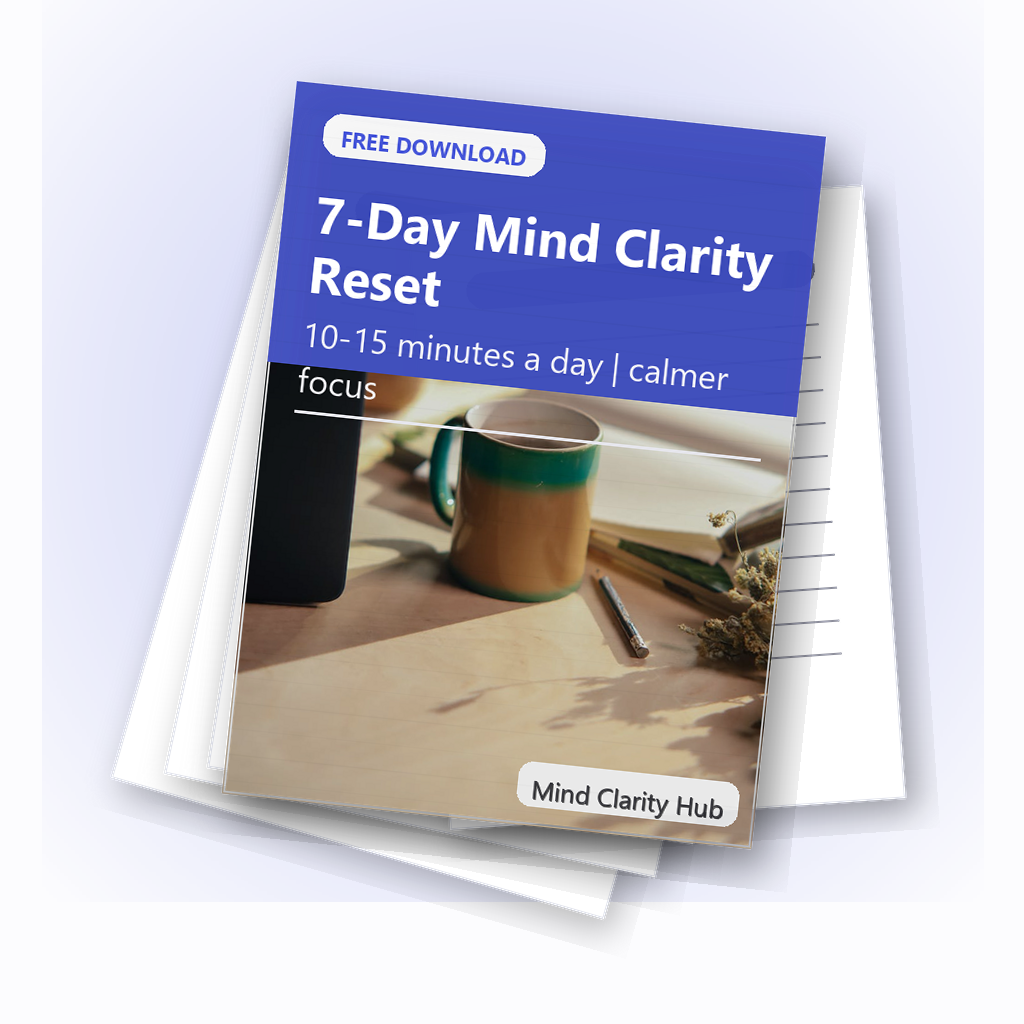
Free download: 7-Day Mind Clarity Reset
A short daily reset you can actually stick with (no fluff).
Affiliate note: This page contains affiliate links. If you choose to purchase through a link here, we may earn a small commission at no extra cost to you. See our privacy policy for details.
Yes—7 minutes can help you feel clearer. Here’s a gentle routine you can start today.
If you’re 65+ and noticing more brain fog or scattered focus, a brief, structured ritual can create a calm “reset” without pills or complicated apps. The practice below blends light movement, sound-focused attention, and a one-minute micro-plan. It’s simple, adaptable to mobility or hearing needs, and designed to be soothing—not strenuous.
Start → 30s Settle breath → 90s Gentle loosening → 210s Focused listening/quiet count → 90s Intention note → Done
- Settle: easy inhale/exhale
- Loosen: shoulders, neck, hands
- Listen/Count: soft audio or quiet breath count
- Note: one-line intention + next tiny action
The 7-minute clarity ritual (step-by-step)
- 0:00–0:30 Settle – Sit comfortably, feet grounded. Inhale through the nose for 3, exhale for 4. Let your shoulders drop.
- 0:30–2:00 Loosen – Gentle circles with shoulders; turn head slowly side-to-side; open/close hands. If seated, lift heels; if standing, sway lightly. Keep movements small and comfortable.
- 2:00–5:30 Focused listening or quiet counting – Option A: play a calm focus track at low volume (headphones if comfortable; speakers are fine). Option B: no audio—simply count breaths (inhale 1, exhale 2… up to 10, then repeat). If thoughts wander, notice and return to the sound or the count.
- 5:30–7:00 Intention note – On a notepad, write one line: “Today I will feel clearer by…” Add a micro-action you can do in 5 minutes (for example, “place bills in one folder,” “fill water bottle,” “call to confirm appointment”). Circle it.
You’ll need (optional): a chair, a timer, comfortable headphones or a speaker, and a small notebook. If you use hearing aids, choose a comfortable volume and avoid very loud tracks.
When to use it
- Morning primer: Do it before news, email, or social scrolling.
- Midday reset: Use it to clear the “after-lunch fog.”
- Evening unwind: Keep movements slower; choose softer audio or breath counting only.
Real-life examples (choose one that fits your day)
- Coffee-and-clarity – Brew tea/coffee, then 7-minute ritual before sipping. Write one line: “Today I’ll sort today’s mail only.”
- Phone focus – Before returning calls, do the ritual; note “Call Linda first, then pharmacy,” and keep your list close.
- Gentle walk variant – If balance allows, do the listening/counting while strolling indoors. Keep eyes forward, steps small, and volume low.
Headphones vs. speakers: quick comparison
- Headphones – More immersive; helpful if your space is noisy. If you wear hearing aids, over-ear cushions can be gentler than in-ear buds.
- Speakers – Easier on the ears; great for shared spaces. Keep volume low so you can still hear your surroundings.
- No audio – Breath counting or soft humming can substitute anytime.
Checklist: make it stick
- Pick a fixed trigger: after brushing teeth, after making tea, or before checking messages.
- Place a ritual kit in view: notebook + pen + headphones.
- Use a gentle timer (7 minutes) so you don’t clock-watch.
- Track one word after each session: clearer, calmer, or steady.
- Review weekly and celebrate small wins.
Comfort and safety notes
- Move within a pain-free range. Skip any motion that feels unsteady.
- If you use hearing aids, start with very low volume and build slowly if desired.
- If you experience dizziness, shortness of breath, or discomfort, stop and rest. For ongoing concerns, speak with a healthcare professional.
Troubleshooting common hurdles
- “My mind won’t settle.” Lower the volume, switch to breath counting, or shorten the listening segment for a week (try 60–90 seconds) and gradually lengthen.
- “I forget to do it.” Tie it to something you already do—like setting the kettle. Place your notebook on the counter as a cue.
- “I can’t sit long.” Try the standing or slow-walk version; you can even perform the breath count while looking out a window.
- “Noise at home is distracting.” Use comfortable headphones or choose a consistent “anchor” sound (rain, soft chimes) that gently covers background noise.
Track your progress (7-day micro-journal)
After each session, jot two things: 1) one word for how you feel (e.g., clear, steady, foggy) and 2) the micro-action you chose. At the end of 7 days, review which time of day felt best and which audio or breath count you preferred. Keep what worked; simplify what didn’t.
Choosing a sound track (if you use audio)
- Calm focus music: gentle, repetitive, no lyrics.
- Nature sound: soft rain, ocean, or birds at low volume.
- Simple tones: steady tones or soft pulses if you find them soothing.
If you use an affiliate link on this page to try a sound-based track, choose a comfortable volume and stop if it feels overstimulating. Your comfort leads.
Build a tiny “clarity corner”
Place a chair, a small plant, your notebook, and headphones in a quiet spot. Seeing your setup makes the habit more likely. For more gentle focus ideas and practical worksheets, visit the Mind Clarity Hub.
Frequently asked questions
Does this 7-minute ritual replace medical care?
No. It’s a simple wellness routine. It isn’t a diagnosis, treatment, or cure. If you have medical questions, please consult a qualified professional.
Can I do the ritual without headphones—or with hearing aids?
Yes. You can use speakers, breath counting, or soft humming. If you wear hearing aids, keep volume low, avoid in-ear buds if uncomfortable, and stop if any irritation occurs.
What time of day works best?
The best time is the one you’ll repeat consistently. Many people like early morning before screens or a midday reset during an energy dip.
How long until I notice changes?
Some feel calmer after the first session; clearer focus often builds over 1–2 weeks of steady practice. Results vary by individual, and there’s no guaranteed outcome.
What if I miss a day?
Simply restart the next time. Consistency over weeks matters more than perfection on any single day.
Is movement required? What if I have limited mobility?
Movement is optional. You can focus entirely on breath counting and the intention note. If you move, keep it gentle and within your comfort.
Helpful resources for your next step
Affiliate disclosure: As an Amazon Associate, Mind Clarity Hub may earn from qualifying purchases at no extra cost to you. Use this link only if it genuinely helps your planning.
If 7 minute ritual for women 65 plus is a routine you want to keep using, a simple workbook, planner, or desk tool can make the steps easier to repeat.
Compare related planners, workbooks, and organization tools on Amazon.


Questions and comments