


Published:
Affiliate Disclosure: Just so you know, some of the links in this article are affiliate links. If you decide to buy something through one of them, we might earn a small commission—at no extra cost to you, of course. This helps us keep creating genuinely helpful, evidence-based content.
Trying to get some rest can feel like a second job. You’re bone-tired, but the moment your head hits the pillow, your mind decides to run a marathon. The solution isn’t just about getting more sleep; it’s about mastering the skill of deep rest and recovery.
This means learning how to actively calm your nervous system and finally break that exhausting cycle of being “tired but wired.”
The Real Reason You Can’t Get Some Rest
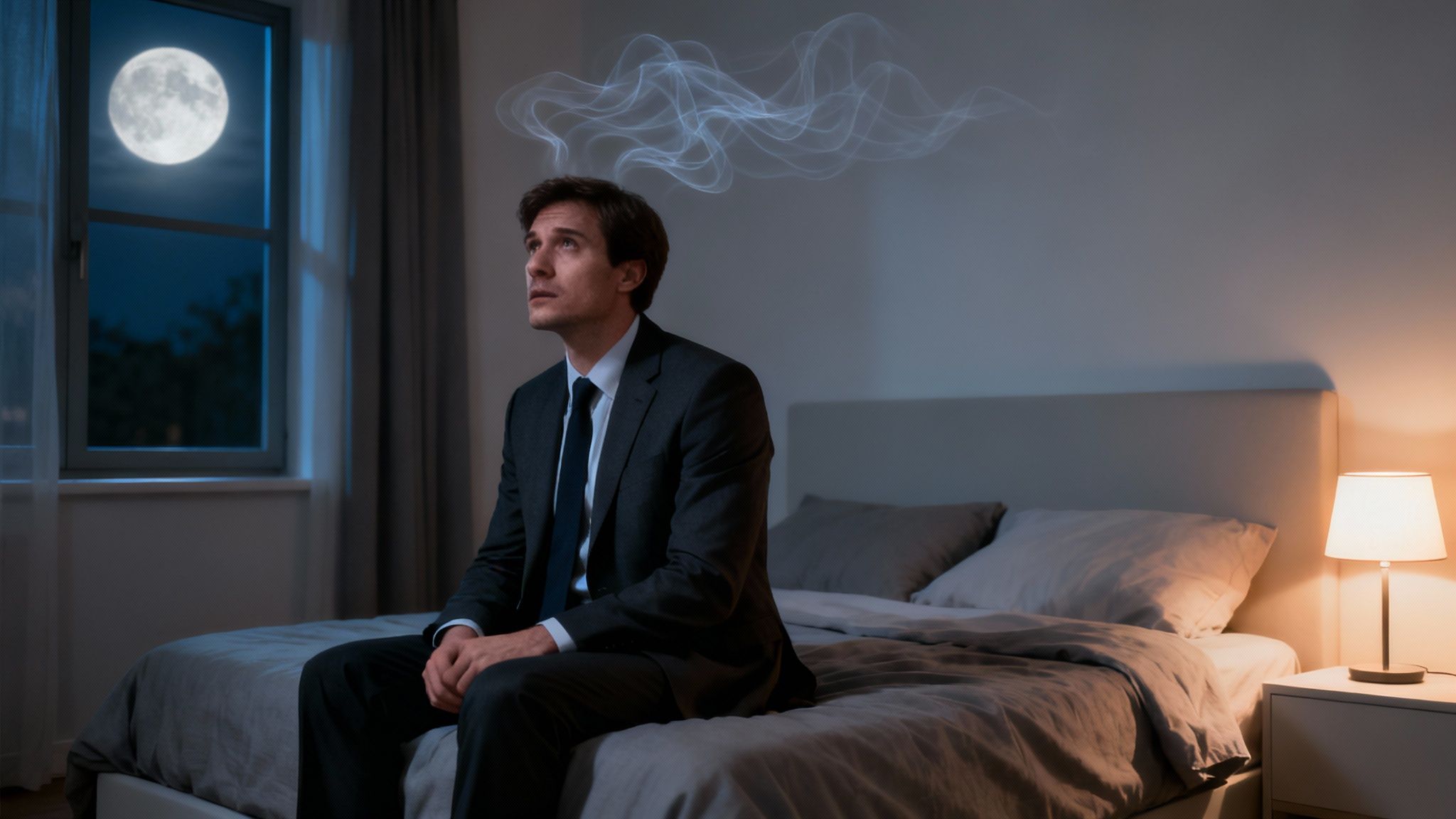
Ever lie in bed, completely drained, while your brain cycles through to-do lists, worries, and reruns of the day’s conversations? It’s maddeningly common—especially in our always-on culture that glorifies constant productivity at the expense of deep rest.
Why Your Brain Fights Rest
At the heart of this struggle is sleep anxiety. It’s a vicious loop: you worry about sleep, and that very worry keeps you awake. Your brain’s threat-detection center, the amygdala, can’t tell the difference between a real danger and anxious thoughts. So it pumps stress hormones like cortisol, putting your body on high alert when it should be winding down.
This biological response is grounded in neuroscience but explained simply: your brain mistakes worry for a real threat. (This is educational only and not medical advice.)
Real-World Mini Scenario:
Sophie, a law student, often lies awake replaying arguments she had that day. Knowing about sleep hygiene didn’t help until she practiced a quick breathing exercise each night—her mind began to associate calm breaths with rest, not worry.
If you feel like your mental batteries are always in the red, check out our guide on how to overcome mental exhaustion for more science-backed tips.
Using Strategic Naps to Get Some Rest and Boost Your Brainpower
Lots of busy professionals see napping as a luxury or a sign of laziness. Research in behavioral neuroscience, however, shows a short nap is a powerful tool for clearing out adenosine, the chemical that builds up all day and causes mental fog. Think of it as a biological software update.
The Power Nap Versus the Full Cycle
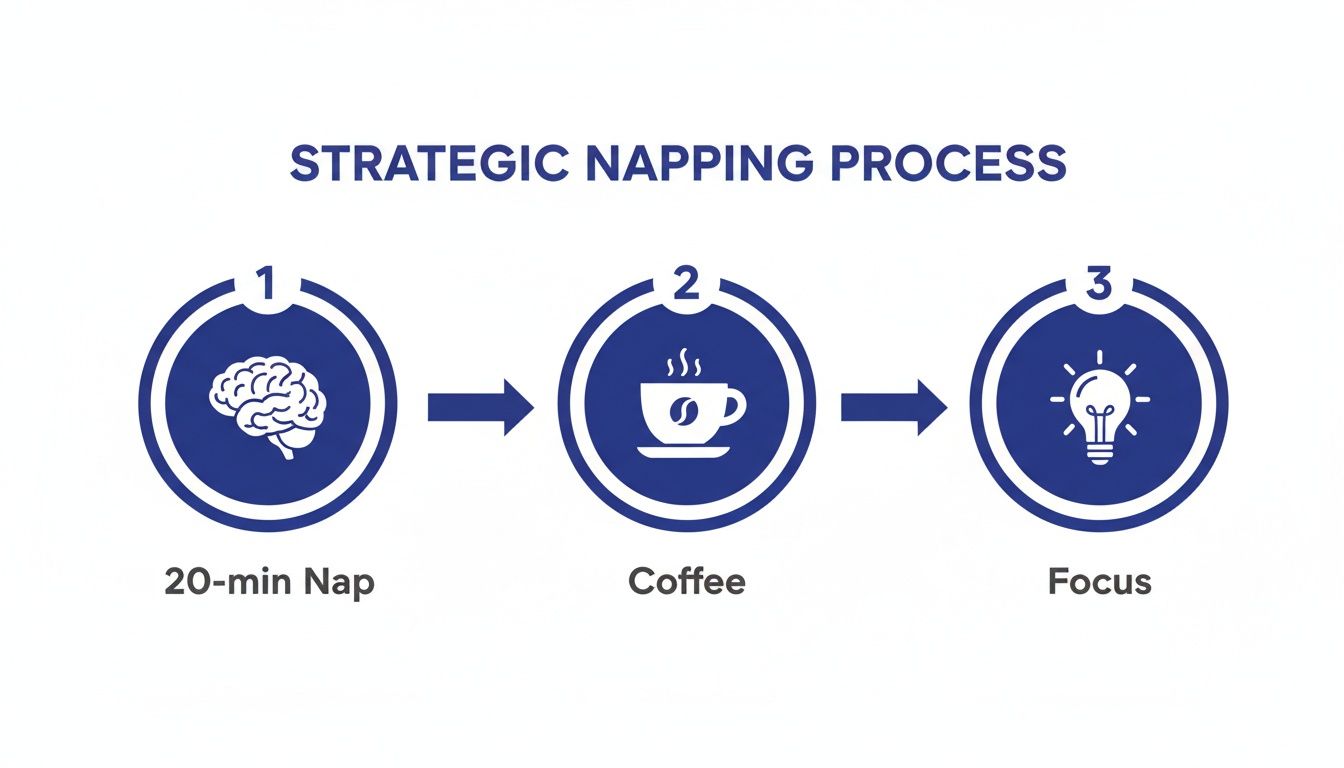
- The 20-Minute Power Nap: Keeps you in light sleep for a quick boost of alertness, avoiding sleep inertia.
- The 90-Minute Full-Cycle Nap: Lets your brain complete a full sleep cycle, including REM. This supports memory consolidation and creative problem solving through synaptic consolidation.
Try the Caffeine Nap Technique
Mini Scenario:
Emma, a freelance writer facing a deadline, downs a cup of coffee then lies down for 20 minutes. By the time she wakes, the caffeine kicks in, blocking drowsiness signals. She returns to her draft feeling alert and ready to write.
This nap technique is a simple, evidence-based trick you can use anywhere—no meds required.
Designing Your Ultimate Pre-Sleep Routine to Get Some Rest
A solid pre-sleep routine signals safety to your brain. Behavioral psychology reveals that consistent cues—like dimming lights or journaling—create conditioned responses that help you wind down.
Mini Scenario:
Alex, a startup founder, struggled with investor pitch worries. They set their thermostat to 65°F, spent 10 minutes on a brain dump, and then listened to a sleep story for 15 minutes. Within a week, Alex fell asleep faster and felt truly restored each morning.

Your Customizable Pre-Sleep Sanctuary Checklist
Key Actions to Get Some Rest
| Category | Action Item | Why It Helps You Get Some Rest |
|---|---|---|
| Environment | Dim the lights one hour before bed | Signals melatonin production, aligning your circadian rhythm. |
| Environment | Set thermostat to 65-68°F (18-20°C) | A cooler room temperature promotes sleepiness. |
| Environment | Use blackout curtains or an eye mask | Blocks light that interferes with your internal clock. |
| Mind | Journal for 10 minutes (brain dump) | Clears racing thoughts, easing mental chatter. |
| Mind | Read a physical book (no screens) | Low-stimulation activity that calms your brain. |
| Mind | Practice guided meditation (5-10 min) | Lowers heart rate and soothes the nervous system. |
| Body | Take a warm bath or shower | The post-shower temperature drop triggers sleepiness. |
| Body | Do light stretching or gentle yoga | Releases physical tension from a stressful day. |
| Body | Drink caffeine-free herbal tea | A warm ritual that signals relaxation to your body. |
Consistency is crucial. Over time, these actions become reliable cues for deep rest. For more tips, explore 10 refined sleep hygiene tips for optimal wellness.
Setting a Digital Sunset to Help You Get Some Rest
Blue light from screens suppresses melatonin, making it harder to wind down. A “digital sunset” means putting screens away 60–90 minutes before bedtime and replacing scrolling with calm, screen-free activities.
Mini Scenario:
Maria, a remote project manager, stopped scrolling at 9:30 PM and switched to an audiobook. Within days, she found it easier to fall asleep and felt more refreshed in the morning.
For more guidance, see our digital detox tips.
Ironically, technology can help automate your wind-down. Use a smart home routine to dim lights, play ambient sounds, and disable notifications. This creates consistent environmental cues that support your sleep cycle.
Key Takeaways for How to Finally Get Some Rest
Reclaiming rest isn’t about massive changes—it’s about small, consistent actions that signal safety to your brain and body.
- Reframe Sleep Anxiety: Create relaxation conditions rather than forcing sleep.
- Use Naps Strategically: A 20-minute power nap or 90-minute full cycle can reset energy and sharpen focus.
- Build a Pre-Sleep Routine: Consistent cues for your environment, mind, and body train your brain to wind down.
- Declare a Digital Sunset: Remove screens 60–90 minutes before bed to boost melatonin and improve deep rest.
For more quick, science-backed ideas, check out these quick tips for more restful nights.
Disclaimer: This article is for educational purposes only and is not a substitute for professional medical or psychological advice. Some links may be affiliate links, meaning we may earn a small commission at no extra cost to you if you make a purchase.
Editor’s Take on What Really Works for Rest
While every technique in this guide has its place, my experience shows two habits deliver the biggest results for most people: a consistent pre-sleep routine and a strict digital sunset. These directly tackle the “tired but wired” cycle. Strategic napping is fantastic too, but if you can only start with one change, make it game-day consistent cues before bed.
Small, sustainable habits build momentum. If you’re overwhelmed, explore how to recover from burnout for focused steps on reclaiming your energy.
Affiliate & Educational Disclaimer: Some links are affiliate links, and we may earn a small commission at no extra cost to you. This content is educational only and not a substitute for professional medical or psychological care.
Questions You Might Have About Getting Better Rest
1. What’s the Best Thing to Do if I Wake Up in the Middle of the Night?
Don’t panic—avoid clock-watching. Wait 20 minutes, then if you’re still awake, get up and do a calm, screen-free activity like reading a book or listening to quiet music. Return to bed when you feel sleepy.
2. Can Certain Foods Actually Help Me Rest?
Yes. Foods rich in magnesium (almonds, spinach) and tryptophan (turkey, oats) support relaxation and melatonin production. Avoid large meals, caffeine, and alcohol close to bedtime.
3. How Can I Rest My Mind When It Feels Anxious?
Try a 10-minute brain dump—write down every worry or to-do to create mental distance. Guided mindfulness exercises (apps like Calm or Headspace) help you notice thoughts without getting tangled in them.
4. I’m Overwhelmed. What’s the Very First Step I Should Take?
Establish a consistent wake-up time—even on weekends. Anchoring your circadian rhythm improves energy, focus, and sleep quality more than chasing a perfect bedtime.
5. How Do I Know if I Need a Power Nap or a Full-Cycle Nap?
Use a short 20-minute nap for a quick alertness boost during the day. Choose a 90-minute nap when you need memory consolidation or creative insight and have time to complete a full sleep cycle.
6. Will Meditation Really Help Me Fall Asleep?
Yes. Mindfulness meditation lowers heart rate and calms the nervous system. Even 5 minutes of guided breathing or body-scan meditation can ease the transition into sleep.
7. What’s the Impact of Light on My Sleep?
Even dim artificial light can suppress melatonin. Aim for a digital sunset 60–90 minutes before bed, and use blackout curtains or an eye mask to block outside light.
8. How Do I Create a Wind-Down Routine That Sticks?
Start small: pick one environmental cue (dim lights), one mental cue (journaling), and one physical cue (stretching). Repeat nightly to condition your brain to unwind.
9. Can Technology Help Improve My Rest?
Absolutely. Use smart home routines to dim lights, play ambient sounds, and silence notifications automatically at your chosen bedtime.
10. What If I Still Struggle Despite Trying Everything?
If chronic sleep problems persist, consult a healthcare professional. This guide is educational and not a substitute for medical or psychological care.
At Mind Clarity Hub, we specialize in providing science-based, actionable guides to help you master your focus, manage digital burnout, and reclaim your mental space. Explore our library of books for step-by-step roadmaps to calmer productivity. Discover your path to clarity today.
