


Published:
Yes, you can absolutely take probiotics at night. In fact, for many people, it’s the most effective time to take them. While the real goal is just being consistent, taking your supplement when stomach acid is at its lowest gives those good bacteria a much better shot at survival. For most of us, that quiet window is right before bed on a relatively empty stomach.
Affiliate Disclosure: Please note that this article may contain affiliate links. If you make a purchase through these links, we may earn a small commission at no extra cost to you. This helps support our work in creating evidence-based content.
Why Timing Your Probiotic Matters: Morning vs. Night
Figuring out the best time to take any supplement can feel a little confusing. With probiotics, though, timing is all about creating the perfect environment for them to do their job. Neuroscience and behavioral research show that our bodies follow a daily rhythm, or circadian clock, which influences everything from sleep to digestion. Aligning habits with this natural cycle can enhance their effectiveness.
Think of it like planting a garden. You want to sow seeds when the conditions are just right—not in the middle of a hailstorm. In the same way, your digestive system has its own daily rhythm. Taking a probiotic at the right moment can help it align with this natural cycle, which might just boost its effectiveness.
For example, a busy professional might try to build a new habit, like journaling for mental clarity, by doing it during their chaotic morning rush. They struggle to stick with it. Behavioral psychology suggests “habit stacking”—pairing a new habit with an existing one. By moving their journaling to the evening, right after they brush their teeth, they link it to an established routine, making it much easier to maintain. The same principle applies to supplements.
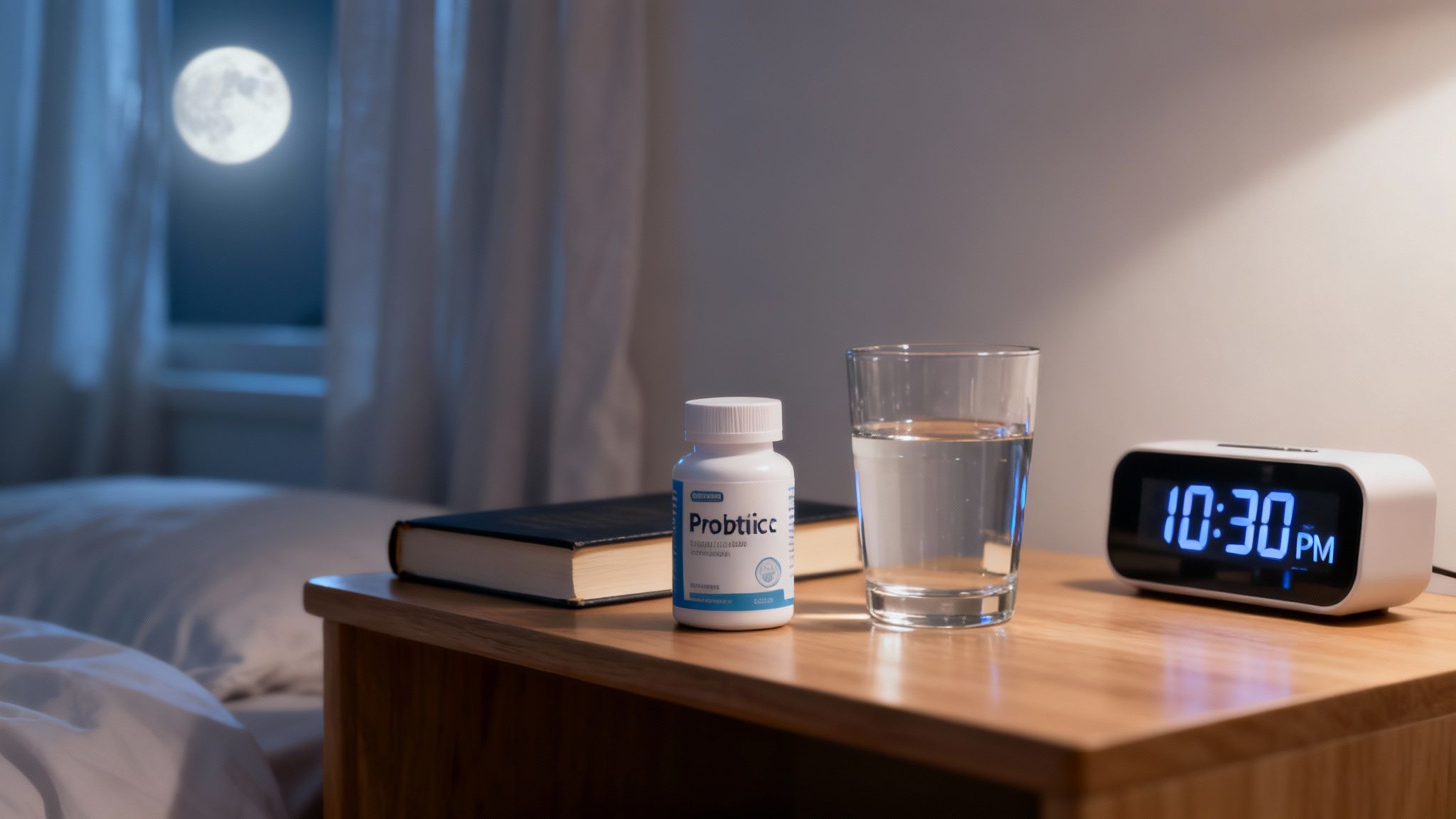
Probiotics Morning vs Night A Quick Comparison
While consistency is king, the choice between a morning or night dose really comes down to your lifestyle, your body, and what you’re hoping to achieve. Here’s a quick comparison to help you figure out what might work best for you.
| Timing Factor | Morning Dose | Night Dose |
|---|---|---|
| Stomach Acid | Higher, especially around breakfast. This can reduce probiotic survival. | Lower, as digestive activity slows down. Potentially better for survival. |
| Consistency | Easier for those with a solid morning routine to remember. | Great for people who have a consistent wind-down or bedtime ritual. |
| Gut Activity | High, as your system wakes up and starts processing food. | Slower, giving bacteria more uninterrupted time to colonize the gut lining. |
| Potential Goals | Supporting daytime digestion and energy levels. | Supporting sleep quality and waking up with a calm digestive system. |
Ultimately, the best time is the one you can stick with every single day. If taking your probiotic at night helps you build a solid routine that supports both gut health and better sleep, it’s an excellent choice. This strategy works just like it does with other supplements; finding your ideal window can make all the difference. You can see a similar dynamic in our guide on the best time of day to take Vitamin B12.
How Nighttime Probiotics Boost Your Gut Health
Imagine trying to plant tiny, delicate seeds in the middle of a windstorm. That’s a bit like taking your probiotics during a busy, active day. Some might find a spot to settle, but it’s a chaotic journey. Taking them at night, however, is like planting those same seeds in calm, fertile soil just after a gentle rain—you’re giving them the best possible chance to take root and flourish.
This isn’t just a nice metaphor; it’s grounded in the rhythms of your own body. As you wind down for sleep, your digestive system does too. This natural slowdown is known as decreased gut motility. It means your stomach isn’t churning as actively and produces less acid, creating a much friendlier, less hostile environment for those beneficial bacteria to survive their trip to your intestines.

This process works in beautiful harmony with your body’s internal clock, or circadian rhythm, which quietly directs your sleep-wake cycle and digestive functions. When you take probiotics before bed, you’re giving these helpful microbes an eight-hour, uninterrupted window to settle in without being disrupted by new meals, snacks, or high activity levels.
The Nighttime Advantage for Probiotic Survival
Let’s be honest: the biggest challenge for any probiotic is making it through the stomach alive. It’s a harsh, acidic environment by design. During the day, and especially after you eat, your stomach is churning out acid to break down food. For the delicate live cultures in your supplement, this can feel like an acid bath.
By taking your probiotic on a relatively empty stomach just before bed, you help it bypass the most intense phases of digestion. This simple timing shift can dramatically increase the number of viable bacteria that reach your intestines, where they can actually get to work. To get a better handle on the basics of your gut microbiome, our guide on probiotics and gut health is a great place to start.
A Mini-Scenario in Action
Think about Sarah, a project manager who constantly felt bloated and sluggish when she woke up. She was taking a quality probiotic with her breakfast every morning but wasn’t seeing much of a change. After learning about the benefits of nighttime timing, she switched her routine, taking her supplement right before turning in for the night.
Within a couple of weeks, something shifted. She started waking up feeling lighter and more balanced. That persistent morning bloat had faded away. All she did was align her supplement with her body’s natural resting state, giving the good bacteria the ideal conditions to support her digestive system.
Linking Nighttime Doses to Better Rest
There’s also fascinating, emerging research connecting gut health to sleep quality. A recent systematic review found that certain probiotics led to a small but significant improvement in sleep quality scores for adults. Understanding the intricate ways nighttime probiotics support your overall gut health is key here. The findings suggest that certain strains, like Lactobacillus and Bifidobacterium, can be especially helpful for people whose sleep is disrupted by stress. You can read the full research about these sleep findings to dive deeper into the science.
The Gut-Brain Connection and Your Sleep
Did you know there’s a constant, quiet conversation happening between your gut and your brain? Neuroscience has identified this powerful communication highway as the gut-brain axis, and it’s a major player in how you feel, focus, and yes, how well you sleep.
When you take a probiotic at night, you’re doing more than just helping your digestion. You’re giving this crucial connection a little support during the key window when your body is already focused on restoration and repair.
Think of your gut microbiome as a tiny, bustling factory that produces neurotransmitters—the chemical messengers your brain uses to regulate just about everything. Neuroscientific research shows a huge portion of your body’s serotonin, which helps manage your sleep-wake cycle and sense of well-being, is actually made in your gut. A balanced gut helps keep that production line running smoothly. On top of that, a healthy gut can help manage cortisol, your body’s main stress hormone. When cortisol levels are high, it’s incredibly difficult for your brain to switch into sleep mode. By supporting a calm gut, you might just be promoting a calmer mind, which is exactly what you need to fall asleep and stay asleep.
Linking Gut Health to Mental Clarity
This connection isn’t just theoretical; it has real-world effects. Imagine a freelance writer who’s constantly battling morning grogginess, finding it almost impossible to focus on the first few tasks of the day. They decide to try taking their probiotic right before bed, making it part of their wind-down routine. After a few weeks, they notice a real difference. They’re waking up feeling more rested and clear-headed, able to tackle their morning workload with renewed energy. This is a perfect example of how nurturing your gut can help you sidestep that frustrating feeling of brain fog. You can learn more about what causes brain fog in our detailed guide.
Disclaimer: This article is for educational purposes only and is not a substitute for medical or psychological care. The content is not intended to diagnose, treat, or cure any condition, including anxiety, depression, or sleep problems. Always consult with a healthcare professional before starting any new supplement, especially if you have a pre-existing condition or are taking other medications.
Science is starting to back this up. A groundbreaking meta-analysis found that probiotic supplementation significantly improved subjective sleep quality. While participants didn’t necessarily sleep longer, they felt more rested—a sign that probiotics could enhance the quality of the sleep you’re already getting. To really lean into these benefits, try pairing your nighttime probiotic with other calming habits. Creating a consistent bedtime routine for better sleep can signal to your brain that it’s time to unwind, amplifying the calming effects of a well-supported gut. Finding a routine that works can be transformative, a theme explored in books like Restful Nights.
Getting Started With a Nighttime Probiotic Routine
Ready to give nighttime probiotics a try? Making the switch is simple once you know what to look for and how to build a habit that sticks. This isn’t about perfection; it’s about finding a simple rhythm that works for you.
First, you’ll want to choose a supplement that actually aligns with your goals. If you’re hoping to support calmer sleep and dial down daily stress, keep an eye out for products with strains like Lactobacillus acidophilus and Bifidobacterium lactis. Emerging research suggests these can be particularly effective, with a recent review noting they can help improve sleep quality by modulating stress responses—a perfect fit for a nightly dose. You can read a good breakdown of these probiotic findings on NutraIngredients.com.
How to Create Your Nightly Routine
Once you’ve got the right probiotic, consistency is everything. The ideal routine is refreshingly straightforward.
- Wait After Dinner: Give your stomach some time to empty out. Taking your supplement 2-3 hours after your last meal means stomach acid levels are lower, giving the good bacteria a better shot at survival.
- Take 30 Minutes Before Bed: Aim to take your probiotic with a glass of water about 30 minutes before you plan to turn in for the night. This gives it a bit of a head start on its journey.
- Look for Delayed-Release Capsules: This is a big one. These capsules have a special coating designed to withstand stomach acid, protecting the live cultures so more of them make it to your gut alive.
Don’t forget about proper storage. Heat and humidity are the enemies of these delicate bacteria. Keep the bottle in a cool, dry spot like a kitchen cabinet, not the steamy bathroom.
A Real-World Example
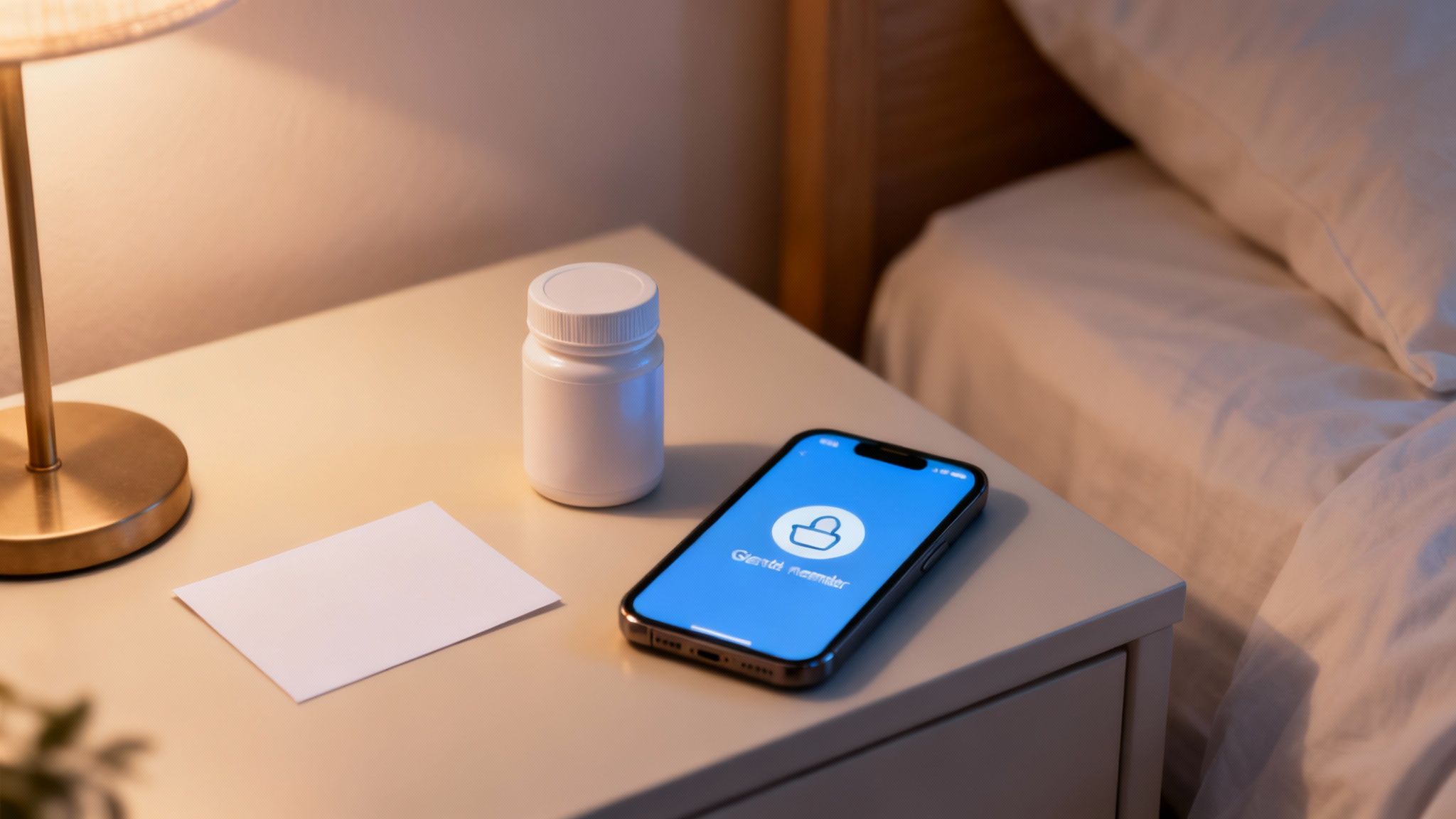
Let’s make this concrete. Imagine Alex, a college student trying to improve his sleep before big exams. He decides to try taking probiotics at night but knows he’ll forget unless he has a system. He sets a nightly reminder on his phone for 10 PM. Then, he uses a simple trick from behavioral psychology called “habit stacking” by pairing the new habit with one he already does: his digital detox. When the alarm goes off, he plugs his phone in to charge for the night and immediately takes his probiotic. This simple link makes it an effortless part of his wind-down routine. He’s not relying on willpower; he’s relying on a trigger he already responds to. Building the right routine is absolutely key to maximizing supplement absorption.
Editor’s Note: What Actually Works When Taking Probiotics at Night
Let’s cut through the noise: probiotics aren’t a magic pill for perfect health. While the science is definitely promising, the real secret ingredient is consistency. The best time to take your probiotic is simply the time you’ll remember to take it, day in and day out. That said, if you’re someone who deals with morning digestive weirdness or you’re looking to support your sleep quality, the evidence does point to a real advantage for a nighttime dose. This strategy is best for people who already have a consistent evening routine and are looking for ways to optimize their gut health and sleep. It’s important to remember everyone’s body is different, so your results might vary. A healthy lifestyle—built on good food, movement, and stress management—is always the foundation.
This simple decision tree can help you map out what a straightforward nighttime probiotic routine could look like.
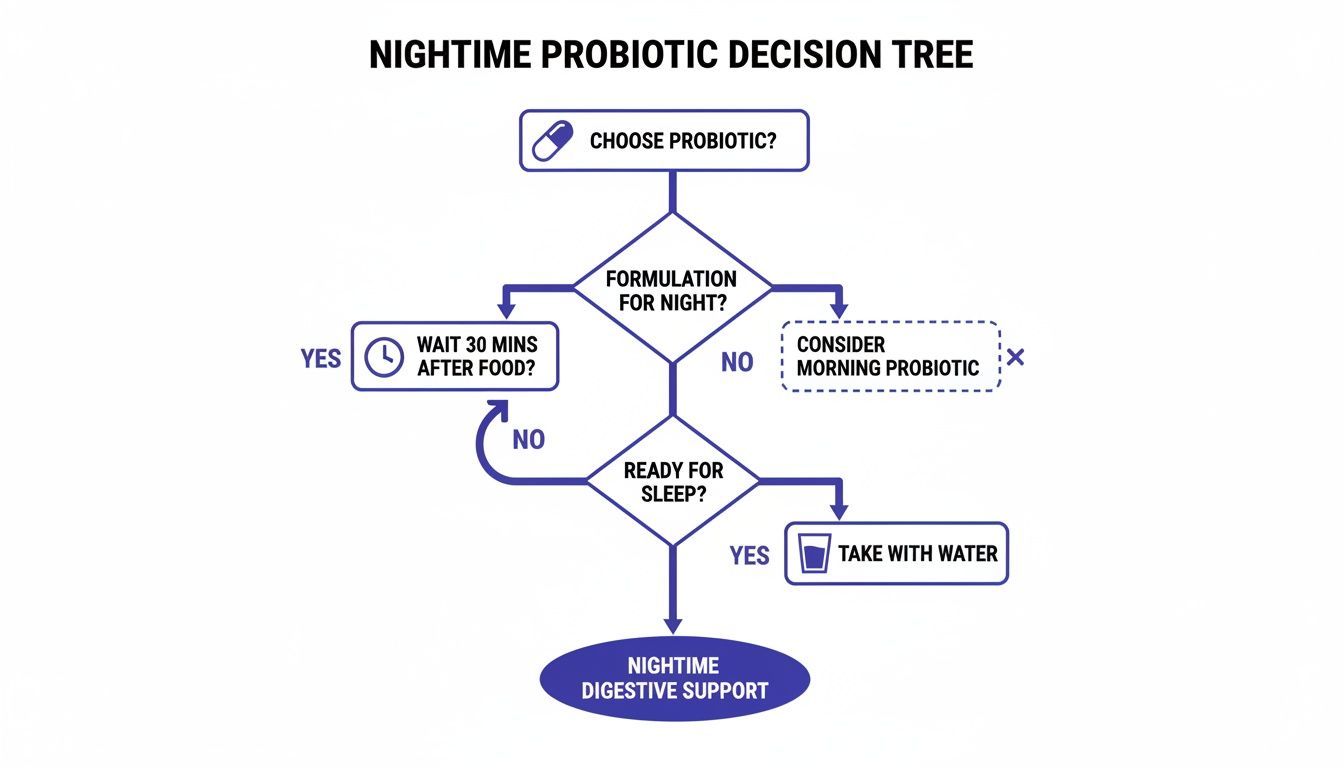
As you can see, the process boils down to a few key steps: choose the right strain for your goals, wait a couple of hours after dinner, and take it right before you turn in for the night. If you want to go deeper on specific formulas, you might find our guide on effective probiotic supplements helpful; you can check out a LeanBiome review for 2025 to see how we break down different products.
Key Takeaways for Your Probiotic Routine
In a hurry? No problem. This is your cheat sheet for making sense of it all. Here are the most important, practical points to remember from this guide.
Nighttime is a great time. Taking your probiotics before bed is perfectly safe and often very effective. Your gut is generally calmer and less acidic, giving those beneficial bacteria a better shot at survival and colonization.
Consistency is king. More than anything else, the best time to take your probiotic is the time you’ll actually remember to take it every single day. A consistent habit beats perfect timing.
Take them on an empty stomach. For the best results, aim to take your supplement 2-3 hours after your last meal. This simple move helps the live cultures bypass the harshest stomach acid and get where they need to go.
Match the strains to your goals. If better sleep and a calmer mind are what you’re after, keep an eye out for specific strains like Lactobacillus and Bifidobacterium.
Support your gut-brain connection. A healthy gut microbiome helps with the production of neurotransmitters like serotonin, which is a key player in regulating your mood and sleep. This is a foundational step toward better mental clarity.
Following these simple tips will help you build a routine that truly supports your digestive health and overall well-being. Getting your gut health right is a powerful step toward achieving the kind of focus and balance we explore in The Power of Clarity.
Your Probiotic Questions, Answered (FAQ)
Stepping into the world of supplements can feel like learning a new language. To clear things up, we’ve put together honest answers to the most common questions we hear about probiotics. Think of this as your go-to guide for building a new routine with confidence.
1. Can I Take Probiotics With Other Medications or Supplements?
In most cases, yes—probiotics are generally safe to take with other supplements and medications. That said, it’s always smart to check with your doctor or pharmacist first. They know your health history and can give you advice that’s tailored to you. The one big exception is antibiotics. If you’re on a course of antibiotics, timing is everything. To protect your investment, take your probiotic at least two to three hours apart from your antibiotic dose.
2. What Happens If I Miss a Dose of My Probiotic?
Don’t sweat it. A single missed day isn’t going to derail your progress. With probiotics, the real magic comes from long-term consistency, not short-term perfection. Just get back on track with your next scheduled dose. There’s no need to double up, which could potentially cause a little temporary digestive upset anyway.
3. How Long Does It Take to Notice Benefits From Probiotics?
Patience is your best friend here. While some people report feeling subtle digestive improvements within a few days, it typically takes two to three weeks of consistent daily use to notice more significant, lasting benefits. Remember, everyone’s gut is unique. The timeline depends on your starting gut health, the specific probiotic strains you’re taking, and your overall diet and lifestyle.
4. Are There Any Side Effects to Taking Probiotics?
When you first start, it’s not uncommon to experience a few minor, temporary side effects as your gut microbiome gets used to the new arrivals. This can include mild gas, a bit of bloating, or changes in your usual bowel habits. These little rumbles usually fade within a few days. If they stick around or feel severe, it’s a good idea to stop taking the probiotic and have a chat with your healthcare provider.
5. Should I Take Probiotics With or Without Food?
This often comes down to the specific product you’re using. However, a great rule of thumb is to take them on a relatively empty stomach—like 30 minutes before a meal or, as we’ve covered, right before you go to bed. This helps the delicate bacteria get past your harsh stomach acid with less trouble. But always check the label on your bottle. Some formulations are specifically designed to work best when taken with a little food.
Can You Take Probiotics at Night?
6. Can You Take Probiotics at Night for Better Results?
Absolutely. For many people, taking probiotics at night is a fantastic strategy. When you’re asleep, your whole digestive system slows down, and stomach acid production is at a low point. This creates a calmer, more hospitable environment for the good bacteria to survive the journey through your stomach and settle into your intestines. It’s a simple tweak that can potentially boost both digestive comfort and even sleep quality.
7. Do I Need to Refrigerate My Probiotics?
It completely depends on the product. Some probiotic strains are quite fragile and need to be kept cold to stay alive. Others are freeze-dried, making them perfectly happy on a shelf. The golden rule? Always read the storage instructions on the label. That’s the only way to be sure you’re keeping your supplement potent and effective.
8. Can Taking Probiotics Help With Mood and Focus?
The science on the gut-brain axis is fascinating and growing every day. We now know there’s a powerful connection between a healthy gut and your mental well-being. A balanced microbiome helps produce neurotransmitters like serotonin—a key player in regulating your mood. While a probiotic isn’t a treatment for a mental health condition, supporting your gut is a foundational piece of a holistic wellness plan that can contribute to better mental clarity and a more stable mood.
9. What’s the Difference Between Probiotics and Prebiotics?
Here’s a simple way to think about it: Probiotics are the good bacteria themselves (think of them as the “seeds” for your gut garden). Prebiotics are specific types of fiber that act as food, or “fertilizer,” for those good bacteria. Taking them together (a combination often called “synbiotics”) can be a very effective strategy for cultivating a thriving gut ecosystem.
10. Can I Get Enough Probiotics From Food Alone?
For many people, yes! Fermented foods like yogurt, kefir, sauerkraut, kimchi, and kombucha are fantastic natural sources of beneficial bacteria. A diet rich in these foods can go a long way in supporting your gut health. However, supplements offer a more targeted approach. They can deliver a concentrated dose of specific, well-researched strains that you might not be getting from food alone, which can be especially helpful if you’re trying to address a particular health goal.
Disclaimer: The information in this article is for educational purposes only and is not intended as a substitute for professional medical or psychological advice, diagnosis, or treatment. This content may also contain affiliate links, which means we may earn a commission if you make a purchase through them, at no extra cost to you.
