


Published:
Want faster, deeper rest without moving walls? This sleep sanctuary declutter plan for small bedrooms shows you exactly what to do in one focused hour, plus how to keep it tidy for good. You will clear surfaces, set rules for under-bed storage, reduce light and noise, and shape a room that signals sleep on sight.
Because space is tight, every move must count. You will start with the bed, stage a fast closet sweep, reset the nightstand, and finish with light, noise, and air tweaks that support healthy sleep. Also, you will get checklists, a 60-minute walkthrough, and simple rules to keep clutter gone.
Key takeaways from a small bedroom sleep sanctuary plan
- Start with the bed and floor, then work clockwise in zones to avoid backtracking.
- Use a strict in-or-out rule for the nightstand and under-bed items.
- Block light and dull noise to help your brain link the room with sleep.
- Keep temperature cool and textiles dust-safe to support easier breathing.
- Label one home for each item so resets take under five minutes.
What is a sleep sanctuary declutter plan for small bedrooms?
It is a short, clear sequence that removes visual noise, trims belongings to essentials, and sets environmental cues that support sleep. In a small room, you do not have space to “stash and hope.” Instead, you reduce the total item count, then give each item one labeled home. As a result, your room looks calm and stays that way with quick daily resets.
Health guidance supports the approach. CDC guidance advises a quiet, relaxing, and cool bedroom for better sleep (CDC). Sleep Foundation notes that many adults sleep best near 65°F (18°C) (Sleep Foundation). WHO (Europe) recommends very low bedroom noise at night (aim under 30 dB) (WHO Europe). You will apply these ideas as you declutter.
Fast start: 60-minute small bedroom sleep sanctuary plan
Use this sleep sanctuary declutter plan for small bedrooms when you want results today. Set a timer and follow the timeline. Keep one laundry bag for trash, one for donate, and one box for “re-home elsewhere.”
Free mini workbook: Mind Clarity Reset
Build momentum, sharpen focus, and keep what works after day 7.
| Time | Task | Goal |
|---|---|---|
| 00–10 min | Make the bed tight. Pull anything off the bed and floor into staging piles (bed, donate, trash, elsewhere). | Instant order and clear work zone. |
| 10–20 min | Nightstand sweep. Keep lamp, water, book, sleep mask, and charger only. Remove cosmetics, paperwork, and snacks. | Cut visual noise by half. |
| 20–30 min | Closet first pass. Pull obvious non-seasonal or unused items. Bag donate/elsewhere. | Free 15–20% hanging space. |
| 30–40 min | Under-bed rules. Remove loose items. Load only sealed, labeled bins (seasonal, spare linens, keepsakes). | Dust-safe storage and easy cleaning. |
| 40–48 min | Surface reset. Clear dresser top to three items max. Hang hooks for daily bag/robe if needed. | Flat, calm sightlines. |
| 48–55 min | Light + noise. Close blackout curtains, place draft stoppers, set white-noise level. | Darker, quieter room. |
| 55–60 min | Final sweep. Vacuum paths, empty trash, place donate bag near the door. | Clean finish and exit plan. |
Pro tip: stage donate and trash outside the room at the 30-minute mark. That small move prevents backsliding and keeps the path clear.
Zone-by-zone sleep sanctuary declutter plan for small bedrooms
Work clockwise so you only touch each spot once. Keep decisions fast and simple.
Zone 1: The bed is your anchor
- Make it first. A tight bed gives you a clear table-height surface to sort.
- Use one duvet, two pillows for sleepers, and one accent at most.
- Store spare sets in a single under-bed bin labeled “Linens.”
For allergy relief, wash sheets weekly in hot water (at least 130°F/54°C) and consider mattress and pillow encasements. Mayo Clinic and AAAAI both note these steps can help control dust-mite exposure (Mayo Clinic; AAAAI).
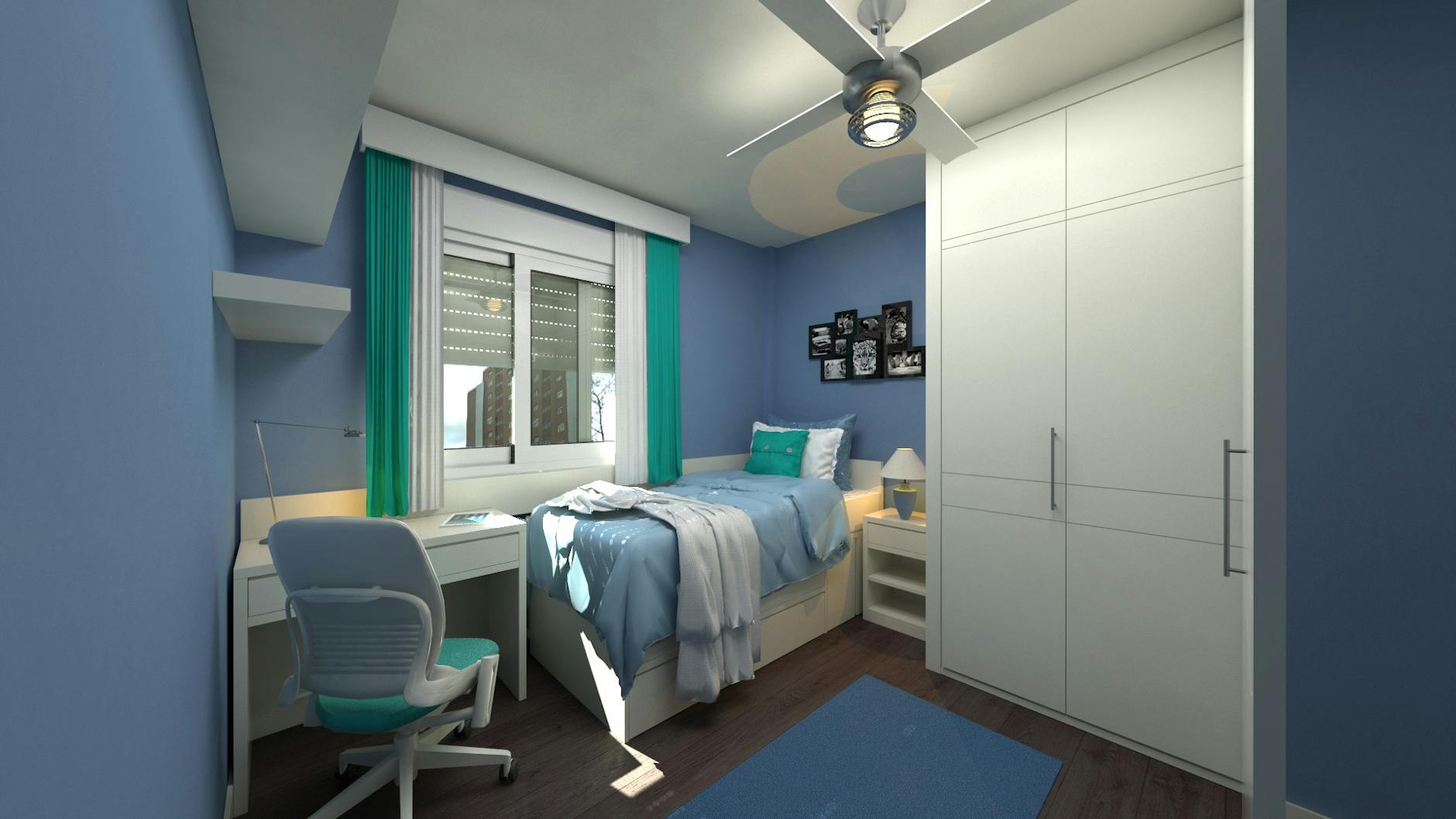
Media provenance: Contemporary bedroom decor with blue tones, modern furniture, and bright lighting. Source: Pexels. Photographer: Pixabay.
Zone 2: Nightstand essentials only
- Keep: lamp, a book or e-reader, water, sleep mask, charger.
- Remove: mail, meds not used nightly, makeup, cords, snacks.
- Use a shallow tray to corral tiny items. Label the drawer dividers.
Blue light from phones can delay melatonin. Therefore, try a 30–60 minute screen curfew. See Harvard Health for why blue light at night can disrupt sleep.
Zone 3: Closet first pass, then refine
- Pull anything you have not worn in 12 months unless it is formal wear.
- Group by use: sleepwear, work, workout, outerwear.
- Use slim hangers and one small bin for accessories.
Because space is finite, set a cap per category. For example, limit sleep tees to five. Label each shelf or bin so the limit is clear.
Zone 4: Under-bed storage
- Only sealed bins. No loose bags or piles.
- Categories allowed: off-season clothes, linens, keepsakes.
- Front labels large enough to read while standing.
In your sleep sanctuary declutter plan for small bedrooms, treat the under-bed like a mini-closet. If you would not store it in a closet, it probably does not belong here either.
Zone 5: Dresser top and wall hooks
- Maximum three items on the dresser top (for example, lamp, plant, tray).
- Mount one or two hooks behind the door for a robe or bag.
- Do not start a “chair pile.” If it touches the chair, it must be hung or washed.
Zone 6: Windows, light, and airflow
- Hang blackout curtains or a tight-fitting shade.
- Use a draft stopper to reduce outside noise and keep the room cool.
- Open windows during the day for fresh air if outdoor air is clean.
CDC suggests a quiet, relaxing, cool room. Blackout and mild white noise can help you hit those marks without a remodel.
Under-bed storage rules for a small bedroom sleep sanctuary plan
This section sets simple, durable rules you can follow without thinking. A sleep sanctuary declutter plan for small bedrooms depends on low-friction habits like these.
- Only sealed containers go under the bed.
- Every bin gets one large exterior label.
- Categories must be single-purpose per bin.
- Quarterly review: pull bins, vacuum, re-label if needed.
- One-in, one-out: if a bin is full, remove something before adding.
| Container | Best for | Why it works | Watch-outs |
|---|---|---|---|
| Low-profile lidded bin | Linens, off-season clothes | Seals dust, slides easily | Measure bed clearance first |
| Soft zippered storage bag | Bulky textiles | Flexible and lightweight | Less rigid; avoid overstuffing |
| Rolling drawer | Daily-use shoes | Quick access | Needs a stop so it does not roll out |
| Vacuum-seal bag in bin | Rarely used clothing | Maximizes space | Not ideal for frequent access |
Measurement tip: measure the bed from floor to rail in three places. Use the smallest number and subtract 1 inch (2.5 cm). That is your max bin height.
Cut light and noise fast in your small bedroom sleep sanctuary plan
Light and sound shape how alert you feel. A sleep sanctuary declutter plan for small bedrooms must control both.
- Blackout: Choose lined curtains or cellular shades that fit tight. Seal side gaps with magnetic tape or side tracks.
- Noise: Set white noise to a steady, low volume. WHO (Europe) notes bedrooms should be very quiet at night; keep the machine just loud enough to mask sudden sounds.
- Tech curfew: Dim screens and stop 30–60 minutes before bed. Harvard Health explains how blue light can shift circadian timing.
- Temperature: Sleep Foundation reports many sleep best around 65°F (18°C). Adjust bedding layers, not just the thermostat.
Quick workflow: Calm room in five moves
- Make bed tight
- Clear floor + nightstand
- Bin under-bed items
- Blackout + white noise
- Set cool temp + screen curfew
Tip: Label every bin and shelf so resets take under five minutes.
Best temperature for a small bedroom sleep sanctuary plan
Most adults sleep best near 65°F (18°C), with a common comfort range from about 60–67°F (15.5–19.5°C). If your room runs warm, use lighter bedding and a breathable mattress protector. If it runs cool, add a light layer you can shed at night. See the Sleep Foundation guidance for details.
Air and allergens in a small bedroom sleep sanctuary plan
Dust and allergens affect comfort and can disturb sleep. Weekly hot washes of sheets and encasing pillows and the mattress can help reduce exposure. The Mayo Clinic and AAAAI offer bedroom-focused tips.
| Item | Frequency | Notes |
|---|---|---|
| Sheets + pillowcases | Weekly | Hot water ≥130°F (54°C) |
| Duvet cover | Every 2–4 weeks | Check care label |
| Blankets/throws | Monthly | Hot wash when safe |
| Pillow + mattress encasements | Quarterly | Zip fully after wash |
| Rug (if any) | Weekly vacuum | Skip rugs in very small rooms if possible |
Tiny bedroom declutter in 60 minutes: sleep-focused small bedroom declutter
Follow the hour plan above, and set strict limits. Use a timer for each zone. Make yes/no decisions only; no “maybe” pile. Finally, walk the donate bag to the door so it leaves the home this week.
Tools that support your small bedroom sleep sanctuary plan
We focus on low-cost, durable, and multi-use tools that keep the room dark, quiet, cool, and dust-safe without adding clutter. We avoid hype and pick based on function and fit in small spaces.
- Blackout curtains or cellular shades with tight side seals.
- Low-profile under-bed lidded bins that fit your bed clearance.
- A compact, steady white-noise machine with volume memory.
- Labels you can read while standing.
Note: For sleep-hygiene ideas and quick environment changes, MedlinePlus offers practical tips (like eye masks and earplugs) that can complement decluttering.
Under-bed storage that fits a small bedroom sleep sanctuary plan
Choose rigid lidded bins for a cleaner seal and easier sliding. Bags work for bulky textiles but can snag and shift. Always label and keep categories simple so you can return items fast. If you reach for something weekly, consider moving it to the closet instead.

Media provenance: A minimalist scene of a laptop on a textured bed with pillows, capturing a relaxed and modern atmosphere. Source: Pexels. Photographer: www.kaboompics.com.
Light-blocking options for a small bedroom sleep sanctuary plan
| Option | Install complexity | Light-blocking | Best for |
|---|---|---|---|
| Blackout curtains | Low | High | Renters; quick wins |
| Cellular blackout shade | Medium | High | Tight window frames |
| Side tracks + shade | Medium | Very high | Bright streetlights |
| Eye mask | Zero | Varies | Travel or extra backup |
Mistakes that break a small bedroom sleep sanctuary plan
- Storing open baskets under the bed (dust magnets).
- Stacking decorative pillows you move every night.
- Buying bins before you measure bed clearance.
- Using the chair as a hamper stand-in.
- Keeping more than three items on any surface.
- Skipping labels. Skipping labeling can break a sleep sanctuary declutter plan for small bedrooms.
White noise choices for your small bedroom sleep sanctuary plan
You can test with a phone first to learn your preferred sound and volume. Then, if it helps, choose a small dedicated unit without notifications or ads. Keep volume steady and low. The goal is to mask peaks in noise, not to blast the room.
Small-room makeover for sleep sanctuary ideas
If the embed does not load, watch here: EXTREME SMALL BEDROOM MAKEOVER: Boho to Minimal.
Layout and flow for a small bedroom sleep sanctuary plan
Good flow reduces friction at night and in the morning. Aim for one clear path from the door to the bed, then to the closet. If possible, leave at least 24 inches (61 cm) of walking space along one bed side. When that is not possible, clear the foot of the bed and keep the path straight.
Measure first, then choose storage
- Door swing: open your bedroom and closet doors and note where handles land. Keep those arcs clear.
- Bed height: measure floor to rail and floor to mattress top. Pick bins that fit under the rail, not just the mattress.
- Drawer reach: open any dresser drawers. If they hit the bed, slide the dresser two inches and re-test.
Clear sightlines and calm color
- Keep tall items off the nightstand. Short and simple looks calmer.
- Limit art above the bed to one piece. Choose soft tones or a plain textile.
- Use one accent color around the room to tie things together.
Single-purpose zones beat multi-use
- Desk in the bedroom? Keep it paper-free after 7 pm. Put a cover or cloth over it at night.
- Workout gear? Store in one bin, not on the floor. Pull it out in the morning only.
- Hobby items? Move to a shared area if possible; if not, limit to one labeled box.
7-day micro-resets to lock in gains
Short daily moves will protect your one-hour reset. Each takes five minutes or less and pairs well with brushing your teeth or setting an alarm.
- Day 1: Nightstand tray reset. Remove any extras, wipe, and relabel.
- Day 2: Dresser top. Return items to the three-item limit.
- Day 3: Closet edit. Remove two items you never wear.
- Day 4: Under-bed audit. Slide out bins, vacuum edges, and re-stack.
- Day 5: Light and noise check. Adjust curtain gaps and verify noise level.
- Day 6: Bedding refresh. Swap pillowcases or air out pillows by a window.
- Day 7: Mini floor sweep. Pick up anything out of place and put it home.
Repeat weekly. You can also schedule a calendar reminder titled “5-minute sleep sanctuary reset.” It keeps the habit visible.
Troubleshooting: tiny bedroom declutter for better sleep
No closet at all
- Use a small wardrobe rack with a fabric cover to block light and dust.
- Hang only the current week’s outfits. Store the rest in under-bed bins.
- Place shoes in a shallow lidded bin to keep floors clear.
Platform or loft bed
- Platform drawers? Assign one per category (linens, off-season, keepsakes).
- Loft? Use a curtain or fabric panel to hide visual noise below.
- Add a stick-on LED under the loft to reduce nighttime stumbles.
Shared studio
- Use a curtain or bookcase as a soft divider. Keep the sleep side minimal.
- Routines matter more. Do the five-minute reset before bed every night.
- Choose a white-noise machine with a narrow sound profile to avoid masking alarms.
Window light leaks
- Close side gaps with adhesive side tracks or magnetic tape.
- Add a tension rod above the shade to hold a blackout valance.
- As backup, keep a comfortable eye mask by the nightstand.
Thin walls or hallway noise
- Seal door gaps with a draft stopper. Add weatherstripping if allowed.
- Place a soft rug or runner to dampen footstep echoes.
- Set white noise just high enough to mask sudden peaks, not constant hums.
When issues stack up, return to basics. Your sleep sanctuary declutter plan for small bedrooms works best when surfaces are clear, bins are sealed, and the room goes dark and quiet on demand.
Budget checklist: use what you have first
- Repurpose shoe boxes inside drawers as dividers. Label the fronts.
- Use binder clips to hold curtain edges tight against the wall at night.
- Fold a towel as a temporary draft stopper at the door base.
- Make large labels with masking tape and a bold marker. Upgrade later.
- Turn a spare pillowcase into a dust cover for a small rack.
Spend only after you measure. A well-fitted $12 bin beats a fancy $40 bin that does not slide.
Printable checklist: one-hour plan on one page
Copy this list into your notes app or print it. It is the same sleep sanctuary declutter plan for small bedrooms, condensed for quick action:
- Make bed tight. Stage keep/donate/trash/elsewhere piles.
- Nightstand: keep five essentials; remove the rest.
- Closet: pull obvious no’s; bag and label.
- Under-bed: sealed bins only; label big and clear.
- Dresser: three items max on top; hang one or two hooks.
- Blackout and white noise; set cool temperature.
- Vacuum, empty trash, set donate by the door.
Maintenance calendar: weekly, monthly, seasonal
| When | Task | Why |
|---|---|---|
| Nightly (5 min) | Clear nightstand, clothes away, curtains closed | Fast reset maintains calm cues |
| Weekly (15–20 min) | Hot-wash sheets, quick under-bed vacuum edge | Cleaner air and easier breathing |
| Monthly (20–30 min) | Dresser/closet micro-edit; replace worn labels | Stops build-up before it starts |
| Quarterly (30–45 min) | Pull all under-bed bins; re-sort and relabel | Keeps storage honest and dust-safe |
| Seasonal (45–60 min) | Swap capsule clothing; clean curtains/shades | Right items in reach; better blackout |
Noise masking: pick the right tool for the job
| Noise source | Fix | Notes |
|---|---|---|
| Street traffic | Heavier curtains + low white noise | Close window gaps; keep machine steady |
| Neighbors talking | Door draft stopper + bookshelf by wall | Add soft items to absorb sound |
| Footsteps above | Rug or runner | Soft surfaces reduce echoes |
| Early birds at home | Eye mask + phone do-not-disturb | Curfew helps keep screens quiet too |
Case example: from busy to calm in 60 minutes
Example reset: a 9×10 foot room with a full bed and a small closet. At minute 10, the bed is made and floors are cleared into four piles. By minute 20, the nightstand holds only five items and a tray. Around minute 30, the closet has 15% more space after a first-pass edit. At minute 40, two sealed bins go under the bed: linens and off-season clothes. Before minute 55, blackout curtains close and a draft stopper seals the door gap; white noise is set to a low, steady sound. The final five minutes handle vacuum and trash. The room now cues sleep on sight and takes under five minutes to reset each night.
FAQ: small bedroom sleep sanctuary plan answers
What is the fastest sleep sanctuary declutter plan for small bedrooms?
The fastest sleep sanctuary declutter plan for small bedrooms is the one-hour sweep: make the bed, clear floor and nightstand, edit the closet, set under-bed bins, then block light and start white noise. Each step has a tight time box so you do not stall.
How many under-bed bins should I use?
Use as few as possible, usually two to four. One for spare linens, one for off-season clothes, and one optional keepsake bin. If you need more, remove something before adding.
What should be on my nightstand?
Limit it to a lamp, water, one current book or e-reader, a sleep mask, and one charger. Everything else gets a labeled home elsewhere.
How dark and quiet should my room be?
Make it as dark as you can. Keep noise low and steady. WHO (Europe) aims for very low indoor night noise, and the CDC highlights quiet, cool rooms for better sleep.
Do I need blackout if I already use an eye mask?
Masks help, yet room-level darkness also cues your brain for sleep and helps if the mask slips. Use both when streetlights are bright.
What if I cannot drill into walls?
Try tension rods for curtains, adhesive side tracks for shades, and removable hooks. These renter-friendly tools avoid damage and still improve sleep cues.
Evidence-backed tips and sources
- CDC – About Sleep: cool, quiet, relaxing bedrooms support sleep.
- Sleep Foundation – Best Temperature for Sleep: many adults sleep best near 65°F.
- WHO (Europe) – Noise facts: guidance on night noise levels.
- Harvard Health – Blue light: why to limit screens at night.
- MedlinePlus – Healthy Sleep: practical sleep-environment tips.
- Mayo Clinic – Dust mite control: hot-water washes and encasements.
- AAAAI – Managing indoor allergens: bedroom-first allergen steps.
Next steps to keep momentum
Put a five-minute reset on your evening checklist: clear the nightstand, put clothes away, and pull the curtains. Also, schedule a 15-minute review every quarter to edit the closet and under-bed bins. Finally, if you want deeper habit help and practical tactics, explore the Mind Clarity Hub books hub and scan the latest reviews to find a method that fits you.
Wrap-up
This sleep sanctuary declutter plan for small bedrooms is simple by design: one hour, clear rules, and small tweaks that aid sleep. Save this sleep sanctuary declutter plan for small bedrooms and repeat it seasonally. As a result, your tiny room can feel restful every night without adding new furniture.
Helpful resources for your next step
Affiliate disclosure: As an Amazon Associate, Mind Clarity Hub may earn from qualifying purchases at no extra cost to you. Use this link only if it genuinely helps your planning.
If Create a Sleep Sanctuary: Declutter Plan for Small Bedrooms is a routine you want to keep using, a simple workbook, planner, or desk tool can make the steps easier to repeat.
Compare related planners, workbooks, and organization tools on Amazon.
