


Published:
If your thoughts feel slow and scattered, use mental fog recovery habits to clear the haze with small, steady steps. This guide keeps it simple. You will build a short daily loop for sleep, light movement, water, and focus that restores a calm, clear head without medical jargon or risky claims.
Key takeaways
- Start with a stable sleep window and morning light. That anchors your body clock.
- Drink water early and often. Mild dehydration can dull thinking.
- Move gently every day. Short walks and mobility work help focus.
- Use 25–45 minute focus sprints with short breaks.
- Wind down at night. Dim light, lower stimulation, and set tomorrow’s first task.
>m>Last reviewed: . This article is educational and not medical advice.
Quick self-check for today
- Did you sleep within the same 8-hour window last night?
- Drank 500–750 ml of water since waking?
- Got outside or stood by a bright window for 5–10 minutes?
- Took a 10-minute brisk walk or stretch break?
- Is one small task picked for your next focus sprint?
Which mental fog recovery habits work fastest?
When your mind feels slow, you need low-effort moves that pay off fast. Start with these five. They are simple, repeatable, and compound over days.
- Light and breath in the first hour: Step into daylight or sit at a bright window for 5–10 minutes while taking slow nasal breaths.
- Water before caffeine: Drink 300–500 ml of water. Add a pinch of salt or lemon for taste if helpful.
- 10-minute walk: Stroll outside or pace your hallway. Keep it easy.
- One-page brain sweep: Write every open loop on paper. Star one small next step.
- 25-minute focus sprint: Set a timer. Close extra tabs. Do only the starred step.

What causes that hazy feel during the day?
Mental fog has many everyday drivers. It is often a mix of low sleep quality, long stress, dehydration, too little movement, and choppy attention. You can shift each one with small steps.
- Short or irregular sleep: Sleep loss blunts thinking and mood. A regular sleep schedule helps your brain process memory and attention.CDC
- Mild dehydration: Even small fluid loss may affect alertness and tasks like short-term memory.NIH/NCBI
- High, steady stress: Ongoing stress can pull focus and raise fatigue. Mindfulness and breaks can buffer that load.APA
- Low daylight and little movement: Light anchors your body clock. Light exercise improves mood and thinking skills.Harvard Health
- Late caffeine and bright screens: Caffeine too late and bright blue light at night can delay sleep.Sleep Foundation, Harvard Health
These everyday levers are the focus of the habits below. You can steer them without complex tools.
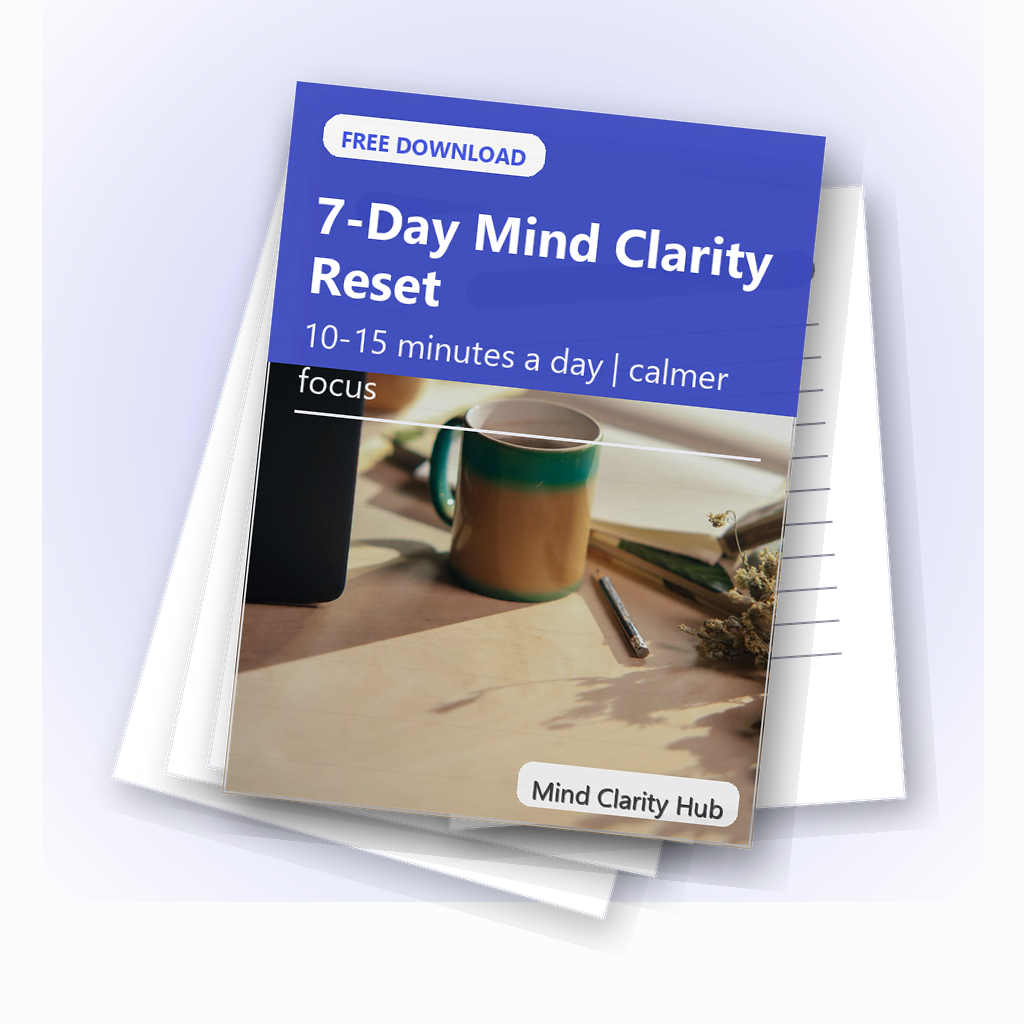
Free mini workbook: Mind Clarity Reset
Build momentum, sharpen focus, and keep what works after day 7.
Build your daily loop for a clear head
Here is a simple, repeatable loop you can run every day. These mental fog recovery habits stack into a stable routine you can keep even on busy weeks.
Morning clarity ritual (10–25 minutes)
- Light first: Step outside or sit by a bright window for 5–10 minutes.
- Water then coffee: Drink 300–500 ml of water before caffeine.
- Gentle movement: Two sets of 10 air squats and arm circles, or a 10-minute walk.
- One-page plan: List tasks, star one. That is your first focus sprint.
- Focus sprint: 25–45 minutes on the starred task. No apps or tabs beyond what you need.
Midday rescue (10–20 minutes)
- Box breathing: Inhale 4, hold 4, exhale 4, hold 4. Repeat 4 rounds.
- Water break: 300 ml of water, plus a snack with protein and fiber if hungry.
- Short sunlight + walk: 5–10 minutes if possible.
- Second sprint: One more 25-minute block on a single task.
Evening wind-down (30–60 minutes)
- Screen dim and phone parking: Lower brightness. Park your phone away from bed.
- Light stretch or tidy: 5–10 minutes to tell your brain the day is done.
- Set tomorrow’s first step: Write one small task for the morning.
- Consistent lights-out: Aim for the same time each night.
How much sleep do you need to clear the fog?
Most adults do best with 7–9 hours in a stable window. A fixed wake time is the anchor. Also, a pre-bed wind-down helps your brain shift into sleep. Simple sleep hygiene routines work well for many people.CDC, AASM
| Step | What to choose | Why it helps |
|---|---|---|
| Wake time | Pick a time you can hold 7 days | Trains your body clock |
| Sleep window | 7–9 hours based on your needs | Gives your brain cleanup time |
| Wind-down | 30–60 minutes, same order nightly | Signals “day is done” |
| Light at night | Dim screens or use night shift | Protects melatonin timing |
Among mental fog recovery habits, a stable sleep window is the anchor habit that makes other steps easier.
When should you stop caffeine for a clearer mind?
A good rule is to stop caffeine 8–10 hours before bed. For a 10:30 p.m. bedtime, try a 12:30–2:30 p.m. cutoff. You still enjoy the lift, yet it is less likely to disrupt sleep later.Sleep Foundation
One of the mental fog recovery habits is a firm caffeine cutoff that you can keep most days. Pair it with a water refill for an easy win.
Does light movement sharpen thinking?
Yes, for many people. Light to moderate exercise can boost mood and improve memory and thinking skills. You do not need a long workout. A 10–20 minute walk, stair laps, or mobility flow is enough to lift alertness.Harvard Health
Gentle movement is a core part of mental fog recovery habits. Keep it short and repeatable so you can do it daily.
Hydration that helps without fuss
Start with 300–500 ml of water on waking. Then drink a glass with each meal and focus sprint. If you sweat, add more. Mild dehydration can affect attention for some people, so small, steady sips work better than chugging once.NIH/NCBI
Your 7-day reset plan
This 7-day reset layers mental fog recovery habits in a calm order. You do not need perfection. Aim for consistency and build momentum.
| Day | Focus | Small commitments |
|---|---|---|
| Day 1 | Light + Water | 10 min daylight; 1 glass on waking |
| Day 2 | Sleep window | Pick wake time; 30 min wind-down |
| Day 3 | Movement | 10–15 min walk |
| Day 4 | Focus | One 25–45 min sprint |
| Day 5 | Stress buffer | 4 rounds of box breathing |
| Day 6 | Nutrition basics | Protein + fiber at first meal |
| Day 7 | Maintenance | Plan next week’s windows |
The clear-head cycle at a glance
Clear-head daily loop
- Sleep: fixed window
- Morning light: 5–10 min
- Movement: 10–20 min
- Water & fuel: steady sips, protein + fiber
- Focus sprint: 25–45 min
- Wind-down: dim, quiet, prepare tomorrow
>m>Core mental fog recovery habits in a tidy loop you can repeat daily.
Quick wins vs. longer rebuilds
Both matter. Quick wins buy clarity now. Longer rebuilds change your baseline over weeks.
| Quick wins (minutes) | Longer rebuilds (weeks) |
|---|---|
| 10-minute walk | Consistent 7–9 hour sleep window |
| 300–500 ml water | Regular exercise plan |
| 5–10 min daylight | Reducing late-night screen time |
| 25-minute focus sprint | Habitual morning routine |
| 4 rounds box breathing | Stable caffeine cutoff |
How to use this advice
- Go tiny: Shrink each step until it feels easy, then add time.
- Track the loop: Check off sleep, light, move, water, focus, wind-down each day.
- Adjust: If a step fails 3 days in a row, lower the bar and try again.
- Avoid extremes: Skip all-nighters, crash diets, or mega workouts. Steady wins.
- Get help when needed: If fog is severe, long-lasting, or worrying, consider talking with a qualified clinician.

What should you do when a foggy crash hits mid-task?
Stop for two minutes. Close your eyes. Do four rounds of box breathing. Stand up, drink water, and step into daylight or a bright space for five minutes. Take a short walk, then restart with a 10-minute micro-sprint on a single step. Small resets beat pushing through.
Why do routines beat willpower?
Routines remove choice. Your body clock loves rhythm, and your mind loves fewer decisions. A short, repeatable loop wins more often than a big, irregular push. That is why we lean on routines as the backbone of all the steps here.
Common mistakes to avoid
- Chasing hacks while skipping sleep.
- Drinking coffee first, water never.
- Forcing long workouts you will not keep.
- Starting ten tasks instead of finishing one.
- Bright screens in bed while hoping for great sleep.
Small tools that help you stay on track
- Timer app: Any phone timer works for sprints and short breaks.
- Paper checklist: One page per day for the loop.
- Eye mask: If your room is bright, a simple mask can help.
- Refillable bottle: Keep it in sight.
Fit the loop to your kind of day
The same mental fog recovery habits can fit many schedules. Use these quick templates and swap steps as needed.
Work-from-home day
- Open with light and water. Step to a doorway or balcony if time is tight.
- Place your first 25–45 minute focus sprint before checking email.
- Use a 10–15 minute mobility flow between video calls.
- Take a short outdoor lap after your last call to reset.
- Begin a 30-minute wind-down one hour before bed. Keep the same order nightly.
Office commute day
- Get daylight on the way in. Walk the last block if safe.
- Batch messages twice: late morning and late afternoon.
- Hold one 25-minute desk sprint before lunch. Use headphones to block noise.
- Drink a glass of water with each meeting handoff.
- Start wind-down soon after arriving home. Dim lights early.
Parenting-heavy evening
- Take light and water in the first 10 minutes after waking.
- Run one short sprint while kids nap or at school. Keep it single-task.
- Choose a 10-minute walk with a stroller or an indoor step loop.
- Shrink the wind-down to 10–15 minutes if evenings are full.
- Set tomorrow’s first step on a sticky note by the kettle.
Shift-work day
- Anchor a consistent sleep window that fits your shift pattern.
- Use bright light soon after waking, even if it is evening.
- Schedule a focus sprint when your energy is highest in the shift.
- Hold a firm caffeine cutoff 8–10 hours before your sleep window.
- Keep a short wind-down with dim light before bed, regardless of clock time.
Nutrition basics for steadier energy
Food needs vary. Still, some simple patterns help many people keep steady focus without heavy rules.
- Build most meals with protein, fiber, and color. For example: eggs or yogurt; whole grains or beans; fruit or veg.
- Time meals you can keep. A small breakfast works for some; a later first meal works for others. Notice which timing supports clear focus.
- Pair snacks: protein + fiber. Try nuts and fruit, yogurt and berries, or hummus and carrots.
- Avoid long stretches without fuel if they leave you irritable or unfocused. A small snack can prevent a crash.
- Plan a glass of water with each meal and each focus sprint.
- After big meals, take a 10-minute walk. It feels good and can help you re-focus.
You can also stack meals with your routine. For example, prep a simple first meal at night so the morning stays calm. Then, right after eating, start your sprint. In short, mental fog recovery habits work best as a set that you can repeat.
Caffeine and nap playbook
- Stop caffeine 8–10 hours before your target bedtime. Hold that line most days.
- If you are sensitive, keep total intake low and move to decaf after late morning.
- Use a short nap early afternoon if you can. Aim for 10–20 minutes, not longer.
- Try a “coffee then nap” only if it fits you: sip a small coffee, nap 10–15 minutes, then wake as caffeine starts. Skip this late in the day.
- Combine any nap with light movement after waking to avoid grogginess.
Make one choice and keep it for a week. That is how you see the effect. One of the mental fog recovery habits is a clear rule about when your last caffeine happens.
Workspace tweaks that cut mental noise
- Light up your work area. Face a window when possible, or add a bright, indirect lamp.
- Quiet the room. Use earplugs or headphones. Play soft, low-lyric sound if it helps.
- Set your phone far from your hands during sprints. Turn on Do Not Disturb.
- Make cues visible: place your water bottle within reach and your walking shoes near the door.
- Reduce friction. Keep a one-page checklist on your desk. Pre-load the next task the night before.
Place cues for mental fog recovery habits where you work. Small, obvious prompts help you act without extra thought.
Advanced focus sprint skills
- One-line start: Write the first action in seven words or fewer. Example: “Open doc and outline three points.”
- Finish-line ritual: At the timer, stop, log what you did, and write the next tiny step for later.
- If–then rescue: “If I get stuck, then I write the obstacle and do a 2-minute action.”
- Distraction parking lot: Keep a margin for ideas that pop up. Parking them keeps your sprint clean.
- Micro-closure: Save and close the file you used. Put tools back where they live.
- Weekly deep session: Book one 60–90 minute block when you feel sharpest. Guard it like a meeting.
These moves make sprints calmer and easier to repeat. Stack mental fog recovery habits onto these skills so your routine runs on rails.
Weekly review: protect the basics
A short review helps you adjust without stress. Do it once each week, ideally on the same day.
- Check five numbers: nights in your sleep window; minutes of daylight; number of walks; glasses of water; focus sprints done.
- Pick one blocker to solve. Lower the bar or move the step earlier in the day.
- Book your anchor times: wake time, first sprint, wind-down.
- Lay out cues: fill the bottle, place shoes near the door, prep a to-do card.
- Apply the two-strike rule: if you miss twice, make the step smaller.
Troubleshooting by symptom
If mornings feel flat
- Get bright light within an hour of waking, even at a window.
- Drink water first, then coffee 60–90 minutes after waking.
- Do a 5–10 minute brisk walk or mobility flow.
If afternoons crash
- Add a protein + fiber snack and water.
- Take a sunlight break and a short walk.
- Run a 10-minute micro-sprint to regain momentum.
If bedtime slips later
- Start wind-down earlier and keep the same order.
- Park your phone outside the bedroom.
- Dim lights 60–90 minutes before bed.
If cravings spike
- Check sleep first. Then add a protein + fiber snack.
- Drink a glass of water and take a 5-minute walk.
- Reduce long gaps between meals that leave you edgy.
If stress surges
- Use four rounds of box breathing.
- Write the worry on paper, then write a 2-minute next step.
- Take a brief walk or stretch and return to one task.
What not to expect
- No instant cure. Results build with consistency over days and weeks.
- No one-size-fits-all. Adjust timing and steps to your life.
- No medical claims. If symptoms are severe or worrying, consider professional care.
Use mental fog recovery habits as daily supports, not as a diagnosis or treatment.
A short explainer you can watch today
If the embed does not load, open the video here: Watch on YouTube.
More guides for building your reading plan
Want a deeper dive on sleep, stress, and clarity? See our curated books hub for better sleep and calm focus. Also explore our reviews hub for balanced takes on popular titles. For a printable evening routine, try our sleep hygiene checklist.
Answers to common questions
What are the best mental fog recovery habits to start this week?
Pick two: a fixed wake time and a 10-minute morning light walk. Add water before coffee. These set up better energy and focus for most people.
How long until I notice a difference?
Many people feel small gains within 2–3 days of consistent light, water, and earlier wind-down. Deeper shifts in sleep and steady focus often take 2–4 weeks.
Do I need supplements?
Not to start. Most gains come from basics: sleep, light, water, movement, and focused work blocks. If you consider supplements, talk with a qualified clinician.
Can I do this with a shift-work schedule?
Yes. Hold a consistent sleep window that fits your shifts, use bright light on wake, and keep your wind-down routine. A regular caffeine cutoff still helps.
What if my evenings are chaotic?
Shrink wind-down to 10 minutes. Dim lights, park your phone, and write one small task for tomorrow. Consistency beats length.
Is a blue-light filter enough at night?
It helps a bit, but dimming screens and room lights works better. Try to combine both when possible.
How long should my walks be?
Start with 10 minutes. If you feel good, stretch to 20. Short and daily beats long and rare.
Do weekends change the plan?
Hold your wake time if you can. Keep light, water, and one sprint. Flex the rest.
Trusted sources and further reading
Final thought
Start with two mental fog recovery habits today: light and water. Add a 10-minute walk and a small wind-down. Keep going for one week. Small, repeatable steps build a clear, steady mind.
Helpful resources for your next step
Affiliate disclosure: As an Amazon Associate, Mind Clarity Hub may earn from qualifying purchases at no extra cost to you. Use this link only if it genuinely helps your planning.
If Mental Fog Recovery Habits is a routine you want to keep using, a simple workbook, planner, or desk tool can make the steps easier to repeat.
Compare related planners, workbooks, and organization tools on Amazon.
