


>
Young families can build calm and connection at the table. This guide shows you how to set up a device‑free family dinner routine with conversation starters for toddlers using four simple anchors: a phone basket, a visual timer, simple prompts, and a clean‑up song. You will also get printable prompt cards and a meltdown‑safe exit plan you can use tonight.
Here is the quick answer: you can start tonight. Park phones, set a small timer, and pick two cards. This simple move begins a device‑free family dinner routine with conversation starters for toddlers that your child can trust and enjoy.
Quick start: your 15‑minute screen‑free family dinner routine for toddlers
- Park phones in a shared basket before anyone sits.
- Set a visual timer for 10–15 minutes.
- Use 3–5 toddler‑friendly prompts as back‑and‑forth talk.
- End with a short clean‑up song and one job per child.
In short, a device‑free family dinner routine with conversation starters for toddlers is a short, predictable rhythm that protects talk and reduces stress. You can scale it up as attention grows.
Why a screen‑free family dinner routine for toddlers matters
Back‑and‑forth talk during meals supports language and connection. According to Harvard’s Center on the Developing Child, “serve and return” interactions help build brain architecture through turn‑taking and warm responses (developingchild.harvard.edu).
Research links adult–child conversational turns with stronger language‑related brain activation and verbal skills over time (pubmed.ncbi.nlm.nih.gov/29442613). Meanwhile, caregiver device use during meals is associated with fewer interactions and more missed cues (pubmed.ncbi.nlm.nih.gov/24616357).
The American Academy of Pediatrics recommends setting screen‑free zones such as the dinner table within a Family Media Plan (healthychildren.org) and advises that ages 2–5 have no more than about an hour a day of high‑quality programming, ideally co‑viewed (publications.aap.org). The World Health Organization also urges limited sedentary screen time for under‑5s (iris.who.int).
Therefore, protecting device‑free family talk at dinner is a practical way to honor that guidance without pressure or perfection. When you keep the routine brief, caring, and clear, toddlers relax, join the talk, and learn what happens next. This is exactly why a device‑free family dinner routine with conversation starters for toddlers pays off even on the busiest nights.
What is a device‑free family dinner routine with conversation starters for toddlers?
It is a short, repeatable sequence that keeps hands, eyes, and hearts at the table. It uses a phone basket to remove distractions, a visual timer so time feels safe and finite, a few toddler‑friendly prompts to spark turns, and a singable clean‑up to close the loop. Because the steps are simple and timed, your toddler learns what happens first, next, and last.
How long should a screen‑free family dinner routine for toddlers last?
Start small. Ten to fifteen minutes often works for ages 2–4. Also, build in small jobs so they can move with purpose. As attention grows, you can add a few minutes. Quality beats quantity.
Set your space for a screen‑free family dinner routine for toddlers
Make the routine visible and easy to follow. A little prep pays off every evening.
- Place a phone basket by the table. Everyone drops devices there before sitting. Because adults lead the habit, toddlers notice.
- Set a visual timer where your child can see it. A kitchen timer or a high‑contrast countdown helps the time feel concrete.
- Use toddler‑sized tools. Small fork and spoon, an easy‑grip cup, and a wipeable placemat reduce mess and stress.
- Keep prompts near you. Print the card set below and keep it in a clip or small box at the table.
With those items ready, you can run a device‑free family dinner routine with conversation starters for toddlers even on the busiest nights.
5‑part screen‑free family dinner routine for toddlers (scripts)
Here is a simple flow you can follow. Speak in short, warm sentences. Name what is next. Smile and sit together.
| Step | Time | What you say |
|---|---|---|
| 1) Phone basket | 30 sec | “Phones nap in the basket. My phone is napping too.” |
| 2) Wash + sit | 1–2 min | “We wash hands, then sit on bottoms.” |
| 3) Set timer | 10–15 min | “Timer is for dinner time. When red is gone, we sing clean‑up.” |
| 4) Use 3–5 prompts | 6–8 min | “Your turn, my turn…” (see prompt cards below) |
| 5) Clean‑up song | 1–2 min | “We clean together while we sing our song.” |
Because every step is short, your child gets many small wins. This is the heart of a device‑free family dinner routine with conversation starters for toddlers.
Step 1: The phone basket (protect your focus)
Put a small basket by the table. Say, “Phones take a nap during dinner.” Lead by example and drop yours in first. If you expect a call, mention it up front: “I might take one call. I’ll step away and come back.” This shields the table from “technoference” and helps you notice toddler cues.
Step 2: The visual timer (make time feel safe)
Set 10–15 minutes. Show the red or digital countdown: “Dinner is this big.” Point back to it occasionally. When time is visible, children resist less because the end is clear.
Step 3: Toddler dinner conversation starters (spark turns)
Use warm, easy questions. Alternate your turns and theirs. Meanwhile, point to something concrete if they get stuck. Keep tone light. Aim for conversation, not performance.
Step 4: Clean‑up song (close the loop)
Pick a 60–90 second song. Give each person one job: wipe, carry cups, toss napkins, push in chairs. Then celebrate: “We did it together!”
Step 5: Reset and preview (build predictability)
After the song, do a 10‑second preview: “Tomorrow we nap phones, set the timer, and pick two cards again.” A tiny look‑ahead helps toddlers remember and reduces tomorrow’s pushback.
Toddler dinner conversation starters that work at dinner
Short, concrete, and playful prompts help. Use real objects, recent events, and choices with two options. Here is a quick chooser for common ages:
| Age | Great prompt types | Examples |
|---|---|---|
| 18–24 months | Point & name, choices | “Is your cup cold or warm?” “Point to your spoon.” |
| 2–3 years | Feelings, this‑or‑that | “Happy face or silly face today?” “Crunchy or soft?” |
| 3–4 years | Short stories, pretend | “What did the carrot say?” “Show me a tiny roar.” |
| 4–5 years | Why/How starters (simple) | “Why do we wash hands?” “How many peas can you count?” |
As a result, you get more “serve and return” turns—your child “serves” with a sound or word and you “return” with a warm, on‑topic reply.
- Senses: “What smells yummy?” “Is it smooth or bumpy?” “Tap the loudest food.”
- This or that: “Cup or spoon first?” “Red napkin or blue napkin?” “Big bite or tiny nibble?”
- Pretend: “Make your pea talk.” “What would the plate say?” “If broccoli wore a hat, what color?”
- Movement: “Can you nod two times?” “Show quiet hands.” “Wiggle just one finger.”
- Time: “Morning or night?” “Before bath or after bath?” “Yesterday or today?”
Printable toddler dinner conversation starters (cut and keep)
Print the cards below on plain paper or cardstock, then cut along the lines. Keep 10–12 cards in a binder clip at the table. These support any device‑free family dinner routine with conversation starters for toddlers.
| Card | Front (ask this) | Back (caregiver tip) |
|---|---|---|
| 1 | “Show me a tiny roar.” | Model first. Celebrate any sound. |
| 2 | “Cold or warm?” | Point to cup/plate to ground the choice. |
| 3 | “What color is your cup?” | If they guess, mirror and label the color. |
| 4 | “Happy face or silly face?” | Make faces too. Keep it playful. |
| 5 | “Tap something crunchy.” | Pause. Then describe the sound together. |
| 6 | “What did the carrot say?” | Use a fun voice. Follow their idea. |
| 7 | “Red things or blue things today?” | Point around the room for options. |
| 8 | “Who helped make dinner?” | Name each helper, include your child. |
| 9 | “What do we wash first: hands or face?” | Act it out in the air. |
| 10 | “Can you count 3 peas?” | Help line them up. High‑five after. |
| 11 | “What was your tiny good thing?” | Offer yours first as a model. |
| 12 | “This or that: apple or banana?” | Use pictures if needed. |
| 13 | “Soft like bread or hard like carrot?” | Let them touch, then label textures. |
| 14 | “Who can find a circle?” | Scan plates, cups, or lids together. |
| 15 | “What sound does the pasta make?” | Exaggerate whispers and crunches. |
| 16 | “Green or yellow on your plate?” | Point and name both colors. |
| 17 | “Show sleepy hands on the table.” | Model calm hands; praise the try. |
| 18 | “If the spoon could talk, what would it say?” | Follow their story without correcting. |
Tip: Rotate cards each week so prompts stay fresh while the routine feels familiar.
Workflow: screen‑free family dinner routine for toddlers
- Park phones in a shared basket
- Wash hands and sit on bottoms
- Set a visual 10–15 minute timer
- Share 3–5 toddler‑friendly prompts (turn‑taking)
- Sing a 60–90 second clean‑up song with one job each
Keep steps short, repeat nightly, and celebrate small wins.
Caregiver scripts for toddler dinner conversation starters
- “First phones nap, then we eat. I’m putting mine to bed.”
- “Timer is this big. When it’s gone, we sing and clean.”
- “Your turn to tell me a tiny good thing. Mine was the sunny walk.”
- “You can say ‘all done’ with your hands on the table.”
- “Jobs time! You carry napkins; I’ll carry cups.”
- “Two more minutes. Then we’ll pick the clean‑up song together.”
- “I hear you want a video. We talk first. Video can be later.”
Age‑by‑age tweaks for your screen‑free family dinner routine for toddlers
- 18–24 months: Keep dinner to 8–10 minutes. Use pointing games and single‑word choices. Offer a lidded cup and a placemat with pictures they can tap. End with one easy job like putting a napkin in the bin.
- 2–3 years: Stay with this‑or‑that prompts and feelings. Add a simple “first‑then” script: “First sit, then song.” Use 3 cards max. A short clean‑up task with movement (carry spoons) helps.
- 3–4 years: Try pretend prompts and tiny stories. Add counting up to 5. Invite them to lead one prompt: “Pick a card for me.” Consider adding 1–2 minutes to the timer if it feels easy.
- 4–5 years: Add simple how/why prompts and easy jobs like wiping the table with you. Let them watch the timer and give the 1‑minute warning. Keep tone playful and brief.
Whichever stage you are in, aim for a cozy, repeatable feel. That steady pattern is what makes a device‑free family dinner routine with conversation starters for toddlers work night after night.
7‑day build for your screen‑free family dinner routine for toddlers
Change one thing at a time. This week‑long build makes the habit stick.
| Day | Add this | Simple script |
|---|---|---|
| 1 | Phone basket only | “Phones nap while we eat.” |
| 2 | Basket + 8–10 min timer | “When red is gone, we sing.” |
| 3 | Add 2 cards | “Your turn, my turn.” |
| 4 | Add clean‑up song | “We clean together while we sing.” |
| 5 | Bump to 10–12 min | “Two more minutes, then jobs.” |
| 6 | Let child lead one card | “You pick the first card.” |
| 7 | Review + repeat | “We’ll do the same tomorrow.” |
By the end of the week, the steps feel automatic. That’s the goal: a dependable device‑free family dinner routine with conversation starters for toddlers that takes little willpower to run.
Meltdown‑safe exit plan for a screen‑free family dinner routine for toddlers
Even strong routines wobble. When big feelings hit, use this calm, consistent exit. It keeps dignity and safety first, while protecting a device‑free family dinner routine with conversation starters for toddlers.
| Moment | What you do | What you say |
|---|---|---|
| Early whining | Name and validate. | “You want to play now. We eat for a little time, then play.” |
| Throwing food | Remove food gently. | “Food stays on the table. We try again with hands down.” |
| Escalating cries | Offer two choices. | “Sit on your bottom or take a calm break with me.” |
| Needs a break | Step to calm corner. | “We breathe five times. Then we decide what’s next.” |
| Return or end | Invite repair. | “Ready to try two more minutes, or all done and clean‑up song?” |
| Asks for video | Hold the line. | “We talk now. Video can be later.” |
| Sibling teasing | Reset the script. | “Kind voices. New card now.” |
Because the script is predictable, power struggles drop. You model regulation, not punishment.
How do I handle picky eating without pressure?
Offer one or two safe foods with each meal. Avoid bribes or “just one more bite.” Also, talk about the day, not the bite count. Connection first; appetite follows over time. If growth or nutrition is a concern, consult your pediatrician. Meanwhile, keep prompts playful and separate from eating—your child can answer even if they are not hungry yet.
How to start a screen‑free family dinner routine for toddlers when nights are hectic
Begin with one anchor for a week. For example, add only the phone basket. Next week, add the timer. Then add two prompts, and finally the clean‑up song. Because you change one thing at a time, follow‑through sticks. If cooking is the stress, serve a simple “snack plate” dinner and still run the routine.
Using toddler dinner conversation starters with guests
When grandparents or friends visit, keep the rhythm and explain it in one sentence: “We do a quick, screen‑free dinner with a timer and two cards.” Then hand a guest a prompt to read. Guests often enjoy the structure, and your child sees that the routine stays steady with new people. This protects your device‑free family dinner routine with conversation starters for toddlers without making anyone feel policed.
Photo examples from real‑life kitchens using toddler dinner conversation starters
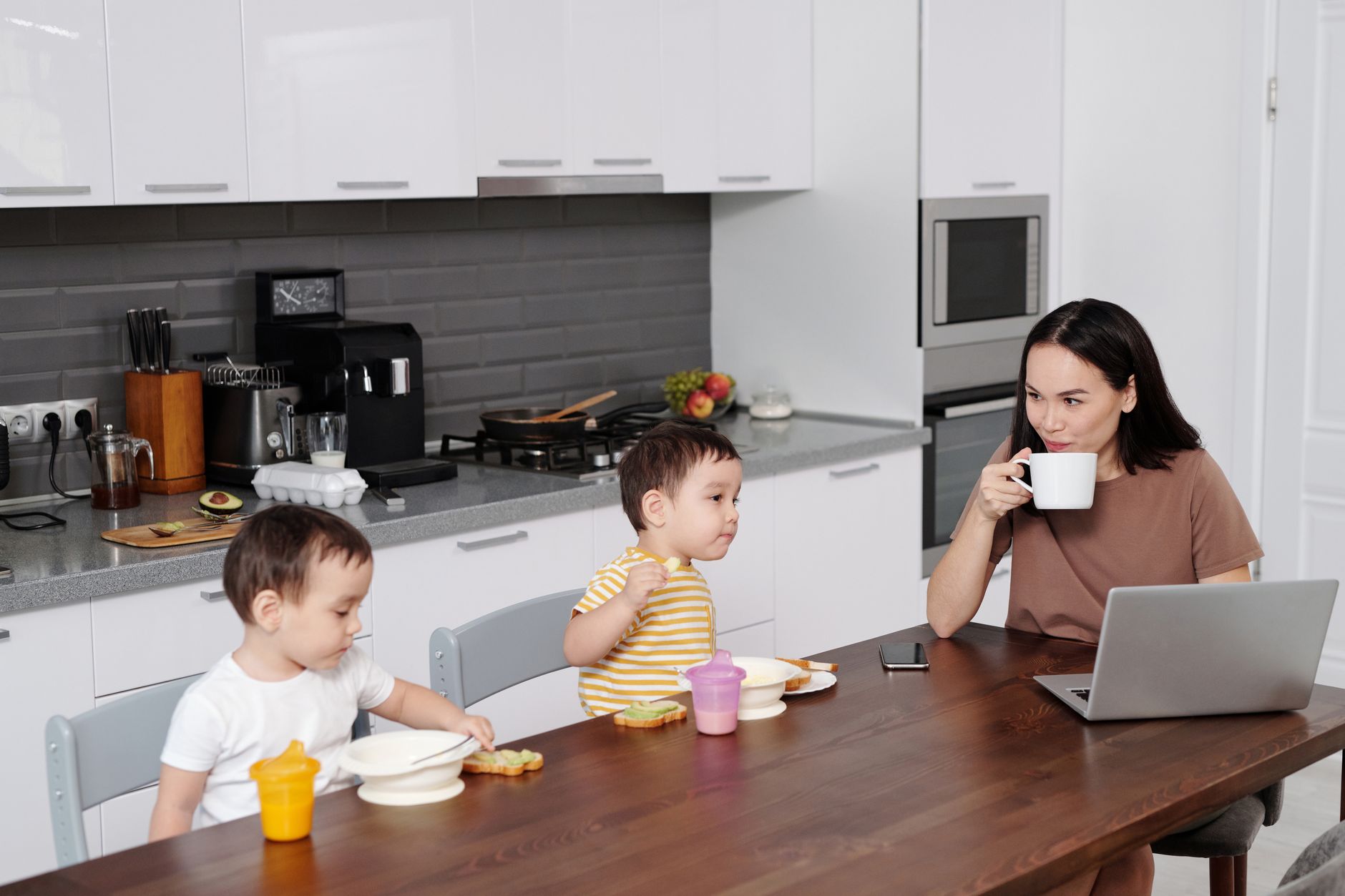
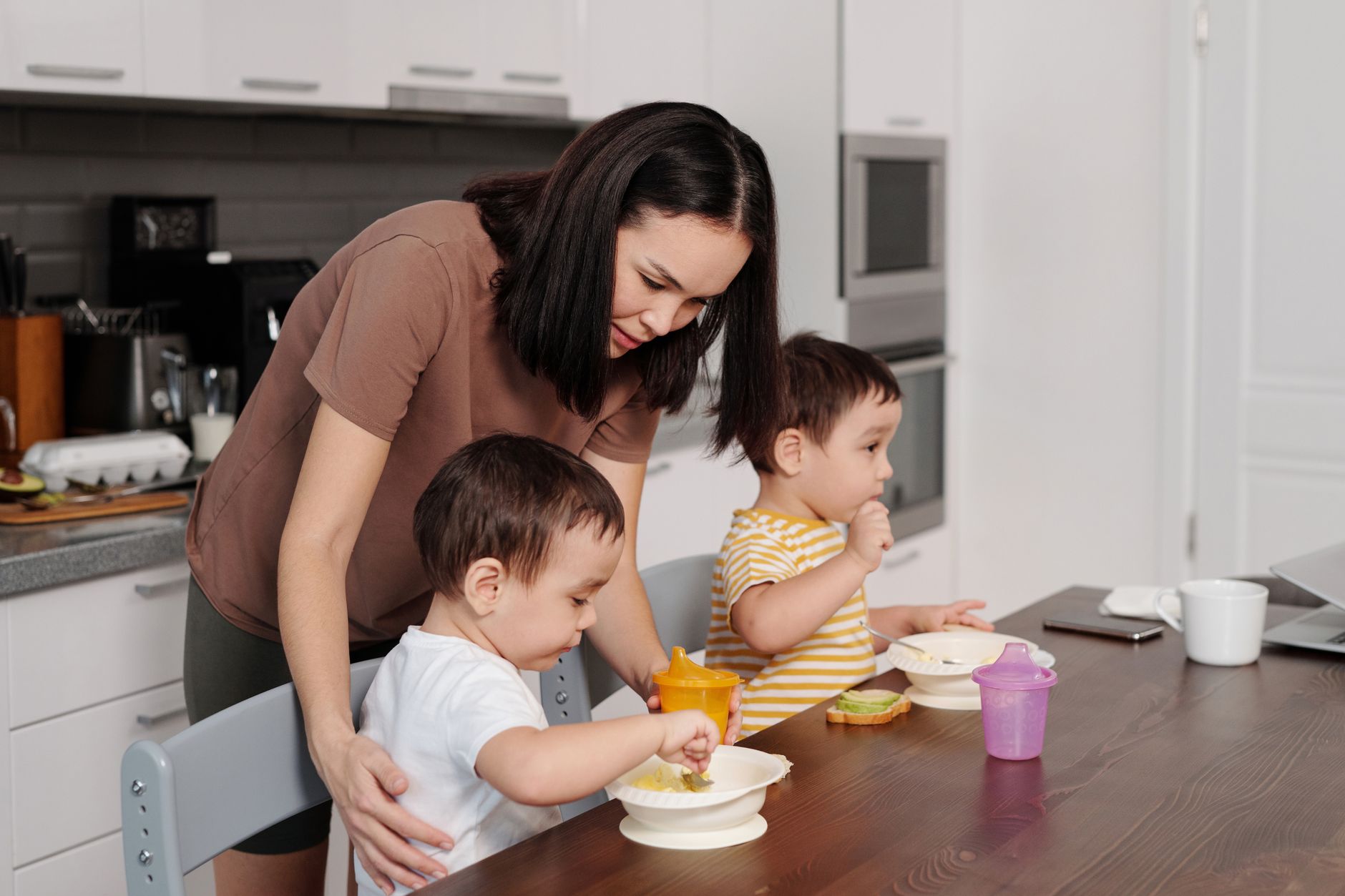
Troubleshooting your screen‑free family dinner routine for toddlers
Use this quick map when dinner energy dips. It will keep your device‑free family dinner routine with conversation starters for toddlers on track without power struggles.
| Challenge | Why it happens | Try this |
|---|---|---|
| “Toddler won’t sit” | Energy is high; sitting feels vague. | Use the timer and one job at the end. Shorten dinner to 8–10 minutes this week. |
| “Throws food” | Testing gravity, seeking input. | Name rule, remove food, then offer a heavy job at clean‑up. |
| “Asks for videos” | Habit loop at the table. | Point to phone basket and praise talking: “We talk now. Video later after bath.” |
| “Parents keep checking phones” | Automaticity, notifications. | Silence devices before dinner. Place basket out of reach. Remind: “I’ll be back after timer.” |
| “No ideas to talk about” | End of day fatigue. | Use 3 cards. Keep them visible. Celebrate any response. |
| “Too much wiggling” | Body needs movement. | Offer a mid‑meal wiggle card: “Tap toes 5 times,” then return to sitting. |
| “Guest disrupts routine” | New cues change habits. | Explain the timer and hand them a card to read. |
| “Sibling rivalry” | Competition for turns. | Use a turn token. “Blue chip means your turn.” Swap after each card. |
Why toddler dinner conversation starters help: research in one minute
- “Serve and return” talk builds neural connections through responsive turns (Harvard Center on the Developing Child).
- Conversational turns correlate with language‑related brain activation and later verbal skill (Romeo et al., 2018).
- Family meals support connection and routines that buffer stress (Harvard Family Dinner Project).
- Screen‑free zones like the dinner table reduce “technoference” (AAP Family Media Plan; Radesky et al., 2014).
Tools to support a screen‑free family dinner routine for toddlers
Simple tools can make the flow smoother. Choose one to try this week:
- A silent visual timer with a clear red disk
- Wipeable placemats with pictures for pointing games
- Small lidded basket for phones
- Plastic “conversation card” holder or clip
- A small bin or tray for end‑of‑meal jobs
Make clean‑up part of your screen‑free family dinner routine for toddlers
If the embed does not load, watch here: How to get your kids to help around the house.
Amazon finds for a screen‑free family dinner routine for toddlers
Affiliate disclosure: Some links in this guide may be affiliate links. If you buy through them, Mind Clarity Hub may earn a commission at no extra cost to you. As an Amazon Associate, we earn from qualifying purchases.
Try a kid‑friendly visual timer to make dinner length feel safe and predictable. It helps many toddlers stick with the table for a short, calm window.
FAQ: device‑free family dinner routine with conversation starters for toddlers
How do I start a device‑free family dinner routine with conversation starters for toddlers?
Begin with one week of phone basket only. Next, add a 10–12 minute visual timer. Then add two prompt cards. Finally, end with a clean‑up song. Because you scale slowly, your child learns the rhythm and resists less. If a step backfires, pause and repeat yesterday’s step for two more nights.
What if my toddler refuses to sit at all?
Offer a choice: chair or booster. Set a tiny goal: “Two minutes, then you tell me one tiny good thing.” Use the timer so the end is clear. Praise effort, not perfect sitting. Also, try one movement card mid‑meal: “Tap toes five times, then bottoms on chairs.”
Is it okay to talk about bites?
Keep talk about bites light. Focus on curiosity: crunch, color, smell. Also, avoid pressure. Let the prompts carry most of the conversation. You can say, “You decide about bites. I’m here to chat and keep you company.”
What if I must keep my phone nearby?
Tell your child before dinner: “I’m on call. If it rings, I will step away and come back.” Keep your phone out of reach and face down. Return to the routine right after. If you take a call, narrate the return: “I’m back; timer says three minutes left.”
How many prompts should I use each night?
Three to five prompts is plenty. Repeat favorites often. Because predictability soothes, reusing prompts builds confidence and turn‑taking. On low‑energy nights, two prompts plus the clean‑up song still count as a win.
How do I involve an older sibling?
Give them a “host” job: pick the first card, watch the timer, or lead the clean‑up song. Also, ask them to model short answers for the toddler. Praise their leadership: “You helped the talk feel easy.”
Next steps to run a device‑free family dinner routine with conversation starters for toddlers
Tonight, try the phone basket and a 10‑minute timer. Tomorrow, add two prompt cards. This week, teach your clean‑up song. By the end of the month, you will have a steady device‑free family dinner routine with conversation starters for toddlers that feels calm and doable.
Want more practical routines? Explore our books hub for family‑friendly reads, and see our reviews hub for tools that make evenings smoother.