...

Tag: time blocking

  • Chatgpt Workflow For Daily Planning

    Chatgpt Workflow For Daily Planning

    Last updated: April 29, 2026

    If your day feels like a ping-pong match of pings, meetings, and shifting plans, this practical ChatGPT workflow for daily planning will help you turn noise into clear next steps. You will map what matters, time-block it, and review without spending all morning on the plan.

    Key takeaways

    • Plan in a short loop: capture, prioritize, estimate, block, and review.
    • Keep roles clear: you choose goals; ChatGPT drafts and checks; your calendar commits.
    • Use tight prompts, constraints, and tokens. Then edit for reality and energy.
    • Close the loop daily. Learn from slippage and adjust tomorrow’s plan.

    What is a ChatGPT workflow for daily planning?

    A ChatGPT workflow for daily planning is a repeatable, 15–25 minute loop that turns goals, tasks, and constraints into a time-blocked daily plan. You capture inputs, prioritize work, estimate effort, and draft a schedule. Then you sense-check the plan, commit the blocks to your calendar, and review at day’s end to improve tomorrow.

    Because it is a workflow, not a one-off prompt, it reduces friction and decision fatigue. Also, it frees your attention for deep work while still reacting to change.

    How does this fit with time blocking and GTD?

    Time blocking protects focus by giving each block a job. The approach matches the classic idea of planning your day before executing it, a practice advocated by productivity researchers and writers. For deeper context on the value of time blocking for focused work, see Cal Newport’s overview of the method and why it helps reduce context switching (Cal Newport).

    GTD (Getting Things Done) gives you trusted capture and clarity of next actions. You can use your GTD lists as the raw input for the plan (GTD basics). Meanwhile, prompt engineering guidance from vendors can improve the quality of your ChatGPT drafts (Microsoft Learn; OpenAI Custom Instructions).

    What do you need before you start?

    • A quick list of today’s candidates: meetings, deadlines, open loops, and 2–3 outcomes that matter.
    • Your calendar open, with room to block. If it is jammed, expect tradeoffs.
    • Access to ChatGPT (or any capable LLM) and your preferred note space.
    • Constraints ready: energy windows, hard stops, context limits, and must-do admin.
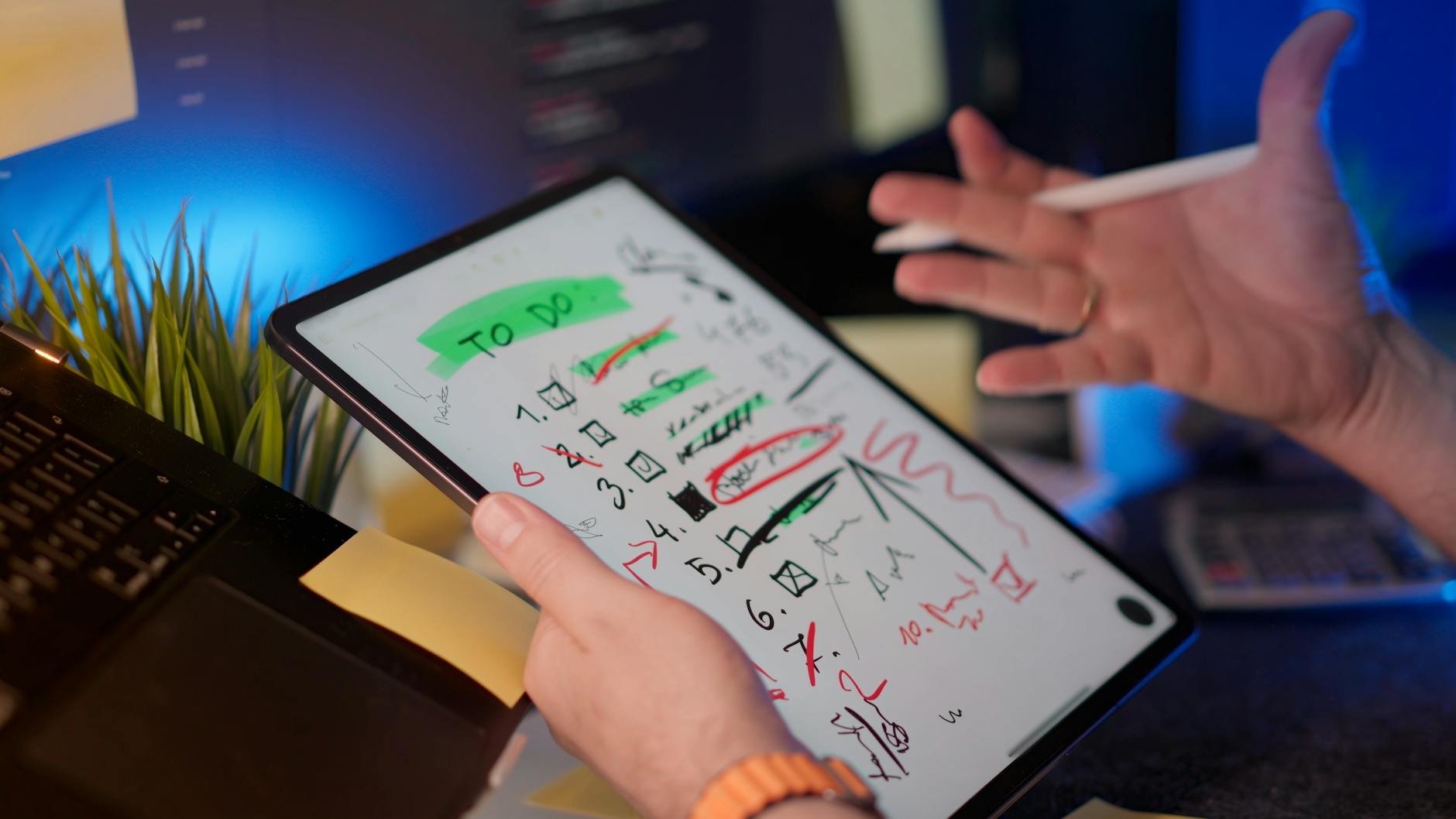
    Tablet showing a ChatGPT workflow for daily planning with a simple time-block layout.
    A light, clear layout makes your plan easier to trust. Photo: Jakub Zerdzicki via Pexels. Source: Pexels page.

    How to use this advice (and what to avoid)

    • Start small. Plan one key outcome plus 2–3 supporting blocks, not a perfect day.
    • Keep prompts short and specific. Limit scope and ask for estimates with a buffer.
    • Edit the draft. You own the plan; ChatGPT only offers a first pass.
    • Avoid dumping sensitive data. Use redacted text or summaries. Review your tool’s privacy policy first (OpenAI Privacy).
    • Close the loop. Do an honest review each evening in 5 minutes.

    Step-by-step daily loop

    Use this ChatGPT workflow for daily planning in five compact phases. The whole loop takes 15–25 minutes once you practice it.

    Phase 1 — Capture and clarify

    1. List hard commitments: meetings, deadlines, immovable errands.
    2. Write 1–3 outcomes that define a “good day.” Keep them specific and measurable.
    3. List possible tasks that support those outcomes. Note time guesses if you have them.

    Prompt template:

    Context: I have a standard 8-hour workday with two meetings (10:00–10:30, 14:00–15:00), and a hard stop at 17:30.
    Outcomes (ranked):
    1) Ship the draft of the product update email
    2) Make progress on Q2 roadmap (finish 2 tickets)
    3) Clear finance admin backlog (30 minutes)
    Tasks on deck (rough guess):
    - Draft email (60m), edit (30m)
    - Two roadmap tickets (60m each)
    - Finance admin (30m)
    - Inbox sweep (15m)
    - Lunch (30m)
    - Walk break (15m)
    Ask: Turn this into a prioritized plan with time estimates and 20% buffer. Ask me clarifying questions if needed.

    Phase 2 — Prioritize and right-size

    ChatGPT will return a first pass. Now guide it to sharpen the focus. Ask for tradeoffs and cuts. For example:

    Revise the plan so the top outcome is guaranteed. If needed, cut or shrink lower-value items.
    Constraints: protect one 90-minute deep work block before noon; add 20% buffer across the day.

    Reference note: Prompts that include role, task, constraints, and output format tend to perform better than vague asks. See vendor guidance for practical patterns (Microsoft Learn).

    Phase 3 — Estimate and buffer

    Ask ChatGPT for estimates only if the work is well-scoped. Otherwise, give your own base estimates and ask for a buffer suggestion. A rule of thumb is a 15–30% buffer for creative or cross-team work. Keep it simple.

    Given these tasks and my past velocity, propose conservative time estimates and a single 30-minute “overflow” block at 16:30.

    Phase 4 — Time-block the calendar

    Now move from plan to calendar. Use blocks that match the energy of the task. Put hard things earlier. Group similar work. Keep 5–10 minutes between blocks to reset. For a clear overview of time blocking’s benefits for deep work and reduced context switching, review Cal Newport’s write-up (Time blocking explained).

    Prompt template to draft blocks you will then paste into your calendar:

    Turn this prioritized plan into time blocks for 09:00–17:30 in 24-hour time.
    Rules:
    - 90m deep work on the top outcome before lunch
    - 10m buffers between blocks
    - 30m lunch at 12:30
    - 15m walk at 15:30
    Output as a table with start, end, block name, and goal.
    Core roles in a ChatGPT workflow for daily planning
    Who Owns Examples
    You Goals, priorities, commitments Pick top outcomes. Approve tradeoffs. Move blocks on the calendar.
    ChatGPT Drafts, estimates, structure Suggests order. Proposes buffers. Flags overload or conflicts.
    Calendar Execution contract Holds the blocks you commit to. Signals when to switch.

    Phase 5 — Review and learn

    Close the loop near day’s end. Compare the plan with what actually happened. Note where you under- or over-estimated. Then feed those notes into tomorrow’s planning prompt. This short review sharpens your future plans.

    Review prompt for 17:15:
    Compare the planned blocks with what I did (below). List 3 lessons about estimates or sequencing. Suggest one change for tomorrow’s plan.
    Data:
    - Planned vs. actual for each block
    - Interruptions and how long they took
    - Biggest win and biggest miss

    Prompts that work in the real world

    Use these short, constraint-first patterns. Edit names and times to fit your day.

    Prompt library for common planning moments
    Situation Prompt Output format
    Morning plan in 10 minutes Given these outcomes and meetings, propose a 09:00–17:30 plan with one 90m deep work block. Add 20% buffer and a 15m overflow at 16:30. Bullet plan + time table
    Midday course-correct It is 13:00. Rebuild the plan around these facts (below). Keep only what drives the top outcome. Put admin at the end or cut it. Revised table + cuts list
    Estimate reality check Here are my estimates. Apply a confidence score to each (high/med/low). Suggest one split or merge to improve flow. Table with confidence + notes
    Context protection Group tasks by context (design, writing, review). Order for minimal switching. Keep only 2 context types before lunch. Ordered groups + rationale
    End-of-day review Compare plan vs actual. Give 3 insights and one new rule for tomorrow (e.g., longer buffers, earlier deep work). Bullets + tomorrow rule

    What makes the plan realistic?

    • Protect one deep block early. Your energy is higher and interruptions are fewer.
    • Add a daily overflow block. Use it for spillover; if empty, pull a quick win.
    • Plan admin late. Keep your morning clean for work that moves the needle.
    • Use the Eisenhower lens. Ask: urgent or important? Cut what is neither (Matrix overview).
    • Match blocks to energy. Put creative or analytical work in your best hours.

    Reality checks that keep you honest

    1. Compare plan vs. actual weekly. Look for recurring 30–60 minute slips.
    2. Cut one thing daily. Replace it with margin, not another task.
    3. Use a simple rule: no more than 4 major blocks on a normal day.
    Focused person reviewing a time-blocked plan on dual screens after running a ChatGPT workflow for daily planning.
    Review builds judgment. Compare plan vs. actual while it is fresh. Photo: RDNE Stock project via Pexels. Source: Pexels page.

    Common mistakes and how to fix them

    • Over-planning: You draft 20 steps. Fix: plan at the outcome level, not micro-tasks.
    • No buffers: Your plan breaks on first contact. Fix: add 15–30% and one overflow block.
    • Vague prompts: ChatGPT guesses. Fix: state constraints, hour ranges, and a result format.
    • Too many contexts: You switch every 15 minutes. Fix: group by context and cap before lunch.
    • Calendar not updated: The plan lives in notes. Fix: commit blocks to your actual calendar.

    What about privacy and sensitive work?

    Do not paste confidential details. Summarize or mask names and numbers. Review your tool’s data use policy and team settings, especially if you work in a regulated role (OpenAI Privacy). If in doubt, keep sensitive planning in-house while still using the structure of this loop.

    How do I review a ChatGPT workflow for daily planning at day’s end?

    Keep it to five minutes:

    1. Mark blocks you finished, moved, or dropped. Note why.
    2. Log total time on the top outcome. Aim to protect it better tomorrow.
    3. Write one rule for tomorrow. For example, “longer buffer before 14:00 meeting.”

    Then feed those notes into your next morning prompt so your ChatGPT workflow for daily planning improves with each pass.

    Example day: turning inputs into a clear plan

    Inputs: two meetings, one key email to ship, two roadmap tickets, and finance admin. Constraints: early deep work, 20% buffer, 17:30 stop. A solid plan might look like this:

    Sample time-blocked day
    Start End Block Goal
    09:00 10:30 Deep work — draft product email Ship v1 draft
    10:30 10:40 Buffer Reset
    10:40 11:10 Meeting Team sync
    11:10 11:20 Buffer Notes
    11:20 12:30 Ticket 1 Finish scope
    12:30 13:00 Lunch Rest
    13:00 13:30 Edit email Polish and schedule
    13:30 14:00 Inbox sweep Unblock others
    14:00 15:00 Meeting Stakeholder review
    15:00 15:30 Ticket 2 Push to PR
    15:30 15:45 Walk Reset brain
    15:45 16:15 Finance admin Reconcile
    16:15 16:30 Buffer Prep overflow
    16:30 17:00 Overflow Catch spillover
    17:00 17:15 Review Plan tomorrow

    Will this still work when the day explodes?

    Yes, if you replan fast. Use a 5-minute midday course-correct. Keep the top outcome alive and protect one block to move it forward. Push admin late. If needed, cut it.

    Can I automate parts of the loop?

    You can centralize inputs and reduce copy-paste:

    • Keep a pinned morning prompt in your notes app. Paste today’s inputs under it.
    • Save your ChatGPT workflow for daily planning as text snippets so you can load it fast.
    • Export meeting times from your calendar to paste as the day’s constraints.

    Automation helps, but do not automate judgment. You still pick the top outcomes and tradeoffs.

    Accessibility: make your plan easy to scan

    • Use short block names. Lead with the verb and the object: “Draft email v1.”
    • Keep a single cue per block. Do not cram three goals into one hour.
    • Color-code deep work, meetings, and admin.

    Daily planning checklist

    • List hard commitments and 1–3 outcomes that define success.
    • Draft a first pass with constraints and buffers.
    • Time-block the calendar and commit.
    • Do the work. Protect the top outcome.
    • Review in 5 minutes. Log one rule for tomorrow.

    Detailed examples for different days

    Not all days look the same. Therefore, build a plan that fits the shape of your hours. Here are two clear examples you can copy and adapt.

    Manager day with many meetings

    Goal: move one strategic item while keeping the team unblocked. Constraint: meetings at 09:30–10:00, 11:30–12:00, 14:00–15:30, and 16:30–17:00. Hard stop at 17:30.

    Manager prompt:

    Given these four meetings and a hard stop at 17:30, protect one 60–75m deep block before lunch to draft the QBR outline. Add 10m buffers around meetings. Push admin late. Output a table in 24-hour time.
    Manager-style sample plan
    Start End Block Goal
    08:45 09:15 Inbox triage (strict) Unblock team
    09:15 09:25 Buffer Prep meeting
    09:30 10:00 1:1 Coaching
    10:00 10:10 Buffer Notes
    10:10 11:25 Deep work — QBR outline Draft v1
    11:25 11:30 Buffer Prep
    11:30 12:00 Status meeting Decide blockers
    12:00 12:30 Lunch Rest
    12:30 13:00 QBR edit Polish v1
    13:00 13:20 Slack sweep Respond
    13:20 13:30 Buffer Prep
    14:00 15:30 Stakeholder review Align
    15:30 15:45 Walk Reset
    15:45 16:15 Admin & approvals Close loops
    16:15 16:25 Buffer Prep
    16:30 17:00 Team standup Priorities
    17:00 17:20 Overflow Catch spillover
    17:20 17:30 Review Lessons

    Notice the early deep block and frequent buffers. As a result, the plan stays stable even with many handoffs.

    Maker day with deep focus

    Goal: ship a feature draft. Constraint: long focus windows, one demo at 15:00–15:30. Hard stop at 18:00.

    Maker prompt:

    Plan two long focus blocks for feature work (90–120m each) with a short break between them. Keep meetings wrapped in buffers. Put quick admin after the demo. Output a table in 24-hour time.
    Maker-style sample plan
    Start End Block Goal
    09:00 11:00 Deep work — implement module A Working code
    11:00 11:15 Buffer Stretch
    11:15 12:30 Deep work — tests & refactor Green tests
    12:30 13:00 Lunch Rest
    13:00 13:20 Inbox sweep (strict) Unblock
    13:20 14:40 Write docs Draft page
    14:40 14:55 Buffer Prep demo
    15:00 15:30 Demo Feedback
    15:30 15:45 Walk Reset
    15:45 16:15 Admin & PRs Reviews
    16:15 17:15 Deep work — module B Finish core
    17:15 17:45 Overflow Catch slips
    17:45 18:00 Review Plan tomorrow

    Here the plan clusters similar work and protects long spans. Consequently, context switches drop and throughput rises.

    Troubleshooting playbook

    When the plan drifts, fix the root cause fast. Use these quick moves and prompts.

    • Estimates were off: Split the task and re-slot the next chunk. Prompt: Split “Draft whitepaper” into 2 smaller blocks with clear ends. Keep the first today, move the second to tomorrow morning.
    • Urgent interrupt: Insert a short triage block, then rebuild the next two hours. Prompt: I have a P1 issue (30–45m). Rebuild 13:00–15:00 with buffers and keep one deep block alive.
    • Low energy window: Swap in shallow work. Prompt: Replace the next 45 minutes of deep work with 2 admin tasks that still support the top outcome.
    • Meeting ran long: Cut nice-to-haves and keep the top outcome. Prompt: We lost 25 minutes. Remove the lowest-value item and add a 15m overflow at 16:45.
    • Task unclear: Add a 15-minute clarify block before you start. Prompt: Write a 5-bullet mini-brief for “Draft outreach email” so I can start fast.

    Metrics that make the habit stick

    Track a few simple numbers. Then adjust based on facts, not feelings.

    Simple weekly metrics
    Metric How to measure Target
    Protected deep work Total minutes spent in planned deep blocks 180–300 min/day
    Plan vs actual delta Total minutes off plan (over/under) < 60 min/day
    Overflow use Times overflow saved a slip 3–5/week
    Context switches Distinct contexts before lunch ≤ 2

    Review these on Friday. Therefore, next week’s plan will start stronger.

    Team workflow and handoffs

    This loop also helps teams. Share a short daily plan so others can align. Also, use the same review questions in standup.

    Standup share template:

    Top outcome today: ____
    Deep block protected: ____ (start–end)
    Risks: ____
    Asks: ____
    Overflow plan: ____

    When plans change, post a one-line update. For example: “Deep block moved to 11:00–12:15 due to incident; overflow extended.” Sharing your ChatGPT workflow for daily planning summary keeps the whole group in sync without long threads.

    Advanced tips: encode constraints for cleaner prompts

    It is easier to plan when inputs are tidy. So, hand ChatGPT a small, structured block of data. Then ask for a schedule from it.

    {
      "day": "Tue",
      "work_hours": ["09:00", "17:30"],
      "meetings": [
        {"start": "10:00", "end": "10:30", "name": "Team sync"},
        {"start": "14:00", "end": "15:00", "name": "Review"}
      ],
      "outcomes_ranked": [
        "Ship v1 of product email",
        "Finish ticket #482",
        "Finance admin (30m)"
      ],
      "rules": {
        "deep_block_before_lunch": 90,
        "buffers_minutes": 10,
        "overflow_at": "16:30",
        "lunch_at": "12:30"
      }
    }

    Follow-up prompt:

    Using this JSON, propose a time-block plan in 24-hour time. Include start, end, block name, and goal. Respect the rules and add a 20% buffer overall.

    Edge cases and how to adapt

    • Travel days: Treat transit as a long block. Then schedule low-cog tasks (inbox, notes, reading). Keep one small outcome to protect momentum.
    • Meeting-only days: Add 5–10 minute buffers after each call. Use a single 30-minute slot for one tangible outcome (even a draft).
    • Half day: Cut scope in half. However, still protect one deep block, even if it is just 45 minutes.
    • On-call or support: Plan in 60–90 minute horizons. Rebuild often. Keep a rolling overflow block for spikes.

    These tweaks keep the loop alive even when conditions are rough. In short, the habit is the power, not a perfect day.

    Source notes and further reading

    FAQs

    What is the best ChatGPT workflow for daily planning?

    The best one is the one you can run in under 25 minutes. Use five phases: capture, prioritize, estimate, time-block, and review. Protect one early deep block. Add a daily overflow block. Keep admin late.

    How many blocks should I plan in a normal day?

    Plan 3–4 major blocks and a few short ones. If you need more, your blocks are too small or your scope is too wide.

    How do I handle meetings that split my day?

    Wrap meetings with buffers and use the largest open span for deep work. If the day is chopped up, focus on smaller, high-value chunks and leave big creative work for a better window.

    Can I use this with a team?

    Yes. Share the plan summary in morning standup. Align on the top outcome. Ask teammates to flag blockers and timing risks first thing.

    Should I write prompts the night before or in the morning?

    Do a light setup the evening before, but draft the final plan in the morning when energy and context are fresh.


    Next steps

    If you want a deeper, book-length walkthrough with templates and examples, explore our AI productivity books. Start with the hub to see the full range, or jump straight to our focused guide on daily planning:

    Finally, write your rules while the day is fresh. This ChatGPT workflow for daily planning is simple, flexible, and fast—so you can plan with clarity and finish with focus.

  • Unlocking Deep Work Cal Newport for Focused Success

    Unlocking Deep Work Cal Newport for Focused Success

    If your day feels like a relentless stream of emails, meetings, and notifications, you’re not alone. You’re busy, constantly switching tasks, but at the end of the day, it’s hard to point to anything of real value you’ve created. Author Cal Newport has a name for this state: shallow work.

    In contrast, deep work is the ability to focus without distraction on a cognitively demanding task. It’s the skill that allows you to learn hard things quickly and produce at an elite level. This guide is for any professional tired of a fragmented workday and ready to reclaim the focus needed to do their best work.

    Affiliate Disclosure: This article contains affiliate links. If you make a purchase through these links, we may earn a small commission at no extra cost to you. This helps support our research and writing.

    Why Deep Work Is Your Most Valuable Professional Skill

    In today’s economy, two types of people are finding massive success: those who can work creatively with intelligent machines and those who are superstars in their field. Cal Newport argues that the one skill uniting both groups is the ability to perform deep work. Shallow work is all the logistical stuff that keeps the lights on but doesn’t move the needle. Think responding to routine emails, attending status updates, or sorting digital files. These tasks create a visible hum of activity, an illusion of productivity, but they don’t generate much new value.

    Deep work is where the breakthroughs happen. It’s the focused, uninterrupted effort that produces a new business strategy, a block of clean code, or a game-changing proposal. You can find a more detailed breakdown in our complete guide on what is deep work.

    The Neuroscience of Intense Focus

    When you sink into a state of deep work, you’re not just trying harder—you’re physically rewiring your brain for high performance. Behavioral research shows that this intense focus triggers a process called myelination. Myelin is a fatty tissue that wraps around your neurons, the communication pathways in your brain.

    This myelin sheath acts like insulation on an electrical wire. It allows brain signals to travel faster and with more precision.

    • Faster Thinking: Myelin helps you process complex information and connect ideas more quickly.
    • Stronger Skills: Every time you practice a skill with deep focus, you reinforce specific neural circuits. This builds thicker layers of myelin that lock in that ability.
    • Improved Retention: This enhanced neural efficiency is why you can learn difficult subjects and remember what you’ve learned far more effectively.

    This is the biological reason why just two hours of protected, deep work can produce more valuable output than eight hours of fragmented, shallow tasks. The more you practice focusing, the better your brain gets at it.

    A Skill for Long-Term Career Success

    Since it was published in 2016, Cal Newport’s book, Deep Work: Rules for Focused Success in a Distracted World, has sold nearly three million copies. That number points to a massive, unmet need for focus in a world that’s actively trying to steal it.

    Newport practices what he preaches. He famously published nine peer-reviewed academic papers in a single year. He achieved this by ruthlessly protecting his focus and eliminating distractions.

    Mastering the ability to work deeply is one of the single best ways to future-proof your career. By cultivating this skill, you’re not just getting more done. You’re making a direct investment in your most critical professional asset: your ability to think, create, and solve hard problems.

    How to Choose Your Deep Work Philosophy

    Finding time for deep work isn’t about blowing up your life and starting from scratch. Instead, Cal Newport gives us four distinct philosophies, or rhythms, for getting it done. The real work is figuring out which one actually fits the life you have right now. This isn’t about picking the “best” or most intense option. It’s about an honest look at your job, your family, your personality, and your current schedule. Choosing the right approach is what makes deep work a sustainable habit instead of another failed resolution.

    Which Deep Work Philosophy Is Best for Your Lifestyle?

    Think of these four philosophies as different blueprints for building focus into your week. This table gives you a quick overview. It helps you find a starting point that feels realistic for your personal and professional demands.

    PhilosophyCore PrincipleBest ForReal-World Example
    MonasticRuthlessly eliminate or minimize all shallow work to maximize focus.Academics, novelists, or anyone with extreme professional autonomy.A scientist taking a sabbatical to write a groundbreaking paper, living in near-total isolation from email and meetings.
    BimodalClearly divide your time between long, dedicated deep work stretches and fully “open” shallow work periods.Consultants, executives, or freelancers who can block out multiple days at a time.A CEO who is completely offline for two full days a week to work on long-term strategy, and fully available the other three.
    RhythmicMake deep work a simple, consistent, and repeating habit.The vast majority of professionals, parents, and anyone with a relatively predictable schedule.A programmer who blocks off 8:00 AM to 9:30 AM every single morning for coding, no exceptions. The habit is the system.
    JournalisticFit deep work into any unexpected pockets of free time you can find.Journalists, on-call doctors, or anyone with a highly unpredictable, reactive schedule.A manager whose 1:00 PM meeting is canceled uses that surprise 45 minutes to outline a quarterly report.

    Each of these strategies works, but only if it aligns with the reality of your schedule. Now, let’s break down what each of these looks like in practice.

    The Monastic Philosophy of Deep Work

    This is the most extreme and, for most of us, the most unrealistic approach. The Monastic philosophy is all about structuring your entire professional life around deep work. It requires ruthlessly cutting out the shallow stuff.

    Think of a tenured professor on sabbatical to finish a book. Or imagine a novelist who disappears into a cabin for six months. They are masters of saying “no” to almost everything else. While this method produces incredible results, it requires a level of autonomy that few jobs allow. For most, it’s often a temporary season, not a permanent way of living.

    The Bimodal Philosophy of Deep Work

    The Bimodal approach is a powerful compromise. Instead of being “all or nothing,” you divide your time into clearly defined chunks. You might dedicate a few days—or even a week—to pure, monastic-style deep work. Then, you return to a normal schedule filled with meetings and emails.

    A great example is a consultant who clears their calendar for three straight days. They do this to build a new client strategy. During that time, they are completely unavailable. For the rest of the month, they are fully accessible. This requires serious planning. But it allows for massive progress on big-picture projects. You can even use some strategies from our guide on how to use AI for productivity to help manage these complex, split schedules.

    The Rhythmic Philosophy of Deep Work

    For most people, this is the place to start. The Rhythmic philosophy is all about turning deep work into a regular, almost automatic habit. The goal is to build a consistent rhythm for focus. That way, you don’t have to spend energy deciding when to do it.

    The core idea is simple: don’t wait for inspiration to strike. Instead, make deep work a non-negotiable part of your schedule, just like a recurring meeting.

    This could be a designer who blocks out 9:00 AM to 10:30 AM every morning for creative exploration. That time is sacred. It’s on the calendar, the phone is off, and colleagues know not to interrupt. A good time blocking planner can make this method stick. It builds the habit through sheer consistency.

    This flowchart is a great tool for deciding if the tasks filling your day are truly deep, or just “busy.” Recognizing the difference is the first step toward building a Rhythmic schedule.

    A flowchart illustrating the decision process for deep work versus shallow work, based on a busy day.

    As you can see, a truly open and un-busy schedule is the real gateway to performing the kind of deep work that actually moves the needle.

    The Journalistic Philosophy of Deep Work

    The Journalistic philosophy is for people whose schedules are in constant flux. The idea is to train yourself to drop into a state of deep work whenever an unexpected block of time opens up. It’s like a journalist who has to write a column on a tight deadline the moment news breaks.

    This method demands a ton of mental discipline. You have to be able to switch from a shallow, reactive mindset to a deep, focused one in an instant. For example, a project manager whose meeting is canceled could use that surprise 45-minute slot to hammer out the first draft of a project brief.

    While it’s incredibly flexible, this is the hardest philosophy to sustain. It provides the least amount of predictable, structured focus time. It requires you to be constantly “on alert” for opportunities. If this style is your only option, you might find valuable strategies in our library, with titles like The Focused Freelancer.

    Building a Personal Deep Work Ritual

    Knowing you need to focus is one thing. Actually doing it, day after day, is something else entirely. A personal deep work ritual is your secret weapon. It is a set of pre-planned actions you run through before every single focus session. This isn’t about white-knuckling it with willpower. It’s about creating a powerful psychological cue that tells your brain, “It’s time to concentrate.”

    Think of it like an athlete’s pre-game routine. Your ritual automates the transition into a state of focus. This makes the whole process significantly easier over time. It completely removes the mental friction of figuring out how and where you’re going to get started each day.

    A minimalist desk setup for deep work, featuring a laptop, headphones, notebook, pen, and hourglass, visually representing the focused habits associated with Deep Work Cal Newport.

    Creating Your Pre-Work Ritual

    The key to a ritual that actually sticks is simplicity and consistency. It should be a short series of steps, taking no more than 5-10 minutes. You should be able to execute it without much thought. Think of it as the launch sequence for your brain.

    A strong ritual addresses three core components of a distraction-free environment: your location, your rules, and your resources.

    • Designate a Specific Location: Choose one place where you do your deep work. This could be a specific desk, a quiet corner of a library, or even a particular chair. This builds a powerful, location-based trigger that helps your brain switch gears automatically.
    • Set Clear Rules: These are your non-negotiable boundaries for the session. Common rules include turning your phone completely off (or putting it in another room), closing all unrelated browser tabs, and silencing every last notification.
    • Gather Your Resources: Before you sit down, get everything you need. This could be your laptop, a specific notebook, a glass of water, or research materials. This simple step prevents you from breaking focus later just to find something.

    An effective ritual takes advantage of habit stacking. This is a concept from behavioral psychology where you link a new habit (your ritual) to one you already have (like finishing your morning coffee). The sequence becomes automatic, reducing your reliance on fleeting motivation. This is a foundational practice, much like what you’d learn when you discover how to create a morning routine that actually works for you.

    Best for Beginners: The “Shutdown Complete” Ritual

    Just as important as starting deep work is knowing how to stop. Cal Newport is a huge proponent of a shutdown ritual at the end of the workday. This is a clear, deliberate signal to your brain that the workday is over. It allows you to fully disengage and recharge, preventing burnout and improving sleep quality.

    A shutdown ritual prevents work from leaking into your personal time, which is crucial for preventing burnout and ensuring your brain is recharged for the next day’s deep work session.

    This ritual acts as a mental buffer. It helps you combat the Zeigarnik effect. This is a nagging psychological tendency for our brains to ruminate on unfinished tasks. By explicitly capturing and “parking” these tasks for later, you give your mind permission to let go. Let’s walk through what this looks like in the real world.

    A Marketing Manager’s Shutdown Ritual

    Imagine Sarah, a marketing manager. Her days are a whirlwind of meetings, emails, and creative strategy. At 5:30 PM, she kicks off her shutdown ritual to cleanly transition out of work mode.

    1. Final Task Review (5 minutes): Sarah does one last quick scan of her email inbox and task list. She jots down any urgent loose ends that need attention tomorrow morning, getting them out of her head.
    2. Update the Plan (3 minutes): Next, she opens her planner and sketches out a rough plan for the next day. A physical habit tracker journal helps her see progress over time. She makes sure to prioritize her most important deep work task right at the top.
    3. Clean the Workspace (2 minutes): She closes all browser tabs, tidies her desk, and puts her notebook away. A clean space signals a fresh start for tomorrow morning.
    4. Verbalize Completion (30 seconds): Finally, she says the phrase, “Shutdown complete,” out loud. This simple verbal cue solidifies the transition and closes the mental loops on her workday.

    This entire process takes her less than 15 minutes, but it makes a world of difference. She can now unplug and enjoy her evening without that nagging feeling that she’s forgetting something important.

    Learning to Embrace Boredom and Beat Distraction

    In our hyper-connected world, boredom has become something we frantically avoid. The moment a quiet gap appears in our day, we instinctively reach for our phones. We search for a quick hit of novelty. This isn’t a personal failing; it’s a trained response.

    Every notification, like, and email delivers a small shot of dopamine. This is the brain chemical tied to reward and motivation. Psychology research shows this sets up a powerful feedback loop. The more we feed this loop, the more our brains crave it. This steadily erodes our ability to focus on a single, less-stimulating task. Cal Newport argues that to reclaim deep work, we must retrain our brains to tolerate periods without constant input.

    A young man walking outdoors while looking at his phone, with an “Embrace Boredom” banner in view, illustrating a key idea connected to Deep Work Cal Newport and the challenge of constant distraction.

    Building Your Tolerance for Boredom

    One of Newport’s most powerful strategies is to systematically build your tolerance for being offline. Instead of trying to fight distraction in the moment, you proactively train your “focus muscles” during your downtime. This makes it far easier to concentrate when it actually matters.

    You can start by intentionally scheduling blocks of time where you are completely away from screens. This isn’t about being productive. It’s about letting your mind recalibrate to a world without constant pings.

    • Schedule Internet-Free Blocks: Set specific times each day when you’re completely offline. Start small—maybe with a 30-minute block. Gradually work your way up.
    • Practice Productive Solitude: Take a walk without your phone or music. Sit in a park and just observe what’s around you. The goal is to get comfortable with the quiet hum of your own thoughts.

    This practice is about regaining control over your attention. To dig deeper into the mechanics of this mental reset, check out our complete guide on how to do a dopamine detox.

    Putting Productive Meditation into Practice

    A more advanced technique Newport calls “productive meditation” isn’t about emptying your mind. Instead, you focus your full attention on a single, well-defined professional problem. You do this while your body is busy with a low-effort physical activity like walking, jogging, or commuting.

    Productive meditation trains you to hold a single thread of thought for an extended period, which is the foundational skill for all deep work. It strengthens the prefrontal cortex, the part of your brain responsible for executive functions like concentration and attention control.

    Here’s how this can look in the real world.

    A Student’s Focus Regimen

    Imagine a college student named Alex who can’t study for more than 15 minutes. He keeps getting derailed by his phone. He decides to get serious about embracing boredom to rebuild his focus.

    1. He starts with scheduled blocks. Alex carves out two 30-minute “no-phone” periods each evening. He uses this time to read a physical book or just tidy his room. No screens allowed.
    2. He introduces a physical barrier. After a week, he invests in a phone lock box timer. Locking his phone away for a 60-minute study session physically removes the temptation. He’s surprised to find he can focus much longer without it in his line of sight.
    3. He applies productive meditation. On his daily walk to campus, he leaves his headphones behind. Instead, he uses the time to practice productive meditation. He focuses on a tough problem from his calculus homework and mentally works through different solutions.

    Within a month, Alex’s ability to concentrate has dramatically improved. The scheduled boredom and productive meditation have rewired his brain. He can now sit for a two-hour deep work session. This skill completely changes his academic performance.

    Practical Ways to Minimize Shallow Work

    You simply can’t do deep work if your day is a chaotic mess of shallow tasks. Draining that swamp of administrative busywork and reactive communication is the first, most critical step. It creates the mental space concentration requires. But you can’t fight an enemy you can’t see. The most powerful move you can make is to get ruthless clarity on where your time actually goes.

    Scheduling every minute of your day becomes a non-negotiable tool. Using a time-blocking planner is a practice at the core of Cal Newport’s method. You map out your entire workday in advance. The real magic isn’t just organization. This process forces you to confront the truth about how much of your day is eaten by shallow distractions versus truly deep work.

    Overhead view of a desk with a blue book titled “MINIMIZE SHALLOW WORK,” a planner, pens, coffee, and a plant, reflecting the focused productivity ideas behind Deep Work Cal Newport.

    Reclaiming Your Time with Your Boss

    Once you have a week or two of time-blocked data, you have what you need for a productive conversation with your manager. Instead of just complaining about being busy, you can frame the discussion around value and impact.

    Try a script like this:

    “I’ve been tracking my time and noticed that about 60% of my week is spent on administrative tasks and reactive communication. That leaves only 40% for high-value strategic work like [mention a key project]. I’m confident that if I could shift that ratio to 60% deep work, I could deliver [mention a specific positive outcome] much faster. Could we explore ways to protect two hours each morning for this focused work?”

    This approach flips the script. It transforms your need for focus into a strategic advantage for the team. It shows initiative and a commitment to high-leverage output. To supercharge your focus, a great pair of noise canceling headphones is an excellent investment.

    How to Choose the Right Deep Work Tool

    Getting started with deep work often comes down to choosing the right tools to support your new habits. The goal isn’t to buy more stuff, but to select items that solve a specific problem. Compare options to find what suits you best.

    Tool TypeBest ForWhat to Look For
    Time Blocking PlannerVisualizing your day and committing to a schedule.Daily/hourly layouts, goal-setting pages, and durable binding.
    Pomodoro TimerBreaking work into focused intervals (e.g., 25 minutes).A simple, non-distracting interface. A visual timer for desk is great.
    Noise-Canceling HeadphonesBlocking out auditory distractions in a loud environment.Good battery life, comfort for long wear, and effective noise reduction.
    Phone Lock BoxPhysically removing the temptation of your smartphone.A simple timer mechanism and a size that fits your device.

    Taming the Email Beast

    Email is the undisputed king of shallow work. The real key to taming it is to kill the endless back-and-forth volleys that drain your day. A simple but incredibly effective technique is the process-centric reply. Instead of a vague, open-ended response, your reply should clearly outline the next steps and propose a concrete plan.

    For example, instead of just saying, “Yes, I can help with that,” try this:

    “Great. I’ve blocked out 1 PM to 2 PM tomorrow to draft the initial proposal. I’ll send it over for your review by 3 PM. Please provide any feedback by EOD so I can finalize it on Wednesday morning.”

    This one email just prevented at least three follow-up messages. It shows you’re in command and moves the task toward completion with almost zero friction. For tasks that keep popping up, you’ll want to learn more about how to automate repetitive tasks and reclaim that time for good.

    A Team Lead’s Office Hours Scenario

    Consider a team lead I worked with, Mark. He was drowning in “quick questions” from his direct reports all day long. These five-minute interruptions were just enough to completely destroy his ability to do any real thinking. His anxiety about constant interruptions was impacting his mood and performance.

    His solution was simple: he implemented “office hours” from 2 PM to 4 PM every day. He let his team know that all non-urgent questions should be saved for this dedicated block. Truly urgent issues could still be brought to him anytime. But the team quickly learned to batch their questions. This one small change reclaimed nearly 10 hours of focused time for Mark each week, and his strategic output shot through the roof.

    Key Takeaways on the Deep Work Cal Newport Method

    Cal Newport’s Deep Work isn’t about becoming a productivity machine. It’s a framework for reclaiming your attention. It helps you do the meaningful, high-value work that modern life so often pushes aside. If you’re ready to start, here are the core ideas to anchor your practice.

    Deep Work vs. Shallow Work: Why Focused Attention Drives Real Productivity

    • Deep Work vs. Shallow Work: Think of Deep Work as focused, single-minded concentration on something that genuinely stretches your brain. In contrast, Shallow Work is all the low-value, logistical stuff—like answering quick emails or scheduling—that makes you feel busy but not truly productive. The goal isn’t to eliminate shallow work, but to protect your best energy for deep work.

    • Pick a Sustainable Philosophy: You don’t have to retreat to a cabin in the woods. Newport outlines several philosophies, but the Rhythmic approach is the most practical starting point for most people. This simply means scheduling a consistent, recurring block of deep work into your daily or weekly schedule.

    • Build Your Pre-Work Ritual: Willpower is a fickle resource. A better approach is to create a simple, repeatable pre-work ritual. This could be clearing your desk, pouring a specific drink, and stating your goal for the session. This short routine signals to your brain that it’s time to focus, making the transition into deep work far more automatic.

    • Learn to Embrace Boredom: Your ability to concentrate is a muscle. Every time you pull out your phone to fill a quiet moment, that muscle weakens. To strengthen it, you have to get comfortable with being offline and unoccupied. Actively choose to resist the constant pull of digital distractions. This is how you reclaim silence in an incredibly noisy world.

    • Systematically Drain the Shallows: Deep work needs space to exist. If your day is packed wall-to-wall with meetings and minor tasks, you’ll never find the time. You have to be intentional about scheduling your entire day, setting firm boundaries around communication, and ruthlessly minimizing low-impact activities.

    • Master the Shutdown Ritual: One of the most overlooked habits is creating a “shutdown complete” ritual at the end of your workday. This involves reviewing your tasks, making a plan for tomorrow, and saying a specific phrase to signal the end. It gives your brain explicit permission to disengage from work, preventing burnout and ensuring you can fully recharge.


    Editor’s Take: What Really Works with Deep Work

    It’s easy to read Cal Newport’s Deep Work and get swept up in the idea of a total life overhaul. The “Monastic” or “Bimodal” approaches sound incredible. But let’s be honest: for most of us, diving in headfirst is a perfect recipe for burnout and quitting after a week.

    So, where do you actually start? The most sustainable path I’ve seen is the Rhythmic method. Forget trying to find four-hour blocks right away. Instead, protect a single, recurring 60–90 minute window of focused work each day.

    This small, consistent practice is what actually builds your “focus muscle” without overwhelming your schedule. For knowledge workers, developers, writers, and anyone whose success depends on untangling complex problems, that one daily block can be the difference between feeling busy and actually making progress. This approach is especially valuable for busy professionals and freelancers.

    The big catch? Deep work is rarely a solo mission in a modern workplace. If you’re in a highly reactive or collaborative role, you can’t just disappear. You have to get buy-in from your team and manager. Clearly communicate why you need this protected time and what it will help you deliver.

    The real secret to making deep work by Cal Newport work isn’t dogmatic adoption; it’s adaptation. Find the one small habit that fits your real life. Prove its value to yourself and your team, and then build from there. For a deeper dive into building this kind of focus, The Power of Clarity is a great next step.


    Disclaimer: This article is for educational and informational purposes only and does not constitute medical or psychological advice. The content is not intended to be a substitute for professional medical or psychological advice, diagnosis, or treatment. It also contains affiliate links; we may earn a small commission on purchases at no extra cost to you.

    Frequently Asked Questions About Deep Work

    1. How do I start deep work if my schedule is already packed?

    The key is to start small. Don’t try to find a four-hour block right away. Instead, use the Rhythmic philosophy. Schedule just one or two 60-minute deep work sessions into your week. Treat these appointments as non-negotiable. As you build the habit, you can gradually extend the time.

    2. Can the principles of deep work help with ADHD or anxiety?

    Many people with conditions like ADHD find that deep work structures—like creating a distraction-free environment and using rituals—can be very supportive. They reduce external stimuli that can hijack attention. However, this article is for educational purposes only. These strategies are not a substitute for professional medical or psychological care from a qualified provider. They should be used as a supplement to, not a replacement for, a treatment plan.

    3. What if my job is too reactive for long focus blocks?

    If you’re in a role that requires constant availability, the “Monastic” or “Bimodal” styles are unrealistic. Your best bet is the Journalistic method. Train yourself to drop into focus mode whenever an unexpected pocket of time appears. You can also talk to your manager, framing protected time as a strategy to produce higher-value work. Start with this chapter on the Journalistic method in Newport’s book for guidance.

    4. How long does it realistically take to get good at deep work?

    Think of focus as a muscle. At first, even 20-30 minutes of uninterrupted concentration might feel difficult, and that’s normal. With consistent practice over several weeks, you will build your capacity. Most people find that 90-minute sessions start to feel comfortable and productive after about a month of dedicated effort.

    5. Is it okay to listen to music during deep work sessions?

    This is a personal preference. Some people find that instrumental music (like classical, ambient, or electronic) helps them focus by blocking out distracting noise. Research suggests certain types of audio can aid concentration. However, music with lyrics can be a cognitive distraction because it engages the language centers of your brain. Experiment to see what works for you. You may find the best tool is a pair of high-quality noise-canceling headphones with nothing playing at all.