


Published:
Affiliate Disclosure: This article may contain affiliate links. If you purchase through these links, we may earn a small commission at no extra cost to you. This helps support our work in bringing you evidence-based content.
Feeling like your focus is fractured and your mind is constantly racing? You’re not alone. The core social media detox benefits aren’t just about feeling a little less busy—they include a measurable return of mental clarity, deeper focus, and a significant drop in background anxiety.
This isn’t just another wellness trend. It is a strategic way to reclaim your mental space in a world designed to fragment it.
Why a Social Media Detox Is Your Secret Weapon for Mental Clarity
If you’ve ever found yourself scrolling through feeds long after you meant to go to sleep, you already know how quietly draining it can be. Stepping back from that endless stream isn’t about escaping modern life. It’s about intentionally resetting your brain’s reward system so you can find focus and well-being that actually lasts.
This guide moves past the usual hype to give you science-backed insights and practical steps. We’ll look at how to dial down digital burnout and build healthier habits that stick. Taking deliberate control of your digital world is one of the most powerful things you can do to find calm—a central theme in my book, The Power of Clarity.

Reset Your Brain and Reclaim Your Attention
The constant hum of notifications and the subtle pressure to be always-on can leave your nervous system completely overloaded. Behavioral research suggests this state of hypervigilance can lead to mental fatigue. A detox offers a much-needed break from this cycle. This gives your mind a real chance to recover from chronic overstimulation.
And the benefits often show up faster than you’d think.
- Improved Focus and Concentration: Without the constant digital pings pulling you away, your ability to concentrate on complex, meaningful tasks improves dramatically. A simple pomodoro timer can structure this newfound focus. For instance, a student might find they can study for a full 25-minute block without interruption for the first time in months.
- Reduced Anxiety and Stress: When you step away from the curated highlight reels and the stressful 24/7 news cycle, your cortisol levels can actually drop. This helps you feel calmer, more grounded, and more present in your own life. For example, you might notice you’re less irritable with family after work because your mind isn’t still processing online arguments.
- Better Sleep Quality: You’ve probably heard it before, but neuroscience confirms that the blue light from screens really does disrupt melatonin production. Logging off earlier, perhaps with help from blue light blocking glasses, can lead directly to deeper, more restorative rest. Imagine falling asleep faster instead of tossing and turning with a buzzing mind.
Ultimately, a social media detox is about making intentional choices. It’s a tool that empowers you to engage with technology on your own terms. This shift toward intentionality is the key to preventing digital burnout, a topic I cover in depth in my other book, Burnout Breakthrough.
How Social Media Rewires Your Brain and How a Detox Can Help
Ever find yourself mindlessly scrolling, knowing you should stop, but unable to resist just one more post? There’s a powerful neuroscientific reason for that. It’s wired directly into your brain’s reward system.
Social media platforms are engineered to work a lot like a digital slot machine. They serve up unpredictable rewards—a like, a comment, a new follow. These rewards trigger a small release of dopamine, the brain’s “feel-good” neurotransmitter.
This constant, unpredictable drip of dopamine creates a powerful feedback loop. Every notification you get reinforces the scrolling habit, training your brain to crave more. Over time, your brain can adapt to this flood of stimulation through a process called dopamine downregulation. Your dopamine receptors become less sensitive. This makes it harder to find joy in everyday, offline pleasures.
The result is often a state of chronic distraction. Your attention span shrinks. Your ability to focus on deep, meaningful work gets fractured. This constant stimulation also keeps your nervous system on a low-level alert, which can leave you feeling anxious and overwhelmed. If you want to go deeper on this, our guide on how a dopamine detox works is a great next step.
Resetting Your Brain’s Reward System
A social media detox acts like a reset button for your brain’s overstimulated reward pathways. When you intentionally step away from these constant digital triggers, you give your dopamine receptors a much-needed break. This allows them to recalibrate and recover their sensitivity.
This process helps restore your ability to find satisfaction in lower-stimulation activities. These include reading a book, having an uninterrupted conversation, or just sitting with your own thoughts. It’s a critical step toward reclaiming your focus and feeling more present in your own life.
This simple diagram shows how that restored clarity directly improves your focus and well-being.
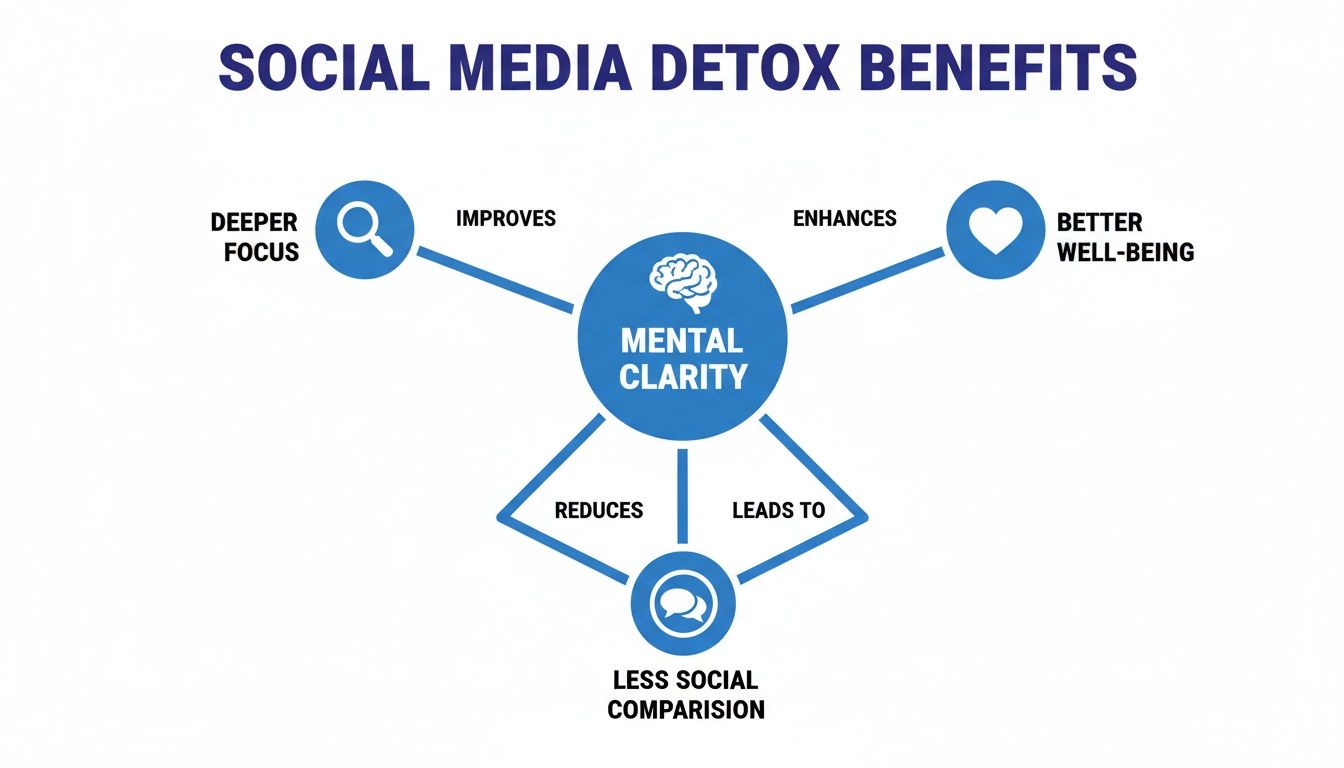
As you can see, the core benefit is restoring mental clarity. That clarity is what allows you to do deep, focused work while also improving your overall emotional state.
This isn’t just a niche concern; it’s a growing movement. Many people are now intentionally seeking “low-dopamine living” to escape the full-body fatigue that comes from being overstimulated. They’re setting permanent boundaries to move away from the trap of endless doomscrolling. This aligns with the broader challenges discussed in resources on Social Media and Addiction, which explore the deeper behavioral patterns at play.
The Surprising Mental Health Benefits of a Short Break
The positive shift you can feel from a social media detox is often surprisingly fast and very real. It’s not just about feeling less distracted; it’s about a measurable change in your emotional well-being. Even a short break can dial down the background hum of anxiety and comparison that so often runs beneath modern life.
Taking this time away gives your nervous system a chance to recover from constant stimulation. This break helps reduce feelings of anxiety, low mood, and the sleep problems so often tied to heavy social media use.
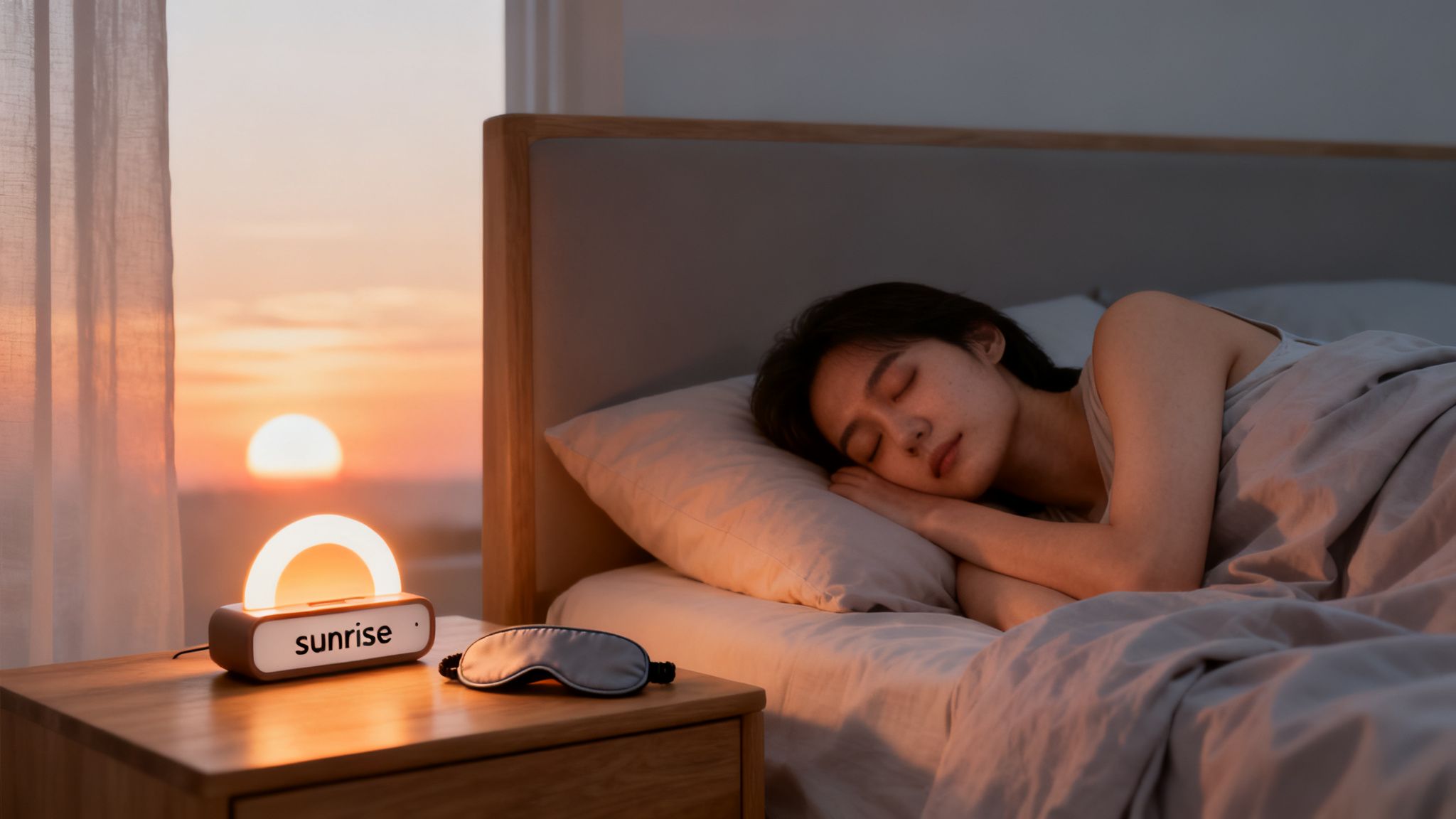
Think of a remote worker who spends an hour doomscrolling before bed every night. They usually feel wired and on edge, making it hard to fall asleep. After just one week off the feeds, they find it much easier to wind down. This leads to deeper rest and a calmer start to the next day. This positive cycle is amplified by simple tools that support better sleep hygiene. Using a comfortable sleep mask blackout to block light or a gentle sunrise alarm clock to wake up naturally can make a huge difference. For those looking to dive deeper into sleep science, my book Restful Nights offers a complete guide.
Seeing the Data on Mental Wellness
These benefits aren’t just anecdotal—they’re backed by compelling research. Recent studies highlight just how impactful even a one-week break can be on key mental health markers.
One notable psychological study confirmed what many overwhelmed adults have long suspected. Researchers found that a one-week social media break led to significant mental health boosts for young adults. Anxiety dropped by 16.1%, depression by 24.8%, and insomnia by 14.5%.
The results also revealed that the benefits were highly personalized. Some users saw dramatic relief while others simply shifted their screen time to different apps. This underscores that a detox is not a one-size-fits-all solution. You can read the full research about these nuanced mental health boosts.
Educational Disclaimer: Please note, this article is for educational purposes only and is not a substitute for professional medical or psychological advice. If you are experiencing symptoms of anxiety, depression, sleep problems, burnout, or ADHD, please consult a qualified healthcare provider. This content does not claim to diagnose, treat, or cure any condition.
These findings show that one of the core benefits of a social media detox is the creation of mental space. This space lets you reconnect with yourself, improve your sleep quality, and lower your stress levels in a very tangible way.
Exploring other relaxation techniques can compound these effects, too. For example, you might be interested in learning if music can help you sleep as you build out a calmer nightly routine.
Your Practical Guide to a Successful Social Media Detox
Ready to get some of your time and attention back? A real social media detox is more than just deleting apps from your phone. It’s about creating a clear, manageable plan so you can actually feel the benefits we’ve been talking about.
First, get clear on your “why.” What are you hoping to gain from this? Is it sharper focus for your work? Better sleep? Or maybe just being more present with the people you care about? Whatever it is, write it down. Keeping a simple habit tracker journal can be a surprisingly powerful way to stay motivated when the initial novelty wears off.
Next, pick a realistic timeframe. A full week is a fantastic goal, but even a 48-hour weekend break can be enough to hit the reset button on your brain.
Handling the Initial Urges
Let’s be honest: the first few days can feel a little strange. Your brain has been trained to reach for that scroll, and it will take a minute to adjust. The key is to have a plan for when that automatic urge strikes.
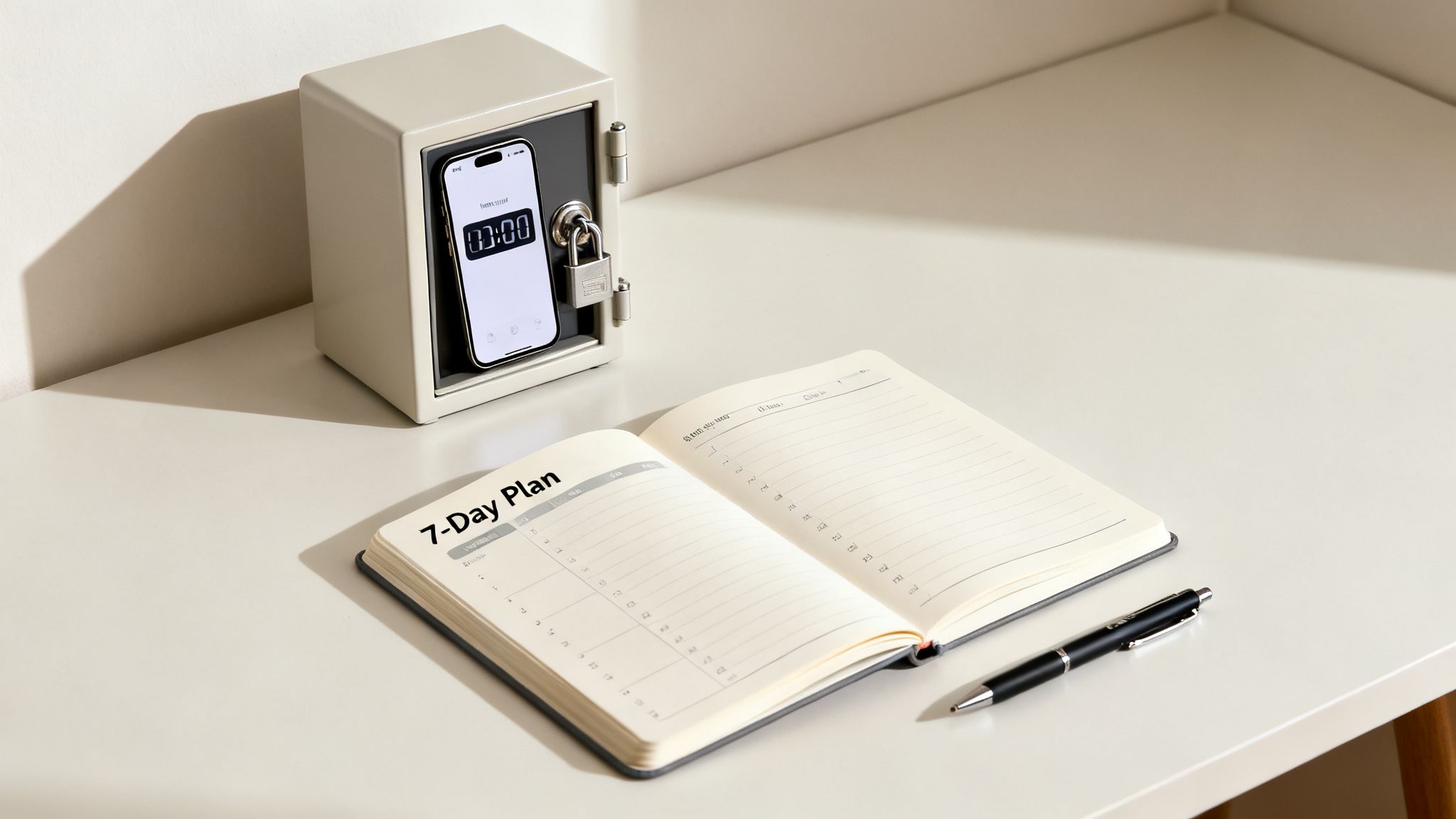
Physical barriers work wonders here. Something as simple as a phone lock box timer creates a non-negotiable “no-phone” period. This makes it impossible to slip up during family dinner or a deep work session. You’re not relying on willpower; you’re changing the environment.
The research backs this up. One study showed that a one-week social media break slashed daily use from 1.9 hours down to just 0.5 hours. The mental health impact was significant. Depression symptoms dropped by nearly 25% and anxiety by 16.1%. Having a few effective ways to stay off social media in your back pocket is a game-changer for making these results stick.
Your 7-Day Social Media Detox Starter Plan
To help you hit the ground running, here is a sample plan for your first week. Each day has a simple focus and a replacement activity. This helps you fill the time you’re getting back in a meaningful way.
| Day | Focus for the Day | Suggested Activity |
|---|---|---|
| 1 | Mindful Mornings – Avoid checking your phone for the first hour. | Drink a glass of water, stretch, or read a chapter of a book. |
| 2 | Engage Your Senses – Notice the world around you. | Go for a walk without headphones and focus on sights and sounds. |
| 3 | Creative Outlet – Channel your energy into making something. | Sketch, write, cook a new recipe, or work on a DIY project. |
| 4 | Deep Connection – Reach out to someone offline. | Call a friend or family member for a real conversation. |
| 5 | Focused Work – Tackle a project without digital interruptions. | Use a visual timer for desk to complete a focused work block. |
| 6 | Mindful Relaxation – Practice calming your mind. | Try a guided meditation, do some light yoga, or listen to music. |
| 7 | Reflection – Notice how you feel after a week away. | Journal about your experience and plan your re-entry strategy. |
Think of this as a starting point, not a rigid set of rules. The goal is to rediscover what it feels like to be in control of your own attention. For more strategies on building lasting mental clarity, you might be interested in our guide on digital detox tips.
Reclaim Your Focus and Supercharge Your Productivity
For busy professionals, one of the most powerful social media detox benefits is the return of deep, sustained focus. It’s the kind of quiet clarity you feel when you’re not constantly being pulled away by notifications. Your brain can finally engage fully with complex tasks. This leads to higher-quality work and more creative insights.
A quieter mind is a more effective mind. Without the endless stream of digital noise, your brain’s prefrontal cortex can actually do its job without interruption. This is the area in charge of planning and decision-making. This lets you think more strategically and solve the kinds of problems that demand your full attention. Many professionals find that exploring different ways to reduce screen time directly translates into a more productive day.

Create Your Ideal Deep Work Environment
Imagine a freelancer who dedicates their detox week to outlining next quarter’s business strategy. They capture their best ideas in a productivity journal. This is done completely free from the usual pings that would fracture their train of thought. This is the kind of meaningful progress a detox makes possible.
You can amplify these benefits by setting up an environment that actively supports deep work.
- Silence the Noise: A pair of high-quality noise-canceling headphones creates an instant bubble of concentration. It’s a powerful signal to your brain—and to others—that it’s time to focus.
- Structure Your Time: A simple Pomodoro timer is a fantastic tool for breaking your work into focused 25-minute sprints. It makes large, intimidating tasks feel much more approachable.
- Capture Your Thoughts: Keeping a dedicated journal or notebook handy ensures that brilliant ideas don’t get lost when you’re in a state of flow.
This intentional approach to focus is a skill that pays huge dividends long after your detox ends. Mastering these habits is the key to unlocking consistent productivity. By stepping away from the scroll, you give yourself the mental space needed to do your best, most impactful work.
Editor’s Take on What Actually Works
Let’s be honest: the biggest wins from a social media detox come from being intentional, not perfect. While taking a full week off can feel like a complete reset, even just carving out a few “no-scroll” evenings or a quiet weekend can make a massive difference. You don’t need an all-or-nothing mindset to start feeling the positive shifts in your focus and mood.
This is for anyone who feels mentally scattered, creatively stuck, or like they’re creeping toward burnout. It’s for those moments when you realize your attention doesn’t quite feel like your own anymore. A huge piece of the puzzle is getting a handle on your brain’s reward system, which you can dig into by understanding dopamine and motivation.
The biggest catch? A detox isn’t a magic wand. Its real power is in using that quiet space to build smarter, more mindful habits for when you decide to log back on. The long-term victory isn’t about quitting social media forever; it’s about learning to use it on your own terms.
Wrapping Up: Your Next Move
So, what have we really learned here? The big idea is that a social media detox isn’t about demonizing technology. It’s about taking back the reins of your own attention to genuinely improve your mood, deepen your ability to focus, and get better sleep.
Your next step doesn’t have to be dramatic. Just start small. Pick one evening this week, put your phone away on purpose, and just notice how it feels.
If you’re ready to go deeper and build a more intentional life, my books The Power of Clarity and Reclaiming Silence offer a structured path. They are designed to guide you from a state of distraction toward a more fulfilling and focused life, one small step at a time.
Key Takeaways
- Reclaim Your Focus: A detox quiets the digital noise, allowing your brain’s prefrontal cortex to function better for deep work and concentration.
- Improve Your Mood: Stepping away from curated feeds reduces social comparison and anxiety, leading to a significant drop in stress hormones like cortisol.
- Enhance Sleep Quality: Avoiding screens before bed helps your brain produce melatonin naturally, resulting in more restorative sleep.
- Reset Your Brain’s Reward System: Taking a break allows your dopamine receptors to recalibrate, making everyday offline activities feel more rewarding again.
- Strengthen Real-World Connections: A detox encourages intentional, offline interactions, which can deepen relationships far more than online engagement.
- Start Small and Be Intentional: You don’t need a month-long break to see results. A weekend detox can be powerful, and the goal is to build healthier, long-term habits.
Disclaimer: This article contains affiliate links. Purchases made may earn a small commission at no extra cost to you. The content provided here is for educational purposes only and is not a substitute for professional medical or psychological advice.
Answering Your Questions About Social Media Detox Benefits
Thinking about taking a break from social media? It’s natural to have questions. Here are some honest answers to the most common ones. This covers everything from how long to unplug to what to do when you feel that phantom buzz in your pocket.
1. How Long Should a Social Media Detox Last?
There’s no magic number here. The right length is whatever feels meaningful and manageable for you. It’s not about hitting an arbitrary target; it’s about giving your brain a real chance to reset.
- A weekend (48-72 hours): This is a fantastic place to start. It’s long enough to break the twitchy habit of constant checking. You can notice a real shift in your mood and focus, but it’s short enough not to feel overwhelming.
- One week: This is often the sweet spot for a deeper reset. A full seven days gives your brain’s dopamine receptors a genuine opportunity to recalibrate. This is when people often report significant improvements in sleep quality and a drop in background anxiety.
- 30 days or more: A month-long break can be a genuinely profound experience. It gives you enough time to not just pause old habits but to actively build new, lasting ones. This is where you can seriously reevaluate your entire relationship with technology.
The key is to start small. A successful weekend detox builds the confidence you need to try a longer one later. Using a simple habit tracker journal can be a great way to see your progress and stay motivated.
2. Will I Feel Lonely or Bored During a Detox?
Almost certainly, yes—especially in the first few days. And that’s completely normal. Social media has become the default filler for every empty moment in the day. The first step is just to notice that.
Instead of seeing boredom as a problem, try reframing it as a signal. Boredom is often the quiet space where creativity finally has room to breathe. When you feel lonely, let that be a cue to seek out real connection. Call a friend you haven’t spoken to in a while. Schedule a coffee date. Spend uninterrupted time with your family with your phones away in a phone lock box timer.
This kind of intentional outreach builds stronger, more meaningful relationships than a thousand passive likes ever could. If you want to explore this idea further, my book Connected Again offers a practical guide to rebuilding those bonds.
3. What Are the Biggest Productivity Benefits of a Social Media Detox?
For busy professionals, the productivity gains are often the most tangible and celebrated social media detox benefits. When you’re not being pulled away by a constant stream of notifications and updates, your ability to sink into deep, uninterrupted work skyrockets. You’ll likely notice:
- Sustained Concentration: Your attention span will feel like it’s stretching back out. This allows you to wrestle with complex problems and stay with them until they’re solved.
- Higher Quality Work: With fewer context shifts fragmenting your focus, you can produce more thoughtful, creative, and polished work in less time.
- Better Time Management: You will be stunned at how many hours you reclaim. Those little five-minute checks add up. A simple time blocking planner can help you redirect that found time toward your most important priorities.
4. How Do I Reintroduce Social Media Healthily After a Detox?
Reintegrating social media is just as important as the break itself. The goal is not to snap back to your old habits. You want to return with intention and a clear set of rules that serve you.
First, reflect on what you learned during your time away. What did you truly enjoy about being offline? What, if anything, did you genuinely miss? Use these insights to build a new relationship with these platforms.
- Curate Your Feed: Be ruthless. Unfollow any account that makes you feel anxious, inadequate, envious, or angry. Your feed is your mental environment—you get to be the architect.
- Set Time Limits: Don’t rely on willpower. Use your phone’s built-in app timers to set a strict daily budget for social media and stick to it.
- Schedule Check-in Times: Instead of letting social media bleed into every corner of your day, designate specific times for it. For example, during your lunch break. This turns it from a constant drip into a controlled activity.
5. What Should I Do If I Feel a Strong Urge to Check My Phone?
When that powerful urge to scroll hits—and it will—the key is to have a plan ready. You’re not just stopping an old habit; you’re replacing it with a better one.
Keep a book on your desk. Stand up and do a few quick stretches. Take a five-minute walk around the block. The goal is to create a tiny bit of space between the urge and the action.
Physical barriers are also your best friend here. They take willpower out of the equation. Keep your phone in another room while you work, or use an analog alarm clock instead of your phone’s. It might feel extreme at first, but it’s one of the most effective ways to make your new habits stick.
Discovering the Core Social Media Detox Benefits
6. Can a Detox Really Improve My Sleep?
Yes, absolutely. Neuroscientific evidence is clear on this. The blue light from screens suppresses the production of melatonin, the hormone that tells your brain it’s time to sleep. By putting your phone away at least an hour before bed, you allow your natural sleep cycle to take over. Many people report falling asleep faster and waking up feeling more refreshed after just a few days. Using a white noise machine can further enhance your sleep environment.
7. What Are Some Good Replacement Activities?
The key is to find activities that are engaging and offline. Consider reading a book, listening to music or a podcast, going for a walk in nature, or cooking a new recipe. Hobbies like sketching, journaling, or learning a musical instrument are also fantastic ways to fill the time. The goal is to replace a passive habit (scrolling) with an active, fulfilling one. You can track your new habits in a productivity journal.
8. Will I Miss Out on Important News or Events?
This is a common fear, often called FOMO (Fear of Missing Out). In reality, truly important news will reach you through other channels, like friends, family, or major news websites checked intentionally. A detox helps you shift from a reactive consumption of news (what the algorithm feeds you) to a proactive one, where you choose what information you engage with and when. You can also explore books like my own, Attention Unleashed, to better manage your focus.
9. How Can a Detox Benefit My Real-Life Relationships?
When your attention isn’t constantly fragmented by your phone, you can be more present with the people you’re with. You’ll find yourself listening more deeply in conversations and making more meaningful eye contact. This increased presence can dramatically improve the quality of your relationships, making your friends and family feel more valued and heard. It’s a key step in strengthening bonds, a topic I explore in Connected Again.
10. Is It Okay to Do a Partial Detox, Like Just Quitting One App?
Definitely. An all-or-nothing approach can be intimidating and lead to failure. If Instagram is your biggest time sink, start by just deleting that one app for a week. Or you could try a “no-social-media-after-9-PM” rule. These smaller, targeted detoxes are often more sustainable and can still provide significant mental health and focus benefits. They are excellent first steps toward building a healthier relationship with technology.
At Mind Clarity Hub, our goal is to provide practical, science-backed strategies to help you reclaim your focus and build a more intentional life. For a deeper dive into mastering your attention, check out our foundational guide, The Power of Clarity, available now on Amazon.
