...

Tag: brain fog

  • Mastering Mental Clarity for Unbeatable Focus

    Mastering Mental Clarity for Unbeatable Focus

    *Affiliate Disclosure: Please note that this article contains affiliate links. If you make a purchase through these links, we may earn a small commission at no additional cost to you.*

    In a world drowning in notifications and endless demands, mental clarity isn’t a luxury anymoreβ€”it’s the bedrock of performance. It’s your ability to think clearly, stay focused, and act decisively, even when everything feels overwhelming.

    What Is Mental Clarity and Why Does It Matter for Your Brain?

    Think of mental clarity as having a calm, organized mind. This isn’t about forced positivity or ignoring your problems. It’s more like upgrading your brain’s operating system so it can run smoothly without crashing. Neuroscience shows our brains thrive on order and predictability. When thoughts are chaotic, the brain expends extra energy just trying to manage the noise, leaving less for important tasks.

    It’s the difference between having one important program running efficiently and having 50 browser tabs open, all draining your resources. When you have clarity, you can direct your attention where it matters.

    Without it, you probably feel scattered and perpetually behind. This feeling, often called β€œbrain fog,” is a direct result of information overload stressing your cognitive systems. Tasks take longer, decisions feel impossible, and burnout becomes a very real risk. For some, it can even become a more persistent issue, which we explore in our guide to blank mind syndrome.

    The Growing Need for Mental Focus and Clarity

    This struggle for clear thinking isn’t just you. It’s a widespread experience. The global mental wellness market hit an incredible USD 166.35 billion in 2024 and is projected to climb to USD 256.04 billion by 2030, according to industry reports. You can find more insights on this growing market on Arizton.com.

    Those numbers tell a clear story. Busy professionals, students, and remote workers are all feeling the strain. They are actively looking for a way out of the mental clutter. They know they need better tools to manage stress and sharpen their focus.

    This guide is your roadmap. It’s built on practical, science-backed strategies to help you regain control. Once you understand what mental clarity is, you can start taking intentional steps to cultivate it.

    The benefits go far beyond just getting more done. A clear mind delivers:

    • Improved Decision-Making: You can evaluate your options logically. This happens without the static of emotional bias getting in the way.
    • Enhanced Focus and Concentration: Your attention becomes a tool you can direct. This allows you to complete tasks more efficiently.
    • Reduced Stress and Overwhelm: When your thoughts are organized, your internal state calms down. This makes it far easier to handle challenges.

    Ultimately, building mental clarity is a skill. Like any skill, it requires consistent practice. The payoff is a resilient, effective mind ready to navigate whatever complexity comes your way.

    The Science Behind Brain Fog and a Lack of Mental Clarity

    That feeling of mental fog isn’t just a moodβ€”it’s a real neurological state. When your thoughts feel scattered and focus seems impossible, specific processes are unfolding inside your brain. Understanding what’s happening is the first step to reclaiming your mental clarity.

    Think of your prefrontal cortex (PFC) as your brain’s CEO. Behavioral research confirms this region is in charge of high-level thinking. It handles making decisions, planning ahead, and directing your attention. But just like any executive, it has its limits.

    When you’re constantly switching between emails and answering notifications, you’re overloading your PFC. It’s like trying to run too many demanding programs on a computer at once. Eventually, its processing power gets maxed out, and everything slows down. That’s brain fog in action.

    This article is for educational purposes only. It is not a substitute for professional medical or psychological advice. If you are experiencing symptoms of anxiety, depression, burnout, or ADHD, please consult a qualified healthcare provider.

    The Brain Chemistry of Distraction

    Your brain’s performance also hinges on key chemicals called neurotransmitters. Two of the biggest players in the battle for clarity mental are dopamine and cortisol.

    • Dopamine: Often called the β€œreward chemical,” dopamine is essential for motivation and focus. According to neuroscience, completing a meaningful task gives you a steady, satisfying hit. Digital notifications deliver unpredictable, rapid-fire dopamine rewards. This trains your brain to seek constant, shallow stimulation instead of sustained focus.
    • Cortisol: Known as the β€œstress hormone,” chronic stress keeps cortisol levels elevated. High cortisol can directly impair the function of your prefrontal cortex. It makes it harder to think clearly, form memories, and manage your mood. This often creates a vicious cycle. Stress causes brain fog, and the struggle to focus through that fog creates even more stress.

    This is why achieving clarity isn’t about fixing just one thing. It’s about nurturing an interconnected system of focus, calm, and organization.

    As the map shows, you can’t have true clarity without also cultivating the other pillars that support it.

    How Everyday Habits Impact Your Mental Clarity

    Many of our common lifestyle habits feed directly into this neurological overwhelm. For example, poor sleep prevents your brain from running its nightly cleanup cycle. During this cycle, it clears out metabolic waste that builds up during the day. That process is absolutely critical for sharp cognitive function the next morning.

    Similarly, a diet high in processed foods can contribute to inflammation. Studies show this can negatively affect brain function and mood. When you combine these physical stressors with constant digital pings, you create the perfect storm for a foggy mind. You can explore these factors in our detailed guide on the science of mental fog.

    Let’s look at a mini-scenario. Imagine an office worker, Sarah, trying to write an important report.

    • An email notification pops up. She switches tasks to reply. (PFC Overload)
    • Her phone buzzes with a social media alert. She quickly checks it. (Dopamine Hijack)
    • A colleague asks a question, interrupting her train of thought again. (Increased Cortisol)

    By the time Sarah gets back to her report, her focus is fragmented. Her brain’s β€œRAM” is full. The mental energy she needs for deep work is gone. This isn’t a personal failing; it’s a predictable neurological response to a demanding environment. By understanding this science, you can start making intentional changes to support your brain’s natural ability to maintain clarity.

    Practical Ways to Cultivate Mental Clarity

    Knowing the science behind brain fog is one thing. Actually clearing it up is where the real work begins. Moving from theory to action is what builds lasting mental clarity. Think of this section as your toolkit. It is a collection of proven techniques you can start using today to sharpen your mind.

    These strategies are all designed to work with your brain’s natural ability to focus, not against it. By cutting down on cognitive load, you can find that focus you’ve been missing.

    Mindful Habits for a Sharper Mind and Greater Mental Clarity

    The path to a clearer mind starts with small, intentional habits. These habits push back against your brain’s natural pull toward distraction. The most powerful of these is single-tasking. As we’ve covered, trying to multitask just overloads your prefrontal cortex. This leads straight to mental fatigue and mistakes.

    When you single-task, you allow your brain to pour all its cognitive resources into one goal. This doesn’t just improve the quality of your work. It actually conserves your precious mental energy.

    A surprisingly simple way to practice this is by using structured breaks. Psychological research shows the brain works best in sprints, not marathons. This is why methods like the Pomodoro Technique are so effective.

    Mini-Scenario: Alex feels overwhelmed by a huge presentation. Instead of staring at a blank screen, he uses the Pomodoro Technique. He works for a focused 25-minute block on just the outline. When the timer rings, he gets up and stretches for five minutes. This small, structured step makes the large task feel manageable and keeps his focus sharp.

    For a quick way to reset your focus anytime, check out our 7-minute clarity ritual.

    Optimizing Your Environment for Clarity and Deep Work

    Your surroundings have a massive impact on your ability to think clearly. A cluttered desk or a chaotic digital workspace creates a constant hum of low-level distraction. This chips away at your focus. Getting your environment right isn’t just a nice-to-have. It’s a non-negotiable step toward mental clarity.

    Start with your physical space. A messy desk forces your brain to process irrelevant stuffβ€”piles of paper and old coffee mugs. Each item is a tiny, unconscious decision waiting to be made. This drains your cognitive resources before you even tackle your main task.

    Your digital environment is just as critical. Unruly notifications are the number one culprit behind a fractured attention span. Each buzz or ping is an invitation to switch contexts, yanking you out of a state of flow. Behavioral psychology calls this β€œtask switching,” and it comes with a high cognitive cost.

    Follow these steps to declutter your digital world:

    • Silence Non-Essential Notifications: Dive into your phone and computer settings. Ruthlessly disable alerts for social media, news apps, and any non-urgent emails.
    • Organize Your Digital Desktop: Treat your computer’s desktop just like your physical one. Use folders to group files by project. Delete or archive anything you no longer need.
    • Schedule β€œCheck-In” Times: Instead of reacting to every new message, set specific times to check email. This simple shift puts you back in control of your attention.

    Even in a perfectly optimized space, mental resistance can pop up. When you hit a wall like writer’s block, having specific strategies to overcome writer’s block can help you restore focus.

    Comparing Techniques for Boosting Mental Clarity

    Different strategies resonate with different people. What works today might not be what you need tomorrow. Understanding the core ideas behind each technique can help you pick the right tool for the job.

    Here’s a quick comparison of three popular methods for sharpening your focus and clarity.

    A Chart for Mental Clarity Techniques

    TechniqueBest ForCore Principle
    Pomodoro TechniquePeople who feel overwhelmed by large tasks or struggle with procrastination. It’s brilliant for breaking down big projects into manageable chunks.Built on timeboxing, this method uses focused work sprints (usually 25 minutes) followed by short breaks to maintain high concentration and prevent mental fatigue.
    Environmental DesignAnyone working in a distracting space, physical or digital. It’s especially helpful for remote workers and students who need to create their own focus zones.This strategy is all about reducing cognitive load. By decluttering your workspace and minimizing interruptions, you free up mental resources for the task at hand.
    Single-TaskingProfessionals doing deep work like writing, coding, or strategic planning. It’s crucial for anyone whose work quality depends on sustained, uninterrupted focus.The core idea is to avoid context switching. The brain isn’t built for parallel processing; single-tasking aligns with our neurobiology for better efficiency and fewer errors.

    Ultimately, the best technique is the one you’ll actually use. Experiment with these approaches to see which one fits your workflow and helps you reclaim that feeling of clear, energized focus.

    Using Technology to Enhance Your Mental Focus and Clarity

    Technology gets a bad rap for being the number one cause of distraction. But what if you could flip that script? You can turn it into your most powerful ally for mental clarity. The secret isn’t to abandon your devices. It’s to use them intentionally.

    When you choose the right tools, you can automate away the repetitive stuff. You can organize the chaos of information and save your precious brainpower for deep work. It’s a shift from letting tech dictate your attention to making it serve your focus.

    Leveraging AI to Reduce Cognitive Load for Better Clarity

    Artificial intelligence offers a phenomenal opportunity to offload low-value work. This is the kind of work that quietly drains your mental energy. Think about the repetitive tasks that clog up your day, like drafting standard emails. They’re perfect candidates for automation.

    Imagine you need key takeaways from a 20-page report before a meeting. Instead of spending an hour reading it, an AI tool can give you a clean summary in seconds. This frees up your mind for the critical work of analyzing the information.

    Mini-Scenario: A project manager starts her day feeling swamped by an inbox full of routine questions. Instead of typing replies one by one, she uses an AI assistant to draft responses. This simple change saves her an hour every morning. It lets her focus on high-level planning instead of administrative churn.

    This is a perfect example of how to use AI for productivity to create more space for what truly moves the needle. And for anyone looking to get their thoughts in order, exploring the best AI note-taking apps can be a total game-changer for reducing mental clutter.

    Digital Wellness Apps for Sharpening Your Mental Clarity

    Beyond AI assistants, a whole new wave of digital wellness apps has emerged. These apps are designed specifically to help you find and maintain mental clarity. These tools range from guided meditation apps that calm an anxious mind to focus timers that use principles like the Pomodoro Technique.

    These apps aren’t just trendy gadgets. They’re part of a massive shift in how we think about well-being. The digital mental health market grew to USD 23.63 billion in 2024 and is on track to hit an incredible USD 50.45 billion by 2029. That explosive growth signals a clear demand for tools that help us manage our minds.

    Here are a few types of apps that can directly support your clarity:

    • Meditation and Mindfulness Apps: Tools like Calm or Headspace offer guided sessions. These sessions train your brain to let go of distracting thoughts. Regular practice actually helps strengthen your prefrontal cortexβ€”the part of the brain responsible for focus.
    • Focus Timers: Apps like Forest or BeFocused turn single-tasking into a game. They encourage you to set a timer and stay off your phone, rewarding you for uninterrupted work.
    • Distraction Blockers: Tools such as Freedom or Cold Turkey let you temporarily block access to your biggest time-wasting websites and apps. This creates a digital environment where deep work is possible.

    By thoughtfully weaving these technologies into your day, you can transform your devices. They can become powerful instruments for clarity instead of sources of distraction.

    Editor’s Take: What Really Works for Lasting Clarity

    Let’s cut through the noise. While dozens of strategies can give you a temporary focus boost, two habits deliver the biggest and most lasting returns for genuine mental clarity: radical single-tasking and intentional environmental design.

    First, you have to commit to doing one thing at a time. It sounds simple, but neuroscience shows this single change is a direct counterpunch to the prefrontal cortex overload that causes brain fog. Second, you must ruthlessly declutter your physical and digital workspaces to minimize the cognitive drag they create. These two moves alone build the foundation for everything else.

    Who This Advice Is Best For

    These systems are absolute game-changers for knowledge workers, students, and anyone whose performance hinges on hours of screen time and complex problem-solving. By actively managing your attention and stripping away distractions, you can reclaim huge chunks of productive focus that you thought were gone for good.

    That said, if your job involves minimal screen time or less cognitive heavy lifting, these detailed systems might feel like overkill.

    The most important takeaway is this: mental clarity isn’t a quick fix you find, but a sustainable state you build through consistent, patient practice. These are not hacks; they are lifestyle adjustments for long-term cognitive performance. Ultimately, consistency is everything. Small, daily actions to protect your focus will always outperform sporadic, heroic efforts.

    Your Roadmap to a Clearer Mind and Greater Clarity

    Lasting mental clarity isn’t about finding some magic bullet or a single productivity hack. It’s about building a system of small, consistent habits. These habits protect your focus and steadily reduce the cognitive strain of modern life.

    Think of these points as the foundational pillars for a clearer mind. They aren’t quick fixes, but reliable practices that work.

    • Prioritize Single-Tasking: Make a conscious effort to do one thing at a time. This is the most direct way to prevent the prefrontal cortex from getting overloaded, which is what leads to that familiar feeling of mental fatigue and sloppy errors.

    • Design a Calmer Environment: Ruthlessly declutter your physical and digital workspaces. A clean desk and silenced notifications might seem small, but they remove the constant, low-level distractions that quietly drain your mental energy all day long.

    • Structure Your Work and Rest: Use simple techniques like the Pomodoro method to work in focused sprints. Scheduled breaks aren’t a luxury or a sign of weakness; they’re essential for keeping your brain sharp and preventing burnout.

    • Use Tech as a Tool, Not a Trap: Lean on AI to automate the repetitive tasks that eat up your bandwidth and use focus apps to block out digital noise. The goal is to make technology serve your focus, not steal it. You can find more ideas in our guide on 7 brain reset habits.

    Why Clarity Mental Tools Are Booming in 2026 and Beyond

    The demand for tools that support our mental well-being is exploding. The mental health technology market is expected to hit a staggering USD 30.98 billion by 2030. This shows just how many people are looking for ways to reclaim their focus. You can read more about this market’s growth and key players.

    By putting these strategies into play, you’re not just hoping for a better day. You’re actively building the conditions for clearer thinking and better performance.

    Key Takeaways for Achieving Mental Clarity

    • Understand the Science: Mental clarity is a neurological state. Brain fog is often caused by overloading your prefrontal cortex and disrupting neurotransmitters like dopamine and cortisol.
    • Embrace Single-Tasking: Multitasking is a myth that drains your mental energy. Focus on one task at a time to improve quality and reduce cognitive strain.
    • Optimize Your Environment: A decluttered physical and digital workspace minimizes distractions. This frees up brainpower for important work.
    • Use Technology Intentionally: Leverage AI to automate repetitive tasks. Use focus apps to block distractions and structure your work sessions.
    • Build Consistent Habits: Lasting clarity comes from small, daily practices. These practices support your brain’s natural ability to focus, rather than from quick fixes.

    Important Note: This article is for educational purposes only. If you have or suspect you have ADHD, please talk to a qualified healthcare professional for a proper diagnosis and a personalized plan.

    Disclaimer: This article contains affiliate links, which means we may earn a small commission if you make a purchase at no extra cost to you. The content provided is for educational and informational purposes only and does not constitute medical or psychological advice. Please consult a qualified professional for any health concerns.

    Frequently Asked Questions About Mental Clarity

    Here are answers to common questions about building mental clarity. These quick answers reinforce the main ideas and give you practical tips.

    What Is the Fastest Way to Gain Mental Clarity?

    The quickest way to get a sense of clarity is to radically lower the noise for a few minutes. This isn’t about a week-long retreat. It is about a micro-reset. Take a 20-minute walk without your phone or set a timer for one task only. These small acts break the cycle of cognitive overload. They give your prefrontal cortex a moment to recover. You’ll often feel an immediate sense of calm and focus right after.

    How Much Does Diet Really Affect My Focus?

    Your diet affects your focus a lot. Your brain runs on the fuel you give it. Foods with processed sugars cause energy crashes, leading to brain fog. However, a diet with omega-3s (like in fish) and antioxidants (like in berries) gives your brain stable energy. The science is clear: your gut and brain are directly connected. Therefore, what you eat shapes how you think.

    Is Mental Clarity the Same as Mindfulness?

    They’re closely related, but they are not the same thing. Think of it this way: Mindfulness is the practice of paying attention to the present moment. Mental clarity is the state of having an organized, calm, and focused mind. You use mindfulness as a tool to achieve mental clarity.

    How Long Does It Take for New Habits to Work?

    The old β€œ21 days” myth is catchy, but the reality is more personal. Behavioral science research shows it can take anywhere from 18 to 254 days for a new behavior to feel automatic. The goal should be consistency, not perfection. You’ll feel the benefits of new habits, like single-tasking, almost immediately. That positive feedback keeps you going.

    Are Focus Apps Actually Effective?

    They can be, but only if you see them as a tool, not a cure. An app that blocks distracting sites is like a pair of running shoes. It supports your intention to run, but it can’t run the race for you. Their real value is providing structure and accountability. However, they won’t fix your focus if you don’t address the underlying reasons for your distraction.

    What Are the First Signs of Digital Burnout?

    Digital burnout rarely announces itself. It creeps in as a series of β€œbad days.” Early warning signs include mental exhaustion even after good sleep, increased irritability, and a feeling of cynicism toward your work. You might also experience β€œtask paralysis,” where you feel unable to start anything. These are your brain’s alarm bells signaling low cognitive energy.

    Can I Use These Techniques if I Have ADHD?

    Yes, many of these strategies can be helpful for managing ADHD. However, they are not a substitute for professional medical guidance. Things like environmental design, strict single-tasking, and using timers can create external structure. This helps support challenges with executive function. Because ADHD involves the brain’s regulation of attention, these systems can lower the cognitive load.

    How Can I Clear Brain Fog in the Morning?

    To cut through morning grogginess, focus on three things: hydration, light, and movement. Start with a big glass of water. Dehydration is a common cause of brain fog. Next, get some natural sunlight. Sunlight helps reset your body’s internal clock. Finally, get your body moving for a few minutes. A quick walk gets blood flowing to your brain, helping you feel sharper.

    Is Multitasking Always Bad for You?

    From a neuroscience perspective, true multitasking is a myth. Your brain can’t actually focus on two cognitively demanding tasks at once. What we call multitasking is really just rapid β€œtask-switching.” Every time your brain jumps between tasks, it pays a mental tax. This leads to more errors, less efficiency, and that familiar feeling of being drained. It is a disaster for any work that requires real thought.

    Where Can I Find More Trusted Resources?

    When you’re looking for evidence-based information, always go to sources grounded in real science. Websites for organizations like the National Institute of Mental Health (NIMH) and the American Psychological Association (APA) are solid places to start. Publications from places like Harvard Health are also reliable. For practical guides that translate science into daily action, our books at the Mind Clarity Hub are designed to help.


    Ready to build a system for lasting focus and calm productivity? The Mind Clarity Hub offers a complete library of science-based books to help you declutter your mind and master your attention. Explore our collection of practical guides today.

    Explore the Mind Clarity Hub Library

    Practical books on focus, digital habits, resilience, and building a calmer mind.
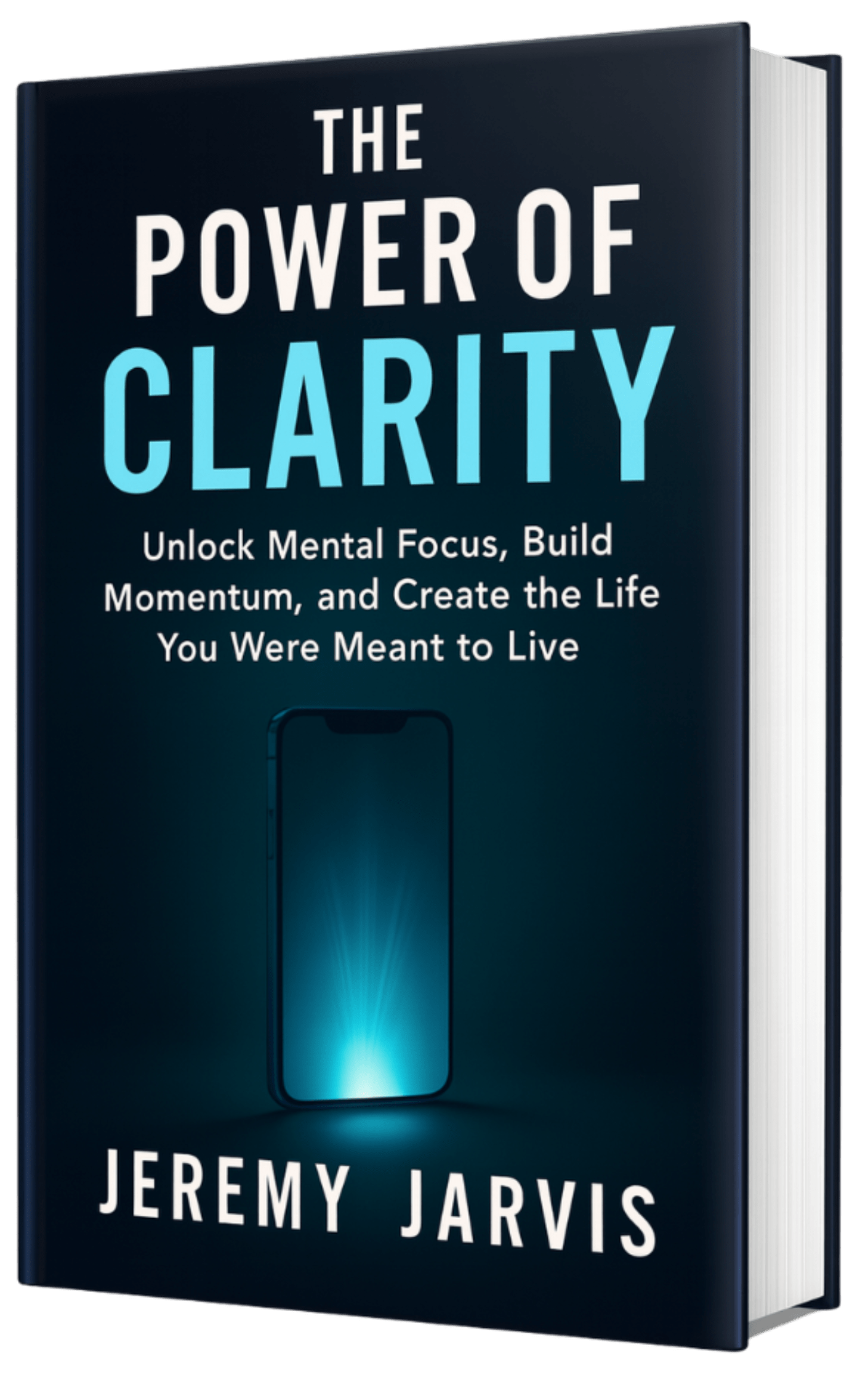
    The Power of Clarity β€” book cover

    The Power of Clarity

    Unlock mental focus, build momentum, and create the life you were meant to live.

    View book β†’
    AI & ChatGPT for Beginners β€” book cover

    AI & ChatGPT for Beginners

    No PhD needed β€” a 2025 guide to AI, prompts, and productivity without coding.

    View book β†’
    Zen in the Digital Jungle β€” book cover

    Zen in the Digital Jungle

    Mindfulness for a chaotic world.

    View book β†’
    The Slow Reset β€” book cover

    The Slow Reset

    Mindful living in a fast-paced world.

    View book β†’
    Perfectly Imperfect β€” book cover

    Perfectly Imperfect

    Stop self-criticism, set boundaries, and embrace the real you.

    View book β†’
    Reclaiming Silence β€” book cover

    Reclaiming Silence

    A dopamine detox guide to finding peace in a noisy world.

    View book β†’
    The Focused Freelancer β€” book cover

    The Focused Freelancer

    Productivity, pricing & positioning for independents in 2025.

    View book β†’
    ChatGPT Side Hustle System β€” book cover

    ChatGPT Side Hustle System

    Launch your AI-driven online business in 30 days.

    View book β†’
    Burnout, Interrupted β€” book cover

    Burnout, Interrupted

    A proven path to restore energy and reclaim your life.

    View book β†’
    Attention Unleashed β€” book cover

    Attention Unleashed

    Focus strategies for the distracted mind.

    View book β†’
    Side Hustle Launchpad β€” book cover

    Side Hustle Launchpad

    Your quick-start guide to extra income.

    View book β†’
    Digital Clarity β€” book cover

    Digital Clarity

    Rewire your brain, escape dopamine traps & regain focus.

    View book β†’
    Break the Scroll β€” book cover

    Break the Scroll

    Reduce screen time and take back control of your life.

    View book β†’
    Climate Compassion β€” book cover

    Climate Compassion

    Transform eco-anxiety into empowered action.

    View book β†’
    Village Mentality β€” book cover

    Village Mentality

    The power of community for mental wellness.

    View book β†’
    Restful Nights β€” book cover

    Restful Nights

    Overcoming sleep anxiety in a 24/7 world.

    View book β†’
    Connected Again β€” book cover

    Connected Again

    Combat loneliness and build meaningful relationships.

    View book β†’
    Focus Recharged β€” book cover

    Focus Recharged

    Mastering attention and productivity in the digital era.

    View book β†’
    Marketing Magic with ChatGPT β€” book cover

    Marketing Magic with ChatGPT

    AI-powered content, campaigns, and copywriting to grow faster.

    View book β†’
    The 6-Figure Creator β€” book cover

    The 6-Figure Creator

    Turn knowledge into passive income with books, courses & AI.

    View book β†’
    Burnout Breakthrough β€” book cover

    Burnout Breakthrough

    Reset your work-life balance and thrive in 2025.

    View book β†’
    The Emotionally Intelligent Man β€” book cover

    The Emotionally Intelligent Man

    A modern guide to self-awareness and communication.

    View book β†’
    AI Personalized Wellness β€” book cover

    AI Personalized Wellness

    Create your custom health plan with data-driven habits.

    View book β†’
    Everyday AI Made Easy β€” book cover

    Everyday AI Made Easy

    Use ChatGPT and smart tools to simplify life.

    View book β†’
    Money Mindfulness β€” book cover

    Money Mindfulness

    A financial wellness guide for Gen Z & Millennials.

    View book β†’
    Startup Smarter with AI β€” book cover

    Startup Smarter with AI

    ChatGPT strategies and tools to grow your business.

    View book β†’
    ChatGPT for Writers & Creators β€” book cover

    ChatGPT for Writers & Creators

    Unlock AI-powered brainstorming, drafting & editing.

    View book β†’
  • Finding Your Mental Clarity in a World of Noise

    Finding Your Mental Clarity in a World of Noise

    Finding Your Mental Clarity in a World of Noise

    Mental clarity is that unmistakable feeling of a calm, organized, and focused mind. It’s when your thoughts flow without friction, decisions feel intuitive, and you can lock in on what matters, free from the constant static of distractions and internal noise.

    Key Takeaways

    • Mental clarity is a state of focused, calm thinking, not a personality trait. It’s achievable through specific, science-backed habits.
    • Digital distractions are the primary cause of modern brain fog. They create cognitive overload by forcing your prefrontal cortex to switch tasks constantly, draining your mental energy.
    • Small, consistent habits are more effective than drastic overhauls. Strategies like a mini β€œdopamine reset,” single-tasking, and creating deep work rituals can recalibrate your brain’s reward system and restore focus.
    • This guide is for educational purposes. The information provided here is not a substitute for professional medical or psychological advice for conditions like anxiety, depression, or ADHD.

    Our editorial team independently researches and recommends products we believe in. If you make a purchase through our links, we may earn a small commission at no extra cost to you.

    What Is Mental Clarity and Why Is It So Hard to Find?

    In a world buzzing with notifications and bottomless to-do lists, finding genuine mental clarity can feel like chasing a ghost. We’ve somehow accepted a state of chronic mental fog as normal, where frantic multitasking is the default and deep, uninterrupted focus is a rare treat.

    Feeling mentally scattered isn’t a personal flaw. From a behavioral psychology perspective, it’s a direct response to an environment that relentlessly chops our attention into tiny, useless pieces, weakening our brain’s ability to maintain focus.

    Businessman in a suit sits at a desk, looking out a window at sunset, with a hot coffee and notebook, demonstrating a state of mental clarity.

    The Slow Erosion of Focus and Its Impact on Mental Clarity

    Think about a typical morning. You wake up and your thumb instinctively opens your email, flooding your brain with other people’s priorities before you’ve even had a sip of coffee. On your commute, you scroll through a chaotic social media feedβ€”a jumble of news, ads, and outrage. This behavior, grounded in habit formation research, shows how easily our brains can be conditioned for distraction.

    By the time you actually sit down to work, your brain has already wrestled with hundreds of micro-distractions. Your focus is depleted before the day has truly begun.

    This isn’t just tiring; it’s neurologically punishing. Every notification, every context switch, costs you a small piece of your cognitive bandwidth. Neuroscience research explains that over time, this constant drain leads to cognitive overload, a state where your brain’s core functionsβ€”like planning and decision-makingβ€”become sluggish and weak. You can find strategies to reverse this trend in our guides on achieving true mental clarity.

    • Real-World Example: Imagine Sarah, a project manager, trying to write a critical report. In one hour, she gets 15 emails, 5 Slack messages, and 3 social media notifications. Each ping pulls her attention away. By the end of the hour, she’s written only two paragraphs and feels completely drained, a classic symptom of cognitive overload impacting her mental clarity.

    A Widespread Challenge

    This isn’t an isolated struggle. The global mental health crisis has hit staggering levels, and our collective wellbeing still hasn’t bounced back to where it was before the pandemic.

    The Mental State of the World Report 2023 found that the sharp decline in mental wellness we saw from 2019 to 2021 shows no real signs of recovery. For professionals drowning in digital noise, this sustained stress makes the hunt for mental clarity feel harder than ever.

    This guide gets it. Instead of throwing generic advice at you, we’re going to walk through practical, neuroscience-backed strategies to help you reclaim your focus and build a reliable system for lasting mental clarity.

    The Science Behind Why Your Brain Feels Foggy and Lacks Mental Clarity

    That sluggish, foggy feeling isn’t just in your headβ€”it’s a real neurological state with clear, predictable causes. When your brain feels foggy, it’s often a sign that its core resources, like energy and attention, are completely overdrawn.

    Think of your brain’s capacity for focus like a computer’s RAM. Open one program, and it runs smoothly. But open dozens of tabs, run multiple apps, and download files all at once? The whole system slows to a crawl. That’s exactly what happens to your brain when it’s overloaded.

    A man in a suit working on a laptop, with digital circuit board graphics and icons around his head, illustrating the neurological processes behind achieving mental clarity.

    The Role of Your Prefrontal Cortex in Mental Clarity

    The area of your brain running the show is the prefrontal cortex (PFC). It’s your mental CEO, responsible for executive functions like planning, decision-making, and impulse control. When you try to multitask, you’re forcing your PFC to switch contexts rapidlyβ€”a process that’s neurologically expensive and burns through your cognitive fuel.

    This constant switching ratchets up what scientists call cognitive load, which is the total amount of mental effort being used in your working memory. A high cognitive load is the root cause of that familiar brain fog, making it incredibly difficult to think deeply or solve complex problems, thus reducing your mental clarity.

    A study found that even brief interruptions can double a person’s error rate and take up to 23 minutes to fully refocus on the original task. This validates the feeling that small distractions have a disproportionately large impact on your mental clarity.

    How Stress and Distractions Fuel the Fog

    When you’re stressed, your body releases cortisol. Neuroscience shows that in high amounts, this hormone can directly interfere with your PFC’s function, essentially locking your brain into a reactive, short-term survival mode. This makes long-term planning and deep focus feel almost impossible.

    At the same time, our digital world is perfectly engineered to exploit our brain’s reward system. Each notification, like, or new email delivers a tiny hit of dopamine, a neurotransmitter tied to pleasure and motivation. Behavioral psychology explains that this creates a powerful feedback loop that trains your brain to seek constant novelty, making sustained focus on a single task feel boring and difficult. To go deeper, you can explore the cognitive science behind why we often forget what we watch.

    • Real-World Example: Consider Mark, who is preparing for a major presentation. The high stakes create stress, elevating his cortisol levels. At the same time, his phone buzzes constantly. His brain, now primed for threat (from cortisol) and reward (from dopamine), struggles to stay on the complex, long-term task. He feels stuck, staring at a blank slideβ€”a perfect storm of stress and distraction destroying his mental clarity.

    Recognizing this pattern is the first step toward reclaiming your focus. You can learn more by exploring the science of mental fog and how to overcome it.

    How the Digital Age Steals Your Mental Clarity

    It’s no accident that deep focus feels like an uphill battle. Our modern world is filled with powerful forces that actively work against our ability to think clearly. These aren’t just minor annoyancesβ€”they’re deeply ingrained systems designed to hijack your brain’s natural rhythms.

    This constant drain on our mental energy boils down to three primary culprits: relentless digital stimulation, lifestyle habits that weaken our cognitive resilience, and a pervasive β€œhustle culture” that treats rest as a sign of weakness. Understanding how these pieces fit together is the first step toward reclaiming your focus and improving mental clarity.

    The Science of Digital Distraction

    Social media feeds, breaking news alerts, and endless email chains are engineered to be addictive. They run on a principle known as a variable reward system, the exact same behavioral mechanism that makes slot machines so compelling. Because you never know when you’ll stumble upon a fascinating post or get an important message, your brain receives a small, unpredictable hit of dopamine with every single refresh.

    This process trains your brain to constantly hunt for novelty and stimulation, which makes deep, sustained work feel boring and unrewarding by comparison. Your attention becomes fragmented, always anticipating the next potential reward instead of staying present with the task at hand. You can explore the mechanics of this in our guide to understanding the neurology of digital overwhelm and attention hijacking.

    This isn’t just a feeling; it’s a measurable crisis. Research from Ipsos reveals that a staggering 52% of young adults explicitly say that heavy use of social media and digital devices negatively impacts their mental health. The connection is clear: our digital habits are directly linked to a decline in cognitive clarity. Learn more about these findings on digital device usage.

    Lifestyle Factors and the Hustle Culture Trap

    Beyond our screens, our foundational lifestyle habits play a massive role in our ability to think clearly. Poor sleep, for example, directly impairs the prefrontal cortex’s ability to function. Neuroscience research shows that during sleep, the brain clears out metabolic waste; disrupting this process leads to mental fatigue.

    Compounding these issues is the relentless pressure of β€œhustle culture,” which celebrates constant productivity and discourages essential downtime. But our brains need periods of rest and unfocused thought to consolidate memories, solve complex problems, and restore cognitive resources. When we skip this crucial recovery time in favor of endless work, we aren’t being more productiveβ€”we’re just accelerating our path toward burnout and diminished mental clarity.

    • Real-World Example: Take Maria, an entrepreneur who believes β€œsleep is for the weak.” She works 14-hour days, fueled by caffeine, and feels a constant pressure to be β€œon.” Her lack of sleep impairs her decision-making, and she finds herself making simple mistakes. Her mood suffers, and her creativity plummets. This isn’t a sign of dedication; it’s a textbook case of burnout eroding her cognitive function and mental clarity.

    Practical Strategies to Restore Your Mental Clarity

    Knowing what causes brain fog is the first step. Actually reclaiming your focus, though? That takes a deliberate, hands-on approach.

    Lasting mental clarity isn’t something that just happens. It’s built through consistent habits that protect your brain’s very limited resources. Forget trying to overhaul your entire life overnight. The real wins come from small, targeted actions designed to lower your cognitive load and bring back your natural ability to concentrate.

    These methods go straight to the neurological roots of distraction. By consciously managing your brain’s reward system and building an environment that encourages deep thought, you can train your mind to resist the constant pull of stimulation and find a calmer, more organized mental space.

    The Dopamine Reset for Improved Mental Clarity

    Our brains have gotten used to a steady diet of high-dopamine hits, from scrolling social media to compulsively checking email. This constant stimulation makes low-dopamine tasksβ€”like reading a dry report or methodically planning a projectβ€”feel almost impossible.

    A dopamine reset, sometimes called a dopamine fast, is a straightforward way to recalibrate your brain’s overworked reward circuits. The goal isn’t to get rid of dopamine, which is impossible and unhealthy. It’s about intentionally stepping away from high-stimulation activities for a set period, allowing your dopamine receptors to reset. This simple break can make normal, productive work feel engaging and rewarding again.

    If you want a deeper dive into this technique, check out our complete guide on how to reset your brain for better focus.

    • Real-World Example: Picture Alex, a freelance writer stuck in a cycle of procrastination. To break free, Alex decides to try a β€œdopamine reset” for the first 90 minutes of every workday. No phone, no email, no social media. At first, it’s agonizingly boring. But after just a few days, Alex notices the frantic urge for distraction starts to fade. The act of writing itself becomes more satisfying and less of a fight, leading to better mental clarity.

    Cultivating Deep Work Rituals for Enhanced Mental Clarity

    Deep work is the skill of focusing without distraction on a cognitively demanding task. It’s what allows you to produce high-quality results in less time and truly master complex information. But getting into that state takes more than sheer willpower. It requires building rituals and designing an environment that signals to your brain: it’s time to focus now.

    This could be as simple as dedicating a specific chair just for focused work, putting on noise-canceling headphones, or blocking out non-negotiable β€œdeep work” sessions in your calendar. The psychological power of these rituals is consistency. When your brain learns to associate certain cues with uninterrupted concentration, slipping into a state of flow becomes second nature.

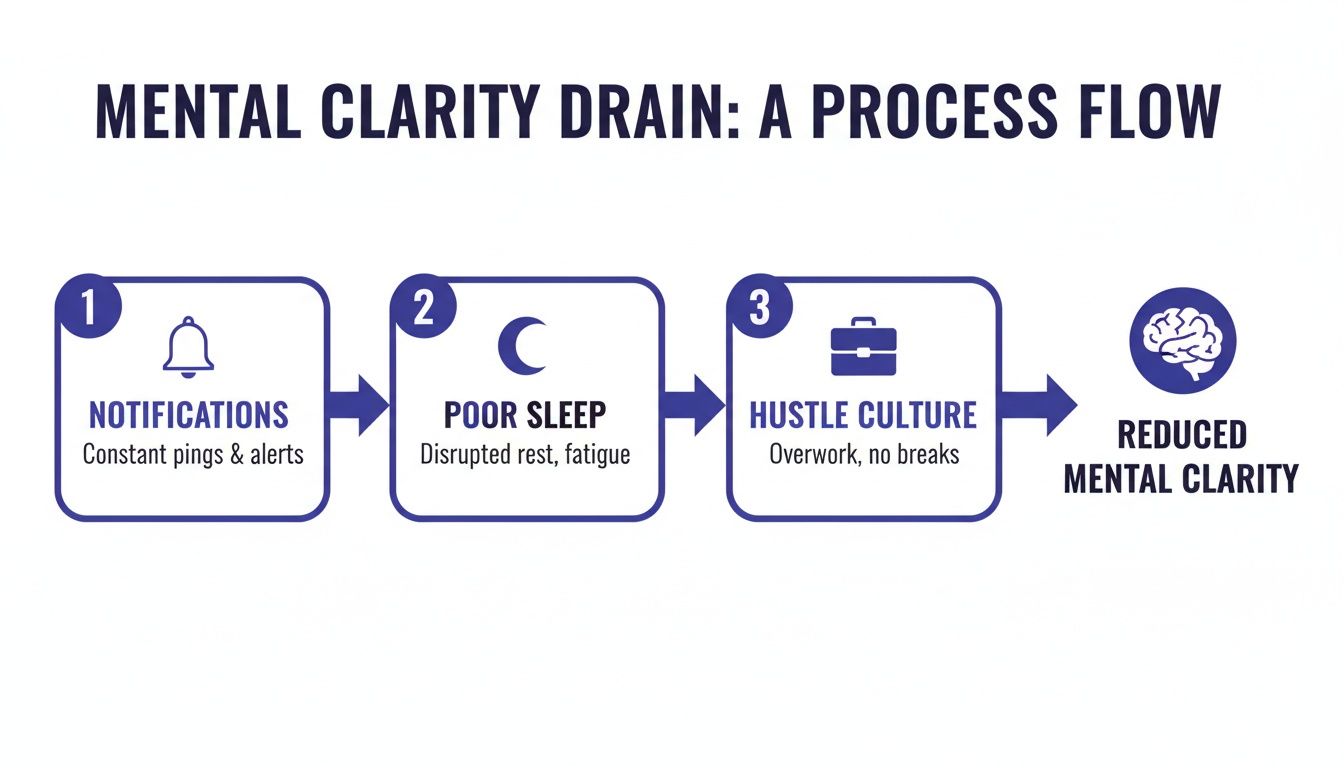
    This infographic shows how the tiny interruptions we face all day actively chip away at our mental clarity.

    A process flow diagram showing how notifications, poor sleep, and hustle culture lead to reduced mental clarity.

    You can see the clear line from digital pings to physical exhaustion and cultural pressure, showing how these forces pile up to destroy your focus.

    Embracing Mindful Productivity Through Single-Tasking

    In a culture that worships multitasking, the most powerful act of rebellion for your brain is single-tasking. Psychologically, multitasking is a flat-out myth. What you’re really doing is context-switchingβ€”forcing your brain to rapidly toggle between different tasks. This process is incredibly inefficient and a massive drain on your cognitive resources.

    Mindful productivity is about bringing your full attention to one thing at a time. It’s like a workout for your brain’s β€œattention muscle” and directly reduces the cognitive overload that fuels burnout and brain fog.

    By focusing on one task, you engage the brain’s β€œexecutive control network” more effectively. This allows you to filter out irrelevant information, sustain attention, and complete work with a higher degree of accuracy and creativity.

    • Real-World Example: Jen used to pride herself on juggling conference calls while answering emails and planning her afternoon. She felt busy but was constantly behind. After learning about single-tasking, she started dedicating protected 45-minute blocks to one task only. During calls, she closed her laptop and just listened. Her meeting notes became more insightful, her emails were clearer, and she finished her workday feeling accomplished, not just exhausted.

    The Editor’s Take on What Actually Works

    After digging into the research and trying these strategies myself, what really moves the needle? Let’s cut through the noise. The honest answer is that consistency beats complexity every single time.

    Mastering a few foundational habits gets you far better results than chasing a dozen new productivity hacks. The biggest changes are almost always the simplest ones, grounded in how your brain actually works and a healthy respect for its limits.

    What to Focus On for Real Results

    Instead of scattering your energy, pick one strategy that targets your biggest pain point. Each method is built for a different kind of struggle:

    • A Dopamine Reset Is Best For: Anyone who feels that constant, nagging pull toward their phone. If you can’t get through a single task without checking notifications, start here. It helps recalibrate your brain’s reward system so that real work feels engaging again.

    • Deep Work Rituals Are Best For: Professionals, freelancers, or students staring down a deadline. When you absolutely must produce high-quality, focused work, creating a dedicated environment and schedule is non-negotiable for improving mental clarity.


    The real secret isn’t finding the perfect app or a magical technique. It’s about building a non-negotiable routineβ€”like a screen-free morning or firm digital boundaries after workβ€”and sticking with it until it becomes second nature.

    An Important Caveat

    It’s crucial to remember that these strategies are tools for improving focus and productivity, not treatments for clinical conditions.

    If you’re struggling with persistent anxiety, symptoms of depression, ADHD, or severe burnout, these tips are not a substitute for professional care. Please talk to a medical doctor or mental health professional to get the support you need. Our goal is to provide grounded, evidence-based educational advice you can trust to build better habits.

    Building a Sustainable System for Lasting Focus and Mental Clarity

    Genuine mental clarity isn’t a one-time fix. It’s the result of a sustainable system you build, piece by piece.

    We’ve walked through the neuroscience of brain fog and the practical strategies that cut through it. The core lesson is simple but powerful: small, consistent habits are what protect your focus from the constant demands of a noisy world.

    Instead of trying to overhaul your entire life overnight, the most effective approach is to start small. Just pick one strategy that speaks to your biggest challenge right now. Maybe it’s a dopamine reset to finally curb those digital cravings, or maybe it’s committing to single-tasking for just one hour each day.

    This approach builds momentum without creating overwhelm. To really build a sustainable system for lasting focus, understanding how to focus better at work is an indispensable first step.

    The Economic Case for Clarity

    Protecting your focus isn’t just about feeling better; it’s a critical professional asset in a world drowning in distraction.

    Mental health challenges like depression and anxiety cost the global economy an estimated $1 trillion in lost productivity every single year. For professionals, this number sends a clear signal: science-backed systems for maintaining mental clarity are essential economic tools that directly impact your performance and career longevity.

    When you protect your cognitive resources, you are investing in your most valuable asset. This is where the principles of managing your energy, not just your time, become crucial.

    You now have the tools to build a more intentional relationship with your mind and your technology. Remember the goal: start with one small change this week, and let it build from there.

    Disclaimer: The content in this article is for educational purposes only and is not a substitute for professional medical or psychological advice. Some links may be affiliate links, meaning we may earn a small commission at no extra cost to you if you make a purchase. Please consult a qualified professional for any health concerns.

    Frequently Asked Questions About Mental Clarity

    Let’s dig into some of the most common questions people have when they start working on their mental clarity. Think of this as a quick-reference guide with practical, direct advice.

    1. What’s the fastest way to get rid of brain fog?

    While there’s no magic button, the quickest way to disrupt that foggy feeling is to change your physical and sensory state. Get up, stretch, drink a full glass of water, and step outside for five minutes of natural light. This combination of movement, hydration, and a change of scenery provides a powerful reset for an overloaded nervous system and can restore a sense of immediate mental clarity.

    2. How long should a β€˜dopamine detox’ actually last?

    A full 24-hour period can offer a significant reset. However, behavioral research suggests that building shorter, sustainable β€œdetox” periods into your daily routine is more effective for long-term mental clarity. For example, practicing a screen-free first 60-90 minutes of your morning creates a healthier dopamine baseline over time.

    3. Can better mental clarity really help my anxiety?

    Yes, but it’s important to understand the relationship. Enhanced mental clarity is not a cure or treatment for a clinical anxiety disorder. However, practices that reduce cognitive overloadβ€”like single-tasking and mindfulnessβ€”can lower the feeling of being overwhelmed that often fuels anxious thought patterns. This creates a calmer mental state. If you are struggling with anxiety, it is essential to seek guidance from a qualified mental health professional.

    4. How much does my diet actually affect brain fog and mental clarity?

    Your diet plays a massive role. The brain uses about 20% of your body’s calories, so its performance is directly tied to your nutritional intake. Dehydration, blood sugar spikes from processed foods, and a lack of brain-healthy nutrients like omega-3 fatty acids are common culprits behind brain fog. A balanced diet is foundational for achieving and maintaining mental clarity.

    5. How can I practice deep work for better mental clarity in a loud, open office?

    Create a β€œbubble of focus.” First, use noise-canceling headphones to block auditory distractions. Second, use visual cues, like a small sign on your desk, to signal to colleagues that you are in a focus block. Finally, communicate your schedule clearly to your team, letting them know when you’ll be available for collaboration. This structured approach helps protect your mental clarity even in a chaotic environment.

    6. How is mental clarity different from mindfulness?

    Mindfulness is the practice of paying attention to the present moment without judgment. Mental clarity is the result or state of mind achieved through practices like mindfulness. It’s the feeling of having a calm, focused, and organized mind, which is the outcome of consistent mental training.

    7. Are there any apps that genuinely help with achieving mental clarity?

    Yes, some apps can serve as helpful tools. Apps like Freedom or Cold Turkey are effective for blocking external distractions. Mindfulness apps like Headspace or Calm provide guided meditations that can train your focus. The goal is to use them as aids to build internal focus, not as long-term crutches.

    8. What’s one simple habit I can start today for better mental clarity?

    Implement a β€œshutdown ritual.” At the end of each workday, take five minutes to write down any unfinished tasks or lingering thoughts for the next day. From a psychological standpoint, this act of β€œoffloading” signals to your brain that the workday is complete, which helps prevent work-related stress from intruding on your personal time and clouding your evening mental clarity.

    9. Can I improve my mental clarity without giving up social media entirely?

    Absolutely. The key is intentional use, not total elimination. Set firm boundaries: schedule specific, brief blocks of time for social media, disable all non-essential notifications, and consciously avoid using it as a default response to boredom. This transforms your behavior from reactive to proactive, preserving your cognitive resources for what matters.

    10. Where can I find more science-backed resources on mental clarity?

    For reliable, evidence-based information, look to reputable sources like Harvard Health, scientific databases like PubMed, and professional organizations such as the American Psychological Association (APA). These resources provide information grounded in peer-reviewed research.


    Ready to build a complete system for lasting focus and calm productivity? Mind Clarity Hub is your home for Jeremy Jarvis’s science-based books on dopamine detox, deep work, and burnout recovery.

    Explore the full library and find your next step toward reclaiming your mental space at https://mindclarityhub.com.

    Explore the Mind Clarity Hub Library

    Practical books on focus, digital habits, resilience, and building a calmer mind.

    The Power of Clarity β€” book cover

    The Power of Clarity

    Unlock mental focus, build momentum, and create the life you were meant to live.

    View book β†’
    AI & ChatGPT for Beginners β€” book cover

    AI & ChatGPT for Beginners

    No PhD needed β€” a 2025 guide to AI, prompts, and productivity without coding.

    View book β†’
    Zen in the Digital Jungle β€” book cover

    Zen in the Digital Jungle

    Mindfulness for a chaotic world.

    View book β†’
    The Slow Reset β€” book cover

    The Slow Reset

    Mindful living in a fast-paced world.

    View book β†’
    Perfectly Imperfect β€” book cover

    Perfectly Imperfect

    Stop self-criticism, set boundaries, and embrace the real you.

    View book β†’
    Reclaiming Silence β€” book cover

    Reclaiming Silence

    A dopamine detox guide to finding peace in a noisy world.

    View book β†’
    The Focused Freelancer β€” book cover

    The Focused Freelancer

    Productivity, pricing & positioning for independents in 2025.

    View book β†’
    ChatGPT Side Hustle System β€” book cover

    ChatGPT Side Hustle System

    Launch your AI-driven online business in 30 days.

    View book β†’
    Burnout, Interrupted β€” book cover

    Burnout, Interrupted

    A proven path to restore energy and reclaim your life.

    View book β†’
    Attention Unleashed β€” book cover

    Attention Unleashed

    Focus strategies for the distracted mind.

    View book β†’
    Side Hustle Launchpad β€” book cover

    Side Hustle Launchpad

    Your quick-start guide to extra income.

    View book β†’
    Digital Clarity β€” book cover

    Digital Clarity

    Rewire your brain, escape dopamine traps & regain focus.

    View book β†’
    Break the Scroll β€” book cover

    Break the Scroll

    Reduce screen time and take back control of your life.

    View book β†’
    Climate Compassion β€” book cover

    Climate Compassion

    Transform eco-anxiety into empowered action.

    View book β†’
    Village Mentality β€” book cover

    Village Mentality

    The power of community for mental wellness.

    View book β†’
    Restful Nights β€” book cover

    Restful Nights

    Overcoming sleep anxiety in a 24/7 world.

    View book β†’
    Connected Again β€” book cover

    Connected Again

    Combat loneliness and build meaningful relationships.

    View book β†’
    Focus Recharged β€” book cover

    Focus Recharged

    Mastering attention and productivity in the digital era.

    View book β†’
    Marketing Magic with ChatGPT β€” book cover

    Marketing Magic with ChatGPT

    AI-powered content, campaigns, and copywriting to grow faster.

    View book β†’
    The 6-Figure Creator β€” book cover

    The 6-Figure Creator

    Turn knowledge into passive income with books, courses & AI.

    View book β†’
    Burnout Breakthrough β€” book cover

    Burnout Breakthrough

    Reset your work-life balance and thrive in 2025.

    View book β†’
    The Emotionally Intelligent Man β€” book cover

    The Emotionally Intelligent Man

    A modern guide to self-awareness and communication.

    View book β†’
    AI Personalized Wellness β€” book cover

    AI Personalized Wellness

    Create your custom health plan with data-driven habits.

    View book β†’
    Everyday AI Made Easy β€” book cover

    Everyday AI Made Easy

    Use ChatGPT and smart tools to simplify life.

    View book β†’
    Money Mindfulness β€” book cover

    Money Mindfulness

    A financial wellness guide for Gen Z & Millennials.

    View book β†’
    Startup Smarter with AI β€” book cover

    Startup Smarter with AI

    ChatGPT strategies and tools to grow your business.

    View book β†’
    ChatGPT for Writers & Creators β€” book cover

    ChatGPT for Writers & Creators

    Unlock AI-powered brainstorming, drafting & editing.

    View book β†’