


Published:

Unlock AI-Powered Brainstorming, Drafting & Editing Tools to Supercharge Your Creativity and Conquer Writer’s Block
A book by Jeremy Jarvis, sold on Amazon. Read what is inside below, or go straight to your copy.
Affiliate disclosure: Some links on this page are affiliate links. If you buy through them, Mind Clarity Hub may earn a commission at no extra cost to you.
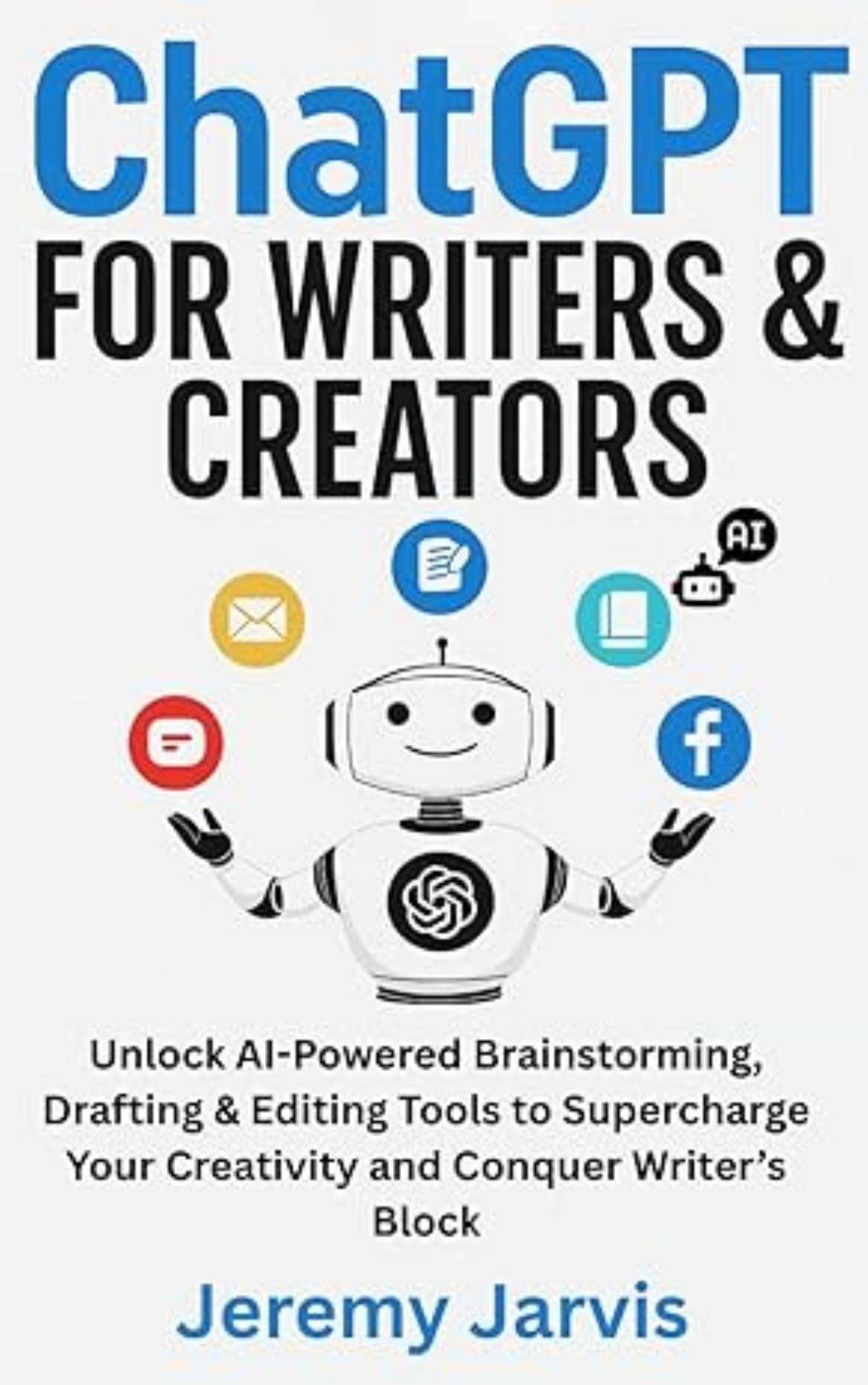
ChatGPT for Writers & Creators
AI-powered brainstorming, drafting and editing, without handing over your voice.
By Jeremy Jarvis
Last reviewed: . Our research method: this page describes the book’s contents and who it suits, written from the book itself and from the questions writers ask most often. Mind Clarity Hub researches and compares; we do not claim to have independently tested the outcomes described inside the book.
Free download: 7-Day Mind Clarity Reset
A short daily reset you can actually stick with (no fluff).
The fear is reasonable. The conclusion usually is not.
Most writers who try AI once come away with the same impression: the output is fluent, generic and faintly embarrassing. It sounds like everyone and no one. That reaction is correct, and it is also the wrong place to stop, because it describes what happens when you ask a model to write for you rather than with you.
ChatGPT for writers is the second approach. The book treats AI as the fastest brainstorming partner you have ever had and the least sentimental editor you will ever work with, while keeping every sentence that reaches your reader recognisably yours.
What you will be able to do by the end
- Break a blank page in minutes with angle-generation prompts that produce options rather than one flat suggestion.
- Keep your own voice by giving the model your writing as a reference instead of accepting its default register.
- Edit harder than you can alone, using AI to find flabby sentences, buried leads and unsupported claims.
- Outline long pieces quickly, including the structural pass most drafts never get.
- Repurpose one piece into several without the result reading like filler.
- Know where the line sits on disclosure, originality and what you should never outsource.
Which chapter solves your problem?
Writers arrive at this book with different complaints. Find yours.
| Your complaint | What the book changes | Where to start |
|---|---|---|
| It sounds nothing like me | Voice-matching setup using your own work | Voice chapter |
| Every idea it gives is obvious | Angle generation that returns real options | Brainstorming chapter |
| My drafts sprawl | A structural editing pass with prompts | Structure chapter |
| It invents sources | A one-minute verification habit | Research chapter |
| I worry it is cheating | A direct answer on disclosure and originality | Ethics chapter |
Who this book is for
Bloggers, novelists, copywriters, newsletter writers, course creators and scriptwriters: anyone who produces words on a deadline. It assumes you can already write. The goal is not to replace that skill but to remove the parts of the job that drain the energy writing actually needs, such as staring at a blank document, restructuring a messy draft, or generating twelve headline options when you can only think of two.
What is inside
- A brainstorming method that produces genuinely different angles rather than five rewordings of one.
- Voice-matching: how to feed the model your own work so suggestions sound like you.
- Structural editing prompts that catch problems most self-edits miss.
- Line editing for rhythm, repetition and the tells that make prose read as machine-written.
- Research support, with a blunt chapter on fabricated sources.
- Repurposing workflows for turning one long piece into a newsletter, a thread and a script.
- An honest chapter on disclosure, originality and the parts of the craft that should stay human.
On keeping your voice
This is the chapter most readers return to. A model’s default style is an average of everything it has read, which is precisely why it sounds generic. The fix is not a magic phrase but a short, repeatable setup: show it your writing, name what you do and do not do, and ask for options rather than answers. The book gives you that setup and the prompts to run it.
Common questions
Will this make my writing sound like AI?
Not if you use it the way the book describes. The whole method is built around the model serving your voice rather than supplying its own. Anything it drafts is raw material, never final copy.
Is it ethical to use AI in my writing?
There is a full chapter on this and it does not dodge. Using AI to brainstorm and edit is not far from using a thesaurus, a writing group or an editor. Passing off wholly generated work as your own is a different thing, and the book says so plainly.
Do I need a paid account?
No. The methods work on a free account, with notes where a paid model is meaningfully better.
I write fiction. Is this just for bloggers?
Both are covered. Brainstorming, structural editing and voice-matching apply directly to fiction; the repurposing chapters serve non-fiction and content writers more.
Write faster without sounding like a machine
A practical system for brainstorming, drafting and editing with AI.
Keep reading
New to these tools entirely? Start with AI & ChatGPT for Beginners. If you write to sell, Marketing Magic with ChatGPT covers AI-assisted copywriting, and The Focused Freelancer deals with the attention problem behind most missed deadlines.
More books by Jeremy Jarvis
Short, practical reads on focus, calm and getting things done.
 The Power of Clarity: A 30-Day Focus Reset by Jeremy JarvisUnlock mental focus, build momentum, and create the life you were meant to live.View book
 Zen in the Digital JungleMindfulness for a chaotic world.View book
 THE SLOW RESETMindful living in a fast-paced world.View book
 Perfectly ImperfectStop self-criticism, set boundaries, and embrace the real you.View book
 Reclaiming SilenceA dopamine detox guide to finding peace in a noisy world.View book
 THE FOCUSED FREELANCERProductivity, pricing & positioning for independents in 2025.View book
 Unlocking Success: How an AI Business Plan Generator Can Transform Your Startup JourneyLaunch your AI-driven online business in 30 days.View book
 Burnout, InterruptedA proven path to restore energy and reclaim your life.View book
 Attention UnleashedFocus strategies for the distracted mind.View book
 Side Hustle LaunchpadYour quick-start guide to extra income.View book
 Digital ClarityRewire your brain, escape dopamine traps & regain focus.View book
 Break the ScrollReduce screen time and take back control of your life.View book
 Climate CompassionTransform eco-anxiety into empowered action.View book
 Village MentalityThe power of community for mental wellness.View book
 Restful NightsOvercoming sleep anxiety in a 24/7 world.View book
 Connected AgainCombat loneliness and build meaningful relationships.View book
 Focus RechargedMastering attention and productivity in the digital era.View book
 Unlocking AI Marketing Potential with Content SystemsAI-powered content, campaigns, and copywriting to grow faster.View book
 The 6-Figure CreatorTurn knowledge into passive income with books, courses & AI.View book
 Burnout BreakthroughReset your work-life balance and thrive in 2025.View book
 The Emotionally Intelligent ManA modern guide to self-awareness and communication.View book
 Everyday AI Made Easy — How to Use ChatGPTUse ChatGPT and smart tools to simplify life.View book
 Money MindfulnessA financial wellness guide for Gen Z & Millennials.View book
 Startup Smarter with AIChatGPT strategies and tools to grow your business.View book
 AI & ChatGPT for Beginners by Jeremy JarvisNo PhD needed - a plain-English guide to AI, prompts and productivity without code.View book
 AI Personalized Wellness by Jeremy JarvisBuild a wellness plan from your own data with step-by-step habits.View book
 Too Many Tabs Open by Jeremy JarvisA Complete System for Clear Thinking When Your Mind Is Carrying More Than It Can HoldView book
 The Decision Fatigue Reset Workbook by Jeremy JarvisA 30-Day Plan to Simplify Choices, Reduce Mental Load, and Make Clearer Decisions Without Burning OutView book
 The Mental Clarity Habit by Jeremy JarvisSmall Daily Practices to Cut Mental Clutter and Think Straight AgainView book
 Love Worth Waiting For by Jeremy JarvisA Heartfelt Romance of Secrets, Second Chances, and DestinyView book
 The Last Letter by Jeremy JarvisA Second Chance Romance of Love, Loss, and RedemptionView book
 Friendship Reboot by Jeremy JarvisBuilding Meaningful Connections in a Digital World From Friend Dating to Community Building, Techniques to Combat...View book
 The Mental Clarity Reset by Jeremy JarvisHow to Clear Your Mind, Sharpen Focus, and Feel Less OverwhelmedView book
 The Work-Life Reset WorkbookA practical 30-day plan to beat burnout, stress, and digital overwhelm.View book
 The 2026 Side Hustle BlueprintA practical guide to making money online with proven work-from-home income streams.View book
 ChatGPT & YouA practical 2026 productivity blueprint for using ChatGPT and AI in everyday life.View book
 ChatGPT for Real LifeA practical guide to using ChatGPT to save hours every week and reduce mental clutter.View book
Reader reviews
Reviews on Amazon
Every rating and review of ChatGPT for Writers & Creators is on its Amazon page, where it is always current. Read what readers say there before you choose a format.
Read the reviews on AmazonGet your copy
ChatGPT for Writers & Creators is on Amazon.
As an Amazon Associate, Mind Clarity Hub earns from qualifying purchases.

The author
About the author
Jeremy Jarvis is the founder of Mind Clarity Hub and the author of more than 30 books on clarity, focus and digital wellness. His books turn research on attention, habits and burnout into short, practical steps for busy people. More about Jeremy Jarvis.
Questions and comments