

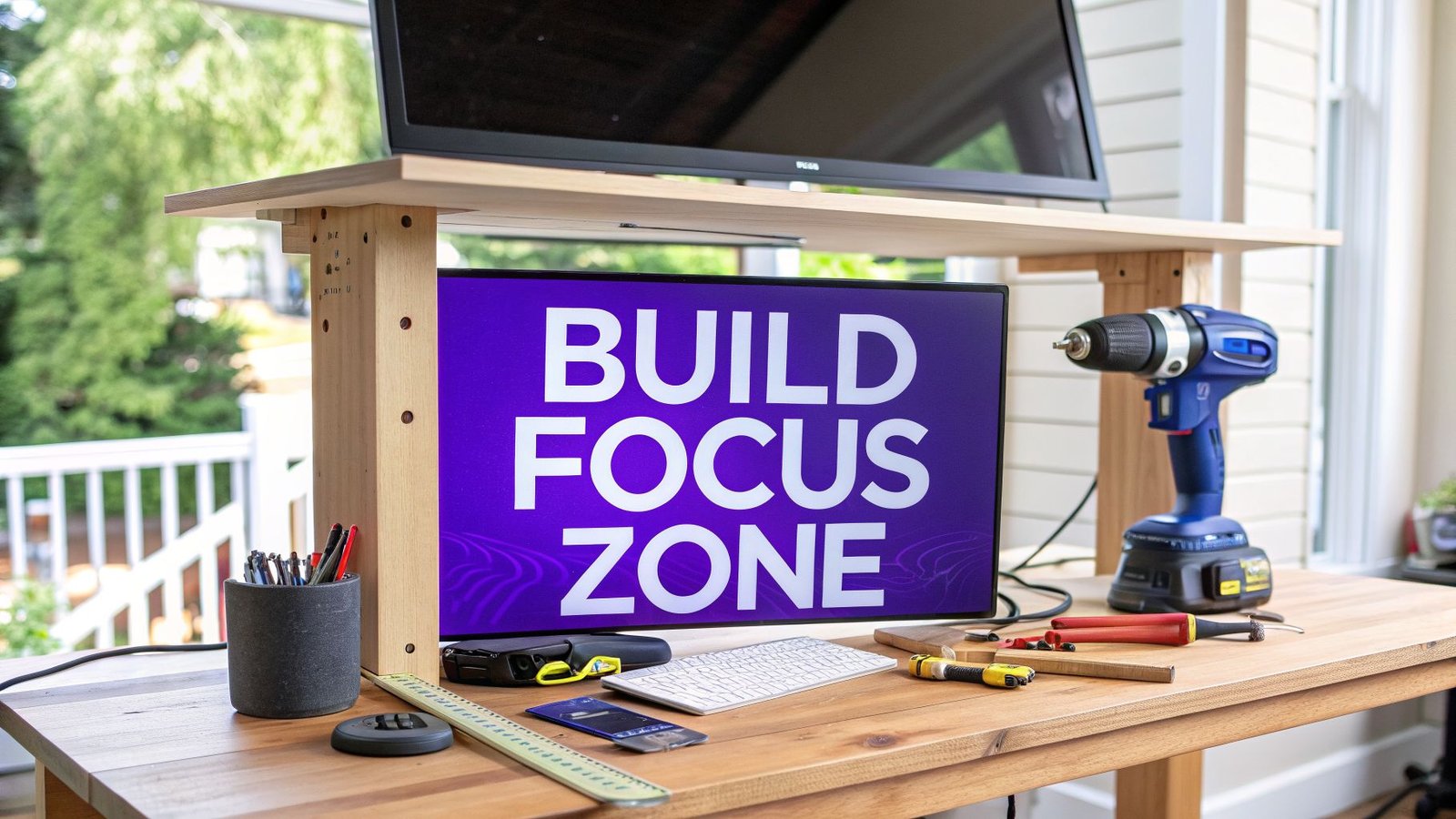
Building your own DIY office furniture is about more than saving a few bucks—it’s a direct way to build a workspace that works with your brain, not against it. Neuroscience shows that our environment significantly impacts our focus. When you create a custom desk or shelves, you’re not just assembling wood. You’re designing an environment that actively supports focus and deep work.
Affiliate Disclosure: Please note that this article contains affiliate links. If you make a purchase through these links, we may earn a small commission at no extra cost to you. This helps support our work in creating valuable content.
Why Your DIY Office Furniture Is a Secret Weapon For Focus
Building your own workspace is a powerful act of personalizing your environment for peak mental performance. When you take on a DIY office furniture project, you’re rejecting the one-size-fits-all model. Instead, you’re applying a core principle of environmental psychology to your own life. This creates a space that supports your brain’s ability to concentrate.
There’s a real psychological shift that happens when you design and build something yourself. Behavioral research calls this the “IKEA effect.” We place a higher value on things we’ve partially created. That piece of furniture becomes yours in a way a store-bought item never can, deepening your connection to the space. Your brain registers this sense of ownership and control. This helps turn a generic room into a true, dedicated focus zone.
The Science Of A Personalized Workspace For DIY Office Furniture
An office that’s cluttered or doesn’t quite fit you creates a constant, low-grade cognitive friction. Your brain burns through precious mental energy navigating visual noise or compensating for physical discomfort. It’s no surprise that research shows our physical surroundings have a huge effect on our mood, behavior, and ability to concentrate. You can learn more about how your environment affects cognitive performance in our detailed guide.
When you build furniture to meet your specific needs, you’re systematically eliminating those micro-distractions.
- Ergonomic Fit: A desk built to your exact height isn’t a luxury; it’s a tool. It reduces the physical strain that quietly siphons off cognitive resources. That energy could be used for deep work instead.
- Organizational Clarity: Custom shelves or a bespoke cable management system bring order to chaos. This lowers the mental load that comes with a messy desk. You could even design a small shelf specifically for your time blocking planner, keeping your day’s intentions visible.
- Sense of Accomplishment: The creative process itself delivers a small dopamine reward. This primes your brain for productive work in the very space you just created. It builds a positive feedback loop for better habits.
Real-World Example: Imagine a freelance writer working from a small apartment. Their dining table doubles as a desk, creating constant mental conflict. By building a simple, narrow desk for an unused corner, they create a clear “work” zone. This simple act of separation signals to their brain that it’s time to focus, improving productivity.
This hands-on approach is especially powerful for anyone working from home. It helps you draw a firm boundary between “home life” and “work life.” It sends a clear signal to your brain: when you step up to this custom-built desk, it’s time to focus.
Your First Project: An Ergonomic DIY Standing Desk
A standing desk can be a complete game-changer for your energy and focus. However, the sticker shock on pre-made models is real. Building your own is a surprisingly affordable and satisfying alternative. It lets you create a sturdy, ergonomic desk that’s actually tailored to your body.
The simple act of alternating between sitting and standing keeps your blood flowing. Research suggests this is a powerful way to sustain alertness and fend off that dreaded afternoon slump. This isn’t just about comfort. It’s about building an environment that actively supports your ability to do deep work. This is a great way to improve your focus with DIY office furniture.
Materials and Tools For Your DIY Standing Desk
Let’s start with your materials. The beauty of a DIY project is you get to pick the look and feel. A solid butcher block countertop gives you a durable, classic desk. A good quality plywood slab offers a clean, modern look that’s also friendly on the budget.
Once you have your desktop, the magic ingredient is a set of adjustable legs. Here’s what you’ll need to pull it all together.
- Desktop: A solid wood, butcher block, or high-quality plywood slab. Have it cut to your ideal size at the hardware store to save a step.
- Adjustable Legs: A pre-made adjustable standing desk frame is the simplest and most reliable choice here. It’s the fastest way to get a smooth, ergonomic lift.
- Tools: You’ll just need a power drill, a measuring tape, a pencil, and some safety glasses.
- Fasteners: The screws that come with your adjustable frame are usually all you need.
Mini-Scenario: A graphic designer needs a large, stable surface for their work. Instead of a pricey commercial desk, they buy a 6-foot butcher block slab and an adjustable frame. For about half the cost, they get a custom desk that perfectly fits their space and ergonomic needs.
Assembling Your DIY Office Furniture For Peak Performance
Putting it all together is more straightforward than you might think.
Start by placing your new desktop face down on a soft surface. A blanket or an old rug works perfectly to prevent scratches. Center the adjustable frame on the underside of the desktop. Take a moment to measure from all sides to make sure it’s perfectly even. Then, mark your drill holes with a pencil.
Next, drill small pilot holes where you made your marks. This small step prevents the wood from splitting. It also makes it much easier to drive the screws in. Finally, secure the frame to the desktop with the screws that came in the box. That’s it.
Of course, once you have a standing desk, the next step is dialing in the perfect standing desk height. Getting this right is crucial for avoiding the kind of neck and shoulder strain that pulls you out of a flow state. This applies whether you build or buy. It’s a non-negotiable part of creating your new DIY office furniture.
The diagram below shows how this project fits into the bigger picture of creating a workspace that genuinely boosts your focus.

As you can see, the physical act of creating and customizing your space is directly linked to your ability to do focused, meaningful work within it.
To round out your new setup, think about pairing your desk with a solid ergonomic chair and a good laptop stand for desk. Elevating your screen to eye level stops you from hunching. This posture kills both comfort and concentration. For more on that, check out our guide on how to reduce digital eye strain.
How to Choose Your First DIY Office Furniture Project
Deciding to build your own office furniture is one thing; figuring out where to start is another. The reality is that not all DIY office furniture projects give you the same boost in focus. The best first project is the one that solves the single biggest point of friction in your current workspace.
Take a second to really look at your desk. What’s the main problem? Is it physical discomfort that has you shifting in your chair all afternoon? Or is it the visual chaos of clutter that keeps pulling your attention away from what matters?
Maybe you just need more room to spread out. Or maybe you desperately need a system to get organized and carve out a distraction-free zone. Your answer points directly to the project that will give you the most immediate relief.

Best DIY Project Option For Beginners
For a lot of people, a simple monitor riser is the perfect entry point. It’s a low-cost, low-stakes project that delivers an instant ergonomic upgrade. Lifting your screen to eye level is one of the fastest ways to fix poor posture and ease neck strain. These are two physical distractions that quietly chip away at your mental energy all day long.
On the other hand, if your desk is buried under a sea of papers and cables, custom shelving might be a smarter first move. Building simple wall shelves gives everything a home, from books and supplies to a few personal items.
Real-World Example: Consider a student whose desk is always cluttered. This visual mess creates cognitive load, making it harder to study. Building simple shelves gets books and papers off the desk. This clears physical space and, more importantly, mental space. The calmer environment makes it easier for their brain to focus on learning.
And don’t forget the small details that make a big difference. The integrity of your build comes down to using the right hardware. A good guide on choosing the best screws for woodworking will ensure your new piece is sturdy enough to last for years.
Comparison: Which First DIY Project Is Right For You?
Still feeling stuck? Use this table to compare options and find the project that best fits your needs, skill level, and focus goals. This will help you decide on your first piece of DIY office furniture.
| Project | Best For | Skill Level | Focus Impact |
|---|---|---|---|
| Monitor Riser | Neck strain & poor posture | Beginner | High. Immediately improves physical comfort, reducing distraction. |
| Simple Shelving | Desk clutter & disorganization | Beginner | High. Creates a visually calm environment, freeing mental energy. |
| Cable Management | Tangled wires & visual mess | Beginner | Medium. Reduces visual noise, making the workspace feel cleaner. |
| Full Standing Desk | Sedentary work & low energy | Intermediate | Very High. Transforms your work dynamic, boosting alertness. |
At the end of the day, the right project is the one that solves your most annoying problem right now. If your neck is aching by 3 PM, build the riser. If you can’t find your desk surface, start with the shelves. To get started, you can browse the library of our focus and productivity books.
Building DIY Accessories For a Deep Work Environment
You don’t need a total office teardown to create a space that actually helps you focus. Often, the most significant gains come from small, deliberate changes. These simple DIY office furniture projects are designed to clear away the clutter and ergonomic friction that quietly drain your mental energy, setting the stage for deeper work.

From a brain-based perspective, a tidy environment isn’t just about aesthetics. Visual clutter acts as a low-level, continuous distraction. It forces your brain to process every out-of-place object. Each stray paper or tangled cord competes for the same limited cognitive resources you need for complex thinking. This makes it harder to slip into a flow state.
When you build simple organizational tools, you are effectively offloading that mental work onto your environment. This frees up bandwidth that your brain can then redirect toward valuable, creative tasks. These tasks define deep work. Our complete guide on how to do deep work digs into this connection even further.
High-Impact DIY Office Accessories For Focus
These beginner-friendly projects are perfect for an afternoon. They tackle the two most common workspace saboteurs: poor posture and visual chaos. Each one uses basic, affordable materials and tools you likely already have.
DIY Wooden Monitor Stand: Hoisting your screen up to eye level is one of the fastest ergonomic wins you can get. A single pine board cut to your monitor’s width and four short furniture legs are all it takes. This simple build instantly eases the neck strain that subtly chips away at your focus throughout the day.
Simple Cable Management Box: That tangled nest of wires behind your desk is a prime source of visual noise. You can tame it with a basic plywood box and lid. Just cut a few openings in the back for cables to pass through. Suddenly your workspace feels calmer and more intentional.
Minimalist Wall Shelves: Getting books and supplies off your desk—but keeping them within arm’s reach—is a game-changer. A couple of simple pine boards and some clean, modern brackets are all you need. Mount them above your desk to create a home for your essential tools.
Mini-Scenario: A remote employee feels constantly distracted by mess. They build a simple cable box and two small shelves. This small change dramatically reduces visual clutter. Their brain no longer has to process the tangled wires or scattered notebooks. This frees up mental energy, making it easier to stay on task during video calls. They even add a small under desk walking pad to stay active.
Best Option for Busy Professionals: Quick DIY Upgrades
So, where do you start? The best project is the one that solves your biggest daily annoyance. Use this quick breakdown to pinpoint your first move and start reclaiming your focus.
| Accessory Project | Best for Solving | Estimated Time | Main Benefit for Focus |
|---|---|---|---|
| Monitor Stand | Neck and back strain | 1 hour | Reduces physical discomfort that acts as a key distraction. |
| Cable Management Box | Visual clutter from wires | 2 hours | Lowers the cognitive load caused by a chaotic environment. |
| Minimalist Wall Shelves | A disorganized desk | 2-3 hours | Creates a designated spot for items, clearing mental space. |
These small DIY office furniture projects are part of a much bigger shift. As hybrid work becomes the norm, the global office furniture market is projected to hit an incredible USD 362.34 billion by 2030. This massive growth reflects a collective desire for ergonomic spaces that support our well-being and help us fight burnout. DIY just happens to be the most affordable and personalized way to get there.
If you’re curious, you can discover more insights about these market trends. Ready to get building? Check out our book, The Power of Clarity, to learn how a clear space leads to a clear mind.
Editor’s Take: What Actually Works with DIY Office Furniture
The biggest win with DIY office furniture isn’t saving money, though that’s a nice bonus. The real payoff is the profound sense of ownership you get over the space where you do your most important thinking. This is a core concept from behavioral psychology. Creating something for yourself makes you value it more and feel more connected to it.
This advice is best for anyone who feels their workspace is working against them. This includes budget-conscious professionals, remote workers in tight corners, or anyone who enjoys a hands-on project. It’s about building a space that quietly supports your focus, not one that constantly drains it.
The key is to start small. Build a monitor stand or a simple shelf first. A quick success builds confidence for bigger projects. The deeper win is psychological. By taking control of your physical environment, you take a powerful step toward reclaiming your mental clarity. You create a space that fits you, not the other way around. This isn’t a niche trend. The US DIY furniture market is on track to become a USD 59.13 billion industry by 2033. This shows people want personalized solutions. You can read the full analysis of the DIY furniture market growth here. Ultimately, these projects empower you to build a distraction-proof zone where focus and affordability can coexist.
Key Takeaways: Your DIY Office Furniture Blueprint
- Personalization Boosts Focus: Customizing your workspace reduces cognitive friction. Building your own furniture gives you control, which research shows improves concentration.
- Start with Ergonomics: Your first project should solve a physical problem. A DIY monitor stand or standing desk can reduce strain, freeing up mental energy.
- Declutter Your Mind by Decluttering Your Desk: Use DIY shelves and cable management to create a visually calm environment. This lowers the mental load from a messy space.
- Small Wins Build Momentum: Begin with a simple project like a monitor riser or shelves. A quick success will give you the confidence to tackle a full desk build later.
- It’s a Psychological Win: The act of building your own furniture creates a sense of ownership. This turns a generic space into a dedicated “focus zone,” signaling to your brain that it’s time for deep work.
Final Thoughts on Building Your Focus-Ready Workspace
Building your own DIY office furniture is more than just saving money or getting a custom look. It is an investment in your focus. When you intentionally design your desk, shelving, and storage, you are shaping an environment. This space quietly supports deep work and minimizes the friction that leads to distraction.
This journey is about taking back control over your physical world. This, in turn, creates more space in your mental world.
- Start small for a high-impact win. Don’t try to build a massive desk on your first weekend. Instead, start with a monitor riser or simple shelves. A quick success builds confidence for more complex builds.
- Make ergonomics your first priority. Before you worry about aesthetics, solve for physical discomfort. Getting your monitor to eye level removes a huge source of background distraction.
- Embrace intentional organization. A desk free of clutter leads to a mind free of clutter. Use your DIY projects to create a specific home for every item on your desk. This reduces visual noise.
Building your own furniture is a powerful way to reclaim your attention. To see how these environmental shifts connect to the mental habits that drive deep work, start with this chapter in our book, Focus Recharged. You might also consider using a productivity journal to track how your new, optimized workspace affects your concentration over the next few weeks. The results are often surprising.
Disclaimer: This article contains affiliate links. Purchases made may earn us a commission. Please note that this article is for educational purposes only. It is not intended as a substitute for professional medical or psychological advice, diagnosis, or treatment. Always seek the advice of your physician or other qualified health provider with any questions you may have regarding a medical or psychological condition.
Frequently Asked Questions (FAQ)
What is the best wood for a DIY desk?
For a desktop, butcher block is a durable and popular choice. It looks great and comes in various woods like birch or acacia. For a more budget-friendly option, high-quality plywood like Baltic birch offers a clean, modern look. For smaller projects like shelves or monitor stands, a simple pine board works perfectly.
Do I need expensive tools to start building my own office furniture?
Not at all. You can complete most beginner projects with just the basics. A power drill, a measuring tape, a pencil, and safety glasses are your non-negotiables. A great tip is that many hardware stores will cut wood to size for a small fee, which saves you from needing a saw right away.
How much money can I realistically save with DIY office furniture?
The savings can be significant, often between 30% to 50% compared to a pre-made desk of similar quality. For example, a commercial standing desk can cost over $500. A DIY version using a pre-made adjustable frame and a butcher block top might only cost $250-$350. You save on labor and shipping costs.
Is it hard to make an ergonomic standing desk?
It’s much easier than you might think. The simplest method is to buy a pre-made adjustable standing desk frame. All the complex mechanical parts are already assembled. Your job is just to attach your chosen desktop to the frame with a drill. Most beginners can finish this project in an afternoon. To get the most benefit, placing a visual timer for desk on it can remind you to change positions.
How can DIY office furniture truly help with my focus?
This is the most important question. From a neuroscience perspective, building your furniture helps focus in two ways. First, you eliminate specific environmental distractions (like a wobbly desk or poor ergonomics) that drain mental energy. Second, the act of creation builds psychological ownership. Your desk becomes a dedicated “focus zone,” sending a powerful cue to your brain that it’s time for deep work. For more on this, see our guide on what the Pomodoro Technique is and how to use it.

Free download: 7-Day Mind Clarity Reset
A short daily reset you can actually stick with (no fluff).
Helpful resources for your next step
Affiliate disclosure: As an Amazon Associate, Mind Clarity Hub may earn from qualifying purchases at no extra cost to you. Use this link only if it genuinely helps your planning.
If Build Your Focus Zone With DIY Office Furniture is a routine you want to keep using, a simple workbook, planner, or desk tool can make the steps easier to repeat.
Compare related planners, workbooks, and organization tools on Amazon.
