...

Tag: mindful productivity

  • 10 Science-Backed Workplace Stress Management Techniques

    10 Science-Backed Workplace Stress Management Techniques

    10 Science-Backed Workplace Stress Management Techniques

    Jeremy Jarvis — Mind Clarity Hub founder
    Mind Clarity Hub • Research-aware focus & digital wellness

    Workplace stress is more than just a bad day; it’s a persistent drain on your energy, focus, and overall well-being that can lead to chronic burnout. The constant pressure of deadlines, overflowing inboxes, and navigating complex team dynamics can feel overwhelming, leaving you feeling reactive rather than in control. While eliminating all workplace pressure is impossible, learning to manage it effectively is a critical skill for sustainable high performance and mental clarity. This isn’t about generic advice like “just relax.” It’s about building a practical, evidence-based toolkit of workplace stress management techniques you can deploy strategically to regain control.

    This comprehensive guide moves beyond surface-level tips to provide a roundup of actionable strategies grounded in neuroscience and behavioral psychology. You will discover how to implement deep work blocks to protect your focus, use cognitive reframing to change your response to stressors, and set firm digital boundaries to prevent burnout. We will cover everything from simple breathing exercises that regulate your nervous system to communication frameworks for setting healthier boundaries with colleagues. Each technique is presented with step-by-step implementation details and real-world scenarios to ensure you have everything needed to build a more resilient and focused professional life. For additional perspectives, these 10 Effective Workplace Stress Management Strategies offer further valuable insights.

    Disclosure: This article may contain affiliate links. If you purchase a product through one of our links, we may receive a small commission at no extra cost to you. This helps support our work in creating evidence-backed content.

    1. Mindfulness & Meditation: A Key Workplace Stress Management Technique

    Mindfulness is the practice of maintaining a nonjudgmental, present-moment awareness of your thoughts, feelings, bodily sensations, and surrounding environment. This technique trains your brain’s prefrontal cortex, the area responsible for executive functions like emotional regulation, to anchor itself in the “now” rather than getting lost in rumination about the past or anxiety about the future. Research from institutions like Johns Hopkins has shown that even brief daily meditation sessions can lower cortisol (the primary stress hormone) and improve emotional regulation, making it one of the most effective workplace stress management techniques available.

    Real-World Scenario: Imagine you just received a blunt, critical email from a senior manager. Your immediate reaction is a spike of anxiety and defensiveness. Instead of reacting, you use a mindfulness technique. You close your eyes for two minutes, focus only on your breath, and acknowledge the feeling of anxiety without judgment. This brief pause allows your nervous system to calm down, enabling you to draft a calm, professional response instead of an emotional one.

    Asian businessman in a suit meditating on a bright windowsill, promoting workplace stress management techniques and wellness.

    This approach is not just a trend; it’s a proven strategy adopted by major corporations. Google’s “Search Inside Yourself” program, for example, combines mindfulness with emotional intelligence training. Similarly, companies like Patagonia provide dedicated meditation rooms, and Microsoft offers employees access to the Headspace app to encourage mental well-being breaks throughout the day.

    How to Implement Mindfulness at Work

    Getting started with mindfulness doesn’t require a silent retreat or hours of practice. Consistency is more important than duration.

    • Start with Guided Apps: Don’t try to go it alone at first. Use apps like Headspace, Calm, or Insight Timer, which provide structured, guided meditations for beginners.
    • Anchor the Habit: Behavioral psychology shows that linking a new habit to an existing one increases success. For instance, meditate for five minutes right after your morning coffee or during your scheduled lunch break.
    • Use the 5-Minute Rule: Commit to a minimum of just five minutes a day. This low barrier to entry makes it easier to build a consistent habit without feeling overwhelmed.
    • Track Your Progress: Use an app or a simple journal to track your streak. Seeing your progress can provide the motivation needed to continue, especially on difficult days.

    Practicing mindfulness is a powerful tool to use when you feel overwhelmed by a high-pressure deadline or after a difficult meeting. It helps reset your nervous system, allowing you to approach challenges with a clearer, more focused mind. Learning how to be fully present can fundamentally change how you experience and manage workplace stress.

    2. Deep Work Blocks: A Workplace Stress Management Technique for Focus

    Time blocking is a productivity method that involves dedicating specific, uninterrupted blocks of time to cognitively demanding tasks. Popularized by Cal Newport in his book “Deep Work,” this strategy directly counters the stress caused by constant multitasking and notification overload. By scheduling focused work sessions, you eliminate the cognitive strain of context-switching. Cognitive psychology research shows that this “monotasking” reduces the brain’s cortisol production and conserves mental energy, making it one of the most powerful workplace stress management techniques for professionals in roles requiring deep concentration.

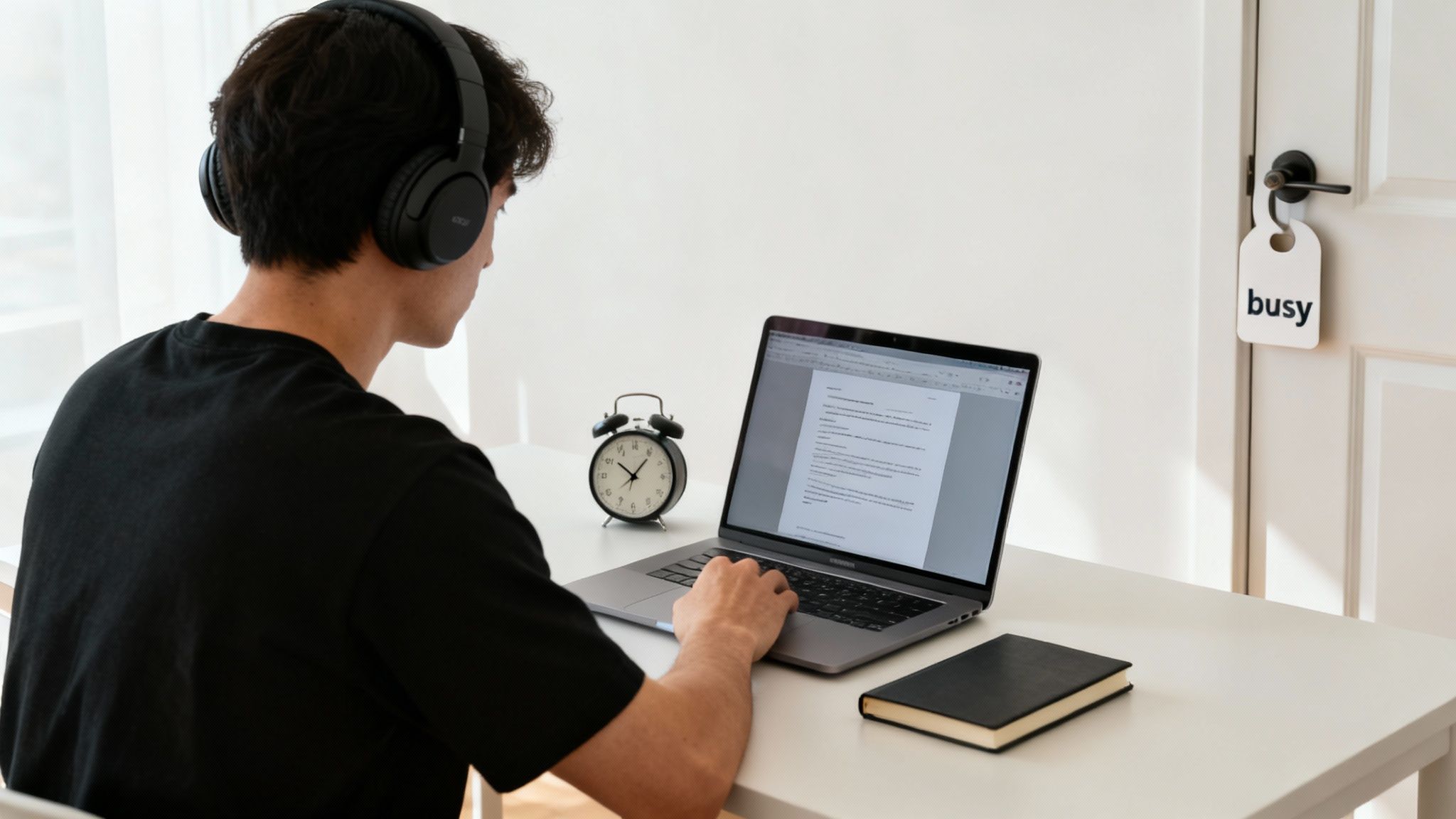
    Real-World Scenario: A project manager needs to create a complex project plan for the next quarter. Instead of trying to chip away at it between meetings and emails, she blocks out a 90-minute “Deep Work” session in her calendar, turns off all notifications, and puts on noise-canceling headphones. During this protected time, she makes significant progress, reducing the anxiety of a looming deadline and producing a higher-quality plan.

    A person wearing headphones works on a laptop at a desk with an alarm clock and a 'busy' sign, demonstrating focused workplace stress management techniques.

    This proactive scheduling isn’t just for individuals; it’s a strategic move by high-performing companies. Basecamp is known for its “no-meeting Thursdays,” while Atlassian implements “Focus Fridays” where meetings are avoided before noon. These initiatives recognize that protecting employees’ focus is key to reducing burnout and increasing high-quality output.

    How to Implement Deep Work Blocks at Work

    You don’t need a complete schedule overhaul to start. The goal is to intentionally create and protect pockets of deep focus, starting small and building from there.

    • Schedule Your Focus: Treat deep work like an important meeting. Block out 60-90 minute slots in your calendar during your peak cognitive hours, which for most people are between 9 a.m. and noon.
    • Use Visual Cues: Signal to your colleagues that you are in a focused state. Put on headphones (even without music), set your status to “Busy” or “Do Not Disturb,” or place a small sign on your desk or door.
    • Batch Your Shallow Tasks: Group all administrative tasks like checking emails, responding to messages, and filling out reports into one or two dedicated blocks. This prevents them from fragmenting your focus throughout the day.
    • Start with the Pomodoro Technique: If a 90-minute block feels intimidating, start with the Pomodoro Technique. Work in focused 25-minute sprints with a 5-minute break in between.

    Using deep work blocks helps you regain control over your day, preventing the feeling of being pulled in multiple directions. You can explore how to use AI for productivity to further streamline your administrative tasks and protect your focus time.

    3. Digital Boundaries: A Modern Workplace Stress Management Technique

    A “dopamine detox” is a structured approach to reducing reliance on high-stimulation digital inputs like social media feeds and constant notifications. The goal is to reset your brain’s baseline dopamine sensitivity. Neuroscience explains that constant overstimulation can desensitize your reward pathways, leading to anxiety and a reduced ability to focus. By creating deliberate digital boundaries, you can restore your attention span and reduce the compulsive need to check devices, making this one of the most relevant workplace stress management techniques for the modern professional.

    Real-World Scenario: A marketing specialist finds herself compulsively checking Slack and email notifications even after work hours, feeling anxious about missing something. She implements a “digital sunset” rule, turning off all work-related notifications on her phone after 6 PM. The first few days are difficult, but within a week, her evening anxiety subsides, and she returns to work the next day feeling more rested and focused.

    This concept, popularized by figures like Cal Newport in “Digital Minimalism,” is not about abandoning technology but about reclaiming control over it. Tech leaders and companies are increasingly recognizing its importance; some teams implement “no-meeting” days, which inherently reduce digital chatter, while others encourage “tech sabbaths” where employees fully disconnect over a weekend. These practices are designed to combat digital burnout.

    How to Implement Digital Boundaries at Work

    Starting a dopamine detox doesn’t mean you have to go completely offline. It’s about being intentional with your digital consumption.

    • Audit Your Notifications: The first step is to silence the noise. Go into your phone and computer settings and disable all non-essential notifications. Create a system where only truly urgent communications can break through.
    • Schedule “Checking” Windows: Instead of reacting to every new email, set specific times to check your inbox, for example, at 10 AM and 3 PM. This batching approach prevents constant context-switching and preserves your mental energy.
    • Create a “Digital Sunset”: Commit to putting all screens away at a specific time each evening, such as 7 PM. This helps your brain wind down, improves sleep quality, and reduces next-day stress levels.
    • Use Grayscale Mode: A simple but effective trick is to switch your smartphone’s display to grayscale. This makes the screen less visually appealing and reduces the dopamine-driven reward you get from colorful icons and notifications.

    Using these strategies helps you regain control over your attention. Exploring a full range of digital detox tips can provide even more tools to build a healthier relationship with your technology.

    4. Breathing Techniques: A Physiological Workplace Stress Management Technique

    Breathing techniques are physiological tools that directly influence your nervous system’s stress response. Practices like box breathing work by intentionally slowing your respiration, which activates the vagus nerve and stimulates the parasympathetic nervous system (the body’s “rest and digest” mode). From a neuroscience perspective, this process rapidly lowers heart rate and cortisol levels, providing an immediate antidote to acute stress. These are powerful workplace stress management techniques because they are discreet, require no equipment, and can be used anywhere.

    Real-World Scenario: Moments before a major presentation, a sales executive feels his heart racing and his thoughts scattering. He discreetly practices “box breathing” for one minute while waiting for the meeting to start: inhaling for four seconds, holding for four, exhaling for four, and holding for four. This simple act slows his heart rate, clears his mind, and allows him to begin his presentation with calm confidence.

    This approach is validated by its use in high-performance environments. The U.S. Navy SEALs use box breathing to maintain calm during life-or-death missions. Stanford neuroscientist Andrew Huberman has popularized the “physiological sigh” as a fast-acting tool to reduce stress. These methods are now being integrated into corporate wellness programs to give employees a practical tool for managing pressure.

    How to Implement Breathing Techniques at Work

    The key to making these techniques effective during stress is to practice them during moments of calm, building the muscle memory for when you truly need it.

    • Master Box Breathing: This simple method is easy to remember. Inhale for a count of four, hold your breath for four, exhale for four, and hold again for four. Repeat for 1-2 minutes.
    • Set Micro-Break Reminders: Use your phone or calendar to set three daily reminders for a two-minute breathing break. This builds a consistent habit of resetting your nervous system.
    • Pair Breathing with Grounding: As you practice your breathing, consciously feel your feet on the floor and place your hands on your desk or lap. This physical grounding enhances the calming mental effect.
    • Use During Transitions: Make it a habit to practice a few rounds of deep breathing before joining a video call, after sending a difficult email, or while walking to your next meeting.

    These techniques are your first line of defense when you feel a surge of anxiety or frustration. To delve further, consider exploring these powerful vagus nerve stimulation techniques that expand on these foundational principles.

    5. Movement Integration: An Active Workplace Stress Management Technique

    Integrating physical activity into your workday is a powerful biological tool for managing stress. Movement reduces stress hormones like cortisol and adrenaline while boosting mood-enhancing endorphins. Neuroscientifically, it also increases blood flow to the brain, improving cognitive function. For desk-bound knowledge workers, even brief “movement snacks” every hour can significantly lower stress levels and restore focus. This makes consistent movement one of the most accessible workplace stress management techniques.

    Real-World Scenario: An analyst is stuck on a complex data problem, feeling increasingly frustrated and mentally blocked. Instead of forcing it, she takes a brisk 10-minute walk outside. The change of scenery and physical activity clears her head. When she returns to her desk, she sees the problem from a fresh perspective and quickly finds the solution.

    A person uses a balance board at a standing desk, actively working on a computer with a plant nearby, illustrating workplace stress management techniques in action.

    This approach is championed by leading companies that recognize the direct link between physical activity and employee performance. Google famously equips its campuses with gyms and movement spaces, while other organizations promote the use of standing desks. Remote-friendly companies are increasingly adopting walking meetings and offering stipends for wellness apps or equipment, turning movement into a cultural norm.

    How to Implement Movement at Work

    The key to success is to weave movement into your existing schedule rather than viewing it as a separate, time-consuming task.

    • Start with “Movement Snacks”: Set a timer to stand up and stretch for just two minutes every hour. This simple act breaks up sedentary periods and re-energizes your brain and body.
    • Convert Meetings to Walking Meetings: One-on-one calls or creative brainstorms are perfect candidates for a walk. This not only gets you moving but can also spark new ideas.
    • Schedule Exercise as Non-Negotiable: Block out time for a workout in your calendar just as you would for an important meeting. Treat it with the same level of commitment.
    • Find an Activity You Enjoy: Sustainability is crucial. If you dislike running, don’t force it. Explore other options like dancing, climbing, or swimming to find what truly motivates you.

    Using movement as a tool is especially effective when you feel mentally stuck or overwhelmed. A short walk or a few stretches can act as a mental reset, allowing you to return to your work with a refreshed perspective.

    6. Cognitive Reframing: A Mental Workplace Stress Management Technique

    Cognitive reframing is a psychological technique, rooted in Cognitive-Behavioral Therapy (CBT), for identifying and challenging unhelpful thought patterns. This method teaches you to re-examine and reinterpret stress-inducing thoughts, reducing their emotional impact. The goal isn’t to suppress negative feelings but to change the underlying narrative that amplifies external pressures. This is one of the most powerful workplace stress management techniques because it tackles the internal source of stress, which is particularly effective for those who struggle with perfectionism or imposter syndrome.

    Real-World Scenario: After a project launch, a team leader focuses on one minor piece of negative customer feedback, thinking, “The launch was a failure.” Using cognitive reframing, she challenges this thought: “The launch had a 95% success rate, and this feedback is a valuable data point for improvement, not a sign of total failure.” This shift in perspective changes her mood from despair to proactive problem-solving.

    This method is a core component of many corporate wellness programs designed to build mental resilience. For example, startup cultures often encourage reframing “failure” as “learning” to foster innovation. Similarly, leaders are trained to help their teams separate constructive performance feedback from personal self-worth. The work of researchers like Albert Ellis has popularized these concepts, showing how our internal stories shape our professional reality.

    How to Implement Cognitive Reframing at Work

    Putting thought work into practice requires conscious effort. Consistency is key to making this a default response.

    • Keep a Thought Journal: For one week, write down stressful situations and the automatic thoughts that follow. This helps you recognize recurring negative patterns, like catastrophizing or all-or-nothing thinking.
    • Use the ABCDE Model: Practice Albert Ellis’s model: Activating event (e.g., a critical email), Belief (“I’m failing at my job”), Consequence (anxiety), Dispute (challenge the belief with evidence), and Energization (the new, more balanced feeling).
    • Focus on Controllable Factors: When a project goes wrong, reframe your thoughts from the uncontrollable outcome (“The client hated it”) to your controllable effort (“I learned how to manage project scope better”).
    • Externalize Your Reframe: Share your reframed thought with a trusted colleague or mentor. Saying it aloud can help solidify the new perspective.

    Use this technique when you feel yourself spiraling after receiving negative feedback or when facing a daunting deadline. It helps you take control of your internal narrative, allowing you to respond to challenges with resilience.

    7. Boundary Setting: A Proactive Workplace Stress Management Technique

    Boundary setting is the practice of establishing clear limits around your work hours, availability, and task scope. Much of modern workplace stress originates from ambiguous boundaries, leading to “always-on” expectations and burnout. Research in organizational psychology highlights that clear role boundaries are directly linked to lower levels of job-related strain. By defining what you will and won’t do, you reduce both your actual workload and the psychological stress of unpredictability, making this one of the most crucial workplace stress management techniques for sustainable performance.

    Real-World Scenario: A designer is consistently asked for “quick” last-minute changes that derail her planned work. She implements a new boundary by creating a formal request process. When a colleague asks for a change via chat, she politely replies, “Happy to look at that for you. Can you please submit it through the project board so I can prioritize it with my other tasks?” This small change restores control over her workflow and manages others’ expectations.

    This philosophy is championed by forward-thinking companies. Basecamp’s communication policies explicitly discourage after-hours contact, and Patagonia has a deeply ingrained culture that values employee recovery time. On a national level, France’s “right to disconnect” law protects employees from work-related communication outside of office hours. These examples demonstrate a growing recognition that strong boundaries are a prerequisite for focused, high-quality work.

    How to Implement Boundaries at Work

    Setting effective boundaries is a skill that requires clear communication and consistent practice. Start small and build from there.

    • Define Your Personal Policies: Begin by setting limits for yourself. Block your calendar after your designated work hours and silence notifications on your phone.
    • Communicate Expectations Proactively: Use tools to manage others’ expectations. An email auto-responder can state, “Thank you for your message. I check email at 10 AM and 4 PM to maintain focus on deep work.”
    • Use Simple Scripts: Prepare and practice simple, polite phrases to decline requests. For example, “That’s not something I can take on this week, but I can add it to my list for next week. Will that work?”
    • Reframe Boundaries as a Benefit: When discussing boundaries with a manager, frame them as a strategy for improving productivity. Explain that protecting your recovery time allows you to return to work more focused.

    This technique is most powerful when you feel your workload becoming unmanageable. By clearly communicating your limits, you regain control over your time and mental energy, preventing burnout before it starts.

    8. Social Connection: A Supportive Workplace Stress Management Technique

    Social connection is the intentional cultivation of supportive workplace relationships. Humans are inherently social, and positive connections trigger the release of oxytocin, a hormone that counteracts the effects of cortisol. Behavioral research consistently shows that a strong sense of belonging and psychological safety at work can reduce stress hormones and improve resilience. This makes fostering connection one of the most vital workplace stress management techniques, especially in remote or hybrid settings where isolation can become a significant stressor.

    Real-World Scenario: A fully remote employee is feeling isolated and disconnected from her team, which is increasing her stress levels. She proposes a 15-minute optional “virtual coffee chat” every Monday morning with no work agenda. The team agrees. Over time, these informal chats build camaraderie and trust, making it easier for her to ask for help and feel like part of a supportive team.

    This approach is championed by thought leaders like Amy C. Edmondson, whose work on psychological safety highlights how trust and mutual respect enable teams to thrive under pressure. Companies like Buffer and Zapier have embedded this into their remote cultures through rituals like scheduled social hours and peer mentoring channels. These are strategic initiatives that build the social fabric necessary for mental well-being and preventing isolation.

    How to Implement Social Connection at Work

    Building genuine team support requires deliberate effort, particularly when colleagues are not physically in the same space.

    • Schedule Non-Work Interactions: For remote or hybrid teams, dedicate 15-30 minutes for recurring, optional video calls with no agenda other than casual conversation.
    • Implement a Buddy System: Pair new hires with seasoned employees for their first 90 days. This provides immediate support and helps integrate them into the company’s social structure.
    • Model Vulnerability: Leaders should openly share their own challenges and learning moments. This creates psychological safety and encourages team members to be honest and seek help when needed.
    • Celebrate Wins Publicly: Create a dedicated Slack channel or a recurring agenda item in team meetings to share and celebrate individual and team accomplishments.

    These strategies transform a group of individuals into a cohesive, supportive team. Learning how to deal with feelings of loneliness is a critical skill for navigating the modern workplace.

    9. Burnout Recovery: A Workplace Stress Management Technique for Exhaustion

    When chronic workplace stress goes unmanaged, it can lead to burnout, a state of emotional, physical, and mental exhaustion. Rather than simply pushing through, a structured recovery protocol involves true disconnection and restoration. Research highlights that extended breaks, like sabbaticals, significantly decrease perceived stress and increase psychological well-being. These structured pauses are crucial workplace stress management techniques for high-achievers, as they provide a necessary “pattern interrupt” to reset unsustainable habits. Please note: Burnout can overlap with conditions like depression and anxiety. This information is for educational purposes and is not a substitute for professional medical or psychological care.

    Real-World Scenario: An executive, facing deep exhaustion and cynicism about her job, negotiates a one-month sabbatical. Before leaving, she creates a detailed handover plan. During her time off, she completely disconnects from work and focuses on restorative activities like hiking and reconnecting with family. She returns with renewed energy and a clear plan to delegate more tasks and set firmer boundaries to prevent a relapse.

    This approach is more than just a long vacation; it’s a deliberate recovery architecture. Companies like Adobe recognize this by offering paid sabbaticals after a certain tenure, understanding that employee restoration is a long-term investment. The goal is not just to stop work but to actively engage in restorative activities that rebuild depleted mental and emotional resources.

    How to Implement a Burnout Recovery Protocol

    A successful recovery sabbatical requires careful planning before, during, and after the break.

    • Plan Your Disconnection: Plan your time off well in advance. Delegate all responsibilities, set firm out-of-office boundaries, and communicate that you will be unreachable.
    • Architect Your Restoration: Don’t leave your recovery to chance. Schedule activities that are genuinely restorative for you, such as spending time in nature, reconnecting with hobbies, or focusing on relationships.
    • Re-Engage Gradually: Avoid jumping back into a 100% workload. Plan a phased return, starting with a 50% workload the first week. This prevents an immediate relapse into overwhelm.
    • Implement Prevention Systems: Use your time away to reflect on what led to burnout. Before returning, implement new systems like firm boundaries or a “not-to-do” list to prevent repeating the cycle.

    A recovery protocol is an essential tool when you feel depleted. Understanding how to recover from burnout is a critical skill for long-term career resilience.

    10. Ruthless Prioritization: A Strategic Workplace Stress Management Technique

    Much of workplace stress stems not from the volume of work, but from unclear priorities and a fragmented focus. This technique involves strategically identifying what truly matters and ruthlessly eliminating low-impact activities. Behavioral research on decision fatigue shows that by creating explicit priority frameworks and cutting non-essential tasks, you conserve mental energy and restore a powerful sense of control over your workload. This makes it one of the most effective workplace stress management techniques for overwhelmed professionals.

    Real-World Scenario: A product team is trying to build ten new features at once, causing everyone to feel stressed and behind schedule. The team lead facilitates a priority-setting session. They decide to pause work on seven features and focus all their energy on the top three most impactful ones. The team’s stress level drops immediately, and they deliver the three core features with higher quality and on time.

    This “less but better” philosophy is a cornerstone of high-performing individuals and organizations. Apple’s legendary turnaround was driven by Steve Jobs eliminating dozens of products to focus on just a few. Popularized by thinkers like Greg McKeown (Essentialism), this approach shifts your mindset from “How can I do it all?” to “What is truly worth doing?”

    How to Implement Ruthless Prioritization at Work

    Adopting this mindset requires a disciplined, systematic approach to how you evaluate and accept tasks.

    • Apply the 80/20 Rule: Conduct a quick analysis of your tasks. Identify the 20% of activities that are driving 80% of your most valuable results and focus your energy there.
    • Create a Weekly Priority Statement: At the start of each week, define your top three objectives. This simple statement becomes your North Star, helping you filter out distractions.
    • Use a Decision Framework: Before saying yes to a new task, ask yourself, “Does this directly align with my top priorities?” If the answer is no, it’s a candidate for elimination or delegation.
    • Practice Saying No Gracefully: Develop go-to phrases to decline requests without causing friction, such as, “That’s not a priority for me right now, but let’s revisit it next quarter.”

    This technique is most powerful when you feel pulled in a million directions. By ruthlessly eliminating the trivial, you create the space and mental clarity needed to excel at the work that truly moves the needle.

    Editor’s Take

    While all ten techniques are valuable, the most effective stress management system combines a proactive strategy with a reactive one. For immediate, in-the-moment relief from acute stress (like right before a big presentation), Breathing Techniques are unmatched for their speed and physiological impact. For long-term prevention of chronic stress and burnout, Boundary Setting and Ruthless Prioritization are the most powerful. These two address the root causes of overload by giving you control over your time and focus. This advice is best for knowledge workers and professionals who have some autonomy over their schedule. For those in highly structured or reactive roles, starting with Mindfulness and Movement Integration may be more realistic and accessible first steps. The key limitation is that individual techniques can only go so far in a dysfunctional or toxic work environment; systemic organizational change is often the ultimate solution.


    Disclaimer: This article may contain affiliate links, meaning we may earn a small commission on purchases made through our links, at no extra cost to you. The content provided here is for informational and educational purposes only and is not intended as a substitute for professional medical advice, diagnosis, or treatment. Always seek the advice of your physician or other qualified health provider with any questions you may have regarding a medical or psychological condition.

    Frequently Asked Questions (FAQ)

    1. What are the most effective workplace stress management techniques for beginners?
    For beginners, the most accessible and effective techniques are Mindfulness & Meditation (starting with 5-minute guided sessions on an app) and Movement Integration (taking short 2-minute stretch breaks every hour). They are easy to implement and provide noticeable benefits quickly.

    2. How can I manage stress when I have a very demanding boss?
    Boundary Setting and Ruthless Prioritization are key. Communicate your workload and capacity clearly and professionally. Use scripts like, “I can do A or B this week. Which is the higher priority for you?” This shifts the conversation from your limitations to strategic choices.

    3. Do these stress management techniques work for remote employees?
    Absolutely. Techniques like Digital Boundaries, Deep Work Blocks, and proactive Social Connection (scheduling virtual coffees) are especially crucial for remote workers to combat digital burnout and isolation.

    4. What is the fastest way to reduce stress during a crisis at work?
    Breathing Techniques like Box Breathing or the Physiological Sigh offer the fastest relief. They directly activate your parasympathetic nervous system, slowing your heart rate and calming your physiological stress response within minutes.

    5. How does cognitive reframing help with workplace stress?
    Cognitive reframing helps you challenge and change the negative thought patterns that amplify stress. Instead of thinking “I failed,” you reframe it as “I learned a valuable lesson.” This shifts your internal narrative from a source of anxiety to one of empowerment and resilience.

    What a “Dopamine Detox” Really Means (Without Quitting Social Media)

    6. Is a “dopamine detox” the same as quitting social media?
    Not necessarily. It’s about reducing your dependency on constant, low-value digital stimulation to reset your brain’s reward system. This might mean disabling notifications, scheduling “checking” times, and using social media intentionally rather than quitting it entirely.

    7. How can I convince my team to adopt these practices?
    Lead by example. Start implementing Deep Work blocks and communicating your boundaries. Share your positive results. You can also suggest small team experiments, like a “no-meeting” afternoon or starting meetings with a one-minute mindfulness exercise.

    8. What’s the difference between stress and burnout?
    Stress is characterized by over-engagement, urgency, and hyperactivity. Burnout is the opposite, characterized by disengagement, helplessness, and emotional exhaustion. Stress management techniques are preventative, while burnout recovery often requires significant rest and systemic changes.

    9. Can these techniques help with work-related anxiety or sleep problems?
    Many of these techniques, especially mindfulness, breathing exercises, and digital boundaries (like a “digital sunset”), can improve symptoms of anxiety and promote better sleep hygiene. However, this article is for educational purposes only. If you are struggling with persistent anxiety, sleep problems, or other mental health concerns, it is crucial to consult a medical or psychological professional.

    10. What is the single most important habit for long-term stress management?
    Consistency. The most important “habit” is choosing one or two techniques from this list and practicing them consistently, even on days you don’t feel stressed. Proactive, regular practice builds the mental and physiological resilience needed to handle pressure when it inevitably arrives.

    Explore the Mind Clarity Hub Library

    Practical books on focus, digital habits, resilience, and building a calmer mind.

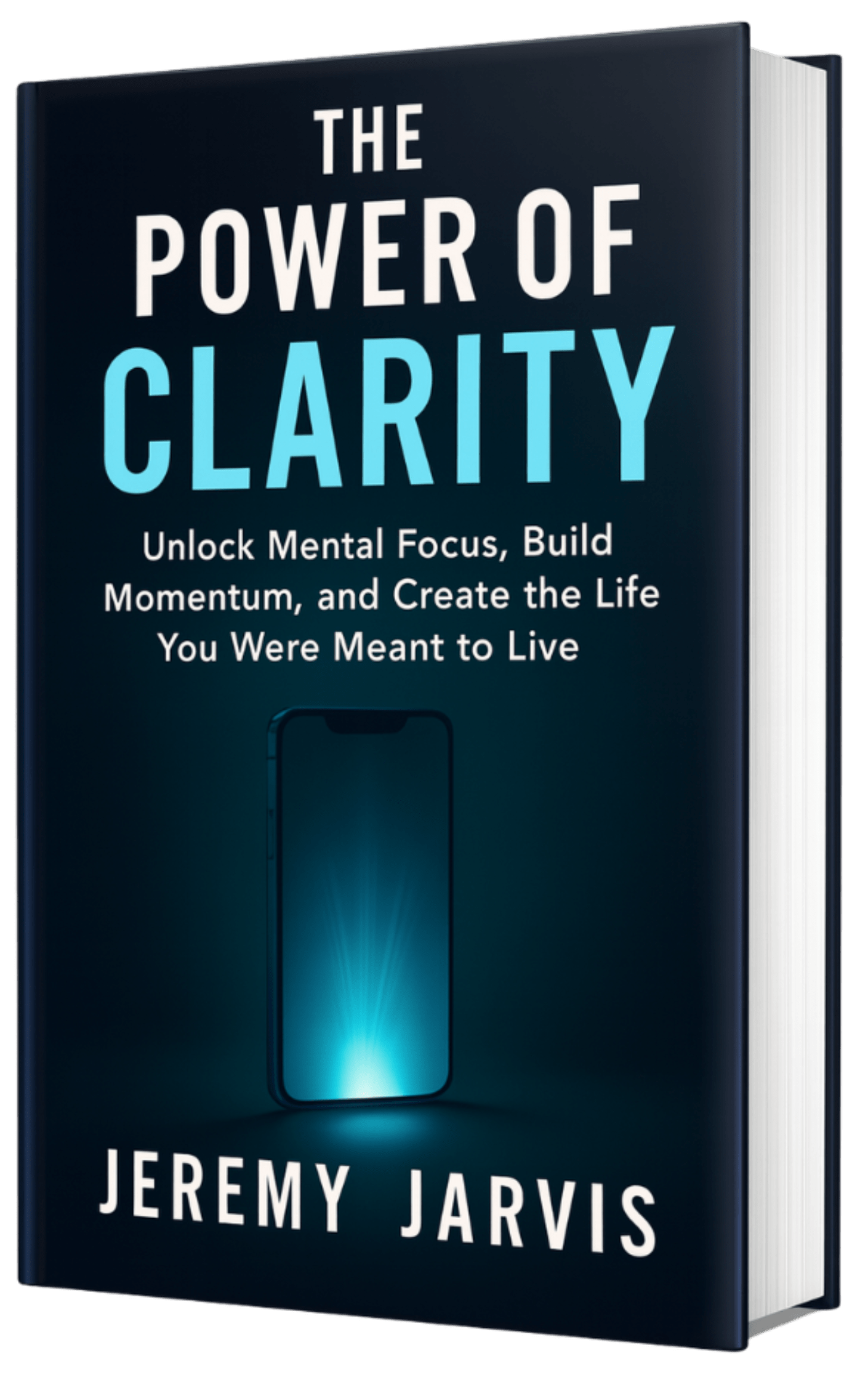
    The Power of Clarity — book cover

    The Power of Clarity

    Unlock mental focus, build momentum, and create the life you were meant to live.

    View book →
    AI & ChatGPT for Beginners — book cover

    AI & ChatGPT for Beginners

    No PhD needed — a 2025 guide to AI, prompts, and productivity without coding.

    View book →
    Zen in the Digital Jungle — book cover

    Zen in the Digital Jungle

    Mindfulness for a chaotic world.

    View book →
    The Slow Reset — book cover

    The Slow Reset

    Mindful living in a fast-paced world.

    View book →
    Perfectly Imperfect — book cover

    Perfectly Imperfect

    Stop self-criticism, set boundaries, and embrace the real you.

    View book →
    Reclaiming Silence — book cover

    Reclaiming Silence

    A dopamine detox guide to finding peace in a noisy world.

    View book →
    The Focused Freelancer — book cover

    The Focused Freelancer

    Productivity, pricing & positioning for independents in 2025.

    View book →
    ChatGPT Side Hustle System — book cover

    ChatGPT Side Hustle System

    Launch your AI-driven online business in 30 days.

    View book →
    Burnout, Interrupted — book cover

    Burnout, Interrupted

    A proven path to restore energy and reclaim your life.

    View book →
    Attention Unleashed — book cover

    Attention Unleashed

    Focus strategies for the distracted mind.

    View book →
    Side Hustle Launchpad — book cover

    Side Hustle Launchpad

    Your quick-start guide to extra income.

    View book →
    Digital Clarity — book cover

    Digital Clarity

    Rewire your brain, escape dopamine traps & regain focus.

    View book →
    Break the Scroll — book cover

    Break the Scroll

    Reduce screen time and take back control of your life.

    View book →
    Climate Compassion — book cover

    Climate Compassion

    Transform eco-anxiety into empowered action.

    View book →
    Village Mentality — book cover

    Village Mentality

    The power of community for mental wellness.

    View book →
    Restful Nights — book cover

    Restful Nights

    Overcoming sleep anxiety in a 24/7 world.

    View book →
    Connected Again — book cover

    Connected Again

    Combat loneliness and build meaningful relationships.

    View book →
    Focus Recharged — book cover

    Focus Recharged

    Mastering attention and productivity in the digital era.

    View book →
    Marketing Magic with ChatGPT — book cover

    Marketing Magic with ChatGPT

    AI-powered content, campaigns, and copywriting to grow faster.

    View book →
    The 6-Figure Creator — book cover

    The 6-Figure Creator

    Turn knowledge into passive income with books, courses & AI.

    View book →
    Burnout Breakthrough — book cover

    Burnout Breakthrough

    Reset your work-life balance and thrive in 2025.

    View book →
    The Emotionally Intelligent Man — book cover

    The Emotionally Intelligent Man

    A modern guide to self-awareness and communication.

    View book →
    AI Personalized Wellness — book cover

    AI Personalized Wellness

    Create your custom health plan with data-driven habits.

    View book →
    Everyday AI Made Easy — book cover

    Everyday AI Made Easy

    Use ChatGPT and smart tools to simplify life.

    View book →
    Money Mindfulness — book cover

    Money Mindfulness

    A financial wellness guide for Gen Z & Millennials.

    View book →
    Startup Smarter with AI — book cover

    Startup Smarter with AI

    ChatGPT strategies and tools to grow your business.

    View book →
    ChatGPT for Writers & Creators — book cover

    ChatGPT for Writers & Creators

    Unlock AI-powered brainstorming, drafting & editing.

    View book →
  • How to Balance Life and Work: A Practical Guide for Real Results

    How to Balance Life and Work: A Practical Guide for Real Results

    How to Balance Life and Work: A Practical Guide for Real Results

    Jeremy Jarvis — Mind Clarity Hub founder
    Mind Clarity Hub • Research-aware focus & digital wellness

    Pulled in a million directions? You’re not the only one. The goal here isn’t to chase that mythical 50/50 split between work and life. Instead, this is a sustainable system for taking back control of your energy and time. Think of it as a practical, research-backed roadmap to reclaiming your schedule—and your sanity.

    (Note: This article contains affiliate links. Purchases made may earn us a small commission at no extra cost to you.)

    Disclaimer: This article is for educational purposes only and is not a substitute for professional medical or psychological advice. If you are experiencing symptoms of burnout, anxiety, depression, or other mental health concerns, please consult a qualified healthcare provider.

    The Modern Work-Life Balance Problem

    In our hyper-connected world, the lines between professional demands and personal time have blurred into a single, overwhelming stream. The constant pings and the unspoken expectation to be “always on” create low-grade chronic stress. From a neuroscience perspective, this constant state of alert drains the very prefrontal cortex resources you need for focus, emotional regulation, and decision-making. This isn’t just a feeling; it’s a widespread reality.

    A young man with dark hair looks intently at a laptop in a dimly lit kitchen, demonstrating how to balance life and work.

    The cost of this imbalance is steep. Burnout is rampant, hitting 45% of US employees in 2023, largely due to impossible workloads and crumbling boundaries. And while 69% of Americans call work-life balance “very important,” only 44% feel they’ve actually achieved it. The frustration is so high that nearly half are ready to quit jobs that sabotage their personal lives. You can dig deeper into these work-life balance statistics on lifehackmethod.com.

    Why the Old Approach to Work-Life Integration No Longer Works

    The old advice to simply “leave work at the office” feels like a relic from another era, especially with so many of us working flexibly. The real goal is to shift from a reactive state—constantly putting out fires—to a proactive one where you intentionally design your days. To get there, we first have to name the core issues:

    • Blurred Boundaries: Digital tools have dissolved the physical separation between work and home, making it incredibly difficult to mentally sign off.
    • Energy Mismanagement: We’re obsessed with managing our time but completely ignore our mental and emotional energy, leading to exhaustion even on “short” workdays.
    • The “Having It All” Myth: The pressure to perform at an elite level in every area of life sets us up for unrealistic expectations and a constant sense of falling short.

    This guide gives you an actionable framework to tackle these challenges head-on. By understanding the core principles of focus, recovery, and boundary-setting, you can create a rhythm that feels sustainable and fulfilling. For anyone working from home, getting this right is non-negotiable. Our guide on remote work productivity tips can also give you some extra support.

    Finding Your Baseline to Balance Life and Work

    If you want to build a better system for balancing life and work, you have to start with an honest look at your current reality. It’s one thing to feel like you’re always busy, but it’s another thing entirely to know exactly where your time and energy are actually going. This is where a personal audit becomes your most powerful tool.

    From a behavioral science standpoint, this first step is non-negotiable for making any real change. Our brains love running on autopilot, a state of automaticity where we stick to routines without questioning if they’re actually working for us. By consciously tracking what you do, you interrupt that automatic process. You’re creating a data-driven foundation to make smarter, more intentional choices.

    This isn’t about judging yourself or chasing some impossible ideal of perfection. It’s simply about gathering the facts to see where the gaps are between what you say you value and what you actually do day-to-day.

    How to Run Your Personal Time Audit

    The goal here is simple: track everything you do for one full week. You don’t need any fancy software for this—a simple notebook, a spreadsheet, or even the notes app on your phone will do the job just fine. The only thing that matters is consistency.

    For seven days, just jot down what you’re doing in 30- or 60-minute blocks. And be brutally honest with yourself. If you spent an hour doomscrolling on social media when you meant to be working on a report, write it down. If that “quick email check” snowballed into a 45-minute distraction, note that, too.

    Real-World Example: Take Sarah, a freelance designer who felt perpetually overwhelmed and behind. After tracking her time for just one week, she discovered something startling: she was losing nearly 15 hours a week to non-billable client revisions that always seemed to land in her inbox after 8 PM, completely hijacking her family time. This simple audit gave her the hard evidence she needed to finally set firm communication boundaries and reclaim her evenings.

    This process isn’t about finding more hours to work. It’s about finding the hours that are being unintentionally squandered and redirecting them toward what truly matters—both in your career and your personal life.

    An audit like this shines a bright light on all the hidden time sinks and energy drains. It moves you from a vague feeling of being overwhelmed to a clear understanding of the specific behaviors and commitments throwing you off balance.

    Making Sense of the Data

    Once your week of tracking is done, it’s time to look at the results. Don’t just count the hours; think about the context and how you felt. Ask yourself a few critical questions for each activity:

    • Was this energizing or draining? Give each block of time a simple rating, like high, medium, or low energy.
    • Did this align with my core values? If quality family time is a priority, how many hours were genuinely dedicated to it without a screen in your hand?
    • What was the real return on this activity? Did that extra hour you spent perfecting a presentation actually lead to a better outcome, or was it just perfectionism talking?
    • Where are my biggest time leaks? Pinpoint the top two or three activities that ate up way more time than you realized.

    This kind of analysis helps you connect your daily actions to your bigger goals. Learning how to be present is a critical skill here, as so many time drains come from being physically in one place but mentally somewhere else entirely.

    To make it easier to spot patterns, it helps to put your findings into a simple framework.

    Weekly Time and Energy Audit

    Using a table like the one below can help you organize your findings from the week. Just seeing the numbers laid out clearly can often reveal the core of the problem in a way that just thinking about it can’t.

    Activity CategoryTime Spent (Hours/Week)Energy Level (High/Medium/Low)Alignment with Core Values (Yes/No)
    Focused Client Work25MediumYes
    Email & Admin15LowNo
    After-Hours Revisions15LowNo
    Family Dinner5HighYes
    Social Media10LowNo
    Exercise/Hobby2HighYes

    This table, modeled after Sarah’s audit, makes the problem crystal clear. The 25 hours she was pouring into low-energy, low-value tasks (like admin and those late-night revisions) were the real culprits behind her burnout.

    With this data in hand, she wasn’t just guessing anymore. She had a clear, undeniable target for change.

    Setting Hard Boundaries to Protect Your Well-Being

    Once you have a clear picture of where your time and energy are going, the real work begins: actively protecting them. This is where setting firm boundaries becomes non-negotiable.

    Think of boundaries not as walls to keep people out, but as clear guidelines that manage expectations and preserve your own mental resources. From a neuroscience perspective, boundaries are incredibly effective because they reduce your cognitive load.

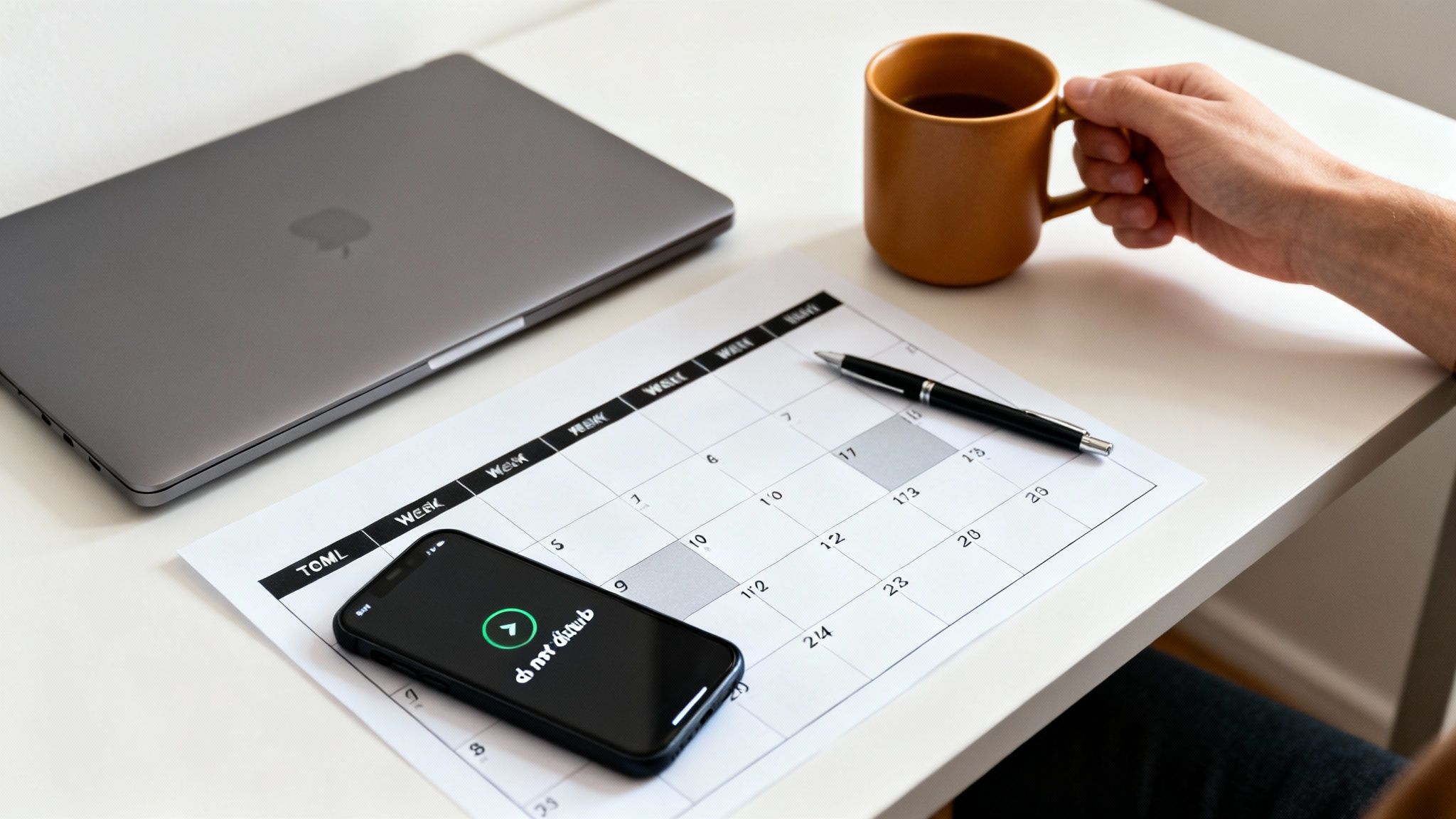
    Overhead shot of a person working at a desk with a laptop, calendar, phone, and coffee, learning how to balance life and work.

    When your brain doesn’t have clear rules for when to work and when to rest, it’s constantly making decisions. Should I answer this email? Should I check that notification? This constant stream of micro-decisions creates decision fatigue, a psychological phenomenon where your mental energy gets so depleted that your focus, willpower, and self-control all take a hit. Clear boundaries build predictable structures, letting your brain save its energy for the deep, focused work that actually matters.

    This isn’t just a nice theory; it has a massive impact on global well-being. The 2025 Global Life-Work Balance Index shows New Zealand and Spain at the top, mostly thanks to generous leave policies. France is right up there too, with its innovative ‘right-to-disconnect’ law that legally protects employees from after-hours work emails. These countries get it: structured downtime is vital for a happy, productive society.

    Real-World Boundaries You Can Implement to Balance Life and Work

    Knowing you need boundaries is one thing. Actually putting them into practice is another. The key is to start with small, specific actions that target your biggest pain points.

    Real-World Example: Take Alex, a remote project manager who felt like he was drowning in a constant flood of Slack messages and last-minute requests. His solution was simple but powerful: he scheduled two daily “focus blocks” in his shared calendar and set an automated status update that read, “Deep Work Mode: Responding to messages after 11 AM.” That small change cut non-urgent interruptions by nearly 40%, allowing him to reclaim his most productive hours. The crucial part wasn’t just blocking the time; it was clearly communicating his boundary to his team.

    Here are a few types of boundaries you can adapt for yourself:

    • Temporal Boundaries: These are rules about when you work. The classic example is a firm “no work emails after 6 PM” rule.
    • Digital Boundaries: This is about controlling your digital environment. Mute specific Slack channels during focus blocks or, even better, remove work-related apps from your personal phone entirely.
    • Physical Boundaries: If you work from home, create a dedicated workspace and establish a rule that you don’t re-enter that space after your workday is officially over.
    • Task-Based Boundaries: Get crystal clear on the scope of your role. If a request falls outside your responsibilities, you have a solid reason to redirect it.

    Setting boundaries is a skill, not a personality trait. It feels uncomfortable at first, but with practice, it becomes a powerful habit for protecting your well-being and preventing the slow creep toward exhaustion.

    If you find yourself constantly battling exhaustion, it may be a sign that your boundaries have eroded. Learning how to recover from burnout often starts with re-establishing these very guardrails.

    The Psychology of Saying No Gracefully

    For many of us, the biggest hurdle is the fear of disappointing others. The psychology of saying ‘no’ is tied to our innate desire for social connection and acceptance. We worry that declining a request will be seen as unhelpful or uncooperative.

    The key is to reframe it: you’re not rejecting the person; you are protecting your capacity to deliver high-quality work on your existing commitments.

    To dive deeper into actionable strategies for protecting your well-being, explore these practical tips for establishing boundaries and achieving harmony in your work-life balance.

    To make it easier, use simple scripts that communicate your limits professionally and without guilt:

    • When you’re at capacity: “I appreciate you thinking of me for this, but my plate is full with Project X right now. I wouldn’t be able to give this the attention it deserves.”
    • To buy time: “Let me check my current priorities and I’ll get back to you by the end of the day with a realistic timeframe.”
    • To offer an alternative: “I can’t help with that right now, but have you tried asking Sarah? She has more expertise in that area.”

    These scripts are polite, professional, and reinforce your commitment to doing good work—while still protecting the time and energy you need to actually do it.

    Designing Your Ideal Week for a Better Life and Work Balance

    Once you’ve started setting boundaries, the next step is to become the architect of your week. Most people live in reactive mode, letting their calendar dictate their days. We’re going to flip that. You’ll learn to design a weekly template that intentionally carves out space for both deep, focused work and genuine recovery.

    This isn’t about building a rigid, minute-by-minute schedule that shatters the moment life happens. Think of it more as creating a reliable rhythm for your life. Behavioral research shows our brains actually love predictability—it reduces the mental energy we waste deciding what to do next, freeing up that brainpower for the work that truly matters.

    Mastering Time Blocking for Deep Work

    One of the most powerful ways to build this rhythm is through time blocking. It’s a simple concept: instead of working from a messy to-do list, you assign specific blocks of time in your calendar for everything you need to do. That includes client projects, email management, and even your lunch break and workout.

    When you schedule a task, you’re making a real commitment to it. For example, you might block off 9 AM to 11 AM every Tuesday as “Deep Work: Finalize Q3 Strategy.” This signals to everyone—including yourself—that this is protected time. No notifications, no interruptions. This is how you create the structure needed for uninterrupted, high-value work.

    The magic of time blocking is how it turns a vague intention into a concrete plan. It’s the difference between saying, “I should work on that presentation,” and having a calendar entry that says, “Tuesday, 1-3 PM: Finalize Q3 Presentation Slides.”

    Scheduling Strategic Recovery

    Here’s a classic mistake: packing your schedule with back-to-back “productive” tasks, leaving zero room to breathe. That’s a recipe for burnout, not balance. Strategic recovery means scheduling your downtime with the same seriousness you schedule your work. And no, this isn’t just about zoning out in front of the TV. It’s about intentionally choosing activities that recharge you.

    Let’s make this real for different roles:

    • For the Freelancer: You just delivered a huge project on Friday. Instead of drifting into more work, your calendar has a two-hour block to go for a hike or read at a café—completely unplugged.
    • For the Entrepreneur: You build a non-negotiable 30-minute workout into your lunch break three times a week. It’s not an “if I have time” activity; it’s a fixed appointment.
    • For the Corporate Employee: You schedule a 15-minute “walk and think” break every afternoon. This gets you away from your desk to clear your head before your next meeting.

    These aren’t luxuries. From a neuroscience standpoint, they are essential for cognitive function, creativity, and keeping your mood stable. When you give your brain planned downtime, it activates the “default mode network,” which helps process information and solve problems in the background.

    The Power of a Shutdown Ritual

    One of the biggest struggles today is mentally clocking out. The workday bleeds into personal time because our brains don’t get a clear signal that it’s over. A shutdown ritual is a simple, consistent routine that tells your brain the workday is officially done.

    It can take less than five minutes. Here’s a simple flow:

    1. Glance at Tomorrow’s Schedule: A quick look at your calendar quiets the part of your brain that worries about forgetting something important.
    2. Tidy Your Workspace: Close your tabs. Straighten your desk. Put your work laptop away. These physical cues reinforce the transition.
    3. Use a Closing Phrase: Say something simple but firm out loud, like “Work is done for today.”

    This sequence creates a powerful psychological boundary. Journaling is another fantastic way to close out the day; exploring different journals for productivity can help you find a method that sticks and makes this ritual truly your own.

    Building in Flexibility

    Finally, remember your ideal week is a template, not a cage. Life is messy. A client will have an emergency, a kid will get sick, or you’ll just wake up feeling drained. The key is to build flexibility right into your plan.

    Designate one or two “flex blocks” in your week. These are your buffers—time for catching up on unexpected tasks or just taking an extra hour for yourself when you need it. A well-designed week doesn’t crumble when one thing goes wrong; it adapts.

    Using Smart Tools and AI to Reclaim Your Time

    Technology often gets the blame for our work-life imbalance. It’s the constant source of pings, alerts, and notifications that bleed into our personal time, leaving us feeling drained and always “on.” But what if that same technology, used with a little intention, could be your best ally in getting those hours back?

    Smart tools and AI aren’t just for mega-corporations anymore. They’re practical, accessible ways to offload the repetitive, low-impact tasks that eat up your mental energy every single day.

    Think about all the time you lose to administrative busywork. An AI assistant can take a chaotic 50-message email thread and distill it into three clean bullet points, saving you 20 minutes of scrolling. An automated scheduling tool can end the painful back-and-forth of finding a meeting time. These small wins aren’t trivial; they add up, creating real pockets of time you can reinvest into deep work, family, or just quiet.

    Automating the Mundane to Free Up Your Mind

    The real magic of these tools isn’t just about saving time—it’s about reducing your cognitive load. Every small decision, like how to phrase a routine follow-up email or what to post on social media, chips away at your brain’s finite daily energy. By handing these tasks over to an automated system, you conserve that precious energy for the strategic, creative, and complex challenges that actually need you.

    Real-World Example: Take Mark, an entrepreneur who was sinking five hours every week into manually crafting and posting social media content. He started using an AI content generator for first drafts and a scheduling tool to handle the posting. Just like that, he reclaimed four of those hours. That’s an extra four hours a week he can now use for big-picture planning or, more importantly, to be fully present at dinner with his family. You can take this even further by delegating tasks to an outsourced personal assistant to handle the coordination.

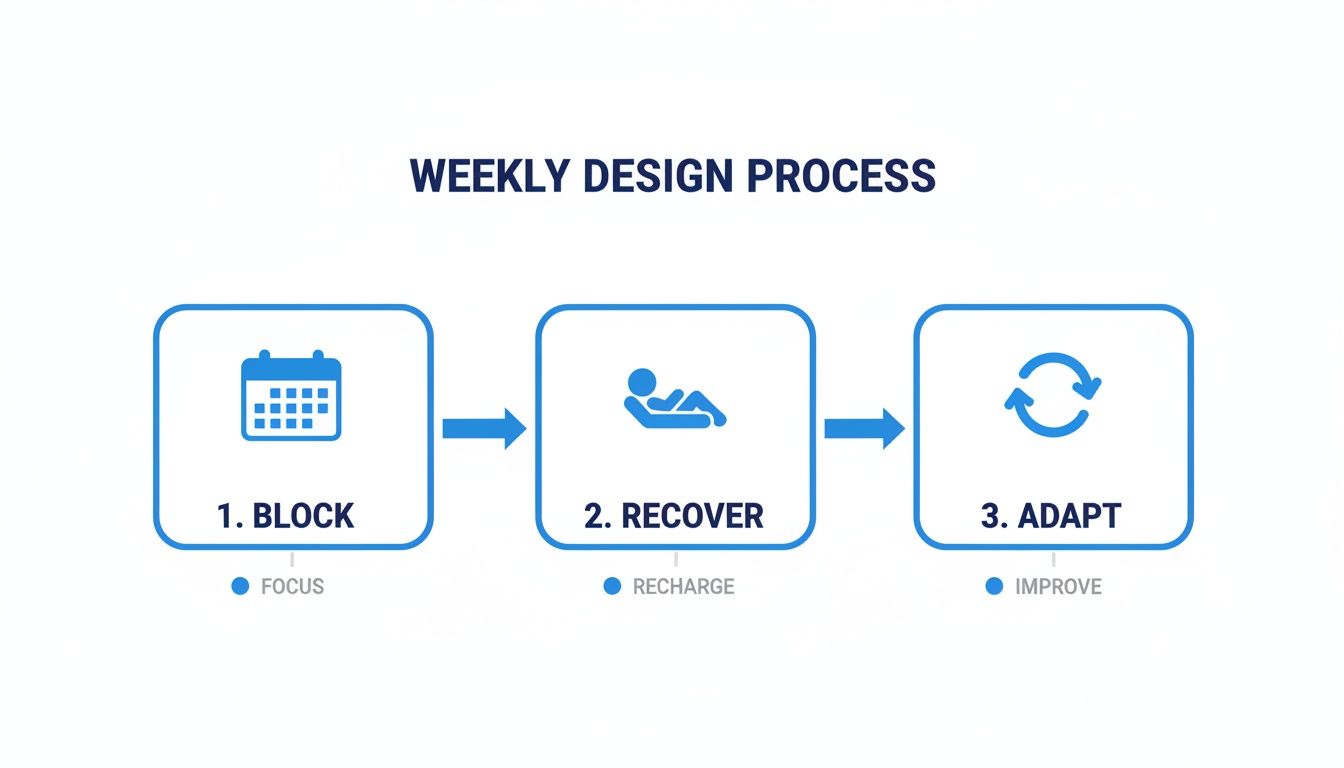
    This is a perfect example of making technology serve your goals, not the other way around. It requires a repeatable weekly rhythm, like the one below, where you intentionally block time for focused work, schedule recovery, and adapt as you go.

    Infographic detailing a weekly process: Block for focus, Recover for recharge, and Adapt for improvement when learning how to balance life and work.

    This workflow shows that balancing your life isn’t a one-time setup. It’s a cycle of planning, recharging, and refining.

    A Dopamine Detox for Sustained Focus

    Beyond automation, technology can also help you manage the very distractions it creates. Think of tools like website blockers not as restrictions, but as training wheels for your brain. From a neuroscience standpoint, the constant notifications and easy access to infinite-scroll feeds create a powerful dopamine loop. Your brain gets a tiny chemical reward for every quick check, training it to crave more of the same.

    This conditioning makes it incredibly difficult to settle into deep, uninterrupted work. Your brain gets hooked on the next quick digital hit.

    By intentionally blocking these distractions for set periods, you’re essentially putting your brain through a “dopamine detox.” This helps reset your neural pathways, making it easier to find satisfaction in focused, long-form tasks rather than seeking constant stimulation.

    The goal isn’t to ditch technology entirely. It’s to shift from a reactive relationship with it to a proactive one. You get to decide when and how you engage.

    For those ready to dive deeper, our guide on the best AI tools for productivity offers a curated list of options that can help you automate, focus, and finally take back control of your schedule.

    Editor’s Take on What Really Works for Balance

    Let’s be honest about finding work-life balance. It’s not a destination you arrive at, but a constant, messy process of tweaking and readjusting. This advice is for you if you’re starting to feel the edges of burnout or if your work day has completely lost its off-switch.

    If you do only one thing, make it this: build small, consistent boundaries. The most powerful one I’ve seen is a non-negotiable end-of-day ritual that tells your brain, “We’re done now.” When you make these little actions automatic, you stop draining your mental energy on the decision to stop working.

    A Quick Reality Check

    But here’s the hard truth: individual strategies can only do so much against a toxic work culture. Your best efforts will feel like swimming against the tide if you’re drowning in unrealistic expectations. Sometimes, the real problem isn’t your routine—it’s the system you’re in.

    If you feel overwhelmed and don’t know where to start, begin with a ruthless time audit. Until you know exactly where your hours are going, every other strategy is just a shot in the dark.

    And while the frameworks and AI tools we’ve talked about are genuinely helpful, they only work after you get brutally clear on your priorities. Otherwise, you’re just getting more efficient at doing the wrong things. True balance starts with defining what actually matters, then having the guts to fiercely protect it, every single day.

    FAQ: Your Top 10 Questions on How to Balance Life and Work

    1. What’s the very first step to improve my work-life balance?

    Before you change a single thing, conduct an honest self-audit. For one week, track your activities in 30- or 60-minute blocks. This isn’t about judgment; it’s about gathering data. This will give you a clear map of your hidden time-sinks and energy drains, which is the essential starting point for making changes that actually work.

    2. How can I set boundaries without my boss thinking I’m slacking?

    Frame your boundaries proactively and connect them to shared goals like productivity and quality work. Instead of saying “I’m not available after 6 PM,” try: “To ensure I can deliver my best work on our key projects, I’m disconnecting at 6 PM to recharge. I’ll be ready to tackle priorities first thing in the morning.” This positions your boundary as a strategic move for better performance.

    3. Is a perfect 50/50 work-life balance even possible?

    Honestly, no. Chasing a perfect 50/50 split is a recipe for stress. The goal isn’t a static balance but a dynamic integration that feels right for you. Some weeks will be work-heavy; others will lean more personal. The win is feeling in control and ensuring that, over the long term, you’re making time for genuine rest and what truly matters.

    4. What are some simple daily habits for better integration?

    Small, consistent habits are key. Try these:

    • Own Your Morning: Start with 15 minutes of something non-work-related (reading, stretching, meditating).
    • Take a Real Break: Step completely away from your desk for lunch, even if it’s just for 20 minutes.
    • Create a Shutdown Ritual: Have a clear routine (tidy desk, review tomorrow’s plan, close laptop) to signal the end of the workday.

    5. How do I handle unexpected work demands without derailing my day?

    Plan for the unexpected. Build one or two “flex blocks” into your weekly schedule—empty time slots to absorb urgent requests. When a new task arises, assess its true priority against your commitments. Don’t be afraid to communicate and renegotiate deadlines for other tasks if necessary.

    6. What’s the difference between work-life balance and work-life integration?

    Work-life balance implies a strict separation—two competing sides that need to be divided. Work-life integration is a more modern, holistic approach focused on blending personal and professional worlds in a way that feels sustainable and true to your values, which is more realistic for today’s flexible work environments.

    7. What are the biggest warning signs of burnout?

    Key signs include chronic exhaustion (physical and emotional), cynicism or detachment from your work, a feeling of ineffectiveness, difficulty concentrating, and increased irritability. If these sound familiar, it’s a strong signal to reassess your workload and boundaries. Remember, this is not medical advice; consult a professional if you have concerns.

    8. How can I stop thinking about work during my personal time?

    This is where a shutdown ritual is crucial. It creates a psychological transition. Also, practice mindfulness to bring your attention back to the present moment. If a work thought pops up, acknowledge it and gently guide your focus back to what you’re doing—whether it’s cooking dinner or talking with a loved one.

    9. Can technology help improve my work-life balance?

    Absolutely, if used intentionally. Use tools to automate repetitive tasks (scheduling, email sorting) to reduce cognitive load. Use website blockers during focus periods to combat distraction. The goal is to make technology serve you, not the other way around.

    10. How often should I reassess my work-life balance strategy?

    A quarterly check-in is a great rhythm. Life changes, and so do priorities. Every three months, take 30 minutes to review what’s working and what isn’t. Are your boundaries holding up? Does your weekly schedule still align with your goals? This regular reflection prevents you from slowly drifting back into unsustainable habits.


    Disclaimer: This article contains affiliate links. If you make a purchase through these links, we may earn a small commission at no extra cost to you. The content provided is for educational and informational purposes only and does not constitute medical or psychological advice. Always consult with a qualified professional for any health concerns.


    Ready to build a more focused and balanced life? Explore the science-backed books and practical guides at Mind Clarity Hub. Our resources are designed to give you actionable roadmaps for reclaiming your attention and building sustainable routines. Discover your next step at https://mindclarityhub.com.

    Explore the Mind Clarity Hub Library

    Practical books on focus, digital habits, resilience, and building a calmer mind.

    The Power of Clarity — book cover

    The Power of Clarity

    Unlock mental focus, build momentum, and create the life you were meant to live.

    View book →
    AI & ChatGPT for Beginners — book cover

    AI & ChatGPT for Beginners

    No PhD needed — a 2025 guide to AI, prompts, and productivity without coding.

    View book →
    Zen in the Digital Jungle — book cover

    Zen in the Digital Jungle

    Mindfulness for a chaotic world.

    View book →
    The Slow Reset — book cover

    The Slow Reset

    Mindful living in a fast-paced world.

    View book →
    Perfectly Imperfect — book cover

    Perfectly Imperfect

    Stop self-criticism, set boundaries, and embrace the real you.

    View book →
    Reclaiming Silence — book cover

    Reclaiming Silence

    A dopamine detox guide to finding peace in a noisy world.

    View book →
    The Focused Freelancer — book cover

    The Focused Freelancer

    Productivity, pricing & positioning for independents in 2025.

    View book →
    ChatGPT Side Hustle System — book cover

    ChatGPT Side Hustle System

    Launch your AI-driven online business in 30 days.

    View book →
    Burnout, Interrupted — book cover

    Burnout, Interrupted

    A proven path to restore energy and reclaim your life.

    View book →
    Attention Unleashed — book cover

    Attention Unleashed

    Focus strategies for the distracted mind.

    View book →
    Side Hustle Launchpad — book cover

    Side Hustle Launchpad

    Your quick-start guide to extra income.

    View book →
    Digital Clarity — book cover

    Digital Clarity

    Rewire your brain, escape dopamine traps & regain focus.

    View book →
    Break the Scroll — book cover

    Break the Scroll

    Reduce screen time and take back control of your life.

    View book →
    Climate Compassion — book cover

    Climate Compassion

    Transform eco-anxiety into empowered action.

    View book →
    Village Mentality — book cover

    Village Mentality

    The power of community for mental wellness.

    View book →
    Restful Nights — book cover

    Restful Nights

    Overcoming sleep anxiety in a 24/7 world.

    View book →
    Connected Again — book cover

    Connected Again

    Combat loneliness and build meaningful relationships.

    View book →
    Focus Recharged — book cover

    Focus Recharged

    Mastering attention and productivity in the digital era.

    View book →
    Marketing Magic with ChatGPT — book cover

    Marketing Magic with ChatGPT

    AI-powered content, campaigns, and copywriting to grow faster.

    View book →
    The 6-Figure Creator — book cover

    The 6-Figure Creator

    Turn knowledge into passive income with books, courses & AI.

    View book →
    Burnout Breakthrough — book cover

    Burnout Breakthrough

    Reset your work-life balance and thrive in 2025.

    View book →
    The Emotionally Intelligent Man — book cover

    The Emotionally Intelligent Man

    A modern guide to self-awareness and communication.

    View book →
    AI Personalized Wellness — book cover

    AI Personalized Wellness

    Create your custom health plan with data-driven habits.

    View book →
    Everyday AI Made Easy — book cover

    Everyday AI Made Easy

    Use ChatGPT and smart tools to simplify life.

    View book →
    Money Mindfulness — book cover

    Money Mindfulness

    A financial wellness guide for Gen Z & Millennials.

    View book →
    Startup Smarter with AI — book cover

    Startup Smarter with AI

    ChatGPT strategies and tools to grow your business.

    View book →
    ChatGPT for Writers & Creators — book cover

    ChatGPT for Writers & Creators

    Unlock AI-powered brainstorming, drafting & editing.

    View book →