

Executive function · Morning routines · Mental clarity
The “Clarity Morning”: A 12-Minute Routine to Reset Your Executive Function
If your brain wakes up already buzzing, scrolling, and second-guessing every decision, a short clarity morning routine can reset your executive function before the day hijacks it.


Creator of Mind Clarity Hub, author of The Power of Clarity and Digital Clarity.
Key takeaways
- A clarity morning routine gives your executive function a predictable, low-friction reset before screens and stress take over.
- In just 12 minutes you can move from scattered and reactive to clear, grounded, and ready to make better decisions.
- Simple tools – like noise-cancelling headphones, blue light glasses, and a better desk setup – can make this routine easier to repeat.
- Linking your clarity morning to larger attention rebuild work keeps it sustainable instead of becoming another abandoned habit.
When Your Brain Wakes Up Already Overloaded
You open your eyes and your mind is already crowded: half-finished tasks, pings from overnight messages, a vague sense that you are behind. Before you even sit up, you are scrolling, checking, reacting. By 9 a.m., your executive function feels fried.
If this describes most mornings, you are not broken. You are living in a system that pushes you toward micro-dopamine hits and decision overload before your brain has fully booted. Executive function – the set of skills that helps you plan, prioritize, and follow through – never gets a chance to reset.
A clarity morning routine is a deliberate counter-pattern. Instead of falling straight into reactive mode, you run a short, repeatable sequence that clears mental fog, reconnects you to what matters, and protects your attention before the internet gets a vote.
What Is a “Clarity Morning” – And Why Executive Function Loves It
In this context, a clarity morning is a 12-minute routine that gives your prefrontal cortex – the hub of executive function – a clean runway. Instead of bombarding it with noise, you give it three things: calm input, simple structure, and one clear direction.
Executive function thrives on predictability and low friction. When your first minutes are chaotic, your brain spends the rest of the day firefighting. When your first minutes are intentional, your brain has more bandwidth for planning, creativity, and emotional regulation.
Think of your clarity morning routine as mental hygiene. You would not skip brushing your teeth and expect them to stay healthy. In the same way, regularly resetting your executive function keeps decision fatigue and digital overwhelm from quietly building up.
This guide pairs well with attention-focused pieces like Mental Clarity for Creators: How to Think Straight When You’re Online All Day and Is Your Brain Addicted to Micro-Dopamine? Signs You’re Overstimulated , which look at the bigger environment your clarity morning sits inside.
The 12-Minute Clarity Morning Routine (Step by Step)
You can expand or shrink this, but starting with a 12-minute clarity morning keeps it realistic on busy days. The key is consistency, not perfection.
Minutes 0–2: Gentle wake-up and no-screen buffer
As soon as you wake, resist the urge to reach for your phone. Sit up, put your feet on the floor, and take three slow breaths. Name the day: “Today is Tuesday. I am waking up. I do not have to solve everything yet.”
This tiny no-screen buffer breaks the automatic micro-dopamine loop that comes from checking notifications before your mind is online.
Minutes 2–5: Clarity check-in and body scan
Next, run a quick mental and physical scan. Ask:
- How does my body feel – wired, tired, or neutral?
- What is the loudest thought or worry right now?
- Where do I feel that stress – chest, jaw, shoulders?
Spend one minute just noticing, without fixing. This simple mindfulness check-in helps your executive function register what it is working with instead of being ambushed by stress later.
Minutes 5–8: One-page clarity brain dump
Grab a notebook and fill one page with everything crowding your mental space: tasks, worries, ideas, messages you need to send, decisions you are avoiding. Write quickly and do not organize yet.
When the page is full, circle three items:
- One concrete task you will definitely move forward.
- One worry you cannot solve today (label it “Not today”).
- One thing you are looking forward to.
This clarity brain dump clears your working memory and tells your executive function where to focus.
Minutes 8–10: Executive function “North Star” for the day
Now, translate your page into a single sentence: “If I only move this forward today, the day will still matter.” That might be:
- Finishing one draft.
- Having one hard conversation.
- Doing one focused deep work block without multitasking.
This is your clarity anchor. It gives your executive function one meaningful target instead of fifty competing ones, which is especially important if you struggle with mental fog or ADHD-like overwhelm.
Minutes 10–12: Micro movement and environment reset
Finally, do something that connects your brain to your body: a short stretch, a slow walk to the window, or a few easy squats. At the same time, set up your immediate workspace:
- Put your phone in another room or on Do Not Disturb.
- Lay out your notebook, laptop, or tablet where you will start.
- Write your clarity anchor on a sticky note and place it in sight.
When the 12 minutes are up, you are not “caught up.” You are simply starting the day with executive function online, rather than scrambled.
How a Clarity Morning Supports Creators and Knowledge Workers
If you are a freelancer, digital nomad, or knowledge worker, your income often depends on your ability to think clearly while living online all day. That is a tough combination without a clarity morning routine.
When your first decisions are about email, algorithms, and client messages, your executive function becomes reactive. You say yes to too many things, open more tabs than you can manage, and end the day wondering what you actually accomplished.
By contrast, a short clarity morning shifts the order:
- Your prefrontal cortex decides what matters before the internet decides for you.
- Your attention system warms up on one clear priority instead of twenty competing inputs.
- Your nervous system starts in calmer, more regulated mode, which reduces impulsive decisions later.
For a deeper dive into designing this kind of clarity-first day, you can pair this routine with Mental Clarity for Creators: How to Think Straight When You’re Online All Day .
Affiliate disclosure: Mind Clarity Hub participates in affiliate programs (including Amazon Associates). This means I may earn a small commission from qualifying purchases made through links on this page, at no additional cost to you.
Tools That Make Your Clarity Morning Routine Easier to Repeat
You do not need any gear to run a clarity morning routine. However, a few well-chosen tools can make your environment much more friendly to focus and mental clarity – especially if you work from a laptop all day.
Optional “Clarity Morning” desk kit
This section includes Amazon affiliate links. As an Amazon Associate, I earn from qualifying purchases at no additional cost to you.
- Noise-cancelling headphones: reduce background noise so your first deep focus block is actually quiet. View noise-cancelling headphones on Amazon →
- Blue light glasses: soften early-morning screen strain if you must use a device. Check blue light glasses →
- Foldable laptop stand: raises your screen to eye level for better posture and a more grounded reading posture. See laptop stand options →
- Compact ergonomic office chair: supports longer, calmer work blocks after your clarity morning. Explore ergonomic chair →
- Travel-sized white noise machine or speaker: ideal if you are a digital nomad working from noisy apartments or cafés. View white noise options →
Treat these as gentle upgrades, not prerequisites. The heart of a clarity morning is the ritual: a short, repeatable pattern that brings your executive function out of reactive mode and into clear, deliberate attention.
Deepening Your Clarity Morning with Clarity-Focused Books
A 12-minute clarity morning routine is powerful on its own. Yet it becomes even more effective when it sits inside a larger clarity framework for your life, work, and digital habits.
The Power of Clarity: Give Your Executive Function a North Star
In The Power of Clarity , I go deeper into the question behind every clarity morning: “What am I really protecting my attention for?” When you know your larger direction, it becomes much easier to choose a single daily clarity anchor and say no to distractions.
Digital Clarity: Make Your Environment Match Your Clarity Morning
Digital Clarity focuses on the practical side of living with screens without frying your executive function. It walks through notifications, app audits, AI tools, and content consumption – especially for people who work online all day.
You can read it alongside this guide and your clarity morning routine to design a realistic “digital hygiene” system that respects your need for the internet while protecting your brain from constant overload.
Integrating Your Clarity Morning into a Full-Day Clarity System
A clarity morning routine only reaches its full potential when the rest of your day stops fighting it. Once you finish your 12-minute reset, your environment, tools, and calendar can either protect that executive function boost or quietly erase it by 10 a.m. This is where Digital Clarity and a few simple structural changes become crucial.
Make Your Clarity Morning the Default “Brain Mode” for the Day
The goal is not to have one peaceful block in the morning and then dive straight back into digital chaos. Instead, you want your clarity morning to set the “brain mode” for how you move through the day. After your breathwork, planning, and short focus block, ask a simple question: “What would it look like to carry this level of calm executive function into my next three hours?”
Practically, that might mean batching messages, turning off non-essential notifications, or keeping your calendar free for one protected deep-work block. The more you use your clarity morning routine as a prompt to adjust the first half of your day, the more your brain learns that mornings are not a one-off reset. They are the template for how you intend to think.
Use Your Clarity Morning to Decide “What Not to Do”
Most creators and knowledge workers are not short on ideas. They are drowning in them. Therefore, one of the most powerful uses of your clarity morning routine is deciding what you will not spend attention on today. During your brief planning block, add a simple “Not Today” or “Not This Week” list.
This mirrors the boundary work in The Focus Reset: 7 Evidence-Backed Habits People Use to Reclaim Mental Space , where you deliberately park low-leverage tasks, half-ideas, and non-urgent requests. As a result, your executive function is not constantly pulled back into minor decisions. Instead, it can stay focused on one or two meaningful priorities that actually move your work or life forward.
Pair Clarity Mornings with a Gentle Dopamine-Conscious Attention Diet
Even the best morning routine will struggle if your nervous system is flooded with micro-dopamine hits for the rest of the day. Consequently, it helps to combine your clarity morning with a light dopamine-conscious attention diet. You do not have to quit all social media. However, you can:
- Delay your first scroll or feed check until after the clarity morning is complete.
- Turn off one or two of the noisiest notification streams during your first deep-work block.
- Replace at least one “doomscroll window” with slow reading or a short movement break.
For a more structured reset, you can layer in the ideas from The Modern Attention Diet: A Dopamine Detox to Restore Focus in 2025 . That guide shows how to ease your brain out of constant stimulation so your clarity morning routine does not have to compete with a full day of endless micro-rewards.
Turn Your Clarity Morning into a Feedback Loop, Not a One-Off Ritual
A powerful way to keep your routine alive is to treat it as a feedback loop. At the end of the day, briefly review: “Did my clarity morning hold up once emails, messages, and tasks started to hit?” If not, what broke first – your schedule, your boundaries, or your energy?
This kind of reflection pairs well with the insights inside Mental Clarity for Creators: How to Think Straight When You’re Online All Day . That article digs into how freelancers, digital nomads, and creators can design workdays that respect their brain’s limits instead of grinding against them. When you combine those strategies with a consistent clarity morning, you start to see patterns: which habits protect your executive function and which ones quietly erode it.
Support Your Clarity Morning with Simple, Physical Tools
Environment still wins most battles with willpower. Therefore, it makes sense to back up your clarity morning routine with a few physical tools that reduce friction and sensory overload:
- Noise-cancelling headphones to create a predictable sound environment for your first deep-work block.
- Blue-light-blocking glasses to reduce eye strain if you read or plan on a screen right after waking.
- A small laptop stand so your posture supports focus instead of triggering neck and shoulder fatigue.
- A compact ergonomic chair or cushion if you work from a small home office or coworking space.
- A travel-sized white noise machine if you are on the road, in shared housing, or using your clarity morning routine as a digital nomad.
These kinds of small upgrades might seem minor. Yet over weeks and months, they reduce background stress and help your body associate your clarity morning with comfort, stability, and predictable focus.
Use Science-Informed Framing to Respect Your Executive Function
Finally, it is helpful to remember that your executive function is not just a vague idea. It is a real set of cognitive processes – planning, inhibition, working memory, flexible thinking – rooted in brain regions like the prefrontal cortex. When those systems are overloaded by constant noise, multitasking, and digital overstimulation, your clarity morning will feel harder than it should.
Resources like the American Psychological Association’s overview of executive functioning reinforce that habits, sleep, stress, and environment all shape how well these systems perform. Your clarity morning routine is one way to actively support them. However, when you also simplify your digital inputs, protect a few deep-work blocks, and reduce unnecessary commitments, you give your brain a much better chance to do its best work.
Over time, the combination of Digital Clarity, a consistent clarity morning, and a gentler attention diet stops feeling like “another thing to manage.” Instead, it becomes the invisible scaffolding that lets you think clearly, create better work, and move through your day with far less cognitive friction.
Editor’s Take: Why a 12-Minute Clarity Morning Beats a 2-Hour Routine
As someone who writes and experiments with mental clarity routines for a living, my honest view is that short, repeatable rituals win almost every time. A 12-minute clarity morning that you actually run five days a week will beat a perfect, two-hour “miracle” routine you abandon after three days.
The goal of this clarity morning is simple: give your executive function a clean runway before the day starts pulling at you. When you pair a quick brain dump, one clear priority, a short body reset, and a screen-light start, you are telling your nervous system, “We lead the day, not our notifications.”
If you want to go deeper after this article, I recommend reading it alongside Mental Clarity for Creators: How to Think Straight When You’re Online All Day and Is Your Brain Addicted to Micro-Dopamine? Signs You’re Overstimulated . Together, they give you a full picture: a fast clarity morning routine, a realistic way to work online without frying your focus, and a clear framework for understanding why your brain feels so overstimulated in the first place.
Use this article as a starting point, not a finish line. Run the 12-minute routine for a week, notice what shifts in your mood and focus, then iterate from there. Sustainable clarity is built in small, consistent layers—not in one perfect morning.
FAQs: Clarity Morning Routines and Executive Function
Understanding the Clarity Morning Routine
Is 12 minutes really enough to reset my executive function?
Surprisingly often, yes. A clarity morning routine does not solve every problem in your life, but it gives your executive function a predictable landing strip. Even a few minutes of calm, reflection, and simple planning can reduce early decision fatigue and make it easier to prioritize once you open your laptop.
What if my mornings are already chaotic or I have kids?
In that case, treat the clarity morning routine as modular. You can split it into two six-minute chunks or do a shorter “minimum version” on hectic days – for example, two minutes of breathing, three minutes of brain dump, and one minute to choose a clarity anchor. The key is protecting a small patch of time that is yours, even if the rest of the morning is noisy.
Clarity Mornings, Mental Health, and Overwhelm
Will a clarity morning routine fix burnout or anxiety?
A clarity morning is supportive, but it is not a replacement for professional care. If you are dealing with severe burnout, anxiety, depression, or suspected ADHD, it is important to talk with a qualified clinician. In those seasons, you can still use this routine as a gentle framework to support the treatment plan you build with your provider.
How does this routine interact with micro-dopamine overload?
A clarity morning routine is one of the easiest ways to interrupt micro-dopamine loops before they spike. By delaying notifications and social feeds, you start the day with lower stimulation and more choice. If you want to go further, pair this with the attention diet in Is Your Brain Addicted to Micro-Dopamine? Signs You’re Overstimulated .
Making Your Clarity Morning Routine Sustainable
How long does it take for a clarity morning to feel natural?
Many people notice a difference within one to two weeks, especially in how scattered or grounded they feel by mid-morning. However, it usually takes three to six weeks for the routine to feel “automatic.” That is why it helps to keep the sequence short, repeat it at the same time, and pair it with simple cues like a specific notebook, chair, or drink.
Can I run my clarity morning later in the day?
Ideally, you run your clarity morning as close to waking as possible, because that is when you have the most leverage over how the day unfolds. However, if mornings are impossible, you can use the same 12-minute sequence as a “midday clarity reset” before your main deep work block. The skills are the same – calm, brain dump, anchor, and environment reset.
Next Steps: Turn Your Clarity Morning into a Daily Anchor
You do not need a perfect morning routine or a two-hour ritual to reset your executive function. You need one small, repeatable clarity morning that you can run even on messy, very human days.
As you experiment, notice how your day feels on the mornings when you run this routine versus the mornings when you skip it. Pay attention to your decision quality, your impulse to scroll, and your ability to move one meaningful thing forward. Those are the signals that your clarity morning routine is doing its job.
Build a bigger clarity system around your mornings
If you are ready to go beyond one routine and build a full clarity framework, these Mind Clarity Hub resources fit naturally with your clarity morning:
- Use Mental Clarity for Creators to design workdays that protect your best thinking when you are online all day.
- Explore Is Your Brain Addicted to Micro-Dopamine? Signs You’re Overstimulated if you suspect your attention system is stuck in constant micro-dopamine loops.
- Pair everything with How to Rebuild Attention in a World Built for Distraction to create a full attention rebuild plan around deep work, digital boundaries, and sustainable focus.
Together, these tools give you a clear path: you reset your mornings, reshape your digital environment, and rebuild an attention system that can handle modern life without losing your sense of clarity.
Explore the Mind Clarity Hub Library
Practical books on focus, digital habits, resilience, and building a calmer mind.
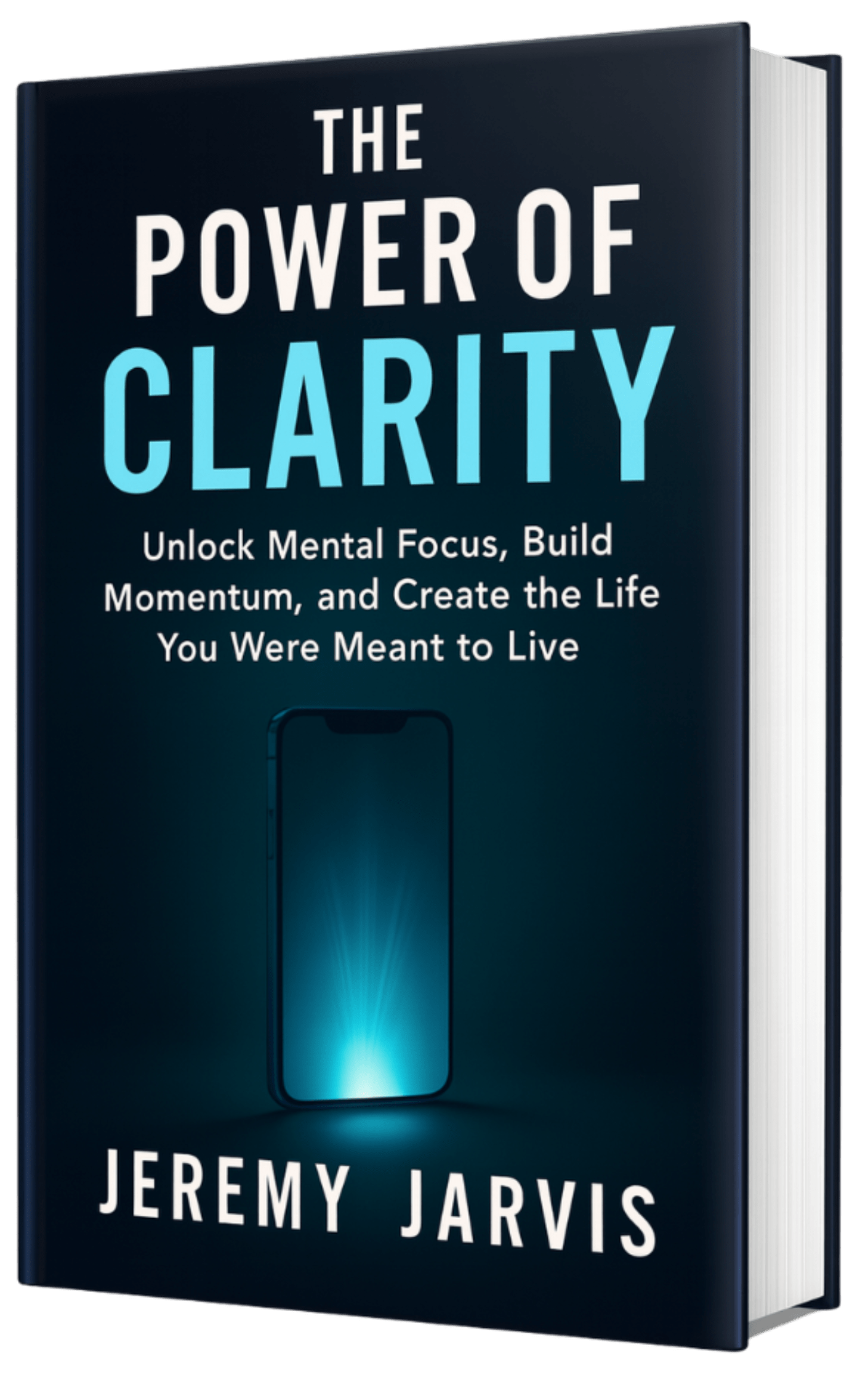
The Power of Clarity
Unlock mental focus, build momentum, and create the life you were meant to live.
View book →
AI & ChatGPT for Beginners
No PhD needed — a 2025 guide to AI, prompts, and productivity without coding.
View book →
Zen in the Digital Jungle
Mindfulness for a chaotic world.
View book →
The Slow Reset
Mindful living in a fast-paced world.
View book →
Perfectly Imperfect
Stop self-criticism, set boundaries, and embrace the real you.
View book →
Reclaiming Silence
A dopamine detox guide to finding peace in a noisy world.
View book →
The Focused Freelancer
Productivity, pricing & positioning for independents in 2025.
View book →
ChatGPT Side Hustle System
Launch your AI-driven online business in 30 days.
View book →
Burnout, Interrupted
A proven path to restore energy and reclaim your life.
View book →
Attention Unleashed
Focus strategies for the distracted mind.
View book →
Side Hustle Launchpad
Your quick-start guide to extra income.
View book →
Digital Clarity
Rewire your brain, escape dopamine traps & regain focus.
View book →
Break the Scroll
Reduce screen time and take back control of your life.
View book →
Climate Compassion
Transform eco-anxiety into empowered action.
View book →
Village Mentality
The power of community for mental wellness.
View book →
Restful Nights
Overcoming sleep anxiety in a 24/7 world.
View book →
Connected Again
Combat loneliness and build meaningful relationships.
View book →
Focus Recharged
Mastering attention and productivity in the digital era.
View book →
Marketing Magic with ChatGPT
AI-powered content, campaigns, and copywriting to grow faster.
View book →
The 6-Figure Creator
Turn knowledge into passive income with books, courses & AI.
View book →
Burnout Breakthrough
Reset your work-life balance and thrive in 2025.
View book →
The Emotionally Intelligent Man
A modern guide to self-awareness and communication.
View book →
AI Personalized Wellness
Create your custom health plan with data-driven habits.
View book →
Everyday AI Made Easy
Use ChatGPT and smart tools to simplify life.
View book →
Money Mindfulness
A financial wellness guide for Gen Z & Millennials.
View book →
Startup Smarter with AI
ChatGPT strategies and tools to grow your business.
View book →
ChatGPT for Writers & Creators
Unlock AI-powered brainstorming, drafting & editing.
View book →