


Published:
If you’ve ever dealt with the relentless burn of acid reflux, you know it’s more than just a little heartburn. It’s the kind of nagging discomfort that can derail a productive afternoon. It can also wreck a good night’s sleep and leave you feeling completely out of sorts. For a creative professional on a tight deadline, that familiar, rising burn is a massive drain on mental energy.
Fortunately, an evidence-based acid reflux diet can be an incredibly powerful way to get things under control. It can help you start feeling like yourself again.
What Is an Acid Reflux Diet and How Does It Work?
The science behind it is actually pretty straightforward. Picture a small, muscular gate at the bottom of your esophagus. This is your lower esophageal sphincter (LES). In a healthy system, this gate swings open to let food into your stomach. Then, it snaps shut, keeping stomach acid where it belongs.
Disclosure: This post may contain affiliate links. If you click and make a purchase, we may earn a small commission at no extra cost to you. This helps us keep the lights on and the content flowing. Thanks for your support!
With acid reflux, that gate gets a little lazy. In other words, it relaxes when it shouldn’t. This allows harsh stomach acid to splash back up into the delicate lining of your esophagus. That’s what causes the signature burning sensation of heartburn. For a deeper dive into how nutrition shapes your body’s systems, check out our other articles on evidence-based nutrition.
Understanding the Mechanism of Your Acid Reflux Diet
Certain foods—especially those high in fat, acid, or spice—are notorious. They either weaken this gate or crank up your stomach’s acid production. Either way, the result is the same: more reflux.
An acid reflux diet is all about making strategic food choices. These choices support this gate, keeping it functioning properly. They also soothe your entire digestive system. And for those looking into natural remedies, learning about the best aloe vera juice for acid reflux can be a really helpful addition to a soothing diet.
This isn’t just a minor inconvenience for a few people. Gastroesophageal reflux disease (GERD), the chronic and more severe form of acid reflux, is on a steep rise globally. We’ve seen an 83% increase in cases between 1990 and 2021. This is a surge that researchers directly link to modern dietary habits. High-fat meals, for instance, can actually double the amount of time your esophagus is exposed to acid. You can read the full study on GERD trends here.
Feeling overwhelmed? Don’t be. You can start making a real difference with just a few simple changes.
Quick Swaps for Your First Day on an Acid Reflux Diet
To get you started, here’s a simple table with some easy swaps you can make today. Think of it as a cheat sheet for your first day on a more comfortable path.
| Common Trigger Foods to Limit | Soothing Foods to Include |
|---|---|
| High-Fat Meats: Fried chicken or fatty cuts of beef slow down stomach emptying and put pressure on the LES. | Lean Proteins: Think grilled chicken breast, turkey, or baked fish. They digest much more easily without triggering extra acid. |
| Citrus Fruits: Oranges, lemons, and grapefruit are highly acidic. They can directly irritate a sensitive esophagus. | Low-Acid Fruits: Bananas, melons (like cantaloupe and honeydew), and pears are all gentle on the digestive system. |
| Caffeinated & Carbonated Drinks: Coffee, soda, and energy drinks can relax the LES and increase stomach pressure. | Herbal Teas & Water: Ginger or chamomile tea can calm the stomach. Meanwhile, plain water helps dilute stomach acid. |
| Spicy Foods: Anything with chili, hot peppers, or fiery sauces can irritate the esophageal lining and worsen heartburn. | Mild Seasonings & Herbs: Use herbs like basil, oregano, and thyme to add flavor without irritation. Cooked veggies like carrots are great, too. |
Making even a few of these swaps can bring noticeable relief. The goal isn’t perfection overnight. Instead, it’s steady progress toward identifying what feels good for your body and what doesn’t.
The Science Behind How Your Diet Impacts Acid Reflux
To get a real handle on an acid reflux diet, it helps to know why certain foods bring on that burn. At the same time, others seem to calm things down. The answer isn’t complicated—it boils down to the basic mechanics of your digestive system. Specifically, it’s about the relationship between your stomach, what you eat, and the muscular gatekeeper at the bottom of your esophagus: the lower esophageal sphincter (LES).
When everything is working as it should, the LES stays shut tight. This keeps stomach acid where it belongs. But your food choices can directly sabotage its performance. They can mess with other factors that pave the way for reflux.
How Different Foods Affect Your Digestion with an Acid Reflux Diet
It really comes down to three things: LES pressure, the amount of stomach acid you produce, and how quickly your stomach empties. The wrong foods can throw one or all of these out of whack. This creates the perfect storm for heartburn.
High-fat meals are a classic culprit. They seriously slow down gastric emptying. That’s the technical term for how fast food moves out of your stomach. Picture a greasy burger and fries. Your stomach has to go into overdrive to break down all that fat. So, the meal just sits there for hours, much longer than a lighter one would.
This delay causes two major problems. First, a full stomach puts physical pressure on the LES, practically forcing acid upward. Second, your stomach keeps pumping out acid the entire time that food is hanging around. This creates a bigger pool of it just waiting for a chance to escape.
A Tale of Two Lunches: A Real-World Scenario
Let’s look at how this plays out with two common work lunches. This is a mini-scenario to help you apply these ideas.
Lunch #1: The Greasy Burger and Fries
A project manager—we’ll call her Sarah—is slammed. So, she grabs a fast-food burger for lunch. The high-fat content brings her digestion to a crawl. As the food lingers, her stomach ramps up acid production. The sheer volume of food puts pressure on her LES, which is already relaxed from the fat. An hour later, back at her desk, she feels that familiar, distracting burn creeping up her chest.
Lunch #2: The Grilled Chicken Salad
The next day, Sarah goes for a grilled chicken salad with a light vinaigrette. The lean protein digests efficiently. Plus, the fiber from the veggies keeps things moving smoothly. Her stomach empties at a normal rate, and acid levels stay balanced. There’s no extra pressure on her LES. She powers through her afternoon feeling sharp and energized, completely free of heartburn.
This concept map breaks it down visually. It shows how some foods trigger reflux while others help soothe it.
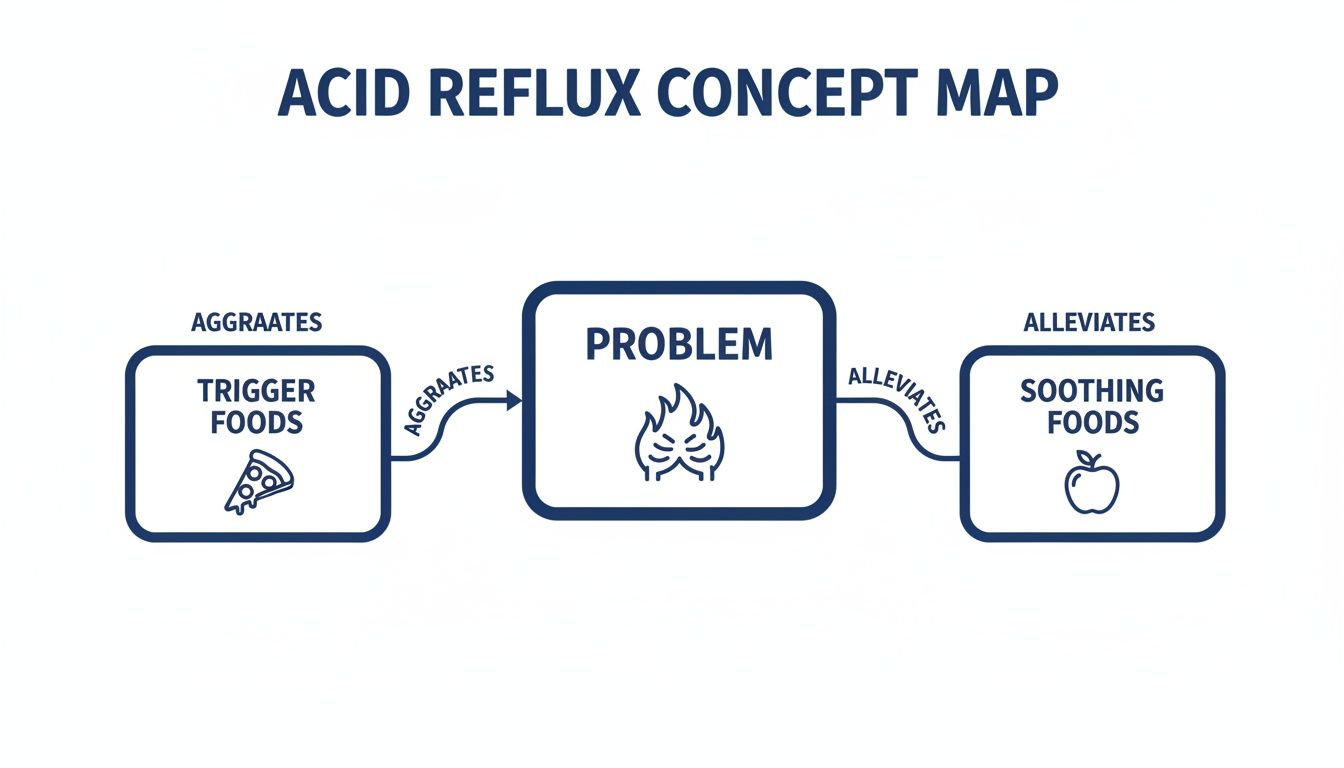
The big takeaway here is that an acid reflux diet isn’t about deprivation. It’s about making smart choices that work with your body’s natural digestive flow, not against it.
From Gut Discomfort to Brain Fog
The connection between your gut and your brain is incredibly strong. This is often called the gut-brain axis. When your digestive system is constantly irritated by acid reflux, it doesn’t just cause physical pain. That chronic inflammation can send stress signals straight to your brain. This can lead to mental fatigue and brain fog.
Behavioral research shows that persistent physical discomfort acts as a constant, low-level distraction. This drains your cognitive resources, which are the mental processes you use for tasks. Your brain has to spend energy managing the pain signals. This leaves less fuel for focus, memory, and creative thinking.
This is exactly why managing reflux with your diet is so important for professionals. It’s not just about stopping heartburn. It’s about protecting your mental clarity and staying on top of your game.
By choosing foods that support smooth digestion, you create a healthier gut environment. For those curious about this link, you can learn more about how probiotics and digestive health are connected to overall well-being. A calm digestive system frees your brain from the background noise of discomfort. This lets you stay sharp and productive all day long.
Building Your Plate: Foods to Embrace on an Acid Reflux Diet
Shifting your diet for acid reflux doesn’t mean you’re doomed to bland, boring meals. Far from it. This is a chance to explore a whole world of delicious, soothing foods. These foods work with your body, not against it. Instead of fixating on a long list of what you can’t have, let’s build a positive framework. We will focus on the foods that help you feel your best.
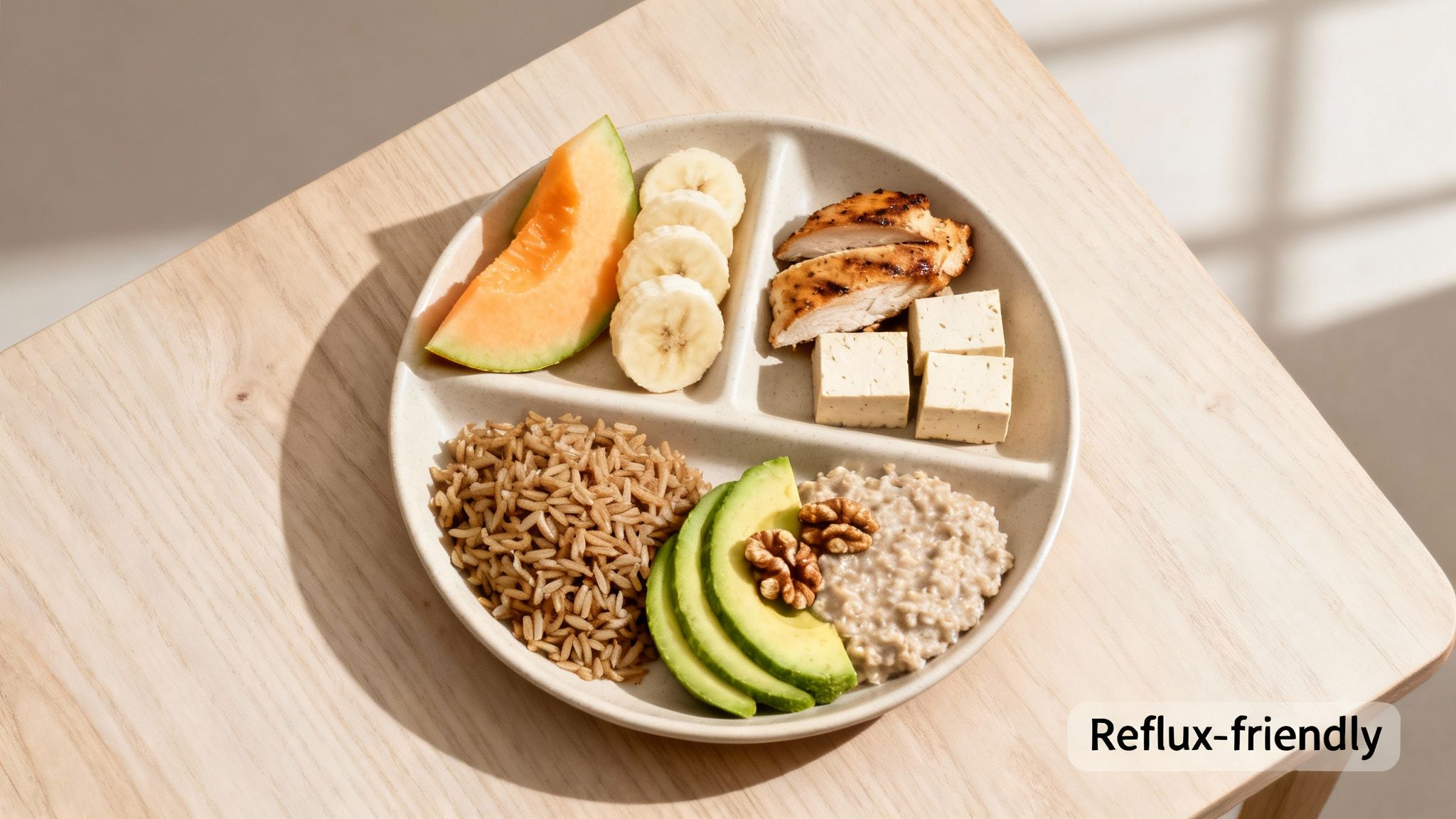
Think of your plate as a canvas. We’re going to combine powerful, flavorful food groups. These groups actively calm your digestive system. They will leave you satisfied and symptom-free.
Alkaline Powerhouses to Neutralize Acid
One of the smartest and simplest strategies is loading up on alkaline foods. These foods have a higher pH. Therefore, they help counteract the harsh stomach acid that causes that tell-tale burn.
- Bananas and Melons: Naturally low in acid, these fruits are a first line of defense. Cantaloupe and honeydew are especially gentle choices.
- Root Vegetables: Think sweet potatoes, carrots, and beets. Roasting or steaming them brings out their natural sweetness. It also makes them incredibly easy to digest.
- Green Vegetables: Broccoli, asparagus, green beans, and celery are fantastic alkaline options. They’re also loaded with nutrients that support overall gut health.
Lean Proteins for an Efficient Acid Reflux Diet
Protein is key for feeling full and energized. However, fatty cuts of meat can slam the brakes on digestion. They can also put extra pressure on your LES. The trick is to choose lean options your stomach can process efficiently.
- Skinless Poultry: Grilled or baked chicken and turkey are perfect staples.
- Fish: Go for baked, broiled, or grilled fish like salmon or cod. Just be sure to skip the frying pan. All that extra fat can be a major trigger.
- Plant-Based Proteins: Tofu and tempeh are excellent, stomach-friendly sources of lean protein.
Recent research has really underscored how effective plant-forward eating can be. One major study found that GERD rates were nearly 50% lower in people following a vegan diet. This suggests that a non-vegan diet can essentially double the risk of experiencing symptoms. For busy professionals, it’s a powerful reminder that a plant-focused plate can ease reflux. It can also support the mental clarity needed to thrive. You can discover more about these findings on plant-based diets and reflux.
High-Fiber Champions to Keep Things Moving
Fiber is an absolute hero for digestive health. It adds bulk to your stool, which helps prevent constipation. This condition can ramp up abdominal pressure and make reflux worse. Even better, it helps absorb excess acid floating around in your stomach.
By acting like a sponge for stomach acid, high-fiber foods can reduce the amount of irritants available to splash back. This makes them a cornerstone of any effective acid reflux diet plan.
Start weaving these into your meals:
- Oatmeal: A classic breakfast that’s both filling and incredibly soothing.
- Brown Rice and Whole Grains: These complex carbs provide a slow, steady release of energy without causing acid spikes.
- Leafy Greens: Spinach and kale are not only alkaline but also pack a great fiber punch.
Gut-Friendly Fats for Calm and Nourishment
While it’s true that high-fat foods are a known trigger, not all fats are the enemy. Healthy, unsaturated fats, eaten in moderation, are actually beneficial. They provide essential nutrients without overwhelming your digestive system.
A well-managed diet that supports gut health can have a profound impact. You can learn more about the connection between gut health and weight loss in our other guides.
Good sources of gut-friendly fats include:
- Avocado: Creamy, satisfying, and packed with the good stuff.
- Walnuts and Almonds: A small handful makes for a perfect, reflux-friendly snack.
- Olive Oil: Use it in moderation for cooking or whipping up a light salad dressing.
To make things even easier, here is a practical shopping list you can take with you to the store.
Your Acid Reflux Friendly Food Shopping List
| Food Group | Recommended Foods | Why It Helps |
|---|---|---|
| Alkaline Fruits | Bananas, Melons (Cantaloupe, Honeydew), Apples | Low-acid content helps neutralize stomach acid. |
| Vegetables | Leafy Greens, Broccoli, Asparagus, Sweet Potatoes, Carrots | High in alkalinity and fiber, which aids digestion. |
| Lean Proteins | Skinless Chicken/Turkey, Grilled Fish (Salmon, Cod), Tofu, Lentils | Easy to digest; low-fat content reduces pressure on the LES. |
| Whole Grains | Oatmeal, Brown Rice, Whole-Wheat Bread, Quinoa | High in fiber, which absorbs excess stomach acid. |
| Healthy Fats | Avocado, Walnuts, Almonds, Olive Oil, Flaxseed | Provide essential nutrients without triggering reflux. |
| Dairy/Alternatives | Almond Milk, Soy Milk, Low-Fat Yogurt (in moderation) | Non-dairy milks are less acidic; low-fat dairy is gentler. |
Using this list can help you confidently stock your kitchen. These foods nourish your body while keeping reflux symptoms at bay. Happy shopping!
Identifying Common Foods That Trigger Acid Reflux
Knowing what to eat on an acid reflux diet is half the battle. Knowing what to avoid is the other half. Certain foods are notorious for causing trouble. They either relax the lower esophageal sphincter (LES)—that muscular gate meant to keep acid down—or they directly crank up your stomach’s acid production.
Figuring out these common triggers is your first real step toward taking back control.
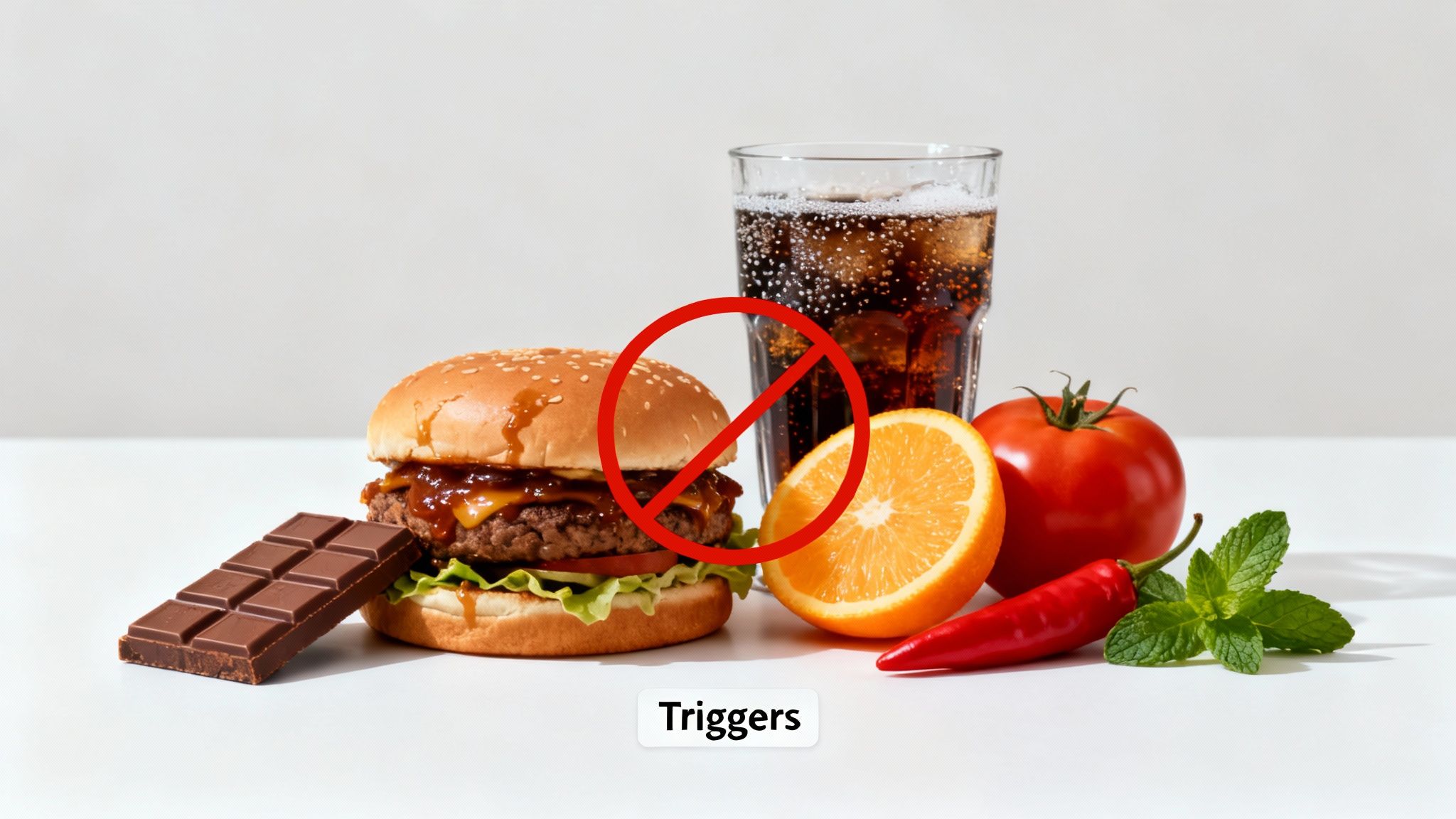
It’s crucial to remember that reflux triggers are deeply personal. What causes a five-alarm fire for one person might be totally fine for you. This is where a little self-detective work pays off big time. Learning how to keep a food journal that truly works is one of the most powerful tools you have. It helps connect the dots between what you eat and how you feel.
Why Certain Foods Cause Trouble in an Acid Reflux Diet
The way trigger foods wreak havoc is surprisingly straightforward. They throw your digestive system’s delicate balance off-kilter in a few key ways. Let’s break down the usual suspects and why they’re so problematic.
High-Fat and Fried Foods: Greasy meals like cheeseburgers or french fries slow down how quickly your stomach empties. This means food sits there longer, which increases the odds of acid backing up. The fat itself can also signal the LES to relax.
Spicy Foods: Ingredients like chili peppers can flat-out irritate the lining of your esophagus. For some people, this irritation feels exactly like heartburn. For others, it just makes existing inflammation feel worse.
Citrus and Tomatoes: These foods are naturally high in acid. While they don’t necessarily make your stomach produce more acid, they can aggravate an already sensitive esophagus. This can make symptoms flare up. This includes everything from orange juice to marinara sauce.
Hidden Triggers in Everyday Favorites
Sometimes, the biggest culprits are hiding in plain sight. They are foods and drinks we love without ever connecting them to our discomfort. Understanding their effects is the key to making smarter swaps.
From a behavioral psychology perspective, identifying triggers isn’t about restriction; it’s about empowerment. By understanding the ‘why’ behind a food’s effect, your brain’s reward system can adapt more easily. You shift from a mindset of ‘I can’t have this’ to ‘I choose this other thing because it makes me feel better.’ This positive framing reinforces new, healthier habits.
Here are a few more to keep an eye on:
Chocolate and Mint: Both contain compounds that are known to relax the LES. A small square of dark chocolate might be fine for some. But for others, even a little is enough to open the floodgates. Peppermint tea, often sipped to soothe the stomach, can ironically have the exact same effect.
Caffeine: Found in coffee, tea, and soda, caffeine is a double-whammy. It can both relax the LES and stimulate your stomach to produce more acid. This creates the perfect storm for a reflux episode.
Carbonated Drinks: All those bubbles in soda and sparkling water can actually increase the pressure inside your stomach. That pressure can physically push open the LES. This forces acid right up into your esophagus.
Navigating Triggers in the Real World: A Mini-Scenario
Let’s put this into practice. Imagine Alex, an executive with a huge presentation tomorrow. He’s at a client dinner, and the last thing he needs is a bad night of reflux sabotaging his sleep and focus. The menu is a minefield.
Instead of the creamy tomato soup, he chooses a clear broth or a simple garden salad. For the main course, he skips the spicy curry and orders the grilled salmon with steamed asparagus. When the post-dinner coffee and mints come around, he politely declines. Instead, he asks for a cup of chamomile tea.
By making these simple, mindful swaps, Alex gets through dinner without a hitch. He enjoys a great meal, feels fantastic, and gets a solid night of sleep. This ensures he’s sharp and ready for his big day. This is what managing reflux is all about: smart substitutions, not social sacrifice.
Lifestyle Habits to Support Your Acid Reflux Diet
Nailing your diet is a huge step. But the everyday habits wrapped around your meals can either supercharge your results or completely undermine them. Think of it this way: your diet is the “what,” but your lifestyle is the “how.” Both are critical for finding lasting relief from acid reflux.
These aren’t just minor tweaks, either. They have a serious impact. In fact, one major study found that combining the right lifestyle habits with a smart diet could prevent up to 37% of GERD cases. Researchers developed an “antireflux score” that showed just how powerful these small, consistent changes can be. This is often without needing medication. You can dig into the full study on how lifestyle changes prevent GERD.

Master Your Meal Timing and Portions
When and how much you eat can be just as important as what’s on your plate. Huge meals put direct physical pressure on your stomach and that lower esophageal sphincter (LES). This makes it far too easy for acid to splash back up.
The simple fix? Aim for smaller, more frequent meals. This keeps your stomach from getting overstuffed and putting that upward pressure on the LES.
Late-night eating is another classic reflux trigger. When you lie down with a full stomach, you lose gravity’s help. Then, acid can easily flow back where it doesn’t belong.
Pro Tip: Try setting a firm “kitchen is closed” rule for yourself at least three hours before you go to bed. From a behavioral psychology standpoint, creating a clear, simple rule like this reduces decision fatigue. It makes the new habit easier to stick to, which dramatically cuts down the risk of overnight heartburn.
Adopt Mindful Eating Practices
Let’s be honest, we all do it. We eat while scrolling our phones, firing off emails, or watching TV. But neuroscience shows this kind of distracted eating can actually trigger a stress response. This response interferes with good digestion.
Mindful eating is the antidote. It’s about slowing down and actually tasting your food. You pay full attention to the meal in front of you.
This simple practice helps you pick up on your body’s “I’m full” signals much more accurately. This is key to avoiding overeating. Chewing your food thoroughly also gives your digestion a head start. It makes your stomach’s job a whole lot easier. If you know stress is a big trigger for you, our guide on how to manage chronic stress has more strategies that can really support your dietary changes.
Smart Post-Meal and Sleep Habits for Your Acid Reflux Diet
What you do after you eat—and how you sleep—can make a world of difference.
- Stay Upright After Meals: Resist the urge to slouch on the couch or lie down for at least two to three hours after eating. A gentle walk is a fantastic way to aid digestion and keep things moving in the right direction.
- Elevate Your Head at Night: This is a game-changer for many people. Use a wedge pillow or prop up the head of your bed by six to eight inches. Gravity becomes your best friend, helping keep stomach acid right where it belongs.
Let’s make this real with a mini-scenario. Imagine a remote worker who always struggled with afternoon and evening reflux. She decides to eat a smaller lunch away from her desk. She takes a 15-minute walk afterward. Then, she sets a daily 7 PM reminder on her phone: “Kitchen is closed.” The result? Her reflux calms down, she sleeps soundly, and wakes up feeling refreshed and focused for the next day. Small habits, big impact.
Editor’s Take
So, what’s the bottom line here? If I had to boil it all down, the single most important factor in making an acid reflux diet work is consistency, not perfection. Forget the rigid, all-or-nothing plans. An 80/20 approach—where you stick to the guidelines most of the time but give yourself some grace—is far more sustainable in the real world.
From my experience, the biggest breakthroughs come from two places. First, methodically figuring out your personal trigger foods is a total game-changer. What sets one person off might be perfectly fine for another. Second, your results get a serious boost when you combine smart food swaps with simple lifestyle habits, like not eating within three hours of bedtime.
This advice is really for those with mild to moderate reflux who are looking for ways to manage it without jumping straight to medication. It’s a powerful framework for improving your quality of life, but it’s not a cure. As part of your strategy, it can also be useful to explore how different supplements work. For example, understanding the differences between digestive enzymes vs. probiotics can be beneficial.
Important Caveat: If your symptoms are severe, persistent, or getting worse, you absolutely need to see a healthcare professional. This guide is here to educate and empower you, but it does not replace medical advice from a qualified doctor. Your long-term health is always the top priority. This article is educational only and not a substitute for medical or psychological care.
Key Takeaways for Your Acid Reflux Diet
- Focus on Soothing Foods: Build your meals around alkaline foods like bananas and leafy greens, lean proteins like chicken and fish, and high-fiber options like oatmeal and brown rice.
- Identify Personal Triggers: Use a food journal to pinpoint specific foods that cause your symptoms. Common culprits include high-fat, spicy, and acidic foods, as well as caffeine and chocolate.
- Lifestyle Habits Matter: Avoid eating within three hours of bedtime. Eat smaller, more frequent meals, and stay upright after eating to let gravity help your digestion.
- Mindful Eating Helps: Slow down and eat without distractions. This helps you recognize fullness cues, avoid overeating, and reduce stress that can worsen reflux.
- Consistency Over Perfection: Aim for progress, not a flawless diet. An 80/20 approach is more sustainable and effective for long-term relief.
- When to See a Doctor: This guide is for educational purposes. If you have severe, persistent symptoms, or if you experience issues like difficulty swallowing or unexplained weight loss, seek medical advice immediately.
Disclaimer: The content in this article is for educational and informational purposes only and is not a substitute for professional medical or psychological advice, diagnosis, or treatment. Always seek the advice of your physician or other qualified health provider with any questions you may have regarding a medical condition. This site may also contain affiliate links, meaning we may earn a commission if you make a purchase through our links, at no extra cost to you.
Frequently Asked Questions About the Acid Reflux Diet
1. How long does it take for an acid reflux diet to work?
Many people feel initial relief within a few days to a week of making consistent changes. For deeper, more lasting improvement, it is best to give it at least three to four weeks. This allows your esophagus time to heal from irritation.
2. Can I ever eat my favorite trigger foods again?
Possibly, but with strategy. Once your symptoms are well-managed, you can try reintroducing a very small amount of a trigger food. Pay close attention to how your body responds. The goal is to find your personal tolerance level, not total elimination forever.
3. Is coffee completely off-limits on an acid reflux diet?
Not necessarily, but it requires caution. Caffeine can relax the lower esophageal sphincter (LES). Some people find they can tolerate low-acid coffee, cold brew, or smaller portions. Try cutting back before cutting it out completely.
4. Will losing weight help my acid reflux?
For many people, yes. Excess weight, especially around the abdomen, puts physical pressure on the stomach. This can push acid upward. Studies show that even a modest weight loss of 5-10% of body weight can significantly reduce reflux symptoms.
5. What are some easy acid-reflux-friendly snack ideas?
Great options include a ripe banana, a few slices of melon, a small handful of almonds, a rice cake with almond butter, or a small bowl of oatmeal. These are gentle on the stomach and won’t trigger acid production.
6. Does stress make acid reflux worse?
Absolutely. While stress doesn’t directly cause reflux, neuroscience shows it heightens your brain’s perception of pain. This makes the discomfort of heartburn feel much more intense. Stress can also lead to poor food choices, creating a vicious cycle.
7. Are all herbal teas safe for an acid reflux diet?
Most are, but avoid peppermint tea. Peppermint can relax the LES, which can make reflux worse. Stick to calming options like chamomile, ginger, or licorice root tea, which are known to soothe the digestive system.
8. Can I follow an acid reflux diet if I’m vegetarian or vegan?
Yes, a plant-based diet can be very effective for managing reflux. It naturally focuses on whole grains, legumes, vegetables, and low-acid fruits. Many common reflux triggers, like fatty meats and high-fat dairy, are already eliminated.
9. What’s the best way to track my trigger foods?
The most effective method is a simple food and symptom journal. For two weeks, write down everything you eat, the time you eat it, and any symptoms you experience. This practice will help you see clear patterns between specific foods and your discomfort.
10. When should I see a doctor about my acid reflux?
You should see a doctor if your symptoms are severe, occur more than twice a week, or do not improve with dietary changes. Also seek immediate medical advice if you experience difficulty swallowing, unexplained weight loss, or persistent nausea. This content is educational, not medical advice.
At Mind Clarity Hub, we’re dedicated to providing science-backed guides to help you regain focus and well-being. Explore our library of books for practical roadmaps to a clearer mind.
Find your next read at Mind Clarity Hub
