

Affiliate disclosure: Some links on this page are affiliate links. If you buy through them, Mind Clarity Hub may earn a commission at no extra cost to you.
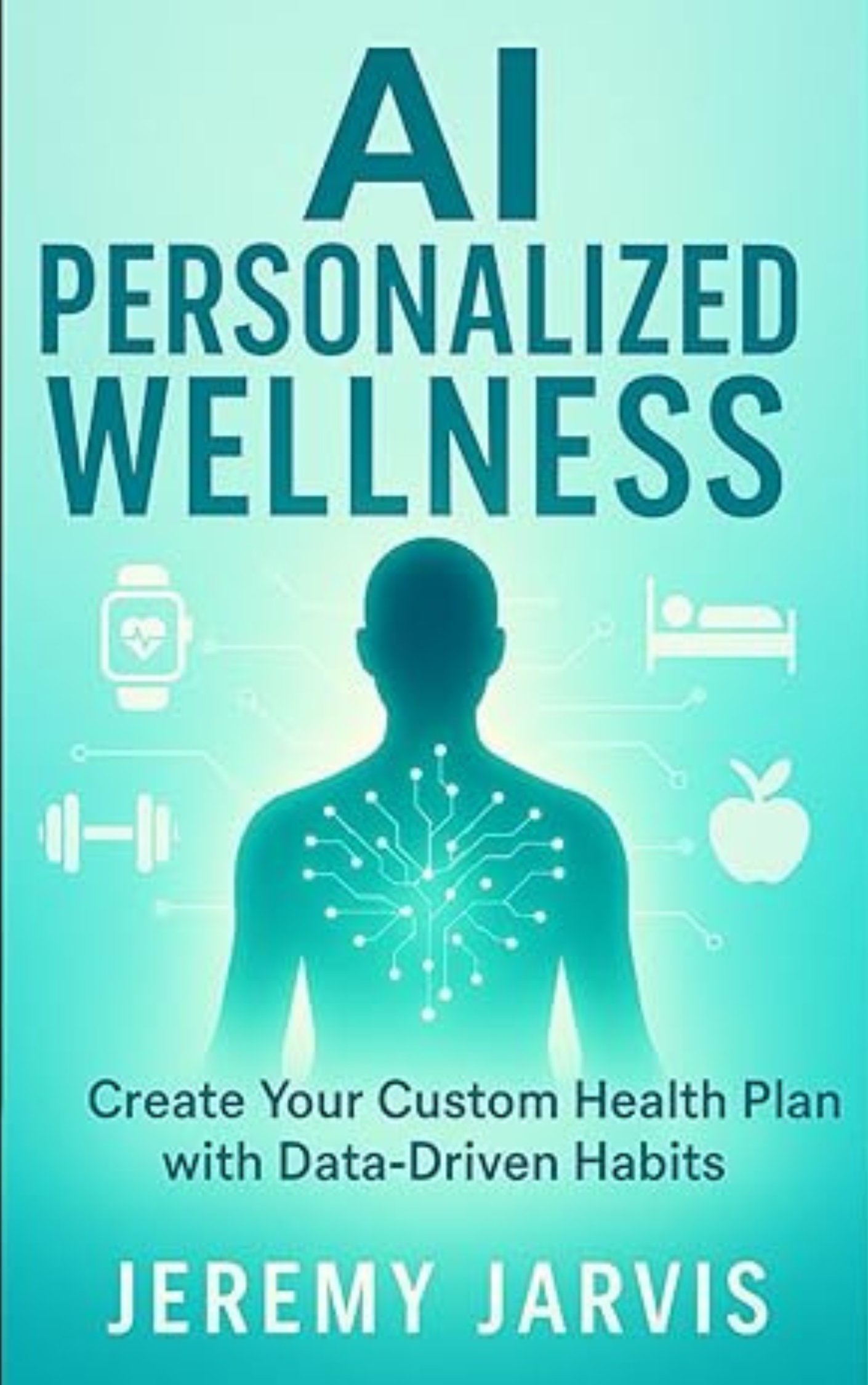
AI Personalized Wellness

Published:
Build a wellness plan that fits your actual life, using your own data and a step-by-step method.
By Jeremy Jarvis
Last reviewed: . Our research method: this page describes the book’s contents and who it suits, written from the book itself. Mind Clarity Hub researches and compares; we do not test health products or outcomes, and nothing on this page or in the book is medical advice.
Generic wellness advice fails for a specific reason
It is written for an average person who does not exist. The eight-glasses rule, the ten thousand steps, the ten-o’clock bedtime: none of them know your schedule, your constraints, your sleep pattern or what you have already tried and abandoned. So the plan collides with your actual week and you conclude that you lack discipline.
AI personalized wellness takes the opposite approach. Rather than handing you another universal programme, the book gives you a method for building one that fits the life you have, using data you already generate and AI as the analyst you would otherwise have to hire.
What you will be able to do by the end
- Turn scattered notes into something readable covering sleep, movement, energy and mood, without a spreadsheet habit you will not keep.
- Find your own patterns, such as which days reliably go badly and what precedes them.
- Run a fair test on one change at a time, so you learn whether it worked instead of changing five things and learning nothing.
- Build habits around real constraints such as shift work, caregiving, travel, or a body that does not cooperate on schedule.
- Use AI to interrogate your data with prompts that produce specific observations rather than generic encouragement.
- Know when to stop self-experimenting and take something to a doctor.
What this book is, and what it is not
This is a book about building a personal system, not a medical text. It diagnoses nothing, recommends no supplements or treatments, and does not suggest that an AI tool can interpret symptoms. Persistent fatigue, low mood, pain or sleep problems are reasons to see a clinician, and the book says so in plain terms rather than burying it in a disclaimer. The method is for the ordinary optimisation that sits alongside medical care, never instead of it.
Free download: 7-Day Mind Clarity Reset
A short daily reset you can actually stick with (no fluff).
Which problem are you solving?
| Where you are now | What the method gives you | Time to first answer |
|---|---|---|
| Tried plans, none stuck | A plan built around your constraints | Two to four weeks |
| Cannot tell if a change helped | The single-variable test | One test cycle |
| Drowning in tracker numbers | The few measures worth keeping | Immediate |
| Worried about privacy | Rules for what never goes in a chatbot | Immediate |
| Symptoms that persist | Clear markers for seeing a clinician | See a doctor now |
What is inside
- Choosing the few measures worth tracking, and ignoring the rest.
- A low-effort logging routine designed to survive a bad week.
- Prompts that turn a month of messy notes into specific, testable observations.
- The single-variable test: how to change one thing, for long enough, and read the result honestly.
- Designing around constraints rather than pretending they are not there.
- Sleep, movement, food and recovery treated as inputs you adjust, not rules you obey.
- Privacy: what health information should never be pasted into a general-purpose chatbot, and why.
Why a data-driven approach helps
Not because numbers are magic, but because memory is unreliable. Most people cannot say with confidence whether last month was better than the one before, which means they cannot tell whether a change helped. A light record plus a structured review removes the guesswork, and that is the whole advantage. The AI part is simply the fastest way to spot a pattern in your own notes that you are too close to see.
Common questions
Do I need a smartwatch or fitness tracker?
No. The book works with pen and paper or a notes app. If you already own a tracker, one chapter covers using its export sensibly, including which numbers to ignore.
Is it safe to share health information with an AI tool?
A full chapter addresses this and its answer is cautious. Treat anything you type into a general-purpose chatbot as potentially retained, keep identifying details out, and never substitute it for a clinician’s judgement.
Will this tell me what is wrong with me?
No, and it does not try. It helps you notice patterns and test changes. Interpreting symptoms is a doctor’s job.
How long before I learn anything useful?
Usually two to four weeks of light logging before the first honest test. The book is clear that faster conclusions are generally wrong ones.
Build the plan that fits your life
A step-by-step method for data-driven habits that survive a real week.
Keep reading
New to these tools? AI & ChatGPT for Beginners covers the basics first. For the sleep side, Restful Nights goes deeper, and Burnout, Interrupted deals with the exhaustion that no habit tracker fixes on its own.
More books by Jeremy Jarvis
Short, practical reads on focus, calm and getting things done.
 The Power of Clarity: A 30-Day Focus Reset by Jeremy JarvisUnlock mental focus, build momentum, and create the life you were meant to live.View book
 Zen in the Digital JungleMindfulness for a chaotic world.View book
 THE SLOW RESETMindful living in a fast-paced world.View book
 Perfectly ImperfectStop self-criticism, set boundaries, and embrace the real you.View book
 Reclaiming SilenceA dopamine detox guide to finding peace in a noisy world.View book
 THE FOCUSED FREELANCERProductivity, pricing & positioning for independents in 2025.View book
 Unlocking Success: How an AI Business Plan Generator Can Transform Your Startup JourneyLaunch your AI-driven online business in 30 days.View book
 Burnout, InterruptedA proven path to restore energy and reclaim your life.View book
 Attention UnleashedFocus strategies for the distracted mind.View book
 Side Hustle LaunchpadYour quick-start guide to extra income.View book
 Digital ClarityRewire your brain, escape dopamine traps & regain focus.View book
 Break the ScrollReduce screen time and take back control of your life.View book
 Climate CompassionTransform eco-anxiety into empowered action.View book
 Village MentalityThe power of community for mental wellness.View book
 Restful NightsOvercoming sleep anxiety in a 24/7 world.View book
 Connected AgainCombat loneliness and build meaningful relationships.View book
 Focus RechargedMastering attention and productivity in the digital era.View book
 Unlocking AI Marketing Potential with Content SystemsAI-powered content, campaigns, and copywriting to grow faster.View book
 The 6-Figure CreatorTurn knowledge into passive income with books, courses & AI.View book
 Burnout BreakthroughReset your work-life balance and thrive in 2025.View book
 The Emotionally Intelligent ManA modern guide to self-awareness and communication.View book
 Everyday AI Made Easy — How to Use ChatGPTUse ChatGPT and smart tools to simplify life.View book
 Money MindfulnessA financial wellness guide for Gen Z & Millennials.View book
 Startup Smarter with AIChatGPT strategies and tools to grow your business.View book
