


Published:
Quick answer: A bathroom counter reset routine after the morning rush is a five-minute closeout that clears damp items, puts daily products back in zones, wipes the sink area, restocks one essential, and leaves tomorrow’s first step visible. It is not a deep clean. It is a short reset that keeps the bathroom from becoming another open loop in your head.
Bathroom counter reset routine after the morning rush: the simple version
If the counter is covered with toothpaste, hair tools, towels, skincare, kid items, and half-open drawers by 8:15 a.m., the problem is rarely laziness. It is usually a system problem. Morning bathrooms are high-speed handoff zones. People are brushing, washing, styling, packing, and looking for one missing item while the clock is already moving.
If this post is describing your situation with minute, I built FocusFix: The Emotional Clarity Kit for Real-World Distraction Killers as the step-by-step version of what this article covers. It is my own product, and it goes considerably deeper than a blog post can.
The goal of a bathroom counter reset routine after the morning rush is to return the space to a usable baseline without asking for a full cleaning session. The routine works best when it is short enough to do on a busy weekday and clear enough that another adult, teen, or older child can repeat it.
Use this five-step version first:
- Gather: move every loose item into one small tray, bin, or towel zone.
- Sort: return daily items to their homes and move non-daily items out of the counter area.
- Dry: hang towels, move wet washcloths, and lift anything sitting in water.
- Wipe: clean the sink rim, faucet touch points, and open counter space.
- Reset tomorrow: place one cue item where your next morning starts.
That is enough. You can always deep clean later, but the reset should be small enough that your brain does not negotiate with it.

Get the 7-Day Mind Clarity Reset (Free Workbook)
10-15 minutes a day to reduce mental noise and rebuild momentum (with templates you can reuse).
Bathroom counter organization starts with fewer open loops
A bathroom counter gathers visual decisions. Every bottle, brush, cap, cord, and towel is a tiny unfinished message: put me away, wash me, replace me, use me, decide about me. After a rushed morning, those messages stack up while your attention is already pointed toward work, school, errands, or caregiving.
That is why this routine is a clarity habit as much as a cleaning habit. It reduces visual noise, removes wet clutter, and makes the next visit easier. A clean counter is not morally better. It is simply less demanding.
Mind Clarity Hub’s broader reset approach is similar: start with the smallest action that changes the next decision. If you want a full home version, pair this guide with the small space reset routine. If the bathroom is only one part of a scattered week, the weekly planning routine for busy adults can help you place these resets where they actually fit.
Bathroom counter organization: what should stay visible?
Keep only the things you use every morning or every night. Everything else needs a nearby home that is easy to reach but not spread across the surface.
A good rule is the “daily, visible, washable” test:
- Daily: toothbrush, toothpaste, cleanser, one moisturizer, contacts, deodorant, or other true everyday items.
- Visible: only the items that help the routine happen. If seeing it creates pressure, store it lower.
- Washable: anything on the counter should sit on a tray, mat, cup, or dish you can clean quickly.
Most clutter comes from “sometimes” items pretending to be daily items. Extra hair products, backup toothpaste, travel bags, medicine boxes, makeup experiments, and sample bottles can live in a drawer, caddy, closet bin, or labeled backstock basket.
The five-minute bathroom counter reset routine after the morning rush
Set a timer for five minutes the first few times. The timer is not there to rush you. It keeps the task from expanding into cleaning the mirror, organizing every drawer, or judging the whole bathroom. The bathroom counter reset routine after the morning rush is meant to close the loop, not open five new ones.
Morning bathroom routine minute 1: make one pile, not ten decisions
Start by gathering every loose counter item into one temporary zone. Use a small tray, a dry towel, or the counter corner farthest from the sink. This looks messier for a moment, but it changes the task from “the whole bathroom is chaos” to “I am sorting one pile.”
Do not decide yet. Just gather. Bottles, caps, hair ties, brushes, toothpaste, razors, skincare, floss, and stray packaging all go together. If something is wet, place it on the towel side so it does not drip across the counter.
Bathroom reset routine minute 2: return daily items to their exact homes
Now sort the pile into three groups: daily, not daily, and trash or laundry. Daily items go back to the counter zone or top drawer. Not-daily items leave the counter. Trash goes out immediately. Towels and washcloths go to a hook, hamper, or drying spot.
The exact home matters. “Somewhere in the drawer” is too vague when everyone is tired. Use a cup for toothbrushes, a tray for skincare, a hook for the hand towel, a heat-safe holder for hair tools, and a small bin for shared family items.
Small bathroom reset minute 3: handle water before it spreads
Water turns small clutter into a bigger nuisance. Lift anything sitting in a puddle. Hang towels so they can dry. Move damp washcloths to the hamper or a drying rack. Check the faucet base, soap bottle, and toothbrush cup for water rings.
The CDC’s handwashing guidance is a useful reminder that sinks are high-touch spaces. You do not need to disinfect everything every morning, but you do want clean, dry touch points and a routine that keeps shared surfaces easier to use.
Morning bathroom routine minute 4: wipe the visible surface
Use the right cleaner for your surface and follow the label. For a basic weekday reset, wipe the faucet handles, sink rim, soap area, and the open counter. If you need disinfecting, follow product contact-time directions instead of treating a quick swipe as a full disinfecting pass. The EPA explains that disinfectants need correct use and contact time to work as intended.
If strong scents bother you, choose a low-fragrance or fragrance-free option and ventilate the room. The EPA Safer Choice program is one place to learn how product labels can help you choose cleaners with safer ingredients.
Bathroom reset routine minute 5: place tomorrow’s cue
End by setting one cue for tomorrow morning. Put your cleanser on the tray. Place a fresh hand towel on the ring. Set the hairbrush in the cup. Refill the cotton rounds. Put the child’s toothbrush where it is easy to see. The cue should make the first next action obvious.
This is the part that turns the bathroom counter reset routine after the morning rush into a habit loop. You are not just cleaning the past. You are making the next morning easier.
Small bathroom reset setup: what works best?
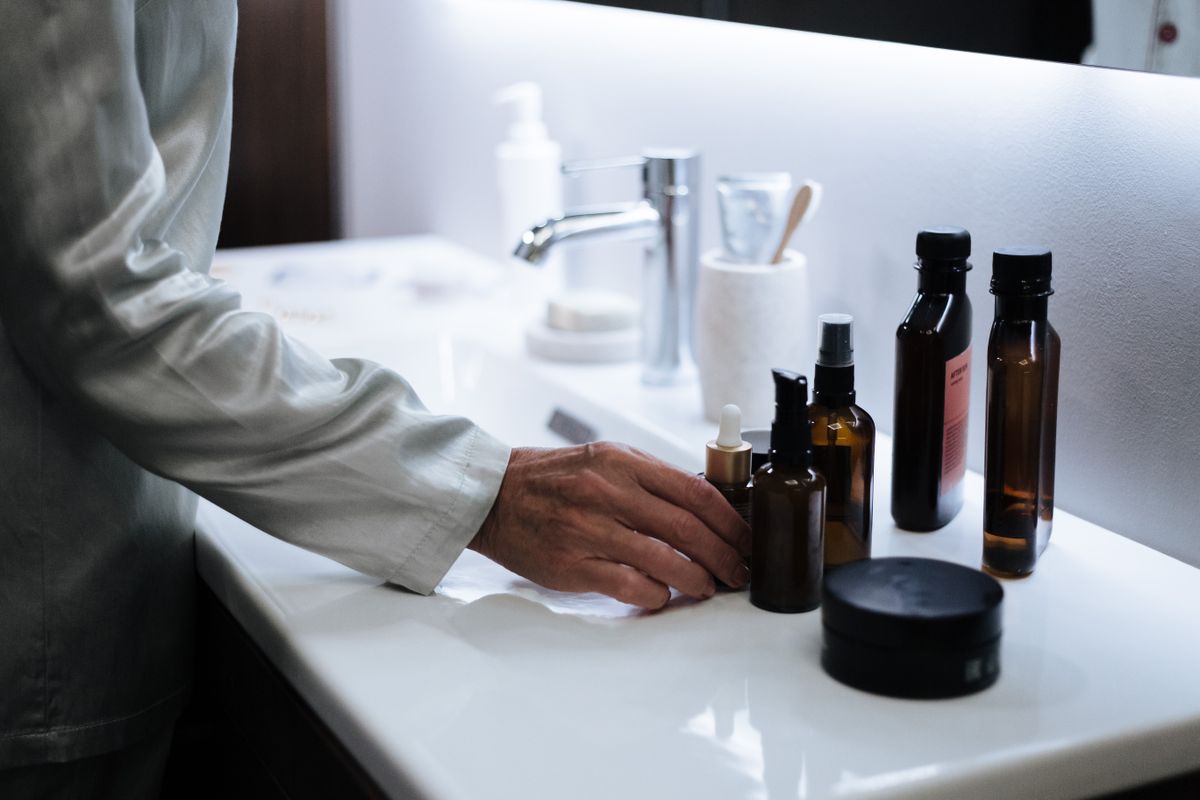
The best setup is not the prettiest one. It is the one that lets tired people put things back without thinking. A small bathroom counter needs fewer categories, stronger boundaries, and less “just for now” storage.
Start with four zones:
- Daily tray: cleanser, moisturizer, toothbrush cup, and one or two essentials.
- Drying zone: hand towel, washcloth hook, or a washable mat.
- Tools zone: brush, comb, razor, or hair tool holder away from water.
- Backstock zone: extras under the sink or in a closet, not on the surface.
If the bathroom is shared, label by person or by step. “Face,” “Teeth,” “Hair,” and “Kid” often work better than broad bins like “Bathroom Stuff.” Labels are not about making the space look staged. They reduce decision fatigue when the room is busy.
Calm home reset rules before you buy organizers
Before you buy a new tray, shelf, or drawer insert, test the routine with what you already own. Try a cereal bowl for hair ties for a week. Use a clean mug for toothbrushes. Fold a towel to test whether a drying zone solves the wet-counter problem. This trial period keeps you from buying storage for items you should actually remove.
Use a simple audit after three mornings. Which item was still out? Name the step that felt annoying. Notice who could not find their home base. Fix only that friction point. For example, if everyone leaves toothpaste out, the toothpaste home is probably too hidden. If towels stay on the counter, the hook may be too far away. If skincare spreads everywhere, the tray may need a smaller limit or a drawer backup.
This calm home reset mindset protects the habit. The goal is not to create a showroom bathroom. The goal is a room that recovers quickly after real life uses it.
Bathroom declutter checklist for the daily reset
Use this as your repeatable checklist. You can print it, put it inside a cabinet door, or save it in a notes app.
| Step | Action | Done when | Common snag | Fast fix |
|---|---|---|---|---|
| Gather | Move loose items into one tray or towel zone | The sink area is visible | Too many products | Remove anything not used daily |
| Sort | Return daily items, relocate extras | Each item has a home | Drawers are full | Create one backstock bin |
| Dry | Hang towels and lift wet items | No damp fabric sits on the counter | No hook nearby | Add an over-door hook |
| Wipe | Clean faucet, sink rim, and open counter | Touch points feel fresh | Cleaner is hard to reach | Store one small bottle nearby |
| Cue | Place one item for tomorrow’s first step | The next morning starts easily | No clear start point | Choose the first item you touch |
Family bathroom organization: how do you make it shared?
Shared bathrooms fail when the system depends on one person noticing everything. A better approach is to define a tiny standard that everyone can see. The standard should be observable, not emotional. “Respect the bathroom” is vague. “Nothing wet stays on the counter” is clear.
Try these shared rules:
- Each person gets one cup, one drawer section, or one labeled caddy.
- Shared items live in the same place every day.
- Damp towels go on hooks, not counters.
- Hair tools cool in one heat-safe location.
- The last person out does a 60-second wipe if the counter is visibly wet.
For kids, make the reset visible. A picture label can work better than a written label. Place the toothbrush cup at child height when possible. Keep the step count low: cap toothpaste, hang towel, put brush in cup. That is enough for a starter habit.
Bathroom reset routine: what if you only have one minute?
A one-minute version is better than no reset. Do not wait for the perfect five-minute window. If the morning is loud, late, or interrupted, use this minimum version:
- Throw away obvious trash.
- Hang towels and move wet washcloths.
- Return toothbrushes and toothpaste.
- Wipe only the faucet and sink rim.
- Put one cue item out for tomorrow.
This version will not make the bathroom photo-ready. That is fine. The point is to prevent the counter from getting worse and to protect tomorrow’s start.
Bathroom counter organization: how often should you deep clean?
Use the daily reset for order and light surface care. Use a deeper clean when the surface needs more than a wipe: visible buildup, residue around fixtures, makeup spills, product leaks, dusty corners, or a sink that needs a proper scrub.
A practical cadence is:
- Daily or most weekdays: five-minute counter reset.
- Weekly: move everything, clean the full surface, wash the tray, and empty trash.
- Monthly: check expiration dates, toss empty packaging, wash cups, and edit products.
- Seasonally: review storage, replace worn towels, and remove items no one uses.
For skin-care and personal-care items, follow product labels and storage instructions. The American Academy of Dermatology’s skin-care basics are a helpful reminder to keep routines simple and choose products thoughtfully, especially if your skin is sensitive.
Bathroom declutter checklist mistakes that make clutter return
The bathroom counter reset routine after the morning rush is simple, but a few design mistakes can make it fail.
Bathroom counter organization mistake 1: storing backup products on the counter
Backups feel convenient until they crowd the daily items. Keep one active product in reach and move extras to a backstock bin. When the active product is almost empty, shop the bin before buying more.
Small bathroom reset mistake 2: making the tray too large
A tray can become a clutter island if it is too big. Choose a tray that fits only daily items. If the tray overflows, the answer is not a bigger tray. It is fewer visible items.
Bathroom reset routine mistake 3: hiding the cleaning cloth too far away
If the cloth or cleaner is in another room, the wipe step will disappear. Keep one washable cloth, sponge, or safe wipe option close enough that the reset stays friction-light.
Morning bathroom routine mistake 4: assigning the reset to the wrong time
Some people can reset immediately after brushing. Others need to do it after school drop-off, after the first work call, or before lunch. The best time is not the ideal time. It is the time you can repeat.
Calm home reset mistake 5: turning the routine into a full bathroom clean
Deep cleaning is useful, but it is a different task. If every reset becomes a 25-minute bathroom project, you will avoid it. Keep the daily reset small and schedule deeper cleaning separately.
Bathroom reset routine examples
Here are a few ways the same routine can fit different households.
Solo apartment, tiny sink
Keep one toothbrush cup, one soap bottle, one small skincare tray, and one folded cloth under the sink. After the morning rush, move skincare back to the tray, hang the towel, wipe the faucet, and leave tonight’s cleanser visible. Total time: three minutes.
Couple sharing one counter
Use two narrow trays or two drawer bins. Each person gets one visible lane. Shared items live between the lanes. The last person out wipes only shared touch points: faucet, soap area, and sink rim. Total time: four minutes.
Family bathroom before school
Use color-coded cups and hooks. Kids return toothbrushes and hang towels. The adult does a quick wet-zone check after school drop-off or the first quiet moment. The cue for tomorrow is a fresh towel and toothpaste facing forward. Total time: five minutes spread across people.
Roommate bathroom
Use caddies instead of shared counter storage. Each person carries their caddy in and out or stores it on a dedicated shelf. The shared reset is only sink, faucet, soap, towel, and trash. Total time: two minutes for the common space.
How this supports mental clarity
Small physical resets work because they remove small points of friction. You do not need to overhaul your life to feel a little clearer. You need reliable cues that reduce the number of decisions waiting for you.
If you are building a wider clarity system, the bathroom counter reset routine after the morning rush can be one supporting habit in a larger pattern: clear one surface, close one loop, choose one next step. That same pattern appears in The Power of Clarity and the wider Jeremy Jarvis books hub, where the focus is not perfection but repeatable action.
For digital clutter, pair this with the digital declutter checklist. For work clutter, try the paper clutter triage system. The room changes, but the habit logic stays the same.
Is this a cleaning routine or an organization routine?
It is both, but lightly. The reset has one organizing job and one cleaning job. Organizing returns items to homes. Cleaning removes water, residue, and visible surface mess. If you do only the organizing, the counter may still feel unpleasant. If you do only the cleaning, the products will spread again.
Think of it as a closure routine. You are closing the morning bathroom session so the next person, including future you, does not inherit the rush.
FAQ
What is the fastest bathroom counter reset routine after the morning rush?
The fastest version is trash, towels, toothbrushes, faucet, cue. Throw away obvious trash, hang damp towels, return toothbrushes and toothpaste, wipe the faucet area, and set one cue item for tomorrow.
Should I keep skincare on the bathroom counter?
Keep only daily skincare on the counter, preferably on a washable tray. Store backups, occasional masks, samples, and rarely used products in a drawer or bin so the counter stays easy to wipe.
How do I stop my family from leaving the bathroom counter messy?
Give each person a visible home for their items and define one shared rule, such as “nothing wet stays on the counter.” Start with a 60-second shared reset before asking for a bigger behavior change.
What cleaning products should I use on a bathroom counter?
Use a cleaner that matches your counter material and follow the label. If you need disinfecting, check contact-time directions. For everyday residue, a light surface wipe may be enough.
How can I make the routine stick if I hate cleaning?
Make the routine smaller. Do one minute for a week before trying five minutes. Store the cloth nearby, limit counter items, and attach the reset to an existing cue such as after brushing teeth or after school drop-off.
Final reset plan
Try the bathroom counter reset routine after the morning rush for seven days. Do not redesign the entire bathroom at first. Just gather, sort, dry, wipe, and cue. At the end of the week, notice where the routine broke. Was the tray too full? Was the cloth too far away? Were there no hooks? Fix one friction point, then repeat.
The bathroom does not need to look perfect. It needs to be ready for the next human who walks in. That is the win: less visual noise, fewer wet surprises, and one calmer start tomorrow.
Helpful resources for your next step
Affiliate disclosure: As an Amazon Associate, Mind Clarity Hub may earn from qualifying purchases at no extra cost to you. Use this link only if it genuinely helps your planning.
If A 5-Minute Bathroom Counter Reset After the Morning Rush is a routine you want to keep using, a simple workbook, planner, or desk tool can make the steps easier to repeat.
Compare related planners, workbooks, and organization tools on Amazon.
