


Published:
When you feel overwhelmed and your heart starts racing, it’s not just in your head. Your body has flipped a switch into its sympathetic nervous system—the classic “fight or flight” mode designed for survival. From a neuroscience perspective, this response, originating in a part of the brain called the amygdala, floods your system with stress hormones like cortisol and adrenaline. Consequently, your breathing gets short and shallow.
To calm down fast, you need to intentionally activate the opposing system: the parasympathetic nervous system, or “rest and digest” mode. This is the body’s natural brake pedal. Activating it signals to your brain that the danger has passed. This allows your heart rate to slow, your mood to stabilize, and your muscles to relax.
The best part? You can learn to hit that brake pedal on command with simple habits.
Affiliate Disclosure: At Mind Clarity Hub, we believe in transparency. This article may contain affiliate links, which means we may earn a small commission if you make a purchase through them, at no extra cost to you. These commissions help support our work in providing evidence-based content.
These techniques aren’t about complicated, time-consuming rituals. They’re quick, physiological resets you can do anywhere. For instance, in a quiet hallway before a big meeting. Or at your desk when facing a deadline. Even in a crowded room when you feel a wave of anxiety rising.

This article is for educational purposes only. The information provided is not a substitute for professional medical or psychological advice, diagnosis, or treatment. If you are struggling with anxiety, depression, burnout, ADHD, sleep problems or other mental health concerns, please consult a qualified healthcare provider.
Quick Ways to Calm Down When Stressed
When you need immediate relief, you can turn to science-backed techniques that work with your body’s biology. These methods are designed to interrupt the stress response quickly. Therefore, they help you regain a sense of control.
The Physiological Sigh: A 5-Second Reset to Calm Down
One of the fastest ways to engage your “rest and digest” response is with a technique called the physiological sigh. Popularized by Stanford neuroscientist Dr. Andrew Huberman, this isn’t just deep breathing. It’s a specific pattern your body naturally uses to offload carbon dioxide and calm the nervous system. Behavioral research shows this sighing pattern is one of the quickest ways to regulate your autonomic nervous system.
It’s remarkably simple but incredibly powerful. Here’s how you do it:
- Take a deep inhale through your nose.
- Before you exhale, take another short, sharp inhale to fully inflate your lungs.
- Then, perform a long, slow exhale through your mouth.
Real-World Scenario: Imagine you’re a project manager, ten minutes away from a high-stakes client presentation. Your heart is pounding, and your thoughts are racing. You step into a quiet hallway, close your eyes, and do the physiological sigh just twice. You can physically feel your heart rate slow, your mind clears, and you walk into the meeting feeling more centered and in control.
Tapping into Auditory Calm to Find Peace
Sound can also be a powerful tool for shifting your mental state. Specific frequencies and rhythms can help guide your brainwaves from an alert, anxious state (beta waves) to a more relaxed one (alpha waves). This isn’t just about listening to calming music; it involves intentional auditory focus, a concept grounded in psychology.
For instance, you might try a guided sound ritual. These are short, structured audio experiences designed to capture your attention. They gently guide you toward a calmer state. If you’re curious about how sound can work for you, we have a guide on a 3-minute sound ritual designed for a quick mental reset.
Exploring proven effective relaxation techniques for stress relief can also equip you with more valuable tools for your mental toolkit.
Mindful Sensory Engagement for Immediate Calm
Finally, you can instantly pull yourself out of an anxious thought loop by redirecting your attention to a single physical sensation. This technique grounds you in the present moment by focusing on what you can physically feel. It shifts your focus away from the abstract worries swirling in your mind. It’s a simple form of mindfulness that requires zero prior experience, improving your mood and behavior.
Real-World Scenario: A freelance writer is staring at a blank page, paralyzed by deadline anxiety. They feel the familiar tightness in their chest. Instead of spiraling, they pick up their lukewarm mug of tea. They focus completely on the sensation: the smoothness of the ceramic, the gentle warmth against their palms, the weight of the mug. Within a minute, the mental chatter quiets, and they can return to their work with a clearer head.
These immediate techniques are your first line of defense against acute stress. Below is a quick summary to help you remember which tool to use when you need it most.
Quick Calming Techniques At a Glance
Here’s a snapshot of three fast-acting techniques to calm your mind and body. This chart explains when to use them and the science behind why they work.
| Technique | Best For | How It Works (In Simple Terms) |
|---|---|---|
| The Physiological Sigh | Sudden spikes of intense stress or panic | The double inhale fully inflates tiny air sacs in your lungs. This allows your body to offload maximum carbon dioxide on the exhale. This directly slows your heart rate. |
| Auditory Focus | When your mind is racing with repetitive, anxious thoughts | Intentional listening gives your brain a single, external stimulus to focus on. It interrupts the internal chatter and guides your brainwaves toward a calmer frequency. |
| Mindful Sensory Engagement | Feeling disconnected, overwhelmed, or stuck in “what-if” thinking | It yanks your attention out of the abstract future (anxiety) and into the concrete present (physical sensation). This grounds your nervous system in the here and now. |
Each of these methods gives you a direct physiological lever to pull, helping your body shift out of “fight or flight” and back into a calmer state. Rather than being simple mental tricks, they work with your nervous system’s biology to restore steadiness, control, and clear-headed calm.
How to Calm Down by Grounding Yourself
When your thoughts start to spiral—that familiar storm of “what-ifs” and worries—it can feel like you’re losing your grip. That mental cascade is your brain’s prefrontal cortex working overtime. It analyzes threats that aren’t actually there. The key to calming down in these moments isn’t to fight the thoughts. Instead, interrupt the loop by deliberately shifting your focus outward.
This is exactly where grounding techniques come in. These are simple, practical exercises designed to pull your attention out of the abstract world of worry. They anchor your focus firmly in the present moment. By engaging your senses, you give your brain a new, tangible task. This effectively disrupts the anxiety cycle before it gains momentum.

Use the 5-4-3-2-1 Method to Regain Control and Calm Down
One of the most effective and widely used grounding tools is the 5-4-3-2-1 technique. The beauty of it is that it’s discreet. It requires nothing but your own awareness. Moreover, you can do it anywhere—from a busy open-plan office to your own living room. The goal is to systematically engage each of your senses to reconnect with where you are, right now.
Here’s the simple breakdown:
- Acknowledge 5 things you can see. Look around and mentally name five objects. Don’t just glance. Really notice details, like the color of your pen or a scuff mark on the wall.
- Acknowledge 4 things you can feel. Bring your awareness to physical sensations. It could be the texture of your desk under your fingertips. Or the solid feeling of your feet on the floor. Or the fabric of your shirt.
- Acknowledge 3 things you can hear. Listen intently for three distinct sounds. Maybe it’s the hum of your computer. Or the sound of distant traffic. Or your own quiet breathing.
- Acknowledge 2 things you can smell. Try to identify two scents in your environment. It might be the faint aroma of coffee from the kitchen. Or the smell of a nearby plant.
- Acknowledge 1 thing you can taste. Focus on one taste. This could be the lingering flavor of your last sip of water or just the neutral taste inside your mouth.
Real-World Scenario: A student is studying for a final exam and feels completely overwhelmed. Their heart is racing. They pause, look away from their textbook, and begin. They see their laptop, a framed photo, a green plant, a water bottle, and a notebook. They feel the cool metal of their desk, the soft fabric of their jeans, their feet on the floor, and the pen in their hand. This simple process breaks the spell of anxiety, allowing them to take a deep breath and refocus.
Why Redirecting Your Focus Helps You Calm Down
This technique is a practical application of a psychological principle known as attentional deployment. This basically means we can regulate our emotions by consciously choosing where we point our focus. When you’re anxious, your attention is typically turned inward. It becomes fixated on your thoughts and feelings. Grounding flips that script.
By forcing your brain to process external sensory information—sight, touch, sound—you starve the anxiety loop. It loses the attention it needs to thrive. It’s like changing the channel in your brain from an internal horror movie to a calm, factual documentary. This is why having a few go-to grounding techniques for anxiety is so valuable.
This skill of learning how to be present amplifies the effectiveness of these methods. Being anchored in the now has been shown to reduce activity in the amygdala, the brain’s fear center. In high-pressure work environments, this is essential. In fact, a recent PWC workforce report found that many employees experience significant work-related stress, highlighting the need for on-the-spot calming strategies.
How to Calm Down by Releasing Physical Tension
Ever notice how your body keeps score? When your mind is racing, your muscles are often quietly tightening right along with it. Your shoulders creep up toward your ears. Your jaw clenches. You might even find your hands are balled into fists without you realizing it.
This isn’t just a side effect of stress; it’s part of a feedback loop. From a neuroscience perspective, that physical tension sends a constant signal back to your brain: “We’re still under threat.” Unsurprisingly, this keeps your mind on high alert. This makes it almost impossible to truly calm your mood and behavior.
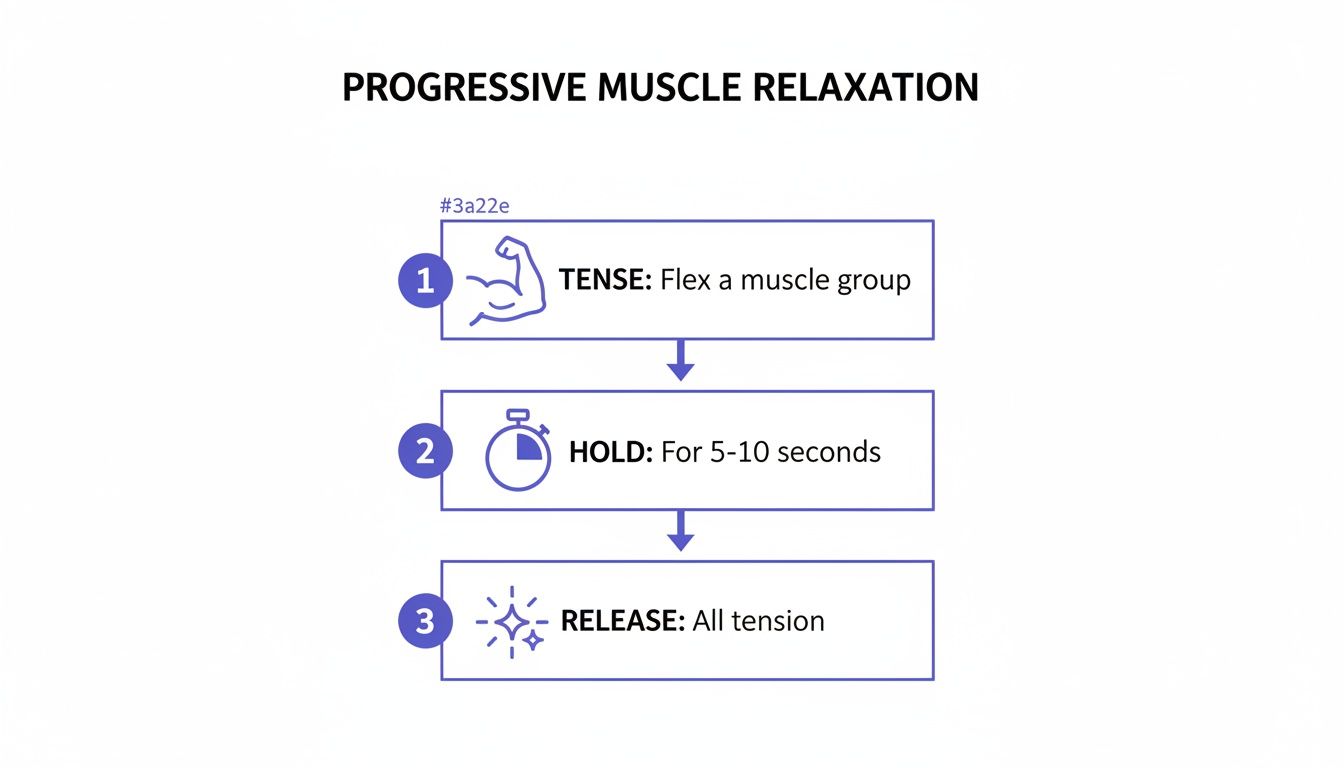
To break the cycle, you have to interrupt that signal. One of the most direct ways to do this is with a technique called Progressive Muscle Relaxation (PMR). It’s a simple but profound practice of systematically tensing, and then releasing, different muscle groups. This behavioral research-backed method helps you calm down physically and mentally.
How Releasing Your Muscles Calms Your Brain
When you intentionally relax your muscles, you’re doing more than just soothing an ache. You’re sending a direct message to your nervous system. This act of release signals to the amygdala—your brain’s threat-detection center—that the danger has passed.
In response, your body begins to shift out of “fight or flight” and into the “rest and digest” state. Your heart rate slows, your breathing deepens, and your brain gets the all-clear. This mind-body conversation is a fundamental part of how we regulate stress.
A simple script can walk you through it. You can do this lying down or sitting comfortably in a chair.
H4: The Steps of Progressive Muscle Relaxation
- Start with your feet and toes. Squeeze the muscles here, curling your toes tightly for about five seconds. Really notice the feeling of tension. Then, release completely. For ten seconds, feel the tension just melt away.
- Move up to your lower legs. Tense your calves, holding that contraction and feeling the tightness. Then, let it all go and notice the difference.
- Continue to your thighs. Squeeze the large muscles in your upper legs. Hold, and then release.
- Work your way up. Systematically repeat this tense-and-release pattern for your stomach, chest, back, hands, arms, shoulders, neck, and face.
Real-World Scenario: A project manager has spent eight hours staring at a spreadsheet. Their neck is stiff, their eyes are strained, and their mind is buzzing with anxiety. Lying in bed, they just can’t seem to shut off their brain. They decide to try PMR. Starting with their feet, they work their way up, tensing and releasing each muscle group. By the time they get to their jaw and shoulders—the places they hold the most tension—they feel a wave of relief. The physical release quiets the mental chatter, and they finally drift off to sleep.
You can amplify the effects by pairing PMR with other physical habits. For example, adding some early morning exercise can help regulate stress hormones throughout the day. This makes it much easier to unwind in the evening. Ultimately, learning to release physical tension is one of the most direct, tangible ways to calm your mind.
How to Calm Down by Building Long-Term Resilience
Quick fixes are great for getting through a sudden spike of anxiety. However, learning how to calm down for good is a different game entirely. Lasting calm comes from building sustainable habits that raise your baseline resilience. This isn’t about willpower. It’s about leveraging neuroplasticity—your brain’s incredible ability to rewire itself through small, consistent actions.
True, long-term resilience doesn’t happen by accident. It’s the result of intentionally creating routines that support your nervous system. By weaving small, daily practices into your life, you gradually build a personal ‘Calm Toolkit’. This toolkit starts to work automatically, helping you handle challenges without getting knocked off balance.
Create Your Personal Calm Toolkit for Daily Peace
Your toolkit doesn’t need to be complicated. In fact, it’s better if it’s not. The idea is to gather a few simple, reliable actions you can turn to daily. This makes them as automatic as brushing your teeth.
Try integrating a few of these into your week:
- Short Mindfulness Sessions: Just five to ten minutes a day makes a real difference. This practice trains your prefrontal cortex—the part of your brain handling focus and emotional regulation—making you less reactive to day-to-day stressors.
- Scheduled ‘Worry Time’: It sounds strange, but setting aside a specific 15-minute window to consciously think about your worries can stop them from bleeding into your day. By containing them, you teach your brain there’s a designated time and place for anxiety. This frees up a surprising amount of mental space.
- Intentional Digital Breaks: Constantly checking notifications keeps your nervous system in a low-grade state of alert. Scheduling specific “no-screen” periods, like the first hour of your day, gives your brain a much-needed chance to reset.
A simple physical technique you can add to your toolkit is Progressive Muscle Relaxation. It’s fantastic for winding down in the evening.
This process of tensing and then releasing muscle groups sends powerful calming signals from your body to your brain. This makes it a perfect addition to a pre-sleep routine.
Real-World Scenario: An entrepreneur, recovering from burnout, felt constantly on edge. She decided to build a new routine. She started with a 10-minute guided meditation every morning before touching her phone. In the evening, she set a strict no-screen rule for the 90 minutes before bed and picked up a book instead. Within a few weeks, she noticed a profound shift. Her focus was sharper, her mood was more stable, and she fell asleep much faster. Her brain was slowly learning a new, calmer habit.
Rewiring Your Brain for a Calmer Baseline
These consistent practices do more than just manage stress in the moment. They actively change your brain’s structure and function over time. Each time you meditate or take a digital break, you strengthen the neural pathways associated with calm and focus.
At the same time, you’re weakening the old pathways that lead to automatic stress responses. This process is a core part of many therapeutic approaches. This includes what’s known as limbic system retraining, which aims to recalibrate the brain’s emotional centers.
Over time, your default state begins to shift. Instead of living in a state of high alert, you start from a place of grounded calm. This doesn’t mean you’ll never feel stressed again. It just means you’ll have a stronger foundation, making it far easier to return to center when life throws you a curveball. The goal isn’t to eliminate stress, but to build the resilience to navigate it with grace.
Editor’s Take: What Actually Works to Calm Down Fast
So, what’s the real story on calming down when you feel your nervous system starting to spiral? After years of studying and testing these methods, here’s our honest take on what works, for who, and when.
For those sudden, intense spikes of stress—the kind that hits you right before a presentation or after a tense email—nothing beats an immediate physiological reset. Techniques like the physiological sigh or the 5-4-3-2-1 grounding exercise are unmatched for their speed and simplicity. You can do them anywhere, anytime, without anyone even noticing. They directly intervene in your body’s stress response, signaling to your brain that the immediate threat has passed. Think of them as your first-aid kit.
Who This Advice Is Really For (And Its Limitations)
This guide is designed for busy professionals, students, and anyone who needs to manage in-the-moment overwhelm to regain composure and focus. If you’re wrestling with deadline pressure, performance anxiety, or just the daily chaos of a packed schedule, these strategies are your go-to toolkit.
Important Caveat: For those dealing with chronic anxiety, depression, burnout, or other significant mental health challenges, these techniques are a supportive supplement, but they are not a substitute for professional help. While these tools can help manage symptoms, a qualified therapist or doctor can help you address the root causes. Real, lasting resilience is built by turning these reactive calming practices into a proactive state of being, often with professional guidance.
Ultimately, the goal is to shift from just reacting to stress to proactively building a calmer baseline. Combining immediate relief with long-term habits is the most effective path forward.
Key Takeaways on How to Calm Down
Here are the essential points to remember for finding calm when you need it most.
- Physiological Sigh is Fastest: For immediate relief from intense stress, the double-inhale, long-exhale physiological sigh is a science-backed method to quickly calm your nervous system.
- Grounding Interrupts Anxiety: When your thoughts are spiraling, use the 5-4-3-2-1 method to pull your focus out of your head and into your present environment by engaging your five senses.
- Your Body Can Calm Your Mind: Releasing physical tension through Progressive Muscle Relaxation (PMR) sends a direct signal to your brain that the threat has passed, breaking the stress feedback loop.
- Consistency Builds Resilience: Lasting calm comes from small, daily habits like short mindfulness sessions or digital breaks. These practices rewire your brain over time for a higher baseline of calm.
- These Are Tools, Not Cures: The techniques in this article are for managing stress and are not a substitute for professional care for conditions like anxiety, depression, or burnout.
Disclaimer: This article contains affiliate links. If you make a purchase, we may earn a small commission at no extra cost to you. The content provided is for educational and informational purposes only and is not a substitute for professional medical or psychological advice, diagnosis, or treatment. Always seek the advice of a qualified health provider with any questions you may have.
Frequently Asked Questions About How to Calm Down
When you’re trying to navigate stress and find your footing, questions are bound to come up. Here are some of the most common ones, with practical answers to help you find what works for you.
1. How can I calm down at work without anyone noticing?
The most powerful techniques are often the most discreet. Try Box Breathing: inhale for four counts, hold for four, exhale for four, and hold for four. You can also practice subtle grounding by focusing on the feeling of your feet on the floor. These methods silently regulate your nervous system.
2. What is the fastest way to stop feeling overwhelmed?
The physiological sigh is one of the quickest evidence-backed techniques. A double inhale through the nose followed by a long, slow exhale through the mouth can significantly slow your heart rate in under a minute. It works by offloading carbon dioxide efficiently.
3. How long does it take for these calming techniques to work?
Immediate techniques like the physiological sigh can provide relief in as little as 30 seconds to two minutes. Long-term practices like daily mindfulness build resilience over weeks. Their real power is cumulative, creating a higher baseline of calm over time.
4. Why does deep breathing actually work to calm me down?
Slow, deep breathing, especially with a long exhale, stimulates the vagus nerve. This nerve is a key part of your parasympathetic nervous system (“rest and digest”). Stimulating it sends a direct signal to your brain that you are safe, which slows your heart rate and lowers blood pressure.
5. Can these techniques help with sleep?
Yes, absolutely. Progressive Muscle Relaxation (PMR) is particularly effective before bed. By tensing and releasing muscle groups, you actively discharge physical tension that can keep your mind racing. This physical release signals to your brain that it’s safe to power down.
6. What if I try a technique and it doesn’t work for me?
That’s perfectly normal. Not every technique works for every person. If one method doesn’t click, simply try another. For some, focusing on the breath can increase anxiety. If that’s you, try a grounding technique like the 5-4-3-2-1 method instead. Be patient and find what your nervous system responds to best.
7. How can I build a consistent calming routine?
Start small and use “habit stacking.” Commit to just two minutes of mindful breathing each morning. Attach this new habit to an existing one, such as right after you pour your morning coffee. Consistency is more important than duration, especially when forming a new habit.
8. Is there a difference between calming down from anxiety and from anger?
While both involve an activated nervous system, the mental approach can differ. For anxiety, grounding techniques are excellent for pulling you out of future-oriented worry. For anger, creating physical space or engaging in a brief, intense physical activity (like a few quick push-ups) can help discharge the energy before using a breathing technique.
9. Can listening to music help me calm down?
Yes. Music with a slow tempo (around 60 beats per minute) has been shown in psychological studies to help sync your heart rate to the beat. This can reduce feelings of stress and anxiety. Instrumental music often works best as lyrics can sometimes be distracting.
10. Where can I find more resources for managing stress?
For those interested in a deeper dive, our guide on how to manage chronic stress offers additional strategies and long-term solutions for building resilience.
Explore the Mind Clarity Hub Library
Practical books on focus, digital habits, resilience, and building a calmer mind.
The Power of Clarity
Unlock mental focus, build momentum, and create the life you were meant to live.
View book →
AI & ChatGPT for Beginners
No PhD needed — a 2025 guide to AI, prompts, and productivity without coding.
View book →
Zen in the Digital Jungle
Mindfulness for a chaotic world.
View book →
The Slow Reset
Mindful living in a fast-paced world.
View book →
Perfectly Imperfect
Stop self-criticism, set boundaries, and embrace the real you.
View book →
Reclaiming Silence
A dopamine detox guide to finding peace in a noisy world.
View book →
The Focused Freelancer
Productivity, pricing & positioning for independents in 2025.
View book →
ChatGPT Side Hustle System
Launch your AI-driven online business in 30 days.
View book →
Burnout, Interrupted
A proven path to restore energy and reclaim your life.
View book →
Attention Unleashed
Focus strategies for the distracted mind.
View book →
Side Hustle Launchpad
Your quick-start guide to extra income.
View book →
Digital Clarity
Rewire your brain, escape dopamine traps & regain focus.
View book →
Break the Scroll
Reduce screen time and take back control of your life.
View book →
Climate Compassion
Transform eco-anxiety into empowered action.
View book →
Village Mentality
The power of community for mental wellness.
View book →
Restful Nights
Overcoming sleep anxiety in a 24/7 world.
View book →
Connected Again
Combat loneliness and build meaningful relationships.
View book →
Focus Recharged
Mastering attention and productivity in the digital era.
View book →
Marketing Magic with ChatGPT
AI-powered content, campaigns, and copywriting to grow faster.
View book →
The 6-Figure Creator
Turn knowledge into passive income with books, courses & AI.
View book →
Burnout Breakthrough
Reset your work-life balance and thrive in 2025.
View book →
The Emotionally Intelligent Man
A modern guide to self-awareness and communication.
View book →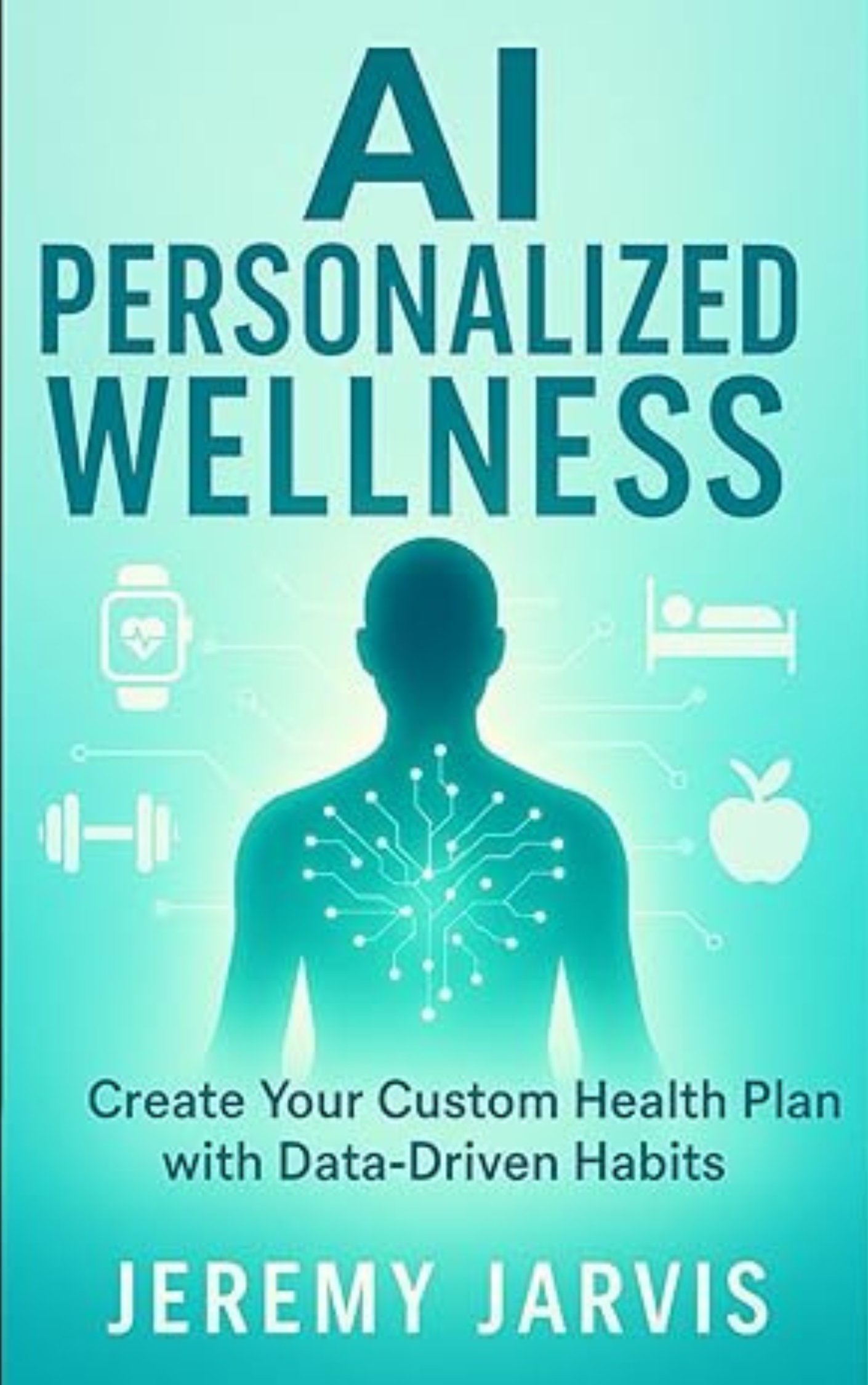
AI Personalized Wellness
Create your custom health plan with data-driven habits.
View book →
Everyday AI Made Easy
Use ChatGPT and smart tools to simplify life.
View book →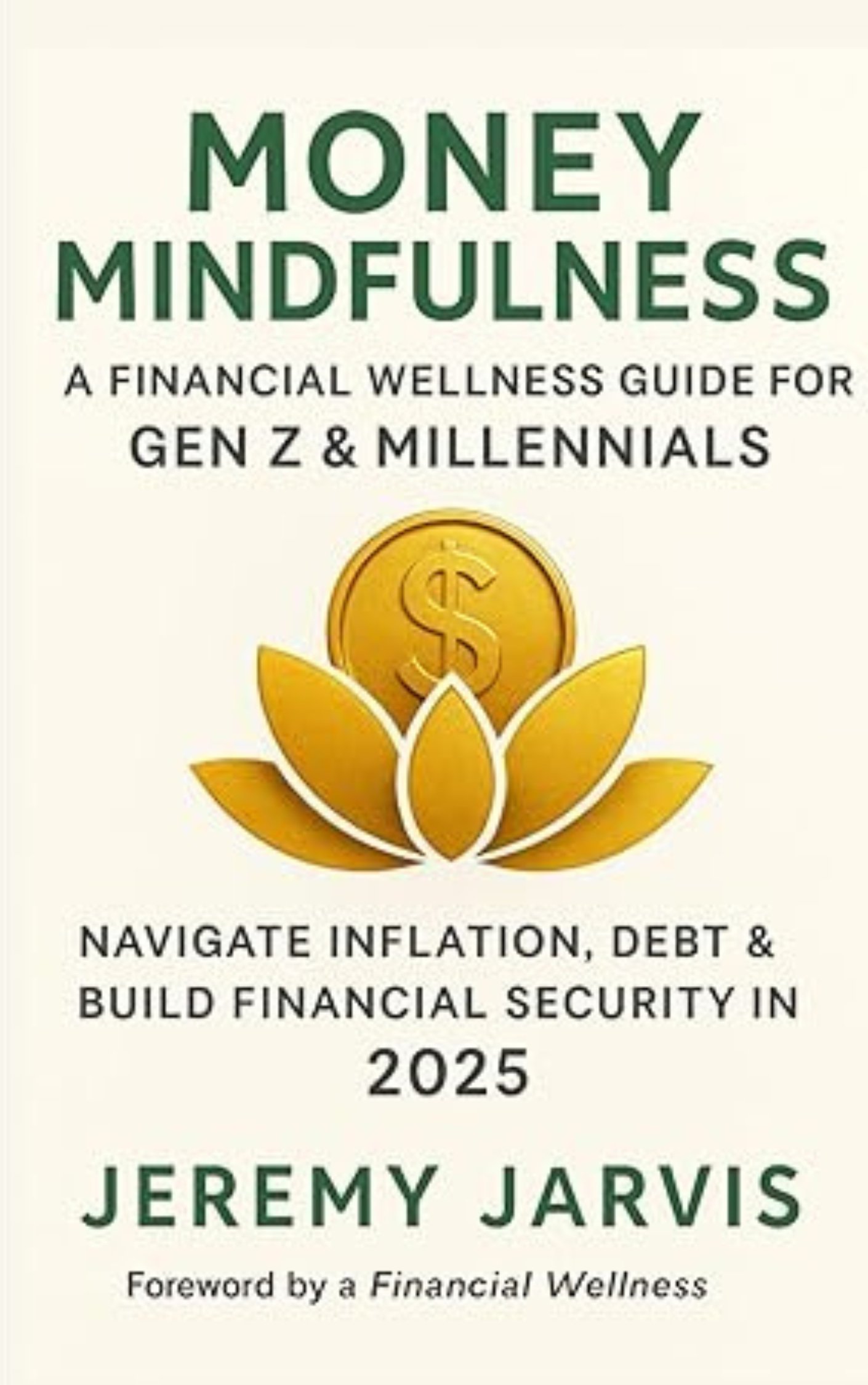
Money Mindfulness
A financial wellness guide for Gen Z & Millennials.
View book →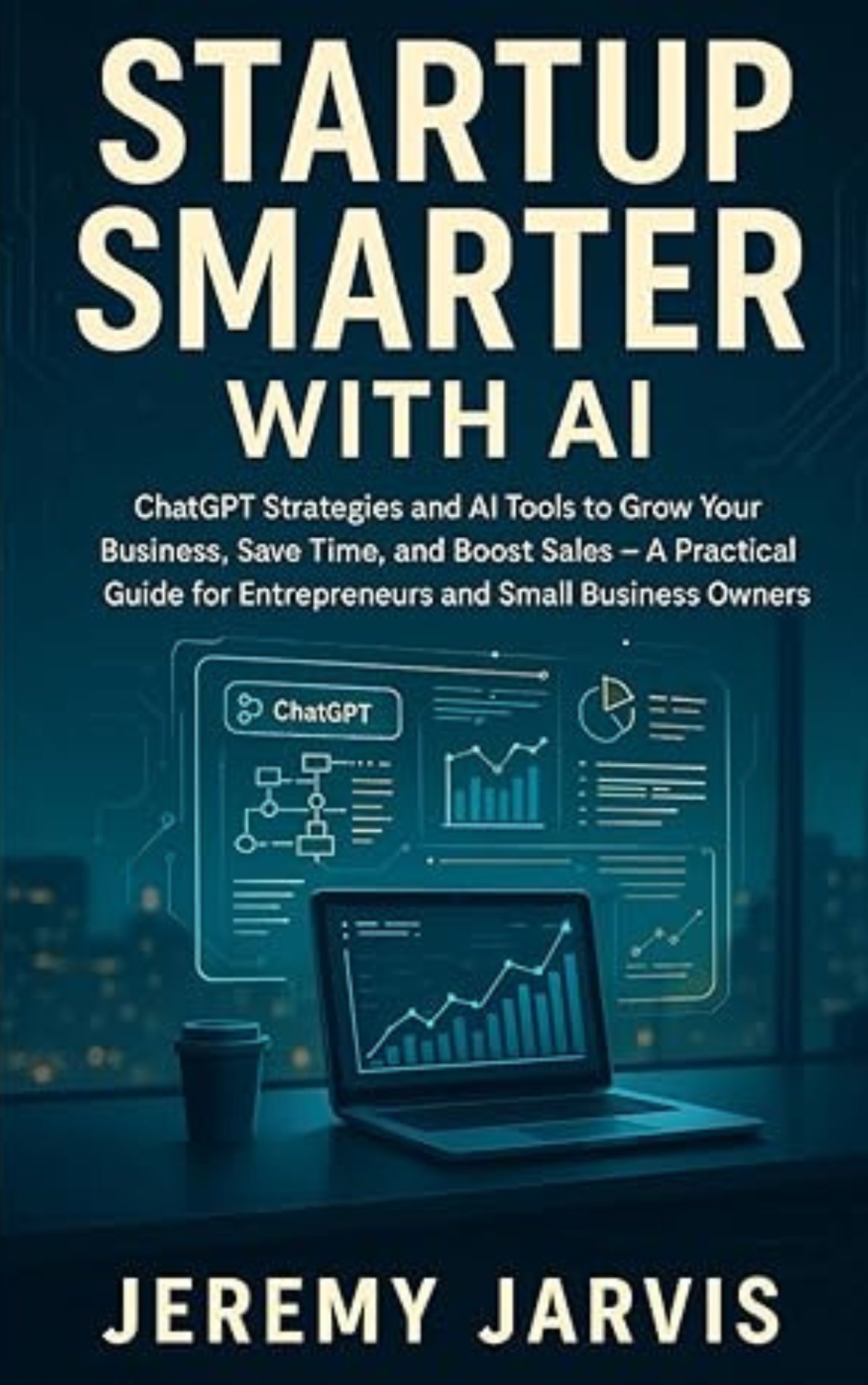
Startup Smarter with AI
ChatGPT strategies and tools to grow your business.
View book →
ChatGPT for Writers & Creators
Unlock AI-powered brainstorming, drafting & editing.
View book →