...

Tag: AI content creation

  • The 12 Best AI Tools for Content Creation in 2026

    The 12 Best AI Tools for Content Creation in 2026

    Affiliate Disclosure: This post may contain affiliate links. If you make a purchase through these links, we may earn a small commission at no extra cost to you. This helps support our work in bringing you valuable content.

    The modern content creation process is demanding. It requires a constant stream of high-quality ideas, sharp writing, and engaging multimedia. This relentless pace can lead to creative blocks and digital burnout. This makes it difficult to maintain both productivity and well-being. From a behavioral science perspective, this cognitive overload drains our executive functions, the mental skills responsible for focus and planning. Artificial intelligence offers a powerful solution. It acts as a creative partner to streamline workflows. AI can help break through mental hurdles and free up your focus for strategic thinking.

    This guide provides a comprehensive, research-informed roundup of the best AI tools for content creation. We move beyond generic feature lists to give you practical, real-world insights into how each platform performs. You will discover how these tools can assist with every stage of your process. This includes initial brainstorming, writing, and advanced editing. Our goal is to help you find the right technology to fit your specific needs. This applies whether you’re a busy professional, a freelance creator, or an entrepreneur.

    Each entry includes a concise review, recommended workflows, and attention-friendly usage tips. We also provide important notes on pricing and privacy. We also provide screenshots and direct links to help you evaluate each option efficiently. Think of this as your definitive resource for integrating AI into your creative toolkit intelligently. For a comprehensive overview of the top solutions, explore this guide on the Best AI Tools for Content Creation. We will explore everything from text generators like Jasper to multimedia suites like Adobe Firefly.

    1. Using OpenAI ChatGPT as one of the Best AI Tools for Content Creation

    OpenAI’s ChatGPT has become a foundational platform for modern content creation because it functions as a flexible thinking partner across almost any workflow. Creators use it to brainstorm blog ideas, generate fast first drafts, and turn rough notes into structured outlines with minimal friction. It’s also useful for summarizing long research documents and extracting key points when you’re short on time. Because the interface is conversational and intuitive, it stays approachable while still being powerful. For anyone who needs a reliable generalist AI that can handle a wide range of text-based tasks without a steep learning curve, ChatGPT often serves as the central hub.

    Key Features & User Experience

    What makes ChatGPT unique is its robust ecosystem and continuous evolution. The free version offers powerful text generation. Paid tiers unlock advanced capabilities like web browsing for real-time information. You also get data analysis with file uploads and DALL-E 3 for image creation. The interface is clean and intuitive, focusing on the chat dialogue. The addition of Custom GPTs allows you to tailor the AI’s behavior. For example, you can create an “SEO Article Outliner” or “Social Media Post Crafter,” saving significant time. If you’re new to the platform, exploring a guide on how to start using ChatGPT for beginners can provide a solid foundation.

    • Mini-Scenario: A content marketer feels stuck brainstorming a new blog series. They open ChatGPT and type, “Act as a content strategist. I need 10 blog post ideas for a SaaS company that sells project management software. Target audience is small business owners.” Within seconds, ChatGPT provides a list of titles, brief outlines, and target keywords. This instantly breaks the creative block and provides a clear path forward.

    Platform Details:

    • Best For: Generalist writing, ideation, outlining, and summarizing.
    • Pricing: Offers a free tier with limitations. Paid plans like ChatGPT Plus provide access to advanced models, web browsing, and additional tools.
    • Limitations: While versatile, it may require specialized companion tools for in-depth SEO analysis or professional video editing. Rate limits apply even on paid plans during peak usage.
    • Website: chat.openai.com

    2. Jasper for Brand-Focused Content Creation

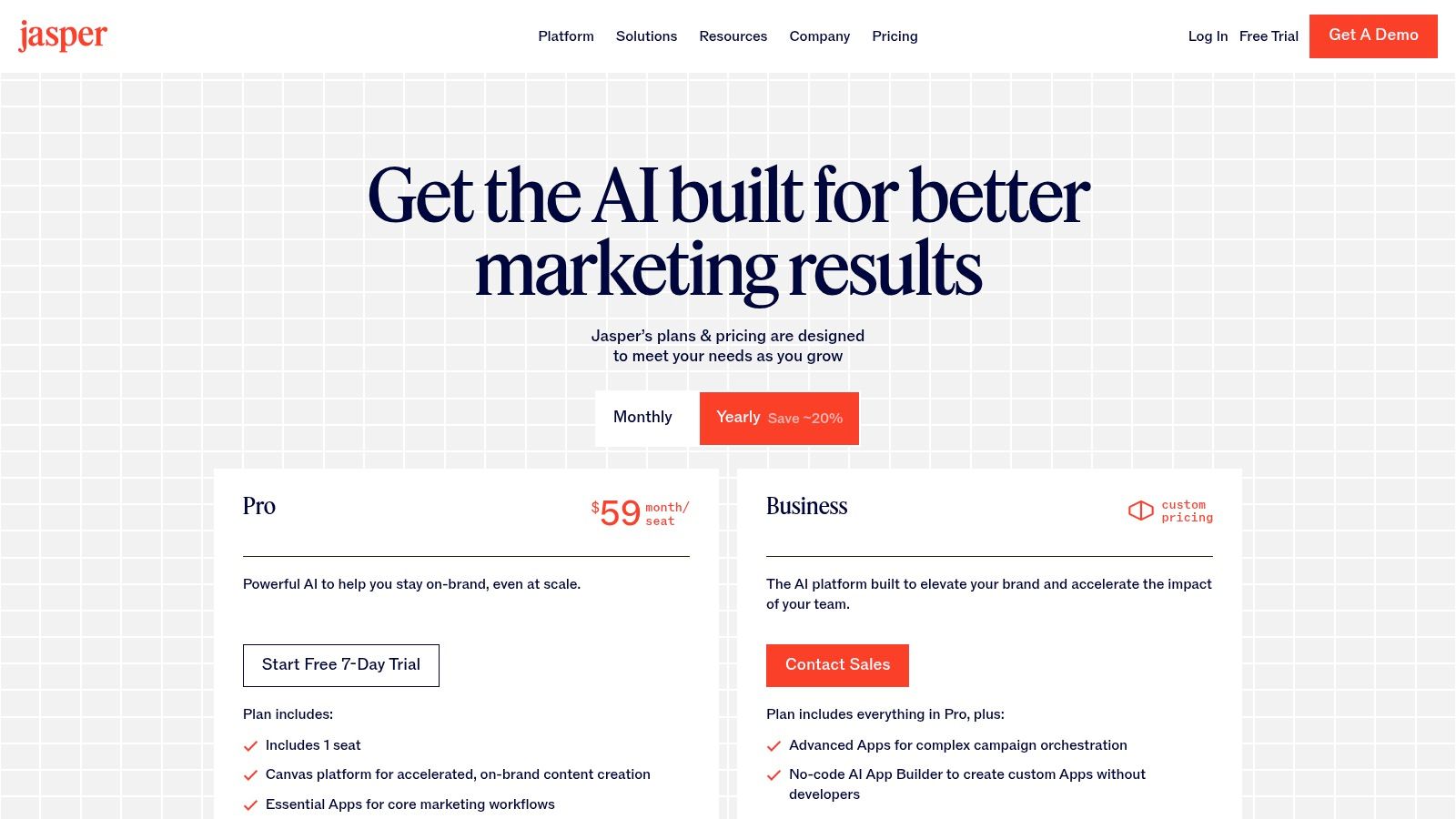
    Jasper is a marketing-focused AI content platform designed for teams. It helps produce high-quality, on-brand creative assets at scale. It excels at generating everything from blog posts and social media copy to ad campaigns. What sets Jasper apart is its powerful emphasis on brand governance. It allows teams to embed their specific tone of voice, style guides, and product knowledge. This ensures every piece of content remains consistent. This makes it one of the best AI tools for content creation for businesses.

    Jasper AI pricing plans screenshot showing the different subscription tiers, features, and monthly costs—best ai tools for content creation comparison for teams and creators.

    Key Features & User Experience

    Jasper’s Brand Voice and knowledge base features are central to its appeal. You can upload style guides, product catalogs, and company facts. This creates a customized AI that understands your brand’s unique context. The platform offers a clean user interface with structured templates. It also has the versatile “Canvas” for long-form content creation. For those seeking efficiency, Jasper’s workflow tools help streamline repetitive tasks. This is a key consideration when comparing it against generalist models. Many writers looking for structured outputs can benefit from a deeper dive into ChatGPT for writers and creators to see the contrast.

    • Mini-Scenario: A company’s marketing team needs to create five different social media posts about a new product launch. Instead of writing each from scratch, they use a Jasper template. They input the product details and select their pre-loaded “Brand Voice.” Jasper generates five unique, on-brand posts for LinkedIn, Twitter, and Facebook, saving the team hours of work.

    Platform Details:

    • Best For: Marketing teams, businesses needing brand consistency, and long-form content generation.
    • Pricing: Offers tiered plans for individuals, teams, and businesses. Advanced features are on paid plans.
    • Limitations: The price point for individuals is higher than generalist AI chatbots. Its most powerful governance features are locked behind the more expensive Business plan.
    • Website: www.jasper.ai/pricing

    3. Canva Magic Studio: A Visual AI Powerhouse

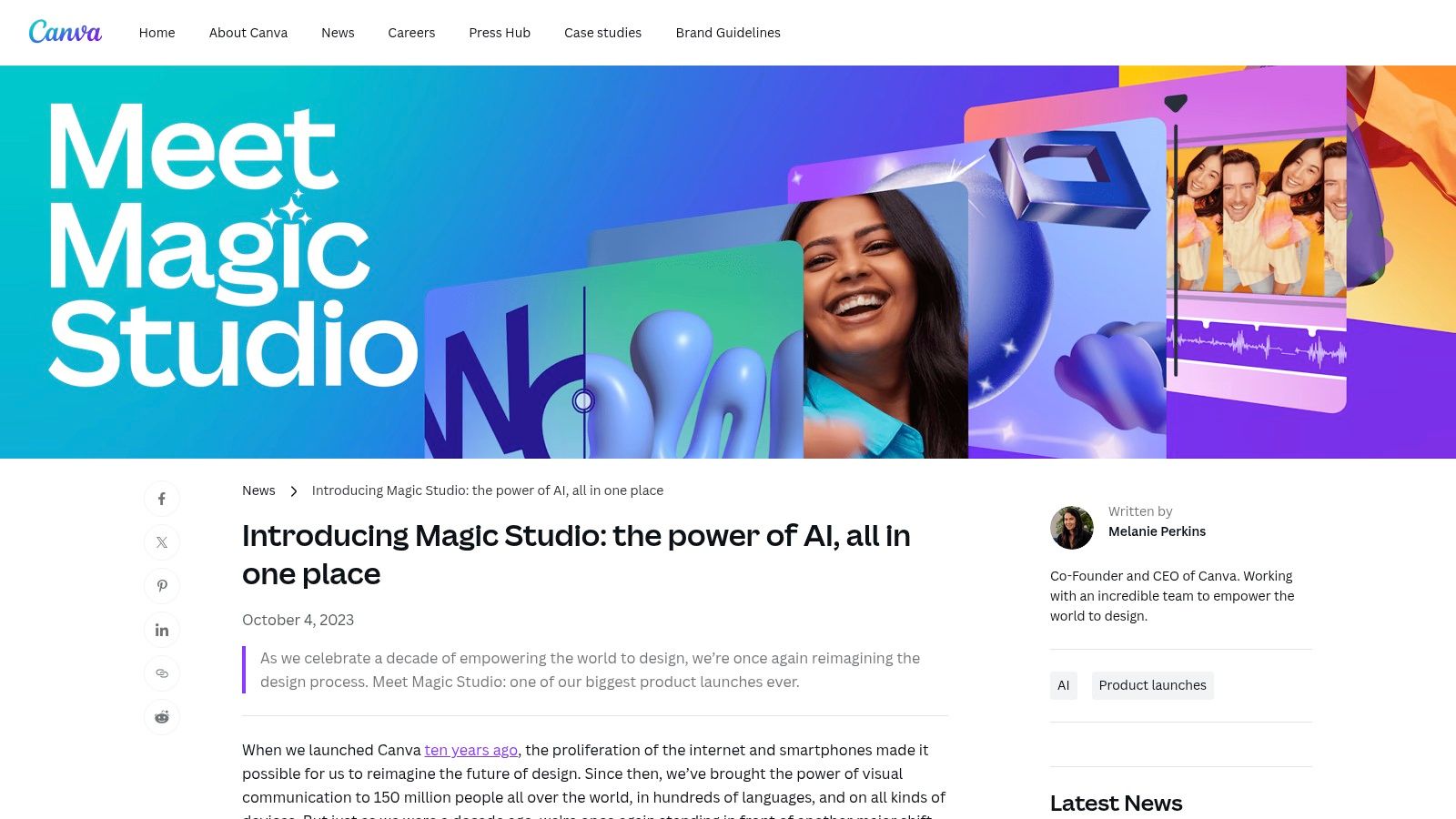
    Canva Magic Studio transforms the popular design platform into a comprehensive AI-powered creation suite. It is ideal for creators who need a seamless workflow from text to final visual asset. It integrates AI writing and design tools directly within the familiar Canva interface. This allows non-designers to produce social media graphics and presentations efficiently. By combining a massive template library with generative AI features, it stands out as an all-in-one solution. It’s one of the best AI tools for content creation for those who value speed and ease of use.

    Canva Magic Studio dashboard showing AI tools for writing, design generation, and image editing—highlighting best ai tools for content creation for social posts, presentations, and marketing graphics.

    Key Features & User Experience

    What makes Magic Studio exceptional is its deep integration across the entire design process. Tools like Magic Write handle the copywriting. Magic Design can generate entire presentations from a text prompt. Its standout feature, Magic Switch, can instantly reformat a design into different document types. For instance, it can turn a presentation into a blog post. Magic Media generates custom images and short videos. An extensive app marketplace adds third-party AI models directly into your workspace. The user experience remains incredibly intuitive, lowering the barrier for high-quality content creation.

    • Mini-Scenario: A small business owner needs to create an Instagram carousel post about a new sale. They open Canva, type “Create a 5-slide Instagram post about our 20% off summer sale,” and Magic Design generates a complete, branded carousel. They use Magic Write to refine the text on each slide and then export it directly, all in under 10 minutes.

    Platform Details:

    • Best For: Social media content, presentations, marketing materials, and short-form video.
    • Pricing: Core AI features are available on the free plan with limits. Canva Pro and Teams plans offer higher usage credits.
    • Limitations: AI features are governed by a credit system which may require monitoring for heavy users. The generative video tools are still evolving.
    • Website: www.canva.com/magic-studio

    4. Adobe Firefly and Creative Cloud for Professionals

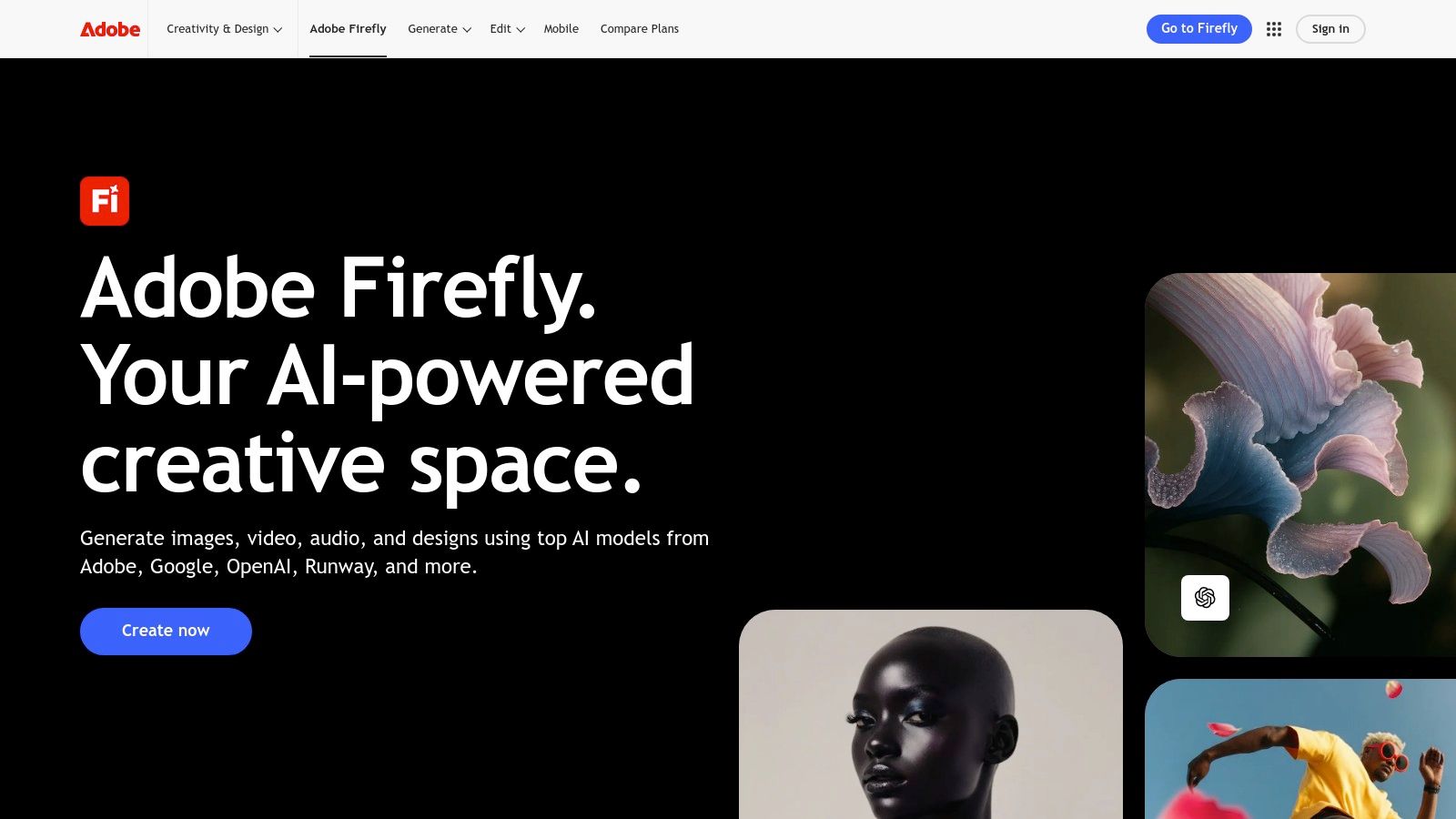
    For creative professionals already in Adobe’s ecosystem, Firefly represents a monumental leap forward. Adobe has woven generative capabilities directly into flagship programs like Photoshop and Illustrator. This allows creators to use AI for tasks like extending images with Generative Fill. They can also create vector graphics from text prompts without ever leaving their primary workspace. This seamless integration makes it one of the best AI tools for content creation for professionals who value workflow efficiency.

    Adobe Firefly and Creative Cloud pricing plans

    Key Features & User Experience

    What makes the Adobe suite unique is its focus on professional-grade, commercially safe output. Firefly was trained on Adobe Stock’s library and openly licensed content. This mitigates many of the copyright concerns associated with other image generators. The system operates on a “generative credits” model. Users get a monthly allowance for AI tasks. The experience is about contextual AI tools appearing exactly where you need them. This could be a “Text to Image” panel in Photoshop or a “Generative Recolor” feature in Illustrator. This keeps the creative process fluid and uninterrupted.

    • Mini-Scenario: A graphic designer is working on a product photo, but the background is too small. Instead of reshooting, they use the “Generative Fill” tool in Photoshop. They select the empty area and let Firefly seamlessly extend the background, matching the lighting and texture perfectly. This saves hours of manual editing.

    Platform Details:

    • Best For: Graphic designers, video editors, and content teams using the Adobe Creative Cloud suite.
    • Pricing: Generative credits are included in most Creative Cloud plans. Standalone Firefly plans are also available.
    • Limitations: The credit system can be confusing and requires monitoring for heavy users. The cost is higher compared to standalone AI tools if you aren’t already a subscriber.
    • Website: https://www.adobe.com/products/firefly

    5. Notion AI for Integrated Workflows

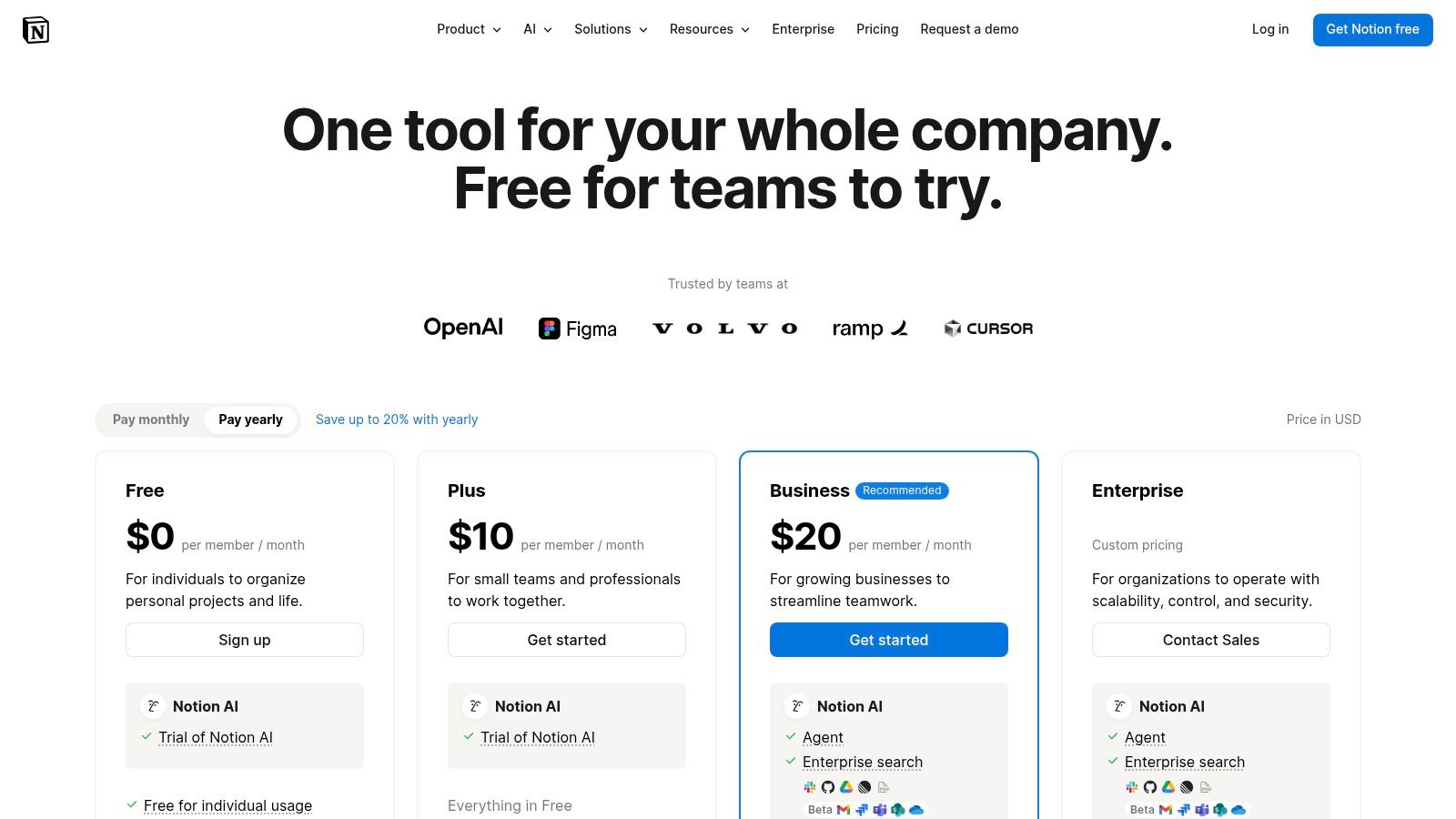
    Notion AI transforms the popular all-in-one workspace into a powerful, integrated content creation environment. It embeds AI directly into your documents, databases, and project boards. This allows you to generate, summarize, and refine content without leaving your workflow. For teams that already rely on Notion for knowledge bases and content calendars, this integration is key. It centralizes ideation, drafting, and organization in a single, collaborative system.

    Notion AI pricing plans

    Key Features & User Experience

    What makes Notion AI stand out is its contextual awareness. The AI operates within your existing pages. This allows it to act on your notes and project data instantly. You can highlight text to summarize it or expand on a bullet point to draft a full paragraph. The user experience is seamless, with AI features accessible via a simple keystroke. This tight integration helps maintain focus and streamlines the process from brainstorming to final draft. To get the most out of it, you can explore guides on how to use AI for writing to build more efficient systems.

    • Mini-Scenario: A project manager finishes a long meeting and has pages of messy notes in a Notion doc. Instead of manually organizing them, she highlights all the text. She then uses the “Summarize” and “Find action items” AI commands. Notion instantly creates a clean summary and a to-do list, which she can drag into her team’s task board.

    Platform Details:

    • Best For: Centralizing team knowledge, drafting structured content, and creating SOPs.
    • Pricing: AI features are available as an add-on to all plans, including the free tier. Paid plans include more advanced capabilities.
    • Limitations: The full suite of AI features is generally tied to higher-tier paid plans. Recent pricing updates have caused some confusion among users.
    • Website: www.notion.com/pricing

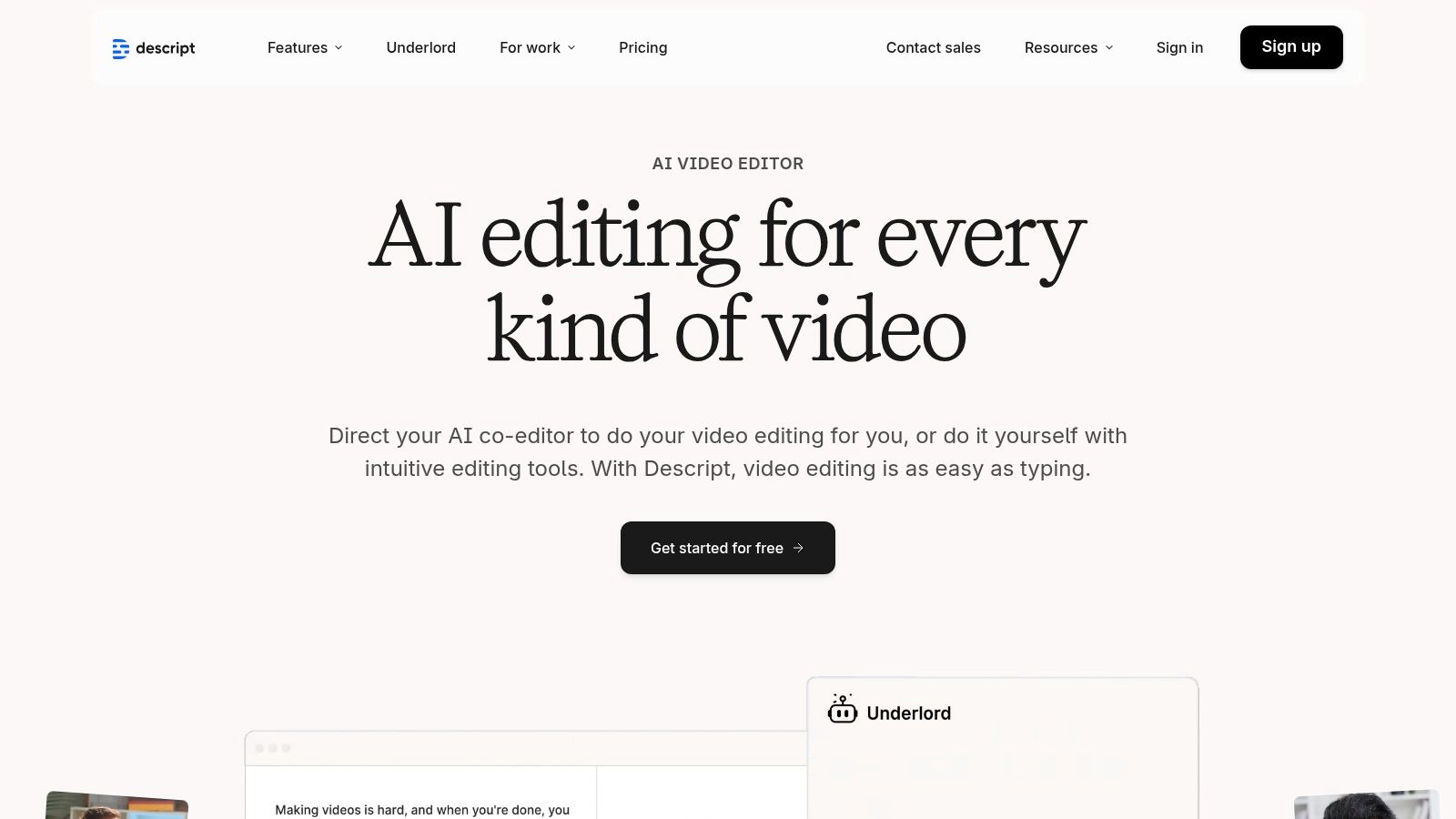
    6. Descript for Streamlined Multimedia Production

    Descript revolutionizes video and podcast production. It transforms it into a process as simple as editing a text document. It is an all-in-one platform where you can record, transcribe, edit, and mix audio and video. You do this by manipulating a script. This script-based workflow is ideal for creators who produce talk-heavy content like interviews or tutorials. It allows them to make complex edits by simply cutting and pasting text. This unique approach solidifies its place as one of the best AI tools for content creation.

    Descript AI video editor

    Key Features & User Experience

    The magic of Descript lies in its AI-powered features that automate tedious editing tasks. Its “Studio Sound” feature can make amateur recordings sound professionally mastered with a single click. The platform automatically detects and removes filler words like “um” and “uh.” For video creators, Descript makes it easy to generate social media clips with animated captions. You can even create an AI clone of your voice to correct misspoken words without re-recording.

    • Mini-Scenario: A podcaster records a 45-minute interview. After uploading the audio to Descript, it’s transcribed in minutes. The podcaster reads the script, deletes a few repetitive sentences, and uses the “Remove filler words” feature. This one-click action removes over 100 “ums” and “ahs,” saving an hour of manual audio editing.

    Platform Details:

    • Best For: Podcasters, YouTubers, and course creators who need an efficient, all-in-one editing workflow.
    • Pricing: A free plan is available for short projects. Paid plans offer more transcription hours and advanced AI features.
    • Limitations: The credit-based system for AI features can be confusing initially. It is less suited for highly cinematic or effects-heavy video editing.
    • Website: https://www.descript.com/

    7. Runway for Cutting-Edge AI Video Creation

    Runway is pioneering the frontier of AI-native video. It is transforming how creators produce cinematic clips and visual assets. It’s best known for its text- and image-to-video generation models. These allow users to create short, high-quality video sequences from simple prompts. This platform stands out by making advanced video AI accessible to a broader audience. For social media managers and marketers, Runway is one of the best AI tools for content creation. It offers a glimpse into the future of video production.

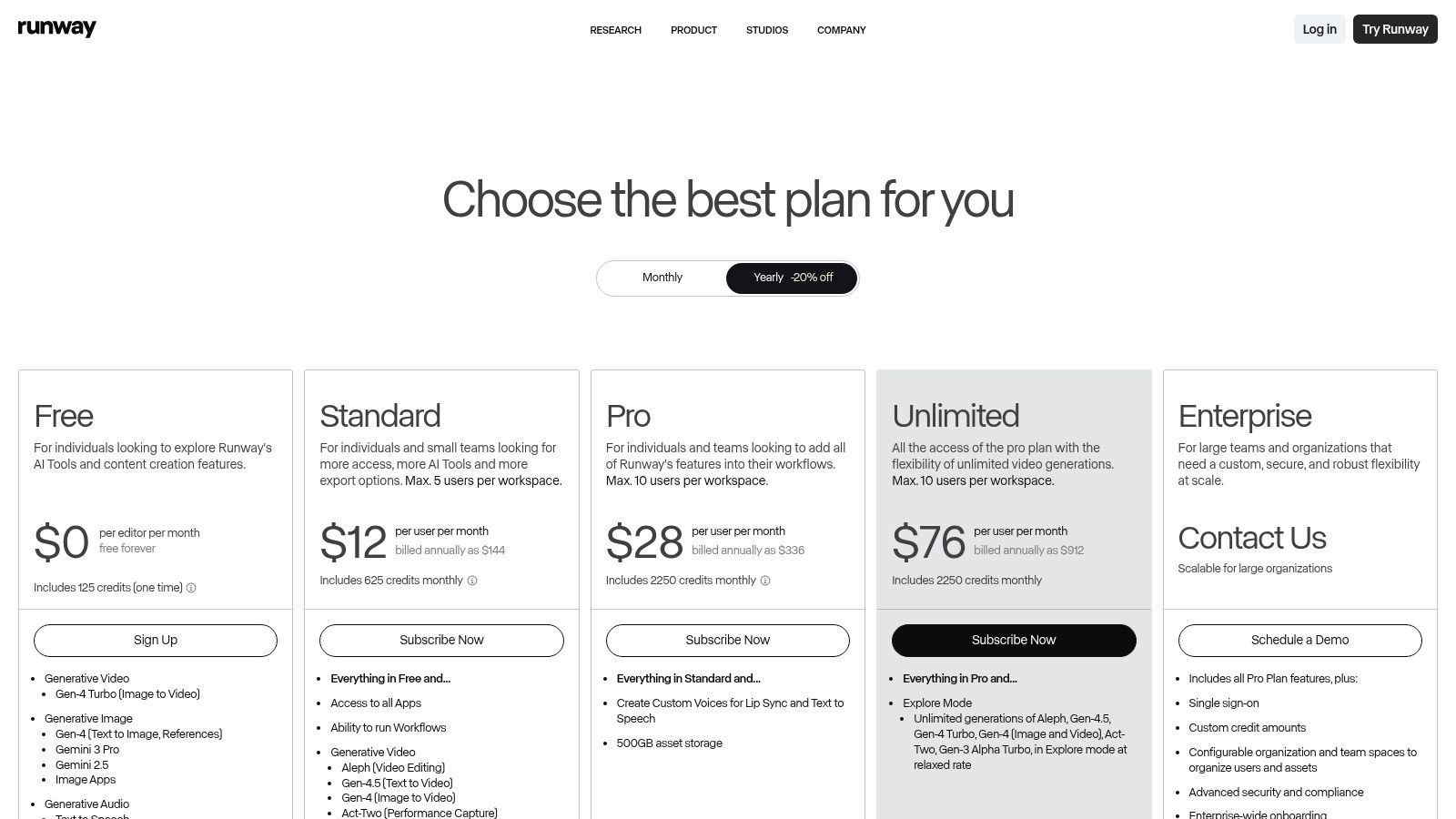
    Runway pricing plans

    Key Features & User Experience

    Runway’s core strength lies in its Gen-4 and subsequent models. These offer remarkable improvements in prompt adherence and visual realism. The platform operates on a credit-based system. It provides a one-time grant of free credits for new users to experiment. Paid plans provide a monthly allotment of credits, enabling more consistent video generation. While the credit calculations can seem complex at first, they provide a clear way to estimate costs. The interface is sleek and focused on the creative process.

    • Mini-Scenario: A musician wants to create a dreamy, abstract music video for their new song but has no budget for a film crew. They use Runway to generate several 4-second clips from prompts like “a bioluminescent forest at night” and “planets made of crystal floating in space.” They then stitch these clips together to create a unique and compelling visual experience.

    Platform Details:

    • Best For: Short-form video creation, conceptual animation, and generating unique visual assets.
    • Pricing: A free tier with a one-time credit grant is available. Standard and Pro plans offer monthly credits and expanded features.
    • Limitations: Heavy usage can become costly due to the credit system. The AI may still struggle with complex logic or maintaining character consistency across clips.
    • Website: runwayml.com/pricing

    8. Copy.ai for Automated Marketing Content

    Copy.ai positions itself as a marketing-first AI platform built for go-to-market teams that need to produce consistent, on-brand content at scale. Rather than functioning as a basic text generator, it emphasizes automated workflows that make output repeatable across campaigns and channels. The platform also offers trainable “Content Agents” that can learn a company’s voice, which helps reduce editing time and keep messaging aligned. For small marketing teams, that combination of speed, structure, and brand consistency makes Copy.ai a strong option among AI tools for content creation.

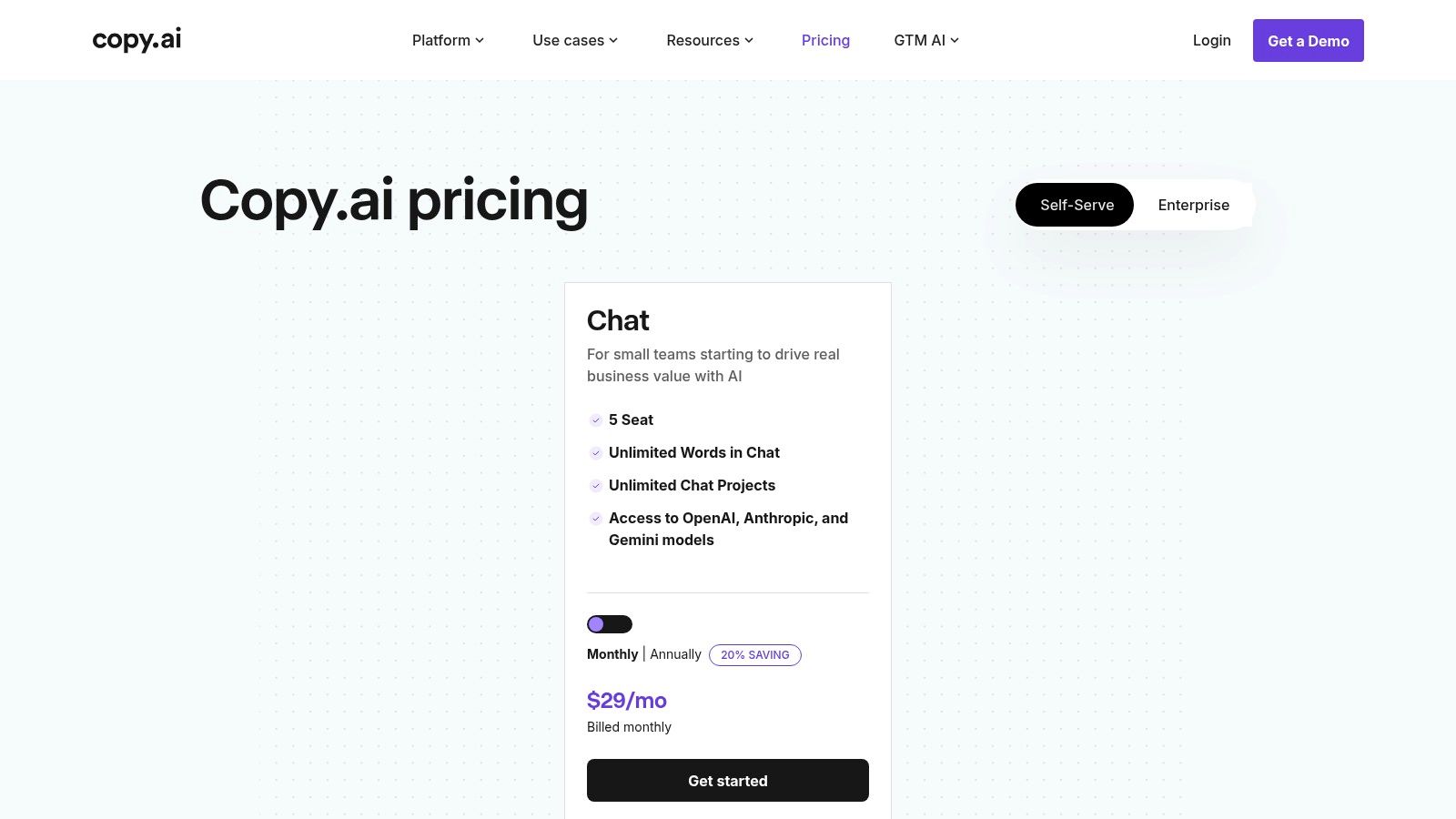
    Copy.ai pricing tiers

    Key Features & User Experience

    What sets Copy.ai apart is its emphasis on operationalizing content creation. The Content Agent Studio allows you to train AI agents on your best-performing content. This ensures future outputs match your established tone. Its chat interface is also model-agnostic. This gives users the flexibility to choose from models by OpenAI, Anthropic, or Google. For more complex tasks, the platform’s workflow builder can automate multi-step processes. The interface is clean and workflow-oriented, guiding users toward scalable content production.

    • Mini-Scenario: An e-commerce brand needs to write product descriptions for 50 new items. Instead of doing it manually, they use a Copy.ai workflow. They upload a spreadsheet with product names and features. The workflow automatically generates an engaging, SEO-friendly description for each item in the brand’s voice, completing the task in minutes instead of days.

    Platform Details:

    • Best For: Marketing teams, sales enablement, and creating on-brand content at scale.
    • Pricing: Offers a free plan with word limits. Paid tiers unlock advanced features like Content Agents and workflow automation.
    • Limitations: The most powerful workflow and agent-training features are locked behind higher-priced plans. The credit system can be complex to manage.
    • Website: www.copy.ai

    9. Grammarly for Polishing and Refining Content

    Grammarly is an essential writing assistant that acts as a final polish for your content. It ensures clarity, correctness, and the right tone. While other tools focus on generating initial drafts, Grammarly excels at refining existing text. It provides real-time suggestions for grammar, style, and punctuation. Its strength lies in its ability to elevate a good draft into a great one. This makes it one of the best AI tools for content creation focused on quality and professionalism.

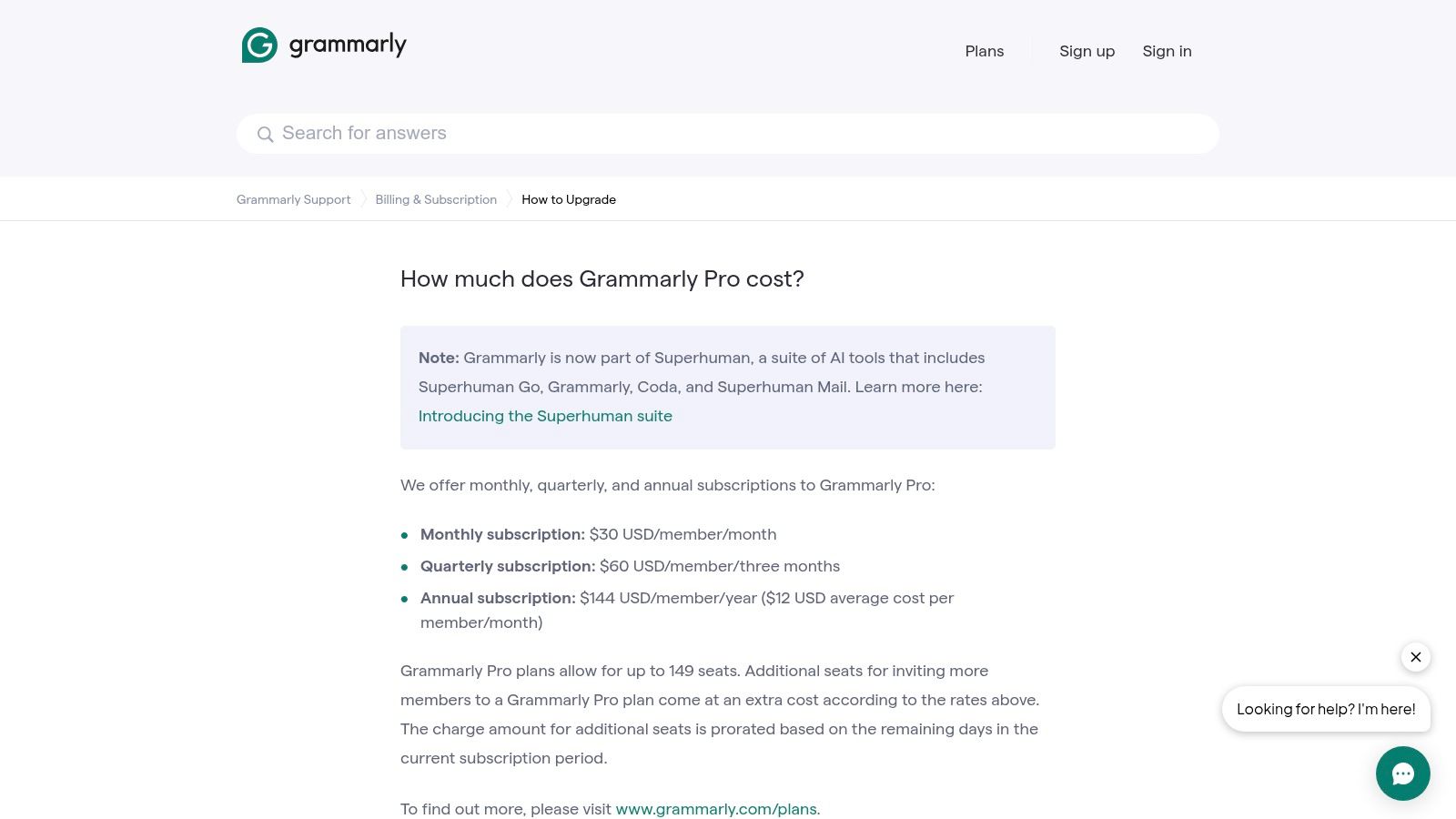
    Grammarly pricing plans

    Key Features & User Experience

    What makes Grammarly indispensable is its seamless integration into a creator’s daily workflow. The browser extensions offer low-friction, always-on assistance, catching errors as you type. Beyond basic grammar, its AI-powered features include tone transformations. It also offers sentence rewrites for improved clarity and conciseness. The user interface is clean and unobtrusive, highlighting suggestions without disrupting your writing flow. You can learn more about how to use AI for writing to complement tools like this.

    • Mini-Scenario: A freelancer has just finished writing an important client proposal. Before sending it, they run it through Grammarly Premium. The tool catches a subtle grammatical error, suggests rephrasing a long sentence for clarity, and confirms the overall tone is “Confident” and “Professional.” This quick check boosts their confidence and improves the final impression.

    Platform Details:

    • Best For: Editing, proofreading, and improving the clarity and tone of existing content.
    • Pricing: Offers a robust free version. Premium and Business plans unlock advanced style, tone, and clarity features.
    • Limitations: Its core value is in refinement, not long-form generation or ideation. Recent branding changes are still being integrated across its products.
    • Website: support.grammarly.com

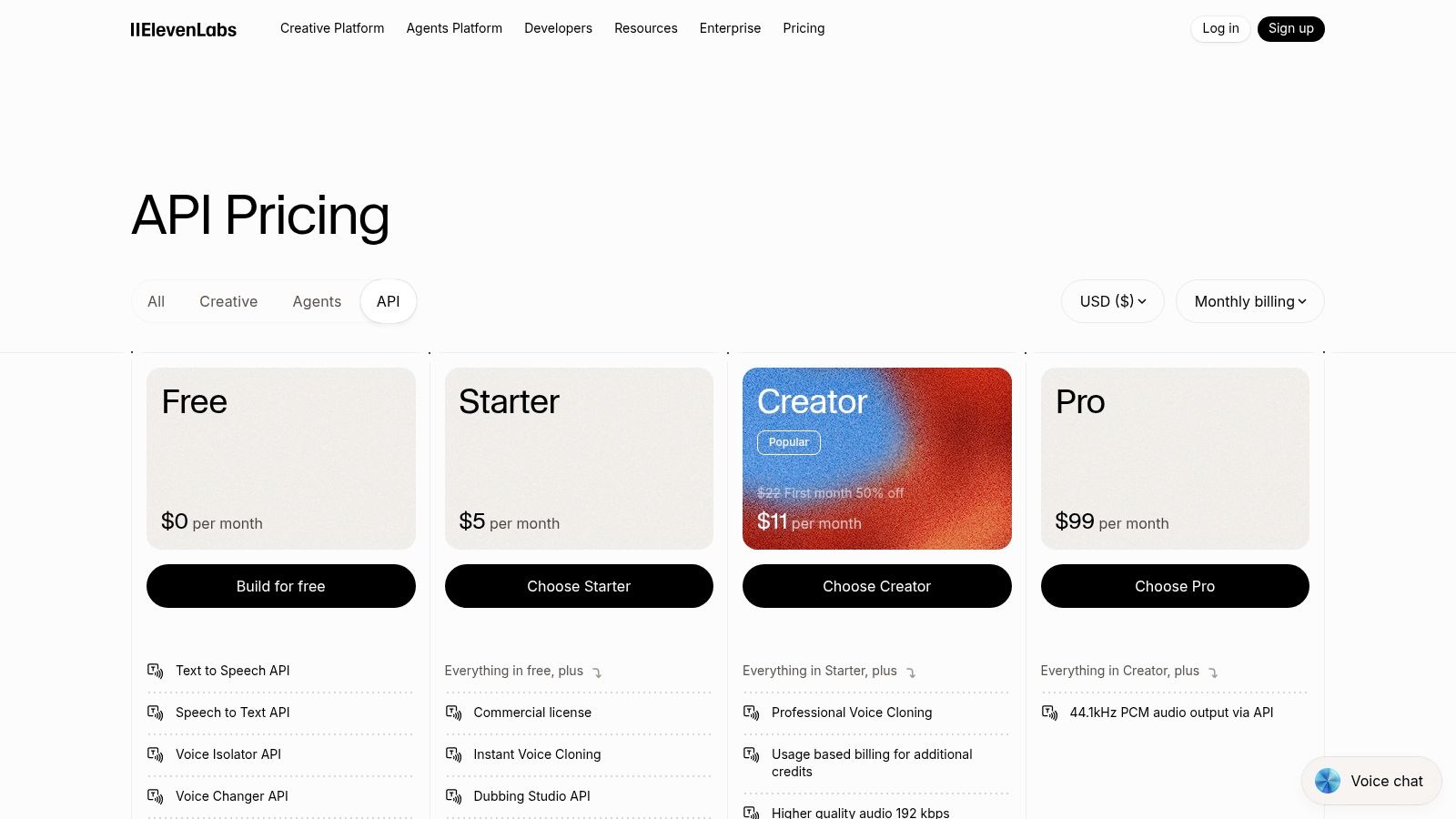
    10. ElevenLabs for Lifelike AI Voice Generation

    ElevenLabs sets the industry standard for AI-driven audio. It transforms text into remarkably natural-sounding speech. It excels at generating high-quality voiceovers for videos and narrating podcasts. Its standout feature is the lifelike quality and emotional nuance of its voices. For anyone producing multimedia content, ElevenLabs is one of the best AI tools for content creation. It adds a layer of polish and accessibility.

    ElevenLabs API pricing

    Key Features & User Experience

    What makes ElevenLabs so powerful is its combination of quality, control, and accessibility. The platform offers a vast library of pre-made voices. Its Professional Voice Cloning and Voice Design tools allow for unique audio branding. Users can fine-tune pitch, speed, and emotional inflection. The interface is clean and straightforward. You can generate and download audio clips in minutes. With robust APIs, it’s built to scale from small projects to enterprise-level workflows.

    • Mini-Scenario: A YouTuber wants to create an English version of their popular tutorial video for a global audience. Instead of hiring a voice actor, they use ElevenLabs’ dubbing feature. They upload their video and the English script. The AI generates a new audio track in a natural-sounding voice, perfectly synced to the original video’s timing.

    Platform Details:

    • Best For: High-quality voiceovers, podcast narration, video dubbing, and creating custom brand voices.
    • Pricing: Offers a free tier with limited characters. Paid plans scale based on character usage, cloning features, and audio quality.
    • Limitations: The credit-based system can be confusing at first. Costs for advanced features may involve separate LLM fees over time.
    • Website: elevenlabs.io

    11. G2 — AI Writing Assistants for Tool Comparison

    G2’s AI Writing Assistants category isn’t a single tool—it’s a marketplace that lets you compare top content-creation platforms using verified user feedback. Rather than relying on marketing claims, it shows how real customers rate features, usability, and overall satisfaction across different options. For creators who feel overwhelmed by the sheer number of AI choices, the category page works like a structured research hub for narrowing down a shortlist. That clarity makes it a smart first stop before spending money on any platform.

    Key Features & User Experience

    What makes G2 uniquely valuable is its reliance on crowdsourced, verified reviews. You can instantly see which tools are rated as “Leaders” or “High Performers.” The platform provides detailed profiles for each tool, including screenshots and pricing overviews. The comparison framework helps you discover specialized tools that might otherwise be missed. For those integrating AI into their broader workflow, exploring various AI tools for productivity can reveal how these assistants fit into a larger ecosystem.

    • Mini-Scenario: The head of a content team has a budget to invest in a new AI writing platform. Instead of scheduling dozens of demos, she starts on G2. She filters the “AI Writing Assistants” category for tools that integrate with her CMS and have high user satisfaction ratings for “ease of use.” This narrows the field from over 100 options to a manageable list of five top contenders.

    Platform Details:

    • Best For: Comparing and shortlisting AI writing tools using verified user reviews.
    • Pricing: Free to browse, compare, and read all user reviews.
    • Limitations: Rankings can change frequently, and newer or niche tools may lack a substantial number of reviews.
    • Website: g2.com/categories/ai-writing-assistant

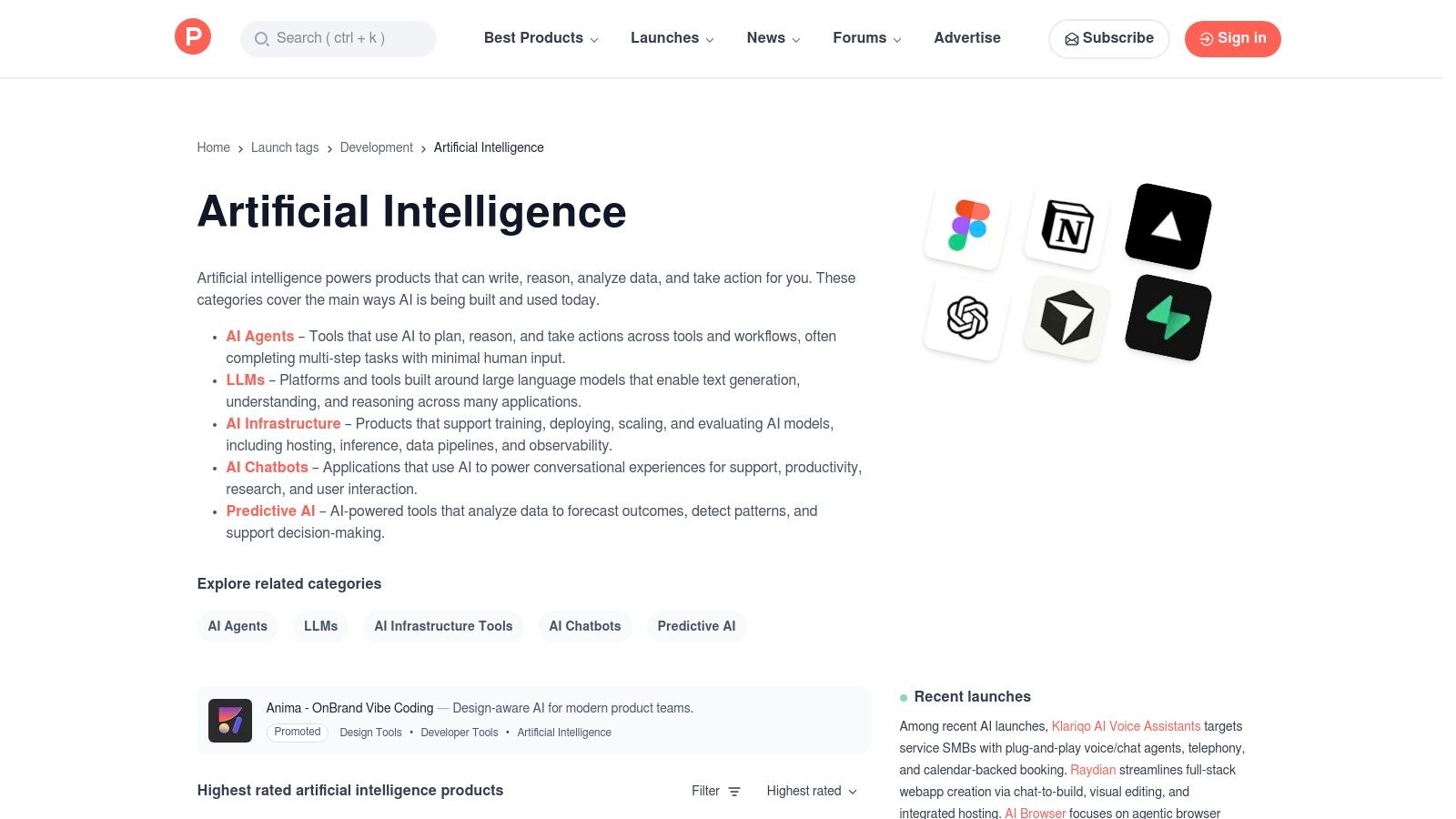
    12. Product Hunt for Discovering New AI Tools

    Product Hunt’s Artificial Intelligence topic is a dynamic discovery platform. It serves as a launchpad where new AI apps and creative tools trend daily. For content creators, it’s an essential resource for finding cutting-edge solutions before they hit the mainstream. This platform excels at providing a real-time view of the market. This makes it an invaluable bookmark for anyone searching for the best AI tools for content creation.

    Product Hunt — Artificial Intelligence topic

    Key Features & User Experience

    What makes Product Hunt unique is its community-driven curation. New tools are submitted daily and voted on by users. The AI topic page is neatly organized with subcategories like Agents, Chatbots, and LLMs. The most valuable feature is the community comments section. It provides instant, unfiltered feedback and use cases from real users. The interface is clean, intuitive, and focused on discovery.

    • Mini-Scenario: An independent creator is always looking for an edge. They spend 15 minutes each morning browsing the “Artificial Intelligence” topic on Product Hunt. One day, they discover a brand-new AI tool that automatically creates animated captions for videos. They adopt it early, and their social media engagement skyrockets before their competitors even know the tool exists.

    Platform Details:

    • Best For: Discovering new and trending AI tools, market research, and community feedback.
    • Pricing: Free to browse and participate in the community.
    • Limitations: Early-stage products can be unstable or buggy. The platform’s signal can be hype-driven, so it’s crucial to vet products carefully.
    • Website: https://www.producthunt.com/topics/artificial-intelligence

    Editor’s Take

    This list covers a wide range of powerful AI tools. However, the key to success is not adopting every single one. It’s about building a small, effective toolkit. For most creators, a “starter stack” of ChatGPT for brainstorming, Canva for visuals, and Grammarly for polishing is a fantastic and affordable starting point. These three tools cover the core content creation workflow without overwhelming you.

    These tools work best as assistants, not replacements. They excel at generating first drafts, overcoming creative blocks, and automating repetitive tasks. They are less effective at high-level strategy, nuanced emotional writing, or fact-checking sensitive information. The biggest limitation is the potential for generic, soulless output if you don’t inject your own personality and expertise. Always be the final editor.

    • Best For: Solopreneurs, small marketing teams, and content creators looking to increase output without sacrificing quality.
    • Caveats: Be mindful of credit-based pricing models, as costs can add up quickly with heavy use. Always verify AI-generated facts and statistics.

    Top 12 AI Content Creation Tools — Quick Comparison

    Here is a quick comparison chart of the best AI tools for content creation.

    OpenAI ChatGPT

    • Core features: Versatile assistant: drafting, custom GPTs, web search, file uploads
    • UX & quality: ★★★★☆ fast, generalist
    • Value / Price: 💰 Free → Plus/Pro for advanced limits
    • Target audience: 👥 Creators & small teams
    • Unique selling point: ✨ Custom GPTs & broad plugin ecosystem

    Jasper

    • Core features: Brand Voice, Canvas long-form, No-code App Builder
    • UX & quality: ★★★★ tailored for marketing
    • Value / Price: 💰 Team/Business pricing tiers
    • Target audience: 👥 Marketing teams & agencies
    • Unique selling point: 🏆 Brand governance at scale

    Canva Magic Studio

    • Core features: Magic Write/Design/Media, templates, text→image/video
    • UX & quality: ★★★★☆ very low learning curve
    • Value / Price: 💰 Freemium + credited features
    • Target audience: 👥 Non-designers & social creators
    • Unique selling point: ✨ End-to-end easy design + huge asset library

    Adobe Firefly & CC

    • Core features: Generative across Photoshop/Premiere/Express, commercial-safe models
    • UX & quality: ★★★★ pro-grade depth
    • Value / Price: 💰 Creative Cloud + generative credits
    • Target audience: 👥 Professional creators & studios
    • Unique selling point: 🏆 Deep pro workflow integration

    Notion AI

    • Core features: AI drafting, summarization inside docs & databases
    • UX & quality: ★★★★ central knowledge UX
    • Value / Price: 💰 Freemium → Business/Enterprise for full AI
    • Target audience: 👥 Teams needing SOPs & KBs
    • Unique selling point: ✨ Docs + structured data + AI in one place

    Descript

    • Core features: Transcript-first video/podcast editing, Studio Sound, overdub
    • UX & quality: ★★★★ speeds editing workflow
    • Value / Price: 💰 Tiered plans + media-hour credits
    • Target audience: 👥 Podcasters & talk-video creators
    • Unique selling point: 🏆 Text-based editing that accelerates production

    Runway

    • Core features: Gen‑4 text/image→video, editing tools, credit system
    • UX & quality: ★★★★ capable but resource‑heavy
    • Value / Price: 💰 Credit-based; free trial credits
    • Target audience: 👥 Short cinematic & experimental creators
    • Unique selling point: ✨ Consumer-accessible text-to-video leader

    Copy.ai

    • Core features: Agent Studio, model-agnostic chat, automation workflows
    • UX & quality: ★★★ fast on‑brand drafts
    • Value / Price: 💰 Tiered; advanced agents on higher plans
    • Target audience: 👥 Small GTM teams & marketers
    • Unique selling point: ✨ Repeatable on‑brand automation workflows

    Grammarly

    • Core features: Real-time grammar/style, tone transforms, integrations
    • UX & quality: ★★★★ polish-focused clarity
    • Value / Price: 💰 Freemium → Pro / Team plans
    • Target audience: 👥 Writers, professionals, teams
    • Unique selling point: 🏆 Industry standard for clarity & tone

    ElevenLabs

    • Core features: High‑fidelity TTS, cloning, dubbing, APIs
    • UX & quality: ★★★★★ industry-leading naturalness
    • Value / Price: 💰 Per-minute + tiered plans
    • Target audience: 👥 Producers needing narration & multilingual audio
    • Unique selling point: 🏆 Best-in-class natural voices & language coverage

    G2 — AI Writing Assistants

    • Core features: Reviews, ratings, leader badges, filters
    • UX & quality: ★★★★ user-driven trust signals
    • Value / Price: 💰 Free to browse
    • Target audience: 👥 Buyers shortlisting tools
    • Unique selling point: ✨ Verified-buyer reviews & comparison filters

    Product Hunt — AI topic

    • Core features: Launches, demos, community comments, filters
    • UX & quality: ★★★★ great for discovery
    • Value / Price: 💰 Free discovery platform
    • Target audience: 👥 Early adopters, builders, scouts
    • Unique selling point: ✨ Spot new AI products & community feedback early

    Key Takeaways

    • AI as an Assistant: The best AI tools for content creation act as creative partners. They help with brainstorming, drafting, and automating tedious tasks, freeing you up for high-level strategy.
    • No Single “Best” Tool: Your ideal toolkit depends on your primary content format (text, video, design) and existing workflow. A writer’s best tools differ from a video editor’s.
    • Start with a Core Stack: For most creators, a combination like ChatGPT (ideation), Canva (visuals), and Grammarly (polishing) provides a powerful and affordable foundation.
    • Brand Consistency is Key: For businesses, tools like Jasper and Copy.ai are invaluable. They can learn your brand voice and ensure all AI-generated content remains consistent.
    • Human-in-the-Loop is Essential: Never publish raw AI output. Always review, edit, and inject your own expertise and personality to ensure quality, accuracy, and authenticity.
    • Future is Multimedia: Tools like Runway (video) and ElevenLabs (audio) are pioneering the next wave of content creation, making high-quality multimedia production more accessible than ever.

    Disclaimer

    This article is for educational purposes only and is not a substitute for professional advice. The content provided is based on research and user experiences with the tools mentioned. This post may contain affiliate links, which means we may earn a commission if you make a purchase through our links, at no additional cost to you. The presence of these tools in this article does not constitute a formal endorsement, and users should perform their own due diligence before subscribing to any service.

    Frequently Asked Questions (FAQ)

    1. What are the best AI tools for content creation for beginners?

    For beginners, the best combination is typically OpenAI ChatGPT for brainstorming and drafting, Canva Magic Studio for easy visual design, and Grammarly for polishing text. These tools have user-friendly interfaces and robust free versions to get started.

    2. Can AI completely replace human content creators?

    No, AI is best used as an assistant or a co-pilot. While it excels at generating drafts and automating tasks, it lacks the critical thinking, emotional nuance, and strategic insight of a human creator. The “human-in-the-loop” approach, where a person guides and edits the AI’s output, produces the best results.

    3. Are AI-generated images safe to use commercially?

    It depends on the tool. Adobe Firefly is trained on Adobe Stock and licensed content, making it designed to be commercially safe. Other tools may be trained on data with unclear copyrights, posing a potential risk. Always check the terms of service for any AI tool before using its output for commercial purposes.

    4. How do I maintain my brand’s unique voice when using AI?

    Tools like Jasper and Copy.ai are specifically designed for this. They allow you to create a “Brand Voice” by uploading your style guides, existing content, and product information. The AI then learns to write in your specific tone and style, ensuring consistency.

    5. What is the most affordable way to start using AI for content?

    Start with the free tiers of powerful tools. ChatGPT, Canva, Descript, and Grammarly all offer free versions that are highly capable. This allows you to build a functional AI-assisted workflow without any initial financial investment.

    6. Are there AI tools specifically for video creation?

    Yes, absolutely. Runway is a leader in generating video from text prompts. Descript is excellent for editing dialogue-heavy videos by manipulating a transcript. Tools like Canva and Adobe also have integrated AI video features for social media clips and simple edits. For more, check out these Top 12 Best AI Video Creation Tools.

    7. How do I choose the right AI tool for my needs?

    Consider your primary content format (writing, design, video), your budget, and how a tool will fit into your existing workflow. Use platforms like G2 and Product Hunt to read user reviews and compare features before committing to a paid subscription.

    8. What is the difference between a generalist tool like ChatGPT and a specialist tool like Descript?

    A generalist tool like ChatGPT can perform a wide range of text-based tasks, from writing to coding. A specialist tool like Descript is highly focused on one area—in this case, making audio and video editing faster and easier. Often, an effective workflow uses both.

    9. Can these AI tools help with SEO?

    Yes, many of the best AI tools for content creation can assist with SEO. They can brainstorm keywords, generate blog post outlines based on search intent, write meta descriptions, and even check for on-page SEO elements. However, they should be used with a dedicated SEO tool for in-depth analysis.

    10. Do I need to disclose that my content was created with AI?

    Ethical guidelines are still evolving, but transparency is always a good practice. While not always legally required, disclosing AI assistance can build trust with your audience. Some platforms and search engines are also beginning to favor content that clearly distinguishes between human and AI contributions.

  • How to Use AI for Writing Without Losing Your Voice

    How to Use AI for Writing Without Losing Your Voice

    How to Use AI for Writing Without Losing Your Voice

    Jeremy Jarvis — Mind Clarity Hub founder
    Mind Clarity Hub • Research-aware focus & digital wellness

    Think of AI not as an author, but as a strategic partner. It’s a tool to help you brainstorm ideas, structure outlines, draft messy first versions, and polish your final work. The real magic happens when you give it clear, specific instructions (prompts) and then heavily edit the output to add your own voice, stories, and critical insights.

    That’s how you make sure the final piece is authentically yours.


    Disclosure: This article may contain affiliate links. If you make a purchase through these links, we may earn a small commission at no extra cost to you. This helps support our work but does not influence our content.


    Beyond the Blank Page: How AI Can Augment Your Writing

    We all know that feeling—staring at a blank page, the cursor blinking, while your brain feels completely overloaded. What if you could get a powerful head start without sacrificing quality or your unique voice?

    This guide is about using AI for writing not as a replacement, but as a collaborator to amplify your own creativity.

    This approach is really about reclaiming your focus. From a psychological perspective, when our brains face ambiguity, like an empty document, it can trigger a low-grade stress response that makes it hard to even start. Using AI to generate a rough outline or a few initial paragraphs offloads that initial cognitive burden. It helps you bypass the mental friction and jump straight into the more creative work of refining and shaping the content.

    Real-World Example: Imagine you’re a marketer tasked with writing a blog post on “The Future of Digital Advertising.” The topic is so broad you don’t know where to begin. Instead of struggling, you ask an AI to generate three potential outlines. This simple step transforms an intimidating task into a manageable choice, clearing the mental fog and allowing you to start writing immediately.

    How to use AI for writing: a person brainstorming headline ideas on a laptop while writing notes in a notebook at a sunny desk.

    A Practical Framework for AI-Assisted Writing

    Let’s cut through the hype and get practical. This isn’t about letting a robot write for you; it’s about turning a daunting task into a more streamlined, creative process.

    There’s a reason the global AI writing assistant market was valued at €42 billion in 2023 and is still growing. Professionals are seeing real results, with studies showing that tools like ChatGPT can help draft content up to 40% faster.

    Instead of seeing AI as the writer, think of it as an intelligent assistant that handles the preliminary legwork. This frees you up for higher-level thinking. Here’s what that partnership looks like in practice:

    • Brainstorming Ideas: Use AI to generate blog post titles, explore topic clusters, or find fresh angles on a familiar subject.
    • Structuring Outlines: Ask the AI to create a logical flow for your article, complete with headings and subheadings you can tweak.
    • Drafting Content: Generate initial paragraphs or sections to break through writer’s block and build momentum.
    • Refining Your Work: Use AI to check grammar, improve sentence structure, or rephrase ideas for better clarity.

    The goal is to shift from being the sole originator of every word to becoming the editor-in-chief of your content. You set the strategy, provide the core insights, and make the final creative decisions.

    This collaborative method is the key to making AI work for you. If you’re just starting to explore this synergy, understanding how to apply these concepts in daily tasks is crucial. You can check out our guide on how everyday AI is made easy to see more practical applications.

    By adopting this mindset, you can use AI to augment your skills and produce better content, faster.

    Choosing Your AI Co-Pilot: Finding the Right Tool for Your Writing Needs

    Not all AI tools are created equal. The sheer number of options can feel overwhelming, but finding the right one really boils down to your specific goals and how you already work.

    Are you a marketer trying to generate blog outlines and social media copy at lightning speed? Or are you a student who needs to polish a research paper for clarity and grammar? Your answer immediately points you toward different kinds of AI assistants.

    Differentiating AI Writing Assistants

    The market is flooded with tools, so it helps to break them down into a few key types. Understanding these distinctions is the first step to finding something that slots into your workflow seamlessly, rather than forcing you to learn a clunky new process.

    • All-in-One Platforms: Think of tools like Jasper or Koala AI as content creation command centers. They offer templates for everything from blog posts to ad copy and often include built-in SEO features. They’re fantastic if you need to produce different kinds of content at scale.
    • Versatile Chatbots: General-purpose models like ChatGPT and Google Gemini are the Swiss Army knives of AI. They can brainstorm, draft, summarize, and rewrite content on almost any topic. Their strength is flexibility, but they demand more skill in crafting prompts to get exactly what you want.
    • Specialized Editors: Assistants like Grammarly or WORDVICE.AI focus on refining what you’ve already written. They go far beyond basic spell-checking to offer sharp suggestions on tone, clarity, style, and conciseness. These are indispensable for that final polishing stage.

    The right tool shouldn’t add friction to your process; it should reduce it. The goal is to find an AI co-pilot that helps you get into a state of flow, not one that constantly pulls you out of it with a confusing interface or irrelevant features.

    A writer who gets easily distracted, for instance, might prefer a minimalist interface, while a marketing manager juggling multiple campaigns benefits from a feature-rich dashboard. To see how different options stack up, it’s worth exploring a comprehensive list of essential AI writing tools.

    Comparing Popular AI Writing Tools

    To give you a clearer picture, here’s a quick comparison of some leading AI writing assistants based on their best use cases and key features. This should help you pinpoint which category best aligns with your day-to-day tasks.

    AI ToolBest ForKey FeaturesIdeal User
    JasperHigh-volume content marketingBrand Voice, campaign templates, SEO integrationMarketing teams, agencies
    ChatGPT (GPT-4)Brainstorming & versatile draftingAdvanced reasoning, code generation, flexibilityWriters, developers, students
    GrammarlyPolishing & professional editingTone detection, style suggestions, plagiarism checkProfessionals, academics, editors
    Koala AISEO-optimized article generationReal-time data, SERP analysis, one-click articlesAffiliate marketers, SEO specialists
    Google GeminiResearch synthesis & multimodal inputGoogle Workspace integration, image analysisResearchers, business users
    WORDVICE.AIAcademic & technical editingStyle-specific suggestions, reference checksStudents, researchers, scientists

    Ultimately, the “best” tool is the one that feels like a natural extension of your own thinking and helps you produce better work, faster.

    Matching the Tool to the Task

    Let’s ground this in a few real-world scenarios.

    Scenario 1: The Freelance Writer. A freelance writer needs to create five blog outlines for different clients by the end of the day. A versatile chatbot like ChatGPT is perfect here. They can fire off prompts and quickly iterate to generate structured outlines for each topic without getting bogged down.

    Scenario 2: The PhD Student. A student is finalizing their thesis. They’ve already done the heavy lifting of research and writing, but the document needs to be flawless. A specialized editor like Grammarly is their best bet. It will help them catch subtle grammatical errors and improve sentence flow without touching their core arguments.

    You can explore more tools tailored to specific jobs in our guide to the best AI tools for productivity.

    Scenario 3: The Small Business Owner. A small business owner handles their own marketing. An all-in-one platform is a lifesaver. It lets them draft a blog post, generate social media captions from it, and write a promotional email—all from a single dashboard.

    Each tool serves a distinct purpose. Knowing yours is the key.

    Mastering the Art of the Prompt for Better AI Writing

    The quality of your AI output is a direct mirror of your instructions. If you feed it vague, one-sentence prompts, you’ll get generic, robotic responses that are frankly useless. To get real value from these tools, you have to get good at crafting prompts.

    Think of it like this: asking an AI to “write about productivity” is like telling a brilliant but inexperienced assistant to “get me a coffee.” You’ll probably get a coffee, but it won’t be the double-shot oat milk latte you actually wanted. Specificity is everything.

    This isn’t just about better outputs; it’s about making your own job easier. Behavioral research shows our brains perform better with clear constraints. When you give the AI a solid framework, you’re also giving your own mind a clearer target to evaluate, which makes the editing process much faster and more focused.

    The C.R.A.F.T. Method for Better Prompts

    To move past basic commands, you need a system. I use the C.R.A.F.T. method—a simple framework that gives the AI all the details it needs to produce something genuinely helpful.

    • C – Context: Give it the background. What does the AI need to know to understand the bigger picture? This is the “why” behind your request.
    • R – Role: Assign the AI a persona. Do you need a witty marketing expert, a compassionate career coach, or a formal academic researcher? Giving it a role primes its entire response style.
    • A – Action: Be painfully specific about the command. What do you want it to do? Use strong verbs like “write,” “summarize,” “brainstorm,” “compare,” or “create.”
    • F – Format: Tell it exactly how you want the output structured. A bulleted list? A three-paragraph email? A markdown table? Don’t make it guess.
    • T – Tone: Define the voice. Should the writing be professional, casual, empathetic, witty, authoritative, or urgent?

    Think of a prompt not as a question, but as a project brief for your AI assistant. The more detail in the brief, the less revision you’ll have to do later.

    From Vague to Valuable: A C.R.A.F.T. Example

    Let’s put the C.R.A.F.T. method into practice. A lot of writers start with a weak prompt that gets them nowhere fast.

    Weak Prompt: Write about productivity for professionals.

    This prompt has no context, role, specific action, format, or tone. The AI is forced to guess, and the result will almost certainly be a bland, generic article full of tips you’ve heard a thousand times.

    Now, let’s rebuild it using the C.R.A.F.T. framework.

    Strong Prompt:
    **[Role]** Act as a productivity coach who specializes in preventing burnout. **[Context]** I'm writing a blog post for overwhelmed tech professionals who are struggling with constant distractions at work. **[Action]** Write an engaging 500-word introduction that explains the core idea of the Pomodoro Technique and gives one simple, actionable example of how to start using it today. **[Format]** Structure the intro with a compelling hook, a brief explanation of the problem (burnout/distraction), the solution (Pomodoro), and a clear transition to the rest of the post. **[Tone]** Use a compassionate yet authoritative tone.

    This detailed instruction sets all the right guardrails. The AI now understands its persona, the audience, the specific task, the required structure, and the desired feeling. Getting this granular is a game-changer if you’re serious about using AI in your writing workflow. For a deeper look at this, our guide on ChatGPT for writers and creators offers more advanced techniques.

    Plug-and-Play Prompt Templates for Your Writing

    Getting started is always easier with a few templates. Here are some common writing tasks and C.R.A.F.T.-based prompts you can adapt for your own work.

    1. Brainstorming Blog Post Titles

    • Role: You are an expert SEO copywriter.
    • Context: My blog post is about using AI to overcome writer’s block. The target audience is freelance writers and content creators.
    • Action: Brainstorm 10 catchy, SEO-friendly blog post titles.
    • Format: Present the titles in a numbered list.
    • Tone: Creative and encouraging.

    2. Creating a Content Outline

    • Role: You are a seasoned content strategist.
    • Context: I’m creating a comprehensive guide on “how to use AI for writing” for an audience that is new to these tools.
    • Action: Generate a detailed outline for the guide. Include an introduction, key sections with subheadings (H2s and H3s), and a conclusion.
    • Format: Use a nested bullet point list.
    • Tone: Informative and structured.

    3. Drafting a Social Media Post

    • Role: You are a social media manager for a productivity brand.
    • Context: I want to promote my new blog post, “Mastering the Art of the Prompt.”
    • Action: Write a short, engaging post for LinkedIn. Include a hook, a key takeaway, and a clear call-to-action to read the full article.
    • Format: A single paragraph followed by 3 relevant hashtags.
    • Tone: Professional and helpful.

    When you consistently use a framework like C.R.A.F.T., you train yourself to think more strategically about your inputs. That discipline directly translates into better, more usable outputs from any AI tool you use.

    The Human-AI Workflow: Editing and Fact-Checking is How You Use AI for Writing

    Let’s be clear: using AI for writing is a partnership, not a handoff. The first draft you get from a tool is just raw material. It’s the starting point, never the finished product. To turn that raw output into something great, it needs your critical thinking, your unique voice, and—most importantly—your verification.

    Think of the AI as a junior assistant. It’s enthusiastic and incredibly fast, but it’s also prone to making things up and lacks any real-world experience. Your job is to step in as the senior editor, guiding, refining, and approving every single word before it goes public. This collaborative workflow is where you transform generic, hollow text into valuable, trustworthy content.

    Layering in Your Authentic Voice

    An AI-generated draft might be structurally sound, but it’s almost always emotionally empty. It has no personal anecdotes, none of your brand’s specific tone, and none of the subtle nuances that make your writing yours. The real editing process is about injecting that humanity back into the text.

    Instead of just fixing a few commas, dig deeper.

    • Add Personal Stories: Where can you insert a brief, relevant story from your own life? If the AI writes a generic sentence about productivity, you could add, “I remember struggling with this exact problem last year until I discovered…”
    • Incorporate Specific Examples: Swap out vague examples for concrete, real-world ones. If the AI says, “using tools to stay organized,” you can change it to, “using a Trello board with columns for ‘To-Do,’ ‘In Progress,’ and ‘Done’ completely changed my weekly planning.”
    • Refine the Tone: Read every sentence out loud. Does it actually sound like you? Tweak the phrasing, swap out bland words, and adjust the sentence length to match your natural cadence.

    This isn’t just about fixing mistakes; it’s about claiming ownership of the content. A great way to boost your efficiency here is by structuring your creative tasks. Our guide on how to use AI for productivity dives into creating better systems for this kind of work.

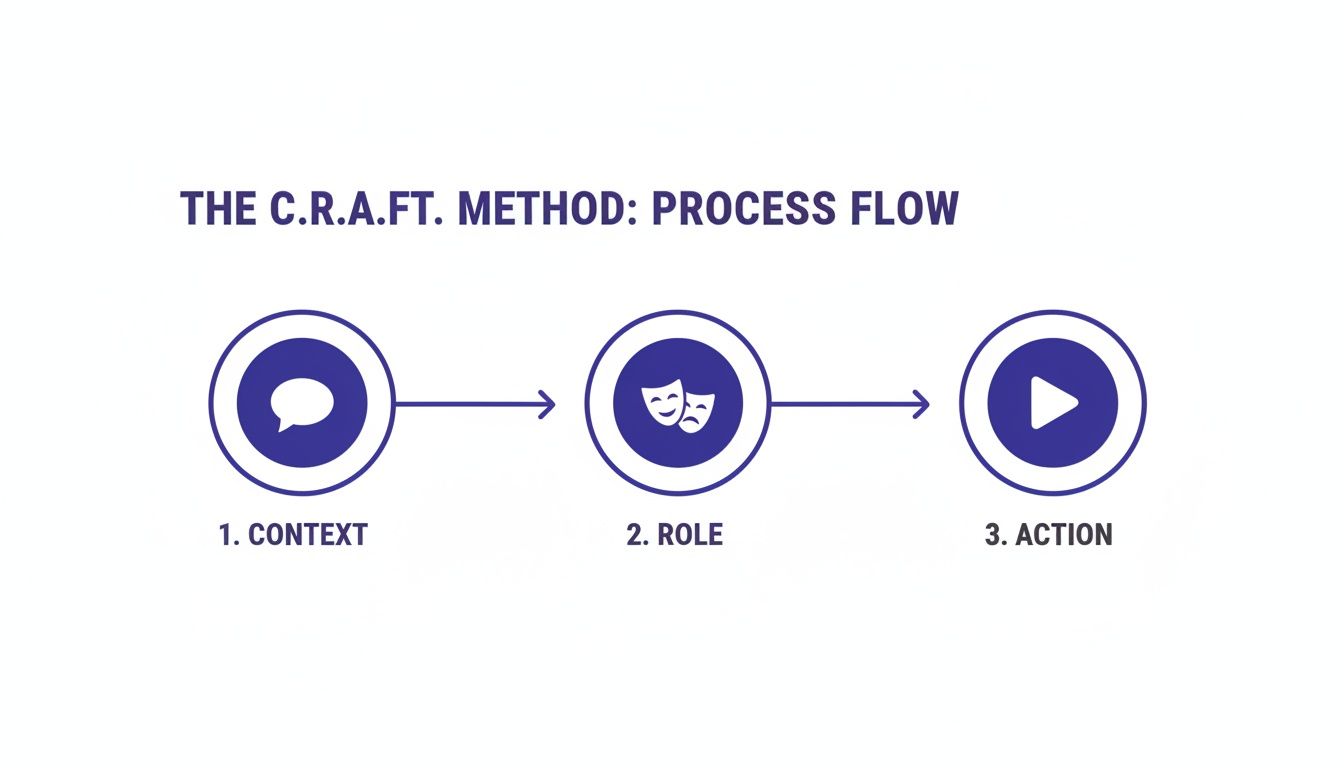
    Getting a better first draft makes this whole process smoother. The C.R.A.F.T. method shown below is a simple framework for giving the AI clearer instructions from the start.

    A process flow diagram illustrating the C.R.A.F.T. method, detailing steps for Context, Role, and Action.

    As the diagram shows, providing clear Context, assigning a Role, and defining a specific Action are fundamental to getting a more refined output right out of the gate.

    The Non-Negotiable Step: Fact-Checking Everything

    AI models are notorious for “hallucinating”—a polite term for making things up with complete confidence. They don’t know the difference between a fact and a fabrication; they only know how to arrange words in a statistically probable order. This makes fact-checking the single most critical part of your workflow.

    One study even found that advanced AI models can produce citations for academic sources that don’t exist. Without a human in the loop, you risk publishing nonsense that can permanently damage your credibility.

    Never assume any fact, statistic, name, or date from an AI is accurate. Treat every single claim as unverified until you have confirmed it with a primary, reputable source.

    A Simple Review Checklist

    Your review process doesn’t need to be complicated, but it does need to be systematic. Before you even think about publishing AI-assisted content, run it through this quick checklist.

    1. Verify All Factual Claims:

      • Are all statistics correct and properly attributed to a credible source (like a research paper or an official report)?
      • Are the names of people, places, and organizations spelled correctly?
      • Are historical dates and events accurate?
    2. Assess for Originality and Voice:

      • Does the content sound like me or my brand?
      • Have I added my own unique insights, stories, or examples?
      • Does the text pass a plagiarism check? (Many tools like Grammarly offer this feature).
    3. Check for Logical Flow and Coherence:

      • Do the arguments make sense and flow logically from one to the next?
      • Is the overall message clear and consistent?
      • Is anything confusing, contradictory, or vague?

    By treating the AI’s output as a rough first draft that requires rigorous review, you get the best of both worlds: the speed of automation and the quality and integrity of human oversight. This human-in-the-loop system is the only way to use AI for writing effectively and responsibly.

    Editor’s Take: What Really Works When Using AI for Writing

    Let’s be honest about what AI can—and can’t—do for your writing. These tools are incredible assistants, but they aren’t magic wands that spit out perfect, nuanced content with a single click. Think of AI as an accelerator, not an author. It’s here to power you through the parts of writing that cause the most drag.

    The Sweet Spot for AI Assistance

    AI is brilliant at tackling the structured, repetitive grunt work that drains our creative energy. It truly excels at tasks like:

    • Building the First Outline: Instead of staring into the void, you can have a solid structure to work from in seconds.
    • Summarizing Dense Research: Feed it a long study or a competitor’s article and get the key takeaways without hours of reading.
    • Breaking Through Writer’s Block: Stuck on a sentence? Ask for a few different ways to phrase an idea. It’s just enough to get you moving again.

    The key is to treat AI as a brainstorming partner and an efficiency engine, not as the final writer. Your unique perspective, experience, and voice are what turn a generic draft into something people actually want to read.

    Who Is This Really For?

    This approach is a game-changer for professionals who create structured content at scale and who aren’t afraid to get their hands dirty with a heavy edit. It’s perfect for content marketers, SEO specialists, students drafting research papers, and professionals writing reports. It is not for someone expecting a finished, emotionally resonant masterpiece. The single biggest limitation of AI is its complete lack of lived experience. It can only mimic patterns, not create from genuine feeling. To make these tools work, you must be ready to edit heavily, inject your own voice, and fact-check every claim. Once you master a smart AI workflow, you’ll save time without sacrificing the authenticity that only a human can bring.

    Ethical AI Use and Protecting Your Authentic Writing Voice

    When you bring AI into your creative process, you also invite a new set of ethical questions. It’s not just about cranking out content faster; it’s about being responsible with these powerful tools and ensuring your unique perspective doesn’t get lost along the way. This means being transparent, guarding your data, and actively fighting to keep your writing genuinely human.

    How to use AI for writing: a laptop with security shield and padlock icons beside a “My Voice” notebook and pen on a desk.

    Honesty is the bedrock of ethical AI use. If a tool played a significant role in creating your content, it’s good practice to disclose that. This is especially true in academic or professional settings where originality is everything. Think of it like citing a source—it gives your audience the full picture and builds trust.

    Safeguarding Your Privacy and Ideas

    Let’s be clear: most public AI models use your inputs to train their systems. That means you should never paste sensitive personal data, proprietary business information, or confidential client details into a public-facing AI tool. Treat it like a postcard, not a sealed letter.

    Real-World Scenario: A therapist wants to use AI to summarize session notes to spot patterns. Pasting verbatim notes into a public AI would be a catastrophic privacy breach. Instead, they must anonymize the notes, removing all names, dates, and identifying details, turning “Jane Doe felt anxious about her presentation on Tuesday” into “Patient A expressed anxiety about an upcoming work deadline.”

    To use AI safely, make these practices non-negotiable:

    • Anonymize Your Data: Before you ask an AI to rephrase or summarize something, strip out all names, contact details, and specific identifiers.
    • Opt for Business-Grade Tools: Many AI platforms offer enterprise plans with stricter data privacy policies. These often guarantee your data won’t be used for model training.
    • Avoid Public Models for Sensitive Work: For anything truly confidential, stick to offline tools or platforms with crystal-clear privacy agreements.

    Remember, your prompts are conversations with a third-party server. Assume that whatever you type isn’t completely private unless the tool explicitly guarantees it is.

    Keeping Your Authorial Voice Intact

    The biggest fear for many writers is that AI will flatten their style into a generic, robotic mush. This is a real risk, but it’s also completely avoidable. The secret is to treat AI as an assistant, not the author. It can handle the grunt work, but you have to bring the soul. This ethical approach also means understanding the nuances of bypassing AI detection and humanizing content to maintain genuine authenticity.

    Here’s a practical way to protect your voice:

    1. Use AI for Structure, Not Soul: Let the AI build the skeleton. Have it create an outline or summarize research. But you—and only you—are responsible for adding the heart.
    2. Edit for Cadence and Word Choice: Read every AI-generated sentence aloud. Does it actually sound like you? Go back and swap generic vocabulary for your go-to words.
    3. Inject Your “Un-Googleable” Insights: AI can only access what’s on the public internet. Your personal experiences and unique conclusions are things it can never replicate. Make sure every piece of content is packed with these elements that only you can provide.

    By drawing a clear line between the mechanical and creative parts of writing, you can use AI to be more efficient without sacrificing the very thing that makes your work matter in the first place—you.


    Disclaimer: This content is for educational purposes only and is not a substitute for professional medical or psychological advice. Some links in this article may be affiliate links, meaning we may earn a commission if you make a purchase at no extra cost to you.


    FAQ: Your Most Common Questions About How to Use AI for Writing

    1. Can AI completely replace human writers?

    No, not for high-quality, authentic content. AI is a powerful assistant for tasks like brainstorming, outlining, and drafting, but it lacks genuine creativity, emotional intelligence, and lived experience. The best results come from a human-AI partnership.

    2. What is the most important skill for using AI writing tools effectively?

    Prompt engineering. The ability to give clear, specific, and context-rich instructions (prompts) is the single biggest factor in determining the quality of the AI’s output. A vague prompt will always yield a generic result.

    3. How can I make AI-generated content sound less robotic?

    The key is heavy editing. Treat the AI’s output as a rough first draft. You need to go through it to add your unique voice, personal stories, specific examples, and nuanced opinions. Reading the text aloud helps you catch awkward phrasing.

    4. Are there any risks to using AI for writing?

    Yes. The primary risks are factual inaccuracies (AI “hallucinations”), unintentional plagiarism, and data privacy issues. Never input sensitive or proprietary information into a public AI tool and always fact-check every single claim.

    5. Will using AI make me a worse writer?

    It depends on how you use it. If you rely on it as a crutch and don’t engage in the critical thinking and editing process, your skills can atrophy. However, if used as a tool to overcome writer’s block and explore ideas, it can actually enhance your creative process.

    6. What’s the difference between ChatGPT and a tool like Jasper?

    ChatGPT is a general-purpose conversational AI, making it a flexible “Swiss Army knife” for a wide range of tasks. Tools like Jasper are specialized platforms built specifically for content creation, often including templates, brand voice features, and SEO integrations tailored for marketers.

    7. Is it ethical to use AI for writing?

    Ethics in AI writing hinge on transparency and responsibility. It is generally considered ethical as long as you are not misrepresenting the work as entirely your own (especially in academic or journalistic contexts), and you take full responsibility for fact-checking and editing the final content.

    8. How much should I edit AI-generated text?

    A lot. A good rule of thumb is to expect to spend at least as much time editing, fact-checking, and personalizing the content as you would have spent writing the first draft yourself. Never “copy, paste, and publish.”

    9. Can AI help with SEO writing?

    Absolutely. AI is excellent for SEO-related tasks like keyword research, generating topic ideas, creating meta descriptions, and structuring articles with SEO-friendly headings. Tools like Koala AI are specifically designed for this purpose.

    10. What is the best free AI writing tool to start with?

    For beginners, the free versions of ChatGPT or Google Gemini are excellent starting points. They are incredibly versatile and allow you to practice the fundamental skill of prompt engineering without any financial commitment.


    Ready to build smarter, more focused habits with practical, science-backed guidance? The books at Mind Clarity Hub offer actionable roadmaps to reclaim your attention and productivity in a distracted world. Explore the full library of guides and start your journey today.

    Explore the Mind Clarity Hub Library

    Practical books on focus, digital habits, resilience, and building a calmer mind.

    The Power of Clarity — book cover

    The Power of Clarity

    Unlock mental focus, build momentum, and create the life you were meant to live.

    View book →
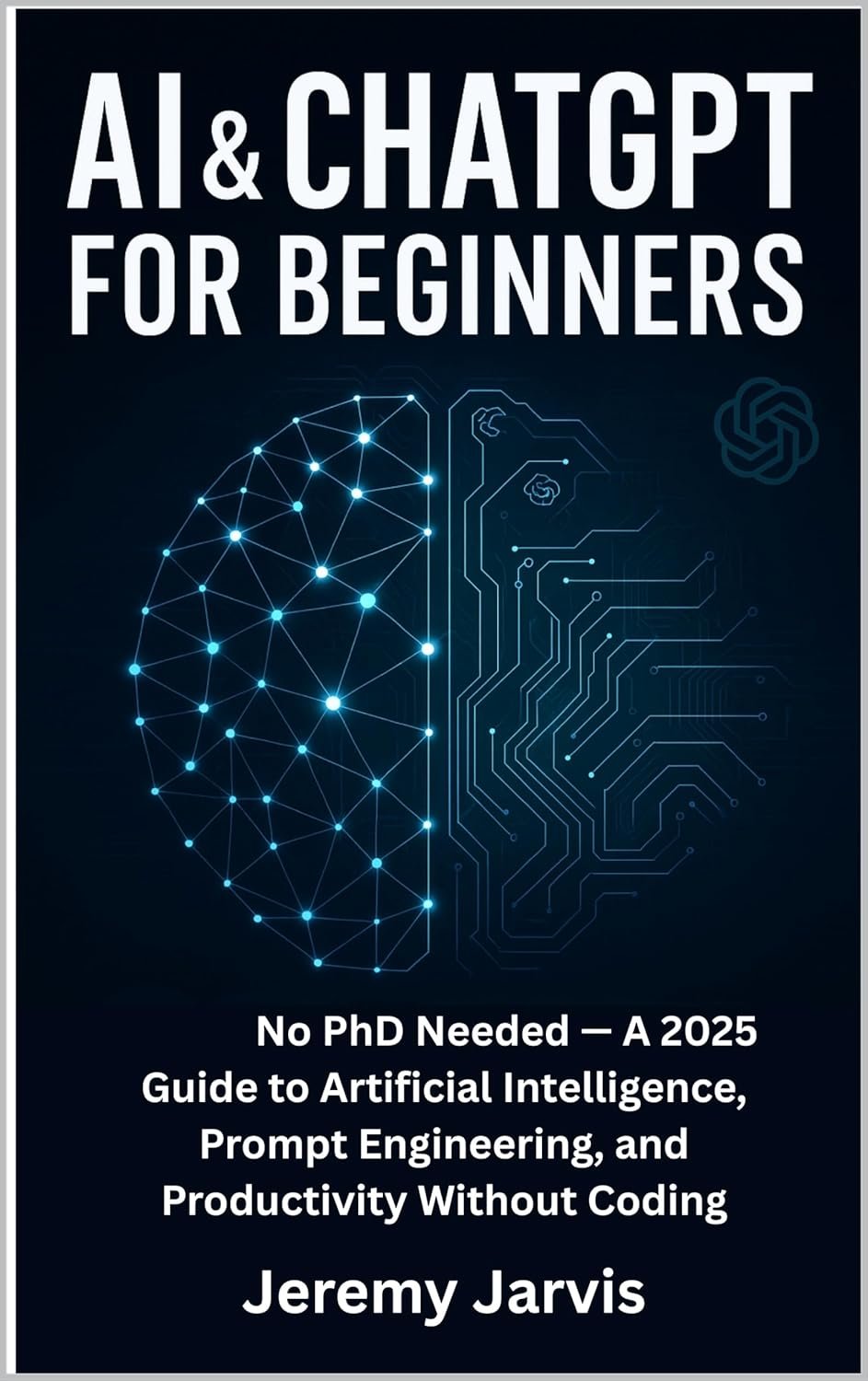
    AI & ChatGPT for Beginners — book cover

    AI & ChatGPT for Beginners

    No PhD needed — a 2025 guide to AI, prompts, and productivity without coding.

    View book →
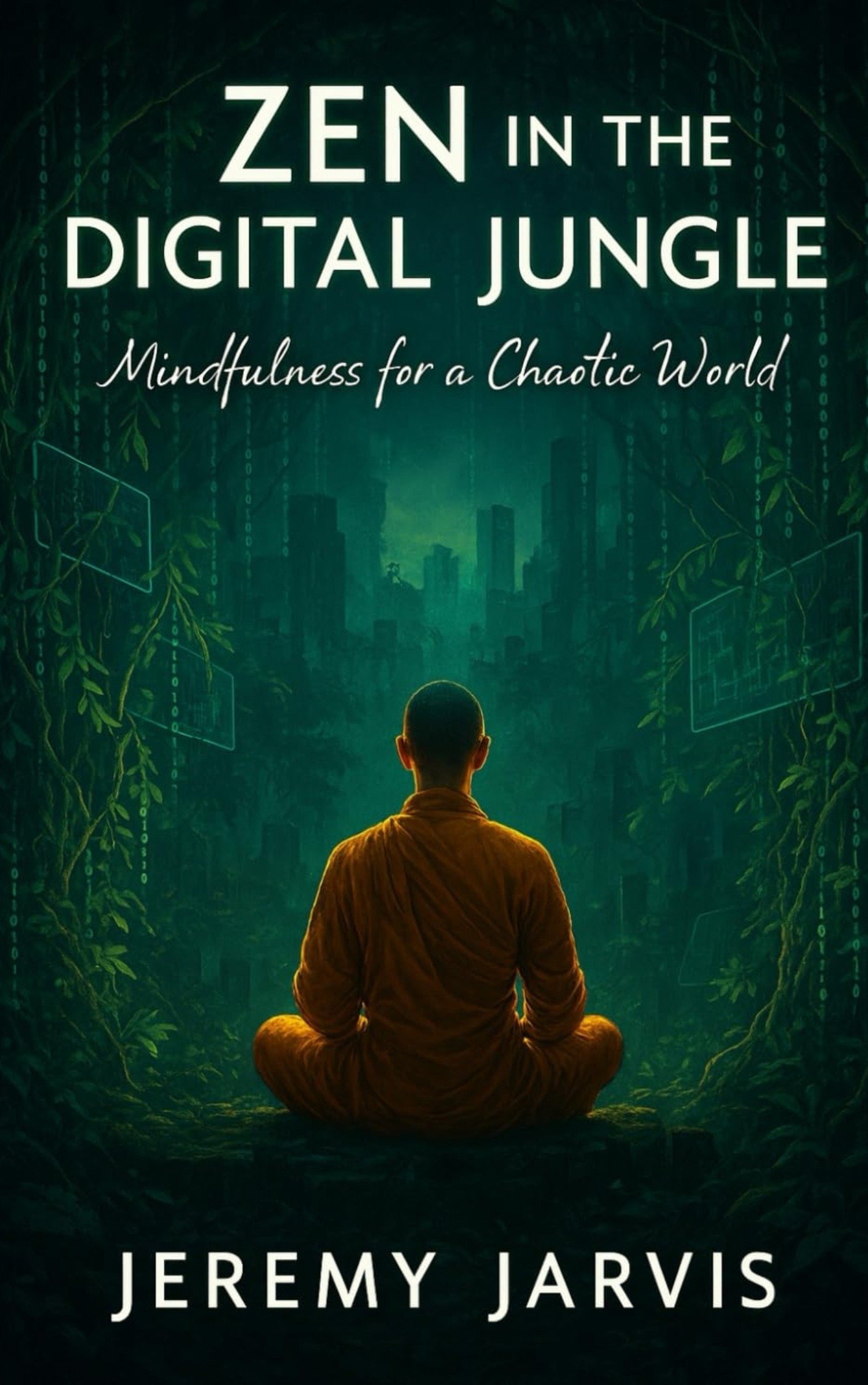
    Zen in the Digital Jungle — book cover

    Zen in the Digital Jungle

    Mindfulness for a chaotic world.

    View book →
    The Slow Reset — book cover

    The Slow Reset

    Mindful living in a fast-paced world.

    View book →
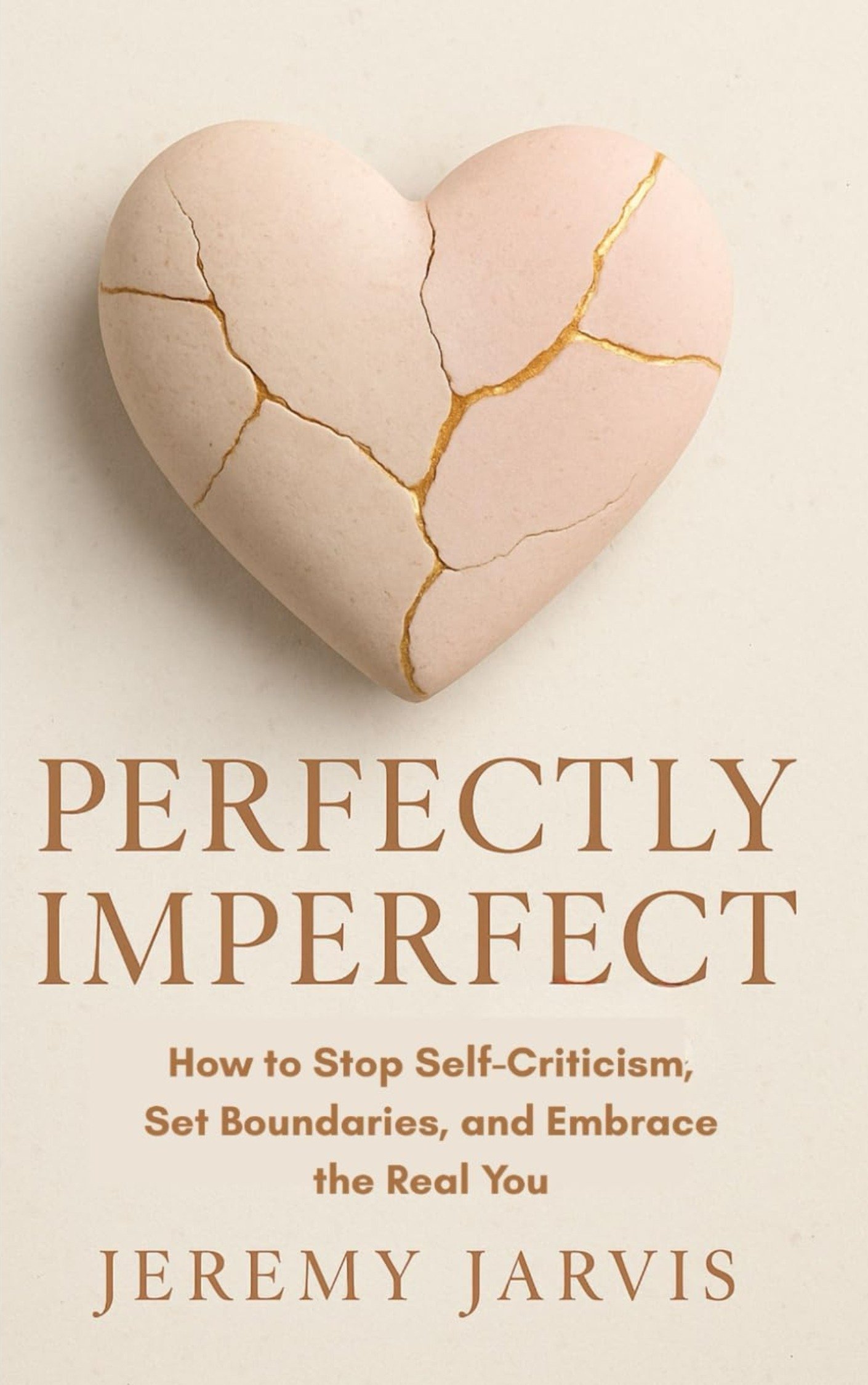
    Perfectly Imperfect — book cover

    Perfectly Imperfect

    Stop self-criticism, set boundaries, and embrace the real you.

    View book →
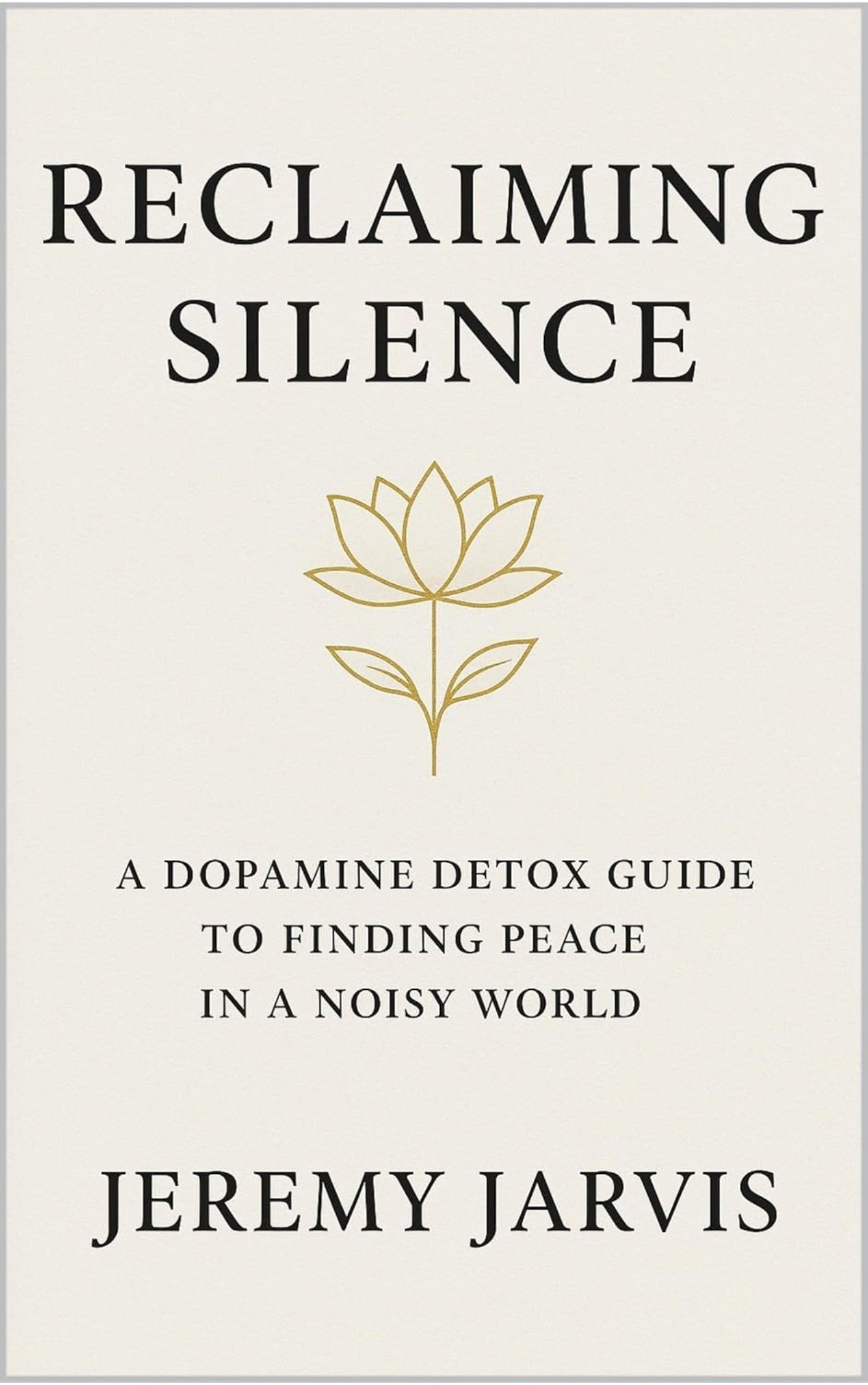
    Reclaiming Silence — book cover

    Reclaiming Silence

    A dopamine detox guide to finding peace in a noisy world.

    View book →
    The Focused Freelancer — book cover

    The Focused Freelancer

    Productivity, pricing & positioning for independents in 2025.

    View book →
    ChatGPT Side Hustle System — book cover

    ChatGPT Side Hustle System

    Launch your AI-driven online business in 30 days.

    View book →
    Burnout, Interrupted — book cover

    Burnout, Interrupted

    A proven path to restore energy and reclaim your life.

    View book →
    Attention Unleashed — book cover

    Attention Unleashed

    Focus strategies for the distracted mind.

    View book →
    Side Hustle Launchpad — book cover

    Side Hustle Launchpad

    Your quick-start guide to extra income.

    View book →
    Digital Clarity — book cover

    Digital Clarity

    Rewire your brain, escape dopamine traps & regain focus.

    View book →
    Break the Scroll — book cover

    Break the Scroll

    Reduce screen time and take back control of your life.

    View book →
    Climate Compassion — book cover

    Climate Compassion

    Transform eco-anxiety into empowered action.

    View book →
    Village Mentality — book cover

    Village Mentality

    The power of community for mental wellness.

    View book →
    Restful Nights — book cover

    Restful Nights

    Overcoming sleep anxiety in a 24/7 world.

    View book →
    Connected Again — book cover

    Connected Again

    Combat loneliness and build meaningful relationships.

    View book →
    Focus Recharged — book cover

    Focus Recharged

    Mastering attention and productivity in the digital era.

    View book →
    Marketing Magic with ChatGPT — book cover

    Marketing Magic with ChatGPT

    AI-powered content, campaigns, and copywriting to grow faster.

    View book →
    The 6-Figure Creator — book cover

    The 6-Figure Creator

    Turn knowledge into passive income with books, courses & AI.

    View book →
    Burnout Breakthrough — book cover

    Burnout Breakthrough

    Reset your work-life balance and thrive in 2025.

    View book →
    The Emotionally Intelligent Man — book cover

    The Emotionally Intelligent Man

    A modern guide to self-awareness and communication.

    View book →
    AI Personalized Wellness — book cover

    AI Personalized Wellness

    Create your custom health plan with data-driven habits.

    View book →
    Everyday AI Made Easy — book cover

    Everyday AI Made Easy

    Use ChatGPT and smart tools to simplify life.

    View book →
    Money Mindfulness — book cover

    Money Mindfulness

    A financial wellness guide for Gen Z & Millennials.

    View book →
    Startup Smarter with AI — book cover

    Startup Smarter with AI

    ChatGPT strategies and tools to grow your business.

    View book →
    ChatGPT for Writers & Creators — book cover

    ChatGPT for Writers & Creators

    Unlock AI-powered brainstorming, drafting & editing.

    View book →