

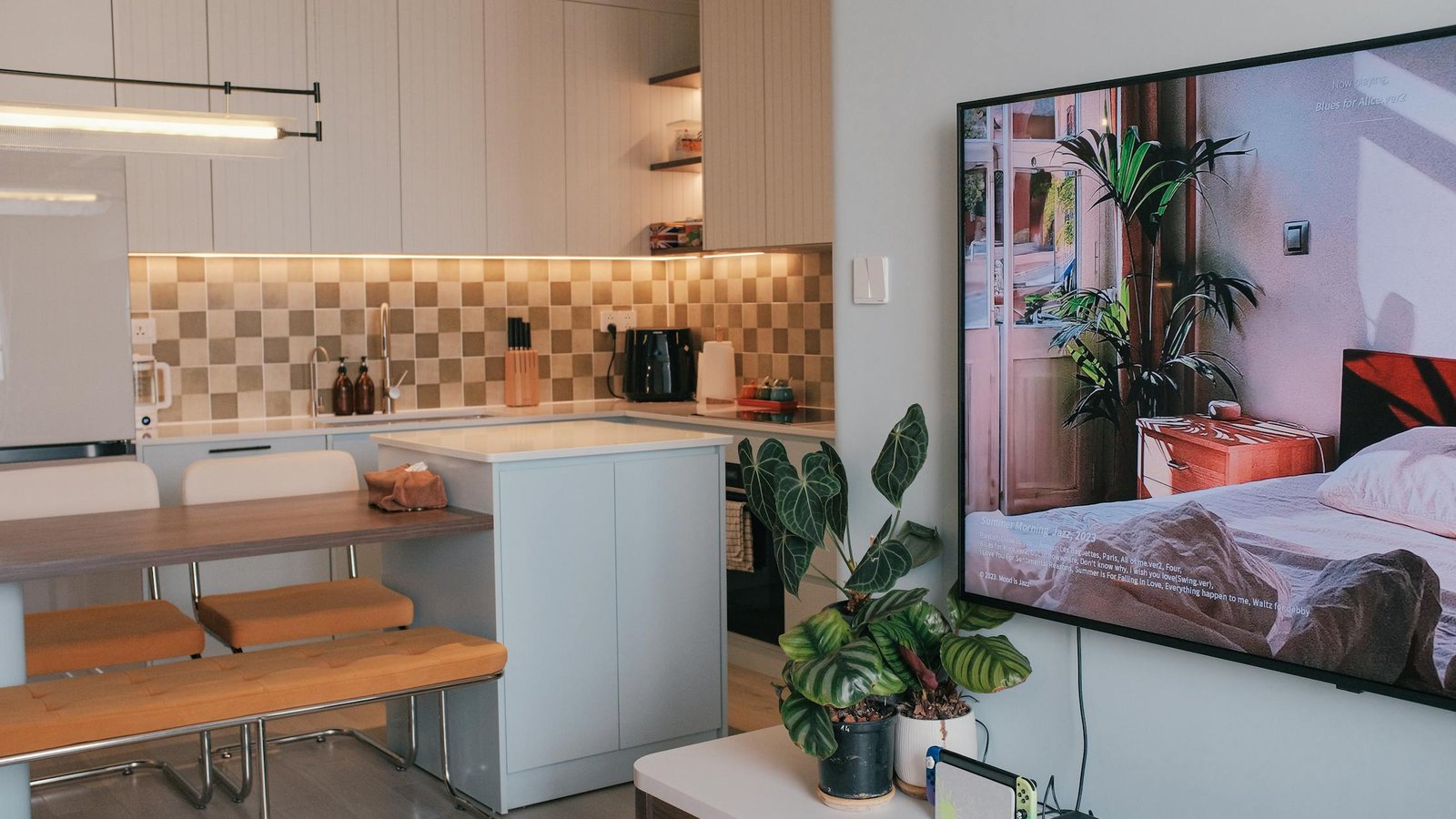
If your place feels busy and scattered, a household command center setup for shared apartments can cut daily friction fast. It is a one-stop station that handles dates, keys, mail, chores, bills, and quick notes so everyone sees the same plan.
This guide shows a practical household command center setup for shared apartments that works in tight spaces. You will choose a wall or shelf layout, set up a shared calendar, create clear key and mail zones, and agree on roommate rules that reduce stress.
Before you gather tools, align as a group on why you want this. Name the wins: fewer repeated questions, faster handoffs, no lost keys, and bills paid on time. Write a one-line purpose (“One simple hub that helps us plan the week and share chores without guesswork”) and tape it at the top of the board. That purpose will keep your build lean and focused.
Key takeaways for your roommate command center
- Create a single visible home base near your daily path to the door or kitchen.
- Use a shared digital calendar plus a small wall view for quick checks.
- Pick clear zones: keys, mail, chores, bills, supplies, and quick notes.
- Write a simple roommate agreement that ties to this station.
- Run a 10-minute weekly check-in to keep it accurate.
- Download our checklist to build a household command center setup for shared apartments in about an hour.
What is a household command center setup for shared apartments?
It is a compact, visible spot that keeps shared life organized. It blends a few physical tools you see at a glance with a digital layer that alerts you wherever you are. Done well, this hub reduces repeat questions, missed chores, and lost mail. It also builds trust because the plan is public and updated by everyone.
Quick start: build your roommate command center in 60 minutes
- Decide the spot (10 minutes): Pick a high-traffic wall or a shelf unit by the door or kitchen. Stand there and note how people move. If it is not in your daily path, you will not use it. In this step, anchor your vision to a household command center setup for shared apartments so the whole group knows the purpose.
- Pick your board and bins (10 minutes): A magnetic whiteboard plus a cork strip works in most spaces. Add a small tray for mail and a labeled key rail.
- Set your calendar (10 minutes): Create a monthly wall view for glance value and a shared digital calendar for alerts. Color-code by roommate or theme.
- Define zones (15 minutes): Keys, mail, calendar, chores, bills, supplies, and notes. Label each with short, plain tags.
- Agree the rules (10 minutes): Write a one-page roommate agreement for chores rotation, due dates, quiet hours, guests, and conflict steps. Pin it.
- Schedule a weekly reset (5 minutes): Sunday night or Monday morning. Ten minutes, same time each week.
Where should your shared apartment command center live?
Choose a place people can see without effort. The entry, kitchen, or the short wall by the hallway are top picks. If you rent, damage-free strips, narrow shelves, and rail systems protect walls. Use the comparison below to choose a wall or shelf footprint that fits your space and habits.
Wall layout for a household command center setup for shared apartments
| Option | Best for | Pros | Cons |
|---|---|---|---|
| Wall board + key rail | Tight entry or galley kitchen | Always visible, fast glances, uses vertical space | Shows clutter if not reset weekly |
| Rail system with bins | Small apartments with narrow walls | Modular, damage-free hooks exist, easy to label | Smaller bins limit mail and tools |
| Cork + dry-erase combo | Groups that post tickets and flyers | Pin and write in the same zone | Pins can fall; needs a firm mount |
| Magnetic glass board | Modern look, easy clean | Resists ghosting, sleek | Magnets must be strong; often pricier |

Image source and rights: Pexels photo by Jakub Zerdzicki (link). Licensed for free use under the Pexels License.
When a shelf layout wins for a shared home command center
If you prefer a tidy look, hide supplies on a narrow shelf with bins and a small calendar frame above. Put a key tray and a mail sorter on the top shelf. Use one bin per roommate. Label short and bold so nobody has to guess.
| Footprint | Typical cost band | Install effort | Notes |
|---|---|---|---|
| Wall board + slim rail | $ | Low | Works with removable strips; keep items lightweight. |
| Leaning ladder shelf | $$ | Low–Medium | Great for rentals; no holes; stable when weighted at the base. |
| Modular rail + bins | $$ | Medium | Measure mail size first; label each bin by purpose. |
| Glass dry-erase + key strip | $$$ | Medium | Use strong magnets rated for glass; test before loading. |
Define the zones that make it work for a roommate command center
Seven simple zones handle most needs in a shared place. Keep the layout steady across months so muscle memory builds. This is where your household command center setup for shared apartments turns into a daily habit, not a one-time craft project.
| Zone | Purpose | Tools | Owner |
|---|---|---|---|
| Shared calendar | Big dates, guests, trash days | Dry-erase month view + digital calendar | All |
| Keys | Home keys, fobs, spare mailbox key | Labeled hooks or a tray | All |
| Sort daily mail and action items | Two-slot sorter: “To sort” and “To act” | Rotating | |
| Chores | Weekly tasks and who is on deck | Chore chart with checkboxes | Rotating |
| Bills | Due dates, splits, and receipts | Mini binder or envelope, bill list | Treasurer role |
| Supplies | Markers, tape, batteries | Labeled bin | All |
| Notes | Quick messages and reminders | Sticky pad or small board area | All |
How do you set up a shared calendar everyone will use for a shared apartment command center?
Pick one digital calendar app as the source of truth. Then mirror only the next 4–6 weeks on your wall. This reduces app fatigue and keeps an at-a-glance view for guests and deliveries.
- Create one shared calendar with the apartment name and share it with all roommates using their email.
- Color-code by person or by category (bills, cleaning, guests, trash/recycling).
- Set event reminders so nobody can say they missed it.
- Use all-day events for big markers (lease renewal, visitors) and timed events for tasks (trash night, pest control).
- Protect privacy: avoid full names; add initials only on the wall view.
For step-by-step sharing in Google Calendar, see Google’s help guide on sharing calendars (Google Calendar Help). Apple and Microsoft offer similar sharing features you can search in their support centers.
Use the wall view for quick checks and guests. Use your phone for alerts. This blend is the backbone of a reliable household command center setup for shared apartments because it meets people where they are.
Where should keys and mail live in your roommate command center?
Place keys at shoulder height near the door and put mail one step beyond the entry. This avoids bottlenecks. Use a short rule: keys go up, mail goes in. If you expect address changes, learn official mail forwarding steps from USPS (USPS: Forwarding).
- Keys: One hook per roommate plus one labeled “Spare.” Add a small tag for bike or storage keys.
- Mail: Two slots only. The first is “To sort today.” The second is “To act,” emptied at the weekly reset.
- Packages: A clipboard or a shared note with pickup codes and return dates.
When keys and mail are easy to reach, people will use the system. Place the sorter within two steps of your entry path so it stays automatic.
How should roommates share chores fairly in a shared home command center?
Use a simple rotation and write it down. Keep chores small and frequent rather than giant and rare. Also, agree on what “done” means. For cleaning safety and basics, the CDC lists when and how to clean common surfaces (CDC: Cleaning and Hygiene).
| Chore | Frequency | Done means | Owner (this week) |
|---|---|---|---|
| Trash + recycling | 2x weekly | Bins empty, liners replaced | Roommate A |
| Kitchen surfaces | 2x weekly | Countertops wiped, sink cleared | Roommate B |
| Floors (shared areas) | Weekly | Vacuum/sweep + quick mop | Roommate C |
| Bathroom (shared) | Weekly | Toilet, sink, mirror, tub spot clean | Roommate D |
Rotate owners weekly. Put a checkbox by each task on the wall. During the reset, roll names forward one slot.
Seasonal add-ons help too. For example: change HVAC filters quarterly (if applicable), deep-clean fridge monthly, and clear lint traps after every dryer run. Keep these as a separate list so the weekly chart stays short.
Make bills and budgets painless in a shared apartment command center
Money issues strain even strong roommate groups. Keep bill basics on one page: what’s due, when, how you split, and where to pay. For general budgeting steps in plain language, see Consumer.gov’s guide (Consumer.gov: Making a Budget).
- Bill list: Service, due date, typical amount, payment link or method.
- Split method: Equal shares, room-size weighted, or usage-based. Pick one and stick with it.
- Receipts: Save payment proofs for the current lease term. For tax-related receipts, see retention guidance from the IRS (IRS: Recordkeeping).
- Payout process: Decide on a single reimbursement method (transfer, app) and a clear deadline each month.
Assign a treasurer role for six months and rotate. The treasurer writes the bill list and collects reimbursement on schedule.
Roommate agreements that reduce friction for your roommate command center
Put key house rules in writing and pin them at the hub. Be brief. Focus on chores, bills, guests, quiet hours, and conflict steps. For legal basics and common clauses, this overview from Nolo is a useful primer (Nolo: Roommate Agreements FAQ).
- Chore rotation and what “done” means
- Bill split rules and due dates
- Guests and overnight stays
- Quiet hours and noise
- Damage, deposits, and move-out notices
- How to resolve issues (who raises, when, and how)
When you connect this document to the wall hub, your household command center setup for shared apartments becomes a living agreement, not a forgotten file.
Before you buy: 10-minute alignment for your roommate command center
- Scope: List only the zones you will use in week one. Add more later if needed.
- Privacy: Agree on initials on the wall and full details in apps or a binder.
- Roles: Pick a facilitator for weekly resets and a treasurer for bills.
- Check-in day: Choose a repeat time that most people can make. Lock it in.
- Budget: Cap spend before shopping. Start small; upgrade after one month.
Layout blueprint you can copy for a shared apartment command center
Shared Apartment Command Center — 7-Zone Map
- Top-left: Month Calendar (4–6 weeks)
- Top-right: Chore Chart (checkbox row per task)
- Middle-left: Key Rail (one hook per roommate + Spare)
- Middle-right: Notes Pad (quick messages)
- Bottom-left: Mail Sorter (To sort / To act)
- Bottom-right: Bills Slot (mini binder or envelope)
- Side bin: Supplies (markers, tape, batteries)
Tip: Keep labels short and bold. Reset every week at the same time.
Wall labels that make habits stick in a shared apartment command center
Short labels beat long ones: “Keys,” “Mail: To sort,” “Mail: To act,” “Chores,” “Bills,” “Notes,” and each person’s first name. Use a label maker or bold marker. Avoid jokes or vague tags. Clear beats clever.

Image source and rights: Pexels photo by cottonbro studio (link). Licensed for free use under the Pexels License.
Run a fast weekly reset for your roommate command center that people actually attend
Pick a time when most roommates are home for 10 minutes. Use a tight script so you finish on time. This routine protects your investment and keeps the hub honest.
| Agenda (10 minutes) | Owner | Notes |
|---|---|---|
| 1. Calendar highlights (next 2 weeks) | Facilitator | Add guests, travel, repairs |
| 2. Chore roll and check marks | Facilitator | Rotate names forward |
| 3. Bills status and reimbursements | Treasurer | Collect outstanding shares |
| 4. Mail “To act” bin | All | Empty or assign owner |
| 5. Quick wins and issues (1-minute limit each) | All | Capture actions on the notes pad |
To keep energy up, end with a tiny win. For example: wipe the board, recycle flyers, or snap a photo of the updated calendar for your notes app.
How to pick tools that do not overwhelm your space for a shared home command center
Choose the smallest set that does the job. Also, prefer durable, easy-to-clean surfaces. Ghosting markers and peeling labels punish you later. Start with the basics and add only if a real problem appears more than once.
- 12–16″ dry-erase month board
- 18–24″ key rail or a small tray
- Two-slot mail sorter
- Narrow bin for supplies
- Clip for the one-page roommate agreement
As you upgrade, watch for creeping complexity. New bins and boards are tempting, but each extra item is one more thing to reset. Add only what solves a real, repeated issue.
Small-space tricks that protect your walls for a shared apartment command center
If you rent or your walls are fragile, use leaning rails, freestanding shelves, or removable adhesive hooks. Keep the center of your layout at eye height so it is easy to scan.
- Use light frames and small boards to reduce pull on adhesives.
- Secure key rails with wall anchors only where allowed in your lease.
- Test adhesive strength with a spare hook for a day before you trust it with keys.
- Place heavier items low on a shelf to prevent tipping.
Make it inclusive and easy to read for your roommate command center
Use high-contrast colors and plain fonts. Write in short words. Keep labels away from humor or slang that may confuse visitors. If someone has color-vision differences, use icons or patterns along with color-coding.
- Pair colors with shapes (e.g., dots, stripes) on the wall view.
- Choose a thick marker that reads from a few feet away.
- Keep text to 5–7 words per note for fast scanning.
Add a digital companion to your shared apartment command center without adding noise
Use your shared calendar for alerts and a lightweight notes app for quick tasks. Avoid adding more than two apps. For the calendar, follow the official share steps for your platform, like Google Calendar’s sharing guide (Google Calendar Help).
Keep the wall hub lean and the phone alerts smart. This pairing makes a household command center setup for shared apartments reliable without feeling like a second job.
Ground rules for mail, packages, and sensitive info in a roommate command center
Do not post private account numbers, health details, or full legal names on the wall. Use initials or nicknames if needed. For mail, bin it daily, and clear the “To act” slot at the weekly reset. If you are changing addresses, follow the official steps like USPS forwarding (USPS: Forwarding).
Decision points: when to upgrade or simplify your shared apartment command center
- Tasks piling up on the wall? Move them to a shared to-do list app. Keep only dates on the wall.
- Wall starting to look crowded? Remove any zone you used fewer than three times last month.
- Calendar not getting attention? Put the hub on the main path, add color, and shorten text.
- Chore debates keep flaring? Tighten “done means” and shorten the task list.
Privacy, safety, and guest etiquette for a shared home command center
Keep spare keys out of sight. Do not label keys with your address. Put the roommate agreement at the bottom of the board so guests see house norms without seeing bill details. If you share Wi‑Fi info, use a nickname for the network and rotate the password each lease term.
For door codes (if any), use a code phrase on the wall (“Front code updated”) and send the actual numbers in your private app. This keeps visitors informed without exposing sensitive data.
How to keep momentum month after month with your roommate command center
Success comes from rhythm. Keep the weekly reset time steady. Rotate roles. Take a photo of the board after each meeting and drop it in your shared notes. This habit protects your household command center setup for shared apartments when life gets busy.
Also, schedule a 15-minute monthly tune-up. Wipe the board fully, refresh labels, and archive old bills. Small resets prevent big overhauls later.
Troubleshooting your shared apartment command center
- People stop showing up: Cut the reset to five minutes for two weeks and stick to the script. Add a small reward, like picking next week’s playlist.
- Markers keep drying out: Store them tip-down in a small cup and replace caps right away.
- Notes go missing: Switch to a single notes pad with a bold header line for the date and owner.
- Guests ignore house rules: Move the agreement slightly higher and bold the two most missed rules.
Common mistakes to avoid in a shared apartment command center
- Putting the hub where nobody walks by
- Posting too much text or tiny handwriting
- Using five apps instead of one or two
- Skipping the weekly reset
- Letting “To act” become storage
Sample one-page roommate agreement (outline) for your roommate command center
Keep it simple and tie it to your wall hub. Here is a short outline you can copy into a document, print, and pin:
- Names and contact info (first names + emails)
- Chore rotation and “done means” list
- Quiet hours, guests, and shared items rules
- Bill list, split method, due dates, and treasurer role
- Damage and deposit notes (check your lease)
- Issue resolution steps and meeting day/time
- Signatures and date
For clause ideas, see Nolo’s roommate agreement FAQ (Nolo). Adapt it to your local laws and lease.
What if people stop using the hub? Strengthen your shared apartment command center
Start with two fixes. First, move it to a more visible spot or add light above it. Second, shorten your content and remove any zone that is not used. A tight, visible hub is the heart of a good household command center setup for shared apartments, so keep trimming until it is effortless.
Download the checklist for a roommate command center
Get a printable setup and weekly reset checklist to speed your build and keep the hub on track:
Download the roommate command center checklist (PDF)
More ways to simplify your shared life
Want deeper systems for planning and focus? Explore our book recommendations and in-depth reviews:
- See Mind Clarity Hub’s books to build your planning system
- Browse our latest reviews to choose tools that fit
FAQ: shared apartment command center
Where is the best place to mount the hub?
Pick a wall or shelf in your daily path, like the entry or kitchen. If you do not see it while leaving or making coffee, move it.
How do we handle missed chores without a fight?
Define “done means” for each task, keep tasks small, and review checkboxes in the 10-minute weekly reset. Rotate roles to share the load.
What belongs on the wall vs. the phone?
Put only the next month’s big dates, chores, and key notes on the wall. Keep alerts, invites, and detailed tasks in the shared digital calendar and notes app.
How can we protect privacy?
Avoid posting full names, account numbers, or exact travel dates. Use initials and keep bills in an envelope or mini binder.
When should we update the roommate agreement?
Review it at the start of each lease term, after a new roommate joins, or when a recurring issue appears more than twice.
Helpful resources for your next step
Affiliate disclosure: As an Amazon Associate, Mind Clarity Hub may earn from qualifying purchases at no extra cost to you. Use this link only if it genuinely helps your planning.
If Set Up a Household Command Center for Shared Apartments is a routine you want to keep using, a simple workbook, planner, or desk tool can make the steps easier to repeat.
Compare related planners, workbooks, and organization tools on Amazon.