...

Tag: time management

  • The 12 Best Time Blocking Apps to Reclaim Your Focus in 2026

    The 12 Best Time Blocking Apps to Reclaim Your Focus in 2026

    *Disclosure: This post may contain affiliate links. If you make a purchase through these links, we may earn a small commission at no extra cost to you. This helps support our work in creating valuable content.*

    Tired of endless to-do lists that never seem to shrink? Do you end your day feeling busy but not productive, wondering where all the time went? The problem often isn’t a lack of effort but a lack of intention. Time blocking offers a powerful solution, moving you from a reactive state of fighting fires to a proactive one where you control your schedule and your focus. This method involves assigning a specific purpose to every block of time in your day, ensuring your most important tasks get the dedicated attention they deserve.

    This detailed guide is designed to help you find the best time blocking apps for your specific needs, whether you’re a busy professional, a student, a freelancer, or an entrepreneur. We move beyond generic feature lists to provide a deep, research-informed analysis of 12 leading platforms. You will find clear pros and cons, ideal user profiles, and practical setup examples for tools like Motion, Sunsama, and Reclaim.ai. We’ll explore how each app handles integrations, privacy, and distraction controls, offering an honest assessment of its limitations.

    Best Time Blocking Apps to Redesign Your Workflow for Deep Work and Sustainable Productivity

    For each option, you’ll see screenshots and direct links to help you make an informed decision without the marketing fluff. Our goal is to equip you with the knowledge to choose a system that doesn’t just organize your calendar but fundamentally redesigns your workflow for deep work and sustainable performance. If you’re building a complete productivity stack, especially for a distributed team, you might also find value in exploring the best tools for remote work to boost your productivity in 2026. Let’s find the right tool to help you reclaim your time.

    1. Motion (UseMotion)

    Motion positions itself as more than just a calendar, acting as an AI-powered assistant that automates the entire time blocking process. Instead of manually dragging tasks into calendar slots, you simply list what you need to do, set deadlines, and assign priorities. Motion’s algorithm then builds a dynamic daily schedule for you, automatically finding the best times for tasks, meetings, and dedicated focus work.

    A screenshot of the Motion (UseMotion) app interface showing a calendar with scheduled tasks and projects, illustrating its use as one of the best time blocking apps for AI productivity.

    This app stands out because of its intelligent rescheduling. If an urgent meeting pops up, Motion automatically rearranges your lower-priority tasks to fit the new event, ensuring your most critical work still gets done. From a neuroscience perspective, this automation reduces cognitive loadβ€”the mental effort required to make decisions. By offloading scheduling, you preserve your brain’s executive functions for the actual task, not the planning.

    Example Scenario: Imagine a project manager, Sarah, has a report due Friday. She puts it in Motion. An unexpected client call gets booked for Wednesday afternoon, right during her planned writing time. Instead of panicking, Sarah sees Motion instantly move her writing block to Thursday morning, protecting her deadline without any manual effort.

    Key Details & Use Case

    • Best For: Individuals and teams who want an automated, β€œset-it-and-forget-it” scheduling system and hate manual planning.
    • Pricing: Starts at $19 per month (billed annually) for the Individual plan. The Team plan is $12 per user per month (billed annually). A 7-day free trial is available.
    • Pros: The AI-driven scheduling saves significant planning time and adapts to changes automatically. Its team features provide excellent workload visibility.
    • Cons: The reliance on automation can feel restrictive for users who prefer precise manual control over their calendar. It requires a level of trust in the AI’s decisions.
    • Website: https://www.usemotion.com

    2. Sunsama

    Sunsama offers a mindful approach to productivity, positioning itself as a β€œcalm” daily planner. Instead of heavy automation, it centers your workflow around intentional daily planning rituals. You start each day by pulling tasks from integrations like Asana, Trello, or Slack, estimating their duration, and then dragging them directly onto your calendar. This deliberate process helps you build a realistic, sustainable schedule that prevents overcommitment.

    A screenshot of the Sunsama app interface showing a clean daily planning view with tasks listed next to a calendar, highlighting it as one of the best time blocking apps for mindful scheduling.

    This platform excels at helping you reflect and shut down at the end of the day. Sunsama prompts you to review what you accomplished and plan the next day, creating a clear boundary between work and personal time. This focus on intentionality makes it one of the best time blocking apps for professionals who feel overwhelmed by back-to-back schedules and endless task lists. Behavioral research shows that such β€œshutdown rituals” can reduce work-related anxiety and improve sleep by signaling to your brain that the workday is officially over. For those who want more manual control, a physical time blocking planner can complement Sunsama’s digital approach.

    Example Scenario: David, a freelance writer, often works late and feels burned out. Using Sunsama, he starts his day by choosing only three key articles to work on. At 5:30 PM, the app prompts his shutdown ritual. He reviews his progress, moves unfinished tasks to tomorrow, and closes his laptop, feeling a sense of accomplishment rather than stress.

    Key Details & Use Case

    • Best For: Individuals and teams who want a guided, mindful approach to daily planning and want to avoid burnout.
    • Pricing: Starts at $20 per month for the annual plan. No free forever plan is available, but they offer a 14-day free trial.
    • Pros: The guided daily planning and shutdown rituals promote work-life balance. Its clean, distraction-free interface encourages focus and realistic goal-setting.
    • Cons: It lacks the powerful automatic rescheduling found in AI-driven competitors. The subscription cost is higher than many simpler to-do list apps.
    • Website: https://www.sunsama.com

    3. Reclaim.ai

    Reclaim.ai is a smart calendar assistant designed to automatically find the best time for your tasks, habits, and focus work. It operates by syncing with your primary calendar and intelligently blocking out time based on flexible rules you set. You can tell it to schedule your daily workout, protect two hours for deep work, or ensure you have a lunch break, and Reclaim will find the optimal, least disruptive slots for these activities.

    A screenshot of the Reclaim.ai app interface showing a color-coded calendar, illustrating its use as one of the best time blocking apps for time blocking.

    This platform excels at defending your time while remaining flexible. Its time blocks are created as β€œfree” or β€œbusy” events, so colleagues can schedule meetings over lower-priority habits, which Reclaim will then automatically reschedule. This intelligent defense system makes it one of the best time blocking apps for team members who need to protect their focus without creating calendar conflicts. This automated negotiation prevents decision fatigue, which occurs when the quality of your decisions deteriorates after a long session of decision-making. By automating this constant negotiation for time, it helps prevent the mental fatigue that leads to what is cognitive overload.

    Example Scenario: An engineer, Maria, wants to build a habit of reading documentation for 30 minutes daily. She tells Reclaim to schedule it anytime in the afternoon. Her manager schedules a team sync over her reading block. Reclaim automatically moves her reading habit to a later slot that day without Maria needing to do anything, ensuring the habit doesn’t get skipped.

    Key Details & Use Case

    • Best For: Professionals and teams in the Google ecosystem who need an automated way to defend focus time and build routines without rigid manual scheduling.
    • Pricing: A free β€œLite” plan is available. Paid plans start at $8 per user per month (billed annually). A 14-day free trial of paid features is offered.
    • Pros: The flexible rules allow tasks and habits to coexist with a dynamic meeting schedule. It scales exceptionally well from individual use to large teams with its analytics and scheduling links.
    • Cons: The platform is heavily optimized for the Google Calendar ecosystem, limiting its effectiveness for others. The extensive feature set can feel complex to new users.
    • Website: https://reclaim.ai

    How to Choose the Best Time Blocking App for You

    Choosing between AI automation and manual control is a key decision. Here’s a quick comparison to help you find the best fit.

    FeatureAI-Powered (e.g., Motion, Reclaim.ai)Manual Control (e.g., Sunsama, Akiflow)
    Best ForBusy professionals who hate planning and want their schedule to adapt automatically.Individuals who prefer a hands-on, intentional approach to crafting their day.
    ProsReduces planning time and cognitive load; automatically adapts to conflicts.Provides a high sense of control; encourages mindful and realistic planning.
    ConsCan feel rigid or unpredictable; requires trusting the algorithm’s choices.Requires more daily effort; can be tedious if your schedule changes frequently.
    Core PrincipleEfficiency and automation.Intentionality and mindfulness.

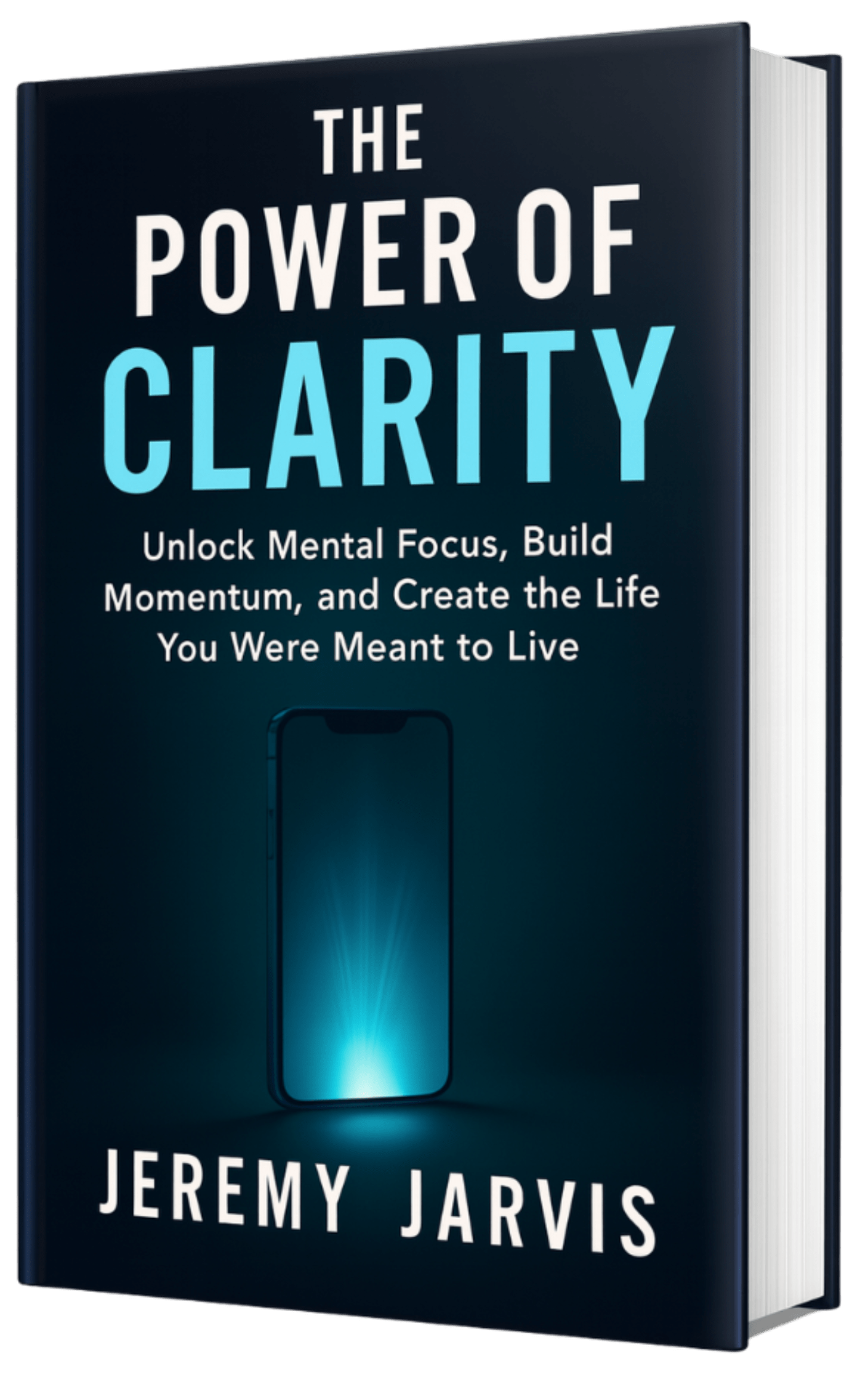
    For a deeper dive into building focus, start with the foundational principles in The Power of Clarity to ensure your new system aligns with your core goals.

    4. Akiflow

    Akiflow positions itself as a universal inbox and command center designed for speed and control. Instead of relying on AI to build your schedule, it gives power users a keyboard-driven workflow to consolidate tasks from multiple sources (like Slack, Gmail, and Asana) and drag them directly into their calendar. This makes it one of the best time blocking apps for those who want to centralize their inputs and manually craft their day with maximum efficiency.

    A screenshot of the Akiflow app interface showing a calendar with tasks and time slots, which makes it one of the best time blocking apps for manual control and speed.

    The app’s standout feature is its Command Bar, which allows you to capture tasks, create events, and navigate the interface without ever touching your mouse. Akiflow is built around the idea of quick capture and deliberate planning, separating the β€œinbox” of tasks from the β€œcalendar” of commitments. From a psychological standpoint, this separation mirrors the β€œcapture” and β€œclarify” steps of popular productivity methods like Getting Things Done (GTD), reducing mental clutter by getting ideas out of your head quickly.

    Example Scenario: A marketing manager, Leo, gets task requests via email, Slack, and Trello. Using Akiflow’s command bar, he captures a Slack message as a task in seconds. Later, during his morning planning session, he drags that task and others from his inbox onto his calendar, building a realistic daily plan in under five minutes.

    Key Details & Use Case

    • Best For: Power users, developers, and professionals who juggle tasks from many different platforms and prefer keyboard shortcuts for rapid, manual planning.
    • Pricing: Starts at $24.99 per month (billed annually). A 7-day free trial is available.
    • Pros: The Command Bar and extensive keyboard shortcuts make planning incredibly fast. It offers powerful integrations to pull tasks from virtually anywhere.
    • Cons: The learning curve is steeper for those not accustomed to keyboard-centric workflows. It lacks the automatic rescheduling of AI-powered tools.
    • Website: https://akiflow.com

    5. Morgen

    Morgen offers a unified approach to time management, combining a powerful calendar with task management, scheduling links, and AI-assisted planning. It’s designed for users who appreciate manual control but also want intelligent suggestions to optimize their day. Instead of forcing full automation, Morgen acts as a co-pilot, helping you find the best slots for your tasks within a framework you still command, making it one of the best time blocking apps for those who like a hands-on approach.

    A screenshot of the Morgen app interface showing a calendar view with time-blocked tasks and events, highlighting its features as one of the best time blocking apps for daily planners.

    The platform truly shines with its exceptional cross-platform support, offering native apps for Windows, macOS, Linux, iOS, and Android. This ensures a consistent experience no matter what device you use. Its AI Planner can suggest a schedule based on your to-do list, but you always have the final say, allowing you to drag and drop items with precision. This balance helps you maintain a sense of agency over your schedule, which psychological research links to higher motivation and lower stress levels.

    Example Scenario: Chen is a data scientist who uses a Linux machine at work and a Mac at home. With Morgen, he gets a native app experience on both. He uses the AI planner to suggest a schedule for his analysis tasks, but manually adjusts one block to the late afternoon, knowing that’s when he is most focused for deep analytical work.

    Key Details & Use Case

    • Best For: Professionals and individuals who use multiple operating systems (especially Linux users) and want a blend of manual calendar control with optional AI assistance.
    • Pricing: The Personal plan is $9 per month (billed annually). The Pro plan is $14 per month (billed annually). A 14-day free trial is available.
    • Pros: Excellent native app support across all major desktop and mobile platforms. Combines strong manual planning tools with helpful AI features and scheduling links.
    • Cons: There is no permanent free tier. The price might seem high for users who are already accustomed to the basic features of free calendars like Google or Outlook.
    • Website: https://www.morgen.so

    6. SkedPal

    SkedPal operates as an intelligent scheduler that plans your entire work week based on your priorities and preferred time windows. Instead of just a simple calendar, it uses an AI-powered engine to organize your tasks from a backlog into a realistic, protected schedule. You tell SkedPal what needs to get done and when you prefer to do certain types of work, and its algorithm builds a dynamic agenda for you, ensuring your calendar reflects your true priorities.

    A screenshot of the SkedPal app interface displaying an AI-generated calendar with color-coded tasks, highlighting its utility as one of the best time blocking apps for intelligent scheduling.

    This app is distinguished by its deep, rule-based customization. You can create β€œTime Maps” to designate specific blocks for deep work, shallow tasks, or personal appointments, and SkedPal will only schedule tasks within those windows. This aligns with research on β€œchronotypes” and energy management, allowing you to match high-energy tasks with your peak mental performance times. This level of control makes it one of the best time blocking apps for users with complex backlogs and highly variable weeks who need a system that adapts on its own. To really dial in your focus, a good pair of noise canceling headphones can be a game-changer during these scheduled deep work blocks.

    Example Scenario: A consultant, Priya, knows she is sharpest in the morning and best at emails in the afternoon. She creates a β€œDeep Work” Time Map from 9 AM to 12 PM and an β€œAdmin” Time Map from 3 PM to 5 PM. SkedPal automatically schedules her strategic client reports in the morning and her invoicing tasks in the afternoon, optimizing her energy.

    Key Details & Use Case

    • Best For: Professionals and individuals with a large volume of tasks and a need for nuanced, rule-based automatic scheduling.
    • Pricing: Starts at $14.95 per month (billed monthly) or $119.40 per year for the Personal plan. A 14-day free trial is available.
    • Pros: The sophisticated scheduling rules provide a high degree of control, creating realistic and adaptable schedules. It quickly replans your calendar as unexpected events occur.
    • Cons: The setup process has a learning curve due to its extensive customization options. Its interface feels more functional and less modern than some newer competitors.
    • Website: https://www.skedpal.com

    Best Option for Notion Users: Notion Calendar

    For those already living inside the Notion ecosystem, Notion Calendar (formerly Cron) is a game-changer. It integrates your schedule directly with your projects, notes, and databases. Instead of treating your calendar as a separate tool, it becomes the command center for your Notion workspace, allowing you to link events directly to the relevant documents and tasks. This creates a seamless workflow where your time blocks are contextually connected to your work.

    A screenshot of the Notion Calendar (formerly Cron) app interface, showing a clean calendar layout with events linked to Notion pages, illustrating its use as one of the best time blocking apps for Notion users.

    The app’s strength lies in its speed, minimalist design, and deep integration. You can quickly share availability, manage multiple time zones, and use keyboard shortcuts to navigate your week efficiently. This tight integration reduces β€œcontext switching”—the mental cost of shifting between different apps and tasksβ€”which frees up cognitive resources. While it lacks AI auto-scheduling, it excels at providing a unified planning environment for Notion power users.

    Example Scenario: A content creator plans their YouTube videos in a Notion database. With Notion Calendar, they create a β€œScript Writing” event on their calendar and directly link it to the script’s Notion page. When the time block arrives, they click the event and are instantly taken to the correct document, eliminating friction.

    Key Details & Use Case

    • Best For: Individuals and teams who use Notion as their primary workspace and want a deeply integrated calendar.
    • Pricing: Free to use. A Notion account (which has free and paid tiers) is required.
    • Pros: The seamless Notion integration connects your schedule directly to your work. Its clean interface is fast and a joy to use.
    • Cons: The experience is best with Google Calendar; Microsoft 365 support is more limited. It lacks the advanced, automatic scheduling features found in dedicated AI tools.
    • Website: https://www.notion.com/product/calendar

    Best Option for Apple Power Users: Fantastical

    Fantastical has long been celebrated in the Apple ecosystem for its elegant design and powerful features, making it a top choice for manual time blocking. Its standout feature is the natural-language input, which allows you to type β€œTeam meeting with Alex on Friday at 3pm for 1 hour /work” and watch as Fantastical instantly creates a perfectly scheduled calendar event. This intuitive process removes friction, making the act of blocking out your time quick and almost conversational.

    A screenshot of the Fantastical app interface, highlighting its clean design and calendar view with color-coded events, showcasing its effectiveness as one of the best time blocking apps for Apple users.

    While it doesn’t automate your schedule like AI-driven apps, Fantastical provides a superior user experience for those who prefer hands-on control. Its β€œOpenings” feature lets you share your availability with others, and β€œProposals” helps find a meeting time that works for everyone, reducing back-and-forth emails. Recently expanding to Windows, it’s now a cross-platform solution for users who appreciate meticulous design and seamless integration with calendars like iCloud, Google, and Microsoft 365. This makes it one of the best time blocking apps for a refined planning experience. It’s a great digital alternative to a physical time blocking planner.

    Example Scenario: A designer, Chloe, needs to block out time for a new project. She simply types, β€œWork on logo concepts from 1-4pm tomorrow at the studio,” and Fantastical schedules it instantly. Later, she uses β€œProposals” to suggest three different times for a client review, letting the client pick what works best for them directly from an email.

    Key Details & Use Case

    • Best For: Apple users (and now Windows users) who want a premium, beautifully designed calendar for manual time blocking and scheduling.
    • Pricing: Core features are free. Flexibits Premium, which unlocks most advanced features, starts at $4.75 per month (billed annually). A 14-day free trial is available.
    • Pros: Exceptional user interface and natural-language processing make scheduling effortless. Strong integrations with other apps and calendar services.
    • Cons: Its most powerful features are locked behind a subscription. It lacks the automatic scheduling found in AI-powered competitors.
    • Website: https://flexibits.com/fantastical

    9. Microsoft Outlook (with Microsoft 365)

    For millions working in corporate environments, Microsoft Outlook is the default hub for communication and scheduling. It evolves from a simple email client into a powerful time blocking tool when combined with a Microsoft 365 subscription. You can create detailed appointments for focus work, color-code them by category (e.g., deep work, admin, meetings), and drag emails directly onto your calendar to create task-based time blocks. Its strength lies in its deep integration within the Microsoft ecosystem.

    The platform stands out for its enterprise-grade features. Shared calendars make team-wide time blocking visible and collaborative, while integrations with Microsoft To Do and OneNote allow for seamless task management. For organizations with the right subscription, the integrated Copilot AI can assist in finding meeting times and summarizing email threads to plan your day more efficiently. It is one of the best time blocking apps for those who need a compliant, secure, and all-in-one solution that merges email, tasks, and scheduling without leaving a single suite. To help with focus at the office, a simple visual timer for desk can be a great physical cue for colleagues that you’re in a do-not-disturb block.

    Example Scenario: A finance team uses shared Outlook calendars to coordinate their month-end closing process. The team lead blocks β€œFocus Time: Financial Reporting” on her calendar, which automatically shows her as β€œBusy” to others, preventing interruptions while she works on critical spreadsheets integrated with the same Microsoft suite.

    Key Details & Use Case

    • Best For: Professionals and teams deeply embedded in the Microsoft 365 ecosystem who need a unified, enterprise-ready tool for email, meetings, and time blocking.
    • Pricing: Available with Microsoft 365 subscriptions, starting at $6 per user per month for Business Basic. Standalone versions of Outlook are also available.
    • Pros: Excellent integration with other Microsoft apps like Teams and To Do. Strong security, compliance, and administrative controls make it ideal for corporate use.
    • Cons: Feels heavier and less nimble than dedicated planning apps. The most useful time blocking features require a paid Microsoft 365 subscription.
    • Website: https://www.microsoft.com/microsoft-365/outlook

    10. Google Calendar

    For those who prefer a built-in, no-frills solution, Google Calendar has evolved into a surprisingly capable time blocking tool. Instead of requiring a third-party app, you can create dedicated β€œFocus time” blocks directly on your schedule, which can automatically decline conflicting meetings. Its native task integration also allows you to schedule specific to-dos from Google Tasks, turning your agenda into an actionable plan without leaving the ecosystem you already use.

    Google Calendar showing tasks and focus time blocks, making it one of the best time blocking apps for users in the Google ecosystem.

    This platform stands out for its seamless integration and accessibility. Since it’s already the default for millions, there’s no learning curve or new software to adopt. For those using Google Calendar as a primary time blocking tool, mastering how to add tasks to Google Calendar can significantly streamline your planning. Creating these dedicated focus blocks serves as a form of β€œprecommitment,” a behavioral science technique where you commit to a future action, making you more likely to follow through and protect your deep work sessions from interruptions.

    Example Scenario: A student needs to study for two different exams. They create a two-hour β€œFocus time” block for β€œBiology Chapter Review” and another for β€œHistory Paper Outline.” Google Calendar automatically declines a new invitation for a club meeting that conflicts with the biology block, protecting their planned study session.

    Key Details & Use Case

    • Best For: Individuals and teams deeply embedded in the Google Workspace ecosystem who need a simple, free, and integrated time blocking solution.
    • Pricing: Free with a Google account. Advanced features are included with paid Google Workspace subscriptions.
    • Pros: It’s completely free and already familiar to most users, making team adoption and calendar sharing effortless. Task-blocking reduces the need to create fake meeting invites to protect your time.
    • Cons: Task management features are basic compared to dedicated project management tools. It lacks the advanced scheduling AI and analytics of specialized apps like Motion or Reclaim.ai.
    • Website: https://workspace.google.com/products/calendar/

    11. Todoist

    Todoist is a renowned task manager that excels at time blocking through its powerful calendar integrations. Instead of being a dedicated calendar app, it allows you to sync your tasks, complete with durations, to your existing Google or Outlook calendar. This turns your trusted to-do list into a practical planning tool, where you can drag and drop tasks into specific time slots, effectively building a daily schedule without leaving the ecosystem you already use.

    A screenshot of the Todoist app interface, showing a to-do list alongside a calendar, illustrating its function as one of the best time blocking apps for task management.

    The app’s main appeal is its simplicity and reliability, combined with a robust feature set like natural-language input and detailed filters. The two-way sync is seamless; completing a task in Todoist checks it off on your calendar, and moving a calendar event updates the task’s due date. This makes it one of the best time blocking apps for individuals who want to add scheduling capabilities to their world-class task management system, rather than adopting an entirely new, complex platform. This approach is perfect for those who already own a favorite time blocking planner and want a digital companion.

    Example Scenario: Ben uses Todoist to manage all his home and work tasks. He sets up the Google Calendar integration. Every morning, he reviews his β€œToday” list in Todoist and then switches to his calendar view. He drags his three most important tasks into open slots, giving them a specific time and duration, turning his abstract list into a concrete plan.

    Key Details & Use Case

    • Best For: Individuals and teams who already love Todoist for task management and want to add manual time blocking using their existing calendar.
    • Pricing: A free plan is available with limitations. The Pro plan starts at $4 per month (billed annually). The Business plan is $6 per user per month (billed annually).
    • Pros: The simple, reliable task system becomes calendar-first via sync. It works perfectly with any calendar you already use, keeping your workflow centralized.
    • Cons: It lacks any built-in auto-scheduling and relies entirely on manual planning or third-party integrations. The calendar sync is also limited to one provider at a time.
    • Website: https://todoist.com

    12. Routine

    Routine aims to be an β€œOS for work,” consolidating your tasks, notes, calendar, and contacts into a single, unified workspace. It is built for executives, freelancers, and managers who want to reduce the friction of switching between multiple applications. The platform’s core strength lies in its straightforward drag-and-drop time blocking, allowing you to pull tasks from your lists directly onto your calendar to schedule focus time with ease.

    A screenshot of the Routine app interface showing tasks being dragged onto a calendar, illustrating its use as one of the best time blocking apps for consolidating workflows.

    This integrated approach makes Routine one of the best time blocking apps for professionals seeking a command center for their productivity. Unique features like a menu-bar widget for quick capture and AI-powered meeting notes help you process information without breaking your flow. By keeping everything in one place, you minimize the β€œattention residue” that psychology research shows can impair performance when you switch between tasks and apps too frequently.

    Example Scenario: An entrepreneur, Fatima, starts her day in Routine. She reviews her tasks, then drags her top three priorities—”Finalize Pitch Deck,” β€œCall Investor,” and β€œReview Financials”—onto her calendar. During a call, she uses Routine’s note-taking feature to capture action items, which appear directly in her task list, ready to be scheduled later.

    Key Details & Use Case

    • Best For: Professionals and freelancers who want an all-in-one hub to centralize tasks, notes, and calendar management, and who prefer manual time blocking.
    • Pricing: A free Basic plan is available. The Personal Pro plan is $10 per month (billed annually). A 7-day free trial of the pro plan is offered.
    • Pros: The all-in-one design significantly reduces app switching. Its modern user interface makes manual time blocking simple and intuitive.
    • Cons: As a newer platform, it lacks the extensive third-party automations of more established tools. Key features like AI notes are behind the paywall.
    • Website: https://routine.co

    Editor’s Note

    After extensive testing, the best time blocking app truly depends on your tolerance for automation versus your desire for control.

    What Actually Works: The most effective approach for many is a hybrid one. Use an automated tool like Reclaim.ai to intelligently defend your focus time and schedule recurring habits (like workouts or breaks). Then, use a manual planner like Sunsama or even just Google Calendar for your top 1-3 most important tasks of the day. This gives you the best of both worlds: automated defense of your time and manual intention for your priorities.

    Who This Is Best For:

    • For the overwhelmed professional: Start with Motion. Its β€œset it and forget it” nature removes the burden of planning, which is a huge win when you’re already overloaded.
    • For the mindful planner: Sunsama is unparalleled. Its ritual-based workflow helps prevent burnout and encourages a healthier relationship with work.
    • For the tech power-user: Akiflow is your command center. If you live by keyboard shortcuts and pull tasks from a dozen sources, nothing is faster.

    Important Caveats: No app can fix a fundamentally over-scheduled life. These tools reveal your capacity; they don’t create more of it. Be prepared to say β€œno” and cut back on commitments when your shiny new app shows you there literally aren’t enough hours in the day. The tool is a mirror, not a magic wand.


    Key Takeaways: Mastering Your Schedule with Time Blocking Apps

    • Choose Your Philosophy: Decide if you want an AI to automate your schedule (Motion, Reclaim.ai) or if you prefer manual, intentional control (Sunsama, Fantastical). This is the most critical first step.
    • Automation Reduces Cognitive Load: Tools that auto-schedule and reschedule tasks free up mental energy that would otherwise be spent on planning, allowing you to focus on execution.
    • Manual Planning Builds Intention: Apps that require you to drag and drop tasks onto a calendar force you to be more realistic and deliberate about your daily commitments, which can help prevent burnout.
    • Integration is Key: The best time blocking app for you must seamlessly connect with your existing calendar (Google, Outlook) and task sources (Asana, Slack, etc.) to avoid friction.
    • A Tool is Not a Strategy: The app is just the vehicle. The real change comes from building habits around it, like daily planning, weekly reviews, and protecting your focus blocks from distractions. Pair your app with strategies from books like Focus Recharged for maximum effect.

    Final Thoughts: Choosing the Right Time Blocking App for Your Workflow

    The journey to mastering your time doesn’t end with choosing a tool; it begins there. Throughout this guide, we’ve explored a wide range of the best time blocking apps, from AI-powered schedulers like Motion to elegantly simple calendar managers like Notion Calendar. We’ve seen how tools like Sunsama prioritize mindful planning, while Akiflow excels at unifying scattered tasks into a single, actionable view. Each app offers a unique philosophy and feature set, designed for different personalities, professions, and productivity goals.

    The most critical takeaway is that no single app is universally perfect. The β€œbest” tool is the one that aligns with your brain’s natural tendencies and the specific demands of your work. An entrepreneur juggling multiple ventures might find SkedPal’s complex scheduling rules a lifesaver. Conversely, a student or freelancer might thrive with the focused, daily planning approach of a tool like Sunsama or the simplicity of Google Calendar paired with Todoist. The goal is not just to find a feature-rich app but to find a system you can trust and stick with. Compare options in the table above to start.

    Implementing Your New System for Lasting Change

    Once you’ve selected an app, remember that the tool is just one part of the equation. True productivity gains come from the habits you build around it. Start small. Don’t try to time block every minute of your day from the outset. Begin by blocking out your most important tasks, your β€œdeep work” sessions, and essential breaks. Consider pairing your digital tool with a physical one, like a dedicated time blocking planner, to reinforce your intentions.

    Treat the first few weeks as an experiment. Pay attention to what works and what doesn’t. Are you consistently overestimating how long tasks will take? Are you forgetting to schedule downtime? Adjust your approach based on real-world feedback. The ultimate goal is to create a system that reduces friction and mental clutter, giving you more space to think, create, and perform at your best. This intentional approach is the foundation of sustainable productivity, helping you reclaim your focus one block at a time.


    Disclaimer: This article is for educational purposes only and is not a substitute for professional medical or psychological advice, diagnosis, or treatment. The content may contain affiliate links, which means we may earn a small commission on purchases made through our links at no extra cost to you.


    Frequently Asked Questions (FAQ)

    1. What is the core principle of time blocking?

    Time blocking is a time management method that involves scheduling every part of your day. Instead of working from a simple to-do list, you assign each taskβ€”including breaks and travelβ€”a specific β€œblock” of time on your calendar. This proactive approach helps ensure that your priorities get dedicated attention and prevents you from simply reacting to whatever comes up next.

    2. Can’t I just use Google Calendar for time blocking?

    Absolutely. Google Calendar is a fantastic starting point and one of the best time blocking apps for those who need a simple, free solution. You can create events for each task, use the β€œFocus Time” feature to auto-decline meetings, and integrate Google Tasks. However, dedicated apps often add powerful features like AI auto-scheduling, better task consolidation from other apps, and guided planning rituals that Google Calendar lacks.

    3. What’s the difference between an AI scheduler and a manual time blocking app?

    An AI scheduler (like Motion or Reclaim.ai) automatically finds the best time for your tasks based on their priority and your existing schedule. If a conflict arises, it automatically reshuffles your tasks for you. A manual app (like Sunsama or Fantastical) provides a powerful interface for you to drag and drop tasks onto your calendar yourself, giving you full control and forcing more intentional planning.

    4. How does time blocking help with focus and reduce procrastination?

    Time blocking helps improve focus by creating a clear intention for each part of your day. Psychologically, this acts as a β€œprecommitment.” When you have a block on your calendar that says β€œWrite project report from 2-4 PM,” it’s much harder to procrastinate than when it’s just an item on a long to-do list. It reduces decision fatigue because you’ve already decided what to work on and when.

    5. How long should a time block be?

    There’s no single perfect length, but many people find success with blocks between 60 and 90 minutes for deep, focused work. This aligns with the brain’s natural ultradian rhythms (cycles of high and low alertness). For smaller, administrative tasks, blocks of 25-30 minutes (like the Pomodoro Technique) can work well. The key is to schedule short breaks between blocks to rest and recharge your focus.

  • How to Prioritize Tasks Effectively: A Science-Backed Guide

    How to Prioritize Tasks Effectively: A Science-Backed Guide

    Feeling paralyzed by a massive to-do list? It’s a modern work epidemic. The answer isn’t about finding more willpower or just working longer hours. It’s about building a smart, simple system to take the load off your brain and make clear choices.

    Affiliate Disclosure: Please note that this article contains affiliate links. If you make a purchase through these links, we may earn a small commission at no extra cost to you. This helps support our work in bringing you research-backed content.

    Why Prioritizing Tasks Feels Impossible in a Distracted World

    You’ve been there. Urgent client emails are piling up, a huge project deadline is looming, and your bookkeeping is three weeks overdue. Instead of picking one thing and starting, you end up doing nothing. You feel frozen by the sheer volume of choices.

    This isn’t a personal failing. It’s a predictable outcome of how our brains handle being overloaded.

    This state often feels like mental exhaustion, a topic we explore in our guide on what causes brain fog. It’s known as decision fatigue. Your brain’s prefrontal cortex is responsible for planning and making choices. It runs on a limited daily energy reserve. Every decision chips away at it. When you constantly jump between tasksβ€”a behavior called context switchingβ€”you drain that reserve even faster. This makes it nearly impossible to think clearly about what actually matters.

    Educational Note: This article provides information for educational purposes only. It is not a substitute for professional medical or psychological advice, diagnosis, or treatment. If you are experiencing symptoms of anxiety, depression, ADHD, burnout, or sleep problems, please consult a qualified healthcare provider.

    The Neuroscience of Overwhelm

    The struggle to prioritize isn’t just a feeling; it’s a documented phenomenon. One research review found that a staggering 98.2% of people struggle with prioritizing tasks effectively. Over 75% face severe difficulty in the middle of a fragmented workday. You can find that data over at Reclaim.ai. This just confirms what we all feel: winging it doesn’t work. Having a system is far more reliable than just hoping for motivation to show up.

    Often, the real challenge isn’t just about the clock. It’s about recognizing the crucial distinction between Energy Management vs Time Management. This has a huge impact on your ability to focus. The goal isn’t just to manage hours. It’s to protect your mental energy for the work that delivers real value.

    Creating a dedicated, focused environment is a practical first step. Something as simple as putting on a pair of noise canceling headphones can signal to your brain that it’s time to concentrate. This dramatically reduces the cognitive cost of blocking out distractions.

    By building a system to offload decisions and protect your focus, you can finally move from feeling overwhelmed to being in control.

    The 4-Step Framework for Effective Task Prioritization

    When you’re feeling overwhelmed, that’s a clear signal your current systemβ€”or lack of oneβ€”isn’t cutting it. To move from chaos to clarity, you need a simple, repeatable framework. The goal is to get all those swirling tasks out of your head and onto the page. There, you can make objective decisions instead of letting a stressed-out brain call the shots.

    This approach is about externalizing your thoughts. You can see them, sort them, and act on them with confidence. This concept is a cornerstone of my book, The Power of Clarity.

    Step 1: Capture Everything in One Place

    Stop using your brain as a storage unit. It’s brilliant at coming up with ideas, but it’s a terrible filing cabinet. Trying to hold onto every single task creates a constant, low-level cognitive strain. This quietly drains your focus and energy throughout the day.

    The fix is simple. Capture every task, idea, and to-do in a single, trusted source. This could be a dedicated productivity journal, a digital app like Todoist, or even a plain notebook. The tool doesn’t matter as much as the consistency. Just get it all down.

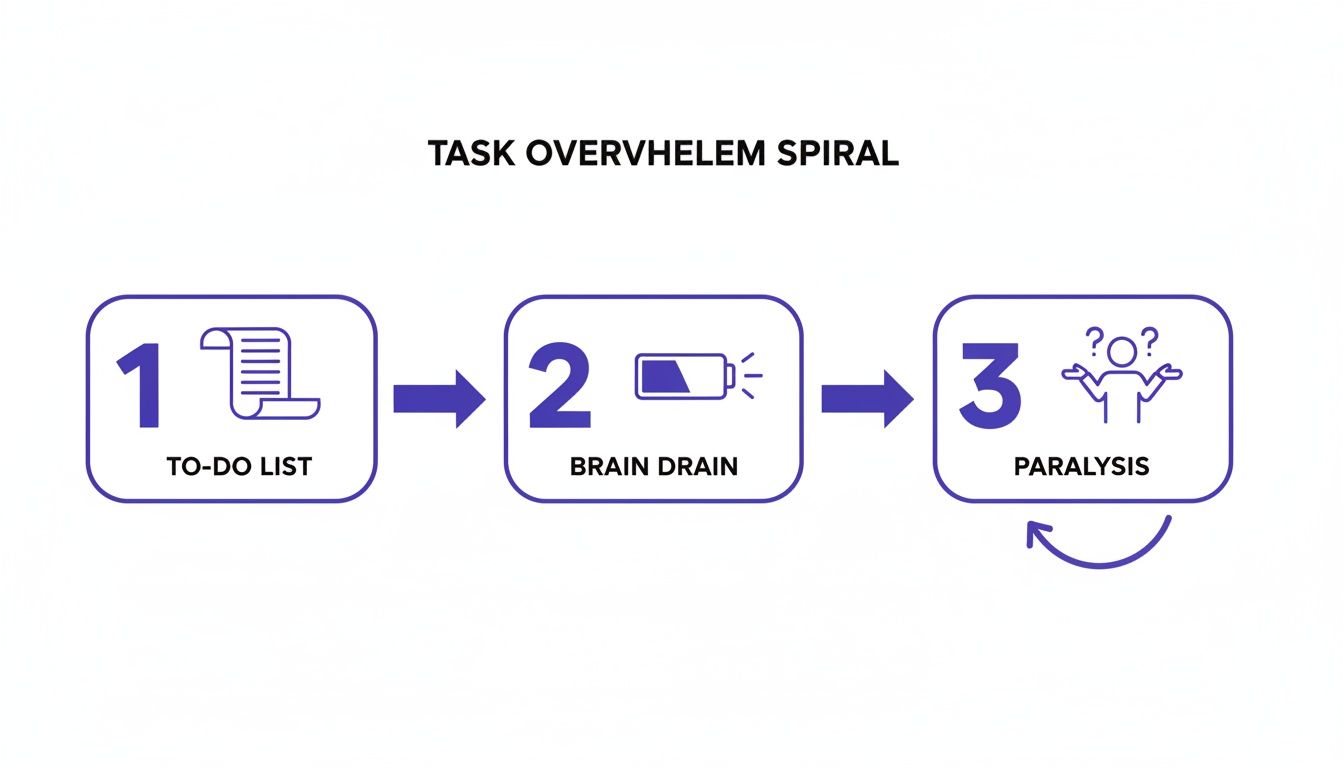
    When that to-do list lives in your head, it’s easy to get caught in a downward spiral. The sheer volume of tasks leads to brain drain, which in turn leads to paralysis. You end up doing nothing because you can’t figure out where to even start.

    Real-World Example: Imagine you’re a freelance writer. Instead of trying to remember client deadlines, article ideas, and invoicing dates, you capture everything. You might jot down β€œFollow up with Client X,” β€œOutline blog post on AI,” and β€œSend invoice for May.” This simple act frees up mental space.

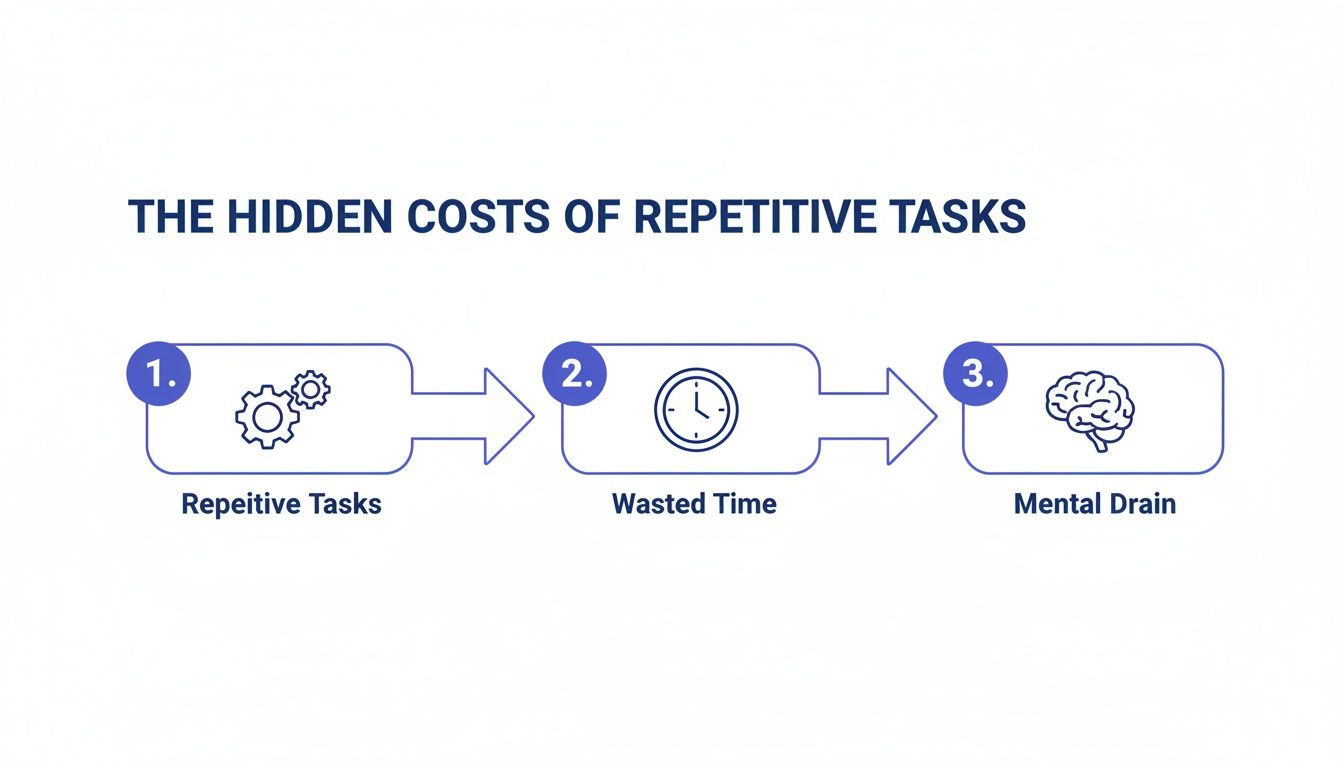
    Diagram illustrating the task overwhelm spiral: To-Do List leads to Brain Drain, then Paralysis.

    This cycle is what keeps so many smart people stuck. The key is to break it at the very first step by getting everything out of your head.

    Step 2: Clarify and Triage Your Task List

    Once everything is captured, it’s time to bring clarity to the chaos. Go through each item on your list. Ask yourself one simple question: β€œWhat does β€˜done’ actually look like for this?”

    A vague task like β€œwork on website” is impossible to prioritize. It’s not a single action. It’s a project in disguise. Break it down into a concrete next step, like β€œwrite the final copy for the β€˜About Us’ page.” This small act of defining the outcome makes the task less intimidating. It’s far easier to assess. This is a vital skill for anyone managing competing priorities, turning abstract worries into steps you can actually take.

    Mini-Scenario: Let’s say your list has β€œplan vacation.” That’s too vague. Clarifying it might produce smaller tasks. Examples include β€œresearch flights to Italy,” β€œbook hotel for first three nights,” and β€œask for time off.” Now you have clear, actionable items.

    Step 3: Score Your Priorities With the Impact vs. Effort Matrix

    Now for the fun part. With a list of clear, actionable tasks, you can start scoring them. Use a simple but incredibly powerful tool: the Impact vs. Effort matrix. This is a visual way to sort your tasks quickly. It helps you get past the β€œanalysis paralysis” that can keep you stuck.

    Use this simple matrix to quickly score your tasks. Plotting each task helps overcome analysis paralysis and clarifies your true priorities. It shows you where to focus your energy for the best results.

    CategoryDescriptionAction
    High Impact / Low EffortQuick Wins that deliver significant value with minimal time or energy.Do these first. They build momentum and create immediate results.
    High Impact / High EffortMajor Projects that are crucial for long-term goals but require deep focus.Schedule these. Block out dedicated time on your calendar to make real progress.
    Low Impact / Low EffortFill-in Tasks that are necessary but don’t move the needle much.Batch these. Knock them out in a single, low-energy block of time.
    Low Impact / High EffortTime Sinks that consume a lot of energy for very little return.Avoid or delegate. Question if these tasks need to be done at all.

    Let’s say you’re a small business owner prepping for a product launch. You’d plot your tasks like this:

    • Quick Win: Sending an announcement email to your subscriber list. (High Impact, Low Effort)
    • Major Project: Building the new product pages on your website. (High Impact, High Effort)
    • Fill-in Task: Archiving old project files from last quarter. (Low Impact, Low Effort)
    • Time Sink: Manually redesigning a minor graphic hardly anyone will notice. (Low Impact, High Effort)

    This matrix isn’t just about sorting tasks; it’s about giving yourself permission to focus on what creates real value and to intentionally sideline what doesn’t.

    Step 4: Select and Schedule Your Work

    With your priorities scored and sorted, there’s just one step left: get them on the calendar. A to-do list tells you what you need to do. Your calendar tells you when you’ll do it. For this, a time blocking planner is your best friend.

    Assign your β€œMajor Projects” to dedicated, uninterrupted blocks of deep work. Maybe that’s Tuesday and Thursday mornings from 9 AM to 11 AM. Slot your β€œQuick Wins” in at the start of the week. This builds momentum and creates some early victories.

    This final step turns your abstract list of priorities into a concrete, actionable plan for the week ahead. It leaves no doubt about what to work on and when.

    Protecting Your Focus With Neuroscience-Backed Habits

    A perfectly organized to-do list is useless if your brain is too fried to execute it. Your prioritization system is only as good as the focus you bring to the table. This is where a few simple, science-backed habits can make all the difference. They protect your attention so you can actually do the work that matters.

    One of the most battle-tested methods is the Pomodoro Technique. It’s not just a cute timer. It’s a way of working with your brain’s natural energy cycles, not against them. Behavioral research shows that structured breaks can restore focus. By committing to a focused 25-minute sprint followed by a 5-minute break, you prevent mental fatigue. I highly recommend using a physical pomodoro timer on your desk. It’s a simple visual cue that keeps you off your phone and locked into the task.

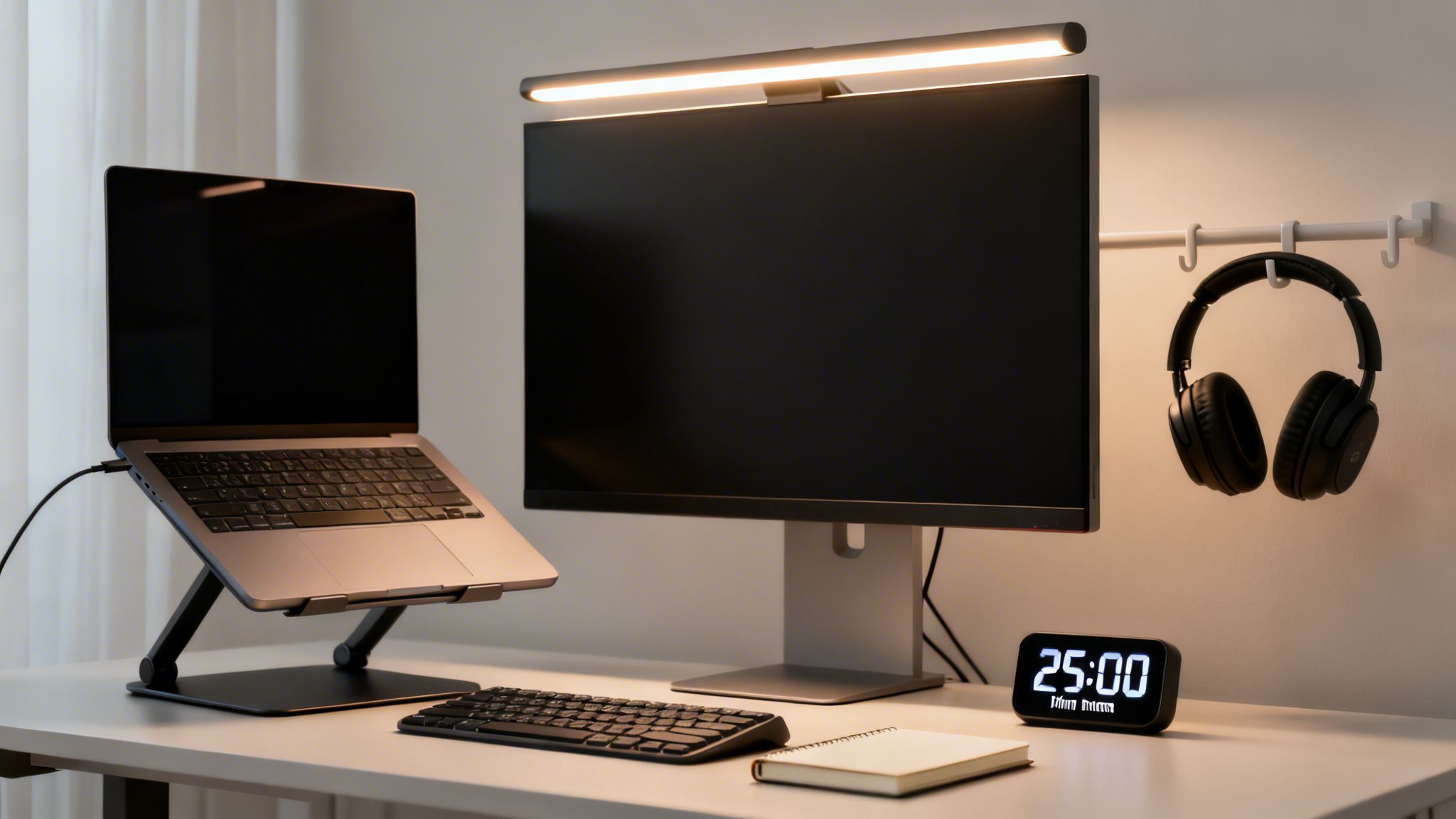
    How to prioritize tasks effectively with a minimalist home office desk setup featuring a laptop, monitor, headphones, and a digital clock.

    Don’t underestimate your physical environment, either. It plays a massive role in your ability to concentrate. An uncomfortable setup creates a low-grade physical stress that quietly drains your mental resources all day. Small ergonomic tweaksβ€”like using a laptop stand for desk to get your screen to eye level or investing in a comfortable ergonomic keyboardβ€”remove that friction and preserve your energy for deep work. You can explore these ideas further in my book on productivity, Focus Recharged.

    Design Your Deep Work Zone for Effective Task Prioritization

    Think of your workspace less like a desk and more like a cockpit designed for focus. Every element should support your goal of sustained concentration, not distract from it. This is a non-negotiable principle for anyone serious about improving focus and concentration.

    Real-World Example: A remote worker I know designed their desk as a dedicated β€œdeep work zone.” They added a monitor light bar to reduce eye strain during long writing sessions. They also physically moved their phone to another room during those blocks, perhaps using a phone lock box timer. This intentional design makes it dramatically easier to slip into a state of flow because you’ve removed temptations ahead of time.

    Immediate feedback is another powerful, often-overlooked tool. Observational studies show that getting high-quality, instant feedback on tasks can improve multitasking performance by 20-30% in controlled settings. Why? Because that feedback loop clarifies priorities on the fly and reassures your brain that your effort is pointed in the right direction.

    Create a Clear End to Your Day

    Finally, one of the most crucial habits for avoiding burnout is building a β€œshutdown ritual.” It doesn’t have to be complicated. At the end of your workday, take five minutes. Review what you accomplished. Capture any new tasks that popped up. Then define your top one or two priorities for tomorrow.

    This small ritual acts as a powerful signal to your brain. It says the workday is officially over. Psychology research suggests that such routines help create boundaries, which are essential for mental recovery. This allows you to mentally disengage and truly recharge, preventing the chronic stress that leads to burnout. Creating a clean break between β€œwork” and β€œrest” is the only way to protect your focus for the long haul, a concept I cover in Burnout Interrupted.

    Using AI and Simple Rules for Effortless Prioritization

    Even the best prioritization system can feel sluggish when you’re staring down a mountain of tasks. This is where modern tools and simple decision-making shortcuts come in. They can dramatically speed up your workflow. This saves precious mental energy for the deep work that actually moves the needle.

    One of the most powerful techniques is assisted triage using artificial intelligence. Instead of manually sorting a chaotic list, you offload the initial heavy lifting to an AI tool.

    Mini-Scenario: Imagine you just wrapped up a one-hour brainstorming session. A project manager could paste the entire meeting transcript into an AI. Then they can ask it to β€œextract and categorize all action items by owner.”

    Just like that, a wall of text becomes a clean, actionable list. It’s a concept we explore more deeply in our guide on how to use AI for productivity.

    Automate Small Decisions with Simple Heuristics

    Beyond high-tech solutions, you can streamline your day with simple rules, or heuristics. These rules kill off tiny decisions before they even start. They are like mental shortcuts that keep decision fatigue at bay.

    Here are two of the most effective ones you can start using immediately:

    • The Two-Minute Rule: Popularized by David Allen, this rule is beautifully simple. If a new task pops up and you can knock it out in two minutes or less, just do it right then. This stops tiny to-dos from cluttering up your list and your mind.
    • The One-Touch Rule for Emails: The moment you open an email, decide its fate. You can archive it, delete it, reply (if it takes less than two minutes), or move it to a β€œto-do” folder for later. The one thing you don’t do is close it and leave it in your inbox to be re-read later.

    To get these rules to stick without getting sidetracked, I’ve found a visual timer for desk works wonders. Setting it for just two minutes creates a real, tangible boundary. It stops you from accidentally falling down a rabbit hole. For an even more comprehensive strategy, check out these tips on how to use AI for productivity effectively.

    The real point of these rules isn’t just about speed. It’s about preserving your best cognitive resources for high-impact work by putting the small stuff on autopilot.

    The data backs this up. While global productivity growth has been slow, AI-heavy firms are reporting 72% higher productivity. They also report 59% better employee satisfaction. Even more impressive, generative AI is boosting knowledge worker efficiency by 66% or more. Integrating smart tools with simple rules isn’t just a nice idea. It’s a proven way to get more of the right things done.

    Editor’s Take: What Really Works to Prioritize Tasks

    After testing dozens of systems, I always come back to two practices that consistently deliver results, especially when life gets chaotic.

    First, the Impact/Effort Matrix is the single best tool for instant clarity. It forces an honest conversation with yourself about what’s truly valuable versus what just feels urgent. This exercise is a game-changer for anyone who struggles to see the forest for the trees. It’s the fastest way to stop majoring in minor things.

    Second, time blocking is the only method that reliably protects my deep work. If a high-impact task doesn’t have a specific block reserved for it on my calendar, it almost never happens. It just gets pushed around by a flood of emails and small requests. A good habit tracker journal can help make this practice stick.

    This combination is best for busy professionals, freelancers, and students. It’s for anyone tired of ending the day feeling busy but not productive. The key caveat is that this system requires a weekly review. You must set aside 30 minutes to clean up your list and plan the week ahead. Without that, even the best system will fall into chaos. The goal isn’t perfection; it’s about building a reliable system for consistent, meaningful progress.

    Key Takeaways on Task Prioritization

    • Externalize Your Brain: Don’t use your mind for storage. Capture every task in a single, trusted system like a notebook or app to free up cognitive resources.
    • Clarify Before You Organize: Vague tasks like β€œwork on report” cause overwhelm. Break them down into specific, actionable steps like β€œdraft report outline” before prioritizing.
    • Use the Impact vs. Effort Matrix: This simple 2Γ—2 grid is the fastest way to sort your tasks into Quick Wins, Major Projects, Fill-in Tasks, and Time Sinks. This visual sorting kills analysis paralysis.
    • Schedule Your Priorities: A to-do list is a wish list until it’s on your calendar. Use time blocking to reserve specific, uninterrupted slots for your most important work.
    • Protect Your Focus: Your system is useless without the mental energy to execute it. Use neuroscience-backed habits like the Pomodoro Technique and create a distraction-free work zone to protect your focus. An ergonomic mouse might seem small, but it reduces physical strain, saving mental energy.

    • Automate Small Decisions: Use simple rules like the β€œTwo-Minute Rule” to handle small tasks immediately. This prevents them from cluttering your mind and list, preserving your decision-making power for what matters.

    Final Words

    When it comes down to it, getting a real handle on your priorities isn’t about a magic app or a single productivity hack. It’s about building a simple, repeatable system that cuts through the noise. It lets you focus on what actually moves the needle. The goal is to move from feeling reactive and overwhelmed to feeling intentional and in control of your day. A great sunrise alarm clock can even help start your day with intention instead of panic.

    The goal isn’t perfection. It’s about building a reliable system that helps you make consistent, meaningful progress on the things that actually matter.


    Disclaimer: This article contains affiliate links. If you purchase a product through these links, we may receive a small commission at no extra cost to you. The content provided here is for educational and informational purposes only and is not a substitute for professional medical or psychological advice, diagnosis, or treatment.

    Frequently Asked Questions (FAQ)

    Even with the best system in place, questions pop up. Life is messy, and a good prioritization framework needs to be flexible enough to handle reality. Here are some of the most common questions about making this stick.

    1. What do I do about unexpected β€œurgent” tasks?

    This is going to happen. The real skill isn’t preventing surprises; it’s learning how to filter them without derailing your entire day. Before you react, run the new task through your system. Ask yourself: β€œIs this truly high-impact for our goals, or is it just someone else’s poor planning disguised as urgency?” If it’s a genuine β€œDo First” crisis, you’ll have to adjust. But if it’s not, your system gives you the confidence to calmly say, β€œI can look at that this afternoon.”

    2. What if everything feels like a high-impact, high-effort task?

    This is a classic sign of overwhelm. When everything feels like the number one priority, it usually means your tasks are too big and vague. A task like β€œLaunch New Product” isn’t a task; it’s a massive project. Your list should have things like β€œDraft the first launch email” or β€œFinalize product photos.” Breaking it down into smaller, concrete actions makes them much easier to score and schedule.

    3. How often should I re-prioritize my list?

    For most people, a two-part rhythm works best: a quick daily check-in and a more thoughtful weekly review.

    • Daily Triage (5-10 minutes): First thing in the morning, give your list and calendar a quick scan to confirm your 1-3 Most Important Tasks for the day.
    • Weekly Review (30 minutes): Set aside a block of time, maybe Friday afternoon, to look back at what you accomplished and map out your big priorities for the week ahead.

    4. How can this system help a procrastinator?

    Procrastination is rarely about laziness. It’s usually a symptom of feeling overwhelmed or unclear. This system tackles that head-on. By forcing you to define a small, clear next step, you lower the barrier to getting started. Pairing this with a pomodoro timer is a game-changer. It’s far less daunting to commit to just 25 minutes of focused work than to face the entire project at once.

    5. My team members all have different priorities. How do we align?

    A shared, visual framework becomes your best friend. Pull up an Impact/Effort Matrix in your next team meeting. Plotting tasks together shifts the conversation from subjective feelings to a more objective discussion about what will move the needle on the team’s shared goals. This single practice can prevent countless conflicts.

    Strategies for how to prioritize tasks effectively

    6. What if I have zero motivation for my high-priority tasks?

    A lack of motivation is often a sign of a disconnect from the β€œwhy” or simple decision fatigue. Reconnect with the task’s purpose. How does finishing it get you closer to a bigger goal? Also, be honest about your energy. If you’re running on empty, you might need to prioritize foundational habits like sleep first. Better sleep, perhaps with a sleep mask blackout or a white noise machine, can dramatically improve your mood and motivation.

    7. How do I stick with this system when I get insanely busy?

    The busier you are, the more you need a system. When things get chaotic, your brain can’t hold all the details. The key is making the habit as frictionless as possible. Keep your capture toolβ€”like a productivity journalβ€”always within arm’s reach. If you fall off the wagon for a day or two, don’t beat yourself up. Just do a quick β€œbrain dump” and jump back in.

    8. What’s the β€œTwo-Minute Rule” and how does it fit in?

    This is a simple but powerful decision rule. It goes like this: if a new task appears and you can do it in two minutes or less, do it immediately instead of adding it to your list. Think of things like answering a quick scheduling email. This prevents tiny tasks from piling up and creating mental clutter.

    9. Are there any apps you recommend for this?

    While a simple notebook is incredibly effective, plenty of digital tools can support this workflow.

    • Todoist is great for capturing tasks and using labels for your priority quadrants.
    • Asana or Trello are excellent for managing team projects with visual boards.
      The best tool is always the one you’ll actually use every single day.

    10. How can I prioritize when I feel completely burned out?

    When you’re burned out, your number one priority is recovery, a topic I detail in my book Burnout Breakthrough. Trying to force productivity will only dig the hole deeper. Be ruthless with your task list. Aggressively cut out any β€œTime Sinks.” Focus only on the handful of things that are truly mission-critical and give yourself permission to let the rest go for now. When your cognitive resources are low, as explained in our article on what is decision fatigue, managing them is everything.

  • What Is Pomodoro Technique A Guide to Deep Focus

    What Is Pomodoro Technique A Guide to Deep Focus

    The Pomodoro Technique is a time management method that breaks your work into focused 25-minute sprints, separated by short breaks. Think of it as a simple system for creating a rhythm of intense effort followed by deliberate rest. This helps you chip away at big projects without feeling overwhelmed.

    Disclosure: This post may contain affiliate links. If you make a purchase, we may earn a small commission at no additional cost to you.

    Unlocking Deep Focus with Timed Intervals

    Imagine your focus is a muscle. Like any other muscle, it gets stronger with the right kind of training, not by running it into the ground. The Pomodoro Technique is its workout plan. This psychological approach helps reframe your relationship with work.

    Instead of staring down a massive, multi-hour project, you only have to commit to 25 minutes of pure, uninterrupted effort. That small, manageable chunk of time makes it so much easier to beat procrastination and just get started.

    Mini-Scenario: A freelance writer has a 3,000-word article to complete. The thought is paralyzing. Instead of facing the whole task, she sets a pomodoro timer for 25 minutes. Her only goal is to write the introduction. The small commitment feels easy, and she starts typing.

    The whole thing was invented back in the late 1980s by Francesco Cirillo. He was then a university student in Italy drowning in intense study schedules. He grabbed a quirky, tomato-shaped kitchen timerβ€”pomodoro is Italian for tomatoβ€”and challenged himself to just focus until it rang. After tweaking his method, he landed on the core structure we still use today. This includes 25 minutes of work, a 5-minute break, and a longer rest after four sessions. You can read more about its origins on Todoist.com.

    This cycle of work and rest isn’t random; it’s designed to respect your brain’s natural energy limits. From a neuroscience perspective, these short breaks prevent mental fatigue by allowing your prefrontal cortex to recover. This helps you keep your performance high all day long. It’s a powerful way to build sustainable focus systems, which I detail in my book, The Power of Clarity.

    The Basic Pomodoro Cycle

    This simple cycle is the heart of the technique. It’s a visual reminder of the flow from a work sprint into a short break, repeated over and over.

    The method’s power isn’t in its complexity but in its consistent, repeated application. All you really need to begin is a simple timer.

    The core idea is to train your brain to drop into a state of flow on command. Each 25-minute block is a practice round in single-tasking. This strengthens the neural pathways tied to sustained attention. By committing to one thing, you build momentum and make steady, tangible progress. This method helps manage cognitive load effectively.

    To go deeper on why this works so well, check out our guide on the neuroscience of single-tasking. This structured approach is one of the best ways to reclaim your attention from digital distractions. For a deeper dive into attention management, consider my book Attention Unleashed.

    Why The Pomodoro Technique Is So Effective for Your Brain

    The Pomodoro Technique feels like more than just a clever time management hack because it is. It’s a system designed to work with your brain’s natural wiring for performance, not against it. Its power comes from syncing up with the cognitive rhythms you already have. It avoids trying to brute-force your way through mental fatigue.

    Think of it this way: your brain has built-in cycles of high and low energy. These are often called ultradian rhythms, and they tend to run in 90-120 minute waves throughout your day. By working in short, 25-minute bursts, you’re essentially riding the top of those energy peaks. This prevents you from pushing your brain into cognitive overload and creates a sustainable pace.

    Recharging Your Brain’s CEO

    Imagine your brain’s prefrontal cortex as its CEO. It’s the part that handles heavy lifting like complex planning, decision-making, and staying on task. Just like any executive, it gets tired after a stretch of intense work. Those scheduled five-minute breaks in the Pomodoro cycle aren’t just for grabbing coffee. They’re critical moments for that CEO to rest and recharge.

    This short mental downtime helps you consolidate what you’ve just learned. It also prepares you for the next round of focused effort. Skipping these breaks is like asking a CEO to run back-to-back board meetings all day without a single pause. Eventually, the quality of their decisions will plummet. A good pair of blue light blocking glasses can help reduce eye strain during these work sprints.

    The simple, repeatable flow of the technique helps break a massive project into bite-sized pieces. This is fantastic for lowering the mental resistance we all feel when facing a big task.

    Mini-Scenario: A student studying for final exams feels anxious about the sheer volume of material. Instead of trying to study for hours, they use Pomodoros. They study one chapter for 25 minutes, then take a 5-minute break to walk around their room. This breaks the cycle of anxiety and makes the study session feel achievable.

    This rhythm of work-and-rest also trains your brain. Over time, the timer’s ding becomes a trigger, conditioning your mind to drop into flow more easily. By building this habit, you cut down on procrastination and make deep work feel more automatic. It taps into the brain’s reward system, as each completed Pomodoro delivers a small sense of accomplishment.

    Ultimately, the Pomodoro Technique is built to sharpen your cognitive performance. For more on this, you might find useful strategies in this list of 8 Ways To Boost Brain Function For Greater Focus And Productivity.

    How to Start Using The Pomodoro Technique Today

    The best part about the Pomodoro Technique is how simple it is to get started. There’s no complex setup or steep learning curve. The whole point is to get you moving from planning to doing as quickly as possible. This builds momentum from your very first 25-minute sprint.

    The real magic happens when you stop staring at the enormous project on your to-do list. Instead, focus only on the next small step. β€œLaunch marketing campaign” feels overwhelming. But what if your list looked like this instead?

    • Draft ad copy (1 Pomodoro)
    • Design visuals (2 Pomodoros)
    • Set up targeting (1 Pomodoro)

    Each one of those is a manageable, bite-sized action. Suddenly, the impossible project feels doable. You can map these out in a time blocking planner to visualize your day.

    The Original Six-Step Process

    Francesco Cirillo’s method is much more than just a timer. It’s a complete system for planning your work, tracking your progress, and reflecting on where your time actually went. Following these original steps is the key to building a focus habit that actually sticks.

    1. Choose Your Task: Look at your to-do list and pick a single, high-priority thing to work on. Just one.
    2. Set Your Pomodoro Timer: Grab a dedicated pomodoro timer or even a simple kitchen timer and set it for 25 minutes.
    3. Work on the Task: Give that one task your undivided attention. If a random thought pops into your head, quickly jot it down on a notepad and get right back to work. A good laptop stand for desk can improve posture and focus.
    4. End Work When the Timer Rings: As soon as the timer goes off, stop. Put a checkmark on a piece of paper or in your productivity journal.
    5. Take a Short Break: Now for the non-negotiable part: take a 5-minute break. Seriously. Step away from your desk, stretch your legs, or grab a glass of water.
    6. Take a Longer Break: After you complete four Pomodoros, take a longer break of 15–30 minutes. This extended rest lets your brain reset and absorb information before the next round.

    This cycle provides you with valuable data on how you work. It’s no surprise that people often report completing 25-40% more work daily compared to their old, unstructured sessions. You can learn more about its history over on Wikipedia.

    Gathering Your Tools

    You really don’t need much, but having the right tools can make the process feel much smoother. Your goal is to create an environment that sends a clear signal to your brain: it’s time to focus now.

    Your main tool, of course, is a timer. While your phone has one, many people find an analog alarm clock or a visual timer for desk far more effective. A physical timer creates a tangible separation between you and the endless digital distractions on your screen. You might even consider a phone lock box timer to eliminate temptations.

    Next, you need a way to track your sessions. A simple notebook or a dedicated habit tracker journal is perfect. The physical act of checking off each completed Pomodoro creates a small hit of accomplishment. This reinforces the habit loop and makes you want to do it again. An ergonomic keyboard can also make long work sessions more comfortable.

    This simple practice is an incredible first step if you’re serious about learning how to do deep work on a consistent basis. With just a timer and a notebook, you can start building a powerful focus habit today.

    Adapting The Pomodoro Technique for Your Unique Workflow

    The classic 25/5 cycle is a brilliant starting point, but its real power isn’t in the specific numbers. It’s in the flexibility. The goal is to find a sustainable rhythm that actually works for you. This avoids forcing yourself into a box that just leads to frustration.

    Think of the Pomodoro Technique as a template, not a prescription. Your energy levels, the complexity of your work, and your own focus patterns are unique. By customizing the method, you turn it from a rigid process into a personal productivity system. This can prevent the mental fatigue that so often leads to burnout, a topic covered in my book Burnout Breakthrough.

    Finding Your Ideal Work-Break Ratio

    The only way to find what works is to experiment. The standard 25/5 split is fantastic for knocking out routine tasks. However, some work just needs a different pace.

    For deeper work like writing or coding, a longer block lets you sink into flow. On the other hand, for clearing out your inbox, shorter sprints can build momentum fast. An ergonomic mouse and a monitor light bar can also enhance your deep work setup.

    Here’s a quick look at how you might adjust your ratios for different kinds of work.

    Pomodoro Variations for Different Tasks

    Work/Break RatioBest ForExample Scenario
    50/10 SplitDeep, creative work requiring sustained concentration.Writing a chapter, coding a feature, or developing a long-term business strategy.
    25/5 SplitStandard, moderately complex tasks.Answering emails, outlining a presentation, or working on daily reports.
    15/3 SprintQuick, administrative, or low-focus tasks.Clearing out your inbox, organizing files, or tackling a list of small chores.

    This isn’t an exhaustive list, but a starting point. Your job is to listen to your own brain and body. What feels challenging but sustainable? If you work from home, an under desk walking pad can make breaks more active.

    Using a planner is a great way to map out your day and assign the right Pomodoro variation to each task. This helps you align your energy with your work, a core concept we explore in our guide on managing energy, not time.

    Handling Interruptions Gracefully

    Of course, one of the biggest challenges isn’t the timerβ€”it’s the people around you. Unexpected interruptions from colleagues or family can derail the whole system if you’re not prepared.

    Protecting your focus doesn’t mean you have to be rude. A simple, polite script can preserve your flow state without damaging relationships.

    When a coworker stops by, you can say something like: β€œI’m in the middle of a focus block right now, but can I circle back with you in about 15 minutes?”

    Mini-Scenario: A remote worker is in a 25-minute Pomodoro when their partner asks a question about dinner plans. Instead of getting annoyed, they say, β€œHey, I’m on a timer for 10 more minutes. Can we talk about it then?” The boundary is set, and the conversation is delayed, not dismissed.

    This small phrase does two crucial things: it acknowledges their request while also setting a clear boundary. This kind of adjustment makes the Pomodoro Technique work in a busy, collaborative world.

    Editor’s Take: What Actually Works with the Pomodoro Technique?

    So, what’s our honest take? The Pomodoro Technique is a genuine game-changer for anyone whose work demands deep concentration. If you’re a writer, developer, student, or anyone staring down a big, intimidating project, it’s a fantastic tool for getting started and staying on track. It’s one of the simplest ways to beat procrastination by lowering the activation energy needed to begin a task.

    However, it’s not a perfect fit for every job. If your role is built around constant interruptionsβ€”think frontline customer support or crisis managementβ€”the strict, timed structure can feel more frustrating than helpful.

    Its rigidity can feel a bit confining at first, but the real power comes when you give yourself permission to experiment with work/break ratios. Ultimately, the Pomodoro Technique is less about the timer and more about intentionally building your β€œfocus muscle” and bringing a predictable rhythm to an otherwise chaotic day. You can amplify that effect by pairing it with quality noise canceling headphones, signaling to your brain that it’s time to sink in. For anyone navigating attention challenges, it can also be an incredibly valuable support for improving focus and concentration.

    • Who it’s best for: Procrastinators, knowledge workers, students, and anyone with project-based work.
    • Important Caveat: Its effectiveness depends on your ability to honor the breaks and manage interruptions. Without boundaries, the system falls apart.

    Key Takeaways: What Is Pomodoro Technique?

    Here’s a quick summary of the most important points to remember about this powerful time management method.

    • Focus in Sprints: The technique uses 25-minute focused work intervals (Pomodoros) followed by 5-minute breaks to maximize concentration and prevent burnout.
    • Brain-Friendly: It works with your brain’s natural energy cycles (ultradian rhythms), allowing your prefrontal cortex to rest and recharge during breaks.
    • Beats Procrastination: By breaking large tasks into small, manageable 25-minute chunks, it lowers mental resistance and makes it easier to start.
    • Customizable: The classic 25/5 ratio is just a starting point. Adjust the intervals (e.g., 50/10) to fit your personal workflow and the task’s complexity.
    • Plan for Interruptions: Unexpected distractions are inevitable. Use a polite script to protect your focus blocks without damaging relationships.
    • Tools Are Simple: All you need is a timer and a way to track your sessions. A physical timer is often more effective than a phone app.
    • Breaks Are Mandatory: Skipping the short breaks is the biggest mistake you can make. They are essential for sustained performance and preventing mental fatigue.

    To really get the most out of your focus sessions, it helps to optimize the other parts of your day. For instance, a chaotic inbox is a major focus killer. Alongside time management, check out these simple email management tips to boost your productivity to keep your digital workspace clear.

    Frequently Asked Questions About the Pomodoro Technique

    You’ve got the basics down, but making a new system stick in the real world always brings up questions. Here are honest answers to the most common sticking points people hit when they start using Pomodoro timers to find their focus.

    Making the Technique Work Day-to-Day

    1. What should I actually do during my Pomodoro breaks?
      The one non-negotiable rule is to get away from your screen and the task at hand. Your brain isn’t resting if you’re just switching from a spreadsheet to your email inbox. Instead, do something physical and simple. Stand up, stretch, grab a glass of water, or just stare out the window. This allows your prefrontal cortex to actually recharge for the next sprint. A good sunrise alarm clock can also help regulate your daily energy cycles.

    2. What if I get an important interruption during a focus session?
      Life happens. The trick is to have a plan. If it’s a true emergency, you stop the timer, no guilt. But for most non-urgent pings, try a simple script: β€œI’m in a deep focus block, can I get back to you in about 15 minutes?” This protects your session while respecting the other person. If you’re getting interrupted constantly, the technique is giving you useful data: you may need to work on setting clearer boundaries. To promote calm, some people find a magnesium glycinate supplement helpful.

    3. Can I use the Pomodoro Technique for group projects?
      Absolutely. It’s a fantastic way to structure a collaborative work session. Get the team to agree to a 25-minute focus block together. During that time, everyone works independently on their piece of the puzzle. Then, use the 5-minute break for quick sync-ups or questions before the next round. It prevents those long, meandering work sessions where nothing gets done.

    4. How many Pomodoros should I aim for in a day?
      There’s no magic number. When you’re just starting, aiming for 4 to 8 Pomodoros is a huge win. More seasoned pros might hit 12 to 16 on a good day. The goal isn’t to cram your day with as many timed blocks as possible; it’s about the quality of your focus. Pay attention to your energy, not just the tally. Sustainable productivity is the whole point, a theme I explore in my book, Burnout Interrupted.

    5. Is there a best app for the Pomodoro Technique?
      Honestly, a simple kitchen timer is surprisingly effective. That said, lots of people like digital tools. Apps like BeFocused, Forest, and Focus Keeper are popular because they track your sessions. The β€œbest” app is whichever one you’ll actually use that doesn’t become a distraction itself. The tool is far less important than the process.

    Understanding what is pomodoro technique Finer Points

    1. What if I finish my task before the 25-minute timer rings?
      Great question. If you wrap up early, the rule is to use the remaining time for β€œoverlearning.” Don’t just stop and check your phone. Instead, review what you just accomplished. Double-check for errors, add a little polish, or organize your notes. You could even use the time to map out your very next Pomodoro. The idea is to stay engaged with the task cluster until the bell rings. Good sleep, using a sleep mask blackout and white noise machine, can also improve focus the next day.

    2. Does the Pomodoro Technique work for creative tasks like writing or design?
      It does, but you might need to tweak it. For many creatives, a 25-minute block is just too shortβ€”it can interrupt you right as you’re hitting a state of flow. The solution is simple: experiment with longer intervals. Try a 50-minute focus block followed by a 10-minute break. This gives you a longer runway to sink into deep, complex work. My book, Digital Clarity, offers more strategies for creative focus.

    3. Can I use this technique if I have ADHD, anxiety, or burnout?
      Many people with attention or mood challenges find the Pomodoro Technique’s structure helpful. The short sprints can make tasks feel less overwhelming and provide a clear finish line. However, this article is for educational purposes only. It is not a substitute for professional medical or psychological advice for conditions like ADHD, anxiety, depression, or burnout. For personalized strategies, it’s always best to consult with a qualified professional.

    4. What’s the biggest mistake people make when starting out?
      Hands down, the most common mistake is skipping the breaks. It’s so tempting to push through when you feel like you’re on a roll. But those breaks are non-negotiable. They’re what prevent mental fatigue and keep your focus sharp for the next round. Ignoring them is the fastest path to burning out and deciding the technique β€œdoesn’t work.”

    5. Why is it even called the β€œPomodoro” Technique?
      The name comes from the Italian word for β€œtomato” (pomodoro). Back in the 1980s, when creator Francesco Cirillo was a university student struggling to focus, he grabbed a tomato-shaped kitchen timer from his counter. He used it to time his first focused study session. The name stuck, and that humble kitchen gadget became an unlikely symbol for focused, productive work.


    Disclaimer: This article may contain affiliate links. Purchases made may earn a small commission at no extra cost to you. The content provided is for educational and informational purposes only and does not constitute medical or psychological advice. Always consult a qualified healthcare provider for personalized guidance.

  • How to Automate Repetitive Tasks and Reclaim Your Focus

    How to Automate Repetitive Tasks and Reclaim Your Focus

    This article may contain affiliate links. If you make a purchase, we may earn a small commission at no extra cost to you. Our recommendations are always based on merit and relevance.

    Learning how to automate repetitive tasks isn’t about becoming a programmer overnight. It’s simpler. It is about spotting the low-value work that eats your time. This includes tasks like data entry or sorting emails. Then, you use simple tools to handle it for you. The real goal is to free your mental energy for what matters.

    Editor’s Take

    Automation works best when you start small. The advice in this guide is ideal for freelancers, small business owners, and professionals buried in administrative tasks. The key is to pick one high-frequency, rule-based task and automate it first. For example, saving email attachments to a specific folder. Tools like Zapier and Make are fantastic, but don’t over-automate. Rigid systems can break. Periodically review your workflows to ensure they still save you time instead of causing new problems.

    The Hidden Cost of Repetitive Tasks

    That feeling of being swamped by tiny chores is more than an annoyance. It’s a quiet thief of your most valuable resources: focus and energy. These seemingly harmless tasks chip away at your mental bandwidth. They leave you drained when you need to tackle important work.

    From a neuroscience perspective, this constant churn creates decision fatigue. Our brains have a finite amount of cognitive resources for a given day. Every small choice consumes a piece of those reserves. Think of it like a mental budget. When repetitive tasks force hundreds of micro-decisions, your capacity for complex problem-solving shrinks. This leaves you feeling depleted.

    Mini Scenario: Sarah, a marketer, spends her first hour each day sorting through a generic inbox. She decides which emails to delete, which to forward, and which to file. By the time she starts her main projectβ€”designing a new campaign strategyβ€”her brain is already tired from making dozens of low-impact choices. Her creative thinking suffers as a result.

    The Financial and Mental Toll of Manual Work

    The financial impact is just as real. Mind-numbing administrative processes cost businesses around 19 working days per year for each employee. One study was staggering. It found that HR departments can spend nearly 57% of their time on manual tasks alone.

    Even high-performing companies waste a full day of productivity per employee each week on redundant work. For a mid-sized company, that can add up to over 77,000 wasted hours annually. You can see the full research on HR process automation to grasp the problem’s scale.

    This constant juggling also pushes you into cognitive overload. This is a state where your brain tries to process more information than it can handle. This doesn’t just hurt performance; it ramps up stress. This state puts you on a fast track to burnout. You can explore this further in our guide on what is cognitive overload.

    When you frame automation as a strategy for reclaiming mental clarity, the conversation changes. It becomes a practical tool for your well-being. It’s less about learning to code and more about designing a smarter way to work.

    Finding Your Best Opportunities for Automating Repetitive Tasks

    Before you automate, you must know what’s worth the effort. The goal is to stop guessing and start measuring. This begins with a simple exercise I call a β€œtask audit.” It’s a quick inventory to pinpoint recurring activities that drain your day.

    The point isn’t just another to-do list; it’s about awareness. Behavioral research shows that our brains create habits to conserve energy. This means we often repeat inefficient patterns on autopilot. A task audit forces you to observe these patterns consciously. This is the first step toward changing them.

    For just one week, keep a simple log of your work. A basic spreadsheet or notebook will do. You’re creating a data-driven snapshot of where your time and energy go.

    Conducting Your Personal Task Audit to Automate Repetitive Tasks

    To see this in action, let’s look at a few professionals. They track their work to find hidden automation gems.

    • Mini Scenario 1 (Freelance Designer): She logs every step of creating a new client proposal. She notes time spent finding old templates, copying portfolio links, and manually drafting follow-up emails. She realizes this sequence happens 5-10 times a week. It eats up 30 minutes each time. This is a prime candidate for automation.
    • Mini Scenario 2 (Project Manager): He tracks time spent on weekly status reports. This involves chasing updates from team members via chat. He then manually enters data into a spreadsheet. Finally, he formats it for a presentation. This single task burns two hours every Friday.
    • Mini Scenario 3 (Small Business Owner): She monitors her daily social media routine. She logs time finding content and writing captions for three platforms. She also schedules each post individually. Then she replies to common questions. This β€œdaily routine” adds up to over an hour.

    These seemingly small, repetitive tasks compound. They create significant hidden costs beyond wasted minutes.

    A flowchart illustrating the hidden costs of repetitive tasks, leading to wasted time and mental drain. Alt text: How to automate repetitive tasks and reduce mental drain.

    As you can see, the cycle is predictable. It starts with repetitive tasks, which lead to wasted time. The real damage is the mental drain and reduced focus. This makes your important, creative work much harder.

    Scoring and Prioritizing Your Tasks

    Once you have a week of data, break down larger processes. The project manager’s β€œstatus report” is actually β€œcollecting updates,” β€œdata entry,” and β€œreport formatting.” This breakdown makes it easier to spot prime candidates for automation. Now, use a simple scoring system to decide what to tackle first.

    Pro-Tip: Zero in on tasks that are high-frequency, rule-based (follow the same steps every time), and low-creativity. These are your quick wins.

    Here’s a simple way to structure your analysis.

    Task Automation Suitability Matrix

    Use this matrix to score your repetitive tasks. Tasks with the highest total score are your top candidates for automation.

    Task ExampleFrequency (1-5)Time Spent (1-5)Mental Drain (1-5)Total Score (Out of 15)
    Copying sales leads to a spreadsheet53412
    Sending weekly reminder emails4239
    Scheduling social media posts54413
    Brainstorming new campaign ideas1517

    The tasks with the highest scores are your best targets. This method strips out emotion and gives you a logical starting point. Email management is often a high-scoring category. If that’s you, it might be worth learning how to manage email overload with targeted strategies. This audit gives you the raw material to design useful automated workflows.

    Choosing the Right Tools to Automate Repetitive Tasks

    Once you’ve mapped out which tasks are eating your time, find the right tools. The world of automation software can look intimidating. The good news is you don’t need to be a developer.

    Many powerful tools today are built for everyone. Avoid getting bogged down by endless options. Instead, think about them in categories based on what they do. This helps you match the right solution to your specific problem.

    The momentum here is undeniable. We’re seeing a massive shift. Nearly six in ten companies already use some form of process automation. A staggering 91% of organizations also report that the demand for these solutions is climbing.

    Workflow Connectors: The Digital Glue

    Think of workflow connectors as the central nervous system for your apps. These platforms don’t perform tasks themselves. They are intermediaries that let your software tools talk to each other.

    They are the foundation for anyone learning how to automate repetitive tasks across multiple platforms.

    • What they do: These tools operate on a simple β€œif this, then that” logic. A β€œtrigger” in one app sets off an β€œaction” in another.
    • Best for: Connecting various cloud-based apps without a direct integration.
    • Popular Examples: Zapier, Make, and IFTTT.

    Mini Scenario: A consultant uses a contact form on her website. Instead of manually copying each lead, she uses Zapier. Now, when a new form is submitted (the trigger), Zapier automatically adds the person to Mailchimp and creates a new task in Trello (the actions). Zero manual entry.

    This screenshot from Zapier’s homepage shows how it visually frames its power. It connects thousands of popular apps to make automation feel accessible.

    The interface breaks it down into a simple, three-step flow. This reinforces that building complex workflows can be surprisingly straightforward.

    Task-Specific Automation Platforms

    Some tools automate one specific type of work very well. Instead of connecting apps, they master a single job. These are often the easiest entry points into automation.

    These platforms are a fantastic place to start. They solve a single, common pain point without a steep learning curve.

    • Social Media Schedulers (e.g., Buffer, Hootsuite): These let you plan and schedule all your social media content at once.
    • Email Marketing Platforms (e.g., Mailchimp, ConvertKit): These services master automating email sequences. When someone joins your newsletter, they can automatically receive a pre-written welcome series.

    Simple Scripters and Text Expanders

    This category of tools offers big time-saving returns for little effort. They specialize in automating small, repetitive typing tasks.

    • What they do: Text expanders let you create short snippets that expand into longer phrases or emails.
    • Best for: Answering FAQs, filling out forms, or inserting common code blocks.
    • Popular Examples: TextExpander, aText, and built-in keyboard shortcuts.

    Mini Scenario: A customer support agent gets the same five questions daily. Instead of typing the same response each time, she creates a snippet. Now, she types β€œ;policy” and it instantly expands into a full paragraph explaining the return policy.

    My best advice? Start with one simple tool. Pick one high-impact task and find a single tool that solves that problem. This builds momentum and confidence. As you get more comfortable, exploring how to use AI for productivity can open up new avenues.

    Building Your First Automated Workflow

    Alright, theory is great, but the real magic happens when you see automation working. Let’s build your first automated workflow from start to finish. Our goal is simple but incredibly useful. We’re going to build a system that automatically handles new leads from a website contact form.

    Instead, this workflow will instantly do three things:

    1. Grab the new lead’s info.
    2. Add that info into a new row in a Google Sheet.
    3. Send a personalized welcome email to the new contact.

    This is a classic β€œquick win” automation. It saves time and kills the potential for typos.

    How to automate repetitive tasks: a laptop displays a workflow diagram showing lead capture connected to Google Sheets integration and an automated welcome email sequence.

    The Core Idea: Triggers and Actions

    Most no-code automation platforms like Zapier or Make run on a simple principle: Triggers and Actions. Once you get this, you can automate almost anything.

    • A Trigger is the event that kicks everything off.
    • An Action is what your workflow does automatically once the trigger fires.

    You can chain multiple actions together. For this first one, we’ll keep it simple.

    Our Workflow Logic:

    • Trigger: A new entry is submitted via our website form.
    • Action 1: Create a new row in a specific Google Sheet.
    • Action 2: Send a welcome email from our Gmail account.

    This structure is the backbone of countless automations.

    Setting Up the Lead Capture Workflow

    Let’s walk through this using a tool like Zapier. The steps are nearly identical on other platforms. First, you pick your trigger app, like Typeform or Google Forms. After connecting your account, choose the event, like β€œNew Entry.”

    Next is mapping the data. The tool will pull in a sample submission. This is where you tell the automation where to put everything.

    • Map the β€œName” field to the β€œContact Name” column in your sheet.
    • Connect the β€œEmail” field to the β€œEmail Address” column.
    • Link the β€œMessage” content to a β€œNotes” column.

    This mapping ensures your data lands in the right place, perfectly organized.

    Adding the Personalized Email

    With data flowing into your spreadsheet, it’s time for the welcome email. Add another step and choose your email provider as the action app. This is where you make it personal. For the β€œTo” field, select the β€œEmail” variable from the trigger step.

    You can do the same for the email body. A simple personalization might look like this:

    β€œHi [Name from form submission], thanks so much for reaching out!”

    The tool dynamically inserts the person’s name. The email feels human, not robotic. It’s a small touch that makes a huge difference. To take this further, our guide on AI tools for productivity explores how you can build even smarter systems.

    Testing and Making Sure It Works

    Before you set your workflow live, always test it. Automation tools have a built-in test feature. This is your chance to catch hiccups before they become problems.

    If something breaks, it’s usually one of two things:

    • Authentication Errors: An app got disconnected. Reconnecting the account almost always fixes it.
    • Incorrect Data Mapping: You accidentally mapped the wrong fields. Go back and ensure everything lines up correctly.

    That feeling when you get your first successful test run is a genuine win. It’s proof you can build systems that save you time and mental energy.

    Measuring the True Impact of Automating Repetitive Tasks

    After you automate your first few tasks, the initial win feels great. But the real benefits of learning how to automate repetitive tasks run much deeper.

    How to automate repetitive tasks: close-up of hands holding a tablet showing business analytics dashboards with hours saved, workflows automated, and productivity gains measured.

    Successful automation creates a powerful ripple effect. It transforms not only your output but also your mindset and well-being. It’s a shift from being reactive to proactively designing a more focused work environment.

    Beyond Time Saved: The Psychological Wins

    The most significant change is often psychological. By cognitively offloading routine work, you free up your brain’s prefrontal cortex. This is the part responsible for complex problem-solving and strategic thinking. Instead of burning mental energy on low-value decisions, you preserve it. This leads to less burnout, higher job satisfaction, and a renewed sense of control.

    Automation is a direct investment in your focus. Every task you hand off to a system is a signal to your brain that its attention is too valuable to be wasted on mindless repetition.

    Real-World Scenarios: Before and After Automation

    Let’s look at how this plays out for real people.

    Mini Scenario 1 (Project Manager):

    • Before: She spends three hours every Friday manually pulling status updates to build a report. It’s tedious and draining.
    • After: She set up a dashboard that pulls data in real-time. She now uses those three hours for mentoring junior team members. This is a high-value activity that boosts team morale.

    Mini Scenario 2 (Small Business Owner):

    • Before: He manually sends invoice reminders. This creates mental clutter and anxiety about cash flow.
    • After: He automates the entire invoicing and reminder process. This not only improves cash flow but also removes a persistent source of stress. He can now focus on growing his business.

    These shifts prove the true gain is reclaiming cognitive bandwidth. It’s about replacing mental drain with strategic impact. Many find tracking these shifts in journals for productivity helps solidify new habits.

    Key Takeaways

    • Start with a Task Audit: You can’t automate what you don’t measure. Track your daily tasks for one week to identify high-frequency, low-value work.
    • Focus on Quick Wins: Choose simple, rule-based tasks for your first automation. Success with small tasks builds momentum for more complex workflows.
    • Match the Tool to the Job: Use workflow connectors like Zapier for multi-app processes. Use task-specific tools like Buffer for single jobs like social media scheduling.
    • Understand Triggers and Actions: This simple β€œif this, then that” logic is the foundation of most no-code automation platforms.
    • Automation Frees Mental Energy: The biggest benefit isn’t just saving time; it’s reducing cognitive overload and decision fatigue, allowing you to focus on high-impact work.
    • Test and Verify: Always test your automated workflows before setting them live. Periodically review them to ensure they are still effective and haven’t failed silently.

    A Final Word on Making Automation Actually Work

    The secret isn’t mastering complex software. It’s about starting incredibly small. Real momentum comes from getting a quick, tangible win. Focus on one or two high-impact, low-effort tasks. Think about automatically saving email attachments or sorting client emails.

    This advice is for professionals, freelancers, and small business owners buried in admin work. It’s for anyone who needs practical results without a huge learning curve.

    One word of caution: it’s easy to over-automate. This can create rigid systems that break when something changes. Periodically review your automated workflows to ensure they’re still helping. Don’t be afraid to tweak or scrap an automation that no longer fits.

    For a deeper dive, this guide is an excellent next step: How to Automate Repetitive Tasks and Reclaim Your Time. Ultimately, think of automation as a tool for protecting your focus.

    Disclaimer: This article is for educational purposes only and is not a substitute for professional medical or psychological advice. The content does not intend to diagnose, treat, or cure any condition. This site may contain affiliate links.


    At Mind Clarity Hub, we focus on practical, science-backed strategies to help you reclaim your focus and build smarter workflows. Explore our library of guides and books to find step-by-step systems for calm, effective productivity. Discover your next read at https://mindclarityhub.com.

    FAQ: Your Automation Questions, Answered

    1. What’s a good first task to automate?

    Start with something high-frequency, low-creativity, and rule-based. Good examples include saving email attachments to a cloud folder, scheduling social media posts, or copying data from a form to a spreadsheet.

    2. How much do automation tools cost?

    Many tools like Zapier and Make offer free plans for simple, low-volume tasks. Paid plans typically start around $20-$50 per month and scale up based on usage and features. Always begin with a free tier.

    3. Is my data secure with these tools?

    Reputable automation platforms use end-to-end encryption and robust security measures. However, you should also follow best practices like using strong passwords and enabling two-factor authentication.

    4. What’s the difference between automation and AI?

    Automation follows pre-set rules (if X happens, do Y). It’s for repetitive, predictable tasks. AI simulates human intelligence to analyze data, recognize patterns, and make predictions. AI can make automation β€œsmarter.”

    5. Can I automate tasks on my smartphone?

    Yes. Many platforms like IFTTT are designed for mobile automation. You can create workflows like automatically saving photos you’re tagged in on social media or getting a notification when an important email arrives.

    6. What if my automation breaks?

    Most tools provide error logs to help you diagnose the problem. Common issues are disconnected apps (e.g., changed password) or incorrect data mapping. Testing your workflow thoroughly before activating it can prevent most failures.

    7. Do I need to know how to code to automate tasks?

    No. The vast majority of modern automation tools are β€œno-code” or β€œlow-code.” They use visual, drag-and-drop interfaces, so you don’t need any programming knowledge to build powerful workflows.

    8. What are the psychological benefits of automating tasks?

    Automating repetitive tasks reduces cognitive overload and decision fatigue. This frees up mental resources, allowing for better focus, increased creativity, and lower stress levels, which helps prevent burnout.

    9. How do I identify tasks worth automating?

    Conduct a β€œtask audit” for a week. Log your activities and note how often you do them, how much time they take, and how mentally draining they are. The tasks with the highest scores in all three areas are your best candidates.

    10. Can automation help with personal life tasks?

    Absolutely. You can automate personal tasks like creating a shopping list from a recipe website, getting weather alerts, logging your workouts automatically, or paying bills. The same principles of triggers and actions apply.

    Explore the Mind Clarity Hub Library

    Practical books on focus, digital habits, resilience, and building a calmer mind.

    The Power of Clarity β€” book cover

    The Power of Clarity

    Unlock mental focus, build momentum, and create the life you were meant to live.

    View book β†’
    AI & ChatGPT for Beginners β€” book cover

    AI & ChatGPT for Beginners

    No PhD needed β€” a 2025 guide to AI, prompts, and productivity without coding.

    View book β†’
    Zen in the Digital Jungle β€” book cover

    Zen in the Digital Jungle

    Mindfulness for a chaotic world.

    View book β†’
    The Slow Reset β€” book cover

    The Slow Reset

    Mindful living in a fast-paced world.

    View book β†’
    Perfectly Imperfect β€” book cover

    Perfectly Imperfect

    Stop self-criticism, set boundaries, and embrace the real you.

    View book β†’
    Reclaiming Silence β€” book cover

    Reclaiming Silence

    A dopamine detox guide to finding peace in a noisy world.

    View book β†’
    The Focused Freelancer β€” book cover

    The Focused Freelancer

    Productivity, pricing & positioning for independents in 2025.

    View book β†’
    ChatGPT Side Hustle System β€” book cover

    ChatGPT Side Hustle System

    Launch your AI-driven online business in 30 days.

    View book β†’
    Burnout, Interrupted β€” book cover

    Burnout, Interrupted

    A proven path to restore energy and reclaim your life.

    View book β†’
    Attention Unleashed β€” book cover

    Attention Unleashed

    Focus strategies for the distracted mind.

    View book β†’
    Side Hustle Launchpad β€” book cover

    Side Hustle Launchpad

    Your quick-start guide to extra income.

    View book β†’
    Digital Clarity β€” book cover

    Digital Clarity

    Rewire your brain, escape dopamine traps & regain focus.

    View book β†’
    Break the Scroll β€” book cover

    Break the Scroll

    Reduce screen time and take back control of your life.

    View book β†’
    Climate Compassion β€” book cover

    Climate Compassion

    Transform eco-anxiety into empowered action.

    View book β†’
    Village Mentality β€” book cover

    Village Mentality

    The power of community for mental wellness.

    View book β†’
    Restful Nights β€” book cover

    Restful Nights

    Overcoming sleep anxiety in a 24/7 world.

    View book β†’
    Connected Again β€” book cover

    Connected Again

    Combat loneliness and build meaningful relationships.

    View book β†’
    Focus Recharged β€” book cover

    Focus Recharged

    Mastering attention and productivity in the digital era.

    View book β†’
    Marketing Magic with ChatGPT β€” book cover

    Marketing Magic with ChatGPT

    AI-powered content, campaigns, and copywriting to grow faster.

    View book β†’
    The 6-Figure Creator β€” book cover

    The 6-Figure Creator

    Turn knowledge into passive income with books, courses & AI.

    View book β†’
    Burnout Breakthrough β€” book cover

    Burnout Breakthrough

    Reset your work-life balance and thrive in 2025.

    View book β†’
    The Emotionally Intelligent Man β€” book cover

    The Emotionally Intelligent Man

    A modern guide to self-awareness and communication.

    View book β†’
    AI Personalized Wellness β€” book cover

    AI Personalized Wellness

    Create your custom health plan with data-driven habits.

    View book β†’
    Everyday AI Made Easy β€” book cover

    Everyday AI Made Easy

    Use ChatGPT and smart tools to simplify life.

    View book β†’
    Money Mindfulness β€” book cover

    Money Mindfulness

    A financial wellness guide for Gen Z & Millennials.

    View book β†’
    Startup Smarter with AI β€” book cover

    Startup Smarter with AI

    ChatGPT strategies and tools to grow your business.

    View book β†’
    ChatGPT for Writers & Creators β€” book cover

    ChatGPT for Writers & Creators

    Unlock AI-powered brainstorming, drafting & editing.

    View book β†’
  • 10 Science-Backed Remote Work Productivity Tips for 2025

    10 Science-Backed Remote Work Productivity Tips for 2025

    10 Science-Backed Remote Work Productivity Tips for 2025

    Jeremy Jarvis β€” Mind Clarity Hub founder
    Mind Clarity Hub β€’ Research-aware focus & digital wellness

    The shift to remote work offers unparalleled flexibility, but it also presents a unique set of challenges to our focus and efficiency. Without the built-in structure of a traditional office, the lines between work and life can easily blur, leaving even the most disciplined professionals feeling scattered and overwhelmed. Mastering a few powerful remote work productivity tips is essential. This guide is designed to cut through the noise with a comprehensive collection of actionable strategies, each grounded in principles of neuroscience and behavioral psychology. Subsequently, we move beyond generic advice to provide specific, evidence-backed techniques you can implement immediately.

    Remote work productivity tips: modern workspace with laptop on video call, desk lamp, plant, and ergonomic chair.

    This isn’t just another list of obvious suggestions. Instead, you’ll find a structured framework for redesigning your workday for maximum output and minimal stress. For example, we will explore how to create an optimized physical and digital workspace, master attention-management techniques like time-blocking and the Pomodoro method, and establish firm boundaries that protect your focus and well-being. Furthermore, you will learn to leverage asynchronous communication to reclaim your schedule and implement simple pre-work and end-of-day rituals that signal your brain when to switch on and off.

    Each tip is presented with a clear rationale, explaining why it works from a psychological or neurological perspective, alongside practical steps and real-world examples. Whether you’re a seasoned remote professional looking to refine your system or a student new to working from home, these strategies will help you build a sustainable, productive, and more balanced remote work life. Think of this as your toolkit for not just getting things done, but for thriving in a location-independent environment.


    Disclosure: This article may contain affiliate links. If you make a purchase through these links, we may earn a small commission at no extra cost to you. This helps support our work in creating valuable content.


    1. Establish a Dedicated Workspace for Better Focus

    Creating a physical and psychological boundary between your professional and personal life is one of the most impactful remote work productivity tips you can implement. When your living room couch doubles as your office, the lines blur, making it difficult for your brain to switch into β€œwork mode” or fully disengage after hours. A dedicated workspace, consequently, acts as a powerful environmental cue, signaling to your brain that it’s time to focus.

    This concept is rooted in environmental psychology, which explores how our physical surroundings influence our thoughts, emotions, and behaviors. By associating a specific location with a specific activity, you create a conditioned response. In other words, stepping into your designated workspace primes your brain for concentration, while leaving it helps you transition back into your personal life, reducing the risk of burnout.

    How to Create Your Dedicated Space

    You don’t need a separate room with a door to reap the benefits. The key is dedication and consistency, not square footage.

    • Define Your Zone: Even a small corner in a quiet room can work. Use a room divider, a bookshelf, or even a rug to visually separate your work area from the rest of the living space.
    • Invest in Ergonomics: Your physical comfort directly impacts your focus. An ergonomic chair and an adjustable standing desk can prevent physical strain and boost energy levels throughout the day.

    • Optimize Your Setup: Ensure good lighting to reduce eye strain and keep the area free of personal clutter. The only items on your desk should be those essential for your work tasks.
    • Set Clear Boundaries: Communicate with family or roommates that when you are in your workspace, you are β€œat work” and should not be disturbed except for emergencies.

    Real-World Example: Sarah, a graphic designer in a one-bedroom apartment, uses a foldable screen to partition off a corner of her living room. When the screen is up, her partner knows she’s in β€œdeep work” mode. This simple physical cue has drastically reduced interruptions and helped her mentally β€œleave” work at the end of the day.

    2. Implement the Pomodoro Technique to Boost Productivity

    Maintaining focus over long stretches can feel impossible, especially with the constant digital distractions of remote work. The Pomodoro Technique is a time-management method designed to break this cycle, leveraging timed intervals to maximize concentration and prevent mental fatigue. Consequently, it turns your workday into a series of focused sprints, making large tasks feel more approachable and manageable.

    This method is grounded in the psychological principle that frequent, short breaks can significantly improve mental agility. By working in focused 25-minute bursts (called β€œpomodoros”), you train your brain’s prefrontal cortex to concentrate intensely. Meanwhile, the built-in breaks allow for mental consolidation and recovery, preventing the cognitive decline associated with sustained effort. This rhythm helps combat decision fatigue and makes it one of the most effective remote work productivity tips.

    Remote work productivity tips: a red tomato-shaped timer set to 25 minutes on a desk with a laptop and notebook.

    How to Implement the Pomodoro Technique

    Getting started is simple. All you need is a timer and a commitment to honor the intervals.

    • Choose a Task: Select a single task to work on to avoid context switching.
    • Set Your Timer for 25 Minutes: Work on the task without interruption. Turn off all notifications to ensure an unbroken focus session.
    • Take a Short 5-Minute Break: When the timer rings, stop working immediately. Use this time to stretch, grab a glass of water, or simply rest your eyes away from the screen.
    • Repeat and Take a Longer Break: After completing four pomodoros, take a longer break of 15-30 minutes. This extended rest is crucial for recharging.

    Real-World Example: Alex, a software developer, uses the Pomodoro Technique to tackle complex coding bugs. He commits to one 25-minute pomodoro to investigate the issue. Often, the focused, uninterrupted time allows him to identify the root cause quickly. The mandatory breaks prevent him from getting stuck and frustrated, which used to lead to hours of unproductive effort.

    3. Set Clear Working Hours and Boundaries to Avoid Burnout

    Without the physical separation of an office, the digital nature of remote work can easily lead to an β€œalways on” culture. Setting clear start and end times for your workday is one of the most critical remote work productivity tips for preventing overworking and burnout. Establishing firm boundaries protects your personal time, which is essential for mental and emotional recovery.

    This practice is grounded in the psychological need for structure and predictability. When work hours are ambiguous, your brain remains in a state of low-grade alert, anticipating the next email. This constant vigilance consumes mental energy and prevents deep rest. By defining a clear β€œend of day,” you create a cognitive trigger that allows your brain to fully disengage, promoting better sleep, reducing stress, and ultimately improving your focus during work hours.

    How to Enforce Your Work-Life Boundaries

    The goal is to create a clear and consistent separation between your professional responsibilities and personal life.

    • Communicate Explicitly: Announce your working hours to your team. Use your calendar status (e.g., in Microsoft Teams or Slack) to automatically reflect when you are available or offline.
    • Create a Shutdown Ritual: Develop a short routine to signal the end of your workday. This could include reviewing your to-do list for tomorrow, tidying your desk, and closing all work-related applications.
    • Leverage Technology: Set up automatic β€œout of office” email responses. Schedule emails to be sent during your working hours, even if you write them at night.
    • Separate Your Devices: If possible, avoid using your work computer for personal activities. This physical separation reinforces the mental boundary.

    Real-World Example: Maria, a project manager, updated her Slack status to automatically show a β€œbrb” emoji during her 12:30-1:00 PM lunch break and a β€œpowering down” emoji at 5:30 PM. This small, consistent signal has trained her team not to expect instant replies during those times, allowing her to take a real break and disconnect on time.

    4. Use Time-Blocking for Proactive Remote Work Productivity

    Simply having a to-do list is not enough. Time-blocking is a time management method that involves scheduling every part of your day in advance and dedicating specific β€œblocks” of time to particular tasks. This proactive approach transforms your calendar from a record of appointments into a strategic plan for your attention.

    This technique is a direct countermeasure to multitasking, which cognitive psychology shows can reduce productivity by as much as 40%. By assigning a specific job to each time slot, you eliminate the mental friction of deciding what to work on next. This preserves your cognitive resources for deep, focused work, turning your schedule into a powerful tool for intentional productivity.

    How to Implement Time-Blocking

    Effective time-blocking is about being realistic and strategic, not rigid.

    • Schedule Deep Work: Identify your peak energy hours (e.g., early morning) and reserve those blocks for your most cognitively demanding tasks.
    • Batch Similar Tasks: Group related activities. For example, create a one-hour β€œcommunications block” for answering emails instead of letting them interrupt you all day.
    • Block Distraction-Free Time: Explicitly schedule β€œFocus Time” on your shared calendar. This signals to colleagues that you are unavailable.
    • Plan for Breaks and Buffers: Schedule short breaks after intense focus sessions. Also, add 15-minute buffers between tasks for mental transition.
    • Review and Adapt Weekly: At the end of each week, review your calendar. Did your time estimates hold up? Adjust for the upcoming week.

    Real-World Example: Ben, a marketing manager, time-blocks his Mondays. He reserves 9-11 AM for β€œStrategy & Planning,” 11-12 PM for β€œTeam Check-ins,” 1-3 PM for β€œContent Creation,” and 3-4 PM for β€œEmail & Slack.” As a result, his week starts with clear direction and momentum, preventing him from getting pulled into reactive tasks. For a deeper dive into this, you can learn more about how to increase productivity at work.

    5. Minimize Distractions to Improve Remote Focus

    In a remote setting, your biggest productivity challenge is the battle against interruptions. From social media notifications to household noises, distractions can derail your focus. Minimizing these using technology and environmental adjustments is a critical remote work productivity tip for reclaiming your attention.

    This strategy is about proactively creating a β€œbubble” of focus. By leveraging digital tools to block out online noise and making small changes to your physical surroundings, you reduce the cognitive load required to constantly fight off interruptions. Consequently, this frees up mental energy, allowing you to direct your full concentration toward complex tasks, a concept central to improving your ability to focus better at work.
    Remote work productivity tips: modern remote work desk setup with a closed laptop, black headphones, and a smartphone on a tray.

    How to Minimize Your Distractions

    A distraction-free environment doesn’t happen by accident; it’s designed. The goal is to make focus the path of least resistance.

    • Deploy Digital Blockers: Use apps like Freedom or Cold Turkey to block distracting websites and applications during your scheduled focus blocks.
    • Curate Your Soundscape: Utilize noise-canceling headphones to eliminate ambient household sounds. For added focus, play concentration-enhancing audio from services like Brain.fm.
    • Manage Notifications Intentionally: Turn off all non-essential notifications on your computer and phone. Use β€œFocus Mode” or β€œDo Not Disturb” status in communication apps.
    • Create Physical Boundaries: A simple visual cue like a sign on your door or keeping your headphones on can signal to family that you’re in deep work mode.
    • Separate Your Digital Selves: Create separate browser profiles for work and personal use. This prevents personal bookmarks and social media from tempting you.

    Real-World Example: Chloe, a writer, creates a β€œDeep Work” profile in her Chrome browser that has no social media bookmarks and uses a distraction-blocking extension. When she switches to this profile, it’s a clear signal to her brain that it’s time to write, and the digital temptations are simply not there.

    6. Take Regular Breaks and Practice Movement

    Chaining yourself to your desk for hours is a direct path to mental fatigue. One of the most counterintuitive yet powerful remote work productivity tips is to intentionally step away. Integrating regular breaks and physical movement prevents cognitive decline, boosts energy levels, and sustains focus over the long term.

    This principle is rooted in how our brains manage energy. Sustained focus depletes cognitive resources, leading to decision fatigue. Short breaks, especially with physical movement, help replenish these resources. Movement increases blood flow to the brain, delivering more oxygen and nutrients, which enhances cognitive function, mood, and alertness.

    Remote work productivity tips: a person in athletic wear stretching on a yoga mat next to a standing desk with a water bottle.

    How to Integrate Breaks and Movement

    The goal is to make breaks a non-negotiable part of your workflow.

    • Implement the 20-20-20 Rule: To combat digital eye strain, every 20 minutes, look at something 20 feet away for at least 20 seconds.
    • Schedule Movement Alarms: Set a timer to go off every hour, prompting you to stand up, stretch, or walk around for just five minutes.
    • Embrace Walking Meetings: For one-on-one calls that don’t require a screen, take the meeting on the go.
    • Protect Your Lunch Break: Step completely away from your workspace to eat. Using this time for a brisk walk is crucial to learn how to recover from burnout.

    Real-World Example: David, a data analyst, sets a recurring calendar event at 2:30 PM every day titled β€œ15-Min Walk.” By putting it on his shared calendar, it becomes a legitimate appointment he’s less likely to skip. He returns to his desk feeling refreshed and often solves problems that he was stuck on before the break.

    7. Master Asynchronous Communication for Deep Work

    Shifting your team’s mindset from real-time urgency to thoughtful, non-real-time collaboration is a transformative remote work productivity tip. Asynchronous communication, where interactions don’t require an immediate response, dismantles the culture of constant interruptions. It frees up long, uninterrupted blocks of time essential for deep, focused work.

    This approach is grounded in attention management. Cognitive psychology teaches us that every interruption incurs a β€œcontext-switching” cost, forcing our brains to disengage and then re-engage. By defaulting to asynchronous methods, you minimize these costly switches, preserving cognitive resources. It empowers individuals to engage with messages on their own schedule, leading to more considered responses.

    How to Implement an Async-First Culture

    Building an effective asynchronous system requires clear norms and the right tools. The goal is clarity and autonomy.

    • Default to Async: Train your team to ask, β€œCould this meeting be an email, a document, or a video message?”
    • Embrace Detailed Documentation: Use platforms like Notion or Confluence to create detailed project briefs and decision logs. This replaces the need for status update meetings.
    • Use Video for Nuance: For complex explanations, record a quick video using a tool like Loom. This provides context without needing a live call.
    • Set Clear Expectations: Establish and communicate expected response times, for instance, a 24-hour window for non-urgent requests. This removes the pressure for instant replies.

    Real-World Example: A globally distributed marketing team replaced their weekly 60-minute status meeting with an asynchronous update thread in Asana. Each team member posts their progress by Monday morning. This saves 60 minutes of meeting time for everyone and creates a written record of progress, all while respecting different time zones.

    8. Adopt a Task Prioritization System for Clarity

    Without a structured system to manage your workload, remote work can quickly devolve into chaos. Implementing a task prioritization system creates clarity, ensuring you focus on high-impact activities. This is one of the most essential remote work productivity tips for maintaining control.

    This approach is grounded in cognitive psychology principles related to executive functioning. By externalizing your workflow into a trusted system, you reduce cognitive load. Instead of trying to remember every to-do item, your brain is freed up to concentrate on complex problem-solving.

    How to Implement a Prioritization System

    The right system is one you will use consistently.

    • Adopt a Framework: Use a proven model like the Eisenhower Matrix to categorize tasks by urgency and importance. This helps you decide what to do now, schedule, delegate, or eliminate.
    • Visualize Your Workflow: A Kanban board (via tools like Trello or Jira) is excellent for visualizing work stages like β€œTo-Do,” β€œIn Progress,” and β€œDone.”
    • Break It Down: Overcome procrastination by breaking large projects into smaller, actionable sub-tasks. Checking off these smaller items builds momentum.
    • Set Daily Priorities: Before starting your day, identify your top 1-3 β€œMost Important Tasks” (MITs). This ensures you make meaningful progress.

    Real-World Example: A freelance consultant was overwhelmed by client requests. By implementing a simple Trello board, they created columns for β€œNew Requests,” β€œThis Week,” and β€œWaiting for Client.” This visual system immediately clarified their priorities and helped them communicate timelines more effectively, reducing their stress significantly.

    9. Develop Rituals to Start and End Your Workday

    In the absence of a physical commute, the psychological lines between home and work can dissolve. Developing pre-work and end-of-day rituals creates the clear mental β€œon-ramps” and β€œoff-ramps” your brain needs to transition effectively. These consistent routines act as powerful triggers, signaling when it’s time to focus and when it’s time to disengage.

    This practice is grounded in the psychological principle of β€œtransition rituals.” A pre-work ritual primes your brain for focus. Conversely, a shutdown ritual provides closure, allowing you to mentally β€œclose the tabs” on work, which is crucial for preventing chronic stress. This makes it one of the most effective remote work productivity tips for long-term well-being.
    How to Build Your Rituals

    The power of these rituals lies in their consistency, not their complexity.

    • Design Your Morning On-Ramp (10-15 mins): Before opening email, dedicate time to prime your day. This might involve reviewing your calendar and identifying your top three priorities. For more ideas, explore powerful morning rituals for focus on mindclarityhub.com.
    • Craft Your Evening Shutdown (5-10 mins): Create a clear end to your workday. Review what you accomplished, prepare a preliminary task list for tomorrow, and physically tidy your workspace.
    • Use Physical Cues: Incorporate a tangible action, like making a specific type of tea to start your day or closing your laptop to end it.
    • Achieve Psychological Closure: After planning the next day, say a specific phrase aloud, like β€œShutdown complete,” to signal to your brain that the workday is officially over.

    Real-World Example: At 5:00 PM, an account manager spends five minutes updating her CRM, then writes her top three priorities for the next day on a sticky note. Finally, she closes her laptop, puts it in a drawer, and says, β€œWork is done.” This simple, consistent ritual helped her stop checking emails in the evening.

    10. Optimize Communication Channels for Less Noise

    A chaotic communication environment is a silent killer of remote focus. When every message feels urgent, you spend your day context-switching. Optimizing communication channels means establishing clear, team-wide rules about what tool to use for which message, a powerful remote work productivity tip for reclaiming attention.
    This approach is grounded in the cognitive science principle of reducing cognitive load. Every time a random notification pulls you away, your brain pays a β€œswitching cost.” By creating a predictable communication system, you minimize these interruptions, allowing for longer stretches of concentration.

    How to Implement a Communication Protocol

    The goal is to match the message’s urgency with the appropriate channel.

    • Document the Rules: Create a simple document outlining the protocol. For example: Use Slack for quick questions (response within 3 hours), email for formal decisions (response within 24 hours).
    • Segment Your Channels: In tools like Slack or Teams, create specific channels for different topics: #announcements, #project-alpha, and #social.
    • Define Urgency: Reserve a specific method (like a phone call) for true emergencies only.
    • Batch Your Responses: Schedule 2-3 specific times per day to check and respond to messages. This is a key strategy to manage email overload and prevent your inbox from dictating your schedule.

    Real-World Example: A support team was overwhelmed by constant Slack messages. They created a new channel, #urgent-support, and established a rule that it was only for system-down emergencies. All other questions went to the standard #support-questions channel. This immediately reduced interruptions for the on-call engineer by over 70%.

    Editor’s Note

    After reviewing countless strategies, what truly works for remote productivity isn’t a single β€œmiracle app” but a foundational shift in mindset. The most effective tips are #1 (Dedicated Workspace) and #3 (Clear Boundaries). These create the psychological separation necessary for both deep focus and genuine rest. These tips are best for anyone feeling like their work and home lives have completely merged. A key limitation is that not everyone has the physical space for a separate office, but even a designated corner can make a huge difference. While techniques like Pomodoro are excellent, they are less effective if your environment and schedule are constantly bleeding into each other. Start by creating clear boundaries first, then layer on other techniques.


    Disclaimers and Important Information

    • Affiliate Disclosure: Please note that this article contains affiliate links. If you choose to make a purchase through these links, we may earn a small commission at no additional cost to you.
    • Educational Content: The information provided in this article is for educational and informational purposes only and is not intended as a substitute for professional medical or psychological advice, diagnosis, or treatment. Always seek the advice of your physician or other qualified health provider with any questions you may have regarding a medical condition or mental health concern.

    Frequently Asked Questions (FAQ)

    1. What is the single most important remote work productivity tip for beginners?
    For beginners, the most crucial tip is #1: Establish a Dedicated Workspace. Creating a physical boundary is the first step to creating a mental one. It signals to your brainβ€”and others in your homeβ€”when it’s time to work, which helps build all other productive habits.

    2. How do I stay focused when I feel unmotivated working from home?
    When motivation is low, try #2: The Pomodoro Technique. The goal of working for just 25 minutes feels much more achievable than tackling a multi-hour task. The small wins from completing a few β€œpomodoros” can build momentum and reignite your motivation.

    3. My team is constantly messaging me. How can I get deep work done?
    Mastering #7: Asynchronous Communication is key. Propose clear communication guidelines to your team. Advocate for using email or project management tools for non-urgent updates and reserve instant messaging for true emergencies. Additionally, block out β€œFocus Time” on your calendar so colleagues know you are unavailable.

    4. I feel like I’m working all the time. How do I switch off?
    Implement #9: Pre-Work and End-of-Day Rituals. A simple 5-minute β€œshutdown ritual”—like planning your next day, tidying your desk, and closing your laptopβ€”creates a powerful psychological cue that the workday is over, making it easier to disconnect.

    5. Are all these remote work productivity tips necessary?
    Not at all. The goal is to build a system that works for you. Start by identifying your biggest challengeβ€”whether it’s distractions, blurred boundaries, or poor prioritizationβ€”and implement the one or two tips that directly address it.

    Ready to explore more strategies for mental clarity and peak performance? Browse other resources on Mind Clarity Hub or check out our productivity boards on Pinterest for visual inspiration.

    Explore the Mind Clarity Hub Library

    Practical books on focus, digital habits, resilience, and building a calmer mind.

    The Power of Clarity β€” book cover

    The Power of Clarity

    Unlock mental focus, build momentum, and create the life you were meant to live.

    View book β†’
    AI & ChatGPT for Beginners β€” book cover

    AI & ChatGPT for Beginners

    No PhD needed β€” a 2025 guide to AI, prompts, and productivity without coding.

    View book β†’
    Zen in the Digital Jungle β€” book cover

    Zen in the Digital Jungle

    Mindfulness for a chaotic world.

    View book β†’
    The Slow Reset β€” book cover

    The Slow Reset

    Mindful living in a fast-paced world.

    View book β†’
    Perfectly Imperfect β€” book cover

    Perfectly Imperfect

    Stop self-criticism, set boundaries, and embrace the real you.

    View book β†’
    Reclaiming Silence β€” book cover

    Reclaiming Silence

    A dopamine detox guide to finding peace in a noisy world.

    View book β†’
    The Focused Freelancer β€” book cover

    The Focused Freelancer

    Productivity, pricing & positioning for independents in 2025.

    View book β†’
    ChatGPT Side Hustle System β€” book cover

    ChatGPT Side Hustle System

    Launch your AI-driven online business in 30 days.

    View book β†’
    Burnout, Interrupted β€” book cover

    Burnout, Interrupted

    A proven path to restore energy and reclaim your life.

    View book β†’
    Attention Unleashed β€” book cover

    Attention Unleashed

    Focus strategies for the distracted mind.

    View book β†’
    Side Hustle Launchpad β€” book cover

    Side Hustle Launchpad

    Your quick-start guide to extra income.

    View book β†’
    Digital Clarity β€” book cover

    Digital Clarity

    Rewire your brain, escape dopamine traps & regain focus.

    View book β†’
    Break the Scroll β€” book cover

    Break the Scroll

    Reduce screen time and take back control of your life.

    View book β†’
    Climate Compassion β€” book cover

    Climate Compassion

    Transform eco-anxiety into empowered action.

    View book β†’
    Village Mentality β€” book cover

    Village Mentality

    The power of community for mental wellness.

    View book β†’
    Restful Nights β€” book cover

    Restful Nights

    Overcoming sleep anxiety in a 24/7 world.

    View book β†’
    Connected Again β€” book cover

    Connected Again

    Combat loneliness and build meaningful relationships.

    View book β†’
    Focus Recharged β€” book cover

    Focus Recharged

    Mastering attention and productivity in the digital era.

    View book β†’
    Marketing Magic with ChatGPT β€” book cover

    Marketing Magic with ChatGPT

    AI-powered content, campaigns, and copywriting to grow faster.

    View book β†’
    The 6-Figure Creator β€” book cover

    The 6-Figure Creator

    Turn knowledge into passive income with books, courses & AI.

    View book β†’
    Burnout Breakthrough β€” book cover

    Burnout Breakthrough

    Reset your work-life balance and thrive in 2025.

    View book β†’
    The Emotionally Intelligent Man β€” book cover

    The Emotionally Intelligent Man

    A modern guide to self-awareness and communication.

    View book β†’
    AI Personalized Wellness β€” book cover

    AI Personalized Wellness

    Create your custom health plan with data-driven habits.

    View book β†’
    Everyday AI Made Easy β€” book cover

    Everyday AI Made Easy

    Use ChatGPT and smart tools to simplify life.

    View book β†’
    Money Mindfulness β€” book cover

    Money Mindfulness

    A financial wellness guide for Gen Z & Millennials.

    View book β†’
    Startup Smarter with AI β€” book cover

    Startup Smarter with AI

    ChatGPT strategies and tools to grow your business.

    View book β†’
    ChatGPT for Writers & Creators β€” book cover

    ChatGPT for Writers & Creators

    Unlock AI-powered brainstorming, drafting & editing.

    View book β†’
  • How to Increase Productivity at Work and Reclaim Your Focus

    How to Increase Productivity at Work and Reclaim Your Focus

    How to Increase Productivity at Work and Reclaim Your Focus

    Jeremy Jarvis β€” Mind Clarity Hub founder
    Mind Clarity Hub β€’ Research-aware focus & digital wellness

    Published: December 15, 2025

    Let’s be honest: the old idea of productivity is broken. For years, we were told that getting more done meant grinding harder and pushing through exhaustion. But that β€œhustle” mindset usually just leads to burnout, not meaningful results. Real productivity isn’t about cramming more tasks into your day. It’s about achieving what truly matters with less stress and more clarity by working with your brain’s natural rhythmsβ€”not against them.

    Group of coworkers collaborating at a shared desk, using laptops and notes to increase productivity at work
    Collaborative workspaces and clear routines can dramatically increase productivity at work for both teams and individuals.

    Β 

    Affiliate Disclosure: At Mind Clarity Hub, we believe in transparency. This article may contain affiliate links, which means we may earn a small commission if you make a purchase through themβ€”at no extra cost to you. We only recommend products we trust.

    Redefining Productivity for the Modern Workplace

    This guide throws out the old rulebook. Instead of chasing more hours, we’ll focus on a smarter, more sustainable, and brain-friendly model for high performance. It all comes down to intention and clarity.

    The real drivers of exceptional work aren’t about brute force. They’re about genuine motivation and deep engagementβ€”the very things that hustle culture often destroys. The research is clear: how people feel at work has a direct impact on what they accomplish. This isn’t just a mood-booster; it’s a core principle of organizational psychology. Our mood influences cognitive functions like problem-solving and creativity, meaning a positive work environment directly fuels innovation and output.

    The Real Driver of High Performance

    Disengaged employees are more than just a morale problem; they represent a staggering loss of human potential. A recent Gallup report on the global workplace is eye-opening: only 21% of employees worldwide feel truly engaged at work.

    This widespread disengagement isn’t a small issue. It’s estimated to cost the global economy a mind-boggling US$438 billion in lost productivity every year. On the flip side, Gallup found that achieving full engagement could inject an incredible US$9.6 trillion back into the world economy.

    That’s not just a numberβ€”it’s proof that motivation is one of the most powerful economic forces we have. You can dig into the complete findings in Gallup’s full analysis.

    To help you reclaim your focus and energy, this guide is built on four core pillars. Think of it as your new operating system for getting things done.

    The Four Pillars of Science-Backed Productivity

    PillarCore PrinciplePrimary Benefit
    Mastering Deep WorkProtect your cognitive resources from constant digital distractions and interruptions.Produce higher-quality work in less time and reduce mental fatigue.
    Designing Your EnvironmentShape your physical workspace and daily schedule to support focus automatically.Make concentration the path of least resistance, requiring less willpower.
    Leveraging TechnologyUse automation and AI to handle repetitive tasks, freeing up mental space.Reclaim time and energy for strategic thinking and creative problem-solving.
    Building Sustainable HabitsUse behavioral science to create productive routines that stick without burnout.Achieve long-term consistency and avoid the boom-and-bust cycle of motivation.

    By mastering these four areas, you’re not just learning productivity β€œhacks.” You’re building a system that allows you to do your best work consistently without sacrificing your well-being.

    • Mastering Deep Work: This is your defense against a world of distraction. We’ll cover how to protect your most valuable cognitive resources from the constant barrage of pings, notifications, and interruptions that fragment your attention.
    • Designing Your Environment: Your workspace and schedule can either fight you or support you. You’ll learn how to shape your surroundings to make focus the default setting, so you don’t have to rely on willpower alone.
    • Leveraging Technology Intelligently: Instead of letting technology manage you, you’ll learn to make it work for you. We’ll explore how to use automation and AI to offload the repetitive, low-value tasks that drain your mental energy. Our insights into future of work and focus recovery show just how critical this skill is becoming.
    • Building Sustainable Habits: Willpower is a finite resource. That’s why we’ll dive into behavioral science to build productive routines that last, turning powerful behaviors into second nature.

    By focusing on these pillars, you’ll create a system that supports sustained high performance without burning you out. This is about doing the right things, betterβ€”and feeling good while you do it. You can follow along for more practical insights on my Pinterest.

    Mastering Deep Work and Conquering Distraction

    How to increase productivity at work: a person wearing headphones works on a laptop displaying β€œInbox 0” next to a tomato timer.

    If you feel like your attention is constantly under attack, you’re not wrong. The modern workday is practically engineered for distraction. An endless stream of notifications, emails, and β€œquick questions” pulls you in a dozen different directions at once.

    This constant fragmentation isn’t just annoying; it actively undermines your brain’s ability to produce high-quality, thoughtful work. Your brain’s prefrontal cortexβ€”the area responsible for complex planning and decision-makingβ€”is wired for single-tasking. When you try to multitask, like drafting a report while keeping an eye on your inbox, you aren’t actually doing two things at once. Instead, you’re forcing your brain to switch gears rapidly, a process called context switching.

    Every time you switch, you pay a β€œcognitive cost,” burning through precious mental energy. This makes it harder and harder to get back into the groove of your main task. This is exactly why a day packed with interruptions can leave you feeling drained, even if you feel you got little done.

    The Power of Intentional Focus Blocks

    The most effective way to fight back against distraction is to deliberately carve out time for focused, uninterrupted work. This isn’t about finding more hours in the dayβ€”it’s about making the hours you already have actually count. Two powerful, research-backed techniques can get you there.

    • Time Blocking: This is where you schedule specific tasks directly into your calendar, just like a meeting. Instead of a vague to-do list, your day has a clear game plan. For example, a marketing manager could block out 9:00 AM to 11:00 AM for β€œQ3 Creative Strategy.” No email. No Slack. Just dedicated time for their most important work.
    • The Pomodoro Technique: This method uses a timer to break down work into focused sprints, traditionally 25 minutes long, separated by short breaks. It works beautifully because it aligns with your brain’s natural attention cycles, preventing cognitive overload. After a 25-minute push, you step away for a 5-minute break to recharge before the next round.

    These methods create a structure that signals to your brain that it’s time to focus, giving you permission to let everything else wait. The goal is to build a predictable rhythm that makes deep work a habit, not a rare event.

    Taming Your Digital Environment

    Your digital world is likely the biggest source of distraction. Getting it under control requires a conscious effort to practice digital minimalismβ€”the idea of using tech to serve your goals, not letting it dictate your attention.

    Start by auditing your notifications. Do you really need an instant alert every time an email lands or someone likes a comment? Each ping is a tiny invitation for your brain to switch contexts, derailing your flow. Be ruthless and turn off all non-essential notifications on your phone and computer.

    Key Takeaway: The average office worker gets interrupted every three minutes. Reclaiming just a fraction of that time for deep work can dramatically increase your output and lower your stress. A quiet digital space is a productive one.

    Consider using website blockers during your focus blocks to prevent mindless scrolling on social media or news sites. This isn’t about a lack of willpower; it’s about creating an environment where you don’t need to rely on willpower in the first place.

    Design Your Workspace and Schedule for Peak Performance

    Your physical environment and daily schedule are silent partners in your productivity. They can either create constant friction or act as powerful engines for focus. The goal is to intentionally design both so that productive behaviors become the path of least resistance, requiring less willpower to sustain.

    This is where behavioral psychology gives us a practical roadmap. Instead of banking on motivation, which is notoriously unreliable, you can use environmental cues to trigger the actions you want to take. A classic example is setting out your workout clothes the night before. That one small change dramatically increases the odds you’ll actually make it to the gym in the morning because it lowers the β€œactivation energy” needed to start.

    It works the same way at your desk. A cluttered workspace filled with half-done projects sends subtle signals of chaos to your brain, making it harder to lock in on one thing. A clean, minimalist setup, on the other hand, creates a clear visual field, which helps you cultivate a clear mental field.

    Aligning Tasks with Your Natural Energy Cycles

    Productivity isn’t just about managing time; it’s about managing your energy. We all have natural high and low-energy periods throughout the dayβ€”what scientists call our chronotype. Some of us are β€œlarks” who do our best thinking first thing in the morning, while others are β€œowls” who don’t truly hit their stride until the afternoon or evening.

    Fighting your natural rhythm is a losing battle. The smarter move is to work with it.

    • Find Your Peak Hours: For one week, take a moment every hour to jot down your energy and focus levels on a scale of 1 to 10. You’ll quickly see a pattern emerge, revealing your prime time for deep, cognitively demanding work.
    • Guard Those Hours Ruthlessly: Once you know your peak windowβ€”say, 9 AM to 11 AMβ€”protect it. That’s when you should be tackling complex problem-solving or creative strategy, not clearing out your inbox.
    • Use Your Dips Strategically: Save your low-energy periods for administrative tasks, routine emails, or planning your next day. This keeps you moving forward without draining your most valuable cognitive resources on low-impact work.

    For a software developer on a hybrid schedule, this might mean dedicating their high-energy remote mornings to solo coding. They can then save their in-office afternoons for collaborative meetings and code reviews. This simple alignment can drastically improve both code quality and job satisfaction.

    Building Automatic Habits with Environmental Design

    Your workspace is more than just a place to put your laptop. It’s a system of cues that can either trigger focus or invite distraction. By consciously designing this space, you can put productive habits on autopilot. This concept is often called habit stacking, where you link a new desired habit to one you already have.

    For instance, you could stack the habit of β€œplanning my top three priorities” onto your existing habit of β€œmaking morning coffee.” While the coffee brews, you take two minutes to write down your most important tasks.

    You can supercharge this by using environmental cues.

    Pro Tip: Create distinct zones for different kinds of work. Using a specific chair just for deep work, a corner for creative brainstorming, or even a designated spot for taking calls can signal to your brain what kind of thinking is required. This minimizes the mental effort needed to switch gears.

    This approach extends to your digital workspace, too. A clean desktop with only the essentials visible reduces the temptation to multitask. The goal is to make your environment do the heavy lifting so your brain doesn’t have to.

    Thoughtful scheduling and workspace design are proving to have a measurable impact, especially as flexible work becomes more common. A recent β€œState of the Workplace” report from ActivTrak found that remote-only workers gained about 29 minutes of extra productive time per day compared to their in-office or hybrid peers. Across multiple datasets, the average workday actually shortened by roughly 36 minutes, even as productivity increasedβ€”proof that a smarter structure leads to better output. You can dive deeper into these workplace statistics and trends here.

    By consciously shaping your schedule around your energy and designing your environment to support your goals, you shift from a reactive state to a proactive one. You stop fighting distractions and start building a system where focus is the default.

    Automate Your Workflow and Use AI Intelligently

    Technology can feel like a double-edged sword. Left unchecked, it becomes a relentless source of distraction. But when you use it intentionally, it’s one of the most powerful tools you have for boosting your productivity and reclaiming your mental energy.

    The trick is to spot the low-value, repetitive tasks that drain your willpower and offload them to technology. These are the small, mindless jobs that chip away at your focus all day: sorting emails, copying data between apps, or scheduling the same follow-ups again and again.

    Reclaim Your Cognitive Bandwidth

    Every time you handle one of these mundane tasks, you’re spending a tiny bit of your limited decision-making capacity. Psychologists call this β€œdecision fatigue.” Automating them isn’t about being lazy; it’s about strategically preserving your best thinking for the work that actually moves the needle.

    You can start with tools you already use. Simple email filters can automatically sort incoming messages, keeping your main inbox clear for what truly matters. For more complex workflows, tools like Zapier connect your apps and create automated sequences, like saving email attachments to a specific cloud folder or adding new leads to a spreadsheet.

    This kind of strategic automation frees up a surprising amount of mental space, letting you invest your time in high-value work instead of administrative drag. The impact is real. Research shows employees can save an average of 3.6 hours per week just by automating routine tasks. On a larger scale, McKinsey estimates that generative AI could boost labor productivity growth by up to 0.6 percentage points annually through 2040. If you want to dig into the numbers, you can explore more employee productivity statistics.

    The diagram below breaks down the three pillars of a truly productive work system: your schedule, your environment, and your habits.

    A three-step diagram for designing a productive workspace including schedule, environment, and habits.

    This shows how real productivity emerges when your schedule, environment, and habits all work together to support your goals.

    Using AI as a Strategic Partner

    Artificial intelligence opens up a whole new frontier for offloading cognitive labor. But its real power isn’t just generating content; it’s acting as a strategic partner to accelerate the early stages of your work, leaving you more time for high-level thinking and refinement.

    Forget generic prompts. Instead, think in terms of specific tasks that help you overcome the β€œblank page” problem.

    • For Project Managers: Use AI to draft an initial project scope or create a work breakdown structure from a brief. For example, prompt it with β€œGenerate a WBS for a website redesign project, including phases for discovery, design, development, and launch.” This gives you a solid foundation to edit, saving hours of setup.
    • For Researchers: Ask AI to summarize dense academic articles, pulling out key findings and methodologies. You can quickly assess a source’s value without reading the whole thing.
    • For Marketers: Use it to brainstorm a list of potential blog titles or social media angles for a campaign. It’s a fantastic way to break through creative blocks and generate a wide range of ideas.

    Key Insight: The smartest way to use AI isn’t to replace your thinking but to augment it. Automate the first 80% of a taskβ€”the drafting, summarizing, or brainstormingβ€”and you free up your cognitive energy for the final 20%, where human nuance, creativity, and strategy add the most value.

    Using technology this intelligently is a core skill for any modern professional. To learn more about folding these tools into your daily routine, check out our guide on making everyday AI easy and effective. The goal is clear: reinvest the time you save not to cram more work into your day, but to create more space for deep, focused thinking.

    The Role of Rest in Sustained High Performance

    How to increase productivity at work: a man in a suit walks down a sunlit path between modern office buildings with trees.

    It sounds completely backward, but one of the most effective ways to increase productivity has nothing to do with working harder. It’s about being intentional with your rest. β€œHustle culture” has conditioned us to view downtime as weakness, but neuroscience tells a much different story.

    Your brain isn’t a machine that can run nonstop. Sustained mental effort, especially on tough problems, burns through neurotransmitters and drains glucoseβ€”the main fuel source for your brain cells. Without breaks, your prefrontal cortex, which handles all the heavy lifting like decision-making and focus, gets exhausted. This isn’t just a feeling; it has real consequences: slower thinking, worse memory, and a total collapse of creativity. Rest isn’t the opposite of work; it’s the partner that makes elite performance possible.

    The Neuroscience of How Your Brain Recharges

    When you finally disconnect, your brain flips into a completely different gear. One of the most important is the default mode network (DMN), a web of brain regions that lights up when you’re at rest but still awake. While you’re daydreaming or letting your mind wander, the DMN is busy connecting ideas, consolidating memories, and sorting through subconscious thoughts.

    This is exactly why your best ideas seem to pop into your head in the shower, on a walk, or just before you drift off to sleep. You step away from the problem, and you give your brain the space it needs to solve it. This same principle works on a smaller scale throughout the day. Micro-breaksβ€”short, deliberate breaks that last just a few minutesβ€”are surprisingly powerful for fighting off mental fatigue.

    • Look away from the screen: Just gazing out a window for 60 seconds can reduce eye strain and give your visual cortex a breather.
    • Stand and stretch: A quick stretch gets blood flowing back to the brain, delivering a fresh shot of oxygen and glucose.
    • Step outside: Even five minutes of fresh air can lift your mood and reset your ability to concentrate.

    Think of a consultant who takes a 10-minute walk after every intense client meeting. They aren’t slacking off. They are actively preventing decision fatigue so they can return to their desk sharp, clear, and ready for the next challenge.

    Challenging the Burnout Narrative

    The β€œalways-on” mindset doesn’t just tank your productivity in the short term; it causes long-term damage to your brain’s executive functions. Burnout isn’t just being tiredβ€”it’s a state of chronic stress that can throw your entire nervous system out of whack and cripple your cognitive performance.

    Important Note: Burnout, anxiety, and depression are serious conditions. This article is for educational purposes only. If you are experiencing symptoms, it is crucial to seek help from a qualified medical or mental health professional.

    For long-term performance, setting firm boundaries isn’t optional. It’s non-negotiable. This means having clear start and end times for your workday andβ€”this is the hard partβ€”actually sticking to them. If you’re feeling fried, learning how to recover from burnout is the essential first step toward building back healthier, more sustainable habits.

    Key Insight: True disconnection means your brain isn’t still chewing on work problems. Casually checking email on your phone after hours seems harmless, but it keeps your brain in a state of low-grade alert, preventing the deep cognitive rest you need to be at your best the next day.

    By treating rest as a core part of your productivity strategy, you shift from a model of short-term sprints and inevitable crashes to one of sustainable, long-term achievement. Sleep, breaks, and true time off aren’t luxuries. They are fundamental requirements for anyone serious about doing their best work consistently.

    Editor’s Take: What Actually Works

    My name is Jeremy Jarvis, and for years, I’ve been the guinea pig for just about every productivity system, app, and framework you can imagine. After wading through all that noise, here’s my honest take: the biggest wins never come from the trendiest new app. They come from mastering the fundamentals.

    The real 80/20 of productivity is about two things: ruthlessly protecting your focus for deep work and being relentlessly intentional with your schedule. Almost everything else is a distraction or, worse, a sophisticated form of procrastination. We tell ourselves that organizing our to-do list for the tenth time is progress, when it’s really just a clever way to avoid the hard, meaningful work staring us in the face.

    Who Is This Advice Best For?

    These strategies are most effective for knowledge workers, creatives, and anyone whose job requires deep thinking and problem-solving rather than manual labor. If your day is a mix of meetings, strategic work, and independent tasks, these principles will be a game-changer. They are less applicable to roles that are purely reactive, like customer service, where the workflow is dictated by external demand.

    My rule of thumb is simple: If a tool requires more time to manage than the time it saves you, it’s not a productivity tool. It’s a hobby. A simple calendar for time blocking, a basic timer for Pomodoro sprints, and a minimalist notes app are often all you really need.

    The Most Important Takeaway

    Ultimately, no single system works for everyone. The hunt for a perfect, one-size-fits-all solution is a trap. What works for a freelance graphic designer is going to look completely different from what a project manager in a huge corporation needs. The only goal is to find what works for you.

    Sustainable productivity is built on self-compassion and the flexibility to adapt. It is not about rigid adherence to a framework that leaves you feeling stressed and burned out. If a system isn’t serving you, it’s okay to abandon it and try something else.

    True productivity should feel calm, focused, and intentional. It’s about building systems that support your well-being, not ones that drain it. Start with the basics: guard your focus, manage your energy, and give yourself the grace to adjust as you go.

    Frequently Asked Questions (FAQ)

    Putting these ideas into practice is where the real work begins. Here are answers to some of the most common questions.

    How long does it take to see results from these productivity methods?

    You can feel some benefits almost immediately. The first day you try time blocking or the Pomodoro Technique, you’ll likely notice a boost in focus. However, according to behavioral research, forming a truly automatic habit takes consistency over several weeks. Start small and aim for progress, not perfection.

    Can these strategies help with ADHD or other focus challenges?

    Yes, many people find these structured approaches very helpful for managing attention. Techniques like breaking down tasks, designing a low-distraction environment, and externalizing your schedule onto a calendar are evidence-based strategies that can support executive function. However, please remember this article is for educational purposes and is not a substitute for professional medical advice. If you have concerns about ADHD, anxiety, or other conditions, please consult a qualified healthcare provider.

    What is the single most impactful change I can make?

    Protect the first 90 minutes of your workday for your single most important task. Before checking email or Slack, make meaningful progress on the one thing that will advance your long-term goals. This single habit builds momentum for the entire day and trains your brain to prioritize deep work over shallow, reactive tasks.

    Are there any tools you recommend for getting started?

    Start simple. You don’t need complex software. A physical planner or a digital calendar (like Google Calendar) is perfect for time blocking. A simple timer on your phone or a browser extension works great for the Pomodoro Technique. The goal is to reduce friction, not add another complex tool to your plate.


    Disclaimer: The information provided in this article is for educational and informational purposes only and is not intended as medical or psychological advice. This article may contain affiliate links, which means we may earn a small commission at no extra cost to you. Always consult with a qualified professional for any health concerns.

    At Mind Clarity Hub, our work is all about giving you science-backed, actionable guides to help you reclaim your attention and energy. To go deeper on any of these topics, feel free to explore our full library of books and resources.

    Explore the Mind Clarity Hub library

    Explore the Mind Clarity Hub Library

    Practical books on focus, digital habits, resilience, and building a calmer mind.

    The Power of Clarity β€” book cover

    The Power of Clarity

    Unlock mental focus, build momentum, and create the life you were meant to live.

    View book β†’
    AI & ChatGPT for Beginners β€” book cover

    AI & ChatGPT for Beginners

    No PhD needed β€” a 2025 guide to AI, prompts, and productivity without coding.

    View book β†’
    Zen in the Digital Jungle β€” book cover

    Zen in the Digital Jungle

    Mindfulness for a chaotic world.

    View book β†’
    The Slow Reset β€” book cover

    The Slow Reset

    Mindful living in a fast-paced world.

    View book β†’
    Perfectly Imperfect β€” book cover

    Perfectly Imperfect

    Stop self-criticism, set boundaries, and embrace the real you.

    View book β†’
    Reclaiming Silence β€” book cover

    Reclaiming Silence

    A dopamine detox guide to finding peace in a noisy world.

    View book β†’
    The Focused Freelancer β€” book cover

    The Focused Freelancer

    Productivity, pricing & positioning for independents in 2025.

    View book β†’
    ChatGPT Side Hustle System β€” book cover

    ChatGPT Side Hustle System

    Launch your AI-driven online business in 30 days.

    View book β†’
    Burnout, Interrupted β€” book cover

    Burnout, Interrupted

    A proven path to restore energy and reclaim your life.

    View book β†’
    Attention Unleashed β€” book cover

    Attention Unleashed

    Focus strategies for the distracted mind.

    View book β†’
    Side Hustle Launchpad β€” book cover

    Side Hustle Launchpad

    Your quick-start guide to extra income.

    View book β†’
    Digital Clarity β€” book cover

    Digital Clarity

    Rewire your brain, escape dopamine traps & regain focus.

    View book β†’
    Break the Scroll β€” book cover

    Break the Scroll

    Reduce screen time and take back control of your life.

    View book β†’
    Climate Compassion β€” book cover

    Climate Compassion

    Transform eco-anxiety into empowered action.

    View book β†’
    Village Mentality β€” book cover

    Village Mentality

    The power of community for mental wellness.

    View book β†’
    Restful Nights β€” book cover

    Restful Nights

    Overcoming sleep anxiety in a 24/7 world.

    View book β†’
    Connected Again β€” book cover

    Connected Again

    Combat loneliness and build meaningful relationships.

    View book β†’
    Focus Recharged β€” book cover

    Focus Recharged

    Mastering attention and productivity in the digital era.

    View book β†’
    Marketing Magic with ChatGPT β€” book cover

    Marketing Magic with ChatGPT

    AI-powered content, campaigns, and copywriting to grow faster.

    View book β†’
    The 6-Figure Creator β€” book cover

    The 6-Figure Creator

    Turn knowledge into passive income with books, courses & AI.

    View book β†’
    Burnout Breakthrough β€” book cover

    Burnout Breakthrough

    Reset your work-life balance and thrive in 2025.

    View book β†’
    The Emotionally Intelligent Man β€” book cover

    The Emotionally Intelligent Man

    A modern guide to self-awareness and communication.

    View book β†’
    AI Personalized Wellness β€” book cover

    AI Personalized Wellness

    Create your custom health plan with data-driven habits.

    View book β†’
    Everyday AI Made Easy β€” book cover

    Everyday AI Made Easy

    Use ChatGPT and smart tools to simplify life.

    View book β†’
    Money Mindfulness β€” book cover

    Money Mindfulness

    A financial wellness guide for Gen Z & Millennials.

    View book β†’
    Startup Smarter with AI β€” book cover

    Startup Smarter with AI

    ChatGPT strategies and tools to grow your business.

    View book β†’
    ChatGPT for Writers & Creators β€” book cover

    ChatGPT for Writers & Creators

    Unlock AI-powered brainstorming, drafting & editing.

    View book β†’