


Brain fog isn’t just a catchy phrase—it’s that frustrating, molasses-slow feeling when your thoughts refuse to connect. It’s caused by a perfect storm of modern pressures, from chronic stress and poor sleep to inflammation and nutrient gaps.
From a neuroscience perspective, it helps to think of it less as a medical diagnosis and more as a signal flare from your brain. Something is out of balance, and it’s disrupting your ability to think with your usual sharpness.
Affiliate Disclosure: Please note that this article contains affiliate links. If you make a purchase through these links, we may earn a small commission at no extra cost to you. We only recommend products we trust and believe will be of value to our readers.
What Is Brain Fog and Why Does It Feel So Overwhelming?
Ever sit down to tackle an important email, only to find the words just won’t come? Your thoughts feel sticky and slow, like you’re trying to think through a thick haze. That’s the classic brain fog experience—a state of cognitive drag that gets in the way of concentration, memory, and clear thinking.
While the term has become more visible lately, especially with long COVID, the feeling itself is universal. It’s the mental equivalent of trying to drive in a dense fog; you know the road is there, but you can’t see it clearly enough to move forward confidently.
This article is for educational purposes only and is not a substitute for professional medical or psychological advice, diagnosis, or treatment. If you are experiencing symptoms related to anxiety, depression, ADHD, burnout, or other health concerns, please consult a qualified healthcare provider.
Your Brain’s Check-Engine Light
Instead of seeing brain fog as a personal failure, it helps to reframe it as your brain’s check-engine light. It’s a physiological warning that your cognitive resources are running on empty.
From a neuroscience standpoint, that “fog” often points to disruptions in how your brain cells (neurons) communicate. For example, chronic stress floods your system with cortisol, a hormone that directly interferes with your prefrontal cortex—the brain’s hub for focus, planning, and executive function. When it’s under siege by these stress chemicals, everything feels harder.
Mini-Scenario: Imagine you’re in a team meeting, and your boss asks for your input on a project you know well. But when you open your mouth, you can’t find the right words. Your mind feels blank. This isn’t about not knowing the answer; it’s your brain’s communication network being temporarily disrupted by factors like poor sleep or high stress.
Quick Answer: What Are the Main Causes of Brain Fog?
To help you quickly identify the primary triggers behind the feeling of mental slowness and fatigue, this table summarizes the most common culprits.
| Primary Cause | How It Contributes to Brain Fog |
|---|---|
| Chronic Stress & Burnout | High cortisol levels disrupt prefrontal cortex function, impairing focus and memory. |
| Poor Sleep Quality | Prevents the brain from clearing metabolic waste, leading to next-day cognitive drag. |
| Inflammation | Systemic inflammation can cross the blood-brain barrier, affecting neural communication. |
| Nutrient Deficiencies | Lack of key nutrients like B vitamins, omega-3s, or iron can slow down brain energy production. |
Understanding these connections is the first step toward clearing the fog. Each cause represents a lever you can pull to start restoring your mental clarity.
This concept map shows how major lifestyle factors—stress, sleep, and diet—are all directly wired to that feeling of mental fog.
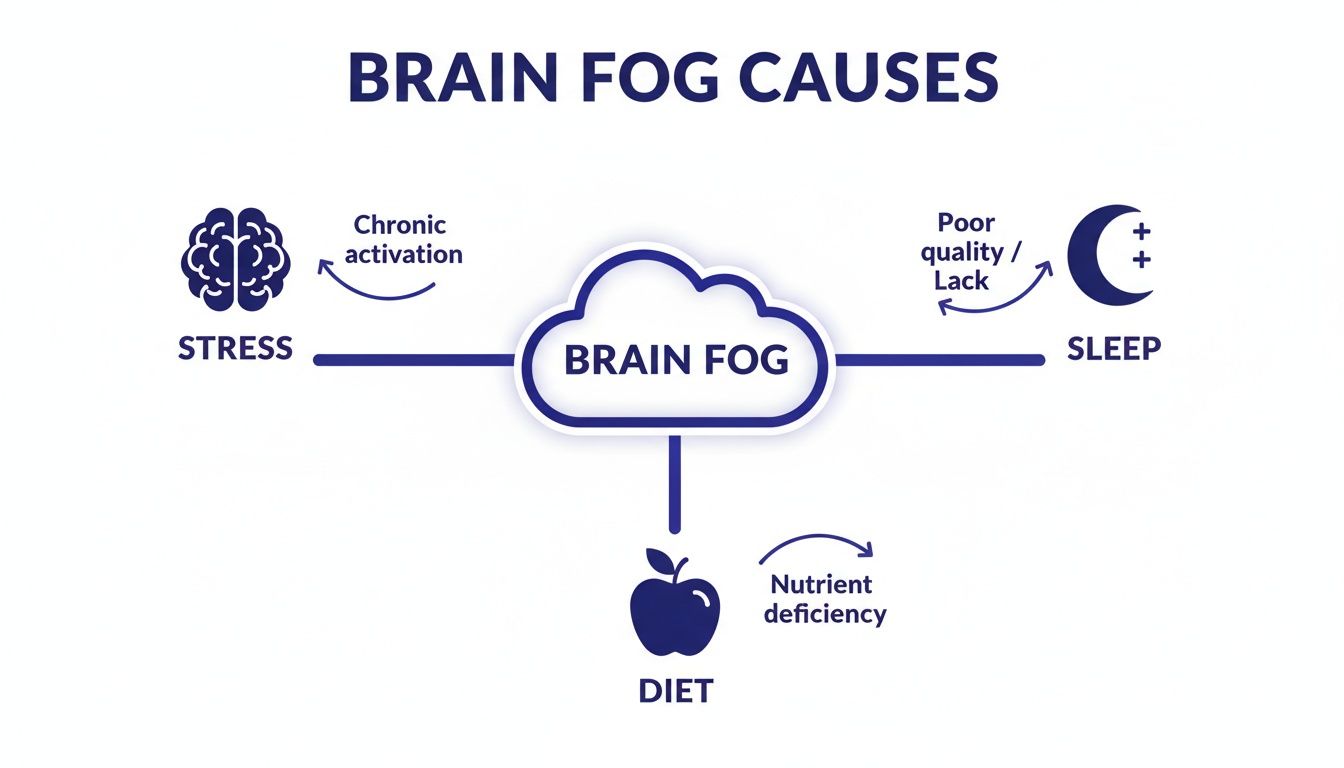
As you can see, brain fog isn’t just one thing. It’s a symptom that emerges when these interconnected systems fall out of sync.
Figuring out what causes brain fog is the first, most critical step toward reclaiming your mental sharpness. Throughout this guide, we’ll dig into each of these root causes and connect them to practical, science-backed strategies. For a deeper dive into the biology, you can explore the science of mental fog in our comprehensive article.
Our goal is to give you the knowledge you need to feel empowered, not overwhelmed. This feeling is manageable once you understand where it’s coming from.
How Stress and Burnout Hijack Your Brain’s Performance
Ever feel like your brain is an overheating computer with dozens of tabs open, each one demanding attention? That’s not just a feeling; it’s a near-perfect analogy for how chronic stress causes brain fog. This is a measurable biological process that can temporarily downgrade your cognitive performance.
When you’re under constant pressure, your body’s ancient “fight or flight” system gets stuck in the “on” position. From a behavioral research standpoint, this system, run by the hypothalamic-pituitary-adrenal (HPA) axis, floods your body with hormones like adrenaline and cortisol. While incredibly useful for escaping a real threat, a nonstop flow of these chemicals is toxic to clear thinking.

This prolonged state of high alert is the fast track to burnout—a condition of deep emotional, physical, and mental exhaustion. Brain fog is one of burnout’s most defining cognitive symptoms, turning everyday mental tasks into uphill battles.
This section discusses concepts related to stress and burnout for educational purposes. It is not a substitute for professional psychological or medical advice. If you are struggling, please consult a qualified healthcare provider.
The Cortisol Effect on Your Brain
Think of cortisol as your body’s built-in alarm system. In short bursts, it’s incredibly helpful. But when stress becomes chronic—day after day of tight deadlines, financial worries, or emotional strain—cortisol levels stay elevated.
This constant hormonal bath begins to wear down key brain regions responsible for higher-level thinking. Neuroscience research shows that sustained high cortisol can physically alter your brain’s architecture in several ways:
- It weakens the Prefrontal Cortex (PFC): This is your brain’s CEO, in charge of decision-making, focus, and impulse control. Chronic cortisol disrupts communication between neurons here, making it harder to concentrate and organize your thoughts.
- It shrinks the Hippocampus: This sea-horse-shaped structure is vital for learning and memory. Elevated cortisol can reduce its size and impair its ability to create and retrieve memories—which is why you might forget a colleague’s name mid-sentence when you’re overwhelmed.
Neuroscience Nugget: Chronic stress effectively puts your brain’s “thinking” centers offline while keeping its “reacting” centers (like the amygdala) on high alert. This is why, under pressure, you’re more likely to have an emotional outburst than a brilliant insight.
This explains why what causes brain fog during stressful periods isn’t a lack of effort but a biological disability. Your brain is allocating all its resources to perceived survival, leaving little left for complex problem-solving.
A Real-World Burnout Scenario
Imagine Sarah, a freelance graphic designer juggling three major projects with overlapping deadlines. For weeks, she works late nights, skips meals, and constantly checks her email for client feedback.
At first, she feels productive, running on adrenaline. But soon, the chronic stress takes its toll. She starts making simple mistakes in her designs—misaligning text, using the wrong color codes—things she would normally catch instantly. When a client provides feedback, she finds it difficult to process the request and feels defensive instead of collaborative.
Sarah’s brain fog isn’t a sign of incompetence. It’s a direct result of her HPA axis being stuck in overdrive. Her prefrontal cortex is so bogged down by cortisol that her executive functions—attention to detail, emotional regulation, and problem-solving—are severely compromised. Her brain is stuck in survival mode, not creative mode.
This cycle is a hallmark of professional burnout. If this scenario feels familiar, it may be helpful to explore resources on how to recover from burnout and restore your mental energy. Recognizing the biological roots of stress-induced brain fog is the first step toward breaking the cycle.
Daily Habits That Cause Brain Fog
It’s not always the big, dramatic stressors that leave your mind feeling cloudy. More often than not, the most powerful triggers of brain fog are hiding in plain sight, woven directly into our daily routines.
These seemingly small habits can pile up over time, systematically draining your cognitive reserves. The result? That frustrating feeling of being slow, unfocused, and mentally exhausted. The good news is that understanding these lifestyle factors is empowering because they’re often the most direct and actionable areas for improvement.

Let’s break down three of the most common culprits behind that mental haze and explore why they have such a profound effect on your brain’s performance.
The High Cost of Sleep Deprivation
Sleep isn’t just passive downtime; it’s an active, essential maintenance period for your brain. One of its most vital jobs is managed by the glymphatic system, which you can think of as your brain’s dedicated cleaning crew.
This network kicks into high gear during deep sleep, flushing out metabolic waste and toxic proteins that accumulate while you’re awake. When you consistently get less than the recommended seven to nine hours of sleep, you’re essentially cutting the cleaning shift short. This leads to a buildup of cellular junk that directly interferes with how efficiently your neurons communicate.
Neuroscience Nugget: Imagine a city that never runs its garbage collection. At first, it’s a minor inconvenience. But after a few nights, the accumulated waste starts to clog the streets, slowing down traffic and disrupting the entire system. That’s what’s happening inside your brain after a few nights of poor sleep.
Mini-Scenario: The All-Nighter’s Toll
Picture a student named Alex pulling an all-nighter to cram for a big exam. Fueled by energy drinks, he manages to study through the night. The next morning, he feels wired but strangely disconnected. When he sits down for the test, he can’t recall key formulas he reviewed just hours before. His thinking is slow, and he struggles to structure his answers.
Alex’s brain fog is a direct result of skipping his brain’s cleaning cycle. The buildup of metabolic waste is physically slowing down his neural processing speed and memory recall, making all his hard work far less effective.
How Nutrient Gaps Slow Down Your Brain
Your brain is an incredibly energy-hungry organ. It consumes about 20% of your body’s total calories despite making up only 2% of its weight. To run smoothly, it needs a steady supply of specific micronutrients that act as key players in producing energy and creating neurotransmitters.
When your diet lacks these essential building blocks, your brain’s performance suffers. It’s like trying to run a high-performance car on low-grade fuel—it will still run, but sluggishly and inefficiently. Three nutrient categories are frequently tied to brain fog:
- B Vitamins (especially B12 and B9/Folate): These are vital for creating the red blood cells that carry oxygen to the brain. They’re also crucial for synthesizing neurotransmitters like dopamine and serotonin, which regulate your focus and mood.
- Omega-3 Fatty Acids (EPA & DHA): These healthy fats are the primary building blocks of your brain cell membranes. A shortage can make these membranes rigid, slowing down the electrical signals between neurons.
- Magnesium: This mineral is a workhorse, involved in over 300 biochemical reactions in the body, including many that support nerve transmission and energy production inside your brain cells.
A diet high in processed foods and sugar only makes things worse by promoting inflammation. A balanced diet full of whole foods, on the other hand, provides the clean fuel needed for a sharp mind. This constant cycle of poor nutrition and the hunt for a quick energy fix can even contribute to behavioral patterns like a micro-dopamine addiction, which you can read more about here.
The Surprising Impact of Mild Dehydration
One of the most overlooked yet potent causes of brain fog is simple dehydration. Even a tiny drop in your body’s hydration levels—as little as a 2% loss in body water—can significantly mess with cognitive functions like attention, memory, and decision-making.
Your brain is roughly 75% water and relies on proper hydration to maintain the balance of electrolytes (like sodium and potassium) that your nerve cells need to fire correctly. When you’re dehydrated, this delicate electrical signaling gets disrupted.
On top of that, dehydration can temporarily cause your brain tissue to shrink, pulling it away from the skull. This physical change can lead to headaches and that general feeling of mental sluggishness. The fix is often straightforward yet profound: consistently drinking enough water throughout the day. For many people battling that afternoon slump, the real issue isn’t a lack of caffeine—it’s a lack of water.
The Hidden Link Between Inflammation and Brain Fog
While everyone talks about stress and poor sleep, one of the most powerful—and often overlooked—drivers of brain fog is systemic inflammation. Think of inflammation as your body’s internal fire alarm. When it spots a threat like an injury or an infection, it sounds the alarm and sends immune cells rushing to the scene.
This is a good thing; it’s how you heal. But what happens when that alarm gets stuck in the “on” position? Chronic issues like a poor diet, a stubborn illness, or gut problems can create a low-grade, smoldering fire that spreads throughout your entire body. This isn’t just about sore joints. It directly impacts your brain.

Tiny inflammatory molecules called cytokines can actually cross the protective blood-brain barrier, gumming up the works and disrupting communication between your neurons. This is a process called neuroinflammation, and it’s a key reason you feel that mental sludge, forget words, or can’t seem to focus.
The Gut-Brain Axis Connection
A huge amount of chronic inflammation starts in your gut. Your digestive system and brain are in constant conversation through a pathway known as the gut-brain axis. If the community of bacteria in your intestines—your microbiome—is out of balance, it can send inflammatory signals straight up to your brain.
Imagine your gut lining as a tightly secured border. When it’s healthy, only good stuff like nutrients gets through. But if it gets damaged or “leaky” from a bad diet or chronic stress, inflammatory particles can escape into your bloodstream and set off that body-wide fire alarm.
Analogy: Your gut-brain axis is like a superhighway. When there’s a multi-car pileup (gut imbalance), it doesn’t just stop local traffic. Emergency signals flood the network, disrupting operations miles away at the central command center—your brain.
This connection is real. That foggy feeling you get after eating a bunch of processed junk isn’t just in your head; it’s a physiological response that started in your gut. It’s a clear example of how your diet is directly tied to brain fog. For those exploring this hidden link, studies suggest that practices like using an infrared sauna for inflammation can be a natural approach to reducing the body’s inflammatory load.
Infection, Illness, and Post-Viral Brain Fog
Another major trigger for neuroinflammation is your body’s response to getting sick. When your immune system goes to war against a virus or bacteria, it unleashes a massive wave of cytokines. This is necessary to win the fight, but that intense inflammatory response can hang around long after you’ve recovered, leaving persistent brain fog in its wake.
This has become impossible to ignore with Long COVID. Millions of people who recovered from the initial illness now find they can’t sustain deep focus, struggle to find the right words, or feel mentally wiped out after simple tasks.
This isn’t a personal failing; it’s a direct consequence of post-viral inflammation messing with the brain. Analysis of over 273,000 individuals found that up to 26% of people report cognitive symptoms like impaired concentration three to six months after infection. With an estimated 16.5 million working-age adults in the United States alone now reporting some cognitive limitation, this is a massive public health concern.
Whether it’s simmering in your gut or lingering after an illness, inflammation is a key piece of the brain fog puzzle. Tackling it can have huge benefits, as we explore in our guide on inflammation, fatigue, and weight plateaus.
When to See a Doctor About Brain Fog
Most of the time, brain fog is just a temporary signal that your lifestyle needs a tune-up—a little more sleep, a little less stress, or a better approach to nutrition. But how do you know when that mental sluggishness is pointing to something more serious?
Knowing the difference is key to advocating for your health without unnecessary alarm. While small adjustments can clear the fog for many, persistent or severe symptoms are worth a conversation with a healthcare professional. Think of it as gathering data; your symptoms are the clues, and your doctor is there to help you interpret them.
Red Flags That Signal a Deeper Issue
Some symptoms shouldn’t be ignored. If your brain fog shows up alongside any of the following red flags, it’s a clear sign to schedule a medical evaluation. This isn’t meant to cause panic, but to empower you to take your symptoms seriously.
Key warning signs to watch for include:
- Sudden and Severe Onset: The fog appears abruptly and intensely, rather than developing slowly over weeks or months.
- Persistent Symptoms: It just won’t lift, even after you’ve diligently improved your sleep, diet, and stress for several weeks.
- Other Neurological Signs: You’re also experiencing symptoms like severe or unusual headaches, numbness or tingling, vision changes, or problems with balance and coordination.
- Significant Functional Impairment: Your cognitive struggles are severe enough to interfere with your ability to work, manage daily tasks, or maintain your relationships.
Important Note: This information is for educational purposes only and is not a substitute for professional medical advice. If you are experiencing symptoms related to anxiety, depression, ADHD, or other health concerns, please consult a qualified healthcare provider.
The Impact of Illness on Long-Term Brain Fog
Sometimes, brain fog is the lingering ghost of a past illness, a condition often seen in post-viral syndromes. Research on Long COVID gives us a powerful window into how the severity and length of an illness can be tied to cognitive symptoms long after the infection is gone.
One fascinating two-year follow-up study of hospitalized COVID-19 patients found that 87.8% still reported at least one brain fog symptom two years later. The severity of the initial illness really mattered; patients who experienced acute respiratory distress had worse global cognition scores than those with milder cases.
These findings show that while brain fog can improve, it can also stick around for a very long time. It also highlights why a professional consultation is so important if your symptoms kicked in after you were sick. You can read the full research about these post-COVID findings here.
How to Prepare for Your Doctor’s Appointment
To make that conversation as productive as possible, you need to go in prepared. A doctor will have a much easier time helping you if you can provide clear, organized information about what you’ve been experiencing.
Start by keeping a symptom journal for a week or two before your visit. Your goal is to track when your brain fog is at its worst and what, if anything, seems to make it better.
What to Track in Your Journal:
- Symptom Details: Describe the feeling. Is it memory loss? Trouble focusing? An inability to find the right word?
- Timing and Patterns: Does it hit at a certain time of day? Does it get worse after eating certain foods or after specific activities?
- Lifestyle Factors: Log your sleep duration and quality, daily stress levels, diet, and how much water you’re drinking.
- Full Symptom List: Include any other physical or emotional symptoms you’re dealing with, even if they seem totally unrelated.
Bringing this data helps your doctor see the bigger picture. It moves you much closer to understanding what causes brain fog in your specific case and helps them rule out any underlying medical conditions more efficiently.
Editor’s Take: What Actually Clears Brain Fog
Here’s the straightforward truth: for most people, brain fog isn’t a permanent state. It’s a warning light. It’s your brain’s way of signaling that it’s overwhelmed by burnout, chronic stress, or simply a lack of fundamental care.
Before you start chasing complex bio-hacks, master the basics. Consistent 7-8 hour sleep, proper hydration, and managing stress with non-negotiable breaks are the pillars of mental clarity. For many, addressing these core needs is the most effective way to start feeling sharper again. You can find more structured techniques in our guide on how to reset your brain.
This advice is most effective for lifestyle-induced brain fog. If your symptoms are severe, appeared suddenly, persist despite lifestyle changes, or follow an illness, the single most important step is to consult a healthcare professional. They can help you investigate underlying medical causes and get to the root of what causes brain fog in your specific situation.
Final Disclaimer & Affiliate Notice: The information in this article is for educational purposes only and is not intended as a substitute for professional medical or psychological advice, diagnosis, or treatment. Please consult a qualified healthcare provider for any health concerns or before making any changes to your health regimen. This content may also contain affiliate links, which means we may earn a small commission on purchases at no extra cost to you.
Frequently Asked Questions (FAQ)
When your mind feels cloudy, it’s natural to have questions. Here’s a breakdown of the most common ones we hear, with clear answers to help you understand what’s going on and what steps you can take to regain your mental sharpness.
1. How long does brain fog typically last?
This depends entirely on the root cause. If it’s from a single night of poor sleep or mild dehydration, you might feel clear again within a day after resting and rehydrating. However, for brain fog tied to chronic burnout or stress, it can linger for weeks or even months until the underlying issues are addressed. In post-viral cases like Long COVID, symptoms can persist for many months or years.
2. Can my diet really cause brain fog?
Absolutely. A diet high in processed foods, sugar, and unhealthy fats can promote systemic inflammation, which directly impacts brain function. Likewise, deficiencies in key nutrients like B vitamins (especially B12), omega-3 fatty acids, and iron can slow down the energy production your brain needs to think clearly.
3. Is brain fog a symptom of anxiety or depression?
Yes, it is a very common cognitive symptom of both. In psychology, it’s understood that chronic anxiety keeps your brain in a “fight-or-flight” state, diverting resources away from the prefrontal cortex needed for clear thinking. Depression can similarly dampen cognitive function, making it hard to concentrate and recall information. If your brain fog is accompanied by persistent low mood or worry, consulting a mental health professional is recommended.
4. Does too much screen time contribute to what causes brain fog?
Without a doubt. Behavioral research shows that constant notifications and information overload from screens create cognitive exhaustion. The blue light from screens can also disrupt melatonin production, harming sleep quality. This combination of mental fatigue and poor sleep is a perfect recipe for what many call “digital brain fog.”
5. What are the first practical steps to fight brain fog?
Start with the foundational habits. For one week, prioritize these three actions:
- Protect Your Sleep: Aim for 7-8 hours of quality sleep to allow your brain’s glymphatic (waste-clearing) system to work.
- Hydrate Consistently: Drink water throughout the day. Even mild dehydration can impair cognitive function.
- Take “Cognitive Breaks”: Step away from your screen for 5 minutes every hour to give your prefrontal cortex a chance to rest and reset.
A practical guide to improving sleep quality can provide more detailed strategies.
6. Can certain medications cause brain fog?
Yes, many prescription and over-the-counter drugs can have cognitive side effects that feel like brain fog. Common culprits can include some antihistamines, sleep aids, antidepressants, and certain blood pressure medications. If you suspect a medication is the cause, speak with your doctor. Do not stop taking any prescribed medication without medical guidance.
7. What is the link between hormones and brain fog?
Hormonal fluctuations are a major cause of brain fog, particularly for women. Changes in estrogen levels during the menstrual cycle, perimenopause, and pregnancy can significantly affect neurotransmitters in the brain that control memory and focus. Similarly, thyroid imbalances (both hypo- and hyperthyroidism) can disrupt brain metabolism and lead to mental sluggishness.
8. Will a “dopamine detox” cure my brain fog?
A “dopamine detox” (reducing high-stimulation activities like social media) can help combat the cognitive overload that contributes to brain fog. It improves focus by giving your brain a break. However, it will not “cure” brain fog caused by underlying physiological issues like inflammation, nutrient gaps, or a medical condition. It’s a helpful tool for digital burnout, but not a complete solution for all causes.
9. What is the difference between normal tiredness and brain fog?
Tiredness is primarily a physical sensation of sleepiness or bodily fatigue. Brain fog is a cognitive state. You can feel physically rested but mentally slow, fuzzy, and unable to concentrate. Conversely, you can be physically exhausted after a workout but still mentally sharp. The key difference is whether the impairment is in your body or your mind’s processing speed.
10. When should I see a doctor about brain fog?
You should consult a healthcare professional if your brain fog:
- Appeared suddenly and is severe.
- Persists for weeks despite improving your sleep, diet, and stress levels.
- Is accompanied by other serious symptoms like severe headaches, numbness, vision changes, or difficulty with balance.
A doctor can help rule out underlying medical conditions that may be the primary cause of your cognitive symptoms.
At Mind Clarity Hub, we specialize in providing science-based, practical guides to help you cut through the noise of modern life. Explore our collection of books on focus, burnout recovery, and mindful productivity to find your path back to mental clarity. Visit our library of books today.
Explore the Mind Clarity Hub Library
Practical books on focus, digital habits, resilience, and building a calmer mind.
The Power of Clarity
Unlock mental focus, build momentum, and create the life you were meant to live.
View book →
AI & ChatGPT for Beginners
No PhD needed — a 2025 guide to AI, prompts, and productivity without coding.
View book →
Zen in the Digital Jungle
Mindfulness for a chaotic world.
View book →
The Slow Reset
Mindful living in a fast-paced world.
View book →
Perfectly Imperfect
Stop self-criticism, set boundaries, and embrace the real you.
View book →
Reclaiming Silence
A dopamine detox guide to finding peace in a noisy world.
View book →
The Focused Freelancer
Productivity, pricing & positioning for independents in 2025.
View book →
ChatGPT Side Hustle System
Launch your AI-driven online business in 30 days.
View book →
Burnout, Interrupted
A proven path to restore energy and reclaim your life.
View book →
Attention Unleashed
Focus strategies for the distracted mind.
View book →
Side Hustle Launchpad
Your quick-start guide to extra income.
View book →
Digital Clarity
Rewire your brain, escape dopamine traps & regain focus.
View book →
Break the Scroll
Reduce screen time and take back control of your life.
View book →
Climate Compassion
Transform eco-anxiety into empowered action.
View book →
Village Mentality
The power of community for mental wellness.
View book →
Restful Nights
Overcoming sleep anxiety in a 24/7 world.
View book →
Connected Again
Combat loneliness and build meaningful relationships.
View book →
Focus Recharged
Mastering attention and productivity in the digital era.
View book →
Marketing Magic with ChatGPT
AI-powered content, campaigns, and copywriting to grow faster.
View book →
The 6-Figure Creator
Turn knowledge into passive income with books, courses & AI.
View book →
Burnout Breakthrough
Reset your work-life balance and thrive in 2025.
View book →
The Emotionally Intelligent Man
A modern guide to self-awareness and communication.
View book →
AI Personalized Wellness
Create your custom health plan with data-driven habits.
View book →
Everyday AI Made Easy
Use ChatGPT and smart tools to simplify life.
View book →
Money Mindfulness
A financial wellness guide for Gen Z & Millennials.
View book →
Startup Smarter with AI
ChatGPT strategies and tools to grow your business.
View book →
ChatGPT for Writers & Creators
Unlock AI-powered brainstorming, drafting & editing.
View book →