Executive Function Repair: A Step-By-Step Guide for Overwhelmed Adults

Written by Jeremy Jarvis , author of The Power of Clarity and Reclaiming Silence.
Mind Clarity Hub blends neuroscience, psychology, and practical routines to help overwhelmed adults repair executive function, reduce digital fatigue, and think clearly again.
Key takeaways: Executive function repair for overwhelmed adults
- Executive function is not “willpower.” It is a set of brain systems for planning, starting, and finishing tasks—and those systems get overloaded under chronic stress.
- Repair starts with shame-free awareness, then moves into external structure: lists, calendars, and simple workflows that stop your brain from holding everything in working memory.
- Tiny, consistent steps (10–20 minute focus blocks, smaller next actions, daily planning rituals) outperform dramatic overnight overhauls for long-term brain change.
- If your struggles began in childhood, or come with depression, anxiety, or severe burnout, professional support and possible ADHD assessment can be an essential part of true executive function repair.
Editor’s Pick
Companion read: The Power of Clarity
For a deeper system to align your calendar with your values, explore the book page for The Power of Clarity —a practical guide to rebuilding focus, priorities, and momentum.
When your brain knows what to do but will not do it
You know the bills need to be paid. The email in your inbox still needs an answer. And starting a simple load of laundry would make tomorrow easier. Yet the more you think about these tasks, the heavier they feel.
If this sounds familiar, you are not broken or lazy. You are bumping into executive function—your brain’s behind-the-scenes system for planning, prioritizing, starting, and following through. When executive function is overwhelmed, even “easy” tasks can feel like climbing a hill in sand.
This guide is a step-by-step walkthrough of what executive function actually is, why it so often glitches in modern life, and how to repair it gradually with supportive structure instead of self-blame. Along the way, we will connect to related pieces like Why Can’t I Focus Anymore? and The Clarity Morning Routine for Executive Function , so you can see how daily habits, digital overload, and brain wiring all fit together.
What executive function really is (and why it is not laziness)
Executive function is a cluster of mental skills that help you turn intentions into actions. It includes working memory (holding information in mind), cognitive flexibility (shifting gears), and inhibitory control (pausing before acting). Together, these systems give you the ability to plan, organize, start, and complete tasks over time.
When executive function is running smoothly, you can remember what matters today, break big projects into steps, and recover when interruptions happen. When it is strained, you might forget appointments, stare at your to-do list without starting, or bounce between half-finished tasks until the day is gone. The important point is that these patterns are about how your brain is managing load—not about your character.
Research on attention and working memory shows that stress, sleep debt, depression, anxiety, and digital overload can all reduce executive functioning, even in people who have never been diagnosed with ADHD. In other words, your environment and nervous system state matter just as much as your personality or “discipline.”
Why executive function collapses in an overwhelmed, digital life
Modern adults are constantly juggling competing demands: work, caregiving, finances, health, and a steady stream of digital inputs. Each new decision, notification, and unfinished task adds to what psychologists call “cognitive load.” Your brain does not just track what you are doing; it also tracks everything you are postponing.
When that load gets too high, your executive function systems respond the way an overloaded computer does: slower processing, more freezing, and random crashes. You might suddenly forget a simple step, lose track of time, or feel an almost physical resistance to starting anything. In What Is Digital Fatigue and How Do I Recover Faster? , we explore how screen-heavy days quietly drain the same circuits you need for planning and follow-through.
The good news is that this also means executive function can often be improved by changing conditions: reducing background stress where possible, simplifying your systems, and giving your brain more external support so it is not carrying everything inside your head.
Step 1: Name the executive function problem without shame
Before you change anything, it helps to describe what is actually going wrong in plain language. Instead of “I am a mess,” you might say, “I start tasks but struggle to finish,” or “I remember responsibilities but not deadlines.” This shift sounds small, yet it moves you from self-attack to problem solving.
You can even make a simple list of patterns you notice:
- “I put off tasks until the last moment even when I care about them.”
- “I keep everything in my head and then forget details when I am stressed.”
- “I open my laptop to do one thing and end up doing ten others.”
Once you see these patterns on paper, executive function repair stops being a vague hope and becomes a concrete project. In Why Do I Feel Mentally Exhausted After Doing Nothing? , we use a similar exercise to map invisible cognitive load—the quiet mental work your brain is doing all day that never shows up on a to-do list.
Step 2: Move tasks out of your head and into simple, visual systems
One of the fastest ways to support executive function is to stop treating your brain like a filing cabinet. Working memory is limited. When it is crammed with reminders, you have less capacity left for planning, decision making, and creative thinking. Externalizing tasks—onto paper, apps, or boards—frees up that mental space.
You do not need a perfect productivity app to do this. A single notebook or plain text list can be enough if you use it consistently. The key is to create three simple buckets:
- Today: 3–5 realistic priorities, not everything you “should” do.
- This week: a short list of projects that need movement but do not all have to be finished at once.
- Later: ideas and tasks that matter but are not urgent, so they stop floating in your head.
Over time, this structure becomes a kind of external executive function. Your brain does not have to remember everything, because the system is holding it for you. That frees up energy for the actual doing.
Step 3: Shrink your “next action” until your brain stops freezing
Executive function tends to jam when tasks are too vague or too big. “Work on taxes” is not a task; it is a project with many steps and a lot of emotion attached. Your brain senses that load and quietly avoids it.
Repair means getting ruthless about smaller, clearer next actions. Instead of “clean the house,” you write “clear the kitchen counter for 10 minutes.” Instead of “fix finances,” you write “log into my bank and check today’s balance.” These steps may feel embarrassingly small at first. That is the point. You are lowering the activation energy so your brain can actually start.
You can also time-box these actions. Set a 10–20 minute timer, do one next step, and then stop on purpose. This teaches your nervous system that starting does not mean being trapped for hours. In How Long Does It Take to Rewire Your Brain for Focus? , we look at how small, repeatable focus blocks gradually strengthen the circuits that support sustained attention.
Step 4: Build gentle scaffolding with routines and environmental cues
Executive function thrives on predictable cues. When your brain can link “this time of day, in this place, means this type of task,” initiation gets easier. Instead of relying on moment-to-moment motivation, you lean on routines and environment.
You might create a short “startup” ritual when you sit down to work: clear the desk, open your task list, choose one priority, and start a timer. Or you might build an evening “shutdown” routine: close tabs, jot down tomorrow’s three tasks, and physically move your laptop out of sight. These tiny habits act like rails that keep your attention from drifting all over the place.
Environmental cues matter too. If your kitchen table is buried under paperwork, of course every task feels heavier. If you keep your phone face-up next to your keyboard, of course you feel compelled to check it. In Is Dopamine Detox Real or Just Internet Myth? , we talk about how changing your “attention environment” can make focus feel less like a fight and more like a side effect of good design.
Step 5: Plan around your real energy, not an imaginary version of you
Many overwhelmed adults plan as if they have infinite energy and perfect sleep. Every day is booked to 110%, with no buffer. Then they feel like failures when reality does not match the calendar. Executive function repair asks a different question: “What can this real body and brain handle on a typical day?”
You can start by noticing your natural energy waves. When does your thinking feel clearest? When do you crash? Try clustering high-executive-function tasks—planning, writing, decisions—into your stronger windows, and saving lower-stakes tasks (email, forms, simple chores) for later. This is not about perfection. It is about making small, compassionate trades that help your brain succeed more often.
It is also worth intentionally lowering your “perfect day” standard. If a realistic day includes three focused tasks, a few smaller admin items, and room for interruptions, planning for that reality will feel much kinder and more sustainable than pretending every day is limitless.
Step 6: When executive function repair needs professional backup
While habits and environment make a real difference, they are not the whole story. If your executive function struggles started in childhood, or if you have a long history of missing deadlines, losing track of time, and feeling “too much” for traditional systems, it may be worth exploring an assessment for ADHD or related conditions with a qualified professional.
Likewise, if your executive function has collapsed alongside persistent low mood, anxiety, trauma, or severe burnout, it is important to know that these states can directly affect planning, memory, and follow-through. Working with a therapist, psychiatrist, or other clinician can give you a clearer picture of what is happening and what kind of support would actually help.
Self-guided tools—articles, workbooks, and books like Attention Unleashed or Digital Clarity —can absolutely be part of the repair process. However, they work best when they sit alongside appropriate medical and psychological care, not instead of it.
Living with executive function challenges in the real world
After you have experimented with habits, routines, and professional support, there is still a bigger question: what does it look like to live a full life with an executive function system that will probably always be a bit sensitive? Instead of chasing a fantasy version of yourself who never forgets anything, you can design a daily rhythm that respects how your brain actually works and protects your limited attention as a valuable resource.
This is where mindset and environment meet. On one side, you practice talking to yourself like a teammate instead of a drill sergeant. On the other, you keep adjusting the structures around you—lists, calendars, boundaries, devices—until they feel like scaffolding rather than handcuffs. The goal is not perfection. The goal is a life where your executive function gets enough support to let your strengths show up more often.
Building an environment that quietly supports your executive function
One of the most powerful shifts is to treat your environment as part of your brain. Every open tab, overdue bill pile, or buzzing notification adds friction to task initiation and follow-through. Conversely, every small cue that points you toward the next right step reduces that friction. You can think of this as “environmental executive function”: letting rooms, objects, and visual layouts carry some of the mental load.
Practically, that might look like keeping a simple whiteboard near your desk with just today’s three priorities, or leaving your planner open on the page for tomorrow before you close the laptop. In Why Can’t I Focus Anymore? , we explore how cluttered visual fields and constant digital input chip away at focus; the same dynamics show up in executive function repair. By reducing visual and digital noise, you make it easier for your brain to see what matters next.
You can also redesign specific “hot spots” that repeatedly trip you up. If mornings always collapse into chaos, you might prepare a tiny launchpad space: keys, bag, medication, headphones, and one written reminder card in the same place every night. If evenings disappear into scrolling, you might place a book, puzzle, or journal on the coffee table before you sit down. Over time, these cues act like low-friction rails guiding your executive function instead of leaving it to brute-force its way through every decision.
Using technology as a prosthetic, not a trap, for executive function
Although digital overload can worsen executive dysfunction, technology can also serve as a powerful “prosthetic” for working memory and planning when you use it deliberately. Timers, reminders, and simple project boards can hold context for you so your brain does not have to juggle every detail. The difference lies in whether your phones and laptops are mostly cueing you toward your own priorities or toward endless distraction.
One approach is to create a small stack of “executive function apps” and treat everything else as optional. Perhaps you have a calendar, a task manager, and a notes app that are allowed to send alerts. Social media, news, and most entertainment apps can stay quiet by default. In What Is Digital Fatigue and How Do I Recover Faster? , we dive into how notification settings, screen breaks, and micro-pauses can reduce brain fog; the same strategies indirectly support planning and follow-through because your nervous system is less flooded.
For a research-grounded overview of how attention, self-regulation, and ADHD interact with executive function, it can also help to skim the American Psychological Association overview of ADHD . That kind of resource offers language you can bring into conversations with clinicians, family, or managers, and it reinforces the idea that executive function is a brain process shaped by stress, biology, and environment—not a moral scorecard.
Creating a personal “executive function playbook”
As you experiment, it can be very useful to capture what actually works for you in one place. Think of this as your personal “executive function playbook”—a short, living document that collects the habits, scripts, and environmental tweaks that make life meaningfully easier. The playbook becomes a reference you can return to during stressful seasons, instead of trying to remember every trick from scratch when your brain is already tired.
Your playbook might include three or four sections:
- Daily anchors: simple routines like a Clarity Morning routine , a brief afternoon reset, and a shutdown ritual that close open loops before bed.
- Emergency plans: what you do on days when brain fog or executive dysfunction spikes (smaller lists, one non-negotiable task, extra recovery time).
- Focus tools: two or three techniques that reliably help you start, like a 10-minute timer, body doubling, or a specific playlist.
- Communication scripts: ready-made phrases for asking for extensions, clarifying priorities, or renegotiating expectations when your bandwidth is limited.
You do not have to build this overnight. You can add one or two items each week as you notice patterns. Maybe you realize that you think more clearly after a short walk. Maybe you discover that mornings are best for deep work, while afternoons suit admin tasks. As those insights accumulate, your playbook turns into a very practical form of self-knowledge.
If you want extra structure while you build that system, you might pair this article with deeper dives like Why Can’t I Focus Anymore? , How Long Does It Take to Rewire Your Brain for Focus? , and Why Do I Feel Mentally Exhausted After Doing Nothing? . Together, they outline how executive function repair, attention retraining, and lower cognitive load all fit together. Instead of chasing a perfect productivity system, you are slowly building a kinder, more sustainable way of working with your brain—one that honors both its limits and its strengths.
Executive function repair FAQ: Everyday questions, honest answers
Making sense of executive function in real life
What is executive function in simple terms?
Executive function is your brain’s “project manager.” It helps you decide what matters, plan the steps, start tasks, switch when needed, and follow through. When executive function is overloaded, you may know what you should do but feel strangely unable to begin or finish.
How do I know if I have executive function problems or I am just disorganized?
Occasional chaos is normal. Executive function problems show up as persistent patterns: chronic procrastination, missed deadlines, overwhelm at basic tasks, and difficulty shifting from ideas to actions even when you care. If these issues follow you from job to job or show up across home, work, and school, it is worth taking them seriously.
Is executive function repair the same as treating ADHD?
No, but they overlap. Many adults with ADHD have executive function challenges, and ADHD treatment often improves those skills. At the same time, stress, sleep debt, depression, anxiety, and digital overload can also strain executive function in people without ADHD. Habits, structure, and environment help in both cases, but ADHD assessment and treatment are medical decisions that should be made with a professional.
How long does it take to see progress with executive function repair?
Many people notice small shifts within a few weeks of using consistent supports: external lists, smaller next actions, and daily planning rituals. Deeper change—like feeling calmer about tasks and less scattered in general—usually unfolds over months. In How Long Does It Take to Rewire Your Brain for Focus? , we explore realistic timelines for attention-related brain change.
Can I repair executive function if my life is still very busy?
Yes. In fact, most people repair executive function while still living full, messy lives. The key is to work with small, repeatable changes—10–20 minute focus blocks, clearer next actions, one simple planning ritual—rather than waiting for a perfect schedule that never arrives. You start where you are and let the benefits compound.
What tools actually help with executive function repair?
The best tools are often the simplest: a calendar you actually check, a notebook or app for tasks, timers, and visual cues in your environment. Some people like digital apps; others prefer paper planners. The evidence is less about a specific brand and more about whether you consistently move tasks out of your head and into a trusted system you can see.
Does digital detoxing help executive function?
Taking breaks from high-stimulation digital input can help your attention systems recover, especially when you replace frantic scrolling with calmer activities like walking, reading, or journaling. However, dramatic weekend “detoxes” matter less than everyday habits. For a nuanced look at this, see Is Dopamine Detox Real or Just Internet Myth? .
What if I keep making beautiful plans and then never follow them?
That pattern is very common when executive function is strained. Instead of planning more, try planning less—but following through on one or two key items per day. Shrink your list, shrink your next actions, and add more support around initiation (timers, accountability, environmental cues). Over time, your brain learns that plans in your system actually lead to action, not guilt.
When should I talk to a professional about executive function problems?
Consider reaching out if your difficulties are long-standing, affect multiple areas of life, or sit alongside intense distress, burnout, depression, anxiety, or sleep problems. A primary care doctor, psychologist, or psychiatrist can help you explore ADHD, mood disorders, and other conditions that shape executive function, and discuss options ranging from therapy to medication.
Where can I learn more about attention, focus, and executive function?
You can explore related guides on Mind Clarity Hub—such as Why Can’t I Focus Anymore? and The Modern Attention Diet & Dopamine Detox —for practical, research-informed tools. For broader summaries of attention and self-regulation, major organizations like the American Psychological Association also publish accessible overviews.
Further reading & sustainable work resources
If you are exploring executive function repair as part of redesigning your work and life, you may also appreciate related guides on sustainable focus and healthier digital habits:
Join the sustainable work movement
If you are rethinking how you work, rest, and use technology, you may also enjoy our sister project on low-stimulation, sustainable lifestyles and travel. For visual ideas on slower work rhythms, train-first trips, and calmer routines, explore Eco Nomad Travel on Pinterest and save the boards that match the kind of life you are building toward.
Explore the Mind Clarity Hub Library
Practical books on focus, digital habits, resilience, and building a calmer mind.
The Power of Clarity
Unlock mental focus, build momentum, and create the life you were meant to live.
View book →
AI & ChatGPT for Beginners
No PhD needed — a 2025 guide to AI, prompts, and productivity without coding.
View book →
Zen in the Digital Jungle
Mindfulness for a chaotic world.
View book →
The Slow Reset
Mindful living in a fast-paced world.
View book →
Perfectly Imperfect
Stop self-criticism, set boundaries, and embrace the real you.
View book →
Reclaiming Silence
A dopamine detox guide to finding peace in a noisy world.
View book →
The Focused Freelancer
Productivity, pricing & positioning for independents in 2025.
View book →
ChatGPT Side Hustle System
Launch your AI-driven online business in 30 days.
View book →
Burnout, Interrupted
A proven path to restore energy and reclaim your life.
View book →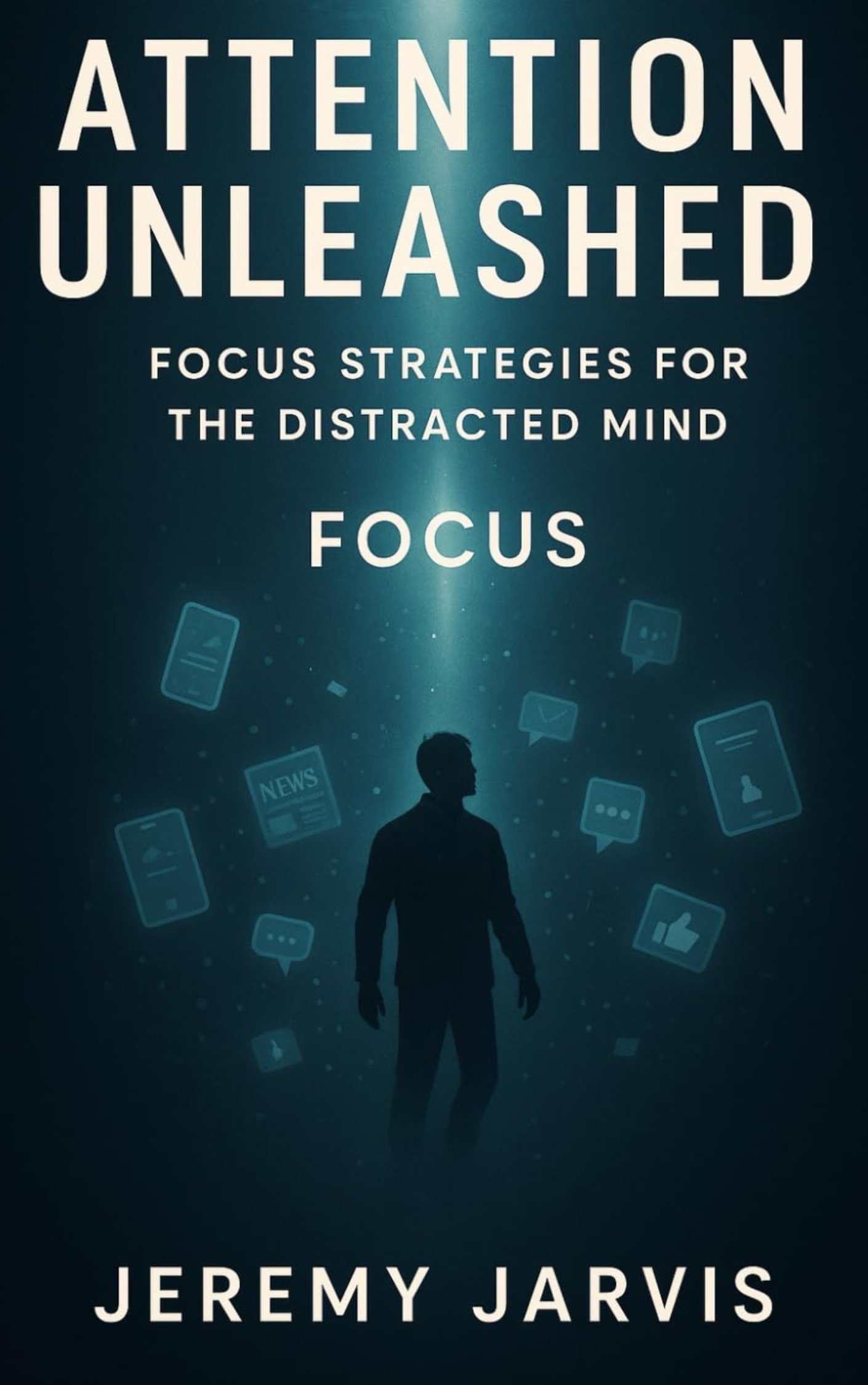
Attention Unleashed
Focus strategies for the distracted mind.
View book →
Side Hustle Launchpad
Your quick-start guide to extra income.
View book →
Digital Clarity
Rewire your brain, escape dopamine traps & regain focus.
View book →
Break the Scroll
Reduce screen time and take back control of your life.
View book →
Climate Compassion
Transform eco-anxiety into empowered action.
View book →
Village Mentality
The power of community for mental wellness.
View book →
Restful Nights
Overcoming sleep anxiety in a 24/7 world.
View book →
Connected Again
Combat loneliness and build meaningful relationships.
View book →
Focus Recharged
Mastering attention and productivity in the digital era.
View book →
Marketing Magic with ChatGPT
AI-powered content, campaigns, and copywriting to grow faster.
View book →
The 6-Figure Creator
Turn knowledge into passive income with books, courses & AI.
View book →
Burnout Breakthrough
Reset your work-life balance and thrive in 2025.
View book →
The Emotionally Intelligent Man
A modern guide to self-awareness and communication.
View book →
AI Personalized Wellness
Create your custom health plan with data-driven habits.
View book →
Everyday AI Made Easy
Use ChatGPT and smart tools to simplify life.
View book →
Money Mindfulness
A financial wellness guide for Gen Z & Millennials.
View book →
Startup Smarter with AI
ChatGPT strategies and tools to grow your business.
View book →
ChatGPT for Writers & Creators
Unlock AI-powered brainstorming, drafting & editing.
View book →