The Hidden Costs of Screen Time: What 2025 Research Shows About Your Brain
A realistic look at how modern screen time affects your focus, mood, and nervous system—and how to recover
without quitting technology.

Founder of Mind Clarity Hub • Research-grounded guides on attention, screen time, and digital wellness
Updated for 2025 • 12–15 minute read
Key takeaways: The hidden costs of screen time in 2025
-
Screen time is not “good” or “bad,” yet too much of the wrong kind quietly reshapes your sleep, focus, and
mood in ways you can feel but struggle to name.
-
Late-night scrolling, endless micro-checks, and constant multitasking cost you deep rest,
working memory, and emotional bandwidth even if your total hours online do not look extreme.
-
The brain adapts to fast, unpredictable rewards, which makes long-form reading, deep work, and even stillness
feel heavier than they used to.
-
You do not need a perfect digital detox. Gradual changes to timing, type, and context of screen time can
protect your brain while still letting you live a connected life.
Editor’s Pick
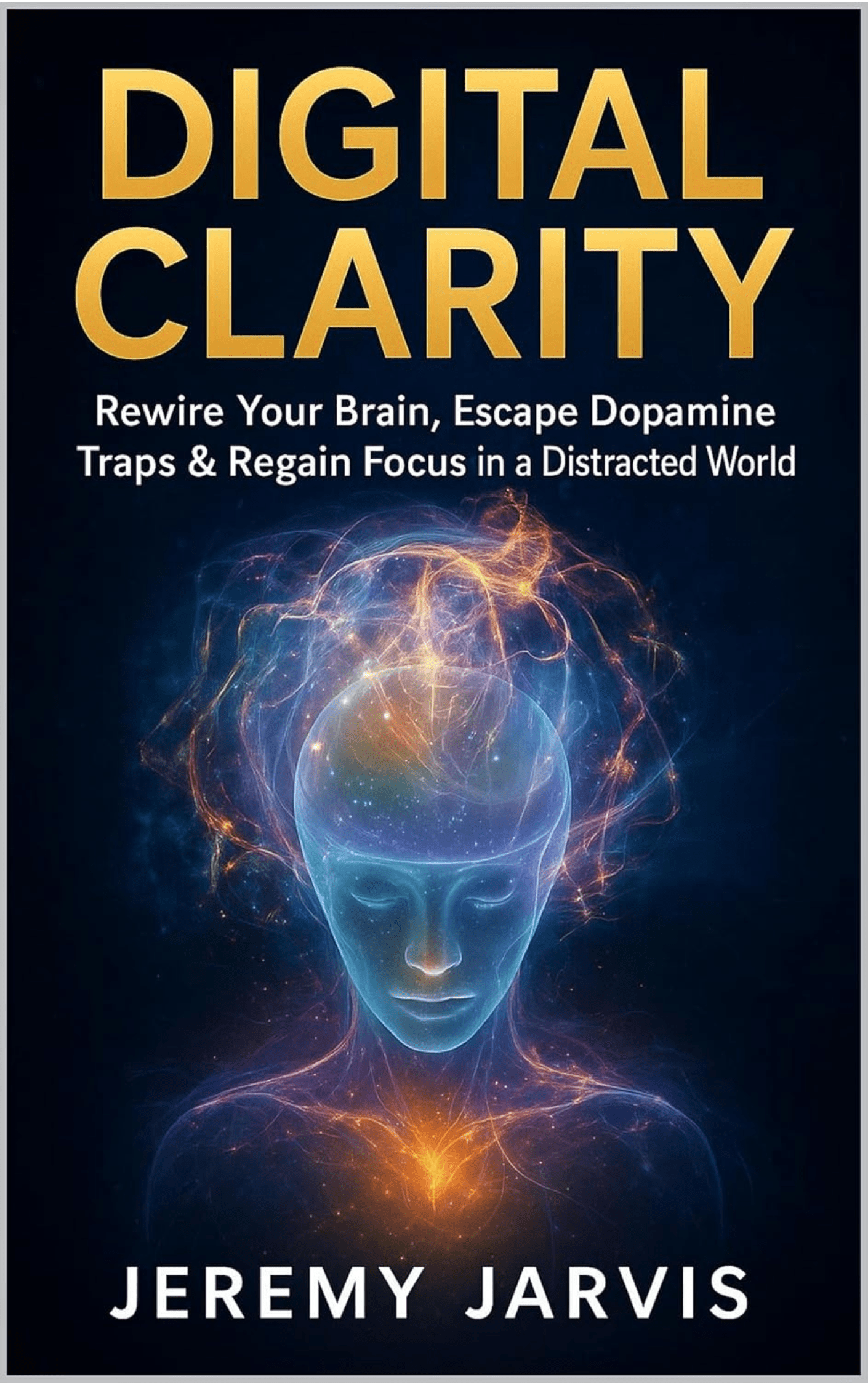
Companion read: Digital Clarity
If you want a step-by-step plan to reset your digital habits without quitting technology, explore the book
page for
Digital Clarity
.
It pairs well with this article if you’re ready to redesign how you use screens across a full day.
Why screen time feels normal—even when your brain is tired
Most of your day now passes through a screen. Work, messages, news, entertainment, banking, navigation, even
relationships—they all flow through the same glowing rectangles. Because this feels normal, it is easy to assume
that your brain is keeping up just fine.
Yet the symptoms tell a different story. At midnight, you may feel wired but foggy at 10 a.m. It is easy to bounce
between apps and then struggle to remember what you were doing. On top of that, many people feel mentally exhausted
after “doing nothing,” which I explore deeply in
Why Do I Feel Mentally Exhausted After Doing Nothing?
.
This article looks at what 2025 research suggests about the hidden costs of screen time: on sleep, attention,
reward circuits, and emotional regulation. Then it turns that research into practical changes you can make
without going off-grid or quitting your job.
Hidden cost #1: Screen time quietly steals deep recovery
One of the biggest hidden costs of screen time is not what happens while you scroll. It is what happens to your
sleep afterward. Bright, close-up light from phones and laptops in the evening tells your brain it is still
daytime. Notifications and cliffhanger content keep your nervous system slightly activated when it should be
winding down.
Over time, this pattern fragments the deep stages of sleep that repair your brain. The next day, you are more
likely to feel foggy, emotionally thin, and dependent on caffeine. You might blame motivation or willpower, when
in reality you are working with half-charged batteries.
If you want a deeper dive into how sleep loss and mental fog interact with focus, you can pair this piece with
The Science of Mental Fog in 2025
and the attention-reset framework in
Why Can’t I Focus Anymore? (Real Causes, Not Clichés)
.
Late-night scrolling and your brain’s “off switch”
When you lie in bed with a bright screen inches from your face, your brain is trying to do two opposite jobs at
once. On one hand, your body wants to move into a slower, more synchronized rhythm. On the other hand, rapid
content, emotionally charged headlines, and blue-tilted light push your arousal system back up.
This tug-of-war does not always show up as full insomnia. More often, it looks like delayed sleep, more
awakenings, and lighter rest. You may technically “get eight hours” yet still wake feeling strangely unrefreshed.
That mismatch is one of the most common ways screen time taxes your focus the next day—quietly, consistently,
and without dramatic symptoms.
Hidden cost #2: Constant screen time trains your brain to crave micro-rewards
Every time you refresh a feed, tap a notification, or glance at a new message, your brain gets a tiny “maybe
something good” prediction update. These micro-rewards are small, but they are frequent and unpredictable. That
combination is exactly what reward circuits learn from most quickly.
As I explain more fully in
Is Dopamine Detox Real or Just Internet Myth?
,
your brain gradually recalibrates. Fast, low-effort, high-novelty inputs become the new baseline. Deep work,
long-form reading, and even stillness start to feel heavier—not because you are broken, but because the
comparison point has quietly shifted.
How endless micro-checks erode working memory
Working memory is the mental “scratchpad” you use to hold a phone number, follow a conversation, or keep track
of the steps in a task. It is limited. When you interrupt a thought to check a message “just for a second,” your
brain has to reload context when you return.
One or two checks are manageable. However, dozens of tiny context switches per hour add up. Over time, the thread of what you were doing slips. Often you end up re-reading the same paragraphs. Eventually you may feel slower than you remember being. That slow leak shows up as digital fatigue and is one reason I wrote
What Is Digital Fatigue and How Do I Recover Faster?
.
Hidden cost #3: Screen time amplifies background stress and anxiety
Screens do not just deliver information. They also deliver social comparison, alarming headlines, and an endless
stream of unresolved problems. Even when you are “relaxing,” your nervous system may be processing subtle
threat signals and status cues in the background.
Over time, this emotional noise becomes a kind of invisible cognitive load. You may not feel actively panicked,
yet you notice a constant hum of tension. You might feel oddly guilty when you are offline or find your mind
drifting to notifications even during quiet moments. That half-on state is one of the fastest paths to
burnout-like symptoms, even without extreme work hours.
The emotional toll of being “always a little bit on”
When every spare moment becomes a chance to check something, your brain loses true off-duty time. You may see
this most clearly on days off. You plan to rest, yet you end up cycling between news, messages, and streaming
until your body feels heavy and your mind feels thin.
In
Why Do I Feel Mentally Exhausted After Doing Nothing?
,
I describe how “rest” that keeps your threat-detection and comparison systems active is not really rest at all.
The same logic applies here: screen time that never lets your nervous system fully downshift will always leave
you paying a hidden emotional tax.
Hidden cost #4: Erosion of boredom, imagination, and deep focus
Another cost is quieter but just as important. When every gap can be filled with a quick scroll, your brain
gradually loses practice in tolerating boredom. Those small, unstructured pockets of time used to be where
daydreaming, problem-solving, and creative insights happened.
Now, many people reach for a device before their mind even has a chance to wander. In the short term, this feels
pleasant. In the long term, it can leave your inner world thinner and your creative work flatter. That is why I
pair conversations about screen time with articles like
The Neuroscience of Single-Tasking
and routines like the
Clarity Morning
,
which intentionally re-introduce sustained attention and gentle boredom.
Early warning signs your screen time is costing you more than you think
Because screen time is woven into everything, it helps to look for early warning signs instead of waiting for a
crisis. Common red flags include:
- Feeling oddly wired at bedtime yet groggy and unfocused the next morning.
- Re-reading the same page or email multiple times without really absorbing it.
- Having a sense of being “mentally full” even on days without heavy workloads.
- Checking your phone in every micro-gap, often without remembering why you picked it up.
- Noticing guilt or unease when you are away from screens, even during planned rest.
If several of these feel familiar, it does not mean you have failed. It simply means your attention systems have
adapted to a high-screen environment. Fortunately, the same neuroplasticity that got you here can help you
slowly walk back out, which I unpack more fully in
How Long Does It Take to Rewire Your Brain for Focus?
.
Building a humane screen-time reset (without going off-grid)
You do not need an extreme dopamine fast or a month-long retreat. What your brain usually needs is a clear,
gentle plan that changes the timing, type, and context of screen time in small, repeatable ways. Think in
layers: evenings, mornings, work blocks, and true rest.
A simple starting point is to pick just one of those layers. For instance, you could decide that the last hour
before bed is phone-free, or that the first 30 minutes of your workday are for single-tasking before you open
chat. Over a few weeks, these narrow experiments give your nervous system repeated practice in being “not
connected” without panic.
A 7-day experiment to feel the hidden costs more clearly
To see the hidden costs more clearly, you can run a short experiment rather than guessing. For seven days, track
three simple things: bedtime screen use, number of micro-checks during work, and how mentally drained you feel
on a 1–10 scale. Then, for the next seven days, change one variable—like moving all social scrolling to
daylight hours or using app limits on your highest-dopamine feeds.
The goal is not perfection. The goal is contrast. If your sleep quality, mood, or focus improve even slightly,
you now have proof that your nervous system responds to screen-time tweaks. That proof makes it much easier to
commit to longer-term changes, especially when paired with the broader frameworks in articles like
Modern Attention Diet & Dopamine Detox
.
When screen-time issues are a signal to get extra support
Sometimes, screen-time changes are enough to ease brain fog and restore focus. Other times, they uncover deeper
patterns. If you notice long-standing attention difficulties that began in childhood, persistent low mood,
intense anxiety, or months of terrible sleep, it may be worth talking with a professional.
You can still use the tools in this article. However, they work best alongside an accurate diagnosis and a care
plan that fits your brain. A short, evidence-based overview from sources like the
American Psychological Association’s work on technology and mental health
can give you language to describe what you are experiencing. Bringing that language into a medical or
therapy conversation often feels more grounded than simply saying, “I’m addicted to my phone.”
Preparing for a conversation about screen time, brain fog, and mood
Once you realize that screen-time issues might be part of a bigger pattern, the next question is often, “What do
I even say to a doctor or therapist?” This is where a little preparation makes a big difference. Instead of
walking in with a vague, “I’m on my phone too much,” you can bring concrete, observable details about your
attention, sleep, and emotional health. That kind of specificity helps a professional distinguish between
everyday digital overload and conditions such as ADHD, depression, anxiety, or insomnia that may need direct
treatment.
A simple way to prepare is to keep a one- or two-week “screen-and-symptom log.” You do not have to track
everything. Instead, note a few key points each day: approximately how many hours you spend on screens outside of
work, what time you stop using devices at night, how well you slept, and how your focus and mood felt the next
day. If you notice repeating patterns—like wired evenings, groggy mornings, or constant brain fog—those become
concrete talking points. They also connect directly to ideas from pieces such as
What Is Digital Fatigue and How Do I Recover Faster?
and
The Science of Mental Fog in 2025
.
Turning screen-time data into a clearer story about your brain
With even a small amount of data, you can tell a more useful story about what is happening. Instead of, “I have
no discipline,” you might say, “On nights when I scroll past 11 p.m., it takes me an extra hour to fall asleep
and I feel foggy until lunch.” Instead of, “I just procrastinate,” you might notice, “I check email or news
every five minutes when I try to start deep work, and then I forget what I was doing.” These descriptions are not
character judgments; they are observations about attention, executive function, and nervous-system activation.
When you combine those observations with what you already know from articles like
Why Can’t I Focus Anymore? (Real Causes, Not Clichés)
and
How Long Does It Take to Rewire Your Brain for Focus?
,
you give your clinician a much clearer starting point. They can help you tease apart which challenges are most
likely related to lifestyle and screen-time patterns, and which might reflect underlying attention, mood, or
sleep conditions that deserve further assessment.
Blending professional care with realistic digital-wellness habits
If you do start working with a therapist, coach, or physician, you do not have to abandon the practical
screen-time changes you care about. In fact, your digital habits and your treatment plan can reinforce each
other. For example, if you and your clinician decide to focus on anxiety, you might pair therapy sessions with
gentler evening routines and a tighter “news window” so your nervous system is not constantly triggered between
appointments. If the focus is ADHD or executive function, you might work on one single-tasking block each day,
like those described in
The Neuroscience of Single-Tasking
,
and bring your results back to session.
Over time, this blend of professional support and day-to-day experiment makes change feel more integrated.
Instead of treating therapy as something that happens “over there” and digital wellness as something you tinker
with alone, you create a feedback loop. Small changes to screen time support your brain’s capacity to benefit
from treatment. In turn, treatment gives you better tools for managing compulsive checking, emotional triggers,
and the perfectionism that often sabotages digital boundaries.
Using trustworthy science as a compass (not another source of pressure)
It is easy, once you start reading about attention, dopamine, and mental health, to feel overwhelmed. Every
article seems to warn about different risks of excessive screen time. Here, it helps to treat science as a
compass rather than a checklist. Broadly, research from organizations like the
American Psychological Association
points in the same direction: frequent, emotionally intense, late-night, and multitasking-heavy screen use tends
to correlate with poorer sleep, higher stress, and more attention problems over time.
You do not have to apply every recommendation at once. Instead, you can use a few core principles—protecting
sleep, reducing high-intensity inputs, and building pockets of true offline rest—as your anchor. Then you can
layer in more specific experiments, drawing on ideas from pieces like
Is Dopamine Detox Real or Just Internet Myth?
and the broader attention-reset approach in
Modern Attention Diet & Dopamine Detox
.
The goal is not perfect digital purity. The goal is a screen-time pattern that your nervous system can actually
recover from.
Designing a screen-time plan that respects your real life
Finally, any plan you build—with or without professional support—has to fit the reality of your life. Many
people juggle demanding jobs, caregiving, health issues, or financial stress on top of digital overload. A rigid
“no screens after 6 p.m.” rule might sound virtuous but collapse within a week. A more humane approach starts
with constraints you cannot change, then looks for small pockets where you do have choice.
You might start by protecting just one “off-duty” window each day, such as the first 20 minutes after you wake
up or the hour before bed. You could choose one work block that becomes a single-task zone, borrowing tactics
from
What Is Digital Fatigue and How Do I Recover Faster?
or anchor your day with a short
Clarity Morning routine
that happens before any high-stimulation apps. Each small win gives your brain evidence that better focus and
calmer attention are possible, even in a high-screen world.
As those experiments stack—one boundary, one deeper rest block, one honest conversation with a professional—you
gradually move from feeling at the mercy of your devices to feeling more like a collaborator with your own
nervous system. That shift is slow, but it is real. It is also far more sustainable than trying to white-knuckle
your way through another all-or-nothing digital detox.
You are not weak—you are living in a high-screen world
Struggling with screen time does not mean you are weak. It means you are living inside systems designed to keep
your attention slightly overstimulated and slightly under-rested. At the same time, you are not powerless. With
small, realistic changes to how and when you use screens, focus, creativity, and calm can gradually return to
everyday life.
Instead of trying to fix everything at once, begin with one simple boundary. That might be a single evening
rule, one protected single-task block, or a short offline pocket of time that becomes a regular ritual. Over
months, these modest experiments add up to a very different relationship with your devices—and with your own
mind.
Save these ideas for later (and get visual reminders)
For visual reminders while you change habits, follow Mind Clarity Hub on Pinterest for focus routines,
screen-time resets, and workspace ideas:
pinterest.com/JeremyJarvisOfficial
.
Pin a few images that represent the kind of relationship with screens you want in the future, not the one you
feel stuck in today.
FAQs: Screen time, brain health, and realistic changes in 2025
These questions pull together common concerns about screen time, focus, and mental health—and how to respond
without extreme detox challenges.
Core questions about screen time and your brain
How much screen time per day is “too much” for my brain?
▸
There is no single perfect number that fits everyone. However, research suggests that long blocks of
high-stimulation screen use—especially at night—are more damaging than the raw total hours. In other
words, six scattered hours with breaks and daylight is very different from six continuous hours of
scrolling in bed.
A more helpful question is: “How does my current pattern affect sleep, mood, and focus?” If you notice
worsening brain fog, low mood, or restless sleep, that is your sign to adjust timing, not just count
minutes. You can pair this with the ideas in
What Is Digital Fatigue and How Do I Recover Faster?
.
Does screen time permanently damage my brain or attention span?
▸
Current research points more toward adaptation than permanent damage in most healthy adults. Your brain
gets better at whatever you practice. Frequent multitasking and fast, unpredictable content train your
attention systems to expect more of the same.
The hopeful side is that neuroplasticity runs both ways. When you deliberately practice single-tasking,
slower inputs, and device-free breaks, attention becomes steadier again. For realistic timelines and
expectations, see
How Long Does It Take to Rewire Your Brain for Focus?
.
Is blue light the main problem with night-time screen use?
▸
Blue-tilted light is part of the story, because it tells your body clock that it is still daytime. Yet it
is not the only issue. Emotional content, constant novelty, and late-night multitasking all keep your
nervous system more activated than it needs to be.
Night-mode filters can help, but they do not fully solve the problem if you are still doom-scrolling in
bed. A more complete solution combines warmer light, calmer content, and a screen-free buffer before
sleep. Your future focus benefits from that combination more than from any single filter.
Practical habit questions and daily routines
What is one simple change I can make to reduce the hidden costs of screen time?
▸
A powerful first step is to protect the last 30–60 minutes before bed from high-stimulation screen use.
That does not mean you must be perfect every night. However, creating a mostly phone-free wind-down
window gives your brain a chance to shift gears.
During that time, you might read on paper, stretch, journal, or prepare for the next day. Over a few
weeks, many people notice that sleep quality, mood, and next-day focus all improve from this one habit—
especially when combined with the calmer “attention diet” ideas in
Modern Attention Diet & Dopamine Detox
.
How can I reduce screen time if my job is entirely online?
▸
When your work is screen-heavy, the goal is to change how you use screens, not just how many
hours you log. You can group messages into specific check-in times, create short device-free breaks, and
reserve your sharpest hours for single-task deep work instead of reactive multitasking.
It also helps to build a short, predictable routine outside work that does not include screens—such as a
morning walk, a simple
Clarity Morning routine
,
or a tech-light evening ritual. These anchors remind your nervous system that life exists beyond the
laptop.
Are “dopamine detox” weekends actually useful for screen-time problems?
▸
Weekend detox challenges can feel dramatic, yet they often miss the point. Short, intense breaks may give
temporary relief, but your brain rewires through repetition, not heroic self-control. What matters more is
what you do on the other 50 weekends each year.
A gentler approach is to use those weekends to experiment with more sustainable routines: fewer apps in
bed, more time outdoors, and slower hobbies that genuinely feel rewarding. For a grounded view of what
dopamine detox can and cannot do, see
Is Dopamine Detox Real or Just Internet Myth?
.
How do I help my kids or teens with screen time without causing fights?
▸
It usually helps to move away from vague rules (“less screen time”) and toward specific agreements about
timing and context. For instance, you might agree on device-free meals, phone-free bedrooms at night, or
“screens after homework and outside time.”
When possible, involve kids in designing the rules and explaining why sleep, mood, and attention matter.
Short, age-appropriate explanations of how the brain responds to screens can reduce shame and defensiveness
on both sides. The goal is to act like a team caring for everyone’s nervous systems, not to win a battle.
When screen-time struggles point to something deeper
How do I know if my screen use is a habit issue or a mental-health issue?
▸
Habit and mental health often overlap. However, if you notice intense anxiety when away from your phone,
long stretches of low mood, or self-harm thoughts, it is important to treat those as mental-health signals
first. Screen habits may be part of the picture, but they are not the whole story.
In contrast, if you mainly struggle with drifting into extra screen time when you are bored, tired, or
stressed, then habit-based approaches and environmental tweaks are often enough. You can still benefit
from support, but the interventions look different: more structure, clearer boundaries, and gentler
self-talk around slips.
When should I talk to a professional about my screen time and focus problems?
▸
Consider reaching out for professional help if screen-time issues sit on top of deeper patterns: chronic
insomnia, major depression, severe anxiety, panic attacks, or life-long attention problems that began in
childhood. These are areas where a doctor or therapist can help you figure out whether ADHD, mood
disorders, or other conditions are involved.
You can still use the strategies in this article, along with deeper guides like
Executive Function Repair: A Step-By-Step Guide for Overwhelmed Adults
.
The goal is not to choose between “habits” and “help,” but to let them work together in your favor.
Further reading and focus resources
If you want to keep going, you can explore these related guides:
Join the sustainable work movement
If you care about both digital wellness and low-impact living, you can also explore our sister project,
Eco Nomad Travel, where we share slow-travel ideas, rail-first itineraries, and sustainable work-from-anywhere
tips. Start with the visual boards on Pinterest:
pinterest.com/EcoNomadTravel
.
Editor’s Note:
This article was informed by recent research on sleep, attention, and technology use from sources such as the
American Psychological Association, large-scale sleep studies, and peer-reviewed work on digital fatigue. It is
not a substitute for personalized medical advice. If your symptoms are severe, persistent, or frightening, please
talk with a qualified professional.