...

Tag: decluttering

  • The Laundry Loop System to Prevent Clothing Pile-Ups

    The Laundry Loop System to Prevent Clothing Pile-Ups

    If your laundry seems to multiply on chairs, the sofa, and the end of your bed, you are not alone. A simple, reliable laundry loop system to prevent clothing pile-ups can end the clutter without eating your weekends. This guide shows you how to build a closed-loop flow from hamper to closet, add basket zoning, and use day-of-week tags so clean clothes do not stall on the last step.

    Key takeaways

    • Build a closed loop: the same sequence every time from hamper to closet, with no open ends.
    • Zone your baskets so every item has a path and a place at each step.
    • Use day-of-week tags to batch, track progress, and prevent stalls.
    • Run a small daily cycle or a steady every‑other‑day loop to match your household size.
    • Keep capacity rules (80% full triggers action) so work stays light and fast.

    Quickstart: finish one closed loop today in 20 minutes

    Here is a fast way to feel the win of a complete loop right now. If you are starting cold, begin with clean dry laundry that is waiting to be folded. This quickstart shows the core pattern in miniature and sets up the laundry loop system to prevent clothing pile-ups going forward.

    1. Sort in place (3 minutes): Make three zones on a table or bed: hang, fold, and re-home (items that belong elsewhere). Stand and sort—do not sit. Keep it brisk.
    2. Fold and hang (10 minutes): Fold tops and bottoms to a simple standard (thirds or halves). Hang items that wrinkle. Skip perfection.
    3. Put away immediately (5 minutes): Walk folded stacks and hangers straight to their final homes. Close the loop. If something blocks you (crowded drawer, no hangers), fix just that friction.
    4. Tag tomorrow (2 minutes): Choose which day you will run your next load. Place a day-of-week tag on your hamper or on a hanger at the front of your closet.

    That is it. You have completed one visible loop. Tomorrow, repeat with a small, easy load and keep momentum. As a result, you will feel early progress and avoid the classic mid-week pile-up.

    Set up your space for smooth flow

    You do not need a big room to run a steady loop. You need a clear path and a few smart tools placed in reach. Set up once, and the work feels lighter every time.

    • Place the surface: Keep a waist-high folding spot within two steps of the dryer. A small wall-mounted shelf or a sturdy cart is enough.
    • Hang close: Add a short rail, a retractable line, or two over-door hooks near the dryer. Keep 10–15 slim hangers there.
    • Stage where you stand: Put a small, person-labeled tote on the folding surface. Fold right into it so the next step is one trip.
    • Use a narrow cart: A three-tier cart can hold detergent, mesh bags, a lint brush, and a marker for quick label fixes.
    • Light it well: Good light speeds sorting and spot checks. A small LED puck light helps in dark corners.
    • Vent and safety: Clean lint often, keep detergents high or latched, and never block doors or walkways.

    Make the space obvious. Tape a small “Hamper → Sort → Wash → Dry → Stage → Put Away” card where you can see it. This keeps your laundry loop system to prevent clothing pile-ups on track, even when you are tired.

    What is a closed-loop laundry routine?

    A laundry loop is a repeatable, closed sequence that moves clothes from hamper to closet without delays. Instead of big weekend marathons, you run small, rapid cycles that always end with clothes put away. The loop thrives on predictable triggers (like a day-of-week tag or an 80% full basket) and friction-free stages. Because the steps are short, you can weave them into busy days and still finish.

    Why a laundry loop system to prevent clothing pile-ups works

    Pile-ups happen when one stage (often folding or putting away) gets skipped. A laundry loop system to prevent clothing pile-ups solves this by defining each stage and locking in a tiny, non-negotiable final step: return clothes to their homes. Also, the loop reduces decision fatigue. You do not ask, “Do I feel like folding?” You just do the next tiny step. Research on habit formation suggests consistent cues and repetition make small routines stick over time (UCL habit formation overview).

    In addition, small daily loads help machines work efficiently, and modern high‑efficiency washers are designed for frequent use with proper sorting and settings (ENERGY STAR clothes washer guidance). Meanwhile, good hygiene tips—like washing with the right temperature for soil level and drying items fully—keep musty smells from creating rework (CDC laundry hygiene).

    From hamper to closet: stages in a hamper-to-closet laundry loop

    Use this map to set up every step and the tools you need. Build the simplest version first. Over time you can add improvements like day tags or hanging stations. This practical map keeps the laundry loop system to prevent clothing pile-ups simple and visible.

    Stage Trigger Action Tools/Notes
    Hamper 80% full or day tag Carry to sort spot Breathable hamper; mesh bag for delicates
    Sort Timer (3–5 min) Lights, darks, linens, delicates Color‑safe routine; quick visual sort
    Wash Start button Right cycle and dose HE detergent; avoid over-dosing; follow labels
    Dry Move within 15 min Tumble or hang dry Clean lint trap; use low heat for delicates
    Stage When dry cycle ends Fold/hang immediately Flat surface; hangers ready; small basket per person
    Put Away Before leaving the room Walk to closet/drawers Route planned; no detours; door-to-drawer in one trip
    Close Loop Empty basket Return empty basket to start Visual reset proves you are finished

    Laundry math: right load size and cadence

    Match load size to your people and your week. The goal is small, steady cycles that you can finish the same day. Use this quick guide to right-size your loop.

    Household Loads per week Minutes per day (avg) Notes
    1 person 3–4 15–20 Every other day works; combine towels with lights/darks as needed.
    2 people 5–6 20–25 Alternate lights/darks; keep towels/linens on a fixed tag day.
    Family of 3–4 7–9 25–35 Daily micro‑load; assign color+day per person to keep loads small.
    Family of 5+ 10–12 35–45 Two short cycles on two days, plus a linens day, often beats one marathon.

    Track for one week: note start/stop times and any stalls. If a step often delays you, shrink the load or move a tool closer. Match cadence to your laundry loop system to prevent clothing pile-ups and you will stay ahead with less effort.

    Basket zoning for a closed-loop laundry routine

    Basket zoning means you assign baskets to roles, not just to rooms. Each stage gets its own container so items keep moving. Because baskets signal location and purpose, you touch clothes fewer times and never “park” a pile.

    • Sort baskets: Lights, darks, linens, delicates. Keep them nested near the washer.
    • Stage baskets: One small tote per person for clean items leaving the dryer.
    • Return baskets: Lightweight carriers that only move empty from closets back to the start.

    To reinforce flow, label baskets with big, clear words. Or, use colored tape bands. With basket zoning in place, a laundry loop system to prevent clothing pile-ups becomes the house default, not a special sprint.

    Day-of-week tags in a laundry system to stop clothing pile-ups

    Day tags give you a cue you can see. Place a small, color-coded tag (or rubber band with a labeled card) on the hamper handle, or hang a tag on the first closet hanger. The tag shows which load runs today and which stage you are on. For families, give each person a color and a day so loads stay small and fast. As a result, you reduce bottlenecks and stop the weekend avalanche.

    Keep tags simple. For example:

    • Mon: darks
    • Tue: lights
    • Thu: linens/towels

    Add tiny checkboxes (“Sort / Wash / Dry / Stage / Put Away”) under each weekday on the card. Check them with a pencil as you move. The small reward of a checked box helps the habit stick. If you prefer digital, set repeating reminders tied to your real day (after dinner, or right before school pickup).

    Safety note: Store detergents and packets out of reach of children; laundry pods can be dangerous if swallowed (CPSC detergent packet safety).

    Stack of neatly folded blue jeans staged in a basket zone for fast put-away.
    Stage baskets keep items moving. Photo: Castorly Stock via Pexels.
    Rubber bands for day-of-week tags in a laundry loop system to prevent clothing pile-ups.
    Low-cost day tags: rubber bands and index cards. Photo: Pixabay via Pexels.

    Capacity rules for a laundry system to stop clothing pile-ups

    Set a simple rule: when a basket hits about 80% full, you run the next step. Why 80%? It keeps loads manageable, reduces re-washing from smells, and makes carrying safer. Also, small frequent loads reduce decision friction and help your machines run efficiently when paired with the right settings (ENERGY STAR guidance).

    Use a strip of colored tape around the hamper to mark the 80% line. That way, anyone in the home can act when it is time. If weekend sports or work uniforms create spikes, add a bonus tag (“gear wash”) that jumps the line when needed.

    Settings that support your hamper-to-closet laundry loop

    • Soil level: Use normal for most clothes; heavy for very dirty items.
    • Water temperature: Warm for most, cold for brights/darks, hot for linens if the care label allows (CDC laundry basics).
    • Detergent: Use HE at the measured dose; over-dosing leaves residue.
    • Dryer: Clean the lint filter every cycle to speed drying and reduce energy.

    For fewer wrinkles, choose a shorter, gentler dry and remove items while warm. Hang shirts, dresses, and pants right away. If an item needs de-wrinkling, toss it back with a damp washcloth for five minutes and hang.

    Daily loop or batch days for a closed-loop laundry routine?

    Choose the smallest consistent plan you can keep. A steady daily loop fits 2–4 people well. A batch-two-days plan can work for solo or duo households. Use the table to compare. Either choice keeps the laundry loop system to prevent clothing pile-ups running with low friction.

    Plan Pros Cons Best for
    Daily micro‑load Low piles, fast habit, easy to recover Needs near‑daily attention Families, busy weekdays
    Every other day Less frequent starts, still small Can stack up if a day is skipped 1–2 people, variable schedules
    Two batch days Predictable blocks Higher weekend risk of stalls Shift work, tight weekday time

    Morning or evening? If mornings are calmer, start the washer after breakfast and aim to fold after dinner. If evenings are busy, wash right after work and fold during a set TV break. Tie the step to a habit you already do so the cue is obvious.

    Sorting rules for a laundry system to stop clothing pile-ups

    Sorting does not have to be complex. Keep it visual and quick. You can refine later if you have specialty fabrics.

    • Darks vs. lights
    • Linens/towels separate (hotter water if allowed)
    • Delicates in mesh bags

    Because you are running smaller loads, borderline items are less risky. However, always follow care labels. When in doubt, wash cold and hang dry.

    Make pre‑treat easy: keep a small brush and a stain stick by the hamper. Mark a tiny “spot” dot on the care tag with a washable marker to remind yourself which item needs attention.

    Stage smarter in your hamper-to-closet laundry loop

    Staging is where many people stall. Make the surface and tools so obvious that you cannot forget. Keep hangers within arm’s reach. Place a small person‑labeled tote on the folding surface. Fold into the tote; hang from a rail or door hook. Then walk once to each room and put away. A laundry loop system to prevent clothing pile-ups depends on this quick, final handoff.

    Road‑test your route: start at the dryer, fold five items, hang three, and walk the tote to its room. If you hit a snag (a stuck drawer or crowded shelf), pause for 5–10 minutes and fix just that spot. Small fixes speed every future loop.

    Speed boosts for drying and finishing

    • Spin at higher RPM if your washer supports it; clothes enter the dryer drier.
    • Dry similar weights together so cycles finish at the same time.
    • Remove shirts and pants while slightly warm to smooth by hand and hang.
    • Clean lint trap every cycle to keep airflow high (ENERGY STAR dryer basics).

    Keep a small timer next to the machine and set it for “wash end” and “dry end.” A gentle chime is enough. When the timer rings, act before you answer a text or open another app.

    Share the hamper-to-closet laundry loop at home

    Assign roles that match ages and abilities. Kids can sort by color, carry small totes, and match socks. Teens can run full cycles. Clear roles help your laundry loop system to prevent clothing pile-ups survive busy weeks. For age‑appropriate chore ideas, see guidance from the American Academy of Pediatrics (AAP chore suggestions).

    Make it fair and visible: post a simple chart on the wall. Example: “Mon—Alex: start wash; Jamie: fold and put away.” Rotate weekly. Add a tiny reward for a 100% loop week (pick the Friday movie, or choose Saturday breakfast).

    If you use a laundromat or shared machines

    You can still run a clean loop even if the machines are not in your home. The trick is to prep hard, run small, and avoid stalls between steps.

    • Pack smart: Bring pre‑sorted bags, measured detergent, mesh bags for delicates, and a folding tote per person.
    • Time it: Choose off‑peak hours so you can move loads on schedule. Set two timers: one for wash end, one for dry end.
    • Stage on site: Fold/hang at the table before you leave. Use your person‑labeled totes to keep owners clear.
    • Drive the loop home: Walk totes straight to closets when you enter. Do not set them on the couch.

    With this plan, a laundry loop system to prevent clothing pile-ups works even in shared spaces because you close the loop before another task interrupts you.

    Fixes for a laundry system to stop clothing pile-ups

    Even a good system needs tune‑ups. If you see piles, check these hotspots first. A laundry loop system to prevent clothing pile-ups is resilient when frictions are tiny.

    • No hangers ready: Pre‑stage 10–15 slim hangers near the dryer.
    • Drawer jam: Use a 10‑minute micro‑declutter on the worst drawer.
    • Mixed owners: Label totes by person to stop mid‑hall sorting.
    • Forgotten loads: Set a phone timer for wash end and dry end.
    • Detergent overuse: Measure every time; residue causes rewash.
    • Musty smell: Rewash with the right temp, clean washer gasket, and leave the door open to dry.
    • Wrinkle traps: Pull out shirts at the 90% mark and hang warm.
    • Too many items: Try a mini‑capsule: pause inflow, retire 10 low‑use pieces to reduce folding.

    Your 7‑day activation plan

    Use this tiny plan to lock in the habit. It is light, fast, and forgiving.

    Day Focus Action
    Day 1 Start small Run one micro‑load and finish the loop
    Day 2 Zone baskets Set sort, stage, and return baskets
    Day 3 Tags Create day-of-week tags and assign colors
    Day 4 Frictions Fix one bottleneck (hangers, drawer, timer)
    Day 5 Speed Test a higher spin; prep hangers
    Day 6 Share Assign one role to each person
    Day 7 Review Note wins, adjust tag schedule, celebrate

    Keep notes in a small card taped near the washer. Write one improvement for next week (“Move hangers to wall hook,” “Shift towels to Thursday”). Tiny reviews keep momentum high.

    What about special items?

    Keep special‑care items from clogging the loop. Use a dedicated mesh bag for delicates and a separate hamper for hand‑wash/wool. Run those on a specific tag day (for example, Friday night) so they do not block your main flow. Always follow garment labels and consider air drying to reduce wear.

    For gym gear, rinse or hang to dry right after use, then wash soon. For muddy sports clothes, pre‑rinse with cold water outdoors or in a sink before they hit the hamper. Treat tough stains (grass, oil, makeup) at sort time so you do not have to run a second cycle later.

    Video assist for your closed-loop laundry routine

    Sometimes a small idea—like how to hang a tricky garment—removes a minute of friction. Here is a quick hack that may spark a smoother staging move.

    If the embed does not load, open the video here: This Is A Genius Clothes Hanging Life Hack.

    When to refresh your laundry system to stop clothing pile-ups

    Review your loop at the change of seasons or whenever a life pattern shifts (new job, new baby, school sports). You might add a “gear wash” tag in spring or swap your towel day to match swim lessons. The goal is not perfection; it is a resilient laundry loop system to prevent clothing pile-ups even as life changes.

    More guides to support your hamper-to-closet laundry loop

    Want more practical, steady systems you can keep? Explore the Mind Clarity book hub for titles on habits and home routines, and scan the reviews hub for tools that make small steps easier.

    FAQ: laundry loop system to prevent clothing pile-ups

    What is a laundry loop system to prevent clothing pile-ups?

    It is a closed sequence from hamper to closet that you run the same way each time. It uses small loads, basket zoning, and day-of-week tags so every stage finishes and nothing stalls in a pile.

    How many baskets do I need for the loop?

    Start with five: two for sorting (lights/darks), one for linens, one stage tote per person, and one return basket. Add a mesh bag for delicates.

    Do I still need a big laundry day?

    Usually not. A daily or every‑other‑day micro‑load keeps pace for most homes. Save batch days for bedding or seasonal gear.

    How do I stop clean clothes from camping on the couch?

    Stage near the dryer, not the couch. Fold into person‑labeled totes and walk them straight to closets before you leave the room.

    Can this work in a small apartment?

    Yes. Use slim, stackable baskets and a fold‑down surface. Hang a short rail or over‑door hooks for staging.

    Will this save money or energy?

    Small, well‑sorted loads with the right settings help avoid rewashes and overdrying. Clean the lint trap and use appropriate temperatures to support efficiency (ENERGY STAR).

    One more nudge to finish strong

    Before you leave your laundry area today, complete the loop on one small load and return the empty basket to its start point. That one visual reset proves the system works. Keep repeating small wins, and your laundry loop system to prevent clothing pile-ups will soon feel automatic.

    Helpful resources for your next step

    Affiliate disclosure: As an Amazon Associate, Mind Clarity Hub may earn from qualifying purchases at no extra cost to you. Use this link only if it genuinely helps your planning.

    If The Laundry Loop System to Prevent Clothing Pile-Ups is a routine you want to keep using, a simple workbook, planner, or desk tool can make the steps easier to repeat.

    Compare related planners, workbooks, and organization tools on Amazon.

  • Create a Sleep Sanctuary: Declutter Plan for Small Bedrooms

    Create a Sleep Sanctuary: Declutter Plan for Small Bedrooms

    Want faster, deeper rest without moving walls? This sleep sanctuary declutter plan for small bedrooms shows you exactly what to do in one focused hour, plus how to keep it tidy for good. You will clear surfaces, set rules for under-bed storage, reduce light and noise, and shape a room that signals sleep on sight.

    Because space is tight, every move must count. You will start with the bed, stage a fast closet sweep, reset the nightstand, and finish with light, noise, and air tweaks that support healthy sleep. Also, you will get checklists, a 60-minute walkthrough, and simple rules to keep clutter gone.

    Key takeaways from a small bedroom sleep sanctuary plan

    • Start with the bed and floor, then work clockwise in zones to avoid backtracking.
    • Use a strict in-or-out rule for the nightstand and under-bed items.
    • Block light and dull noise to help your brain link the room with sleep.
    • Keep temperature cool and textiles dust-safe to support easier breathing.
    • Label one home for each item so resets take under five minutes.

    What is a sleep sanctuary declutter plan for small bedrooms?

    It is a short, clear sequence that removes visual noise, trims belongings to essentials, and sets environmental cues that support sleep. In a small room, you do not have space to “stash and hope.” Instead, you reduce the total item count, then give each item one labeled home. As a result, your room looks calm and stays that way with quick daily resets.

    Health guidance supports the approach. CDC guidance advises a quiet, relaxing, and cool bedroom for better sleep (CDC). Sleep Foundation notes that many adults sleep best near 65°F (18°C) (Sleep Foundation). WHO (Europe) recommends very low bedroom noise at night (aim under 30 dB) (WHO Europe). You will apply these ideas as you declutter.

    Fast start: 60-minute small bedroom sleep sanctuary plan

    Use this sleep sanctuary declutter plan for small bedrooms when you want results today. Set a timer and follow the timeline. Keep one laundry bag for trash, one for donate, and one box for “re-home elsewhere.”

    One-hour small bedroom reset
    Time Task Goal
    00–10 min Make the bed tight. Pull anything off the bed and floor into staging piles (bed, donate, trash, elsewhere). Instant order and clear work zone.
    10–20 min Nightstand sweep. Keep lamp, water, book, sleep mask, and charger only. Remove cosmetics, paperwork, and snacks. Cut visual noise by half.
    20–30 min Closet first pass. Pull obvious non-seasonal or unused items. Bag donate/elsewhere. Free 15–20% hanging space.
    30–40 min Under-bed rules. Remove loose items. Load only sealed, labeled bins (seasonal, spare linens, keepsakes). Dust-safe storage and easy cleaning.
    40–48 min Surface reset. Clear dresser top to three items max. Hang hooks for daily bag/robe if needed. Flat, calm sightlines.
    48–55 min Light + noise. Close blackout curtains, place draft stoppers, set white-noise level. Darker, quieter room.
    55–60 min Final sweep. Vacuum paths, empty trash, place donate bag near the door. Clean finish and exit plan.

    Pro tip: stage donate and trash outside the room at the 30-minute mark. That small move prevents backsliding and keeps the path clear.

    Zone-by-zone sleep sanctuary declutter plan for small bedrooms

    Work clockwise so you only touch each spot once. Keep decisions fast and simple.

    Zone 1: The bed is your anchor

    • Make it first. A tight bed gives you a clear table-height surface to sort.
    • Use one duvet, two pillows for sleepers, and one accent at most.
    • Store spare sets in a single under-bed bin labeled “Linens.”

    For allergy relief, wash sheets weekly in hot water (at least 130°F/54°C) and consider mattress and pillow encasements. Mayo Clinic and AAAAI both note these steps can help control dust-mite exposure (Mayo Clinic; AAAAI).

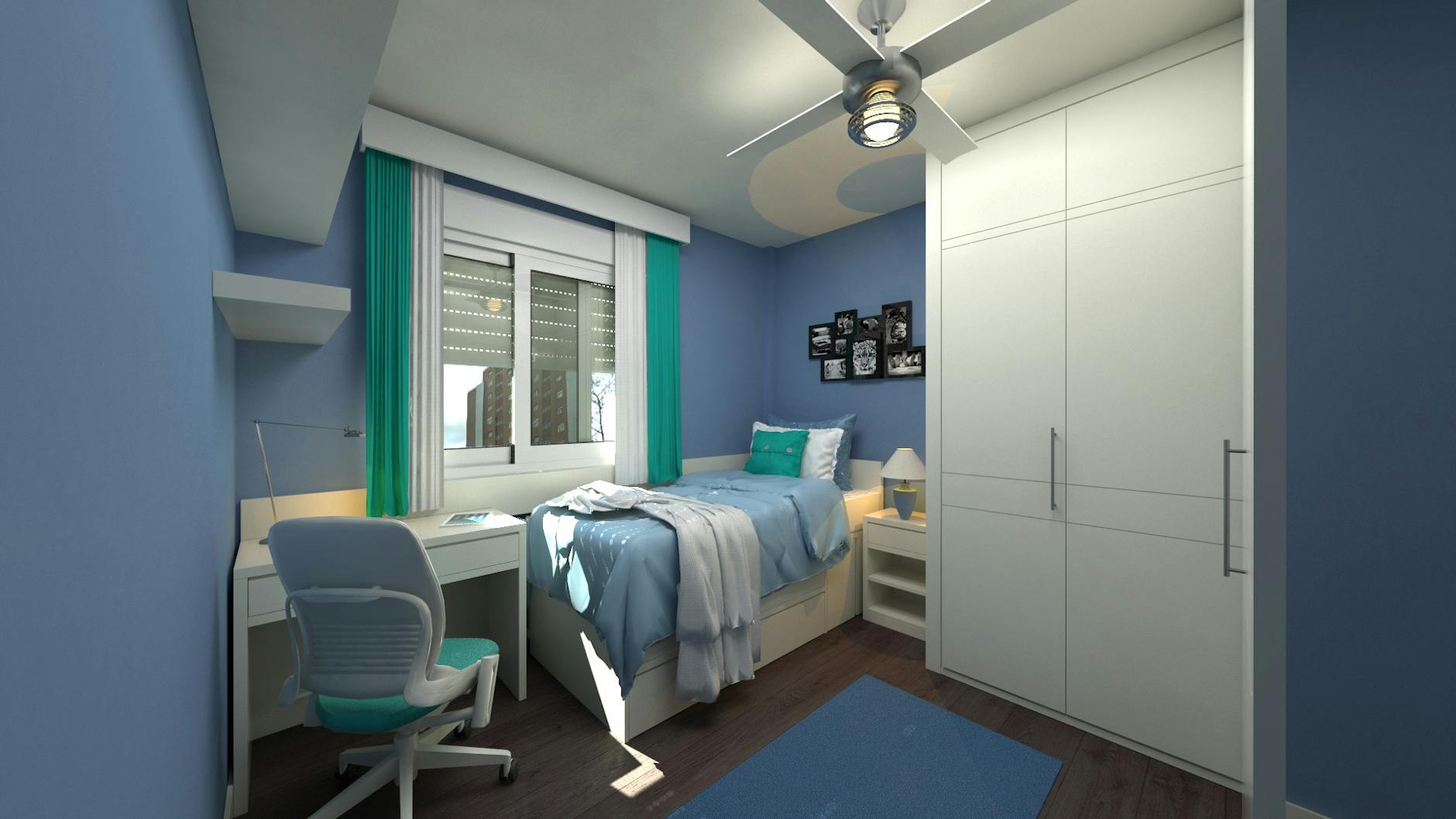
    Contemporary small bedroom with calm surfaces following a sleep sanctuary declutter plan for small bedrooms
    Clear surfaces and simple lines help your brain link the room with sleep. Photo: Pixabay via Pexels.

    Media provenance: Contemporary bedroom decor with blue tones, modern furniture, and bright lighting. Source: Pexels. Photographer: Pixabay.

    Zone 2: Nightstand essentials only

    • Keep: lamp, a book or e-reader, water, sleep mask, charger.
    • Remove: mail, meds not used nightly, makeup, cords, snacks.
    • Use a shallow tray to corral tiny items. Label the drawer dividers.

    Blue light from phones can delay melatonin. Therefore, try a 30–60 minute screen curfew. See Harvard Health for why blue light at night can disrupt sleep.

    Zone 3: Closet first pass, then refine

    • Pull anything you have not worn in 12 months unless it is formal wear.
    • Group by use: sleepwear, work, workout, outerwear.
    • Use slim hangers and one small bin for accessories.

    Because space is finite, set a cap per category. For example, limit sleep tees to five. Label each shelf or bin so the limit is clear.

    Zone 4: Under-bed storage

    • Only sealed bins. No loose bags or piles.
    • Categories allowed: off-season clothes, linens, keepsakes.
    • Front labels large enough to read while standing.

    In your sleep sanctuary declutter plan for small bedrooms, treat the under-bed like a mini-closet. If you would not store it in a closet, it probably does not belong here either.

    Zone 5: Dresser top and wall hooks

    • Maximum three items on the dresser top (for example, lamp, plant, tray).
    • Mount one or two hooks behind the door for a robe or bag.
    • Do not start a “chair pile.” If it touches the chair, it must be hung or washed.

    Zone 6: Windows, light, and airflow

    • Hang blackout curtains or a tight-fitting shade.
    • Use a draft stopper to reduce outside noise and keep the room cool.
    • Open windows during the day for fresh air if outdoor air is clean.

    CDC suggests a quiet, relaxing, cool room. Blackout and mild white noise can help you hit those marks without a remodel.

    Under-bed storage rules for a small bedroom sleep sanctuary plan

    This section sets simple, durable rules you can follow without thinking. A sleep sanctuary declutter plan for small bedrooms depends on low-friction habits like these.

    1. Only sealed containers go under the bed.
    2. Every bin gets one large exterior label.
    3. Categories must be single-purpose per bin.
    4. Quarterly review: pull bins, vacuum, re-label if needed.
    5. One-in, one-out: if a bin is full, remove something before adding.
    Under-bed container options and best uses
    Container Best for Why it works Watch-outs
    Low-profile lidded bin Linens, off-season clothes Seals dust, slides easily Measure bed clearance first
    Soft zippered storage bag Bulky textiles Flexible and lightweight Less rigid; avoid overstuffing
    Rolling drawer Daily-use shoes Quick access Needs a stop so it does not roll out
    Vacuum-seal bag in bin Rarely used clothing Maximizes space Not ideal for frequent access

    Measurement tip: measure the bed from floor to rail in three places. Use the smallest number and subtract 1 inch (2.5 cm). That is your max bin height.

    Cut light and noise fast in your small bedroom sleep sanctuary plan

    Light and sound shape how alert you feel. A sleep sanctuary declutter plan for small bedrooms must control both.

    • Blackout: Choose lined curtains or cellular shades that fit tight. Seal side gaps with magnetic tape or side tracks.
    • Noise: Set white noise to a steady, low volume. WHO (Europe) notes bedrooms should be very quiet at night; keep the machine just loud enough to mask sudden sounds.
    • Tech curfew: Dim screens and stop 30–60 minutes before bed. Harvard Health explains how blue light can shift circadian timing.
    • Temperature: Sleep Foundation reports many sleep best around 65°F (18°C). Adjust bedding layers, not just the thermostat.

    Best temperature for a small bedroom sleep sanctuary plan

    Most adults sleep best near 65°F (18°C), with a common comfort range from about 60–67°F (15.5–19.5°C). If your room runs warm, use lighter bedding and a breathable mattress protector. If it runs cool, add a light layer you can shed at night. See the Sleep Foundation guidance for details.

    Air and allergens in a small bedroom sleep sanctuary plan

    Dust and allergens affect comfort and can disturb sleep. Weekly hot washes of sheets and encasing pillows and the mattress can help reduce exposure. The Mayo Clinic and AAAAI offer bedroom-focused tips.

    Simple bedroom textile care schedule
    Item Frequency Notes
    Sheets + pillowcases Weekly Hot water ≥130°F (54°C)
    Duvet cover Every 2–4 weeks Check care label
    Blankets/throws Monthly Hot wash when safe
    Pillow + mattress encasements Quarterly Zip fully after wash
    Rug (if any) Weekly vacuum Skip rugs in very small rooms if possible

    Tiny bedroom declutter in 60 minutes: sleep-focused small bedroom declutter

    Follow the hour plan above, and set strict limits. Use a timer for each zone. Make yes/no decisions only; no “maybe” pile. Finally, walk the donate bag to the door so it leaves the home this week.

    Tools that support your small bedroom sleep sanctuary plan

    We focus on low-cost, durable, and multi-use tools that keep the room dark, quiet, cool, and dust-safe without adding clutter. We avoid hype and pick based on function and fit in small spaces.

    • Blackout curtains or cellular shades with tight side seals.
    • Low-profile under-bed lidded bins that fit your bed clearance.
    • A compact, steady white-noise machine with volume memory.
    • Labels you can read while standing.

    Note: For sleep-hygiene ideas and quick environment changes, MedlinePlus offers practical tips (like eye masks and earplugs) that can complement decluttering.

    Under-bed storage that fits a small bedroom sleep sanctuary plan

    Choose rigid lidded bins for a cleaner seal and easier sliding. Bags work for bulky textiles but can snag and shift. Always label and keep categories simple so you can return items fast. If you reach for something weekly, consider moving it to the closet instead.

    Calm bed surface that supports a sleep sanctuary declutter plan for small bedrooms
    Flat, clear surfaces make daily resets fast and help your mind downshift. Photo: Kaboompics via Pexels.

    Media provenance: A minimalist scene of a laptop on a textured bed with pillows, capturing a relaxed and modern atmosphere. Source: Pexels. Photographer: www.kaboompics.com.

    Light-blocking options for a small bedroom sleep sanctuary plan

    Ways to darken a small bedroom
    Option Install complexity Light-blocking Best for
    Blackout curtains Low High Renters; quick wins
    Cellular blackout shade Medium High Tight window frames
    Side tracks + shade Medium Very high Bright streetlights
    Eye mask Zero Varies Travel or extra backup

    Mistakes that break a small bedroom sleep sanctuary plan

    • Storing open baskets under the bed (dust magnets).
    • Stacking decorative pillows you move every night.
    • Buying bins before you measure bed clearance.
    • Using the chair as a hamper stand-in.
    • Keeping more than three items on any surface.
    • Skipping labels. Skipping labeling can break a sleep sanctuary declutter plan for small bedrooms.

    White noise choices for your small bedroom sleep sanctuary plan

    You can test with a phone first to learn your preferred sound and volume. Then, if it helps, choose a small dedicated unit without notifications or ads. Keep volume steady and low. The goal is to mask peaks in noise, not to blast the room.

    Small-room makeover for sleep sanctuary ideas

    If the embed does not load, watch here: EXTREME SMALL BEDROOM MAKEOVER: Boho to Minimal.

    Layout and flow for a small bedroom sleep sanctuary plan

    Good flow reduces friction at night and in the morning. Aim for one clear path from the door to the bed, then to the closet. If possible, leave at least 24 inches (61 cm) of walking space along one bed side. When that is not possible, clear the foot of the bed and keep the path straight.

    Measure first, then choose storage

    • Door swing: open your bedroom and closet doors and note where handles land. Keep those arcs clear.
    • Bed height: measure floor to rail and floor to mattress top. Pick bins that fit under the rail, not just the mattress.
    • Drawer reach: open any dresser drawers. If they hit the bed, slide the dresser two inches and re-test.

    Clear sightlines and calm color

    • Keep tall items off the nightstand. Short and simple looks calmer.
    • Limit art above the bed to one piece. Choose soft tones or a plain textile.
    • Use one accent color around the room to tie things together.

    Single-purpose zones beat multi-use

    • Desk in the bedroom? Keep it paper-free after 7 pm. Put a cover or cloth over it at night.
    • Workout gear? Store in one bin, not on the floor. Pull it out in the morning only.
    • Hobby items? Move to a shared area if possible; if not, limit to one labeled box.

    7-day micro-resets to lock in gains

    Short daily moves will protect your one-hour reset. Each takes five minutes or less and pairs well with brushing your teeth or setting an alarm.

    • Day 1: Nightstand tray reset. Remove any extras, wipe, and relabel.
    • Day 2: Dresser top. Return items to the three-item limit.
    • Day 3: Closet edit. Remove two items you never wear.
    • Day 4: Under-bed audit. Slide out bins, vacuum edges, and re-stack.
    • Day 5: Light and noise check. Adjust curtain gaps and verify noise level.
    • Day 6: Bedding refresh. Swap pillowcases or air out pillows by a window.
    • Day 7: Mini floor sweep. Pick up anything out of place and put it home.

    Repeat weekly. You can also schedule a calendar reminder titled “5-minute sleep sanctuary reset.” It keeps the habit visible.

    Troubleshooting: tiny bedroom declutter for better sleep

    No closet at all

    • Use a small wardrobe rack with a fabric cover to block light and dust.
    • Hang only the current week’s outfits. Store the rest in under-bed bins.
    • Place shoes in a shallow lidded bin to keep floors clear.

    Platform or loft bed

    • Platform drawers? Assign one per category (linens, off-season, keepsakes).
    • Loft? Use a curtain or fabric panel to hide visual noise below.
    • Add a stick-on LED under the loft to reduce nighttime stumbles.

    Shared studio

    • Use a curtain or bookcase as a soft divider. Keep the sleep side minimal.
    • Routines matter more. Do the five-minute reset before bed every night.
    • Choose a white-noise machine with a narrow sound profile to avoid masking alarms.

    Window light leaks

    • Close side gaps with adhesive side tracks or magnetic tape.
    • Add a tension rod above the shade to hold a blackout valance.
    • As backup, keep a comfortable eye mask by the nightstand.

    Thin walls or hallway noise

    • Seal door gaps with a draft stopper. Add weatherstripping if allowed.
    • Place a soft rug or runner to dampen footstep echoes.
    • Set white noise just high enough to mask sudden peaks, not constant hums.

    When issues stack up, return to basics. Your sleep sanctuary declutter plan for small bedrooms works best when surfaces are clear, bins are sealed, and the room goes dark and quiet on demand.

    Budget checklist: use what you have first

    • Repurpose shoe boxes inside drawers as dividers. Label the fronts.
    • Use binder clips to hold curtain edges tight against the wall at night.
    • Fold a towel as a temporary draft stopper at the door base.
    • Make large labels with masking tape and a bold marker. Upgrade later.
    • Turn a spare pillowcase into a dust cover for a small rack.

    Spend only after you measure. A well-fitted $12 bin beats a fancy $40 bin that does not slide.

    Printable checklist: one-hour plan on one page

    Copy this list into your notes app or print it. It is the same sleep sanctuary declutter plan for small bedrooms, condensed for quick action:

    1. Make bed tight. Stage keep/donate/trash/elsewhere piles.
    2. Nightstand: keep five essentials; remove the rest.
    3. Closet: pull obvious no’s; bag and label.
    4. Under-bed: sealed bins only; label big and clear.
    5. Dresser: three items max on top; hang one or two hooks.
    6. Blackout and white noise; set cool temperature.
    7. Vacuum, empty trash, set donate by the door.

    Maintenance calendar: weekly, monthly, seasonal

    Sleep sanctuary upkeep at a glance
    When Task Why
    Nightly (5 min) Clear nightstand, clothes away, curtains closed Fast reset maintains calm cues
    Weekly (15–20 min) Hot-wash sheets, quick under-bed vacuum edge Cleaner air and easier breathing
    Monthly (20–30 min) Dresser/closet micro-edit; replace worn labels Stops build-up before it starts
    Quarterly (30–45 min) Pull all under-bed bins; re-sort and relabel Keeps storage honest and dust-safe
    Seasonal (45–60 min) Swap capsule clothing; clean curtains/shades Right items in reach; better blackout

    Noise masking: pick the right tool for the job

    Common noise issues and simple fixes
    Noise source Fix Notes
    Street traffic Heavier curtains + low white noise Close window gaps; keep machine steady
    Neighbors talking Door draft stopper + bookshelf by wall Add soft items to absorb sound
    Footsteps above Rug or runner Soft surfaces reduce echoes
    Early birds at home Eye mask + phone do-not-disturb Curfew helps keep screens quiet too

    Case example: from busy to calm in 60 minutes

    Example reset: a 9×10 foot room with a full bed and a small closet. At minute 10, the bed is made and floors are cleared into four piles. By minute 20, the nightstand holds only five items and a tray. Around minute 30, the closet has 15% more space after a first-pass edit. At minute 40, two sealed bins go under the bed: linens and off-season clothes. Before minute 55, blackout curtains close and a draft stopper seals the door gap; white noise is set to a low, steady sound. The final five minutes handle vacuum and trash. The room now cues sleep on sight and takes under five minutes to reset each night.

    FAQ: small bedroom sleep sanctuary plan answers

    What is the fastest sleep sanctuary declutter plan for small bedrooms?

    The fastest sleep sanctuary declutter plan for small bedrooms is the one-hour sweep: make the bed, clear floor and nightstand, edit the closet, set under-bed bins, then block light and start white noise. Each step has a tight time box so you do not stall.

    How many under-bed bins should I use?

    Use as few as possible, usually two to four. One for spare linens, one for off-season clothes, and one optional keepsake bin. If you need more, remove something before adding.

    What should be on my nightstand?

    Limit it to a lamp, water, one current book or e-reader, a sleep mask, and one charger. Everything else gets a labeled home elsewhere.

    How dark and quiet should my room be?

    Make it as dark as you can. Keep noise low and steady. WHO (Europe) aims for very low indoor night noise, and the CDC highlights quiet, cool rooms for better sleep.

    Do I need blackout if I already use an eye mask?

    Masks help, yet room-level darkness also cues your brain for sleep and helps if the mask slips. Use both when streetlights are bright.

    What if I cannot drill into walls?

    Try tension rods for curtains, adhesive side tracks for shades, and removable hooks. These renter-friendly tools avoid damage and still improve sleep cues.

    Evidence-backed tips and sources

    Next steps to keep momentum

    Put a five-minute reset on your evening checklist: clear the nightstand, put clothes away, and pull the curtains. Also, schedule a 15-minute review every quarter to edit the closet and under-bed bins. Finally, if you want deeper habit help and practical tactics, explore the Mind Clarity Hub books hub and scan the latest reviews to find a method that fits you.

    Wrap-up

    This sleep sanctuary declutter plan for small bedrooms is simple by design: one hour, clear rules, and small tweaks that aid sleep. Save this sleep sanctuary declutter plan for small bedrooms and repeat it seasonally. As a result, your tiny room can feel restful every night without adding new furniture.

  • Small Space Reset Routine: A Calm Room-by-Room System

    Small Space Reset Routine: A Calm Room-by-Room System

    When your home is tiny, clutter builds fast. A small space reset routine gives you a simple loop you can finish quickly so each zone feels calm again. In this guide, you will get a clear, room-by-room method, short checklists, and science-backed habits that help the order stick.

    Key takeaways for fast calm

    • A small space reset routine should be short, repeatable, and tied to daily cues like meals or leaving for work.
    • Use a tiny timer (5–15 minutes) per zone to keep momentum and avoid perfectionism.
    • Park a one-bag reset caddy so tools are always within reach.
    • Hide friction: pre-label micro-bins, keep one hook per person at the door, and use a single-swipe surface rule.
    • Protect your future time: assign every object a first home (where it lives) and a second home (temporary drop spot).

    Why this works: short cycles cut decisions, visible homes cut hunting, and staging one item for tomorrow gives a tiny reward. As a result, you finish more often and feel done sooner.

    What is a small space reset routine?

    It is a short sequence you repeat to bring any room back to “ready.” The goal is not deep cleaning. The goal is quick clarity: clear surfaces, reset tools, and restore paths. Because you circle through rooms with the same steps and the same timer, you avoid decision fatigue and reclaim calm in minutes.

    Here is the simple definition you can use today: a reset equals put back, toss/relocate, quick wipe, and stage for next use. That is it. When time is tight, you stop when the timer ends. As a result, you get reliable wins instead of long, stalled cleanups.

    What “ready” looks like in a small home:

    • Surfaces: one clear surface per zone, nothing stacked on the floor.
    • Traffic: doors and main walkways are open and safe.
    • Tools: the next-use item is out and visible (mug, pen, gym shoes).
    • Trash: bag tied and near the exit if it is close to full.

    Think of it as a maintenance loop, not a makeover. With practice, you will notice how visual noise drops within minutes even when square footage is tight.

    Quick-start small space reset routine: 10 minutes tonight

    Start a small space reset routine tonight with this one-room sprint:

    1. Set a 10-minute timer. Stand where you will start tomorrow morning.
    2. Grab a small tote, 2 microfiber cloths, and a trash bag.
    3. Put back anything that has a clear home (no sorting).
    4. Relocate anything that belongs in another room to the tote.
    5. Wipe the most-touched surface (handles, light switch, desk front).
    6. Stage one thing for tomorrow (coffee mug, workout shoes, lunch box).
    7. Stop when the timer ends. Note one friction you can remove.

    Two-day ramp plan:

    • Day 1: Do the sprint above in your highest-traffic zone. Write your biggest friction on a sticky note.
    • Day 2: Repeat the sprint in a second zone. Remove the friction from Day 1 (add a hook, place a tray, label a bin).

    Micro-journal prompt (30 seconds): “What cue did I use? Where did I stall? What one fix will make tomorrow easier?” Keep this note at your start point.

    Desk setup for a small space reset routine with a laptop, mug, pen, and notepad on a white desk.
    A tiny desk is easier to reset when tools are few and visible. Photo by Cup of Couple via Pexels.

    Visual loop for a tiny home reset

    This loop helps you see where you are and what comes next at a glance.

    Make the loop even easier:

    • Keep the tote parked at your first zone so you can begin without walking.
    • Use the same color cloth for the same room to reduce thinking.
    • Play a short song you like; when it ends, you are done.

    Room-by-room small space reset routine method

    Use this flow the same way in each zone. Because the steps never change, your pace improves and your brain stays calm.

    Entry or door zone

    Use your small space reset routine at the door to stop clutter before it spreads.

    • Put back: Shoes to rack, coat to hook, keys to tray.
    • Relocate: Mail to a single magazine file; packages to a staging corner.
    • Swipe: Handle, light switch, and tray.
    • Stage: Umbrella on wet days; gym bag on training days.

    Micro-zones to watch:

    • Hooks: one per person, plus one guest hook if space allows.
    • Landing tray: empty coins and earbuds nightly.
    • Shoe rack: cap pairs per person; extras live in a closed bin.

    60-second version: hang coats, drop keys into tray, tie trash if near full, and wipe the handle strip.

    Kitchenette or kitchen corner

    The small space reset routine for the kitchen is about clear counters and a clean sink start.

    • Put back: Spices, utensils, cutting board.
    • Relocate: Pantry items out of the prep zone.
    • Swipe: Counter, faucet handle, appliance fronts.
    • Stage: Coffee setup or water bottle for morning.

    Micro-zones to watch:

    • Sink: commit to an empty sink at shutdown; air-dry rack stays half-clear.
    • Counter: limit tools to a three-item rule (for example: kettle, knife block, board).
    • Fridge door: keep only daily-use items there for fast access.

    Staging ideas: pre-fill the kettle, load the coffee filter, place a lunch container on the top shelf, or set vitamins near a water bottle.

    Bathroom small space reset routine

    A quick bathroom reset keeps moisture and products from spreading.

    • Put back: Toothbrush, skincare, hair tools in a labeled pouch.
    • Relocate: Laundry to the hamper; extras to a single bin.
    • Swipe: Faucet, handle, and mirror strip.
    • Stage: Fresh towel or morning kit.

    Micro-zones to watch:

    • Shower caddy: limit to daily basics; stash spares in a closed bin.
    • Back-of-door hooks: one towel per person; swap when dampness lingers.
    • Drawer top layer: a small insert holds only the items used this week.

    60-second version: hang towel, cap bottles, wipe faucet edge and one mirror strip.

    Living/work area apartment reset routine

    If your desk is in your living room, a tidy end state boosts focus tomorrow.

    • Put back: Remote, chargers, notebooks to a tray or magazine file.
    • Relocate: Dishes to sink, hobby gear to a tote.
    • Swipe: Coffee table edge, desk surface, keyboard.
    • Stage: Open your planner to the next page and place one pen.

    Micro-zones to watch:

    • Charging station: one power strip and labeled cables to end cord clutter.
    • Paper zone: a single magazine file marked “Action” for bills and forms.
    • Remote tray: add a divider so remotes and earbuds have visible slots.

    60-second version: collect dishes, align remotes, flip planner open, and wipe one table edge.

    Bed or studio corner mini room reset

    In a studio, your bed is a visual anchor. A quick reset prevents stress at bedtime.

    • Put back: Clothing to hooks or the single chair rule (one chair, one outfit max).
    • Relocate: Books you are not reading to shelf or return bin.
    • Swipe: Nightstand and phone face.
    • Stage: Tomorrow’s outfit on one hanger.

    Micro-zones to watch:

    • Nightstand: allow one book, one light, one water glass—no stacks.
    • Under-bed bin: store off-season items; label the short side for easy reach.
    • Chair rule: the chair holds only today’s outfit; clear it nightly.

    60-second version: fold or hang clothing, set a glass on a coaster, place the hanger on the closet knob.

    Area Target time Trigger (cue) Top actions
    Entry 3–5 min When you arrive home Hook, tray, handle wipe, stage bag
    Kitchen 6–10 min Right after dinner Clear sink, counters, stage coffee/water
    Bathroom 4–6 min After evening wash Put back caddy, wipe faucet/mirror strip
    Living/desk 6–10 min Before TV off or at sign-off Tray items, relocate dishes, open planner
    Bed/studio 3–5 min Before lights out One-hanger outfit, clear nightstand
    Calm bedroom corner with soft light and a simple chair beside a bed.
    Soft light, clear surfaces, and one ready item make a room feel done. Photo by ready made via Pexels.

    When should you run a reset?

    Pick one anchor per room. Also, use a short timer. Instead of waiting for a free hour, you stack resets onto moments that already happen.

    Reset type Best daily anchors Why it works
    Entry reset Walk-in or walk-out Objects are already in hand; fast decisions
    Kitchen reset After meals Hot water is ready; fewer dried-on messes
    Bathroom reset After shower Mirror fog shows swipe zones; limited items out
    Desk reset Before shutdown Natural boundary ends work; one-touch filing
    Bed reset Before sleep Signals rest; easier morning start

    Morning vs evening:

    • Morning micro-resets shine for the entry and desk: you can stage your bag and task list fast.
    • Evening micro-resets shine for the kitchen and bathroom: surfaces are already in use.
    • If in doubt, choose the anchor you never skip (for example, “after teeth” or “after dinner”).
    Day Zones Timer Marker of done
    Mon Entry + Kitchen 5 + 8 min Bag staged; kettle filled
    Tue Bathroom + Desk 5 + 7 min Towel hung; planner open
    Wed Kitchen + Bed 8 + 4 min Empty sink; hanger prepped
    Thu Entry + Living 5 + 8 min Keys in tray; remotes aligned
    Fri Flex zone (messiest today) 10–15 min One before/after photo

    Use a weekly flex day for seasonal swings (packages, guests, projects). If life is hectic, run only the first zone on the chart. Some is enough.

    Small space reset routine tools that fit one tote

    Keep a one-bag kit. Because everything lives together, you start faster and stop without hunting for supplies.

    Tool Size Primary use Storage tip
    Two microfiber cloths Small Dry polish, damp wipe Color-code for rooms
    All-purpose spray Travel bottle Quick surface swipe Refill weekly; label clearly
    Disposable gloves Flat pack Bathroom/food messes Keep one pair per reset
    Mini broom or brush Compact Crumbs at entry/kitchen Hang inside closet door
    Zip pouch + labels Flat Tiny parts, hardware, cords One pouch per category
    13-gal trash bag Folded Relocate/toss shuttle Stash 2–3 behind tote

    Optional add-ons (space allowing): a small squeegee for shower glass, a lint roller for soft surfaces, and a folding grabber for high or low reaches. Store add-ons on a single clip ring so you can remove them when you want a lighter kit.

    Safety and surfaces: use gentle cleaners for daily swipes and follow product labels. For general home care guidance, see the CDC’s advice on cleaning your home. Ventilate if products have a scent and keep supplies out of reach of children and pets.

    Habit science for your apartment reset routine

    Habits stick when the behavior is easy, obvious, and tied to a cue. The Fogg Behavior Model shows that when motivation is average, only very easy actions happen. Therefore, keep resets tiny and visible.

    Also, plan the exact “if–then” you will follow. Psychologists call this an implementation intention (for example, “If I turn off the TV, then I clear the coffee table”). This simple line removes guesswork.

    Make the cue hard to miss:

    • Place the tote where your foot will almost touch it at your anchor time.
    • Use a 10-minute sand timer or a kitchen timer with a pleasant chime.
    • Put a tiny checklist on the inside of a cupboard door or near the entry.

    Tracking that takes seconds:

    • Drop one paperclip in a jar per completed room; tip them out on Sunday.
    • Use a sticky note grid: five boxes across for weekdays, one row per room.
    • Take a single “ready” photo per room each week to see real progress.

    Finally, clean in a safe, routine way. For general home care, see the CDC’s guidance on cleaning your home. You do not need harsh methods for daily resets; a gentle, regular swipe is enough for most surfaces.

    See a quick reset in action

    If the video does not load, watch it on YouTube: Sunday reset routine.

    Try watching at 1.25× speed while you run your own 10-minute timer. Mirror the steps, pause if needed, and stop when your timer ends.

    Small space reset routine blockers and fixes

    Blocker Cause Fix
    “Nowhere to put this” No first home set Create a labeled bin; use a second-home tray for in-between
    “Takes too long” Too many steps Cut to four moves: put back, relocate, swipe, stage
    “I forget” Weak cue Attach to a strong daily anchor; place a note at the start point
    “Roommates undo it” Rules not visible Make a 3-rule sign; add one hook/bin per person
    “Paper piles” Mixed categories One magazine file labeled “Action”; clear it at shutdown
    Time/energy Action plan Good enough result
    2–3 minutes Hang coats, clear handles, stage one item Entry looks open; tomorrow is set
    5 minutes Put back + relocate only Surfaces visible again
    10 minutes Full loop: put back, relocate, swipe, stage Room feels done
    15 minutes Full loop + one mini task (empty trash, quick sweep) Room ready and improved

    Renter-friendly tweaks:

    • Use removable hooks for vertical storage in entries and closets.
    • Choose narrow carts on wheels for kitchen or bath and park them in dead corners.
    • Use under-bed boxes with fabric tops to keep dust down without heavy lids.

    Deep clean or small space reset routine first?

    Reset first. Because resets are short, they reduce overwhelm and expose what truly needs deeper work. After a few days of resets, choose one deep-clean task each week when energy is higher.

    Simple deep-clean rotation (one per week):

    • Kitchen: degrease stovetop grates or wipe inside the microwave.
    • Bathroom: scrub shower floor or descale the shower head.
    • Living/desk: dust high shelves or vacuum under the sofa.
    • Entry/bed: wash the door mat or launder pillow covers.

    Keep this list short so it never blocks your daily loop.

    How often is enough?

    Daily is ideal for tiny homes, but the real key is consistency. Pick two to three zones for daily attention and give the rest a weekly reset. Therefore, you keep gains without spending your whole evening cleaning.

    Signals that your frequency is right:

    • You can see at least one clear surface per room without starting a timer.
    • Entry and desk are ready for tomorrow by habit, not by effort.
    • Trash and dishes never surprise you in the morning.

    How do you keep roommates or family on board?

    Keep rules simple and visible. Use one hook and one bin per person at the entry. Also, share a photo of the “done” look for each zone. Then, run a 10-minute group reset before a shared anchor like dinner or a show.

    Shared-space agreements that help:

    • One-in, one-out at the entry tray after 6 p.m.
    • Dish handoff: person who cooks hits the timer while the other clears and stages.
    • Quiet reset: headphones on, timer set, no chatting until the chime.

    Customize your small space reset routine

    • Pick two daily zones and one flex zone (the messiest today).
    • Use a single color label per room so returns are obvious.
    • Give each hobby a tote. If the tote is full, swap before starting a new one.
    • Limit surfaces: if you add a tray, remove a basket.
    • Take one picture of “ready” in each room; copy it weekly.

    Seasonal swaps:

    • Winter: add a boot tray and a glove bin by the door.
    • Spring: place a small mat for plant repotting tools.
    • Summer: keep a beach tote pre-packed on a hook.
    • Fall: rotate a rain kit (umbrella + towel) to the front.

    Make cues personal: attach your loop to habits you already have. Examples: “After tea, clear the desk,” or “After brushing teeth, wipe the faucet and hang towel.”

    A calmer week with tiny anchors

    You do not need more time. You need fewer, clearer moves. When you run your small space reset routine the same way each day, rooms return to ready fast, and your mind has room to think again.

    Next-level idea: keep a 30-day calendar where you mark only the days you start. Streaks grow when starting is easy. Missing a day? Start the next one with a single room and stop at the chime.

    More guides for your next step

    Build a reading list that supports your habits and calm. See the Mind Clarity Books Hub for organization and productivity picks, and visit the Reviews Hub if you like to compare before you buy or borrow.

    FAQ

    What is the difference between a reset and cleaning?

    A reset restores function and clear surfaces fast. Cleaning targets dirt and requires more time and tools. Do a reset daily and clean weekly or as needed.

    How long should a reset take in a studio?

    Most rooms need 5–10 minutes. A full studio often fits in 25–40 minutes when you rotate two daily zones and one flex zone.

    What belongs in my reset caddy?

    Two cloths, a small spray, gloves, a mini brush, labels, a pen, and a folded trash bag. Keep it light so it is easy to grab.

    How do I make a small space reset routine stick?

    Tie it to a strong daily cue, keep steps the same, and end with a visible “stage” action that rewards tomorrow’s self.

    What if I miss a day?

    Start with one room today. Because the steps are tiny, momentum returns fast. Avoid catch-up marathons.

hypnotherapy st kilda.