


Published:
If you live in a small space and your week is packed, the right plan can keep your home steady without stealing your time. This guide gives you a calm weekly cleaning schedule you can finish in short, focused blocks. It works with your real life, not against it. You will map tasks to the day they fit best, use a 20-minute daily reset, and protect your energy with simple rules that prevent messes from stacking up.
Here is how to use this guide. First, skim the quick-start list below. Then choose your weekly map. After that, set up your small cleaning kit and try the 20-minute reset tonight. Finally, adapt the plan for your rooms, your people, and your energy swings.
Quick start for your calm cleaning routine
- Pick a two-word theme for each day (Dust Day, Floor Day, etc.).
- Run one 20-minute daily reset (even on busy days).
- Keep one small caddy with safe, multi-surface supplies.
- Use visual zones: surface clear, floor clear, sink clear.
- Batch laundry and trash so nothing lingers overnight when possible.
- Post your week map where you see it: entry wall, fridge, or desk.
- Set a friendly timer sound and stop at the alarm to stay light.
What is a calm weekly cleaning schedule?
A calm weekly cleaning schedule is a simple, repeatable plan that assigns one focused task theme to each day, plus one short daily reset. It removes decision fatigue and spreads the load so nothing builds into an all-day chore. Because small spaces get messy fast, a steady rhythm makes a big difference. Also, when your plan is predictable, you spend less mental effort on “what now?” and more attention on your life.
Why this works: routines and cues reduce the friction of starting. Habit science shows that small, consistent steps compound into stable habits over time. See the NIH’s plain-language overview on habit formation for background on why tiny steps stick (NIH News in Health). For safe, effective cleaning, stick with simple methods and products that meet basic guidance from trusted sources such as the CDC on cleaning and disinfecting and the EPA Safer Choice program.
How to build a calm weekly cleaning schedule
Use this 30-minute setup flow to design a plan you can keep:
Free download: 7-Day Mind Clarity Reset
A short daily reset you can actually stick with (no fluff).
- List your rooms and the one or two tasks that make each room “feel done.”
- Match one task theme to each weekday. Keep weekends light.
- Define your 20-minute daily reset (below). Set a timer you like.
- Assemble a small, safe supply caddy (see table).
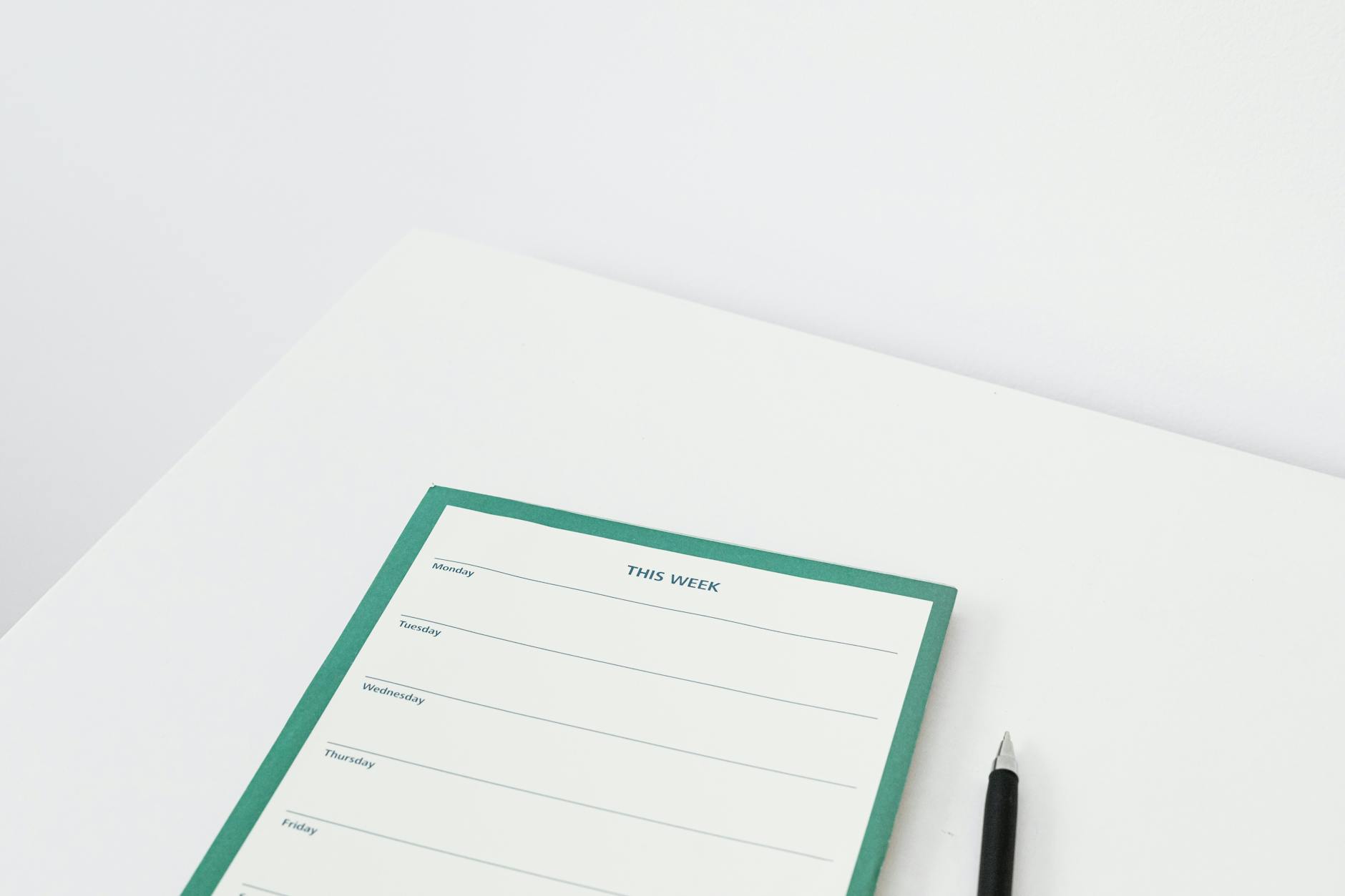
- Write your weekly map where you will see it. A sticky note works.
Common setup mistakes (and easy fixes):
- Too many tasks per day. Fix: one theme only, sized to 15–30 minutes.
- Hidden tools. Fix: keep your caddy where the day’s theme starts.
- No end time. Fix: use a timer; stopping on time keeps you coming back.
- Vague steps. Fix: write exact actions, like “wipe counters and table.”
Your 7-day calm weekly cleaning schedule map
Start with this sample. Swap days to match your week. Keep each block short. If you miss a day, do not double up. Instead, jump to today’s task and move on. That is what keeps the plan calm.
| Day | Theme | Target Rooms | Time Budget | Examples |
|---|---|---|---|---|
| Monday | Surfaces | Kitchen, Living | 25–35 min | Clear and wipe counters, table, TV stand |
| Tuesday | Floors | All rooms | 25–35 min | Vacuum rugs, quick mop hard floors |
| Wednesday | Bathroom | Bath | 20–30 min | Toilet, sink, mirror, shower wipe-down |
| Thursday | Laundry | Clothes/Bedding | Active time 20–30 min | Wash, dry, put away; change towels |
| Friday | Dust + Touchpoints | All rooms | 20–30 min | Dust high to low; wipe handles/switches |
| Saturday | Reset + Restock | Entry, Kitchen | 15–25 min | Trash out, restock supplies, fresh entry mat |
| Sunday | Light Reset | All rooms | 10–20 min | Quick tidy, prep for Monday |
Small-space rules that protect your calm weekly cleaning schedule
- One-in, one-out: when a disposable item enters, one leaves.
- Clear the biggest surface first (kitchen counter or table).
- Store vertical: hooks on doors, slim shelves, and back-of-cabinet racks.
- Use a small hamper and take laundry the day it is full.
- Keep a “return tray” by the door for keys, wallet, and mail.

Source: Pexels. Photographer: PNW Production.
Why a 20-minute reset anchors a calm cleaning routine
The 20-minute reset is a short loop you run once a day to stop clutter creep. It is the safety net for your calm cleaning routine. Set a timer for 20 minutes and move fast through the steps below. If you live with others, make it a shared game: play music, divide areas, and stop at the alarm.
| Step | Task | Targets | Tip |
|---|---|---|---|
| 1 | Surface sweep | Counter, table, sofa | Put stray items in a small bin to sort later |
| 2 | Dish reset | Sink, drying rack | Load or hand-wash; wipe sink edge |
| 3 | Quick floors | Visible crumbs only | Use a cordless or mini broom |
| 4 | Bathroom flash | Mirror, sink, toilet seat | One cloth, quick spray, quick wipe |
| 5 | Trash + entry | Bins, shoes, mail | Bag trash; sort mail into keep/scan/recycle |
Because this reset is time-capped, it stays light. Therefore, you avoid the trap of “I should do everything” that leads to doing nothing.
Reset variations you can try:
- Two-person split: one runs dishes + entry while the other runs surfaces + floors.
- Playlist mode: one three-song set per reset to make the stop point obvious.
- Post-guest sweep: add a quick vacuum pass to step 3 and skip bathroom.
Supplies that support a stress-free weekly cleaning plan
In a small home, less is more. Choose a compact caddy with safe, multi-surface products. To reduce exposure to harsh chemicals and scents, look for labels and programs that review ingredients for health and environmental factors, such as the EPA’s Safer Choice. For disinfection needs, match the job to guidance like the CDC’s cleaning and disinfecting basics. Always read the product label and use as directed.
| Category | What to Keep | Notes |
|---|---|---|
| All-purpose cleaner | Mild, multi-surface spray | Check for Safer Choice or similar review |
| Bathroom cleaner | Tile/tub cleaner | Ventilate; follow dwell-time directions |
| Microfiber cloths | 3–5 cloths | Color-code by room to avoid cross-use |
| Glass cleaner | Small bottle | Or use diluted vinegar on windows/mirrors |
| Dust tool | Microfiber wand | Washable head saves space and money |
| Vacuum/broom | Slim upright or stick vac | Wall-mounted saves floor space |
| Gloves + bags | Nitrile gloves, small trash liners | Store flat under sink or in caddy |
| Spot treatment | Enzymatic cleaner | Useful for pet areas and fabrics; test first |
Room-by-room guide for a gentle weekly housework schedule
Use this section to tune the plan to your layout. You can keep your calm cleaning routine the same and just swap the room focus inside each theme.
Kitchen: 10-minute “clear, clean, close”
- Clear: put food away, load or wash dishes, return tools.
- Clean: wipe counters, stove front, sink edge (work left to right).
- Close: sweep visible crumbs, take trash if over two-thirds full.
Also, store most-used tools in one reachable zone. For example, keep a cutting board upright by the stove and a bin for spices. As a result, prep creates less spread and cleanup is faster.
Bathroom: 5 surfaces, one cloth
- Mirror top to bottom (light mist).
- Faucet and sink bowl.
- Counter ledge.
- Toilet seat and handle.
- Shower door or curtain wipe-down.
Meanwhile, a weekly scrub keeps the rest easy. If someone has allergies, washing towels and bathmats often can help reduce dust and mites. See guidance on dust mite control and bedding wash frequency from the American College of Allergy, Asthma, and Immunology.
Living/sleeping area: two-zone tidy
- Zone 1 (rest): make the bed or fold the couch blanket; clear side table.
- Zone 2 (work/play): reset desk or console; coil cords; stack remotes.
Entry/closet micro-step: hang coats on hooks, drop mail in the tray, and park shoes on a mat. This one-minute landing pad removes clutter from sight lines.
Source: Pexels. Photographer: Kaboompics.
Calm cleaning routine: day-by-day details for tiny homes
- Monday — Surfaces: start at the biggest counter and move clockwise. Toss obvious trash, rehome five items, then wipe.
- Tuesday — Floors: pull chairs once, vacuum center paths, then edges. If time allows, quick-mop high-traffic zones.
- Wednesday — Bathroom: spray, let sit while you wipe mirror and counter, then finish sink and toilet touchpoints.
- Thursday — Laundry: start a load before work; fold right from the dryer to avoid “clean piles.”
- Friday — Dust + Touchpoints: dust high to low; wipe handles, remotes, and switch plates.
- Saturday — Reset + Restock: trash out, restock soaps and bags, shake entry mat.
- Sunday — Light Reset: quick tidy, make lunches, and lay out Monday clothes.
These details turn a theme into a repeatable loop. If a day runs long, stop at your timer and pick up the next cycle. Progress, not perfection, is the aim.
How long a calm cleaning routine takes each week
Plan about 2.5 to 4 hours total across the week, spread over short blocks. The mix is one 20-minute reset daily plus one themed task on five to six days. With practice, your calm cleaning routine will take less time because rooms stay closer to done.
Time budgets for different weeks:
- Peak week (travel, exams): daily reset only; skip themes without guilt.
- Normal week: reset + one theme most days; one light day off.
- Quiet week: reset + one theme + one optional monthly task.
Monthly deep clean vs. your calm cleaning routine
Weekly is for visual calm and hygiene basics. Monthly is for the “behind and below” jobs. Keep your calm cleaning routine intact and batch deeper jobs once a month or once a quarter.
- Monthly: baseboards, under-bed vacuum, oven door glass, fridge shelves.
- Quarterly: window tracks, vent covers, behind appliances (if safe to move).
- Seasonal: donate unworn clothes, rotate bedding, wash pillows per label.
| If This Happens | Swap To | Keep the Plan Calm By |
|---|---|---|
| Late work meeting Tuesday | Move Floors to Friday | Skipping Tuesday theme; do reset only |
| Guests Sunday night | Run Light Reset Saturday | Prepping early; keep Sunday short |
| Laundry room is busy | Start early or split loads | Folding straight from dryer |
Micro-wins that protect your stress-free weekly cleaning plan
Some days you will not have 20 minutes. That is normal. Do a 5-minute reset and one theme micro-step. For example, wipe the bathroom mirror and faucet only. Because you touched the room, momentum stays. Over time, these micro-wins protect your stress-free weekly cleaning plan.
- Carve 60 seconds to clear the biggest surface only.
- Do “just the dishes” or “just load the washer.”
- Walk a trash bag once through the home and collect obvious items.
Common blockers in a gentle weekly housework schedule
- “No time today.” Answer: do the reset only. Skip the theme and move on.
- “Supplies all over.” Answer: one caddy; restock on Saturday.
- “Roommates undo it.” Answer: post the map and assign shared steps.
- “Can’t start.” Answer: set a 3-minute warm-up timer and begin anywhere.
- “Pet fur everywhere.” Answer: run a hand vac pass on center paths daily; lint-roll sofa once a week.
- “Mail piles up.” Answer: add a 60-second mail sort to the reset: keep/scan/recycle.
Example: 20-minute studio apartment run-through
- Start laundry (2 min active).
- Clear kitchen counter and sink (6 min).
- Wipe bathroom mirror, sink, and toilet seat (5 min).
- Vacuum center walkways (5 min).
- Bag trash and reset entry tray (2 min).
Finally, stop at the timer. Because you kept it short, you will return tomorrow.
Laundry rhythm that fits a stress-free weekly cleaning plan
For most households, weekly towels and sheets keep things fresh in small spaces. Allergy-prone folks may wash pillowcases more often. For dust mite reduction, hot water washing and heat drying can help; see ACAAI’s overview (ACAAI).
Walkthrough: build your calm cleaning routine (YouTube)
If the video does not load, open it here: Watch on YouTube.
Storage ideas that speed up a calm cleaning routine
- Over-door hooks for towels and a cleaning caddy.
- Clear lidded bins under the bed for spare linens.
- Slim rolling cart for pantry or bath items.
- Magnetic strip for knives and small metal tools.
- Foldable baskets that tuck into shelves and double as carry bins.
Calm cleaning routine flow (One-Glance Map)
- Map Your Week: Mon Surfaces, Tue Floors, Wed Bath, Thu Laundry, Fri Dust.
- Daily Reset: 20 minutes max.
- One Theme Task: stop when done.
- Protect Zones: counter, floor, sink clear.
- Weekly Review: swap tasks if needed.
Use a timer and one caddy. Keep it light and repeatable.
Make your calm cleaning routine stick: cues and timers
Link your reset to an existing anchor: after dinner, or right before your evening wind-down. Also, use a fun timer and a short playlist. Because your brain expects a stop, you will start more often. Place your weekly map in sight. A planner on your desk works well for a calm cleaning routine and other habits.
Clean and safe habits for a stress-free weekly cleaning plan
- Ventilate when using products; open a window or run a fan.
- Follow product labels. Dwell times matter for disinfection.
- Wash microfiber separately and avoid fabric softener to keep it effective.
- Choose products reviewed by programs like EPA Safer Choice.
- Match the job: routine cleaning most days; targeted disinfection when needed (see CDC basics: CDC Cleaning).
Troubleshooting a calm cleaning routine
If you keep skipping a day, that is feedback. Therefore, move that theme to a lighter day or split it. For example, put floors in two parts: Tue rugs, Fri hard floors. If you share space, post the plan and give each person a small, clear job. A calm cleaning routine is a team sport in tiny homes.
Printable checklist and apps for a calm cleaning routine
Some readers like paper. Others like apps. If you prefer analog, print a one-page checklist and laminate it so you can reuse it. If you like digital, try a simple to-do app or calendar reminders. For ideas, see our guide to the best free planning apps that can run repeating tasks without clutter.
Stress-free weekly cleaning plan: sample maps for different lives
- Shift worker: make your “Monday” the first day home after nights; run the reset before sleep to close the loop.
- Roommates: assign themes by strength (e.g., the fastest person on dishes runs Monday Surfaces; the meticulous one runs Friday Dust).
- Pet owner: add a 3-minute fur sweep to the daily reset; wash pet bedding on Laundry day.
- Parent of a toddler: anchor the reset after bedtime; use a small toy bin for a fast scoop-and-sort.
Optional resources
Affiliate disclosure: Some links in this guide may be affiliate links. If you buy through them, Mind Clarity Hub may earn a commission at no extra cost to you. As an Amazon Associate, Mind Clarity Hub earns from qualifying purchases.
Want one page to keep your calm cleaning routine visible? Try a simple weekly cleaning planner or magnetic fridge checklist: Browse weekly cleaning planners on Amazon.
Frequently asked questions
What makes a calm weekly cleaning schedule different?
It is light by design. You do one theme per day and one short reset. You never “catch up” by piling tasks. Instead, you skip what you missed and return to today. That keeps both the plan and your mind calm.
How long should a calm weekly cleaning schedule take each day?
Aim for 20 minutes for the daily reset plus 15–30 minutes for the day’s theme. In very small spaces, your theme may take just 10–15 minutes once you have a rhythm.
Can roommates share a calm weekly cleaning schedule?
Yes. Post the week map and assign themes. Keep tasks small and exact: “wipe counters and table” is clearer than “clean kitchen.” End together when the timer stops.
What if I miss two or three days?
Do not stack days. Return to today’s theme and run your reset. Because the load is spread across the week, your home regains shape after a few cycles.
How often should I wash bedding in a small space?
Weekly is a good starting point for sheets and pillowcases, and towels every 3–4 uses. If allergies are an issue, more frequent pillowcase washing can help; see ACAAI’s advice on dust mites.
Which products are safer for frequent use?
Look for multi-surface cleaners with ingredient transparency and third-party review such as the EPA’s Safer Choice program, and always follow label directions and ventilation advice.
Next steps to use your calm cleaning routine
- Write your calm weekly cleaning schedule on a card you will see.
- Set a 20-minute reset tonight and stop at the timer.
- Build a tiny caddy and store it where you start.
- Explore our Mind Clarity Hub books for habit and focus systems that pair well with this routine.
- Compare tools in our reviews hub if you need a planner, bin set, or a compact vacuum.
- Grab a printable from our weekly reset checklist and set up your evening cue.
With a clear map and short, kind steps, your small home can feel open and steady all week. Keep it simple. Make it short. Then return to your calm weekly cleaning schedule, and let the rhythm do the heavy lifting.
