

Published:
Let’s get one thing straight: dopamine fasting isn’t about getting rid of dopamine. That’s impossible, and frankly, a terrible idea. Instead, think of it as a structured timeout from the relentless pings, endless scrolls, and cheap hits of stimulation that leave our brains feeling wired and tired.
Affiliate disclaimer: This post contains affiliate links. If you buy through them, I may earn a small commission at no extra cost to you.
Understanding the True Meaning of Dopamine Fasting
So, what are we actually talking about when we say “dopamine fasting”? The term itself, which caught fire in Silicon Valley, is a bit of a misnomer. From a neuroscience perspective, you can’t fast from dopamine any more than you can fast from breathing. Dopamine is a crucial neurotransmitter. It is a chemical messenger deeply involved in motivation, focus, and how we experience reward.
The real goal here is to reduce our exposure to the constant, overwhelming, and often artificial dopamine triggers that hijack our brain’s attention circuits.
Imagine your brain’s reward system works like your taste buds. If you spend weeks eating nothing but hyper-sugary, processed junk food, a crisp, sweet apple starts to taste bland. In the same way, when your brain is constantly flooded with high-dopamine hits from notifications and infinite feeds, simple pleasures like reading a book or taking a quiet walk can feel painfully boring. This practice is about giving your brain a much-needed break from the digital “junk food.”
A Tool for Regaining Control Over Your Habits
The concept was originally framed in 2019 by psychiatrist Dr. Cameron Sepah. He based it on principles from cognitive behavioral therapy (CBT). Its purpose wasn’t to achieve a state of blank-minded bliss. Instead, it was to help people manage impulsive and problematic behaviors—especially those tied to our devices. This is a psychological approach, not a biological one.
For example, consider the habit of compulsively checking your phone. The average person checks their phone a staggering 144 times a day. This constant seeking behavior overloads our brain’s reward circuits. A dopamine fast is a conscious decision to step away from these triggers. This gives those neural pathways a chance to reset. You can learn more about the science behind reducing these impulsive behaviors and how it can boost focus.
By temporarily removing the firehose of intense stimulation, you effectively lower your brain’s tolerance for it. This makes everyday, low-dopamine activities feel more engaging and satisfying again.
The core idea isn’t deprivation; it’s about becoming more intentional with your attention. It’s a proactive strategy to manage the overwhelming digital environment, a central theme in my book, Digital Clarity.
To get a clearer picture, it helps to separate the real, evidence-informed principles from the internet myths.
Dopamine Fasting At a Glance: What It Is vs. What It Isn’t
This table cuts through the noise. It clarifies what a real dopamine fast is trying to achieve, versus the common misconceptions floating around online.
| Core Principle (What It Is) | Common Misconception (What It Isn’t) |
|---|---|
| Reducing Impulsive Behaviors: A structured break from specific, problematic habits like compulsive scrolling or gaming. | Eliminating All Pleasure: An attempt to avoid all enjoyable activities, social contact, and even food. |
| Resetting Your Reward System: Temporarily lowering exposure to high-stimulation triggers to appreciate simpler things. | “Lowering Dopamine Levels”: The false idea that you can or should literally decrease the amount of dopamine in your brain. |
| Based on CBT Principles: A therapeutic technique to regain control over your attention and actions. | An Extreme Ascetic Practice: A contest to see how much suffering or boredom you can endure for spiritual purity. |
| Intentional & Scheduled: A planned, time-limited break (e.g., a few hours, one day a week) from specific triggers. | A Total Life Shutdown: A vague commitment to being “offline” without a clear goal or structure. |
Ultimately, the goal is not to live a life devoid of pleasure. It’s about regaining your sensitivity to the natural, sustainable rewards all around you.
In the end, dopamine fasting is a practical tool for resetting your baseline for stimulation. It’s a way to find joy in simpler things again, sharpen your focus, and break the cycle of compulsive digital consumption. You might even find that after a short, intentional break, your ability to concentrate skyrockets. This can be supported with tools like a good pair of noise canceling headphones during deep work sessions.
The Neuroscience Behind What is Dopamine Fasting and Your Focus
To really get what a dopamine fast is all about, we have to look at the why behind it. That means digging into your brain’s powerful, ancient wiring, but in simple terms. At the heart of it all is a network called the mesolimbic pathway. You can just think of this as the brain’s “reward circuit.”
A common myth is that dopamine is the “pleasure chemical.” Behavioral research shows it’s much more accurate to call it the “motivation molecule.” Its main job isn’t to make you feel good after you get something; it’s to make you want it in the first place. Therefore, dopamine is all about anticipation and seeking.
This anticipation is what wires our habits. When your phone buzzes, your brain doesn’t release a surge of dopamine because of the notification itself. It does so in anticipation of what it could be—a like, a message, an exciting headline. This creates a powerful feedback loop that can lead to compulsive checking and, eventually, that drained feeling of digital burnout.
Hedonic Adaptation: The Brain’s Tolerance Trap
Here’s where things get tricky. Over time, your brain gets used to this constant flood of high-stimulation rewards. The psychological term for this is hedonic adaptation. If you keep exposing your brain to intense, easy-to-get hits of novelty and validation, its baseline for what feels satisfying slowly creeps higher.
Imagine this real-world scenario: you start a new job and the praise from your boss feels incredibly rewarding. Over time, as praise becomes routine, it loses its impact. You need bigger and bigger wins to feel the same level of satisfaction. The same thing happens with your brain’s reward system. Constant digital pings make quiet, focused activities—like reading a book or thinking through a problem—feel unfulfilling, even painfully boring. This is often why your mood might feel flat or restless.
This is a great visual for understanding how a dopamine fast is meant to work—not as a way to “empty” your brain, but to reset your response to these triggers.
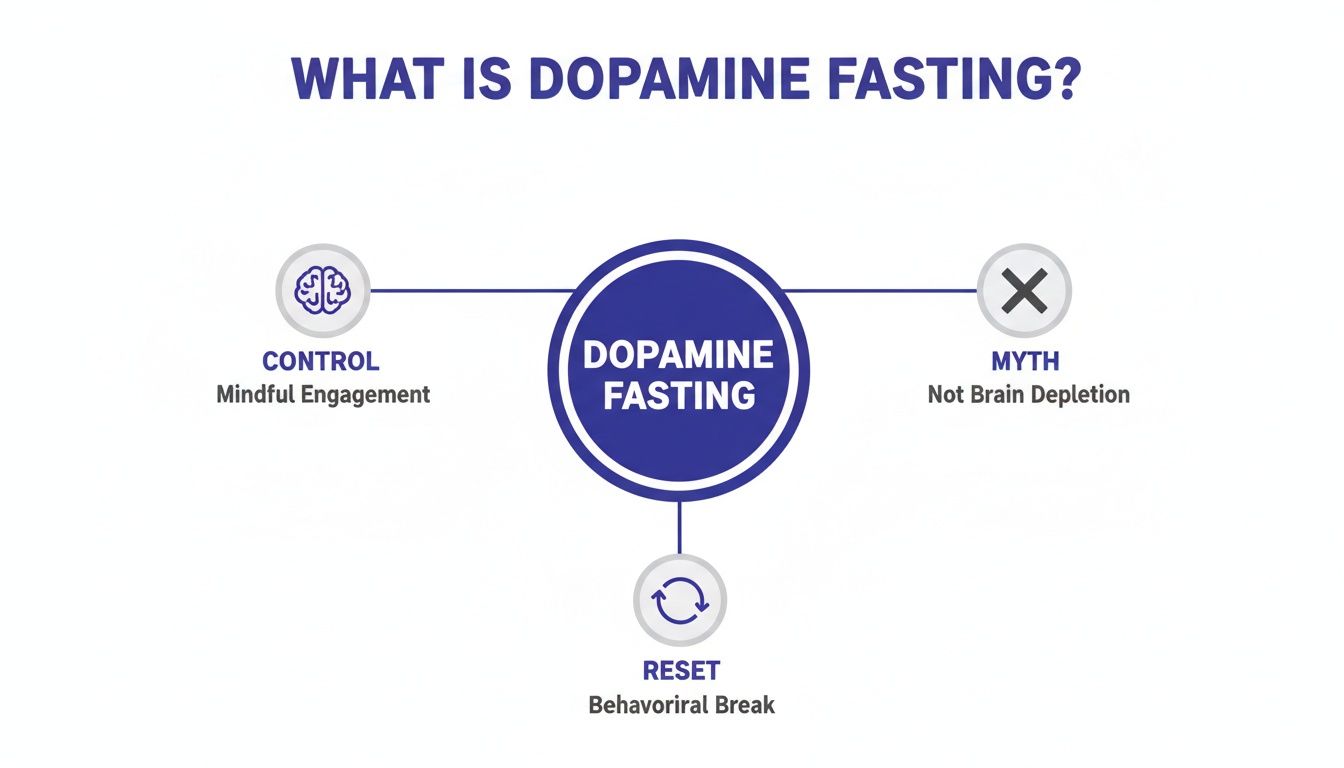
As the diagram shows, the goal isn’t total depletion. It’s about taking a mindful step back to regain control over your behavioral triggers. The key is to separate the real science from the internet myths. Consequently, you can use the practice as a tool for living more intentionally.
Identifying Your Personal Dopamine Triggers
The first step toward recalibrating your brain’s reward system is simple awareness. What are your specific high-dopamine triggers? For many of us, it’s social media. However, it could just as easily be online shopping, video games, or compulsively checking the news.
Using a habit tracker journal can be an incredibly effective way to pinpoint the exact behaviors that pull you into these loops. For example, by simply logging when you feel the urge to check your phone or get distracted, you start to see the patterns hiding in plain sight. This self-monitoring is a core principle in behavioral psychology.
Understanding how these neural pathways shape your motivation is the foundation for effective strategies to improve focus and concentration. This is really the end goal of this whole practice. This scientific grounding makes a dopamine fast feel less like a weird internet trend and more like a practical tool. Instead of just “being bored,” you are actively working with your brain’s neurochemistry to restore its natural balance.
By recognizing how dopamine drives your behavior, you can start to make more conscious choices about where you direct your attention. You can learn more in our deep dive into the relationship between dopamine and motivation.
Realistic Benefits and Common Misconceptions of Dopamine Fasting
When you first hear about dopamine fasting, it’s easy to get lost in the hype. Let’s cut through the noise and talk about the real benefits you might actually feel. We will also clear up some huge misunderstandings about how it works.
At its core, a sensible dopamine fast is really just a behavioral reset, not some kind of biological hack. You’re not trying to eliminate dopamine. You’re just trying to manage your relationship with the high-stimulation habits that leave your brain feeling fried. This distinction is critical for understanding the practice’s true value.

What Are the Real Benefits?
People who try a moderate version of this often report a significant shift in their mental clarity. By intentionally stepping away from the constant buzz of notifications and endless feeds, you create actual mental space. This usually leads to a few key things:
- Sharper Focus: When your brain isn’t constantly waiting for the next digital hit, it gets a lot easier to concentrate on one thing at a time. For instance, a student might find they can study for an hour without checking their phone after just a week of evening fasts. This is why a pomodoro timer can feel so powerful during a fast.
- Reduced Impulsivity: Stepping back from your usual triggers helps weaken that compulsive urge to check your phone or click on a notification. Behavioral research shows this “pause” between stimulus and response is key to breaking habits. You start acting more intentionally.
- Renewed Appreciation for Simple Things: After a period of lower stimulation, a quiet walk, a good conversation, or reading a physical book can feel genuinely rewarding again. Your brain’s sensitivity to natural, subtle pleasures starts to come back. This is the essence of recalibrating your reward system.
These benefits are all about creating sustainable habits that protect your focus and energy. This is a core theme I explore in my book, Burnout Breakthrough.
Debunking Common Dopamine Fasting Myths
The name “dopamine fasting” is catchy, but it’s also scientifically sloppy. This has led to some pretty harmful misconceptions. The biggest myth is the idea that you can—or should—literally “fast” from dopamine. This is biologically impossible and misses the entire point.
Key Misconception: You are not depleting your brain of a vital chemical. Instead, you are giving your brain’s reward pathways a break from overstimulation, similar to how you’d rest your ears after a loud concert. This is a behavioral strategy.
Another dangerous idea is that this practice requires extreme self-denial, like avoiding eye contact or all human interaction. This is not only unhealthy but completely counterproductive. The goal is to reduce your dependence on problematic, impulsive behaviors, not to cut yourself off from the world. If you’re trying to figure out if your own habits are becoming a problem, you can learn more about the signs of being overstimulated in our guide.
Even with the shaky science behind the name, the practical benefits are often real. A review of over 500 cases showed a 55% drop in impulsive actions and a 40% boost in focus among participants who tried a structured break. However, it’s crucial to know its limits; extreme versions have been linked to an 18% increase in self-reported loneliness. To dig into the scientific critiques and benefits, you can explore detailed analyses of how desire works in real life.
Disclaimer: This article is for educational purposes only. It is not a substitute for professional medical or psychological advice, diagnosis, or treatment. If you are struggling with issues like anxiety, depression, or ADHD, please consult a qualified healthcare provider.
How to Start a Dopamine Fast: A Practical Guide
Getting started with a dopamine fast is a lot simpler than it sounds. You don’t need to retreat to a silent monastery for a week. The real goal is to create intentional, scheduled breaks from your specific high-stimulation habits. This gives your brain’s reward system a chance to recalibrate.
Think of it less as a harsh deprivation and more as a conscious step back. The aim isn’t perfection; it’s about taking a manageable first step. Start with a level that feels doable, and you can always adjust as you go. For an even deeper look, check out our 2025 guide on how to reset your dopamine for focus and clarity.

Tier 1: The Beginner’s Four-Hour Digital Detox
This is the perfect entry point for anyone feeling overwhelmed by constant pings and notifications. It’s a small commitment with a surprisingly noticeable impact on your mental clarity.
The Goal: Dedicate a four-hour block once or twice a week to consciously unplug from your biggest digital distractions. This could be a Sunday morning or a weekday evening—whatever fits your real life.
What to Avoid:
- Social Media: No scrolling through Instagram, TikTok, or Facebook feeds.
- Streaming Services: Step away from Netflix, YouTube, and other video platforms.
- Compulsive News Checking: Close the news apps and websites.
- Mobile Gaming: Put down any games on your phone or tablet.
Low-Stimulation Alternatives:
- Read a physical book or magazine.
- Go for a walk in nature without your phone.
- Listen to calm, instrumental music.
- Write in a productivity journal about your thoughts, goals, or worries.
- Engage in a quiet hobby like drawing, knitting, or gardening.
A great real-world example is to reclaim your lunch break. Instead of scrolling while you eat, set a visual timer for desk for 25 minutes and read a chapter of a book. This tiny change is powerful because it interrupts a deeply ingrained habit loop.
Tier 2: The Half-Day Stimulation Reduction
Ready to go a little deeper? This intermediate level expands your fast to a half-day. It also includes more than just digital triggers. This helps your brain grow accustomed to longer periods of quiet and focus.
The Goal: Set aside a 12-hour period, perhaps from 8 PM one evening to 8 AM the next morning, once a week. Doing this overnight is especially powerful for improving sleep quality.
Additional Things to Avoid:
- Junk Food: Skip the highly processed, sugary, or salty snacks.
- Podcasts and Audiobooks: While often great, they still provide constant external input.
- Excessive Online Shopping: No mindless browsing for things you don’t actually need.
Low-Stimulation Alternatives:
- Prepare a simple, healthy meal from scratch.
- Have a real, face-to-face conversation with a friend or family member.
- Do some light stretching or yoga, perhaps with a sleep mask blackout to reduce sensory input.
- Organize a small area of your home, like a messy bookshelf or a cluttered drawer.
Tier 3: The Full 24-Hour Reset
This is the advanced level, designed for a much deeper recalibration of your reward circuits. It’s a full day dedicated to minimal external stimulation. This allows for significant mental rest and genuine reflection. While it requires more planning, it also offers the most profound benefits.
The Goal: Choose one full 24-hour period per month—like from Saturday evening to Sunday evening—to engage in a comprehensive fast.
To make this deeper reset stick, a phone lock box timer can be an invaluable tool. It physically removes the temptation, making it far easier to follow through on your commitment. This act of creating structure reinforces the mindfulness themes I explore in my book, Reclaiming Silence.
A full-day fast isn’t about deprivation; it’s about rediscovering what your mind can do when it’s not constantly reacting to external pings. It’s an opportunity for deep thought, creativity, and genuine rest.
Editor’s Take: What Really Works With Dopamine Fasting
Let’s be honest right up front: “dopamine fasting” is a terrible, scientifically inaccurate name. However, it represents a powerful behavioral reset. Its real value has little to do with dopamine levels. Instead, it is everything to do with its roots in cognitive behavioral therapy (CBT), which is all about managing impulsive habits.
This practice is a game-changer for busy professionals, students, and creatives who feel drained by digital burnout and persistent brain fog. It is not, however, a substitute for professional care. If you’re struggling with clinical conditions like depression, severe anxiety, or ADHD, please seek help from a qualified medical or psychological professional.
Who Actually Benefits and How
In our experience, consistency with smaller fasts is far more effective than a rare, extreme 72-hour retreat. The real magic happens with tiny, repeatable changes to your habits.
Think of a simple “no-screen Sunday morning” or using a phone lock box timer for just a few hours each evening. These small wins are how you learn to rewire your brain for focus over time. They build momentum that actually lasts.
The biggest limitation? This is a tool for managing habits, not a cure for underlying mental health issues. Think of it as tidying your mental workspace—incredibly useful, but it’s not the same as rebuilding the foundation of the building.
For the best results, pair your fasting periods with proactive scheduling. Using a time blocking planner to carve out dedicated slots for deep, focused work can completely transform your productivity. This is a strategy I detail in my book, Focus Recharged.
The goal isn’t to live a life of bleak self-denial. It’s to intentionally create pockets of quiet so you can regain control over your attention and find more joy in the simple, everyday things.
Ultimately, what really works is a gentle, consistent approach. You don’t need to go to extremes. Just start by protecting one hour of your day from digital noise, and see how it feels. You might be surprised.
Key Takeaways on What Is Dopamine Fasting
For those who want the quick summary, here are the big ideas to hold onto. Think of this as the cheat sheet for understanding what dopamine fasting is really about—and what it isn’t.
It’s a Behavioral Reset, Not Dopamine Removal: The goal isn’t to eliminate dopamine—that’s impossible. It’s really about taking a structured break from high-stimulation habits to let your brain’s reward system find its balance again, a core idea in my book, The Power of Clarity.
The Real Target is Impulsivity: At its heart, this is a tool from cognitive behavioral therapy (CBT) to help you get a handle on compulsive behaviors, like that mindless phone scroll.
It Works by Resetting Your Reward Threshold: When you intentionally step away from intense, artificial dopamine triggers, you lower your brain’s tolerance for them. This makes quiet activities feel genuinely rewarding again.
The Payoff is Better Focus and Mood: People who practice this consistently often report sharper concentration and a renewed sense of appreciation for everyday life, once the digital noise is turned down.
Start Small and Be Consistent: You don’t need a silent retreat. A simple four-hour digital detox once a week—maybe with a visual timer for your desk—is far more sustainable and effective.
This Isn’t a Medical Treatment: It can be a powerful tool for managing habits and attention, but it’s no substitute for professional care for conditions like anxiety, depression, or ADHD.
Dopamine Fasting FAQ: Your Questions, Answered
Jumping into a practice like dopamine fasting always brings up good questions. Instead of leaving you to guess, I’ve gathered the most common ones I hear. I’ve answered them in plain language. Think of this as a quick reference to clear up any confusion and help you get started with confidence.
1. How Often Should I Actually Do a Dopamine Fast?
There’s no magic number here—the right frequency is whatever fits your life without feeling like a punishment. The goal is consistency over intensity.
- For Beginners: Start small. Try a scheduled fast once or twice a week. A four-hour break from screens on a Sunday morning or a “no phone after 9 PM” rule on weeknights is a fantastic, surprisingly powerful starting point.
- For Intermediate Practitioners: A half-day fast once a week can offer a more substantial reset for your brain without throwing your whole schedule into chaos.
- For a Deeper Reset: A full 24-hour fast is a bigger commitment. Save this for once a month or once a quarter when you can properly plan for it and really sink into the quiet.
The key is finding a rhythm that feels restorative, not restrictive. A simple habit tracker journal can help you figure out what balance works best for you.
2. What Can I Actually Do During a Fast?
The whole point is to swap high-stimulation, impulsive behaviors for low-stimulation, intentional ones. It’s like trading digital junk food for activities that actually nourish your mind.
Approved “Low-Dopamine” Activities:
- Reading a physical book or magazine.
- Journaling, writing, or planning out your week.
- Going for a walk, ideally in nature (and without headphones).
- Light exercise like stretching or yoga.
- Meditating or just sitting quietly.
- Drawing, painting, or another quiet, screen-free hobby.
- Having a real, face-to-face conversation.
- Organizing a single drawer or a small corner of your home.
As a rule of thumb, choose activities that are calming and don’t give you an instant rush of entertainment or validation. Using an under desk walking pad while reading can be a great low-stimulation combination.
3. What Are the Biggest Mistakes People Make?
Most people stumble when they first try a dopamine fast. This usually happens because they aim for perfection instead of just making progress. Here are the most common traps to avoid:
- Going Too Extreme, Too Soon: Jumping from being constantly connected to attempting a 72-hour silent retreat is a recipe for burnout. Start with a few hours and build your confidence from there.
- Confusing It with Self-Punishment: This isn’t about being miserable or avoiding all joy. It’s about consciously choosing less stimulating activities to give your brain a break.
- Not Planning Alternatives: A vague goal like “I won’t scroll” is a weak plan. A strong plan is deciding what you will do instead. Have a book picked out or a walking route in mind before you start.
- Forgetting It’s a Behavioral Tool: A dopamine fast is not a magical cure for clinical anxiety, depression, or ADHD. It’s a technique to help you manage impulsive habits. If you’re struggling with a clinical condition, please talk to a professional.
4. What’s the Difference Between a Dopamine Fast and a Digital Detox?
This is a great question because the terms are often used interchangeably, but they have slightly different aims.
A digital detox is laser-focused on taking a break from digital devices—your phone, computer, tablet, and TV. The main goal is to reduce screen time and the mental exhaustion that comes with it. If you’re feeling fried by notifications, you might want to learn more about what digital fatigue is and how to recover faster.
A dopamine fast, while it almost always involves a digital detox, is broader. It’s about reducing all sources of cheap, high-stimulation rewards to help reset your brain’s reward pathways. This could include junk food, online shopping, or even constant background music.
In short, a digital detox is a type of dopamine fast, but a true dopamine fast can include non-digital habits, too.
5. Can I Still Listen to Music or Podcasts?
This really depends on your goal for the fast. If you’re doing a “light” version to break a specific social media habit, listening to some calm, instrumental music is probably fine.
But for a deeper reset, it’s best to avoid them. Podcasts, audiobooks, and music with lyrics are still forms of external input that keep your brain occupied. The real magic happens when you allow for genuine boredom and quiet reflection. This is impossible when someone else’s voice or a catchy song is filling the space.
Understanding What is Dopamine Fasting for Mood and Behavior
6. Will a Dopamine Fast Help with My Anxiety or Depression?
While many people report feeling calmer and more present after a fast, it is not a treatment for clinical anxiety or depression. These are serious medical conditions that require professional care from a doctor or therapist. A dopamine fast is an educational tool for managing behavior, not a cure.
A fast can be a helpful supplementary practice for managing daily stress and improving your relationship with technology. It might help you feel less “wired and tired.” But it doesn’t address the underlying neurochemical and psychological roots of mood disorders. If you’re experiencing symptoms of burnout or sleep problems, please consult a healthcare professional.
7. How Long Does It Take to Feel the Benefits?
This really varies from person to person. Some people feel a noticeable jump in mental clarity after a single four-hour fast. The feeling of not being constantly pulled toward their phone can be an immediate relief.
For more lasting changes—like a genuine appreciation for simple things and a real drop in impulsivity—it usually takes several weeks of consistent practice. The benefits accumulate over time, just like with exercise. A good ergonomic keyboard can make your work time more comfortable, encouraging longer focus sessions.
8. Is It Okay to Fast from Socializing or Human Contact?
No, this is a harmful and common misconception. The original, evidence-based idea of dopamine fasting is about curbing problematic, impulsive behaviors—mostly those tied to technology and other artificial highs.
Avoiding healthy social interaction is counterproductive. It can lead to loneliness and isolation, which is the opposite of well-being. A dopamine fast should help you be more present in your social life, not avoid it. The goal is to put your phone away when you’re with people, not to avoid the people themselves. True connection is a natural and healthy source of positive feeling.
9. What if I Fail or Can’t Stick to It?
First, let’s get rid of the word “fail.” This isn’t a test you pass or fail; it’s a practice. Like any new skill, it takes time. If you planned a four-hour fast and only made it for two hours before checking your phone, that’s still two hours of reduced stimulation you wouldn’t have had otherwise. That’s a win.
Be kind to yourself. Get curious about what triggered you to break the fast. Were you bored? Anxious? Did a specific notification get you? Use that insight to make your next attempt a little easier. Maybe you need to put your phone in another room or use a phone lock box timer. Progress, not perfection, is the name of the game.
10. Can a Dopamine Fast Actually Help Me Sleep Better?
Absolutely. For many, better sleep is one of the quickest and most noticeable benefits. Our devices, with their bright blue light and stimulating content, are notorious for messing with our natural sleep-wake cycles (our circadian rhythm).
Practicing a dopamine fast in the evening can work wonders. This means putting away screens, avoiding intense content, and skipping sugary snacks for a few hours before bed. It gives your mind a chance to wind down naturally. Pairing this routine with a good pair of blue light blocking glasses can further boost your body’s melatonin production, leading to deeper, more restorative rest. You could also try a white noise machine to create a calm environment.
Disclaimer: This article contains affiliate links, which means we may earn a small commission on purchases at no extra cost to you. The content provided is for educational and informational purposes only and does not constitute medical or psychological advice.
At Mind Clarity Hub, we’re dedicated to providing you with science-backed strategies to reclaim your focus and mental energy. Explore our full library of books designed to help you thrive. Find your next read at Mind Clarity Hub.
