


Learning how to quit social media starts with a simple, powerful realization: you’re not battling a lack of willpower. You’re up against a system engineered to capture your attention. The key is to understand the psychological hooks at play and then strategically dismantle them to reclaim your focus.
Key Takeaways
- Understand the Dopamine Loop: Social media platforms are designed to create a cycle of anticipation and reward, releasing dopamine that keeps you scrolling. This is a neurochemical response, not a personal failing.
- Define Your “Why”: Vague goals don’t work. To quit successfully, you need a specific, personal reason—like being more present with family or reclaiming focus for work—to anchor your commitment.
- Choose Your Strategy: Decide between going “cold turkey” for a hard reset or a “gradual reduction” for a more sustainable approach, especially if you need social media for work.
- Create Digital Friction: Make it harder to relapse by deleting apps, logging out everywhere, redesigning your phone’s home screen, and using website blockers to disrupt mindless habits.
- Replace, Don’t Just Remove: Fill the void left by scrolling with new, rewarding habits. Replace passive consumption with active creation, like reading, journaling, or learning a new skill.
Affiliate Disclosure: This article contains affiliate links. If you make a purchase through them, we may earn a small commission at no extra cost to you. We only recommend products we trust.
The Real Reason You Feel Trapped by Social Media
If you’ve ever tried to cut back on social media and failed, it’s not because you’re weak. It’s because these platforms are masters at creating a powerful psychological pull, often called a dopamine feedback loop. This isn’t just complex jargon; it’s the fundamental reason you feel that irresistible urge to check your phone.
Here’s how it works from a neuroscience perspective: your brain releases a small hit of dopamine—a neurotransmitter associated with motivation and reward—in anticipation of a potential reward, not from the reward itself. Social media apps exploit this perfectly. Every notification, like, or new post in your feed is an unpredictable little prize. You never know what you’ll find, so your brain releases dopamine, pushing you to scroll “just one more time” to see if something interesting pops up.
This creates a cycle that’s incredibly hard to break. The more you engage, the more your brain craves these small, inconsistent rewards, making the habit feel automatic and necessary. You might find yourself checking your phone without even thinking while waiting in line, during a work break, or right before bed. That’s the feedback loop in action, strengthening its grip each time you give in.

Why Quitting Social Media is More Than Just a Bad Habit
This isn’t just a minor distraction. While this article does not provide medical advice, it’s worth noting that some psychological research suggests that behavioral patterns on social media can resemble addiction. This constant stimulation keeps your brain in a state of high alert, making it difficult to focus on complex tasks, be present in conversations, or even just sit quietly with your own thoughts. Many people find themselves struggling with what feels like a micro-dopamine addiction from being overstimulated, where even small moments of boredom feel unbearable.
Framing your decision to quit this way is empowering. Instead of blaming yourself, you can see it as a strategic move to protect your most valuable resources: your time, your attention, and your mental energy. It’s about taking back control from algorithms designed to keep you scrolling.
Please Note: This content is for educational purposes only and is not a substitute for professional medical or psychological advice. If you are struggling with issues like anxiety, depression, or sleep problems, please consult a qualified healthcare provider.
Finding Your Reason to Quit Social Media
Just deciding to “use social media less” is a recipe for failure. It’s a nice thought, but it lacks the psychological weight to override a deeply ingrained habit. Without a strong, personal reason anchoring your decision, the powerful pull of the dopamine loop will almost certainly drag you back in. Real, lasting change starts with a crystal-clear “why.”
Think of your “why” as your North Star. It’s the thing you’ll come back to when the urge to scroll feels overwhelming. This isn’t about vague goals like “being more productive.” It’s about connecting your desire to quit with a tangible, meaningful improvement you want to see in your actual life—a life where you’re in control of your own time and attention.
How to Quit Social Media by Getting Specific with Triggers and Goals
Your motivation to log off is deeply personal. It comes from the specific ways these platforms chip away at your life. The first step is to get brutally honest about what sends you down the rabbit hole in the first place.
Is it boredom during a slow afternoon at work? Procrastination when a big project looms? Or maybe that familiar pang of loneliness late at night? Identifying these behavioral triggers is half the battle. Once you know when and why you scroll, you can decide what you’d rather be doing with that precious time instead.
Do any of these mini-scenarios feel familiar?
- The Freelancer: You sit down for a deep work session, but a “quick check” of LinkedIn turns into an hour of mindless scrolling. Suddenly, your focus is shot and you’ve lost valuable billable time. Your “why” could be: “To reclaim my professional focus and hit my deadlines without the constant distraction.”
- The Student: A huge exam is just days away, but you’re burning hours on TikTok and Instagram. This leads to frantic, last-minute cramming and sky-high stress. Your “why” might be: “To dedicate my study time to actual studying, so I can improve my grades and lower my stress.”
- The Parent: You find yourself staring at your phone during dinner or while your kids are trying to tell you about their day. You’re physically there, but mentally, you’re gone. Your “why” could be: “To be a more present and engaged parent and create real memories with my children.”
See the pattern? Each example links the problem (mindless scrolling) to a powerful, positive outcome (better focus, better grades, stronger family bonds). This creates a real emotional investment in your goal. It gives you something to fight for.
Your “Why” Worksheet for Quitting Social Media
To make this real, take a few minutes to answer these questions. Don’t just think about them—write them down. The simple act of putting pen to paper (or fingers to keyboard) makes your intentions feel more concrete and powerful.
Actionable Tip: Grab a notebook or open a doc right now and jot down your answers. Keep this somewhere you can see it. When your resolve wavers, read it. This is your personal anchor.
Part 1: Naming the Problem
- Which social media app is your biggest time and energy sink?
- Honestly, how do you feel after a long session on this app? (Anxious, drained, envious, numb, agitated?)
- What specific, important things are being pushed aside because of this? (Be specific: “reading a book before bed,” “going for a walk,” “calling my mom back.”)
Part 2: Picturing the Solution
- What is the single biggest improvement you hope to gain from this? (e.g., deeper sleep, better focus at work, more quality time with my partner).
- Picture your ideal day one month from now, free from the constant pull of social media. What are you doing with that reclaimed time and mental space? Paint a vivid picture.
- Finish this sentence: “I am quitting social media because I want to…”
By doing this, you’re not just vaguely wishing for a change. You’re creating a clear, actionable vision for the life you want. This vision is what you’ll hold onto. When the reflexive urge to open an app strikes, you can pause, take a breath, and recall your “why”—whether that’s being a more present parent or finally finishing that project you care about.
That internal reminder is often the only thing standing between giving in and staying on course.
Choosing Your Path to Quit Social Media: Cold Turkey vs Gradual Reduction
Once you’ve locked in your “why,” the next big question is how you’re going to pull this off. There’s no single right answer here. The best strategy for you will come down to your personality, your job, and just how deep the scrolling habit really goes.
You essentially have two choices: go cold turkey and quit all at once, or take a gradual reduction approach and ease your way out. Getting this decision right can be the difference between a successful reset and a frustrating relapse a week later.
The All-Or-Nothing Approach: Going Cold Turkey to Quit Social Media
Going cold turkey is exactly what it sounds like: you delete the apps, deactivate your accounts, and make a clean, decisive break. It’s direct and leaves no room for negotiation.
From a behavioral science standpoint, this is like a hard reset for your brain’s reward system. By removing the source of unpredictable dopamine hits, you force your brain to start recalibrating its baseline for stimulation. This is often the best path for anyone who feels completely burnt out, overwhelmed, or believes their usage patterns are compulsive.
If you’re the kind of person who finds that a “quick five-minute check” inevitably turns into a two-hour scroll vortex, a total stop might be your only effective move. It cuts off the temptation entirely.
- Real-World Scenario: A freelance writer realizes their “short breaks” on Instagram are blowing up their workdays, causing them to miss deadlines and feel constantly stressed. They go cold turkey, deleting the app and deactivating their account to create a totally distraction-free workspace and reclaim their focus, starting now.
The Slow and Steady Method: Gradual Reduction
The gradual approach is a more measured, step-by-step plan to dial back your social media use over a set period. This method is far less jarring and is often more sustainable, especially for people who can’t—or just don’t want to—vanish from the internet completely.
This is a smart choice for professionals who rely on platforms like LinkedIn for networking or small business owners who use Facebook for customer communication.
The process involves systematically chipping away at the behavior, giving your habits time to adjust. You might start by deleting just one app, then restrict your usage to certain times of day on your computer only, and eventually remove more platforms from your life. The principles here are similar to those in our guide on how to reset your dopamine for focus and clarity, which is all about recalibrating your brain without a total disconnect.
- Real-World Scenario: A small business owner uses Facebook for her customer group but feels drained by endless personal scrolling. She opts for gradual reduction. First, she deletes the app from her phone, committing to check it only on her desktop. Next, she sets a timer for 15 minutes twice a day—for work tasks only—to slowly break the habit of mindless consumption.
Cold Turkey vs Gradual Reduction: Which Way to Quit Social Media Is Right for You?
So, how do you pick? This table breaks down the two main strategies to help you find the best fit for your goals and personality.
| Factor | Cold Turkey (All at Once) | Gradual Reduction (Phased Approach) |
|---|---|---|
| Best For | Individuals feeling overwhelmed, addicted, or who struggle with moderation. Ideal for a fast, clean break. | People who need social media for work, have strong social ties online, or prefer making sustainable, long-term changes. |
| Pacing | Immediate and intense. All platforms are removed in one go. | Slow and controlled. Usage is reduced over weeks or months based on a set plan. |
| Psychological Impact | Can cause initial shock and withdrawal-like symptoms (anxiety, FOMO). High initial difficulty, but gets easier. | Less jarring to the system. Requires consistent discipline over a longer period, which can be mentally taxing. |
| Relapse Risk | Higher risk of an intense “rebound” if the initial void isn’t filled with new habits. | Lower risk of intense rebound, but higher risk of slowly sliding back into old habits if rules aren’t strict. |
| Primary Challenge | Getting through the first 1-2 weeks of intense cravings and habit adjustment. | Maintaining motivation and sticking to self-imposed limits over the long term. |
Ultimately, there’s no “better” option—only the one that aligns with your life. The cold turkey method offers a powerful reset for those at a breaking point, while a gradual reduction provides a more sustainable path for those who need to maintain some level of online presence.
This flowchart can help you visualize how your core motivation might point you toward one path or the other.
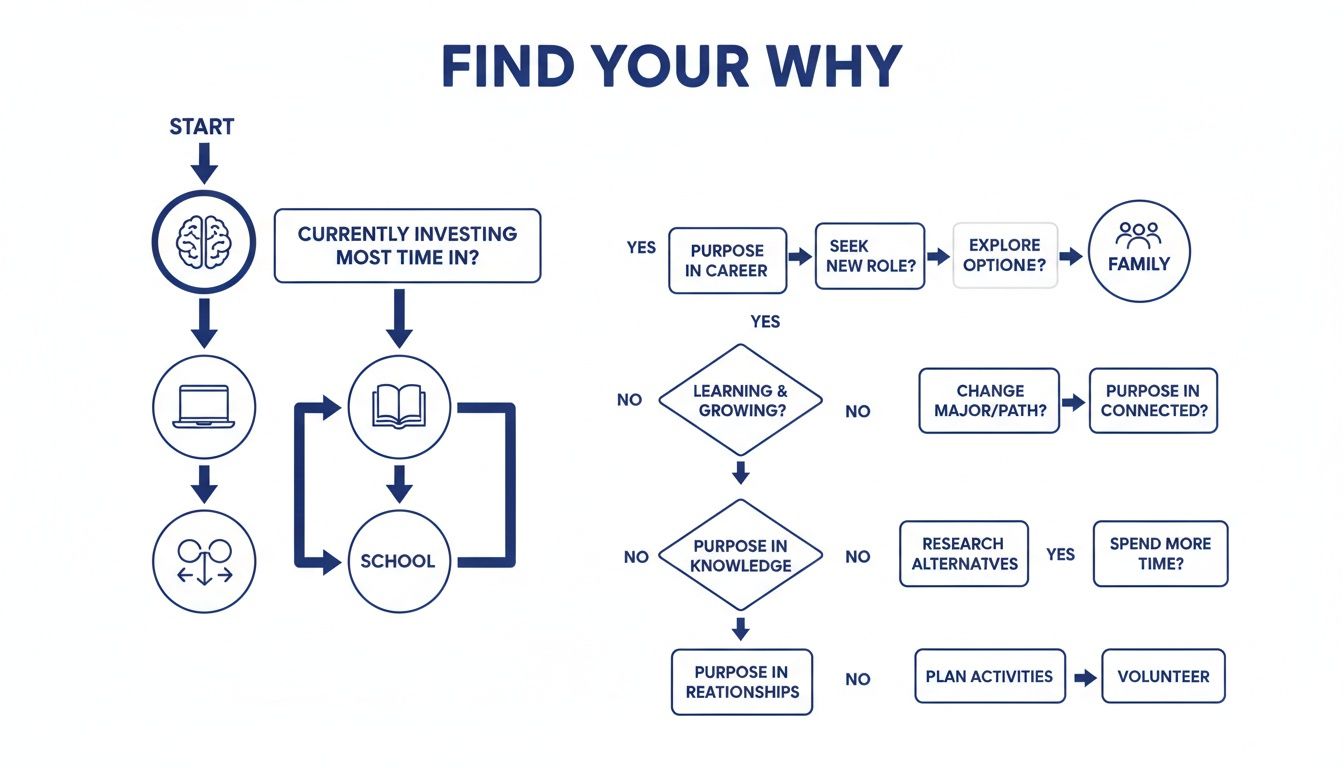
As you can see, if your reasons are tied to professional needs, a phased approach is likely more realistic. But if what you’re after is a deep, personal restoration of focus, a clean break might be exactly what you need.
Practical Steps for Quitting Social Media: Delete Apps and Secure Your Space
You’ve got your “why” and a strategy. Now for the hands-on part—actually reclaiming your digital life from the apps themselves. This goes way beyond just dragging an icon to the trash. We’re going to dismantle the entire digital scaffolding that holds your social media habits in place, making it much harder to slip back into old patterns.

The idea is to create intentional digital friction. From a behavioral psychology perspective, this means adding small, deliberate barriers that turn a mindless, automatic behavior into a conscious choice. By making it inconvenient to log back in, you buy yourself those crucial few seconds to remember why you’re doing this and pick a better action.
The App Deletion Checklist: How to Quit Social Media Securely
A proper exit strategy ensures you don’t leave personal data behind and makes a potential return more trouble than it’s worth.
- Download Your Data First: Before you hit delete, grab your archive. Most platforms like Instagram and Facebook let you download all your photos, posts, and messages. This is non-negotiable. Securing your memories makes the decision to permanently delete an account feel a lot less scary.
- Deactivate vs. Delete: Know the difference. Deactivating is just pausing your account; it’s hidden but can be switched back on instantly. Deleting is the real deal, usually with a grace period (like 30 days) before everything is gone for good. If you’re serious, choose deletion.
- Tell Your People: Give your close friends, family, or key work contacts a heads-up that you’re leaving a platform. More importantly, give them another way to reach you, like your phone number or email. This stops people from worrying that you’ve vanished and quiets that little voice in your head worried about missing out.
- Real-World Scenario: Before deleting her Facebook account, Sarah downloads her photo albums to her computer. Then she sends a group text to her five closest friends saying, “Hey! Just letting you know I’m deleting my Facebook account tomorrow to simplify things. My number is the best way to reach me!” This avoids confusion and reinforces her decision.
Creating Friction to Stop a Relapse
The real fight isn’t just deleting the app; it’s re-engineering your digital world so that muscle memory doesn’t drag you back. The easier it is to get back on, the more likely you are to relapse during a moment of boredom or weakness.
Here’s how to build a stronger defense system:
- Log Out Everywhere: After the apps are gone, open your web browser and manually log out of each social media site. That one extra step of having to remember and type a password is often enough to disrupt an automatic, unthinking visit.
- Redesign Your Home Screen: Your phone’s home screen is prime real estate for temptation. Get all browser apps off of it. Bury them in a folder on the very last page. Replace them with apps that serve your new goals—a reading app, a meditation tool, or something for learning a language.
- Use Website Blockers: Install a blocker extension on your computer’s browser (Freedom and StayFocusd are great options). Add every single social media URL to the blocklist. This creates a hard stop when your fingers instinctively type “face…” into the address bar out of pure habit.
For a more comprehensive fresh start, you might even consider learning how to completely reset your iPhone. It’s an extreme measure, but it’s the ultimate clean slate, wiping away all the hidden triggers and digital clutter that could pull you back. Digging into a full range of digital detox tips can give you even more strategies to lock in these new habits for good.
Rewiring Your Brain: How to Replace the Social Media Scroll
Deleting the apps is the easy part. The real challenge is figuring out what to do with the sudden emptiness that follows. Your brain is accustomed to filling every micro-moment—waiting for coffee, standing in line, a break from work—with a quick scroll.
Without a plan, those moments become powerful triggers for relapse. The key, according to behavioral psychology, is to consciously replace the old habit with a new, fulfilling one. This isn’t just about killing time; it’s about actively rewiring the neural pathways your brain built around the instant gratification of social media.

From a neuroscience perspective, habits are automated loops in your brain: a cue, a routine, and a reward. Your phone buzzes (the cue), you scroll through a feed (the routine), and you get a tiny hit of dopamine (the reward). To break this cycle, you need to keep the cue but swap out the routine for something that provides a healthier, more sustainable reward.
Identifying Your Triggers and Building a Replacement Plan
First, become a detective of your own behavior. For the next few days, notice the specific moments you feel the strongest urge to check your phone. Is it first thing in the morning? During your lunch break? Right before bed? Once you’ve identified these high-risk moments, you can create a menu of “replacement habits.”
- Mini-Scenario (Morning Coffee): Your cue is sitting down with your coffee. The old routine was scrolling Instagram. Your new routine is to read two pages of a book you’ve placed next to the coffee maker. The reward is a sense of calm and learning instead of anxiety.
- Mini-Scenario (Work Break): Your cue is hitting a mental wall on a project. The old routine was checking LinkedIn. Your new routine is to stand up, stretch for 60 seconds, and drink a glass of water. The reward is a physical reset and renewed focus.
- Mini-Scenario (Evening Wind-Down): Your cue is getting into bed. The old routine was watching TikTok videos. Your new routine is to listen to a 10-minute guided meditation or a calming podcast. The reward is better sleep and a less-stimulated mind.
From Passive Consumption to Active Creation
One of the most powerful ways to fill the void left by social media is to shift from being a passive consumer to an active creator. These platforms train us to absorb an endless stream of content made by other people. Reclaiming that time and mental energy allows you to make things yourself, which provides a much deeper and more lasting sense of satisfaction.
This doesn’t mean you have to become a professional artist or writer. “Creation” can be anything that engages your mind and hands in a meaningful way.
- Journaling your thoughts for ten minutes.
- Sketching in a notebook.
- Learning a few chords on a guitar.
- Trying a new recipe.
- Organizing one small section of your home.
These activities engage different parts of your brain than scrolling does. They require focus and problem-solving, and they produce a tangible result. That delivers a sense of accomplishment that a “like” simply can’t match. Exploring how to rewire your brain for focus can give you deeper strategies for making this shift stick.
Editor’s Take: What Actually Works for Quitting Social Media
Let’s cut through the noise. The most effective way to quit social media isn’t just about deleting apps. It’s about combining a powerful, deeply personal ‘why’ with practical barriers that make it inconvenient to slide back into old habits. Simply removing the icon from your homescreen isn’t enough; you have to actively build new routines to fill the void. This is a behavioral change process, and it requires patience.
Who This Advice Is Best For:
This guide is designed for professionals, students, and anyone feeling the cognitive drain of digital burnout. If you’re ready for a real shift—not just a temporary detox—you’re in the right place. The cold turkey method is best for those who feel their use is out of control, while gradual reduction works well for those who need to maintain a professional online presence.
Important Caveats:
The key takeaway isn’t about achieving perfection. It’s about being intentional. Expect to feel bored or restless at first—that’s a sign your brain is recalibrating. Success comes from slowly replacing the automatic, mindless scroll with fulfilling new habits, one small choice at a time. For those looking to build more resilient, direct connections with an audience or community, it’s worth understanding why email lists often outperform social media when you’re not wrestling with an algorithm.
Disclaimer: This article contains affiliate links. Purchases made through these links may earn us a small commission at no extra cost to you. The content provided is for educational and informational purposes only and is not a substitute for professional medical or psychological advice, diagnosis, or treatment. Always seek the advice of your physician or other qualified health provider with any questions you may have regarding a medical condition.
FAQ: Your Top 10 Questions on How to Quit Social Media
Deciding to step away from social media always brings up a few practical worries. It’s a big shift. Here are some straightforward answers to the 10 most common concerns people have.
1. How do I deal with the fear of missing out (FOMO)?
FOMO is a real, biological pull exploited by social media. The best way to combat it is to reframe it as JOMO—the “Joy of Missing Out.” Focus on the peace and presence you gain in your own life. You’ll quickly realize you were missing noise, not substance.
2. Will quitting social media make me lose my friends?
You won’t lose your real friends. This move clarifies who your true connections are. Proactively text your close friends to let them know you’re leaving the platform and that they can reach you directly. This often strengthens your most important relationships.
3. What’s the best way to explain my decision to others?
Keep it simple and confident. A straightforward line like, “I’m taking a break from social media to be more present and focus on some other goals” is all you need. You don’t owe anyone a long explanation.
4. How long until I start to feel the benefits of quitting?
Most people report a noticeable drop in anxiety within the first week. The initial period can feel strange or boring as your brain adjusts. After about two to four weeks, benefits like better focus, deeper sleep, and a calmer mind become more pronounced as new habits form.
5. What should I do if I relapse and re-download an app?
Don’t see it as a failure. A relapse is just data. Ask yourself what triggered it—boredom, loneliness, stress? Use that insight to strengthen your plan. What replacement activity could you use next time? Then, delete the app again and reconnect with your “why.”
6. Is it better to deactivate or permanently delete my accounts?
For a lasting change, permanent deletion is the most powerful choice. Deactivating leaves the door open for an easy return. Deleting creates a firm psychological commitment and adds friction that makes a casual relapse much harder. Remember to download your data first.
7. Can I quit social media if I need it for my job?
Yes, but it requires strict boundaries. Use a gradual reduction strategy. Delete the apps from your phone, engage exclusively from a desktop computer, and use website blockers to limit your access to specific work hours. Treat it as a tool, not a constant companion.
8. How can parents help a teenager reduce their social media use?
Lead by example by modeling healthy screen habits. Have an open, non-judgmental conversation about how social media makes them feel. Work together to set family-wide rules, like “no phones at the dinner table” or a “digital curfew” an hour before bed.
9. I feel so bored and restless. Is that normal?
Yes, this is completely normal and a positive sign. Your brain is used to constant stimulation. That restlessness is a withdrawal symptom as your brain’s dopamine system resets its baseline. Push through it by turning to one of your pre-planned replacement activities.
10. Will a “dopamine detox” actually help me quit social media?
Yes. The concept of a “dopamine detox” is an effective framework for this process. By intentionally stepping away from high-stimulation activities like social media, you lower your baseline need for novelty, allowing quieter, more focused activities to feel rewarding again. To learn more, explore our article: “is dopamine detox real or a myth?“
At Mind Clarity Hub, we provide science-based guides and books to help you reclaim your focus in a distracted world. Explore our full library of resources on dopamine detox, mindful productivity, and burnout recovery.
Find Your Next Read at Mind Clarity Hub
Explore the Mind Clarity Hub Library
Practical books on focus, digital habits, resilience, and building a calmer mind.
The Power of Clarity
Unlock mental focus, build momentum, and create the life you were meant to live.
View book →
AI & ChatGPT for Beginners
No PhD needed — a 2025 guide to AI, prompts, and productivity without coding.
View book →
Zen in the Digital Jungle
Mindfulness for a chaotic world.
View book →
The Slow Reset
Mindful living in a fast-paced world.
View book →
Perfectly Imperfect
Stop self-criticism, set boundaries, and embrace the real you.
View book →
Reclaiming Silence
A dopamine detox guide to finding peace in a noisy world.
View book →
The Focused Freelancer
Productivity, pricing & positioning for independents in 2025.
View book →
ChatGPT Side Hustle System
Launch your AI-driven online business in 30 days.
View book →
Burnout, Interrupted
A proven path to restore energy and reclaim your life.
View book →
Attention Unleashed
Focus strategies for the distracted mind.
View book →
Side Hustle Launchpad
Your quick-start guide to extra income.
View book →
Digital Clarity
Rewire your brain, escape dopamine traps & regain focus.
View book →
Break the Scroll
Reduce screen time and take back control of your life.
View book →
Climate Compassion
Transform eco-anxiety into empowered action.
View book →
Village Mentality
The power of community for mental wellness.
View book →
Restful Nights
Overcoming sleep anxiety in a 24/7 world.
View book →
Connected Again
Combat loneliness and build meaningful relationships.
View book →
Focus Recharged
Mastering attention and productivity in the digital era.
View book →
Marketing Magic with ChatGPT
AI-powered content, campaigns, and copywriting to grow faster.
View book →
The 6-Figure Creator
Turn knowledge into passive income with books, courses & AI.
View book →
Burnout Breakthrough
Reset your work-life balance and thrive in 2025.
View book →
The Emotionally Intelligent Man
A modern guide to self-awareness and communication.
View book →
AI Personalized Wellness
Create your custom health plan with data-driven habits.
View book →
Everyday AI Made Easy
Use ChatGPT and smart tools to simplify life.
View book →
Money Mindfulness
A financial wellness guide for Gen Z & Millennials.
View book →
Startup Smarter with AI
ChatGPT strategies and tools to grow your business.
View book →
ChatGPT for Writers & Creators
Unlock AI-powered brainstorming, drafting & editing.
View book →