
This post may contain affiliate links. If you make a purchase, we may earn a small commission at no extra cost to you.
Retraining your attention span isn’t about “trying harder” or finding some magic bullet of willpower. It’s about systematically rewiring your brain with small, intentional habits. The process hinges on dialing down digital noise and bringing in smart focus techniques. This gives your brain’s attention circuits a chance to strengthen again.
Why Your Attention Is Slipping and How to Improve It
Does this sound familiar? You sit down to finally tackle that critical report. A few minutes in, a cascade of pings and alerts pulls you away. Before you know it, an hour has evaporated, and you’ve barely written a single paragraph. If that hits close to home, you’re not alone.
The modern world often feels engineered to shatter our concentration. Between constant notifications and infinite social media feeds, sustained focus feels impossible. From a psychology perspective, this isn’t a personal failing. It’s a predictable behavioral response to an overwhelming digital environment.
The Neuroscience of a Wandering Mind
At the heart of the problem is a bit of neuroscience called the “digital dopamine loop.” Every time you get a notification or a like, your brain releases a tiny bit of dopamine—a feel-good chemical. It’s a small, fleeting reward that conditions your behavior to check devices again and again.
Over time, your brain’s reward system gets wired to seek these quick, easy hits. This habit makes it much harder to sink into deep, focused work. Deep work offers a more delayed and less immediate sense of gratification. Your brain essentially learns to prefer distraction over depth. If you often feel mentally scattered, it’s worth understanding more about what causes brain fog.
This constant switching hijacks our ability to concentrate. Studies show the average adult attention span has now plummeted, making sustained focus a real challenge.
But here’s the good news: neuroscience research shows you can reclaim your focus. For instance, studies show that just 10 minutes of daily mindfulness can boost attention. This happens by rewiring the brain’s prefrontal cortex, the area responsible for executive functions like focus.
Real-World Example: Imagine Sarah, a project manager. She used to check her email every 10 minutes, driven by that dopamine hit. She started a new habit: turning off notifications for one hour. At first, it felt difficult. But soon, her brain adapted, and she could work uninterrupted, feeling more accomplished.
Starting Your Journey to Better Focus
You can fight back against distraction. Improving your attention is a skill you can build with consistent practice. It all starts with making intentional choices to create a supportive environment. For anyone feeling a persistent decline in concentration, exploring guides on how to improve focus and boost concentration can offer valuable starting points.
This guide will walk you through foundational strategies:
- Single-Tasking: The surprisingly powerful art of doing one thing at a time.
- Strategic Breaks: Using intentional rest to replenish your mental energy.
- Mindful Technology Use: Taking back control of your devices.
By adopting these principles, you begin to retrain your brain. You shift from a reactive state to a proactive one, where you command your attention. To build this skill, explore our book, Attention Unleashed.
This article is educational and not a substitute for medical or psychological advice, especially for conditions like ADHD, anxiety, or depression. Please consult a professional for diagnosis and treatment.
Build Your Deep Work Foundation to Improve Your Attention Span
Just deciding to “focus more” is like trying to build a house without a blueprint. It’s a nice thought, but it won’t stand up to the first distraction. To truly rebuild your attention span, you need a solid framework.
Creating a structured routine isn’t about rigid, joyless discipline. It’s about building a protective shield around your most valuable mental resource: your focus. A routine puts you back in the driver’s seat. It lets you intentionally spend your focus on what actually matters.
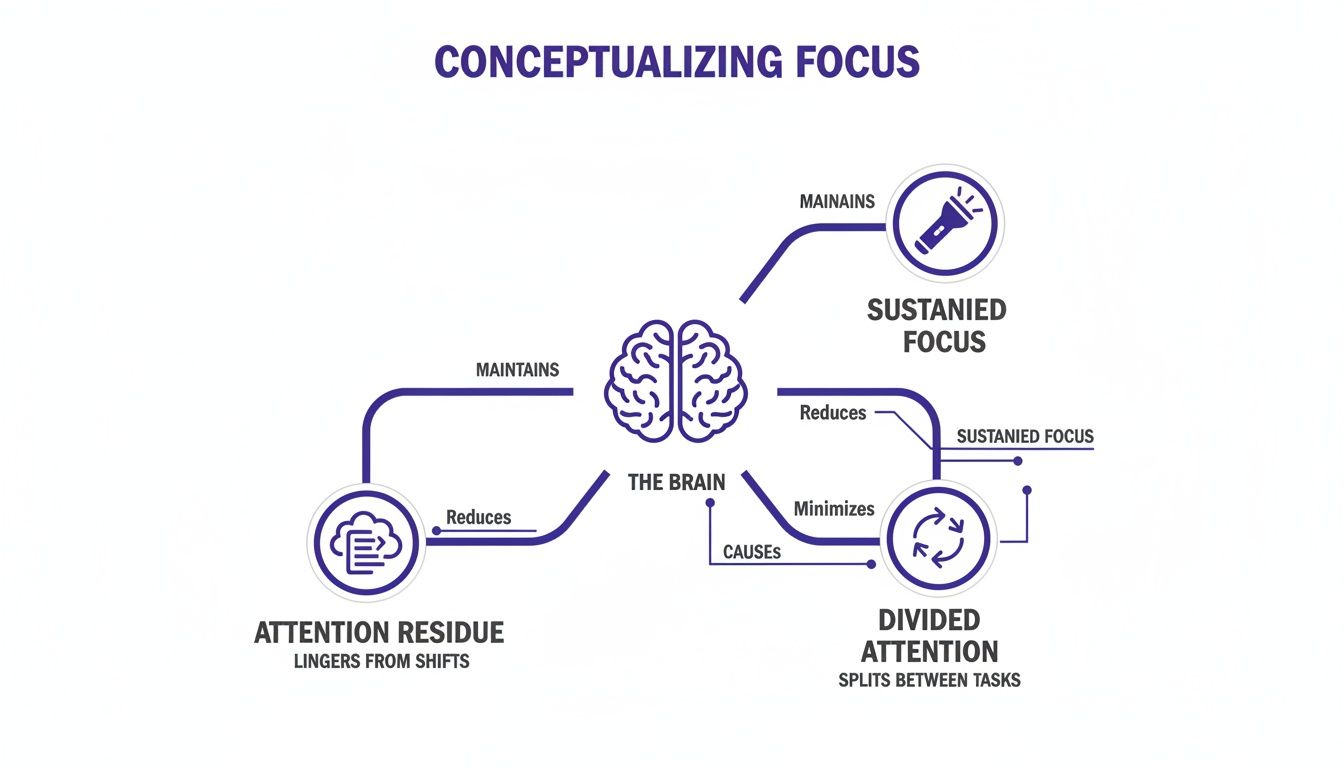
We’ve all been in that frustrating cycle of losing and reclaiming our attention.

The diagram above pinpoints that critical moment of choice. You can stay stuck in that distracted haze, or you can actively pull yourself out with a structured approach.
The High Cognitive Cost of Context Switching
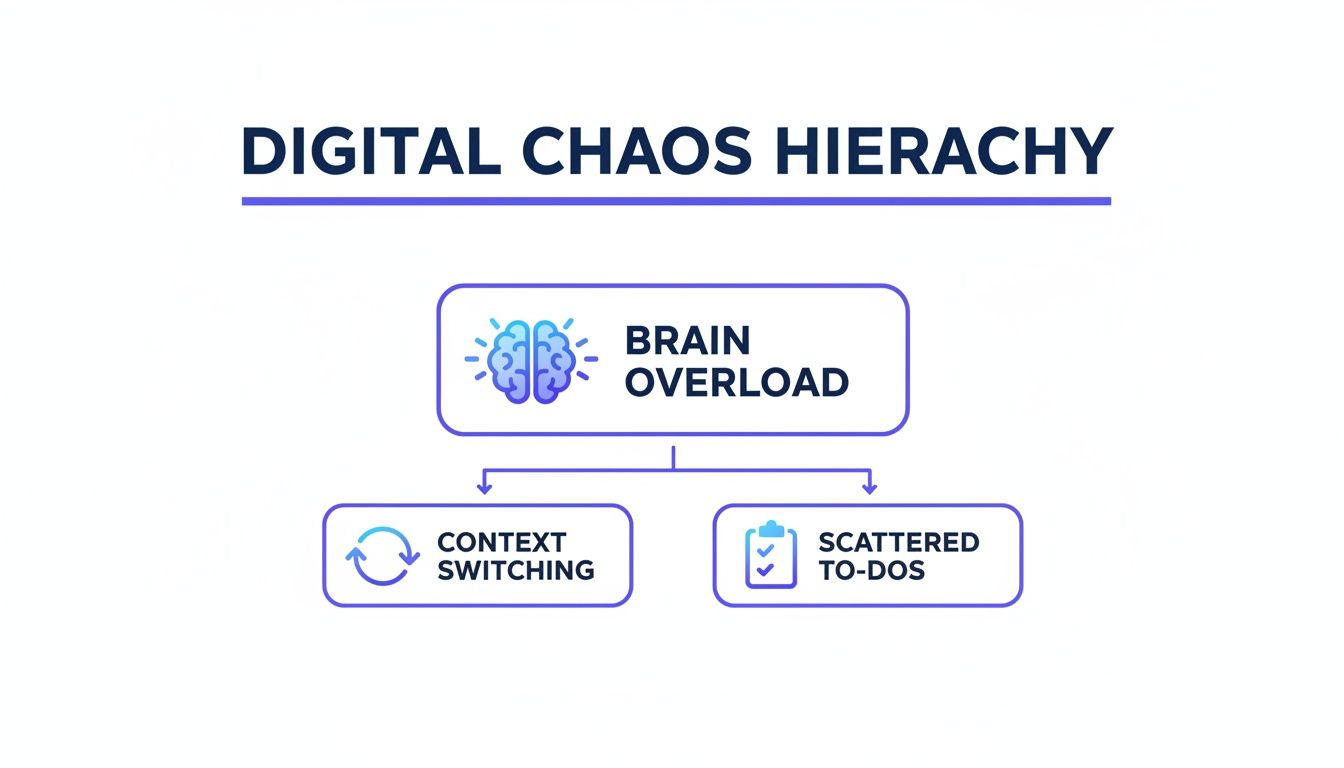
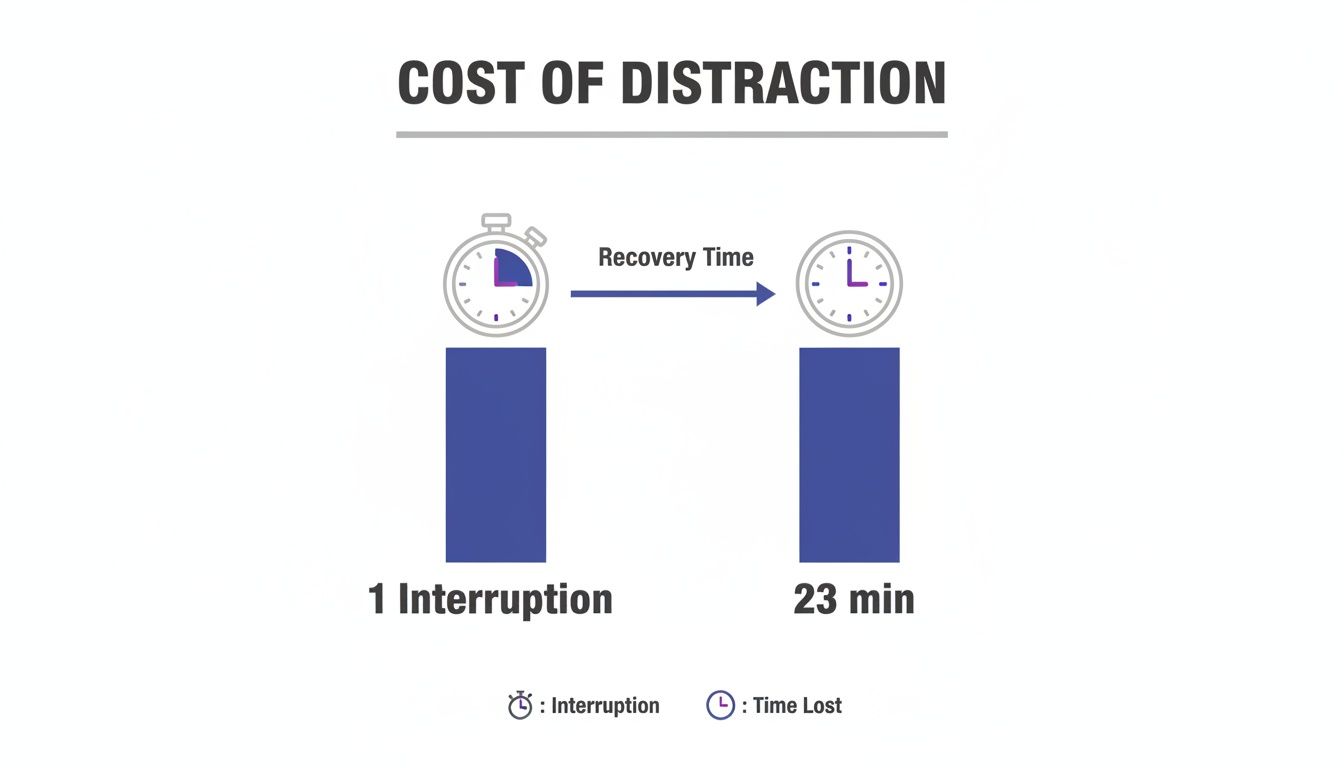
Let’s be clear: your brain can’t actually multitask on complex projects. What we call multitasking is really context switching—the mental gymnastics of toggling between tasks. Every time you switch, your brain pays a “cognitive cost.” Behavioral psychology research shows it has to slam the brakes on one task and rummage for the context of the new one.
This process is incredibly draining. Research from the American Psychological Association found that even brief mental blocks from switching tasks can devour as much as 40 percent of someone’s productive time.
Real-World Example: Think about a remote worker trying to write a project proposal. They write one sentence, then check an email, then answer a Slack message. Each switch shatters their attention. This makes the core task take far longer. A structured routine is the antidote, allowing you to sink into deep concentration. You can learn more by exploring our guide on what deep work is.
How to Implement a Structured Focus Routine
Building this foundation doesn’t mean you have to overhaul your entire life overnight. It starts with a few simple, proven techniques.
Here are two of my favorite methods to get started:
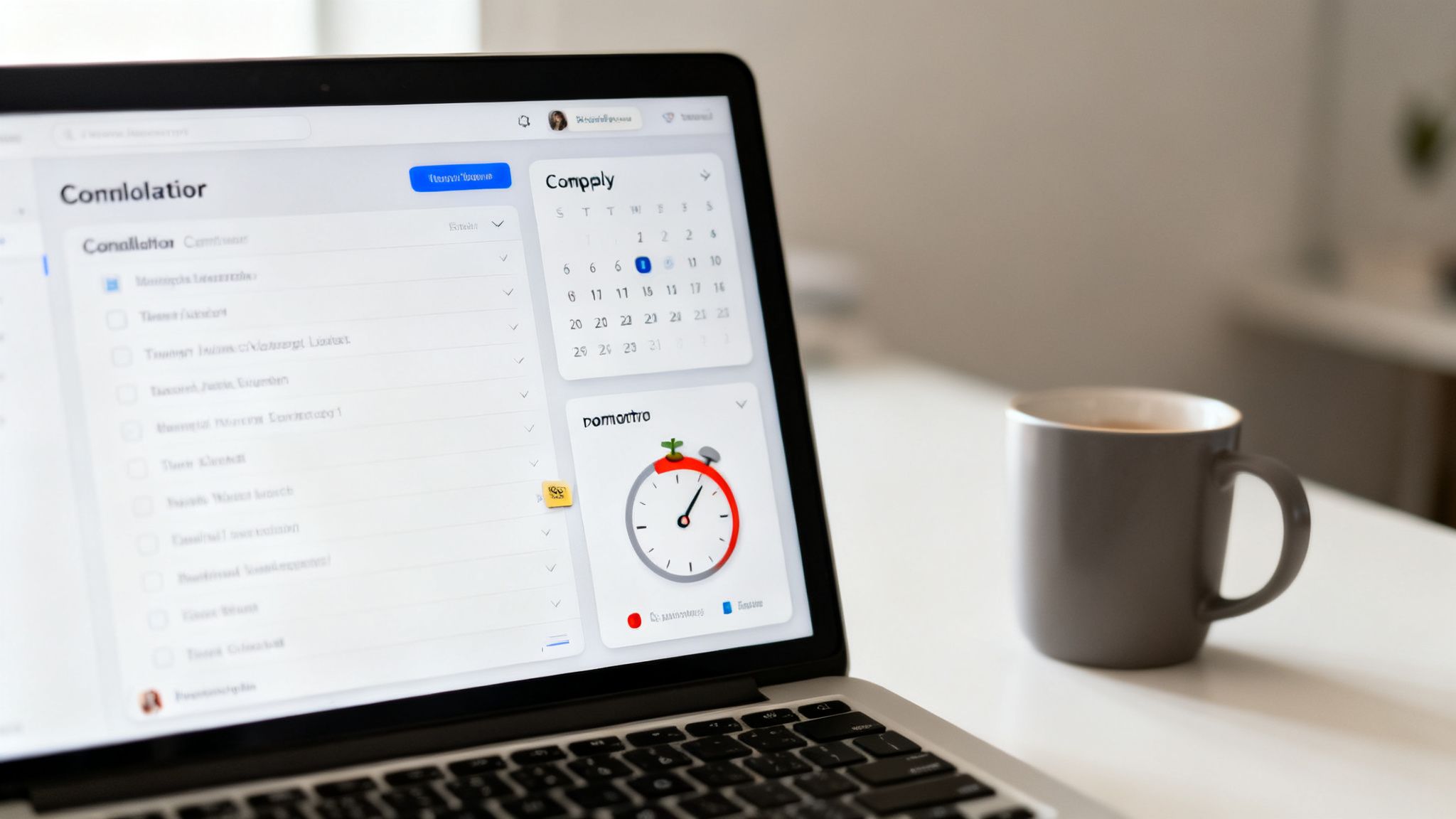
- Time Blocking: This is where you schedule your whole day into dedicated blocks for single tasks. Your calendar becomes your non-negotiable guide. For example, a block from 9 AM to 11 AM might be for “Drafting the Q3 Marketing Report.”
- The Pomodoro Technique: This method uses a timer to break down work into focused sprints, typically 25 minutes, separated by short breaks. It’s a fantastic way to break through procrastination and build your focus endurance.
This small shift changes everything. You’re training your brain to sustain focus for a manageable chunk of time. The built-in breaks prevent you from burning out. For a deeper dive into these methods, check out our productivity guide, Focus Recharged.
A strong deep work foundation is all about efficiency. To find more ways to boost your concentration, check out these practical ways to improve productivity at work. By creating a routine, you’re not just managing your time—you’re managing your brain’s energy.
Design a Distraction-Proof Environment to Improve Attention
Let’s be honest: our environment usually dictates our focus. If your desk is a mess and your phone buzzes every two minutes, you’re fighting an uphill battle. Reclaiming your attention span isn’t about finding a secret reserve of willpower. It’s about making focus the path of least resistance.
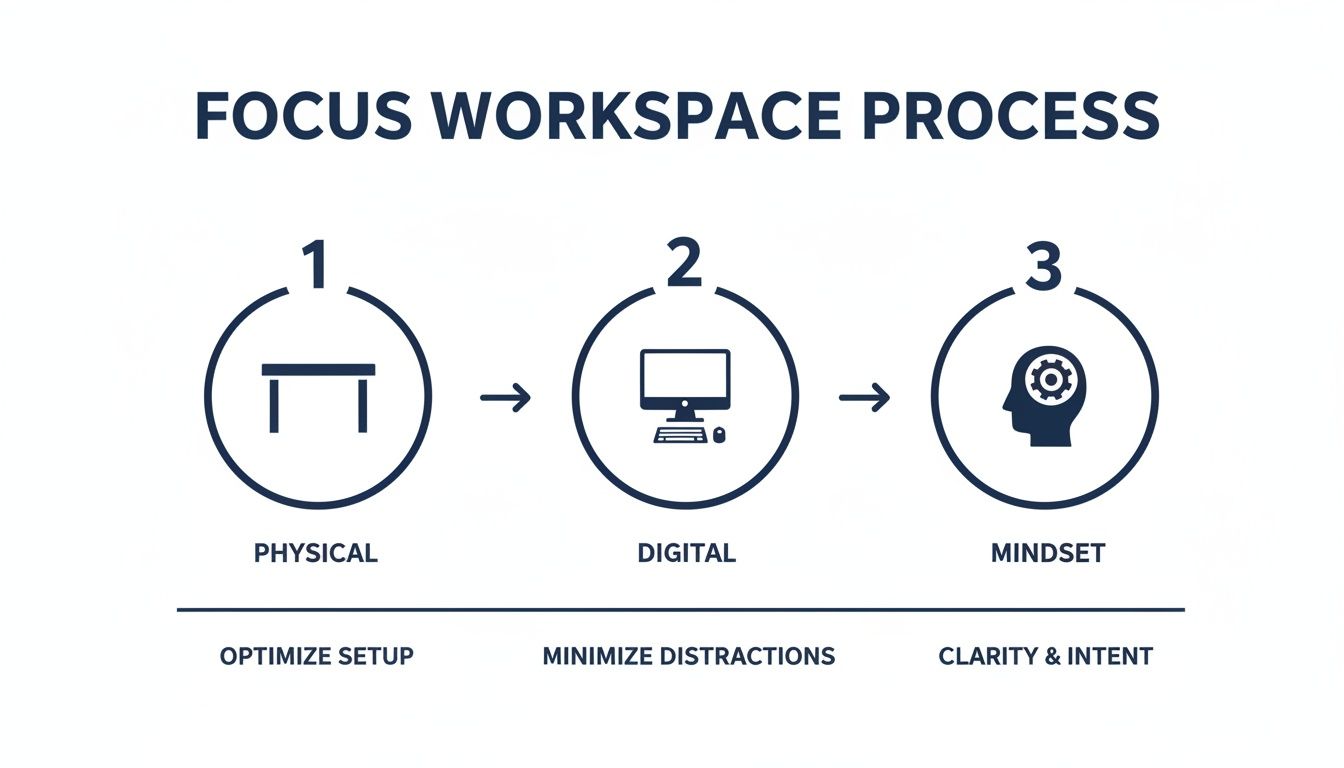
This means deliberately engineering your surroundings—both digital and physical—to support deep concentration. When your environment is built for focus, you stop wasting precious mental energy. You make focus the easy, default option.

Perform a Digital Dopamine Reset
Your digital world is ground zero for modern distraction. Every notification trains your brain to seek novelty. This shatters your ability to stay on one task. A “digital dopamine reset” is about taking back control and re-sensitizing your brain to more important work.
Start with your smartphone, which is often the biggest offender.
- Kill Non-Essential Notifications: Go into your settings and turn off all alerts except for those from actual people. Social media likes and news alerts can wait. This single action stops the constant hijacking of your attention.
- Set Firm App Limits: Use your phone’s built-in screen time features to put daily limits on your most-used apps. When the timer goes off, it’s a clear signal to disengage.
- Create “No-Phone Zones”: Designate specific areas or times where phones are off-limits. The dinner table is a classic. A simple phone lock box timer can help enforce this habit during family meals, ensuring you’re fully present.
These steps aren’t about ditching technology. They’re about using it on your terms, a core principle explored in books like Digital Clarity and Break the Scroll.
Optimize Your Physical Workspace for Focus
Your physical environment sends powerful cues to your brain. A cluttered desk signals a cluttered mind. An organized space tells your brain it’s time for focused work.
Think of your workspace as a cockpit for productivity. Every item should have a purpose geared toward maximizing concentration. For more great ideas on this, check out our guide on digital detox tips that can transform your environment.
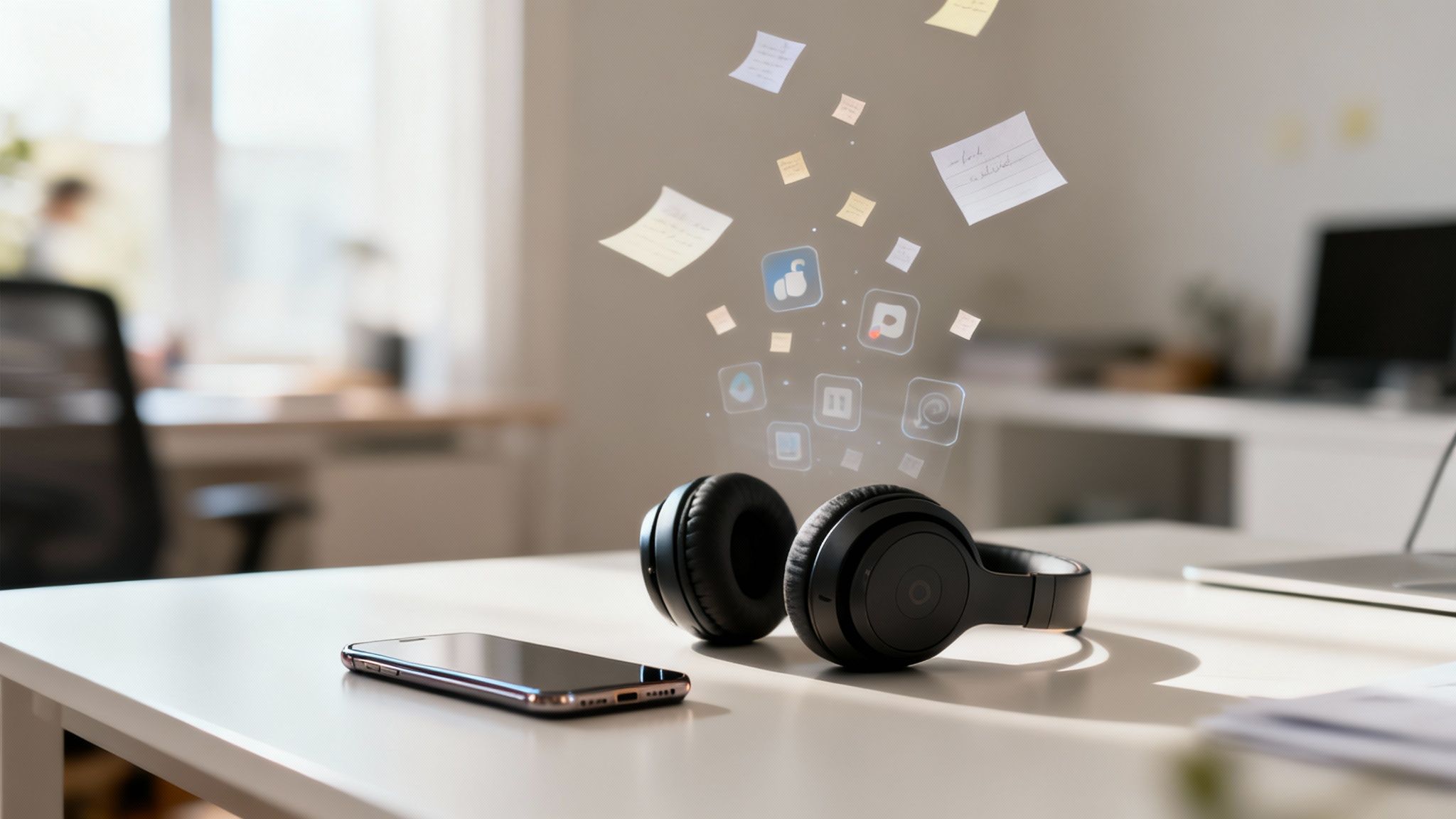
Real-World Example: Mark, a freelance developer, struggled with distractions at home. He invested in a pair of quality noise canceling headphones to block out household noise. He also decluttered his desk, leaving only his laptop and a notebook. This simple environmental change dramatically improved his coding sessions.
By engineering your physical and digital worlds, you remove decision fatigue. This creates a powerful feedback loop: a focused environment promotes focused work.
How to Choose the Best Focus Technique to Improve Your Attention Span
Finding a focus strategy that actually sticks isn’t about chasing the most popular trend. It’s about finding a system that works with your brain’s natural rhythm. Not every method is built for every person, so the key is to experiment.
A freelance writer might find the short, intense sprints of one method energizing. Meanwhile, a project manager needs the clear structure of another to keep all the plates spinning. The goal is to find a system that cuts down on decision fatigue.
Best Option for Beginners: The Pomodoro Technique
The Pomodoro Technique is a fantastic starting point for anyone who gets overwhelmed. It works by breaking your day into focused 25-minute sprints, separated by short breaks. This approach gamifies your work and helps train your brain to sustain focus.
This method is effective because it tackles procrastination head-on. The idea of “write a 10-page report” can be paralyzing. But “work on the report for 25 minutes”? That feels doable. It’s a practical application of time chunking, which helps manage cognitive load. To get the most out of this method, check our guide on what the Pomodoro Technique is.
Best for Busy Professionals: Time Blocking
If your day feels like a chaotic mix of meetings, emails, and deep work, Time Blocking might be your answer. This method involves scheduling every part of your day into specific blocks on your calendar. You assign each task a dedicated time slot.
A marketing director could block 9:00 AM to 11:00 AM for “Q4 Strategy Deck.” This approach turns your calendar into a strategic plan for your attention. It forces you to be realistic about what you can get done. Using a dedicated time blocking planner makes this process even more powerful.
How to Choose Your Focus Technique
The right technique comes down to your personality and workflow. A method that feels liberating for one person might feel restrictive for another. This table can help you choose.
| Feature Comparison | Pomodoro Technique | Time Blocking |
|---|---|---|
| Best For | Creative tasks, fighting procrastination, building focus stamina. | Busy professionals, managing multiple projects, creating structure. |
| Key Benefit | Makes large projects feel manageable and prevents burnout. | Provides a clear, strategic plan that protects deep work time. |
| Potential Downside | Constant breaks can disrupt “flow state” for some tasks. | Can feel too rigid for those with unpredictable workflows. |
| Good First Step | Use a timer for one 25-minute sprint on your most-dreaded task. | Block out one 90-minute “focus session” in your calendar for tomorrow. |
After you’ve picked a method, consistency is key. A habit tracker journal is a great way to monitor your progress. Tracking your focused work sessions provides positive reinforcement, which helps strengthen the neural pathways for sustained attention. Now, let’s explore ways to strengthen your brain from the inside out.
Strengthen Your Brain to Improve Attention with Lifestyle Habits
External strategies like time blocking are powerful, but lasting focus doesn’t just come from a better calendar. It starts inside your brain and body.
To truly rebuild your attention span as an adult, you have to build a stronger biological foundation. This means getting serious about the pillars of cognitive function: sleep, exercise, and mental training.
Think of your brain’s ability to focus like a muscle. If you don’t give it the right fuel and recovery time, it will fatigue quickly. These internal habits are the equivalent of proper nutrition and rest for your mind.

Prioritize Sleep to Sharpen Your Prefrontal Cortex
Sleep isn’t a luxury; it’s a critical maintenance period for your brain. During deep sleep, your brain clears out metabolic waste and consolidates memories. When you’re sleep-deprived, that cleanup process gets short-circuited. This directly impacts your prefrontal cortex—your brain’s command center for attention and impulse control.
Even one night of bad sleep can leave you feeling foggy. Chronic sleep debt undermines any other effort you make to improve your focus. For those struggling with sleep due to a restless mind, our book Restful Nights offers targeted strategies.
Real-World Example: Alex was a night owl and often felt groggy. He created a new evening habit. An hour before bed, he put his phone away and used a high-quality sleep mask blackout to create total darkness. Within a week, his mood improved, and he found it much easier to concentrate during his morning meetings.
Train Your Attention with Simple Cognitive Exercises
Just as physical exercise strengthens your body, cognitive exercises can strengthen your brain’s focus circuits. These don’t have to be complicated “brain games.” Some of the most effective methods are remarkably simple.
Reading a physical book is one of the best ways to rebuild your attention span. Unlike scrolling online, a book demands you follow a single narrative without constant distraction. It’s a direct workout for your focus muscles.
Mindfulness meditation is another powerful tool. It involves training your brain to notice when your attention has wandered and gently guide it back. This simple act is the core repetition that builds a stronger attention span over time. For a deeper dive into how your brain’s reward system plays into all this, learn more about the link between dopamine and motivation.
Editor’s Take: What Actually Works to Improve Attention
After years of writing about attention and trying dozens of systems, here’s the honest truth: there’s no magic bullet for a scattered mind. Real, lasting change doesn’t come from a new app or a complicated productivity hack. It’s built on ruthless consistency in a few key areas.
What Actually Works: For most of us drowning in digital noise, the path back to clarity comes from three things: a fierce commitment to single-tasking, aggressively taming your notifications, and unapologetically prioritizing sleep.
Who It’s For: This advice is for busy adults feeling overwhelmed by digital distractions who want practical, neuroscience-backed ways to rebuild focus.
Important Caveats: If you suspect an underlying condition like ADHD or you’re navigating anxiety or burnout, these strategies can help, but they are not a substitute for professional medical or psychological care. The goal is improved focus, not self-diagnosis or treatment. Start small, be consistent, and give yourself grace.
Key Takeaways: Your Path to Better Focus
- Understand the “Why”: Your wandering mind is a normal response to a distraction-filled world. The “digital dopamine loop” trains your brain to seek constant novelty.
- Build a Structure: Use techniques like Time Blocking or the Pomodoro method to create a routine that protects your focus from interruptions.
- Control Your Environment: A decluttered physical workspace and a curated digital life (with fewer notifications) make focus the path of least resistance.
- Choose a Method That Fits: Experiment with different focus techniques to find one that aligns with your work style and personality.
- Prioritize Brain Health: Quality sleep, regular movement, and cognitive exercises like reading are non-negotiable for improving your attention span.
Disclaimer: This article is for educational purposes and is not a substitute for professional medical or psychological advice. This post may contain affiliate links, which means we may earn a small commission on purchases at no extra cost to you.
FAQ: Your Questions on How to Improve Attention Span
1. How long does it take to actually improve my attention span?
It varies. Many people feel more in control within a few weeks of consistent practice. However, neuroscience research suggests measurable changes in the brain, like from mindfulness, can occur in as little as eight weeks. Consistency is more important than perfection.
2. Is it really possible for adults to retrain their brain for better focus?
Yes, absolutely. Thanks to a brain property called neuroplasticity, you can form new neural connections at any age. Every time you resist a distraction and practice single-tasking, you are actively strengthening the brain circuits responsible for sustained attention.
3. Is multitasking always a bad idea for my attention span?
For any task that requires genuine mental effort, yes. Behavioral research shows it’s actually rapid “context-switching,” which drains energy and increases errors. However, for simple, automatic tasks (like listening to a podcast while folding laundry), it’s generally harmless.
4. If I could only build one new habit, what should it be?
Single-tasking. Committing to doing one thing at a time is the foundational skill for deep focus. It directly counteracts the brain’s learned craving for constant, shallow stimulation from our digital lives.
5. What about “focus supplements”? Do they help improve attention?
The supplement world is complex and largely unregulated. While basics like a healthy diet are crucial for brain function, there is no magic pill for focus. Foundational habits like quality sleep and exercise have a far more scientifically proven impact. Always consult a healthcare professional before starting any new supplement.
Ready to build a real system for lasting focus? Browse our library and find the book that fits your specific goal.