...

Tag: burnout prevention

  • Anxiety and Work: Practical Strategies to Thrive at Your Job

    Anxiety and Work: Practical Strategies to Thrive at Your Job

    That feeling you get when you stare at your inbox and your heart starts racing? It’s become an all-too-familiar part of professional life for so many of us. The constant pressure to perform, mixed with the reality of being plugged in 24/7, means the line between anxiety and work has never been blurrier. If this sounds like your daily grind, you’re definitely not alone.

    Affiliate Disclosure: Please note that this article contains affiliate links. If you make a purchase through these links, we may earn a small commission at no extra cost to you. This helps support our work in creating valuable content.

    The Reality of Anxiety and Work in Modern Careers

    The nonstop pings, the weight of looming deadlines, and the quiet fear of falling behind can lock your brain into a persistent state of high alert. This isn’t just β€œnormal stress”—it’s a systemic problem baked into today’s demanding work culture. This state is driven by your brain’s threat-detection system, which can become chronically overactive. Many of us feel like we’re running a marathon with no finish line, and that takes a serious toll, both personally and professionally.

    A man views his laptop screen with an 'Inbox Anxiety' graphic appearing on the right, a common source of anxiety and work stress.

    This article is for educational purposes only and is not a substitute for professional medical or psychological advice, diagnosis, or treatment. Always seek the advice of your physician or other qualified health provider with any questions you may have regarding a medical condition like anxiety, depression, ADHD, burnout, or sleep problems.

    Why Work-Related Anxiety Is on the Rise

    So, what’s driving this surge in work-related anxiety? A few key factors are at play. For one, the boundaries between our personal and professional lives have practically dissolved, especially with remote and hybrid work becoming the norm. This β€œalways-on” expectation makes it feel impossible to truly disconnect and allow your brain to recharge its cognitive resources.

    For instance, think about a marketing specialist working from home. Their day starts with checking emails before their feet even hit the floor. It then ends with a late-night Slack reply. This constant connection never allows their brain to shift out of work mode. This behavioral habit fuels a cycle of chronic stress. You can find more strategies for handling these pressures in our guide on workplace stress management techniques.

    Other major contributors to work anxiety include:

    • Job Insecurity: Economic jitters and rapid technological shifts leave many of us worrying about stability.
    • High-Performance Pressure: The relentless need to prove your value can breed perfectionism and a deep-seated fear of failure.
    • Lack of Control: Feeling like you have no say over your workload, deadlines, or schedule is a huge source of stress.
    • Financial Worries: Concerns over salary and personal debt just add another heavy layer of pressure to the mix.

    It’s clear that addressing this issue from all angles is crucial. This is why fostering robust financial wellness for employees has become such a critical part of the conversation around workplace well-being.

    The Personal and Professional Costs of Anxiety and Work

    Unchecked anxiety doesn’t just clock out at 5 p.m. It seeps into every corner of your life, impacting your relationships, your sleep, and your overall health. Professionally, it can kill creativity, sabotage decision-making, and pave a direct path to burnout.

    Recognizing the reality of anxiety and work is the first step toward finding sustainable ways to build a calmer, more fulfilling career. And sometimes, the simplest tools can help. To fight back against digital distractions, a phone lock box timer can be a surprisingly effective way to carve out dedicated, uninterrupted focus periods.

    How Anxiety Impacts Your Brain and Work Performance

    Ever wonder why it feels impossible to focus when anxiety takes hold? It’s not a lack of willpower; it’s your brain’s biology. When you’re dealing with chronic stress from work, your brain activates its ancient β€˜fight-or-flight’ system. This floods your body with stress hormones like cortisol. This chemical surge is brilliant for short-term survivalβ€”like dodging a threat. However, it is not so great for navigating complex projects or tight deadlines.

    Think of your brain like a computer with way too many tabs open. Each tab is a worry, a looming deadline, or a demanding task. Behavioral research shows that when cortisol levels are high, it’s as if all those tabs start refreshing at once. This cognitive overload drains your system’s processing power. Everything slows down, sputters, and sometimes, freezes completely.

    A laptop screen displays a digital brain graphic, symbolizing an overloaded brain due to anxiety and work.

    The Hijacking of Your Executive Functions by Anxiety

    This state of high alert directly interferes with your brain’s prefrontal cortex. This is the hub responsible for your executive functions. These are the high-level mental skills you lean on every single day at work to get things done.

    When anxiety hijacks your brain, you might notice:

    • Impaired Decision-Making: You feel frozen when facing choices, even small ones. Neuroscience explains that anxiety narrows your focus to perceived threats, making it incredibly hard to weigh options logically.
    • Reduced Creative Thinking: The fight-or-flight response is all about survival, not innovation. Finding creative solutions to problems feels impossible when your mind is preoccupied with worry.
    • Memory Lapses: High cortisol can interfere with your brain’s ability to form and retrieve memories. You might forget what was said in a meeting or struggle to recall key information for a report.

    This isn’t just a feeling; it’s a widespread reality. Just picture a solopreneur grinding through emails at midnight, heart racing because missing one deadline feels like a catastrophe. This scenario is all too common, with a staggering 43% of US adults reporting higher anxiety levels. This spike is rippling through our workplaces, fueled by economic fears and job uncertainty, costing the US economy over $300 billion annually in lost productivity.

    The Vicious Cycle of Anxiety and Fatigue

    The fallout from anxiety doesn’t just stop when you log off for the day. Chronic stress is notorious for disrupting sleep. Anxious thoughts can keep you tossing and turning, robbing you of the deep, restorative rest your brain desperately needs to function.

    This creates a vicious cycle: poor sleep leaves you fatigued and less resilient to stress the next day, which in turn amplifies your anxiety. This cycle makes it even harder to concentrate and manage your emotions at work.

    For example, a project manager who sleeps poorly due to work stress might find themselves irritable. They may procrastinate on important tasks. Their fatigue makes them more susceptible to feeling overwhelmed. This only pours more fuel on the anxiety fire. Keeping a simple productivity journal to track the patterns between your sleep, mood, and work performance can be a real eye-opener, helping you connect the dots.

    Recognizing these links is the first step toward taking back your focus. You can find more practical strategies for this in our guide on improving focus and concentration.

    How to Identify Your Unique Anxiety Triggers at Work

    To get a handle on work anxiety, you have to become a detective of your own stress patterns. What ignites your anxiety might barely register for a colleague. Pinpointing your unique triggers is the crucial first step. It is about gaining self-awareness, not assigning blame.

    Common workplace triggers often fall into a few familiar categories. Think overwhelming workloads, vague expectations from your boss, or dealing with a difficult coworker. For remote and hybrid workers, the β€œalways-on” culture is a huge one. That constant hum of notifications and the subtle pressure to always appear busy can be major sources of anxiety.

    A distressed American man at a desk with laptop, smartphone showing an app, and a speech bubble 'IDENTIFY TRIGGERS' to manage anxiety and work.

    If you feel this, you are not alone. Imagine starting your day with a knot already forming in your stomach. That’s the reality for 77% of American workers who report feeling stressed by their jobs. When that stress becomes chronic, it can lead to burnout and other mental health challenges. This is especially true in toxic environments where workers are over three times more likely to suffer. This constant pressure elevates cortisol, which ironically impairs the very decision-making skills you need to navigate the workday. You can explore more on this from the American Psychological Association.

    Becoming a Detective of Your Anxiety and Work Stress

    So, where do you start? Begin by paying close attention to your body and mind throughout the workday. When do you feel that familiar tightness in your chest or the sudden urge to procrastinate? Is it right after a specific weekly meeting? Or maybe when an email from a particular person lands in your inbox?

    Think about it this way: a remote employee feels increasingly drained and irritable by the end of each day. By paying attention, she realizes her anxiety spikes every time a Slack notification pops up after 5 p.m. She also feels a low-level dread from the pressure to keep her status β€œgreen” to prove she’s working. For her, the triggers aren’t just β€œwork” in general; they’re after-hours notifications and performance visibility pressure.

    Best Way for Beginners to Start Their Investigation

    For one week, try a simple experiment. Use a notebook or a habit tracker journal to jot down when you feel a spike in anxiety. You don’t need a complicated system.

    When you feel that shift, ask yourself these four simple questions:

    • What was I just doing? (e.g., preparing for a presentation, reading an email from my manager)
    • Who was I interacting with? (e.g., my boss, a demanding client)
    • What was I thinking about? (e.g., a looming deadline, a past mistake, or the sheer number of things on my to-do list)
    • Where was I? (e.g., at my desk, in a noisy open office, on a video call)

    This process connects your internal feelings to external events. It’s not about finding someone or something to blame. It’s about seeing the patterns that have been hiding in plain sight.

    Over time, you’ll start to see clear trends emerge from the noise. This self-knowledge is the foundation for creating any meaningful, lasting change. This is exactly the kind of insight we explore in The Power of Clarity. The book provides a full roadmap for understanding your internal world to quiet the external noise. See the book that fits your goal and take the first step toward a calmer, more focused work life.

    Simple Tactics for Managing Anxiety in the Moment

    When anxiety and work collide, you don’t need a five-year plan. You need a circuit breaker. That sudden spike of panicβ€”heart hammering, thoughts racingβ€”demands something practical you can do right now to get your feet back on the ground.

    These on-the-spot tactics are designed for that exact moment. The goal is to gently pull your brain’s attention away from the spiraling worry. This anchors it in the present. This process, often called grounding, is a powerful way to interrupt your body’s β€˜fight-or-flight’ response. It signals to your nervous system that you are safe and dials down the flood of stress hormones.

    Grounding Techniques for Instant Calm

    One of the quickest and most discreet grounding tools is the 5-4-3-2-1 technique. It’s brilliant because it forces your brain to shift from internal chaos to the neutral reality of your immediate environment. No one even has to know you’re doing it.

    Here’s how it works:

    • 5: Silently name FIVE things you can see around you. Your monitor, a pen, a scuff on the floor, the plant on a coworker’s desk, a light fixture.
    • 4: Notice FOUR things you can touch. Feel the texture of your shirt, the cool metal of your water bottle, the smooth surface of your phone, the grain of the desk.
    • 3: Listen for THREE things you can hear. The low hum of the server room, distant chatter, the click of your own keyboard, the sound of traffic outside.
    • 2: Identify TWO things you can smell. Maybe it’s the faint scent of coffee from the breakroom or the hand lotion you just used.
    • 1: Acknowledge ONE thing you can taste. This might be the lingering flavor of your morning tea, a mint, or just the neutral taste in your mouth.

    This sensory checklist short-circuits an anxious thought loop by giving your mind a simple, concrete job to do. For more guided practices, check out our dedicated page on how to calm down in stressful situations.

    Breathing to Reset Your Nervous System

    Another powerful tool is right under your nose. When you feel anxious, your breathing almost always becomes shallow and rapid, which only fuels the panic. Intentionally slowing your breathing sends a direct signal of safety to your brain, based on principles of behavioral psychology.

    A simple and memorable technique is box breathing. Imagine a marketing professional about to present to a high-stakes client. She feels her heart pounding. Stepping into a quiet corner for two minutes, she does this:

    1. Inhale slowly to a count of four.
    2. Hold her breath for a count of four.
    3. Exhale slowly to a count of four.
    4. Hold again for a count of four.

    After just a few rounds, this steady rhythm helps regulate her heart rate and quiet the mental noise. This allows her to walk into that meeting feeling composed and ready.

    Create an Instant Sanctuary

    Sometimes, anxiety isn’t just coming from your thoughtsβ€”it’s coming from sensory overload. The open-office chatter, the constant pings, the visual clutter. You can find immediate relief by creating a micro-sanctuary.

    A pair of quality noise-canceling headphones can be a game-changer. They instantly block out a chaotic environment and give your brain the quiet it needs to focus. Similarly, structuring your time can stop overwhelm before it starts. Using a Pomodoro timer to break a massive project into focused 25-minute sprints makes the work feel manageable. This prevents that β€œwhere do I even start?” panic that so often triggers anxiety at work.

    How to Build Long-Term Systems for Sustainable Calm

    While in-the-moment tactics are essential for surviving a spike of anxiety, lasting peace comes from building systems that reduce the friction between anxiety and work in the first place. This is about moving from simply coping with stress to genuinely thriving. It means looking beyond immediate reactions and architecting a calmer work life from the ground up.

    The goal here isn’t just to feel better for an hour. It is to design an ecosystem that supports your mental well-being by default. We’ll explore three core areas: structural changes to your workflow, environmental adjustments to your workspace, and behavioral routines that build healthier habits.

    A Starting Point for Overwhelmed Professionals

    The modern work landscape often feels like it’s actively working against our well-being. In fact, overall well-being recently hit its second-lowest point in eight years. With 77% of workers reporting monthly stress and a staggering 80% of US employees battling productivity anxiety, it’s obvious that systemic issues like crushing workloads are a huge part of the problem.

    For freelancers and knowledge workers drowning in this reality, resources like The Focused Freelancer can be a lifeline. The book helps you build distraction-proof workflows that restore a feeling of control. This isn’t just about youβ€”it’s a widespread trend, as research from The Myers-Briggs Company confirms.

    This decision tree shows how to think about managing anxiety by separating immediate tactics from sustainable, long-term strategies.

    A decision tree flowchart illustrating steps for managing anxiety and work, covering immediate and long-term strategies.

    The key insight is simple: while in-the-moment relief is crucial, real progress comes from proactively building systems that prevent anxiety from taking root. You can learn more about building resilience at work to thrive under pressure in our related guide.

    Best Option for Busy Professionals: How to Choose Your Starting Point

    Not sure where to begin? The best strategy depends entirely on what’s causing the most friction for you. A freelancer drowning in an endless task list might need to overhaul their workflow first. Meanwhile, an office worker who can’t focus through the noise should start with their environment.

    A time blocking planner is an excellent tool for implementing any of these changes. It helps you carve out dedicated time for new habits and structural adjustments. It’s also important to remember that organizations play a huge role. Leaders can significantly reduce anxiety by focusing on building high-performing teams with psychological safety and making sure roles are crystal clear. You can compare options to find what suits you best.

    Choosing Your Anxiety Management Strategy

    Use this table to compare these long-term strategies and find the best starting point for reducing your work-related anxiety. Focus on the area that addresses your biggest challenge first.

    Strategy TypeWhat It InvolvesBest For You If…
    Structural (Workflow)Time blocking, task batching, and setting clear daily priorities.You feel constantly overwhelmed by a never-ending to-do list.
    Environmental (Workspace)Decluttering, optimizing lighting, and using tools like an ergonomic keyboard.Your physical surroundings feel chaotic and distracting.
    Behavioral (Habits)Creating firm start/end times, scheduling regular breaks, and digital detoxes.You struggle to disconnect from work and feel β€œalways on.”
    Relational (Boundaries)Saying β€˜no’ to non-essential tasks and managing meeting requests.You feel pressured by coworker or client demands.

    Each of these strategies serves as a pillar for a calmer, more controlled work life. Instead of just reacting, you’re building a foundation. The frameworks in Burnout Breakthrough offer a complete roadmap for creating this sustainable balance. It helps you move from feeling exhausted and powerless to feeling focused and empowered.

    Key Takeaways for Managing Work Anxiety

    If you’re wrestling with work anxiety, it helps to know you’re not just dealing with a β€œfeeling.” You’re managing a complex biological response to modern work. Here are the core ideas to remember as you build a calmer, more focused professional life.

    • Know the β€œWhy” Behind the Feeling: Work anxiety isn’t a character flaw. It’s what happens when chronic stress floods your brain with cortisol, which directly impairs focus, decision-making, and memory. This creates a vicious cycle where feeling anxious makes it harder to work, which in turn creates more anxiety.

    • Become a Stress Detective: You can’t manage what you don’t measure. The first step is to get clear on your specific workplace triggers. Are it the endless notifications? An overwhelming workload? Vague feedback? Start tracking when and why your anxiety spikes. A simple habit tracker journal can help you spot the patterns.

    • Have In-the-Moment Tools Ready: When anxiety suddenly surges, you need a way to interrupt the spiral. Grounding techniques like the 5-4-3-2-1 method or simple box breathing are not just clever tricks. They are research-backed ways to signal to your nervous system that you’re safe, anchoring you in the present moment for immediate relief.

    • Build Systems for Long-Term Calm: Lasting change comes from redesigning your work life, not just reacting to stress. This means proactively creating better workflows, optimizing your environment, and setting firm boundaries. Using a time blocking planner is a great first step to regain a sense of control over your schedule and defend your focus.


    Editor’s Take

    When we talk about handling the tangle of anxiety and work, it’s tempting to look for a magic bullet. But the people who genuinely get a handle on it aren’t the ones who find a single, perfect fix. They’re the ones who commit to consistency over perfection.

    The most effective path forward combines two things: immediate, in-the-moment tactics for when your heart is pounding before a meeting, and foundational, long-term shifts in how you approach your job. One without the other is like constantly bailing water out of a boat without ever bothering to patch the hole.

    These strategies are really designed for professionals who know their work is taking a toll on their mental health. You might feel perpetually on edge or just plain exhausted by it all, but you’re not in a full-blown crisis yet. You’re at the point where you’re ready to do something proactive to get back in control.

    Here’s the crucial part, though: this isn’t a passive process. These strategies demand self-awareness and patience. You are actively building new mental and behavioral muscles, and just like in the gym, that takes time and consistent practice. There are no quick fixes here.

    The aim isn’t to erase every last drop of stress from your lifeβ€”that’s not realistic, and frankly, it’s not even a useful goal. The real objective is to make meaningful progress. It’s about getting to a place where you feel calmer, more focused, and more capableβ€”a place where you, not your anxiety, are in the driver’s seat.


    Disclaimer: This content is for educational purposes only and is not a substitute for professional medical or psychological advice. It may contain affiliate links, which means we may earn a commission if you make a purchase through our links, at no extra cost to you.

    Frequently Asked Questions About Anxiety and Work

    It’s completely normal to have questions as you start to untangle the knots between anxiety and your job. Let’s walk through some of the most common ones with clear, straightforward answers to help you figure out your next steps.

    How Can I Tell the Difference Between Normal Work Stress and an Anxiety Problem?

    This is a crucial distinction, and one a lot of people struggle with. Think of it this way: normal work stress is usually temporary and tied to something specific, like a huge presentation or a looming deadline. You feel the pressure, for sure, but once the event is over, you feel yourself return to your normal baseline. It’s your brain’s appropriate response to a tough but manageable situation.

    An anxiety problem feels different. It’s more persistent and pervasive, often feeling way out of proportion to the actual situation at hand. The feeling can stick around long after a stressful project is finished. You might notice physical signs like a racing heart, mental loops of constant worry, or find yourself avoiding certain tasks or people. If that feeling of dread has become your constant companion at work, it’s likely more than just stress.

    What Is the Best First Step if My Workload Is Causing My Anxiety?

    When your to-do list is the primary source of your anxiety, the single best first step is to get clear on the facts. Before you can have a productive conversation with your manager, you need to understand the specifics yourself.

    For one week, track your tasks and exactly how long they take. You don’t need a fancy app; a simple notebook or a productivity journal works perfectly. The goal is to gather data that shifts the conversation from a vague β€œI feel overwhelmed” to a concrete β€œCompleting these ten tasks consistently requires 50 hours, but I’m scheduled for 40.” This objective approach makes it much easier to brainstorm real solutions, like reprioritizing projects or adjusting deadlines.

    Can Apps or Productivity Tools Really Help With Workplace Anxiety?

    Yes, they absolutely canβ€”but it’s important to see them as tools, not cures. Their power is all in how you use them. For example, a time blocking planner won’t magically shrink your workload. However, it can give you a profound sense of control by helping you structure your day and protect your focus. In the same way, using a simple visual timer for desk tasks can break an overwhelming project into bite-sized chunks. This is a great way to sidestep procrastination.

    Wellness and meditation apps are also genuinely useful for practicing in-the-moment calming techniques, like guided breathing exercises. The key is to view these tools as support systems for building better habits, not as a replacement for addressing the root causes of what’s making you anxious in the first place.

    My Anxiety Is Worse Now That I Work From Home. What Can I Do?

    You are not alone in thisβ€”it’s an incredibly common experience. Remote work has a way of blurring the lines between your job and your personal life. This can create an β€œalways on” feeling that fuels anxiety. Without the physical separation of an office, it can be hard for your brain to get the signal that it’s okay to switch off.

    The most effective approach is to intentionally recreate the boundaries that an office used to provide for you.

    • Create a Startup/Shutdown Ritual: Have a clear set of actions that bookend your day. This could be as simple as making a cup of tea and opening your planner to start. It could also mean closing all tabs and putting your laptop away to end.
    • Designate a Workspace: Even if it’s just a corner of a room, have a dedicated spot that is for work and work only.
    • Schedule Your Breaks: Put lunch and short breaks on your calendar and treat them like real appointments. Step away from your screen.

    These small habits signal to your brain when it’s time to be in work mode. Just as importantly, they signal when it’s time to rest. For a deeper dive into setting these kinds of boundaries, our book Digital Clarity offers a complete roadmap.

    When Should I Stop Trying to Manage Anxiety on My Own and See a Doctor or Therapist?

    Self-help strategies are powerful and can make a huge difference, but they do have their limits. It’s time to seek professional help if your anxiety is:

    • Significantly getting in the way of your ability to function at work or at home.
    • Causing persistent physical symptoms like trouble sleeping, stomach issues, or chronic headaches.
    • Leading you to consistently avoid important tasks, social events, or responsibilities.
    • Making you feel hopeless or like things will never get any better.

    There is absolutely no weakness in asking for help. A therapist or doctor can give you a proper diagnosis. They can also work with you to create a treatment plan that’s actually tailored to your needs. If the strategies you’re trying on your own aren’t bringing you relief, reaching out to a professional is the strongest and most responsible next step you can take for yourself.


  • 12 Key Signs of Mental Fatigue You Shouldn’t Ignore

    12 Key Signs of Mental Fatigue You Shouldn’t Ignore

    Ever feel like your brain is just… done? The telltale signs of mental fatigue often sneak up on us. You might notice a persistent brain fog that won’t lift. Perhaps you have a short fuse with loved ones. Trouble focusing on simple tasks is another common signal. Finally, a deep-seated exhaustion that a good night’s sleep can’t seem to touch often appears.

    This isn’t just about being tired. Instead, it’s a state of cognitive burnout where your mental resources are completely spent.

    (Our posts may contain affiliate links. If you purchase through these links, we may earn a small commission at no extra cost to you.)

    What Is Mental Fatigue and What Does It Feel Like?

    Think of your brain’s daily energy supply like a smartphone battery. Every complex problem you solve drains that battery. Every decision you make also takes a toll. Even spending hours on video calls can deplete your energy. Consequently, mental fatigue is what happens when you hit that dreaded 1%.

    Your brain feels sluggish. Your thinking gets fuzzy. As a result, simple tasks suddenly feel like climbing a mountain.

    Neuroscience gives us a clearer picture of what’s happening under the hood. This feeling of depletion is often linked to an overworked prefrontal cortex. This is the part of your brain responsible for executive functions like planning, focus, and self-control. When it runs out of gas, your brain’s performance drops. It’s just like a phone that starts lagging when its battery is almost dead.

    Learning to recognize these signals early is the first step toward preventing a full-blown shutdown.

    The Four Main Categories of Symptoms

    Mental fatigue rarely stays confined to your head. In fact, it’s a full-body experience that ripples out. It affects your emotions, actions, and even your physical health.

    It tends to show up in four key areas:

    • Cognitive Signs: This is the classic β€œbrain fog” territory. For example, you might struggle to recall simple words. Or you may find decision-making exhausting. You might also notice your attention span is shorter than a mayfly’s. We dive deeper into this feeling in our guide on what causes brain fog.

    • Emotional Signs: Feeling unusually irritable, cynical, or detached? That could be mental fatigue talking. For instance, small frustrations can feel monumental. This can lead to mood swings, heightened anxiety, or a sense of being emotionally numb.

    • Behavioral Signs: Procrastination often kicks into high gear. As a real-world example, you might find yourself withdrawing from friends. You could also make more careless mistakes at work. Or you might watch your productivity nosedive as you stare at a task without starting.

    • Physical Signs: The mind-body connection is incredibly strong. Mental exhaustion can manifest physically as tension headaches or sleep disturbances like insomnia. It can even cause mysterious aches and pains. This heavy, drained feeling is sometimes compared to the relentless fatigue and β€˜fibro fog’ that accompanies certain chronic conditions.


    To give you a clearer picture, here’s a quick summary of the signs to watch for in yourself.

    Quick Overview of Mental Fatigue Signs

    A summary of the primary indicators of mental fatigue, categorized for easy identification in your daily life.

    CategoryCommon Signs of Mental Fatigue
    CognitiveBrain fog, difficulty concentrating, poor memory, indecisiveness, reduced creativity.
    EmotionalIrritability, anxiety, cynicism, apathy, feeling overwhelmed, mood swings.
    BehavioralProcrastination, social withdrawal, making more errors, reduced productivity, low motivation.
    PhysiologicalHeadaches, insomnia or sleep issues, unexplained body aches, fatigue, digestive problems.

    Recognizing these patterns is the crucial first step. It’s your brain’s way of sending up a flare. It lets you know it’s time to ease up on the cognitive throttle and recharge.

    Exploring the Cognitive and Behavioral Signs of Mental Fatigue

    When mental fatigue creeps in, its first casualties are almost always your thinking and your actions. The cognitive signs can feel like a dense fog rolling into your mind. This makes everything you do feel like you’re wading through mud.

    This β€œbrain fog” isn’t just a vague feeling; it has real roots in neuroscience. It’s often a sign that your prefrontal cortex is overworked. Think of this brain region as your mental CEO. It’s in charge of high-level stuff like planning, making decisions, and staying focused. When you’ve pushed it too hard for too long, it starts to get sluggish. For instance, you might find yourself rereading the same paragraph five times. Or you could stare at a simple to-do list, unable to decide what’s most important.

    A young man leans very close to his laptop screen, an example of physical strain from the signs of mental fatigue.

    From Brain Fog to Behavioral Changes

    It doesn’t take long for that mental slowdown to spill over into your behavior. One of the most common signs you’ll see is procrastination. And no, this isn’t about laziness. Instead, it’s actually a self-preservation tactic. It is your brain’s way of hitting the brakes when it’s too drained to handle another complex thought.

    For example, a project manager who usually nails every deadline might suddenly lose hours scrolling through social media. This happens instead of building out the next project plan. Their brain is actively dodging the mental effort required for the task. This avoidance is a clear signal that their cognitive resources are running on fumes. If this feels familiar, you might want to read our guide on what is cognitive overload.

    Another major behavioral shift is a nagging desire to quit or find a new job. This urge often points to deep disengagement, fueled by that same cognitive drain. While global burnout hit a staggering 48%, the desire to job search was reported by 30% of employees feeling change fatigue and 23% dealing with high stress. This desire to escape is what happens when a mind is so exhausted that focus disappears and productivity takes a nosedive.

    Your brain is not a machine. When it starts sending signals like procrastination or disengagement, it’s asking for rest, not more discipline. Trying to power through only makes the fatigue worse.

    Here’s an actionable step: try using a productivity journal to track your focus levels. Just jotting down when you feel sharp versus when the brain fog sets in can help you spot the patterns behind your mental drain. Recognizing these cognitive and behavioral red flags is the first move toward creating more sustainable work habits. For anyone ready to build a system that protects their focus, our book The Power of Clarity offers a complete roadmap.

    How Mental Exhaustion Affects Your Emotions

    When your brain is running on fumes, your emotions are often the first to send up a flare. Mental exhaustion can dramatically shorten your fuse. It leaves you feeling unusually irritable, anxious, or even cynical about things you normally care about.

    If you find yourself snapping over small things or feeling a sense of dread about your day, it’s not a character flaw. Rather, it’s a clear signal that your mind is overloaded and desperately needs a break.

    This happens because sustained cognitive stress throws your brain’s emotional regulation system off-kilter. Specifically, it messes with the amygdala. This is the part of your brain that acts like an emotional smoke detector. An overactive amygdala makes you far more reactive to minor frustrations that you’d normally just brush off.

    Think of a remote worker who has been stuck in back-to-back video calls all day. When a family member asks a simple question, they snap. Their reaction isn’t about the question. Instead, it’s a symptom of a brain that has zero capacity left to process one more piece of input, no matter how small.

    The Rise of Change Fatigue and Anxiety

    In today’s fast-moving workplaces, constant organizational shifts can fuel a low-grade but persistent state of anxiety. Psychologists call this β€œchange fatigue,” and it’s a huge driver of mental exhaustion. It’s that emotionally frayed feeling you get when the goalposts seem to move every other week.

    This isn’t just a feeling; the data backs it up. Recent research found a staggering 83% of millennials reported feeling more anxious at work than they did the previous year. This spike in anxiety is strongly tied to change fatigue. Shifting policies on remote work and time off negatively impacted two-thirds of workers. You can read the full research on workplace change fatigue here.

    The emotional signs of mental fatigueβ€”like irritability and anxietyβ€”are not character flaws. They are biological signals from a brain that has been pushed beyond its sustainable limits.

    One of the simplest ways to start creating a calmer internal environment is to reduce sensory overstimulation. A good pair of noise canceling headphones can make a surprisingly big difference. They give your brain fewer things to process at once. If you find yourself wrestling with emotional exhaustion at work, our book, Burnout Interrupted, offers practical strategies to get back on solid ground.

    It’s important to note that while these feelings can overlap with symptoms of clinical anxiety or depression, this article is for educational purposes only. If you’re concerned about your mental health, please talk to a qualified healthcare professional. You can also explore our guide to learn more about how to manage chronic stress.

    The Physical Signs That Signal Mental Overload

    Mental exhaustion doesn’t just stay in your head. In fact, it creates real, tangible effects throughout your body. The mind-body connection isn’t some abstract conceptβ€”it’s a powerful two-way street. When your brain is overloaded, your physical health often pays the price. These signals are your body’s way of waving a white flag, telling you the mental battery is critically low.

    This all comes down to your brain’s stress system. When you’re under constant cognitive strain, your brain keeps the emergency broadcast system on. This triggers a steady drip of stress hormones like cortisol. While helpful in short bursts, chronic exposure leads to physical wear and tear. This is where those persistent tension headaches, digestive issues, or unexplained muscle aches come from.

    A field of wildflowers is a reminder of the need for rest to combat the signs of mental fatigue.

    Why You Feel Wired but Tired

    One of the most confusing signs of mental fatigue is how it messes with your sleep. You might feel utterly drained all day. However, the moment your head hits the pillow, your mind starts racing. This classic β€œwired but tired” feeling is a hallmark of an overstimulated nervous system.

    Your brain has been revved up to a high RPM from the day’s mental demands. It simply struggles to downshift into a restful state. This often leads to insomnia or fragmented, poor-quality sleep, which only digs the hole of fatigue deeper. Think of a student cramming for exams. Even if they’re in bed for eight hours, the constant headaches and restless nights mean they’re not getting restorative sleep. Their brain is just too activated.

    Simple environmental tweaks can make a surprisingly big difference here. Wearing blue light blocking glasses in the evening can help your brain get the message that it’s time to produce melatonin. This hormone signals sleep. Likewise, using a sunrise alarm clock can gently ease you awake. This supports a more natural sleep-wake cycle instead of a jarring alarm that just adds to the grogginess.

    Paying close attention to these physical cues is crucial for catching mental fatigue early. If you’re also wrestling with cognitive issues, you might want to explore our guide on vitamins that can help with brain fog for a more holistic approach to getting your clarity back.

    Mental Fatigue vs. Burnout vs. Depression: Understanding the Differences

    It’s crucial to tell the difference between mental fatigue, burnout, and depression. While they can feel similar on the surface, they come from different places. They also need very different kinds of support. Mistaking one for another is a fast track to frustration. This is especially true when a good night’s sleep doesn’t fix a problem that runs much deeper.

    Getting clear on the nuances helps you name what you’re actually going through. This is the first step toward getting the right kind of help.

    A simple phone analogy can help draw the lines:

    • Mental Fatigue: Think of your brain like a smartphone at the end of a long day. You’ve used it heavily, and now the battery is drained. A solid overnight charge (a good rest) brings it right back to 100%.
    • Burnout: This is more like a damaged phone battery. No matter how long you plug it in, it just can’t hold a full charge anymore. It drains alarmingly fast, even with light use.
    • Depression: This isn’t a battery problem; it’s an issue with the phone’s entire operating system. A core glitch is affecting every single function, making it hard to do anything at all.

    Spotting the Key Distinctions

    Mental fatigue is mostly about cognitive exhaustion. It’s that feeling of being mentally β€œfull” or β€œfried” after a long period of intense focus or decision-making. The good news is that it’s usually short-term. It gets much better with genuine rest and a break from the strain.

    Burnout, however, is a much more chronic state tied specifically to unmanaged workplace stress. It’s defined by a toxic trio of symptoms: deep cynicism, a feeling of detachment from your work, and a nagging sense of ineffectiveness. We cover this in depth in our guide on how to recover from burnout.

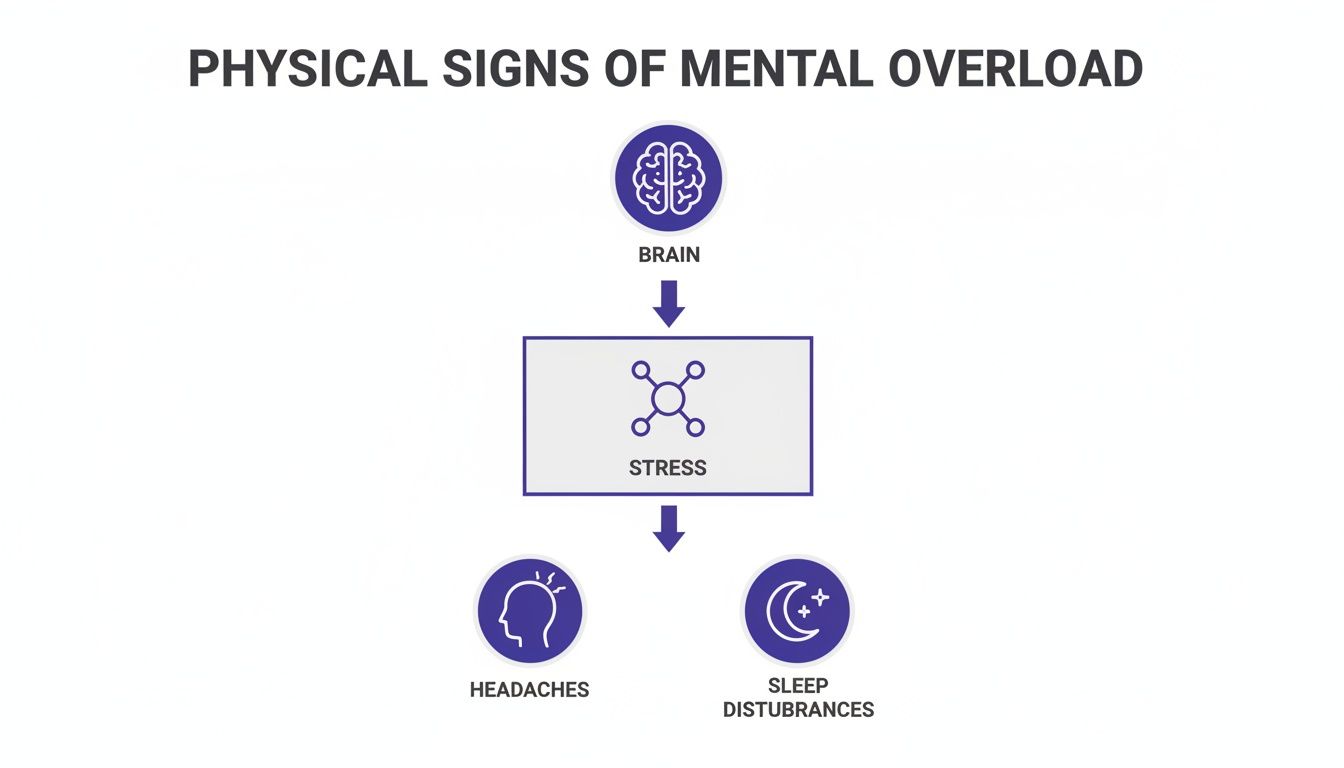
    This diagram shows how that relentless mental strain can start to show up physically.

    A diagram showing how the brain's signs of mental fatigue can lead to physical symptoms like headaches and sleep issues.

    As you can see, when your brain is overloaded, it triggers the body’s stress response systems. This isn’t just an abstract feeling. In fact, it can directly cause very real symptoms like tension headaches and disrupted sleep.

    Depression is a clinical mood disorder that casts a shadow over your entire life, not just your job. It involves a persistent low mood and a loss of interest in things you once enjoyed. Feelings of hopelessness are also common and almost always require professional care to navigate.

    A habit tracker journal can be a surprisingly helpful tool here. By jotting down your daily energy levels and moods, you start to see patterns. This data is not just for you. It can be incredibly useful when you talk to a doctor or therapist.

    Mental Fatigue vs. Burnout vs. Depression

    Understanding the key differences between these related but distinct conditions is the first step toward finding the right path forward. This table breaks down the core distinctions.

    AspectMental FatigueBurnoutDepression
    Primary CauseProlonged cognitive effort, overstimulation.Chronic, unmanaged workplace stress.Complex interplay of biological, psychological, and social factors.
    DurationTypically short-term; resolves with rest.Long-term; requires significant intervention.Persistent; often requires clinical treatment.
    Core FeelingBrain feels β€˜full’ or β€˜drained’.Cynicism, detachment, and inefficacy.Pervasive low mood, hopelessness, and anhedonia.
    ScopePrimarily affects cognitive performance.Mainly related to one’s job.Affects all aspects of life.

    Ultimately, knowing what you’re up against empowers you to seek the right kind of support. This helps you avoid trying solutions that don’t match the problem.

    Disclaimer: This information is for educational purposes only and is not a substitute for professional diagnosis or treatment. If you are concerned about your symptoms, please consult a qualified healthcare provider.

    Practical Strategies to Combat Mental Fatigue

    Recognizing the signs of mental fatigue is the first half of the battle; taking action is the second. Moving from awareness to recovery means adopting practical, evidence-informed strategies. These protect your brain’s limited resources. These aren’t just quick fixes. Instead, they’re techniques to help you manage your mental energy and prevent the deep exhaustion that leads to burnout.

    The goal here is to build a toolkit of habits that work for your brain, not against it. You’d be surprised how much of a difference small, consistent adjustments can make in how you feel day-to-day.

    A bright workspace with tools like a timer and headphones to help combat the signs of mental fatigue.

    Structure Your Focus and Breaks

    One of the most powerful ways to stop mental overload before it starts is to be intentional. You must be deliberate about how you structure your work sessions. The Pomodoro Technique is a fantastic method. You work in focused 25-minute bursts separated by short breaks. Using a simple pomodoro timer enforces these boundaries. This gives your prefrontal cortex a much-needed chance to rest and recharge between demanding tasks.

    Similarly, time blocking is a game-changer. By scheduling specific blocks of time for deep work, you’re actively preventing multitasking. This is a notorious cognitive drain. This approach protects your focus and stops you from constantly switching contexts. This constant switching is one of the biggest culprits behind mental fatigue. You can organize this schedule easily with a time blocking planner.

    Reduce Digital and Physical Strain

    Your environment plays a massive role in your mental energy. Constant digital pings and notifications keep your brain in a state of high alert. As you can imagine, this is exhausting. Taking deliberate steps to quiet this noise is crucial for recovery. For a deeper dive into managing your digital world, our book, Digital Clarity, is a great place to start.

    Physical discomfort also quietly chips away at your mental reserves. Simple ergonomic adjustments can make a huge difference here. Using an ergonomic keyboard or a laptop stand for desk reduces low-grade physical stress. This stress slowly drains your mental stamina all day long. A good monitor light bar can also reduce eye strain significantly.

    Don’t underestimate the impact of your work environment. Workplace stress is a huge factor, with 77% of US workers experiencing it. This stress snowballs into burnout for 57% of them. Furthermore, 31% report feeling emotionally exhausted. These numbers reveal how unchecked stress bleeds directly into mental fatigue. This is especially true when you consider that 76% of people in toxic work settings say their job harms their mental health. You can discover more insights about these workplace well-being findings from the American Psychological Association.

    Ultimately, one of the most effective strategies is also one of the most fundamental. Focus on how to improve sleep quality to ensure you wake up truly restored. You can also create dedicated distraction-free time. Using a phone lock box timer can physically remove the temptation to scroll, giving your brain a genuine break.

    Key Takeaways on Mental Fatigue

    • Mental fatigue is cognitive, not just physical: It’s a sign that your brain’s processing resources are depleted from prolonged mental effort, which is different from simple sleepiness.
    • Symptoms appear in four key areas: Look for signs in your thinking (brain fog), emotions (irritability), behavior (procrastination), and body (headaches, sleep issues).
    • It’s distinct from burnout and depression: Mental fatigue is usually short-term and improves with rest, whereas burnout is chronic and work-related, and depression is a clinical mood disorder affecting all life areas.
    • Proactive strategies are essential: You can combat mental fatigue with practical steps like using the Pomodoro Technique, time blocking, reducing digital distractions, and prioritizing high-quality sleep.
    • Your environment matters: Both digital noise and physical discomfort contribute to mental drain. Creating a calm, ergonomic workspace can preserve your cognitive energy.
    • Listen to your body’s signals: These signs are not weaknesses; they are important data from your brain and body telling you it’s time to recharge.

    Disclaimer: This article contains affiliate links. If you make a purchase, we may earn a small commission at no extra cost to you. The content here is for educational purposes and should not be taken as a substitute for professional medical or psychological advice.

    Editor’s Take

    After diving deep into the signs and science, it’s easy to get lost in complex solutions. But in my experience, the most powerful strategy for managing mental fatigue is refreshingly simple: consistently prioritize intentional rest and set firm boundaries.

    This advice is aimed squarely at busy professionals, students, and freelancers. It is for anyone feeling that familiar brain-fried overwhelm but who isn’t yet dealing with clinical burnout or depression. Think of these strategies as preventative maintenance for your mind. They are not a cure for chronic conditions that need and deserve professional support.

    The biggest wins often come from surprisingly low-tech changes. Scheduling a daily walk without your phone, for instance, can be very effective. Or, using an analog alarm clock to create a screen-free bedroom can work wonders. Even just turning off non-essential notifications can restore more mental energy than any complicated productivity system. It’s the small, consistent acts of disconnection that truly move the needle.

    Your Questions on Mental Fatigue, Answered

    As you start to notice the signs of mental fatigue, questions naturally come up. It’s a fuzzy, frustrating experience. Getting clear answers is the first step toward feeling better. We’ve gathered some of the most common questions we hear to give you that clarity right now.

    1. How Is Mental Fatigue Different from Just Being Tired?

    Think of it this way: regular tiredness is your body’s battery running low. A good night’s sleep is like plugging it in to recharge. Usually, you wake up feeling refreshed.

    Mental fatigue, on the other hand, is when your brain’s processing power is overloaded. Sleep helps, but it often isn’t enough. You might wake up still feeling that sluggish, β€œbrain full” sensation. This is because the cognitive load hasn’t actually been cleared.

    2. Can My Diet and Hydration Really Affect Mental Fatigue?

    Absolutely. Your brain is an incredibly energy-hungry organ. Even mild dehydration has been shown to mess with your cognitive function. It can make focus and memory feel harder.

    The same goes for food. A diet heavy in processed foods can lead to energy crashes and inflammation. However, a balanced diet gives your brain the steady fuel it needs to operate. It’s not about perfection, but consistent fuel and water make a huge difference. A good magnesium glycinate supplement might also support relaxation and brain health.

    3. Does Exercise Make Mental Fatigue Worse?

    This is a huge misconception. When you’re mentally fried, the last thing you want to do is move. But moderate physical activity is one of the best tools for recovery. This could be a brisk walk or a few stretches.

    Exercise isn’t just about burning energy. It boosts blood flow to the brain and triggers the release of endorphins. This can sharpen your focus, improve your mood, and leave you feeling more mentally energized. An under desk walking pad is a great way to sneak this in without it feeling like a chore.

    4. How Long Does It Take to Recover from Mental Fatigue?

    There’s no one-size-fits-all answer here. The recovery timeline really depends on how deep the fatigue runs. It also depends on what’s causing it.

    For a mild case, a weekend of true disconnection and intentional rest might be enough to reset. But if you’re dealing with more chronic mental exhaustion, it could take several weeks of consistent effort. This means prioritizing sleep, setting firm boundaries, and using strategies like a visual timer for desk to manage focus.

    5. Can I Experience Mental Fatigue Even If I Love My Job?

    Yes, and this is incredibly common. Mental fatigue has nothing to do with whether you like your work. Instead, it’s about the sheer cognitive load.

    Even work that is deeply meaningful and engaging can be mentally taxing. Passion doesn’t make your brain immune to overload. Without building in adequate recovery time, even the most fulfilling job can lead to serious mental exhaustion.

    What Are Some Less Obvious Signs of Mental Fatigue?

    6. What Are Some Less Obvious Signs of Mental Fatigue?

    Beyond the classic brain fog and irritability, mental fatigue can show up in more subtle ways. You might notice a total loss of creativity. Or you could feel a sense of detachment from things you normally enjoy.

    It can even manifest physically. For example, you might find yourself with an upset stomach more often. You may also notice you’re becoming clumsy. And pay attention to your crutches. Are you relying more on coffee or a sugary snack to push through the afternoon?

    7. Is Procrastination Always a Sign of Mental Fatigue?

    Not always, but there’s a very strong link. When your brain is overloaded, its primary goal is self-preservation. It will naturally start avoiding any task that requires a heavy cognitive lift.

    What looks and feels like procrastination is often just your brain’s defense mechanism kicking in. A productivity journal can be a great, non-judgmental tool to help you spot these patterns as they happen.

    8. How Can I Tell if My Sleep Problems Are From Mental Fatigue?

    One of the clearest signs is that β€œwired but tired” feeling. You’ve been dragging yourself through the day, completely exhausted. But the moment your head hits the pillow, your mind starts racing.

    This is a classic symptom of an overstimulated nervous system. It goes hand-in-hand with mental overload. Creating a truly dark, quiet space with something like a sleep mask blackout can help calm those inputs. It signals to your brain that it’s safe to rest.

    9. Can Technology Contribute to My Mental Fatigue?

    Definitely. Our digital environment is a huge source of cognitive load. The constant notifications and context-switching between apps demand a massive amount of your brain’s processing power. The blue light from screens also contributes.

    Setting intentional boundaries with your technology isn’t just a nice idea. In fact, it’s a crucial step in recovering from mental fatigue. For a full guide on how to do this, check out our book, Digital Clarity.

    10. When Should I Seek Professional Help for My Symptoms?

    If your symptoms are sticking around, it’s time to talk to someone. This is especially true if they get in the way of your daily life. If they are not getting better with rest or lifestyle changes, professional help is key.

    A doctor or therapist can help you rule out any underlying medical conditions. They can also offer support and strategies tailored to what you’re going through. You don’t have to figure this out alone.


    Ready to build a system that prevents mental burnout before it starts? Explore the full library of practical, science-backed guides at Mind Clarity Hub. Start with our foundational book, The Power of Clarity, to create a calmer, more productive life.

  • 10 Remote Work Best Practices for Sustainable Productivity in 2026

    10 Remote Work Best Practices for Sustainable Productivity in 2026

    10 Remote Work Best Practices for Sustainable Productivity in 2026

    Jeremy Jarvis β€” Mind Clarity Hub founder
    Mind Clarity Hub β€’ Research-aware focus & digital wellness

    Remote work promised autonomy and flexibility, but for many, it has delivered digital exhaustion, blurred boundaries, and a persistent feeling of being β€˜always on.’ The solution isn’t to work longer or harder; it’s to work with more intention by aligning your daily routines with the principles of neuroscience and psychology. The promise of freedom is still achievable, but it requires a more deliberate and structured approach than simply opening a laptop at the kitchen table.

    This guide moves beyond generic advice like β€œhave a routine” and dives into specific, actionable systems designed for deep focus and sustainable productivity. We will explore 10 evidence-based remote work best practices to help you reclaim control over your time, attention, and energy. You’ll learn not just what to do, but why these strategies work, from creating distraction-free workspaces that reduce cognitive load to implementing AI-powered workflows that automate mundane tasks.

    Affiliate Disclosure: This article may contain affiliate links. If you purchase a product through one of these links, we may earn a small commission at no extra cost to you. We only recommend products we believe will add value to our readers.

    We will cover practical techniques such as time blocking, building pre-work rituals to signal focus to your brain, and establishing clear communication protocols that prevent burnout. These systems are not just about getting more done; they’re about creating a healthier, more integrated way of working and living. While these individual practices are powerful, they are most effective within a supportive structure. To truly unlock clarity in remote work, consider the broader strategies for effective remote team management that foster a productive environment for everyone. This listicle provides the personal toolkit you need to thrive, helping you build a remote work life that feels less chaotic and more focused, productive, and fulfilling.

    1. Establish a Dedicated Workspace as a Remote Work Best Practice

    One of the most effective remote work best practices is creating a clear physical and mental boundary between your personal life and professional duties. Establishing a dedicated workspace leverages principles of environmental psychology, specifically a concept known as β€œcontext-dependent memory.” Your brain creates powerful associations between your environment and your mental state, meaning a space consistently used for work signals it’s time to focus. This practice reduces the cognitive load of context-switching, helping you enter a state of deep work more efficiently.

    A bright and modern home office serves as one of the best remote work best practices.

    This space doesn’t need to be a separate room. A specific corner of a living room, a particular chair at the dining table, or even a portable standing desk that you set up each morning can serve this purpose. The key is consistency. When you enter this zone, it becomes a ritual that primes your brain for productivity, minimizing household distractions and digital temptations. For example, a marketing manager named Sarah uses a specific lamp on her desk. When the lamp is on, her family knows she’s in β€œwork mode” and shouldn’t be interrupted unless it’s an emergency. This simple cue reinforces the boundary for both her and her brain.

    How to Implement This Practice

    Successfully creating a focus-friendly zone involves more than just picking a spot. It requires a deliberate effort to engineer an environment for sustained attention.

    • Define Your Zone: If you lack a separate office, use visual cues like a small area rug, a specific desk lamp, or a portable screen to physically define your workspace.
    • Remove Digital Distractions: Physically move your smartphone and smartwatch to another room or place them out of sight. Use website blockers (like Freedom or Cold Turkey) during work blocks to prevent mindless scrolling.
    • Optimize for Comfort: An ergonomic setup is crucial for preventing physical strain that leads to fidgeting and distraction. Invest in a supportive chair and position your monitor at eye level. For more inspiration, explore these practical home office organizing ideas on mindclarityhub.com.
    • Control Your Sensory Input: Use noise-canceling headphones with white noise or nature sounds to mask unpredictable household sounds. Adjust lighting to be bright and energizing during the day.

    2. Implement Time Blocking and the Pomodoro Method to Improve Remote Work Habits

    Structuring your workday with intention is one of the most powerful remote work best practices for combating procrastination and maintaining high energy levels. Time blocking and the Pomodoro Technique are neuroscience-backed methods that leverage the brain’s natural β€œultradian rhythms,” which are 90-to-120-minute cycles of high-frequency brain activity followed by periods of lower-frequency activity. Instead of fighting this natural ebb and flow, these strategies work with it, creating a sustainable cadence of intense focus followed by deliberate rest. This prevents cognitive fatigue and improves the quality of your output over the long term.

    A tomato timer on a desk is a visual aid for remote work best practices like the Pomodoro method.

    This approach involves dividing your day into distinct, single-task intervals. A marketer might block 90 minutes for writing a deep-dive blog post, followed by a 20-minute break, then a 50-minute block for answering high-priority emails. The core principle is proactive scheduling: you tell your time where to go, rather than reactively wondering where it went. This creates a powerful sense of control and accomplishment as you complete each focused session. A real-world example is a software developer who uses 50-minute blocks for coding specific features. After each block, he takes a 10-minute break to walk around, which he finds helps him solve coding problems faster when he returns.

    How to Implement This Practice

    Integrating structured time management requires discipline, but the payoff in focus and efficiency is immense. Start small and refine your approach based on your personal energy and attention patterns.

    • Start with the Pomodoro Technique: Begin with the classic 25-minute focus sprints followed by 5-minute breaks. This is an excellent entry point as the short duration feels less intimidating and helps build momentum. Use a visual timer to create a sense of urgency.
    • Align Blocks with Task Complexity: Match the length of your time block to the cognitive demand of the task. Reserve longer 90-minute blocks for deep, creative work like coding or strategy development, and use shorter 25- to 50-minute blocks for administrative tasks like clearing your inbox.
    • Schedule Your Breaks: Treat breaks as a non-negotiable part of the process. Schedule them before you feel exhausted to proactively replenish your cognitive resources. Step away from your screen, stretch, or hydrate.
    • Protect Your Time: Use calendar blocking to make your focus periods visible to colleagues. This prevents β€œmeeting creep” and signals that your deep work time is unavailable, reinforcing its importance.

    3. Optimize Your Digital Boundaries as a Best Practice for Remote Work

    Another of the most critical remote work best practices is proactively managing your digital environment to prevent constant attention fragmentation. Each notification, ping, or badge is a micro-interruption that pulls you out of a state of flow, forcing a costly cognitive context switch. Neurologically, this constant reactivity trains your brain to crave the dopamine hit of a new alert, depleting your finite capacity for deep, focused work and leading to digital burnout.

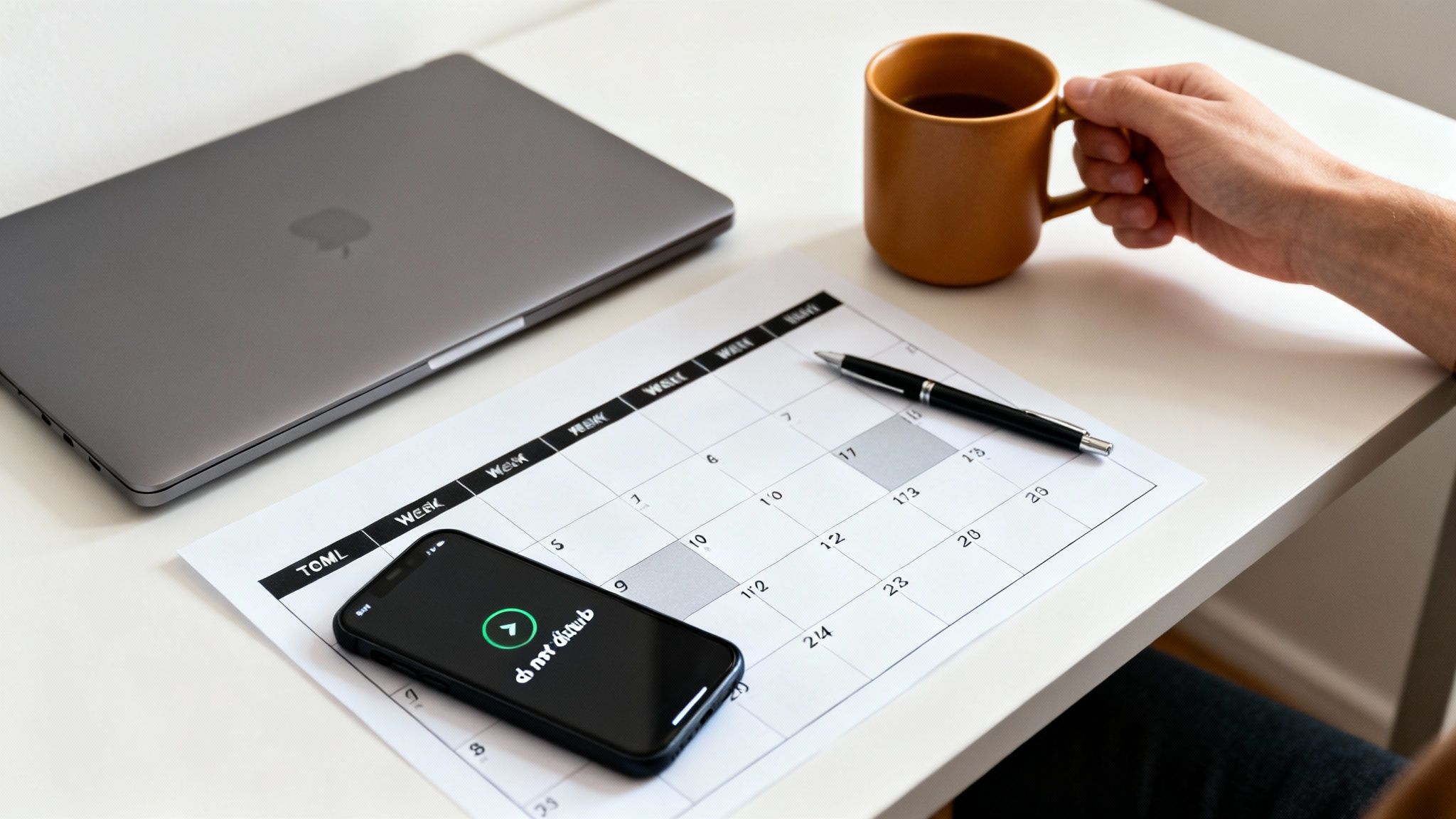
    Using 'do not disturb' mode on a smartphone is a key remote work best practice for focus.

    By setting firm digital boundaries, you shift from a reactive to an intentional mode of communication. Instead of letting your tools dictate your schedule, you control when and how you engage with them. This approach is central to methodologies like Cal Newport’s β€œDeep Work,” where practitioners schedule specific blocks for communication, preserving long, uninterrupted periods for high-value tasks. This is not about being unresponsive; it’s about being effective. For instance, a project manager might set up a rule where she only checks her email at 10 AM and 3 PM, allowing for long, uninterrupted stretches to focus on project planning.

    How to Implement This Practice

    Regaining control over your digital attention requires a conscious strategy to filter noise and prioritize signal. It’s about creating a system where you serve your goals, not your inbox.

    • Audit and Disable Notifications: Turn off all non-essential alerts on your phone and computer. This includes banners, sounds, and badge icons for email, social media, and most messaging apps. Leave on only calendar reminders and calls from designated emergency contacts.
    • Batch Your Communication: Schedule 2-3 specific times per day to check and respond to emails and messages (e.g., 9:00 AM, 1:00 PM, and 4:30 PM). This batching method prevents the constant β€œinbox-as-a-to-do-list” trap.
    • Leverage Status Indicators: Use the β€œDo Not Disturb” or β€œFocus” status on Slack and Microsoft Teams to clearly signal to colleagues when you are in a deep work session. This sets a clear expectation that you will not respond immediately.
    • Establish Channel Hierarchy: Define with your team which channels are for which type of communication. For example: a phone call is for true emergencies, email is for important but non-urgent matters, and instant messaging is for quick, asynchronous questions. For a deeper dive into reclaiming your focus, explore these effective digital detox tips on mindclarityhub.com.

    4. Create a Pre-Work Ritual for Better Remote Work Performance

    One of the most powerful remote work best practices involves intentionally creating a transition from your personal time to your professional tasks. A consistent pre-work ritual, even just 10-20 minutes, acts as a mental β€œon-ramp” for your workday. This practice leverages neuroscience by creating a behavioral cue that signals to your brain that it’s time to shift into a focused state. It primes your nervous system for focus and helps you enter a productive state without the abrupt context shift of simply opening a laptop.

    This ritual is not about adding more to your plate; it’s about setting a deliberate tone for the day. For example, a writer might use β€œmorning pages” (a stream-of-consciousness journaling practice) to clear mental clutter before creative work. A sales lead might spend five minutes reviewing their top three priorities for the day while drinking a glass of water before even touching their computer. The goal is to create a predictable sequence that signals to your brain, β€œIt’s time to focus,” making the transition into deep work smoother and more automatic.

    How to Implement This Practice

    Building an effective pre-work routine requires consistency and a focus on screen-free activities that activate your body and mind. The key is to find a simple sequence you can stick with daily.

    • Integrate Gentle Movement: Start with 10 minutes of stretching, yoga, or a short walk without your phone. This activates your nervous system and improves blood flow to the brain, enhancing alertness.
    • Delay Screen Time: Avoid checking emails or social media for the first 30-60 minutes after waking. This prevents your brain from starting the day in a reactive, high-cortisol state.
    • Activate Your Mind Intentionally: Instead of consuming content, create it. Journal three intentions for the day, practice a brief breathwork exercise (like 4-7-8 breathing) to calm your system, or read a physical book.
    • Time Your Caffeine: To avoid disrupting your body’s natural cortisol rhythm, try waiting 90-120 minutes after waking before your first coffee. This allows your natural energy to peak first. For more ideas on this, discover how a structured morning routine can rewire your focus on mindclarityhub.com.

    5. Use Asynchronous Communication: A Key Remote Work Best Practice

    One of the most transformative remote work best practices is shifting from a synchronous, β€œalways-on” culture to an asynchronous-first model. Asynchronous communication doesn’t require an immediate response, allowing team members to engage thoughtfully when their focus allows. This approach respects individual deep work schedules and different time zones, directly combating the meeting fatigue and constant interruptions that plague many remote environments.

    By prioritizing written documentation and tools like shared documents, project management boards, and video messages, teams create a single source of truth. This reduces repetitive questions and empowers employees with the autonomy to find information independently. For example, instead of a live meeting to review a new marketing campaign, the team lead records a 10-minute Loom video walking through the proposal and shares a link. Team members can watch it when they have a natural break in their work and leave comments with feedback, eliminating the need to coordinate schedules across multiple time zones.

    How to Implement This Practice

    Transitioning to an asynchronous model requires intentional changes to team habits and toolsets. It’s about creating systems that value focused work over immediate presence.

    • Audit Your Meetings: Review your calendar and critically assess which recurring meetings can be replaced with an email update, a Loom video walkthrough, or a documented proposal in Notion or Google Docs. Reserve synchronous time for brainstorming, complex problem-solving, and relationship-building.
    • Establish Clear Expectations: Create and share a communication charter that outlines expected response times for different channels. For example, specify a 24-hour turnaround for emails, a 4-hour window for Slack DMs, and immediate attention only for urgent tags.
    • Document Everything: Create a centralized knowledge base or wiki for processes, project decisions, and meeting notes. Use templates for recurring tasks like project kick-offs or decision logs to ensure consistency and prevent reinventing the wheel.
    • Embrace Video Messages: Use tools like Loom or Slack clips to record quick screen shares or updates. This provides the context of a meeting without the scheduling hassle, allowing colleagues to watch and respond on their own time. For those looking to dive deeper into practical applications, this guide offers insights into effective asynchronous communication tools to enhance remote productivity.

    6. Practice Regular Breaks and the Recovery Protocol for Sustainable Remote Work

    One of the most counterintuitive yet critical remote work best practices is scheduling and protecting regular breaks. Instead of viewing them as lost time, it’s essential to reframe breaks as strategic recovery periods for mental restoration. This approach is grounded in the cognitive psychology principle that our brains have finite attentional resources. Continuous focus depletes these resources, leading to decision fatigue and reduced cognitive performance. Properly structured breaks act as a reset, replenishing your ability to concentrate and solve complex problems.

    Taking a stretch break on a balcony demonstrates one of the most important remote work best practices for well-being.

    This practice involves actively stepping away from your screen to engage in activities that are genuinely restorative. Consider Maria, a graphic designer who used to work through lunch. She started scheduling a 30-minute walk outside, leaving her phone behind. She found that her most creative ideas for the afternoon often came to her during that walk, proving that the break wasn’t lost time but a crucial part of her creative process. Swapping a 5-minute social media scroll with simple stretches can significantly boost your afternoon productivity.

    How to Implement This Practice

    Integrating a recovery protocol requires shifting from a reactive approach (taking a break when you feel burnt out) to a proactive one (taking a break to prevent burnout). This deliberate scheduling helps sustain energy and focus.

    • Schedule Micro and Macro Breaks: Use a timer or calendar alerts to implement a rhythm like the Pomodoro Technique (25 minutes of work, 5 minutes of rest). Combine these short micro-breaks with at least one longer macro-break, such as a 30-minute lunch completely away from your desk.
    • Prioritize Screen-Free Activities: During your breaks, actively avoid digital screens. The goal is to give your eyes and brain a rest from constant information processing. Opt for physical movement, hydration, or simply gazing out a window.
    • Leverage Natural Light and Movement: Step outside for a few minutes whenever possible. Exposure to natural light helps regulate your circadian rhythm, improving mood and alertness. Gentle movement like stretching or a short walk increases blood flow to the brain.
    • Model the Behavior: If you are in a leadership position, make your breaks visible. Announce you are stepping away for lunch or a walk. This normalizes recovery and encourages your team to adopt healthy habits, creating a more sustainable work culture.

    7. Set Clear Priorities: A Foundational Remote Work Best Practice

    A cornerstone of effective remote work best practices is shifting from reactive busyness to intentional, high-impact work. Setting clear goals and committing to single-tasking leverages neuroscience principles to combat decision fatigue and the high cognitive cost of multitasking. Behavioral research shows that every time you switch tasks, your brain leaves behind β€œattention residue,” meaning part of your focus remains on the previous task. By defining your most important tasks upfront, you create a clear roadmap for your attention, ensuring your effort is channeled toward meaningful outcomes.

    This practice is about deliberately engineering your day around your most significant contributions. Frameworks like the β€œ1-3-5 Rule” (one big, three medium, five small tasks) or the Eisenhower Matrix help you filter the noise and focus on what truly drives progress. Imagine a consultant who starts each day by identifying the one client deliverable that, if completed, would represent the most significant progress. She blocks the first 90 minutes of her day to work only on that task, ensuring her peak energy goes toward her highest-impact work.

    How to Implement This Practice

    Integrating this focus system into your routine requires a weekly and daily commitment to strategic planning. It’s a proactive approach that puts you in control of your schedule.

    • Define Your Weekly Priorities: On Sunday evening or Monday morning, identify your top three most important goals for the week. These are the β€œbig rocks” that must be accomplished.
    • Identify Your Daily Peak Priority: Each morning, select the single most important task from your weekly list to tackle that day. This should be the task that, if completed, would make the day a success.
    • Timeblock Your Priorities: Before your calendar fills with meetings, schedule protected time blocks to work on your key priorities. Treat these blocks as non-negotiable appointments with yourself.
    • Filter Incoming Requests: Use a priority matrix (like the one explained in this Mind Tools guide to the Eisenhower Matrix) to categorize new tasks as urgent, important, both, or neither. This helps you confidently say β€œno” or β€œnot now” to requests that don’t align with your goals.
    • Keep Priorities Visible: Write your top three priorities on a physical whiteboard or a digital task board that is always in your line of sight. This constant visual reminder reinforces your commitment and keeps you on track.

    8. Leverage AI and Automation to Master Remote Work Productivity

    One of the most transformative remote work best practices is strategically offloading low-value, repetitive tasks to artificial intelligence and automation. This approach is rooted in the principle of conserving cognitive resources. Your brain has a finite capacity for deep, focused work each day. By automating routine activities like drafting emails, transcribing meetings, or scheduling appointments, you preserve that limited bandwidth for strategic thinking, creative problem-solving, and high-impact projects.

    Think of it as delegating tasks to a tireless digital assistant. A software developer can use GitHub Copilot to generate boilerplate code, saving hours of tedious typing. A marketer can leverage Jasper or ChatGPT to create dozens of A/B test variations for social media captions in minutes. A simple, real-world scenario is an HR manager who uses an AI meeting assistant like Fireflies.ai. It automatically joins her Zoom calls, transcribes them, and creates a summary with action items, saving her 30-45 minutes of manual note-taking and follow-up per meeting.

    How to Implement This Practice

    Integrating AI and automation effectively requires a thoughtful, iterative approach. The goal is to augment your skills, not replace them, by identifying and eliminating workflow bottlenecks.

    • Start with Low-Stakes Tasks: Begin by identifying high-repetition, low-creativity work. Use AI to draft internal email templates, create initial outlines for reports, or generate summaries of long documents.
    • Treat AI as a First-Draft Tool: Never accept AI output as final. Always review, edit, and personalize the content to ensure it meets quality standards and reflects your unique voice. This β€œhuman-in-the-loop” process is critical.
    • Automate Workflow Connections: Use tools like Zapier or IFTTT to connect the apps you use daily. For example, you could create an automation that saves email attachments from specific senders directly to a designated Dropbox folder.
    • Develop Prompting Skills: The quality of AI output depends entirely on the quality of your input. Learn to write clear, specific, and context-rich prompts. For a deeper dive, explore these techniques on how to use AI for productivity on mindclarityhub.com.
    • Document and Share Processes: When you discover a particularly effective prompt or automation workflow, document it. This creates a reusable asset for you and your team, standardizing efficiency gains across your organization.

    9. Build Recovery Rituals and Enforce β€˜Work Off’ Time to Prevent Burnout

    One of the most critical yet overlooked remote work best practices is creating a firm boundary between your workday and personal time. Without the physical transition of leaving an office, work can easily bleed into evenings and weekends, leading to an β€œalways-on” state. Establishing a clear shutdown ritual leverages the psychological principle of closure, signaling to your brain that the professional day is over, allowing your nervous system to downshift and begin genuine recovery.

    This practice is not about simply logging off; it’s about a deliberate, conscious transition. A consistent end-of-day sequence prevents the cognitive residue of unfinished tasks from occupying your mental space. A perfect example is a team leader who, at 5:30 PM every day, spends five minutes tidying his desk, closing all work tabs, and writing his top priority for the next day on a sticky note. He then closes his laptop and says β€œDone for today” out loud. This multi-sensory ritual provides a definitive end to his workday.

    How to Implement This Practice

    Creating a durable β€œoff switch” requires more than willpower. It involves building a new habit and structuring your environment to support it.

    • Create a 5-Minute Shutdown Ritual: Make the last five minutes of your workday consistent. This could involve closing all work-related tabs, reviewing your calendar for the next day, and identifying your top one or two priorities. This act of planning offloads mental clutter.
    • Set Digital Boundaries: Use technology to enforce your time off. Configure Slack and email apps to disable notifications outside your defined work hours. Use an β€œout of office” auto-responder during evenings and weekends to manage expectations.
    • Communicate Your Hours: Clearly state your working hours in your email signature and team communication channels. This transparency helps colleagues and clients respect your availability and reinforces your commitment to your personal time. Finding a sustainable rhythm is key, and you can explore more strategies for how to balance life and work on mindclarityhub.com.
    • Model the Behavior: If you are in a leadership role, actively model β€œwork off” time. Announce when you are logging off for the day and avoid sending non-urgent communications after hours. This gives your team permission to do the same, fostering a healthier company culture.

    10. Work with Your Chronotype for Peak Remote Performance

    One of the most impactful remote work best practices involves aligning your tasks with your body’s natural energy cycles. Instead of forcing productivity into a rigid 9-to-5 schedule, this approach leverages chronobiology, the study of our internal biological clocks. Each person has a unique chronotype, which dictates whether they are a β€œmorning lark,” a β€œnight owl,” or somewhere in between. Working with this rhythm, rather than against it, minimizes cognitive friction and maximizes output.

    By tracking your energy and focus, you can identify your personal β€œpeak performance windows,” which are the 2-4 hour blocks when your brain is most primed for complex, high-value tasks. For example, a β€œnight owl” data analyst might struggle with complex analysis at 9 AM but find they enter a state of deep focus around 3 PM. By shifting their deep work to the afternoon and handling emails in the morning, they produce higher-quality work and feel less frustrated. This strategy is about working smarter, not harder.

    How to Implement This Practice

    Systematically identifying and scheduling around your energy peaks requires a short period of self-assessment followed by deliberate calendar management.

    • Track Your Rhythms: For two weeks, rate your energy and focus on a scale of 1-10 three or four times daily (e.g., 9 AM, 1 PM, 4 PM, 8 PM). Note what you were doing and how you felt. This data will reveal your peak and trough periods.
    • Identify Your Peak Window: Analyze your log to pinpoint your 2-3 hour β€œgolden window” for deep work. For many, this is mid-morning, but for night owls, it could be late afternoon or even early evening.
    • Time-Block Your Calendar: Protect this peak window fiercely. Schedule your most important tasks, like writing, coding, or strategic planning, exclusively during this time. Push meetings, email, and routine admin work to your energy dips.
    • Communicate with Your Team: Share your findings with your manager and team. A simple β€œI do my best creative work between 10 AM and 1 PM, so I try to keep that time meeting-free” can set expectations and foster a more chronotype-aware culture. A flexible company may even allow you to adjust your start time to better align with your biology.

    Editor’s Take: What Actually Works for Remote Success

    After reviewing countless strategies, the most effective remote work best practices boil down to two core principles: intentional structure and proactive boundaries. The advice in this article is best for knowledge workers, creatives, and anyone whose role requires deep focus and self-management. It’s less critical for roles that are inherently reactive, like live customer support. The biggest caveat is that individual practices only work if your company culture supports them. You can’t practice asynchronous communication if your manager expects instant replies. The most impactful starting point for any individual is creating a dedicated workspace and a firm shutdown ritual. These two habits build the physical and temporal β€œcontainers” needed for all other practices to succeed.


    Disclaimers and Important Information

    • Affiliate Links: This article may contain affiliate links. Purchases made through these links may earn us a small commission at no additional cost to you, which helps support our content creation.
    • Educational Content: The information provided in this article, especially content related to psychology, neuroscience, and well-being, is for educational and informational purposes only. It is not intended as a substitute for professional medical advice, diagnosis, or treatment. If you are experiencing symptoms of burnout, anxiety, depression, or other mental health concerns, please consult a qualified healthcare or mental health professional.

    Frequently Asked Questions (FAQ) about Remote Work Best Practices

    1. What is the single most important remote work best practice?
    While all are important, creating a dedicated workspace is foundational. It establishes a psychological boundary between work and personal life, which is the root cause of many remote work challenges.

    2. How can I stay focused at home with so many distractions?
    Combine a dedicated workspace with the Pomodoro Technique and strict notification management. This creates a distraction-free physical zone and a structured mental zone, training your brain to focus in short, intense bursts.

    3. I feel like I’m β€œalways on.” How do I fix this?
    Implement a shutdown ritual and set clear digital boundaries. Disabling work notifications after hours and communicating your availability to your team are crucial steps to reclaim your personal time and prevent burnout.

    4. Are meetings bad for remote work?
    Not all meetings are bad, but excessive or unnecessary meetings are a major productivity killer. Adopt an asynchronous-first communication model, replacing status update meetings with written documentation or short video messages.

    5. How do I convince my team to adopt these practices?
    Start by modeling the behavior yourself. When your colleagues see the positive impact on your productivity and well-being, they’ll be more open to change. Share this article or suggest a small pilot, like trying a β€œno-meeting Friday afternoon.”

    Remote Work Best Practices: What If I Don’t Have Space for a Separate Home Office?

    6. What if I don’t have space for a separate home office?
    A dedicated workspace doesn’t have to be a room. It can be a specific corner, a particular chair, or even a β€œwork-in-a-box” kit you set up and put away each day. The key is consistency and association.

    7. How can AI realistically help me with my remote job?
    Start small. Use AI to automate repetitive tasks like transcribing meeting notes, drafting routine emails, or summarizing long documents. This frees up your cognitive energy for more important, creative work.

    8. What is a β€œchronotype” and why does it matter for remote work?
    Your chronotype is your natural tendency to be a β€œmorning person” or β€œnight owl.” Understanding your chronotype allows you to schedule your most demanding tasks during your biological peak performance hours, making you more effective and less stressed.

    9. How do I handle feelings of isolation when working remotely?
    While this article focuses on productivity, social connection is vital. Proactively schedule virtual coffee chats, participate in non-work-related team channels, and make an effort to connect with colleagues on a personal level.

    10. Is the advice in this article a substitute for medical help for burnout or anxiety?
    No, absolutely not. This content is for educational purposes only. If you are struggling with burnout, anxiety, depression, or other mental health challenges, it is essential to seek guidance from a qualified medical or psychological professional.

    Explore the Mind Clarity Hub Library

    Practical books on focus, digital habits, resilience, and building a calmer mind.

    The Power of Clarity β€” book cover

    The Power of Clarity

    Unlock mental focus, build momentum, and create the life you were meant to live.

    View book β†’
    AI & ChatGPT for Beginners β€” book cover

    AI & ChatGPT for Beginners

    No PhD needed β€” a 2025 guide to AI, prompts, and productivity without coding.

    View book β†’
    Zen in the Digital Jungle β€” book cover

    Zen in the Digital Jungle

    Mindfulness for a chaotic world.

    View book β†’
    The Slow Reset β€” book cover

    The Slow Reset

    Mindful living in a fast-paced world.

    View book β†’
    Perfectly Imperfect β€” book cover

    Perfectly Imperfect

    Stop self-criticism, set boundaries, and embrace the real you.

    View book β†’
    Reclaiming Silence β€” book cover

    Reclaiming Silence

    A dopamine detox guide to finding peace in a noisy world.

    View book β†’
    The Focused Freelancer β€” book cover

    The Focused Freelancer

    Productivity, pricing & positioning for independents in 2025.

    View book β†’
    ChatGPT Side Hustle System β€” book cover

    ChatGPT Side Hustle System

    Launch your AI-driven online business in 30 days.

    View book β†’
    Burnout, Interrupted β€” book cover

    Burnout, Interrupted

    A proven path to restore energy and reclaim your life.

    View book β†’
    Attention Unleashed β€” book cover

    Attention Unleashed

    Focus strategies for the distracted mind.

    View book β†’
    Side Hustle Launchpad β€” book cover

    Side Hustle Launchpad

    Your quick-start guide to extra income.

    View book β†’
    Digital Clarity β€” book cover

    Digital Clarity

    Rewire your brain, escape dopamine traps & regain focus.

    View book β†’
    Break the Scroll β€” book cover

    Break the Scroll

    Reduce screen time and take back control of your life.

    View book β†’
    Climate Compassion β€” book cover

    Climate Compassion

    Transform eco-anxiety into empowered action.

    View book β†’
    Village Mentality β€” book cover

    Village Mentality

    The power of community for mental wellness.

    View book β†’
    Restful Nights β€” book cover

    Restful Nights

    Overcoming sleep anxiety in a 24/7 world.

    View book β†’
    Connected Again β€” book cover

    Connected Again

    Combat loneliness and build meaningful relationships.

    View book β†’
    Focus Recharged β€” book cover

    Focus Recharged

    Mastering attention and productivity in the digital era.

    View book β†’
    Marketing Magic with ChatGPT β€” book cover

    Marketing Magic with ChatGPT

    AI-powered content, campaigns, and copywriting to grow faster.

    View book β†’
    The 6-Figure Creator β€” book cover

    The 6-Figure Creator

    Turn knowledge into passive income with books, courses & AI.

    View book β†’
    Burnout Breakthrough β€” book cover

    Burnout Breakthrough

    Reset your work-life balance and thrive in 2025.

    View book β†’
    The Emotionally Intelligent Man β€” book cover

    The Emotionally Intelligent Man

    A modern guide to self-awareness and communication.

    View book β†’
    AI Personalized Wellness β€” book cover

    AI Personalized Wellness

    Create your custom health plan with data-driven habits.

    View book β†’
    Everyday AI Made Easy β€” book cover

    Everyday AI Made Easy

    Use ChatGPT and smart tools to simplify life.

    View book β†’
    Money Mindfulness β€” book cover

    Money Mindfulness

    A financial wellness guide for Gen Z & Millennials.

    View book β†’
    Startup Smarter with AI β€” book cover

    Startup Smarter with AI

    ChatGPT strategies and tools to grow your business.

    View book β†’
    ChatGPT for Writers & Creators β€” book cover

    ChatGPT for Writers & Creators

    Unlock AI-powered brainstorming, drafting & editing.

    View book β†’
  • How to Avoid Burnout at Work Proven Strategies to Reclaim Your Energy

    How to Avoid Burnout at Work Proven Strategies to Reclaim Your Energy

    Jeremy Jarvis β€” Mind Clarity Hub founder
    Mind Clarity Hub β€’ Research-aware focus & digital wellness

    To sidestep burnout, you have to get intentional about managing your workload, building in real recovery time, and staying connected to why your work matters in the first place. This isn’t about white-knuckling it or pushing harder. It’s about working smarter and creating sustainable rhythms that protect your mental and emotional energy.

    Disclosure: This article may contain affiliate links. If you make a purchase through them, we may earn a small commission at no extra cost to you.

    Recognizing Burnout Before It Takes Over

    The modern workplace often feels like a relentless sprint, leaving countless professionals feeling depleted, cynical, and less effective than they used to be. If that sounds painfully familiar, it’s not a sign you’ve failed. It’s a bright, flashing signal that you might be on the fast track to burnoutβ€”a state of chronic emotional, physical, and mental exhaustion fed by prolonged, unmanaged stress.

    A man sits at his desk with hands on his temples beside a laptop and coffee, showing stress and mental fatigueβ€”an everyday moment of **how to avoid burnout at work**.

    Knowing the difference between everyday work pressure and genuine burnout is the first, most crucial step toward pulling yourself back. From a psychological perspective, stress often involves a sense of urgency and over-engagement; you feel like if you could just get on top of things, you’d be okay. Burnout is the opposite. It’s defined by disengagement and emotional exhaustion. When burnout takes hold, you often feel empty, hollowed out, and beyond the point of caring.

    This guide provides a practical, research-backed framework to help you navigate this. Important Disclaimer: This article is for educational purposes only and is not a substitute for professional medical or psychological advice from a qualified healthcare provider. If you are experiencing symptoms of burnout, anxiety, or depression, please consult a professional.

    The Real Cost of an Unchecked Workload

    Burnout isn’t just a buzzword; it’s a widespread crisis with heavy consequences. Globally, almost 50% of workers across major economies report feeling burned out. This isn’t a problem that more grit or willpower can solve. Behavioral research consistently ties it back to systemic issues like crushing hours and unmanageable workloads.

    In fact, recent data shows that 58% of employees point to long hours as a primary driver. Avoiding burnout demands a structural change, not just a personal one. It requires setting firm boundaries, capping your work hours, and building dedicated recovery windows directly into your schedule.

    Real-World Example: Consider a graphic designer who consistently works 12-hour days to meet tight deadlines. At first, she feels a rush from the challenge. But after months, she feels constantly drained, makes simple design mistakes, and starts dreading opening her laptop. Her unchecked workload has moved her from productive stress into a state of burnout.

    Early Warning Signs of burnout at work You Can’t Afford to Ignore

    Catching burnout early means tuning in to the subtle shifts in your mood, your behavior, and even your physical health. From a neuroscience perspective, a key factor is the persistent feeling of being mentally drainedβ€”a state of deep mental exhaustion where even simple tasks feel like climbing a mountain. This is often linked to an overwhelmed prefrontal cortex, the part of your brain responsible for executive functions. You can learn more about the mechanics behind this feeling in our guide on what is cognitive overload.

    Keep an eye out for these common red flags:

    • Chronic Fatigue: A bone-deep exhaustion that sleep and weekends no longer seem to fix.
    • Increased Cynicism: Feeling detached, irritable, or developing a deeply negative outlook toward your job, colleagues, or the entire industry.
    • Reduced Performance: Finding it incredibly difficult to concentrate, make decisions, or stay productive, even on tasks you once found engaging.
    • Physical Symptoms: Frequent headaches, stomach problems, or significant changes in your sleep patterns are often your body’s way of sounding the alarm.

    Burnout vs Stress Key Differences to Recognize

    It’s easy to confuse chronic stress with the early stages of burnout, but they are not the same. Stress can be a motivator in short bursts, but when it becomes relentless, it paves the way for burnout. This table breaks down the key distinctions to help you identify what you’re really experiencing.

    Symptom AreaNormal StressBurnout Warning Sign
    EngagementOver-engaged, urgent, hyperactiveDisengaged, detached, apathetic
    Emotional StateAnxious, irritable, heightened emotionsEmotionally blunted, feeling empty or numb
    MotivationStill believe you can regain controlFeel helpless, hopeless, and see no way out
    Physical ImpactEnergy spikes and crashes, tensionChronic fatigue, persistent exhaustion
    OutlookSense of urgency, can still find some enjoymentPervasive negativity, cynicism, and dread

    Recognizing your experience in the β€œBurnout” column is a clear signal that it’s time to take immediate, deliberate action. The strategies that work for managing normal stress are often not enough to reverse the deep-seated exhaustion that comes with burnout.

    Building Your Daily Burnout Protection Shield

    The best way to handle burnout isn’t to wait until you’re exhausted and then try to recover. It’s to proactively build a set of daily habits that guard your mental and emotional energy before they get depleted. This goes way beyond vague advice like β€œtake more breaks.” It’s about creating a defense system, one small, science-backed habit at a time.

    A clean, sunlit desk with a closed laptop, white headphones, a notebook, and water by a windowβ€”an inviting reset space for **how to avoid burnout at work**.

    One of the most powerful things you can do is create a shutdown ritual. This is just a consistent series of small actions you take at the end of every workday to signal to your brain that it’s time to stop. Without a clear boundary, your brain stays in β€œwork mode,” endlessly chewing on tasks and stressors, which torpedoes any chance of real psychological recovery.

    The Power of a Shutdown Ritual

    Your shutdown ritual doesn’t need to be complicated. It could be as simple as clearing your desk, writing down your top three priorities for tomorrow, closing your laptop, and saying a phrase out loud like, β€œAnd now, work is done.” This creates a strong psychological cue that helps you fully transition into your personal life, shutting down the low-grade stress that fuels burnout.

    Real-World Example: A project manager, instead of just slamming her laptop shut, spends five minutes reviewing what she actually got done that day. Then she closes all her work tabs, puts her work phone in a drawer, and walks out of her home office. That small routine creates a definitive end, allowing her brain to truly rest. Over time, this trains your brain to let goβ€”a skill that’s absolutely vital for long-term resilience. We dive much deeper into this in our guide on managing energy, not time, which is all about sustainable productivity.

    Restore Focus with Micro-Breaks to avoid burnout

    Another key strategy is weaving Cognitive Recovery Micro-Breaks into your day. The part of your brain that handles focus and decision-makingβ€”the prefrontal cortexβ€”gets tired just like a muscle. Pushing through for hours on end is the fastest way to fatigue it. Behavioral research shows that short, frequent breaks of just 5-10 minutes are far more effective at restoring its function.

    These aren’t just moments to scroll on your phone. True cognitive recovery involves stepping away from screens entirely. Look out a window, stretch, or simply close your eyes and breathe.

    Non-Sleep Deep Rest for a Midday Reset

    For a deeper reset, especially during that post-lunch slump, try Non-Sleep Deep Rest (NSDR). This is a practice, often a 10-minute guided meditation or body scan, that helps your brain hit a state of deep relaxation without you actually falling asleep.

    From a neuroscience standpoint, NSDR is incredibly effective for replenishing dopamine levelsβ€”the neurotransmitter tied to motivation and focus. It gives you a clean energy boost for the afternoon, without the jitters of another coffee. For anyone looking to build a more robust toolkit, there are many effective strategies to beat burnout that include similar restorative practices.

    Setting Boundaries to Avoid Burnout Without Guilt

    A calendar jam-packed with other people’s priorities is one of the fastest ways to burn out. Learning how to protect your time and energy isn’t selfish; it’s a non-negotiable part of professional self-care and a core strategy for avoiding burnout at work.

    This is all about moving from a reactive stance, where you say yes to everything that comes your way, to a proactive one where you manage your workload with genuine intention.

    A focused businesswoman places a yellow sticky note on a wall calendar, planning her week and prioritizing recovery habits for **how to avoid burnout at work**.

    This doesn’t have to be a big confrontation. In fact, the most effective boundaries feel collaborative. They’re built on clear, respectful communication that keeps professional relationships strong while protecting your most valuable resourceβ€”your focus.

    How to Negotiate Your Workload Collaboratively

    When a new, urgent task lands on your already-full plate, the default reaction is often to just absorb it and work late. But there’s a more sustainable way.

    Instead of silently taking on the extra stress, open up a conversation about priorities. This simple shift reframes the situation from β€œI can’t do this” to β€œHelp me understand where this fits.”

    Try this simple, collaborative script:

    β€œI’m happy to take that on. To make sure it gets the attention it deserves, could you help me clarify priorities? Right now, I’m focused on Project X and the Q3 report. Which of these should I shift to make room for this new task?”

    This approach shows you’re committed and engaged, but it also makes your current workload visible. It turns a source of personal stress into a shared, strategic decision. This is a vital skill for anyone trying to figure out how to balance life and work without letting their responsibilities spiral out of control.

    Protecting Your Digital Boundaries to avoid burnout

    In our always-on work culture, digital boundaries are just as critical as the ones you set in person. Constant pings and after-hours emails create a state of chronic, low-level stress, keeping your nervous system activated and preventing any real psychological recovery.

    Here are a few practical ways to build a digital fence around your focus and time:

    • Use the β€œSend Later” Function: If you work odd hours, schedule your emails to arrive during your recipient’s business hours. This small step prevents creating an expectation of an immediate, late-night reply.
    • Set Communication Hours: Clearly state your available hours in your email signature or team chat status. A simple line like, β€œI respond to messages between 9 AM and 5 PM,” sets a powerful expectation.
    • Turn Off Non-Urgent Notifications: Not every ping requires an instant response. Be ruthless about disabling notifications for non-essential apps to reclaim your focus.

    These digital guardrails are especially crucial for younger and remote workers. Recent global surveys show that Gen Z and millennials are hitting β€œpeak burnout” around age 25, with remote employees facing a 20% higher burnout risk.

    With factors like long hours (58%) and heavy workloads (35%) fueling this trend, setting these boundaries is no longer optionalβ€”it’s a primary tool for a sustainable career. You can discover more insights in this in-depth research on workplace burnout.

    Finding Your Purpose to Counteract Cynicism

    Burnout isn’t just about feeling exhausted; it’s often a deeper crisis of meaning. That cynical, detached feeling that creeps in is a classic sign that your work has become disconnected from your personal values. Pushing back against that emotional exhaustion means rebuilding the connection to your β€œwhy.”

    A person writing and doodling in a notebook on a sunlit kitchen counter beside a coffee mug and small plant, illustrating **how to avoid burnout at work** with a calm reset ritual.

    When your daily tasks start to feel pointless, your brain’s motivation systemsβ€”fueled by the neurotransmitter dopamineβ€”begin to power down. Finding a sense of purpose again helps reignite that internal drive, making work feel less like a constant drain and more like a meaningful contribution.

    Reshape Your Role with Job Crafting

    You don’t always need a new job to find new meaning. A powerful technique from behavioral psychology called job crafting lets you actively reshape your existing role to better align with your passions, strengths, and values. It’s about making small, intentional tweaks to your tasks and relationships.

    Here’s how it works:

    • Task Crafting: This involves altering the number or type of tasks you do. A marketing specialist getting burned out by endless analytics could propose starting a mentorship program, carving out a small part of her week for an activity that feels more fulfilling.
    • Relationship Crafting: This means changing who you interact with at work. An introverted engineer might find large group sessions draining, so they could choose to collaborate more through focused, one-on-one meetings instead.

    This proactive approach puts you back in control, turning a rigid job description into something more flexible and engaging.

    By consciously mapping your daily contributions to a larger, meaningful outcome, you can rewire the cynical narrative that burnout creates. This isn’t about ignoring problems but about finding pockets of purpose even on difficult days.

    Conduct a Values Alignment Check-In

    A powerful way to guard against burnout is to periodically check if your role still lines up with what you truly care about. A simple, guided journaling prompt can help you assess this honestly and spot opportunities for small, positive changes.

    Set aside 15 minutes and answer these questions in a notebook:

    1. What are my top three core values? (e.g., creativity, helping others, stability)
    2. Which parts of my current job actually honor these values?
    3. Which parts conflict with them?
    4. What is one small change I could make this month to bring my work more into alignment?

    This exercise isn’t just self-reflection; it’s a diagnostic tool. It helps you pinpoint the real sources of your cynicism and dissatisfaction. And while you’re at it, cultivating an attitude of gratitude for the parts that do align can give you an immediate emotional lift.

    This sense of agency is critical. Recent data shows that nearly half of U.S. workers report significant burnout symptoms, with a toxic culture being a key driver. When you feel empowered to make changes, you’re building the psychological safety needed to admit you’re struggling and seek solutionsβ€”which directly counters the biggest burnout triggers.

    Editor’s Note: What Actually Works to Avoid Burnout at Work?

    Let’s cut right to it: learning how to sidestep burnout isn’t a one-and-done solution. It’s an ongoing practice. While all the personal strategies in the world are helpful, they can feel like trying to bail out a sinking boat with a teaspoon when you’re up against a toxic culture or a truly impossible workload.

    Who This Advice Is Best For: For knowledge workers who have a decent amount of control over their day, a few tactics consistently deliver the biggest impact. I’m talking about a non-negotiable shutdown ritual, having proactive conversations about your workload before you start drowning, and aggressively scheduling unplugged time to recover. These are the habits that build a real, sustainable wall between your work and your life.

    These strategies work best when you have some autonomy and can pair them with solid workplace stress management techniques. They give you the tools to manage your own energy, even when the demands outside of you are high.

    Important Caveat: However, if you’re stuck in a high-pressure role with very little say over your schedule or tasks, the game changes. Your immediate focus has to be on protecting your mental health with whatever agency you do have, while you start realistically planning an exit. Sometimes, the environment itself is the core of the problem.

    The key thing to remember is that personal responsibility has its limits. Real burnout prevention is almost always a mix of building your own resilience while also advocating for healthier conditionsβ€”or finding a place where those conditions are the default. Self-care can’t fix a broken system, but it can give you the strength you need to navigate it… or leave it.

    Disclaimer: This article is for informational purposes only and does not constitute medical advice. The content is not intended to be a substitute for professional medical advice, diagnosis, or treatment. This site may contain affiliate links.

    FAQ: Your Top Questions on How to Avoid Burnout at Work

    When you’re wading through the fog of burnout, it’s natural to have a lot of questions. Let’s clear up some of the most common ones with direct, practical answers.

    1. What are the top 3 signs of burnout?

    The three universally recognized signs of burnout are:

    1. Exhaustion: A profound physical and emotional fatigue that isn’t fixed by rest.
    2. Cynicism/Detachment: A feeling of negativity or distance from your job, clients, and colleagues.
    3. Reduced Efficacy: A sense of incompetence and a lack of achievement in your work.

    2. Can you recover from burnout without quitting your job?

    Yes, absolutely, provided the work environment isn’t fundamentally toxic. Recovery involves actively implementing strategies like setting firm boundaries, renegotiating your workload, finding meaning in your tasks (job crafting), and prioritizing restorative practices like micro-breaks and a daily shutdown ritual.

    3. How do I start a conversation with my manager about burnout?

    Frame it collaboratively, not confrontationally. Schedule a private meeting and focus on workload and effectiveness. Try saying, β€œI’m committed to doing great work, but I’ve been feeling stretched lately. Could we review my priorities to ensure my energy is focused on what matters most?” This opens the door for a productive discussion.

    4. Is burnout a real medical condition?

    The World Health Organization (WHO) classifies burnout as an β€œoccupational phenomenon,” not a medical condition. It defines it as a syndrome resulting from chronic workplace stress that has not been successfully managed. This recognition validates it as a serious, work-related issue.

    5. What is the fastest way to recover from burnout?

    There is no β€œfast” way, as deep recovery takes time. However, the most impactful first step is to create space through time off. A real, unplugged vacation or a few mental health days can break the cycle of stress and give you the clarity needed to implement long-term changes and new habits.

    6. Are some personality types more prone to burnout?

    Yes. Individuals who are perfectionists, high-achievers, or have people-pleasing tendencies can be at higher risk. However, it’s crucial to remember that burnout is primarily caused by systemic factors like excessive workload and lack of support, not personal failings.

    7. How does a β€œshutdown ritual” help prevent burnout?

    A shutdown ritual creates a clear psychological boundary between your work life and your personal life. Simple actions like tidying your desk, listing tomorrow’s priorities, and closing your laptop signal to your brain that the workday is over. This prevents the constant, low-level stress that comes from always being β€œon.”

    8. What’s the difference between stress and burnout?

    Stress is characterized by over-engagement, urgency, and a feeling that you can still get things under control if you just push harder. Burnout is the opposite; it’s characterized by disengagement, emotional exhaustion, helplessness, and a sense of being β€œdone.”

    9. Can I help a colleague who seems burned out?

    Yes, with empathy. Start a gentle, private conversation like, β€œThings have been intense lately. How are you holding up?” Offer to help with a small task if you have the capacity, or simply encourage them to take a real break. Sometimes just feeling seen and supported can make a huge difference.

    10. Besides setting boundaries, what else really works?

    Reconnecting with your β€œwhy.” Burnout thrives on a sense of meaninglessness. Actively find ways to connect your daily tasks to a larger purpose or value that you care about. This can be done through β€œjob crafting” or simply by reflecting on how your work helps others, even in a small way.


    At Mind Clarity Hub, we provide science-based books and guides designed to help you reclaim your focus, manage your energy, and build sustainable work habits. Explore our library to find practical roadmaps for overcoming digital burnout and achieving mindful productivity.

    Explore the Mind Clarity Hub Library

    Practical books on focus, digital habits, resilience, and building a calmer mind.

    The Power of Clarity β€” book cover

    The Power of Clarity

    Unlock mental focus, build momentum, and create the life you were meant to live.

    View book β†’
    AI & ChatGPT for Beginners β€” book cover

    AI & ChatGPT for Beginners

    No PhD needed β€” a 2025 guide to AI, prompts, and productivity without coding.

    View book β†’
    Zen in the Digital Jungle β€” book cover

    Zen in the Digital Jungle

    Mindfulness for a chaotic world.

    View book β†’
    The Slow Reset β€” book cover

    The Slow Reset

    Mindful living in a fast-paced world.

    View book β†’
    Perfectly Imperfect β€” book cover

    Perfectly Imperfect

    Stop self-criticism, set boundaries, and embrace the real you.

    View book β†’
    Reclaiming Silence β€” book cover

    Reclaiming Silence

    A dopamine detox guide to finding peace in a noisy world.

    View book β†’
    The Focused Freelancer β€” book cover

    The Focused Freelancer

    Productivity, pricing & positioning for independents in 2025.

    View book β†’
    ChatGPT Side Hustle System β€” book cover

    ChatGPT Side Hustle System

    Launch your AI-driven online business in 30 days.

    View book β†’
    Burnout, Interrupted β€” book cover

    Burnout, Interrupted

    A proven path to restore energy and reclaim your life.

    View book β†’
    Attention Unleashed β€” book cover

    Attention Unleashed

    Focus strategies for the distracted mind.

    View book β†’
    Side Hustle Launchpad β€” book cover

    Side Hustle Launchpad

    Your quick-start guide to extra income.

    View book β†’
    Digital Clarity β€” book cover

    Digital Clarity

    Rewire your brain, escape dopamine traps & regain focus.

    View book β†’
    Break the Scroll β€” book cover

    Break the Scroll

    Reduce screen time and take back control of your life.

    View book β†’
    Climate Compassion β€” book cover

    Climate Compassion

    Transform eco-anxiety into empowered action.

    View book β†’
    Village Mentality β€” book cover

    Village Mentality

    The power of community for mental wellness.

    View book β†’
    Restful Nights β€” book cover

    Restful Nights

    Overcoming sleep anxiety in a 24/7 world.

    View book β†’
    Connected Again β€” book cover

    Connected Again

    Combat loneliness and build meaningful relationships.

    View book β†’
    Focus Recharged β€” book cover

    Focus Recharged

    Mastering attention and productivity in the digital era.

    View book β†’
    Marketing Magic with ChatGPT β€” book cover

    Marketing Magic with ChatGPT

    AI-powered content, campaigns, and copywriting to grow faster.

    View book β†’
    The 6-Figure Creator β€” book cover

    The 6-Figure Creator

    Turn knowledge into passive income with books, courses & AI.

    View book β†’
    Burnout Breakthrough β€” book cover

    Burnout Breakthrough

    Reset your work-life balance and thrive in 2025.

    View book β†’
    The Emotionally Intelligent Man β€” book cover

    The Emotionally Intelligent Man

    A modern guide to self-awareness and communication.

    View book β†’
    AI Personalized Wellness β€” book cover

    AI Personalized Wellness

    Create your custom health plan with data-driven habits.

    View book β†’
    Everyday AI Made Easy β€” book cover

    Everyday AI Made Easy

    Use ChatGPT and smart tools to simplify life.

    View book β†’
    Money Mindfulness β€” book cover

    Money Mindfulness

    A financial wellness guide for Gen Z & Millennials.

    View book β†’
    Startup Smarter with AI β€” book cover

    Startup Smarter with AI

    ChatGPT strategies and tools to grow your business.

    View book β†’
    ChatGPT for Writers & Creators β€” book cover

    ChatGPT for Writers & Creators

    Unlock AI-powered brainstorming, drafting & editing.

    View book β†’
  • What Is Cognitive Overload and How to Fix It

    What Is Cognitive Overload and How to Fix It

    What Is Cognitive Overload and How to Fix It

    Jeremy Jarvis β€” Mind Clarity Hub founder
    Mind Clarity Hub β€’ Research-aware focus & digital wellness

    Ever feel like your brain has too many tabs open? It slows down, stutters, and struggles with even the simplest tasks.

    That feeling has a name: cognitive overload. It’s not a personal failure but a biological signal that your mental workspaceβ€”governed by the prefrontal cortexβ€”has hit its capacity. Grounded in neuroscience, this phenomenon is a direct result of pushing your brain’s processing limits.

    What Is Cognitive Overload?

    Cognitive overload happens when the demands placed on your working memoryβ€”the brain’s temporary scratchpad for processing informationβ€”exceed its capacity. Your prefrontal cortex manages this delicate space, and psychological research shows it can only juggle a few pieces of information at once.

    Affiliate Disclosure: This article may contain affiliate links. If you purchase through these links, we may earn a small commission at no extra cost to you. We only recommend products we trust.

    Think of it like a computer’s RAM. Open too many demanding programs, and the whole system starts to lag, freeze, or even crash. Your brain isn’t much different.

    This mental traffic jam isn’t just about β€œbeing busy.” It’s a specific neurological state explained by Cognitive Load Theory. When the total mental effort required of you becomes too much, performance plummets, stress skyrockets, and burnout becomes a real risk. To get ahead of it, we first need to understand where the strain is coming from.

    The Three Types of Cognitive Load

    The mental pressure you feel isn’t just one monolithic thing. Psychologists have broken it down into three distinct types. Knowing the difference helps you stop blaming yourself for not being β€œgood enough” at focusing and start managing your mental energy with precision.

    • Intrinsic Load: This is the baseline difficulty of the task itself. Learning to add two numbers has a low intrinsic load. Trying to understand quantum physics, on the other hand, has a very high one. It’s the core complexity you can’t really change.
      • Real-World Example: A junior developer learning a new programming language for the first time faces a high intrinsic load because the concepts are inherently complex and new to them.
    • Extraneous Load: This is all the useless mental clutter created by how information is presented. Think confusing instructions, a poorly designed website, or a constant barrage of notifications. It’s the junk mail of cognitionβ€”it serves no purpose but still drains your energy.
      • Real-World Example: An employee trying to fill out a confusing expense report form with unclear fields and poor navigation is dealing with high extraneous load. The task itself isn’t hard, but the design makes it mentally taxing.
    • Germane Load: This is the β€œgood” kind of effort. It’s the deep processing your brain does to connect new ideas to what you already know, forming durable, long-term memories. This is where real learning and insight happen.
      • Real-World Example: A strategist working on a complex problem takes time to sketch out a mind map, connecting new market data to past campaign results. This effort helps build a deeper, more nuanced understanding and is considered a valuable germane load.

    This flowchart breaks down how these three forces interact to shape your mental state.

    Flowchart detailing cognitive load types: intrinsic, extranenus, and germane, influencing memory and learning.

    As you can see, the intrinsic load is mostly fixed, and the germane load is what we want more of. That leaves extraneous load as the prime target for reduction.

    The goal is not to eliminate all mental effort, but to minimize the distracting, unproductive load so your brain has more resources for the deep thinking that actually matters. This is the foundation of mindful productivity.

    How Extraneous Load Triggers Cognitive Overload and Drains Your Working Memory

    When extraneous load runs highβ€”fueled by endless emails, clunky software, or the myth of multitaskingβ€”it eats up your limited working memory. This leaves almost no room for the germane load required for creativity and problem-solving.

    You end up feeling completely exhausted but with little to show for it. You can learn more about the mechanics behind this in our guide on the neurology of attention hijacking. Recognizing this dynamic is the first, most crucial step toward reclaiming your focus.

    Cognitive Overload at a Glance: Signs vs. Causes

    It’s easy to confuse the symptoms of cognitive overload with its root causes. The table below helps you quickly distinguish between what you’re feeling and what’s actually driving that feeling in your daily life.

    Common Signs (What You Feel)Common Causes (Why You Feel It)
    Difficulty making simple decisions (decision fatigue)Constant multitasking and context switching between apps and tasks
    Feeling mentally β€œfoggy” or sluggishInformation overload from emails, news feeds, and social media
    Increased irritability and stressFrequent interruptions from notifications, alerts, and colleagues
    Making more careless mistakes than usualPoorly designed digital tools with confusing layouts (high extraneous load)
    Forgetting things you just heard or readTrying to learn complex new skills without breaking them down (high intrinsic load)
    A persistent feeling of being overwhelmed and β€œbehind”A lack of clear priorities, leading to a sense of urgency for all tasks
    Procrastinating on complex or important tasksSensory overload from a noisy or visually cluttered environment

    Understanding this distinction is powerful. It shifts your perspective from β€œWhat’s wrong with me?” to β€œWhat in my environment can I change?” This simple reframe is the key to moving from a state of chronic overload to one of intentional clarity.

    The Hidden Costs of What Is Cognitive Overload

    Sustained cognitive overload does more than just leave you feeling drained. It systematically chips away at your performance, your well-being, and even your confidence. When your brain is constantly running at redline, it doesn’t just get sluggishβ€”it starts making critical mistakes. This isn’t a personal flaw; it’s the predictable outcome of pushing a biological system past its design limits.

    What is cognitive overload alt text: A man clutches his head as swirling app icons and browser windows surround him, illustrating what is cognitive overload caused by constant digital distractions.

    The fallout ripples through every part of your professional life, creating a vicious cycle of stress and underperformance. But once you frame cognitive overload as a systemic issueβ€”not an individual oneβ€”you can start finding real solutions in your environment and your routines.

    The Decline in Productivity and Accuracy

    One of the first and most obvious costs of mental fatigue is a steep drop in productivity. Research from companies like Neurable shows that cognitive and information overload can slash a knowledge worker’s effectiveness by as much as 40%. That’s a staggering hit, and it’s affecting millions of professionals.

    This isn’t just about working slower. It’s about a fundamental breakdown in the quality of your work.

    • Mini-Scenario: A project manager, swamped by endless Slack pings and back-to-back meetings, overlooks a critical project dependency. Their working memory is so full of notifications that there’s no space to process the project’s details deeply. Weeks later, everything grinds to a halt.

    In every case, the person is more than capable. Their mental resources are just so depleted that mistakes become inevitable.

    Impaired Decision-Making and Creativity

    Beyond simple errors, cognitive overload directly harms higher-level thinking, especially your ability to make sound decisions. The prefrontal cortex, the part of your brain responsible for planning and judgment, gets completely overwhelmed.

    When your mental bandwidth is tied up sorting through a firehose of information, you have very little left for careful, thoughtful choices. This leads to decision fatigue, where psychological studies show you find yourself picking the easiest option instead of the best one.

    This state is the enemy of innovation. When you’re just trying to keep your head above water, there’s no mental space left for proactive problem-solving or creative breakthroughs.

    Over time, this chronic strain can spiral into more serious conditions like burnout. It’s crucial to see how these daily pressures build up and learn how to recover from burnout before the damage becomes long-term. Recognizing these hidden costs isn’t about assigning blame. It’s about validating your own experience. That feeling of being overwhelmed isn’t just in your headβ€”it has real, measurable effects on your work and your life.

    The Causes of Cognitive Overload in the Modern Workplace

    That persistent mental drain you feel isn’t just a sign of a busy day; it’s a direct response to specific triggers baked into the tools we rely on for work. Pinpointing these culprits is the first real step toward getting your energy back.

    While the modern digital workspace offers incredible flexibility, it also creates the perfect storm for mental fatigue. Once you understand the root causes, you can shift from feeling like a victim of your schedule to being an architect of your own focus.

    Let’s break down the main drivers behind this draining feeling.

    The Myth of Multitasking and Constant Interruptions

    Here’s the hard truth, backed by neuroscience: our brains don’t actually multitask. What we call multitasking is really just rapid context switchingβ€”jumping from one unrelated thing to another. And every single time you switch, your brain pays a mental tax, losing time and energy as it struggles to re-orient.

    Context switching is a silent thief of productivity and a major cause of mental exhaustion. Understanding what is context switching and how to fix it is non-negotiable for anyone trying to protect their mental space. This constant toggling fragments your attention, making the deep, focused work required for high-quality output nearly impossible.

    Neuroscience confirms that multitasking increases the production of the stress hormone cortisol as well as the fight-or-flight hormone adrenaline, which can overstimulate your brain and cause mental fog.

    • Mini-Scenario: A remote worker is trying to write a detailed project proposal. In just 15 minutes, they get five Slack pings about a separate project, three urgent emails, and a calendar reminder for an upcoming meeting. Each interruption forces their brain to disengage, process new information, and then try to get back on track. The result? A half-finished, subpar proposal and a profound sense of burnout.

    Hijacking Your Brain’s Reward System

    Digital tools are masterfully engineered to grab and hold our attention. Every notification from email, social media, and messaging apps triggers a tiny release of dopamine, the neurotransmitter tied to pleasure and reward. Behavioral research shows this creates a powerful, habit-forming loop.

    Your brain starts craving the novelty and satisfaction of clearing a notification, checking an email, or seeing a new message. Each β€œping” yanks you away from meaningful work with the promise of a small, fleeting reward. This constant stimulation keeps your brain in a state of high alert, making it difficult to ever settle into deep work. Over time, this cycle is a huge contributor to that frazzled, drained feeling often called digital fatigue.

    Poorly Designed Digital Environments

    Finally, the very software we use can be a major source of cognitive strain. Cluttered interfaces, confusing navigation, and inconsistent design force your brain to work harder than it should just to perform basic tasks.

    • Mini-Scenario: A new project management tool has a non-intuitive layout, forcing you to hunt for essential features. You waste mental energy figuring out the system (high extraneous load) instead of doing your actual work.

    These design flaws add unnecessary friction to your workflow, creating a constant, low-level drain on your mental resources. When you combine them with endless interruptions and the lure of dopamine hits, you get an environment where cognitive overload is almost guaranteed.

    How to Spot the Signs of Cognitive Overload

    Recognizing cognitive overload before it spirals into full-blown burnout is one of the most critical skills you can develop. Think of these signs as your brain’s early warning systemβ€”the subtle (and not-so-subtle) signals that your mental bandwidth is dangerously low. These symptoms aren’t just in your head; they are real, observable changes in your thinking, mood, and even your physical state.

    Please note: While this article discusses topics related to mental well-being, including anxiety and burnout, it is for educational purposes only. It is not a substitute for professional medical or psychological advice, diagnosis, or treatment. Always seek the advice of a qualified health provider with any questions you may have regarding a medical condition.

    What is cognitive overload alt text: A focused young man uses a laptop and smartphone at a desk as floating bubbles represent information overloadβ€”showing what is cognitive overload in modern digital work.

    Learning to spot these indicators helps you shift from just reacting to stress to proactively managing your mental load. The symptoms usually show up in three distinct areas.

    Cognitive and Mental Signs

    These are often the first cracks to appear, directly hitting your ability to think clearly and perform well. When your working memory is maxed out, your higher-level brain functions start to stumble.

    • Brain Fog and Difficulty Concentrating: You find yourself rereading the same email three times or completely losing the thread of a conversation. Your mind feels sluggish and fuzzy, making deep, focused work feel impossible.
      • Real-World Example: During a team meeting, you realize you’ve zoned out and missed a key decision, even though you were trying to pay attention. Your brain simply doesn’t have the bandwidth to absorb more information.
    • Memory Lapses: You’re suddenly forgetting appointments, misplacing your keys, or can’t recall a piece of information you just learned five minutes ago. This isn’t just carelessness; it’s your overwhelmed brain failing to properly encode new information.
    • Decision Fatigue: Even simple choices, like what to have for lunch, feel monumentally exhausting. This often leads to procrastination or making impulsive, poorly thought-out decisions just to get them over with. At its most extreme, this can feel like your mind has gone completely blank, a phenomenon some call blank mind syndrome.

    Emotional and Behavioral Signs

    As the mental strain builds, it inevitably spills over into your mood and actions. The prefrontal cortex, which manages emotional regulation, becomes compromised when it’s overloaded with information processing. Your patience wears thin.

    • Increased Irritability and Impatience: You have a much shorter fuse than usual. You might find yourself snapping at colleagues or family over things that normally wouldn’t bother you.
      • Real-World Example: A coworker asks a simple question, and you respond with uncharacteristic sharpness. Your brain perceives the interruption as another threat to its limited resources, triggering a defensive, irritable reaction.
    • Feeling Overwhelmed or Anxious: A constant, low-grade sense of anxiety follows you through the day. You feel perpetually behind and can’t seem to catch up, no matter how hard you work.
    • Avoidance of Complex Tasks: You start putting off important projects in favor of ticking off easier, low-impact tasks. This is a subconscious attempt to protect yourself from further mental strain.

    Physical Signs and Symptoms

    Cognitive overload isn’t just a mental experienceβ€”it’s a physiological one. The chronic stress that comes from a constantly taxed brain can show up in very real, physical ways.

    Your mind and body are deeply connected. When your brain is under sustained duress from cognitive overload, your body often pays the price through stress-induced physical responses.

    Be on the lookout for these bodily signals:

    • Tension Headaches: A persistent, dull ache around your temples or at the back of your head is a classic sign of mental strain.
    • Chronic Fatigue: You feel bone-tired even after a full night’s sleep. This isn’t normal tiredness; it’s a deep-seated weariness that another cup of coffee simply can’t fix.
    • Sleep Problems: You might struggle to fall asleep because your mind is racing with unfinished thoughts, or you find yourself waking up frequently throughout the night.

    Actionable Strategies to Reduce Cognitive Overload

    Knowing what cognitive overload is and seeing the signs in your own day is the first step. Now for the important part: actively reclaiming your focus with a few practical, science-backed strategies you can put into practice today.

    The goal here isn’t to get rid of all mental effort. It’s to ditch the draining, unproductive load so you can pour your energy into the work that actually moves the needle. These methods are designed to build sustainable habits that protect your mental resources.

    Structure Your Day for Intentional Focus

    A reactive day is an exhausted day. When your inbox and notifications run your schedule, your brain is constantly playing catch-up. To break that cycle, you have to intentionally design your time around your most important tasks. This proactive approach is a powerful defense against mental clutter.

    • Time Blocking: This is exactly what it sounds likeβ€”scheduling specific blocks of time for everything on your to-do list, including checking email and taking breaks. By giving every task a home on your calendar, you eliminate the constant, energy-draining question of, β€œWhat should I be doing now?”
      • Real-World Example: A marketing manager blocks 9:00 AM to 10:30 AM for the β€œQ3 Strategy Document” and a separate 2:00 PM to 2:30 PM slot for β€œEmail Triage.” This structure prevents low-value pings from derailing high-value work.

    Tame Your Digital Environment

    Your digital workspace is either working for you or against you. A cluttered, notification-heavy setup is a primary cause of cognitive overload, constantly splintering your attention with low-value interruptions. Taming this environment is non-negotiable for mental clarity.

    The most powerful change you can make? Embrace single-tasking.

    Neuroscientifically, single-tasking allows your prefrontal cortex to dedicate its full resources to one objective. This leads to higher-quality work, better memory formation, and significantly less mental fatigue.

    Here are a few practical steps:

    1. Disable Non-Essential Notifications: Turn off all the pop-ups, banners, and sounds on your computer and phone.
    2. Use a β€œBatching” System: Group similar tasks together and knock them out at once. Instead of answering emails as they land, set aside two or three specific times per day to process them all. For teams, specific strategies to reduce email overload in organizations are crucial.
    3. One Task, One Window: When you’re working on something, close every other unrelated browser tab and application. This simple act removes the visual temptation to switch contexts.
      • Real-World Example: A writer working on an article closes their email client, Slack, and all browser tabs except for their research sources and Google Doc. This creates a digital β€œcone of silence” that protects their focus.

    By consciously choosing to do one thing at a time, you align your workflow with how your brain operates best. You can dive deeper into the neuroscience of single-tasking and see for yourself why it has such a profound impact.

    Restore Your Mind with Strategic Disconnection

    Just like your muscles need rest after a workout, your brain needs downtime to recover from intense cognitive effort. In a culture that prizes being constantly connected, intentional disconnection has become a vital skill for preventing mental burnout. Mindful breaks aren’t lazyβ€”they are essential for cognitive restoration. Behavioral research shows that short, deliberate breaks can significantly improve focus and creativity.

    • Practice the Pomodoro Technique: Work in focused 25-minute sprints, then take a 5-minute break completely away from your screen. After four of these cycles, take a longer 15-30 minute break.
      • Real-World Example: An analyst uses a timer for 25 minutes of intense data analysis. When the timer rings, they get up, stretch, and get a glass of water, deliberately not checking their phone. This short reset helps them return to the data with fresh eyes.

    Editor’s Take: What Really Works

    What is cognitive overload alt text: A person looks at an open planner on a white desk with a laptop, tea, and phone, illustrating what is cognitive overload in a busy digital workday.

    Let’s cut through the noise. While countless apps promise a quick fix for what is cognitive overload, the strategies that stick are almost always foundational and deeply personal. The real wins don’t come from downloading another tool; they come from intentionally designing your environment and daily rhythms.

    This advice is best for professionals in knowledge work who have some autonomy over their schedule and digital tools. It means getting aggressive with your notifications, scheduling non-negotiable blocks for deep work, and learning to truly disconnect at the end of the day.

    A critical caveat here: these habits demand consistency. They are powerful for individuals but cannot single-handedly fix systemic issues like a toxic work culture or unrealistic company-wide expectations. If your environment is the primary source of the overload, addressing it directly with your team or leadership is the only real long-term solution.


    Disclaimer: This article is for educational purposes only and is not a substitute for professional medical or psychological advice, diagnosis, or treatment. It may also contain affiliate links, which means we may earn a small commission on purchases at no extra cost to you. Always seek the advice of a qualified health provider with any questions you may have regarding a medical condition.

    FAQ: Your Questions About Cognitive Overload Answered

    Let’s wrap up by tackling some of the most common questions people have when they first start to unpack the idea of cognitive overload. Think of this as a quick-reference guide to help these concepts stick.

    1. How is cognitive overload different from stress?

    Think of it this way: cognitive overload is a specific cause (too much information for your brain to process), while stress is often the general effect. Stress is a broad response to any demand, but cognitive overload is the unique strain that happens when your working memory gets jammed, which then fuels your overall stress levels.

    2. How long does it take to recover from cognitive overload?

    For a single overwhelming day, a good night’s sleep might be enough. But for chronic overload lasting weeks or months, recovery takes longer and requires deliberate action, like taking real time off and rebuilding sustainable work habits.

    3. What is the role of sleep in preventing overload?

    Sleep is your brain’s maintenance crew. During deep sleep, your brain clears out metabolic waste and consolidates memories, moving information from your limited working memory to long-term storage. Skimping on sleep means you start the day with a β€œfull” and cluttered brain, making you more susceptible to overload.

    4. Does cognitive overload affect long-term memory?

    Yes, absolutely. For new information to be stored long-term, it must first be properly processed by your working memory. When your working memory is overloaded, this encoding process fails. This is why you might forget something minutes after hearing it when you’re feeling overwhelmed.

    5. What is the link between cognitive overload and decision fatigue?

    They are two sides of the same coin. Your prefrontal cortex handles decision-making and runs on a finite amount of mental energy. Cognitive overload burns through that energy fast, leading directly to decision fatigue, where you start making poor or impulsive choices simply because your brain is too tired to think things through properly.

    6. What is the difference between information overload and cognitive overload?

    Information overload is about the sheer volume of data coming at you (the cause). Cognitive overload is the brain’s state of being unable to process it all (the effect). You can experience cognitive overload from too much information, but also from a single, highly complex task with no new information at all.

    7. Can cognitive overload impact my creativity?

    Definitely. Creativity requires mental β€œwhitespace” to make new connections between ideas. When your working memory is clogged with notifications and to-do lists, there are no resources left for innovative thinking. An overloaded mind is a reactive mind, not a creative one.

    8. What are the best tools for managing cognitive load?

    Tools help, but only when paired with good habits. The best ones get things out of your head:

    • Task Managers: Todoist or Asana externalize your to-do list.
    • Focus Apps: Forest or Freedom block distractions.
    • Note-Taking Apps: A β€œsecond brain” in Notion or Obsidian offloads information for later.

    9. How can I talk to my manager about cognitive overload?

    Frame the conversation around shared goals like productivity and work quality. Instead of saying β€œI’m overwhelmed,” try: β€œI’ve noticed that constant context switching between projects is leading to more errors. Could we try blocking dedicated focus time for each one to improve the final output?” This positions you as a proactive problem-solver.

    10. Can physical exercise help reduce cognitive overload?

    Yes. Behavioral research shows that physical activity, even a short walk, can help reduce the effects of cognitive overload. Exercise increases blood flow to the brain, reduces stress hormones like cortisol, and provides a mental break, allowing your prefrontal cortex to reset and recover.


    At Mind Clarity Hub, our books and guides are designed to give you science-backed, actionable strategies to manage cognitive overload and build a more focused, intentional life. Explore our library to find the right roadmap for you at https://mindclarityhub.com.

    Explore the Mind Clarity Hub Library

    Practical books on focus, digital habits, resilience, and building a calmer mind.

    The Power of Clarity β€” book cover

    The Power of Clarity

    Unlock mental focus, build momentum, and create the life you were meant to live.

    View book β†’
    AI & ChatGPT for Beginners β€” book cover

    AI & ChatGPT for Beginners

    No PhD needed β€” a 2025 guide to AI, prompts, and productivity without coding.

    View book β†’
    Zen in the Digital Jungle β€” book cover

    Zen in the Digital Jungle

    Mindfulness for a chaotic world.

    View book β†’
    The Slow Reset β€” book cover

    The Slow Reset

    Mindful living in a fast-paced world.

    View book β†’
    Perfectly Imperfect β€” book cover

    Perfectly Imperfect

    Stop self-criticism, set boundaries, and embrace the real you.

    View book β†’
    Reclaiming Silence β€” book cover

    Reclaiming Silence

    A dopamine detox guide to finding peace in a noisy world.

    View book β†’
    The Focused Freelancer β€” book cover

    The Focused Freelancer

    Productivity, pricing & positioning for independents in 2025.

    View book β†’
    ChatGPT Side Hustle System β€” book cover

    ChatGPT Side Hustle System

    Launch your AI-driven online business in 30 days.

    View book β†’
    Burnout, Interrupted β€” book cover

    Burnout, Interrupted

    A proven path to restore energy and reclaim your life.

    View book β†’
    Attention Unleashed β€” book cover

    Attention Unleashed

    Focus strategies for the distracted mind.

    View book β†’
    Side Hustle Launchpad β€” book cover

    Side Hustle Launchpad

    Your quick-start guide to extra income.

    View book β†’
    Digital Clarity β€” book cover

    Digital Clarity

    Rewire your brain, escape dopamine traps & regain focus.

    View book β†’
    Break the Scroll β€” book cover

    Break the Scroll

    Reduce screen time and take back control of your life.

    View book β†’
    Climate Compassion β€” book cover

    Climate Compassion

    Transform eco-anxiety into empowered action.

    View book β†’
    Village Mentality β€” book cover

    Village Mentality

    The power of community for mental wellness.

    View book β†’
    Restful Nights β€” book cover

    Restful Nights

    Overcoming sleep anxiety in a 24/7 world.

    View book β†’
    Connected Again β€” book cover

    Connected Again

    Combat loneliness and build meaningful relationships.

    View book β†’
    Focus Recharged β€” book cover

    Focus Recharged

    Mastering attention and productivity in the digital era.

    View book β†’
    Marketing Magic with ChatGPT β€” book cover

    Marketing Magic with ChatGPT

    AI-powered content, campaigns, and copywriting to grow faster.

    View book β†’
    The 6-Figure Creator β€” book cover

    The 6-Figure Creator

    Turn knowledge into passive income with books, courses & AI.

    View book β†’
    Burnout Breakthrough β€” book cover

    Burnout Breakthrough

    Reset your work-life balance and thrive in 2025.

    View book β†’
    The Emotionally Intelligent Man β€” book cover

    The Emotionally Intelligent Man

    A modern guide to self-awareness and communication.

    View book β†’
    AI Personalized Wellness β€” book cover

    AI Personalized Wellness

    Create your custom health plan with data-driven habits.

    View book β†’
    Everyday AI Made Easy β€” book cover

    Everyday AI Made Easy

    Use ChatGPT and smart tools to simplify life.

    View book β†’
    Money Mindfulness β€” book cover

    Money Mindfulness

    A financial wellness guide for Gen Z & Millennials.

    View book β†’
    Startup Smarter with AI β€” book cover

    Startup Smarter with AI

    ChatGPT strategies and tools to grow your business.

    View book β†’
    ChatGPT for Writers & Creators β€” book cover

    ChatGPT for Writers & Creators

    Unlock AI-powered brainstorming, drafting & editing.

    View book β†’
  • 10 Science-Backed Workplace Stress Management Techniques

    10 Science-Backed Workplace Stress Management Techniques

    10 Science-Backed Workplace Stress Management Techniques

    Jeremy Jarvis β€” Mind Clarity Hub founder
    Mind Clarity Hub β€’ Research-aware focus & digital wellness

    Workplace stress is more than just a bad day; it’s a persistent drain on your energy, focus, and overall well-being that can lead to chronic burnout. The constant pressure of deadlines, overflowing inboxes, and navigating complex team dynamics can feel overwhelming, leaving you feeling reactive rather than in control. While eliminating all workplace pressure is impossible, learning to manage it effectively is a critical skill for sustainable high performance and mental clarity. This isn’t about generic advice like β€œjust relax.” It’s about building a practical, evidence-based toolkit of workplace stress management techniques you can deploy strategically to regain control.

    This comprehensive guide moves beyond surface-level tips to provide a roundup of actionable strategies grounded in neuroscience and behavioral psychology. You will discover how to implement deep work blocks to protect your focus, use cognitive reframing to change your response to stressors, and set firm digital boundaries to prevent burnout. We will cover everything from simple breathing exercises that regulate your nervous system to communication frameworks for setting healthier boundaries with colleagues. Each technique is presented with step-by-step implementation details and real-world scenarios to ensure you have everything needed to build a more resilient and focused professional life. For additional perspectives, these 10 Effective Workplace Stress Management Strategies offer further valuable insights.

    Disclosure: This article may contain affiliate links. If you purchase a product through one of our links, we may receive a small commission at no extra cost to you. This helps support our work in creating evidence-backed content.

    1. Mindfulness & Meditation: A Key Workplace Stress Management Technique

    Mindfulness is the practice of maintaining a nonjudgmental, present-moment awareness of your thoughts, feelings, bodily sensations, and surrounding environment. This technique trains your brain’s prefrontal cortex, the area responsible for executive functions like emotional regulation, to anchor itself in the β€œnow” rather than getting lost in rumination about the past or anxiety about the future. Research from institutions like Johns Hopkins has shown that even brief daily meditation sessions can lower cortisol (the primary stress hormone) and improve emotional regulation, making it one of the most effective workplace stress management techniques available.

    Real-World Scenario: Imagine you just received a blunt, critical email from a senior manager. Your immediate reaction is a spike of anxiety and defensiveness. Instead of reacting, you use a mindfulness technique. You close your eyes for two minutes, focus only on your breath, and acknowledge the feeling of anxiety without judgment. This brief pause allows your nervous system to calm down, enabling you to draft a calm, professional response instead of an emotional one.

    Asian businessman in a suit meditating on a bright windowsill, promoting workplace stress management techniques and wellness.

    This approach is not just a trend; it’s a proven strategy adopted by major corporations. Google’s β€œSearch Inside Yourself” program, for example, combines mindfulness with emotional intelligence training. Similarly, companies like Patagonia provide dedicated meditation rooms, and Microsoft offers employees access to the Headspace app to encourage mental well-being breaks throughout the day.

    How to Implement Mindfulness at Work

    Getting started with mindfulness doesn’t require a silent retreat or hours of practice. Consistency is more important than duration.

    • Start with Guided Apps: Don’t try to go it alone at first. Use apps like Headspace, Calm, or Insight Timer, which provide structured, guided meditations for beginners.
    • Anchor the Habit: Behavioral psychology shows that linking a new habit to an existing one increases success. For instance, meditate for five minutes right after your morning coffee or during your scheduled lunch break.
    • Use the 5-Minute Rule: Commit to a minimum of just five minutes a day. This low barrier to entry makes it easier to build a consistent habit without feeling overwhelmed.
    • Track Your Progress: Use an app or a simple journal to track your streak. Seeing your progress can provide the motivation needed to continue, especially on difficult days.

    Practicing mindfulness is a powerful tool to use when you feel overwhelmed by a high-pressure deadline or after a difficult meeting. It helps reset your nervous system, allowing you to approach challenges with a clearer, more focused mind. Learning how to be fully present can fundamentally change how you experience and manage workplace stress.

    2. Deep Work Blocks: A Workplace Stress Management Technique for Focus

    Time blocking is a productivity method that involves dedicating specific, uninterrupted blocks of time to cognitively demanding tasks. Popularized by Cal Newport in his book β€œDeep Work,” this strategy directly counters the stress caused by constant multitasking and notification overload. By scheduling focused work sessions, you eliminate the cognitive strain of context-switching. Cognitive psychology research shows that this β€œmonotasking” reduces the brain’s cortisol production and conserves mental energy, making it one of the most powerful workplace stress management techniques for professionals in roles requiring deep concentration.

    Real-World Scenario: A project manager needs to create a complex project plan for the next quarter. Instead of trying to chip away at it between meetings and emails, she blocks out a 90-minute β€œDeep Work” session in her calendar, turns off all notifications, and puts on noise-canceling headphones. During this protected time, she makes significant progress, reducing the anxiety of a looming deadline and producing a higher-quality plan.

    A person wearing headphones works on a laptop at a desk with an alarm clock and a 'busy' sign, demonstrating focused workplace stress management techniques.

    This proactive scheduling isn’t just for individuals; it’s a strategic move by high-performing companies. Basecamp is known for its β€œno-meeting Thursdays,” while Atlassian implements β€œFocus Fridays” where meetings are avoided before noon. These initiatives recognize that protecting employees’ focus is key to reducing burnout and increasing high-quality output.

    How to Implement Deep Work Blocks at Work

    You don’t need a complete schedule overhaul to start. The goal is to intentionally create and protect pockets of deep focus, starting small and building from there.

    • Schedule Your Focus: Treat deep work like an important meeting. Block out 60-90 minute slots in your calendar during your peak cognitive hours, which for most people are between 9 a.m. and noon.
    • Use Visual Cues: Signal to your colleagues that you are in a focused state. Put on headphones (even without music), set your status to β€œBusy” or β€œDo Not Disturb,” or place a small sign on your desk or door.
    • Batch Your Shallow Tasks: Group all administrative tasks like checking emails, responding to messages, and filling out reports into one or two dedicated blocks. This prevents them from fragmenting your focus throughout the day.
    • Start with the Pomodoro Technique: If a 90-minute block feels intimidating, start with the Pomodoro Technique. Work in focused 25-minute sprints with a 5-minute break in between.

    Using deep work blocks helps you regain control over your day, preventing the feeling of being pulled in multiple directions. You can explore how to use AI for productivity to further streamline your administrative tasks and protect your focus time.

    3. Digital Boundaries: A Modern Workplace Stress Management Technique

    A β€œdopamine detox” is a structured approach to reducing reliance on high-stimulation digital inputs like social media feeds and constant notifications. The goal is to reset your brain’s baseline dopamine sensitivity. Neuroscience explains that constant overstimulation can desensitize your reward pathways, leading to anxiety and a reduced ability to focus. By creating deliberate digital boundaries, you can restore your attention span and reduce the compulsive need to check devices, making this one of the most relevant workplace stress management techniques for the modern professional.

    Real-World Scenario: A marketing specialist finds herself compulsively checking Slack and email notifications even after work hours, feeling anxious about missing something. She implements a β€œdigital sunset” rule, turning off all work-related notifications on her phone after 6 PM. The first few days are difficult, but within a week, her evening anxiety subsides, and she returns to work the next day feeling more rested and focused.

    This concept, popularized by figures like Cal Newport in β€œDigital Minimalism,” is not about abandoning technology but about reclaiming control over it. Tech leaders and companies are increasingly recognizing its importance; some teams implement β€œno-meeting” days, which inherently reduce digital chatter, while others encourage β€œtech sabbaths” where employees fully disconnect over a weekend. These practices are designed to combat digital burnout.

    How to Implement Digital Boundaries at Work

    Starting a dopamine detox doesn’t mean you have to go completely offline. It’s about being intentional with your digital consumption.

    • Audit Your Notifications: The first step is to silence the noise. Go into your phone and computer settings and disable all non-essential notifications. Create a system where only truly urgent communications can break through.
    • Schedule β€œChecking” Windows: Instead of reacting to every new email, set specific times to check your inbox, for example, at 10 AM and 3 PM. This batching approach prevents constant context-switching and preserves your mental energy.
    • Create a β€œDigital Sunset”: Commit to putting all screens away at a specific time each evening, such as 7 PM. This helps your brain wind down, improves sleep quality, and reduces next-day stress levels.
    • Use Grayscale Mode: A simple but effective trick is to switch your smartphone’s display to grayscale. This makes the screen less visually appealing and reduces the dopamine-driven reward you get from colorful icons and notifications.

    Using these strategies helps you regain control over your attention. Exploring a full range of digital detox tips can provide even more tools to build a healthier relationship with your technology.

    4. Breathing Techniques: A Physiological Workplace Stress Management Technique

    Breathing techniques are physiological tools that directly influence your nervous system’s stress response. Practices like box breathing work by intentionally slowing your respiration, which activates the vagus nerve and stimulates the parasympathetic nervous system (the body’s β€œrest and digest” mode). From a neuroscience perspective, this process rapidly lowers heart rate and cortisol levels, providing an immediate antidote to acute stress. These are powerful workplace stress management techniques because they are discreet, require no equipment, and can be used anywhere.

    Real-World Scenario: Moments before a major presentation, a sales executive feels his heart racing and his thoughts scattering. He discreetly practices β€œbox breathing” for one minute while waiting for the meeting to start: inhaling for four seconds, holding for four, exhaling for four, and holding for four. This simple act slows his heart rate, clears his mind, and allows him to begin his presentation with calm confidence.

    This approach is validated by its use in high-performance environments. The U.S. Navy SEALs use box breathing to maintain calm during life-or-death missions. Stanford neuroscientist Andrew Huberman has popularized the β€œphysiological sigh” as a fast-acting tool to reduce stress. These methods are now being integrated into corporate wellness programs to give employees a practical tool for managing pressure.

    How to Implement Breathing Techniques at Work

    The key to making these techniques effective during stress is to practice them during moments of calm, building the muscle memory for when you truly need it.

    • Master Box Breathing: This simple method is easy to remember. Inhale for a count of four, hold your breath for four, exhale for four, and hold again for four. Repeat for 1-2 minutes.
    • Set Micro-Break Reminders: Use your phone or calendar to set three daily reminders for a two-minute breathing break. This builds a consistent habit of resetting your nervous system.
    • Pair Breathing with Grounding: As you practice your breathing, consciously feel your feet on the floor and place your hands on your desk or lap. This physical grounding enhances the calming mental effect.
    • Use During Transitions: Make it a habit to practice a few rounds of deep breathing before joining a video call, after sending a difficult email, or while walking to your next meeting.

    These techniques are your first line of defense when you feel a surge of anxiety or frustration. To delve further, consider exploring these powerful vagus nerve stimulation techniques that expand on these foundational principles.

    5. Movement Integration: An Active Workplace Stress Management Technique

    Integrating physical activity into your workday is a powerful biological tool for managing stress. Movement reduces stress hormones like cortisol and adrenaline while boosting mood-enhancing endorphins. Neuroscientifically, it also increases blood flow to the brain, improving cognitive function. For desk-bound knowledge workers, even brief β€œmovement snacks” every hour can significantly lower stress levels and restore focus. This makes consistent movement one of the most accessible workplace stress management techniques.

    Real-World Scenario: An analyst is stuck on a complex data problem, feeling increasingly frustrated and mentally blocked. Instead of forcing it, she takes a brisk 10-minute walk outside. The change of scenery and physical activity clears her head. When she returns to her desk, she sees the problem from a fresh perspective and quickly finds the solution.

    A person uses a balance board at a standing desk, actively working on a computer with a plant nearby, illustrating workplace stress management techniques in action.

    This approach is championed by leading companies that recognize the direct link between physical activity and employee performance. Google famously equips its campuses with gyms and movement spaces, while other organizations promote the use of standing desks. Remote-friendly companies are increasingly adopting walking meetings and offering stipends for wellness apps or equipment, turning movement into a cultural norm.

    How to Implement Movement at Work

    The key to success is to weave movement into your existing schedule rather than viewing it as a separate, time-consuming task.

    • Start with β€œMovement Snacks”: Set a timer to stand up and stretch for just two minutes every hour. This simple act breaks up sedentary periods and re-energizes your brain and body.
    • Convert Meetings to Walking Meetings: One-on-one calls or creative brainstorms are perfect candidates for a walk. This not only gets you moving but can also spark new ideas.
    • Schedule Exercise as Non-Negotiable: Block out time for a workout in your calendar just as you would for an important meeting. Treat it with the same level of commitment.
    • Find an Activity You Enjoy: Sustainability is crucial. If you dislike running, don’t force it. Explore other options like dancing, climbing, or swimming to find what truly motivates you.

    Using movement as a tool is especially effective when you feel mentally stuck or overwhelmed. A short walk or a few stretches can act as a mental reset, allowing you to return to your work with a refreshed perspective.

    6. Cognitive Reframing: A Mental Workplace Stress Management Technique

    Cognitive reframing is a psychological technique, rooted in Cognitive-Behavioral Therapy (CBT), for identifying and challenging unhelpful thought patterns. This method teaches you to re-examine and reinterpret stress-inducing thoughts, reducing their emotional impact. The goal isn’t to suppress negative feelings but to change the underlying narrative that amplifies external pressures. This is one of the most powerful workplace stress management techniques because it tackles the internal source of stress, which is particularly effective for those who struggle with perfectionism or imposter syndrome.

    Real-World Scenario: After a project launch, a team leader focuses on one minor piece of negative customer feedback, thinking, β€œThe launch was a failure.” Using cognitive reframing, she challenges this thought: β€œThe launch had a 95% success rate, and this feedback is a valuable data point for improvement, not a sign of total failure.” This shift in perspective changes her mood from despair to proactive problem-solving.

    This method is a core component of many corporate wellness programs designed to build mental resilience. For example, startup cultures often encourage reframing β€œfailure” as β€œlearning” to foster innovation. Similarly, leaders are trained to help their teams separate constructive performance feedback from personal self-worth. The work of researchers like Albert Ellis has popularized these concepts, showing how our internal stories shape our professional reality.

    How to Implement Cognitive Reframing at Work

    Putting thought work into practice requires conscious effort. Consistency is key to making this a default response.

    • Keep a Thought Journal: For one week, write down stressful situations and the automatic thoughts that follow. This helps you recognize recurring negative patterns, like catastrophizing or all-or-nothing thinking.
    • Use the ABCDE Model: Practice Albert Ellis’s model: Activating event (e.g., a critical email), Belief (β€œI’m failing at my job”), Consequence (anxiety), Dispute (challenge the belief with evidence), and Energization (the new, more balanced feeling).
    • Focus on Controllable Factors: When a project goes wrong, reframe your thoughts from the uncontrollable outcome (β€œThe client hated it”) to your controllable effort (β€œI learned how to manage project scope better”).
    • Externalize Your Reframe: Share your reframed thought with a trusted colleague or mentor. Saying it aloud can help solidify the new perspective.

    Use this technique when you feel yourself spiraling after receiving negative feedback or when facing a daunting deadline. It helps you take control of your internal narrative, allowing you to respond to challenges with resilience.

    7. Boundary Setting: A Proactive Workplace Stress Management Technique

    Boundary setting is the practice of establishing clear limits around your work hours, availability, and task scope. Much of modern workplace stress originates from ambiguous boundaries, leading to β€œalways-on” expectations and burnout. Research in organizational psychology highlights that clear role boundaries are directly linked to lower levels of job-related strain. By defining what you will and won’t do, you reduce both your actual workload and the psychological stress of unpredictability, making this one of the most crucial workplace stress management techniques for sustainable performance.

    Real-World Scenario: A designer is consistently asked for β€œquick” last-minute changes that derail her planned work. She implements a new boundary by creating a formal request process. When a colleague asks for a change via chat, she politely replies, β€œHappy to look at that for you. Can you please submit it through the project board so I can prioritize it with my other tasks?” This small change restores control over her workflow and manages others’ expectations.

    This philosophy is championed by forward-thinking companies. Basecamp’s communication policies explicitly discourage after-hours contact, and Patagonia has a deeply ingrained culture that values employee recovery time. On a national level, France’s β€œright to disconnect” law protects employees from work-related communication outside of office hours. These examples demonstrate a growing recognition that strong boundaries are a prerequisite for focused, high-quality work.

    How to Implement Boundaries at Work

    Setting effective boundaries is a skill that requires clear communication and consistent practice. Start small and build from there.

    • Define Your Personal Policies: Begin by setting limits for yourself. Block your calendar after your designated work hours and silence notifications on your phone.

    • Communicate Expectations Proactively: Use tools to manage others’ expectations. An email auto-responder can state, β€œThank you for your message. I check email at 10 AM and 4 PM to maintain focus on deep work.”
    • Use Simple Scripts: Prepare and practice simple, polite phrases to decline requests. For example, β€œThat’s not something I can take on this week, but I can add it to my list for next week. Will that work?”
    • Reframe Boundaries as a Benefit: When discussing boundaries with a manager, frame them as a strategy for improving productivity. Explain that protecting your recovery time allows you to return to work more focused.

    This technique is most powerful when you feel your workload becoming unmanageable. By clearly communicating your limits, you regain control over your time and mental energy, preventing burnout before it starts.

    8. Social Connection: A Supportive Workplace Stress Management Technique

    Social connection is the intentional cultivation of supportive workplace relationships. Humans are inherently social, and positive connections trigger the release of oxytocin, a hormone that counteracts the effects of cortisol. Behavioral research consistently shows that a strong sense of belonging and psychological safety at work can reduce stress hormones and improve resilience. This makes fostering connection one of the most vital workplace stress management techniques, especially in remote or hybrid settings where isolation can become a significant stressor.

    Real-World Scenario: A fully remote employee is feeling isolated and disconnected from her team, which is increasing her stress levels. She proposes a 15-minute optional β€œvirtual coffee chat” every Monday morning with no work agenda. The team agrees. Over time, these informal chats build camaraderie and trust, making it easier for her to ask for help and feel like part of a supportive team.

    This approach is championed by thought leaders like Amy C. Edmondson, whose work on psychological safety highlights how trust and mutual respect enable teams to thrive under pressure. Companies like Buffer and Zapier have embedded this into their remote cultures through rituals like scheduled social hours and peer mentoring channels. These are strategic initiatives that build the social fabric necessary for mental well-being and preventing isolation.

    How to Implement Social Connection at Work

    Building genuine team support requires deliberate effort, particularly when colleagues are not physically in the same space.

    • Schedule Non-Work Interactions: For remote or hybrid teams, dedicate 15-30 minutes for recurring, optional video calls with no agenda other than casual conversation.
    • Implement a Buddy System: Pair new hires with seasoned employees for their first 90 days. This provides immediate support and helps integrate them into the company’s social structure.
    • Model Vulnerability: Leaders should openly share their own challenges and learning moments. This creates psychological safety and encourages team members to be honest and seek help when needed.
    • Celebrate Wins Publicly: Create a dedicated Slack channel or a recurring agenda item in team meetings to share and celebrate individual and team accomplishments.

    These strategies transform a group of individuals into a cohesive, supportive team. Learning how to deal with feelings of loneliness is a critical skill for navigating the modern workplace.

    9. Burnout Recovery: A Workplace Stress Management Technique for Exhaustion

    When chronic workplace stress goes unmanaged, it can lead to burnout, a state of emotional, physical, and mental exhaustion. Rather than simply pushing through, a structured recovery protocol involves true disconnection and restoration. Research highlights that extended breaks, like sabbaticals, significantly decrease perceived stress and increase psychological well-being. These structured pauses are crucial workplace stress management techniques for high-achievers, as they provide a necessary β€œpattern interrupt” to reset unsustainable habits. Please note: Burnout can overlap with conditions like depression and anxiety. This information is for educational purposes and is not a substitute for professional medical or psychological care.

    Real-World Scenario: An executive, facing deep exhaustion and cynicism about her job, negotiates a one-month sabbatical. Before leaving, she creates a detailed handover plan. During her time off, she completely disconnects from work and focuses on restorative activities like hiking and reconnecting with family. She returns with renewed energy and a clear plan to delegate more tasks and set firmer boundaries to prevent a relapse.

    This approach is more than just a long vacation; it’s a deliberate recovery architecture. Companies like Adobe recognize this by offering paid sabbaticals after a certain tenure, understanding that employee restoration is a long-term investment. The goal is not just to stop work but to actively engage in restorative activities that rebuild depleted mental and emotional resources.

    How to Implement a Burnout Recovery Protocol

    A successful recovery sabbatical requires careful planning before, during, and after the break.

    • Plan Your Disconnection: Plan your time off well in advance. Delegate all responsibilities, set firm out-of-office boundaries, and communicate that you will be unreachable.
    • Architect Your Restoration: Don’t leave your recovery to chance. Schedule activities that are genuinely restorative for you, such as spending time in nature, reconnecting with hobbies, or focusing on relationships.
    • Re-Engage Gradually: Avoid jumping back into a 100% workload. Plan a phased return, starting with a 50% workload the first week. This prevents an immediate relapse into overwhelm.
    • Implement Prevention Systems: Use your time away to reflect on what led to burnout. Before returning, implement new systems like firm boundaries or a β€œnot-to-do” list to prevent repeating the cycle.

    A recovery protocol is an essential tool when you feel depleted. Understanding how to recover from burnout is a critical skill for long-term career resilience.

    10. Ruthless Prioritization: A Strategic Workplace Stress Management Technique

    Much of workplace stress stems not from the volume of work, but from unclear priorities and a fragmented focus. This technique involves strategically identifying what truly matters and ruthlessly eliminating low-impact activities. Behavioral research on decision fatigue shows that by creating explicit priority frameworks and cutting non-essential tasks, you conserve mental energy and restore a powerful sense of control over your workload. This makes it one of the most effective workplace stress management techniques for overwhelmed professionals.

    Real-World Scenario: A product team is trying to build ten new features at once, causing everyone to feel stressed and behind schedule. The team lead facilitates a priority-setting session. They decide to pause work on seven features and focus all their energy on the top three most impactful ones. The team’s stress level drops immediately, and they deliver the three core features with higher quality and on time.

    This β€œless but better” philosophy is a cornerstone of high-performing individuals and organizations. Apple’s legendary turnaround was driven by Steve Jobs eliminating dozens of products to focus on just a few. Popularized by thinkers like Greg McKeown (Essentialism), this approach shifts your mindset from β€œHow can I do it all?” to β€œWhat is truly worth doing?”

    How to Implement Ruthless Prioritization at Work

    Adopting this mindset requires a disciplined, systematic approach to how you evaluate and accept tasks.

    • Apply the 80/20 Rule: Conduct a quick analysis of your tasks. Identify the 20% of activities that are driving 80% of your most valuable results and focus your energy there.
    • Create a Weekly Priority Statement: At the start of each week, define your top three objectives. This simple statement becomes your North Star, helping you filter out distractions.
    • Use a Decision Framework: Before saying yes to a new task, ask yourself, β€œDoes this directly align with my top priorities?” If the answer is no, it’s a candidate for elimination or delegation.
    • Practice Saying No Gracefully: Develop go-to phrases to decline requests without causing friction, such as, β€œThat’s not a priority for me right now, but let’s revisit it next quarter.”

    This technique is most powerful when you feel pulled in a million directions. By ruthlessly eliminating the trivial, you create the space and mental clarity needed to excel at the work that truly moves the needle.

    Editor’s Take

    While all ten techniques are valuable, the most effective stress management system combines a proactive strategy with a reactive one. For immediate, in-the-moment relief from acute stress (like right before a big presentation), Breathing Techniques are unmatched for their speed and physiological impact. For long-term prevention of chronic stress and burnout, Boundary Setting and Ruthless Prioritization are the most powerful. These two address the root causes of overload by giving you control over your time and focus. This advice is best for knowledge workers and professionals who have some autonomy over their schedule. For those in highly structured or reactive roles, starting with Mindfulness and Movement Integration may be more realistic and accessible first steps. The key limitation is that individual techniques can only go so far in a dysfunctional or toxic work environment; systemic organizational change is often the ultimate solution.


    Disclaimer: This article may contain affiliate links, meaning we may earn a small commission on purchases made through our links, at no extra cost to you. The content provided here is for informational and educational purposes only and is not intended as a substitute for professional medical advice, diagnosis, or treatment. Always seek the advice of your physician or other qualified health provider with any questions you may have regarding a medical or psychological condition.

    Frequently Asked Questions (FAQ)

    1. What are the most effective workplace stress management techniques for beginners?
    For beginners, the most accessible and effective techniques are Mindfulness & Meditation (starting with 5-minute guided sessions on an app) and Movement Integration (taking short 2-minute stretch breaks every hour). They are easy to implement and provide noticeable benefits quickly.

    2. How can I manage stress when I have a very demanding boss?
    Boundary Setting and Ruthless Prioritization are key. Communicate your workload and capacity clearly and professionally. Use scripts like, β€œI can do A or B this week. Which is the higher priority for you?” This shifts the conversation from your limitations to strategic choices.

    3. Do these stress management techniques work for remote employees?
    Absolutely. Techniques like Digital Boundaries, Deep Work Blocks, and proactive Social Connection (scheduling virtual coffees) are especially crucial for remote workers to combat digital burnout and isolation.

    4. What is the fastest way to reduce stress during a crisis at work?
    Breathing Techniques like Box Breathing or the Physiological Sigh offer the fastest relief. They directly activate your parasympathetic nervous system, slowing your heart rate and calming your physiological stress response within minutes.

    5. How does cognitive reframing help with workplace stress?
    Cognitive reframing helps you challenge and change the negative thought patterns that amplify stress. Instead of thinking β€œI failed,” you reframe it as β€œI learned a valuable lesson.” This shifts your internal narrative from a source of anxiety to one of empowerment and resilience.

    What a β€œDopamine Detox” Really Means (Without Quitting Social Media)

    6. Is a β€œdopamine detox” the same as quitting social media?
    Not necessarily. It’s about reducing your dependency on constant, low-value digital stimulation to reset your brain’s reward system. This might mean disabling notifications, scheduling β€œchecking” times, and using social media intentionally rather than quitting it entirely.

    7. How can I convince my team to adopt these practices?
    Lead by example. Start implementing Deep Work blocks and communicating your boundaries. Share your positive results. You can also suggest small team experiments, like a β€œno-meeting” afternoon or starting meetings with a one-minute mindfulness exercise.

    8. What’s the difference between stress and burnout?
    Stress is characterized by over-engagement, urgency, and hyperactivity. Burnout is the opposite, characterized by disengagement, helplessness, and emotional exhaustion. Stress management techniques are preventative, while burnout recovery often requires significant rest and systemic changes.

    9. Can these techniques help with work-related anxiety or sleep problems?
    Many of these techniques, especially mindfulness, breathing exercises, and digital boundaries (like a β€œdigital sunset”), can improve symptoms of anxiety and promote better sleep hygiene. However, this article is for educational purposes only. If you are struggling with persistent anxiety, sleep problems, or other mental health concerns, it is crucial to consult a medical or psychological professional.

    10. What is the single most important habit for long-term stress management?
    Consistency. The most important β€œhabit” is choosing one or two techniques from this list and practicing them consistently, even on days you don’t feel stressed. Proactive, regular practice builds the mental and physiological resilience needed to handle pressure when it inevitably arrives.

    Explore the Mind Clarity Hub Library

    Practical books on focus, digital habits, resilience, and building a calmer mind.

    The Power of Clarity β€” book cover

    The Power of Clarity

    Unlock mental focus, build momentum, and create the life you were meant to live.

    View book β†’
    AI & ChatGPT for Beginners β€” book cover

    AI & ChatGPT for Beginners

    No PhD needed β€” a 2025 guide to AI, prompts, and productivity without coding.

    View book β†’
    Zen in the Digital Jungle β€” book cover

    Zen in the Digital Jungle

    Mindfulness for a chaotic world.

    View book β†’
    The Slow Reset β€” book cover

    The Slow Reset

    Mindful living in a fast-paced world.

    View book β†’
    Perfectly Imperfect β€” book cover

    Perfectly Imperfect

    Stop self-criticism, set boundaries, and embrace the real you.

    View book β†’
    Reclaiming Silence β€” book cover

    Reclaiming Silence

    A dopamine detox guide to finding peace in a noisy world.

    View book β†’
    The Focused Freelancer β€” book cover

    The Focused Freelancer

    Productivity, pricing & positioning for independents in 2025.

    View book β†’
    ChatGPT Side Hustle System β€” book cover

    ChatGPT Side Hustle System

    Launch your AI-driven online business in 30 days.

    View book β†’
    Burnout, Interrupted β€” book cover

    Burnout, Interrupted

    A proven path to restore energy and reclaim your life.

    View book β†’
    Attention Unleashed β€” book cover

    Attention Unleashed

    Focus strategies for the distracted mind.

    View book β†’
    Side Hustle Launchpad β€” book cover

    Side Hustle Launchpad

    Your quick-start guide to extra income.

    View book β†’
    Digital Clarity β€” book cover

    Digital Clarity

    Rewire your brain, escape dopamine traps & regain focus.

    View book β†’
    Break the Scroll β€” book cover

    Break the Scroll

    Reduce screen time and take back control of your life.

    View book β†’
    Climate Compassion β€” book cover

    Climate Compassion

    Transform eco-anxiety into empowered action.

    View book β†’
    Village Mentality β€” book cover

    Village Mentality

    The power of community for mental wellness.

    View book β†’
    Restful Nights β€” book cover

    Restful Nights

    Overcoming sleep anxiety in a 24/7 world.

    View book β†’
    Connected Again β€” book cover

    Connected Again

    Combat loneliness and build meaningful relationships.

    View book β†’
    Focus Recharged β€” book cover

    Focus Recharged

    Mastering attention and productivity in the digital era.

    View book β†’
    Marketing Magic with ChatGPT β€” book cover

    Marketing Magic with ChatGPT

    AI-powered content, campaigns, and copywriting to grow faster.

    View book β†’
    The 6-Figure Creator β€” book cover

    The 6-Figure Creator

    Turn knowledge into passive income with books, courses & AI.

    View book β†’
    Burnout Breakthrough β€” book cover

    Burnout Breakthrough

    Reset your work-life balance and thrive in 2025.

    View book β†’
    The Emotionally Intelligent Man β€” book cover

    The Emotionally Intelligent Man

    A modern guide to self-awareness and communication.

    View book β†’
    AI Personalized Wellness β€” book cover

    AI Personalized Wellness

    Create your custom health plan with data-driven habits.

    View book β†’
    Everyday AI Made Easy β€” book cover

    Everyday AI Made Easy

    Use ChatGPT and smart tools to simplify life.

    View book β†’
    Money Mindfulness β€” book cover

    Money Mindfulness

    A financial wellness guide for Gen Z & Millennials.

    View book β†’
    Startup Smarter with AI β€” book cover

    Startup Smarter with AI

    ChatGPT strategies and tools to grow your business.

    View book β†’
    ChatGPT for Writers & Creators β€” book cover

    ChatGPT for Writers & Creators

    Unlock AI-powered brainstorming, drafting & editing.

    View book β†’
  • How to Balance Life and Work: A Practical Guide for Real Results

    How to Balance Life and Work: A Practical Guide for Real Results

    How to Balance Life and Work: A Practical Guide for Real Results

    Jeremy Jarvis β€” Mind Clarity Hub founder
    Mind Clarity Hub β€’ Research-aware focus & digital wellness

    Pulled in a million directions? You’re not the only one. The goal here isn’t to chase that mythical 50/50 split between work and life. Instead, this is a sustainable system for taking back control of your energy and time. Think of it as a practical, research-backed roadmap to reclaiming your scheduleβ€”and your sanity.

    (Note: This article contains affiliate links. Purchases made may earn us a small commission at no extra cost to you.)

    Disclaimer: This article is for educational purposes only and is not a substitute for professional medical or psychological advice. If you are experiencing symptoms of burnout, anxiety, depression, or other mental health concerns, please consult a qualified healthcare provider.

    The Modern Work-Life Balance Problem

    In our hyper-connected world, the lines between professional demands and personal time have blurred into a single, overwhelming stream. The constant pings and the unspoken expectation to be β€œalways on” create low-grade chronic stress. From a neuroscience perspective, this constant state of alert drains the very prefrontal cortex resources you need for focus, emotional regulation, and decision-making. This isn’t just a feeling; it’s a widespread reality.

    A young man with dark hair looks intently at a laptop in a dimly lit kitchen, demonstrating how to balance life and work.

    The cost of this imbalance is steep. Burnout is rampant, hitting 45% of US employees in 2023, largely due to impossible workloads and crumbling boundaries. And while 69% of Americans call work-life balance β€œvery important,” only 44% feel they’ve actually achieved it. The frustration is so high that nearly half are ready to quit jobs that sabotage their personal lives. You can dig deeper into these work-life balance statistics on lifehackmethod.com.

    Why the Old Approach to Work-Life Integration No Longer Works

    The old advice to simply β€œleave work at the office” feels like a relic from another era, especially with so many of us working flexibly. The real goal is to shift from a reactive stateβ€”constantly putting out firesβ€”to a proactive one where you intentionally design your days. To get there, we first have to name the core issues:

    • Blurred Boundaries: Digital tools have dissolved the physical separation between work and home, making it incredibly difficult to mentally sign off.
    • Energy Mismanagement: We’re obsessed with managing our time but completely ignore our mental and emotional energy, leading to exhaustion even on β€œshort” workdays.
    • The β€œHaving It All” Myth: The pressure to perform at an elite level in every area of life sets us up for unrealistic expectations and a constant sense of falling short.

    This guide gives you an actionable framework to tackle these challenges head-on. By understanding the core principles of focus, recovery, and boundary-setting, you can create a rhythm that feels sustainable and fulfilling. For anyone working from home, getting this right is non-negotiable. Our guide on remote work productivity tips can also give you some extra support.

    Finding Your Baseline to Balance Life and Work

    If you want to build a better system for balancing life and work, you have to start with an honest look at your current reality. It’s one thing to feel like you’re always busy, but it’s another thing entirely to know exactly where your time and energy are actually going. This is where a personal audit becomes your most powerful tool.

    From a behavioral science standpoint, this first step is non-negotiable for making any real change. Our brains love running on autopilot, a state of automaticity where we stick to routines without questioning if they’re actually working for us. By consciously tracking what you do, you interrupt that automatic process. You’re creating a data-driven foundation to make smarter, more intentional choices.

    This isn’t about judging yourself or chasing some impossible ideal of perfection. It’s simply about gathering the facts to see where the gaps are between what you say you value and what you actually do day-to-day.

    How to Run Your Personal Time Audit

    The goal here is simple: track everything you do for one full week. You don’t need any fancy software for thisβ€”a simple notebook, a spreadsheet, or even the notes app on your phone will do the job just fine. The only thing that matters is consistency.

    For seven days, just jot down what you’re doing in 30- or 60-minute blocks. And be brutally honest with yourself. If you spent an hour doomscrolling on social media when you meant to be working on a report, write it down. If that β€œquick email check” snowballed into a 45-minute distraction, note that, too.

    Real-World Example: Take Sarah, a freelance designer who felt perpetually overwhelmed and behind. After tracking her time for just one week, she discovered something startling: she was losing nearly 15 hours a week to non-billable client revisions that always seemed to land in her inbox after 8 PM, completely hijacking her family time. This simple audit gave her the hard evidence she needed to finally set firm communication boundaries and reclaim her evenings.

    This process isn’t about finding more hours to work. It’s about finding the hours that are being unintentionally squandered and redirecting them toward what truly mattersβ€”both in your career and your personal life.

    An audit like this shines a bright light on all the hidden time sinks and energy drains. It moves you from a vague feeling of being overwhelmed to a clear understanding of the specific behaviors and commitments throwing you off balance.

    Making Sense of the Data

    Once your week of tracking is done, it’s time to look at the results. Don’t just count the hours; think about the context and how you felt. Ask yourself a few critical questions for each activity:

    • Was this energizing or draining? Give each block of time a simple rating, like high, medium, or low energy.
    • Did this align with my core values? If quality family time is a priority, how many hours were genuinely dedicated to it without a screen in your hand?
    • What was the real return on this activity? Did that extra hour you spent perfecting a presentation actually lead to a better outcome, or was it just perfectionism talking?
    • Where are my biggest time leaks? Pinpoint the top two or three activities that ate up way more time than you realized.

    This kind of analysis helps you connect your daily actions to your bigger goals. Learning how to be present is a critical skill here, as so many time drains come from being physically in one place but mentally somewhere else entirely.

    To make it easier to spot patterns, it helps to put your findings into a simple framework.

    Weekly Time and Energy Audit

    Using a table like the one below can help you organize your findings from the week. Just seeing the numbers laid out clearly can often reveal the core of the problem in a way that just thinking about it can’t.

    Activity CategoryTime Spent (Hours/Week)Energy Level (High/Medium/Low)Alignment with Core Values (Yes/No)
    Focused Client Work25MediumYes
    Email & Admin15LowNo
    After-Hours Revisions15LowNo
    Family Dinner5HighYes
    Social Media10LowNo
    Exercise/Hobby2HighYes

    This table, modeled after Sarah’s audit, makes the problem crystal clear. The 25 hours she was pouring into low-energy, low-value tasks (like admin and those late-night revisions) were the real culprits behind her burnout.

    With this data in hand, she wasn’t just guessing anymore. She had a clear, undeniable target for change.

    Setting Hard Boundaries to Protect Your Well-Being

    Once you have a clear picture of where your time and energy are going, the real work begins: actively protecting them. This is where setting firm boundaries becomes non-negotiable.

    Think of boundaries not as walls to keep people out, but as clear guidelines that manage expectations and preserve your own mental resources. From a neuroscience perspective, boundaries are incredibly effective because they reduce your cognitive load.

    Overhead shot of a person working at a desk with a laptop, calendar, phone, and coffee, learning how to balance life and work.

    When your brain doesn’t have clear rules for when to work and when to rest, it’s constantly making decisions. Should I answer this email? Should I check that notification? This constant stream of micro-decisions creates decision fatigue, a psychological phenomenon where your mental energy gets so depleted that your focus, willpower, and self-control all take a hit. Clear boundaries build predictable structures, letting your brain save its energy for the deep, focused work that actually matters.

    This isn’t just a nice theory; it has a massive impact on global well-being. The 2025 Global Life-Work Balance Index shows New Zealand and Spain at the top, mostly thanks to generous leave policies. France is right up there too, with its innovative β€˜right-to-disconnect’ law that legally protects employees from after-hours work emails. These countries get it: structured downtime is vital for a happy, productive society.

    Real-World Boundaries You Can Implement to Balance Life and Work

    Knowing you need boundaries is one thing. Actually putting them into practice is another. The key is to start with small, specific actions that target your biggest pain points.

    Real-World Example: Take Alex, a remote project manager who felt like he was drowning in a constant flood of Slack messages and last-minute requests. His solution was simple but powerful: he scheduled two daily β€œfocus blocks” in his shared calendar and set an automated status update that read, β€œDeep Work Mode: Responding to messages after 11 AM.” That small change cut non-urgent interruptions by nearly 40%, allowing him to reclaim his most productive hours. The crucial part wasn’t just blocking the time; it was clearly communicating his boundary to his team.

    Here are a few types of boundaries you can adapt for yourself:

    • Temporal Boundaries: These are rules about when you work. The classic example is a firm β€œno work emails after 6 PM” rule.
    • Digital Boundaries: This is about controlling your digital environment. Mute specific Slack channels during focus blocks or, even better, remove work-related apps from your personal phone entirely.
    • Physical Boundaries: If you work from home, create a dedicated workspace and establish a rule that you don’t re-enter that space after your workday is officially over.
    • Task-Based Boundaries: Get crystal clear on the scope of your role. If a request falls outside your responsibilities, you have a solid reason to redirect it.

    Setting boundaries is a skill, not a personality trait. It feels uncomfortable at first, but with practice, it becomes a powerful habit for protecting your well-being and preventing the slow creep toward exhaustion.

    If you find yourself constantly battling exhaustion, it may be a sign that your boundaries have eroded. Learning how to recover from burnout often starts with re-establishing these very guardrails.

    The Psychology of Saying No Gracefully

    For many of us, the biggest hurdle is the fear of disappointing others. The psychology of saying β€˜no’ is tied to our innate desire for social connection and acceptance. We worry that declining a request will be seen as unhelpful or uncooperative.

    The key is to reframe it: you’re not rejecting the person; you are protecting your capacity to deliver high-quality work on your existing commitments.

    To dive deeper into actionable strategies for protecting your well-being, explore these practical tips for establishing boundaries and achieving harmony in your work-life balance.

    To make it easier, use simple scripts that communicate your limits professionally and without guilt:

    • When you’re at capacity: β€œI appreciate you thinking of me for this, but my plate is full with Project X right now. I wouldn’t be able to give this the attention it deserves.”
    • To buy time: β€œLet me check my current priorities and I’ll get back to you by the end of the day with a realistic timeframe.”
    • To offer an alternative: β€œI can’t help with that right now, but have you tried asking Sarah? She has more expertise in that area.”

    These scripts are polite, professional, and reinforce your commitment to doing good workβ€”while still protecting the time and energy you need to actually do it.

    Designing Your Ideal Week for a Better Life and Work Balance

    Once you’ve started setting boundaries, the next step is to become the architect of your week. Most people live in reactive mode, letting their calendar dictate their days. We’re going to flip that. You’ll learn to design a weekly template that intentionally carves out space for both deep, focused work and genuine recovery.

    This isn’t about building a rigid, minute-by-minute schedule that shatters the moment life happens. Think of it more as creating a reliable rhythm for your life. Behavioral research shows our brains actually love predictabilityβ€”it reduces the mental energy we waste deciding what to do next, freeing up that brainpower for the work that truly matters.

    Mastering Time Blocking for Deep Work

    One of the most powerful ways to build this rhythm is through time blocking. It’s a simple concept: instead of working from a messy to-do list, you assign specific blocks of time in your calendar for everything you need to do. That includes client projects, email management, and even your lunch break and workout.

    When you schedule a task, you’re making a real commitment to it. For example, you might block off 9 AM to 11 AM every Tuesday as β€œDeep Work: Finalize Q3 Strategy.” This signals to everyoneβ€”including yourselfβ€”that this is protected time. No notifications, no interruptions. This is how you create the structure needed for uninterrupted, high-value work.

    The magic of time blocking is how it turns a vague intention into a concrete plan. It’s the difference between saying, β€œI should work on that presentation,” and having a calendar entry that says, β€œTuesday, 1-3 PM: Finalize Q3 Presentation Slides.”

    Scheduling Strategic Recovery

    Here’s a classic mistake: packing your schedule with back-to-back β€œproductive” tasks, leaving zero room to breathe. That’s a recipe for burnout, not balance. Strategic recovery means scheduling your downtime with the same seriousness you schedule your work. And no, this isn’t just about zoning out in front of the TV. It’s about intentionally choosing activities that recharge you.

    Let’s make this real for different roles:

    • For the Freelancer: You just delivered a huge project on Friday. Instead of drifting into more work, your calendar has a two-hour block to go for a hike or read at a cafΓ©β€”completely unplugged.
    • For the Entrepreneur: You build a non-negotiable 30-minute workout into your lunch break three times a week. It’s not an β€œif I have time” activity; it’s a fixed appointment.
    • For the Corporate Employee: You schedule a 15-minute β€œwalk and think” break every afternoon. This gets you away from your desk to clear your head before your next meeting.

    These aren’t luxuries. From a neuroscience standpoint, they are essential for cognitive function, creativity, and keeping your mood stable. When you give your brain planned downtime, it activates the β€œdefault mode network,” which helps process information and solve problems in the background.

    The Power of a Shutdown Ritual

    One of the biggest struggles today is mentally clocking out. The workday bleeds into personal time because our brains don’t get a clear signal that it’s over. A shutdown ritual is a simple, consistent routine that tells your brain the workday is officially done.

    It can take less than five minutes. Here’s a simple flow:

    1. Glance at Tomorrow’s Schedule: A quick look at your calendar quiets the part of your brain that worries about forgetting something important.
    2. Tidy Your Workspace: Close your tabs. Straighten your desk. Put your work laptop away. These physical cues reinforce the transition.
    3. Use a Closing Phrase: Say something simple but firm out loud, like β€œWork is done for today.”

    This sequence creates a powerful psychological boundary. Journaling is another fantastic way to close out the day; exploring different journals for productivity can help you find a method that sticks and makes this ritual truly your own.

    Building in Flexibility

    Finally, remember your ideal week is a template, not a cage. Life is messy. A client will have an emergency, a kid will get sick, or you’ll just wake up feeling drained. The key is to build flexibility right into your plan.

    Designate one or two β€œflex blocks” in your week. These are your buffersβ€”time for catching up on unexpected tasks or just taking an extra hour for yourself when you need it. A well-designed week doesn’t crumble when one thing goes wrong; it adapts.

    Using Smart Tools and AI to Reclaim Your Time

    Technology often gets the blame for our work-life imbalance. It’s the constant source of pings, alerts, and notifications that bleed into our personal time, leaving us feeling drained and always β€œon.” But what if that same technology, used with a little intention, could be your best ally in getting those hours back?

    Smart tools and AI aren’t just for mega-corporations anymore. They’re practical, accessible ways to offload the repetitive, low-impact tasks that eat up your mental energy every single day.

    Think about all the time you lose to administrative busywork. An AI assistant can take a chaotic 50-message email thread and distill it into three clean bullet points, saving you 20 minutes of scrolling. An automated scheduling tool can end the painful back-and-forth of finding a meeting time. These small wins aren’t trivial; they add up, creating real pockets of time you can reinvest into deep work, family, or just quiet.

    Automating the Mundane to Free Up Your Mind

    The real magic of these tools isn’t just about saving timeβ€”it’s about reducing your cognitive load. Every small decision, like how to phrase a routine follow-up email or what to post on social media, chips away at your brain’s finite daily energy. By handing these tasks over to an automated system, you conserve that precious energy for the strategic, creative, and complex challenges that actually need you.

    Real-World Example: Take Mark, an entrepreneur who was sinking five hours every week into manually crafting and posting social media content. He started using an AI content generator for first drafts and a scheduling tool to handle the posting. Just like that, he reclaimed four of those hours. That’s an extra four hours a week he can now use for big-picture planning or, more importantly, to be fully present at dinner with his family. You can take this even further by delegating tasks to an outsourced personal assistant to handle the coordination.

    This is a perfect example of making technology serve your goals, not the other way around. It requires a repeatable weekly rhythm, like the one below, where you intentionally block time for focused work, schedule recovery, and adapt as you go.

    Infographic detailing a weekly process: Block for focus, Recover for recharge, and Adapt for improvement when learning how to balance life and work.

    This workflow shows that balancing your life isn’t a one-time setup. It’s a cycle of planning, recharging, and refining.

    A Dopamine Detox for Sustained Focus

    Beyond automation, technology can also help you manage the very distractions it creates. Think of tools like website blockers not as restrictions, but as training wheels for your brain. From a neuroscience standpoint, the constant notifications and easy access to infinite-scroll feeds create a powerful dopamine loop. Your brain gets a tiny chemical reward for every quick check, training it to crave more of the same.

    This conditioning makes it incredibly difficult to settle into deep, uninterrupted work. Your brain gets hooked on the next quick digital hit.

    By intentionally blocking these distractions for set periods, you’re essentially putting your brain through a β€œdopamine detox.” This helps reset your neural pathways, making it easier to find satisfaction in focused, long-form tasks rather than seeking constant stimulation.

    The goal isn’t to ditch technology entirely. It’s to shift from a reactive relationship with it to a proactive one. You get to decide when and how you engage.

    For those ready to dive deeper, our guide on the best AI tools for productivity offers a curated list of options that can help you automate, focus, and finally take back control of your schedule.

    Editor’s Take on What Really Works for Balance

    Let’s be honest about finding work-life balance. It’s not a destination you arrive at, but a constant, messy process of tweaking and readjusting. This advice is for you if you’re starting to feel the edges of burnout or if your work day has completely lost its off-switch.

    If you do only one thing, make it this: build small, consistent boundaries. The most powerful one I’ve seen is a non-negotiable end-of-day ritual that tells your brain, β€œWe’re done now.” When you make these little actions automatic, you stop draining your mental energy on the decision to stop working.

    A Quick Reality Check

    But here’s the hard truth: individual strategies can only do so much against a toxic work culture. Your best efforts will feel like swimming against the tide if you’re drowning in unrealistic expectations. Sometimes, the real problem isn’t your routineβ€”it’s the system you’re in.

    If you feel overwhelmed and don’t know where to start, begin with a ruthless time audit. Until you know exactly where your hours are going, every other strategy is just a shot in the dark.

    And while the frameworks and AI tools we’ve talked about are genuinely helpful, they only work after you get brutally clear on your priorities. Otherwise, you’re just getting more efficient at doing the wrong things. True balance starts with defining what actually matters, then having the guts to fiercely protect it, every single day.

    FAQ: Your Top 10 Questions on How to Balance Life and Work

    1. What’s the very first step to improve my work-life balance?

    Before you change a single thing, conduct an honest self-audit. For one week, track your activities in 30- or 60-minute blocks. This isn’t about judgment; it’s about gathering data. This will give you a clear map of your hidden time-sinks and energy drains, which is the essential starting point for making changes that actually work.

    2. How can I set boundaries without my boss thinking I’m slacking?

    Frame your boundaries proactively and connect them to shared goals like productivity and quality work. Instead of saying β€œI’m not available after 6 PM,” try: β€œTo ensure I can deliver my best work on our key projects, I’m disconnecting at 6 PM to recharge. I’ll be ready to tackle priorities first thing in the morning.” This positions your boundary as a strategic move for better performance.

    3. Is a perfect 50/50 work-life balance even possible?

    Honestly, no. Chasing a perfect 50/50 split is a recipe for stress. The goal isn’t a static balance but a dynamic integration that feels right for you. Some weeks will be work-heavy; others will lean more personal. The win is feeling in control and ensuring that, over the long term, you’re making time for genuine rest and what truly matters.

    4. What are some simple daily habits for better integration?

    Small, consistent habits are key. Try these:

    • Own Your Morning: Start with 15 minutes of something non-work-related (reading, stretching, meditating).
    • Take a Real Break: Step completely away from your desk for lunch, even if it’s just for 20 minutes.
    • Create a Shutdown Ritual: Have a clear routine (tidy desk, review tomorrow’s plan, close laptop) to signal the end of the workday.

    5. How do I handle unexpected work demands without derailing my day?

    Plan for the unexpected. Build one or two β€œflex blocks” into your weekly scheduleβ€”empty time slots to absorb urgent requests. When a new task arises, assess its true priority against your commitments. Don’t be afraid to communicate and renegotiate deadlines for other tasks if necessary.

    6. What’s the difference between work-life balance and work-life integration?

    Work-life balance implies a strict separationβ€”two competing sides that need to be divided. Work-life integration is a more modern, holistic approach focused on blending personal and professional worlds in a way that feels sustainable and true to your values, which is more realistic for today’s flexible work environments.

    7. What are the biggest warning signs of burnout?

    Key signs include chronic exhaustion (physical and emotional), cynicism or detachment from your work, a feeling of ineffectiveness, difficulty concentrating, and increased irritability. If these sound familiar, it’s a strong signal to reassess your workload and boundaries. Remember, this is not medical advice; consult a professional if you have concerns.

    8. How can I stop thinking about work during my personal time?

    This is where a shutdown ritual is crucial. It creates a psychological transition. Also, practice mindfulness to bring your attention back to the present moment. If a work thought pops up, acknowledge it and gently guide your focus back to what you’re doingβ€”whether it’s cooking dinner or talking with a loved one.

    9. Can technology help improve my work-life balance?

    Absolutely, if used intentionally. Use tools to automate repetitive tasks (scheduling, email sorting) to reduce cognitive load. Use website blockers during focus periods to combat distraction. The goal is to make technology serve you, not the other way around.

    10. How often should I reassess my work-life balance strategy?

    A quarterly check-in is a great rhythm. Life changes, and so do priorities. Every three months, take 30 minutes to review what’s working and what isn’t. Are your boundaries holding up? Does your weekly schedule still align with your goals? This regular reflection prevents you from slowly drifting back into unsustainable habits.


    Disclaimer: This article contains affiliate links. If you make a purchase through these links, we may earn a small commission at no extra cost to you. The content provided is for educational and informational purposes only and does not constitute medical or psychological advice. Always consult with a qualified professional for any health concerns.


    Ready to build a more focused and balanced life? Explore the science-backed books and practical guides at Mind Clarity Hub. Our resources are designed to give you actionable roadmaps for reclaiming your attention and building sustainable routines. Discover your next step at https://mindclarityhub.com.

    Explore the Mind Clarity Hub Library

    Practical books on focus, digital habits, resilience, and building a calmer mind.

    The Power of Clarity β€” book cover

    The Power of Clarity

    Unlock mental focus, build momentum, and create the life you were meant to live.

    View book β†’
    AI & ChatGPT for Beginners β€” book cover

    AI & ChatGPT for Beginners

    No PhD needed β€” a 2025 guide to AI, prompts, and productivity without coding.

    View book β†’
    Zen in the Digital Jungle β€” book cover

    Zen in the Digital Jungle

    Mindfulness for a chaotic world.

    View book β†’
    The Slow Reset β€” book cover

    The Slow Reset

    Mindful living in a fast-paced world.

    View book β†’
    Perfectly Imperfect β€” book cover

    Perfectly Imperfect

    Stop self-criticism, set boundaries, and embrace the real you.

    View book β†’
    Reclaiming Silence β€” book cover

    Reclaiming Silence

    A dopamine detox guide to finding peace in a noisy world.

    View book β†’
    The Focused Freelancer β€” book cover

    The Focused Freelancer

    Productivity, pricing & positioning for independents in 2025.

    View book β†’
    ChatGPT Side Hustle System β€” book cover

    ChatGPT Side Hustle System

    Launch your AI-driven online business in 30 days.

    View book β†’
    Burnout, Interrupted β€” book cover

    Burnout, Interrupted

    A proven path to restore energy and reclaim your life.

    View book β†’
    Attention Unleashed β€” book cover

    Attention Unleashed

    Focus strategies for the distracted mind.

    View book β†’
    Side Hustle Launchpad β€” book cover

    Side Hustle Launchpad

    Your quick-start guide to extra income.

    View book β†’
    Digital Clarity β€” book cover

    Digital Clarity

    Rewire your brain, escape dopamine traps & regain focus.

    View book β†’
    Break the Scroll β€” book cover

    Break the Scroll

    Reduce screen time and take back control of your life.

    View book β†’
    Climate Compassion β€” book cover

    Climate Compassion

    Transform eco-anxiety into empowered action.

    View book β†’
    Village Mentality β€” book cover

    Village Mentality

    The power of community for mental wellness.

    View book β†’
    Restful Nights β€” book cover

    Restful Nights

    Overcoming sleep anxiety in a 24/7 world.

    View book β†’
    Connected Again β€” book cover

    Connected Again

    Combat loneliness and build meaningful relationships.

    View book β†’
    Focus Recharged β€” book cover

    Focus Recharged

    Mastering attention and productivity in the digital era.

    View book β†’
    Marketing Magic with ChatGPT β€” book cover

    Marketing Magic with ChatGPT

    AI-powered content, campaigns, and copywriting to grow faster.

    View book β†’
    The 6-Figure Creator β€” book cover

    The 6-Figure Creator

    Turn knowledge into passive income with books, courses & AI.

    View book β†’
    Burnout Breakthrough β€” book cover

    Burnout Breakthrough

    Reset your work-life balance and thrive in 2025.

    View book β†’
    The Emotionally Intelligent Man β€” book cover

    The Emotionally Intelligent Man

    A modern guide to self-awareness and communication.

    View book β†’
    AI Personalized Wellness β€” book cover

    AI Personalized Wellness

    Create your custom health plan with data-driven habits.

    View book β†’
    Everyday AI Made Easy β€” book cover

    Everyday AI Made Easy

    Use ChatGPT and smart tools to simplify life.

    View book β†’
    Money Mindfulness β€” book cover

    Money Mindfulness

    A financial wellness guide for Gen Z & Millennials.

    View book β†’
    Startup Smarter with AI β€” book cover

    Startup Smarter with AI

    ChatGPT strategies and tools to grow your business.

    View book β†’
    ChatGPT for Writers & Creators β€” book cover

    ChatGPT for Writers & Creators

    Unlock AI-powered brainstorming, drafting & editing.

    View book β†’