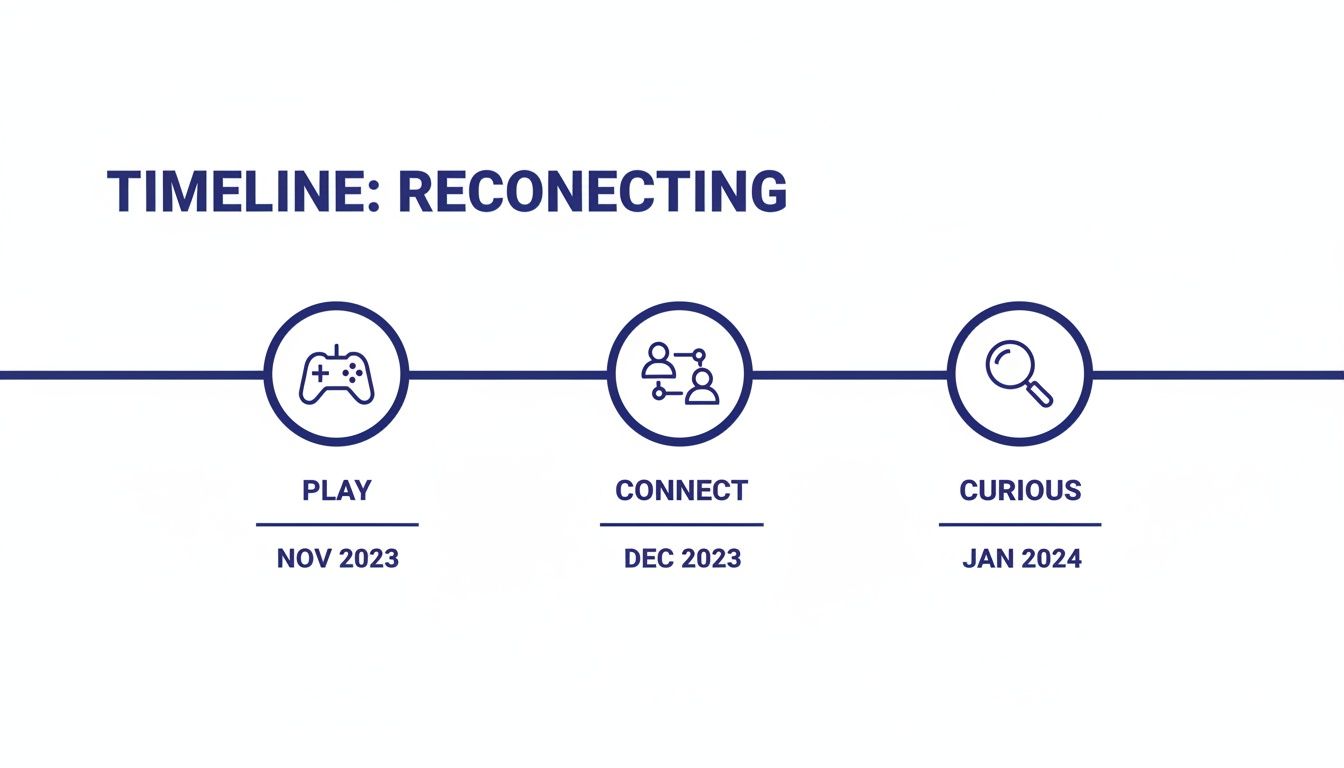
...

Tag: mental wellness

  • Why Understanding Emotional Men Is Key to Mental Health

    Why Understanding Emotional Men Is Key to Mental Health

    Affiliate Disclosure: Mind Clarity Hub is reader-supported. To keep our content evidence-based and free, we may earn a small commission when you buy through links on our site (at no extra cost to you). This helps us create more resources for reclaiming your focus. Thanks for your support.

    Why Understanding Emotional Men Matters More Than Ever

    For generations, there’s been an unspoken rule: β€œboys don’t cry.” This simple phrase captures a powerful, outdated idea that men aren’t supposed to be emotional. But this isn’t just wrongβ€”it’s actively harmful.

    Understanding emotional men isn’t about some radical reinvention of masculinity. It’s about expanding it to include the full, messy, and powerful range of human experience. Emotional awareness isn’t weakness; it’s a cornerstone of modern strength, resilience, and genuine mental health.

    When we pressure men to swallow their feelings, we create a silent crisis. Bottling up emotion doesn’t make it vanish. It just forces it underground, where it resurfaces as stress, burnout, or a short fuse.

    The Real Cost of Emotional Suppression for Emotional Men

    Constantly hiding what you feel is exhausting. It takes a huge amount of mental energy to monitor your every word and action. Neuroscience research shows this kind of chronic vigilance can lead to crippling stress. This impairs your ability to think clearly and make good decisions.

    Please note: This article is for educational purposes only. It is not intended as a substitute for professional medical or psychological advice, diagnosis, or treatment. Always seek the advice of your physician or other qualified health provider with any questions you may have regarding a medical condition.

    Emotional Men: Why Some Men Struggle to Open Up (And What It Really Means)

    Let’s look at a real-world example. Imagine a manager feeling intense anxiety about a looming deadline. Because he believes he can’t show vulnerability, that anxiety leaks out. It appears as irritation and frustration toward his team. The root causeβ€”fearβ€”is masked, but the negative fallout poisons the whole environment.

    Societal conditioning teaches many men that the only β€œacceptable” negative emotion is anger. This often masks more vulnerable feelings like sadness, fear, or shame, preventing true emotional resolution.

    This is a classic example of how unacknowledged emotions create chaos in our personal and professional lives. But building self-awareness doesn’t have to be complicated.

    Simply using a productivity journal to quickly jot down one feeling a day can start to reveal patterns. It’s not about deep analysis, at least not at first. It’s the simple act of naming what’s there. This small habit builds the foundation for greater emotional literacy.

    This article is your roadmap. We’ll explore the science behind male emotions and the societal pressures that shape them. We will also cover practical strategies you can actually use. The goal is to move beyond just understanding the problem and start building a healthier, more emotionally honest life.

    For those ready to go deeper, our book, The Emotionally Intelligent Man, offers a structured guide. It’s filled with actionable steps to turn emotional awareness into a powerful asset. The journey starts with the decision to finally look inward.

    The Alarming Statistics Behind Men’s Mental Health

    The pressure on men to be the strong, silent type isn’t just a cultural preference. It has dangerous, sometimes fatal, consequences. When we step back and look at the actual data, a chilling picture starts to form. The numbers reveal a silent public health crisis. It is fueled by the stigma that tells men to bury their struggles instead of seeking help.

    These aren’t just abstract figures on a chart. They represent fathers, brothers, sons, and partners who are suffering quietly. Often, they suffer until it’s too late. The cost is measured in lost lives, fractured families, and a staggering economic burden that affects us all.

    This infographic brings the crisis into sharp focus. It shows the massive gap between how many men are struggling and how few feel they can actually reach out.

    The data tells a clear story. While the vast majority of men are dealing with mental health challenges, a huge number of them are doing it completely alone.

    A Sobering Statistical Overview for Emotional Men

    To really understand the scale of the problem, it helps to see the numbers laid out. Each statistic below tells a piece of a larger, troubling story. It’s about the real-world impact of forcing men into emotional silence.

    The table below highlights key global and national statistics. These stats reveal the silent crisis in men’s mental health, from suicide rates to help-seeking reluctance.

    Men’s Mental Health: A Statistical Overview

    Statistic CategoryKey FindingImplication
    Suicide DisparityMen account for ~72% of suicides worldwide and nearly 80% in the US.Emotional distress in men often reaches a fatal breaking point due to a lack of early support and intervention.
    Help-Seeking Gap40% of men have never spoken to anyone about their mental health.Stigma and the fear of seeming weak create a powerful barrier to getting necessary help.
    Economic ImpactMental health issues are projected to cost global economies $16.1 trillion by 2030.Untreated conditions lead to massive losses in productivity, straining families and the economy.
    Underlying Conditions77% of men have suffered from anxiety, stress, or depression.The problem isn’t that men don’t have feelings; it’s that an overwhelming majority are struggling without support.

    These figures aren’t just data points; they’re a call to action. They confirm that encouraging emotional expression in men isn’t a β€œsoft” issue. It’s a critical public health initiative. The personal and societal costs of letting this crisis continue are simply too high to ignore.

    The Global Crisis in Plain Numbers

    Globally, the burden of suicide falls disproportionately on men. They account for a staggering 72% of all suicides worldwide. In the US, the numbers are even more stark. 39,282 men died by suicide in 2022, which is nearly 80% of the country’s total suicides for that year.

    This crisis is made worse by a deep-seated reluctance to ask for help. You can explore this trend further at the Global Mental Health Action Network. Cultural norms have taught men that their pain is a private burden to be carried alone.

    This reluctance to talk is at the very heart of the problem. Many men feel they have to solve everything themselves. This belief isolates them at the exact moment they need connection most. Moving forward means dismantling these harmful expectations. We must build a culture where asking for help is finally seen as a sign of strength, not weakness.

    For men struggling to manage their day-to-day focus amidst this stress, building new routines can help. Simple tools like a time blocking planner can create structured space. It helps with both professional responsibilities and crucial mental wellness.

    Behind the Mask: Why Men Learn to Suppress Emotions

    To get to the heart of why so many men struggle with expressing their feelings, you have to look at the powerful scripts they’re handed from a very young age. From the playground to the boardroom, society gives men a playbook for masculinity. This playbook leaves almost no room for vulnerability. This isn’t usually a conscious choice; it’s a deeply ingrained form of conditioning.

    This set of unwritten rules is often called the β€œman box.” It’s a rigid collection of expectations defining what a β€œreal man” should be: tough, stoic, and in control. Psychology shows us how these external pressures become internalized over time. They fundamentally shape a man’s entire emotional landscape.

    This conditioning teaches men to sort their feelings into neat, acceptable categories. Anger is often given a passβ€”it’s seen as active and powerful. Sadness, fear, and shame get labeled β€œunacceptable” and are pushed down almost instantly. The brain literally learns to reroute these β€œweak” feelings into the only channels that feel safe: aggression or a complete emotional shutdown.

    From Hidden Anxiety to Outward Anger

    This emotional rerouting has serious, real-world consequences. It creates a painful disconnect between what a man is truly feeling on the inside and how he acts on the outside. This leads to deep confusion for both himself and the people who care about him.

    Here’s a concrete example.

    • The Situation: A project manager, let’s call him Mark, is feeling intense anxiety about a looming deadline. He’s terrified of failing and letting his team down.
    • The Internal Feeling: Fear and vulnerability.
    • The External Expression: Instead of saying, β€œI’m worried we won’t make this,” Mark’s anxiety explodes outward as anger. He becomes short-tempered. He micromanages his team and criticizes their work with a sharp edge.

    His team just sees an angry, demanding boss. But behind that mask is a man who feels overwhelmed and scared. Because he was never given the tools to voice his true feelings, his anxiety gets converted into aggression. It’s the only emotion the β€œman box” allows. This exact pattern often fuels profound loneliness. We dive into this topic in our guide on how to deal with loneliness.

    The Danger of Turning Pain Outward

    When men are taught they can’t go inward to process pain, they often turn outward. They adopt externalizing behaviors as desperate coping mechanisms. This is a key reason why so many men suffer in silence.

    The research here is startling. A staggering 40% of men report they have never once spoken to anyone about their mental health. Embarrassment and stigma are the biggest barriers. Even though 77% have suffered from common mental health issues like anxiety or depression, many will externalize this distress. They use aggression, substance abuse, or obsessive workaholism instead of ever asking for support.

    These behaviors aren’t character flaws; they are misguided survival strategies. They help manage overwhelming internal states. A man might work 12-hour days not just out of ambition, but to avoid the quiet moments where difficult feelings rise to the surface. Another might turn to alcohol to numb the anxiety he feels he can’t talk about. Others get lost in digital distractions, endlessly scrolling to avoid looking inward. Investing in a phone lock box timer can be a practical first step to break such habits.

    How the Male Brain Responds to Stress and Emotion

    The way men react to tough situations isn’t just about how we were raised. A lot of it is hardwired into our biology. Our brains have an ancient, powerful system for dealing with threats. Understanding it helps explain why stress can feel so crushing for emotional men. It also explains why logic seems to vanish right when we need it most.

    Think of your brain as having two key players in this process. They are the amygdala and the prefrontal cortex.

    The amygdala is like your brain’s smoke detector. It’s always scanning for danger. When it senses a threatβ€”whether a physical risk or an emotional one like fear of failingβ€”it hits the alarm bell. This floods your body with stress hormones like cortisol and adrenaline. This gears you up for β€œfight or flight.”

    On the other hand, the prefrontal cortex is the brain’s CEO. It’s the calm, rational command center. It’s in charge of problem-solving, emotional control, and logical thinking. When things are good, these two parts work together perfectly. The amygdala sends a signal, and the prefrontal cortex calmly sizes up the situation and decides on a smart response.

    When Stress Hijacks the Brain of Emotional Men

    Under chronic stress, however, this clean communication system starts to break down. Behavioral research shows high levels of cortisol can weaken the connection between the prefrontal cortex and the amygdala. In short, the smoke detector gets jammed in the β€œon” position. The CEO can’t get a message through to tell it to cool down.

    This is what’s often called an amygdala hijack. The emotional, reactive part of your brain completely takes over. The logical, thinking part goes offline. This is the very reason it can feel impossible to think straight when you’re overwhelmed.

    Under intense stress, the brain prioritizes survival over logic. The prefrontal cortex, which governs rational thought and emotional control, gets temporarily sidelined by the amygdala’s powerful fight-or-flight signal.

    Hormones are also a huge part of this story. Cortisol, the main stress hormone, preps the body for immediate, decisive action. While that’s useful in short bursts, constantly high levels lead to burnout, anxiety, and a tough time concentrating. You can learn more about stress hormones and clarity in our detailed guide.

    A Real-World Scenario: Stress and Focus

    Let’s watch how this plays out in a real situation.

    • The Situation: A freelancer named David has a huge project due in 48 hours. He’s behind, and the client is getting nervous.
    • The Brain’s Response: His amygdala flags the deadline as a major threat. It floods his system with cortisol, kicking off a fight-or-flight response. His heart starts pounding, his muscles tense up, and his focus shatters.
    • The Result: Instead of working, David finds himself just staring at the screen. He is paralyzed by anxiety. His prefrontal cortexβ€”the part he desperately needs for complex problem-solvingβ€”is being drowned out by the amygdala’s constant alarm bells. He can’t focus, he can’t plan, and he definitely can’t write.

    For a deeper look into these kinds of intense emotional responses, understanding concepts like emotional dysregulation can shed more light on how the brain processes and reacts to overwhelming feelings.

    In David’s case, he could use simple, practical tools to get back in the driver’s seat. By just putting on a pair of noise-canceling headphones, he can dramatically cut down on the external chaos. This one simple action helps lower the cognitive load on his brain. It sends a signal to his nervous system that the immediate environment is safe. This allows his cortisol levels to start dropping, which in turn lets the prefrontal cortex come back online. Finally, he can start to think clearly again, break the project into smaller steps, and get his focus back.

    Practical Strategies for Emotional Health and Resilience

    Knowing where emotional suppression comes from is step one. Step two is building practical, everyday strategies that create lasting emotional health and resilience. For many emotional men, this means learning a whole new set of skills. These tools might feel foreign at first but quickly become powerful assets for managing stress and building deeper connections.

    This isn’t about forcing big, dramatic emotional displays. It’s about making small, consistent efforts to check in with yourself. It’s about communicating more clearly and finding healthy outlets for life’s pressures. These strategies are designed to be simple and actionable. They are grounded in the science of how our brains and bodies actually process emotion.

    Start with Mindful Awareness

    Before you can express an emotion, you have to know what it is. Mindfulness is simply the practice of paying attention to your internal state without judgment. It’s about noticing feelings as they show up. This could be a knot of anxiety in your stomach or a flicker of irritation.

    • The Body Scan: Take 60 seconds to mentally scan your body. Where are you holding tension? Is your jaw clenched? Are your shoulders tight? Our bodies often hold emotions before our minds have a name for them. A magnesium glycinate supplement may also support muscle relaxation and nervous system health, but always consult a doctor first.
    • Name It to Tame It: When a strong emotion hits, just try to give it a name. Thinking, β€œOkay, this is frustration,” or β€œI’m feeling overwhelmed,” actually helps activate the prefrontal cortex. Neuroscience suggests this simple act of labeling shifts you from a purely reactive state to a more observant one.

    The point isn’t to fix the feeling on the spotβ€”it’s just to acknowledge it’s there. This small habit builds the emotional muscle you need for more complex situations.

    Learn the Language of Feelings

    For a lot of men, the vocabulary for emotions is pretty limited. We tend to default to β€œfine,” β€œstressed,” or β€œangry.” Expanding that vocabulary is a game-changer for clear communication, especially with a partner. For men in relationships, learning how to improve emotional intimacy is a critical part of building deeper trust and connection.

    Here’s a real-world example of this skill in action.

    • The Situation: A man arrives home after a difficult day at work, feeling drained and irritable.
    • The Old Way: His partner asks how his day was. He grunts, β€œFine,” and retreats to watch TV, creating distance.
    • The New Way: He pauses and says, β€œActually, it was really draining. I feel pretty overwhelmed by a project right now. I just need about 15 minutes of quiet time to decompress.”

    These simple scripts aren’t about being β€œsofter.” They’re about being more precise. They give the other person clear information to work with, turning a potential conflict into a moment of connection. If building these skills is a priority, our book Connected Again offers a complete roadmap for strengthening relationships.

    Develop Healthy Coping Mechanisms

    When stress hits, it’s easy to fall back on old habits like avoidance or distraction. Building a toolkit of healthy alternatives is essential for long-term emotional resilience. You can learn more about this in our guide on how to manage chronic stress.

    Here’s a real-world example of building a new habit.

    • The Goal: A busy professional wants to manage work stress better. He decides a daily 10-minute walk could help clear his head.
    • The Tool: He gets a habit tracker journal and marks an β€˜X’ for every day he completes his walk. That simple visual cue provides a hit of satisfaction and builds momentum.
    • The Support System: To make it even easier, he invests in an under desk walking pad. Now, he can get his steps in during calls, removing the β€œno time” excuse.

    Other powerful coping strategies include:

    • Physical Activity: Exercise is a proven way to process stress hormones like cortisol and boost mood-lifting endorphins.
    • Journaling: Writing down your thoughts for just five minutes can provide immense clarity and emotional release.
    • Prioritizing Sleep: Emotional regulation starts with good rest. A sunrise alarm clock can help regulate your sleep-wake cycle, making it easier to wake up feeling refreshed and more balanced.

    Editor’s Take: What Truly Works for Emotional Men

    Let’s be honest: society changes slowly, but you can change your own life much faster. The goal isn’t perfection. It’s about finding healthier, more honest ways to live and connect as an emotional man.

    This guide is built for men who feel a gap between what’s happening on the inside and what they show the world. It’s also for the partners, friends, and family who want to support them.

    The single most powerful first step? Just acknowledging your own feelings to yourself. No grand declarations needed. Try using a simple productivity journal to write down one emotion a day. That small act, done consistently, builds a foundation of self-awareness without any pressure.

    It’s also important to be clear about what this advice is not. These strategies are for building emotional fitness, not for treating clinical conditions like anxiety or depression. Think of this as educational content, like a personal trainer for your inner world.

    Important: If you’re dealing with severe symptoms of depression, anxiety, or are having suicidal thoughts, please reach out to a medical or mental health professional immediately. This article is educational and not a substitute for professional care.

    For those ready to build on that foundation of self-awareness, exploring the ideas in The Emotionally Intelligent Man book offers a structured, actionable path forward.

    Key Takeaways for Emotional Men

    Here’s what to keep in mind from our deep dive into the world of emotional men. We move past tired stereotypes and into what the science actually says.

    • Men’s Mental Health Isn’t a Niche Issueβ€”It’s a Crisis. The numbers don’t lie. Men face tragically higher rates of suicide. They are far less likely to ask for help, thanks to a powerful social script that tells them not to. This turns private pain into a public health emergency.

    • Emotional Walls Are Built, Not Born. From a young age, boys learn the rules of the β€œman box”—a rigid code that punishes vulnerability and rewards stoicism. This conditioning doesn’t erase feelings. It just forces emotions like sadness or fear to come out sideways, often as anger or irritation.

    • Your Brain on Stress Is a Real Thing. This isn’t just in your head. Chronic stress can hijack the brain’s wiring. It puts the reactive amygdala in charge and shuts down the thoughtful prefrontal cortex. That’s why β€œjust thinking logically” doesn’t work when you’re overwhelmed. Your biology is running a different program.

    • Resilience Is a Skill You Can Practice. Getting better at handling your emotions isn’t some abstract goal. It’s built with concrete, repeatable actions. Learn to put a name to what you’re feeling. Use simple communication scripts to ask for what you need. And find healthy ways to cope instead of bottling it all up. Small, consistent efforts are what build a truly strong foundation.


    Disclaimer: The ideas and strategies in this guide are for educational purposes only and not a substitute for professional medical or psychological advice. If you are struggling, please consult a qualified healthcare provider. Some links in this article are affiliate links, meaning we may earn a small commission at no extra cost to you if you make a purchase.

    Answering Your Questions About Emotional Men

    Let’s tackle some of the most common questions and myths that pop up around this topic. These are the conversations that often happen behind the scenes. Getting clear, honest answers is the first step toward real understanding.

    1. Isn’t Being Emotional a Sign of Weakness in Men?

    This is probably the biggest myth out there. It’s rooted in seriously outdated stereotypes. The truth is, emotional awareness is a massive sign of strength and high emotional intelligence. It’s what allows you to make better decisions under pressure. It helps build rock-solid relationships and bounce back from setbacks. It’s actually the suppression of emotion that leads to weakness. This can manifest as chronic stress, burnout, and poor mental health.

    2. What’s the First Step I Can Take to Become More Emotionally Open?

    Start with a simple, private act of self-acknowledgment. Don’t worry about talking to anyone yet. Just start paying attention to how you feel throughout the day, without judging it. You can use a basic notebook or a habit tracker journal to jot down one or two feelings you noticed. The point isn’t to fix anything; it’s just to notice. This small habit builds the foundation for every other emotional skill you’ll develop.

    3. How Can I Support a Male Friend or Partner Who Seems to Be Struggling?

    The most important thing you can do is create a safe, judgment-free space for him. Instead of pushing with a phrase like, β€œYou should talk about it,” try a gentle, open-ended question. Something like, β€œIt seems like you’ve got a lot on your plate lately. How are you holding up?” works well. Then, just listen. Resist the urge to jump in and solve the problem. Sometimes, having a trusted person simply listen is the most powerful support you can offer.

    4. Are There Specific Physical Symptoms Tied to Suppressed Emotions in Men?

    Yes, absolutely. Unexpressed emotions don’t just disappear; they often show up in the body. Common physical signs include chronic headaches, digestive issues, and persistent muscle tension. You might also notice fatigue and trouble sleeping. Psychology research shows that irritability or anger are often β€œcover” emotions. They mask deeper feelings like sadness or anxiety.

    5. Can Being More Emotional Actually Help My Career?

    Without a doubt. In the modern workplace, emotional intelligence is one of the most valuable skills you can have. Leaders who can understand and manage their own emotions are far more effective. They are better communicators, negotiators, and mentors. Emotional awareness helps you sidestep burnout and sharpen your focus with tools like a pomodoro timer. It also helps you build collaborative teams. All of those are critical for long-term career success.

    Understanding the Loneliness Epidemic in Emotional Men

    6. Why Is Loneliness Such a Big Issue for Emotional Men?

    The statistics are pretty stark: research shows that 15% of men report having no close friends at all. So many of us were raised with social rules that discourage deep, emotionally honest friendships. The result is often profound isolation. This isn’t just sad; it’s a serious health risk. This loneliness epidemic is strongly linked to everything from depression to high blood pressure. You can discover more insights about men’s mental health and loneliness in this eye-opening report.

    7. What’s the Difference Between Feeling Sad and Clinical Depression?

    This is a crucial distinction. Sadness is a normal, healthy human emotion. It usually comes and goes in response to a specific event, like a loss or disappointment. Clinical depression, on the other hand, is a persistent medical condition. It’s marked by a constant low mood and a loss of interest in things you used to enjoy. These symptoms last for at least two weeks. If you feel persistently hopeless, it’s vital to talk to a healthcare professional. This article is educational and not a substitute for medical advice.

    8. How Does Poor Sleep Wreck a Man’s Emotions?

    Sleep is the foundation of emotional regulation. When you don’t get enough quality sleep, it hampers your prefrontal cortex. That’s the part of your brain that acts like a CEO for your emotions. It loses its ability to manage the amygdala, your brain’s alarm system. The result? You’re more prone to irritability, mood swings, and have a much harder time managing everyday stress. Prioritizing good sleep hygiene, maybe with simple tools like a sleep mask blackout or a white noise machine, is one of the most powerful things you can do for your emotional stability. For more direct techniques, you might find our guide on how to calm down helpful when you’re feeling overwhelmed.

    9. Are There Any Apps or Tools That Can Help with This?

    Definitely. Many mindfulness and meditation apps have guided exercises for emotional check-ins. These can be a great starting point. Journaling apps are also incredibly effective for tracking patterns over time. For those who want to build better routines, a physical tool like a visual timer for desk can be a game-changer. It helps you intentionally schedule time for reflection, exercise, or connecting with friends. It makes mental wellness a concrete part of your day instead of an afterthought.

    10. Where Can I Find More Resources on This Topic?

    If you’re ready for a deeper dive, we’ve designed our resources to be practical roadmaps. For building emotional intelligence from the ground up, we highly recommend our book, The Emotionally Intelligent Man. And if you’re battling stress in a high-pressure environment, our Burnout Breakthrough guide offers science-backed systems for reclaiming your energy. If you are looking to take control of your attention, consider our book Attention Unleashed.


    At Mind Clarity Hub, we’re dedicated to providing science-backed, practical guides to help you regain control of your focus and mental well-being. Explore our full library of books designed for busy professionals, entrepreneurs, and anyone looking to build a healthier relationship with their mind.


    Browse the Full Mind Clarity Hub Library

  • The Best Books For Self Help That Lead To Real Change

    The Best Books For Self Help That Lead To Real Change

    Affiliate Disclosure: This article may contain affiliate links. If you make a purchase through one of these links, we may earn a small commission at no extra cost to you. This helps support our work.

    Why Most Self-Help Books Don’t Work (and What to Look For Instead)

    Let’s be honest: the self-help aisle can feel like a trap. It’s a sea of bright covers all promising a total life overhaul. Yet, so many deliver little more than a short-lived buzz of motivation. That feeling fades in a week, and you’re right back where you started.

    If this cycle sounds familiar, it’s not a personal failure. The problem is often baked into the book itself. Many popular titles are packed with vague platitudes and feel-good stories. However, they are missing the one thing that actually creates change: a structured, actionable system. They tell you what to do but rarely show you how to fit it into the messy reality of your actual life.

    Disclaimer: This article is for educational purposes only and is not a substitute for professional medical or psychological advice, diagnosis, or treatment. If you are experiencing significant challenges with anxiety, depression, burnout, or sleep, please consult a qualified healthcare provider.

    The Science of Real Change: What to Look for in Books for Self Help

    Lasting personal growth isn’t about a single lightning bolt of inspiration. It’s a skill you build through consistent, deliberate practice. The most powerful books for self help are grounded in behavioral psychology and neuroscience. They treat things like habit formation, focus, and mood as trainable skills.

    These guides give you clear, step-by-step frameworks. These steps help you rewire your brain’s neural pathways through small, repeated actions. For example, consistently using a habit tracker journal provides visual feedback that reinforces new behaviors, strengthening the neural circuits associated with that habit.

    Imagine a freelancer teetering on the edge of burnout. A book full of generic advice like β€œjust be more positive” isn’t going to cut it. What they really need is a concrete recovery plan. For instance, the one in Burnout Interrupted lays out specific, science-backed steps to restore energy and build work habits that actually last. This practical approach is far more effective.

    Here’s a look at a reader surrounded by self-help booksβ€”a common sight, given just how massive the industry has become.

    This image reflects a huge global hunger for real solutions. The self-improvement market swelled to $59.22 billion in 2024. It is projected to hit nearly $91 billion by 2029. That’s a staggering number of people looking for answers. You can explore more self-help industry statistics here.

    From Passive Reading to Active Application

    The real key is to stop being a passive consumer of information. You must become an active participant in your own growth. This means choosing books that come with worksheets, checklists, and clear exercises. These are designed to get you doing, not just reading.

    It also means engaging with the material differently. Learning about active reading techniques can transform your results. Instead of just highlighting passages, you’ll learn to question, summarize, and immediately apply what you’re learning. This process turns abstract ideas into tangible improvements in your life.

    How To Choose The Right Books For Self Help

    Finding the right self-help book is a bit like getting a prescription. The most popular pill on the market won’t do a thing if it isn’t designed for what you’re trying to fix. Grabbing a bestseller is easy. But if it doesn’t speak directly to the challenge you’re facing right now, it’s just another book on the shelf.

    The first step, always, is to get crystal clear on what you want to change. Are you trying to sharpen your focus at work? Get a handle on your emotional reactions? Or maybe build healthier habits that actually stick? Each goal points to a totally different aisle in the self-help library.

    For instance, a student drowning in digital distractions doesn’t need a book of vague motivational quotes. They need a targeted manual like Attention Unleashed, which offers specific, neuroscience-based exercises for retraining a scattered brain. That’s the difference between temporary inspiration and a real toolkit.

    A Quick Checklist For Choosing Your Next Book

    Think of a book as an investment of your time and attention. These are your most valuable resources. Before you commit, it’s worth running any potential title through a quick, no-nonsense filter.

    • Is it backed by science? Look for nods to psychology, neuroscience, or behavioral research. A good author won’t just share personal stories. They’ll explain the β€œwhy” behind their methods.
    • Is the author credible? Do they have a background in a relevant field? A PhD isn’t a must-have. However, their expertise should be grounded in more than just good vibes.
    • Does it give you things to do? The best books for self help are workshops in a binder. They come with concrete exercises, worksheets, or clear action steps. Application is what turns a good idea into a lasting change.

    To make it even clearer, this decision tree can help you visualize the process.

    As the flowchart shows, starting with a practical plan in mind leads you to a much more effective book. This is better than just searching for a dose of motivation. For more tips on navigating the endless options, check out our guide to finding the best Amazon books.

    To help connect the dots, this table maps common personal development goals to the right kind of book. It also offers a specific example from our library.

    Matching Your Goal To The Right Kind Of Book

    Your Goal

    Book Category To Look For

    Mind Clarity Hub Example

    β€œI can’t focus on one thing for more than 5 minutes.”Attention Management, Digital WellnessAttention Unleashed
    β€œMy mind feels cluttered and overwhelmed all day.”Cognitive Load, Mental Clarity, BurnoutThe Power of Clarity
    β€œI feel stuck and procrastinate on important tasks.”Executive Function, Habit FormationExecutive Function Repair
    β€œMy phone and notifications run my life.”Dopamine Detox, Digital MinimalismDigital Clarity

    Each of these examples is designed to be a practical tool, not just a collection of ideas. They give you a clear path from understanding your problem to actively solving it.

    Don’t Overlook Self-Published Gems

    In fast-moving fields like digital wellness or productivity, traditional publishing can be too slow. This is where self-published books really shine. The market is hugeβ€”it hit $1.85 billion in 2024 and is projected to more than triple by 2033. With over 2.6 million books self-published in 2023 alone, there’s a flood of timely, niche expertise available.

    The downside? It’s a lot to sort through. That’s why curated libraries like Mind Clarity Hub exist. We do the vetting for you, finding the practical, well-researched, and actionable titles. This way, you don’t have to wade through the noise to find a book that will actually make a difference.

    Your Action Plan For Turning Reading Into Results

    Reading one of the best books for self help without actually doing anything with it is like memorizing a recipe but never cooking the meal. You feel like you know something new, but your life doesn’t change. The real magic happens when you build a bridge between the ideas on the page and your actual daily routine.

    That bridge is built with active reading. This isn’t just about highlighting passages. It’s a hands-on process, grounded in cognitive science, that hardwires knowledge into your brain for later use. Instead of passively absorbing words, you question the text, summarize big ideas, and immediately ask, β€œHow can I use this today?” This small shift from passive consumption to active engagement is what makes insights stick.

    You’re essentially turning reading from a hobby into a personal project. It’s about creating a system where every book becomes a toolkit for real, tangible growth.

    The setup you see here is all about focus. It’s designed to quiet the noise so you can turn what you’ve read into something you do.

    Create Your Implementation Toolkit

    To make this process feel less like a chore, you need the right tools. A simple notebook is a great start. However, a few specialized journals can guide your efforts and make applying new ideas almost automatic.

    • Productivity Journal: At the end of each chapter, use a productivity journal to boil everything down. Jot down the single most important idea and one tiny action you can take in the next 24 hours to test it out.
    • Habit Tracker Journal: Once you pinpoint a new behavior you want to build, a habit tracker journal gives you that satisfying visual feedback. Seriously, the simple act of checking off a box gives your brain a little dopamine hit, reinforcing the new habit.
    • Time Blocking Planner: Vague goals like β€œI’ll work on this later” are where good intentions go to die. A time blocking planner forces you to carve out a specific time slot, treating your self-improvement with the same seriousness as a work meeting.

    Consider this scenario: an entrepreneur reading The 6-Figure Creator wouldn’t just read about AI. They’d pull out their planner and block 90 minutes on Tuesday morning to actually implement one of the AI workflows. That’s how a concept becomes a real task.

    Design a Focused Reading Environment for Self Help

    Your surroundings have a massive impact on your ability to concentrate and apply what you’re learning. The goal is to lower distractions and cognitive load. This way, your brain can fully lock in on the material.

    A few simple tools can make a world of difference.

    Setting a pomodoro timer for 25-minute sprints creates short, intense bursts of focus. This is far more effective than trying to power through for hours while your mind wanders. Pair that with noise canceling headphones, and you send a clear signal to your brain: it’s time to concentrate. This focused state is crucial for the deep processing that true learning requires.

    This active, tool-based approach is why self-help resources are so effective for so many people. In fact, 62% of Americans believe these books genuinely improve well-being. Sales of journals also shot up 30% in 2022 as more people looked for concrete ways to put these ideas into practice.

    To organize your efforts, try mapping out your goals and the specific steps you’ll take using a structured personal development plan template.

    The real key is to start small, celebrate the tiny wins, and use these simple behavioral tools to make new habits stick. For a deeper dive into making information last, check out our guide on how to retain what you read.

    Building Your Personal Growth Library

    Think of building a self-help library less like collecting books and more like curating a personalized toolkit for modern life. A truly great personal growth library isn’t about having hundreds of titles. It’s about having the right titles for your specific goals, organized so you can grab exactly what you need.

    This is the entire philosophy behind the Mind Clarity Hub collection. We’ve designed a focused library of books for self help that provide practical, actionable systems for growth. Instead of offering vague inspiration, each guide is a clear roadmap for a specific area of your life. An ergonomic keyboard might even make the act of planning your reading more comfortable.

    The organized shelf above shows how you can structure your resources for easy access. It turns a simple collection into a true personal growth command center.

    Finding The Right Book For Your Needs

    To make it easy to find what you’re looking for, our books are organized into clear categories. They address the most common friction points of modern life.

    • Focus & Productivity: This collection is for anyone who feels their attention is constantly under attack. Books like Focus Recharged offer neuroscience-backed systems for deep work. They help you get more done in less time without feeling drained.
    • Digital Wellness: If you feel like your phone runs your life, this section is for you. Guides such as Reclaiming Silence and Break the Scroll provide concrete strategies to reduce screen time and rebuild a healthier relationship with technology.
    • Emotional Well-being: These books focus on the internal skills needed to navigate life’s ups and downs. Titles like The Emotionally Intelligent Man provide frameworks for understanding and managing your emotional responses.

    Our goal is to create a complete ecosystem for sustainable personal development. Each book builds on the others to support your journey. If you’re interested in building a consistent reading habit, our guide on how to read more books offers practical tips to get you started.

    Pairing Books With The Right Tools

    Reading is just the first step. Application is what creates real change. We believe in pairing the knowledge from our books with simple, effective tools. This approach helps you put the ideas into practice, turning abstract concepts into tangible daily habits.

    For example, while reading Digital Clarity, you might use a phone lock box timer to physically create space from your device. This small behavioral nudge makes it dramatically easier to follow the book’s advice. It helps break the cycle of constant notifications.

    Similarly, as you work through the deep work techniques in Focus Recharged, setting up your workspace with a laptop stand for desk can improve your posture and reduce physical discomfort. This lets you stay focused for longer periods, directly supporting the book’s core principles. It’s this combination of knowledge and practical tools that forms the foundation of a truly effective personal growth system.

    Editor’s Take: What Really Works In Self-Help (and What Doesn’t)

    Let’s cut right to it. The most effective books for self help don’t sell you on overnight miracles or life-altering epiphanies. Instead, they offer something far more valuable: specific, science-backed, and actionable steps designed for gradual, sustainable change. Real growth doesn’t come from a single jolt of motivation after a powerful chapter. It’s built from small, repeated actions that become part of your daily rhythm.

    This kind of work isn’t for everyone. It’s for people who are ready to roll up their sleeves. It demands that you read actively, experiment with the concepts, and consistently apply the strategies. It’s about treating personal growth less like a lightning strike and more like a skill you practice.

    This is what it looks like in the real worldβ€”actively wrestling with the ideas on the page instead of just letting the words wash over you.

    A person highlighting a key passage in one of their books for self help.

    Simple habits like highlighting and taking notes are the bridge between passively consuming information and actively applying it to your life.

    It’s also crucial to be clear about what these books are for. Think of them as powerful educational tools for managing everyday frictionβ€”things like procrastination, distraction, or mild stress. They can help you understand your own patterns and build better routines.

    Important Caveat: Self-help books are not a substitute for professional medical or psychological care. If you are struggling with conditions like clinical anxiety, depression, or severe burnout, please consult a qualified healthcare professional. These books are for educational purposes only and should not be used for diagnosis or treatment.

    Key Takeaways: Your Roadmap from Reading to Real Change

    Let’s boil it all down. This is your cheat sheet for turning the ideas you find in the best books for self help into real, lasting change.

    • Prioritize Action Over Inspiration: Lasting growth isn’t about a single lightning bolt of motivation. It’s a skill you build, one small, consistent action at a time. Choose books grounded in behavioral science, like The Power of Clarity, that offer a clear system.
    • Use Tools to Bridge the Gap: Shift from passively reading to actively applying. Use tools like a productivity journal to pull out key ideas and a time blocking planner to schedule implementation. Creating a focused environment with noise canceling headphones also makes a huge difference.
    • Focus on One Idea at a Time: Don’t try to change everything at once. Pick one concept, create a simple plan, and stick with it. This methodical approach is what turns knowledge into actual behavior. For a structured guide on work-life balance, a book like Burnout Breakthrough is a great place to start.
    • This Is Education, Not Treatment: Remember that self-help books are educational guides. They are not a substitute for professional medical or psychological care for conditions like anxiety, ADHD, or depression.

    Your Actionable Self Help Checklist

    Think of this table as your go-to summary for turning what you read into what you do. It connects each practical step with the science behind why it works.

    Action Step

    The Science Behind It

    Recommended Tool

    Define a clear goal before choosing a book.Primes the brain’s reticular activating system (RAS) to notice relevant information.Productivity journal
    Read actively by taking notes and summarizing.Engages multiple neural pathways, improving memory encoding and retrieval.Highlighting, note-taking
    Create a simple plan for just one idea.Translates abstract concepts into concrete behaviors, fostering habit formation.Time blocking planner
    Create a focused reading environment.Reduces cognitive load and minimizes distractions, allowing for deeper processing.Noise canceling headphones

    Keep this checklist handy. It’s a simple framework. However, it’s the difference between a book that collects dust and one that genuinely changes how you live and work.

    Final Disclaimer

    The information in this article is for educational purposes only and is not a substitute for professional medical or psychological advice, diagnosis, or treatment. Always seek the advice of a qualified health provider with any questions you may have regarding a medical condition. This post may also contain affiliate links, which means we may earn a small commission if you make a purchase at no additional cost to you.

    Frequently Asked Questions About Self-Help Books

    Diving into the world of self-improvement can feel like navigating a massive library with no map. It’s normal to have questions. This section is designed to give you honest, straightforward answers to help you not only choose the right books for self help but actually turn their ideas into real, lasting change.

    1. How do I know if a self-help book is based on real science?

    Look for authors who ground their advice in established principles from psychology, neuroscience, or behavioral science. They’ll often cite sources or explain the research behind their methods. A credible author avoids making wild promises of miraculous results. For example, a book on sleep might recommend a magnesium glycinate supplement and explain the biochemical reasons why it can aid relaxation.

    2. Can reading books for self help replace therapy?

    In a word, no. Self-help books are powerful educational tools for building new skills and understanding your own patterns. However, they are not a substitute for professional diagnosis or treatment from a licensed therapist, especially for clinical conditions like severe anxiety or depression. A book can be a fantastic supplement to therapy, but it can’t replace the guidance of a trained professional.

    3. I’ve read self-help books before and nothing changed. What am I doing wrong?

    This is incredibly common. The problem usually comes down to passive reading rather than active application. Instead of trying to implement an entire book at once, pick one single idea that resonates with you. Create a small, manageable plan to try it for just one week. Using a habit tracker journal can make a huge difference here, helping you stay consistent.

    4. How many self-help books should I read at a time?

    For the best results, stick to just one book. This lets you fully absorb its core ideas and dedicate your mental energy to actually applying them. Trying to juggle multiple books often leads to information overload, making you less likely to take any action at all. It’s about depth, not volume.

    5. What’s the difference between a motivation book and a habit-formation book?

    Motivational books are the spark that gets you started, shifting your mindset. Habit-formation books are the engine that keeps you going, providing structured, science-based systems for lasting behavioral change. For long-term results, habit-focused books are often more practical.

    Where to Find the Best Books for Self Help

    6. Where can I find the best books for self help?

    Finding the best books for self help means looking beyond the bestseller list and toward curated sources that prioritize science-backed, actionable advice. While major retailers offer a huge selection, specialized platforms like Mind Clarity Hub pre-vet books to ensure they provide practical strategies for modern challenges like focus, burnout, and digital wellness.

    7. Are audiobooks as effective as physical books?

    Yes, they absolutely can be if you practice active listening. Just as you might highlight a passage in a physical book, you can pause an audiobook to take notes or reflect on a key idea. Your interaction with the content is what truly matters, not the format.

    8. How can I possibly find time to read with my busy schedule?

    Start smaller than you think is necessary. Aim for just 10-15 minutes a day. Using a visual timer for desk for a short, focused session can make this feel incredibly manageable. Audiobooks also help you integrate reading into your commute or workouts. Remember, consistency over a long period is far more powerful than cramming.

    9. Why do so many self-help books feel repetitive?

    You’ll notice overlap because many books in a subgenre (like productivity) are built on the same core psychological principles. The real value is in finding an author whose approach and examples click with your personal learning style. You’re looking for the right messenger for the message.

    10. What if I disagree with the advice in a self-help book?

    That’s perfectly fineβ€”in fact, it’s a sign that you’re thinking critically. Treat self-help books like a buffet, not a strict prescription. Take the ideas that resonate with you and feel free to leave the rest behind. For instance, while one book might suggest an elaborate morning routine, you might find that simply using an analog alarm clock to wake up without your phone makes the biggest difference for you.


    Ready to move from just reading to actually doing? Mind Clarity Hub offers a curated library of science-backed, actionable books designed to help you build focus, overcome burnout, and thrive in a distracted world.

    Explore the Mind Clarity Hub Library Now

  • How to Calm Down Fast Using Science-Backed Methods

    How to Calm Down Fast Using Science-Backed Methods

    When you feel overwhelmed and your heart starts racing, it’s not just in your head. Your body has flipped a switch into its sympathetic nervous systemβ€”the classic β€œfight or flight” mode designed for survival. From a neuroscience perspective, this response, originating in a part of the brain called the amygdala, floods your system with stress hormones like cortisol and adrenaline. Consequently, your breathing gets short and shallow.

    To calm down fast, you need to intentionally activate the opposing system: the parasympathetic nervous system, or β€œrest and digest” mode. This is the body’s natural brake pedal. Activating it signals to your brain that the danger has passed. This allows your heart rate to slow, your mood to stabilize, and your muscles to relax.

    The best part? You can learn to hit that brake pedal on command with simple habits.

    Affiliate Disclosure: At Mind Clarity Hub, we believe in transparency. This article may contain affiliate links, which means we may earn a small commission if you make a purchase through them, at no extra cost to you. These commissions help support our work in providing evidence-based content.

    These techniques aren’t about complicated, time-consuming rituals. They’re quick, physiological resets you can do anywhere. For instance, in a quiet hallway before a big meeting. Or at your desk when facing a deadline. Even in a crowded room when you feel a wave of anxiety rising.

    How to calm down: an Asian businesswoman in an office hallway with her eyes closed, practicing deep breathing and mindfulness to reset her stress.

    This article is for educational purposes only. The information provided is not a substitute for professional medical or psychological advice, diagnosis, or treatment. If you are struggling with anxiety, depression, burnout, ADHD, sleep problems or other mental health concerns, please consult a qualified healthcare provider.

    Quick Ways to Calm Down When Stressed

    When you need immediate relief, you can turn to science-backed techniques that work with your body’s biology. These methods are designed to interrupt the stress response quickly. Therefore, they help you regain a sense of control.

    The Physiological Sigh: A 5-Second Reset to Calm Down

    One of the fastest ways to engage your β€œrest and digest” response is with a technique called the physiological sigh. Popularized by Stanford neuroscientist Dr. Andrew Huberman, this isn’t just deep breathing. It’s a specific pattern your body naturally uses to offload carbon dioxide and calm the nervous system. Behavioral research shows this sighing pattern is one of the quickest ways to regulate your autonomic nervous system.

    It’s remarkably simple but incredibly powerful. Here’s how you do it:

    • Take a deep inhale through your nose.
    • Before you exhale, take another short, sharp inhale to fully inflate your lungs.
    • Then, perform a long, slow exhale through your mouth.

    Real-World Scenario: Imagine you’re a project manager, ten minutes away from a high-stakes client presentation. Your heart is pounding, and your thoughts are racing. You step into a quiet hallway, close your eyes, and do the physiological sigh just twice. You can physically feel your heart rate slow, your mind clears, and you walk into the meeting feeling more centered and in control.

    Tapping into Auditory Calm to Find Peace

    Sound can also be a powerful tool for shifting your mental state. Specific frequencies and rhythms can help guide your brainwaves from an alert, anxious state (beta waves) to a more relaxed one (alpha waves). This isn’t just about listening to calming music; it involves intentional auditory focus, a concept grounded in psychology.

    For instance, you might try a guided sound ritual. These are short, structured audio experiences designed to capture your attention. They gently guide you toward a calmer state. If you’re curious about how sound can work for you, we have a guide on a 3-minute sound ritual designed for a quick mental reset.

    Exploring proven effective relaxation techniques for stress relief can also equip you with more valuable tools for your mental toolkit.

    Mindful Sensory Engagement for Immediate Calm

    Finally, you can instantly pull yourself out of an anxious thought loop by redirecting your attention to a single physical sensation. This technique grounds you in the present moment by focusing on what you can physically feel. It shifts your focus away from the abstract worries swirling in your mind. It’s a simple form of mindfulness that requires zero prior experience, improving your mood and behavior.
    Real-World Scenario: A freelance writer is staring at a blank page, paralyzed by deadline anxiety. They feel the familiar tightness in their chest. Instead of spiraling, they pick up their lukewarm mug of tea. They focus completely on the sensation: the smoothness of the ceramic, the gentle warmth against their palms, the weight of the mug. Within a minute, the mental chatter quiets, and they can return to their work with a clearer head.

    These immediate techniques are your first line of defense against acute stress. Below is a quick summary to help you remember which tool to use when you need it most.

    Quick Calming Techniques At a Glance

    Here’s a snapshot of three fast-acting techniques to calm your mind and body. This chart explains when to use them and the science behind why they work.

    TechniqueBest ForHow It Works (In Simple Terms)
    The Physiological SighSudden spikes of intense stress or panicThe double inhale fully inflates tiny air sacs in your lungs. This allows your body to offload maximum carbon dioxide on the exhale. This directly slows your heart rate.
    Auditory FocusWhen your mind is racing with repetitive, anxious thoughtsIntentional listening gives your brain a single, external stimulus to focus on. It interrupts the internal chatter and guides your brainwaves toward a calmer frequency.
    Mindful Sensory EngagementFeeling disconnected, overwhelmed, or stuck in β€œwhat-if” thinkingIt yanks your attention out of the abstract future (anxiety) and into the concrete present (physical sensation). This grounds your nervous system in the here and now.

    Each of these methods gives you a direct physiological lever to pull, helping your body shift out of β€œfight or flight” and back into a calmer state. Rather than being simple mental tricks, they work with your nervous system’s biology to restore steadiness, control, and clear-headed calm.

    How to Calm Down by Grounding Yourself

    When your thoughts start to spiralβ€”that familiar storm of β€œwhat-ifs” and worriesβ€”it can feel like you’re losing your grip. That mental cascade is your brain’s prefrontal cortex working overtime. It analyzes threats that aren’t actually there. The key to calming down in these moments isn’t to fight the thoughts. Instead, interrupt the loop by deliberately shifting your focus outward.

    This is exactly where grounding techniques come in. These are simple, practical exercises designed to pull your attention out of the abstract world of worry. They anchor your focus firmly in the present moment. By engaging your senses, you give your brain a new, tangible task. This effectively disrupts the anxiety cycle before it gains momentum.

    How to calm down: a person working on a laptop at a sunny desk while gently touching a small potted plant for a calming moment.

    Use the 5-4-3-2-1 Method to Regain Control and Calm Down

    One of the most effective and widely used grounding tools is the 5-4-3-2-1 technique. The beauty of it is that it’s discreet. It requires nothing but your own awareness. Moreover, you can do it anywhereβ€”from a busy open-plan office to your own living room. The goal is to systematically engage each of your senses to reconnect with where you are, right now.

    Here’s the simple breakdown:

    • Acknowledge 5 things you can see. Look around and mentally name five objects. Don’t just glance. Really notice details, like the color of your pen or a scuff mark on the wall.
    • Acknowledge 4 things you can feel. Bring your awareness to physical sensations. It could be the texture of your desk under your fingertips. Or the solid feeling of your feet on the floor. Or the fabric of your shirt.
    • Acknowledge 3 things you can hear. Listen intently for three distinct sounds. Maybe it’s the hum of your computer. Or the sound of distant traffic. Or your own quiet breathing.
    • Acknowledge 2 things you can smell. Try to identify two scents in your environment. It might be the faint aroma of coffee from the kitchen. Or the smell of a nearby plant.
    • Acknowledge 1 thing you can taste. Focus on one taste. This could be the lingering flavor of your last sip of water or just the neutral taste inside your mouth.

    Real-World Scenario: A student is studying for a final exam and feels completely overwhelmed. Their heart is racing. They pause, look away from their textbook, and begin. They see their laptop, a framed photo, a green plant, a water bottle, and a notebook. They feel the cool metal of their desk, the soft fabric of their jeans, their feet on the floor, and the pen in their hand. This simple process breaks the spell of anxiety, allowing them to take a deep breath and refocus.

    Why Redirecting Your Focus Helps You Calm Down

    This technique is a practical application of a psychological principle known as attentional deployment. This basically means we can regulate our emotions by consciously choosing where we point our focus. When you’re anxious, your attention is typically turned inward. It becomes fixated on your thoughts and feelings. Grounding flips that script.

    By forcing your brain to process external sensory informationβ€”sight, touch, soundβ€”you starve the anxiety loop. It loses the attention it needs to thrive. It’s like changing the channel in your brain from an internal horror movie to a calm, factual documentary. This is why having a few go-to grounding techniques for anxiety is so valuable.

    This skill of learning how to be present amplifies the effectiveness of these methods. Being anchored in the now has been shown to reduce activity in the amygdala, the brain’s fear center. In high-pressure work environments, this is essential. In fact, a recent PWC workforce report found that many employees experience significant work-related stress, highlighting the need for on-the-spot calming strategies.

    How to Calm Down by Releasing Physical Tension

    Ever notice how your body keeps score? When your mind is racing, your muscles are often quietly tightening right along with it. Your shoulders creep up toward your ears. Your jaw clenches. You might even find your hands are balled into fists without you realizing it.

    This isn’t just a side effect of stress; it’s part of a feedback loop. From a neuroscience perspective, that physical tension sends a constant signal back to your brain: β€œWe’re still under threat.” Unsurprisingly, this keeps your mind on high alert. This makes it almost impossible to truly calm your mood and behavior.

    To break the cycle, you have to interrupt that signal. One of the most direct ways to do this is with a technique called Progressive Muscle Relaxation (PMR). It’s a simple but profound practice of systematically tensing, and then releasing, different muscle groups. This behavioral research-backed method helps you calm down physically and mentally.

    How Releasing Your Muscles Calms Your Brain

    When you intentionally relax your muscles, you’re doing more than just soothing an ache. You’re sending a direct message to your nervous system. This act of release signals to the amygdalaβ€”your brain’s threat-detection centerβ€”that the danger has passed.

    In response, your body begins to shift out of β€œfight or flight” and into the β€œrest and digest” state. Your heart rate slows, your breathing deepens, and your brain gets the all-clear. This mind-body conversation is a fundamental part of how we regulate stress.

    A simple script can walk you through it. You can do this lying down or sitting comfortably in a chair.

    A visual showing how to calm down by focusing on physical relaxation.

    H4: The Steps of Progressive Muscle Relaxation

    • Start with your feet and toes. Squeeze the muscles here, curling your toes tightly for about five seconds. Really notice the feeling of tension. Then, release completely. For ten seconds, feel the tension just melt away.
    • Move up to your lower legs. Tense your calves, holding that contraction and feeling the tightness. Then, let it all go and notice the difference.
    • Continue to your thighs. Squeeze the large muscles in your upper legs. Hold, and then release.
    • Work your way up. Systematically repeat this tense-and-release pattern for your stomach, chest, back, hands, arms, shoulders, neck, and face.

    Real-World Scenario: A project manager has spent eight hours staring at a spreadsheet. Their neck is stiff, their eyes are strained, and their mind is buzzing with anxiety. Lying in bed, they just can’t seem to shut off their brain. They decide to try PMR. Starting with their feet, they work their way up, tensing and releasing each muscle group. By the time they get to their jaw and shouldersβ€”the places they hold the most tensionβ€”they feel a wave of relief. The physical release quiets the mental chatter, and they finally drift off to sleep.

    You can amplify the effects by pairing PMR with other physical habits. For example, adding some early morning exercise can help regulate stress hormones throughout the day. This makes it much easier to unwind in the evening. Ultimately, learning to release physical tension is one of the most direct, tangible ways to calm your mind.

    How to Calm Down by Building Long-Term Resilience

    Quick fixes are great for getting through a sudden spike of anxiety. However, learning how to calm down for good is a different game entirely. Lasting calm comes from building sustainable habits that raise your baseline resilience. This isn’t about willpower. It’s about leveraging neuroplasticityβ€”your brain’s incredible ability to rewire itself through small, consistent actions.

    True, long-term resilience doesn’t happen by accident. It’s the result of intentionally creating routines that support your nervous system. By weaving small, daily practices into your life, you gradually build a personal β€˜Calm Toolkit’. This toolkit starts to work automatically, helping you handle challenges without getting knocked off balance.

    Create Your Personal Calm Toolkit for Daily Peace

    Your toolkit doesn’t need to be complicated. In fact, it’s better if it’s not. The idea is to gather a few simple, reliable actions you can turn to daily. This makes them as automatic as brushing your teeth.

    Try integrating a few of these into your week:

    • Short Mindfulness Sessions: Just five to ten minutes a day makes a real difference. This practice trains your prefrontal cortexβ€”the part of your brain handling focus and emotional regulationβ€”making you less reactive to day-to-day stressors.
    • Scheduled β€˜Worry Time’: It sounds strange, but setting aside a specific 15-minute window to consciously think about your worries can stop them from bleeding into your day. By containing them, you teach your brain there’s a designated time and place for anxiety. This frees up a surprising amount of mental space.
    • Intentional Digital Breaks: Constantly checking notifications keeps your nervous system in a low-grade state of alert. Scheduling specific β€œno-screen” periods, like the first hour of your day, gives your brain a much-needed chance to reset.

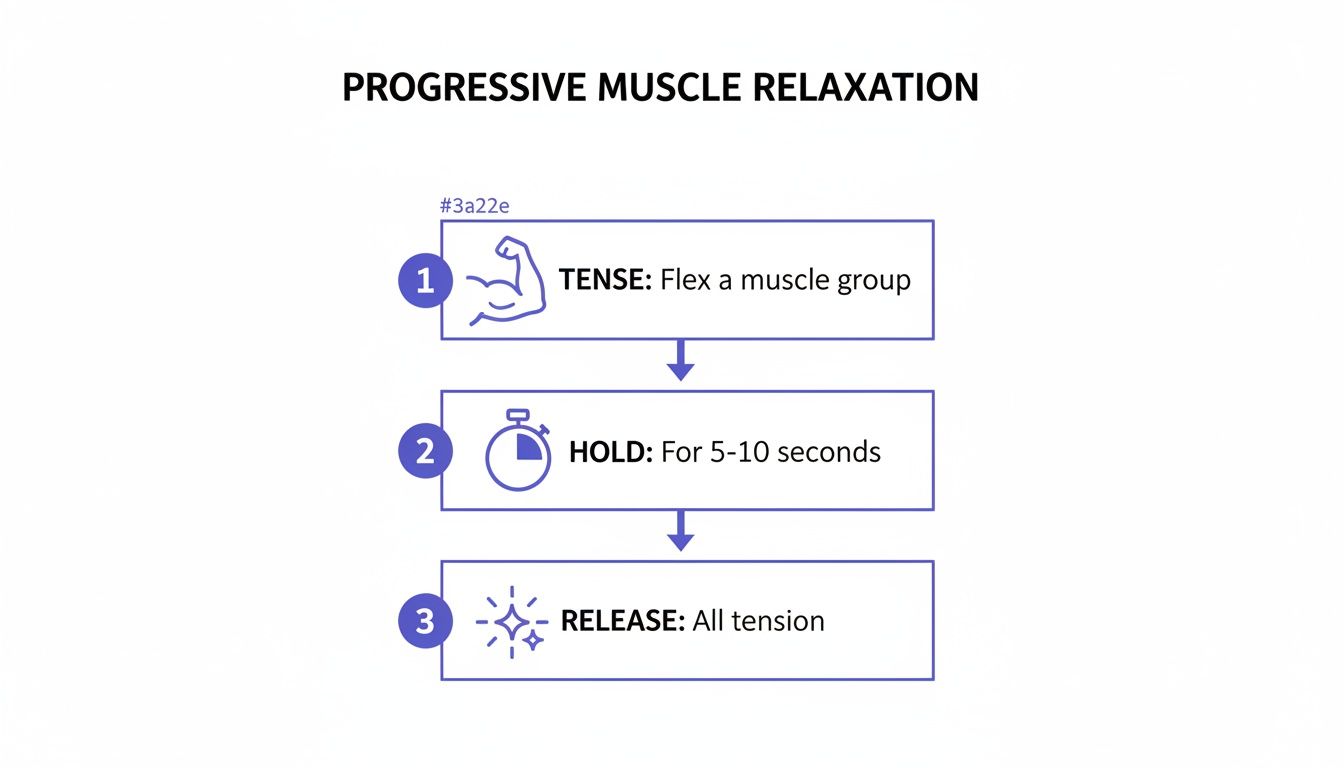
    A simple physical technique you can add to your toolkit is Progressive Muscle Relaxation. It’s fantastic for winding down in the evening.

    A diagram illustrating the three steps of progressive muscle relaxation: tense, hold, and release.

    This process of tensing and then releasing muscle groups sends powerful calming signals from your body to your brain. This makes it a perfect addition to a pre-sleep routine.

    Real-World Scenario: An entrepreneur, recovering from burnout, felt constantly on edge. She decided to build a new routine. She started with a 10-minute guided meditation every morning before touching her phone. In the evening, she set a strict no-screen rule for the 90 minutes before bed and picked up a book instead. Within a few weeks, she noticed a profound shift. Her focus was sharper, her mood was more stable, and she fell asleep much faster. Her brain was slowly learning a new, calmer habit.

    Rewiring Your Brain for a Calmer Baseline

    These consistent practices do more than just manage stress in the moment. They actively change your brain’s structure and function over time. Each time you meditate or take a digital break, you strengthen the neural pathways associated with calm and focus.

    At the same time, you’re weakening the old pathways that lead to automatic stress responses. This process is a core part of many therapeutic approaches. This includes what’s known as limbic system retraining, which aims to recalibrate the brain’s emotional centers.

    Over time, your default state begins to shift. Instead of living in a state of high alert, you start from a place of grounded calm. This doesn’t mean you’ll never feel stressed again. It just means you’ll have a stronger foundation, making it far easier to return to center when life throws you a curveball. The goal isn’t to eliminate stress, but to build the resilience to navigate it with grace.

    Editor’s Take: What Actually Works to Calm Down Fast

    So, what’s the real story on calming down when you feel your nervous system starting to spiral? After years of studying and testing these methods, here’s our honest take on what works, for who, and when.

    For those sudden, intense spikes of stressβ€”the kind that hits you right before a presentation or after a tense emailβ€”nothing beats an immediate physiological reset. Techniques like the physiological sigh or the 5-4-3-2-1 grounding exercise are unmatched for their speed and simplicity. You can do them anywhere, anytime, without anyone even noticing. They directly intervene in your body’s stress response, signaling to your brain that the immediate threat has passed. Think of them as your first-aid kit.

    Who This Advice Is Really For (And Its Limitations)

    This guide is designed for busy professionals, students, and anyone who needs to manage in-the-moment overwhelm to regain composure and focus. If you’re wrestling with deadline pressure, performance anxiety, or just the daily chaos of a packed schedule, these strategies are your go-to toolkit.

    Important Caveat: For those dealing with chronic anxiety, depression, burnout, or other significant mental health challenges, these techniques are a supportive supplement, but they are not a substitute for professional help. While these tools can help manage symptoms, a qualified therapist or doctor can help you address the root causes. Real, lasting resilience is built by turning these reactive calming practices into a proactive state of being, often with professional guidance.

    Ultimately, the goal is to shift from just reacting to stress to proactively building a calmer baseline. Combining immediate relief with long-term habits is the most effective path forward.

    Key Takeaways on How to Calm Down

    Here are the essential points to remember for finding calm when you need it most.

    • Physiological Sigh is Fastest: For immediate relief from intense stress, the double-inhale, long-exhale physiological sigh is a science-backed method to quickly calm your nervous system.
    • Grounding Interrupts Anxiety: When your thoughts are spiraling, use the 5-4-3-2-1 method to pull your focus out of your head and into your present environment by engaging your five senses.
    • Your Body Can Calm Your Mind: Releasing physical tension through Progressive Muscle Relaxation (PMR) sends a direct signal to your brain that the threat has passed, breaking the stress feedback loop.
    • Consistency Builds Resilience: Lasting calm comes from small, daily habits like short mindfulness sessions or digital breaks. These practices rewire your brain over time for a higher baseline of calm.
    • These Are Tools, Not Cures: The techniques in this article are for managing stress and are not a substitute for professional care for conditions like anxiety, depression, or burnout.

    Disclaimer: This article contains affiliate links. If you make a purchase, we may earn a small commission at no extra cost to you. The content provided is for educational and informational purposes only and is not a substitute for professional medical or psychological advice, diagnosis, or treatment. Always seek the advice of a qualified health provider with any questions you may have.

    Frequently Asked Questions About How to Calm Down

    When you’re trying to navigate stress and find your footing, questions are bound to come up. Here are some of the most common ones, with practical answers to help you find what works for you.

    1. How can I calm down at work without anyone noticing?

    The most powerful techniques are often the most discreet. Try Box Breathing: inhale for four counts, hold for four, exhale for four, and hold for four. You can also practice subtle grounding by focusing on the feeling of your feet on the floor. These methods silently regulate your nervous system.

    2. What is the fastest way to stop feeling overwhelmed?

    The physiological sigh is one of the quickest evidence-backed techniques. A double inhale through the nose followed by a long, slow exhale through the mouth can significantly slow your heart rate in under a minute. It works by offloading carbon dioxide efficiently.

    3. How long does it take for these calming techniques to work?

    Immediate techniques like the physiological sigh can provide relief in as little as 30 seconds to two minutes. Long-term practices like daily mindfulness build resilience over weeks. Their real power is cumulative, creating a higher baseline of calm over time.

    4. Why does deep breathing actually work to calm me down?

    Slow, deep breathing, especially with a long exhale, stimulates the vagus nerve. This nerve is a key part of your parasympathetic nervous system (β€œrest and digest”). Stimulating it sends a direct signal to your brain that you are safe, which slows your heart rate and lowers blood pressure.

    5. Can these techniques help with sleep?

    Yes, absolutely. Progressive Muscle Relaxation (PMR) is particularly effective before bed. By tensing and releasing muscle groups, you actively discharge physical tension that can keep your mind racing. This physical release signals to your brain that it’s safe to power down.

    6. What if I try a technique and it doesn’t work for me?

    That’s perfectly normal. Not every technique works for every person. If one method doesn’t click, simply try another. For some, focusing on the breath can increase anxiety. If that’s you, try a grounding technique like the 5-4-3-2-1 method instead. Be patient and find what your nervous system responds to best.

    7. How can I build a consistent calming routine?

    Start small and use β€œhabit stacking.” Commit to just two minutes of mindful breathing each morning. Attach this new habit to an existing one, such as right after you pour your morning coffee. Consistency is more important than duration, especially when forming a new habit.

    8. Is there a difference between calming down from anxiety and from anger?

    While both involve an activated nervous system, the mental approach can differ. For anxiety, grounding techniques are excellent for pulling you out of future-oriented worry. For anger, creating physical space or engaging in a brief, intense physical activity (like a few quick push-ups) can help discharge the energy before using a breathing technique.

    9. Can listening to music help me calm down?

    Yes. Music with a slow tempo (around 60 beats per minute) has been shown in psychological studies to help sync your heart rate to the beat. This can reduce feelings of stress and anxiety. Instrumental music often works best as lyrics can sometimes be distracting.

    10. Where can I find more resources for managing stress?

    For those interested in a deeper dive, our guide on how to manage chronic stress offers additional strategies and long-term solutions for building resilience.

    Explore the Mind Clarity Hub Library

    Practical books on focus, digital habits, resilience, and building a calmer mind.

    The Power of Clarity β€” book cover

    The Power of Clarity

    Unlock mental focus, build momentum, and create the life you were meant to live.

    View book β†’
    AI & ChatGPT for Beginners β€” book cover

    AI & ChatGPT for Beginners

    No PhD needed β€” a 2025 guide to AI, prompts, and productivity without coding.

    View book β†’
    Zen in the Digital Jungle β€” book cover

    Zen in the Digital Jungle

    Mindfulness for a chaotic world.

    View book β†’
    The Slow Reset β€” book cover

    The Slow Reset

    Mindful living in a fast-paced world.

    View book β†’
    Perfectly Imperfect β€” book cover

    Perfectly Imperfect

    Stop self-criticism, set boundaries, and embrace the real you.

    View book β†’
    Reclaiming Silence β€” book cover

    Reclaiming Silence

    A dopamine detox guide to finding peace in a noisy world.

    View book β†’
    The Focused Freelancer β€” book cover

    The Focused Freelancer

    Productivity, pricing & positioning for independents in 2025.

    View book β†’
    ChatGPT Side Hustle System β€” book cover

    ChatGPT Side Hustle System

    Launch your AI-driven online business in 30 days.

    View book β†’
    Burnout, Interrupted β€” book cover

    Burnout, Interrupted

    A proven path to restore energy and reclaim your life.

    View book β†’
    Attention Unleashed β€” book cover

    Attention Unleashed

    Focus strategies for the distracted mind.

    View book β†’
    Side Hustle Launchpad β€” book cover

    Side Hustle Launchpad

    Your quick-start guide to extra income.

    View book β†’
    Digital Clarity β€” book cover

    Digital Clarity

    Rewire your brain, escape dopamine traps & regain focus.

    View book β†’
    Break the Scroll β€” book cover

    Break the Scroll

    Reduce screen time and take back control of your life.

    View book β†’
    Climate Compassion β€” book cover

    Climate Compassion

    Transform eco-anxiety into empowered action.

    View book β†’
    Village Mentality β€” book cover

    Village Mentality

    The power of community for mental wellness.

    View book β†’
    Restful Nights β€” book cover

    Restful Nights

    Overcoming sleep anxiety in a 24/7 world.

    View book β†’
    Connected Again β€” book cover

    Connected Again

    Combat loneliness and build meaningful relationships.

    View book β†’
    Focus Recharged β€” book cover

    Focus Recharged

    Mastering attention and productivity in the digital era.

    View book β†’
    Marketing Magic with ChatGPT β€” book cover

    Marketing Magic with ChatGPT

    AI-powered content, campaigns, and copywriting to grow faster.

    View book β†’
    The 6-Figure Creator β€” book cover

    The 6-Figure Creator

    Turn knowledge into passive income with books, courses & AI.

    View book β†’
    Burnout Breakthrough β€” book cover

    Burnout Breakthrough

    Reset your work-life balance and thrive in 2025.

    View book β†’
    The Emotionally Intelligent Man β€” book cover

    The Emotionally Intelligent Man

    A modern guide to self-awareness and communication.

    View book β†’
    AI Personalized Wellness β€” book cover

    AI Personalized Wellness

    Create your custom health plan with data-driven habits.

    View book β†’
    Everyday AI Made Easy β€” book cover

    Everyday AI Made Easy

    Use ChatGPT and smart tools to simplify life.

    View book β†’
    Money Mindfulness β€” book cover

    Money Mindfulness

    A financial wellness guide for Gen Z & Millennials.

    View book β†’
    Startup Smarter with AI β€” book cover

    Startup Smarter with AI

    ChatGPT strategies and tools to grow your business.

    View book β†’
    ChatGPT for Writers & Creators β€” book cover

    ChatGPT for Writers & Creators

    Unlock AI-powered brainstorming, drafting & editing.

    View book β†’
  • How to Build a Lasting Attitude of Gratitude

    How to Build a Lasting Attitude of Gratitude

    How to Build a Lasting Attitude of Gratitude

    Jeremy Jarvis β€” Mind Clarity Hub founder
    Mind Clarity Hub β€’ Research-aware focus & digital wellness

    An attitude of gratitude is more than just saying β€œthank you.” It’s a consistent way of seeing the world, an intentional practice of appreciating the good in your life. This mindset shift actively rewires your brain for greater happiness and resilience, pulling your focus from what’s missing to what’s already there.

    Think of it as building a powerful foundation for positive change, one thankful thought at a time.

    Mindful Gratitude Disclosure: Some links in this article may be affiliate links. If you make a purchase, we may earn a small commission at no extra cost to you. This helps support our work in creating helpful, science-backed content.

    Understanding the Neuroscience of Your Attitude of Gratitude

    Cultivating an attitude of gratitude isn’t just a feel-good philosophy; it’s a practical, brain-changing activity. When you consciously practice being thankful, you’re lighting up key areas of your brain tied to mood, social connection, and reward. According to neuroscience, this process can physically alter your neural pathways over time, nudging positivity to become your brain’s new default setting.

    At its core, gratitude activates the brain’s reward system. When you bring to mind something you’re thankful for, it triggers a release of dopamine and serotoninβ€”two crucial neurotransmitters that boost your mood. The more you do it, the stronger those neural circuits get, making it easier to tap into positive emotions down the road. This is why a simple habit, like jotting down small daily wins, can be so incredibly effective at shaping your behavior.

    Attitude of gratitude moment: smiling man at desk focused on laptop with a β€œsmall wins” sticky note and a subtle glowing brain illustration
    A positive attitude of gratitude can rewire your brain for better focus and mood.

    For a busy professional feeling swamped, just acknowledging minor achievementsβ€”finishing a report, having a productive meetingβ€”starts to push back against the brain’s natural negativity bias. Behavioral research explains this as our built-in tendency to dwell on bad experiences more than good ones, a leftover survival instinct that doesn’t always serve us in the modern world. Gratitude is a direct counter-practice to this bias.

    How Thankfulness Shapes Your Brain and Focus

    When you practice gratitude, you’re essentially training your attention. Neuroimaging studies have shown that gratitude practices fire up the medial prefrontal cortex, a brain region linked to understanding others’ points of view and feeling relief. In plain language, this mental shift helps you see the positive intentions behind people’s actions and fosters a much deeper sense of connection.

    Gratitude is a tangible practice, not just a fleeting feeling. Research shows that people who actively practice gratitudeβ€”through journaling or other exercisesβ€”report higher levels of joy and well-being. The act itself invites positive emotions into our lives.

    For example, instead of getting frustrated by a delayed train, someone with a well-practiced attitude of gratitude might use that extra time to appreciate a quiet moment to read or listen to music. This cognitive reframing doesn’t ignore the inconvenience; it just shifts the emotional response toward something more constructive, improving their mood.

    This whole process is closely related to how we can retrain our emotional responses, an area we explore in concepts like limbic system retraining.

    Ultimately, building this mindset is all about consistency. Each small act of thankfulness is like a rep for your brain, strengthening your β€œgratitude muscle” over time.

    The Real-World Benefits of Practicing Gratitude

    Beyond just feeling a bit better, what does an attitude of gratitude actually do? The real-world benefits are surprisingly far-reaching, transforming not just your headspace but your physical health and social life, too.

    Think of a consistent gratitude practice as a powerful buffer against daily stressors. It works by shifting your brain’s focus. Instead of getting stuck ruminating on worries or frustrations, you actively train your attention on what’s good. This isn’t a quick fix, but a sustained practice that builds a strong foundation for both mental and physical well-being.

    Stronger Health and Better Sleep Through an Attitude of Gratitude

    The ripple effects of gratitude run deep into your physical health. When you experience genuine thankfulness, your brain sends signals to your body that it’s safe, which can help regulate your heart rate and lower blood pressure. According to psychological research, this creates a state of calm that’s far more conducive to restorative rest.

    So many people tell me that a quick gratitude practice before bed helps quiet a racing mind, making it easier to fall and stay asleep. Over time, this improved sleep quality compounds, leading to better energy, sharper focus, and stronger overall health.

    Research has linked gratitude with measurable improvements in longevity. One study found that older women who scored highest on a gratitude questionnaire had a 9% lower risk of all-cause mortality over a four-year period. You can read more about the health findings on gratitude from Harvard.

    Deeper Social Connections

    Gratitude is also one of the most powerful tools for strengthening relationships. When you actively appreciate the people in your life, it changes how you interact with them, fostering deeper bonds and pushing back against feelings of isolation.

    Take a freelance designer who often feels lonely working from home. By consciously practicing gratitude for their clientsβ€”appreciating their clear communication, timely payments, or interesting projectsβ€”they start to see these professional relationships as genuine human connections. This simple shift can dramatically improve their entire outlook on work and help combat those feelings of isolation. For anyone struggling with this, we have more strategies in our guide on how to deal with loneliness.

    Expressing that gratitude outwardly creates a positive feedback loop. When you thank someone sincerely, it not only makes them feel seen and valued but also reinforces your own positive feelings, solidifying the social connection between you. It’s why an attitude of gratitude is such a key ingredient in building a supportive and fulfilling social life.

    Your Daily Blueprint for an Attitude of Gratitude

    Turning the idea of gratitude into a real, daily habit is where the magic happens. A practical blueprint helps you build and keep an attitude of gratitude, even when life gets hectic or tough. The goal isn’t huge, dramatic gestures; it’s the small, consistent actions that add up over time.

    Forget generic advice that doesn’t really fit into a busy schedule. Let’s dig into a few specific, actionable methods you can start using today.

    Choosing Your Daily Gratitude Practice

    The best gratitude practice is the one you’ll actually do. Whether you have two minutes or twenty, there’s an approach that will work for you.

    Take the classic gratitude journal. This isn’t just a diary; it’s a powerful tool for rewiring your thinking. Instead of just listing things you’re thankful for, the most effective journaling prompts push you to explore why you feel grateful. That extra step is what deepens the mental impact and strengthens the neural pathways tied to positive emotions.

    For example, a remote worker might pair a five-minute journaling session with their morning coffee. By connecting the new habit (journaling) to an existing one (coffee), they’re using a technique from behavioral science called habit stacking to make it stick. You can build a similar routine using our guide to the 7-Minute Clarity Ritual.

    This is how you start to see real benefits, like a better mood, more resilience, and even improved sleep.

    A diagram illustrating the benefits of gratitude, leading to improved mood, resilience, and sleep.

    These daily actions create a positive upward spiral in your well-being. And this isn’t just feel-good thinking; it’s backed by solid research. A huge 2025 meta-analysis covering over 24,000 participants confirmed that gratitude practices like journaling consistently produce real improvements in well-being across different cultures.

    Finding the Right Fit for Your Lifestyle

    So, how do you pick the right practice? It really comes down to your schedule, your personality, and what feels most genuine to you. Not every method works for every person, and that’s perfectly okay.

    To help you find your starting point, here’s a quick comparison of a few popular gratitude exercises.

    Choosing Your Daily Gratitude Practice

    PracticeTime CommitmentBest ForPro Tip
    Gratitude Journal5-10 min/dayIntrospective people who enjoy writing and reflection.Go beyond what you’re grateful for and explore the why. This adds emotional depth and makes the practice more powerful.
    Gratitude Jar1-2 min/dayVisual thinkers and families looking for a simple, shared activity.Write down moments of gratitude on small slips of paper. Read them all at the end of the month for a huge boost.
    Gratitude Letters15-30 min/weekAnyone wanting to strengthen social connections and express thanks directly.Focus on one person each week. Describe the specific, positive impact they had on your life for a more meaningful message.
    Thankful Thoughts30-60 sec/anytimeBusy individuals who need a quick, on-the-go mental reset.Habit-stack this by pairing it with a routine task, like washing your hands or waiting for a file to download.

    Ultimately, the method you choose matters less than the mindset you bring to it.

    The real work is in the simple act of intentionally focusing your attention on what is good, however small. That’s what trains your brain. Pick one of these methods and give it a real try for two weeks. See how it feelsβ€”you might be surprised.

    How to Practice an Attitude of Gratitude in a Digital World

    Let’s be honest: staying mindful and grateful can feel like swimming upstream when our phones are buzzing with endless notifications. Digital devices are engineered to grab our attention and keep us scrolling, often pulling us into a reactive, almost robotic state.

    The answer isn’t to throw your phone in a river. It’s about being smarter than your apps. The key is to weave gratitude practices into our digital lives, turning moments of distraction into opportunities for a quick mental reset.

    Β 

    Gratitude Micro-Practices for a Packed Schedule

    You don’t need an hour-long meditation session to cultivate thankfulness. Gratitude micro-practices are quick, intentional pausesβ€”often lasting less than 60 secondsβ€”that you can sprinkle throughout even the most chaotic days.

    Think of them as tiny circuit breakers for your brain’s autopilot mode. Instead of reflexively grabbing your phone the second you feel bored or anxious, you consciously choose a moment of gratitude. It’s a small act of rebellion against the attention economy.

    Here are a few simple micro-practices you can try today:

    • The Inbox Pause: Before you open your email for the first time, take one deep breath. Bring to mind one person whose work makes your own job just a little bit easier. This tiny habit shifts your mindset from reactive dread to quiet appreciation before the day’s demands take over.
    • The Thankful Thought: Stuck in traffic or waiting for your coffee? Think of one simple, physical thing you’re grateful for right now. Maybe it’s the comfort of your shoes, the warmth of the sun, or the song playing in your headphones. This pulls you back into the present moment.
    • The Connection Moment: The moment you close a social media app, take just 30 seconds to appreciate a real, flesh-and-blood connection in your lifeβ€”a friend, a partner, a pet. This is a powerful way to counteract the often-hollow feeling of online interactions.

    These small habits are surprisingly powerful. They interrupt the mindless loops and inject a sliver of genuine awareness back into your day.

    Habit Stacking for Digital Clarity

    One of the most effective ways to make these new habits stick is a technique from behavioral psychology called habit stacking. It’s simple: you link a new gratitude habit to an existing digital routine you already do without thinking.

    For example, a startup founder constantly battling afternoon burnout can set a recurring daily calendar reminder on their computer for 2 PM labeled β€œGratitude Reset.” When the alarm chimes, they step away from the screen for just one minute and think of one thing that went well that day. It’s a simple, actionable way to fight off mental fatigue without adding another big task to their plate.

    By pairing a gratitude exercise with a digital triggerβ€”like closing a browser tab or ending a video callβ€”you create a powerful new routine. This helps you build a more intentional relationship with your technology.

    This strategy is a cornerstone of a healthier digital life. If you’re looking for more ways to manage your screen time and reclaim your focus, our guide on effective digital detox tips is a great next step.

    When you combine these strategies, you stop letting technology dictate your mental state. Instead, you start using your digital triggers to build a more grounded, positive mindsetβ€”one small, intentional action at a time.

    Turning Your Attitude of Gratitude into Meaningful Action

    Gratitude isn’t just an internal feeling; it’s a powerful force for connection when you actually share it. A true attitude of gratitude really gains momentum when you translate those private thoughts into tangible, positive actions.

    Making that shift from feeling to doing is what reinforces the habit and deeply strengthens your relationships.

    By expressing gratitude outwardly, you create a positive feedback loop. Sharing appreciation makes others feel good, which in turn makes you feel good. Behavioral research shows this reinforces the behavior, neurologically locking it in and making the habit much more likely to stick.

    Attitude of gratitude shown as a businessman holds a thank you card with smiling colleagues in an office
    Expressing an attitude of gratitude with meaningful action, like acknowledging a team’s hard work, builds stronger connections.

    From Thought to Action

    The key is to move from a general feeling of thankfulness to a specific, expressed acknowledgment. This doesn’t require grand gestures. The small, sincere actions have the biggest impact.

    For example, a team leader wants to improve group dynamics. Instead of just feeling thankful for her team, she starts each weekly meeting by genuinely acknowledging one person’s specific contribution from the previous week. β€œSarah, your detailed analysis on the Q3 report saved us hours. Thank you for being so thorough.” It’s a small act, but it completely transforms the tone of the meeting, fostering a more collaborative and positive environment.

    Action is the bridge between inner gratitude and outer connection. When you express thanks, you aren’t just being politeβ€”you’re actively building a more supportive world for yourself and others.

    This kind of prosocial behavior has actually seen a notable increase globally. Recent analyses show that benevolent acts like helping strangers have remained significantly higher than pre-pandemic levels, suggesting a worldwide rise in gratitude-linked kindness. You can discover more about these global kindness trends in the World Happiness Report.

    Practical Ways to Share Gratitude

    Weaving these actions into your daily life can be simple. The goal is just to be present and specific in your appreciation. For more guidance on this, our article on how to be present in your daily interactions is a great place to start.

    Here are a few concrete examples you can try today:

    • The Specific Thank-You Email: Don’t just send a generic β€œthanks.” Write to a colleague and detail exactly how their help on a recent project made a difference. Mention a specific skill they used or a challenge they helped you overcome.
    • The Public Shout-Out: If a local coffee shop or business provides outstanding service, don’t just think itβ€”share it. Leave a detailed, glowing review online. This supports the business and spreads that positive energy.
    • The Handwritten Note: In a world of endless digital pings, a simple, handwritten thank-you note for a friend or family member who supported you can feel incredibly meaningful and personal. It cuts through the noise.

    Editor’s Take: What Really Works for an Attitude of Gratitude

    Here’s the honest truth about building an attitude of gratitude: consistency always wins over intensity. A simple, daily three-minute practice is far more effective at rewiring your brain’s focus than an ambitious hour-long session you only manage once a month.

    This advice is best for anyone feeling digitally fatigued, overwhelmed, or just looking for a science-backed way to improve their mood and focus. Think of it as a practical anchor in a chaotic world, helping you reclaim your attention one thankful thought at a time. The key limitation to remember is that while gratitude is a powerful tool for well-being, it is not a cure for clinical conditions like major depression or anxiety disorders. It should be used to complement, never replace, professional care from a licensed therapist or doctor.

    Disclaimer: This article is for educational purposes and is not a substitute for professional medical or psychological advice. Some links in this guide may be affiliate links, meaning we may earn a small commission at no extra cost to you if you make a purchase. If you are experiencing symptoms of anxiety, depression, or burnout, please consult a qualified healthcare provider.

    Frequently Asked Questions About Gratitude

    As you start building this new habit, a few common questions always pop up. Here are some straightforward answers to help you navigate the process with a bit more clarity.

    How Long Until I Actually Feel the Benefits?

    You’ll probably notice a small, immediate mood lift right after a gratitude exercise. That’s the quick hit of feel-good neurotransmitters like dopamine, and it’s a great sign you’re on the right track.

    But the deeper, more lasting changesβ€”like a genuinely resilient mindset and a more positive outlookβ€”take consistency. Lasting neurological shifts, where your brain physically builds and strengthens new positive pathways, typically require several weeks of dedicated, daily practice. Stick with it. The results compound in a way that’s hard to appreciate at first.

    What If I’m Just Not Feeling Grateful Today?

    This is completely normal. In fact, it’s one of the most common hurdles, especially when you’re starting out or just having a tough day. The key is to remember that gratitude is a practice, not just a feeling. It’s a muscle you build through repetition.

    On days like this, start incredibly small. Don’t try to force yourself to feel thankful for big, abstract concepts. Instead, anchor your attention in simple, sensory experiences.

    • The warmth of your coffee mug against your hands.
    • The comfort of a soft blanket or a favorite sweater.
    • The simple fact that your internet connection is working.

    By practicing with these tiny, undeniable truths, you start training your brain to scan for the good. Often, the feeling of gratitude follows the action of looking for it.

    Is a Journal or an App Better for This?

    Honestly, the best tool is whichever one you’ll actually use consistently. Both physical journals and digital apps have their place, and the most important factor is your intentional focus, not the medium itself.

    That said, there’s interesting research suggesting the physical act of writing can have unique cognitive benefits. Forming letters by hand engages more areas of your brain, which can help deepen how you process and remember your thoughts and feelings.

    An app offers convenience and reminders, which can be a game-changer for building the initial habit. A physical journal provides a quiet, screen-free space for deeper reflection. Why not try both and see which one feels more natural for you?


    At Mind Clarity Hub, we build practical, science-backed guides to help you create habits that stick. You can explore our full library of books on focus, digital wellness, and mindful productivity at the Mind Clarity Hub website.

  • How to Deal With Loneliness and Build Real Connections

    How to Deal With Loneliness and Build Real Connections

    How to Deal With Loneliness and Build Real Connections

    Jeremy Jarvis β€” Mind Clarity Hub founder
    Mind Clarity Hub β€’ Research-aware focus & digital wellness

    Published: December 14, 2025

    Disclosure: This article may contain affiliate links, which means that if you choose to make a purchase, I may earn a commission. This commission comes at no additional cost to you.

    Dealing with loneliness isn’t about blaming yourself; it’s about listening to a fundamental human signal. Think of it like hunger or thirstβ€”it’s your mind’s way of telling you a core need isn’t being met. The key is to see it as a prompt for action, not a personal failure, and then take small, consistent steps to rebuild your sense of connection.

    Why You Feel Lonely Even in a Connected World

    A thoughtful young man sits alone on a bench in a bustling city square, reflecting how to deal with loneliness even in a crowded world.

    Here’s a paradox most of us know well: you’re surrounded by notifications, DMs, and maybe even people, yet you feel completely isolated. You can be in a crowded office, a busy city square, or at a lively family dinner and still feel profoundly, deeply alone.

    This experience isn’t a flaw in your personality. It’s biological. Neuroscience shows our brains are deeply wired for social connection, a survival mechanism passed down through generations. When we lack that connection, our brain perceives it as a genuine threat, similar to physical danger. This triggers a low-grade stress response that can leave us feeling sad, on edge, or withdrawnβ€”often creating a cycle that’s tough to break.

    That feeling is a signal, pushing you to seek out the quality of connection you’re missing.

    The Different Flavors of Loneliness

    To start rebuilding, it helps to pinpoint exactly what kind of loneliness you’re feeling. Psychological research points to three main types, each highlighting a different unmet need.

    To make this easier, here’s a quick guide to help you identify what might be going on under the surface.

    Three Types of Loneliness: A Quick Guide

    This table breaks down the different forms of loneliness to help you identify your specific feelings and needs.

    Type of LonelinessWhat It Feels LikeWhat’s Missing
    Emotional LonelinessThe feeling that you have no one to truly confide in or share your inner world with.A deep, intimate bond with a trusted partner, family member, or friend.
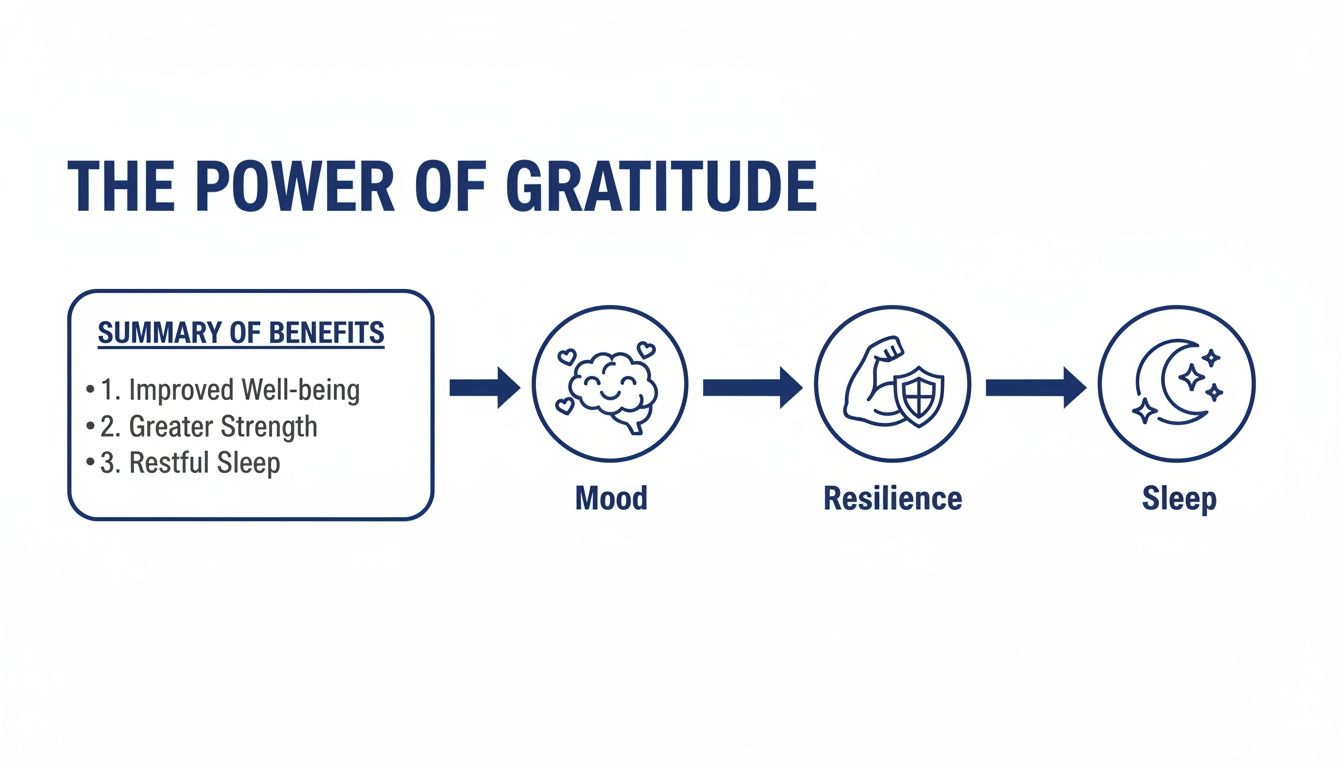
    Social LonelinessA sense of not belonging to a group or community; feeling like an outsider.A wider circle of friends, a hobby group, or a community that shares your values and interestsβ€”your β€œpeople.”
    Existential LonelinessA profound feeling that no one can ever truly understand your unique experience of the world.A sense of shared meaning or connection to humanity as a whole; often felt during major life changes.

    Recognizing which of these you’re experiencing gives you a much clearer target. Are you missing one deep friendship, or do you need to find a new community? The answer helps shape your next steps.

    The Impact of Our Digital Lives

    In our always-on culture, it’s dangerously easy to mistake digital interactions for genuine connection. Scrolling through social media feeds creates the illusion of a social life without providing any of the emotional nourishment our brains actually need.

    This constant, low-quality stimulation doesn’t just leave us feeling empty; it can lead to a specific kind of burnout. If you’ve ever felt mentally fried after hours of screen time, you know the feeling. We explore this in our guide on what is digital fatigue and how to recover faster, which offers deeper insights into how screen habits affect our well-being.
    By understanding that loneliness is a biological signal, not a personal failing, you can start to address it with compassion and practical, effective strategies.

    Immediate Ways to Ease Intense Feelings of Isolation

    A young man walks peacefully down a tree-lined path wearing headphones and a light jacket, demonstrating how to deal with loneliness with a calming outdoor reset.

    When an intense wave of loneliness hits, it can feel like a physical weight, making it hard to think clearly. In that moment, you don’t need a five-year plan. You need a lifeline.

    The good news is, there are small, concrete actions you can take right now to break the emotional spiral and give your mind some breathing room. These techniques aren’t about β€œfixing” loneliness for good. Think of them as first aidβ€”tools to calm your nervous system and pull your attention away from those overwhelming thoughts, back into the present moment.

    Ground Yourself with a Sensory Check-In

    When you feel isolated, your thoughts can start racing, creating a feedback loop that makes everything feel worse. One of the most powerful ways to break this cycle is to ground yourself in your physical environment. The β€œ5-4-3-2-1” method is a simple but surprisingly effective technique rooted in behavioral psychology.

    It works by engaging all five of your senses, forcing your focus away from internal distress and onto the world right in front of you. No special equipment neededβ€”just a few moments of quiet attention.

    Try This Right Now:

    • See 5 things: Look around and name five objects. Notice their color, shape, and texture. For example: β€œI see a blue pen, a striped coffee mug, a plant with waxy leaves, a framed photo, and a stack of books.”
    • Feel 4 things: Bring your awareness to physical sensations. Notice four things you can feel, like the texture of your desk, the warmth of your sweater, or the solid ground beneath your feet.
    • Hear 3 things: Listen carefully and identify three distinct sounds. Maybe it’s the hum of your computer, distant traffic, or the sound of your own breathing.
    • Smell 2 things: What can you smell? It could be the faint scent of coffee or the clean smell of a book. If you can’t smell anything, just notice the neutral air.
    • Taste 1 thing: Focus on one thing you can taste. Take a sip of water, notice the lingering taste of your last meal, or simply focus on the sensation of your tongue in your mouth.

    This simple exercise interrupts the abstract feeling of loneliness with concrete, sensory input, offering a quick mental reset.

    Key Takeaway: Grounding techniques aren’t about ignoring your feelings. They are about giving your brain a different, more tangible focus to break the momentum of negative thought patterns.

    Change Your Scenery to Change Your Mindset

    Your environment has a huge effect on your emotional state. Staying stuck in the same room where you feel isolated can reinforce those very feelings. A simple change of scenery, even for a few minutes, introduces new stimuli and can disrupt that mental echo chamber.

    You don’t have to go far or even talk to anyone. The goal is just to shift your physical context. Consider a short walk around the block, moving to a different room, or even just stepping outside for a moment. The act of moving your body and seeing different surroundings can provide a surprising psychological lift.

    Engage in Mindful Media Consumption

    In a moment of intense loneliness, it’s so tempting to scroll through social media. But this often makes things worse, triggering comparison and a deeper sense of disconnection. Instead, you can use media as a tool for comfort and connection, not just distraction.

    The trick is to shift from passive scrolling to active, mindful engagement. Choose media that feels like a companion rather than a highlight reel of everyone else’s life.

    • Listen to a conversational podcast: Find a podcast where the hosts have a friendly, engaging dynamic. It can create the sense of being part of a conversation, which research from institutions like the American Psychological Association suggests can ease feelings of social isolation.
    • Watch a comfort show or movie: Re-watching a favorite film or TV series can be incredibly soothing. The predictability and familiarity provide a sense of emotional safety when you feel adrift.
    • Explore guided meditations: Apps like Calm or Headspace offer guided meditations specifically for loneliness. These can help you sit with the feeling without judgment, which is a core part of mindfulness. You can learn more about the cognitive benefits of these practices in our article on the science of stillness and how it boosts brain performance.

    These immediate actions won’t solve the root causes of loneliness, but they are powerful first-aid tools. They help you manage the acute pain of isolation, giving you the stability to build more lasting connections later on.


    Disclaimer: This article is for educational purposes only and is not a substitute for professional medical advice, diagnosis, or treatment. If you are struggling with persistent feelings of loneliness, anxiety, or depression, please consult a qualified mental health professional.

    Building Your Foundation for Social Fitness

    Open notebook with β€œ3-2-1” written beside a pen and a cup of tea by a bright sunlit window, illustrating how to deal with loneliness through a simple weekly connection plan.

    While quick coping tools are a lifeline in tough moments, building a real defense against loneliness is more like getting in shape. It’s not something you do once; it’s something you maintain through steady, intentional practice. This is what some psychologists call social fitness.

    Think of it like going to the gym. Social fitness means building strength and resilience through small, consistent efforts. This flips the script entirelyβ€”connection isn’t some personality trait you either have or you don’t. It’s a skill you can train.

    Behavioral research shows that repeated positive interactions literally strengthen the neural pathways in your brain tied to safety and belonging. Every thoughtful text, genuine compliment, or quick phone call is like a single rep, making it easier to feel connected over time.

    Creating a Sustainable Social Routine

    Big, grand gestures aren’t the answer here. The real key to social fitness is creating a simple, sustainable routine you can stick with even when you’re busy or just not feeling it. When it comes to learning how to deal with loneliness, consistency is far more powerful than intensity.

    A great way to structure this is the β€œ3-2-1 Method.” It’s a dead-simple weekly framework that makes sure you’re nurturing different kinds of relationships without overthinking it. The goal is to make outreach a habit, not an afterthought.

    Your Weekly 3-2-1 Plan:

    • Reach out to 3 friends: This isn’t about deep, hour-long calls. For example: send a funny meme to one friend, text another a quick β€œthinking of you,” and email a third an interesting article you found.
    • Connect with 2 family members: A five-minute call to a parent, a short email to a sibling, or a quick video chat with a cousin all count. The point is the touchpoint.
    • Engage with 1 colleague or acquaintance: Offer a genuine compliment on a work project, or ask a neighbor you see often about their weekend. These β€œweak ties” are surprisingly crucial for our sense of community.

    This little structure removes the guesswork and decision fatigue, turning β€œstaying in touch” into a manageable weekly checklist.

    Scheduling Social Micro-Doses

    Another powerful technique is what some call β€œsocial micro-doses.” These are brief, planned moments of connection that slot easily into a packed schedule. Instead of waiting for a free evening to have a long dinner, you intentionally pepper your week with small, energizing interactions.

    These small acts are more significant than they seem. Research from major public health organizations shows a strong link between social connection and long-term health. Quality relationships literally act as a buffer against the harms of isolation.

    Key Takeaway: The goal of social fitness isn’t to cram your calendar. It’s to consistently send signals to your brainβ€”and to othersβ€”that you are part of a supportive network.

    The Power of Prosocial Habits

    Beyond planned outreach, you can weave small, prosocial habits into your daily life. These are tiny actions that build goodwill and strengthen the scaffolding of your social world, often with very little effort.

    Try adding one of these to your daily routine:

    • Express Genuine Gratitude: When someone helps you out, tell them specifically what you appreciate. Instead of a generic β€œthanks,” try, β€œThank you for sending that email over so quickly; it really helped me hit my deadline.”
    • Offer a Thoughtful Compliment: Go beyond the surface level. Instead of β€œnice shirt,” try, β€œYou have such a great eye for design; that presentation looked fantastic.”
    • Practice Active Listening: In your next conversation, make a real effort to listen without just planning what you’ll say next. Ask a follow-up question that shows you’re actually engaged.

    These habits, combined with a structured routine like the 3-2-1 Method, create a powerful positive feedback loop. When you put good social energy out into the world, it tends to come back to you, reinforcing your sense of belonging. This gentle, consistent approach is a core part of what we call The Slow Reset a path to more mindful living, which is all about making sustainable changes instead of chasing quick fixes.

    How to Find Your People and Re-engage With the World

    The whole idea of β€œputting yourself out there” can feel like a massive, vague project with no clear first step. It’s paralyzing. But what if re-engaging wasn’t about a high-pressure performance?

    It’s far more effective to reframe it as an adventure in curiosity.

    This simple shift changes the entire goal. Instead of hunting for β€œfriends,” you’re just β€œexploring an interest.” When you focus on something you’re genuinely passionate about, you naturally end up in rooms with people who already share that passion. Connection becomes a byproduct of the activity, not the sole objectiveβ€”which takes nearly all the pressure off.

    Lead with Curiosity, Not Outcomes

    Forget trying to find the β€œright” people. Focus on finding the β€œright” activities for you. Your interests are a built-in filter for like-minded individuals.

    Start by jotting down a simple list of things you’ve always wanted to try or activities you used to love. The trick is to choose something where interaction is a natural part of the experience, not something you have to force.

    Low-Stakes Ideas to Get Started:

    • Join a local hiking or walking group. The shared activityβ€”the trail, the weather, the gearβ€”provides an easy script for conversation and takes the focus off direct one-on-one pressure.
    • Sign up for a hands-on class. Think pottery, cooking, or a language workshop. Working alongside others on a project creates an immediate sense of teamwork and shared purpose.
    • Volunteer for a cause you care about. This is a shortcut to connecting with people who share your core values, which is a powerful foundation for much deeper relationships.
    • Visit a niche bookstore or coffee shop with regular events. Attending a book reading or a trivia night provides a structured social setting without the awkwardness of open-ended mingling.

    The goal isn’t to become a social butterfly overnight. It’s to take one small, curiosity-driven step that gets you into a new environment.

    Move Beyond Small Talk with Gentle Questions

    Okay, so you’re in the room. Now what? The next hurdle is often conversation. So many of us get stuck in the shallow end of small talkβ€”the weather, weekend plans, repeat. To build real rapport, you need to gently wade into deeper waters.

    A simple framework for this is to ask open-ended questions that invite a story, not just a one-word answer. Instead of asking, β€œDo you like hiking?” which only gets a β€œyes” or β€œno,” try something with more substance.

    Conversation Tip: Frame your questions around experiences, motivations, or passions. This invites the other person to share a small piece of their world, creating a genuine opening for connection.

    Examples of Better Questions:

    • Instead of β€œDo you come here often?” try, β€œWhat first got you interested in pottery?”
    • Instead of β€œNice day for a walk,” try, β€œHave you discovered any other cool trails around here?”
    • Instead of β€œAre you busy?” try, β€œWhat’s the most interesting project you’re working on these days?”

    These questions show you’re genuinely curious about the other person, not just trying to fill the silence. It’s a subtle shift, but it’s how you move from acquaintance to friend. For a deeper dive into rebuilding these skills, our guide on how to feel connected again and combat loneliness provides a comprehensive roadmap for strengthening relationships.

    The Gentle Art of Reconnecting with Old Friends

    Sometimes, the connections we need are already in our lives, just dormant. Reaching out to old friends can feel awkward, but it’s often easier than starting from scratch because that foundation of shared history already exists.

    The key is to make it low-pressure and specific. A vague β€œwe should catch up sometime” just creates ambiguity and puts the burden on the other person. A concrete, easy-to-accept invitation is far more effective.

    Here’s a simple, non-awkward template you can adapt:

    • Acknowledge the time: β€œHey [Name], I know it’s been a while, and I hope you’re doing well.”
    • Mention a shared memory or trigger: β€œI was just listening to [Band Name] and it made me think of that concert we went to.” or β€œI drove past [Old Hangout Spot] the other day and it reminded me of you.”
    • Make a specific, low-effort ask: β€œI’d love to catch up properly. Would you be free for a quick 20-minute call sometime next week?”

    This approach shows you’re thinking of them specifically and offers a clear, manageable next step. By turning the daunting task of meeting people into an exploration of your own interests and gently reopening doors to past connections, you make it a more natural, and even enjoyable, part of your life.

    Using Your Digital World to Foster Real Connection

    Screens are a non-negotiable part of modern life, but they don’t have to be a source of isolation. The trick is to shift from being a passive consumer to an active participant. It’s about turning your devices into bridges that support real-world relationships rather than replacing them.

    This all comes down to the crucial difference between two types of digital behavior. Passive consumption, like mindlessly scrolling through an endless feed of strangers’ highlights, is strongly linked to increased feelings of loneliness. In contrast, active engagementβ€”using technology to have a real conversation or coordinate an in-person meetingβ€”can actually strengthen your social bonds.

    Shifting from Passive Scrolling to Active Engagement

    The first step is a mindful audit of your screen time. When you pick up your phone, what’s the real intention? Are you looking to numb out, or are you hoping to connect? Just becoming aware of this pattern is the first step toward changing it.

    Psychological studies consistently show that passive social media use often triggers social comparison, where we measure our messy, real lives against someone else’s curated perfection. This nearly always leaves us feeling worse. Active use, however, engages the parts of our brain associated with social reward and belonging.

    This simple guide offers a framework for using digital tools to explore, connect, and reconnect with people in a more intentional way.

    A strategy guide flow chart titled 'Finding People', detailing steps to explore, connect, and reconnect.

    The flowchart maps out a clear path from exploration to meaningful connection, reminding us that technology can be a starting point, not the final destination.

    To put this into practice, let’s look at how your digital habits stack up. This table helps you evaluate your online behaviors and shift towards more fulfilling interactions.

    Digital HabitPassive Use (Increases Loneliness)Active Use (Fosters Connection)
    Social MediaEndless scrolling through a public feedSending a direct message to a friend to ask a specific question
    Online GroupsLurking in a large, anonymous forumPosting a thoughtful question or reply in a small hobby group
    ContentWatching random short-form videos for hoursSharing a specific, interesting article with a friend for discussion
    EventsVaguely browsing local event listingsRSVPing to an event and messaging a friend to see if they’ll join

    By consciously choosing more active behaviors, you begin to rewire the way your brain sees your digital toolsβ€”turning them from sources of distraction into instruments of connection.

    Curate Your Feeds for Genuine Connection

    Your social media feed is your digital environment. Just as you’d tidy up a messy room, you can clean up your feed to make it a more positive and supportive space. This isn’t about deleting your apps, but about curating them with real intention.

    Here are a few practical ways to do this:

    • Prioritize Close Friends: Use features like Instagram’s β€œClose Friends” or Facebook’s β€œFavorites” to ensure you see updates from people you genuinely care about first. This immediately filters out the noise.
    • Mute, Don’t Unfollow (At First): If an account consistently makes you feel inadequate or lonely, just hit the mute button. This removes their content from your feed without the potential awkwardness of unfollowing.
    • Join Niche Communities: Find groups on platforms like Reddit or Facebook that align with your specific hobbiesβ€”whether it’s vintage cameras, sourdough baking, or a favorite TV show. These spaces are built for active, meaningful conversation.

    Your social feed is like a garden. Weed out what makes you feel bad and intentionally plant content that nourishes real relationships and positive feelings.

    Use Technology as a Bridge to the Real World

    Ultimately, the healthiest way to use digital tools is to get you offline. Technology is brilliant at logistics, making it easier than ever to find and coordinate with people who share your interests. The goal is always to move the conversation from the screen to a shared physical space.

    Instead of just chatting in a local hiking group online, be the one to suggest a real trail meetup this weekend.

    Here are a few tools built for exactly this purpose:

    • Meetup: An app specifically designed to help you find local groups and events based on your interests, from book clubs to tech talks.
    • Eventbrite: A great resource for discovering local classes, workshops, festivals, and concerts you can actually attend.
    • Local Community Calendars: Don’t forget to check your town or city’s official website for free events like farmers’ markets, outdoor movies, or park concerts.

    These intentional shifts require a bit of effort, but they transform your phone from a source of isolation into a powerful tool for building the connections you crave. Setting firm digital boundaries is also crucial to protect your time for these real-world interactions. To help with this, you can explore our practical guide to break the scroll and start a digital detox.

    When to Consider Professional Support for Loneliness

    The strategies we’ve walked through are powerful tools for building what is sometimes called β€œsocial fitness.” But sometimes, even with the best roadmap, you can still feel stuck.

    If you’ve been genuinely trying to reconnect but keep hitting a wall, it might be a sign that something deeper is at play. This isn’t a failureβ€”it’s a courageous signal that it’s time to bring in professional support.

    There’s a well-established connection between chronic loneliness and conditions like depression and social anxiety. Long-term isolation can hardwire thought patterns that are incredibly difficult to shift on your own. It’s like trying to fix the engine while you’re still driving the car.

    A trained therapist gives you a safe, non-judgmental space to pull over and really look under the hood. They can help you trace the roots of your loneliness, which might stem from old experiences, your attachment style, or an underlying anxiety that makes every social interaction feel like a high-stakes risk.

    Recognizing the Signs It Might Be Time for Help

    So, how do you know when you’ve crossed the line from a tough season into territory where professional guidance is needed? A few key signals suggest that self-help tools alone might not be enough.

    It might be time to reach out if you’re experiencing:

    • A Persistent Low Mood: You feel sad, numb, or hopeless most days. Even when you do manage to connect with someone, the feeling doesn’t lift for long.
    • Disruptive Social Anxiety: The fear of saying the wrong thing or being judged is so intense that it consistently stops you from even trying to connect. It gets in the way of your work, your errands, and your daily life.
    • A Lack of Progress: You’ve been putting these strategies into practice for several weeks or months, but your sense of isolation hasn’t improvedβ€”or it’s gotten worse.

    Important Note: This article is for educational purposes and isn’t a substitute for professional medical advice. If you’re struggling with your mental health, please reach out to a qualified healthcare provider.

    Finding the right support is more accessible than it’s ever been. Resources like psychology directories or an Employee Assistance Program (EAP) through your workplace can be a great starting point for finding a qualified therapist who feels like a good fit.

    Frequently Asked Questions About Loneliness

    As you start this journey, practical questions are bound to come up. It’s completely normal. Let’s walk through some of the most common ones with clear, science-backed answers to help you stay grounded and motivated.

    Can I really beat loneliness if I’m an introvert?

    Absolutely. One of the biggest myths out there is that introversion and loneliness are the same thing. They aren’t. Introversion is about how you recharge your energyβ€”it has nothing to do with your ability to form deep, meaningful connections.

    While a huge party might leave you feeling drained, introverts often find their sweet spot in quieter, more intimate settings. The goal isn’t to become an extrovert; it’s to lean into quality of connection over quantity of interactions. You don’t need a massive social circle. Just a few supportive, genuine relationships can make all the difference in the world.

    • Practical Example: Instead of forcing yourself to go to a loud networking mixer that feels like a chore, maybe you join a small book club. The shared interest gives you a natural starting point for conversation, and the calmer, more structured environment is perfect for building a real bond without that feeling of social burnout.

    How long does it take to actually stop feeling lonely?

    There’s no magic timeline here. Tackling loneliness is more like getting into shape than flipping a light switch. You won’t wake up one day and be β€œcured.”

    Instead, you’ll likely notice small, gradual shifts. A day where that heavy feeling of isolation isn’t quite so intense. A moment of genuine connection that leaves you feeling lighter. Lasting change comes from consistency, not one single grand gesture.

    By practicing small β€œsocial fitness” habitsβ€”like sending a thoughtful text to a friend or scheduling a quick weekly callβ€”you slowly but surely build a stronger support system. Over weeks and months, you’ll probably find that the feelings of loneliness show up less often and don’t hit as hard when they do.

    A Quick Neuroscience Insight: Every time you have a positive social interaction, your brain releases neurochemicals like oxytocin (often called the β€œbonding hormone”). Each one of those small, positive moments helps reinforce the neural pathways tied to safety and belonging, gradually shifting your brain’s default state from threat to security.

    What if I’m trying these tips and still feel stuck?

    First, please be patient and kind to yourself. You’re working on building meaningful connections and, in many cases, rewiring thought patterns that have been around for a long time. That takes effort. It’s completely normal to have days where you feel like you’ve taken a step back.

    But if you’ve been consistently putting these strategies into practice for a while and still feel an overwhelming sense of isolation, it might mean there are deeper patterns at play. This is the perfect moment to think about the professional support we talked about earlier.

    A good therapist can help you explore underlying issues that might be making it harder to connect. Things like deep-seated social anxiety, attachment patterns from your past, or unresolved grief can be tough to navigate on your own. Getting support isn’t a sign of failureβ€”it’s a smart, courageous step toward lasting change.


    At Mind Clarity Hub, we build science-based roadmaps to help you navigate the complexities of mental well-being in a digital world. If you’re ready to build focus, reclaim your attention, and foster more meaningful connections, take a look at our library of practical guides and books.

    Explore the Books at Mind Clarity Hub

    Explore the Mind Clarity Hub Library

    Practical books on focus, digital habits, resilience, and building a calmer mind.

    The Power of Clarity β€” book cover

    The Power of Clarity

    Unlock mental focus, build momentum, and create the life you were meant to live.

    View book β†’
    AI & ChatGPT for Beginners β€” book cover

    AI & ChatGPT for Beginners

    No PhD needed β€” a 2025 guide to AI, prompts, and productivity without coding.

    View book β†’
    Zen in the Digital Jungle β€” book cover

    Zen in the Digital Jungle

    Mindfulness for a chaotic world.

    View book β†’
    The Slow Reset β€” book cover

    The Slow Reset

    Mindful living in a fast-paced world.

    View book β†’
    Perfectly Imperfect β€” book cover

    Perfectly Imperfect

    Stop self-criticism, set boundaries, and embrace the real you.

    View book β†’
    Reclaiming Silence β€” book cover

    Reclaiming Silence

    A dopamine detox guide to finding peace in a noisy world.

    View book β†’
    The Focused Freelancer β€” book cover

    The Focused Freelancer

    Productivity, pricing & positioning for independents in 2025.

    View book β†’
    ChatGPT Side Hustle System β€” book cover

    ChatGPT Side Hustle System

    Launch your AI-driven online business in 30 days.

    View book β†’
    Burnout, Interrupted β€” book cover

    Burnout, Interrupted

    A proven path to restore energy and reclaim your life.

    View book β†’
    Attention Unleashed β€” book cover

    Attention Unleashed

    Focus strategies for the distracted mind.

    View book β†’
    Side Hustle Launchpad β€” book cover

    Side Hustle Launchpad

    Your quick-start guide to extra income.

    View book β†’
    Digital Clarity β€” book cover

    Digital Clarity

    Rewire your brain, escape dopamine traps & regain focus.

    View book β†’
    Break the Scroll β€” book cover

    Break the Scroll

    Reduce screen time and take back control of your life.

    View book β†’
    Climate Compassion β€” book cover

    Climate Compassion

    Transform eco-anxiety into empowered action.

    View book β†’
    Village Mentality β€” book cover

    Village Mentality

    The power of community for mental wellness.

    View book β†’
    Restful Nights β€” book cover

    Restful Nights

    Overcoming sleep anxiety in a 24/7 world.

    View book β†’
    Connected Again β€” book cover

    Connected Again

    Combat loneliness and build meaningful relationships.

    View book β†’
    Focus Recharged β€” book cover

    Focus Recharged

    Mastering attention and productivity in the digital era.

    View book β†’
    Marketing Magic with ChatGPT β€” book cover

    Marketing Magic with ChatGPT

    AI-powered content, campaigns, and copywriting to grow faster.

    View book β†’
    The 6-Figure Creator β€” book cover

    The 6-Figure Creator

    Turn knowledge into passive income with books, courses & AI.

    View book β†’
    Burnout Breakthrough β€” book cover

    Burnout Breakthrough

    Reset your work-life balance and thrive in 2025.

    View book β†’
    The Emotionally Intelligent Man β€” book cover

    The Emotionally Intelligent Man

    A modern guide to self-awareness and communication.

    View book β†’
    AI Personalized Wellness β€” book cover

    AI Personalized Wellness

    Create your custom health plan with data-driven habits.

    View book β†’
    Everyday AI Made Easy β€” book cover

    Everyday AI Made Easy

    Use ChatGPT and smart tools to simplify life.

    View book β†’
    Money Mindfulness β€” book cover

    Money Mindfulness

    A financial wellness guide for Gen Z & Millennials.

    View book β†’
    Startup Smarter with AI β€” book cover

    Startup Smarter with AI

    ChatGPT strategies and tools to grow your business.

    View book β†’
    ChatGPT for Writers & Creators β€” book cover

    ChatGPT for Writers & Creators

    Unlock AI-powered brainstorming, drafting & editing.

    View book β†’
  • How to Recover from Burnout: A Science-Backed Guide

    How to Recover from Burnout: A Science-Backed Guide

    How to Recover from Burnout: A Science-Backed Guide

    Jeremy Jarvis β€” Mind Clarity Hub founder
    Mind Clarity Hub β€’ Research-aware focus & digital wellness

    Published: December 14, 2025

    Recovering from burnout isn’t a marathon you start running on day one. It begins with an immediate, intentional stop. The goal is to halt the cycle of exhaustion before you even think about rebuilding.

    This first, crucial phase is about creating psychological distance from your stressors, prioritizing real rest over cheap distractions, and simplifying your world to lower your cognitive load. Think of it as triage for your nervous systemβ€”stabilize first, then heal. This approach is grounded in behavioral science, which shows that interrupting stress cycles is the essential first step toward recovery.

    Your First 72 Hours of Burnout Recovery

    how to recover from burnout: A serene home office scene with a laptop, plant, and an β€œout of office” sign on a desk.

    When you finally hit the burnout wall, your nervous system is stuck in overdrive. From a neuroscience perspective, your brain’s prefrontal cortexβ€”the part that handles decision-making, emotional control, and planningβ€”is running on fumes. This is why even simple choices feel monumental and your gut instinct might be to just keep pushing through the fog.

    Don’t.

    The only goal for the next three days is to interrupt the momentum of depletion. You’re putting out the fire, not rebuilding the house. This initial period is all about creating a buffer between you and the demands that drained you, giving your mind and body the space to finally downshift.

    For a quick-reference guide, the table below outlines the immediate, science-backed actions you can take to start stabilizing right now.

    Immediate Burnout Stabilization Actions

    This table provides a snapshot of the most effective first steps for burnout recovery, breaking down what to do, why it’s scientifically sound, and how it looks in the real world.

    ActionWhy It Works (The Science)Practical Example
    Set a Protective β€œOut of Office”Offloads the mental burden of incoming requests, signaling to your brain that it’s safe to disengage from work-related threats.β€œThank you for your message. I am out of office until [Date] with limited access to email. For urgent matters, please contact [Colleague].”
    Delegate One Critical TaskReduces immediate stress and cognitive load, providing an instant sense of relief and control by shrinking your mental to-do list.Ask a coworker: β€œCould you please cover the 10 AM client check-in for me? I’d appreciate the help.” At home: β€œI don’t have the capacity to handle school drop-off this week, can you take it?”
    Silence All Work NotificationsLowers the constant state of hyper-vigilance by cutting off digital alerts that keep your stress-response system (the amygdala) activated.Go into your phone’s settings and turn off all banners, sounds, and badge notifications for email, Slack, Teams, and any other work app. No exceptions for 72 hours.
    Engage in Active RestGentle, low-impact activities like walking in nature actively lower cortisol levels and engage the parasympathetic nervous system (the β€œrest and digest” state).Take a slow, 20-minute walk without your phone. Notice the sounds, the air, the feeling of your feet on the ground. This isn’t exercise; it’s sensory engagement.
    Simplify Your EnvironmentReduces sensory input and decision fatigue, lowering the overall cognitive load on your already-depleted brain.Tidy one small, chaotic space, like your nightstand or kitchen counter. Eat simple, pre-prepared meals (soup, salad, yogurt). Wear comfortable clothes that require no thought.

    These actions aren’t about long-term solutions; they are about immediate relief. They create the quiet space needed for the deeper work of recovery to begin.

    Create Immediate Psychological Distance

    Your first move is to send a clear signal to your brain: it’s safe to stand down. This means creating a hard boundary between you and your primary stressors, which for most of us is work.

    • Set a protective β€œout of office” message. Don’t just flip the switch. Craft a message that actively manages expectations and protects your time off. This simple act of communication offloads the mental weight of worrying about what’s piling up.
    • Delegate one critical task. Look at your to-do list and find the single most stressful item on it. Now, hand it off. Asking a coworker to cover a meeting or telling your partner you just can’t manage a certain chore provides an immediate sense of relief.
    • Silence all notifications. This is non-negotiable. Research from institutions like the American Psychological Association confirms that constant digital pings keep our stress-response system on high alert. Turn off every work-related alert on your phone and computer. The silence is the point.

    Prioritize True Rest Over Distraction

    When you’re burned out, your brain craves the easy, high-dopamine hits from scrolling social media or binge-watching a show. While it feels like rest, it’s usually just a form of numbing that fails to replenish your cognitive batteries.

    The key is to distinguish between passive consumption and active restoration. Scrolling social media can keep your brain in a state of agitated distraction, while a gentle walk in nature actively lowers cortisol levels and promotes recovery.

    Instead of grabbing your phone, aim for activities that are genuinely restorative and require almost zero mental effort.

    • Active Rest: This involves gentle activities that engage your body without taxing your mind. Think slow walks in a park, light stretching, listening to calming music without lyrics, or just sitting by a window watching the clouds.
    • Passive Rest: This is about letting your mind go completely blank. Lie on the couch with your eyes closed (no pressure to sleep), take a warm bath, or just stare out a window. Many people feel mentally exhausted after doing nothing precisely because their β€œrest” is packed with digital noise, not true stillness.

    Simplify Your Environment

    Cognitive load is the total amount of mental work your brain is doing at any given moment. Burnout shrinks this capacity to almost nothing. To help your brain recover, you need to reduce the number of decisions you have to make and the amount of sensory information it has to process.

    For the next 72 hours, make your world as simple as possible.

    Eat simple meals. Wear comfortable clothes. Tidy one small space that feels chaotic. This isn’t about productivity. It’s about creating a calm, low-demand environment that gives your fried nervous system a chance to heal.

    Identifying Your Personal Burnout Profile

    Before you can create a recovery plan that actually works, you have to get clear on the specific flavor of burnout you’re experiencing. Think of it like a doctor diagnosing an illness before writing a prescription; a generic approach won’t get you very far. A targeted one will.

    Burnout isn’t just one feelingβ€”it’s a syndrome with distinct dimensions. Leading behavioral research, including foundational work by psychologists like Christina Maslach, consistently points to three core components. By figuring out which one is most prominent for you, you can focus your energy where it will make the biggest impact.

    The Three Faces of Burnout

    Burnout usually shows up as some combination of emotional exhaustion, cynicism, and a reduced sense of professional efficacy. While most people feel a bit of all three, one dimension often feels louder than the others.

    See if you can recognize yourself here:

    • Emotional Exhaustion: This is the symptom most people know. It’s that profound, bone-deep tiredness that a good night’s sleep doesn’t seem to touch. Your emotional and physical batteries are completely drained, leaving you with nothing left for your job, your colleagues, or even your family at the end of the day.

    • Cynicism and Detachment (Depersonalization): This is the emotional distance you create to protect yourself. You start feeling negative, irritable, or overly critical about your work and the people involved. A creeping sense of detachment makes you feel like you’re just going through the motions, a disconnected observer of your own life.

    • Reduced Professional Efficacy: This is the nagging feeling that you’re just not good at your job anymore. You doubt your abilities, feel like your contributions don’t matter, and wrestle with a sense of failure. It’s especially damaging because it chips away at your professional identity and self-worth.


    A quick note: This self-assessment is for educational purposes to help you gain clarity and is not a substitute for a professional diagnosis from a qualified healthcare provider. If your symptoms feel severe or persistent, please seek professional support, as burnout can co-occur with conditions like anxiety and depression.

    What Does Your Burnout Look Like in Real Life?

    Abstract definitions are one thing, but the daily reality of burnout is another. Let’s translate these ideas into real-world scenarios to help you pinpoint your primary struggle.

    Scenario 1: Emotional Exhaustion

    You’re a project manager who used to thrive on juggling deadlines. Now, the thought of opening your email in the morning fills you with a sense of dread. After work, you have zero energy for hobbies or seeing friends, often canceling plans just to lie on the couch. You might even find yourself getting tearful over small frustrations because your emotional reserves are just gone.

    Scenario 2: Cynicism and Detachment

    You work in a customer-facing role you once enjoyed. Lately, you find yourself using sarcastic humor when talking about clients with coworkers. You inwardly roll your eyes during team meetings and feel a growing resentment toward your manager’s β€œpep talks.” You’ve stopped joining team lunches, preferring to eat at your desk to avoid small talk. The passion is gone, replaced by a shield of indifference.

    At its core, cynicism is a defense mechanism. When your work environment consistently demands more emotional energy than you have, your brain starts to disconnect to protect itself. This detachment can feel like a loss of your former self.

    Scenario 3: Reduced Professional Efficacy

    As a graphic designer, you used to be proud of your creative solutions. Now, you stare at a blank screen, convinced every idea you have is terrible. You second-guess every decision, spend hours on tasks that used to be simple, and feel a pang of imposter syndrome when you get positive feedback, thinking, β€œThey just don’t know I’m faking it.” No matter how hard you work, you feel like you’re falling behind.

    By identifying whether you are primarily exhausted, detached, or feeling ineffective, you can start to tailor your recovery. For a deeper look into the patterns that lead to these states, our guide on what happens when your burnout is interrupted offers further insights. Understanding the root cause is the first step toward reclaiming your well-being.

    Rebuilding Your Foundation with Restorative Sleep

    how to recover from burnout: A cozy bedroom with a bed, pillow, book, sleep mask, lavender, lamp, and smartphone.

    Let’s be blunt: you cannot recover from burnout without repaying your sleep debt. It’s a physiological impossibility. Chronic stress doesn’t just make you feel tired; it fundamentally disrupts your sleep architecture, making deep, restorative rest feel completely out of reach.

    Here’s the science in simple terms: when you’re burned out, your body’s stress-response system is stuck in the β€œon” position. It floods your system with cortisol, the primary stress hormone, at all the wrong times.

    High cortisol levels at night are the enemy of good sleep. They actively block your brain from dropping into the deep, slow-wave sleep cycles where the real physical and mental repair work happens. Your goal isn’t just more hours in bed, but more quality hours. This means intentionally creating the right conditions for your nervous system to finally downshift.

    Why a Single Vacation Often Fails

    So many of us pin our hopes on a week-long vacation to fix everything, only to come back feeling just as drained. A short break simply isn’t enough time to reset a chronically activated stress system.

    A vacation might offer a temporary escape from the immediate stressors, but it doesn’t touch the underlying physiological disruption or the daily habits that got you here.

    True, sustainable recovery comes from building restorative practices into your daily and weekly routines. In fact, comprehensive workplace data from sources like CignaGlobal.com shows that employees who take regular, fully unplugged breaks are significantly less likely to experience burnout symptoms. The takeaway is clear: consistent rest beats a frantic, one-off escape every time.

    Designing a Cortisol-Lowering Wind-Down Routine

    To get that deep, restorative sleep, you have to actively signal to your body that the day is over and it’s safe to power down. This calls for a deliberate β€œwind-down” routine that kicks off 60-90 minutes before you even think about getting into bed. The entire point is to systematically lower cortisol and quiet your mind.

    Think of it as a sequence of calming, low-stimulation activities.

    • Dim the Lights: Bright lightβ€”especially the blue light from screensβ€”suppresses the production of melatonin, your natural sleep hormone. Lower the lights in your home, switch all your devices to β€œnight mode,” or better yet, put them away completely.
    • Lower Your Body Temperature: A slight drop in your core body temperature is a powerful biological trigger for sleep. A warm bath or shower about an hour before bed does this perfectly; as your body cools down afterward, you’ll start to feel naturally drowsy.
    • Do a β€˜Brain Dump’: A racing mind is one of the biggest sleep thieves. Spend ten minutes with a pen and paper and write down everything that’s swirling around in your headβ€”worries, to-do lists, random thoughts. Getting it out of your brain and onto the page offloads the mental burden.

    Burnout recovery hinges on shifting from a mindset of β€˜crashing’ into bed to one of β€˜landing’ gently. Your pre-sleep routine is the runway you build each night to ensure a smooth descent into deep rest.

    Optimizing Your Sleep Environment for True Recovery

    Your bedroom needs to be a sanctuary for sleep, not a multi-purpose extension of your office or living room. Every single element should support the goal of deep, uninterrupted rest.

    Here are a few evidence-backed adjustments you can make tonight:

    1. Keep it Cool: The consensus from sleep research suggests a room temperature between 60-67Β°F (15-19Β°C) is ideal. A cooler room helps your body achieve the natural drop in temperature it needs to initiate and maintain sleep.
    2. Make it Dark: I mean really dark. Total darkness is crucial for optimal melatonin production. Invest in blackout curtains, cover or remove any electronics with glowing lights, and don’t underestimate the power of a comfortable sleep mask.
    3. Keep it Quiet: Unpredictable noises can easily pull you out of deep sleep, even if you don’t fully wake up. A good pair of earplugs or a white noise machine can create a consistent, peaceful soundscape that masks disruptions.

    If you find that racing thoughts and anxiety are the main things keeping you awake night after night, you may need more targeted strategies. For a deeper dive, our guide to getting a restful night’s sleep despite anxiety can help. But these foundational sleep hygiene practices are the non-negotiable first step for anyone serious about how to recover from burnout.

    Reconnect with Your Life Outside of Work

    Burnout has a clever way of shrinking your world until your job title feels like your entire identity. Over time, the things that once brought you joyβ€”hobbies, friendships, time to just beβ€”get pushed to the margins. Eventually, only work and exhaustion remain.

    This part of your recovery is all about intentionally rebuilding those lost connections. It’s not about adding more obligations to an already depleted schedule. Instead, it’s about rediscovering meaning and play outside the context of productivity, reminding your brain that your value isn’t tied to your output.

    The Neuroscience of Play and Recovery

    When you’re burned out, your brain’s reward system is running on empty. The neurotransmitter dopamine, which governs motivation and pleasure, becomes dysregulated from the constant stress and lack of reward, making it hard to feel excited about anything.

    This is where β€œplay” comes in. Engaging in activities done purely for their own sake, with no goal in mind, helps replenish this system. Neuroscientific studies show that intrinsically rewarding activities, whether it’s picking up a guitar or trying a new board game, can help build new neural pathways. This process restores a sense of agency and reminds your brain how to experience genuine satisfaction again.

    The goal is to schedule moments of β€œunproductive” joy. This deliberate act is a powerful signal to your nervous system that it’s safe to disengage from the constant pressure to achieve.

    Small Steps to Reclaim Your Identity

    Rebuilding your life outside of work can feel daunting, so the key is to start small. Choose low-effort, high-reward activities that feel restorative, not draining.

    Here are a few practical, low-pressure ideas to get you started:

    • Reconnect with one person. Don’t try to revitalize your entire social life at once. Just send a simple text to one friend you trust, suggesting a low-key coffee or a walk. For example: β€œHey, it’s been a while. Would you be free for a quiet coffee sometime next week? No pressure if not.” The aim is connection, not elaborate planning.
    • Revisit a forgotten hobby for 15 minutes. Did you used to draw, play an instrument, or garden? Set a timer for just 15 minutes and dive in without any expectation of producing something great. The process is the point.
    • Inject a dose of curiosity. Go to a library or bookstore and just browse a section you know nothing about. Listen to a podcast on a completely random topic. Curiosity is the antidote to the cynicism burnout breeds, and it helps re-engage the parts of your brain that have gone quiet.

    Rebuilding Relationships and Social Support

    Burnout almost always leads to isolation. When you’re emotionally and physically exhausted, the natural instinct is to withdraw. But strong social connections are one of the most significant protective factors against the long-term effects of chronic stress, according to a large body of psychological research.

    Reaching out can feel like a monumental effort, but it’s a crucial part of recovery. If you’re struggling with feelings of detachment, you’re not alone. Our book offers a deeper look at the link between loneliness and well-being, providing actionable steps to help you feel connected again when relationships feel strained. Rebuilding this support network isn’t just a nice-to-have; it’s a vital part of learning how to recover from burnout for good.

    How to Return to Work Without Relapsing

    Stepping back into work after burnout isn’t about picking up where you left off. Think of it as starting a new jobβ€”one with a fresh set of rules designed to protect your well-being. Lasting recovery depends on changing the very conditions that burned you out, which means you have to become the number one advocate for your own sustainable pace.

    This isn’t a plunge back into the deep end; it’s a phased, strategic return. Trying to just β€œbe more resilient” is a surefire recipe for relapse. The real goal is to reshape your entire relationship with your work, your workload, and your workplace culture.

    This timeline captures the essential mindset shifts. You’re moving from a state of pure exhaustion toward intentional engagement, using play, connection, and curiosity as your guides.

    Timeline for reconnecting featuring three stages: Play (Nov 2023), Connect (Dec 2023), and Curious (Jan 2024).

    Think of this as a process, not an event. Reconnecting with yourself is the non-negotiable first step before you can re-engage with work in a healthy, sustainable way.

    Get Brutally Honest About Your Core Workplace Stressors

    Before you can build better defenses, you need to know exactly what you’re fighting. Burnout rarely comes from a single source. It’s usually a toxic cocktail of several factors brewing over time. Was it the sheer volume of tasks? The constant feeling of being undervalued? Or a total lack of control over your own projects?

    Take a moment to pinpoint your specific triggers. Get granular.

    • Excessive Workload: Were you consistently logging late nights or trying to juggle an impossible number of projects?
    • Lack of Autonomy: Did you feel micromanaged into oblivion or powerless to make decisions about your own work?
    • Values Mismatch: Did the company’s mission or the daily grind feel completely disconnected from what you actually care about?
    • Unsupportive Environment: Was there a toxic lack of community, genuine recognition, or psychological safety?

    Identifying these root causes is everything. If an unsustainable workload drove you to burnout, your recovery plan must center on workload managementβ€”no amount of mindfulness practice alone will fix that.

    Set Sustainable Workplace Boundaries

    This is where the real work begins. Boundaries are the guardrails that protect your time and energy. They aren’t about being difficult or uncooperative; they’re about being clear, predictable, and sustainable. For many of us, this is the hardest part of returning because it forces us to communicate our needs directly and hold the line, even when it feels uncomfortable.

    A little preparation goes a long way. Having a few simple, polite scripts in your back pocket can feel much less confrontational than fumbling for the right words in a stressful moment.

    Here’s a quick comparison of common burnout triggers and the boundaries you can set to counteract them.

    Burnout TriggerBoundary to SetExample Communication Script
    β€œUrgent” after-hours emails and messages.Protect your non-working hours by setting a clear communication cut-off time.β€œI’ll be offline after 6 PM to recharge, but I’ll be sure to review this first thing in the morning with fresh eyes.”
    Being pulled into every meeting and project.Protect your focus by politely declining non-essential commitments.β€œThank you for thinking of me for this. My plate is full with my core priorities right now, so I’ll have to pass to ensure they get the attention they need.”
    Unrealistic deadlines and scope creep.Protect your workload by clarifying expectations and negotiating timelines upfront.β€œI can definitely get that done. To do it well, I’ll need to shift the deadline for Project X to Friday. Does that work for you?”

    Consistently setting these boundaries helps repair your executive function, which often takes a serious hit during burnout. For a deeper dive into rebuilding your brain’s management system, our step-by-step guide to executive function repair for overwhelmed adults offers more targeted strategies.

    Strategically Manage Your Workload and Energy

    Once you’re back, you simply cannot operate at the same pace or with the same habits as before. Your brain and body won’t allow it. You need a systemβ€”a filterβ€”for deciding where your limited energy goes. One of the most effective frameworks is the β€œFour D’s.”

    It forces you to be ruthless and intentional with your to-do list:

    1. Delete: What tasks are on your list out of habit but are actually unnecessary? Example: That weekly status report that no one actually reads.
    2. Delegate: What can you hand off to someone else who is better suited for the task? Example: Ask a junior team member to pull the initial data for a report.
    3. Defer: What can be postponed to a later, less critical time without causing problems? Example: Move that β€œnice-to-have” brainstorming session to next quarter.
    4. Do: What truly requires your direct and immediate attention? Example: Prepare for the major client presentation that’s two days away.

    This method prevents that slow, insidious creep of overwhelm that leads straight back to burnout. It’s a proactive defense, not a reactive scramble. This is especially critical because real recovery takes time. Clinical and workplace studies show it often requires weeks or months, not just a long weekend.

    A common recovery window involves 4–12 weeks of a reduced workload or formal leave. Why? Because research shows that returning too quickly without making significant adjustments dramatically increases the risk of relapse.

    By structuring your day around your energyβ€”hitting complex tasks when you’re sharp and saving routine stuff for lullsβ€”you create a sustainable rhythm. This isn’t a temporary fix. It’s how you learn to manage your workload for the long haul.

    When to Seek Professional Support

    While this guide offers a framework for recovery, self-help strategies can only take you so far. Sometimes, you need to bring in a professional. Knowing when to make that call is a crucial part of taking care of yourself.

    If feelings of exhaustion, cynicism, or hopelessness have been stuck on a loop for weeks despite your best efforts, it’s probably time to talk to someone. The same goes if your symptoms are starting to seriously strain your relationships or make it hard to just get through the day.

    How a Therapist Can Help

    Therapies like Cognitive Behavioral Therapy (CBT) are incredibly effective for burnout. A good therapist can help you spot and reframe the thought patterns that keep the burnout cycle goingβ€”things like perfectionism or all-or-nothing thinking. It’s a confidential space to build real resilience and develop coping skills that actually fit your life.

    Don’t forget to check in with a medical doctor, too. They can rule out underlying health issues like thyroid problems or vitamin deficiencies, which often masquerade as burnout.

    Ultimately, the best approach is a layered one. Research from reputable sources consistently shows that combining therapy with practical changes at work and a strong support system gives you the best shot at a lasting recovery.


    Disclaimer: This article is for informational purposes only and is not a substitute for professional medical advice, diagnosis, or treatment. Always seek the advice of your physician or another qualified health provider with any questions you may have regarding a medical condition.

    FAQs: Your Questions About Burnout Recovery Answered

    If you’re wondering how to recover from burnout, you’re not alone. The path isn’t always clear, and it’s normal to have questions. Here are some straightforward answers based on behavioral research and psychology.

    How Long Does Burnout Recovery Take?

    There’s no magic number. Recovery depends on the severity of the burnout and the changes you’re able to implement. It’s a process of weeks or months, not days. Some psychological studies point to an initial window of 4–12 weeks of reduced workload for meaningful improvement to even begin. Rushing back into the same environment that burned you out is a recipe for relapse. Patience is non-negotiable.

    What Is the First Step I Should Take?

    The single most critical first step is to create psychological distance from your primary stressors. This isn’t about solving everything at once. It’s about stopping the cycle of depletion. Take a deliberate break, even if it’s just for 72 hours. During this initial pause, your only job is to simplify:

    • Disconnect completely. Turn off all work notifications. No exceptions.
    • Rest deeply. Prioritize restorative sleep and low-effort activities.
    • Reduce cognitive load. Minimize decisions, chores, and mental clutter.

    This initial break isn’t about fixing the problem; it’s about creating the mental and physical space you need for the real work of recovery to begin.

    Can I Recover from Burnout While Still Working?

    Yes, but it demands serious, non-negotiable changes to your work habits and environment. If taking extended time off isn’t an option, your recovery hinges on aggressively protecting your energy while you’re on the clock. This means you have to get serious about:

    • Setting firm boundaries around your work hours and sticking to them.
    • Strategically managing your workload with a system like the β€œFour D’s” (Delete, Delegate, Defer, Do).
    • Scheduling non-negotiable micro-breaks throughout the day to decompress.

    Recovering while you’re still working is almost always a slower path. It requires constant vigilance to avoid slipping back into old patterns. This isn’t just about enduring your job; it’s about fundamentally changing your relationship with it.


    Ready to build a more resilient and focused life? The books at Mind Clarity Hub offer science-backed, step-by-step guides to help you overcome burnout, reclaim your attention, and create sustainable productivity systems. Explore the full library of guides on Mind Clarity Hub.

    Explore the Mind Clarity Hub Library

    Practical books on focus, digital habits, resilience, and building a calmer mind.

    The Power of Clarity β€” book cover

    The Power of Clarity

    Unlock mental focus, build momentum, and create the life you were meant to live.

    View book β†’
    AI & ChatGPT for Beginners β€” book cover

    AI & ChatGPT for Beginners

    No PhD needed β€” a 2025 guide to AI, prompts, and productivity without coding.

    View book β†’
    Zen in the Digital Jungle β€” book cover

    Zen in the Digital Jungle

    Mindfulness for a chaotic world.

    View book β†’
    The Slow Reset β€” book cover

    The Slow Reset

    Mindful living in a fast-paced world.

    View book β†’
    Perfectly Imperfect β€” book cover

    Perfectly Imperfect

    Stop self-criticism, set boundaries, and embrace the real you.

    View book β†’
    Reclaiming Silence β€” book cover

    Reclaiming Silence

    A dopamine detox guide to finding peace in a noisy world.

    View book β†’
    The Focused Freelancer β€” book cover

    The Focused Freelancer

    Productivity, pricing & positioning for independents in 2025.

    View book β†’
    ChatGPT Side Hustle System β€” book cover

    ChatGPT Side Hustle System

    Launch your AI-driven online business in 30 days.

    View book β†’
    Burnout, Interrupted β€” book cover

    Burnout, Interrupted

    A proven path to restore energy and reclaim your life.

    View book β†’
    Attention Unleashed β€” book cover

    Attention Unleashed

    Focus strategies for the distracted mind.

    View book β†’
    Side Hustle Launchpad β€” book cover

    Side Hustle Launchpad

    Your quick-start guide to extra income.

    View book β†’
    Digital Clarity β€” book cover

    Digital Clarity

    Rewire your brain, escape dopamine traps & regain focus.

    View book β†’
    Break the Scroll β€” book cover

    Break the Scroll

    Reduce screen time and take back control of your life.

    View book β†’
    Climate Compassion β€” book cover

    Climate Compassion

    Transform eco-anxiety into empowered action.

    View book β†’
    Village Mentality β€” book cover

    Village Mentality

    The power of community for mental wellness.

    View book β†’
    Restful Nights β€” book cover

    Restful Nights

    Overcoming sleep anxiety in a 24/7 world.

    View book β†’
    Connected Again β€” book cover

    Connected Again

    Combat loneliness and build meaningful relationships.

    View book β†’
    Focus Recharged β€” book cover

    Focus Recharged

    Mastering attention and productivity in the digital era.

    View book β†’
    Marketing Magic with ChatGPT β€” book cover

    Marketing Magic with ChatGPT

    AI-powered content, campaigns, and copywriting to grow faster.

    View book β†’
    The 6-Figure Creator β€” book cover

    The 6-Figure Creator

    Turn knowledge into passive income with books, courses & AI.

    View book β†’
    Burnout Breakthrough β€” book cover

    Burnout Breakthrough

    Reset your work-life balance and thrive in 2025.

    View book β†’
    The Emotionally Intelligent Man β€” book cover

    The Emotionally Intelligent Man

    A modern guide to self-awareness and communication.

    View book β†’
    AI Personalized Wellness β€” book cover

    AI Personalized Wellness

    Create your custom health plan with data-driven habits.

    View book β†’
    Everyday AI Made Easy β€” book cover

    Everyday AI Made Easy

    Use ChatGPT and smart tools to simplify life.

    View book β†’
    Money Mindfulness β€” book cover

    Money Mindfulness

    A financial wellness guide for Gen Z & Millennials.

    View book β†’
    Startup Smarter with AI β€” book cover

    Startup Smarter with AI

    ChatGPT strategies and tools to grow your business.

    View book β†’
    ChatGPT for Writers & Creators β€” book cover

    ChatGPT for Writers & Creators

    Unlock AI-powered brainstorming, drafting & editing.

    View book β†’