...

Category: General

General is a foundational category on Mind Clarity Hub that brings together a wide range of practical, helpful, and insightful content focused on mental clarity, focus, productivity, digital wellness, self-improvement, healthy habits, mindfulness, burnout recovery, sleep, and everyday personal growth. This section serves as a flexible home for valuable articles that support better thinking, better routines, better energy, and a healthier relationship with work, technology, and daily life. In a fast-moving world filled with distractions, stress, information overload, and constant demands, the General category gives readers a place to explore useful guidance across the core themes of Mind Clarity Hub without being limited to a single narrow topic.

Readers can discover content related to focus improvement, habit building, motivation, mental wellness, productivity strategies, screen-time awareness, daily routines, self-discipline, emotional balance, stress management, mindfulness, sleep support, digital overload, and practical ways to create a calmer, clearer, and more intentional life. This category is ideal for broad educational content, cornerstone resources, mixed-topic articles, and foundational posts that connect with the larger mission of helping people feel more focused, less overwhelmed, and more in control of their minds and routines. Whether someone is looking for practical self-help advice, better work habits, improved mental clarity, healthier lifestyle ideas, or everyday strategies for reducing stress and boosting well-being, the General category offers accessible, keyword-rich, and reader-friendly content designed to support long-term growth and a more balanced life.

  • Achieve Fitness with 30 Minute Workout Plans

    Achieve Fitness with 30 Minute Workout Plans

    Your calendar is full. Your brain is already juggling messages, deadlines, and unfinished tasks. Then exercise becomes the thing you keep postponing because you assume it needs a full hour, a shower window, and a level of energy you do not have.

    That assumption is where many busy adults get stuck. The issue is rarely a lack of options. It is an outdated rule that says a workout only counts if it is long, hard, and inconvenient.

    Affiliate disclosure: Some links in this article may be affiliate links. If you buy through them, we may earn a small commission at no extra cost to you.

    A smart plan changes the equation. The best 30 minute workout plans fit real life, reduce mental friction, and support better energy for work. For many knowledge workers, that matters as much as the physical result.

    The Myth of the 60-Minute Workout

    Many professionals still think in extremes. Either they train hard for an hour, or they skip it. That all-or-nothing pattern looks disciplined on paper, but it fails in normal weeks.

    A better standard is repeatability. If a plan fits your schedule, you can keep showing up for it.

    A landmark 2013 study from the University of Copenhagen found that 30-minute workouts were equally effective for weight loss and body fat reduction as 60-minute sessions, and the shorter group lost an average of 7.8 pounds of body fat after 12 weeks (Curves summary of the study). That matters because it challenges the old idea that more time always means better results.

    Why the longer plan often fails

    Long sessions sound serious. However, they come with hidden costs:

    • More scheduling friction means you need a bigger block of uninterrupted time.
    • More recovery demand can make the next work block feel heavy.
    • More mental resistance makes it easier to negotiate with yourself and skip.

    For busy adults, consistency beats the fantasy version of fitness. A short plan asks less from your schedule, so you are more likely to protect it.

    What works in practice

    The most effective 30 minute workout plans do three things well:

    • They start fast with little setup.
    • They use repeatable formats so you do not waste time choosing.
    • They fit your energy reality rather than your ideal week.

    If your days feel overloaded, think in terms of energy management, not heroic effort. That mindset lines up well with this guide on managing energy not time.

    A workout is easier to keep when it feels like part of your day, not a separate fitness event.

    How Short Workouts Rewire Your Brain for Focus

    You finish a dense morning of calls and problem-solving, then hit the familiar wall. Attention gets choppy. Small tasks feel heavier than they should. In that moment, a well-built 30-minute workout is less about burning calories and more about changing your brain state so you can do better work in the next block.

    Short training sessions help because they interrupt mental stagnation. Purposeful movement raises alertness, gives the nervous system a fresh signal, and breaks the loop of sitting, scrolling, and overthinking. For people whose job depends on judgment, writing, analysis, or leadership, that shift often matters as much as the physical training itself.

    A young person with braided hair sits on the floor resting while holding a green water bottle.

    What changes in the brain after a short workout

    The useful changes are straightforward:

    • Movement increases arousal so you feel more awake and ready to act.
    • Effort creates a reward response that can make it easier to start the next task instead of resisting it.
    • Finishing the session closes an open loop and reduces the background friction of β€œI still need to work out.”

    That last point gets overlooked. Habit formation works better when the action is clear, repeatable, and easy to complete without negotiation. A short workout checks all three boxes. You remove one pending decision from the day, and that frees up mental bandwidth for work that needs your attention.

    If your workday is mostly sedentary, low-intensity movement still has value between formal sessions. An under desk walking pad can help during admin blocks or low-stakes calls when you want light motion without turning it into training.

    Why the post-workout effect matters

    A short session often improves more than the half hour you spent doing it. The benefit shows up in the next hour or two, when your mind feels less foggy, your posture improves, and starting focused work takes less effort.

    This is one reason simple, repeatable plans hold up so well for busy professionals. The session ends, but the cognitive payoff carries into the next meeting, writing sprint, or strategy block. The 30 Minute Workout Plan That Works is useful for seeing how a short format can stay practical and effective without taking over your schedule: The 30 Minute Workout Plan That Works.

    The practical takeaway is simple: a short session can still create a useful ripple effect, so you do not need endless duration to get a meaningful response.

    Why simple workouts improve focus better than clever ones

    Complex routines often fail for a mental reason, not a physical one. If the workout asks you to track too many moves, intervals, and transitions, you spend the session managing instructions instead of settling into effort.

    For knowledge workers, decision-light training usually works better. A few lifts, a clean circuit, or a basic cardio interval structure gives the brain rhythm. Rhythm lowers decision fatigue. Lower decision fatigue makes the workout easier to repeat, and repetition is what turns exercise into a reliable focus tool rather than an occasional burst of motivation.

    Here, exercise meets neuroscience in a useful way. The brain automates actions that happen in stable contexts with low friction and a clear reward. If your workout starts at the same time, uses the same basic template, and reliably leaves you clearer afterward, adherence gets easier. The session stops feeling like one more choice and starts feeling like part of how you prepare your mind for work. That approach fits well with these broader strategies to rewire your brain for calm focus.

    If a workout improves your fitness but leaves you mentally scattered, it is the wrong format for a high-focus workday.

    Best 30 Minute Workout Plans for Your Goal

    The best plan depends on the result you want most. Some people need strength. Others need a fast energy reset. Some need mobility because tight hips and shoulders are wrecking both posture and concentration.

    Many readers waste time copying a random online routine that does not match their goal, then assume short workouts do not work.

    Infographic

    Best 30 minute workout plans for beginners

    Beginners usually do best with strength, mobility, or a hybrid plan. These styles are easier to control. They also teach movement quality without the stress of constant all-out effort.

    HIIT can work, but it is often overused. If every short workout becomes a max-effort session, people burn out, dread the plan, or lose form.

    Best 30 minute workout plans for busy professionals

    Busy professionals often need one of two outcomes:

    • A clear mental reset before returning to work.
    • A physically productive session that does not drain the rest of the day.

    That usually points to either strength or hybrid training. Mobility fits well on recovery days. HIIT works best when you want intensity and have enough margin afterward.

    Choosing Your 30-Minute Workout Style

    Workout Type Best For Primary Benefits Example Exercises
    Strength Building lean muscle and steady progress Supports muscle growth, improves full-body strength, creates a structured sense of effort Squats, push-ups, rows, deadlifts
    HIIT/Cardio Fast-paced sessions with limited time Raises heart rate quickly, creates a strong training effect in a short block Jump squats, mountain climbers, bike sprints, burpees
    Mobility Recovery, stiffness, movement quality Improves range of motion, helps you move and feel better, lowers session stress World’s greatest stretch, hip openers, thoracic rotations
    Hybrid General fitness and mental freshness Combines strength and cardio, keeps sessions engaging without too much complexity Lunges, presses, carries, brisk treadmill intervals

    Compare options to find your starting point.

    Strength plans when you want the highest return

    Strength training is the best option for many adults because it is stable, measurable, and easy to progress. It also tends to create less chaos than random cardio circuits.

    A good 30-minute strength session feels focused. You know the movements. You know the order. You finish with a sense of completion instead of collapse.

    HIIT plans when you want intensity

    HIIT works when you want a hard push in a short window. It is useful when time is tight and you enjoy effort.

    Still, there is a trade-off. HIIT demands more from your joints, your recovery, and your willpower. If your job already burns a lot of mental fuel, daily HIIT is rarely the best fit.

    Mobility plans when your body feels stuck

    Mobility is often underrated because it does not look dramatic. Yet it can be the exact right choice when long hours at a desk leave you stiff, distracted, and uncomfortable.

    A mobility-focused plan is not a throwaway day. It is a way to improve movement quality and reduce the physical friction that can chip away at focus.

    Hybrid plans when you want balance

    Hybrid plans combine simple strength work with short cardio bursts. They are often the best middle ground for general health, fat loss support, and workday energy.

    If you want a practical outside resource that breaks down format ideas well, The 30 Minute Workout Plan from Zing Coach is a helpful reference.

    Nutrition still matters, especially if body composition is one of your goals. If that is part of your bigger routine, this piece on lean belly juice may help you think more carefully about what supports a workout plan and what is mostly hype.

    Simple Frameworks for Your 30 Minute Workout Plan

    Busy professionals rarely fail because they lack workout options. They fail because every session asks for too many decisions before the first rep starts.

    The best 30-minute plan lowers friction on purpose. That matters for habit formation. The brain repeats behaviors that start easily, feel familiar, and end with a clear sense of completion. Complex programming can work, but it often burns mental energy that knowledge workers need for work. Simple, repeatable formats protect that energy and make training easier to sustain, a gap noted in this workout structure discussion from Nourish Move Love.

    A person doing lunge exercises while following a fitness workout guide on a large living room television.

    A strength template that stays simple

    Use four movement buckets and keep them the same each session:

    1. Push
    2. Pull
    3. Legs
    4. Core

    Run them as straight sets if you want more rest and better strength output. Run them as a circuit if you want a denser session and a mild conditioning effect.

    A home version might look like this:

    • Push with incline push-ups or dumbbell floor presses
    • Pull with band rows or one-arm dumbbell rows
    • Legs with goblet squats or reverse lunges
    • Core with dead bugs or planks

    This format works because it covers the main patterns without turning setup into a project.

    If you need to check your phone before every exercise, the plan is too complicated.

    A HIIT template for fast sessions

    Use one interval structure for several weeks. Repetition builds automaticity, which lowers startup resistance and keeps intensity where it belongs.

    Pick four moves and rotate them through the full session. A visual timer for desk helps because it keeps the session moving without forcing you to monitor a screen.

    Examples:

    • Squat jumps
    • Mountain climbers
    • High knees
    • Push-ups

    The trade-off is real. HIIT saves time, but it asks more from recovery and technique. I usually recommend it for people who already tolerate impact well and can keep form under fatigue.

    A mobility template for reset days

    Mobility days should feel organized, not random. A good reset session restores range of motion, downshifts stress, and makes sitting less punishing later.

    Use this sequence:

    • Breathing and reset
    • Hips
    • Thoracic spine
    • Ankles and shoulders

    A sample session:

    • Cat-cow and deep breathing
    • Hip flexor stretch
    • Thoracic rotation
    • Ankle rocks
    • Shoulder pass-throughs

    This is a smart choice on days when your nervous system feels overstimulated but your body feels stiff. You finish looser, calmer, and more able to focus.

    A hybrid template for all-purpose fitness

    Hybrid sessions fit people who want one plan that supports work capacity, strength, and mental refresh without constant program changes.

    Use this pattern:

    • Strength pair
    • Short cardio burst
    • Strength pair
    • Short cardio burst
    • Quick finish

    Example:

    • Dumbbell squats and rows
    • Brisk step-ups
    • Overhead press and glute bridge
    • Fast march or bike
    • Carry or plank finish

    This structure keeps attention engaged without creating unnecessary complexity. For many office workers, that balance is what makes the plan repeatable.

    How to progress without overthinking

    Progress needs to be visible and simple. If the system takes more effort to manage than the workout takes to complete, adherence drops.

    Use one progression lever at a time:

    • Add reps when the movement feels too easy
    • Add load if you have weights and your form stays solid
    • Reduce rest slightly if conditioning is the goal
    • Improve control by slowing the lowering phase

    Tracking helps because it closes the habit loop. You perform the session, record it, and get a small reward from seeing proof that you followed through. That is one reason a habit tracker journal works well for short workout plans.

    If you want training to happen before the day gets noisy, build it into a morning routine that reduces decision fatigue.

    A guided follow-along can help if you prefer less thinking and more doing. This short session is a good example:

    What to buy first for a home setup

    Start with the least equipment that removes your biggest barrier.

    Mini comparison:

    • Bodyweight only
      Best if you are starting now and want zero setup.

    • A pair of dumbbells
      Best if you want strength progression at home.

    • Resistance bands
      Best if you need low-cost variety and easy storage.

    • A timer and workout mat
      Best if structure, not equipment, is your main barrier.

    Pick one framework and repeat it for a few weeks. Consistency improves fitness, but it also protects attention. You spend less time deciding what to do and more time using exercise as a tool for clearer thinking and steadier energy.

    How to Schedule Workouts for Peak Mental Performance

    The right workout at the wrong time can still feel wrong. Timing matters because your workday has focus peaks, energy dips, and recovery windows.

    Workout timing can be optimized around circadian dips in attention, and guidance on whether to exercise before or after peak focus hours can help remote and hybrid workers manage energy and sustain mental clarity, a topic that is often missing from fitness content (video reference).

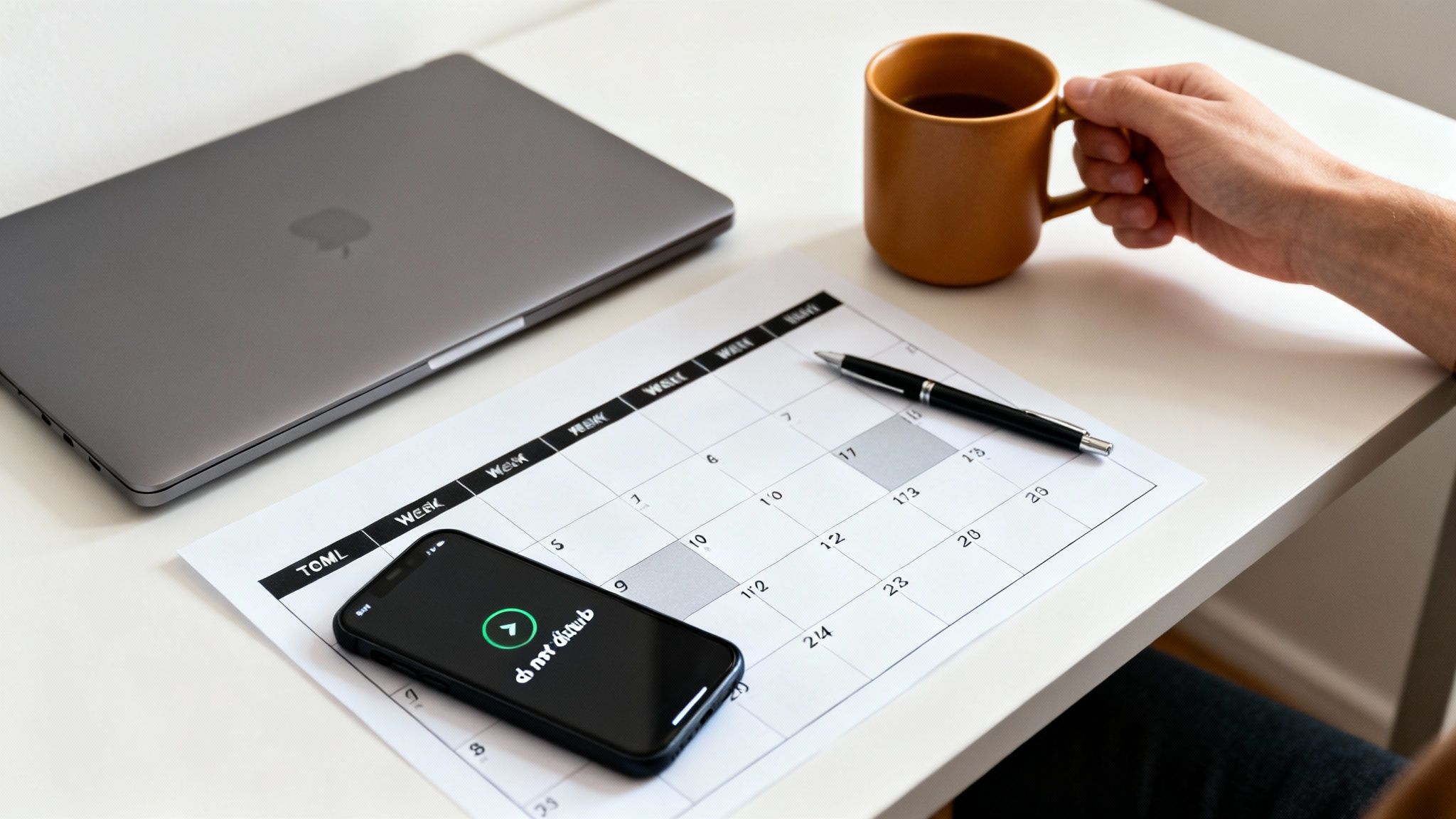
    A young woman working on her laptop at a desk with a coffee mug and calendar.

    Morning workouts when you want a clean start

    Morning sessions work well for people who need momentum early. You remove the day’s decision clutter before it builds.

    This fits people who otherwise procrastinate exercise all day. It also pairs nicely with a simple setup such as clothes laid out the night before and a short plan already chosen.

    Midday workouts when focus drops

    A lunchtime session can reset a stale brain. This is often the sweet spot for remote workers who hit a heavy attention dip after several hours of screen time.

    A short walk, hybrid circuit, or mobility session can help you return to work less foggy. If you tend to crash in the early afternoon, this slot is worth testing.

    A well-timed reset can work alongside other energy tools, including a short recovery break like a 20-minute nap, depending on what your body and workload need.

    Evening workouts when you need decompression

    Evening sessions are useful when work leaves you mentally crowded. The goal here is often stress release, not peak performance.

    For this slot, simpler plans usually win. Strength or mobility tends to land better than highly stimulating intervals if you still want to wind down later. Some people also like writing tomorrow’s workout in a time blocking planner so the next day starts with less friction.

    The best time to train is the time you can protect consistently without damaging the rest of your day.

    How to make the schedule stick

    Use habit stacking. Attach the workout to something that already happens.

    Examples:

    • After the school drop-off, start the session.
    • After your first deep work block, train.
    • After your last meeting, change clothes immediately.

    Browse the library if you want more habit-building ideas and burnout-aware routines, especially resources like Burnout Breakthrough.

    Editor's Take and Key Takeaways

    Editor's Take

    What works is rarely flashy. The most effective 30 minute workout plans are simple enough to repeat, challenging enough to matter, and flexible enough to survive a messy week.

    For most adults, the best starting point is not daily intensity. It is a manageable rhythm. Begin with two or three sessions per week. Protect form. Keep the plan easy to remember. Then build from there.

    Strength and hybrid workouts tend to give the best overall return for busy professionals. Mobility deserves more respect than it gets, especially if your body feels beat up from sitting. HIIT can be useful, but it is not the answer to every schedule problem.

    If recovery is part of your bigger picture, habits around sleep and evening wind-down matter too. Some readers find a magnesium glycinate supplement worth discussing with a qualified professional as part of a broader recovery routine. Sleep support is explored further in Restful Nights.

    Key Takeaways

    • Short workouts count. A well-designed 30-minute plan can be highly effective.
    • Consistency matters more than workout length. A shorter plan usually creates less resistance.
    • Decision-light routines support follow-through. Simple structure protects mental energy.
    • Match the plan to the goal. Strength, HIIT, mobility, and hybrid formats each serve a different purpose.
    • Timing affects results. Morning, midday, and evening sessions each come with trade-offs.
    • Progress should be easy to see. Add reps, load, or control instead of reinventing the workout.
    • Recovery matters. The best plan is one you can sustain without feeling wrecked.

    This article may include affiliate links, and purchases may generate a small commission at no extra cost to you. Content is educational only and is not medical or psychological advice. If you are dealing with pain, injury, burnout, anxiety, depression, ADHD, sleep problems, or any health concern, speak with a qualified medical or mental health professional.

    Frequently Asked Questions About 30-Minute Workouts

    Can 30 minute workout plans really work if I want to lose fat?

    They can, if the plan is repeatable and your food intake matches the goal. Fat loss from short sessions comes from consistency, not from trying to cram a full hour of effort into half the time.

    For busy professionals, the better question is whether the workout fits the day you live. A 30-minute session that happens four times a week will beat an ambitious plan you keep postponing. That consistency also reduces decision fatigue, which makes the next session easier to start.

    What if I have no equipment at home?

    Bodyweight training is enough to begin. Squats, lunges, push-ups, glute bridges, planks, step-ups, and split squats can train strength, elevate heart rate, and sharpen focus when the session is structured well.

    Add equipment later if you need more progression. One pair of dumbbells or a resistance band often gives you plenty of room to keep improving. Start with the setup that removes friction and lets you train before work, between meetings, or right after you shut the laptop.

    How many times per week should I do a 30-minute workout?

    Two or three sessions per week is a strong starting point for many adults with full schedules. That frequency builds the habit loop without turning training into another drain on recovery.

    If energy, sleep, and soreness are in a good place, add walking, mobility work, or a fourth session. If work stress is high, keep the formal workouts where they are and protect the routine. More training only helps when it supports your energy instead of stealing from it.

    What should I do if I lose motivation?

    Treat motivation as a bonus, not the system. Habits stick when the cue is clear, the start is easy, and the action feels familiar enough that your brain does not have to negotiate with it each time.

    A few fixes work well:

    • Shrink the start and commit to five minutes or the warm-up.
    • Use the same template for a few weeks so you stop spending mental energy choosing.
    • Track completion in a notebook, calendar, or app.
    • Attach the workout to a stable cue such as coffee, lunch, or the end of your workday.

    Set clothes and equipment out ahead of time. The less setup your brain has to process, the more likely you are to follow through.

    How do I know when to make the workout harder?

    Increase the challenge when the session feels controlled, your form stays clean, and recovery is still solid the next day. Harder is useful. Sloppy is not.

    Change one variable at a time:

    • Add reps
    • Slow the tempo
    • Increase weight
    • Reduce rest a little
    • Choose a harder variation

    That approach keeps progress visible without turning every workout into a test.

    If your goal is better focus as much as better fitness, keep the plan simple enough that it becomes automatic. The best 30-minute workout is the one that improves your body, clears your head, and fits your real schedule week after week.

    Mind Clarity Hub offers practical, research-informed books and guides for focus, burnout recovery, digital habits, and calm productivity. If you want your training routine to support clearer thinking and steadier energy, explore the library at Mind Clarity Hub.

  • TUDCA vs Milk Thistle: Which Is Best for Liver & Focus?

    TUDCA vs Milk Thistle: Which Is Best for Liver & Focus?

    You open your laptop early, promise yourself a cleaner workday, and still feel mentally muddy by noon. The pattern is familiar. Coffee helps a bit. A better workflow helps more. Yet many busy professionals also notice a physical layer beneath the brain fog. Heavy meals, inconsistent sleep, alcohol on weekends, long hours sitting, and stress can leave energy flat and attention less stable.

    That is why tudca vs milk thistle keeps showing up in liver support discussions. People are not only chasing better lab markers. They are trying to think clearly, recover faster, and reduce the background friction that makes focused work harder. The liver does not create concentration on its own, but it does shape inflammation, metabolic balance, and waste handling that can influence how steady you feel during a demanding week.

    Affiliate disclosure: Some links in this article may earn a small commission if you buy through them, at no extra cost to you.

    If you have been searching for answers around fatigue and attention, this practical guide to what causes brain fog is also useful context. The short version is this. A stressed body often supports a stressed mind poorly. That is where these two supplements enter the conversation.

    TUDCA vs Milk Thistle The Modern Professional's Dilemma

    A common real-world scenario looks like this. Someone works at a desk all day, eats well most weekdays, slips on travel or deadlines, and wants support without turning health into a second job. They see milk thistle marketed as a classic liver herb. They see TUDCA framed as a more advanced option. Both promise support. Few explain the trade-offs clearly.

    For cognitive performance, the question is not whether a supplement can magically create deep work. It cannot. The better question is whether better liver and metabolic support can lower some of the noise that interferes with focus. In practice, that can mean steadier energy, less digestive drag after meals, and a better chance of sticking with simple habits like hydration, walking, and sleep timing.

    Why liver support matters for mental clarity

    The liver helps manage nutrient processing, bile production, and inflammatory burden. When those systems are strained, people often describe the result in plain language. They feel slow, puffy, heavy after eating, or mentally off. That does not diagnose anything, but it does explain why liver health sits closer to productivity than many individuals might realize.

    A healthy routine still does the heavy lifting. Supplements only support the foundation.

    Practical example: If your afternoon focus always collapses after a large lunch, the issue may not be motivation alone. Digestion, energy regulation, and overall metabolic strain can shape how alert your brain feels at your desk.

    The busy professional's decision

    Milk thistle usually appeals to the person who wants broad, steady liver support. TUDCA usually appeals to the person who wants a more targeted tool for bile flow and metabolic stress. That difference matters.

    It also affects adherence. A supplement plan that fits your real life works better than a perfect plan you abandon in a week. If better energy helps you stay consistent with basics, even something simple like using an under desk walking pad during calls becomes easier to sustain.

    Milk Thistle The Time-Tested Liver Guardian

    A vibrant purple milk thistle flower blooms in a rocky landscape with the text Liver Guardian overlaid.

    Milk thistle comes from the seeds of Silybum marianum. It has a documented history of use spanning over 2,000 years according to this review of milk thistle and TUDCA. That long history is one reason many clinicians and careful consumers still start here.

    Its best-known active complex is silymarin. Think of silymarin as a plant compound group with several jobs. It helps protect liver cells from oxidative stress, supports membrane stability, and may help the liver repair itself after everyday wear and tear.

    How milk thistle works in practice

    Milk thistle is not mainly a bile flow supplement. It is better understood as a cell-protective and anti-inflammatory option. It helps by stabilizing liver cell membranes, lowering inflammatory activity, and promoting protein synthesis tied to regeneration, as described in the source above.

    That makes it a practical fit for someone with a modern but imperfect lifestyle. Think of the consultant who eats well at home but travels often. Or the manager who wants support after occasional social drinking and long workweeks. In those cases, milk thistle makes sense as a broad, foundational choice.

    What the research supports

    The evidence base is not just historical. The same source notes a randomized trial in people with non-alcoholic fatty liver disease where 8 weeks of milk thistle supplementation significantly improved ultrasound fatty liver grading and reduced ALT and AST. It also reports significant improvements in aminotransferases compared with placebo in liver disease and cirrhosis patients.

    A PubMed search also shows over 100 studies supporting milk thistle across different liver conditions in that same source. That does not mean every product works equally well. It does mean milk thistle has depth behind it.

    Best option for general liver support

    Milk thistle tends to work best when the goal is steady protection, not aggressive intervention. It often fits people who want:

    • Broad support: Help with general liver wellness rather than one narrow pathway.
    • A longer track record: Reassurance from traditional use plus clinical study.
    • A gentler feel: A lower chance of the digestive upset some people report with TUDCA.
    • A maintenance approach: Something that pairs well with sleep, food quality, and alcohol moderation.

    Mini scenario: A remote worker has deadlines, occasional takeout dinners, and weekend drinks but no obvious bile flow complaints. Milk thistle is often the cleaner first step.

    If brain fog is part of the picture, this guide to supplements that help with brain fog gives broader context on how liver support fits into a larger strategy.

    TUDCA The Specialized Metabolic and Bile Flow Enhancer

    A 3D microscopic visualization of cellular structures and bile flow within human liver tissue.

    TUDCA stands for tauroursodeoxycholic acid. It is not an herb. It is a bile acid derivative, which immediately sets it apart from milk thistle. That difference explains why the two supplements can feel similar in marketing but act quite differently in the body.

    TUDCA is more specialized. Its main strengths center on bile flow, liver cell stress, and metabolic support. If milk thistle acts more like a shield, TUDCA acts more like a traffic manager for bile movement and cellular housekeeping.

    Where TUDCA stands out

    TUDCA has been studied in human trials at doses from 250 mg to 2,000 mg per day according to this summary on TUDCA vs milk thistle. The same source notes that 500 mg per day significantly lowered key liver enzymes in people with primary biliary cholangitis.

    Its biggest advantage appears when bile flow is part of the problem. This matters for people with sluggish digestion, fat intolerance, certain metabolic issues, or those who have had gallbladder removal. In those cases, a general antioxidant may not address the main bottleneck.

    The plain-English mechanism

    TUDCA helps improve bile flow and reduce endoplasmic reticulum stress. That sounds technical, but the idea is simple. Inside cells, protein handling can get jammed. When that β€œfactory” runs poorly, cells work less efficiently. TUDCA appears to help reduce that stress burden.

    It also supports glutathione levels and metabolic health. For a busy professional, that may show up less as a dramatic feeling and more as fewer rough edges. Digestion may feel smoother. Meals may sit better. Energy may feel less erratic.

    Practical example: Someone without a gallbladder often notices heavier meals derail their afternoon. TUDCA is more relevant here than milk thistle because bile handling is closer to the actual issue.

    Later, if you want more on the gut-liver connection, this article on sodium butyrate benefits adds useful context.

    A quick video overview can also help if you prefer visual learning:

    What TUDCA does not do well

    TUDCA is not automatically the better first choice for everyone. Its research is promising, but it is less rooted in long traditional use than milk thistle. It can also cause diarrhea at higher doses, based on the same BodyBio summary.

    That matters if your baseline digestion is already sensitive. For some people, a targeted tool feels too aggressive when a broader option would have been enough.

    TUDCA vs Milk Thistle A Head-to-Head Evidence-Based Comparison

    A busy week often hides the core question. Is the problem broad liver stress from accumulated load, or a more specific issue with bile handling and metabolic strain that shows up after meals, during long afternoons, and in next-day mental clarity?

    TUDCA vs Milk Thistle At a Glance

    Feature Milk Thistle TUDCA
    Origin Herbal extract from Silybum marianum Bile acid derivative
    Primary strength Antioxidant and liver cell protection Bile flow and metabolic support
    Best fit General liver wellness Bile-related and metabolic concerns
    Research style Long traditional use plus clinical literature More targeted modern literature
    Common caution Allergy concerns for some users Digestive upset such as diarrhea

    Infographic

    Mechanism determines fit

    Milk thistle and TUDCA support the liver through different pathways. That is the point that matters in practice.

    Milk thistle is mainly studied for antioxidant effects, inflammatory regulation, and protection of liver cell membranes. TUDCA is studied for bile acid signaling, bile flow support, and reduction of cellular stress related to protein handling. A person with mild, steady lifestyle strain may benefit from a different tool than someone whose symptoms cluster around fatty meals, sluggish digestion, or known bile issues.

    For a professional focused on cognitive performance, that distinction matters because liver strain rarely stays confined to the liver. If digestion is inconsistent, meals feel heavy, or metabolic control is poor, attention and work stamina often suffer too.

    What the evidence suggests

    The strongest practical difference is where each supplement seems most relevant.

    Milk thistle has a longer track record as a general liver support option. It is often the more conservative starting point for someone who wants daily support without targeting a narrow mechanism. TUDCA is more specialized. It tends to make more sense when bile flow, cholestatic patterns, or metabolic dysfunction are part of the picture.

    A useful summary in this guide to optimal liver health reflects that same split. Milk thistle is typically positioned as broad hepatoprotective support, while TUDCA is more often discussed in relation to bile flow and targeted metabolic stress.

    Where each one may help a busy professional

    Milk thistle fits the person whose inputs are messy but familiar. Long work hours. Restaurant meals. Social drinking. Inconsistent sleep. In that setting, broad antioxidant and membrane support may be enough to improve resilience at the margin.

    TUDCA fits a narrower pattern. Energy drops after heavier meals. Digestion feels slow or off. A clinician has mentioned fatty liver, bile issues, or post-gallbladder digestion. Here, a bile-focused supplement is often the more coherent choice.

    That does not mean either supplement directly boosts cognition. The more accurate interpretation is indirect support. Better digestion, steadier metabolic handling, and lower systemic stress can create a better background for concentration, mood stability, and mental endurance.

    Practical comparison

    Use this framework to compare them:

    • Milk thistle usually makes more sense for broad, lower-intensity liver support.
    • TUDCA usually makes more sense for bile-related concerns or a more defined metabolic pattern.
    • Milk thistle often feels easier to justify as a first trial because its use case is wider.
    • TUDCA often has the stronger logic when symptoms clearly worsen around food tolerance or bile flow.

    The wrong comparison is asking which supplement is stronger. The better comparison is which one matches the bottleneck.

    A smarter way to evaluate results

    Track outcomes that matter in real life. Look at post-meal energy, digestive comfort, morning clarity, stress tolerance, and ability to sustain focused work across the afternoon.

    Use one supplement at a time for a defined trial period. Keep sleep, alcohol intake, and meal quality as steady as possible. That gives you a cleaner read on whether you are getting broad protective support from milk thistle or more targeted benefit from TUDCA.

    Best Option for Your Goals Milk Thistle or TUDCA

    Decision-making gets easier when you stop asking which supplement is β€œbest” and start asking which one fits your current problem.

    A purple milk thistle flower next to a molecule model representing natural liver health supplements and compounds.

    Choose milk thistle if

    Milk thistle is often the best opening move for someone who wants long-term, general liver wellness. It has the stronger reputation for gentleness and a longer history of use. It fits the person who wants a steady baseline support tool, not a more specialized intervention.

    This can be the right match if your week looks like this. You work hard, sit too much, eat fairly well but not perfectly, and want a supplement that pairs with better sleep, less alcohol, and improved food quality. You are not chasing a niche mechanism. You want broad support.

    Milk thistle also fits cautious beginners. If you dislike complicated stacks and prefer one simple starting point, this is often easier to justify.

    Choose TUDCA if

    TUDCA is a more logical choice when your issues seem tied to bile flow or metabolic strain. Benchmark summaries position milk thistle as the veteran for sustained liver wellness, while TUDCA stands out for AMPK-related metabolic support and help with endoplasmic reticulum stress in fatty liver and metabolic syndrome contexts, as described in this Dosedaily comparison.

    Real-world fit matters here. If heavier meals leave you sluggish, if you have had gallbladder removal, or if a clinician has already raised concerns around fatty liver or insulin resistance, TUDCA may better match your needs.

    It is the more targeted tool. That is a strength, not a universal advantage.

    Best for beginners and best for targeted support

    A simple way to decide:

    • Best for beginners: Milk thistle
    • Best for bile support: TUDCA
    • Best for broad maintenance: Milk thistle
    • Best for metabolic repair conversations: TUDCA
    • Best for cautious users: Milk thistle first

    Mini scenario: An executive with chronic digestive heaviness after lunch and a history of gallbladder surgery is usually not the ideal β€œstart with milk thistle and hope” case.

    Can some people combine them

    Yes, some people do. The logic is straightforward. Milk thistle supports protection and regeneration. TUDCA supports bile flow and targeted metabolic function. That can be complementary.

    Still, combination use should be treated like a deliberate decision, not a casual stack. A clear outside resource like this guide to optimal liver health can help you think through the bigger picture of food, movement, alcohol, and recovery before adding multiple supplements.

    If stress and overload are part of why your health habits keep slipping, a reset on the behavior side matters too. In that situation, many readers also benefit from practical burnout resources like Burnout Interrupted.

    How to Choose a High-Quality Supplement Dosing and Safety

    Buying the right supplement is only the first decision. The larger risk is choosing a weak formula, an inflated dose, or a product that creates digestive or medication issues you did not plan for. For busy professionals using liver support to improve steadier energy, clearer thinking, and better resilience under stress, quality control matters because inconsistent products create inconsistent results.

    What to look for in a formula

    Start with a brand that makes verification easy. That means clear ingredient amounts, standardized extracts where relevant, and independent quality checks. If you want a practical reference for what screening standards usually look like, this guide to third-party tested supplements is useful.

    For milk thistle, the key detail is standardized silymarin content. A label that only says "milk thistle blend" tells you very little about potency.

    For TUDCA, check the amount per serving, the number of capsules needed to reach that amount, and whether the company states purity or testing standards. That helps you avoid underdosed products and unclear proprietary blends.

    Dosing that respects the evidence and real-world tolerance

    TUDCA has been studied across a fairly wide range. Human research has used doses from 250 mg to 2,000 mg per day, but that range should not be treated as a starting point for everyone. In practice, a lower starting dose often makes more sense, especially for people with sensitive digestion or anyone stacking it with other supplements.

    Milk thistle is less straightforward from a dosing perspective in this article because the available material supports clinical use without giving one universal standalone dose. The practical answer is simple. Choose a standardized extract, follow the label from a reputable brand, and avoid assuming a larger dose will improve outcomes.

    This is one area where restraint helps. More supplement does not automatically mean better liver support or better mental clarity.

    Safety and real trade-offs

    These products are usually discussed as "natural," but that does not remove the need for caution.

    Use extra care if you:

    • Take prescription medications: review possible interactions with a clinician or pharmacist.
    • Have current liver or gallbladder symptoms: pain, jaundice, or persistent digestive distress deserves medical evaluation, not self-treatment.
    • Have sensitive digestion: TUDCA can trigger loose stools or diarrhea, especially at higher doses.
    • Have ragweed or related plant sensitivities: milk thistle may be a poor fit for some people with plant allergies.

    A simple rule works well here. Start one product at a time and give it enough time to judge benefit, tolerance, and whether it improves digestion, recovery, or day-to-day mental steadiness.

    Consistency matters more than perfect timing. Taking the supplement with the same meal each day is often enough to make adherence easier.

    If you want a more detailed buying framework, this roundup of product reviews and science deep dives can help you compare evidence, labeling quality, and formulation details before you buy.

    Editor's Take and Key Takeaways

    Editor's Take

    For many individuals, milk thistle is the better first-line option. It has the longer track record, broad liver support profile, and a gentler reputation. If your goal is everyday protection, better recovery from a messy modern routine, and a conservative starting point, it usually makes more sense.

    TUDCA is the specialist. It becomes more compelling when bile flow, fatty liver discussions, sluggish digestion with heavier meals, or metabolic concerns are part of the picture. In those situations, it often matches the underlying issue more directly.

    Neither supplement replaces sleep, food quality, movement, or alcohol moderation. Those still shape cognitive performance more than any capsule. The supplement works best when it supports a clear, realistic health system.

    Key Takeaways

    • Milk thistle is the classic option for broad liver protection and long-term wellness support.
    • TUDCA is the more targeted option for bile flow and metabolic stress.
    • Milk thistle generally suits cautious beginners better.
    • TUDCA may fit better after gallbladder removal or when bile-related issues are central.
    • Focus and mental clarity improve indirectly when digestion, inflammation, and energy regulation improve.
    • Start one product at a time so you can track what changes.
    • Quality matters. Choose brands with transparent labeling and third-party testing.
    • Side effects matter too. TUDCA may cause digestive upset at higher doses.
    • Combination use can make sense, but it should be deliberate.
    • Lifestyle still leads. Supplements support the system. They do not replace it.

    This article may contain affiliate links, and purchases may generate a small commission at no extra cost to you. It is for educational purposes only and is not medical or psychological advice or a substitute for care from a qualified professional.

    Frequently Asked Questions About TUDCA and Milk Thistle

    Can I take TUDCA and milk thistle together?

    Some people do combine them because they work through different pathways. Milk thistle is broader and more protective. TUDCA is more targeted to bile flow and metabolic stress. If you combine them, do it thoughtfully and ideally with clinician input.

    Which is better for brain fog?

    Neither is a direct brain supplement. Any benefit for focus is indirect. Better digestion, steadier energy, and lower inflammatory burden can support clearer thinking. For a broader brain-fog approach, this guide on vitamins to help with brain fog may help.

    How long does it take to notice a difference?

    That varies. Some people notice digestive changes first. Others mainly notice whether energy and work stamina feel more stable over time. Track trends, not single days.

    Which one is better for a beginner?

    Milk thistle is usually the simpler starting point. It is broader, gentler, and easier to justify when you are not dealing with obvious bile-related issues.

    What lifestyle habits pair best with either supplement?

    Keep it boring and consistent. Better sleep, more walking, simpler meals, less alcohol, and a fixed eating rhythm usually help more than adding more pills. If recovery and sleep are weak links, Restful Nights is a useful companion resource.


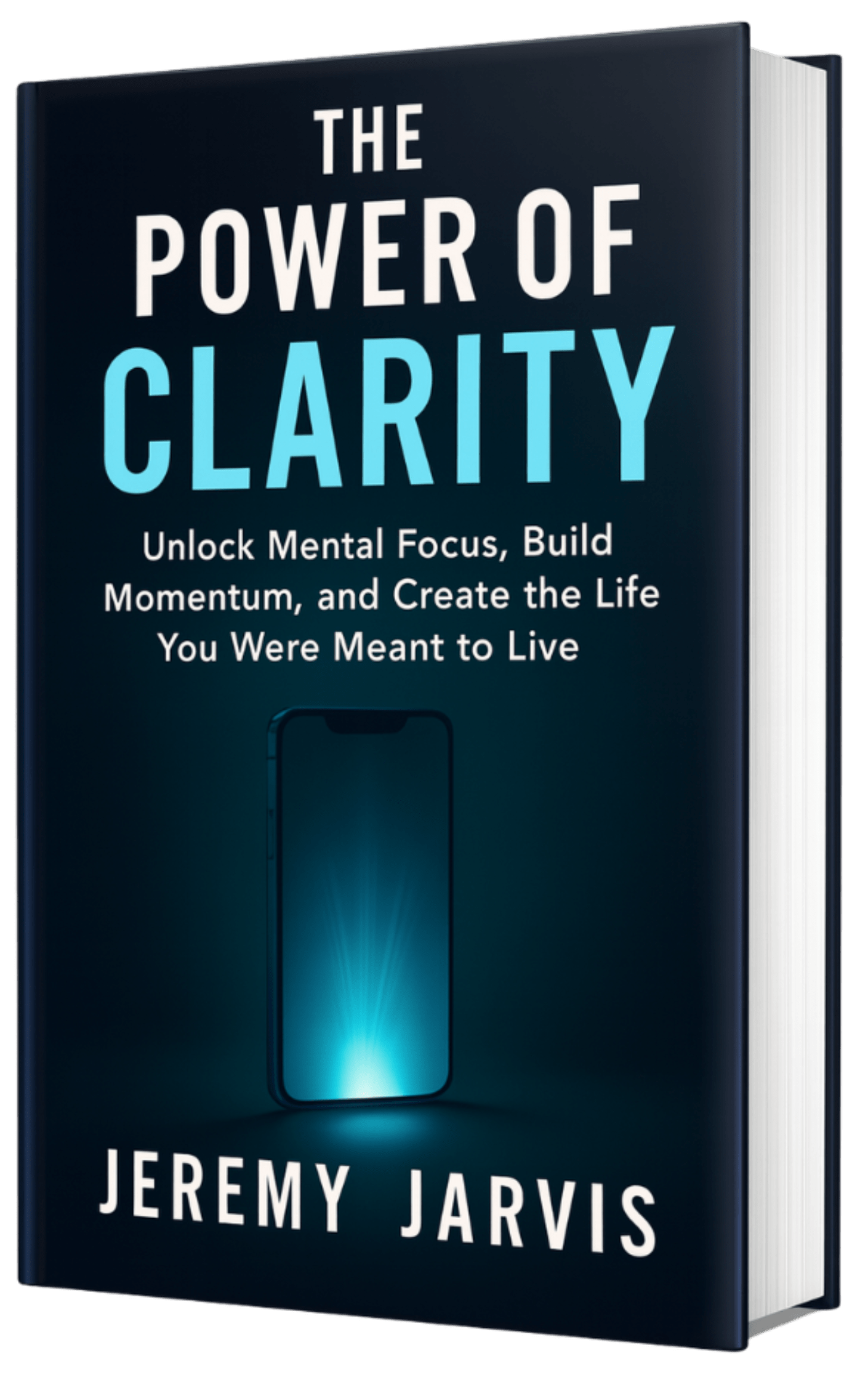
    If you want practical, research-informed help for focus, burnout recovery, digital clarity, and sustainable habits, visit Mind Clarity Hub. You can compare books like The Power of Clarity, Digital Clarity, and Reclaiming Silence to find the one that fits your current goal.

  • Vitamin C or D? A Guide for Immunity, Mood & Focus

    Vitamin C or D? A Guide for Immunity, Mood & Focus


    Monday starts with a scratchy throat, a foggy head, and a calendar that does not care. You search β€œvitamin c or d,” open five tabs, and get the same recycled advice. One says take vitamin C at the first sign of a cold. Another says vitamin D provides the immune fix. Meanwhile, you are still tired, still indoors, and still trying to think clearly through meetings.

    That confusion makes sense. Most supplement advice treats immunity as the only goal. Busy professionals usually need more than that. They want fewer sick days, steadier mood, better stress resilience, and enough mental energy to finish focused work without feeling fried by noon.

    Affiliate disclosure: Some links in this article may be affiliate links. If you buy through them, we may earn a small commission at no extra cost to you.

    The useful question is not just β€œvitamin c or d?” It is what problem are you trying to solve. Prevention and response are different. So are low mood, winter lethargy, poor diet quality, and frequent travel stress. The right answer depends on your routine, your environment, and what your body is likely missing.

    Vitamin C or D The Choice for Better Health

    By 3 p.m., the problem usually looks less like β€œimmunity” and more like low-grade drag. You are answering messages, pushing through meetings, and noticing that your focus, mood, and recovery are not as steady as they should be. For professionals who spend most of the day indoors, the vitamin C or D question is often about mental energy and resilience as much as avoiding the next cold.

    I see this in high-functioning people with demanding schedules. Sleep is decent. Work output looks fine from the outside. Yet they feel flat, rely on caffeine to stay sharp, and bounce back slowly after stress, travel, or a run of convenience meals.

    The first step is to match the vitamin to the gap.

    Quick start question Leaning toward vitamin C Leaning toward vitamin D
    Main goal Extra support during high stress, poor diet, or heavy workload Stronger day-to-day baseline for mood, resilience, and immune function
    Daily pattern Low fruit and vegetable intake, travel, irregular meals Indoor work, limited midday sun, winter slump
    Best mental model Short-term repletion and daily coverage Foundational support when sun exposure is low
    Best use case You feel worn down and nutrition has slipped You want steadier energy and fewer seasonal dips

    This distinction helps people stop wasting money on the wrong goal.

    Vitamin C and vitamin D play different roles, and busy professionals feel those differences in practical ways. Vitamin C tends to matter more when diet quality drops, stress is high, or recovery feels sluggish. Vitamin D deserves more attention when you live under artificial light, work long indoor hours, or notice lower mood and energy during darker months.

    There is also a false choice built into the β€œvitamin c or d” debate. In practice, many adults do better when they identify which one is most likely missing first, then decide whether both belong in the plan. If brain fog is part of the picture, a broader review of supplements that help with brain fog can help you separate quick fixes from options that fit your routine.

    The goal is not to collect more pills. The goal is to support clearer thinking, steadier energy, and a body that handles pressure better over the course of a real workweek.

    The Role of Vitamin C in Your Body and Brain

    A young person with braids wearing a green hoodie sitting at a desk and using a laptop.

    Vitamin C gets framed as a cold vitamin. That is too narrow. It is also essential for forming blood vessels, cartilage, muscle, and collagen in bones, according to Harvard’s vitamin C review at https://nutritionsource.hsph.harvard.edu/vitamin-c/. Because it is water-soluble, your body cannot store it. That makes daily intake more important than occasional bursts.

    Why vitamin C matters for mental energy

    Mental fatigue is not only a mindset issue. Long work hours, high stress, and digital overload create a steady stream of physical demand. When nutrition quality slips, that strain can show up as low energy, apathy, and dull mood.

    A 2023 paper reported that 64% of psychiatric inpatients had mild vitamin C deficiency, with fatigue and depression among the presenting issues, according to https://pmc.ncbi.nlm.nih.gov/articles/PMC10428288/. That does not prove vitamin C deficiency explains every case of brain fog. It does show that low vitamin C can sit far below scurvy and still matter.

    That is why I take β€œI’m just tired” seriously when someone’s diet is light on fruit and vegetables. The problem is often less dramatic than illness and more practical. It is the freelancer who lives on takeout during deadlines. It is the remote worker who snacks through meetings and realizes dinner was the first produce of the day.

    If brain fog is part of your picture, this guide on supplements that help with brain fog can help you think more broadly about the pattern.

    What vitamin C does well and what it does not

    Vitamin C is useful when your intake is inconsistent or you are under short-term strain. It may also help when you want support during a cold rather than broad prevention. But it is not a magic β€œmore is better” nutrient.

    Practical tip: If your days are intense, start with food quality first. Add fruit or vegetables to meals you already eat instead of relying on random megadoses.

    A common real-world setup looks like this:

    • Morning miss: Coffee and a protein bar.
    • Lunch rush: Sandwich, chips, no produce.
    • Late afternoon crash: You feel drained and assume it is only stress.
    • Better move: Add a fruit at breakfast and vegetables at lunch before reaching for another supplement.

    Sleep support also matters because recovery affects attention and mood. If late-night screen time keeps your system alert, a simple sleep mask blackout can help create a more stable wind-down routine.

    Understanding Vitamin D The Sunshine Vitamin

    A young woman with curly hair resting her head on her hand near a sunny window.

    Vitamin D is often treated like a side note. For busy indoor workers, it is closer to a foundation issue. It acts more like a system regulator than a quick fix, which is why people often notice its absence as a vague drop in drive, steadiness, or resilience.

    Why vitamin D is different

    Vitamin D stands apart because it supports immune regulation and works more like infrastructure than emergency backup. This matters for professionals whose routine blocks the very thing that helps produce it. If your day starts before sunrise, moves from car to office to couch, and ends under artificial light, your baseline may suffer long before you notice it.

    The old story of deficiency makes the point well. Between 1500 and 1800, scurvy killed as many as two million sailors, according to Harvard’s overview at https://nutritionsource.hsph.harvard.edu/vitamin-c/. That history involves vitamin C, not vitamin D. Still, it reminds us that nutrient gaps can shape mood, strength, and performance long before people name the cause.

    For modern desk workers, vitamin D fits the same larger lesson. A nutrient problem does not need to look dramatic to undermine daily function.

    A useful companion read is this article on vitamins to help with brain fog, especially if you are trying to connect low energy with focus problems.

    A common workday pattern

    Consider the remote worker who feels heavy and unmotivated each winter. They still hit deadlines, but everything takes more effort. They walk less, see less daylight, and work near a window that never quite counts as outside time.

    That pattern deserves attention because low mood and low motivation often change behavior before they change lab results. When people feel flat, they procrastinate more, move less, and default to easier food choices. In plain language, the body feels underpowered, and the mind starts negotiating with every task.

    If that cycle sounds familiar, it helps to support the whole recovery environment, not just one nutrient. Sleep and mood are tightly linked, which is why many readers also benefit from Restful Nights.

    A short visual explainer helps if you want the big picture before choosing a supplement:

    Vitamin C or D for Immune Support Head to Head

    When people ask about vitamin c or d for immunity, they usually want one winner. That is the wrong model. The better model is prevention versus response.

    Infographic

    Quick Comparison Vitamin C vs Vitamin D for Immunity

    Attribute Vitamin C Vitamin D
    Core role Symptom support during illness Prevention support before illness
    Best use When you are run down or already sick When you want a steadier immune baseline
    Evidence highlight 1 to 2 grams daily can reduce cold duration by 8% in adults Meta-analyses show a 12% risk reduction for acute respiratory infections
    Best fit Frequent travelers, poor produce intake, acute stress periods Indoor workers, low sun exposure, darker months

    The clearest summary comes from the immune research reviewed at https://cymbiotika.com/blogs/health-hub/is-vitamin-c-or-d-better-for-immune-system-support. Vitamin D showed a 12% risk reduction for acute respiratory infections, especially in deficient people. Vitamin C did not prevent colds, but 1 to 2 grams daily reduced cold duration by 8% in adults and 14% in children.

    What this means in normal life

    If you are preparing for conference travel, shared offices, or a season when everyone around you is coughing, vitamin D makes more sense as a baseline tool. It is the β€œbuild the roof before it rains” option.

    If you already feel something coming on, vitamin C is more like the β€œsupport the response” option. It does not stop exposure. It may help shorten the drag of a cold.

    Best option for busy professionals: Use vitamin D to strengthen the baseline. Use vitamin C more strategically when diet quality drops or symptoms start.

    That distinction helps people stop wasting money on the wrong goal. I often see professionals take vitamin C every morning expecting broad prevention, while ignoring the larger issue of indoor living and low daylight. That is like carrying an umbrella indoors while the roof leaks.

    If you want a wider supplement overview, this round-up of best vitamins for immune support gives a broader context for where these nutrients fit.

    A simple decision filter

    • Choose vitamin D first if your life is mostly indoors.
    • Choose vitamin C first if fresh produce is inconsistent and you want response support.
    • Use both thoughtfully if your workload, travel, and winter routine stack several risk factors at once.
    • Skip the hype if your diet is solid and you have no reason to suspect a gap.

    Many professionals also benefit from friction-reducing tools that protect daily routines. A pomodoro timer or visual timer for desk can help preserve lunch breaks, which makes real food more likely than another rushed snack.

    How to Choose The Best Vitamin for Your Goals

    A person holds two bottles of vitamins, one labeled Vitamin C and the other Vitamin D.

    The best vitamin c or d choice depends less on marketing and more on your day. Start with your bottlenecks. Are you indoors all day? Are your meals weak? Do you travel often? Do darker months hit your mood and drive hard?

    Best for beginners choosing vitamin c or d

    A simple rule works well.

    • Pick vitamin D first if you work inside, get limited sun, or notice darker months affect motivation.
    • Pick vitamin C first if you eat little fruit and vegetables, get run down during high-stress stretches, or want support when a cold begins.
    • Consider both if you have both patterns at once.

    Take the example of a consultant who uses an under desk walking pad during long calls. That movement is helpful. It does not solve the fact that they are still indoors for most of the day. In that case, vitamin D still deserves attention.

    How to choose vitamin c or d without overthinking it

    Use these filters:

    1. Look at your environment. Indoor work and limited daylight point toward vitamin D.
    2. Look at your plate. If produce intake is inconsistent, vitamin C becomes more relevant.
    3. Look at timing. Prevention goals lean D. Short-term response goals lean C.
    4. Look at habits, not intention. What you mean to eat matters less than what you ate this week.

    Practical tip: Review the last five workdays, not your ideal routine. Your pattern tells you more than your health goals do.

    If you are shopping and want a straightforward product overview, this guide to finding the best vitamin D supplements is a helpful starting point.

    For people also dealing with muscle tension, stress overload, or recovery issues, it can help to think in systems. This article on magnesium chloride benefits is useful if your supplement choices need to support energy and stress resilience together.

    Compare options before buying. A cheap bottle you never remember to take is not the best option. The best option is the one that fits your life and gets used consistently.

    The Synergy When to Take Both Vitamin C and D

    A busy workweek can drain two inputs at once. Long hours indoors can chip away at vitamin D status, while skipped meals and low produce intake can leave vitamin C intake inconsistent. In practice, that is why the better question is often not vitamin C or D. It is whether your routine calls for both.

    These vitamins do different jobs, but they can support the same outcome. Vitamin D helps set the baseline for immune regulation, mood, and resilience, especially for people who get little midday sun. Vitamin C helps cover the day-to-day strain that comes with stress, poor meal timing, and higher oxidative demand. Together, they make more sense for professionals who feel run down, mentally flat, or less steady by the end of the week.

    This insight changes the question. Instead of asking which one wins, ask where your real friction is happening.

    When taking both makes practical sense

    A combined approach often fits if your week looks like this:

    • You work indoors most days and rarely get meaningful sun exposure.
    • Your meals are inconsistent, especially during deadlines or travel.
    • Stress is high, sleep is uneven, and your focus drops before the workday is done.
    • Winter tends to lower your mood, energy, and food quality at the same time.

    I see this pattern often in people with demanding schedules. They are not dealing with one isolated problem. They are dealing with stacked inputs that affect immunity, mental energy, and recovery all at once.

    A simple example is the executive who starts early, works through lunch twice a week, and gets outside only in short bursts between meetings. Vitamin D can help support a steadier baseline. Vitamin C can help close the gap created by inconsistent food intake. For some people, that pairing feels less like adding supplements and more like removing friction.

    If energy support is part of the bigger picture, it also helps to review related timing habits. This guide on the best time of day to take vitamin B12 can help if your routine needs to support focus as well as immune health.

    Key takeaway: If your schedule limits both sunlight and food quality, taking vitamin C and D together can be more practical than treating them as competing options.

    If you want a broader reset around clarity, energy, and sustainable routines, start with the chapter on The Power of Clarity, as noted earlier.

    Safe Dosing Timing and Supplement Quality

    A good supplement routine is boring. That is a compliment. It should be simple, repeatable, and grounded in what your body can use.

    The NIH Office of Dietary Supplements notes that the RDA for vitamin C is 90 mg daily for adult men and 75 mg for women, with an upper limit of 2,000 mg for adults. It also reports that absorption falls to less than 50% above about 1,000 mg, and even extreme dosing yields diminishing returns, according to https://ods.od.nih.gov/factsheets/VitaminC-HealthProfessional/.

    What works better than megadosing

    For vitamin C, bigger is not automatically better. Once absorption drops, more of the excess is excreted. That makes routine intake and diet quality more practical than chasing giant doses.

    For vitamin D, consistency matters more than randomness. Take it with a meal that contains some fat. That supports absorption and makes the habit easier to remember.

    What to buy first and what to check

    • Choose simple formulas: Avoid buying a huge stack before you know what problem you are solving.
    • Check the label: Look for clear dosing and third-party testing when possible.
    • Match the routine: Morning with breakfast often works well for vitamin D.
    • Support the whole system: Some people also use a magnesium glycinate supplement at night if stress and tension are part of the picture.

    If you already take several supplements, spacing can matter. This guide on the best time of day to take vitamin B-12 is helpful if you are trying to build a routine without creating confusion.

    This article may include affiliate links, and purchases may generate a small commission at no extra cost to you. It is also for education only and is not medical or psychological advice. If you have concerns about anxiety, depression, burnout, ADHD, sleep problems, medications, or underlying health conditions, speak with a licensed clinician.

    Editor's Take

    Here is the shortest honest answer. Vitamin D is the better first choice for many indoor workers who want prevention, steadier mood, and a stronger baseline. Vitamin C is more useful when food quality slips or when you want symptom support during a cold.

    What works is consistency. A decent diet, regular sleep, daylight exposure, and movement still matter more than any bottle. Supplements can help fill gaps. They do not replace the basics.

    Who is this best for? Professionals with low sun exposure, inconsistent meals, frequent travel, or winter dips in energy. Who should be cautious? Anyone assuming supplements can compensate for chronic stress, poor sleep, or a diet built on convenience foods alone.

    If you only remember one point, remember this. Choose based on your routine, not generic wellness advice.

    Key Takeaways

    • Vitamin D fits prevention. It is often the better first step for indoor workers with low sun exposure.
    • Vitamin C fits response. It is more useful for symptom support and for people with weak produce intake.
    • Vitamin C and D can work together. That synergy is one of the most overlooked parts of this debate.
    • More is not better. Vitamin C absorption drops above higher doses, so megadosing is inefficient.
    • Your routine decides the answer. Sunlight, diet, work style, and stress load matter more than trends.
    • Food and habits come first. Supplements work best when they support a solid foundation.

    Frequently Asked Questions About Vitamin C and D

    Can I get enough vitamin c or d from food alone

    Possibly. Many adults meet vitamin C needs from food alone. NIH data from NHANES found average intakes from food and beverages met the RDA for most adults in the survey noted earlier. Vitamin D can be harder because sunlight exposure and daily routine matter a lot. Food alone may not fully cover everyone, especially indoor workers.

    How do I know which one I need more

    Start with your pattern. Low sun exposure points toward vitamin D. Low fruit and vegetable intake points toward vitamin C. If your symptoms are broad and persistent, lab testing through a clinician can make the decision more precise.

    How long does it take to notice a difference

    That varies. Some people notice changes in daily energy or resilience gradually once a deficiency is corrected. Others notice little because the bottleneck was sleep, stress, or overload. If brain fog is your main concern, it helps to look at the bigger picture, including what causes brain fog.

    Are these supplements enough to improve focus and mood

    Not by themselves. Nutrients can support the biology behind energy and mental performance, but focus also depends on sleep, stress load, habits, and work design. A productivity journal can help you spot whether the bigger issue is nutrition, overload, or constant task switching.

    Are there people who should talk to a clinician before taking them

    Yes. If you take medications, have a medical condition, are pregnant, or have a history of mood or sleep problems, get personalized guidance. This article is educational only. It is not a substitute for medical or psychological care.


    If you want practical, research-informed help for focus, burnout recovery, digital overload, and calm productivity, visit Mind Clarity Hub. It is a strong place to browse books and tools that help you build clearer routines, protect mental energy, and make better decisions without hype.

  • Lunch Break AI: A 20-Minute Reset for Focus & Calm

    Lunch Break AI: A 20-Minute Reset for Focus & Calm

    By noon, many people are not taking a break. They are eating quickly, checking Slack, clearing inboxes, and carrying half-finished thoughts into the afternoon. The body sits still, but the mind keeps sprinting.

    That is why lunch break ai matters. Used badly, it turns your break into more screen time. Used well, it becomes a short reset that clears mental clutter, lowers friction, and helps you return to work with a steadier mind.

    Affiliate disclosure: This article may include affiliate links. If you buy through them, we may earn a small commission at no extra cost to you.

    The End of the Lunch Break and the Rise of AI

    A working lunch used to be the exception. For many professionals, it now feels normal. Food lands next to the keyboard. Messages keep arriving. The nervous system never gets the signal that the pressure has paused.

    That constant partial attention has a cost. You may finish lunch feeling oddly more tired than before it started. You rested your stomach, but not your focus.

    A woman eating lunch from a plastic container while typing on a laptop at her desk.

    A more useful way to think about lunch break ai is this. It is not a method for squeezing in extra output. It is a short, structured routine for reducing mental noise. Instead of scrolling or rewriting emails, you use AI to unload the thoughts already filling your working memory.

    Zoom’s The Lunch Break Report found that 76% of AI users save at least one hour daily, and 70% believe AI helps them step away from their screens at lunch. In Denver, where 51% of workers skip lunch, 83% of professionals are now using AI, which points to a wider shift toward using technology to protect personal time.

    What lunch break ai is really for

    The best midday AI routine does three things well:

    • Reduces open loops by getting tasks out of your head.
    • Simplifies choices so you stop carrying ten priorities at once.
    • Creates a transition back into work without panic or drift.

    A simple example helps. A project manager has seven tabs open, three follow-ups to send, and a meeting at 1:00. A bad lunch break ai session becomes more drafting, more tweaking, and more decisions. A good one produces a short sorted list. It might say: handle one client issue first, prepare one meeting note, and defer everything else until later.

    That difference matters because the brain handles uncertainty poorly when it is already overloaded. Order feels calming because it reduces decision strain.

    Tip: If you want a broader foundation for using AI without increasing overwhelm, this guide on how to use ai for productivity is a strong next read.

    Why Your Brain Needs a Midday Reboot

    Mental fatigue is not always dramatic. Often it feels like irritability, fuzzy thinking, tab-hopping, or reading the same sentence twice. Many people call that a motivation problem. In practice, it is often a load problem.

    Your brain has limited working memory. When too many tasks stay active at once, focus becomes brittle. That is why a midday reboot helps. It clears some of the backlog before the afternoon asks for more.

    Attention residue is real

    When one task bleeds into the next, part of your attention stays stuck behind. That leftover pull is often called attention residue. You may leave a meeting, but your brain is still replaying it while you try to write or solve a new problem.

    The trend of AI lunch break workshops is growing, but without neuroscience-backed boundaries like 20-minute caps, they can increase attention residue. The UVU Review coverage notes that this kind of cognitive carryover can reduce performance by up to 40%.

    That is why an open-ended AI session can backfire. If your β€œbreak” becomes ten prompts, three edits, and one rabbit hole, you return to work with more residue, not less.

    Why a short reset changes the afternoon

    A real break helps in plain ways:

    • Working memory unloads when thoughts get captured outside your head.
    • Task switching softens when you return to one clear next step.
    • Mood often steadies because uncertainty drops.

    Consider two versions of the same person at 1:30 p.m.

    In version one, they ate while checking messages. They return scattered, mildly tense, and unsure where to begin.

    In version two, they stepped away, dumped their thoughts into AI, and returned with three priorities. They are not magically energized. They are less fragmented. That is usually enough.

    If you have been wondering whether your afternoon slump is a personal weakness, it often is not. It is a sign that your mental bandwidth needs support. If that pattern feels familiar, these signs of mental fatigue may help you notice it earlier.

    Key takeaway: The point of lunch break ai is not stimulation. It is recovery through clarity.

    The 20-Minute Lunch Break AI Reset Workflow

    The most effective version of lunch break ai is short, contained, and boring in the best way. You are not trying to create polished work. You are trying to reduce mental drag.

    Infographic

    This works best when you use the same sequence each day. Repetition matters because habits lower decision effort. When the routine is familiar, your brain spends less energy starting it.

    Minutes 0 to 5 with sensory disconnect

    Physically leave your main work posture if possible. Stand up. Move away from your keyboard. If you work in a noisy space, put on noise canceling headphones with no lyrics or use silence if that feels better.

    Take a few slow breaths. Then ask one simple question: β€œWhat is still buzzing in my head?”

    This tiny pause matters. The brain does not downshift well when inputs keep firing. A sensory break gives it a cleaner handoff from work mode to reset mode.

    Minutes 5 to 10 with an AI brain dump

    Now use voice-to-text or a simple chat tool. Speak or type without editing.

    Include:

    • Tasks you must do today
    • Worries you keep rehearsing
    • Ideas you do not want to lose
    • Loose ends that feel noisy but are not urgent

    A sample brain dump might read like this: β€œNeed to answer Jen, finish slide three, nervous about client feedback, forgot to book the call, want to draft the proposal, need to buy groceries, and I keep thinking about that budget issue.” This highlights where lunch break ai shines. The cognitive cost of using AI for iterative rewriting during a short break can be high. The TwainGPT review notes that fixing poor outputs increases context switching and digital fatigue. By contrast, a single-pass brain dump and sort workflow can save 15-30 minutes of mental churn compared with manual planning.

    Minutes 10 to 15 with AI-assisted triage

    Paste your brain dump into your AI tool and use a narrow prompt.

    Try this:

    β€œOrganize this brain dump into three sections: top 3 priorities for this afternoon, quick wins under 10 minutes, and save for later. Keep it short and practical.”

    You are not asking for insight. You are asking for sorting.

    That distinction keeps the session useful. The more interpretation you ask for, the more review you usually need later.

    A practical example:

    • Top 3 priorities
    • Send client reply
    • Review meeting notes
    • Prepare one talking point for the 3 p.m. call

    Everything else goes below the line.

    Minutes 15 to 20 with one calming anchor

    Before going back, ask for one final output. Keep it small.

    Use prompts like:

    • β€œGive me one sentence to help me focus on what matters this afternoon.”
    • β€œGive me one grounded reflection on handling a busy day calmly.”
    • β€œTurn my top priority into one clear next action.”

    Then stop. Eat the rest of your lunch. Stretch. Look away from the screen.

    If you need a deeper reset on especially rough days, a short rest can help more than another prompt. This guide to a 20-minute nap pairs well with the lunch break ai routine.

    Try this tomorrow: Set a timer for 20 minutes. Do one brain dump, one sort, and one anchor. No drafting. No polishing. No extra tabs.

    Best AI Tools for a Quick Mindful Break

    The best lunch break ai tools are not always the most powerful ones. They are the ones that create the least friction. Speed matters. Simplicity matters more.

    If a tool invites endless tweaking, it is a poor fit for a restorative break.

    Best option for busy professionals

    Many professionals do well with one of these tool types:

    • Chat assistant for sorting a brain dump into priorities
    • Voice-to-text app for unloading thoughts fast
    • Notes app with AI support for turning chaos into a checklist
    • Meditation or reflection prompt tool for a closing anchor

    Good prompts matter more than fancy features. So does posture. If you are hunching over a screen, even a short session feels heavier. A simple laptop stand for desk can make these brief resets more comfortable, especially if you work remotely.

    Copy-and-paste prompts for lunch break ai

    Use these as written or tweak them lightly:

    • For triage: β€œHere is my brain dump. Organize it into the top 3 priorities for this afternoon and a save for later list.”
    • For calm: β€œGive me one sentence that helps me approach a busy afternoon with clarity.”
    • For focus: β€œTurn these tasks into one next action I can start in under five minutes.”
    • For boundaries: β€œWhat should I not do this afternoon if I want a calmer end to the day?”

    Micro-CTA: Compare options if you want a broader look at AI tools that support focus without adding noise.

    Choosing your lunch break ai partner

    Tool Type Best For Example
    Chat assistant Sorting a messy brain dump β€œTop 3 priorities” prompt
    Voice-to-text tool Fast unloading when your mind feels crowded Spoken note during a walk
    AI note app Turning loose thoughts into action items Afternoon checklist
    Reflection prompt tool Ending the break with perspective One calming sentence

    Best for beginners

    If you are new to AI, start with one use only. Brain dump and sort. That is enough.

    Do not begin with drafting posts, rewriting reports, or editing client copy during lunch. Those tasks usually expand. Then your break becomes another work sprint.

    A simple setup often works best:

    • one chat window
    • one saved prompt
    • one timer
    • one stop point

    That is how you keep lunch break ai restorative instead of compulsive.

    How to Use AI Safely and Avoid Hidden Drains

    AI can reduce friction. It can also create new friction if you use it carelessly. The safest lunch break ai routine is narrow, simple, and low stakes.

    A hand reaching toward a tablet screen displaying a colorful, abstract artificial intelligence graphic on a blue background.

    Protect private information

    Do not paste sensitive company data, client details, financial information, or confidential material into public AI tools. A lunch break is a bad time to make a rushed privacy decision.

    Keep your input generic when possible. Instead of pasting the full proposal, say: β€œI have three competing deadlines and one client revision. Help me prioritize the afternoon.”

    That still gives you value without exposing details.

    Watch for fake productivity

    People often feel faster with AI before they measure the cleanup time. That gap matters.

    Research highlighted by Foxit’s productivity findings shows that 89% of executives feel more productive, yet they gain only a net 16 minutes weekly after spending hours validating output.

    That is the hidden drain. If lunch break ai produces text you must heavily verify, your break becomes another review cycle.

    What to buy first if your breaks keep disappearing

    A tool does not need to be digital. Sometimes a boundary tool matters more. A time blocking planner can protect the break itself. If you schedule lunch as a real appointment, you are more likely to keep it from being consumed by inbox creep.

    You may also benefit from noticing the physical side of screen overload. This article on what is digital fatigue and how to recover faster is useful if your eyes, mood, and focus all feel worn down by midday.

    Rule of thumb: Use AI for sorting, summarizing, and reflection during lunch. Avoid complex writing that invites heavy validation.

    Editor's Take and Key Takeaways

    Editor’s Take

    This approach works best for knowledge workers whose real problem is mental clutter, not lack of effort. If your lunch hour disappears into scrolling, inbox checking, or vague worry, a short lunch break ai routine can create enough order to steady the second half of the day.

    It is not a cure for burnout. It will not fix a toxic workload or nonstop meeting culture. It does something more modest and useful. It helps you pause with structure.

    That is why I do not recommend using lunch break ai for heavy writing during a break. Benchmark tests discussed in this Lunchbreak AI comparison found inconsistent performance, including output oversimplification and tone mismatches. For a restorative break, simple list-making is a far better fit than technical or creative drafting.

    If you want a practical add-on, keep a productivity journal nearby. After the reset, jot down your top priority and one sentence about how you want to feel by the end of the day. That small act can strengthen follow-through.

    Key Takeaways

    • A real lunch break resets attention. It gives your mind a break from unresolved loops.
    • Lunch break ai works best as a sorting tool. Use it to unload and organize, not to create polished work.
    • Keep the session capped at 20 minutes. Boundaries protect the restorative effect.
    • Use one simple workflow. Brain dump, triage, anchor, then stop.
    • Avoid sensitive information. Public AI tools are not the place for confidential details.
    • Measure review time. If AI creates more cleanup, it is not helping.
    • Start small. One saved prompt and one repeatable routine are enough.

    From a Clear Break to a Clearer Life

    A calm lunch break will not transform your life on its own. It can change the direction of your day. That matters more than it sounds.

    When people regain one pocket of attention, they often start noticing where the rest of it leaks away. That is where bigger change begins. One cleaner break can lead to better meeting boundaries, fewer reactive afternoons, and a more humane relationship with your tools.

    If you want to build on that clarity, start with The Power of Clarity. If digital overload is the bigger issue, Digital Clarity and Break the Scroll Digital Detox are strong next steps. If silence feels missing from your day, Reclaiming Silence fits well too.

    See the book that fits your goal.

    Affiliate reminder: some links may earn a small commission at no extra cost to you. This article is educational only and is not medical or psychological advice. If you are dealing with ongoing anxiety, burnout, sleep problems, ADHD, depression, or another health concern, seek support from a qualified professional.

    Frequently Asked Questions About the Lunch Break AI Reset

    Does lunch break ai mean working through lunch

    No. The whole point is to stop using lunch as hidden work time. This method uses AI briefly to reduce mental clutter, then helps you step away.

    How long should a lunch break ai reset take

    Keep it short. A 20-minute cap works well because it gives you enough time to unload and sort without turning the break into another deep work block.

    What should I ask AI during lunch

    Use narrow prompts. Ask AI to organize a brain dump, identify your top priorities, or offer one grounding sentence for the afternoon.

    Is lunch break ai good for writing emails or reports

    Usually not. Complex writing often creates extra review and editing. Lunch break ai is better for low-friction tasks like list-making, triage, and reflection.

    What if AI makes me feel more overstimulated

    Then simplify the routine. Skip the tool for a day, or use only voice notes and a paper list. The goal is calm and clarity. If the tool increases pressure, it is the wrong tool for that moment.


    Mind Clarity Hub offers practical, research-informed books and guides for focus, burnout recovery, digital overload, and calm productivity with AI. If you want your next step to be clear, visit Mind Clarity Hub and browse the library.

  • Your Guide to Affirmations for Happiness in 2026

    Your Guide to Affirmations for Happiness in 2026

    Affirmations for happiness aren't about pretending everything is perfect. They’re concise, positive statements you use to deliberately redirect your internal monologue. By consistently repeating a phrase like, β€œI am capable and worthy of happiness,” you can start to guide your mind toward a more optimistic and empowered outlook.

    This guide explains the science of how affirmations for happiness work and how to make them a practical part of your daily life. We'll ground these ideas in simple neuroscience and psychology. You'll learn how to craft statements that feel true, even on your worst days, and how to weave this powerful habit into your busiest schedules.

    This article contains affiliate links. If you make a purchase through these links, we may earn a small commission at no extra cost to you. This helps support our research and writing. Thank you!

    The Real Science Behind Affirmations for Happiness

    I’ll be honest: I was skeptical for a long time. The idea that repeating positive phrases could make a real difference, especially with the pressures of a busy professional life, felt too simplistic. But when I actually dug into the research, my perspective shifted. Affirmations for happiness aren’t magic. They're a practical way to harness your brain’s natural ability to change.

    This whole process hinges on a core concept in neuroscience called neuroplasticity. Your brain isn't a fixed organ; it’s constantly rewiring itself based on your thoughts, actions, and experiences. Each time you repeat an affirmation, you’re strengthening a specific neural pathway, making that thought a little more automatic over time.

    A model of a human brain, 'CHANGE YOUR BRAIN' sign, and notebooks on a desk by a window.

    How Affirmations Influence Your Brain Chemistry

    When you focus on a positive, self-affirming statement, you’re actually activating key regions in your brain. Neuroimaging studies using fMRI show that this practice engages the brain’s reward systems, particularly the ventral striatum. This is the same area that lights up when we experience pleasure, which makes the act of affirmation itself feel rewarding.

    It doesn’t stop there. This practice can directly impact your body’s stress response. Research has shown that self-affirmation can lower levels of cortisol, the main stress hormone. One study found that people who practiced affirmations focused on their future values showed increased activity in brain areas tied to self-processing, which helped buffer them against the negative effects of stress.

    This is a key principle I explore in my book, The Power of Clarity, which teaches how to build this kind of mental resilience. By consciously choosing your focus, you can start to protect your mind from the constant barrage of digital distractions and internal negativity.

    A Real-World Example of Neuroplasticity

    Think of a busy professional who’s constantly overwhelmed by her workload. Her automatic thought is, "I can't keep up." This thought reinforces a neural pathway of stress and inadequacy.

    Now, let's say she starts using the affirmation, "I handle my responsibilities with calm and focus." At first, it will feel forced and maybe even a little silly. But if she repeats it dailyβ€”maybe by writing it in a habit tracker journalβ€”the new thought becomes more familiar. Her brain starts to associate her workload not just with stress, but with the possibility of calm competence. The work doesn't disappear, but her psychological and physiological response to it starts to change.

    For a deeper dive, you can learn more about retraining your brain for focus and calm in our dedicated guide.

    "The real power of affirmations lies in their ability to interrupt negative thought cycles. They create a deliberate pause, allowing you to choose a more constructive and empowering perspective."

    Healthy Affirmations vs. Toxic Positivity

    It’s so important to distinguish between effective affirmations and what’s often called toxic positivity. Toxic positivity is when you try to ignore or deny negative emotions, which is ultimately unhelpful and invalidating. A healthy affirmation, on the other hand, acknowledges reality while focusing on your ability to handle it.

    • Toxic Positivity: "I am always happy, and nothing bad ever happens." This is just dishonest and denies that life can be hard.
    • Healthy Affirmation: "I have the strength and resilience to navigate life's challenges." This is empowering because it’s realistic.

    The goal isn't to pretend problems don't exist. The goal is to remind yourself of your inner resources and your capacity to cultivate a positive state of mind, even when external circumstances are tough. This is a vital mindset for achieving the kind of Digital Clarity needed to thrive without feeling constantly drained.

    How to Write Affirmations for Happiness That Actually Feel True

    For affirmations to work, they can't just be hollow phrases you repeat. They have to land. They need to feel authentic and believable to you.

    If your brain immediately flags a statement as a lie, it won't help build the positive mental patterns you're after. The real art is in crafting affirmations that resonate on a personal, emotional level, bridging the gap between where you are and where you want to be.

    Hands writing in a notebook next to a steaming coffee mug and laptop, with "I AM WORTHY" affirmation.

    This is where personalization comes in. Generic statements borrowed from the internet often miss the mark because they don't connect with your specific challenges or deep-seated aspirations. The most effective affirmations are built from your own values, goals, and even your current struggles.

    Start in the Present Tense

    The first and most important shift is to state your affirmations as if they are already your reality. Use the present tenseβ€”"I am," "I have," "I create"β€”instead of a future-focused wish like "I will be" or "I want to."

    This isn't about pretending. It’s about direction. Stating something in the present tense signals to your brain that this is the reality you are actively inhabiting now. It closes the mental distance between your current state and your desired one, helping you embody the quality instead of just chasing it.

    • Instead of: "I will become a confident speaker."
    • Try: "I communicate my ideas with passion and clarity."

    You're not denying your current reality; you're directing your focus toward the one you are building.

    Use Positive Framing and Real Emotion

    Your brain tends to zero in on the core concepts it hears, so it's critical to frame your affirmations positively. Steer clear of negative words like "don't," "not," or "stop." Focus entirely on the state you want to create.

    For instance, instead of saying, "I will not let my inbox overwhelm me," a much stronger affirmation is, "I manage my digital communication with calm efficiency." The first version keeps "overwhelm" front and center in your mind. The second focuses your brain on the goal: "calm efficiency."

    But positive words alone aren't enough. The magic happens when you anchor your affirmations in genuine feeling. As you say or write your affirmation, try to actually feel the emotion tied to it. If your statement is "I am surrounded by supportive relationships," take a moment to feel the warmth and gratitude of that connection. Exploring practical ways to develop an attitude of gratitude can make this feeling much more accessible.

    Tie Affirmations to Your Core Values

    The most potent affirmations are the ones that connect directly to what you hold most dear. When an affirmation reflects your core valuesβ€”like integrity, creativity, or connectionβ€”it feels deeply true and meaningful. It stops being a hollow phrase and becomes a statement of identity.

    Take a moment to identify 2-3 of your most important values. Now, try crafting an affirmation that shows how you live out that value day-to-day.

    Real-World Scenario:

    Imagine a freelance writer who deeply values creativity and autonomy. Lately, he's been battling digital fatigue, and his work is starting to feel generic and uninspired.

    • Weak Affirmation: "I am happy." (This is far too vague to be useful.)
    • Strong, Value-Aligned Affirmation: "I create unique and valuable work that reflects my authentic voice."

    This statement is specific, positive, and links directly to his core values. It reinforces his identity as a creative professional and gives him a clear standard to aim for in his work. This is a practical step toward living a more Perfectly Imperfect life, where you embrace who you truly are.

    If you find that persistent feelings of self-worth are getting in the way, you can learn how to overcome feelings of inadequacy in our guide.

    How to Weave Affirmations for Happiness Into Your Busiest Days

    The most powerful affirmations are the ones you actually use. It’s easy to feel a rush of inspiration, write down a few positive statements, and then completely forget them when your calendar is exploding. The real challenge isn’t finding more time; it’s about weaving your practice into the rhythm of the day you already have.

    The secret is a simple behavioral science trick called habit stacking. Instead of trying to carve out a new routine from scratch, you just piggyback your affirmations onto something you already do automatically. This way, the new habit feels less like a chore and more like a natural, easy extension of your existing flow.

    And this small practice isn't just a fleeting mood boost. A groundbreaking evidence review that analyzed 129 studies with nearly 17,800 participants found that even brief self-affirmation practices deliver a significant lift to well-being. The benefits acted as a buffer against daily stressors, with positive effects lasting for days or even weeks. For busy professionals juggling constant demands, this is hugeβ€”it shows how a tiny daily action can create real, long-term mental rewards. Read the full research about these mood-boosting findings.

    Your Morning Affirmation Anchor

    Your morning routine is the perfect place to start. The goal here is to anchor your affirmations to an activity that happens every single day without fail, no matter how chaotic things get.

    • While the coffee brews: As you stand there waiting for your coffee or tea, repeat your chosen affirmation aloud. Something like, "I am focused and ready for a productive day."
    • During your commute: If you drive, walk, or take public transit, use that dedicated time to mentally recite your affirmations. "I navigate my day with purpose and ease."
    • As you open your laptop: Before diving straight into the email vortex, take a single minute. Close your eyes and repeat a statement that sets the tone for your work. "I approach my tasks with creativity and confidence."

    This tiny ritual takes almost no extra time but has a profound impact on your mindset. You can even write your affirmation on a sticky note and stick it on your monitor as a gentle, constant reminder. For more ideas on building consistency, check out our guide to establishing good daily habits that stick.

    Midday Resets for Sustained Happiness

    The middle of the day is often when stress and distraction hit their peak. This is a critical moment to use affirmations as a tool for a quick mental reset, rather than just letting the pressure build.

    One incredibly effective method is to pair your affirmations with a structured work technique like the Pomodoro method. Work in a focused 25-minute block using a pomodoro timer, and then use your five-minute break for a quick affirmation session. Stand up, stretch, and repeat your affirmation.

    This simple practice breaks the cycle of continuous stress and reinforces a more positive state of mind. It’s a powerful reminder to your brain that you are in control, even when facing a demanding schedule.

    Winding Down with Evening Affirmations

    Your evening routine is a powerful time to release the day's accumulated stress and prepare your mind for restorative sleep. Affirmations here should focus on peace, gratitude, and letting go of whatever happened.

    • During your skincare routine: As you wash your face or brush your teeth, tie it to an affirmation like, "I release today's worries and embrace tranquility."
    • As you get into bed: Make it the very last thing you do. You can even pair it with a white noise machine to create a totally calm environment. Affirm, "My mind is calm, my body is relaxed, and I am ready for deep, restful sleep."

    This practice helps shift your brain away from the day's anxieties and into a state that’s actually conducive to sleep. It’s a core principle for achieving quiet, peaceful nights, which you can explore further in Restful Nights. And for more ways to find quiet in a noisy world, browse the library.

    How to Choose the Best Affirmation Style for You

    There’s no one β€œright” way to use affirmations. The only method that works is the one you’ll actually do, day in and day out. The secret isn't finding a perfect script; it's finding a practice that clicks with your personality and slides into your existing routine without a fight.

    Some people feel a jolt of energy speaking their intentions aloud. Others connect more deeply through the quiet, physical act of writing. Maybe you’re a busy professional who needs something quick and tech-friendly. Let's find the approach that feels less like a chore and more like a natural extension of who you are.

    Which Affirmation Style Fits Your Personality?

    Your affirmation practice is a lot like a workout planβ€”if you hate it, you won't stick with it. The goal is to find a style that feels authentic and engaging, not like another box to check on your to-do list.

    Think about what feels most natural. Do you process things by talking them out? By writing them down? Or in quiet reflection? Compare these common methods to find the one that best suits your daily routine and personality.

    Affirmation Style Best For How to Do It Pro-Tip
    The Verbalizer Auditory learners who get a boost from sound and speech. Say your affirmations aloud while looking in a mirror each morning. Record yourself speaking them and listen on your commute to reinforce the message.
    The Writer Kinesthetic learners and people who love to journal. Write your chosen affirmations 5–10 times in a dedicated notebook or productivity journal. Use different colored pens or highlighters to make the practice feel more tactile and engaging.
    The Digital Minimalist Tech-savvy professionals and anyone glued to a screen. Set a single, powerful affirmation as your phone or computer wallpaper. Use a simple app to schedule daily affirmation reminders that pop up at key moments.
    The Meditator Those looking for calm and a stronger mind-body connection. Silently repeat your affirmation during a 5-minute meditation. Pair the words with your breath. Inhale on the positive phrase, and exhale any tension.

    Finding a style that clicks is the first step. If the meditative approach calls to you, pairing it with a guided tool can make a world of difference. You can explore some of the best meditation apps for beginners to get started.

    Best Affirmations for Happiness for Busy Professionals

    The most effective affirmation routine isn’t one that demands a huge chunk of your time. It’s one that’s integrated so well you barely have to think about it. It’s about creating small, intentional touchpoints throughout your day.

    This simple three-part flow shows how you can anchor your practice to your morning, workday, and evening.

    A three-step guide on weaving affirmations into your day: Morning, Work, and Evening.

    The key insight here isn't about adding more to your plate. It's about using the moments you already haveβ€”your first cup of coffee, the break between meetings, the last few minutes before sleepβ€”to gently steer your mindset.

    If you’re so overwhelmed that even a small new habit feels impossible, it’s a sign that you might need to hit a bigger reset button first. Burnout can make any forward progress feel like wading through mud. Acknowledging that is the first step toward recovery. You can find tools that can help you see the book that fits your goal to get back on solid ground.

    Ultimately, this is a process of self-discovery. Try one method for a week. Does it feel energizing or draining? If it’s not clicking, don’t be afraid to switch it up. The perfect practice is the one you actually look forward toβ€”the one that helps you build a kinder, more resilient inner voice, one day at a time.

    What to Do When Affirmations Feel Like a Lie

    Have you ever tried repeating a happiness affirmation, only to feel a little bit ridiculous? If you’ve ever told yourself β€œI am confident and successful” while feeling the exact opposite, you know what I’m talking about. You’re not alone.

    This is the most common reason affirmations fall flat. I call it the β€œaffirmation-reality gap.” It’s that moment your brain quietly calls you out, rejecting a statement because it feels completely unbelievable.

    When you're grappling with low self-worth, forcing yourself to repeat a statement that feels like a lie just creates internal resistance. It can even make you feel worse. Behavioral research is clear on this: for a new belief to take hold, it has to feel at least somewhat achievable. Your mind simply dismisses what feels impossible.

    Bridge the Gap with More Believable Statements

    The fix isn’t to force it. Instead, you can use a simple but powerful technique called β€œbridge statements.” These are affirmations that build a mental bridge from where you are right now to where you want to be.

    Bridge statements acknowledge your starting point while gently guiding you forward. They often use phrases that feel more honest and less absolute, like:

    • β€œI am learning to…”
    • β€œI am willing to believe…”
    • β€œI am taking small steps toward…”

    This approach gives your brain a credible path to follow, which dramatically reduces that internal pushback and makes the whole practice feel more authentic.

    A wooden desk with a blue spiral notebook, a bridge model, a pen, and a 'BRIDGE STATEMENTS' label.

    Here’s how it works in the real world.

    Imagine someone named Alex who is working through social anxiety. His first attempt is the classic, β€œI am the life of every party.” He repeats it, but it just reminds him how far he is from that reality, and he feels discouraged.

    Instead of quitting, Alex shifts to a bridge statement: β€œI am learning to feel more comfortable in social situations.”

    This one feels true. He is learning. It opens the door to small, real-world wins, like making eye contact or having a short conversation. After a few weeks, he might upgrade his statement to, β€œI am becoming more confident when I meet new people.” This gradual process makes genuine change feel possible.

    Know When Affirmations Aren’t the Right Tool

    It’s also crucial to be honest about what affirmations areβ€”and what they are not. They are a fantastic tool for managing your mindset, but they are not a replacement for professional mental healthcare.

    If you are dealing with clinical depression, severe anxiety, trauma, or deep-seated burnout, affirmations alone are not the answer. In fact, trying to use them to bypass these issues can become a form of denial, keeping you from the support you actually need. These conditions require a partnership with a qualified therapist or medical professional who can provide a proper diagnosis and treatment plan.

    Important Note: This article is for educational purposes only. It is not intended as a substitute for professional medical or psychological advice, diagnosis, or treatment. Always seek the advice of your physician or another qualified health provider with any questions you may have regarding a medical condition.

    Think of affirmations as one valuable tool in a much larger toolkit for building a happy and resilient life. They work best when they sit alongside proactive self-careβ€”and part of that care is knowing when to reach out for more support. Building a strong support system is a cornerstone of mental wellness, a topic I explore in my book, Village Mentality.

    Editor’s Take: What Actually Works with Affirmations for Happiness

    So, where do happiness affirmations fit in a real, busy life? Here’s my take: they absolutely work, but they are not magic spells you cast on your mood.

    Think of them as a mental toolβ€”a way to leverage your brain’s natural ability to change and adapt. The most powerful affirmations are the ones that feel personal, believable, and become part of a consistent daily ritual. Honestly, the benefit often comes from the practice itself: the simple act of deliberately focusing your mind on a desired state. It primes your brain for positive action before the day even gets messy.

    This practice is incredibly useful for anyone looking to gently shift their internal narrative, build resilience, or reinforce a new, positive behavior. But they work best when you pair them with tangible action. An affirmation about being organized feels much more real when you're also tracking your progress in a habit tracker journal.

    If you're just starting, don't overwhelm yourself. Pick just one or two affirmations that genuinely resonate with you. And it's important to be clear: affirmations are not a replacement for professional therapy or medical treatment for clinical conditions like anxiety or depression. They are a powerful support for your mindset, but they don't resolve underlying health challenges. If you want to dive deeper into the brain chemistry behind all of this, our guide on dopamine and motivation is a great place to start.

    Key Takeaways: Your Happiness Affirmation Quick-Start Guide

    A quick summary of the core principles for building an affirmation practice that actually works.

    • Affirmations are brain training, not wishful thinking. They work through neuroplasticity. When you repeat a believable, positive statement, you strengthen the neural pathways for that thought, making it more automatic over time.

    • Make it personal and believable. An affirmation has to feel true to you. Use "I am" statements tied to your values. If a big statement feels like a lie, use a "bridge statement" like, "I am learning to…" or "I am willing to believe…"

    • Consistency beats intensity. A few minutes every day is far more effective than an hour once a week. Use habit stacking by linking your practice to a daily ritual, like while your coffee brews or right before you open your laptop.

    • This is a tool, not a cure-all. Affirmations are for mindset management. They are designed to complement, not replace, professional support for clinical conditions like anxiety or depression.

    Recent research backs this up, showing that self-affirmations can significantly improve well-being, especially for adults in high-pressure environments. You can read more on the powerful statistics behind self-affirmations here.

    A quick midday reset with a visual timer for desk can also be a surprisingly effective way to ground yourself and bring your chosen affirmation back to mind.


    Disclaimer: This article is for educational purposes only and is not a substitute for professional medical or psychological advice. It contains affiliate links, and we may earn a commission on purchases at no extra cost to you, which helps support our work.

    Affirmations FAQ: Honest Answers to Common Questions

    It's normal to have questions when you're starting a new practice. Let's walk through some of the most common ones that come up with happiness affirmations, with a focus on what the process actually feels like day to day.

    How Long Does It Take for Affirmations to Actually Work?

    This is the big one, and the honest answer is: it’s a process, not an event. You might get a small, immediate mood lift, but the real, lasting changes to your automatic thought patterns happen over time.

    Think of it less like flipping a switch and more like tending a garden. Behavioral research shows that building a new mental habit can take anywhere from a few weeks to several months. The key is consistent, gentle repetition, not intense effort.

    For most people, noticeable shifts in their default thinking and emotional reactions can start to show up within 3-4 weeks of daily practice.

    Can Affirmations for Happiness Genuinely Help with Stress?

    Yes, and this is one of their most powerful, research-backed benefits. When you practice self-affirmation, you're not just speaking words; you're actively engaging the reward centers in your brain. This process helps dial down your body's physiological stress response.

    Specifically, studies show it can buffer the production of cortisol, the primary stress hormone.

    When you're facing a tough situation and you pause to repeat, "I can handle this with calm and confidence," you are interrupting the mental spiral. You're signaling to your brain that you have the resources to cope, which can create a real sense of groundedness.

    What Is the Difference Between an Affirmation and a Mantra?

    They’re often used interchangeably, but there's a subtle and useful distinction between them.

    • An Affirmation is a targeted, positive statement you use to consciously reframe a specific belief. Think of it as a tool for mindset work. For example: "I am worthy of success and joy." It’s about building a new, desired reality in your mind.
    • A Mantra is often a word or sound, like the classic "Om," repeated to help with concentration, usually during meditation. Its power often comes from its vibrational quality and ability to focus the mind, not always its literal meaning.

    Affirmations are for surgical mindset adjustments; mantras are for broader focus and spiritual connection.

    How Many Affirmations Should I Use at Once?

    Less is more, especially when you're just starting out. Trying to juggle ten different affirmations at once just dilutes their power. Your brain builds new neural pathways through repetition, and it’s much easier to do that with a tight, consistent focus.

    I always recommend starting with just 1 to 3 affirmations that feel deeply relevant to what you're working on right now.

    Give them your full attention for a few weeks. Once they start to feel more automatic and believable, you can decide if you want to rotate in new ones.

    What if I Don’t Believe My Affirmations at First?

    This is completely normal. In fact, it’s the most common hurdle people face, so if this is you, you're in good company. If an affirmation feels like you're telling yourself a huge lie, your brain is naturally going to reject it.

    The solution is to use what I call β€œbridge statements.” They close the gap between your current reality and your desired one.

    Instead of forcing yourself to believe "I am completely confident," you could try a more honest bridge like, "I am learning to be more confident every day" or "I am willing to see myself as a capable person." These feel more credible, which lowers your internal resistance and gives your mind a believable path to follow.


    Ready to build a more focused and intentional life? At Mind Clarity Hub, we specialize in providing science-backed roadmaps to help you regain control of your attention. Discover the foundational principles for mental resilience in my book, The Power of Clarity.

  • Overcoming Feelings of Inadequacy in 2026

    Overcoming Feelings of Inadequacy in 2026

    Feelings of inadequacy aren’t just a fleeting moment of self-doubt. It’s that persistent, nagging sense that you are not good enough, often in the face of clear evidence that you are. This feeling creates a painful gap between the person you are and the person you think you should be, making you feel like you constantly fall short.

    This guide is designed to help you understand the roots of this feeling and provide actionable, science-based strategies to build lasting self-worth. If you ever struggle with imposter syndrome or a harsh inner critic, you're in the right place.

    (As an Amazon Associate, I earn from qualifying purchases. This means if you buy a product through a link on this page, I may receive a small commission at no extra cost to you. This helps support the creation of research-informed content like this.)

    What Are Feelings of Inadequacy and Why Are They So Common?

    That quiet, internal voice whispering β€œyou’re not measuring up” is an almost universal experience. It’s more than just a bad day or a crisis of confidence. A true feeling of inadequacy is a deep-seated belief that you are fundamentally flawed, lacking, or simply not as capable as your peers, no matter what you’ve actually accomplished.

    If this sounds familiar, you are not alone. The American Psychological Association's 2023 Stress in America survey found that 67% of adults feel their problems aren't "bad enough" to even warrant feeling stressed. This is a subtle form of inadequacy in action. We invalidate our own struggles because we assume others have it worse, which leads to suffering in silence. You can read more about these collective stress findings on APA.org.

    The Imposter in the Mirror: Your Inadequacy Schema

    Psychologists have a name for this core belief of being defective: an "inadequacy schema." This is a mental filter that colors how you see yourself and interpret the world. When this schema is active, it feels a lot like imposter syndromeβ€”the quiet dread of being exposed as a fraud. This cognitive pattern distorts your perception, making you dismiss praise and amplify any perceived flaw.

    Here’s what this looks like in the real world:

    • The Scenario: Sarah was just promoted to team manager. She’s objectively qualified, has years of experience, and was the top candidate for the job.
    • The Feeling: In her first few team meetings, Sarah’s stomach is in knots. She’s convinced her ideas are basic. She thinks it’s only a matter of time before her team and her boss realize she’s in over her head.
    • The Inadequacy Schema in Action: Even when her team praises her new direction, her inner voice dismisses it as, β€œThey’re just being nice.” Her brain is discounting positive proof and focusing only on the negative story.

    This whole experience is cranked up to eleven by modern work culture and the endless comparison game on social media. Every polished success story we scroll past can feel like one more piece of evidence that we’re falling behind. This experience is a key part of the different types of stress so many of us face today.

    Your First Step to Regain Control Over Feelings of Inadequacy

    One of the most direct ways to fight back against these feelings is to start gathering your own evidenceβ€”proof of your competence. A productivity journal is a fantastic tool for this. Instead of just listing tasks, use it to consciously log your small wins and moments of real progress each day. This simple habit creates a tangible record of your achievements. This directly challenges the vague, negative story that inadequacy tells you. Browse the library for books that help you build this habit.

    The Brain Science Behind Feeling Not Good Enough

    Have you ever had a minor piece of criticism send you into a spiral of self-doubt? That gut-punch reaction isn’t a character flaw. It’s your brain’s ancient wiring doing its job a little too well. Understanding the neuroscience behind feeling inadequate helps you see it less as a personal failure. Instead, you can see it as a biological response you can learn to manage.

    It all boils down to a power struggle between two key parts of your brain. Think of your amygdala as your brain’s hyper-sensitive smoke detector. Its primary job is to scan for threatsβ€”physical or emotionalβ€”and sound the alarm. On the other hand, your prefrontal cortex (PFC) is the calm, rational fire chief. It's the part that assesses whether the smoke is from a five-alarm fire or just some burnt toast.

    When Your Brain's Alarm System Gets Hijacked

    Chronic feelings of inadequacy often take root when the amygdala becomes overactive. If you grew up with a critical parent or worked for a tough boss, your brain can learn to treat certain situations as genuine threats. This includes getting feedback or speaking in public.

    Every time this happens, the neural pathways to your amygdala get a little stronger, like a well-worn trail in the woods. Eventually, it starts to react instantly and intensely. This completely bypasses the thoughtful analysis of your PFC. This is what's often called an "amygdala hijack." Your emotional brain seizes control before your logical brain even has a chance to weigh in.

    A Real-World Example of an Amygdala Hijack

    Let's look at a freelance writer named Ben who constantly feels like he isn't good enough.

    • The Trigger: He turns in a project. The client writes back, "This is a great start! Could you just tweak the introduction and expand on the second point?"
    • The Amygdala's Reaction: Ben’s internal alarm shrieks. His brain translates "tweak" into "this is a total failure." An immediate wave of shame hits, and he spirals into catastrophic thinking: I’m going to lose this client. I’m a terrible writer. I’ll never make it.
    • The Cognitive Distortion: Ben is taking a simple revision request personally. He is jumping to the absolute worst-case scenario. His amygdala has hijacked his rational mind. This makes him feel overwhelmed and deeply inadequate over a minor edit.

    This internal dynamic often snowballs. A general sense of not measuring up can morph into full-blown imposter syndrome. The good news is that you can reverse the cycle by focusing on small, concrete wins.

    The image above highlights a key truth. Tracking your actual accomplishments is a direct counter-strategy to the negative loop of inadequacy. It’s true that when you feel this way, it can be hard to get motivated. Learning more about the connection between your brain's dopamine system and motivation can give you some much-needed context for why that happens.

    Retraining your brain means creating just enough of a pause for your PFCβ€”the fire chiefβ€”to step in and say, "Hold on. This isn't a disaster. It's a simple request for an edit." Over time, the chronic stress from these persistent feelings can even change your brain's structure. It can make it harder for the PFC to calm the amygdala. This is why learning to manage these patterns isn't just about feeling better in the moment. It's about protecting your long-term mental well-being.

    This article is for educational purposes only and is not a substitute for professional medical or psychological advice, diagnosis, or treatment. If you are experiencing symptoms of anxiety, depression, ADHD, burnout, or sleep problems, please consult with a qualified healthcare provider.

    How Social Media Fuels Feelings of Inadequacy

    Social media platforms are not just places to connect. They have become stages where everyone broadcasts their best moments. This endless stream of curated highlight reels creates an impossible standard to live up to. This includes promotions, exotic vacations, and picture-perfect families. It is a major modern trigger for persistent feelings of inadequacy.

    The experience is so common that the 2026 Safer Society Survey painted a stark picture. The survey found that 45% of people endured high stress in the prior six months. A staggering 80% reported burnout. This exhaustion often shows up as deep feelings of inadequacy. This is especially true among younger adults who feel pressured by idealized online portrayals.

    The Science of Upward Social Comparison

    Psychologists call this instinct to measure yourself against people who seem "better off" upward social comparison. Your brain is wired to do this to figure out where you stand in a social group. The problem is that social media puts this ancient instinct into overdrive.

    You are no longer comparing your real, messy life to a few neighbors or coworkers. You are now comparing it to the polished highlight reels of thousands. This constant comparison loop activates brain regions associated with negative self-evaluation. It leaves you feeling deficient, anxious, and like you’re perpetually falling behind.

    "Comparison is the thief of joy." This old saying has never been more relevant. When you compare your raw, behind-the-scenes footage to everyone else's highlight reel, you will always feel like you are not enough.

    When Digital Feeds Fuel Digital Burnout

    Consider this all-too-common scenario. A college student named Maya is scrolling through LinkedIn. She sees post after post from classmates announcing prestigious summer internships. Instantly, her own summer job at a local cafΓ© feels small and insignificant.

    Her brain interprets this as clear evidence of her failure. A wave of inadequacy washes over her, making her own progress feel worthless. This is digital burnout in action. The constant feeling of not measuring up exhausts her motivation and drains her confidence. This cycle can be incredibly draining. A planned break is one of the best ways to reset. Learning about the benefits of a social media detox can offer a path to regaining perspective.

    Best Option for Creating Digital Boundaries

    To push back, you need to intentionally create offline space for your brain to recalibrate. One simple but powerful tool for this is a phone lock box timer. By physically placing your phone out of reach for a set period, you remove the trigger for compulsive comparison.

    This small act gives your prefrontal cortexβ€”the logical, planning part of your brainβ€”a chance to come back online. It helps you break the compulsive checking cycle. You can then reclaim your focus for activities that genuinely build your self-worth, far from the noise of social feeds. This is a first step toward building healthier digital habits. To go deeper on this topic, start with this chapter in books like Digital Clarity and Reclaiming Silence.

    Actionable Strategies to Build Lasting Self-Worth

    Knowing where feelings of inadequacy come from is the first step. But real change happens when you take action to reclaim your confidence. You can actively retrain your brain to build a more resilient sense of self-worth. This doesn't require a dramatic overhaul of your life. These strategies are drawn from proven psychological approaches, broken down into simple, repeatable actions.

    The good news is that self-worth is a skill, not a fixed trait. Think of it like a muscleβ€”it gets stronger with consistent practice. A crucial part of this process is learning how to overcome self-doubt and build real confidence.

    Identify and Reframe Your Negative Self-Talk

    That inner critic fuelling your feelings of inadequacy? It often runs on autopilot. It whispers doubts so automatically you might not even notice them. The first step is to drag its voice into the light by writing down exactly what it’s saying. This simple act, often called a thought record in Cognitive Behavioral Therapy (CBT), creates space between you and the thought.

    • Step 1: The next time you feel that familiar pang of inadequacy, grab a notebook. Jot down the situation, the automatic thought ("I'm not smart enough for this"), and the feeling it triggered (shame, anxiety).
    • Step 2: Now, put that thought on trial. Ask yourself: "What's the actual evidence for this thought? And what's the evidence against it?" Be an honest detective.
    • Step 3: Finally, craft a more balanced and compassionate alternative. Instead of "I'm not smart enough," you might try, "This is a new challenge, and it's normal to need time to figure it out."

    This process interrupts the emotional hijack from your amygdala. It brings your prefrontal cortexβ€”the logical, reasoning part of your brainβ€”back online.

    Use Behavioral Experiments to Challenge Beliefs

    Feelings of inadequacy thrive on untested assumptions. They’re built on self-limiting beliefs like, "If I'm not perfect, I'll fail completely." A behavioral experiment is a small, low-stakes test you run in the real world to gather data. You see if your fears are actually true. It’s about taking action to actively disprove your inner critic.

    Let’s say an entrepreneur's product launch didn't go as planned. Their automatic thought might be, "This means I'm a total failure as a business owner."

    • The Experiment: Instead of hiding what happened, they could write a blog post about it. They can focus on exactly what they learned from the process.
    • The Result: They might be surprised to get supportive comments from other entrepreneurs who've been through the same thing. They start to realize the "failure" wasn't a final verdict on their worth. Instead, it was a valuableβ€”and commonβ€”learning opportunity.

    This creates powerful new evidence for your brain, weakening old, unhelpful neural pathways. You can explore more ways to build this skill in our guide on how to be more confident in yourself.

    How to Choose Your First Strategy to Combat Inadequacy

    Feeling a bit overwhelmed about where to start is completely normal. The table below is designed to help you pick the most effective first step. Think of each one as a small, manageable entry point.

    If You Struggle With… Best Strategy to Start With Why It's Effective
    Constant Negative Self-Talk The 'Thought Record' Technique It gets the thoughts out of your head. This makes them much easier to analyze and challenge objectively.
    Fear of Failure or Perfectionism Behavioral Experiments It gathers real-world evidence to disprove your biggest fears, showing you that imperfection is often okay.
    Feeling Overwhelmed Time Blocking and Small Wins Using a time blocking planner adds structure to your day and provides concrete proof of your capabilities.
    Comparing Yourself to Others Digital Detox and Gratitude List It cuts down on exposure to your triggers while shifting your focus back to your own progress and strengths.

    Remember, starting small is the key to making this stick. The goal isn't to banish inadequacy overnight. It's to build a system of small, consistent practices that reinforce your true worth, day after day. Compare options and see which one feels most doable right now.

    Editor's Take: What Actually Works to Overcome Inadequacy

    Let's be honest. Overcoming that nagging feeling of inadequacy isn't a one-time fix. It’s an ongoing practice. It's a series of small, intentional shifts in how you think and what you do.

    What Actually Works: The most effective strategy is a combination of two things. First, you must externalize the negative thoughts by writing them down (the thought record technique). Second, you must gather real-world proof that contradicts them (behavioral experiments). This combination directly retrains your brain, weakening the old "not good enough" pathways and building new, more resilient ones. It's hard work, but it's the work that sticks.

    Who This Advice Is Best For: This guidance is for self-aware people who feel stuck in a loop of self-doubt. They are ready to try structured, practical exercises to build a more genuine and stable sense of self-worth. It’s about moving from a place of overwhelming self-criticism to one of deliberate self-compassion and action.

    Important Caveats: It's also crucial to know the limits of self-help. The strategies here are educational, not a substitute for professional therapy. If your feelings of inadequacy are tangled up with past trauma, severe anxiety, or depression, please reach out to a qualified mental health professional for support. Social connection is a huge part of this puzzle, too. You can explore our article on how to deal with loneliness to see how building stronger bonds fits into a healthier mental picture.

    Ultimately, you can build lasting self-worth. It all starts by creating a stable foundation for your mental and physical health. Something as simple as a consistent morning routine can set a positive, grounded tone for your entire day. Using a tool like a sunrise alarm clock can make waking up more gentle, helping you lock in that all-important consistency. From that solid base, the real work begins: repeatedly choosing small actions that prove your inner critic wrong.

    Key Takeaways for Overcoming Feelings of Inadequacy

    Building confidence isn't about reaching a final destination. It's a consistent practice of retraining your brain. You use small, deliberate actions that prove to you, over and over, that you are capable and enough. This isn't about ignoring the feeling of inadequacy. It's about understanding its roots in brain science and mental habits. Then you can use the right tools to loosen its grip.

    Your Path to Greater Self-Worth

    • Name the Feeling: Inadequacy is that nagging belief you're not good enough, even when facts don't support it. It often wears the mask of imposter syndrome. This makes you feel like a fraud who's about to be discovered.

    • Understand Your Brain's Alarm: That jolt of inadequacy is often an "amygdala hijack." Your brain's emotional threat-detector overreacts in these moments. The goal is to create a pause, giving your logical prefrontal cortex time to assess the real situation.

    • Challenge Your Inner Critic: Your negative self-talk often runs on autopilot. Using a thought record helps you catch these automatic thoughts. You can then question their logic and replace harsh judgments with more balanced self-talk.

    • Run Small Experiments: The most powerful way to dismantle a limiting belief is to gather real-world evidence against it. Use tiny "behavioral experiments" to prove to your brain that your fears about failure or imperfection are usually far worse than the reality.

    • Manage Your Digital Triggers: Social media is an inadequacy engine, fueled by upward social comparison. Create firm boundaries by using a phone lock box timer to carve out dedicated offline space. This reduces exposure and helps you reclaim your focus.

    The strategies in this article are a powerful starting point. For a structured roadmap to building self-acceptance, see the book that fits your goal. Consider starting with Perfectly Imperfect to cultivate self-compassion. Or you could try The Power of Clarity to build confidence through decisive action.

    Disclaimer: This article contains affiliate links, which means we may earn a commission if you make a purchase. This content is for educational purposes only and is not a substitute for professional medical or psychological advice, diagnosis, or treatment. Please consult a qualified healthcare provider for personalized guidance.

    Your Questions About Inadequacy, Answered

    When you're trying to make sense of that persistent "not good enough" feeling, a lot of questions can come up. Here are some honest answers to the ones we hear most often, designed to give you clarity and a path forward.

    Is feeling inadequate the same as low self-esteem?

    They're related, but they’re not the same thing. Think of it this way: low self-esteem is like the overall weather pattern of your mind. It is a general, persistent sense that you are not valuable or worthy as a person. It’s a global judgment on your entire self.

    Feelings of inadequacy, on the other hand, are more like the local forecast. They are often specific to one area of your life. You might feel totally out of your depth at work but feel secure and capable in your friendships. Of course, if it’s always storming in one major area of your life, that constant downpour can absolutely erode your overall self-esteem over time.

    Can feelings of inadequacy be a symptom of a mental health condition?

    Yes, absolutely. Chronic, intense feelings of not measuring up are a common thread in several mental health conditions. They are often intertwined with the hopelessness of depression. They can also fuel the worry and avoidance seen in anxiety disorders. It’s also a frequent struggle for adults with ADHD. They may feel like they're constantly falling short of what seems easy for others.

    If your feelings of inadequacy are severe, relentless, and make it hard to get through your day, it’s really important to talk to a doctor or mental health professional. This article is here to help you understand the patterns. However, it’s no substitute for a proper diagnosis or care from a qualified professional.

    How long does it take to see improvement from these feelings?

    There’s no magic timeline here. You're working to gently rewire thought patterns that may have been running for years. Building genuine self-worth is a gradual process. It is much more like training for a marathon than flipping a switch.

    You might notice small, encouraging shifts within a few weeks of consistent practice. For example, you might catch your inner critic in the act more quickly. Meaningful, lasting change, however, is the result of long-term commitment. The key is to be patient. Treat yourself with the same compassion you'd offer a friend learning a new skill.

    What is one simple action I can take today?

    The best way to start is with a small, concrete action that gathers a tiny bit of evidence against your inner critic. It's about proving that "not good enough" voice wrong, one fact at a time.

    Tonight, before bed, write down just one thing you accomplished today. It doesn't need to be a huge, monumental win. Maybe you finally sent that difficult email. Perhaps you had a patient conversation with a family member. Or maybe you simply made it through a really tough day. This simple act starts the habit of recognizing your own competence, one small win at a time. Using a habit tracker journal can be a great way to make this practice stick.

    Best books for overcoming this feeling of inadequacy?

    For a structured path, books can be incredible guides. The right one for you really depends on the specific flavor of your inadequacy. Here's how to choose what to buy first.

    • For building self-acceptance: If your feelings come from harsh self-criticism and a need to be perfect, Perfectly Imperfect is designed to help you quiet that inner critic and build self-compassion.
    • For building confidence through action: If your inadequacy feels tied to indecision or a lack of forward movement, The Power of Clarity offers a clear framework for building momentum and confidence through small, decisive actions.
  • Autonomy Mastery Purpose: Your Motivation Engine for 2026

    Autonomy Mastery Purpose: Your Motivation Engine for 2026

    Have you ever noticed how some people seem genuinely lit up by their work, while others are just running out the clock? The difference often has nothing to do with a fancy title or a bigger paycheck. It’s usually found in three powerful drivers of our internal motivation: autonomy, mastery, and purpose.

    Most workplaces still lean on old-school β€œcarrot and stick” methodsβ€”bonuses, promotions, or the fear of falling behind. But a mountain of research, popularized by author Daniel Pink, shows that for complex, creative, or thinking-heavy work, these external rewards often backfire. They can even crush performance and accelerate burnout. The brain’s reward system, particularly involving the neurotransmitter dopamine, responds far more powerfully to internal drivers that create a sense of meaning and progress, rather than just external incentives.

    This article may contain affiliate links. If you make a purchase through these links, we may earn a small commission at no extra cost to you.

    The engine for sustainable engagement doesn’t come from the outside. It comes from within. These intrinsic motivators are:

    • Autonomy: The feeling of having control over your own work and choices. It’s the difference between being told exactly what to do and being trusted to figure out how to get it done.
    • Mastery: The deep satisfaction that comes from getting tangibly better at something that you care about. It’s the drive to build skills and improve your craft.
    • Purpose: The need to feel like your work contributes to something bigger than yourself. It’s the sense that your daily efforts matter in a meaningful way.

    This framework perfectly explains why something like Wikipedia works. Millions of volunteers pour their time and knowledge into building it with no pay. They have the autonomy to edit what interests them, the chance to gain mastery over topics they love, and a shared purpose in creating a free knowledge base for everyone. Understanding how our brains are wired for this kind of intrinsic drive can completely change our approach to work and life. You can see just how deep this connection runs by exploring the link between dopamine and motivation.

    When you feel in control, you’re more willing to put in the effort to get better. As your skills grow, your work naturally starts to feel more meaningful, creating a powerful upward spiral. To really harness this drive, it helps to understand the principles of deep, lasting change, like those explored in transformational coaching. You can start putting these ideas into practice today. A simple time blocking planner is a great first step, allowing you to intentionally carve out space for autonomous, focused work and build a day that feels like your own.

    1. How Autonomy Gives You Control and Fuels Motivation

    Autonomy is that deep, quiet sense of control you feel when you have a real say in your workβ€”what you do, when you do it, and how you approach it. It’s the difference between being handed a paint-by-numbers kit and being given a blank canvas and a clear goal.

    From a neuroscience perspective, having this feeling of agency is non-negotiable for sustainable focus. When we lack autonomy, our brain’s amygdala can perceive the situation as a threat, triggering a low-grade stress response (the β€œfight-or-flight” reaction). But when we’re given meaningful choices, our prefrontal cortexβ€”the brain’s hub for planning and decision-makingβ€”becomes engaged. This shift moves us out of passive compliance and into active problem-solving, which is a more resourceful and less stressful state.

    Educational Notice: This is a non-medical, educational article. If you are experiencing symptoms of burnout, anxiety, ADHD, or depression, please consult a qualified healthcare or mental health professional. This content is not a substitute for professional care.

    A woman at a desk with a laptop and notebook, applying the principles of autonomy mastery purpose to her work.

    A Real-World Example of Autonomy in Action

    Imagine a marketing manager, Sarah, who is used to her boss micromanaging every campaign detail. She feels disengaged and uncreative. A new manager arrives and changes the approach. Instead of dictating tasks, he sets a clear goal: β€œIncrease leads by 15% this quarter.” He then gives Sarah the autonomy to decide how to achieve it. Suddenly, Sarah feels a surge of ownership. She experiments with new ad platforms and A/B tests different landing pages. Her engagement soars, and she not only hits the goal but also feels a renewed sense of pride in her work.

    How to Carve Out More Autonomy in Your Role

    Whether you’re a manager, a team member, or flying solo, you can intentionally build more autonomy into your days. It’s less about a revolution and more about finding small pockets of control.

    If you manage a team, this looks like:

    • Focusing on the β€œwhat” and β€œwhy,” not the β€œhow.” Give your people a clear destination but let them draw their own map to get there.
    • Delegating decisions, not just tasks. Empower team members to make choices within their roles. This builds a powerful sense of ownership.
    • Making it safe to experiment. Create an environment where trying a new approach and failing is seen as learning, not a career risk.

    If you work for someone else, you can proactively propose how you’ll tackle a project or ask for control over a small part of your workflow. For solopreneurs, building autonomy is about designing your own structure and setting clear boundaries. A simple productivity journal can be a game-changer here, letting you set your own targets and track your progress without answering to anyone. This is a core part of building the muscle of self-regulation. You can learn more about how to improve your self-discipline in our detailed guide.

    Ultimately, protecting your autonomy is central to staying motivated for the long haul. When you feel like you’re in the driver’s seat of your own life, you show up more engaged, creative, and resilient. For a deep dive into building this kind of control, check out the clarity-focused book The Power of Clarity.

    2. Using the Pursuit of Mastery for Deep Fulfillment

    Once you’ve carved out areas of autonomy, the next step toward lasting motivation is masteryβ€”that deep, human drive to get better at things that genuinely matter to you. It’s not about achieving perfection. It’s about the quiet satisfaction of progress, the feeling of your skills rising to meet a real challenge.

    A focused man wearing noise canceling headphones writes in a notebook, demonstrating how mastery is a key part of the autonomy mastery purpose framework.

    When you chase mastery, something powerful happens in your brain. The act of deliberate practice strengthens and myelinates neural pathways, making once-difficult skills feel more automatic over time. Psychologists call the peak of this experience β€œflow,” a concept brought to life by Mihaly Csikszentmihalyi. Flow happens in that sweet spot where a task is just hard enough to absorb you completely but not so difficult that it becomes a source of overwhelming stress.

    In this state, you are fully immersed in an activity, your focus is sharp, and your sense of time can fade away. It’s the mental space where your best work often happens, driven by the pure enjoyment of the challenge.

    A Real-World Example of Mastery in Daily Life

    Take a graphic designer named Alex, who feels like their skills have plateaued. To break out of this rut, Alex decides to master a new 3D modeling software. They block out 90 minutes every morning for deliberate practice, zeroing in on one specific technique at a time. They also find an online community to share their work and get feedback, creating a powerful loop of practice and improvement.

    A few months in, Alex isn’t just producing better work. They feel more energized and alive because they are actively on the path of mastery. To really accelerate your own journey, it helps to understand how successful people approach problems. Adopting powerful mental models of top performers can give you a framework for navigating challenges more effectively.

    Here’s a simple way to start building your own mastery habit:

    • Identify a Core Skill: Pinpoint one skill that, if improved, would bring a significant boost to your work or personal fulfillment.
    • Break It Down: Deconstruct that skill into its smallest possible components. Your job is to improve one tiny piece at a time.
    • Create Feedback Loops: Find reliable ways to get clear, objective feedback. This could come from a mentor, a peer group, or even through structured self-assessment.

    How to Build a Focus-Friendly Environment for Deep Work and Better Concentration

    Building the kind of concentration needed for this work requires an environment that protects your attention. A solid pair of noise canceling headphones can be a game-changer, creating the quiet bubble needed for deep focus. Mastering this kind of attention is a skill in itself, and you can find a complete roadmap in the book Attention Unleashed. We also have a guide on how to achieve a flow state that you might find helpful.

    The pursuit of autonomy, mastery, and purpose is a powerful combination, and sharpening your skills is a critical piece of the puzzle. Start with this chapter to begin your journey and build the focus you need.

    3. Connecting Your Work to a Greater Purpose

    While autonomy gives you control and mastery builds your skills, purpose is the essential element that ties it all together. This is the deep-seated human need to feel like your efforts contribute to something larger than yourself. It’s what transforms a job from a list of tasks into a meaningful mission.

    Psychological research from institutions like the University of Pennsylvania shows that a strong sense of purpose is directly linked to greater resilience, improved well-being, and even better physical health outcomes. When your brain believes your work truly matters, it activates motivational circuits that are far more durable than those tied to external rewards like money or status. This intrinsic drive is what helps you persevere through challenges and find genuine fulfillment in your daily grind, which is crucial for staving off issues like anxiety or burnout related to work.

    A Real-World Example of Finding Purpose

    Consider a software developer, Maria, working on a seemingly boring accounting app. She feels disconnected from her work. One day, she gets to sit in on a customer feedback session. She hears a small business owner explain how the app saved her so much time on paperwork that she could finally attend her son’s soccer games. Suddenly, Maria’s perspective shifts. She’s not just β€œcoding an accounting app”; she’s β€œgiving parents more time with their families.” This new sense of purpose revitalizes her motivation and dedication.

    Finding Your Why Even When It Feels Lost

    You don’t need to be saving the world to find purpose in your work. It’s about connecting what you do every day to a larger β€œwhy.” For those feeling disconnected or on the edge of burnout, finding this connection can feel like a lifeline. It’s a core theme we explore in our book Burnout Breakthrough, which offers practical strategies for rediscovering that lost sense of meaning.

    A habit tracker journal can be a simple yet effective tool for this. Instead of just tracking tasks, you can use it to note how your daily actions align with your bigger goals. This practice helps build a concrete bridge between your to-do list and your ultimate purpose. It’s a method for creating a more cohesive personal system. In fact, you might be interested in learning about the Second Brain method to organize your digital life for greater clarity.

    Try this simple journaling exercise tonight:

    1. Identify Your Contribution: Write down one small task you completed today.
    2. Connect the Dots: Write one sentence about who or what that task helped, even in a small way.
    3. Define a Micro-Mission: Based on that, write a single sentence about the value you want to create tomorrow.

    Repeating this exercise helps train your brain to see the meaning hidden in your routine. Feeling stuck? Browse the library of our resources to find a book that resonates with your specific goals.

    Best Tools for Your Autonomy, Mastery, and Purpose Journey

    Knowing about autonomy, mastery, and purpose is one thing. Actually living them is another. The bridge between understanding these concepts and feeling their effects often comes down to the small, practical tools you use every day. Your environment and daily systems are the scaffolding for focus. They can either help you build momentum or quietly drain your energy.

    A visual timer for desk can be far more effective than a phone app, giving you a tangible, non-distracting cue to stay in a flow state. In the same way, an ergonomic keyboard isn’t just about comfort; it’s about removing physical friction so you can focus longer on mastering your craft.

    A flowchart showing how autonomy mastery purpose can guide your work, regardless of how connected you feel.

    Whether you feel disconnected or simply want to have a bigger impact, the path forward always involves intentional action. That might mean reflective journaling to reconnect with what matters, or it might mean zeroing in on tangible contributions you can make right now. The key is to start exactly where you are.

    How to Choose Your First Focus Tool

    The right tool for you depends entirely on your biggest challenge. Do you struggle more with structuring your day (autonomy) or with staying focused during your work blocks (mastery)? Answering that question is the first step. This table helps you choose the right tool to support your autonomy and mastery goals based on your primary need and work style.

    Comparing Productivity Tools for Focus

    ToolBest Option ForPrimary BenefitAMP Element
    Time Blocking PlannerProfessionals who need to structure entire days/weeks with intention.Provides a clear, visual roadmap for your time.Autonomy
    Pomodoro TimerBeginners needing to build momentum with short, focused work sprints.Breaks down large tasks and prevents burnout.Mastery
    Habit Tracker JournalAnyone building a new skill or routine over the long term.Creates a visual feedback loop for progress.Mastery
    Phone Lock Box TimerThose easily distracted by digital notifications during deep work.Removes distractions to enable flow states.Autonomy & Mastery

    Each of these tools helps you design an environment that makes focus easier. They act as guardrails, protecting your attention and intention from the constant pull of distraction. Ultimately, these tools are less about managing your time and more about managing your energy. When you protect your energy, you create the space needed to build autonomy, mastery, and purpose into your daily life. If you want to go deeper on this, check out our guide on managing energy, not time.

    Key Takeaways: Your AMP Motivation Blueprint

    • Internal Drivers Are Key: True, sustainable motivation for complex work comes from within. It is built on Autonomy (control), Mastery (progress), and Purpose (meaning), not external rewards.
    • Autonomy Fuels Ownership: Granting yourself or others control over the β€œhow” of work engages the brain’s problem-solving centers, boosting creativity and engagement. Start small by controlling one part of your day.
    • Mastery Requires Deliberate Practice: The satisfying feeling of getting better at a skill rewires your brain for focus. Break skills down, practice consistently, and seek feedback to enter a β€œflow” state.
    • Purpose Connects Work to Meaning: You don’t need a heroic job. Find purpose by identifying who your daily tasks help. This simple mental shift can transform your motivation.
    • Use Tools to Support Your Goals: Practical aids like planners, timers, and journals create the structure needed to protect your focus and put the principles of Autonomy, Mastery, and Purpose into practice.

    Editor’s Take: What Actually Works with Autonomy, Mastery, and Purpose

    Let’s be honest: Autonomy, Mastery, and Purpose isn’t a checklist you can power through by Friday. Think of them as a long-term operating system for rebuilding deep, sustainable motivation. This advice is best for knowledge workers, creatives, or anyone feeling stuck in a burnout cycle who is ready for a real mindset shift. However, these principles are less likely to work in environments with extremely low psychological safetyβ€”true autonomy can’t take root without trust.

    Here’s the unfiltered truth on how this actually plays out:

    • Autonomy needs guardrails. This isn’t about total, chaotic freedom. It’s about having meaningful choices within a clear structure. Start by taking ownership of one small part of your day or a single project. Find one corner of your work where you can make the decisions.
    • Mastery demands patience. You will be bad at a new skill before you are good at it. A habit tracker journal can help you see the tiny fragments of progress, but the real work is learning to tolerate the struggle of not knowing. Embrace being a beginner.
    • Purpose starts small. You do not need to quit your job to save the world. You just need to connect one of your daily tasks to the specific person it helps. That’s it. Find one small, human connection and let that be your anchor.

    Disclaimer: This article contains affiliate links and is for educational purposes only. It is not a substitute for professional medical or psychological advice, diagnosis, or treatment. Always seek the advice of your physician or other qualified health provider with any questions you may have regarding a medical condition.

    Frequently Asked Questions (FAQ)

    1. What if my job gives me almost no autonomy?

    Even in the most rigid roles, you can usually find small pockets of control. The key is to stop looking for huge freedoms and start noticing the small choices you do have. This might look like deciding the order you tackle a to-do list, organizing your own digital files, or refining a personal workflow to shave a few minutes off a repetitive task. These acts might feel small, but they send a powerful signal to your brain: I am still in control of something.

    2. How long does it take to feel a sense of mastery?

    Mastery is a direction, not a destination. The goal isn’t to arrive at a state of perfection, but to feel the quiet satisfaction of steady, continuous improvement. Real progress happens in tiny, often invisible, steps. This is where a tool like a habit tracker journal can be incredibly useful. By making your small wins visible, you create a feedback loop that fuels motivation and helps you see slow, consistent growth.

    3. Can I really find purpose in a boring job?

    Absolutely. Purpose doesn’t have to be a grand, world-changing mission. Most often, it’s found by connecting what you do every day to how it helps someone else, even in a small way. Instead of focusing on the task itself, ask: β€œWho does this help?” Maybe your work makes a colleague’s day less stressful or gives a customer a smoother experience. Infusing routine work with this human connection can transform a mundane job into a meaningful one.

    4. Autonomy, Mastery, or Purpose: Where should I even start?

    For most people, autonomy is the most accessible entry point. It’s the easiest one to take direct, immediate action on. You can claim a small piece of control over your day right now. Once you start feeling that sense of agency, you’ll often find you have more mental and emotional energy to pursue the slow path of mastery and uncover a deeper sense of purpose.

    5. Can you have too much autonomy?

    Yes, and it’s a trap many people fall into. Autonomy without guardrails isn’t freedom; it’s chaos. Complete, unstructured freedom often leads to analysis paralysis, where you’re so overwhelmed by choice that you do nothing at all. Effective autonomy is about having meaningful choices within a structure. This is precisely why clarity is the foundation of sustainable motivation. If you want a full roadmap on how to build that structure, our book The Power of Clarity is the perfect guide.

  • Understanding the 4 Types of Stress and How to Manage Them

    Understanding the 4 Types of Stress and How to Manage Them

    Stress isn’t just one thing. We often use the word as a catch-all for feeling overwhelmed, but the reality is more nuanced. Understanding the specific type of stress you’re experiencing is the first step toward managing it effectively. This knowledge allows you to move from a vague sense of pressure to a clear diagnosis of the problem. This unlocks targeted, practical solutions instead of generic advice that falls flat. This article provides a clear, evidence-based guide to the 4 types of stress: acute, episodic acute, chronic, and eustress.

    Affiliate Disclosure: Please note that some links in this article are affiliate links. If you purchase a product through one of these links, we may earn a small commission at no extra cost to you. This helps support our work in creating valuable content.

    For each type, we will break down its definition, common causes, and typical symptoms. We’ll also cover the associated risks and provide actionable coping strategies you can implement immediately. To truly understand the four types of stress, it’s helpful to first grasp your body’s physiological reactions. Exploring Polyvagal Theory For Beginners can provide valuable insights into your body’s stress response. By the end of this guide, you will have a practical framework for identifying the stressors in your life and a clear path toward building resilience and sustainable performance.

    Disclaimer: This article is for educational purposes only. The content is not a substitute for professional medical or psychological advice, diagnosis, or treatment. If you are experiencing symptoms of stress, anxiety, depression, burnout, or other mental health concerns, please consult a qualified healthcare professional.

    1. Acute Stress: The Body’s Instant Alarm System

    Acute stress is the most common and recognizable form of stress. Think of it as your body’s built-in, immediate alarm system. It is the short-term response to a specific, identifiable threat or challenge. This reaction, often called the β€œfight-or-flight” response, was first detailed by pioneering stress researcher Hans Selye. It’s your nervous system flooding your body with adrenaline and cortisol. This gives you the energy and focus needed to handle an immediate demand.

    For knowledge workers, entrepreneurs, and students, this isn’t about escaping a predator. It’s about meeting a sudden client deadline or presenting in a high-stakes meeting. The key feature of acute stress is that it’s time-limited. Once the stressful event is over, your body’s systems are designed to return to a state of balance. This process is known as the relaxation response, a concept brought to the forefront by Dr. Herbert Benson.

    Key Insight: Acute stress isn’t inherently bad. It’s a survival mechanism that, when managed, can provide a burst of focus and motivation. The danger lies not in the stress itself, but in the lack of recovery between stressful events.

    What Does Acute Stress Look and Feel Like?

    The symptoms of acute stress are both psychological and physical, triggered by the body’s rapid physiological changes.

    Mini-Scenarios:

    • The Freelancer’s Sprint: A designer’s heart pounds as they pull a focused all-nighter to meet a tight project deadline. This is fueled by stress-induced adrenaline.
    • The Remote Worker’s Presentation: A project manager feels their palms sweat and their mind race just before logging into a critical video call with executives.
    • The Student’s Cram Session: A student experiences a surge of energy and alertness (and maybe some anxiety) while cramming for a final exam.

    These episodes are intense but brief. The issue arises when these sprints become a marathon with no finish line. This pattern can lead to more serious forms of stress. If you find these situations frequently lead to overwhelming feelings, building mental clarity is a critical next step. Learn how in The Power of Clarity.

    Best for Busy Professionals: Channeling Energy into Immediate Tasks

    The best way to use acute stress is to recognize the jolt of adrenaline as a temporary resource. It provides a window of heightened focus that can be directed toward resolving the very thing causing the stress. Instead of letting the panicked feeling take over, you can channel it into productive action.

    This makes it ideal for:

    • Finishing a crucial report before its deadline.
    • Preparing for a challenging negotiation or conversation.
    • Solving a sudden, unexpected problem that requires your full attention.

    How to Manage This Type of Stress in the Moment

    Managing acute stress is about regulating your nervous system and strategically using the energy it provides.

    1. Practice Box Breathing: Before a stressful event, regulate your nervous system with the 4-4-4-4 technique. Inhale for 4 seconds, hold for 4, exhale for 4, and hold for 4. Repeat 3-5 times. This simple act can slow your heart rate and quiet the mental noise.
    2. Use the Stress as a Signal: If you feel acute stress, ask why. Is the deadline artificial? Is the task poorly defined? Frequent acute stress is data. It often reveals flaws in your systems, planning, or boundaries that need fixing.
    3. Build in Deliberate Recovery: Never chain high-stress tasks back-to-back. After a demanding meeting or a deep work session, schedule 15-30 minutes of β€œnon-work” recovery. Take a walk, listen to music, or simply sit away from your screen. A good time blocking planner can help you visually schedule these essential recovery buffers.
    4. Stay Hydrated, Limit Stimulants: While it’s tempting to chug coffee, excess caffeine can prolong the activated, jittery state of acute stress. Stick to water to stay hydrated without over-stimulating your already taxed nervous system.

    2. Chronic Stress: The Silent, Slow Burn of This Type of Stress

    Chronic stress is the relentless, grinding pressure that builds when the body’s stress response system is activated for prolonged periods without adequate recovery. Unlike a sudden alarm, it’s a slow burn, quietly accumulating damage over weeks, months, or even years. This form of stress arises from persistent pressures like job insecurity, financial strain, or difficult relationships. It can also happen when acute stress episodes happen so frequently the body never returns to its baseline state of rest. This constant activation, as described by neuroscientist Bruce McEwen’s concept of β€œallostatic load,” wears down your physical and mental resources.

    A person looking tired at their desk, illustrating the effects of one of the 4 types of stress.

    For busy professionals and creators, chronic stress is the hidden epidemic fueling burnout, mental fog, and decision fatigue. It’s the result of an always-on work culture, constant email monitoring, and perfectionistic tendencies. The danger of chronic stress lies in its subtlety. It doesn’t shout, it whispers, gradually eroding your health, cognitive function, and productivity until you find yourself depleted and overwhelmed.

    Key Insight: Chronic stress is not about a single event but a sustained state of being. The primary danger is the lack of recovery, which prevents the body and mind from repairing and resetting, leading to a cumulative breakdown of well-being.

    What Does Chronic Stress Look and Feel Like?

    The symptoms of chronic stress are often insidious and can be mistaken for personality traits or just β€œbeing busy.” They manifest physically, emotionally, and cognitively over time.

    Mini-Scenarios:

    • The Overwhelmed Remote Worker: After months of back-to-back meetings and checking email at 10 PM, a project manager notices their sleep quality has declined, focus is scattered, and irritability is their new normal.
    • The Struggling Entrepreneur: A founder running a startup with constant financial pressure and no days off feels a persistent sense of dread, fatigue, and an inability to β€œswitch off.”
    • The Knowledge Worker in a Toxic Team: An analyst stuck in a team with unclear expectations and frequent criticism experiences chronic anxiety, low self-esteem, and a constant feeling of being on edge.

    These situations illustrate how a constant state of pressure, without clear boundaries or sufficient rest, cements chronic stress as a baseline condition. Addressing this often requires more than simple relaxation; it demands a systemic approach to how you work and live. For a deeper dive, learning how to overcome burnout is a critical step toward recovery. You can browse the library to find tools that help.

    Best for: Identifying and Eliminating Systemic Pressures

    Chronic stress is not a resource to be channeled; it is a signal that your current systems, habits, and environment are unsustainable. Its primary value is diagnostic. It forces you to stop and audit the foundational elements of your life and work that are creating a continuous state of activation.

    This makes it a catalyst for:

    • Redesigning your work routines to build in non-negotiable recovery.
    • Setting firm boundaries around communication and availability.
    • Re-evaluating career paths or relationships that cause long-term strain.
    • Addressing underlying patterns like perfectionism or people-pleasing.

    Actionable Tactics: How to Address Chronic Stress Systemically

    Managing chronic stress requires a deliberate, strategic effort to reduce the load on your nervous system and build resilience.

    1. Audit Your Chronic Stressors: Make a list of all the persistent pressures in your life. Rank them by how much control you have over them. Focus your energy first on what you can change (like your personal systems or work boundaries) versus what you must accept for now.
    2. Implement Hard Boundaries: Your time and energy are finite. Set clear β€œemail windows” (e.g., only checking at 9 AM and 4 PM), and establish no-work hours. Block out meeting-free days in your calendar. Consider using a phone lock box timer to create dedicated periods of disconnected time.
    3. Design for Deliberate Recovery: Recovery isn’t what you do with leftover time; it’s a mandatory part of a healthy system. Schedule non-negotiable time for exercise, social connection, and hobbies. These activities are not luxuries; they are essential maintenance for your brain and body.
    4. Practice Dopamine Resets: The constant connectivity of modern work keeps our nervous systems activated. Adopt frameworks to reduce your baseline level of stimulation. This can involve scheduled periods away from all screens to allow your brain’s reward pathways to recalibrate.

    3. Episodic Acute Stress: When Crisis Becomes a Routine Type of Stress

    Episodic acute stress happens when acute stress episodes stop being isolated events and start becoming a recurring, frequent pattern. It’s not the constant, low-grade hum of chronic stress. Instead, it’s a life characterized by repeated crises, constant urgency, and a feeling of lurching from one emergency to the next. The body’s fight-or-flight response is triggered over and over. This leaves little time for the nervous system to return to a state of calm.

    Hands holding a stopwatch and a phone, symbolizing the need for time management to combat the 4 types of stress.

    This pattern is common in high-stakes roles or chaotic work environments. For freelancers juggling multiple clients with urgent demands or entrepreneurs in volatile markets, the nervous system never fully downregulates. As noted by researchers like David Barlow in the context of anxiety, this frequent activation can lead to a state of perpetual β€œon edge” agitation, irritability, and profound fatigue, even though each individual stressor is temporary.

    Key Insight: Episodic acute stress is often mistaken for β€œa busy period.” However, it’s a systemic problem, not a circumstantial one. It signals that your work systems, boundaries, or environment are fundamentally unsustainable and require a proactive redesign, not just more resilience.

    What Does This Type of Stress Look and Feel Like?

    This form of stress manifests as a cycle of high-alert followed by exhaustion, with the person often exhibiting a hostile, irritable, and anxious personality.

    Mini-Scenarios:

    • The Overloaded Freelancer: A writer has three clients who all label their requests β€œurgent.” This creates a constant fire-drill mentality and a calendar with no room for error.
    • The Reactive Remote Worker: A customer support agent handles one distressed customer call after another, with no buffer time to decompress. This leads to emotional exhaustion by midday.
    • The β€œASAP” Culture Employee: A knowledge worker is in a team where every Slack message is an emergency and every email is marked high-priority, preventing any deep, focused work.

    These repeated episodes are a fast track to burnout. Understanding how to avoid burnout at work involves breaking this cycle before it becomes your default mode. A great resource is the book Burnout Breakthrough.

    Best for Beginners: Exposing Flaws in Your Systems

    The only β€œbenefit” of episodic acute stress is that it serves as a powerful diagnostic tool. It relentlessly exposes the weakest points in your workflow, client management, and personal boundaries. If you are constantly in crisis mode, it’s a clear sign that your current way of operating is broken.

    This makes it a catalyst for:

    • Overhauling your project intake process.
    • Setting and enforcing clear communication boundaries.
    • Rethinking your definition of β€œurgency.”
    • Building robust systems that prevent fires instead of just fighting them.

    How to Break the Cycle of This Type of Stress

    Managing episodic acute stress is about shifting from a reactive to a proactive stance. You must fix the system, not just endure the symptoms.

    1. Audit Your Crisis Frequency: Track your β€œemergencies” for two weeks. If a crisis happens more than once a week, the problem isn’t bad luck; it’s a broken process. Identify the source: is it a specific client, a lack of planning, or poor team communication?
    2. Implement Triage and Buffers: Not all tasks are created equal. Use an β€œUrgent vs. Important” matrix to prioritize. More importantly, build buffer time into your schedule. A good time blocking planner helps you visually block out β€œslack time” so one delay doesn’t derail your entire day.
    3. Set and Enforce Communication Boundaries: You train people how to treat you. Communicate your availability clearly, such as, β€œI review and respond to emails at 10 AM and 3 PM.” Turn off notifications on your phone and computer to create blocks for deep work, a concept championed by Cal Newport.
    4. Practice Recovery Rituals: Your nervous system needs help downshifting after a stressful event. After a crisis, take a 5-minute walk, practice box breathing, or perform a β€œshutdown ritual” to signal to your brain that the emergency is over. This is a non-negotiable step to prevent stress from accumulating.

    4. Eustress (Positive Stress): The Energizing Type of Stress

    Eustress is the productive, motivating form of stress that improves performance and deepens engagement. It’s what you feel when a challenge feels manageable, purposeful, and aligned with your goals. First termed by endocrinologist Hans Selye, eustress is the complete opposite of distress. It provides activation without overwhelm, experienced as excitement, purpose, and energy. It’s the β€œgood stress” that propels you forward.

    A happy woman working outdoors, showing the positive side of the 4 types of stress.

    For knowledge workers and creatives, eustress is a key ingredient for achieving a β€œflow state,” a concept detailed by psychologist Mihaly Csikszentmihalyi. It provides just enough pressure to maintain sharp focus and drive creativity without tipping into anxiety. The key to eustress is its subjective nature. What feels like a thrilling challenge for one person could be a source of distress for another. This depends on their skills, sense of control, and personal values. Discerning between these two is central to understanding the full spectrum of the 4 types of stress.

    Key Insight: Eustress is a powerful resource for growth and achievement. The goal isn’t to eliminate all stress, but to cultivate more eustress by consciously designing work and life challenges that feel meaningful, achievable, and engaging.

    What Does Eustress Look and Feel Like?

    Eustress manifests as a feeling of energized focus, motivation, and excitement. It’s the positive pressure that helps you rise to an occasion.

    Mini-Scenarios:

    • The Creator’s Flow State: A designer becomes fully absorbed in a project that stretches their skills but aligns perfectly with their creative vision, losing track of time.
    • The Entrepreneur’s Launch: A founder feels a surge of excitement and purpose as they launch a new product they deeply believe in, backed by a realistic plan.
    • The Knowledge Worker’s Breakthrough: A data analyst feels a jolt of satisfaction and focus while tackling a complex problem within their area of expertise.
    • The Student’s Passion Project: A student voluntarily dives deep into a challenging course taught by an inspiring instructor, driven by genuine curiosity.

    These experiences are challenging but also deeply rewarding and fulfilling. They build confidence and create momentum. You can learn more about how to distinguish between beneficial and harmful pressures by exploring good vs bad stress.

    How to Choose Your Stress: Cultivating Eustress in Your Work

    Cultivating eustress is about designing your environment and choosing your challenges wisely. It’s an active process of aligning your work with your abilities and values.

    1. Match Challenge to Skill: Structure your tasks according to Csikszentmihalyi’s flow model. If a task is too easy, you’ll be bored. If it’s too hard, you’ll be anxious. Find the β€œjust right” challenge that pushes you slightly beyond your current comfort zone.
    2. Engineer for Autonomy and Clarity: Eustress thrives on a sense of control and purpose. Ensure projects have clear goals, defined success metrics, and give you the autonomy to decide how the work gets done. Vague, micromanaged tasks are a recipe for distress.
    3. Use Milestones to Build Momentum: Break large, eustressful projects into smaller, achievable milestones. Each completed milestone provides a hit of dopamine and reinforces the feeling of progress, keeping motivation high. A productivity journal can be a great tool for tracking these small wins.
    4. Remember to Recover: Even positive stress consumes energy. Don’t mistake the good feeling of eustress as a license to skip rest. Schedule deliberate downtime after intense, focused work sessions to recharge your cognitive and emotional resources. This ensures you can show up for the next challenge with a full tank.

    How to Choose the Right Coping Strategy

    Choosing a strategy depends on which of the 4 types of stress you’re facing. This comparison can help you decide.

    Acute Stress vs. Episodic Acute Stress

    • Acute Stress: The goal is immediate regulation and recovery. Use quick techniques like box breathing or a short walk to return to baseline.
    • Episodic Acute Stress: The goal is systemic change. Focus on planning, setting boundaries, and auditing your β€œemergencies” to break the cycle. A time blocking planner is essential here.

    Chronic Stress vs. Eustress

    • Chronic Stress: The goal is reducing long-term load. This requires foundational changes like improving sleep (perhaps with an under desk walking pad for gentle movement) or setting firm work-life boundaries.
    • Eustress: The goal is cultivation. Seek out challenges that align with your skills and values. Focus on creating an environment with autonomy and clear goals to foster more of this positive stress.

    Editor’s Take

    Let’s be honest: most β€œstress management” advice feels flimsy. It often boils down to β€œjust relax” when you’re overwhelmed. This guide is different because it focuses on diagnosis first. Understanding the type of stress you face is the key.

    What really works? Identifying if your stress is acute (a one-time sprint), episodic (constant fire-fighting), chronic (a slow, grinding burnout), or eustress (a healthy challenge). For acute stress, breathing exercises are surprisingly effective. For chronic and episodic stress, no amount of breathing will fix a broken system. You must change your habits, boundaries, and work processes.

    Who is this for? This advice is best for professionals, students, and creators who feel overwhelmed but aren’t sure why. If you’re constantly β€œbusy” but not productive, you’re likely in an episodic or chronic stress cycle. If you feel energized by your work, you’ve found eustressβ€”learn to cultivate it.

    Important Caveat: This framework is for management, not a cure. If you suspect your stress is linked to anxiety, depression, or severe burnout, the best action is to seek professional medical or psychological help. These strategies are tools to use alongside, not instead of, professional care.

    Key Takeaways

    • Stress Isn’t One-Size-Fits-All: There are four main types of stress: acute, chronic, episodic acute, and eustress. Each requires a different approach.
    • Acute Stress is a Tool: This short-term stress can boost focus for immediate tasks. The key is to recover afterward.
    • Chronic & Episodic Stress are System Problems: These indicate that your habits, boundaries, or environment are unsustainable. They require systemic changes, not quick fixes.
    • Eustress is the Goal: Positive stress (eustress) drives growth, creativity, and motivation. Actively seek challenges that create this feeling.
    • Diagnosis Before Action: Before you try to β€œmanage” your stress, identify which of the four types you are experiencing. This is the most crucial step toward effective change.

    Disclaimer & Disclosure: This article is for informational and educational purposes only and is not a substitute for professional medical or psychological advice. The content provided is not intended to diagnose, treat, or cure any condition. Some of the links in this post are affiliate links, meaning we may earn a small commission if you make a purchase, at no extra cost to you.**

    Frequently Asked Questions (FAQ)

    1. What is the main difference between acute and chronic stress?
    Acute stress is a short-term, immediate reaction to a specific threat, like giving a presentation. Your body returns to normal afterward. Chronic stress is a long-term, constant state of arousal from persistent pressures, like a toxic job or financial worries, where your body never gets a chance to fully recover.

    2. Can you have more than one type of stress at the same time?
    Yes, absolutely. A person with chronic stress from their job can still experience acute stress before a big meeting. They might also face episodic acute stress if their workplace culture is chaotic. Understanding the interplay helps you apply the right coping strategy for each situation.

    3. Is all stress bad for you?
    No. Eustress, or β€œgood stress,” is a positive and motivating force. It’s the feeling of excitement and energized focus you get when facing a manageable challenge, like learning a new skill or starting a passion project. The goal is not to eliminate all stress, but to minimize distress and cultivate eustress.

    4. How do I know if my stress is becoming a serious problem?
    If your stress feels constant, overwhelming, and is negatively impacting your physical health (e.g., sleep problems, headaches, fatigue), mental health (e.g., anxiety, depression, irritability), or ability to function at work and in relationships, it’s time to seek professional help from a doctor or therapist.

    5. What is one simple thing I can do today to start managing my stress?
    Practice the β€œidentify and label” technique. When you feel stressed, take a moment to pause and ask yourself: β€œIs this acute, episodic, chronic, or eustress?” Simply naming the type of stress you’re experiencing can reduce its power and give you a clearer path to action, moving you from feeling overwhelmed to being in control. You can then see the book that fits your goal for more targeted strategies.

  • How to Read Quickly and Comprehend More in 2026

    How to Read Quickly and Comprehend More in 2026

    Learning how to read quickly and comprehend more of what you read isn’t about raw speed. The real path to efficient reading is using strategies that force your brain to actually engage with the material, not just slide your eyes over the words. From a neuroscience perspective, deep reading strengthens neural pathways associated with focus and memory, while skimming often fails to create these lasting connections.

    Think about your Monday morning. Your inbox is a disaster, you have a stack of reports to get through, and you already feel behind. The temptation to just β€œspeed read” everything is huge. This is where behavioral psychology comes in; our brains seek the path of least resistance, which often means shallow processing to feel a sense of accomplishment, even if retention is low.

    _As an Amazon Associate, we may earn from qualifying purchases. This means that if you click on a link and make a purchase, we may receive a small commission at no extra cost to you. This helps support our work in creating valuable content._

    A man wearing glasses studies at a desk with a book, notebook, laptop, and headphones nearby, showing a focused environment for learning how to read quickly and comprehend more effectively.

    The Real Bottleneck Is Understanding

    The desire to read faster is a direct response to information overload. But the true bottleneck isn’t the speed of your eyes. It’s the processing capacity of your brain. From a cognitive psychology standpoint, your working memory has a limited capacity. When you force your reading pace, you overwhelm this system, preventing information from moving into long-term memory.

    Reading is a complex cognitive workout. It involves everything from decoding letters and words to connecting new ideas with knowledge you already have. When you force your pace, you often skip the deeper mental work required for true comprehension.

    • Real-world scenario: Imagine you’re a student cramming for a history exam. You fly through three chapters in an hour, but when you try to recall the key dates, you draw a blank. Your eyes saw the words, but your brain didn’t have time to encode the information. This creates a frustrating loop. You read a document, get to the end, and realize nothing sank in. That leads to rereading and wasted timeβ€”a classic symptom of cognitive overload, where your brain simply can’t keep up. To really learn how to read quickly and comprehend, you have to shift your focus from speed to strategy. You can learn more by understanding what cognitive overload is and how to fix it.

    The Gap Between Reading and Knowing

    Globally, there’s a surprising gap between basic literacy and genuine comprehension. Just because someone can read words doesn’t mean they understand the author’s intent or can draw logical conclusions from the text. This isn’t about intelligence; it’s about the cognitive skills of analysis and synthesis.

    For instance, while global literacy is around 87%, studies show that nearly half of teenagers worldwide can’t read with full comprehension. In the U.S. alone, a staggering 54% of adults have literacy skills below a sixth-grade level, which highlights that knowing how to read isn’t the same as understanding what you’ve read.

    This is a critical point for professionals. In a work environment, mistaking scanning for understanding can lead to poor decisions, missed details, and embarrassing mistakes. The goal isn’t just to get through your reading listβ€”it’s to extract value, make connections, and apply what you’ve learned. This guide will show you exactly how to do that, turning you into a more effective and truly efficient reader.

    Assess Your Baseline to Truly Improve Reading Speed

    If you want to read faster without your comprehension falling off a cliff, you have to know where you’re starting. Diving into speed-reading tricks without a baseline is like trying to improve your marathon time without ever timing a run. You need an honest, clear starting point.

    This isn’t just about numbers; it’s about metacognitionβ€”turning your attention toward your own habits. You’re moving from a passive reader to an active participant in your own learning. Behaviorally, this act of self-monitoring is the first step in breaking old, inefficient reading patterns and building new, effective ones. If you’ve ever felt your focus slide off a long article, getting a handle on your baseline is the first real step toward fixing it. That feeling is incredibly common, something we explore in depth in our guide on why you can’t read long articles anymore.

    A person uses a red tomato timer while writing in a book, demonstrating a focused practice method for learning how to read quickly and comprehend more effectively.

    How to Measure Your Reading Speed and Comprehension

    Let’s get a real-world measurement. This quick test will give you your two most important metrics: your Words Per Minute (WPM) and your comprehension score.

    • Find Your Material: Grab a non-fiction text you haven’t seen before, something around 1,000–1,500 words. A news analysis or a chapter from a business book is perfect. Avoid poetry or highly technical jargon.
    • Set a Timer: Use your phone or a simple pomodoro timer. Set it for exactly one minute.
    • Read Normally: Start the timer and read at your comfortable, natural pace. Don’t push it. The goal is to capture your everyday speed, not a sprint. When the minute is up, mark the last word you read.
    • Calculate Your WPM: Count the total words you read in that minute. That number is your baseline WPM.
    • Test Your Comprehension: Now, without looking back, jot down a few sentences summarizing the main arguments and any key details you remember. How well did you really understand it?

    It’s worth doing this a few times with different texts to get a reliable average. Your reading speed can fluctuate based on the material, time of day, and your energy level. For a benchmark text, you can start with this chapter from The Power of Clarity to get a clear starting point.

    Setting Goals That Don’t Frustrate You

    There’s a persistent myth that the average adult reads at 300+ WPM. The reality is quite different. A massive analysis of 190 studies found the average silent reading speed for adults is actually 238 WPM. College students clock in around 250 WPM. You can discover more insights about reading rate research here.

    Why does this matter? It helps you set goals that are ambitious but achievable. Chasing a mythical number is a recipe for frustration and often leads to sacrificing comprehension for speed. This aligns with the psychological principle of setting SMART goals (Specific, Measurable, Achievable, Relevant, Time-bound) to maintain motivation.

    • Real-world scenario: A new manager wants to β€œread faster” to keep up with industry reports. Instead of vaguely trying to rush, she measures her baseline at 240 WPM. She sets an achievable goal of hitting 270 WPM with good comprehension in one month. This concrete target keeps her motivated without feeling overwhelmed.

    The goal isn’t to become a superhuman reader overnight, but to become a more effective and intentional one. A 10–20% increase in your WPM while maintaining or improving your comprehension is a fantastic starting goal.

    By getting an honest baseline, you’ve done something crucial. You’ve turned a vague wish to β€œread faster” into a concrete project with real numbers. Now you have a benchmark to track against and a realistic target to aim for. This is the solid foundation on which all the other speed and comprehension techniques are built.

    Core Techniques to Boost Speed Without Losing Meaning

    Once you have your baseline, it’s time to start retraining your brain. Learning to read faster without sacrificing meaning isn’t about some hidden trick; it’s about systematically unlearning the slow, plodding habits you’ve practiced for years through neuroplasticityβ€”the brain’s ability to reorganize itself by forming new neural connections.

    These core techniques are designed to make your reading more efficient by changing how your eyes and brain team up. The goal is to shift from a passive, word-by-word slog to a more active, strategic approach. You’ll learn to see the big picture first, process text in larger units, and manage that inner monologue that’s been holding you back.

    Master Previewing and Skimming for Context

    You wouldn’t start a long road trip without glancing at a map. Think of previewing as creating a mental map of a document before you dive in. It gives your brain a structure to hang all the details on later. This technique, from a cognitive psychology perspective, is called β€œpriming.” By exposing your brain to key concepts first, you make it easier to recognize and process them during a full read.

    This technique is about getting the gist before you commit to a deep read. By scanning headings, introductions, conclusions, and any bolded text, you prime your brain. You’re activating the relevant neural networks, making it much easier to absorb the information when you read it for real.

    • Real-world scenario: You’re a consultant handed a 50-page report an hour before a big meeting. Reading it word-for-word is a lost cause. Instead, you apply this: You read the executive summary, scan the table of contents, and read the first sentence of each paragraph in the most critical sections. In just a few minutes, you know the report’s main arguments, its structure, and where to find specific data if asked. You walk into that meeting prepared and confident.

    How to Read Quickly and Comprehend by Chunking

    Instead of reading one… word… at… a… time, you need to train your eyes to see groups of wordsβ€”or β€œchunks”—all at once. This directly tackles one of the biggest physical barriers to reading speed: saccades, the tiny, sharp jumps your eyes make from one point to the next. Neuroscientifically, this reduces the cognitive load on your visual cortex.

    By taking in 3-4 words with every glance, you dramatically reduce the number of eye movements needed to get through a line of text. This also puts your peripheral vision to work. While you focus on the central chunk, your brain is already getting a preview of the words on either side, smoothing out the entire process. For anyone facing dense material on an exam, understanding the core skills of LSAT Reading Comprehension shows just how critical this skill is in high-stakes environments.

    A simple drill to build this habit is using a pen or your finger as a pacer. Move it smoothly under each line, just a little faster than your comfortable reading pace. This forces your eyes to keep up and naturally encourages them to take in wider blocks of text. You can find more strategies like this in our guide on active reading techniques.

    Control Your Inner Voice to Increase Reading Speed

    Subvocalizationβ€”the common habit of saying words in your head as you readβ€”is a major speed bump. While it’s a helpful tool for understanding truly complex material, it also creates an artificial ceiling on your reading speed. This is because the brain regions for speech (like Broca’s area) are activated, limiting your processing speed to that of spoken language.

    Your inner voice can only β€œspeak” at around 150-250 WPM. That means as long as you’re sounding out every single word, you’ll never read faster than you can talk.

    The goal isn’t to eliminate subvocalization entirely. That’s nearly impossible and not even desirable for difficult texts where you need deep analysis. The goal is to control it. You want to be able to quiet that inner narrator when reading simpler material where the goal is just to acquire information quickly.

    Real-World Drill: A lawyer reading through familiar legal briefs doesn’t need to sound out every standard clause. By consciously pushing to read faster than their inner voice can keep up, they focus on grasping key phrases and arguments. But when they encounter a tricky new precedent, they can slow down and let subvocalization return to ensure full comprehension.

    To practice turning it down, try humming gently or chewing gum while reading easy material like a news article. This engages the muscles tied to speech and makes it harder to subvocalize, forcing your brain to rely more on visual recognition alone. Another great tool for focus is a good pair of noise canceling headphones, which can help quiet both external noise and your inner monologue.

    How to Choose the Best Reading Strategy for Deep Comprehension

    Learning to read faster with techniques like chunking is a great first step, but speed without understanding is a hollow victory. To truly get the most out of what you read, you have to pair those speed skills with strategies that force your brain to actively engage.

    Passive reading is what happens when information flows past you, gone almost as soon as you see it. Active reading, on the other hand, is how you build real, lasting knowledge. It’s the difference between letting words wash over you and truly wrestling with them. From a neuroscience perspective, this β€œwrestling” is called β€œeffortful retrieval,” and it’s the process that moves information from short-term to long-term memory.

    This is where a few proven cognitive methods come in. They transform reading from a spectator sport into an interactive process, creating mental hooks that make new information stick.

    The Power of the SQ3R Method: Best for Academic Study

    One of the most robust systems for deep study is the SQ3R method. It’s a five-step process designed for dense, important texts where your goal is total comprehension. It stands for Survey, Question, Read, Recite, and Review.

    Think of it as building a mental scaffold before you start filling in the details. This structure makes it far easier for your brain to encode information and find it again later.

    Let’s say you’re a researcher tackling a new academic paper. Here’s how you’d use SQ3R:

    • Survey: First, you’d skim the entire paperβ€”the abstract, headings, charts, and conclusionβ€”to get a high-level map of the territory.
    • Question: Next, you’d turn each of those headings into a question. β€œIntroduction” becomes, β€œWhat is the core problem this paper is trying to solve?” β€œMethodology” becomes, β€œHow did the authors actually run this study?”
    • Read: Now, you read with a purpose. You go through the paper one section at a time, actively hunting for the answers to the questions you just created.
    • Recite: After each section, you pause. Look away from the page and summarize the key points and answers in your own words. This is where the magic happens.
    • Review: Once you’ve finished the entire paper, you review your notes and mentally walk through the structure, the main arguments, and the conclusion.

    By the end, you haven’t just read the paper. You’ve dissected it, understood it, and made it your own. For another powerful approach to focused work, explore the ideas in our book, Reclaiming Silence.

    Solidify Knowledge with Active Recall and the Feynman Technique

    Beyond a full system like SQ3R, two other techniques are fantastic for cementing what you’ve learned.

    Active Recall is the simple, powerful act of pulling information out of your memory without looking at the source. After reading a chapter, just close the book and ask yourself, β€œWhat were the three main arguments here?” That moment of effortful retrieval is what strengthens the neural pathways for that memory.

    The Feynman Technique pushes this even further. The process is straightforward: try to explain a concept you just learned in the simplest terms you can, as if you were teaching it to a child. If you get stuck, stumble, or have to fall back on jargon, you’ve just found a gap in your own understanding. You can then return to the material to fill that gap.

    Both of these techniques are fundamental for building deep, flexible knowledge. It’s a core idea we explore throughout our book, Attention Unleashed.

    This simple decision tree can help you pick the right reading technique based on what you need to accomplish in the moment.

    Reading technique decision tree showing how to choose between skim, chunk, or no inner voice.

    As the visual shows, your goalβ€”whether it’s a quick overview or deep absorptionβ€”should always dictate your approach. [Compare options] now to see what works best for your reading list.

    How to Choose Your Reading Strategy: A Comparison

    Not every piece of text deserves the same level of focus. A quick work email doesn’t demand the same mental energy as a dense textbook chapter. The key to efficient learning is matching your strategy to the material and your goal.

    This table breaks down when to use each approach.

    TechniqueBest ForWhen to Use It
    Strategic SkimmingGetting the gist of a long document or deciding if something is worth a deep read.Reviewing emails, news articles, or business reports before a meeting.
    Chunking and PacingIncreasing speed on material where full comprehension isn’t critical on the first pass.Reading fiction for pleasure, catching up on industry blogs, reviewing familiar material.
    SQ3R MethodMaximum comprehension and long-term retention of complex information.Studying for an exam, learning a new skill from a book, analyzing a research paper.
    Active RecallTesting and strengthening your memory of what you’ve just read.After reading a chapter, pausing to summarize key points without looking at the text.

    Choosing the right tool for the job makes all the difference. For those preparing for timed assessments where speed and accuracy are crucial, a complete guide to TOEFL reading can offer specialized tactics.

    By matching your method to your material, you can finally stop sacrificing comprehension for speed and start building a smarter, more effective reading practice today.

    Building a Sustainable Habit for Faster Comprehension

    Learning the right techniquesβ€”chunking, active recall, previewingβ€”is one thing. But those tricks only stick if you actually use them. The real path to how to read quickly and comprehend for good isn’t about finding a magic bullet; it’s about building a system that makes focused reading a default part of your day.

    This isn’t a willpower problem. It’s a behavioral design problem. Lasting habits are built on two simple psychological ideas: designing your environment and piggybacking new behaviors onto old ones. When you get this right, you don’t need to rely on motivation, which almost always runs out.

    Important Educational Note: The strategies discussed here are for building effective reading habits. If you experience persistent difficulties with focus, attention, or comprehension that impact your daily life, especially related to conditions like ADHD, anxiety, or burnout, it’s important to consult with a medical or psychological professional. This article is for educational purposes only and is not a substitute for professional diagnosis or care.

    Best Option for Building Consistency: Environment Design

    Your brain takes constant cues from your surroundings. A desk piled high with distractions signals chaos and context-switching. A dedicated, quiet space primes your mind for focus. This is called environment design, and it’s one of the fastest ways to make a new habit stick.

    • Create a Reading Nook: It doesn’t have to be fancy. Just designate one specific chair or corner of a room for reading. When you sit there, your brain gets the signal that it’s time to read, not scroll or worry about email.
    • Remove the Friction: Put your phone in another room. Better yet, use a phone lock box timer to remove the temptation entirely. On your computer, close every tab that isn’t related to what you’re reading.
    • Optimize for Comfort: Make sure your space is genuinely comfortable. Good lighting and an ergonomic keyboard for digital reading can be the difference between a frustrating 10-minute session and an effortless hour.

    An entrepreneur I know wanted to get through more business books. He set up a single armchair with a good lamp in his home office, and his laptop and phone were not allowed in that corner. That tiny shift made picking up a book almost frictionless. If your biggest hurdle is digital noise, our guide on achieving Digital Clarity offers a full plan for quieting the chaos.

    A cozy reading nook with a purple armchair, green pillow, desk, keyboard, and a habit tracking calendar, illustrating a calm space for learning how to read quickly and comprehend more effectively.

    Use Habit Stacking and Tracking

    Habit stacking is a game-changer. It’s a simple practice from behavioral science where you link a new habit you want to build with a habit you already do automatically. The formula is straightforward: β€œAfter I [Current Habit], I will [New Habit].”

    • For the Busy Parent: β€œAfter I finish my morning coffee, I will read one chapter of my book on my commute.” The coffee becomes the trigger.
    • For the Student: β€œAfter I pack my bag for tomorrow’s classes, I will do one 10-minute timed reading drill.” Packing the bag is the cue.

    To really make it stick, you need to see your progress. A simple time blocking planner or a habit tracker journal gives you visible proof of your consistency, which sends a powerful signal back to your brain that this new habit is part of who you are. You can find more strategies for this in our guide on how to read more books.

    It’s also worth remembering why this matters. While the UK reports a 99% adult literacy rate, that number can be misleading. OECD data reveals that around 16.4% of adults in England have reading skills low enough to struggle with everyday tasks. You can read more about the importance of reading proficiency here. This highlights the massive gap between just being able to read words and being able to quickly synthesize complex informationβ€”a skill every professional needs.

    Don’t be surprised if you feel frustrated at first or even feel like you’re getting worse for a week or two. That’s a normal part of the learning curve as your brain forges new pathways. Trust the system you’ve designed, stick with the small habits, and eventually, they will become second nature.

    Key Takeaways

    If you want to read faster, the goal is not to just move your eyes across the page more quickly. It is about building a smarter system for taking in and understanding information. Here are the core ideas from this guide to keep in mind.

    • Find your starting line. You can’t improve what you don’t measure. Calculating your baseline words per minute (WPM) and comprehension score gives you a real starting point for tracking progress.
    • Comprehension is the real finish line. Raw speed means nothing if you don’t understand or remember the material. Always choose techniques that deepen your grasp of the text over tricks that just boost speed.
    • Use the foundational skills together. Real improvement comes from layering techniques: previewing to build a mental map, chunking to read phrases instead of single words, and learning to quiet your inner voice for simpler texts.
    • Reading isn’t a passive sport. Engaging with the material through methods like SQ3R (Survey, Question, Read, Recite, Review) and active recall forces your brain to process information, not just see it. This is the key to long-term retention.
    • Make it a real habit, not a one-off trick. Lasting change comes from consistency. A dedicated reading space, habit stacking, and tracking your sessions in a simple productivity journal are what turn a new skill into a permanent one.

    Disclaimer: This article is for educational purposes and is not a substitute for professional medical or psychological advice. Some links may be affiliate links, meaning we might earn a small commission if you make a purchase, at no extra cost to you.

    Remember, becoming a faster, more effective reader is a skill you build over time, not overnight. For a deeper look at processing what you read, check out our guide on how to summarize book chapters without losing the important details. [See the book that fits your goal] on our site for even more strategies.

    Editor’s Take

    Let’s get real for a moment. The idea of β€œspeed reading”—blasting through books at 1,000+ words per minute with perfect recallβ€”is mostly a myth. The real, lasting benefit comes from becoming a more strategic and flexible reader, not just from moving your eyes faster across the page.

    From our experience coaching professionals and students, the most significant gains in both speed and comprehension come from two core practices. First, consistently previewing material to build a mental map before you dive in. Second, using active recall to force your brain to engage with and actually retain what you just read. These are the quiet workhorses of efficient reading.

    The goal isn’t just raw speed; it’s efficient comprehension. It’s about extracting the maximum value from your reading time, not just being the first one to finish the book.

    These techniques are best for dedicated professionals and students who are willing to put in the practice. This isn’t a magic bullet, and it won’t double your reading speed overnight. It requires real, consistent effort.

    Ultimately, this approach is about shifting your goal from just getting through the text to truly understanding it. If you commit to being a more strategic reader, you’ll see substantial improvements in both how fast you read and, more importantly, how much you remember.

    Speed Reading FAQs: Your Questions, Answered

    Making sense of speed reading techniques in real life can bring up a lot of questions. Here are some of the most common ones I hear from people learning to read faster without losing the plot.

    How Long Does It Take to See Real Improvement?

    There’s no magic number here. Your progress depends on your starting point and, more importantly, your consistency. However, most people report feeling a noticeable shift in both speed and understanding within several weeks of steady practice.

    The real key is consistency over intensity. Carve out 15–20 minutes each day for specific drills. That daily habit will build momentum far more effectively than a long, frustrating session once a week.

    Can Iβ€”and Should Iβ€”Stop Subvocalizing Completely?

    No, and you shouldn’t even try. That inner voice you β€œhear” while reading, known as subvocalization, is a natural and often necessary part of understanding what you’re reading, especially with complex or important material.

    The goal isn’t to eliminate it. It’s to reduce it for faster processing when you’re dealing with simpler texts. Think of it as a volume dial you can learn to turn down, not an on/off switch.

    What’s the Best Kind of Material to Practice On?

    Start with material that is both easy and genuinely interesting to you. Think news articles, your favorite blogs, or lighter non-fiction. This lets you focus on the mechanics of the techniques themselves without getting bogged down by difficult content.

    Once you’re feeling more confident, you can gradually level up to more challenging non-fiction books or the dense articles you need for work. The trick is to match the material to your current skill level to keep frustration at bay.

    Do Those Speed Reading Apps Actually Work?

    They can be a helpful piece of the puzzle, but they aren’t the whole solution. Most speed reading apps are fantastic for one specific thing: training your physical eye movements. They’re great for drills that reduce saccades and widen your eye span.

    Where they fall short is on the comprehension side. An app won’t teach you powerful strategies like the SQ3R method or active recall. My advice? Use them as a supplement for your physical drills, but don’t rely on them as your primary learning tool.

    Is It Better to Read on a Screen or on Paper?

    The research on this is pretty mixed, so the honest answer is: you have to experiment and see what works for you. Many people find they sink into the text better on paper, simply because it has fewer built-in distractions.

    If you do most of your reading on a screen, your main job is to create a distraction-free digital space. You might also find that using blue light blocking glasses helps reduce the eye strain that can cut a reading session short. Ultimately, the best medium is whichever one lets you focus most deeply.

  • Why Men Are More Emotional Than Women: The Surprising 2026 Science

    Why Men Are More Emotional Than Women: The Surprising 2026 Science

    So, let’s tackle the big question: are men actually more emotional than women? It’s a provocative idea, but the simple answer is no. The popular notion that men are more emotional than women is one of the most persistent misunderstandings in popular psychology. The truth, as a pile of research shows, isn’t about who feels more. It’s about who shows more, and what they’ve been taught to show.

    As an Amazon Associate, I earn from qualifying purchases. Purchases you make through our links may earn us a small commission, at no extra cost to you.

    This article is for educational purposes only. It is not a substitute for professional medical or psychological care. If you are experiencing symptoms related to anxiety, depression, burnout, or any other mental health concern, please consult a qualified healthcare provider.

    Understanding Emotional Experience vs. Expression

    When someone claims men are more emotional, they’re usually tapping into a stereotype, not science. The reality is far more layered. Neuroscientists and psychologists agree that emotional experience is universal. The difference lies in emotional expression.

    Think of your emotional life as having two parts. There is the internal weather and the outward forecast. The weather is the full spectrum of joy, fear, sadness, and anger. This is something everyone experiences. The forecast, however, is what we choose (or are conditioned) to report.

    Psychologists call the rules governing that forecast β€œdisplay rules.” These are the unwritten social scripts dictating which emotions are β€œappropriate” to show.

    Why Men Are More Emotional Than Women Is Often Hidden by Social Conditioning

    For generations, many cultures have trained men to bottle up feelings like sadness or anxiety. Society frames them as β€œvulnerable” or weak. At the same time, expressions of anger or pride were often encouraged as signs of strength. Women, on the other hand, were often socialized to be more openly expressive with a wider range of emotions. This doesn’t mean men feel less. It just means they’ve been taught to keep their inner world under lock and key. A great way to start exploring this inner world is with a dedicated productivity journal to track feelings alongside daily tasks.

    Countless studies have dismantled the myth that one gender feels more intensely than the other. A landmark meta-analysis found that while women tend to be more emotionally expressive, men report feeling emotions with the same internal intensity. The difference is in the performance, not the feeling.

    This conceptual split is where most confusion lies. It’s the gap between private experience and public expression.

    A diagram titled 'Gendered Emotion: A Conceptual Split' showing how societal norms influence male and female emotional responses. Alt Text: men are more emotional than women, gendered emotion diagram

    As the diagram shows, the internal emotional world is quite similar for everyone. However, society’s β€œrules” create very different paths for how those feelings are allowed to surface.

    Men Are More Emotional Than Women: A Real-World Example of Hidden Feelings

    Real-World Example: Consider two colleagues, Mark and Sarah, who both receive the same critical feedback. Mark might feel deep disappointment but only show frustration or stoicism, as he was taught β€œmen don’t show weakness.” Sarah might feel the same disappointment and express it by talking it through with a friend, as she was taught that sharing feelings is healthy. The inner feeling is identical; the outward expression is shaped by social conditioning.

    Of course, this conversation isn’t complete without considering biological factors. For a more holistic view, it’s worth exploring an integrative psychiatry approach to men’s mental health.

    Ultimately, grasping the difference between feeling and showing is the first step toward better communication and well-being. We explore this further in our guide on what it means to be an emotionally available man.

    How the Brain Processes Emotion in Men and Women

    To get to the bottom of the β€œwho feels more” debate, we have to look at how our brains actually handle emotion. Neuroscience shows us that the core machinery is the same for everyone.

    Think of the brain’s emotional circuitry like a home’s electrical system. Every house has the same core componentsβ€”wires, breakers, outlets. But the specific wiring can differ slightly. These variations don’t create entirely separate β€œmale” or β€œfemale” brains. But they do influence how emotional signals travel and get processed.

    At the center of it all are two key players. The amygdala is our brain’s quick-draw alarm system. It constantly scans for threats and fires off immediate feelings like fear or anger. The prefrontal cortex is the manager. It’s the part that steps in to regulate impulses and make sense of what we’re feeling.

    A man and woman sit opposite each other with a β€œSame Emotions” sign between them, showing that men are more emotional than women debates often come down to how feelings are expressed, not whether they are felt.

    Different Wiring for the Same Grid

    Neuroscience gives us fascinating clues about group-level differences in how these regions work together. Some research suggests that, on average, men’s amygdalas can have a stronger, more immediate reaction to perceived threats. Think of it as a more sensitive smoke detector.

    Conversely, other studies indicate that women, on average, may show stronger neural pathways. These connect their emotional centers to the parts of the brain that handle language and memory. This could mean a greater tendency to connect a current feeling to past experiences and to verbalize it.

    This doesn’t mean one gender is β€œmore” emotional. It points to different default processing styles. A hair-trigger amygdala might produce a more visceral, physical fight-or-flight response. This gets labeled as simple anger. A stronger link to memory might lead to rehashing or talking through feelings to fully process them.

    Key Insight: The difference isn’t in the amount of emotion felt. It’s in the brain’s go-to pathway for processing it. It’s the same emotional current running through slightly different circuits.

    Of course, this wiring isn’t fixed at birth. It’s a dynamic mix of genetics, life experiences, and hormones. For a closer look at that last piece, you can explore our guide on hormone balance for men. All these factors collaborate to shape our unique emotional fingerprints over a lifetime.

    A Real-World Scenario: Navigating a Project Setback

    Let’s ground this in a common workplace situation. Imagine a man and a woman on the same team. They both get an unexpectedly harsh email from their manager about a project.

    • His Reaction: His amygdala might light up, triggering an immediate spike of stress. His brain’s default wiring may prioritize an action-oriented response. He might feel an urge to fire back a defensive email. Or he might shut down to contain the feeling, appearing stoic. He feels the sting deeply, but his brain’s first move is to manage the threat.
    • Her Reaction: Her brain also registers the criticism as a threat. But with stronger connections between her emotional and memory centers, she might instantly start linking this email to past feedback. Her impulse might be to talk it through with a trusted colleague to unpack the details. She also feels it deeply, but her brain’s default is to connect and verbalize the feeling in a larger context.

    In this scenario, both individuals feel the burn of criticism intensely. The whole idea that men are more emotional than women (or vice versa) crumbles. The difference isn’t the presence of emotion, but the processing of it. Recognizing these neurological tendencies is a huge step toward better communication and empathy.

    The Impact of Social Conditioning on Men’s Emotions

    Biology and brain scans give us clues, but they fall way short of explaining the whole story. To understand why men and women seem to handle emotions so differently, we must look at a much bigger factor: social conditioning.

    From the moment we’re born, we’re handed a set of unwritten scripts about feelings. Psychologists call these emotional display rules. These are the quiet, powerful norms that dictate which emotions are okay to show and which we should hide. This is where the tangled myth of who is β€œmore emotional” really starts.

    These rules aren’t taught in a classroom. They’re absorbed through thousands of tiny, everyday interactions. Just think about how often young boys who get hurt are told to β€œman up,” β€œbe tough,” or just β€œwalk it off.” Their sadness, fear, and vulnerability are framed as problems to be solved by suppression.

    Meanwhile, young girls often get the opposite message. When they show the exact same feelings, they’re more likely to be comforted and encouraged to talk about what’s wrong. This teaches them that being open with their sadness or hurt is not only acceptable, but expected.

    Unwritten Rules With Real Consequences

    These gendered scripts follow us into adulthood. The consequences are profound. When boys are constantly trained to bottle up β€œvulnerable” emotions, they can grow into men who struggle to know what they’re feeling, let alone express it.

    This isn’t a sign of strength. It’s a direct line to chronic stress, burnout, and major communication breakdowns. You can learn more about the challenges this creates in our guide on emotional unavailability in men.

    Women face the other side of this same, warped coin. While they are encouraged to be emotionally expressive, they are often punished for showing emotions deemed β€œunfeminine.” Think about anger or direct assertiveness. A man who shows frustration in a meeting might be seen as β€œpassionate.” But a woman expressing the exact same thing is often labeled β€œdifficult” or β€œtoo emotional.”

    The difference we see isn’t about the feeling of emotion. It’s overwhelmingly about the expression.

    In fact, research from the University of Michigan directly challenges the tired idea that women are the more emotional gender. The study found that the statistical differences in the internal experience of emotion between men and women are tiny. The gap in outward expression, however, is huge. 60-70% of that difference comes directly from socialization and these cultural display rules.

    A Tale of Two Reactions: Learning the Rules

    Let’s make this concrete. Imagine a boy and a girl, both five years old. They both fall off their bikes and scrape their knees. Both are crying from shock and pain.

    • The Boy’s Experience: A well-meaning adult rushes over. β€œYou’re okay! Big boys don’t cry. Hop back on.” The lesson he internalizes is that his feelings of pain and sadness are wrong and should be hidden. Strength means showing nothing.
    • The Girl’s Experience: The same adult rushes to her side. β€œOh, you poor thing, that must hurt so much! It’s okay to cry.” The lesson she learns is that her feelings are valid and that expressing them brings care and comfort.

    Now, multiply that single event by thousands of similar interactions. It becomes clear why the idea that men are more emotional than women (or vice versa) is a fundamental misreading of the situation. It’s not that men feel less. It’s that many receive a lifetime of training in how to suppress normal human emotions. Breaking free from these scripts is the first step toward genuine emotional intelligence. Browse the library for books that can guide this journey.

    How to Talk About Feelings at Work (Without Making It Weird)

    Let’s move past the outdated stereotypes. The real challenge in the modern workplace isn’t about whether men or women are β€œmore emotional.” It’s about learning how to handle emotionally charged topics with clarity and respect. When conversations get tense, our old habits kick in.

    The good news is that constructive emotional communication is a skill, not a personality trait. It’s something anyone can learn. The goal is to articulate your own feelings without blame. You must also understand the emotional context behind what others are saying. This is the bedrock of trust.

    A woman comforts a young boy with her arm on his shoulder near a display rules sign, reflecting how the idea that men are more emotional than women is shaped by early social conditioning.

    From Vague Frustration to Clear Communication

    Equipping everyone with the right tools means we can stop walking on eggshells. The aim is to express what’s happening internally. Your concerns, your frustrations, your investment in a project. Do it in a way that invites collaboration instead of defensiveness. This is a learnable skill that dramatically reduces friction.

    Here are a few concrete approaches that actually work:

    • Use β€œI Feel” Statements: This is a classic for a reason. Instead of saying, β€œYou’re dropping the ball,” which is accusatory, frame it from your perspective. Try: β€œI’m feeling concerned about the upcoming deadline.” You’re stating your emotional realityβ€”concernβ€”without blame. This opens the door for a real conversation.
    • State Emotions with Assertive Confidence: Many of us downplay our feelings at work. Instead of hinting at a problem (β€œI’m a little worried”), state it clearly. Connect it to a collaborative action. For example: β€œI am frustrated by this setback; let’s brainstorm a solution together.” This pairs an emotional statement with a proactive next step.

    By focusing on assertive, solution-oriented language, you sidestep being dismissed as β€œtoo emotional” or β€œtoo aggressive.” It’s about owning your feelings and channeling them into productive action. For more on this, our guide on how to deal with anxiety at work has concrete strategies.

    How to Choose Your Communication Style for Emotional Topics at Work

    When stakes are high, we fall back on old habits. But making a conscious choice about your communication style can change the outcome. This mini-table breaks down three common approaches. It helps you identify what you’re doing and choose a more effective path.

    Communication StyleWhat It Looks LikeBest ForPotential Downside
    PassiveAvoiding conflict, hinting at needs, saying β€œyes” publicly while fuming privately.Very low-stakes situations where harmony is the only goal.Builds resentment, leads to burnout, and guarantees problems will fester.
    AggressiveBlaming others, using β€œyou” statements, expressing anger without restraint.Almost never effective; might feel powerful but torches relationships.Alienates colleagues, shuts down collaboration, and creates a toxic culture.
    AssertiveUsing β€œI feel” statements, stating needs clearly and respectfully, focusing on solutions.Nearly all professional situations. It’s the engine for building trust.Requires emotional self-awareness and practice to feel natural. It’s a skill.

    Ultimately, assertiveness is the gold standard for a reason. It’s the only style that respects both your own feelings and the feelings of others. Mastering this isn’t just about being a better communicator. It’s a powerful investment in your professional growth and well-being.

    Best Options for Healthy Emotional Regulation

    Learning to manage your inner world is one of the most useful skills you can develop. Healthy emotional regulation isn’t about ignoring your feelings. It’s about having a toolkit that lets you notice an emotion, understand it, and then choose a constructive response.

    The good news is that behavioral psychology gives us practical, learnable strategies. These techniques help you get a handle on your internal state. The goal is to build a small buffer between a feeling and your reaction. This gives the logical part of your brain a moment to catch up.

    Changing the Story You Tell Yourself

    One of the most powerful tools in this toolkit is cognitive reframing. This means consciously changing the story you tell yourself about what’s happening. Our brains are natural storytellers. But the first draft is often written by our emotional, reactive amygdala.

    Let’s say you get blunt, critical feedback on a project.

    • The Unhelpful First Draft: β€œI’m terrible at my job. My boss thinks I’m an idiot.” This story triggers a spiral of shame and anxiety.
    • The Productive Edit: β€œOkay, that feedback stings. But it’s about the project, not my worth. It gives me a clear list of what to fix. This is a chance to show I can handle criticism.”

    See the difference? The second story doesn’t pretend the feedback felt good. It reframes the event from a personal catastrophe into a professional challenge. Creating this mental quiet is key. Sometimes simple tools like a pair of quality noise canceling headphones can physically block out distractions so you can do this internal work.

    Observing Emotions Without Judgment

    Another core strategy is mindfulness. This means learning to watch your emotions as they show up without getting dragged into the drama. Imagine your feelings are clouds passing in the sky. You can notice them—”Ah, there’s frustration”—and just watch them float by.

    This is a cornerstone of skills like emotional intelligence for men. It’s crucial for building stronger relationships in every part of life.

    For many people, just being able to acknowledge a feeling like sadness without judging it is a huge first step. This simple act of observation loosens the emotion’s grip. You might still feel angry, but you’re less likely to act angry. For more concrete steps, you can check out our guide on how to calm down when things get intense.

    Using Your Body to Reset Your Mind

    Sometimes the fastest way out of an intense emotional spiral is through your body. When you’re hit with stress or anger, your body’s fight-or-flight system kicks in. You can use simple physical actions to send a β€œstand down” signal to your nervous system. One of the most reliable methods is slow, deep breathing.

    1. Breathe in slowly through your nose for four seconds. Let your belly expand.
    2. Hold that breath for four seconds.
    3. Exhale slowly through your mouth for six to eight seconds.
    4. Repeat this 3-5 times.

    This technique activates your parasympathetic nervous systemβ€”your body’s built-in β€œbrake.” It slows your heart rate and brings a sense of calm. The idea that these skills are fixed by gender is a myth. In fact, research shows that in cultures with more gender equality, differences in emotional expression shrink. This suggests it is all highly learnable. Discover more insights about these cultural findings.

    Making these practices a real habit comes down to building systems that support them. My book, The Power of Clarity, provides a full roadmap for creating mental structures. They make emotional regulation feel less like a chore. Start with this chapter to get your foundation in place.

    Key Takeaways

    The idea that men are more emotional than women often gets the story backward. The real difference isn’t in what we feel, but in what we’re allowed to show. We all have a rich inner emotional world. But from a young age, we’re coached to expressβ€”or hideβ€”those feelings based on unwritten social rules.

    A woman with puffed cheeks takes a deep breath at her desk with headphones and a notebook, illustrating why men are more emotional than women in discussions about emotional regulation.

    Here’s the bottom line:

    • Emotion vs. Expression: It’s crucial to separate the universal human experience of feeling from the socially conditioned rules about how we display those feelings.
    • The High Cost of Suppression: When men are taught to push down emotions like sadness, it doesn’t make the feelings go away. It often just leads to higher stress, burnout, and communication breakdowns.
    • β€œDisplay Rules” Are the Real Driver: The gap in emotional expression between genders has far more to do with these societal β€œdisplay rules” than with biological destiny.
    • Skills Trump Stereotypes: Anyone can learn the skills of assertive communication and healthy emotional regulation. These tools lead to better outcomes for everyone, no matter their gender.
    • Emotional Intelligence Is a Skill, Not a Trait: Emotional intelligence is something you build, not something you’re born with. It can be developed with consistent practice, like using a habit tracker journal. For a full walkthrough on building these skills, check out The Emotionally Intelligent Man.

    Editor’s Take

    The idea that men are more emotional than women is a fascinating, but ultimately flawed, reading of the evidence. The reality is far more nuanced. Research suggests men and women experience a similar depth and range of emotion. The true difference lies in how we’re socialized to express it. Many men are conditioned to suppress feelings, which creates profound misunderstandings.

    Instead of debating who feels more, the most effective path forward is for everyone to get better at emotional self-awareness and clear communication. This is especially critical for professionals in collaborative teams, where unstated feelings can derail projects.

    A word of caution: these strategies aren’t a quick fix for deep-seated challenges, which often need dedicated support. They demand consistent effort. But a powerful first step is surprisingly simple. Use a time blocking planner to carve out just 10 minutes a day for self-reflection. It can make a world of difference.


    As an Amazon Associate, I earn from qualifying purchases. This content is for educational purposes only and is not a substitute for medical or psychological advice. Always consult with a qualified professional for any health concerns.

    Gender & Emotion FAQ: Your Questions, Answered

    Let’s clear up some of the most common questions that come up whenever we talk about gender and emotions.

    So Are Men Actually More Emotional Than Women?

    No. The idea that men are more emotional than womenβ€”or the other way aroundβ€”is a myth. Decades of research show that, on the inside, men and women experience a similar range and intensity of emotions. The real difference isn’t in what we feel, but in what we’re allowed to show. Society has unwritten β€œdisplay rules” that have historically trained men to suppress certain feelings (like sadness) and women to suppress others (like anger). You’re seeing a difference in expression, not emotion.

    Why Is It Harmful for Men to Suppress Emotions?

    When you consistently push down your feelings, they don’t just disappear. All that suppression takes a toll. It’s been linked to higher levels of chronic stress, a greater risk of burnout, and serious communication breakdowns at work and at home. Over time, this habit can also corrode your overall mental health. It makes it harder to connect authentically with others and even with yourself.

    Can Men Learn to Be More Emotionally Expressive?

    Absolutely. Emotional expression is a skill, not a fixed personality trait. It’s something anyone can build with practice. Simple, consistent habits make a huge difference. You could start by journaling, talking things through with a therapist, or practicing β€œI feel…” statements with people you trust. It’s like building any other muscle.

    How Does This Apply to Remote Work?

    In a remote or hybrid office, clear emotional communication becomes even more critical. We lose all the non-verbal cues we rely on in personβ€”body language, a reassuring tone of voice. This makes it incredibly easy for misunderstandings to fester. It’s vital for everyone, especially those conditioned to be less expressive, to learn to state their feelings and intentions clearly. This keeps teams cohesive and prevents unnecessary friction.

    What Is the Most Important Takeaway?

    If you remember just one thing, let it be this: Judge people based on who they are as individuals, not on outdated gender stereotypes. The most productive thing you can do is focus on developing your own emotional intelligence. Also, create an environment where it’s safe for others to do the same. This approach builds healthier, more effective, and far more authentic relationshipsβ€”in the office and everywhere else.

  • Master Self-Confidence: How To Be More Confident in Yourself in 2026

    Master Self-Confidence: How To Be More Confident in Yourself in 2026

    Here’s a fact that can change everything: self-confidence isn’t a personality trait you’re born with. It’s a skill you can build, much like strengthening a muscle at the gym. You can learn how to be more confident in yourself by actively training your brain through repeated thoughts and actions.

    True, lasting confidence is a mental state you build, not one you’re gifted. This idea is grounded in a core concept of brain science called neuroplasticity. Put simply, your brain is adaptable. The thoughts you repeat and the actions you take physically strengthen certain neural pathways. When you consistently practice self-belief, you are literally wiring your brain for more confidence.

    Affiliate Disclosure: This article may contain affiliate links. If you make a purchase through these links, we may earn a small commission at no extra cost to you. This helps support our work in creating helpful content.
    A young American woman looking at a tablet displaying a neural network diagram, learning how to be more confident in yourself.

    On the flip side, nagging feelings of low confidence often come from your brain’s built-in β€œnegativity bias.” This is an evolutionary survival tool. It makes us pay far more attention to threats and negative experiences than positive ones. Your brain is designed to keep you safe, not necessarily to make you feel bold. It’s why a single critique can sometimes overshadow a dozen compliments.

    This brain-based response is exactly what’s happening when imposter syndrome strikes before a big presentation. You’ve worked for weeks, you know your material inside and out, but right before you go on, your heart races. Your mind floods with doubt: β€œThey’re going to find out I don’t know what I’m talking about.”

    This isn’t a signal of your actual incompetence. It’s often just your brain’s fear center, the amygdala, reacting to a high-stakes social situation as if it were a genuine threat to your survival.

    Disclaimer: This article is for educational purposes only. It is not a substitute for professional medical or psychological advice, diagnosis, or treatment. If you are struggling with anxiety, depression, or other mental health concerns, please consult a qualified healthcare provider.

    Your Brain’s Response to Self-Doubt

    When you experience self-doubt, your brain responds to what it perceives as risk. This can trigger a cascade of stress hormones that cloud your thinking. It reinforces a sense of inadequacy. But by understanding this is a biological process, you can start to manage it. You can learn to calm this fear response. You can also consciously activate different neural pathways associated with self-assurance. For a deeper dive on this, you might find our guide on limbic system retraining helpful.

    You are far from alone if you struggle with this. It’s a widely shared human experience. A staggering 85% of people worldwide report grappling with low self-esteem at some point. What’s more, a 2023 study found that 93% of individuals link their career success directly to their level of self-confidence. This makes it a critical skill for professional growth.

    The key takeaway is this: Confidence is a trainable skill. By understanding how your brain works, you can move from passively experiencing self-doubt to actively building self-belief.

    How to Rewire Your Inner Critic and Master Your Mindset

    That nagging voice in your head is often the biggest obstacle to real self-confidence. It’s the one that whispers doubts, highlights your flaws, and predicts failure. This β€œinner critic” is a pattern of thinking. And like any pattern, you can learn how to change it.

    Mastering your internal dialogue is the first real step. This isn’t about chanting empty affirmations. It’s about applying practical strategies inspired by Cognitive Behavioral Therapy (CBT). CBT operates on a simple premise: your thoughts create your feelings. If you can learn to challenge and reframe negative thoughts, you can change your emotional state and, in turn, your actions.

    A person's hands writing an X in a notebook, with several sticky notes displaying X marks, showing how to be more confident in yourself by reframing thoughts.

    Spot and Challenge Your Automatic Negative Thoughts

    The first move is to become an observer of your own mind. Many of our most self-critical thoughts are what psychologists call automatic negative thoughts (ANTs). They pop up so quickly and so often that we tend to accept them as facts without a second thought.

    Your goal is to catch these thoughts in the act. Think of it like mental fact-checking. When you notice an ANT, you just pause and question its validity.

    Real-World Scenario: The Project Deadline

    • The ANT: β€œI’m definitely going to fail this project. The deadline is too tight, and I’m not skilled enough.”
    • The Feeling: Anxiety, overwhelm, and a powerful urge to procrastinate.

    Instead of letting that thought spiral, you can actively challenge it. This isn’t about forced positivity. It’s about finding a more balanced and realistic perspective based on actual evidence.

    β€œConfidence is not something you’re born with. It’s not something you have, it’s something you create on purpose. Confidence is nothing more than an emotion.” – Mia from She Dreams All Day

    Reframe Thoughts with Evidence and Action to Build Confidence

    Once you’ve spotted a negative thought, the next step is to reframe it. A powerful reframe doesn’t just deny the negative. It acknowledges the challenge while focusing on your capabilities and a path forward.

    Let’s go back to our project deadline scenario and apply this.

    The Reframing Process:

    1. Question the β€œFact”: Is it 100% true that you will fail? What evidence do you have from your past that contradicts this absolute statement?
    2. Gather Counter-Evidence: β€œWait a minute. I’ve handled tough projects before. I managed that difficult client last quarter and delivered on time.”
    3. Create a Balanced, Action-Oriented Thought: β€œThis project is challenging, but I have a track record of handling pressure. I can break it down into smaller, manageable tasks and ask for help if a specific part is too difficult.”

    This new thought is far more likely to lead to feelings of competence and motivation. It makes it easier to actually start the work. This mental shift is a critical skill for retraining your brain.

    Best Mindset Tools for Beginners

    Starting this practice can feel awkward, but a few simple tools can help you build the habit. It’s all about finding what helps you stay consistent.

    ToolBest for…How It Boosts Confidence
    Productivity JournalThose who want to track progress and see tangible proof of their abilities.Capturing small daily wins helps rewire your brain to notice successes, building a library of evidence against your inner critic.
    Time Blocking PlannerIndividuals who feel overwhelmed and want to regain a sense of control over their day.Structuring your time proves you can manage your commitments, which directly counters feelings of being incapable or disorganized.

    Using a simple productivity journal is an excellent first step. At the end of each day, just jot down three things you accomplished, no matter how small. This practice creates physical proof of your competence. It makes it easier to challenge your ANTs with real data.

    To truly master your mindset, you might also need to learn how to beat imposter syndrome. This often works hand-in-hand with the inner critic to undermine self-confidence. Ready to take a deeper dive? Browse the library of our self-help books to get started.

    Reframing your thoughts isn’t a one-time fix. It’s a daily practiceβ€”a mental workout that strengthens your self-belief over time. As you build this skill, you’ll find your inner critic’s voice gets weaker, while your confident, capable voice grows stronger.

    How to Choose Your First Confidence-Building Habit

    Reframing your inner critic is a powerful start, but true, lasting confidence isn’t built on positive thinking alone. It’s built on proof. Your brain needs undeniable evidence that you are capable. Small, consistent actions are the most effective way to provide it.

    The secret is to start with a β€œmicro-habit”—a practice so small it’s almost easier to do it than to skip it. We’re not aiming for a massive life overhaul here. The goal is to build momentum and kickstart a positive feedback loop: action builds confidence, and that confidence fuels more action.

    Find the Right Starting Point for Your Confidence Goals

    Choosing the right first habit is critical. If it doesn’t align with your life or your specific confidence gaps, you’ll struggle to stick with it. Let’s walk through a quick scenario.

    Imagine Alex, a freelance writer battling imposter syndrome. A chaotic schedule and missed deadlines feed the inner critic’s story: β€œI’m disorganized and can’t handle this.” Alex is weighing two new habits: a daily walk or using a time blocking planner.

    While a walk is great for mental health, the planner directly targets the source of Alex’s self-doubt. By successfully planning just one workday, Alex gets immediate, concrete proof of being organized. That targeted win is often far more potent for silencing a specific inner critic.

    How to Pinpoint Your First Habit

    Your first habit should be a strategic choice. What do you need most right now? Is it a quick mental reset? A tangible sense of accomplishment? A jolt of assurance before a big meeting?

    Confidence is built on evidence. When you feel overwhelmed, the best way forward is to create a small, specific win. This proves to your brain that you are capable of making progress, which silences the inner critic more effectively than positive thinking alone.

    The right habit should feel like a relief, not just another chore on your to-do list. If you’re looking for more ways to build routines that stick, you can find deeper strategies in our book, Focus Recharged. Starting small is the most reliable path to creating change that lasts.

    Comparison: Best for Beginners vs. Busy Professionals

    To help you decide, let’s compare four simple, evidence-based habits. Consider your main goal and daily schedule to find your best fit. Making a deliberate choice will increase your commitment.

    HabitBest ForKey Benefit
    Mindful Movement (5-10 min walk)Busy Professionals needing a mental reset.Reduces cortisol and boosts mood quickly.
    Daily β€˜Win’ JournalingBeginners who thrive on seeing progress.Rewires the brain to notice successes.
    Power PosingAnyone needing a quick boost before an event.Instantly shifts your body language.
    One Small Skill PracticeCareer-focused individuals wanting tangible competence.Creates undeniable proof of your capability.

    Once you’ve picked a habit, the next challenge is consistency. Using a tool to keep yourself accountable can make all the difference in the beginning. For more on this, check out our guide on the best habit tracking apps.

    Don’t aim for perfection. Aim for progress. A single, consistent action is the foundation upon which real self-confidence is built.

    Build Real Confidence Through Action and Experience

    While changing your mindset is a great start, lasting confidence isn’t just thought; it’s forged in action. You can’t just think your way to feeling capable. You have to prove it to yourself. This is the heart of the competence-confidence loop, a powerful cycle where taking small actions builds real skill, and that new skill, in turn, fuels the confidence to tackle bigger challenges.

    This loop provides the undeniable, physical evidence your brain needs to silence that nagging inner critic. Think of it as a feedback mechanism. Every time you successfully do somethingβ€”no matter how smallβ€”your brain registers it as a win. It’s a direct counterargument to the anxious feelings of self-doubt that hold you back.

    From Fear to Action: A Practical Roadmap for Being More Confident

    Let’s make this real with a common fear: networking or making a cold call. For many, the idea of initiating contact with a stranger is terrifying. The competence-confidence loop helps break this overwhelming fear into manageable, confidence-building steps.

    Mini-Scenario: The Solopreneur’s Fear of Cold-Calling

    Imagine a solopreneur who knows they need to make sales calls but is frozen with anxiety. Instead of a brutal β€œjust do it” approach that often backfires, they can lean on the loop.

    • Start with the smallest possible action. Don’t even think about the phone. The first step is simply to write a basic script. This low-stakes task creates a sense of preparation.
    • Practice in a safe environment. Next, they practice the script out loudβ€”first alone, then with a friend. This builds familiarity and smooths out awkwardness without real-world pressure.
    • Execute a low-stakes version. Now, it’s time for the first real call. But instead of a high-value prospect, they call a friendly client. The goal isn’t to make a sale; it’s simply to get through the call.

    Each successful step provides a small dose of competence. This builds just enough confidence to attempt the next, slightly harder step. This is how you build sustainable momentum. If you find your focus wavering, a good pair of noise canceling headphones can block out distractions.

    Making Your First Action Stick

    Choosing where to even begin can feel overwhelming. The key is to pick an action that feels both achievable and meaningful to your goals. The flowchart below breaks down a simple process for choosing a foundational habit.

    A flowchart showing three steps to choose a new habit to be more confident in yourself: move, journal, and pose, leading to success.

    The insight here is that the type of action matters less than the consistency of doing it. Whether it’s movement, journaling, or even practicing confident posture, each path builds confidence through direct experience.

    This approach is especially critical when you consider the numbers. Low self-esteem quietly impacts an estimated 80-85% of the US population at some point. For 62% of US college students, it contributes to overwhelming anxiety. But the data also shows that targeted action works. Interventions like Cognitive Behavioral Therapy (CBT) have a 75% success rate for a reasonβ€”they are built on changing behaviors to change how you feel.

    If you’re looking for an actionable habit to boost your self-assurance, something like beginning martial arts for adults can be a powerful step. Disciplines like these are a perfect real-world application of the competence-confidence loop, built entirely on progressive skill development.

    Ultimately, action is the antidote to fear. It moves confidence from a vague idea into a lived experience. If self-doubt is tangled up with social isolation, you might also want to learn more about how to deal with loneliness in our article.

    Key Takeaways for Building Lasting Confidence

    Here’s what you need to remember as you move from self-doubt to real, earned self-belief.

    • Confidence is a skill, not a fixed trait. Your brain can change. Think of confidence less like a personality type you are born with and more like a muscle you can train daily through focused thoughts and small, consistent actions.

    • Challenge your inner critic with hard evidence. The negative voice in your head tells stories, not facts. Get in the habit of questioning those stories and gathering real-world proof of what you can do. A simple habit tracker journal is a great way to log your wins and make your progress undeniable.

    • Small, consistent actions are everything. Lasting confidence is built on what we call the competence-confidence loop. You build skills by taking tiny, manageable steps, and each small success provides undeniable proof to your brain that you are capable. This is how you earn your own trust.

    • Your body language and your mindset are a two-way street. The way you carry yourself physically can directly influence how you feel mentally. Adopting a more confident posture, even when you don’t feel it, can create a surprisingly fast shift in your state of mind.


    We believe in providing clear, actionable guidance. You can see the book that fits your goal, like The Power of Clarity, to find the right next step.

    Disclaimer & Disclosure: This article is for educational purposes and is not a substitute for professional medical or psychological advice. It may contain affiliate links, which means we may earn a small commission on purchases at no extra cost to you. If you’re grappling with severe anxiety, depression, or other significant mental health concerns, please consult a qualified healthcare provider.

    Editor’s Take: What Really Works for Building Confidence

    Let’s get straight to the honest truth. While all these techniques can help, the single most powerful strategy for lasting confidence is mastering the competence-confidence loop. This is the simple, non-negotiable cycle where taking small, consistent actions builds real skills. Those new skills provide undeniable proof to your brain that you are, in fact, capable. Nothing silences that nagging inner critic faster than hard evidence.

    This approach is designed for self-motivated people who are truly ready to take action. If you’re willing to step out of your comfort zone, even in small ways, the feedback loop between what you do and what you believe will create powerful momentum.

    Who This Advice Is Less Suited For

    However, it’s important to be realistic. These methods are less likely to work for someone dealing with severe anxiety, deep burnout, or clinical depression. In those cases, the root issues often need professional support first. If foundational mental health challenges are draining your energy, please make seeking guidance from a qualified therapist or doctor your priority. This guide is for educational purposes, not a substitute for medical advice.

    Building real confidence is a slow, non-linear process, and you will have setbacks. The key is to remember that consistency is far more important than perfection. If you often find yourself stuck in cycles of perfectionism, learning to untangle that mindset can be a complete game-changer. Our book, Perfectly Imperfect, offers a practical path to embracing progress over flawless performanceβ€”a skill that is essential for this journey. True confidence doesn’t come from getting it right the first time. It comes from trying, learning, and trying again.

    Your Questions on Building Self-Confidence, Answered

    Even with the best roadmap, building self-confidence brings up questions. It’s a journey, and every step can feel a little uncertain at first. Here are some honest answers to the questions that come up most often in this work.

    How long does it really take to build self-confidence?

    There’s no finish line here. Think of it less like a project with an end date and more like a lifelong practice, similar to physical fitness. That said, you don’t have to wait months to feel a difference. With consistent daily effortβ€”even just a few minutesβ€”most people start to feel small but meaningful shifts within a few weeks. The goal is steady progress, not a dramatic overnight transformation.

    Is it normal to be confident in some areas but not others?

    Absolutely. In fact, this is how it works for almost everyone. Confidence is context-specific. You might feel like a rockstar leading your team at work but turn into a bundle of nerves at a social gathering. This isn’t a sign that your confidence is β€œbroken.” The real strategy is to systematically expand your zones of confidence, using the skills you build in one area as a foothold to start exploring another.

    What is the difference between confidence and arrogance?

    This is a huge, and very common, worry. Many people hold back for fear of coming across as arrogant. But the two are worlds apart. Confidence is rooted in self-awareness and proven competence. It’s a quiet trust in your own abilities, built from experience and a willingness to learn. Arrogance, on the other hand, is almost always a mask for deep insecurity. It’s loud, brittle, and desperate for external validation.

    What if I try these techniques and still feel no change?

    If you feel like you’re spinning your wheels, it’s time to troubleshoot. First, be brutally honest about consistency. Are you really practicing daily, or just when you feel motivated? Repetition is what rewires the brain. If you’re truly being consistent, make the challenges even smaller. If procrastination is the real enemy, our guide on how to stop procrastinating offers more specific strategies. Finally, if you feel profoundly stuck, it might be a sign that deeper issues like anxiety or depression are at play, and seeking professional support is a courageous next step.

    How can I stay confident after a setback or failure?

    Setbacks aren’t a sign the process isn’t working; they are a guaranteed part of the process itself. The most confident people aren’t the ones who never failβ€”they’re the ones who have learned how to get back up. Reframe failure as data for learning. Ask yourself: What can I learn from this? and What will I do differently next time? This is where a habit tracker journal becomes a powerful tool. When you’re feeling discouraged, go back and read your log of past successes. It provides concrete proof that one setback doesn’t erase all your progress.

  • How to Fall Asleep Instantly: Proven Techniques

    How to Fall Asleep Instantly: Proven Techniques

    That agonizing feeling of staring at the ceiling while your mind races is a painfully modern experience. While actually falling asleep instantly is something of a myth, there are powerful ways to dramatically shorten the time it takes to drift off. Tonight, we can give you a practical tool to quiet that inner monologue and gently guide your brain toward rest.

    Affiliate Disclosure: Some of the links in this article are affiliate links. If you make a purchase through them, we may earn a small commission at no extra cost to you. We only recommend products we believe in.

    If you’re struggling with ongoing sleep problems, anxiety, depression, or ADHD, it’s important to recognize that this article is for educational purposes only. The information here is not a substitute for professional medical or psychological care from a qualified healthcare provider.

    Β 

    A person in bed looks upwards, with a glowing blue lamp and a smartphone on a wooden nightstand, wondering how to fall asleep instantly.

    The natural instinct is to β€œtry harder” to sleep, but this almost always backfires. This creates more frustration and reinforces a cycle of anxiety. Instead of forcing it, we need to gently distract the part of your brain that’s keeping you awake. This is where a simple but surprisingly effective technique can make a real difference tonight.

    Why You Can’t Fall Asleep and What to Do Tonight

    If you’re lying awake, your brain is likely stuck in what neuroscientists call hyperarousal. This is a state where your brain’s threat-detection system, the amygdala, stays on high alert. It’s often fueled by the leftover stress from your workday, anxiety about tomorrow, or just plain overstimulation from screens. Your brain gets trapped in a behavioral loop of planning and worrying, making it almost impossible to relax.

    The Cognitive Shuffle: A Quick Fix for a Racing Mind

    Instead of counting sheep, which can be too monotonous, try the Cognitive Shuffle. Developed by Dr. Luc Beaudoin, this technique is designed to scramble the logical, narrative thought patterns that keep you awake. It works by mimicking the random, unconnected imagery that happens as you naturally drift into sleep, a state known as hypnagogia.

    Essentially, you’re giving your worrying brain a new, nonsensical job to do. This allows your body’s natural sleep drive to finally take over.

    Here’s how to do it:

    • First, pick a simple, neutral word with at least five unique letters. Something like β€œBEDTIME” works perfectly. Don’t pick a word with heavy emotional baggage.
    • Next, visualize items starting with the first letter. Close your eyes and calmly picture different things that start with β€œB.” Imagine a banana, then a boat, then a bicycle. Spend about five seconds on each image. Don’t strain; just let the images float in and out of your mind.
    • Then, move to the next letter. Once you run out of β€œB” words or notice your mind wandering, just shift to the next letter, β€œE.” Picture an egg, then an elephant, then an envelope.
    • Keep going through the word until you fall asleep. The truth is, most people don’t even make it past the second or third letter before their mind gives up and drifts off.

    Real-World Scenario: Imagine a busy professional whose mind is buzzing with deadlines after a long day. Their brain is stuck replaying a meeting. By starting the Cognitive Shuffle with the word β€œNIGHT,” they visualize a napkin, then a nest, then a notebook. This simple, unrelated imagery breaks the stressful thought loop, allowing their nervous system to finally calm down enough for sleep.

    For a clearer picture of why this works, it’s helpful in understanding the causes of insomnia and how to address them. While the cognitive shuffle is a powerful first-aid tool for a rough night, lasting change comes from building solid sleep habits. If you often feel overwhelmed by anxiety at bedtime, you can get some rest with our targeted guide.

    Using Your Breath to Calm Your Nervous System

    When your mind is racing at night, your breath is one of the most powerful tools you have to quiet the noise. It’s not just a mental trickβ€”it’s a direct line to your body’s internal wiring. You’ve probably noticed that when you’re stressed, your breathing gets shallow and fast. From a behavioral psychology perspective, this pattern keeps your nervous system on high alert, stuck in β€œfight or flight” mode.

    By deliberately slowing down your breath, you can physically shift your body out of that state. It helps you move into the β€œrest and digest” mode that’s essential for sleep. Slow, deep breathing activates the vagus nerve. This sends a powerful signal to your brain that you’re safe. In response, your heart rate drops, your blood pressure lowers, and the mental chatter starts to fade. It’s like sending a physical command to your body to power down.

    The 4-7-8 Breathing Method

    The 4-7-8 breathing technique is a simple but profound rhythm designed to force deep relaxation. It pulls your focus away from anxious thoughts and grounds you in the physical sensation of your breath.

    Here’s how it works:

    1. Start by exhaling completely through your mouth with a gentle whoosh.
    2. Close your mouth and inhale quietly through your nose for a count of four.
    3. Hold that breath for a count of seven. This is the most important part of the cycle, as it gives your body time to fully absorb the oxygen.
    4. Exhale slowly and completely through your mouth for a full count of eight.
    5. Repeat this cycle for three or four rounds when you first get into bed.

    Real-World Scenario: An entrepreneur is lying awake, stressed about a big presentation. Instead of spiraling through β€œwhat-ifs,” they can use the 4-7-8 rhythm to break the anxiety loop. The simple act of counting and breathing calms their nervous system enough to finally let sleep in. If you find this kind of physical response to stress is a regular blocker, our guide on how to calm down offers more techniques.

    Box Breathing for Simple Focus

    If the 4-7-8 count feels a little too much to remember when you’re already tired, Box Breathing is a fantastic alternative. Its simple, even structure is incredibly easy to follow. This is true even when you’re feeling completely exhausted.

    Just picture a square and trace it with your breath:

    • Inhale slowly through your nose for four seconds.
    • Hold your breath for four seconds.
    • Exhale slowly through your mouth for four seconds.
    • Hold your breath again for four seconds.

    Repeat this cycle until you feel your body getting heavier and your mind getting quieter. You’re giving your brain a simple, repetitive task to focus on instead of your worries.

    When you pair these breathing exercises with a pitch-black room, you’re sending an undeniable signal to your brain that it’s time to shut down. One popular item shoppers love is a good sleep mask blackout to block all light. You might also want to explore ways to maintain better breathing while you sleep, which is why some people are now using oral tape to improve nighttime breathing. By taking control of this fundamental function, you gain a reliable method for how to fall asleep instantly when your mind just won’t quit.

    How to Fall Asleep Instantly With the Military Method

    You’ve probably heard whispers of the β€œmilitary method,” a technique supposedly used by soldiers to fall asleep in under two minutes, even in high-stress environments. It’s not just a legendβ€”it’s a real, systematic relaxation process that works by intentionally releasing physical tension. This sends a powerful signal to your brain that it’s safe to power down.

    At its core, the technique is a form of progressive muscle relaxation. You methodically scan your body, releasing one muscle group at a time. This simple process breaks the feedback loop between a tense body and an anxious mind. When your body is physically limp and heavy, it’s remarkably difficult for your mind to keep racing.

    A 4-step infographic illustrates how to fall asleep instantly using breathing techniques for sleep, including 4-7-8 and box breathing.

    Before you even start with the muscles, grounding yourself with a few slow, controlled breaths can make a huge difference. Techniques like 4-7-8 or box breathing calm your nervous system, setting the stage for the physical release to come.

    Your Step-by-Step Guide to the Military Method

    Ready to try it? The whole point is to move slowly. Don’t rush it. Give each part of your body your full attention as you invite it to let go.

    • Start with your face. Your face holds a shocking amount of tension. Close your eyes. Consciously unclench your jaw and let your tongue fall away from the roof of your mouth. Feel the tiny muscles around your eyes soften and your forehead smooth out.
    • Move to your shoulders and arms. Let your shoulders drop as low as they can possibly go. Feel the release in your neck and upper back. Then, one arm at a time, let it go completely limp from your bicep down to your fingertips. Imagine it becoming heavy and sinking into the mattress.
    • Breathe into your chest. Take a slow, deep breath in, and as you exhale, feel your entire chest and stomach soften. Picture the tension leaving your body with each breath.
    • Work down through your legs. Bring your awareness to your lower body. Start with your right thigh, letting it feel heavy and loose. Then move down to your calf, ankle, and foot. Repeat the entire process on your left side until your whole body feels grounded.

    Why This Works When Your Mind Won’t Quit

    This method is so effective because it gives your racing mind a gentle, concrete job to do. Instead of getting tangled in anxious thoughts about tomorrow’s to-do list, you’re focusing on the physical sensation of release. It’s a form of active mindfulness that shifts you out of your head and into your body.

    Real-World Scenario: A freelance graphic designer just wrapped a demanding project. Her mind is buzzing with client feedback and deadlines. Lying in bed, she methodically works through the military method. She releases her jaw from hours of clenching. Then, she drops her shoulders from hunching over a desk. She lets her legs go heavy. This process pulls her attention away from the project and grounds her in the present moment, allowing sleep to finally arrive.

    If this scenario feels familiar, and daily stress consistently sabotages your sleep, it might be a signal to look at the bigger picture. When you’re frequently dealing with work-related burnout, it can be a symptom of a deeper issue. It may be time to explore more robust strategies for managing stress before it follows you to bed. Browse the library for books that can help. For instance, Burnout Interrupted offers targeted strategies.

    Best Options for Your Nightly Wind-Down Routine

    While in-the-moment breathing techniques are a lifesaver, a consistent evening routine is your best long-term play against sleeplessness. Think of it as creating a predictable off-ramp for your brain. It teaches your mind to shift from the high gear of β€œdoing” into the gentle coast of β€œbeing.” Getting this habit dialed in is one of the most powerful moves you can make toward falling asleep faster, night after night.

    A simple, memorable way to build this off-ramp is the 10-3-2-1-0 rule. It’s not about being rigid or perfect. Instead, it’s a gradual, science-backed countdown that helps you systematically reduce stimulation. It signals to your body that rest is coming.

    A bedside table with water, phone, a book, and a sleep mask, suggesting a relaxing wind-down routine for how to fall asleep instantly.

    The 10-3-2-1-0 Rule Explained

    This isn’t about adding more to your to-do list. It’s about creating intentional boundaries that work with your biology, not against it. Let’s walk through what each number means and the neuroscience behind why it works so well.

    • 10 Hours Before Bed: No More Caffeine
      Caffeine has a surprisingly long half-life. This means half of that afternoon coffee can still be buzzing through your system hours later. Cutting off all caffeineβ€”that includes coffee, most teas, and even some sodasβ€”a full 10 hours before bed gives your body plenty of time to clear it out. This prevents it from blocking adenosine, the key neurotransmitter that builds up during the day to make you feel sleepy.

    • 3 Hours Before Bed: No More Big Meals or Alcohol
      This one is critical. Winding down large meals and stopping alcohol intake about three hours before you get into bed gives your body a fighting chance to cool down and relax. Digestion is an active, heat-producing process. And while alcohol might feel like it helps you doze off, it wrecks your sleep quality later in the night. It particularly impacts your REM sleep.

    • 2 Hours Before Bed: No More Work
      Putting a hard stop to all work-related thinking two hours before bed is non-negotiable for a quiet mind. It’s your brain’s signal to disengage from planning, problem-solving, and worrying. This transition is essential for dialing down the mental hyperarousal that so often keeps us staring at the ceiling. The day’s obligations are done.

    • 1 Hour Before Bed: No More Screens
      If you only follow one part of this rule, make it this one. The blue light blasting from phones, tablets, and computers directly shuts down your brain’s production of melatonin. This is the hormone that tells your body it’s nighttime. If you absolutely can’t avoid a screen, a good pair of blue light blocking glasses can be a game-changer by filtering out the most disruptive wavelengths.

    • 0 Snooze Buttons in the Morning
      This one is about the morning, but it sets up your next night. Hitting snooze feels good for a second, but it fragments your sleep. This can leave you feeling groggy and β€œoff” all day. Waking up with a gentle sunrise alarm clock at a consistent time anchors your body’s internal clock. This makes it much easier to feel sleepy at the right time each evening.


    How to choose the best wind-down activity

    That final, screen-free hour is your golden opportunity to actively relax and downshift. The best activity for you depends on what your mind and body need most. Are you physically tense? Is your mind racing with worries? This comparison can help you find a starting point.

    Wind-Down Activity Comparison

    ActivityBest ForWhy It Works
    Reading a Paper BookA racing mindMental distraction without sleep-disrupting blue light.
    Journaling/Habit TrackerProcessing worriesOffloads anxious thoughts from your brain onto paper.
    Gentle StretchingPhysical tensionReleases stored tightness from a long day at a desk.
    Listening to a Calm PodcastSoothing focusProvides gentle auditory input without a screen.

    The key is to experiment. Maybe you discover that certain sounds are incredibly calming. For example, some find a white noise machine very effective. For others, it’s a distraction. If you’re curious about the role of sound, our guide on whether music can help you sleep is a great place to dig in. See the book that fits your goal to build better habits.

    Ultimately, all of these tactics are about creating strong digital and mental boundaries to protect your rest. It’s about actively reclaiming your evenings from the chaos of the day with a clearer mind. Explore strategies for this in The Power of Clarity.

    Troubleshooting Common Barriers to Sleep

    You’ve followed all the advice. You have a solid wind-down routine. Yet here you are, staring at the ceiling, wondering why sleep won’t come. It’s a frustratingly common experience. It’s often because a few sneaky barriers are quietly sabotaging your efforts. Tackling these roadblocks head-on is one of the most important steps you can take toward falling asleep faster.

    Two of the biggest culprits are an inconsistent sleep schedule and a bedroom that’s secretly working against you. Most people think a strict bedtime is the key. However, behavioral research consistently shows that a consistent wake-up time is far more powerful. Waking up at the same time every single dayβ€”yes, even on weekendsβ€”is the strongest signal you can send to anchor your internal clock, or circadian rhythm.

    This simple act programs your body to anticipate sleep at a predictable time each night. It helps regulate the natural rhythm of hormones like cortisol (which wakes you up) and melatonin (which makes you sleepy). When your wake-up time is stable, your body learns when to start releasing melatonin. This makes sleep feel less like a fight and more like a natural conclusion to your day.

    How to Handle a Restless Night

    Even with the best schedule, you’ll still have nights when your brain just refuses to switch off. In those moments, how you react is everything. Lying in bed for hours, tossing and turning, only teaches your brain to associate your bed with frustration and anxietyβ€”a miserable cycle known as conditioned arousal.

    To break that pattern, sleep experts recommend the 15-minute rule, a cornerstone of Cognitive Behavioral Therapy for Insomnia (CBT-I).

    • If you’re still awake after what feels like 15-20 minutes, get out of bed.
    • Move to another room and do something quiet and calming in very dim light. Think reading a boring book, listening to soft music, or doing some gentle stretches. Avoid screens at all costs.
    • Only head back to bed when you feel genuinely sleepy again.

    Real-World Scenario: You wake up at 2 AM with your mind racing about a project. Instead of staying in bed feeling anxious, you get up. You go to the living room and read a few pages of a dull book under a dim lamp. After about 10 minutes, your eyelids feel heavy. You return to bed and fall back asleep quickly, breaking the negative association.

    The whole point is to re-establish your bed as a place for sleep, and only sleep. It’s about breaking the link between your bed and anxious wakefulness. For those moments when sleep anxiety feels especially overwhelming, our book Restful Nights offers targeted strategies for breaking that frustrating cycle.

    Optimizing Your Sleep Environment

    Your bedroom can be a sanctuary for sleep or a source of subtle, constant disruption. A room that’s too hot, bright, or noisy makes it physically harder for your body to relax. It becomes difficult to reach the deep, restorative stages of sleep. A noisy environment, for instance, can keep your nervous system on a low-level alert, even if you don’t consciously wake up.

    Worldwide, over 30% of adults report symptoms of insomnia. Recent data from a poll by sleep trends at SingleCare shows people now average just 6.8 hours of sleep per night. This is a significant drop from the 9 hours common a century ago.

    A simple but incredibly effective fix for noise is a good white noise machine. It creates a constant, soothing auditory blanket. It can mask disruptive sounds like street traffic or a snoring partner. Beyond that, making sure your room is cool and completely dark is non-negotiable.

    Don’t forget about physical comfort, either. An old, unsupportive pillow can cause neck and shoulder pain that keeps you shifting all night. It might be time to learn how often you should change your pillow to make sure you’re getting the right support. By troubleshooting these common barriers, you give yourself the best possible shot at falling asleep fast.

    Editor’s Take and Our Key Principles for Faster Sleep

    Let’s be honest: the idea of β€œinstant” sleep is mostly a myth. However, you can absolutely learn to fall asleep much faster. This isn’t magic. It’s about using techniques grounded in neuroscience and psychology that work with your body’s own wiring.

    What Actually Works: Methods like the Military Method or 4-7-8 breathing genuinely shorten the time it takes to doze off. They do this by calming your nervous system and shifting you out of a β€œfight-or-flight” state. This is a real, physiological change you can feel.

    Who It’s Best For: These strategies are powerful tools for anyone whose mind won’t stop racing at 11 PM. They are perfect for people who carry the day’s stress into bed. They work best for a brain that’s overstimulated.

    Important Caveats: They are not a cure for underlying medical conditions. If you suspect you’re dealing with something more serious like chronic insomnia, sleep apnea, anxiety, or depression, it is essential to talk to a qualified healthcare provider. This advice is educational, not medical. For most of us, the path to faster sleep isn’t one secret hack. It’s about pairing these in-the-moment techniques with a predictable, calming wind-down routine. Think of it as building a reliable off-ramp from the busy highway of your day to the quiet side street of sleep.

    Key Takeaways for Falling Asleep Instantly

    When your head hits the pillow but your brain is still buzzing, come back to these core ideas. This is your toolkit for guiding your body and mind toward the rest you need.

    • Calm Your Nervous System First: Before you do anything else, focus on your breath. Simple, rhythmic breathing like the 4-7-8 method sends a direct signal to your body that it is safe to relax and power down.

    • Relax Your Body, Systematically: Physical tension keeps the mind alert. Use the military method to consciously release stored tension, muscle by muscle, from your face all the way down to your toes. It’s much harder for your mind to hold onto stress when your body is fully at ease.

    • Build a Consistent Wind-Down Routine: The 10-3-2-1-0 rule gives you a simple, memorable structure for preparing your mind and body for bed. A predictable habit is one of the most effective long-term strategies you can build.

    • Control Your Sleep Environment: A dark, cool, and quiet room is non-negotiable for quality sleep. Simple tools like a sleep mask blackout can make a massive difference in signaling to your brain that it’s time for rest.

    • Know When to Get Out of Bed: If you’re still wide awake after 15-20 minutes, don’t just lie there getting frustrated. Get up, move to another dimly lit room, and do something quiet until you feel genuinely sleepy again.


    Disclaimer: The affiliate links in this article may generate a small commission at no extra cost to you. This content is for educational purposes only and is not a substitute for professional medical or psychological advice. Please consult a qualified healthcare provider for any health concerns.

    Sleep FAQs: Your Toughest Questions, Answered

    Making sense of sleep advice in the real world can be a mess. Let’s clear up some of the most common questions about falling asleep fast and building a more reliable sleep rhythm.

    Can You Really Train Yourself to Fall Asleep in 2 Minutes?

    Yes, but it’s not a magic trick. The military method is a form of conditioningβ€”a skill you build over time, not a switch you flip on night one.

    By consistently guiding your body through that same muscle relaxation sequence, you’re creating a powerful conditioned response. Your brain gradually learns to associate the routine with shutting down for the night. You might not hit the two-minute mark on your first try, but with practice, you can get surprisingly close.

    What if I Wake Up in the Middle of the Night?

    Whatever you do, don’t just lie there getting frustrated. That’s a surefire way to teach your brain that bed is a place for anxiety.

    Instead, follow the 15-minute rule from Cognitive Behavioral Therapy for Insomnia (CBT-I). If you’re still wide awake after 15 or 20 minutes, get out of bed. Go to another room with dim lighting and do something quiet and non-stimulating, like reading a paper book or listening to calm music. Only head back to bed when you feel genuinely sleepy again.

    This breaks the toxic link between your bed and anxious wakefulness.

    Do Sleep Supplements Like Magnesium Actually Work?

    For some people, absolutely. A magnesium glycinate supplement is often a great place to start, as this form is easily absorbed and well-known for its calming effect on the nervous system.

    However, supplements are never a one-size-fits-all fix, and their effectiveness can vary a lot from person to person. It’s critical to talk with your doctor before starting any new supplement to make sure it’s safe for you and won’t interact with anything else you’re taking.

    Is It Bad to Use My Phone Before Bed With a Blue Light Filter?

    Using a blue light filter or β€œnight mode” is better than nothing, but it only solves half the problem. The filter may reduce your exposure to the specific light wavelengths that suppress melatonin, but it does zero to stop the mental stimulation.

    Scrolling through social media, reading the news, or firing off emails keeps your brain engaged and β€œwired.” The cognitive and emotional engagement is often the real barrier to sleep. Your best bet is to put all screens away for at least an hour before bed.

    What Is the Most Important Habit for Falling Asleep Faster?

    While all these techniques can help, the single most powerful habit for regulating your sleep is a consistent wake-up time.

    Getting up at the same time every single dayβ€”even on weekends and holidaysβ€”anchors your body’s internal clock, or circadian rhythm. This helps your body learn when to release melatonin, making it much, much easier to feel sleepy at the right time each night. It’s the non-negotiable foundation of good sleep.

  • How to Take an Effective Break From Work (and Why It’s Not a Luxury)

    How to Take an Effective Break From Work (and Why It’s Not a Luxury)

    Taking a break from work isn’t a sign of weaknessβ€”it’s a strategic tool for keeping your focus sharp, your thinking clear, and your best work sustainable. By stepping away on purpose, you give your brain’s cognitive systems the chance to reset. This is non-negotiable for high-quality performance and sidestepping mental burnout.

    Let’s be real: modern work culture often treats non-stop hustle like a badge of honor. We power through fatigue, work through lunch, and answer emails long after the day is done. We tell ourselves that more time β€œon” must equal more work completed. This approach isn’t just flawed; it’s a direct route to sabotaging the very productivity we’re chasing. A huge body of behavioral research confirms it. The constant pressure to perform without rest is a well-known recipe for disaster, and the data backs it up.

    Affiliate Disclosure: This article may contain affiliate links. If you make a purchase through one of these links, we may earn a small commission at no extra cost to you. This helps support our work in creating valuable, research-informed content.

    Modern workplace studies and historical data paint a sobering picture. A Gallup report on the global workplace highlights a costly trend of plummeting employee engagement. This leads to staggering productivity losses. A huge chunk of this stems from relentless work without enough recovery. Your brain’s attention system simply isn’t built for endless focus. It runs in cycles of peak performance followed by necessary recovery. Pushing past that natural rhythm doesn’t work.

    The Brain on Overdrive: Why a Break from Work is Crucial

    Think of your focus like a muscle. When you force it to lift heavy mental weights for hours, your prefrontal cortex gets exhausted. This is the brain region responsible for executive functions like decision-making and concentration. This cognitive fatigue leads to problems you might recognize all too well.

    You might experience:

    • An inability to concentrate on a single task.
    • More careless mistakes than you normally would.
    • Feeling irritable, emotionally drained, or just β€œdone.”
    • A nosedive in your creative problem-solving ability.

    This state has a name: mental fatigue. From a neuroscience perspective, prolonged focus depletes neurotransmitters needed for sharp thinking. If these symptoms are hitting close to home, it might be worth exploring the 12 key signs of mental fatigue to get a clearer picture. An effective break from work acts as a hard reset for these cognitive functions. It allows them to recover. Even very short pauses can make a surprising difference in replenishing your mental energy.

    • Mini Scenario: A software developer has been staring at code for two hours. They take a five-minute break to walk to the kitchen for a glass of water. During that brief pause, their brain shifts away from the intense analytical task. This gives those overworked neural pathways a rest. When they return, they often spot a bug that was invisible just minutes before. A simple pomodoro timer is great for structuring these essential work-rest cycles.

    A Note on Deeper Issues: For profound challenges like burnout, anxiety, or depression that breaks alone can’t fix, seeking professional mental health support is an essential step. This article is for educational purposes and is not a substitute for professional medical or psychological advice.

    Taking a break is a powerful tool. However, it’s just one part of a larger toolkit for building a healthy, sustainable work life. By reframing breaks as a strategic advantage, you can unlock higher levels of productivity. You’ll also protect your mental health. To get started on building this new habit, you can browse the library to find your path to digital clarity.

    The Science of Rest: An Effective Break From Work

    Ever feel like your brain just hits a wall mid-afternoon? You’re staring at the screen, but nothing is sinking in. It’s a feeling most of us know well. The impulse is often to push through. However, the truth is, your brain is signaling that it needs a pause. The trick is knowing which kind of pause it needs.

    Not all breaks are created equal. Matching the break to your brain’s needs is the secret to making your time off truly restorative. When you’re deep in focus, your prefrontal cortexβ€”the part of your brain handling logic and decision-makingβ€”is working overtime. Like any muscle, it gets tired. A strategic break from work is how you let it recover.

    How Microbreaks Restore Immediate Focus

    Think of a microbreak as a quick pit stop for your brain. These are very short pauses, usually just one to five minutes. They are designed for a rapid mental reset during a demanding task, not deep rest. It’s like letting your cognitive engine cool for a moment before you redline it again.

    These tiny pauses are surprisingly powerful for staving off mental fatigue. Behavioral research shows they give your prefrontal cortex a momentary rest. This helps you sustain high performance over a much longer stretch.

    • Mini Scenario: A data analyst has been staring at a complex financial model for the last hour. Her eyes feel strained, and she’s rereading the same lines without progress. She decides to take a three-minute microbreak. She gets up, does a quick stretch, glances out the window, and grabs a glass of water. When she sits back down, her mind feels clearer. She almost immediately spots a tiny error in a formula she’d been glossing over.

    This is the power of stepping away. In our world of non-stop digital pings, these brief respites are non-negotiable. In fact, research shows that encouraging breaks can slash burnout rates by up to 50%. With nearly half of all U.S. workers reporting burnout, it’s stunning that companies encouraging breaks see twice as many employees report zero burnout. You can find more on these mental health statistics on Meditopia.

    An American office worker taking a break from work by stretching at her desk.

    This cycle is the natural rhythm of high-performance work. Hustle depletes our resources, leading toward burnout. A well-timed break isn’t an interruption of the process; it’s a vital part of it. It restores our ability to focus again.

    Using Scheduled Breaks to Boost Creativity

    While microbreaks are for refreshing focus, longer scheduled breaks of 15-30 minutes serve a completely different purpose. These more substantial pauses give your brain permission to switch into its Default Mode Network (DMN). Neuroscience calls this your brain’s β€œdaydreaming” state. It’s where your brain wanders freely, consolidates memories, and forges new connections between ideas.

    This DMN activation is where the magic happens for creativity and problem-solving. It’s during these longer breaks that you get those β€œaha!” moments. This happens when you’re not actively trying to solve something. Even a quick power nap can do wonders for clearing out mental cobwebs. If you’re intrigued, our guide on the benefits of a 20-minute nap is a great place to start.

    • Mini Scenario: A writer is completely stuck on a chapter. The words feel clunky and the narrative is going nowhere. Frustration is mounting. She sets a timer for 20 minutes and heads out for a brisk walk, leaving her phone behind. As she walks, her mind drifts. Then, seemingly out of nowhere, a new plot twist materializes. This breakthrough only happened because she gave her brain the unstructured time it needed to get creative.

    To ensure these essential pauses happen, many people find success with a time blocking planner. When you schedule breaks with the same seriousness as a client meeting, you make a concrete commitment to your well-being and performance. For more strategies, you can explore the frameworks in our book, Focus Recharged.

    Best Option for a Break from Work: Micro vs. Scheduled?

    How do you pick the right tool for the job? This quick comparison can help you decide whether you need a quick reset or a longer creative pause. The best choice depends on your immediate goal.

    Comparison: Choosing Your Break Type

    • Choose a Microbreak (1–5 mins) if: Your goal is to restore immediate focus during an intense, single task. Example: Standing up to stretch or looking out the window.
    • Choose a Scheduled Break (15–30 mins) if: Your goal is to boost creativity, solve a complex problem, or recover between major tasks. Example: Taking a walk or a short power nap.
    • Choose a Digital Detox Break (1+ hour) if: You feel mentally foggy and overstimulated from screen time. Example: Putting your phone away and reading a physical book.
    • Choose a Walking Break if: You feel physically stiff and mentally sluggish. An under desk walking pad is a shopper-style favorite for integrating movement without stopping work entirely.

    Ultimately, both types of breaks are crucial. The goal isn’t to stop working, but to work smarter by honoring your brain’s natural rhythms. A microbreak keeps your engine from overheating. A scheduled break is where you refuel for the next leg of the journey.

    Planning Your Digital Detox: A True Break From Work

    In our always-on work lives, the screen is often the last thing we see at night. It’s also the first thing we check in the morning. This isn’t just tiring for our eyes. It keeps our nervous systems in a quiet but persistent state of high alert.

    Every notification and email chime can trigger a small stress response in the brain, releasing cortisol. This prevents our brains from ever truly disengaging and reaching a state of deep, restorative rest. A real break from work has to include a break from our screens. That’s what a digital detox is all about. It’s a deliberate period where you step away from devices to give your mind a chance to downshift.

    An American family having a screen-free dinner, a great way to take a break from work and technology.

    This state of hyper-arousal is the exact opposite of what your brain needs for genuine restoration. Without periods of digital quiet, you can feel β€œoff” even when you’re not working. A digital detox isn’t about ditching technology forever. It’s about learning to use it on your own terms. Our full guide with more digital detox tips can offer more ideas for how to get started.

    How to Start Your Digital Detox Break from Work

    A digital detox can be as short as a few hours or as long as a full weekend. The key is to start small and build momentum. You don’t need a grand plan for a week-long retreat to start feeling the difference.

    Here are a few practical ways to begin:

    • The Evening Cutoff: Designate a β€œdigital cutoff” time each evening, maybe 90 minutes before you plan to sleep. This gives your brain time to transition away from stimulating blue light. Psychology studies show this light can interfere with melatonin production and disrupt your sleep.
    • Screen-Free Meals: Make a simple rule: no phones at the dinner table. This helps you be more present with your family or yourself. It improves both your relationships and your relationship with food.
    • Tech-Free Mornings: Instead of reaching for your phone first thing, spend the first 30 minutes of your day without screens. Use this time for meditation, journaling in a productivity journal, or just enjoying a quiet cup of coffee.

    The goal is to create small pockets of time where your brain isn’t being constantly bombarded. This is a core idea we explore in our book, Digital Clarity, which offers a full roadmap for reclaiming your attention.

    A digital detox isn’t about escaping reality; it’s about reconnecting with it. By intentionally disconnecting, you create space to reconnect with yourself, your thoughts, and the people right in front of you.

    Digital Detox in the Real World

    • Mini Scenario 1: The Freelancer’s Creativity Reset
      A freelance graphic designer feels completely drained. Her ideas are stale, and she spends hours scrolling for β€œinspiration,” only to feel more exhausted. She implements β€œNo-Screen Saturdays.” Every Saturday, she puts her phone in a drawer. She spends the day on analog activities: visiting a museum, sketching, or cooking. This break from screens allows her brain’s default mode network to activate. This sparks fresh, original ideas when she returns to her desk on Monday.

    • Mini Scenario 2: The Remote Worker Protecting Family Time
      A remote project manager finds work bleeding into his evenings with β€œquick checks” of his email. His family feels his distraction. To solve this, he buys a phone lock box timer. Every day at 6 PM, his phones go into the box, set for three hours. This physical barrier removes the temptation, allowing him to be fully present with his family.


    These examples show how a digital detox can be a powerful and practical strategy. You can browse the library to find your path to digital clarity and build habits that work for your life.

    How to Ask for a Longer Break From Work

    When you’re deep in burnout, a few short breaks can feel like trying to put out a forest fire with a water pistol. They just don’t cut it. Sometimes, what you really need is a more substantial pauseβ€”a sabbatical or an extended leaveβ€”to truly recover and reset. Of course, approaching your boss with this kind of request can feel incredibly intimidating. But it doesn’t have to be a confrontation.

    The secret is to frame your request for a longer break from work as a mutual win. You get the time you desperately need to recharge. The company gets back a refreshed, more strategic, and re-engaged employee. This simple shift changes the conversation from what you need to take to what value your return will bring.

    Frame the Request as a Mutual Benefit

    Instead of leading with how exhausted you are, start the conversation by focusing on the long-term benefits for the company. A well-rested employee is more creative and a better problem-solver. They are also far less likely to quit. You can position your leave as a strategic investment in your continued contribution to the team.

    From a neuroscience standpoint, chronic stress absolutely tanks the cognitive resources needed for high-level thinking. An extended break allows your brain to recover from that depletion. It restores critical functions like strategic planning and innovative thought. These are the very skills your employer values most.

    How to Choose Your Approach: Presenting a Plan

    A manager’s first thought is almost always, β€œBut how will the work get done?” The most effective way to calm this fear is to walk into the meeting with a solution already in hand. Don’t just ask for time off. Present a thoughtful, detailed plan that shows you’ve considered the logistics from their perspective.

    Your plan should cover a few key things:

    • Project Status: A clean summary of all your current projects, including their status, next steps, and deadlines.
    • Temporary Ownership: Smart suggestions for which colleagues could cover specific responsibilities. This makes the transition feel manageable.
    • Documentation: An offer to create detailed guides for your essential tasks to minimize disruptions and support your team.

    Mini Scenario: A Seamless Handover

    Sarah, a senior marketing manager, realizes she needs a six-week leave to avoid total burnout. Instead of just announcing her exhaustion, she schedules a meeting with her director. She comes prepared with a document outlining her projects. Critically, she proposes that her direct report take the lead on a major campaign. She frames it as a fantastic growth opportunity for him. She also volunteers to spend two weeks before her leave creating a comprehensive handover guide. By doing this, Sarah isn’t just asking for a favor. She’s showing her commitment to her team’s success. This makes it so much easier for her director to say β€œyes.” This proactive approach is a key theme in our book on overcoming professional exhaustion, Burnout Interrupted.

    This kind of forethought demonstrates responsibility and respect for your colleagues’ workload. For more on navigating these tricky conversations, our guide on how to balance life and work can help. Finally, do your homework on the financial side and be ready to set clear expectations. Dig into your company’s leave policy. Start planning your personal finances well ahead of time. When you have the conversation, be clear about your availabilityβ€”or lack thereofβ€”during your leave. This ensures your break is truly restorative.

    Best Tools to Help You Take a Break From Work

    Knowing you need a break is easy. Actually taking one during a demanding workday is another story. The right tools can act as simple, powerful cues. They help you build the habit of stepping away before your energy tanks. They’re not about adding more complexity. Instead, they simplify the decision to pause, turning it into an automatic part of your workflow.

    An American person's desk setup with a laptop, headphones, a visual timer for a desk, and a mug, ready for a well-deserved break from work.

    The goal is to find what slots into your specific work style and environment. This makes consistency feel effortless.

    Best for Busy Professionals: Habit-Building Tools

    If you’re the type who gets lost in a task and forgets to look up for hours, a timer is your best friend. A physical pomodoro timer is fantastic for this. There’s a real, satisfying commitment in turning the dial. Its eventual ring is an unmissable signal that it’s time to stop. It’s a simple, screen-free way to enforce the work-rest cycles your brain craves.

    For a more subtle nudge, especially in an open office, a visual timer for desk works wonders. These often use shrinking color blocks or a quiet dial to show time passing at a glance. This keeps you aware of your focus block without a startling alarm.

    By making your break schedule visible, you offload the mental effort of time-tracking. This frees up cognitive resources, letting you stay immersed in your task until the timerβ€”not your own willpowerβ€”tells you it’s time for a pause.

    The most effective break habits are built on a foundation of clarity and intention. We explore how to build that foundation in our book, The Power of Clarity.

    Best for Improving Break Quality

    A break isn’t very restorative if you spend it scrolling through emails or listening to office chatter. Creating a small pocket of calm is where certain tools truly shine. High-quality noise canceling headphones are a game-changer. They don’t just block out sound; they send a clear, universal β€œdo not disturb” signal. This simple tool allows you to use your break for a quick meditation or just enjoy a rare moment of true silence. That quiet helps lower your nervous system’s arousal, which is critical for recovering from mentally demanding work. Ready to get focused? [Compare options] for headphones that fit your work style.

    If you’re looking to schedule these moments, you might find our guide to the best time blocking apps useful.

    How to Choose Your Break-Enhancing Tool

    So how do you pick the right tool for you? It really just depends on the problem you’re trying to solve. This quick comparison can help you decide where to start.

    ToolBest ForKey Benefit
    Pomodoro TimerStructured work sprints and short breaks.Enforces the Pomodoro Technique, building discipline.
    Time Blocking PlannerScheduling longer, intentional breaks and deep work.Proactively protects time for rest and focus.
    Noise Canceling HeadphonesCreating a quiet environment for focus or rest.Reduces auditory distractions, signaling β€˜do not disturb’.
    Under Desk Walking PadIncorporating light physical activity during work.Combats sedentary behavior, boosts energy.

    The best tool is always the one you’ll actually use. Start with just one, see how it feels, and don’t be afraid to experiment. [Start with this chapter] in our book to find the right habit for you.

    Editor’s Take: What Really Works for Taking a Break From Work

    Here’s the honest truth about taking a break: the best strategy is always the one you actually use. We all dream of a long, restorative sabbatical, but for most busy professionals, it’s a fantasy. What really moves the needle is consistency, not intensity.

    For knowledge workers, freelancers, and anyone with some control over their calendar, the single most effective place to start is with microbreaks. Committing to a five-minute pause every hour is infinitely more realisticβ€”and impactfulβ€”than planning an elaborate vacation you never take. These small, frequent resets are what stop mental fatigue from piling up. They can turn an afternoon slog into a period of clear, focused work.

    Who This Advice Is Best For

    This approach is most practical for people who have autonomy over their schedule. If you’re in a highly structured or monitored role, you might need to get creative. This could mean using your existing short breaks more intentionally. You could also start a conversation about building a healthier work culture. The core principle, however, stays the same: small, consistent breaks are more powerful than infrequent, long ones.

    When you’re looking for restorative breaks, don’t forget to explore options closer to home. Sometimes, special staycation opportunities can give you that crucial change of pace without the stress and expense of travel. The goal is to find a rhythm you can sustain. If you struggle with consistency, a physical cue like a visual timer for desk can be a game-changer. It takes the mental load off of remembering to pause. For a deeper dive into building these foundational habits, our book The Power of Clarity offers a step-by-step framework.

    Key Takeaways: How to Master the Break From Work

    If there’s only one thing you remember from this guide, let it be this: taking a real break from work isn’t a sign of weakness. It’s a non-negotiable part of doing consistently great work and protecting your mental health. Here are the core ideas to keep in your back pocket.

    • Breaks are biological, not optional. Your brain’s attention is a finite resource. When you try to push through mental fatigue, you aren’t being productiveβ€”you’re setting yourself up for mistakes and burnout. Breaks refuel those cognitive tanks.

    • Match the break to the moment. A quick microbreak (1–5 minutes) is perfect for resetting your focus during an intense task. A longer, scheduled break (15–30 minutes) is what you need to let your mind wander, activate its creative Default Mode Network, and solve tricky problems.

    • A true digital detox is essential. Constant screen time keeps your nervous system on high alert. You can’t fully disengage and recover if your brain is still monitoring pings and notifications. Intentionally stepping away from screens is where real rest begins.

    • Frame long breaks as a win for everyone. When asking for extended leave, don’t frame it as a personal escape. Present it as a strategic investment that benefits the company. A well-thought-out handover plan proves your responsibility and makes it easier for your manager to say β€œyes.”

    • Build consistency with simple tools. Turning breaks into a regular habit doesn’t have to be hard. Simple aids like a pomodoro timer or a time-blocked planner can make breaks automatic. For a deeper look at building habits that stick, our guide on The Power of Clarity is a great place to start.


    Disclaimer: This article is for educational purposes only and is not a substitute for professional medical or psychological advice, diagnosis, or treatment. The content is not intended to make any diagnostic, treatment, or cure claims regarding conditions like anxiety, depression, ADHD, burnout, or sleep problems. Some links in this post are affiliate links, meaning we may earn a commission if you make a purchase at no extra cost to you.

    Frequently Asked Questions About Taking a Break From Work

    Learning how to take strategic, effective breaks can feel like building a new muscle. Here are some of the most common questions we get, with honest answers to help you move from feeling guilty about rest to using it as a tool for better work.

    How long should a break from work actually be?

    The honest answer? It depends entirely on what you’re trying to achieve. For a quick mental reset during a heavy focus session, a microbreak of 1 to 5 minutes is often all you need. If you’re trying to recharge between big meetings or creative tasks, a more substantial scheduled break of 15 to 30 minutes is a better fit. And when you’re feeling a deeper screen fatigue, a digital detox of a few hours can make a world of difference.

    Is it really that bad to skip breaks at work?

    Yes, it really is. Consistently pushing through without breaks is a guaranteed path toward burnout. Your brain’s capacity for focused attention isn’t infinite; it’s a resource that gets drained. Forcing yourself to work nonstop leads to mental fatigue, a spike in errors, and a nosedive in creative problem-solving. Breaks are a biological requirement for sustained high performance. Skipping them is like trying to drive a car across the country without stopping for gas.

    What are the signs I need a longer break, like a sabbatical?

    Short breaks are for daily fatigue, but some warning signs call for a much bigger reset. If you feel a sense of chronic exhaustion that a weekend can’t fix, a deep cynicism about your job, and a nagging feeling of professional ineffectiveness, you’re likely experiencing burnout. These are signals that short breaks are no longer enough. When you feel a profound lack of motivation that sticks around for weeks, that’s a strong sign you need a longer break from work to genuinely recover.

    Can stepping away from work actually make me more productive?

    Absolutely. It feels like a paradox, but one of the best things you can do for your productivity is to stop workingβ€”strategically. Brief breaks restore the attentional resources you need to stay focused and prevent mental drain. Longer breaks allow your brain’s Default Mode Network to light up. This brain state is essential for insight and creative breakthroughs. You’ll often solve your most stubborn problems when you’re not actively wrestling with them.

    What are some good, simple activities for a short work break?

    The best short break activities pull you away from your screen and into your body, even for a few moments. The goal is to change your physical and mental state.

    • Stand up and stretch. Get the tension out of your shoulders and back.
    • Walk to get a glass of water. You get movement and hydration in one go.
    • Look out a window for 60 seconds. Give your eyes a rest from close-up screen focus.
    • Listen to one favorite song. Music is one of the fastest ways to shift your mood.
    • Do a few rounds of box breathing. A simple breathing exercise can instantly calm a frazzled nervous system.

  • Good vs Bad Stress: A Guide to Peak Performance

    Good vs Bad Stress: A Guide to Peak Performance

    We all talk about being β€œstressed out,” but not all stress is the enemy. The difference between good vs bad stress often comes down to your perception of itβ€”and how long it sticks around.

    Good stress, or eustress, is that jolt of focused energy that feels like a motivating challenge. But bad stress, or distress, is the kind that feels chronic and overwhelming, leaving you feeling drained and out of control.

    Heads up: Some links in this article are affiliate links. If you make a purchase, we may earn a small commission at no extra cost to you. Your support helps us create more helpful content like this!

    Understanding Good vs Bad Stress: Is Your Stress Helping or Hurting You?

    Not all stress is created equal. The real question is whether the pressure you’re feeling is pushing you forward or holding you down. The answer separates what psychologists call eustress from its more draining cousin, distress.

    Think of eustress as a performance-enhancing boost. It’s that sharp, focused energy you get right before a big presentation. It’s also the adrenaline that helps you power through to meet a tight deadline. Your brain gives you a short, controlled burst of cortisol and adrenaline. According to neuroscience, this dials up your focus and motivation just when you need it.

    For instance, a student cramming for an exam feels eustress. The pressure helps them focus and retain information. The stress ends once the test is over, allowing their system to return to normal.

    Distress, on the other hand, is what most of us actually mean when we say we’re β€œstressed.” This is the chronic, long-term pressure that feels completely unmanageable. It usually comes from situations where you feel stuck or powerless, like a crushing workload that never ends. Behavioral research shows this nonstop activation of your body’s stress response leads to mental fatigue and irritability. It also causes a serious drop in performance.

    A real-world example is an employee facing constant job insecurity. The never-ending worry drains their mental resources, making it hard to perform their daily tasks effectively.

    It’s a lot like physical exercise. Applying the principle of progressive overload training shows how applying structured physical stress actually makes you stronger. The same is true for your mind. Understanding the different kinds of mental stress is the first step toward managing it. You can learn more about this by exploring the 3 types of stress in our detailed guide.

    This infographic breaks down the key differences between that motivating β€œgood stress” and the draining β€œbad stress” we all want to avoid.

    Infographic comparing good vs bad stress with their characteristics.

    The visual makes it clear: eustress is a short-term motivator that feels exciting. In contrast, distress is a long-term drain that feels overwhelming and unpleasant.

    Eustress vs Distress: Key Differences at a Glance

    To make it even clearer, here’s a quick breakdown of how these two types of stress show up. This table helps you spot the difference in your mind, body, and performance in seconds.

    CharacteristicEustress (Good Stress)Distress (Bad Stress)
    Psychological FeelingExciting, motivating, a sense of challengeOverwhelming, anxious, a sense of threat
    DurationShort-term, manageableLong-term, chronic, feels endless
    Physical ReactionEnergizing, increased heart rate (temporary)Draining, leads to fatigue, headaches, sleep issues
    Performance OutcomeEnhances focus and performanceImpairs concentration and productivity
    Sense of ControlYou feel in control and capable of handling itYou feel a lack of control and helplessness

    Looking at them side-by-side, the contrast is stark. Eustress feels like a challenge you can rise to. Distress feels like a threat you’re sinking under.

    The Science of How Good vs Bad Stress Affects Your Brain

    To really get the difference between good and bad stress, you have to look at what’s happening inside your head. Your brain reacts to any pressure with a chemical response built for survival. The key is whether that response is a short sprint or a grinding, endless marathon.

    When you’re up against a challenge that feels manageableβ€”nailing a big presentationβ€”your brain releases a controlled, short burst of hormones. These include adrenaline and cortisol. This isn’t the enemy. This is the very definition of eustress, or good stress.

    This chemical surge is like rocket fuel for your prefrontal cortex. This is the part of your brain that handles planning, focus, and making sharp decisions.

    • Adrenaline gets your heart pumping. It delivers a rush of energy to your muscles and brain.
    • Cortisol, in these small, quick doses, actually sharpens your memory. It helps you lock in on the task at hand.

    The result is that you feel alert, motivated, and ready to perform at your best. It’s your brain’s natural performance-enhancement system kicking in when you need it most.

    A man thinks about the difference between good vs bad stress, with a glowing brain illustration next to him.

    When Good Stress Turns Destructive and Becomes Bad Stress

    The script flips completely with distress, or bad stress. This happens when pressure feels chronic, overwhelming, and inescapable. Think of constant worry over losing your job or a workload that never shrinks.

    In this state, your brain isn’t just getting a quick splash of cortisol; it’s marinating in it for days or weeks. This has the exact opposite effect. Chronic cortisol exposure can start to impair the prefrontal cortex. This leads to that all-to-familiar feeling of β€œbrain fog” where you can’t think straight.

    Chronic stress keeps your brain’s alarm systemβ€”the amygdalaβ€”stuck in the β€œon” position. This constant state of fight-or-flight drains your cognitive batteries, making it harder to focus, recall information, and regulate your mood.

    This isn’t just a feeling; it’s a massive problem. A 2023 survey from the American Psychological Association found that 77% of U.S. workers felt stress from their jobs in the last month. For a huge portion of them, this wasn’t the motivating kind. A staggering 57% reported negative side effects like burnout and a total loss of drive.

    Taming the Amygdala in a Real-World Scenario

    Think about an employee who comes to work every day anxious about rumored layoffs. That constant, low-grade threat keeps their amygdala firing and their cortisol levels high. They find it impossible to focus in meetings and forget important deadlines. Their behavior changes, and they become more irritable with colleagues. Their brain is stuck in survival mode, not performance mode.

    This is where you can learn more about retraining your brain’s limbic system to get back in the driver’s seat.

    One surprisingly simple, science-backed way to dial this down is to get the thoughts out of your head. Using a productivity journal helps offload anxious loops and mental clutter. This simple act of writing reduces the cognitive load. It helps calm the overactive amygdala and lets your prefrontal cortex come back online. You start to feel in control again, simply because you’ve given your brain a hand.

    How to Recognize Bad Stress Before Burnout Hits

    The line between a motivating challenge and draining pressure is incredibly thin. Learning to spot the difference is the single most important skill for preventing burnout. When good stress slips into chronic, bad stress, your mind and body start sending distress signals. Ignoring them is like ignoring the check engine light on your car.

    Catching these signs early is an act of self-preservation. It gives you the chance to step in before stress leads to total exhaustion. This is especially true in unhealthy work environments. Toxic workplaces have fueled a mental health crisis. Employees there are more than twice as likely to report poor mental health compared to those in supportive settings.

    This article is for educational purposes only. It is not a substitute for medical or psychological care for conditions like anxiety, depression, burnout, or sleep problems. Please consult a qualified professional for diagnosis and treatment.

    Cognitive Signs of Bad Stress

    When distress takes over, your thinking is one of the first things to go. Your prefrontal cortex handles high-level planning and decision-making. It gets overloaded by a constant drip of cortisol.

    • Indecisiveness: You struggle with simple choices, like what task to tackle first. It feels like your brain is frozen.
    • Brain Fog and Poor Concentration: You have to reread the same email three times. Your focus feels scattered.
    • Constant Worrying: You can’t turn off the anxious thoughts. You replay conversations or spiral into worst-case scenarios.

    Think of a project manager under pressure for weeks. She might stare at her to-do list for thirty minutes, completely paralyzed. She is unable to decide where to start. That paralysis is a classic cognitive sign that good stress has become harmful.

    A person experiencing warning signs of the difference between good vs bad stress at a desk.

    Emotional and Physical Red Flags of Bad Stress

    Distress also shows up in your mood and your body. The overactivation of your brain’s fear center, the amygdala, can leave you emotionally volatile. It can also make you feel physically sick.

    Emotional Signs:

    • Irritability and Short Temper: You snap at family or colleagues over things that normally wouldn’t bother you.
    • Feeling Overwhelmed: You have that constant feeling of drowning in responsibilities.
    • Loss of Motivation: The activities you used to enjoy now feel like a total chore.

    Physical Signs:

    • Chronic Fatigue: No matter how much you sleep, you wake up feeling exhausted.
    • Frequent Headaches or Muscle Pain: You notice persistent tension headaches or unexplained aches.
    • Sleep Problems: You either can’t fall asleep, can’t stay asleep, or wake up at 3 a.m. with your mind racing.

    Imagine a graphic designer who loves her work but has been pulling late nights. She starts getting tension headaches every afternoon. She snaps at her partner for a simple question. These are clear emotional and physical warnings that her stress load is unsustainable. This can snowball into broader issues like mental fatigue, a topic in our guide to the 12 key signs of mental fatigue.

    Behavioral Changes to Watch For

    Finally, bad stress changes what you do. These shifts in your habits are often unconscious coping mechanisms. Unfortunately, they just end up making the problem worse.

    β€œBurnout isn’t a sudden event; it’s a slow erosion of spirit caused by unchecked distress. Recognizing the early behavioral shiftsβ€”procrastination, social withdrawal, and neglect of self-careβ€”is your first line of defense.”

    Key behavioral signs to look for include:

    1. Procrastination: You start putting off important tasks because they feel too daunting.
    2. Social Withdrawal: You begin declining invitations from friends or avoiding coworkers.
    3. Changes in Habits: You might find yourself turning to junk food or mindless scrolling to β€œnumb out.”

    When distress goes unchecked, it can escalate into full-blown burnout. Getting a handle on early indicators is crucial. For a deeper look, you can explore these work burnout signs, causes, and recovery strategies. If you spot these patterns, it’s a clear signal to re-evaluate.

    How to Choose Your Stress Management Strategy

    Once you can spot the signs of distress, the next question is what to do about it. Choosing the right action moves you from feeling stuck to feeling capable again.

    Psychologists sort coping strategies into two main buckets. Knowing which one to use is key to managing stress effectively. This choice can shift your brain from a helpless state into a problem-solving one.

    Problem-Focused vs. Emotion-Focused Coping

    The two core approaches are problem-focused coping and emotion-focused coping. One isn’t automatically better. Their power depends on whether you can change what’s causing the stress.

    • Problem-Focused Coping: This is about taking direct, practical action to change the stressor itself.
    • Emotion-Focused Coping: This is about managing your emotional response to the stressor when the situation is out of your hands.

    If your schedule is a chaotic mess, using a time blocking planner to create structure is a problem-focused fix. But if you’re stuck in an unexpected traffic jam, you can’t make the cars disappear. Practicing deep breathing is an emotion-focused move.

    Comparison: Problem-Focused vs. Emotion-Focused Tools

    Choosing the right tool for the job is essential. Here’s a quick comparison to help you decide which path to take.

    Tool TypeBest For…Example Action
    Time Blocking PlannerControllable tasks & schedulesStructuring your week to prevent overwhelm
    Habit Tracker JournalBuilding resilience over timeSticking to a relaxing evening routine
    Noise-Canceling HeadphonesManaging environmental stressorsCreating a focus zone in a loud office
    Sleep Mask BlackoutImproving rest and recoveryEnsuring deep, restorative sleep

    Best Option for Controllable Stressors

    Problem-focused coping is your best bet when you have some control over the thing causing you distress. It’s about digging up the root of the problem. This is how you stop the same stressor from coming back.

    Here’s what that looks like in the real world:

    • An Overwhelming Workload: Instead of stewing in anxiety, you schedule a meeting to renegotiate deadlines.
    • A Messy, Intimidating Project: You break the project into tiny, manageable steps. β€œLaunch campaign” becomes β€œdraft one email.”
    • Constant Office Distractions: You create a focused bubble by putting on noise-canceling headphones and letting your team know you’re in a deep work block.

    These actions directly reduce the power of the stressor. Taking a step gives your brain a sense of agency, which helps quiet the amygdala’s alarm bells.

    Best for Busy Professionals with Uncontrollable Stressors

    Emotion-focused coping is your lifeline when the stressor is outside of your control. You can’t stop a flight from being canceled or single-handedly change a toxic company culture. In these moments, trying to β€œfix” the unfixable just adds frustration.

    The goal, instead, is to soothe your own nervous system and manage your internal state.

    Emotion-focused strategies don’t solve the external problem, but they solve the internal one by preventing your emotional reaction from making a bad situation worse.

    A few effective strategies include:

    • Mindfulness and Meditation: Focusing on your breath can put the brakes on your body’s stress response.
    • Physical Movement: A brisk walk releases endorphins, natural mood elevators that help your brain reset.
    • Grounding Routines: Using a habit tracker journal to stick with a relaxing evening ritual can improve sleep and build resilience.

    The key is to shift your focus from what you can’t change to what you can: your own internal weather. You can browse the library to find resources that fit your goals.

    Practical Ways to Turn Bad Stress into Good Stress

    Knowing the signs of bad stress is the first step. The next is taking practical action to reframe those threats into challenges. This mental shift, known as cognitive reappraisal, is how you consciously turn dread into a chance to grow.

    Flipping distress into eustress really comes down to reclaiming your sense of control and managing your energy. You can’t always change what’s happening, but you can almost always adjust your response.

    A person's hands sorting cards to reframe their mindset about good vs bad stress.

    Reframing Your Mindset

    The first strategy is all in your head. It’s about deliberately changing how you interpret a stressful situation. Instead of seeing a big project as a threat, reframe it as a chance to learn and stretch your skills.

    This isn’t just β€œthinking positive”; it’s a neurological trick. When you tell your brain a situation is a β€œchallenge” instead of a β€œthreat,” you change the chemical cocktail it produces. You get the focused, energizing response of eustress instead of the draining flood of distress.

    A study on workplace stress found a strong link between high stress and low productivity. Employees lost over 5 work hours per week just thinking about their stressors. By reframing, you spend less time worrying and more time solving. You can discover more about this productivity paradox in the full research.

    Example in Action:
    Imagine a freelance writer gets critical feedback from a client.

    • Distress Reaction (Threat): β€œThey hate my work. I’m going to lose this client.” This thinking leads to anxiety.
    • Eustress Reaction (Challenge): β€œOkay, this is my chance to really nail their brand voice and show how adaptable I am.” This leads to focused, productive edits.

    Increasing Your Sense of Control

    The second strategy is to take practical action, no matter how small. A major source of distress is feeling powerless. When you break a huge stressor into tiny steps, you give yourself a powerful sense of agency.

    This is a core principle we discuss in our book, Focus Recharged: A Productivity Guide. Each small step you complete gives your brain a little win. This releases a bit of dopamine and builds momentum.

    Example in Action:
    The same freelancer is now looking at the needed revisions.

    1. Old Approach (Overwhelmed): Stares at the document, feeling crushed.
    2. New Approach (In Control): Breaks the task down. β€œStep 1: Reread all feedback. Step 2: Revise only the intro. Step 3: Use a pomodoro timer to work for just 25 minutes.”

    Each completed step makes the project feel less like an insurmountable mountain. For an even deeper dive into calming your nervous system, check out our guide on how to calm down effectively.

    Scheduling Intentional Recovery

    Finally, you can’t turn bad stress into good stress without recovery. Eustress is useful precisely because it’s short-lived. To keep it from tipping into distress, you have to intentionally schedule downtime.

    Recovery isn’t just about hours of sleep; it’s about high-quality rest. This means creating an environment that supports deep, restorative sleep. Simple tools can make a huge difference here.

    Example in Action:
    Our freelancer finishes the revisions and sends them off.

    • Poor Recovery: Stays up late, anxiously doomscrolling on their phone.
    • Intentional Recovery: Puts the phone away an hour before bed. Uses a comfortable sleep mask blackout to block light, signaling to their brain it’s time to shut down.

    This proactive approach to rest ensures they have the mental resources to face the next day’s challenges with energy. To build systems that manage pressure, see the frameworks in β€˜The Power of Clarity’.

    Key Takeaways: Good vs Bad Stress

    • Eustress Motivates, Distress Drains: Good stress (eustress) is a short-term challenge that boosts focus, while bad stress (distress) is chronic pressure that leads to exhaustion.
    • Know the Warning Signs: Recognize cognitive signs like brain fog, emotional signs like irritability, and behavioral changes like social withdrawal to catch bad stress early.
    • Your Brain on Stress: Eustress causes a helpful, short burst of cortisol and adrenaline. Distress leads to a chronic flood that impairs brain function.
    • Choose the Right Coping Strategy: Use problem-focused coping for controllable stressors and emotion-focused coping for situations you can’t change.
    • Reframe Your Mindset: Shifting your perspective from β€œthreat” to β€œchallenge” can change your brain’s chemical response and turn distress into eustress.
    • Prioritize Recovery: Intentional rest and quality sleep are non-negotiable for preventing good stress from becoming bad stress.

    Editor’s Take: What Really Works for Managing Stress

    When it comes to the divide between good and bad stress, the goal isn’t to wipe all pressure from your life. That’s impossible. What really works is building a personal toolkit for managing your energy.

    This is especially true for busy professionals. The most effective approach combines two things. First, proactive strategies that reduce unnecessary friction, like smart planning. This is the core idea we explore in our book, The Power of Clarity.

    Second, you need reactive strategies for when stress inevitably breaks through. This is where tools like mindfulness and cognitive reframing become your best friends.

    This advice is best for: Individuals navigating the everyday pressures of work and life. It is not a substitute for professional help with clinical anxiety, depression, or burnout. The foundation of any good strategy is self-awareness.

    The most resilient people operate on a hybrid model. They might use a time blocking planner to proactively structure their week. They also know how to take five deep breaths when a meeting goes sideways. Start with this chapter to build your own hybrid model.

    Cultivating this balance is what turns you from a victim of your circumstances into an active manager of your own energy and focus.


    Disclaimer: Some links in this article may be affiliate links. We may earn a commission on purchases at no extra cost to you. This content is for educational purposes only and is not a substitute for professional medical or psychological advice. Always consult a qualified healthcare provider for any health concerns or before making any decisions related to your health or treatment.

    FAQ: Your Questions on Good vs. Bad Stress

    Here are a few honest answers to the questions we hear most often about the difference between good and bad stress, with a focus on how these ideas play out in real life.

    1. Can good stress turn into bad stress?

    Yes, absolutely. This is one of the most important things to understand. Eustress, or β€œgood” stress, is helpful because it’s short-lived. It’s a jolt of energy to meet a deadline. But if that pressure never lets upβ€”if there’s no recovery periodβ€”it will curdle into distress. The excitement of a new project is eustress. But if it demands 14-hour days for months, the motivation burns out and gets replaced by chronic fatigue. That’s the crossover point.

    2. What is the number one sign that stress is bad for me?

    One of the most reliable red flags is a feeling of chronic fatigue paired with a deep loss of motivation. This isn’t just being tired after a long week. It’s a bone-deep exhaustion that sleep doesn’t seem to touch. When you start losing interest in work, hobbies, and relationships you once found meaningful, that’s a major signal. Behavioral psychology suggests this emotional numbness means your body’s stress-response system is running on empty.

    3. How can I explain bad stress to my manager?

    Frame the conversation around concrete business outcomes and resource needs, not just your feelings. Saying β€œI’m too stressed” can sound like a personal problem. Instead, get specific and solution-oriented. You could say: β€œI’m committed to these projects, but the current workload is making it hard to maintain quality. Could we prioritize the most critical tasks? I want to make sure we’re set up to succeed.” This positions you as a proactive partner focused on performance.

    4. Are stress management apps effective?

    For many people, yesβ€”but with a caveat. Apps can be excellent tools for building emotion-focused coping skills. Guided meditations and breathing exercises can help calm your nervous system in a high-pressure moment. However, they are not a cure. Think of them as a tool for managing your reaction to stress, not for solving the root cause. An app can help you feel less anxious, but it can’t fix an unmanageable workload.

    5. Does exercise really help with stress?

    Yes, and the science is incredibly clear. When you get your body moving, your brain releases endorphins. These neurochemicals act as natural mood-lifters. At the same time, exercise helps your body metabolize excess stress hormones, like cortisol. Even a brisk 10-minute walk can be enough to hit the reset button. Regular exercise helps regulate your sleep, improve your mood, and build resilience. If you’re having trouble building that routine, a resource like Restful Nights can offer structured guidance.

  • Unlocking Magnesium Chloride Benefits for Focus and Calm

    Unlocking Magnesium Chloride Benefits for Focus and Calm

    Magnesium chloride is a specific, highly absorbable form of a mineral your brain and body depend on for over 300 essential jobs. Its benefits run deep, touching everything from mood and focus to sleep quality. This makes it a key player in how we handle stress and perform mentally. For driven professionals, understanding these magnesium chloride benefits can be a game-changer.

    Ever feel mentally foggy, irritable, or scattered? Your body might be sending you a signal. The high-stress pace of modern life can burn through your magnesium stores faster than you can replace them. This mineral is like a master conductor for the complex symphony of your brain’s neurotransmitters.

    As an Amazon Associate, I earn from qualifying purchases. Purchases made through affiliate links may generate a small commission at no extra cost to you.

    Think of it this way: from a neuroscience perspective, magnesium helps ensure the signals for calm and concentration fire in perfect harmony. When levels are low, that balance gets thrown off, often leading to that familiar feeling of burnout and distraction. You might struggle to find the very mental clarity you need to perform at your best. This is why addressing a potential deficiency with a quality supplement, like a gentle magnesium glycinate supplement, can feel like hitting a reset button.

    The Brain-Calming Mechanism: Neuroscience Behind Magnesium Chloride Benefits

    To get why magnesium matters, it helps to understand what electrolytes are good for. Magnesium is a critical electrolyte that helps regulate your nervous system. It acts on the NMDA receptors in your brainβ€”the same ones involved in learning, memory, and how β€œexcitable” your neurons get.

    When you’re under chronic stress, your body pumps out cortisol. This can overstimulate these receptors, leaving you with a racing mind and a sense of anxiety. Magnesium steps in as a natural gatekeeper, calming this activity and helping restore mental balance. This is a huge reason why keeping magnesium levels steady is so vital for managing daily pressures. For many, this mineral imbalance is a quiet root cause of persistent brain fog. If that sounds familiar, you can dive deeper into our guide on what causes brain fog.

    This screenshot from our book, The Power of Clarity, shows just how much mental overload can steal your focus.

    The image highlights a scattered mind struggling to find directionβ€”a state that low magnesium can absolutely make worse. To regain your focus, you might want to start with this chapter.

    The Research Backing Magnesium Chloride Benefits for Mood

    The link between magnesium and mood isn’t just a hunch; it’s backed by behavioral research. A 2017 study found that adults dealing with mild-to-moderate depression and anxiety saw significant improvements. This happened after just six weeks of supplementing with magnesium chloride.

    Participants reported clinically meaningful improvements in both depression and anxiety scores. Some felt the positive effects in as little as two weeks. Low magnesium is common among high-stress professionals. It disrupts key brain receptors and the body’s stress-response system. This makes the findings unsurprising. You can read the full research on magnesium and mood to see the science for yourself. It drives home how much impact this one mineral can have on your daily psychological well-being.

    The Top 5 Magnesium Chloride Benefits for Mental Performance

    When your brain has the resources it needs, mental clarity feels less like a daily battle. Instead, it feels more like your natural state. Magnesium chloride is one of those foundational resources. It offers direct support for the systems that govern your mood, focus, and resilience. Its benefits aren’t just theoretical. They show up as real, tangible improvements in how you think and feel day-to-day.

    This article is for educational purposes only and is not a substitute for professional medical or psychological advice, diagnosis, or treatment. Issues like anxiety, depression, ADHD, burnout, or sleep problems require professional care. Always seek the advice of your physician or other qualified health provider with any questions you may have regarding a medical condition.

    1. Enhancing Mood and Calming Anxious Thoughts

    There’s a good reason magnesium is often called nature’s β€œcalming mineral.” From a neuroscience standpoint, it supports the function of GABA (gamma-aminobutyric acid). This is your brain’s primary inhibitory neurotransmitter. Think of GABA as the brake pedal for your brain, slowing down racing thoughts and promoting ease.

    At the same time, magnesium helps keep NMDA receptors in balance. When these receptors get overstimulated by stress, it can lead to agitation and anxiety. By acting on both pathways, magnesium chloride helps create a more stable and calm internal environment.

    Mini-Scenario: A freelance writer feels overwhelmed by a deadline. Their mind is a loop of β€œwhat if” scenarios, making it impossible to focus. After supplementing with magnesium, they notice the mental chatter quiets. This finally allows them to sit down with a clear mind and map out the project using their time blocking planner.

    2. Improving Sleep Quality for Better Recovery

    Deep, restorative sleep is simply non-negotiable for high-level thinking. Magnesium chloride plays a key role here. It helps regulate melatonin, the hormone that governs your sleep-wake cycles. It also helps quiet the entire nervous system, preparing your body and mind for rest.

    If you find yourself lying awake with a busy mind, it could be a sign your nervous system is overexcited. Magnesium helps dampen this activity, making it easier to drift off to sleep and stay asleep. The result? You wake up feeling more refreshed and mentally sharp.

    This concept map shows how high stress can drain magnesium, which often leads to issues like brain fog.

    Diagram illustrating magnesium chloride's role in brain health, linking stress and magnesium levels to brain fog.

    You can see the domino effect clearly: high stress depletes magnesium, and that depletion can directly cloud your thinking.

    3. Boosting Focus and Cognitive Clarity

    Your brain’s ability to learn, adapt, and focus hinges on neuroplasticity. This is its capacity to form and reorganize synaptic connections. Magnesium is a key player in supporting this process. It helps facilitate communication between neurons, which is essential for forming memories and maintaining sharp cognitive function.

    When your magnesium levels are right, your brain is better equipped to handle complex tasks. You can maintain concentration for longer stretches. You might find it easier to enter a state of deep work and filter out distractions. This is why many scattered people notice a boost in mental clarity after addressing a magnesium deficiency. If you’re looking for other ways to clear your head, check out our guide on other supplements that help with brain fog.

    4. Mitigating Stress for Better Burnout Resilience

    Chronic stress takes a heavy toll on your mind and body. This is largely through the actions of the stress hormone cortisol. The entire stress response is managed by the HPA (Hypothalamic-Pituitary-Adrenal) axis. Magnesium helps regulate this system, preventing it from spiraling into overdrive.

    By helping keep cortisol levels in check, magnesium chloride can soften the physical impact of stress. It can lower an elevated heart rate or ease tense muscles. This builds greater resilience against burnout. Your body gets better at returning to a state of equilibrium after a stressful event.

    Mini-Scenario: A project manager wraps up a high-stakes presentation. Instead of feeling wired and tense for hours, they notice a quicker return to a calm state. This improved stress recovery allows them to transition smoothly to their next task without carrying residual tension.

    5. Supporting Healthy Habit Formation

    Consistency is everything when building a new habit. But it’s incredibly difficult to be consistent when you’re battling mood swings, poor sleep, or constant stress. Behavioral psychology shows that a stable physiological baseline is key for habit success. Magnesium helps create that stable foundation, making it easier to show up for your goals.

    When your mood is more stable and your energy more reliable, you have more capacity to stick with new behaviors. This is why magnesium can be a powerful foundational tool for anyone looking to make lasting, positive changes. A habit tracker journal can be a great companion for this journey.

    How to Choose the Best Magnesium Chloride Supplement

    Walking into the world of supplements can feel overwhelming. The right choice boils down to your goals, lifestyle, and how your body responds. You have two main paths: oral supplements (pills and liquids) or topical applications (oils, sprays, and flakes). Understanding the pros and cons of each is key.

    Best Option for Systemic Support: Oral Magnesium

    Oral forms of magnesium chloride are fantastic for systemic support. This means they’re absorbed through your digestive tract and distributed throughout your entire body. If you’re looking to support brain function, regulate mood, or improve heart health, this is often the go-to method. It gives you a reliable, measurable dose, making tracking your intake straightforward.

    A selection of magnesium supplements, including a dropper bottle, pill bottle, spray bottle, and a bowl of capsules, illustrating different products often associated with magnesium chloride benefits.

    However, oral magnesium can sometimes cause digestive trouble, especially at higher doses. For anyone with a sensitive stomach, this can be a deal-breaker.

    Best for Targeted Relief: Topical Magnesium Chloride

    This is where topical magnesium chloride comes in as a brilliant alternative. It bypasses your digestive system completely. When you apply it to your skin as an oil or spray, the magnesium is absorbed directly through your pores. This delivers it right where you need it.

    This makes it exceptionally gentle and perfect for targeted relief. Think soothing sore muscles, easing a tension headache, or helping your body relax before bed. Many people swear by applying it to their feet and legs in the evening to quiet their nervous system.

    Mini-Scenario: A remote worker often uses an under desk walking pad to stay active. They notice persistent tightness in their shoulders and calves. Since they have a sensitive stomach, they try a topical magnesium spray. They apply it to the sore spots and find fast, localized relief without any digestive upset.

    Comparing Your Options: Oral vs. Topical Magnesium

    How do you decide? It really depends on your primary goal. This quick comparison helps clarify which option might suit you best.

    AttributeOral Magnesium (Pills/Liquid)Topical Magnesium (Oil/Spray)
    Best ForSystemic benefits for mood & brain health.Targeted muscle relief & avoiding GI upset.
    AbsorptionVia the digestive tract; can vary.Through the skin; bypasses the stomach.
    Main ProPrecise, measurable dose for whole-body support.Gentle on the stomach; fast local relief.
    Main ConPotential for digestive side effects.Dosing is less precise; can cause skin tingling.

    Ultimately, if your goal is overall mood and cognitive function, an oral supplement is a solid choice. But for muscle recovery, tension relief, or a gentler option, a topical application is a much better fit. You can also compare options with our other guides to find your perfect match.

    How Magnesium Chloride Supports Physical and Mental Resilience

    Your mental stamina and physical health are deeply intertwined. The benefits of magnesium chloride go beyond calming your mind. They directly shore up the physical systems that let you handle pressure and sustain high performance. Building this whole-body resilience is what stops the slow slide into burnout.

    True resilience means having the energy and stability to get through demanding days without feeling depleted. Magnesium chloride offers foundational support for the systems hit hardest by chronic stress. This makes it a powerful ally for any busy professional.

    Supporting Cardiovascular Health Under Stress

    Constant pressure takes a direct toll on your heart. One important role of magnesium chloride is in cardiovascular health. It helps relax blood vessel walls, which in turn can help manage blood pressure. This is a major concern for anyone juggling high-stakes projects.

    By promoting smoother blood flow and a steady heart rhythm, magnesium ensures your body isn’t working overtime. This creates a state of physical calm that directly frees up more mental capacity.

    Fueling Muscle Function and Recovery

    Whether you use exercise to blow off steam or just tense up at your desk, muscle health is central to how you feel. Magnesium is essential for proper muscle contraction and relaxation. Think of it as a natural β€œoff-switch” that helps prevent cramps, knots, and tension that build up during stress.

    Efficient muscle recovery means you can stay consistent with workouts that are vital for mental clarity. It’s why so many people notice a drop in physical tension when they start supplementing. For another angle on body health, you might be interested in our guide on sodium butyrate benefits.

    Regulating Blood Sugar for Stable Energy

    Nothing kills productivity faster than a mid-afternoon energy crash. Magnesium chloride plays a crucial part in insulin sensitivity and blood sugar regulation. This helps prevent the sharp spikes and dips that destroy your focus. Stable blood sugar translates directly to stable energy and a more predictable mood.

    Mini-Scenario: An entrepreneur running a startup felt constantly drained and noticed their blood pressure creeping up. They started integrating magnesium into their daily routine to support heart health and energy. Combined with better work-life boundaries, a topic we explore in Burnout Interrupted, they found they could power through long days with more consistent energy and less physical tension.

    To truly bolster your resilience, look at all factors contributing to restorative rest. That includes learning how to improve sleep quality naturally.

    Integrating Magnesium Chloride Into Your Daily Routine

    Knowing the benefits of magnesium chloride is one thing. Actually weaving it into your life is where real change happens. Thankfully, it isn’t complicated. It’s about listening to your body’s signals and choosing the right timing to support your goals.

    But first, a crucial point: before starting any new supplement, consult with a healthcare provider. They can help you figure out the right form and dose for your needs.

    Person wearing a sleep mask and lying on purple pillows during an evening routine, with bottles and wellness devices on the nightstand, reflecting a calming setup often linked to magnesium chloride benefits.

    Best for Beginners: Start with Topical Application

    If you’re new to magnesium, starting with a topical application is a great way to ease in. It’s gentle on the digestive system and gives you a lot of control. Simply start with a few sprays of magnesium oil on your feet, legs, or shoulders in the evening. This delivers magnesium directly through the skin, which is fantastic for localized tension and relaxation.

    Pay attention to how you feel, and you can gradually increase the amount. Consistency is key. For more ideas on building routines, check out our guide on how to create a morning routine. Topical application has interesting research behind it. For instance, a pilot study looked at how topical magnesium chloride might help manage pain. You can read the full research about topical magnesium applications to learn more.

    Finding Your Ideal Timing and Dose

    The best time to use magnesium chloride depends on what you want it to do. Sync the supplement with your body’s natural rhythm.

    • For Better Sleep: Use it about an hour before you plan to go to bed. This gives magnesium time to support GABA production and quiet your nervous system.
    • For Muscle Recovery: Apply topical magnesium or take an oral dose right after a workout. This helps replenish magnesium and can ease post-exercise soreness.
    • For Stress Management: A consistent daily dose, morning or evening, can help regulate your HPA axis long-term. This builds resilience to day-to-day stressors.

    Mini-Scenario: A student struggles to wind down after long nights of studying. They build a simple sleep ritual. An hour before bed, they apply topical magnesium spray. They also turn on a white noise machine and put on a sleep mask blackout. This multi-sensory routine signals to their brain that it’s time to shut down, a concept we explore in Reclaiming Silence.

    Editor’s Take: What Actually Works

    Let’s get straight to it: magnesium chloride isn’t a magic pill. But the evidence for its role in supporting mood, sleep, and stress resilience is surprisingly solid. For busy professionals and knowledge workers, especially those wrestling with classic signs of deficiencyβ€”like irritability or poor sleepβ€”its benefits can be real and impactful.

    Who is it best for? It’s ideal for high-stress individuals who feel physically tense, mentally scattered, or struggle with sleep. The topical form is especially good for those with sensitive stomachs.

    What are the limitations? Magnesium works best as part of a bigger picture. You can’t supplement your way out of a fundamentally unhealthy lifestyle. It’s a support tool, not a cure-all. When you combine it with a decent diet, regular movement, and real stress management, it provides crucial support.

    The Best Way to Get Started: If you’re just starting out, topical forms are an excellent entry point. They bypass your digestive system, offering gentle, targeted relief. For more systemic benefitsβ€”like mood and cognitive supportβ€”oral forms often deliver more comprehensive results, but only if you tolerate them well.

    Disclaimer: This website participates in affiliate programs, like the Amazon Services LLC Associates Program. This means we may earn a small commission on qualifying purchases at no extra cost to you. The content provided here is for educational and informational purposes only and does not constitute medical or psychological advice. Always consult with a qualified healthcare professional before making any decisions about your health or treatment.

    Key Takeaways: Magnesium Chloride for a Calmer, Clearer Brain

    We’ve covered a lot of ground on magnesium chloride. Here are the core ideas to remember as you decide if it’s the right tool for you.

    • A Highly Usable Form of a Critical Mineral. Magnesium chloride is a standout because of its high bioavailability. Your body can actually absorb and use it for the 300+ essential processes that depend on magnesium, especially those governing your brain, mood, and stress response.

    • The Benefits for a Tired Brain. The main advantages for knowledge workers are a calmer nervous system, better sleep quality, and sharper focus. It also supports cardiovascular health and can help build your resilience against the physical and mental drag of burnout.

    • Oral vs. Topical: Choose Your Path. You can take it as an oral supplement for systemic, whole-body benefits. Or, you can use a topical spray or oil for more targeted relief, which is also a great option if oral magnesium upsets your stomach.

    • Always Start Slow and Check First. As with any new supplement, begin with a low dose to see how your body responds. More importantly, talk to your doctor before starting to make sure it’s a safe and smart choice for your specific health situation.

    • It’s a Tool, Not a Magic Bullet. Think of magnesium chloride as one part of a bigger system. When you pair it with a solid diet, consistent exercise, and smart stress management, it becomes a powerful way to support your mental clarity and long-term well-being.


    Magnesium Chloride: Your Questions, Answered

    Let’s dig into some of the most common questions about magnesium chlorideβ€”how it works, how it compares to other forms, and what you can realistically expect.

    How quickly will I feel the benefits of magnesium chloride?

    This depends on the person and the benefit. Some effects, like muscle relaxation from a topical spray, can be felt within hours. Your body puts it to work right away. However, bigger shiftsβ€”like deeper sleep, a more stable mood, or sharper thinkingβ€”take time. It can take several weeks of consistent use for your body’s magnesium levels to build back up. That’s when you’ll start to notice more profound, day-to-day changes.

    Can’t I just get enough magnesium from my diet?

    In a perfect world, yes. But modern farming has depleted minerals from the soil, meaning our food contains less magnesium. On top of that, food processing often strips out what little is left. If you’re dealing with high stress or exercising regularly, your magnesium needs are even higher. For many of us, supplementation becomes a practical way to close that gap.

    Is it possible to take too much magnesium?

    Yes, you can have too much of a good thing, particularly with oral supplements. Your body has a built-in safety valve. The most common sign of taking too much is digestive upset, like diarrhea. This is your body flushing out the surplus. This is why it’s so important to stick to the recommended dose and consult a healthcare professional first.

    What’s better for me: magnesium chloride or glycinate?

    This isn’t a case of one being β€œbetter,” but of them having different strengths. Both magnesium chloride and a magnesium glycinate supplement are highly absorbable. Magnesium chloride is a workhorse, great for topical use. Magnesium glycinate is famous for being incredibly gentle on the stomach. This makes it a go-to choice if you have a sensitive digestive system or are primarily looking for support with sleep and relaxation.

    Do magnesium chloride benefits include helping with migraines?

    There’s promising science here. Research shows that many people who suffer from migraines also have low magnesium levels. Studies suggest that consistent supplementation can help reduce both the frequency and intensity of migraine attacks. It’s thought to work by calming overexcited nerve signals and relaxing blood vessels in the brain. It’s a powerful tool worth exploring if migraines are part of your life.

  • Unlocking Deep Work Cal Newport for Focused Success

    Unlocking Deep Work Cal Newport for Focused Success

    If your day feels like a relentless stream of emails, meetings, and notifications, you’re not alone. You’re busy, constantly switching tasks, but at the end of the day, it’s hard to point to anything of real value you’ve created. Author Cal Newport has a name for this state: shallow work.

    In contrast, deep work is the ability to focus without distraction on a cognitively demanding task. It’s the skill that allows you to learn hard things quickly and produce at an elite level. This guide is for any professional tired of a fragmented workday and ready to reclaim the focus needed to do their best work.

    Affiliate Disclosure: This article contains affiliate links. If you make a purchase through these links, we may earn a small commission at no extra cost to you. This helps support our research and writing.

    Why Deep Work Is Your Most Valuable Professional Skill

    In today’s economy, two types of people are finding massive success: those who can work creatively with intelligent machines and those who are superstars in their field. Cal Newport argues that the one skill uniting both groups is the ability to perform deep work. Shallow work is all the logistical stuff that keeps the lights on but doesn’t move the needle. Think responding to routine emails, attending status updates, or sorting digital files. These tasks create a visible hum of activity, an illusion of productivity, but they don’t generate much new value.

    Deep work is where the breakthroughs happen. It’s the focused, uninterrupted effort that produces a new business strategy, a block of clean code, or a game-changing proposal. You can find a more detailed breakdown in our complete guide on what is deep work.

    The Neuroscience of Intense Focus

    When you sink into a state of deep work, you’re not just trying harderβ€”you’re physically rewiring your brain for high performance. Behavioral research shows that this intense focus triggers a process called myelination. Myelin is a fatty tissue that wraps around your neurons, the communication pathways in your brain.

    This myelin sheath acts like insulation on an electrical wire. It allows brain signals to travel faster and with more precision.

    • Faster Thinking: Myelin helps you process complex information and connect ideas more quickly.
    • Stronger Skills: Every time you practice a skill with deep focus, you reinforce specific neural circuits. This builds thicker layers of myelin that lock in that ability.
    • Improved Retention: This enhanced neural efficiency is why you can learn difficult subjects and remember what you’ve learned far more effectively.

    This is the biological reason why just two hours of protected, deep work can produce more valuable output than eight hours of fragmented, shallow tasks. The more you practice focusing, the better your brain gets at it.

    A Skill for Long-Term Career Success

    Since it was published in 2016, Cal Newport’s book, Deep Work: Rules for Focused Success in a Distracted World, has sold nearly three million copies. That number points to a massive, unmet need for focus in a world that’s actively trying to steal it.

    Newport practices what he preaches. He famously published nine peer-reviewed academic papers in a single year. He achieved this by ruthlessly protecting his focus and eliminating distractions.

    Mastering the ability to work deeply is one of the single best ways to future-proof your career. By cultivating this skill, you’re not just getting more done. You’re making a direct investment in your most critical professional asset: your ability to think, create, and solve hard problems.

    How to Choose Your Deep Work Philosophy

    Finding time for deep work isn’t about blowing up your life and starting from scratch. Instead, Cal Newport gives us four distinct philosophies, or rhythms, for getting it done. The real work is figuring out which one actually fits the life you have right now. This isn’t about picking the β€œbest” or most intense option. It’s about an honest look at your job, your family, your personality, and your current schedule. Choosing the right approach is what makes deep work a sustainable habit instead of another failed resolution.

    Which Deep Work Philosophy Is Best for Your Lifestyle?

    Think of these four philosophies as different blueprints for building focus into your week. This table gives you a quick overview. It helps you find a starting point that feels realistic for your personal and professional demands.

    PhilosophyCore PrincipleBest ForReal-World Example
    MonasticRuthlessly eliminate or minimize all shallow work to maximize focus.Academics, novelists, or anyone with extreme professional autonomy.A scientist taking a sabbatical to write a groundbreaking paper, living in near-total isolation from email and meetings.
    BimodalClearly divide your time between long, dedicated deep work stretches and fully β€œopen” shallow work periods.Consultants, executives, or freelancers who can block out multiple days at a time.A CEO who is completely offline for two full days a week to work on long-term strategy, and fully available the other three.
    RhythmicMake deep work a simple, consistent, and repeating habit.The vast majority of professionals, parents, and anyone with a relatively predictable schedule.A programmer who blocks off 8:00 AM to 9:30 AM every single morning for coding, no exceptions. The habit is the system.
    JournalisticFit deep work into any unexpected pockets of free time you can find.Journalists, on-call doctors, or anyone with a highly unpredictable, reactive schedule.A manager whose 1:00 PM meeting is canceled uses that surprise 45 minutes to outline a quarterly report.

    Each of these strategies works, but only if it aligns with the reality of your schedule. Now, let’s break down what each of these looks like in practice.

    The Monastic Philosophy of Deep Work

    This is the most extreme and, for most of us, the most unrealistic approach. The Monastic philosophy is all about structuring your entire professional life around deep work. It requires ruthlessly cutting out the shallow stuff.

    Think of a tenured professor on sabbatical to finish a book. Or imagine a novelist who disappears into a cabin for six months. They are masters of saying β€œno” to almost everything else. While this method produces incredible results, it requires a level of autonomy that few jobs allow. For most, it’s often a temporary season, not a permanent way of living.

    The Bimodal Philosophy of Deep Work

    The Bimodal approach is a powerful compromise. Instead of being β€œall or nothing,” you divide your time into clearly defined chunks. You might dedicate a few daysβ€”or even a weekβ€”to pure, monastic-style deep work. Then, you return to a normal schedule filled with meetings and emails.

    A great example is a consultant who clears their calendar for three straight days. They do this to build a new client strategy. During that time, they are completely unavailable. For the rest of the month, they are fully accessible. This requires serious planning. But it allows for massive progress on big-picture projects. You can even use some strategies from our guide on how to use AI for productivity to help manage these complex, split schedules.

    The Rhythmic Philosophy of Deep Work

    For most people, this is the place to start. The Rhythmic philosophy is all about turning deep work into a regular, almost automatic habit. The goal is to build a consistent rhythm for focus. That way, you don’t have to spend energy deciding when to do it.

    The core idea is simple: don’t wait for inspiration to strike. Instead, make deep work a non-negotiable part of your schedule, just like a recurring meeting.

    This could be a designer who blocks out 9:00 AM to 10:30 AM every morning for creative exploration. That time is sacred. It’s on the calendar, the phone is off, and colleagues know not to interrupt. A good time blocking planner can make this method stick. It builds the habit through sheer consistency.

    This flowchart is a great tool for deciding if the tasks filling your day are truly deep, or just β€œbusy.” Recognizing the difference is the first step toward building a Rhythmic schedule.

    A flowchart illustrating the decision process for deep work versus shallow work, based on a busy day.

    As you can see, a truly open and un-busy schedule is the real gateway to performing the kind of deep work that actually moves the needle.

    The Journalistic Philosophy of Deep Work

    The Journalistic philosophy is for people whose schedules are in constant flux. The idea is to train yourself to drop into a state of deep work whenever an unexpected block of time opens up. It’s like a journalist who has to write a column on a tight deadline the moment news breaks.

    This method demands a ton of mental discipline. You have to be able to switch from a shallow, reactive mindset to a deep, focused one in an instant. For example, a project manager whose meeting is canceled could use that surprise 45-minute slot to hammer out the first draft of a project brief.

    While it’s incredibly flexible, this is the hardest philosophy to sustain. It provides the least amount of predictable, structured focus time. It requires you to be constantly β€œon alert” for opportunities. If this style is your only option, you might find valuable strategies in our library, with titles like The Focused Freelancer.

    Building a Personal Deep Work Ritual

    Knowing you need to focus is one thing. Actually doing it, day after day, is something else entirely. A personal deep work ritual is your secret weapon. It is a set of pre-planned actions you run through before every single focus session. This isn’t about white-knuckling it with willpower. It’s about creating a powerful psychological cue that tells your brain, β€œIt’s time to concentrate.”

    Think of it like an athlete’s pre-game routine. Your ritual automates the transition into a state of focus. This makes the whole process significantly easier over time. It completely removes the mental friction of figuring out how and where you’re going to get started each day.

    A minimalist desk setup for deep work, featuring a laptop, headphones, notebook, pen, and hourglass, visually representing the focused habits associated with Deep Work Cal Newport.

    Creating Your Pre-Work Ritual

    The key to a ritual that actually sticks is simplicity and consistency. It should be a short series of steps, taking no more than 5-10 minutes. You should be able to execute it without much thought. Think of it as the launch sequence for your brain.

    A strong ritual addresses three core components of a distraction-free environment: your location, your rules, and your resources.

    • Designate a Specific Location: Choose one place where you do your deep work. This could be a specific desk, a quiet corner of a library, or even a particular chair. This builds a powerful, location-based trigger that helps your brain switch gears automatically.
    • Set Clear Rules: These are your non-negotiable boundaries for the session. Common rules include turning your phone completely off (or putting it in another room), closing all unrelated browser tabs, and silencing every last notification.
    • Gather Your Resources: Before you sit down, get everything you need. This could be your laptop, a specific notebook, a glass of water, or research materials. This simple step prevents you from breaking focus later just to find something.

    An effective ritual takes advantage of habit stacking. This is a concept from behavioral psychology where you link a new habit (your ritual) to one you already have (like finishing your morning coffee). The sequence becomes automatic, reducing your reliance on fleeting motivation. This is a foundational practice, much like what you’d learn when you discover how to create a morning routine that actually works for you.

    Best for Beginners: The β€œShutdown Complete” Ritual

    Just as important as starting deep work is knowing how to stop. Cal Newport is a huge proponent of a shutdown ritual at the end of the workday. This is a clear, deliberate signal to your brain that the workday is over. It allows you to fully disengage and recharge, preventing burnout and improving sleep quality.

    A shutdown ritual prevents work from leaking into your personal time, which is crucial for preventing burnout and ensuring your brain is recharged for the next day’s deep work session.

    This ritual acts as a mental buffer. It helps you combat the Zeigarnik effect. This is a nagging psychological tendency for our brains to ruminate on unfinished tasks. By explicitly capturing and β€œparking” these tasks for later, you give your mind permission to let go. Let’s walk through what this looks like in the real world.

    A Marketing Manager’s Shutdown Ritual

    Imagine Sarah, a marketing manager. Her days are a whirlwind of meetings, emails, and creative strategy. At 5:30 PM, she kicks off her shutdown ritual to cleanly transition out of work mode.

    1. Final Task Review (5 minutes): Sarah does one last quick scan of her email inbox and task list. She jots down any urgent loose ends that need attention tomorrow morning, getting them out of her head.
    2. Update the Plan (3 minutes): Next, she opens her planner and sketches out a rough plan for the next day. A physical habit tracker journal helps her see progress over time. She makes sure to prioritize her most important deep work task right at the top.
    3. Clean the Workspace (2 minutes): She closes all browser tabs, tidies her desk, and puts her notebook away. A clean space signals a fresh start for tomorrow morning.
    4. Verbalize Completion (30 seconds): Finally, she says the phrase, β€œShutdown complete,” out loud. This simple verbal cue solidifies the transition and closes the mental loops on her workday.

    This entire process takes her less than 15 minutes, but it makes a world of difference. She can now unplug and enjoy her evening without that nagging feeling that she’s forgetting something important.

    Learning to Embrace Boredom and Beat Distraction

    In our hyper-connected world, boredom has become something we frantically avoid. The moment a quiet gap appears in our day, we instinctively reach for our phones. We search for a quick hit of novelty. This isn’t a personal failing; it’s a trained response.

    Every notification, like, and email delivers a small shot of dopamine. This is the brain chemical tied to reward and motivation. Psychology research shows this sets up a powerful feedback loop. The more we feed this loop, the more our brains crave it. This steadily erodes our ability to focus on a single, less-stimulating task. Cal Newport argues that to reclaim deep work, we must retrain our brains to tolerate periods without constant input.

    A young man walking outdoors while looking at his phone, with an β€œEmbrace Boredom” banner in view, illustrating a key idea connected to Deep Work Cal Newport and the challenge of constant distraction.

    Building Your Tolerance for Boredom

    One of Newport’s most powerful strategies is to systematically build your tolerance for being offline. Instead of trying to fight distraction in the moment, you proactively train your β€œfocus muscles” during your downtime. This makes it far easier to concentrate when it actually matters.

    You can start by intentionally scheduling blocks of time where you are completely away from screens. This isn’t about being productive. It’s about letting your mind recalibrate to a world without constant pings.

    • Schedule Internet-Free Blocks: Set specific times each day when you’re completely offline. Start smallβ€”maybe with a 30-minute block. Gradually work your way up.
    • Practice Productive Solitude: Take a walk without your phone or music. Sit in a park and just observe what’s around you. The goal is to get comfortable with the quiet hum of your own thoughts.

    This practice is about regaining control over your attention. To dig deeper into the mechanics of this mental reset, check out our complete guide on how to do a dopamine detox.

    Putting Productive Meditation into Practice

    A more advanced technique Newport calls β€œproductive meditation” isn’t about emptying your mind. Instead, you focus your full attention on a single, well-defined professional problem. You do this while your body is busy with a low-effort physical activity like walking, jogging, or commuting.

    Productive meditation trains you to hold a single thread of thought for an extended period, which is the foundational skill for all deep work. It strengthens the prefrontal cortex, the part of your brain responsible for executive functions like concentration and attention control.

    Here’s how this can look in the real world.

    A Student’s Focus Regimen

    Imagine a college student named Alex who can’t study for more than 15 minutes. He keeps getting derailed by his phone. He decides to get serious about embracing boredom to rebuild his focus.

    1. He starts with scheduled blocks. Alex carves out two 30-minute β€œno-phone” periods each evening. He uses this time to read a physical book or just tidy his room. No screens allowed.
    2. He introduces a physical barrier. After a week, he invests in a phone lock box timer. Locking his phone away for a 60-minute study session physically removes the temptation. He’s surprised to find he can focus much longer without it in his line of sight.
    3. He applies productive meditation. On his daily walk to campus, he leaves his headphones behind. Instead, he uses the time to practice productive meditation. He focuses on a tough problem from his calculus homework and mentally works through different solutions.

    Within a month, Alex’s ability to concentrate has dramatically improved. The scheduled boredom and productive meditation have rewired his brain. He can now sit for a two-hour deep work session. This skill completely changes his academic performance.

    Practical Ways to Minimize Shallow Work

    You simply can’t do deep work if your day is a chaotic mess of shallow tasks. Draining that swamp of administrative busywork and reactive communication is the first, most critical step. It creates the mental space concentration requires. But you can’t fight an enemy you can’t see. The most powerful move you can make is to get ruthless clarity on where your time actually goes.

    Scheduling every minute of your day becomes a non-negotiable tool. Using a time-blocking planner is a practice at the core of Cal Newport’s method. You map out your entire workday in advance. The real magic isn’t just organization. This process forces you to confront the truth about how much of your day is eaten by shallow distractions versus truly deep work.

    Overhead view of a desk with a blue book titled β€œMINIMIZE SHALLOW WORK,” a planner, pens, coffee, and a plant, reflecting the focused productivity ideas behind Deep Work Cal Newport.

    Reclaiming Your Time with Your Boss

    Once you have a week or two of time-blocked data, you have what you need for a productive conversation with your manager. Instead of just complaining about being busy, you can frame the discussion around value and impact.

    Try a script like this:

    β€œI’ve been tracking my time and noticed that about 60% of my week is spent on administrative tasks and reactive communication. That leaves only 40% for high-value strategic work like [mention a key project]. I’m confident that if I could shift that ratio to 60% deep work, I could deliver [mention a specific positive outcome] much faster. Could we explore ways to protect two hours each morning for this focused work?”

    This approach flips the script. It transforms your need for focus into a strategic advantage for the team. It shows initiative and a commitment to high-leverage output. To supercharge your focus, a great pair of noise canceling headphones is an excellent investment.

    How to Choose the Right Deep Work Tool

    Getting started with deep work often comes down to choosing the right tools to support your new habits. The goal isn’t to buy more stuff, but to select items that solve a specific problem. Compare options to find what suits you best.

    Tool TypeBest ForWhat to Look For
    Time Blocking PlannerVisualizing your day and committing to a schedule.Daily/hourly layouts, goal-setting pages, and durable binding.
    Pomodoro TimerBreaking work into focused intervals (e.g., 25 minutes).A simple, non-distracting interface. A visual timer for desk is great.
    Noise-Canceling HeadphonesBlocking out auditory distractions in a loud environment.Good battery life, comfort for long wear, and effective noise reduction.
    Phone Lock BoxPhysically removing the temptation of your smartphone.A simple timer mechanism and a size that fits your device.

    Taming the Email Beast

    Email is the undisputed king of shallow work. The real key to taming it is to kill the endless back-and-forth volleys that drain your day. A simple but incredibly effective technique is the process-centric reply. Instead of a vague, open-ended response, your reply should clearly outline the next steps and propose a concrete plan.

    For example, instead of just saying, β€œYes, I can help with that,” try this:

    β€œGreat. I’ve blocked out 1 PM to 2 PM tomorrow to draft the initial proposal. I’ll send it over for your review by 3 PM. Please provide any feedback by EOD so I can finalize it on Wednesday morning.”

    This one email just prevented at least three follow-up messages. It shows you’re in command and moves the task toward completion with almost zero friction. For tasks that keep popping up, you’ll want to learn more about how to automate repetitive tasks and reclaim that time for good.

    A Team Lead’s Office Hours Scenario

    Consider a team lead I worked with, Mark. He was drowning in β€œquick questions” from his direct reports all day long. These five-minute interruptions were just enough to completely destroy his ability to do any real thinking. His anxiety about constant interruptions was impacting his mood and performance.

    His solution was simple: he implemented β€œoffice hours” from 2 PM to 4 PM every day. He let his team know that all non-urgent questions should be saved for this dedicated block. Truly urgent issues could still be brought to him anytime. But the team quickly learned to batch their questions. This one small change reclaimed nearly 10 hours of focused time for Mark each week, and his strategic output shot through the roof.

    Key Takeaways on the Deep Work Cal Newport Method

    Cal Newport’s Deep Work isn’t about becoming a productivity machine. It’s a framework for reclaiming your attention. It helps you do the meaningful, high-value work that modern life so often pushes aside. If you’re ready to start, here are the core ideas to anchor your practice.

    Deep Work vs. Shallow Work: Why Focused Attention Drives Real Productivity

    • Deep Work vs. Shallow Work: Think of Deep Work as focused, single-minded concentration on something that genuinely stretches your brain. In contrast, Shallow Work is all the low-value, logistical stuffβ€”like answering quick emails or schedulingβ€”that makes you feel busy but not truly productive. The goal isn’t to eliminate shallow work, but to protect your best energy for deep work.

    • Pick a Sustainable Philosophy: You don’t have to retreat to a cabin in the woods. Newport outlines several philosophies, but the Rhythmic approach is the most practical starting point for most people. This simply means scheduling a consistent, recurring block of deep work into your daily or weekly schedule.

    • Build Your Pre-Work Ritual: Willpower is a fickle resource. A better approach is to create a simple, repeatable pre-work ritual. This could be clearing your desk, pouring a specific drink, and stating your goal for the session. This short routine signals to your brain that it’s time to focus, making the transition into deep work far more automatic.

    • Learn to Embrace Boredom: Your ability to concentrate is a muscle. Every time you pull out your phone to fill a quiet moment, that muscle weakens. To strengthen it, you have to get comfortable with being offline and unoccupied. Actively choose to resist the constant pull of digital distractions. This is how you reclaim silence in an incredibly noisy world.

    • Systematically Drain the Shallows: Deep work needs space to exist. If your day is packed wall-to-wall with meetings and minor tasks, you’ll never find the time. You have to be intentional about scheduling your entire day, setting firm boundaries around communication, and ruthlessly minimizing low-impact activities.

    • Master the Shutdown Ritual: One of the most overlooked habits is creating a β€œshutdown complete” ritual at the end of your workday. This involves reviewing your tasks, making a plan for tomorrow, and saying a specific phrase to signal the end. It gives your brain explicit permission to disengage from work, preventing burnout and ensuring you can fully recharge.


    Editor’s Take: What Really Works with Deep Work

    It’s easy to read Cal Newport’s Deep Work and get swept up in the idea of a total life overhaul. The β€œMonastic” or β€œBimodal” approaches sound incredible. But let’s be honest: for most of us, diving in headfirst is a perfect recipe for burnout and quitting after a week.

    So, where do you actually start? The most sustainable path I’ve seen is the Rhythmic method. Forget trying to find four-hour blocks right away. Instead, protect a single, recurring 60–90 minute window of focused work each day.

    This small, consistent practice is what actually builds your β€œfocus muscle” without overwhelming your schedule. For knowledge workers, developers, writers, and anyone whose success depends on untangling complex problems, that one daily block can be the difference between feeling busy and actually making progress. This approach is especially valuable for busy professionals and freelancers.

    The big catch? Deep work is rarely a solo mission in a modern workplace. If you’re in a highly reactive or collaborative role, you can’t just disappear. You have to get buy-in from your team and manager. Clearly communicate why you need this protected time and what it will help you deliver.

    The real secret to making deep work by Cal Newport work isn’t dogmatic adoption; it’s adaptation. Find the one small habit that fits your real life. Prove its value to yourself and your team, and then build from there. For a deeper dive into building this kind of focus, The Power of Clarity is a great next step.


    Disclaimer: This article is for educational and informational purposes only and does not constitute medical or psychological advice. The content is not intended to be a substitute for professional medical or psychological advice, diagnosis, or treatment. It also contains affiliate links; we may earn a small commission on purchases at no extra cost to you.

    Frequently Asked Questions About Deep Work

    1. How do I start deep work if my schedule is already packed?

    The key is to start small. Don’t try to find a four-hour block right away. Instead, use the Rhythmic philosophy. Schedule just one or two 60-minute deep work sessions into your week. Treat these appointments as non-negotiable. As you build the habit, you can gradually extend the time.

    2. Can the principles of deep work help with ADHD or anxiety?

    Many people with conditions like ADHD find that deep work structuresβ€”like creating a distraction-free environment and using ritualsβ€”can be very supportive. They reduce external stimuli that can hijack attention. However, this article is for educational purposes only. These strategies are not a substitute for professional medical or psychological care from a qualified provider. They should be used as a supplement to, not a replacement for, a treatment plan.

    3. What if my job is too reactive for long focus blocks?

    If you’re in a role that requires constant availability, the β€œMonastic” or β€œBimodal” styles are unrealistic. Your best bet is the Journalistic method. Train yourself to drop into focus mode whenever an unexpected pocket of time appears. You can also talk to your manager, framing protected time as a strategy to produce higher-value work. Start with this chapter on the Journalistic method in Newport’s book for guidance.

    4. How long does it realistically take to get good at deep work?

    Think of focus as a muscle. At first, even 20-30 minutes of uninterrupted concentration might feel difficult, and that’s normal. With consistent practice over several weeks, you will build your capacity. Most people find that 90-minute sessions start to feel comfortable and productive after about a month of dedicated effort.

    5. Is it okay to listen to music during deep work sessions?

    This is a personal preference. Some people find that instrumental music (like classical, ambient, or electronic) helps them focus by blocking out distracting noise. Research suggests certain types of audio can aid concentration. However, music with lyrics can be a cognitive distraction because it engages the language centers of your brain. Experiment to see what works for you. You may find the best tool is a pair of high-quality noise-canceling headphones with nothing playing at all.

  • How to Build a Note Taking System That Actually Works

    How to Build a Note Taking System That Actually Works

    A good note taking system isn’t a fancy app or a neat stack of notebooks. It’s a reliable process for catching, connecting, and using what you know. It turns that chaotic junk drawer of ideas, links, and meeting notes into a personal knowledge base that actually helps you think.

    The goal is to stop being a passive collector of information and become an active builder of knowledge. This shift is what separates a digital dumping ground from a second brain. To get a handle on just how taxing this overload can be, you can find a solid path in our book, The Power of Clarity.

    Affiliate Disclosure: Please note that this article contains affiliate links. If you make a purchase through these links, we may earn a small commission at no extra cost to you. This helps support our work in creating valuable content.

    Why Your Current Note Taking System Feels Chaotic

    If your current β€œsystem” is a mix of cryptic sticky notes, a dozen different apps, and a desktop littered with untitled documents, you’re not alone. So many of us start with good intentions. Yet we end up with a tangled mess of information that creates more stress than it solves. This isn’t a personal failure. It’s the predictable result of facing an avalanche of information without a structure to handle it.

    From a neuroscience perspective, every disconnected note is an β€œopen loop” in your brain. Your mind registers them as unfinished business. This quietly drains your mental energy and splinters your focus. Research in psychology shows that these incomplete tasks, known as the Zeigarnik effect, create a constant, low-grade cognitive strain. This makes it harder to concentrate on the work that actually matters.

    The Real-World Cost of a Disorganized Note Taking System

    This happens all the time. Imagine a project manager, let’s call her Sarah, on an urgent client call. The client asks about a key decision made two months back. Sarah knows she wrote it down. But where? She’s frantically clicking through her notes app, scanning random documents, and searching her email. She might even wish she had a simple habit tracker journal just to log her daily notes. That awkward silence on the line kills her credibility. It also floods her with stress. The detail is buried, lost in a sea of digital clutter.

    This is the exact moment a collection of notes becomes a source of anxiety instead of a tool for confidence. The goal is to build a reliable note taking system that serves you.

    A productive desk setup with a laptop, smartphone, sticky notes, and a pen, with the phone displaying a note-taking app that highlights a practical note taking system.

    From Mental Clutter to Mental Clarity

    That feeling of frustration is a clear signal. Your current method isn’t working with your brain; it’s working against it. Instead of letting your ideas scatter, the first step is to commit to a single, trusted hub for your thoughts. This doesn’t mean you need a complicated, feature-packed system. Consistency is what matters. A simple, reliable process you stick with will always beat a powerful tool you never open. Getting to this point is about building simple, sustainable habits. If you feel swamped, a structured approach like the one in Focus Recharged is the only way out.

    The Four Pillars of a Powerful Note Taking System

    A truly powerful note taking system isn’t about finding the perfect tool. It’s about building a reliable process that turns fleeting ideas into something you can actually use. A good system should support your thinking, not add to the mental clutter. I’ve found it helps to break this process down into four distinct stages: Capture, Organize, Distill, and Express. Think of it as the CODE framework for knowledge work.

    Flat lay of a desk showing a CODE Framework note taking system with the steps Capture, Organize, Distill, and Express.

    Each stage tackles a crucial part of the journey, from a raw thought to a finished idea.

    Capture: Frictionless Idea Collection in Your System

    First, you need a way to get ideas out of your head and into your system with almost zero effort. Your brain is brilliant at having ideas but terrible at holding them. Every thought you try to β€œremember for later” creates an open loop that quietly drains your focus. This is the Zeigarnik effect in actionβ€”our minds fixate on incomplete tasks. A great capture habit is your secret weapon for closing those loops on demand.

    Real-World Scenario: A freelance writer is walking her dog when a brilliant article idea strikes. Instead of mentally rehearsing it, she pulls out her phone, opens a notes app, and dictates the core concept. The thought is now safely in her inbox, and her mind is free again. That’s a note taking system doing its job.

    The key is to have a capture tool that’s always with you. It could be a simple phone app, a pocket notebook, or a voice recorder. The specific tool matters less than its instant availability.

    Organize: Your Personal Library within the Note Taking System

    Once you’ve captured a note, it needs a home. This is where most people get bogged down, creating complex webs of tags and folders that quickly become overwhelming. Instead of building a filing cabinet, think of your note taking system as a personal library. The goal isn’t just archival; it’s about connection and action.

    Start with a few broad categories that make sense for your life. A simple, effective structure might include:

    • Projects: These are tasks with a clear deadline and outcome (e.g., β€œLaunch New Website,” β€œPlan Q3 Marketing Campaign”).
    • Areas: These are your ongoing responsibilities that don’t have an end date (e.g., β€œHealth & Fitness,” β€œPersonal Finances,” β€œProfessional Development”).
    • Resources: This is your reference library of articles, book notes, and materials on topics that interest you.
    • Archive: This is where you move completed projects and old notes. They’re out of sight but still searchable.

    This approach keeps your active workspace clean. It makes it easy to find what you need. It’s a key step in learning how to build a better system.

    Distill: Find the Core Insight of Your Notes

    This is where the real learning begins. Distilling is the act of reviewing your notes, pulling out the most important ideas, and rewriting them in your own words. It’s far more powerful than just highlighting or rereading. This process forces you to use active recall. Neuroscience shows that struggling to retrieve information from your memory is what makes that memory stronger. The harder you have to work to pull an idea out, the more deeply it gets wired into your brain.

    Real-World Scenario: A college student gets back from a lecture with pages of messy notes. Instead of just rereading them, she opens a fresh page. She writes a single paragraph summarizing the lecture’s main argument. That simple act of distillation solidifies her understanding. It also creates a potent study guide for later. Using a good monitor light bar for late-night study sessions can also reduce eye strain.

    When you pair this with spaced repetitionβ€”reviewing your distilled notes at increasing intervalsβ€”you’re using a scientifically proven method to lock in knowledge for the long term.

    Express: Turn Your Knowledge into Action

    Finally, your notes aren’t just for collecting; they’re for creating. The Express stage is about turning what you’ve learned into something tangible. This is the ultimate purpose of any note taking system.

    Putting your knowledge to work could mean anything from:

    • Writing an article based on your collected insights.
    • Building a presentation for a team meeting.
    • Starting a new personal project.
    • Simply sharing what you’ve learned with a friend or colleague.

    When you regularly use your notes to produce something, you create a powerful feedback loop. It gives your system a clear purpose. It transforms you from a passive consumer of information into an active creator of value. Your notes become an indispensable partner in everything you do.

    How to Choose the Right Tools for Your Note Taking System

    Choosing the right tools for your note taking system can feel surprisingly high-stakes. With a seemingly endless parade of sleek apps and beautiful notebooks, it’s easy to get stuck in analysis paralysis. But the secret isn’t finding the one β€œbest” app. It’s about finding tools that disappear into your workflow. They should match how your brain actually works.

    The real question isn’t, β€œWhich app is the most popular?” Instead, ask, β€œWhich tool supports how I naturally think and organize?” A tool that feels liberating for a visual artist might be a cage for a software developer. Your goal is to match the tool to your personal need for structure, flexibility, or pure simplicity.

    Best Option for Beginners: Method First, Then Tools

    Before you download another piece of software, think about the method you want your tools to support. Different systems are built for different goals. When your tool aligns with your method, the whole system just clicks into place. Without that alignment, you’re just creating friction.

    • Zettelkasten: This is fantastic for academics, writers, and anyone whose goal is to connect ideas over the long haul. It’s a β€œbottom-up” approach where you link small, individual notes to build a sprawling web of knowledge over time.
    • P.A.R.A. (Projects, Areas, Resources, Archives): This is perfect if you’re action-oriented and need to organize information around concrete goals and responsibilities. It’s a β€œtop-down” system that gives you immediate, practical structure.
    • Bullet Journaling (BuJo): This is for anyone who craves a flexible, screen-free analog system to track tasks, events, and notes all in one place. It’s a highly personalizable way to combine planning, doing, and reflecting.

    Your primary goal will point you to the right method.

    How to Choose Your Note Taking Method: A Comparison

    This quick comparison helps you see which approach fits your personal and professional life. Compare options to see what feels most natural.

    MethodBest ForCore PrinciplePotential Downside
    ZettelkastenAcademics, researchers, and writers building a long-term β€œsecond brain.”Linking atomic, single-idea notes to discover novel connections.Can feel abstract and slow to show value initially; requires discipline.
    P.A.R.A.Project managers, freelancers, and professionals managing multiple active commitments.Organizing information by its actionability and relevance to your current goals.Can become rigid if not maintained; requires regular reviews.
    Bullet JournalVisual thinkers, creatives, and anyone seeking a mindful, screen-free planning method.Rapid logging of tasks, events, and notes using a simple, flexible syntax.Limited searchability and can be time-consuming to set up and maintain.

    Once you have a sense of which philosophy fits, then you can go looking for tools.

    Best Note Taking System for Busy Professionals: Digital vs. Analog

    With a method in mind, the tool choice becomes much easier. Digital apps like Obsidian or Roam Research are brilliant for the Zettelkasten method. For P.A.R.A., structured apps like Notion, Evernote, or Microsoft OneNote are a natural fit. And for Bullet Journaling, a good notebook and a pen you love are all you need. A dedicated time blocking planner can be a fantastic analog partner to a digital system.

    Many people land on a hybrid approach that works beautifully. They might use a digital app as a long-term resource library. Simultaneously, they use a physical notebook for daily planning. The key is to be intentional about what goes where so you’re not creating more chaos.

    The Rise of AI and Collaborative Tools

    The world of note-taking is evolving fast. AI integration is a huge driver of this growth. Features like smart summarization and semantic search are becoming standard. They help us make sense of information overload. AI can digest long articles into key takeaways, saving you massive time. Our book, Marketing Magic: ChatGPT & AI Marketing, dives deep into these tools.

    For teams, collaborative tools make group note-taking smoother. Many platforms also weave in task management features, blurring the lines between notes and to-do lists.

    Building your own note taking system is like laying the foundation for a house you’ll improve for years. The first step is to create a single entry point. Think of it as a digital foyer. Every new thought, meeting note, or random idea goes into this β€œinbox” first. This simple rule eliminates friction. Your only job is to get it out of your head and into the system.

    Defining Your Core Structure for Your Note Taking System

    With a central inbox, the next step is a simple organizational spine. The biggest mistake is over-engineering with dozens of nested folders. A complicated system is one you won’t use when you’re tired or busy.

    Start with just a few top-level categories:

    • Projects: For anything with a defined goal and a finish line.
    • Areas: For your ongoing roles and responsibilities.
    • Resources: Your personal library for articles and book summaries.
    • Archive: A place for completed or irrelevant items.

    This framework keeps your active workspace clean and focused. It’s a modern spin on principles used for centuries. Our digital tools just make it much easier.

    The Power of Templates and Automation

    To make your system truly work for you, automate the small stuff. Templates are a game-changer here. They dramatically reduce decision fatigue. Behavioral science shows that good templates automate setup, freeing your cognitive bandwidth for the actual content.

    Start with templates for common notes:

    • Meeting Notes: Date, attendees, agenda, key takeaways, action items.
    • Project Plans: Goals, timelines, stakeholders, success metrics.
    • Book Summaries: Main argument, key quotes, your reflections.

    As your system grows, understanding concepts like workflow automation will help you cut out more manual work.

    A Freelancer’s Migration: A Real-World Example

    Let’s make this tangible. A freelance designer, Alex, had notes scattered across Google Docs, a paper notebook, and a notes app. Here’s the simple plan we used:

    1. Chose a Hub: Alex picked a single digital app to become the new central note taking system.
    2. Created the Structure: We set up four primary folders: Projects, Clients (Area), Inspiration (Resource), and Archive.
    3. Migrated Actively: Alex only moved notes for active projects and key client info. Old notes were left behind. This β€œjust-in-time” migration prevents overwhelm.
    4. Established a Habit: Alex blocked out 15 minutes every Friday afternoon to process the inbox and file new notes.

    This step-by-step approach made the new system immediately useful.

    Creating Your Review Habit

    A note taking system is only as good as your habit of reviewing it. Without regular maintenance, it will become a digital junk drawer. Schedule short, consistent review sessions. A pomodoro timer can help you stay focused during these sessions, making the habit easier to stick with. This whole process is about refining your own process, not finding a magic app.

    A visual three-step process flow for choosing note tools, covering comparison, selection, and implementation.

    The flow from comparing options to implementing them shows that building your system is a journey, not a single event. It’s about making conscious choices that fit how you think and work.

    Editor’s Take: What Really Works for a Note Taking System

    After years of chasing the perfect productivity setup, here’s the most honest thing I can tell you. The best note taking system is the one that actually sticks. All the complex tagging, backlinking, and beautiful templates are worthless if the friction is too high to use them every day. My advice? Forget building a flawless digital brain overnight. Just start with one reliable digital app and one simple notebook.

    Who Is This Stripped-Down Approach For?

    This hybrid method is a lifesaver for knowledge workers, students, and creatives drowning in information. If your goal is to turn ideas into actionβ€”not just hoard themβ€”this is for you. The biggest trap is β€œproductivity procrastination.” This is when you spend more time tweaking your system than actually thinking. A good system should get out of your way, not become a new full-time job.

    The real magic happens when you focus on the Distill and Express pillars. This is where you transform raw notes into valuable insights. It’s the entire point of having a note taking system. Our guide on note taking from books is a great place to start mastering that skill. See the book that fits your goal to start applying these principles today.

    This simple hybrid approach lets you build momentum from day one. You can always add complexity later when a specific need arises. A simple system you use daily will always beat a perfect one you abandon after a week.

    Key Takeaways: Building Your Note Taking System

    Here’s a look back at the core ideas for building a note taking system that moves you from scattered information to structured clarity.

    One Hub to Rule Them All

    The most critical first step is deciding on a single, central place for everything. Whether it’s a specific app or a simple notebook, one inbox stops the mental energy drain from scattered notes. This is about making capture as frictionless as possible.

    Your System Needs a Job to Do

    A powerful note taking system is a dynamic process for thinking. The CODE framework gives your notes a purpose beyond storage.

    • Capture: Get thoughts out of your head quickly to close mental loops.
    • Organize: Use a simple, action-focused structure like P.A.R.A.
    • Distill: Rewrite notes in your own words to force understanding.
    • Express: Turn what you’ve learned into something new.

    Method First, Tool Second

    It’s incredibly easy to get lost searching for the β€œperfect” app. First, figure out how you want to work. Do you need to connect ideas like with Zettelkasten, or manage active projects with a system like PARA? Once you know your method, you can find a tool that supports it.

    A Garden Needs Weeding

    Your system is a living thing. If you don’t tend to it, it will become overgrown and useless. Set aside a short, recurring block of time each week to review, organize, and process your notes. This simple habit is what keeps the system trustworthy and powerful.

    FAQ: Your Note Taking System Questions Answered

    1. How do I move my old notes without it turning into a monster project?

    Don’t try to migrate everything at once. That’s a path to burnout. Instead, use a β€œjust-in-time” approach. Only move a note from your old system to your new one when you actively need it for a current project. For everything else, create a single β€œArchive” folder in your old setup. This keeps your new workspace clean and relevant.

    2. Is it better to use a notebook or an app for creativity?

    Neither is inherently β€œbetter.” A hybrid approach works best for most people. Use an analog notebook for messy, initial brainstorming. The physical act can foster new connections. Then, transfer the refined, important ideas into your digital note taking system for long-term organization, search, and connection.

    3. How often should I actually look at my notes again?

    A system without a review process is just a digital graveyard. The single most important habit is the weekly review. Block out 30 minutes at the end of your week to process your inbox, file loose notes, and check in on active projects. This simple ritual keeps your system trustworthy and prevents digital clutter.

    4. What’s the biggest mistake people make when starting a new note taking system?

    The biggest mistake is β€œproductivity procrastination.” This is when you spend more time tweaking your systemβ€”customizing themes, finding plugins, building elaborate foldersβ€”than actually using it. Start with the absolute simplest version. Your focus should be on building the habits of capturing and reviewing. An imperfect system you use daily is infinitely better than a perfect one you abandon.

    5. Can a good note taking system help with burnout or ADHD?

    Yes, it can be a powerful tool. A well-designed note taking system acts as an external brain. It reduces the cognitive load that contributes to burnout and feelings of being overwhelmed, which can be particularly helpful for managing ADHD symptoms. By getting tasks, ideas, and reminders out of your head and into a trusted place, you quiet mental chatter. However, this article is for educational purposes only. It is not a substitute for professional medical or psychological advice. If you are struggling with burnout, ADHD, or other mental health concerns, please consult a qualified healthcare provider. For more strategies on this topic, our book Burnout Breakthrough offers a practical roadmap.


    Disclaimer: This article contains affiliate links that may generate a commission for us at no extra cost to you. The content provided is for informational and educational purposes only and should not be considered medical or psychological advice. Always consult with a qualified professional for personal health concerns.

    Looking for a clear path to manage stress and prevent burnout? At Mind Clarity Hub, we create practical, science-backed books to help you find focus and balance.

    Explore Our Books on Burnout and Productivity

  • Your Guide to Personal Knowledge Management

    Your Guide to Personal Knowledge Management

    If you feel like you’re drowning in a sea of browser tabs, half-read articles, and scattered notes, you are not alone. There’s a name for the skill that helps you turn that digital chaos into actionable clarity: personal knowledge management (PKM). It’s not about buying fancy software; it’s about building a simple, personal system to capture what you learn, connect ideas, and think better.

    This blog is supported by our readers. If you buy a product through a link on this page, we may earn a small commission at no extra cost to you.

    In a world saturated with information, the ability to manage it has become a quiet superpower. Personal knowledge management is the essential practice for anyone who feels like their best ideas are lost in a digital junk drawer.

    Think of it as creating a β€œsecond brain”—an external, organized place that holds everything you want to remember, connect, and build upon.

    This isn’t just about being tidy. It’s about fighting back against cognitive load. Neuroscience shows that our prefrontal cortex, the part of the brain that handles decision-making and complex thought, has a finite capacity. When we force it to juggle too many stray bits of information, we trigger what is cognitive overload, which kills our focus and pushes us toward burnout. A good PKM system is a direct antidote, offloading all that mental clutter into a trusted space.

    This article is for educational purposes only. It is not intended as a substitute for professional medical or psychological advice, diagnosis, or treatment. If you are experiencing symptoms of anxiety, burnout, or other mental health concerns, please consult a qualified healthcare provider.

    The Real-World Impact of Personal Knowledge Management

    Imagine a freelance designer trying to pull up client feedback. They have notes in their email, links in a bookmark folder, and random thoughts in a text file. Finding what they need becomes a frustrating scavenger hunt that drains creative energy.

    Now, picture that same designer with a simple PKM. All project-related notes, links, and ideas are captured in one place, tagged and linked for instant retrieval. That’s the difference between a day of friction and a day of flow.

    The need for this skill is exploding. The global knowledge management market, currently valued at $773.6 billion, is projected to hit a staggering $2.1 trillion by 2030. This isn’t just a corporate trend; it reflects an urgent need for individual solutions.

    Effective systems can slash the time spent searching for information by up to 35% and boost overall productivity by 20-25%. For anyone feeling the strain of information overload, a PKM strategy is no longer a nice-to-have. It’s a crucial tool for professional survival and mental well-being.

    Core Benefits of a Personal Knowledge Management System

    This quick summary shows how implementing a PKM system directly impacts your daily productivity and mental clarity, translating large-scale organizational benefits into personal gains.

    Benefit AreaImpact on Your Work
    Reduced Search TimeReclaim up to 35% of your time previously lost to hunting for notes, links, and files across different apps.
    Enhanced ProductivityAchieve a 20-25% boost in overall output by having the right information ready when you need it.
    Improved Learning & RetentionActively processing information reinforces neural pathways, making it easier to recall and apply knowledge.
    Reduced Cognitive LoadOffload mental clutter into a trusted system, freeing up your brain’s capacity for creative thinking and problem-solving.

    When you build your own PKM, you’re not just organizing files. You’re creating a personalized engine for learning and creativity. It allows you to stumble upon connections between ideas you might have captured months apart, sparking insights that otherwise would have been lost.

    This active engagement with your own knowledge base is what transforms you from a passive consumer of information into an active user of wisdom. It’s how you move beyond just managing information to truly mastering it.

    The Five Pillars of an Effective Personal Knowledge Management System

    A truly effective personal knowledge management system isn’t some complex software you have to master or a rigid set of rules. It’s actually a living, breathing process that rests on five core actions. Think of them as the gears that turn the daily flood of information into a clear, usable library of your own personal insights.

    This isn’t about just consuming information passively. It’s about becoming an active creator of knowledge.

    The whole point is to move from overwhelming chaos to structured clarity. This visual shows that journey in actionβ€”it’s the end goal of any good PKM system.

    A woman smiles as she organizes digital notes, showing the process of personal knowledge management.

    As you can see, your PKM system acts as the engine that grinds up tangled, raw information and spits out clear, actionable ideas. Let’s break down exactly how that engine works, pillar by pillar.

    Pillar 1: Capture What Resonates

    The first part of the process is all about collecting. Your goal here is to create a frictionless way to save any idea, quote, link, or thought that sparks your curiosity. This isn’t about hoarding information; it’s about being selective, capturing only what resonates with you from articles, podcasts, meetings, or even a fleeting shower thought.

    The key is to make it fast and effortless. If saving something takes more than a few seconds, you probably won’t do it. Stick to simple tools like a notes app, a read-it-later service, or even voice memos.

    Real-World Scenario: A startup founder is listening to a podcast about market trends. She hears a compelling statistic about a competitor. She quickly uses a mobile app to capture the quote and a link to the episode, tagging it #CompetitorInsights before getting back to her walk.

    Pillar 2: Clarify for Understanding

    Capturing is just the start. The next step, Clarify, is where the real learning kicks in. This is the act of processing your raw notes. You revisit what you’ve saved, summarize it in your own words, pull out key highlights, and add your own thoughts and connections.

    This step is backed by solid science around active recall and elaboration. Research in psychology shows that when we rephrase information and connect it to what we already know, we build stronger neural pathways. This makes the knowledge stick, making it much easier to pull up later.

    By taking a few moments to summarize and add your own context, you transform a passive piece of data into an active piece of knowledge that belongs to you.

    We dive deeper into this idea in our guide to the second brain method, which is built on this very principle of active processing.

    Pillar 3: Organize for Action

    Once you have a collection of clarified notes, it’s time to organize. This is where so many people get stuck, building complex folder structures that quickly become digital graveyards. A far more effective approach is to organize by actionability, not just by topic.

    A popular and highly practical method is P.A.R.A. (Projects, Areas, Resources, Archives).

    • Projects: Information for tasks with a clear deadline (e.g., β€œQ3 Marketing Report”).
    • Areas: Notes related to your ongoing responsibilities (e.g., β€œTeam Management,” β€œPersonal Finance”).
    • Resources: Topics of general interest that you’re curious about (e.g., β€œAI in Marketing,” β€œStoic Philosophy”).
    • Archives: Completed projects or inactive items you want to keep but don’t need right now.

    This system keeps the information most relevant to your current goals right at your fingertips. To make sure this actually happens, it’s crucial to set aside time for it. Using a time blocking planner can help you carve out these essential organizing sessions so they don’t get lost in a busy week.

    Pillar 4: Retrieve with Speed

    A personal knowledge base is worthless if you can’t find what you need, when you need it. The fourth pillar, Retrieve, is all about making your knowledge instantly discoverable. This is where a smart tagging system and powerful search functions become your best friends.

    Instead of just relying on folder names, use tags to add layers of context. For example, a note about a productivity technique could be tagged with #Productivity, #Habits, and #DeepWork. This lets you pull up all related ideas from different corners of your system with a single search.

    Real-World Scenario: Months after capturing those competitor insights, our startup founder is now drafting her business plan. She searches for the tag #CompetitorInsights and instantly finds every single note she’s ever saved on the topic, including that podcast statistic from her walk.

    Pillar 5: Review for Insight

    The final pillar is Review. This is the simple habit of regularly revisiting your knowledge base. It’s not about re-reading everything from top to bottom. It’s about browsing your notes to spark new connections and refresh your memory, fighting the natural β€œforgetting curve” through a practice similar to spaced repetition.

    A weekly review can reveal surprising links between ideas you captured months apart. It’s what turns your knowledge system from a static archive into a dynamic engine for creativity and serendipity. Honestly, it’s during these review sessions that your most valuable and original insights will often emerge.

    How to Choose Your Personal Knowledge Management Tools

    Picking the right software for your personal knowledge management system can feel paralyzing. With what feels like an endless stream of new apps launching every month, it’s easy to get lost in feature comparisons and forget what you’re trying to accomplish.

    The most powerful tool isn’t the one with the longest feature list. It’s the one you actually open and use every day.

    Simplicity should always be your starting point. A complicated system you have to wrestle with just adds to your cognitive loadβ€”and that defeats the entire point of building a second brain in the first place. The goal is to find something that fits your natural workflow, making it almost effortless to get ideas out of your head. This philosophy of simplifying your digital life is a core theme in my book, Digital Clarity.

    A tidy wooden desk with an iPad, smartphone, and laptop, showcasing personal knowledge management in a digital workspace.

    Best for Beginners: Where to Start with Personal Knowledge Management

    If you’re new to this whole idea of personal knowledge management, start with the simplest tool you can find. This could be the notes app that came with your phone, like Google Keep or Apple Notes. The barrier to entry is practically zero.

    This lets you build the core habitsβ€”capturing ideas, reviewing them, and linking them togetherβ€”without getting tangled up in a steep learning curve. The practice matters far more than the platform.

    Once you’ve consistently saved and organized ideas in a basic app for a few weeks, you’ll have a much clearer picture of what you actually need from a more advanced tool. Many people find a minimalist app is all they ever really require.

    How to Choose Your Tool Type: A Quick Comparison

    When you feel ready to move beyond a basic notes app, you’ll find that most tools fall into a few main categories. The right choice for you depends entirely on your goals and how you tend to think. To help you choose, here’s a quick comparison of the main options.

    • Best for Simplicity (Minimalist Apps): Ideal for beginners who need quick capture and simple organization without a steep learning curve. They prioritize speed over features.
    • Best for Integration (All-in-One Workspaces): Perfect for users who want to integrate project management, databases, and documents in one place.
    • Best for Connecting Ideas (Networked Thought Tools): Great for writers and researchers who thrive on seeing how disparate ideas link together.
    • Best for Automation (AI-Powered Systems): For early adopters wanting automated summaries, proactive suggestions, and intelligent organization.

    Choosing any new tool requires giving yourself the focused time to learn it. Creating a quiet environment can make a huge difference. For many, a good pair of noise canceling headphones is the secret ingredient for blocking out distractions, making the learning process feel smoother and less stressful. This small change signals to your brain that it’s time to concentrate.

    The most important factor is psychological buy-in. If a tool feels intuitive and enjoyable to you, you are far more likely to stick with it long-term.

    Ultimately, your PKM system should feel like a natural extension of your own mind. As you explore these different options, remember that the perfect tool is the one that fades into the background, letting your ideas take center stage. For those who capture a lot of insights from books, our guide on effective note-taking from books offers strategies that will complement any tool you land on. Ready to make a choice? Compare options using lists of the best knowledge management tools to find what fits your style.

    How to Use AI in Your Personal Knowledge Management

    Artificial intelligence is no longer just a buzzword; it’s a practical tool that can fundamentally change how you manage knowledge. The trick is to stop thinking of AI as a replacement for your brain and start seeing it as a tireless knowledge assistant. It’s a partner that handles the grunt work, freeing you up for the deep, creative thinking that actually matters.

    This isn’t about offloading your thinking. It’s about reducing the friction that drains your mental energy. Instead of spending hours manually summarizing articles or untangling messy meeting notes, you can delegate those jobs to AI. This gives you back the time and cognitive bandwidth to connect ideas, spot patterns, and generate real insights.

    Using AI as Your Knowledge Assistant

    Imagine you just wrapped up a one-hour project call. Instead of spending another hour re-listening to the recording and typing everything out, you can feed the audio transcript to an AI. Within minutes, you can have a clean summary of key decisions, a list of action items, and even a handful of suggested tags for your notes.

    Here are a few other ways this can look in your day-to-day workflow:

    • Summarize Long-Form Content: Paste the text from a dense research paper or a long article and ask the AI for a bulleted list of the main takeaways.
    • Generate Tags and Categories: After you’ve captured a new idea, ask your AI to suggest a few relevant tags. This is a game-changer for keeping your organizational system consistent and powerful over time.
    • Reformat Messy Notes: Quickly clean up jumbled thoughts from a voice memo or a chaotic brainstorming session into a structured, readable format.
    • Create First Drafts: If you have a folder full of research on a single topic, you can ask an AI to synthesize those notes into a first-draft outline. This can save you hours of staring at a blank page.

    The impact here isn’t theoretical. As AI becomes more common in knowledge work, the productivity gains are becoming clear. Reports show that 67% of companies using automation are seeing productivity jump by at least 10%. For you, this means an AI integrated into your PKM can surface old notes you’d forgotten, automate tedious summaries, and even point out gaps in your knowledge you didn’t know you had.

    Simple Prompts to Start Using AI Today

    The real magic of AI is unlocked by learning how to ask good questions. You don’t have to be a tech wizard. You just need to be clear about what you want. The strategies I cover in my book, Marketing Magic: ChatGPT & AI Marketing, are all about how simple, direct prompts can deliver surprisingly powerful results.

    Here are a few prompts you can copy and paste to get started right now:

    Prompt for Summarization: β€œSummarize the following text into five key bullet points. Focus on the main arguments and conclusions.”

    Prompt for Tag Generation: β€œI’ve written a note about [describe topic briefly]. Based on its content, suggest 3-5 relevant tags for my personal knowledge management system. Here is the note: [paste your note here].”

    Prompt for Outlining: β€œI have a collection of notes about [topic]. Create a logical outline for a blog post based on these notes. Here are the notes: [paste your notes here].”

    As you start working with AI-generated content, you’ll find yourself spending more time editing and refiningβ€”shaping the raw output into your own unique voice. An ergonomic keyboard can make a huge difference during these longer sessions, helping prevent strain as you do the important work of adding your own human insight. You can also learn more about using AI for productivity in our in-depth guide.

    Choosing the Right AI Tools for Your PKM

    When it comes to picking the right tools, it helps to understand the landscape of available AI providers. Some PKM apps now have impressive AI features built right in. Others can be connected to external powerhouses like ChatGPT or Claude through simple integrations or APIs.

    My advice? Start with what’s most accessible. You might be surprised to find that some of the tools you already use have AI features you just haven’t tried yet. This is how your PKM starts to feel less like a static digital filing cabinet and more like a dynamic thinking partnerβ€”a system that helps you think better, not just remember more. Ready to dig deeper? Start with this chapter in my book The 6-Figure Creator to find the right tools for your specific needs.

    Building Sustainable Habits for Your Personal Knowledge Management

    A powerful personal knowledge management system is useless if you never touch it. The real value doesn’t come from fancy tools or a perfect folder structure; it comes from the quiet, consistent habits you build around them. This is where we shift from the what of PKM to the howβ€”turning a great idea into a real-world practice that actually sticks.

    A beautiful system that sits empty is just another form of digital clutter. Building the right habits is what makes your PKM a dynamic partner in your thinking, not a dusty archive you feel guilty about ignoring.

    A clean desk with items for personal knowledge management, including a notebook and clock.

    Anchor Your PKM Habit to an Existing Routine

    The secret to making a new habit stick is to piggyback it onto an old one. This simple technique, known as habit stacking, is a cornerstone of behavioral science. Instead of relying on raw willpower, you link the new behavior you want to a routine your brain already does on autopilot.

    Real-World Scenario: Try anchoring a 15-minute β€œdaily clarify” session to your morning coffee. Your brain already has a strong connection between coffee and starting the day. By adding your PKM review right after you pour your cup, you dramatically lower the mental friction of getting started. This consistency creates a predictable reward loop in your brain, making the habit feel less like a chore over time.

    Engineer a Distraction-Proof Environment

    Your environment quietly shapes your behavior more than you think. To give your personal knowledge management habits a fighting chance, you have to create a space that makes focus the path of least resistance. This means deliberately removing the triggers that are designed to pull your attention away.

    This idea is a central theme in my book, Reclaiming Silence, where I explore how to build intentional walls against the constant noise of the modern world. For your PKM practice, this could mean closing all unrelated browser tabs, silencing your notifications, or even moving to a different chair.

    A great way to enforce this is with a phone lock box timer. Placing your phone inside for a dedicated 25-minute PKM session physically removes the single biggest source of distraction for most of us. This small act is a powerful signal to your brain that it’s time for deep, uninterrupted work.

    Make the Process Rewarding and Reflective

    For any habit to last, it needs to feel rewarding. A personal knowledge management system should create a sense of forward momentum and clarity, not just add another task to your to-do list. One of the best ways to do this is through a simple act of reflection.

    Using a productivity journal can completely transform your relationship with your PKM. At the end of each week, take just a few minutes to jot down your answers to these prompts:

    • One new connection I made between ideas in my system.
    • One piece of knowledge I successfully found and used this week.
    • What felt easy and what felt clunky or difficult?

    This simple reflective practice provides a tangible sense of accomplishment. It turns the vague goal of β€œgetting organized” into a series of concrete, satisfying wins. If you want to dive deeper into building these kinds of positive routines, you can explore our detailed guide on developing good daily habits.

    Editor’s Take

    Let’s be honest about personal knowledge management: it only works if you keep it breathtakingly simple. The single biggest mistake I see people make is designing a beautiful, complex system with dozens of tags and intricate workflows they never actually use.

    This approach is for the busy professional who feels like they’re drowning in information and just needs a straightforward way to turn that chaos into clarity. It’s less for someone looking to build a perfectly automated, technical archive from day one.

    The most important thing to remember is that consistency trumps complexity. A simple system you use every single day is infinitely more powerful than a β€œperfect” one you only touch once a month.

    Your goal isn’t a flawless digital museum; it’s a living tool that helps you think, connect ideas, and create better work. A small habit, like tracking your progress in a habit tracker journal, can build the momentum you need to stick with it. Real clarity comes from using the system, not from perfecting it.

    Key Takeaways: Building a Personal Knowledge Management System That Actually Works

    Before you dive into apps and complex methods, let’s get one thing straight: personal knowledge management isn’t about building a perfect digital library. It’s about creating a simple, reliable practice that quiets the noise in your head so you can think more clearly.

    Here’s what really matters:

    • PKM is a personal practice, not a technical project. The goal is clarity and reduced cognitive load, not collecting digital trophies. A simple system you use daily is far better than a perfect one you touch once a month.

    • The process matters more than the tools. Focus on the five core actions: effortlessly Capturing ideas, Clarifying them in your own words, Organizing them for action, making them easy to Retrieve, and Reviewing them to spark new connections.

    • Start with tools you already know. You don’t need a top-of-the-line app to begin. A basic notes app or even a simple text file is enough to build the habit. Complexity can come later, if you even need it.

    • Consistency is what creates value. The magic happens when you link your PKM habits to your existing daily routines. This turns a static archive into a dynamic engine for creativity and insight.

    • Use AI as a smart assistant, not a replacement for thinking. AI can be brilliant for summarizing long articles, generating tags, or creating first drafts, but the deep work of clarifying and connecting ideas is still yours.


    Remember: A simple system you trust and use every day is infinitely more valuable than a perfect one you only touch once a month.

    Ultimately, a good PKM system should feel less like a chore and more like a conversation with your future self. It’s the scaffolding that supports your best thinking.

    If you want to go deeper on building the sustainable routines that make this all stick, you might find my book The Power of Clarity a helpful next step.

    Personal Knowledge Management FAQs: Your Questions, Answered

    Here are some honest answers to the questions that come up most often when you’re just getting started with building your own personal knowledge management system.

    How Much Time Do I Really Need to Spend on This Each Day?

    You don’t need to carve out huge, intimidating blocks of time. In fact, that’s often a recipe for quitting. The goal is consistency, not a marathon.

    Just 15-20 minutes a day is more than enough to get started. Use that time to review any new notes you captured and do a bit of organizing. A small, daily habit will always beat a massive, once-a-month cleanup session that leaves you feeling drained.

    Do I Have to Buy an Expensive App to Do This Right?

    Absolutely not. The best tool for personal knowledge management is the one you will actually open and use every day.

    For beginners, simple and free is almost always better. Tools like Google Keep or even the basic notes app that came with your phone are perfect. Focus on building the core habits firstβ€”capturing ideas and reviewing them regularly. Once those habits are solid, you can start looking at more powerful tools if you feel you’ve outgrown your simple setup.

    What’s the Biggest Mistake I Can Make When Starting a PKM?

    The most common trap is trying to build the perfect, all-encompassing system from day one. People get excited and try to capture absolutely everything, creating dozens of tags and complicated folder structures before they even know what they need.

    This almost always leads to overwhelm and burnout. You end up with a digital mess that feels more like a chore than a support system. The key is to start ridiculously simple. Focus only on what feels genuinely valuable and let your system grow and change with you.

    How Is This Any Different from Just Taking Notes?

    This is a great question. Standard note-taking is often a passive actβ€”it’s about storage. You write something down to get it out of your head, like putting a book on a shelf and hoping you’ll remember it’s there.

    Personal knowledge management is an active, dynamic process. It’s not just about collecting information; it’s about intentionally connecting it. You process, organize, link, and revisit your ideas to spark new insights. It’s the difference between having a library and actually understanding the books inside it.

    Can a PKM System Genuinely Help with Burnout?

    Yes, it can be a surprisingly powerful tool against burnout. One of the biggest drivers of mental exhaustion is cognitive loadβ€”that feeling of having a million open tabs in your brain.

    By creating a trusted system outside of your head to hold stray thoughts, project details, and future ideas, you dramatically reduce that load. This externalization creates a sense of control and frees up mental energy, directly combating the feeling of being overwhelmed that so often leads to burnout.


    This article includes affiliate links and is for educational purposes only; it is not a substitute for professional medical or psychological advice. For those seeking structured ways to achieve mental clarity and beat burnout, Mind Clarity Hub offers books like Burnout Interrupted to guide you.

  • Which of the Following Hormones Has Intracellular Receptors? Simple Answer + Best Study Tools

    Which of the Following Hormones Has Intracellular Receptors? Simple Answer + Best Study Tools

    Affiliate Disclosure: This post may contain affiliate links. If you buy through them, we may earn a small commission at no extra cost to you.

    Which of the Following Hormones Has Intracellular Receptors? A Simple Explanation for Students

    If you searched which of the following hormones has intracellular receptors, you are probably looking for a clear biology answer without digging through a dense textbook. The short answer is that steroid hormones typically use intracellular receptors, and thyroid hormone does as well. That means hormones like cortisol, testosterone, estrogen, progesterone, and aldosterone are the classic examples students are expected to recognize.

    This matters because questions about intracellular receptors show up in high school biology, anatomy and physiology, nursing prerequisites, MCAT review, and general science courses. It is one of those topics that can feel confusing at first, but once you understand the basic pattern, it gets much easier to answer multiple-choice questions correctly.

    In this guide, I will break down what intracellular receptors are, which hormones use them, why they work differently from cell-surface receptors, and how to study this concept more efficiently. I will also share a few practical study tools that can help if you are learning this material for class or exam prep.

    Quick Answer: Which of the Following Hormones Has Intracellular Receptors?

    The hormones most commonly associated with intracellular receptors are:

    • Cortisol
    • Testosterone
    • Estrogen
    • Progesterone
    • Aldosterone
    • Thyroid hormone (especially T3)

    These are different from many peptide hormones, such as insulin, which bind to receptors on the outside surface of the cell membrane.

    If you only need the exam-style takeaway, it is this: steroid hormones and thyroid hormone are the main examples of hormones that act through intracellular receptors.

    What Are Intracellular Receptors?

    Intracellular receptors are receptors located inside the cell instead of on the outer membrane. Depending on the hormone and the cell type, they may be found in the cytoplasm or directly in the nucleus. When the right hormone enters the cell and binds to the receptor, that hormone-receptor complex can influence gene expression.

    That is one reason these hormones can have such wide-ranging effects on the body. They are not just sending a quick signal from the outside. They are entering the cell and helping regulate how specific genes are turned on or off.

    In practical terms, that means intracellular receptor hormones often have slower but deeper effects compared with some hormones that act only at the cell surface. That is also why textbook questions often separate hormones into two big categories:

    • Hormones that use intracellular receptors
    • Hormones that use cell-membrane receptors

    Why Do Some Hormones Use Intracellular Receptors?

    The answer comes down to chemical structure. Hormones that use intracellular receptors are usually lipid-soluble, which means they can pass through the phospholipid cell membrane more easily. Because they can move into the cell, they do not need to stay outside and signal through a membrane receptor.

    Steroid hormones come from cholesterol, which helps explain why they are lipid-soluble. Thyroid hormone is not a steroid, but it behaves similarly in this respect and also acts through intracellular receptors.

    By contrast, water-soluble hormones cannot pass through the cell membrane as easily. Those hormones typically bind to receptors on the outside of the cell and then trigger a signaling cascade from there.

    That is the core idea behind the question which of the following hormones has intracellular receptors. If the hormone is lipid-soluble, it is much more likely to use an intracellular receptor. If it is water-soluble, it is much more likely to use a receptor on the cell surface.

    The Main Hormones You Should Know

    Cortisol

    Cortisol is a steroid hormone produced by the adrenal cortex. It plays an important role in stress response, metabolism, and inflammation. Because it is a steroid hormone, it crosses the cell membrane and binds to an intracellular receptor.

    Testosterone

    Testosterone is another steroid hormone, and it also acts through intracellular receptors. This is one of the most common examples used in biology and physiology courses.

    Estrogen and Progesterone

    Both estrogen and progesterone are steroid hormones. Like testosterone and cortisol, they use intracellular receptors and help regulate gene activity inside target cells.

    Aldosterone

    Aldosterone is often included in this group as well. It is a steroid hormone produced by the adrenal cortex and is important for fluid and electrolyte balance.

    Thyroid Hormone

    Thyroid hormone is the one students often forget. It is not a steroid, but it still acts through intracellular receptors. That makes it especially important for test questions because it is a classic β€œexception” students need to remember.

    Which Hormones Do Not Have Intracellular Receptors?

    Most peptide and protein hormones do not use intracellular receptors. Instead, they bind to receptors on the outside of the cell membrane. Examples include:

    • Insulin
    • Glucagon
    • Growth hormone
    • Parathyroid hormone
    • Epinephrine

    If you are trying to sort hormones quickly during an exam, it often helps to ask: is this hormone more like a steroid, or is it a peptide/protein hormone? That question alone can eliminate a lot of wrong answers.

    An Easy Rule to Remember

    A simple study shortcut is this:

    Steroids slip inside.

    That phrase is not perfect for every hormone in the endocrine system, but it works very well for this topic. If the hormone is a steroid, think intracellular receptor. Then remember that thyroid hormone belongs with this group for test purposes, even though it is not a steroid.

    Another way to remember it is:

    • Fat-soluble hormones usually act inside the cell
    • Water-soluble hormones usually act on the cell surface

    That rule will help you answer many questions correctly even if the wording changes.

    Why This Shows Up So Often on Tests

    Questions about intracellular receptors are popular because they test whether you understand the bigger concept rather than just memorizing one isolated fact. Teachers and exam writers often want to know if you can connect:

    • Hormone structure
    • Solubility
    • Receptor location
    • How the signal changes cell behavior

    That is why the exact phrase which of the following hormones has intracellular receptors shows up in so many quizzes and review materials. It is a compact way to test a whole chain of understanding.

    A typical multiple-choice setup might look like this:

    • Insulin
    • Epinephrine
    • Cortisol
    • Growth hormone

    In that case, the correct answer is cortisol.

    Another version might include thyroid hormone as an option, which is where many students second-guess themselves. That is exactly why it helps to understand the pattern instead of trying to memorize isolated examples.

    How to Study This Without Making It Harder Than It Needs to Be

    A lot of students struggle with biology because the subject is information-heavy, not because they are incapable of learning it. The key is to reduce friction. That means finding explanations that are visual, simple, and broken into manageable chunks.

    One resource that can help with that is:

    Everything You Need to Ace Biology in One Big Fat Notebook

    This book is especially useful if you are trying to review biology in a more approachable format. It covers major topics in plain language, includes diagrams and memory aids, and generally feels less intimidating than a standard textbook. For a concept like intracellular receptors, that kind of presentation can make a real difference.

    If you learn better from structured summaries, examples, and visual explanations, it is a solid study companion to keep at your desk.

    Check the Biology Big Fat Notebook here

    Study Setup Matters More Than People Think

    If you are spending a lot of time reviewing notes, digital flashcards, online quizzes, and textbook diagrams, your setup can affect how long you can stay focused. Good study habits are not only about what you read. They are also about making it easier to sit down, see clearly, and stay consistent.

    Blue Light Glasses for Long Screen Sessions

    If most of your biology review happens on a laptop, tablet, or phone, you may want a simple way to make longer sessions feel more comfortable.

    Stylish Blue Light Blocking Glasses for Women & Men

    These can make sense for students who spend hours working through digital material and want to reduce screen strain during study blocks. They are not a magic fix, but they can be a practical add-on for a screen-heavy routine.

    See the blue light glasses here

    A Better Desk Lamp for Reading and Reviewing

    Lighting also matters more than most students realize. If you are reviewing handwritten notes, biology diagrams, printed worksheets, or textbook pages in a dim room, better light can make the whole process feel easier.

    LED Desk Lamp with Clamp

    An adjustable desk lamp is a smart upgrade for early-morning review, late-night studying, or any setup where overhead lighting is not doing enough. Good lighting helps when you are switching between screen content and paper notes, especially in science-heavy subjects.

    Check the LED desk lamp here

    Common Mistakes Students Make

    Confusing all hormones with steroid hormones

    Not every hormone uses an intracellular receptor. Students sometimes overgeneralize once they learn about steroid hormones. The better approach is to separate hormones by type and solubility.

    Forgetting thyroid hormone

    This is one of the biggest mistakes. Thyroid hormone is not a steroid, but it still acts through intracellular receptors. That makes it a common exam trap.

    Memorizing examples without understanding why

    It is easier to remember the correct answer if you understand why it is correct. Lipid-soluble hormones can cross the membrane, so they can bind receptors inside the cell. That logic helps the examples stick.

    Mixing up receptor location with hormone source

    Where a hormone is produced is not what tells you whether its receptor is intracellular. The more useful clue is whether the hormone is lipid-soluble or water-soluble.

    A Better Way to Answer the Question on an Exam

    If you see the question which of the following hormones has intracellular receptors and you are unsure, use this process:

    1. Look for the steroid hormone in the answer choices
    2. If thyroid hormone is listed, remember that it also uses intracellular receptors
    3. Eliminate peptide and protein hormones like insulin or growth hormone
    4. Choose the lipid-soluble option

    This approach gives you a way to reason through the question even if you are feeling uncertain in the moment.

    Why This Matters Beyond the Quiz

    Even though this often feels like a test-prep topic, it is also part of a bigger biology framework. Understanding intracellular receptors helps you make sense of how hormones influence growth, reproduction, metabolism, stress response, and long-term regulation in the body.

    It also helps connect related topics. Once you understand why cortisol and testosterone use intracellular receptors, it becomes easier to understand why these hormones can have strong effects on tissues over time. That builds a better foundation for future study in endocrinology, physiology, and health science.

    Final Answer

    If you are looking for the clearest answer to which of the following hormones has intracellular receptors, the safest response is: steroid hormones do, and thyroid hormone does as well.

    The main examples you should remember are cortisol, testosterone, estrogen, progesterone, aldosterone, and thyroid hormone.

    If you are studying this for class, the smartest move is not just to memorize one answer. Learn the pattern behind it. That makes it easier to handle similar questions later and gives you a stronger understanding of how hormones actually work.

    And if you want to make the learning process easier, start with clear explanations and a setup that supports longer study sessions:

    FAQ

    Which hormones have intracellular receptors?

    The main hormones with intracellular receptors are steroid hormones such as cortisol, testosterone, estrogen, progesterone, and aldosterone. Thyroid hormone is also part of this group for practical test purposes.

    Does insulin have intracellular receptors?

    No. Insulin binds to receptors on the cell surface, not inside the cell.

    Why does thyroid hormone count if it is not a steroid?

    Because it still acts through intracellular receptors and influences gene expression in a similar way for this topic.

    What is the easiest way to remember this?

    Remember that steroids are lipid-soluble and can move into cells, so they use intracellular receptors. Then add thyroid hormone as the important exception students need to know.

    Is this concept important for exams?

    Yes. It appears often in biology, physiology, anatomy, and health-science review because it tests whether you understand hormone classification and receptor behavior.

  • Adderall vs Vyvanse: A Guide for Focus and Productivity

    Adderall vs Vyvanse: A Guide for Focus and Productivity

    Affiliate Disclosure: This article may contain affiliate links. If you purchase a product through one of our links, we may earn a small commission at no extra cost to you.

    Β 

    When you’re exploring options for managing ADHD, two names surface constantly: Adderall and Vyvanse. On the surface, they seem similar. However, the way they work in your brainβ€”and how they feelβ€”can be a night-and-day difference. Understanding this is key to an informed discussion with your doctor.

    The core distinction boils down to their mechanism. Adderall delivers a direct dose of amphetamine salts. This results in a fast-acting effect. Conversely, Vyvanse is a prodrug. This means your body must first metabolize it before it becomes active. This process creates a smoother, more gradual experience from start to finish.

    Important Educational Note: The information in this article is for educational purposes only. It is not intended as a substitute for professional medical advice, diagnosis, or treatment. ADHD, anxiety, depression, and other conditions require personalized care from a qualified healthcare provider. Always consult your doctor before making any decisions about your health or treatment plan.

    An Essential Comparison: Adderall vs Vyvanse

    Two American people at a desk discuss Adderall vs Vyvanse, with medication bottles, a notebook, and a laptop.

    Both Adderall and Vyvanse are FDA-approved stimulants. They work by boosting key brain chemicals to help with focus and impulse control. However, they are not interchangeable. The choice between them often comes down to individual body chemistry and daily needs.

    Think of Adderall as hitting the β€œon” switch directly. It’s a mix of amphetamine salts active from the moment you take them. Vyvanse (lisdexamfetamine), on the other hand, is like a time-release capsule. Your own body has to unlock it. It’s inactive until enzymes in your red blood cells convert it into its active form, dextroamphetamine. This neuroscience-based design is a key difference.

    This built-in metabolic step is why Vyvanse is known for its smooth, gentle onset. Its effects can last up to 14 hours. For many professionals and students, that long, steady coverage is a huge asset. It helps them get through a full day. Pairing that consistency with a tool like a time blocking planner can provide a powerful framework for predictable productivity.

    Key Distinctions in the Adderall vs Vyvanse Debate

    While amphetamine-based drugs like Adderall are projected to make up 49% of all U.S. stimulant prescriptions by 2026, user preference tells a slightly different story. In user surveys, Vyvanse often comes out ahead. Nearly 25% of respondents report they use it for ADHD. This compares to just 15% for Adderall. This split highlights a gap between what’s most prescribed and what many users feel works best for them, a trend you can explore further in market reports like this one from Grand View Research.

    To make sense of the practical differences, seeing the two medications side-by-side helps. Here’s a quick-look table breaking down the key attributes of Adderall versus Vyvanse.

    Β 

    Quick Comparison: Adderall vs Vyvanse

    FeatureAdderallVyvanse
    Active Ingredient(s)A mix of amphetamine/dextroamphetamine saltsLisdexamfetamine dimesylate
    Mechanism of ActionDirectly active stimulant saltsProdrug; converted by the body to dextroamphetamine
    Typical Onset SpeedFaster: 30-60 minutes for immediate-release (IR)Slower: Approximately 1.5-2 hours
    Duration of EffectsShorter: 4-6 hours (IR); 10-12 hours (XR)Longer: Up to 14 hours
    Forms AvailableImmediate-release (IR) tablet and extended-release (XR) capsuleExtended-release capsule and chewable tablet

    Β 

    Ultimately, this table gives you a starting point. The real decision depends on a conversation with your doctor. They will consider your specific symptoms, daily schedule, and how your body responds to medication.

    How Adderall vs Vyvanse Shape Your Brain and Focus

    An American person in a suit writes in a notebook, with 'HOW THEY WORK' text and neuron graphics for an Adderall vs Vyvanse explanation.

    To really grasp the Adderall vs. Vyvanse comparison, you must look at their interaction with your brain’s chemistry. At a high level, both medications aim for the same outcome. They increase the availability of two key neurotransmitters: dopamine and norepinephrine. These brain chemicals are workhorses for your executive functions.

    From a neuroscience perspective, norepinephrine helps dial up alertness and attention. Dopamine is a core part of the brain’s reward and motivation system. It gives you the drive to stick with a task. When these chemicals are more available, it becomes easier to stay on track. You can more effectively filter out distractions. The way each drug achieves this end goal, however, is fundamentally different. This difference in their mechanism of action creates distinct experiences.

    Adderall’s Direct-Action Approach

    Adderall is a mix of amphetamine salts already in their active form. Think of it like flipping a light switch. The moment it enters your system, it’s ready to go. The medication doesn’t need conversion. It works immediately, directly increasing dopamine and norepinephrine in your brain. This rapid action is why Adderallβ€”especially the immediate-release (IR) versionβ€”is known for its fast onset. For someone needing deep focus for a specific time block, this can feel incredibly powerful.

    Real-World Scenario: A college student faces a two-hour final exam. They might find this quick onset invaluable. They can time their dose to hit peak effectiveness right as the test begins. The trade-off, however, is a direct β€œon” switch can mean a more noticeable β€œoff” switch when the medication wears off.

    Vyvanse’s Smooth and Gradual Ramp-Up

    Vyvanse works in a completely different way. It’s a prodrug called lisdexamfetamine. On its own, it’s completely inactive. It only becomes the active stimulant (dextroamphetamine) after enzymes in your red blood cells snip off a part of the molecule. This built-in conversion process acts like a sophisticated, natural time-release system. It’s less like a light switch and more like a sunrise. The effects build slowly and evenly. This creates a smoother experience without the sudden jolt some people get from direct-acting stimulants.

    This metabolic bottleneck is exactly why Vyvanse’s effects are so long-lasting. It often provides up to 14 hours of steady coverage from a single dose. This is a game-changer for a professional navigating a full day of meetings and deep work. It can eliminate the need for a midday dose and the β€œpeak and trough” cycle.

    • Smoother Onset: The gradual ramp-up can prevent the rush of jitteriness or anxiety some users feel with other stimulants.
    • Consistent Focus: The steady-state release helps maintain a stable level of attention throughout a long workday or school day.
    • Gentler Comedown: Because the medication leaves the system as gradually as it enters, the end-of-day β€œcrash” can feel much less abrupt.

    Understanding the deep link between dopamine and motivation can shed more light on why these medications are so effective. Of course, medication is only one piece of the puzzle. It works best when paired with behavioral strategies for improving focus that build sustainable habits over time.

    How Fast Do They Work and How Long Do They Last?

    When weighing Adderall vs. Vyvanse, one of the most practical questions is about timing. How quickly will you feel the effects? How long will that focus hold up during a demanding day? The answer often dictates which medication fits the rhythm of your life. The core difference comes down to how each one is built.

    Adderall offers a kind of manual control, with two different formats for different needs. Vyvanse, on the other hand, is engineered for one purpose: a long, steady burn from a single morning dose. Understanding these timelines is key to figuring out which one aligns with your daily responsibilities.

    Adderall: The Sprinter with Two Speeds

    Adderall’s main advantage is its flexibility. Depending on the formulation, you can get a quick, targeted burst of focus or a longer, more sustained effect.

    • Adderall Immediate-Release (IR): This is the fast-acting version. It typically kicks in within 30–60 minutes. It delivers a noticeable lift in focus. But that speed comes with a trade-off. The effects only last about 4–6 hours. For all-day coverage, this means remembering to take multiple doses. This requires careful scheduling.
    • Adderall Extended-Release (XR): This version tries to give you the best of both worlds. An initial dose is released quickly for a fast onset. A second dose is released later in the day. This provides a much longer window of focus, typically around 10–12 hours. It also avoids the need for a midday pill.

    This dual-option system makes Adderall a versatile tool. It allows you to match the medication’s timing to specific tasks.

    Real-World Scenario: The Student
    Imagine a law student facing a final exam. They might prefer Adderall IR. They could take a dose an hour before a four-hour study block. This ensures peak concentration during that critical window. They don’t need all-day coverageβ€”just a powerful, targeted boost. A visual timer for desk can be a great companion here. It makes the medication’s effective window tangible and helps maintain deep focus.

    Vyvanse: The All-Day Marathon Runner

    Vyvanse works on a completely different premise. As a prodrug, it’s inactive until your body’s enzymes metabolize it. This biological step creates a built-in delay. It has a slower onsetβ€”usually taking 1.5 to 2 hours to feel the effects. But once it’s active, Vyvanse is a true marathon runner.

    It’s designed to provide up to 14 hours of smooth, consistent coverage from a single morning pill. This long, steady release is its biggest draw. It eliminates the noticeable peaks and valleys some people experience with shorter-acting stimulants. It offers a more predictable and even level of focus throughout the entire day.

    Real-World Scenario: The Project Manager
    Think of a project manager who has to be β€œon” for a full workday. They juggle morning team huddles, afternoon deep work, and late-day client calls. Vyvanse’s sustained release is perfect for this. A single dose can carry them through from start to finish. This happens without a distracting midday crash or the mental load of remembering a second pill.

    For those using a long-acting medication like Vyvanse, building complementary habits is key. Browse the library to find resources like Focus Recharged. This book provides practical systems for structuring your day and maintaining productivity when your medication gives you a long, steady runway.

    Understanding Side Effects and Safety Profiles in Adderall vs Vyvanse

    Choosing a stimulant isn’t just about what works for focus. It’s also about finding one your body tolerates well. Both Adderall and Vyvanse are powerful central nervous system stimulants. Thus, they share a core group of potential side effects. But how they feel day-to-day can be surprisingly different.

    This content is for educational purposes only and is not medical advice. Any decisions about medication, including managing side effects related to conditions like anxiety or sleep problems, must be made in consultation with a qualified healthcare provider.

    A nightstand with a glass of water, pills, and a sleep mask, representing the side effects of Adderall vs Vyvanse.

    Common Side Effects of Stimulants

    Because both medications increase dopamine and norepinephrine activity, their side effect profiles overlap. If you’ve been on a stimulant before, this list will likely look familiar.

    Common effects include:

    • Decreased appetite and weight loss
    • Dry mouth
    • Insomnia or trouble sleeping
    • Increased heart rate and blood pressure
    • Irritability or anxiety

    Everyone’s body chemistry is unique. The intensity of these effects can vary dramatically. For a more complete picture, explore resources on navigating the side effects to ADHD medications.

    A Note on Managing Side Effects: For something like insomnia, small behavioral changes can make a real difference. Create a consistent wind-down routine. Using a simple sleep mask blackout to block light can help signal to your brain that it’s time to rest. This works even if the medication’s effects are still tapering off.

    The Side Effect Experience: A Neuro-Behavioral View

    The biggest difference in how side effects feel often comes down to the delivery system. Adderall’s direct, immediate action can create a more noticeable β€œkick.” While motivating, this can also amplify feelings of jitteriness, anxiety, or irritability. It’s a sharper peak, a more intense behavioral shift for some.

    In contrast, Vyvanse’s gradual conversion process often creates a much smoother ramp-up. From a behavioral psychology standpoint, this makes side effects feel less intense. The slow rise in stimulation is often less likely to cause a sudden spike in heart rate or a jolt of anxiety compared to an immediate-release formula.

    Comparing Abuse Potential and Safety

    A critical safety difference in the Adderall vs. Vyvanse debate is the potential for misuse. Both are Schedule II controlled substances. They carry a high potential for abuse and dependence. However, Vyvanse was designed with a specific feature to mitigate this risk.

    As a prodrug, Vyvanse is inactive on its own. It only becomes effective after enzymes metabolize it. This means it must be taken orally to work. Trying to misuse it by other routes, like snorting or injecting, won’t produce the desired euphoric β€œrush.” The necessary metabolic step is bypassed. This clever neurochemical design makes it significantly less appealing for abuse.

    Adderall, being a mixture of active amphetamine salts, has no such safeguard. It is more vulnerable to misuse. This elevates its overall risk profile. It’s also crucial to understand how stimulants can interact with other common substances. For a detailed look at this, our guide on ADHD and energy drinks provides important safety insights.

    Which Is the Best Option for Your Lifestyle?

    Choosing between Adderall and Vyvanse often comes down to the rhythm of your day. The right medication doesn’t just manage symptoms. It fits into your life’s structure. Your specific lifestyle is a huge part of the Adderall vs. Vyvanse conversation. This is a decision to make with your doctor. But understanding how each medication aligns with different daily demands will help you have a productive conversation.

    Best Option for Busy Professionals

    For most professionals, the goal is consistent, marathon-like performance. The workday isn’t a short sprint. It’s a long stretch of meetings, deep work, and constant communication. This demands steady focus. This is where Vyvanse often has a clear advantage. Its single-dose, long-acting formula is designed to provide up to 14 hours of smooth, reliable focus. This helps you avoid the β€œpeak and trough” cycle. A professional can take one pill in the morning and count on a predictable level of attention all day.

    Mini Scenario: An architect needs sustained concentration for a full day. They draft blueprints, collaborate with engineers, and respond to client emails. Vyvanse’s all-day coverage helps her stay locked in from morning coffee until she packs up. This prevents the productivity slump that could derail a complex project. For extra focus, using an under desk walking pad can also help channel physical energy and maintain mental clarity.

    How to Choose for Students and Flexible Schedules

    A student’s schedule often looks like a series of intense sprints. Focus is needed in specific, high-stakes bursts for lectures, study sessions, and exams. This is not necessarily for a full 14-hour day. In this context, the flexibility of Adderall IR can be incredibly valuable. Adderall IR works quickly, usually within an hour. Its effects last for about 4-6 hours. This allows a student to strategically time their dose. They get powerful focus right when they need it, without an all-day effect that might interfere with sleep.

    Mini Scenario: A student has a two-hour lecture followed by a four-hour gap. They can take Adderall IR before the lecture for peak focus. Then, the medication wears off during their break. This allows them to relax or socialize without feeling β€œwired.” For study sessions, a phone lock box timer can create a distraction-free zone, amplifying the medication’s benefits.

    Comparing Adderall vs Vyvanse for Lifestyle Fit

    FactorBest for…Why It Works
    VyvanseBusy Professionals & All-Day ConsistencyLong 14-hour duration provides smooth, predictable focus for a standard workday without a midday crash.
    Adderall IRStudents & Task-Specific FocusFast-acting, shorter duration is perfect for targeted study blocks or specific events, offering flexibility.
    Adderall XRHybrid NeedsOffers a balance with a 10-12 hour duration, good for longer school days or variable work schedules.
    VyvanseSensitive UsersThe gradual β€œprodrug” onset often feels gentler, reducing the chances of jitteriness or an abrupt crash.

    Ultimately, your brain chemistry and daily demands are the deciding factors. Use these comparisons to have a more informed discussion with your healthcare provider. Remember that non-medical strategies, like the frameworks in The Power of Clarity, build a foundation of focus that makes any treatment plan more effective. You can compare options on our book page to find the right resource for you.

    Editor’s Take on What Actually Works in the Adderall vs Vyvanse Dilemma

    When it comes to Adderall vs. Vyvanse, the honest answer is that both workβ€”they just solve different problems. Many professionals and students who need all-day, predictable focus often find Vyvanse is a better fit. Its smooth, long-acting profile helps sidestep the jarring β€œpeak-and-trough” cycle. This supports steady productivity without the jittery rush. This makes it a strong contender for long stretches of deep work.

    In contrast, Adderall, especially the immediate-release (IR) version, really shines in situational use. It’s powerful and fast-acting. It’s perfect for short, intense bursts of focus when you need to hit the ground running.

    The most important thing to remember is that medication is only one piece of a larger puzzle. Real, sustainable focus is built on solid habits, a supportive environment, and clear goals. This advice is for individuals with a professional diagnosis exploring treatment options with their doctor. It is not a quick fix for procrastination.

    Choosing a Path Forward

    This decision tree can help you visualize how your lifestyle might steer your choice. It considers whether you’re a working professional or a student with a packed, variable schedule.

    A decision tree flowchart for the Adderall vs Vyvanse choice, showing an American professional and student.

    As the flowchart shows, a professional’s need for long, uninterrupted focus often aligns well with Vyvanse’s steady profile. A student’s more fragmented schedule, however, might benefit from the on-demand flexibility of Adderall.

    Ultimately, true mental clarity comes from holistic strategies. Medication can create the capacity for focus. But you still have to know what to do with that focus. That’s why pairing any treatment with behavioral techniques is so vital. For instance, creating a focused work environment by using tools like noise-canceling headphones can dramatically amplify the benefits. If you’re looking to build those foundational habits, our guide on how to train your brain to focus offers practical, non-medical steps you can start taking today.

    Key Takeaways: Adderall vs Vyvanse

    Let’s pull back and focus on the practical differences that matter most. Use this as a final check to see how Adderall and Vyvanse stack up in real-world situations.

    Core Differences at a Glance

    Getting a handle on how these medications work helps clarify which one might align with your life and brain. The best choice is always a conversation between you and your doctor.

    • How They Work: Adderall is a direct stimulantβ€”it works as soon as it’s absorbed. Think of turning on a light switch. Vyvanse is a prodrug, meaning your body has to metabolize it first. This creates a much smoother, gradual ramp-up of effects.

    • How Long They Last: Adderall gives you options. The immediate-release (IR) version lasts about 4–6 hours. The extended-release (XR) formulation provides 10–12 hours of coverage. Vyvanse is built for the long haul, designed to offer up to 14 hours of steady focus from one morning dose.

    • How They Feel: Both can have classic stimulant side effects. But many people find Vyvanse’s slower, gentler onset feels less jarring. That β€œsunrise” effect can mean less anxiety or jitteriness compared to Adderall, which some users experience as a more abrupt jolt.

    • Who They’re Often For: Vyvanse is a common choice for working professionals needing consistent, all-day focus. Adderall’s flexibility, especially the IR version, can be a great fit for students needing shorter, targeted bursts of concentration.


    The Bigger Picture

    It’s crucial to remember that medication is just one tool. Real, sustainable focus comes from combining the right medical support with stronger daily habits. We explore this very ideaβ€”building a life that supports your brainβ€”in our book, The Power of Clarity.

    Frequently Asked Questions About Adderall vs Vyvanse

    Here are some of the most common questions about the differences between Adderall and Vyvanse, answered in plain language.

    Can you switch from Adderall to Vyvanse?

    Yes, people can switch between Adderall and Vyvanse under a doctor’s guidance. Because they have different potencies, the doses are not a simple swap. A healthcare provider must calculate an equivalent starting dose. For example, a doctor might switch a patient from 10 mg of Adderall XR to 30 mg of Vyvanse. This change requires careful monitoring to manage side effects and ensure effectiveness.

    Is Vyvanse stronger than Adderall?

    β€œStronger” is misleading. It’s better to think about potency and individual response. Milligram for milligram, Adderall’s amphetamine salts are more potent than Vyvanse’s lisdexamfetamine. This is why a typical Vyvanse dose (e.g., 30 mg) is higher than a similar Adderall dose (e.g., 10 mg). The experience differs greatly. Vyvanse feels β€œsmoother” and longer-lasting, while Adderall can feel more β€œintense.” The β€œbest” medication is the one that works for you with manageable side effects.

    Which medication has worse side effects?

    Both share similar potential side effects like dry mouth, appetite loss, and insomnia. However, the experience can differ. Due to its faster onset, some find Adderall’s side effects, like jitteriness, feel more abrupt. The neuroscience behind Vyvanse’s gradual release often leads to a gentler experience. This can make side effects feel less intense. Your reaction is highly personal.

    Why is Vyvanse often more expensive than Adderall?

    For years, Vyvanse was only a brand-name drug with patent protection, keeping its cost high. Adderall has had affordable generic versions for a long time. Although a generic version of Vyvanse (lisdexamfetamine) was approved in 2023, its price can still be higher. Your insurance and pharmacy will determine the final cost. Vyvanse’s complex prodrug design also makes it more expensive to manufacture.

    What are the best non-medication alternatives for focus?

    Medication is just one tool. Sustainable focus habits are key for long-term success. Powerful non-pharmacologic strategies include:

    • Behavioral Therapy: Cognitive Behavioral Therapy (CBT) helps build practical skills in time management, organization, and emotional regulation.
    • Lifestyle Foundations: Consistent sleep, regular exercise, and a balanced diet create the biological bedrock for better brain function.
    • Environmental Design: Create a distraction-free workspace. Use simple tools like a habit tracker journal to stay accountable. Designing your environment to support your goals makes a massive difference.

    For a deeper look at these skills, our guide on ADD vs ADHD offers more context. To reclaim your attention from the ground up, see the book that fits your goal: our book Digital Clarity provides a complete framework.

    Β 


    Disclaimer: This article may contain affiliate links, which may generate a commission for us at no extra cost to you. The content provided is for informational and educational purposes only and is not a substitute for professional medical or psychological advice. Always consult a qualified healthcare provider for diagnosis and treatment.

  • Adderall vs Vyvanse: A Deep Dive for Professionals

    Adderall vs Vyvanse: A Deep Dive for Professionals

    When it comes to ADHD medication, the conversation often narrows down to two of the most well-known stimulants: Adderall and Vyvanse. On the surface, they seem similar, but how they work in your bodyβ€”and how they feelβ€”can be worlds apart. From a neuroscience perspective, both drugs aim to increase the availability of dopamine and norepinephrine, neurotransmitters critical for focus and impulse control. However, their delivery mechanisms create very different user experiences.

    The core difference isn’t about which one is β€œstronger,” but about how it delivers its effect. Think of it this way: do you need a powerful, quick-acting boost for a specific block of time, or are you looking for smooth, all-day support to carry you from your morning meeting to your evening study session?

    Disclosure: This article may contain affiliate links. If you make a purchase, we may earn a small commission at no extra cost to you.

    Adderall vs Vyvanse: A Quick Comparison

    Both Adderall and Vyvanse are highly effective prescription stimulants for managing ADHD symptoms, but they are not interchangeable. Getting clear on their fundamental differences is the first step for any student or professional looking to have a productive conversation with their doctor about focus and performance.

    This decision tree helps frame the choice around your day-to-day goals.

    Decision aid flowchart guiding medication selection for quick burst or all-day focus based on needs.

    As the visual shows, your daily needsβ€”whether for short bursts of intense work or sustained, day-long concentrationβ€”are what should guide your discussion with a healthcare provider.

    This article is for educational purposes only and does not constitute medical advice. It is not a substitute for professional diagnosis, treatment, or psychological care. If topics like anxiety, depression, ADHD, burnout, or sleep problems appear, please note this content is educational and not a replacement for medical or psychological care. Always consult a qualified healthcare provider for any health concerns or before making any decisions related to your treatment.

    How They Work Differently

    The real distinction is in their chemical delivery system. Adderall is a mix of amphetamine salts that are active the moment they enter your system. Psychologically, this provides a rapid and noticeable lift in the neurotransmitters that govern attention, like dopamine, which can feel like an immediate boost to motivation and focus.

    Vyvanse, on the other hand, is a prodrug. It contains lisdexamfetamine, which is inactive by itself. Your body has to metabolize itβ€”specifically, using an enzyme in your red blood cellsβ€”to convert it into active dextroamphetamine. This built-in metabolic step creates a much more gradual onset and a smoother, more even effect without the sharp peaks and valleys that can disrupt mood and behavior.

    This smoother curve is why many find it easier to map out their day with a time blocking planner, knowing their focus will remain stable for a long stretch.

    Quick Look At Adderall vs Vyvanse

    This table offers a quick side-by-side summary of the key differences to help you organize your thoughts before speaking with a clinician.

    FeatureAdderall (IR/XR)Vyvanse
    How It WorksDirect-acting amphetamine saltsProdrug (lisdexamfetamine)
    Onset of ActionFaster (30-60 minutes)Slower, more gradual (1-2 hours)
    Duration of Effect4-6 hours (IR); up to 12 hours (XR)Up to 14 hours
    User ExperienceNoticeable peaks and valleys; potential for a β€œcrash”Smoother, more consistent feeling; gentler comedown
    Best ForShort-term tasks, flexible dosing needsAll-day, sustained focus and productivity

    This comparison is just a starting point. While these medications are powerful tools, they deliver the best results when paired with solid behavioral strategies. For example, having a clear sense of your goals is critical for directing your improved focus, a concept explored in The Power of Clarity. You can compare options to see which approach best fits your current challenge.

    Ultimately, the right medication is a highly personal decision made with your doctor. For those looking to build better work systems alongside medical treatment, our guide on structuring your efforts in Focus Recharged can provide a practical framework.

    How These Medications Affect Your Brain Chemistry in Adderall vs Vyvanse

    To really get to the heart of the Adderall vs. Vyvanse comparison, we need to look at how they change your brain chemistry. At a high level, both medications work to increase the availability of two key neurotransmitters: dopamine and norepinephrine. These are the brain chemicals that drive focus, motivation, and your ability to hit the brakes on impulses.

    Think of dopamine as your brain’s engine for reward and motivation; it’s the chemical that says, β€œYes, this is importantβ€”keep going.” Norepinephrine is more like an alert system, helping you sharpen your attention and stay engaged with a task. When these neurotransmitters are more available, your brain’s prefrontal cortex can better manage planning, focus, and follow-throughβ€”skills that are part of what we call executive function.

    Flat lay showing an β€œDURATION & SIDE EFFECTS” sign, two clocks, a plant, and a notebook, illustrating key differences in Adderall vs Vyvanse.

    While both drugs aim for a similar result, their methods couldn’t be more different. That core difference in their mechanism of action is what creates two very distinct experiences for the person taking them.

    The Direct Approach of Adderall

    Adderall is made of mixed amphetamine salts that are biologically active the moment they hit your system. This direct-action formula leads to a fast and significant spike in both dopamine and norepinephrine levels.

    It’s the classic espresso shot for your brain. The effects come on quickly, which can feel incredibly helpful when you need an immediate cognitive lift to power through a specific, time-sensitive project. But that rapid onset is also why many people report a noticeable β€œjolt” as it kicks in and a more pronounced β€œcrash” as it wears off, which can impact mood and energy.

    Its long history and reliability are reflected in prescription trends. Adderall still accounts for around 49% of stimulant prescriptions, cementing its role as a go-to option despite having a higher potential for abuse than Vyvanse. The global market for ADHD treatments is massive, estimated at USD 35.17 billion in 2024 and growing, as you can see in recent U.S. Drug Enforcement Administration reports.

    The Gradual Release of Vyvanse

    Vyvanse (lisdexamfetamine) takes a completely different route because it’s a prodrug. This means the medication is inactive when you swallow it. It only becomes effective after enzymes in your red blood cells metabolize it, slowly converting it into active dextroamphetamine.

    This built-in conversion process acts as a natural, slow-release mechanism. Instead of a sudden jolt, Vyvanse delivers a smooth, steady rise in neurotransmitter levels over a longer period.

    This is more like a slow-drip coffee that provides consistent energy all day. The result is a much smoother experience, one that users often describe as feeling more β€œnatural” and less overtly β€œmedicated.” This gradual ramp-up and extended durationβ€”lasting up to 14 hoursβ€”helps you sidestep the harsh peaks and valleys that can come with immediate-release stimulants, leading to more stable mood and behavior.

    For anyone focused on building sustainable focus habits, this consistency is a huge advantage. This smoother profile is one of the most important distinctions to bring up when you discuss the Adderall vs. Vyvanse choice with your doctor.

    Comparing Duration, Efficacy, And Side Effects in Adderall vs Vyvanse

    When you’re weighing Adderall vs. Vyvanse, the practical differencesβ€”how long each one works, what that focus feels like, and the side effects you might faceβ€”are what really matter day-to-day. Both are proven, effective ADHD medications, but they aren’t interchangeable. Their profiles fit very different needs and lifestyles.

    Flat lay showing an β€œDURATION & SIDE EFFECTS” sign, two clocks, a plant, and a notebook, illustrating key differences in Adderall vs Vyvanse.

    How Long Does Each Medication Last?

    One of the biggest distinctions between the two is how long their effects last. The right fit often comes down to how much of your day demands focused attention.

    • Adderall IR (Immediate-Release): This version is quick to act but has the shortest duration, typically lasting 4 to 6 hours. This often means taking multiple doses for all-day coverage.
    • Adderall XR (Extended-Release): A single morning dose is designed to provide symptom control for up to 12 hours, making it a much more convenient option for a standard workday or school day.
    • Vyvanse: This medication generally offers the longest, most consistent coverage, with effects lasting up to 14 hours. This makes it a strong choice for people who need focus from early morning right through evening activities.

    That extended duration is a key reason for Vyvanse’s growing popularity. Its prodrug design delivers a uniquely long and steady effect, a factor highlighted in recent ADHD treatment surveys and reporting. Because the body must slowly convert it into active dextroamphetamine, users often get up to 14 hours of smooth focus with a lower risk of misuse, as noted in reports like those from ADDitude magazine’s reporting.

    Efficacy And The User Experience

    While clinical studies confirm both medications are highly effective for ADHD symptoms, the feeling of that effectiveness can be worlds apart.

    Because Adderall delivers its active amphetamine salts directly, its onset can feel like a switch flipping on. For some, this is a welcome and powerful jolt of focus. The downside is that the β€œoff” can feel just as abrupt.

    Vyvanse’s gradual onset often translates to a more β€œnatural” feeling of focus. Many users report they don’t feel a distinct β€œkick-in” moment; instead, they simply find it easier to start and sustain tasks without feeling overtly medicated. This subtle effect is a major plus for anyone sensitive to the sometimes jarring sensation of stimulants. Learning to channel that newfound focus into sustainable habits is a skill in itself; frameworks in our book Digital Clarity can help build that structure.

    Scenario: A Tale of Two Students

    Imagine two college students studying for finals. Alex takes Adderall IR in the afternoon. They feel a powerful surge of focus for three hours, finishing a paper but feeling wired and then abruptly exhausted, impacting their mood. Taylor takes Vyvanse in the morning. Their focus remains steady throughout the day, allowing them to attend class, study for several hours, and still feel level-headed by dinner, avoiding the harsh β€œcrash” that can disrupt their evening.

    Common Side Effects: Adderall vs. Vyvanse

    Since both are stimulants, they share a similar list of potential side effects, but their intensity and timing can differ significantly. When comparing Adderall and Vyvanse, it’s crucial to understand these nuances. This guide offers a comprehensive look at common ADHD medication side effects.

    Common side effects for both medications include:

    • Appetite suppression
    • Dry mouth
    • Insomnia or trouble sleeping
    • Anxiety or irritability
    • Increased heart rate and blood pressure

    The β€œcomedown” or β€œcrash,” however, is where many people notice a real difference. The sudden drop-off of Adderall’s effects can trigger a more intense period of fatigue, brain fog, and irritability. In contrast, Vyvanse’s slow, gentle taper often means the end of its effects is far less noticeable.

    If you struggle with sleep disturbances on either medication, good sleep hygiene becomes non-negotiable. Simple tools like a sleep mask blackout can dramatically improve sleep quality by blocking light that disrupts melatonin production. Always discuss side effects with your doctor; they can often be managed with dose adjustments or simple lifestyle changes. For more strategies on managing the sleep and anxiety issues that can accompany stimulants, you can explore the guidance in Restful Nights.

    Best Option For Sustained All-Day Productivity with Vyvanse

    When the goal is smooth, all-day focus without the rollercoaster ride, the conversation often shifts from Adderall to Vyvanse. For professionals and students whose days are long and demanding, the biggest challenge isn’t just getting startedβ€”it’s maintaining momentum from morning meetings through late-afternoon projects.

    This is where the specific design of Vyvanse makes a real difference. As a prodrug, it has to be metabolized by your body before it becomes active. This built-in delay creates a remarkably smooth, gradual onset and an extended duration of up to 14 hours, making it a strong contender for anyone needing a steady hand on the tiller all day long.

    Why Vyvanse Supports All-Day Focus

    The predictability of Vyvanse is a huge asset for building reliable work routines. Unlike immediate-release stimulants that can hit you with a noticeable jolt and leave you with a sharp crash, Vyvanse’s gentle curve helps you maintain an even keel. That stability is everything when you’re trying to implement structured systems for deep work.

    By smoothing out the peaks and valleys, Vyvanse helps you pour your energy into the task at hand, not into managing the physical sensations of your medication kicking in or wearing off. This is a critical piece of the puzzle for anyone trying to apply consistent strategies, like those we explore for navigating ADHD in the workplace.

    Real-World Scenario: The Focused Project Manager

    Take Sarah, a project manager juggling back-to-back meetings, complex spreadsheets, and client calls that run late. Her previous medication gave her a powerful morning surge, but by 3 PM, she’d hit a wall, leaving her irritable and scattered. After working with her doctor to switch to Vyvanse, she now experiences a steady stream of focus that carries her through the entire workday. Her morning planning flows right into her afternoon tasks without that disruptive crash, letting her stay engaged and effective right up to closing her laptop.

    Building Sustainable Habits with Stable Focus

    That reliable consistency from Vyvanse does more than just get you through the day; it can be a foundation for building healthier, more sustainable work patterns. When your focus is dependable, it becomes easier to stick to a schedule, track your progress in a productivity journal, and build momentum on projects that span weeks, not hours. The medication becomes a stable platform, not the main event.

    Finally, the prodrug mechanism of Vyvanse gives it an inherently lower potential for abuse compared to many immediate-release amphetamines. Because it must be processed by the body to become active, it can’t be manipulated for a rapid, intense high. This built-in safety feature often makes it a more suitable choice for long-term treatment, supporting the bigger goal of creating lasting, positive change in your work and life.

    How to Choose Adderall for Flexible Dosing and Short Tasks

    Not everyone needsβ€”or wantsβ€”twelve hours of continuous focus. Some workdays are dynamic, and some projects just need a few hours of intense concentration. For that kind of work, Adderallβ€”specifically the immediate-release (IR) versionβ€”is often a better fit. Its quick onset and shorter duration give you control, a key difference in the Adderall vs. Vyvanse comparison.

    This flexibility is perfect for what you might call a cognitive sprint, not a marathon. If your schedule doesn’t look like a typical 9-to-5, being medically β€œon” for 14 hours can feel like total overkill. Adderall IR delivers an on-demand boost that you can line up with specific, time-boxed activities. This ties into the broader science of how stimulants affect brain processing and related issues like ADHD and short-term memory, which we cover in another guide.

    Tailoring Dosing to Your Day

    The real advantage of Adderall IR comes down to its 4- to 6-hour duration. This gives you precise control over your medication schedule. A freelance developer, for example, could take a dose in the morning to power through a complex coding block, knowing the effects will taper off by the afternoon, leaving them free to relax or switch to less demanding tasks.

    Real-World Scenario: The Deadline-Driven Writer
    A freelance writer has a tight deadline for an article due late in the afternoon. Taking Adderall IR around noon provides a sharp, focused window to write and edit without interfering with their ability to wind down and get a good night’s sleepβ€”a common complaint with longer-acting stimulants.

    This approach works especially well with productivity methods like the Pomodoro Technique. Using a pomodoro timer to structure your work into 25-minute sprints with short breaks helps you channel the medication’s effect toward a specific goal, keeping you from getting pulled into rabbit holes. It’s all about using the right tool for the job it was designed for.

    Of course, there’s a middle ground. For those who find the short burst of IR too brief but the all-day coverage of Vyvanse too long, Adderall XR (extended-release) is a solid alternative. It’s designed to last up to 12 hours, covering a standard workday with a more defined endpoint than Vyvanse.

    Ultimately, understanding these nuances empowers you to have a much more informed conversation with your doctor. It’s not just about getting a prescription; it’s about figuring out which tool truly fits the structure and demands of your actual life.

    Cost, Abuse Potential, And Access in the Adderall vs Vyvanse Debate

    When you’re weighing Adderall vs. Vyvanse, the conversation can’t stop at how the medication feels. The practical, real-world factorsβ€”how much it costs, how easy it is to get, and its potential for misuseβ€”are just as critical for any long-term treatment plan. These are the details you absolutely need to bring up with your doctor.

    The single biggest difference on this front comes down to safety and the risk of misuse. This is where Vyvanse’s unique design gives it a clear edge.

    Why Abuse Potential Is A Key Differentiator

    Vyvanse is what’s known as a prodrug. This means it’s completely inactive when you take it. Only after your body’s enzymes slowly metabolize it does it become active dextroamphetamine. This slow-drip conversion process can’t be cheated; crushing or snorting Vyvanse won’t produce a rapid, euphoric high, making it far less appealing for abuse.

    Adderall, on the other hand, particularly the immediate-release (IR) version, is made of active amphetamine salts from the get-go. This makes it vulnerable to being crushed or snorted for a quick and powerful effect, giving it a higher potential for misuse.

    While both are classified as Schedule II controlled substances, Vyvanse’s built-in safety mechanism gives it a lower risk profile. This is a vital point to discuss with your prescriber, especially if you or your family have a history of substance use.

    Navigating The Cost Landscape

    Cost and insurance coverage are often the deciding factors. For years, Vyvanse was only available as a pricey brand-name drug, putting it out of reach for many people. The game changed recently with the introduction of generic lisdexamfetamine, which is making the cost far more competitive.

    Adderall has had affordable generic versions on the market for a long time, historically making it the more budget-friendly option. The market is always shifting, though. For context, historical analyses show that Adderall’s market share plunged from 35.8% to just 2.9% in the early 2000s after the launch of Adderall XR. You can learn more about the market dynamics of these stimulants here.

    Access and The Reality of Recent Shortages

    In recent years, both medications have been hit by widespread supply shortages, creating huge amounts of stress and disrupting treatment for countless people. It’s smart to call your local pharmacies to check on availability and to talk with your provider about a backup plan before you run out.

    For some, these practical access issues can make one medication a more reliable choice than the other, regardless of its effects. If you’re struggling to manage your energy during medication gaps and leaning more on caffeine, you might find our guide helpful; read more about ADHD and energy drinks here.

    Building supportive habits can also help you stay on track, with or without medication. For example, using a phone lock box timer can create powerful, distraction-free work blocks, a behavioral strategy that complements medical treatment perfectly. If you’re wrestling with the stress of it all, the strategies in our book on preventing mental exhaustion, Burnout Interrupted, can offer some much-needed relief.

    Editor’s Take: What Actually Works in the Adderall vs Vyvanse Choice

    After reviewing the research and user experiences, the choice isn’t about which drug is β€œbetter,” but which one aligns with your life’s demands.

    • What Actually Works: Both medications are highly effective at improving focus, but their delivery systems create different experiences. Vyvanse’s prodrug mechanism provides a uniquely smooth, long-lasting effect that minimizes the β€œcrash.” Adderall IR offers powerful, on-demand focus that gives you more control over your day.
    • Who It’s Best For: Vyvanse is ideal for professionals or students needing consistent, all-day focus (8-14 hours) without jarring ups and downs. Adderall IR is better for those with unconventional schedules or who need intense focus for short, specific tasks (4-6 hours).
    • Important Caveats: Neither medication is a substitute for good habits. They are tools that work best when paired with strong behavioral strategies like time management and adequate sleep. Furthermore, their side effect profiles (especially regarding anxiety and appetite) are highly individual. The recent supply shortages for both are a real-world factor that must be considered with your doctor.

    Key Takeaways: Adderall vs Vyvanse for ADHD and Focus

    Here’s the bottom line on how Adderall and Vyvanse compare, based on how they work, feel, and fit into real life.

    • How They Work: Adderall is a direct-acting stimulantβ€”a mix of amphetamine salts that gets to work right away. Vyvanse is a prodrug, meaning your body has to metabolize it first to β€œunlock” the active ingredient. This creates a fundamentally different experience.

    • How They Feel: Because of its prodrug design, Vyvanse delivers a smoother, more gradual effect that can last up to 14 hours. Adderall’s effects are faster but shorter (4-12 hours, depending on the formulation), often with more noticeable peaks and valleys in focus and energy.

    • When to Use Which: Vyvanse is often a better fit for someone needing consistent, all-day focus for a typical 9-to-5 workday or a full school day. The flexibility of Adderall, especially the instant-release version, can be better for unconventional schedules or when you only need short, intense bursts of focus.

    • Safety & Abuse Risk: The prodrug mechanism gives Vyvanse a significant safety advantage. It can’t be crushed or manipulated to produce a rapid, intense high, which lowers its potential for abuse and diversion compared to Adderall.


    Disclaimer: This article may contain affiliate links, which means we may earn a commission if you make a purchase. This content is for educational purposes only and is not a substitute for professional medical or psychological advice. Always consult with a qualified healthcare provider before making any decisions about your health or treatment.

    FAQ: Your Questions About Adderall vs Vyvanse, Answered

    When you’re weighing options like Adderall and Vyvanse, a lot of practical questions come up. Here are some clear, direct answers to the most common ones we hear.

    Can You Switch From Adderall To Vyvanse?

    Yes, switching between Adderall and Vyvanse is a common path, but it absolutely must be guided by your doctor. The dosages are not a simple one-to-one swap. As a general reference point, a 10 mg dose of Adderall XR is roughly equivalent to a 30 mg dose of Vyvanse. A healthcare provider is the only one who can determine the correct conversion to make sure the transition is both safe and effective for you.

    Is one medication better for anxiety in the Adderall vs Vyvanse discussion?

    This is highly individual, and it’s a critical point to discuss with your prescriber. Because Vyvanse has a smoother, more gradual onset and comedown, some people find it provokes less anxiety and irritability than the sharper peaks and troughs of Adderall. However, it’s crucial to remember that both are stimulants and have the potential to increase anxiety in some individuals. Your personal response is what matters most.

    Why Was Vyvanse So Expensive Compared to Adderall?

    For years, Vyvanse was significantly more expensive because it was protected by a patent. This meant only the brand-name version made by Takeda Pharmaceuticals was available, with no cheaper generic alternatives. That patent has now expired. As a result, generic versions of lisdexamfetamine have entered the market, which has already started to bring the cost down for many patients.

    Do I Need To Take Adderall or Vyvanse Every Day?

    Your doctor’s treatment plan dictates your dosing schedule. Many people do take their medication daily to maintain consistent symptom management, which is often the standard approach. However, some people work with their doctor to schedule β€œdrug holidays” on weekends or vacations. This should only ever be done with professional medical guidance to avoid negative effects or withdrawal symptoms.

    What are some non-medication alternatives for focus?

    Medication is just one tool. Many other strategies can significantly improve focus and executive function. These include behavioral therapy (like CBT) to build skills, lifestyle habits (exercise, nutrition, sleep), and productivity systems. Using simple tools like a habit tracker journal can create structure and reinforce positive routines that support the brain’s ability to focus. You can see the book that fits your goal to explore behavioral strategies further.

  • ADD vs ADHD: Unpacking the Modern Definition of Attention

    ADD vs ADHD: Unpacking the Modern Definition of Attention

    Affiliate Disclosure: This post contains affiliate links. If you make a purchase, we may earn a small commission at no extra cost to you. We only recommend products we genuinely believe in.

    Let’s clear up the confusion around ADD vs. ADHD right away. If you’ve wondered whether they’re two different conditions, you’re not alone. The simple answer is that the term β€˜ADD’ is now outdated. It’s a ghost from an older diagnostic manual.

    Today, the correct medical term is Attention-Deficit/Hyperactivity Disorder, or ADHD. What many of us still call ADD is now officially known as ADHD, Predominantly Inattentive Presentation. It’s the same condition. The name is just more accurate and inclusive now.

    This article is for educational purposes only. It is not a substitute for professional medical or psychological advice. If you have concerns about your health, such as ADHD, anxiety, or depression, please consult a qualified healthcare professional.

    Understanding the Shift From ADD to ADHD

    The move from ADD to ADHD wasn’t just a name change. It was a significant step forward in understanding the condition. Back in 1994, the Diagnostic and Statistical Manual of Mental Disorders (DSM) officially brought all types of attention deficit under the single umbrella of ADHD.

    This change recognized a key psychological insight. Inattention, hyperactivity, and impulsivity are all related symptoms. They can show up in different combinations.

    This matters because it helped clarify a huge misconception. You don’t need to be visibly hyperactive to have ADHD. For countless adults, this shift was a lightbulb moment. It helped them see their lifelong struggles with focus, organization, and memory as part of a recognized neurological condition. For many, learning how to improve attention span as an adult is a powerful first step.

    From Old Terms to a New Understanding in the ADD vs ADHD Debate

    Because β€œADD” was used for so long, many people believed it was separate from ADHD. They thought it was a milder condition. In reality, they’ve always been part of the same neurological landscape. The difference is simply in how the core symptoms present themselves.

    To make it crystal clear, here’s a simple table. It maps the old language to our current, more accurate framework.

    Terminology Shift: ADD to ADHD

    Outdated TermCurrent Official Term (DSM-5)Key Characteristic
    ADD (Attention Deficit Disorder)ADHD, Predominantly Inattentive PresentationDifficulty with focus, organization, and follow-through without significant hyperactivity.
    ADHD (Attention-Deficit/Hyperactivity Disorder)ADHD, Predominantly Hyperactive-Impulsive or Combined PresentationInvolves noticeable hyperactivity, impulsivity, or a mix of both alongside inattention.

    This updated language helps everyone grasp the true scope of ADHD. It acknowledges the quiet, internal struggles with focus. It values them just as much as the more visible, external symptoms of hyperactivity.

    The Three Presentations of ADHD Explained

    To get to the heart of the β€œADD vs. ADHD” conversation, you have to understand the three official presentations of ADHD recognized today. These categories are incredibly helpful. They show how ADHD can look completely different from one person to the next. This moves us way beyond the old stereotype that it’s all about hyperactivity.

    Each presentation is defined by specific patterns of behavior. These challenges come from criteria in the Diagnostic and Statistical Manual of Mental Disorders, Fifth Edition (DSM-5). This guide gives us a more nuanced framework than the old β€œADD” label ever could.

    This visual shows how the outdated term β€œADD” evolved into what we now call ADHD, Predominantly Inattentive Presentation.

    Flowchart illustrating ADHD terminology, explaining ADD (Attention Deficit Disorder) evolving into ADHD Inattentive Type and its DSM-5 criteria, addressing the add vs adhd question for american readers.

    It’s a simple but important shift. The core issues of inattention once called ADD are now understood as a specific type of ADHD, not a separate condition.

    ADHD Predominantly Inattentive Presentation

    This is the modern term for what most people still think of as ADD. People with this presentation primarily wrestle with inattention. They also struggle with organization and sticking with a task. Hyperactivity isn’t a major feature. Therefore, the challenges are often internal and easy for others to miss.

    • Mini-Scenario: A programmer sits at her desk. She stares at code she understands perfectly. But her mind keeps drifting. It drifts to a conversation from yesterday, a worry about next week, or a new project idea. Hours can slip by with little progress. This isn’t from a lack of skill. Her brain’s executive functions are struggling with task initiation. They also have trouble filtering out mental noise. This often ties into issues with working memory, a topic we cover in our guide to ADHD and short-term memory.

    ADHD Predominantly Hyperactive-Impulsive Presentation

    This presentation is what most people picture when they hear β€œADHD.” It’s marked by significant hyperactivity and impulsivity. Individuals often feel a constant, restless need for movement. They might act quickly without fully thinking through the consequences. While inattention can be part of it, it’s not the main feature.

    • Mini-Scenario: During a team meeting, a marketing manager frequently interrupts his colleagues. He shares new ideas before they’ve finished their thoughts. He impulsively agrees to an unrealistic deadline. He is swept up in the excitement of the moment. He isn’t carefully looking at the team’s resources. This behavior comes from a core struggle with impulse control. This is an executive function managed by the prefrontal cortex.

    ADHD Combined Presentation

    As the name implies, this presentation means someone shows many symptoms. They come from both the inattentive and hyperactive-impulsive categories. To get this diagnosis, an individual has to meet the criteria for both presentations.

    This is actually the most common presentation of ADHD. It captures the confusing experience of feeling simultaneously β€œrevved up” and β€œspaced out.” Your mind is racing, yet you can’t seem to land on a single thought or task.

    • Mini-Scenario: A freelance graphic designer struggles to finish client work. He feels restless and is constantly fidgeting at his desk (hyperactivity). But he also keeps losing track of important project details and forgetting deadlines (inattention). His workspace is a mess of half-started ideas. He jumps between projects without finishing any of them. This is a classic picture of struggling with both sustained attention and behavioral regulation at the same time.

    How ADHD Manifests Differently in Adulthood

    The old stereotype of a hyperactive kid doesn’t capture adult ADHD. While the core neurological differences are still there, the symptoms shift. They morph under the weight of adult responsibilities.

    What looked like a child bouncing off the walls often turns inward. That classic hyperactivity doesn’t always vanish. It just goes undercover. It transforms into a persistent feeling of internal restlessness. An adult with ADHD might not climb on furniture. But they may feel a constant need to be doing something. They might take on too many projects or interrupt conversations. This is a big reason the whole ADD vs ADHD debate can be so confusing. The β€œH” doesn’t disappear; it just changes its costume.

    A stressed american man at a desk with a calendar, hourglass, and 'ADHD IN ADULTS' text, highlighting the add vs adhd difference.

    From Childhood Symptoms to Professional Challenges in the ADD vs ADHD Spectrum

    The workplace is where adult ADHD often becomes most obvious. The prefrontal cortex manages our executive functions like planning. It works differently in an ADHD brain. This can create serious hurdles in a professional setting. For a deeper dive into how the condition shows up later in life, this guide to understanding adult ADHD is a great resource.

    Here’s how those challenges often play out:

    • Project Management: An adult with the inattentive type might feel paralyzed by a big project. It isn’t laziness. It’s a genuine difficulty with sequencing tasks and initiating action.
    • Time Blindness: This is a huge one. Many adults with ADHD have a distorted sense of time. Deadlines feel abstract and far away. Then, they are suddenly, terrifyingly urgent. This leads to a painful cycle of procrastination and frantic work.
    • Emotional Regulation: Struggling to manage feelings like frustration can have big career consequences. It might look like impulsively quitting a job or having friction with colleagues.

    A highly creative graphic designer, for example, kept missing her deadlines. She was brilliant at her job but suffered from β€œtime blindness.” She consistently underestimated how long projects would take. To cope, she started using a time blocking planner. By creating a visual map for her day, she compensated for her brain’s struggle with time. She finally got her work in without the usual panic.

    These adult symptoms are a huge part of why so many people don’t get diagnosed until their 30s or 40s. Their struggles were not the β€œclassic” hyperactive type. They were often brushed off as anxiety or personality quirks. Knowing how these traits evolve is the first step toward getting the right support. We explore more practical solutions in our guide to navigating ADHD in the workplace.

    How to Choose the Right Support Strategies for ADHD

    Understanding the modern view of ADHD is a huge first step. But the real work begins when you start looking for practical, non-medical strategies. These can make daily life feel less like an uphill battle. There’s a world of difference between knowing the β€œadd vs adhd” terminology and actually managing your attention.

    This isn’t about finding one magic bullet. It’s about building a personalized toolkit of strategies. These strategies should support your specific brain. Most are designed to support your executive functions. This is the brain’s management system for planning, organizing, and staying on track. You can get a much deeper look at these crucial skills in our guide on what is executive function.

    Creating External Structure

    One of the most effective ways to manage ADHD is to create external systems. These systems do the heavy lifting your brain finds draining. Think of it as outsourcing the hard parts. For instance, if you struggle with β€œtime blindness,” you can make time feel more concrete.

    A visual timer for desk is a fantastic, neuroscience-backed tool for this. It gives you a tangible representation of time passing. This can ground your focus and make it easier to switch tasks. If digital distractions are your biggest hurdle, a phone lock box timer can be a game-changer. It creates a real physical barrier. This is often more effective than relying on willpower to ignore the endless scroll.

    Some people also find support through their diet. For example, a tailored ADHD meal plan might help by focusing on nutrients that support brain health. Remember, always talk with a healthcare professional before making big dietary changes.

    Best Focus Aids for Different Work Styles

    The best tool for you depends on your own work habits and challenges. There’s no one-size-fits-all answer here. So it’s helpful to think through a few options.

    To get started, you can compare options based on the kind of distraction you’re trying to manage.

    Focus AidBest ForHow It Works (Based on Psychology)
    Noise-Canceling HeadphonesProfessionals in open offices or noisy homes who need to block out auditory distractions.Reduces the external sensory input your brain has to process, freeing up cognitive resources for your main task.
    Time-Blocking PlannerIndividuals who get overwhelmed by large to-do lists and struggle to decide where to start.Breaks your day into visual, manageable chunks. This provides a clear roadmap and reduces decision fatigue.
    Site-Blocking SoftwarePeople who frequently fall down internet rabbit holes and lose track of hours during the workday.Creates a firm digital boundary. It makes your most distracting websites inaccessible during work periods.

    Ultimately, finding the right support is a process of self-experimentation. Start small. Pick one or two tools that seem like they could solve your biggest frustration. Then, give them a real try. For a deeper guide on finding focus in a world built for distraction, see the book that fits your goal.

    Building Your Brain-Friendly Productivity System

    Trying to force an ADHD-style brain to work like everyone else’s is a recipe for burnout. The real goal isn’t more willpower; it’s smarter strategy. This means building a workflow that works with your brain’s natural rhythms, not against them.

    It’s about creating external support for the brain’s executive functions. This is especially true for tricky parts like starting a task and staying locked in. A few neuroscience-backed techniques can make a real difference in your daily clarity and output.

    A desk with an open notebook showing 'TOP 3', a pen, a red alarm clock, and 'PRODUCTIVITY SYSTEM' text, representing the add vs adhd struggle.

    Embrace Short Work Sprints

    One of the most reliable methods is the Pomodoro Technique. The idea is simple. You work in short, focused bursts (usually 25 minutes). Then you take a brief 5-minute break. This structure is a game-changer for brains that struggle to sustain attention over long periods.

    From a neuroscience perspective, this works because the short sprints help manage dopamine. The anticipation of a rewardβ€”the breakβ€”can provide a motivational nudge. It helps you get started and stick with it. Using a simple pomodoro timer makes this easy to practice. It gives you a clear, external cue for when to work and rest. If you’re looking for digital tools, you might like our guide on the best apps for ADHD adults.

    Use Visual Cues and Habit Stacking

    A brain prone to distraction gets a massive boost from externalizing its memory. Instead of trying to hold every reminder in your head, create visual cues. This can be as simple as laying out gym clothes the night before. Or stick a note on your coffee maker with your first task.

    Scenario: A writer feels constantly swamped by a massive to-do list. She starts a new morning ritual. She uses a productivity journal to identify her top three most important tasks for the day. This simple act creates a clear starting point. It cuts down on the decision fatigue that leads to procrastination. By writing it down, she outsources the job of β€œremembering.” This frees up mental space to just begin.

    This approach works even better with habit stacking. This is a concept where you link a new habit to one you already have. For example: β€œAfter I pour my morning coffee (existing habit), I will open my journal and write my priorities (new habit).” This creates an automatic trigger. It makes it easier to build and maintain a supportive system. My book, The Power of Clarity, explores how to build these foundational habits for a focused life.

    Editor’s Take

    When it comes to managing attention, the difference between ADD and ADHD is just terminology. The real takeaway is that ADHD brains work differently. They aren’t broken. What truly works is creating external structures. These offload the mental work of planning, remembering, and staying on task. Tools like a visual timer for desk or a time blocking planner are not gimmicks. They are cognitive aids. They make abstract concepts like time and priorities tangible. This advice is best for professionals, students, and creatives who feel overwhelmed. It’s for those who know they are capable but can’t seem to stay consistent. The key limitation is that these strategies are not a cure. They are management tools. They work best alongside professional guidance and a healthy lifestyle.

    Key Takeaways on ADD vs. ADHD

    If you’ve ever wondered about the difference between ADD and ADHD, you’re not alone. The terms are often used interchangeably, which creates confusion. Here’s what you really need to know.

    First, β€œADD” is an old, retired term. The correct, current name is Attention-Deficit/Hyperactivity Disorder, or ADHD. What many people call ADD is now officially known as ADHD, Predominantly Inattentive Presentation.

    ADHD isn’t a single experience. It shows up in three distinct ways, or β€œpresentations”:

    • Predominantly Inattentive: This is what people used to call ADD. It’s defined by internal challenges with focus, organization, and follow-through. It lacks the obvious, external signs of hyperactivity.
    • Predominantly Hyperactive-Impulsive: This presentation is marked by external restlessness, fidgeting, and impulsivity.
    • Combined Presentation: This is a blend of both inattentive and hyperactive-impulsive symptoms. It is the most common diagnosis.

    It’s also crucial to know that symptoms change with age. The hyperactivity of childhood often turns into internal restlessness in adults. Inattention can morph into professional struggles like β€œtime blindness,” chronic disorganization, and trouble managing long-term projects.

    To navigate these challenges, the most effective approach is to build brain-friendly systems. Practical strategies like using a time blocking planner, a pomodoro timer, and consistent routines can dramatically improve executive function. They give you back a sense of control over your productivity.

    A friendly reminder: This article contains affiliate links and is for informational purposes only. It is not intended as a substitute for professional medical or psychological diagnosis, treatment, or advice. Always seek the guidance of a qualified health provider with any questions you may have.

    ADD vs. ADHD: Frequently Asked Questions (FAQ)

    What is the main difference in the ADD vs ADHD debate?

    The main difference is that β€œADD” (Attention Deficit Disorder) is an outdated term. The correct, modern term is β€œADHD” (Attention-Deficit/Hyperactivity Disorder). What was once called ADD is now classified as ADHD, Predominantly Inattentive Presentation. They are not two separate conditions.

    Can you have attention issues without being hyperactive?

    Yes, absolutely. This is the core of the old ADD vs. ADHD confusion. The modern diagnosis for this experience is ADHD, Predominantly Inattentive Presentation. It’s for people who struggle with focus and organization but don’t show classic hyperactivity. Their challenges are often internal and easily missed.

    Is ADHD just a lack of willpower?

    No, not at all. ADHD is a neurodevelopmental condition with a biological basis. It’s tied to differences in brain structure and chemistry, particularly in the prefrontal cortex. This part of the brain manages focus and impulse control. Psychology and neuroscience show these differences make it genuinely harder to regulate attention, something willpower alone cannot fix.

    What is the best first step if I think I have ADHD?

    The best first step is to consult a qualified healthcare professional. This could be a psychiatrist, psychologist, or primary care doctor with experience in adult ADHD. While self-research is helpful for understanding, only a professional can provide an accurate diagnosis and guide you toward safe, effective support options. This article is for education, not medical advice.

    Are there simple tools that help with focus?

    Yes. Many effective tools create external structure. This supports your brain’s executive functions. For instance, a habit tracker journal is great for building consistent, focus-enhancing routines. Many people also find that a good pair of noise-canceling headphones makes a huge difference. They reduce auditory distractions, freeing up mental energy for the task at hand.

  • Decoding Emotional Unavailability in Men: A Practical Guide

    Decoding Emotional Unavailability in Men: A Practical Guide

    Emotional unavailability in men isn’t a character flaw; it’s a pattern of avoiding deep emotional connection. Think of it as a defense mechanism, often built over time from past hurts, societal pressure, or ingrained habits. From a neuroscience perspective, this avoidance can create and reinforce neural pathways that make emotional distance the brain’s default, automatic response to intimacy. Understanding this is the first step toward clearer communication.

    Disclosure: This post may contain affiliate links. If you make a purchase, we may earn a small commission at no extra cost to you.

    What Emotional Unavailability in Men Really Means

    It’s a uniquely confusing and lonely feeling to be with a partner who seems just out of arm’s reach. You can sense a wall you can’t quite get through. This leaves you feeling disconnected even when you’re sitting right next to each other. If this sounds familiar, you are not alone.

    This experience points to what psychologists call emotional unavailability. This is a consistent, often unintentional, difficulty in sharing or sustaining emotional intimacy. It’s crucial to understand this part: it’s not usually about a lack of love. Instead, it’s about a lack of emotional tools.

    For many men, this pattern is a learned survival strategy. From a young age, boys often receive messages that feelings like sadness are signs of weakness. Over time, expressing certain emotions can start to feel genuinely dangerous. So, they build protective walls. This behavior is rarely malicious. It’s a deeply ingrained response to avoid feeling vulnerable.

    Beyond the Surface Behavior: Understanding the Core Issues of Emotional Unavailability in Men

    To really understand what’s going on, you have to look past the words and at the behavior itself. An emotionally unavailable man might consistently struggle with a few key things:

    • Validating your feelings: Instead of offering comfort when you’re upset, his go-to move might be to try and β€œfix” the problem with logic.
    • Having deep conversations: He might deflect serious talks with a joke, a pivot to a different topic, or just complete silence.
    • Planning for the future: Committing to long-term plans can feel threatening, so he might keep things vague or noncommittal.

    These actions create distance. Consequently, they can leave a partner feeling unheard, unimportant, and profoundly alone.

    Sometimes, digging into concepts like men’s love languages can shed light on how some men prefer to show affection. This can provide more context for this perceived emotional gap. For a deeper dive, you can also explore our guide on why understanding emotional men is key to mental health.

    This article is for educational purposes only and is not a substitute for professional psychological advice or medical care. If you are struggling with issues like anxiety, depression, or relationship distress, please consult a qualified healthcare provider.

    The Hidden Roots of Emotional Unavailability in Men

    Emotional unavailability in men rarely just happens. It almost always grows from deep roots planted long ago. These roots are found in childhood, culture, and painful personal history. Getting to know these origins isn’t about making excuses for hurtful behavior. It is about gaining the clarity you need to see the whole, complex picture.

    To really understand what’s going on, we have to look deeper than the surface-level frustration. Many of these patterns are learned defense mechanisms. They are not conscious choices designed to inflict pain.

    How Early Bonds Shape Adult Relationships

    One of the most powerful forces at play is attachment theory. This psychological framework acts as a blueprint for relationships, drawn during our earliest bonds with caregivers. When a child’s needs for comfort are met with reliable warmth, they tend to develop a secure attachment style. They learn that love is safe.

    But what happens if a caregiver is consistently dismissive or distant? A child might develop an avoidant attachment style. They learn a painful but protective lesson: showing my feelings leads to rejection.

    As an adult, this childhood lesson morphs into a subconscious rule: emotional intimacy is dangerous. This can lead to keeping partners at arm’s length to avoid the vulnerability they were taught to fear.

    • Real-World Scenario: Mark grew up with a father who only praised achievements. Feelings were liabilities. When Mark cried, he was told to β€œtoughen up.” Now, when his partner is upset, his instinct is to offer solutions instead of comfort. Her tears make him deeply uncomfortable because they mirror his own invalidated childhood pain.

    The Pressure of Societal Expectations and Its Effect on the Brain

    From a young age, many boys are handed an unspoken emotional rulebook. They learn that some emotions are acceptableβ€”like angerβ€”while others are signs of weakness. This cultural conditioning teaches them to suppress a huge range of normal human feelings.

    This isn’t just an old idea; it has a real impact on brain development. Consistently pushing down emotions can weaken the neural pathways needed to identify and articulate them. As a result, when a partner asks, β€œHow are you feeling?” the most honest answer might be, β€œI don’t know.” Learning more about retraining the brain’s emotional responses can show how these deep patterns can be shifted.

    The Lasting Impact of Past Wounds on Current Behavior

    A man doesn’t need a difficult childhood to build emotional walls. A significant trauma or a devastating heartbreak later in life can do the job just as well. If he was deeply wounded in a past relationship, he might subconsciously build a protective shell.

    This emotional armor is a survival strategy. From a behavioral psychology standpoint, this is classic avoidance. By keeping new partners at a distance, he’s protecting himself from experiencing that same pain again. His unavailability becomes his shield.

    When Work Becomes an Escape Mechanism

    For many men, workaholism is a socially acceptable way to avoid intimacy. Pouring every ounce of energy into a career provides a steady stream of purpose and validation. It also conveniently leaves little time or mental space for relationship demands. If you find yourself in this situation, finding ways to unwind with a good book like Burnout Breakthrough might provide some perspective.

    Research highlights this connection, showing that workaholism can be a key driver of emotional unavailability in 60% of high-achieving men. This often leads to major communication breakdowns.

    This pattern is especially common in cultures that prize professional success. It reinforces the idea that a man’s value comes from what he does, not what he feels. He might be physically present but mentally checked out, using deadlines as an excuse to sidestep vulnerable conversations.

    Recognizing the Common Signs of Emotional Unavailability in Men

    Spotting emotional unavailability isn’t about one big, dramatic moment. It’s more like noticing a consistent weather pattern. Over time, you see a series of behaviors that create distance and keep a genuine connection from taking root.

    Getting clear is your best tool. Moving from a vague feeling of disconnection to pinpointing specific actions will help you understand what’s really going on.

    These signs are often subconscious defense mechanisms designed to keep vulnerability away. While he’s probably not trying to be hurtful, the impact is the same. It leaves you feeling lonely, confused, and unseen.

    He Deflects or Avoids Deep Conversations

    One of the most classic signs is the artful dodge. Anytime you try to talk about your feelings or the future, he might change the topic or crack a joke. He might also suddenly get very interested in his phone.

    This isn’t just poor communication. It is a defensive strategy to keep conversations safely in the shallow end.

    • Real-World Scenario: You might say, β€œI’ve been feeling a little disconnected from you lately.” Instead of leaning in, he immediately pivots: β€œSpeaking of disconnected, did you see the Wi-Fi is acting up again?” He then gets busy restarting the router, effectively ending the emotional conversation.

    Communication is Inconsistent and Unpredictable

    Another tell-tale pattern is the β€œhot and cold” treatment. One week, he showers you with attention. The next, he pulls back and becomes distant.

    This rollercoaster is incredibly destabilizing. It keeps you constantly guessing where you stand. It’s often a sign of an internal battleβ€”a desire for connection fighting against a deep-seated fear of intimacy. This cycle can leave you feeling incredibly alone, and our guide explores how to deal with the loneliness that this pattern can create.

    He Prioritizes Everything Else Over the Relationship

    Take a look at where his time and energy consistently go. If his work, hobbies, or friends always come first, that’s a major red flag. Of course, everyone needs a life outside their partnership. However, an emotionally unavailable man often uses these other commitments as legitimate-sounding shields.

    This behavior sends a clear, if unspoken, message: the relationship is not a top priority. He may feel more in control in other areas of his life, where emotional demands are lower. A helpful resource is the book, The Emotionally Intelligent Man.

    He Struggles with Empathy and Validation

    Empathy is the bedrock of connection. It’s the ability to understand and share someone else’s feelings. For an emotionally unavailable man, this can feel like a foreign language. When you’re upset, his first instinct is often to offer a logical solution, rather than just sit with you in the feeling.

    • Real-World Scenario: Say you come home upset after a terrible day at work. Instead of, β€œThat sounds so frustrating,” he might jump straight to, β€œWell, you should just update your resume.” He’s focused on a practical, but emotionally disconnected, solution.

    Getting clear on these signs is the first, most important step. The table below breaks down these common behaviors to make them easier to spot.

    Red Flags for Spotting Emotional Unavailability

    This table summarizes the common signs you might see. It pairs the general behavior with a real-life example to make these patterns easier to spot.

    Behavioral SignWhat It Looks Like in Real Life
    Avoids Emotional DepthHe changes the subject or makes a joke when you try to discuss feelings or the future of the relationship.
    Inconsistent CommunicationHe messages you intensely for a few days, then disappears or gives one-word answers for a week.
    Prioritizes Everything ElseWork, hobbies, or friends consistently take precedence, and he struggles to make you a genuine priority.
    Dislikes Labels or CommitmentHe says things like β€œLet’s just see where it goes” or resists defining the relationship after months of dating.
    Lacks EmpathyWhen you’re upset, he tries to β€˜fix’ the problem logically instead of validating your feelings or offering comfort.
    Actions and Words Don’t MatchHe says he cares about you but his actions (like canceling plans last minute) show a lack of consideration.

    Seeing these behaviors laid out can help you shift from feeling confused to feeling clear about what you’re experiencing. This clarity doesn’t fix the problem. However, it gives you a solid foundation from which to decide your next steps.

    How to Respond and Protect Your Own Well-Being

    Once you see the signs of emotional unavailability clearly, the next question is, β€œWhat now?” Responding requires a shift in focusβ€”away from him and back to you. The most powerful moves you can make are centered on clear communication and protecting your own emotional health.

    Navigating this isn’t about trying to β€œfix” your partner. It’s about arming yourself with strategies that honor your own needs, whether he’s capable of changing or not. This is where you start to get your stability back.

    Practice Clear and Non-Threatening Communication

    Bringing up sensitive topics with a distant partner can feel like walking on eggshells. To avoid triggering a defensive shutdown, you have to frame the conversation constructively. One of the best tools for this is using β€œI” statements.

    Instead of an accusation like, β€œYou never listen to me,” frame it from your experience: β€œI feel unheard when I’m trying to talk about my day, and it makes me feel disconnected from you.” This small tweak shifts the conversation from blame to your personal experience. This is much easier for him to hear without putting up a wall.

    • Real-World Scenario: Instead of starting a fight when he’s glued to his phone, wait for a calm moment. You could say, β€œI’ve been missing our connection. I would love to find a time when we can put our phones away, maybe in a phone lock box timer, and just talk for a bit.”

    Set and Maintain Healthy Boundaries

    Think of boundaries as the rules of engagement for your relationship. They’re there to protect your emotional energy. They teach people how you expect to be treated. For anyone dealing with an emotionally unavailable man, firm boundaries are non-negotiable for self-preservation.

    • Boundary Example 1: He has a habit of canceling plans last minute. Your boundary might sound like this: β€œI understand things come up, but I can’t keep my schedule open for plans that aren’t firm. If this happens again, I’m going to make other plans.” Then, you must follow through.
    • Boundary Example 2: He tends to dismiss your feelings. You could say: β€œIt’s not okay to tell me I’m β€˜too sensitive.’ I need you to listen, even if you don’t fully get it. If you can’t, I’m going to step away from this conversation.”

    Setting a boundary is a powerful act of self-respect. It sends a clear message that your time and emotions are valuable.

    Prioritize Your Own Emotional Needs

    This is perhaps the most critical piece: you cannot pour from an empty cup. If you’re waiting for an emotionally unavailable partner to meet all your needs, you’re signing up for exhaustion. You have to actively build a life that nourishes you completely outside of the relationship.

    This means pouring energy into your own goals, friendships, and hobbies. Reconnect with friends who make you feel seen. Grab a productivity journal and start tracking progress on a personal project that excites you. The goal is to create a fulfilling life where your partner is a part of it, not the entire source of your happiness. If you notice persistent negative feelings, it might be helpful to understand how to manage chronic stress.

    Work from renowned couples therapist Dr. John Gottman found that only 35% of men have strong emotional intelligence. His research showed that men who lack these skills often reject their partner’s influence because they’re afraid of losing power. This causes them to either fight back or shut downβ€”a classic fight-or-flight response. You can discover more insights about these findings on EvanMarcKatz.com.

    Ultimately, you cannot change him. Real change must come from his own desire to do the work. If you’re feeling isolated, our book Connected Again offers guidance on rebuilding connections.

    Deciding Your Next Steps: Is Real Change Even Possible for Men with Emotional Unavailability?

    This is the hardest part of the journey. You’ve done the work to recognize the signs and protect your well-being. Now you’re at a crossroads: Is lasting change possible for him, or is it time to walk away?

    Answering that question requires brutal honesty, a clear head, and a framework for seeing things as they are.

    Hopeful Signs of Potential Change

    Genuine change is an inside job. It can’t be forced or demanded. But there are tangible signs that a man is starting to take ownership of his emotional patterns and is open to doing the work.

    Look for these green flags:

    • He Acknowledges the Issue: The deflection stops. He admits there’s a problem with emotional connection. This is a huge first step.
    • He Shows Curiosity: Instead of getting defensive, he starts asking questions. β€œWhat does that feel like for you?” This shows a shift from self-protection to a desire to understand.
    • He Takes Responsibility: The blame game ends. He starts using β€œI” statements, like β€œI know I have trouble opening up.”
    • He’s Willing to Seek Help: This is a big one. He agrees to see a therapist, try couples counseling, or read a book. For many men, exploring resources on emotional intelligence for men can be the key.

    Red Flags That Signal Change Is Unlikely

    On the flip side, some behaviors are giant, flashing signs that a man is deeply entrenched in his patterns. Please, do not ignore these. They almost always predict more of the same emotional pain.

    Be wary of these red flags:

    • Persistent Blame-Shifting: No matter what, he finds a way to make it your fault. Your expectations are too high, or you’re too sensitive. The problem is always you, never him.
    • Gaslighting and Dismissal: He actively denies your reality. He tells you you’re β€œimagining things” or β€œbeing too dramatic.”
    • Refusal to Discuss the Problem: Any attempt to talk about emotional intimacy is met with a wall. He shuts down or walks away.
    • Empty Promises: He’s a master of saying what you want to hear. He’ll promise to change, but his actions never line up with his words.

    This decision tree offers a simplified path. Start by expressing your needs, then set firm boundaries, and always circle back to prioritizing your own well-being.

    The flowchart makes it clear: your actions should always lead back to self-preservation, no matter how your partner responds.

    Managing Expectations With a Dose of Reality

    It’s crucial to ground your hopes in reality. The statistics on this are sobering. Remarkably, less than 10% of emotionally unavailable men ever voluntarily seek therapy.

    Of the small fraction who do, fewer than half stick with it long enough to see meaningful change. Why? The work is hard. It requires confronting parts of themselves they’ve spent a lifetime avoiding. As relationship expert Natasha Adamo points out, real transformation isn’t a quick fix; it can take years of consistent effort. You can read the full analysis on this topic.

    Navigating this decision requires immense self-awareness. We wrote our book, The Emotionally Intelligent Man, to provide a framework for these kinds of tough choices.

    Ultimately, your well-being must be your non-negotiable priority. You deserve a partner who can meet you where you are, ready and willing to build a real connection.

    Editor’s Take

    Let’s be direct. While communication scripts are useful, the single most powerful shift is from trying to fix him to protecting yourself. Your first job is to guard your own emotional well-being with strong, consistent boundaries. This advice is best for partners who feel drained and are ready to prioritize their own mental health. However, it’s important to remember that you cannot force someone to change. Recognizing the signs of emotional unavailability in men is an act of self-protection, not accusation. Ultimately, the hardest question lands with you: what are you willing to live with? The most courageous move is often choosing your own happinessβ€”even when it’s painful. For guidance on making these tough personal decisions, our book, The Power of Clarity, offers a practical framework.

    Key Takeaways

    • It’s a Defense Mechanism, Not a Flaw: Emotional unavailability in men often stems from past hurts, societal conditioning, or attachment issues, rather than a conscious choice to be distant.
    • Behavior Speaks Louder: Look for consistent patterns like deflecting deep conversations, inconsistent communication, and a lack of empathy. These are key signs.
    • Focus on What You Can Control: You cannot change your partner. Focus instead on clear communication using β€œI” statements, setting firm boundaries, and prioritizing your own well-being.
    • Change Is Possible, But Not Guaranteed: Real change requires the man’s own acknowledgment of the issue, a willingness to do the work, and often professional help. Look for consistent actions, not just words.
    • Prioritize Your Own Emotional Safety: Your mental health is the top priority. Building a fulfilling life outside of the relationship is essential for your stability and happiness.

    Your Questions About Emotional Unavailability in Men, Answered

    Dealing with an emotionally unavailable man can be confusing and isolating. It’s easy to get stuck in a loop of questions. Let’s walk through some common concerns to find some clarity.

    1. Can an emotionally unavailable man actually fall in love?

    Yes, absolutely. An emotionally unavailable man can fall in love deeply. The challenge isn’t his capacity to feel love. It’s his ability to express it, sustain intimacy, and feel safe being vulnerable with you. His affection may be genuine, but it often stays locked behind a protective wall.

    2. Is this a form of narcissism?

    This is an important distinction. While some behaviors look similar, like a lack of empathy, they come from different places. Narcissistic Personality Disorder (NPD) is a clinical diagnosis defined by grandiosity and a need for admiration. An emotionally unavailable man’s actions are usually driven by fear and avoidance, not a calculated desire to devalue others.

    3. How do I know if the problem is him, or if it’s me?

    This question causes so much self-doubt. It’s common to internalize a partner’s distance and wonder if you’re being β€œtoo needy.” Look at the pattern over time. If you express your needs calmly and he consistently deflects or shuts down, the issue is likely his emotional capacity, not your reasonable desire for connection.

    4. Does emotional unavailability in men ever really go away?

    Change is possible, but it is not a given. And it almost never happens without conscious, dedicated work from him. It’s a process that demands he first recognizes the pattern and then does the hard work of building new emotional skills. Using a simple habit tracker journal can be a starting point for him to notice these ingrained patterns.

    5. What’s the best way to communicate my needs to him?

    Frame it around your own feelings using β€œI” statements. This approach is less about blame and more about sharing your experience. For example, instead of, β€œYou never open up,” try, β€œI feel lonely when we don’t share what’s really going on.” Pick a calm time to talk, not in the middle of an argument.

    Understanding Emotional Unavailability in Men and Cultural Norms

    6. Why does this seem so common in men?

    The roots are often tangled in culture and psychology. For generations, society has hammered home the message that men should be β€œstrong,” which usually means suppressing emotions. This conditioning can lead to what experts call β€œnormative male alexithymia”—a learned difficulty in identifying and describing one’s own emotions.

    7. Can someone change their avoidant attachment style?

    Yes, attachment styles aren’t set in stone. But shifting an avoidant style is a major undertaking. It requires self-awareness, exploring childhood experiences, and practicing new ways of connecting, usually with a therapist. It’s a long-term internal process that cannot be fixed by a partner’s love alone.

    8. What if he keeps promising to change, but nothing happens?

    Actions always speak louder than words. If you’re stuck in a cycle of him making promises only to revert to the same distant behavior, it’s time to believe the pattern. This shows he is either unable or unwilling to do the real work right now.

    9. How can I protect my own mental health through this?

    Your well-being has to be your number one priority. Focus on what you can control. Set firm boundaries. Lean on your support system. And invest in your own life. Pour your energy back into your hobbies, friendships, and goals. Making your workspace comfortable with an ergonomic keyboard or a good laptop stand for desk can make pursuing your own projects feel that much better.

    10. When is it time to let go and walk away?

    It might be time to walk away when the relationship consistently costs you more than it gives you. If it’s chipping away at your happiness and self-worth, that’s a serious red flag. If you’ve communicated your needs and seen no sustained effort from his side, ask yourself: β€œAm I willing to live with this dynamic for the long haul?” Choosing your own peace isn’t failureβ€”it’s profound self-respect.


    Disclaimer: This article contains affiliate links. If you make a purchase, we may earn a small commission at no extra cost to you. The content provided is for educational and informational purposes only and does not constitute medical or psychological advice. Please consult a qualified professional for personalized guidance.

  • 10 Science-Backed Workplace Stress Management Techniques

    10 Science-Backed Workplace Stress Management Techniques

    10 Science-Backed Workplace Stress Management Techniques

    Jeremy Jarvis β€” Mind Clarity Hub founder
    Mind Clarity Hub β€’ Research-aware focus & digital wellness

    Workplace stress is more than just a bad day; it’s a persistent drain on your energy, focus, and overall well-being that can lead to chronic burnout. The constant pressure of deadlines, overflowing inboxes, and navigating complex team dynamics can feel overwhelming, leaving you feeling reactive rather than in control. While eliminating all workplace pressure is impossible, learning to manage it effectively is a critical skill for sustainable high performance and mental clarity. This isn’t about generic advice like β€œjust relax.” It’s about building a practical, evidence-based toolkit of workplace stress management techniques you can deploy strategically to regain control.

    This comprehensive guide moves beyond surface-level tips to provide a roundup of actionable strategies grounded in neuroscience and behavioral psychology. You will discover how to implement deep work blocks to protect your focus, use cognitive reframing to change your response to stressors, and set firm digital boundaries to prevent burnout. We will cover everything from simple breathing exercises that regulate your nervous system to communication frameworks for setting healthier boundaries with colleagues. Each technique is presented with step-by-step implementation details and real-world scenarios to ensure you have everything needed to build a more resilient and focused professional life. For additional perspectives, these 10 Effective Workplace Stress Management Strategies offer further valuable insights.

    Disclosure: This article may contain affiliate links. If you purchase a product through one of our links, we may receive a small commission at no extra cost to you. This helps support our work in creating evidence-backed content.

    1. Mindfulness & Meditation: A Key Workplace Stress Management Technique

    Mindfulness is the practice of maintaining a nonjudgmental, present-moment awareness of your thoughts, feelings, bodily sensations, and surrounding environment. This technique trains your brain’s prefrontal cortex, the area responsible for executive functions like emotional regulation, to anchor itself in the β€œnow” rather than getting lost in rumination about the past or anxiety about the future. Research from institutions like Johns Hopkins has shown that even brief daily meditation sessions can lower cortisol (the primary stress hormone) and improve emotional regulation, making it one of the most effective workplace stress management techniques available.

    Real-World Scenario: Imagine you just received a blunt, critical email from a senior manager. Your immediate reaction is a spike of anxiety and defensiveness. Instead of reacting, you use a mindfulness technique. You close your eyes for two minutes, focus only on your breath, and acknowledge the feeling of anxiety without judgment. This brief pause allows your nervous system to calm down, enabling you to draft a calm, professional response instead of an emotional one.

    Asian businessman in a suit meditating on a bright windowsill, promoting workplace stress management techniques and wellness.

    This approach is not just a trend; it’s a proven strategy adopted by major corporations. Google’s β€œSearch Inside Yourself” program, for example, combines mindfulness with emotional intelligence training. Similarly, companies like Patagonia provide dedicated meditation rooms, and Microsoft offers employees access to the Headspace app to encourage mental well-being breaks throughout the day.

    How to Implement Mindfulness at Work

    Getting started with mindfulness doesn’t require a silent retreat or hours of practice. Consistency is more important than duration.

    • Start with Guided Apps: Don’t try to go it alone at first. Use apps like Headspace, Calm, or Insight Timer, which provide structured, guided meditations for beginners.
    • Anchor the Habit: Behavioral psychology shows that linking a new habit to an existing one increases success. For instance, meditate for five minutes right after your morning coffee or during your scheduled lunch break.
    • Use the 5-Minute Rule: Commit to a minimum of just five minutes a day. This low barrier to entry makes it easier to build a consistent habit without feeling overwhelmed.
    • Track Your Progress: Use an app or a simple journal to track your streak. Seeing your progress can provide the motivation needed to continue, especially on difficult days.

    Practicing mindfulness is a powerful tool to use when you feel overwhelmed by a high-pressure deadline or after a difficult meeting. It helps reset your nervous system, allowing you to approach challenges with a clearer, more focused mind. Learning how to be fully present can fundamentally change how you experience and manage workplace stress.

    2. Deep Work Blocks: A Workplace Stress Management Technique for Focus

    Time blocking is a productivity method that involves dedicating specific, uninterrupted blocks of time to cognitively demanding tasks. Popularized by Cal Newport in his book β€œDeep Work,” this strategy directly counters the stress caused by constant multitasking and notification overload. By scheduling focused work sessions, you eliminate the cognitive strain of context-switching. Cognitive psychology research shows that this β€œmonotasking” reduces the brain’s cortisol production and conserves mental energy, making it one of the most powerful workplace stress management techniques for professionals in roles requiring deep concentration.

    Real-World Scenario: A project manager needs to create a complex project plan for the next quarter. Instead of trying to chip away at it between meetings and emails, she blocks out a 90-minute β€œDeep Work” session in her calendar, turns off all notifications, and puts on noise-canceling headphones. During this protected time, she makes significant progress, reducing the anxiety of a looming deadline and producing a higher-quality plan.

    A person wearing headphones works on a laptop at a desk with an alarm clock and a 'busy' sign, demonstrating focused workplace stress management techniques.

    This proactive scheduling isn’t just for individuals; it’s a strategic move by high-performing companies. Basecamp is known for its β€œno-meeting Thursdays,” while Atlassian implements β€œFocus Fridays” where meetings are avoided before noon. These initiatives recognize that protecting employees’ focus is key to reducing burnout and increasing high-quality output.

    How to Implement Deep Work Blocks at Work

    You don’t need a complete schedule overhaul to start. The goal is to intentionally create and protect pockets of deep focus, starting small and building from there.

    • Schedule Your Focus: Treat deep work like an important meeting. Block out 60-90 minute slots in your calendar during your peak cognitive hours, which for most people are between 9 a.m. and noon.
    • Use Visual Cues: Signal to your colleagues that you are in a focused state. Put on headphones (even without music), set your status to β€œBusy” or β€œDo Not Disturb,” or place a small sign on your desk or door.
    • Batch Your Shallow Tasks: Group all administrative tasks like checking emails, responding to messages, and filling out reports into one or two dedicated blocks. This prevents them from fragmenting your focus throughout the day.
    • Start with the Pomodoro Technique: If a 90-minute block feels intimidating, start with the Pomodoro Technique. Work in focused 25-minute sprints with a 5-minute break in between.

    Using deep work blocks helps you regain control over your day, preventing the feeling of being pulled in multiple directions. You can explore how to use AI for productivity to further streamline your administrative tasks and protect your focus time.

    3. Digital Boundaries: A Modern Workplace Stress Management Technique

    A β€œdopamine detox” is a structured approach to reducing reliance on high-stimulation digital inputs like social media feeds and constant notifications. The goal is to reset your brain’s baseline dopamine sensitivity. Neuroscience explains that constant overstimulation can desensitize your reward pathways, leading to anxiety and a reduced ability to focus. By creating deliberate digital boundaries, you can restore your attention span and reduce the compulsive need to check devices, making this one of the most relevant workplace stress management techniques for the modern professional.

    Real-World Scenario: A marketing specialist finds herself compulsively checking Slack and email notifications even after work hours, feeling anxious about missing something. She implements a β€œdigital sunset” rule, turning off all work-related notifications on her phone after 6 PM. The first few days are difficult, but within a week, her evening anxiety subsides, and she returns to work the next day feeling more rested and focused.

    This concept, popularized by figures like Cal Newport in β€œDigital Minimalism,” is not about abandoning technology but about reclaiming control over it. Tech leaders and companies are increasingly recognizing its importance; some teams implement β€œno-meeting” days, which inherently reduce digital chatter, while others encourage β€œtech sabbaths” where employees fully disconnect over a weekend. These practices are designed to combat digital burnout.

    How to Implement Digital Boundaries at Work

    Starting a dopamine detox doesn’t mean you have to go completely offline. It’s about being intentional with your digital consumption.

    • Audit Your Notifications: The first step is to silence the noise. Go into your phone and computer settings and disable all non-essential notifications. Create a system where only truly urgent communications can break through.
    • Schedule β€œChecking” Windows: Instead of reacting to every new email, set specific times to check your inbox, for example, at 10 AM and 3 PM. This batching approach prevents constant context-switching and preserves your mental energy.
    • Create a β€œDigital Sunset”: Commit to putting all screens away at a specific time each evening, such as 7 PM. This helps your brain wind down, improves sleep quality, and reduces next-day stress levels.
    • Use Grayscale Mode: A simple but effective trick is to switch your smartphone’s display to grayscale. This makes the screen less visually appealing and reduces the dopamine-driven reward you get from colorful icons and notifications.

    Using these strategies helps you regain control over your attention. Exploring a full range of digital detox tips can provide even more tools to build a healthier relationship with your technology.

    4. Breathing Techniques: A Physiological Workplace Stress Management Technique

    Breathing techniques are physiological tools that directly influence your nervous system’s stress response. Practices like box breathing work by intentionally slowing your respiration, which activates the vagus nerve and stimulates the parasympathetic nervous system (the body’s β€œrest and digest” mode). From a neuroscience perspective, this process rapidly lowers heart rate and cortisol levels, providing an immediate antidote to acute stress. These are powerful workplace stress management techniques because they are discreet, require no equipment, and can be used anywhere.

    Real-World Scenario: Moments before a major presentation, a sales executive feels his heart racing and his thoughts scattering. He discreetly practices β€œbox breathing” for one minute while waiting for the meeting to start: inhaling for four seconds, holding for four, exhaling for four, and holding for four. This simple act slows his heart rate, clears his mind, and allows him to begin his presentation with calm confidence.

    This approach is validated by its use in high-performance environments. The U.S. Navy SEALs use box breathing to maintain calm during life-or-death missions. Stanford neuroscientist Andrew Huberman has popularized the β€œphysiological sigh” as a fast-acting tool to reduce stress. These methods are now being integrated into corporate wellness programs to give employees a practical tool for managing pressure.

    How to Implement Breathing Techniques at Work

    The key to making these techniques effective during stress is to practice them during moments of calm, building the muscle memory for when you truly need it.

    • Master Box Breathing: This simple method is easy to remember. Inhale for a count of four, hold your breath for four, exhale for four, and hold again for four. Repeat for 1-2 minutes.
    • Set Micro-Break Reminders: Use your phone or calendar to set three daily reminders for a two-minute breathing break. This builds a consistent habit of resetting your nervous system.
    • Pair Breathing with Grounding: As you practice your breathing, consciously feel your feet on the floor and place your hands on your desk or lap. This physical grounding enhances the calming mental effect.
    • Use During Transitions: Make it a habit to practice a few rounds of deep breathing before joining a video call, after sending a difficult email, or while walking to your next meeting.

    These techniques are your first line of defense when you feel a surge of anxiety or frustration. To delve further, consider exploring these powerful vagus nerve stimulation techniques that expand on these foundational principles.

    5. Movement Integration: An Active Workplace Stress Management Technique

    Integrating physical activity into your workday is a powerful biological tool for managing stress. Movement reduces stress hormones like cortisol and adrenaline while boosting mood-enhancing endorphins. Neuroscientifically, it also increases blood flow to the brain, improving cognitive function. For desk-bound knowledge workers, even brief β€œmovement snacks” every hour can significantly lower stress levels and restore focus. This makes consistent movement one of the most accessible workplace stress management techniques.

    Real-World Scenario: An analyst is stuck on a complex data problem, feeling increasingly frustrated and mentally blocked. Instead of forcing it, she takes a brisk 10-minute walk outside. The change of scenery and physical activity clears her head. When she returns to her desk, she sees the problem from a fresh perspective and quickly finds the solution.

    A person uses a balance board at a standing desk, actively working on a computer with a plant nearby, illustrating workplace stress management techniques in action.

    This approach is championed by leading companies that recognize the direct link between physical activity and employee performance. Google famously equips its campuses with gyms and movement spaces, while other organizations promote the use of standing desks. Remote-friendly companies are increasingly adopting walking meetings and offering stipends for wellness apps or equipment, turning movement into a cultural norm.

    How to Implement Movement at Work

    The key to success is to weave movement into your existing schedule rather than viewing it as a separate, time-consuming task.

    • Start with β€œMovement Snacks”: Set a timer to stand up and stretch for just two minutes every hour. This simple act breaks up sedentary periods and re-energizes your brain and body.
    • Convert Meetings to Walking Meetings: One-on-one calls or creative brainstorms are perfect candidates for a walk. This not only gets you moving but can also spark new ideas.
    • Schedule Exercise as Non-Negotiable: Block out time for a workout in your calendar just as you would for an important meeting. Treat it with the same level of commitment.
    • Find an Activity You Enjoy: Sustainability is crucial. If you dislike running, don’t force it. Explore other options like dancing, climbing, or swimming to find what truly motivates you.

    Using movement as a tool is especially effective when you feel mentally stuck or overwhelmed. A short walk or a few stretches can act as a mental reset, allowing you to return to your work with a refreshed perspective.

    6. Cognitive Reframing: A Mental Workplace Stress Management Technique

    Cognitive reframing is a psychological technique, rooted in Cognitive-Behavioral Therapy (CBT), for identifying and challenging unhelpful thought patterns. This method teaches you to re-examine and reinterpret stress-inducing thoughts, reducing their emotional impact. The goal isn’t to suppress negative feelings but to change the underlying narrative that amplifies external pressures. This is one of the most powerful workplace stress management techniques because it tackles the internal source of stress, which is particularly effective for those who struggle with perfectionism or imposter syndrome.

    Real-World Scenario: After a project launch, a team leader focuses on one minor piece of negative customer feedback, thinking, β€œThe launch was a failure.” Using cognitive reframing, she challenges this thought: β€œThe launch had a 95% success rate, and this feedback is a valuable data point for improvement, not a sign of total failure.” This shift in perspective changes her mood from despair to proactive problem-solving.

    This method is a core component of many corporate wellness programs designed to build mental resilience. For example, startup cultures often encourage reframing β€œfailure” as β€œlearning” to foster innovation. Similarly, leaders are trained to help their teams separate constructive performance feedback from personal self-worth. The work of researchers like Albert Ellis has popularized these concepts, showing how our internal stories shape our professional reality.

    How to Implement Cognitive Reframing at Work

    Putting thought work into practice requires conscious effort. Consistency is key to making this a default response.

    • Keep a Thought Journal: For one week, write down stressful situations and the automatic thoughts that follow. This helps you recognize recurring negative patterns, like catastrophizing or all-or-nothing thinking.
    • Use the ABCDE Model: Practice Albert Ellis’s model: Activating event (e.g., a critical email), Belief (β€œI’m failing at my job”), Consequence (anxiety), Dispute (challenge the belief with evidence), and Energization (the new, more balanced feeling).
    • Focus on Controllable Factors: When a project goes wrong, reframe your thoughts from the uncontrollable outcome (β€œThe client hated it”) to your controllable effort (β€œI learned how to manage project scope better”).
    • Externalize Your Reframe: Share your reframed thought with a trusted colleague or mentor. Saying it aloud can help solidify the new perspective.

    Use this technique when you feel yourself spiraling after receiving negative feedback or when facing a daunting deadline. It helps you take control of your internal narrative, allowing you to respond to challenges with resilience.

    7. Boundary Setting: A Proactive Workplace Stress Management Technique

    Boundary setting is the practice of establishing clear limits around your work hours, availability, and task scope. Much of modern workplace stress originates from ambiguous boundaries, leading to β€œalways-on” expectations and burnout. Research in organizational psychology highlights that clear role boundaries are directly linked to lower levels of job-related strain. By defining what you will and won’t do, you reduce both your actual workload and the psychological stress of unpredictability, making this one of the most crucial workplace stress management techniques for sustainable performance.

    Real-World Scenario: A designer is consistently asked for β€œquick” last-minute changes that derail her planned work. She implements a new boundary by creating a formal request process. When a colleague asks for a change via chat, she politely replies, β€œHappy to look at that for you. Can you please submit it through the project board so I can prioritize it with my other tasks?” This small change restores control over her workflow and manages others’ expectations.

    This philosophy is championed by forward-thinking companies. Basecamp’s communication policies explicitly discourage after-hours contact, and Patagonia has a deeply ingrained culture that values employee recovery time. On a national level, France’s β€œright to disconnect” law protects employees from work-related communication outside of office hours. These examples demonstrate a growing recognition that strong boundaries are a prerequisite for focused, high-quality work.

    How to Implement Boundaries at Work

    Setting effective boundaries is a skill that requires clear communication and consistent practice. Start small and build from there.

    • Define Your Personal Policies: Begin by setting limits for yourself. Block your calendar after your designated work hours and silence notifications on your phone.
    • Communicate Expectations Proactively: Use tools to manage others’ expectations. An email auto-responder can state, β€œThank you for your message. I check email at 10 AM and 4 PM to maintain focus on deep work.”
    • Use Simple Scripts: Prepare and practice simple, polite phrases to decline requests. For example, β€œThat’s not something I can take on this week, but I can add it to my list for next week. Will that work?”
    • Reframe Boundaries as a Benefit: When discussing boundaries with a manager, frame them as a strategy for improving productivity. Explain that protecting your recovery time allows you to return to work more focused.

    This technique is most powerful when you feel your workload becoming unmanageable. By clearly communicating your limits, you regain control over your time and mental energy, preventing burnout before it starts.

    8. Social Connection: A Supportive Workplace Stress Management Technique

    Social connection is the intentional cultivation of supportive workplace relationships. Humans are inherently social, and positive connections trigger the release of oxytocin, a hormone that counteracts the effects of cortisol. Behavioral research consistently shows that a strong sense of belonging and psychological safety at work can reduce stress hormones and improve resilience. This makes fostering connection one of the most vital workplace stress management techniques, especially in remote or hybrid settings where isolation can become a significant stressor.

    Real-World Scenario: A fully remote employee is feeling isolated and disconnected from her team, which is increasing her stress levels. She proposes a 15-minute optional β€œvirtual coffee chat” every Monday morning with no work agenda. The team agrees. Over time, these informal chats build camaraderie and trust, making it easier for her to ask for help and feel like part of a supportive team.

    This approach is championed by thought leaders like Amy C. Edmondson, whose work on psychological safety highlights how trust and mutual respect enable teams to thrive under pressure. Companies like Buffer and Zapier have embedded this into their remote cultures through rituals like scheduled social hours and peer mentoring channels. These are strategic initiatives that build the social fabric necessary for mental well-being and preventing isolation.

    How to Implement Social Connection at Work

    Building genuine team support requires deliberate effort, particularly when colleagues are not physically in the same space.

    • Schedule Non-Work Interactions: For remote or hybrid teams, dedicate 15-30 minutes for recurring, optional video calls with no agenda other than casual conversation.
    • Implement a Buddy System: Pair new hires with seasoned employees for their first 90 days. This provides immediate support and helps integrate them into the company’s social structure.
    • Model Vulnerability: Leaders should openly share their own challenges and learning moments. This creates psychological safety and encourages team members to be honest and seek help when needed.
    • Celebrate Wins Publicly: Create a dedicated Slack channel or a recurring agenda item in team meetings to share and celebrate individual and team accomplishments.

    These strategies transform a group of individuals into a cohesive, supportive team. Learning how to deal with feelings of loneliness is a critical skill for navigating the modern workplace.

    9. Burnout Recovery: A Workplace Stress Management Technique for Exhaustion

    When chronic workplace stress goes unmanaged, it can lead to burnout, a state of emotional, physical, and mental exhaustion. Rather than simply pushing through, a structured recovery protocol involves true disconnection and restoration. Research highlights that extended breaks, like sabbaticals, significantly decrease perceived stress and increase psychological well-being. These structured pauses are crucial workplace stress management techniques for high-achievers, as they provide a necessary β€œpattern interrupt” to reset unsustainable habits. Please note: Burnout can overlap with conditions like depression and anxiety. This information is for educational purposes and is not a substitute for professional medical or psychological care.

    Real-World Scenario: An executive, facing deep exhaustion and cynicism about her job, negotiates a one-month sabbatical. Before leaving, she creates a detailed handover plan. During her time off, she completely disconnects from work and focuses on restorative activities like hiking and reconnecting with family. She returns with renewed energy and a clear plan to delegate more tasks and set firmer boundaries to prevent a relapse.

    This approach is more than just a long vacation; it’s a deliberate recovery architecture. Companies like Adobe recognize this by offering paid sabbaticals after a certain tenure, understanding that employee restoration is a long-term investment. The goal is not just to stop work but to actively engage in restorative activities that rebuild depleted mental and emotional resources.

    How to Implement a Burnout Recovery Protocol

    A successful recovery sabbatical requires careful planning before, during, and after the break.

    • Plan Your Disconnection: Plan your time off well in advance. Delegate all responsibilities, set firm out-of-office boundaries, and communicate that you will be unreachable.
    • Architect Your Restoration: Don’t leave your recovery to chance. Schedule activities that are genuinely restorative for you, such as spending time in nature, reconnecting with hobbies, or focusing on relationships.
    • Re-Engage Gradually: Avoid jumping back into a 100% workload. Plan a phased return, starting with a 50% workload the first week. This prevents an immediate relapse into overwhelm.
    • Implement Prevention Systems: Use your time away to reflect on what led to burnout. Before returning, implement new systems like firm boundaries or a β€œnot-to-do” list to prevent repeating the cycle.

    A recovery protocol is an essential tool when you feel depleted. Understanding how to recover from burnout is a critical skill for long-term career resilience.

    10. Ruthless Prioritization: A Strategic Workplace Stress Management Technique

    Much of workplace stress stems not from the volume of work, but from unclear priorities and a fragmented focus. This technique involves strategically identifying what truly matters and ruthlessly eliminating low-impact activities. Behavioral research on decision fatigue shows that by creating explicit priority frameworks and cutting non-essential tasks, you conserve mental energy and restore a powerful sense of control over your workload. This makes it one of the most effective workplace stress management techniques for overwhelmed professionals.

    Real-World Scenario: A product team is trying to build ten new features at once, causing everyone to feel stressed and behind schedule. The team lead facilitates a priority-setting session. They decide to pause work on seven features and focus all their energy on the top three most impactful ones. The team’s stress level drops immediately, and they deliver the three core features with higher quality and on time.

    This β€œless but better” philosophy is a cornerstone of high-performing individuals and organizations. Apple’s legendary turnaround was driven by Steve Jobs eliminating dozens of products to focus on just a few. Popularized by thinkers like Greg McKeown (Essentialism), this approach shifts your mindset from β€œHow can I do it all?” to β€œWhat is truly worth doing?”

    How to Implement Ruthless Prioritization at Work

    Adopting this mindset requires a disciplined, systematic approach to how you evaluate and accept tasks.

    • Apply the 80/20 Rule: Conduct a quick analysis of your tasks. Identify the 20% of activities that are driving 80% of your most valuable results and focus your energy there.
    • Create a Weekly Priority Statement: At the start of each week, define your top three objectives. This simple statement becomes your North Star, helping you filter out distractions.
    • Use a Decision Framework: Before saying yes to a new task, ask yourself, β€œDoes this directly align with my top priorities?” If the answer is no, it’s a candidate for elimination or delegation.
    • Practice Saying No Gracefully: Develop go-to phrases to decline requests without causing friction, such as, β€œThat’s not a priority for me right now, but let’s revisit it next quarter.”

    This technique is most powerful when you feel pulled in a million directions. By ruthlessly eliminating the trivial, you create the space and mental clarity needed to excel at the work that truly moves the needle.

    Editor’s Take

    While all ten techniques are valuable, the most effective stress management system combines a proactive strategy with a reactive one. For immediate, in-the-moment relief from acute stress (like right before a big presentation), Breathing Techniques are unmatched for their speed and physiological impact. For long-term prevention of chronic stress and burnout, Boundary Setting and Ruthless Prioritization are the most powerful. These two address the root causes of overload by giving you control over your time and focus. This advice is best for knowledge workers and professionals who have some autonomy over their schedule. For those in highly structured or reactive roles, starting with Mindfulness and Movement Integration may be more realistic and accessible first steps. The key limitation is that individual techniques can only go so far in a dysfunctional or toxic work environment; systemic organizational change is often the ultimate solution.


    Disclaimer: This article may contain affiliate links, meaning we may earn a small commission on purchases made through our links, at no extra cost to you. The content provided here is for informational and educational purposes only and is not intended as a substitute for professional medical advice, diagnosis, or treatment. Always seek the advice of your physician or other qualified health provider with any questions you may have regarding a medical or psychological condition.

    Frequently Asked Questions (FAQ)

    1. What are the most effective workplace stress management techniques for beginners?
    For beginners, the most accessible and effective techniques are Mindfulness & Meditation (starting with 5-minute guided sessions on an app) and Movement Integration (taking short 2-minute stretch breaks every hour). They are easy to implement and provide noticeable benefits quickly.

    2. How can I manage stress when I have a very demanding boss?
    Boundary Setting and Ruthless Prioritization are key. Communicate your workload and capacity clearly and professionally. Use scripts like, β€œI can do A or B this week. Which is the higher priority for you?” This shifts the conversation from your limitations to strategic choices.

    3. Do these stress management techniques work for remote employees?
    Absolutely. Techniques like Digital Boundaries, Deep Work Blocks, and proactive Social Connection (scheduling virtual coffees) are especially crucial for remote workers to combat digital burnout and isolation.

    4. What is the fastest way to reduce stress during a crisis at work?
    Breathing Techniques like Box Breathing or the Physiological Sigh offer the fastest relief. They directly activate your parasympathetic nervous system, slowing your heart rate and calming your physiological stress response within minutes.

    5. How does cognitive reframing help with workplace stress?
    Cognitive reframing helps you challenge and change the negative thought patterns that amplify stress. Instead of thinking β€œI failed,” you reframe it as β€œI learned a valuable lesson.” This shifts your internal narrative from a source of anxiety to one of empowerment and resilience.

    What a β€œDopamine Detox” Really Means (Without Quitting Social Media)

    6. Is a β€œdopamine detox” the same as quitting social media?
    Not necessarily. It’s about reducing your dependency on constant, low-value digital stimulation to reset your brain’s reward system. This might mean disabling notifications, scheduling β€œchecking” times, and using social media intentionally rather than quitting it entirely.

    7. How can I convince my team to adopt these practices?
    Lead by example. Start implementing Deep Work blocks and communicating your boundaries. Share your positive results. You can also suggest small team experiments, like a β€œno-meeting” afternoon or starting meetings with a one-minute mindfulness exercise.

    8. What’s the difference between stress and burnout?
    Stress is characterized by over-engagement, urgency, and hyperactivity. Burnout is the opposite, characterized by disengagement, helplessness, and emotional exhaustion. Stress management techniques are preventative, while burnout recovery often requires significant rest and systemic changes.

    9. Can these techniques help with work-related anxiety or sleep problems?
    Many of these techniques, especially mindfulness, breathing exercises, and digital boundaries (like a β€œdigital sunset”), can improve symptoms of anxiety and promote better sleep hygiene. However, this article is for educational purposes only. If you are struggling with persistent anxiety, sleep problems, or other mental health concerns, it is crucial to consult a medical or psychological professional.

    10. What is the single most important habit for long-term stress management?
    Consistency. The most important β€œhabit” is choosing one or two techniques from this list and practicing them consistently, even on days you don’t feel stressed. Proactive, regular practice builds the mental and physiological resilience needed to handle pressure when it inevitably arrives.

    Explore the Mind Clarity Hub Library

    Practical books on focus, digital habits, resilience, and building a calmer mind.

    The Power of Clarity β€” book cover

    The Power of Clarity

    Unlock mental focus, build momentum, and create the life you were meant to live.

    View book β†’
    AI & ChatGPT for Beginners β€” book cover

    AI & ChatGPT for Beginners

    No PhD needed β€” a 2025 guide to AI, prompts, and productivity without coding.

    View book β†’
    Zen in the Digital Jungle β€” book cover

    Zen in the Digital Jungle

    Mindfulness for a chaotic world.

    View book β†’
    The Slow Reset β€” book cover

    The Slow Reset

    Mindful living in a fast-paced world.

    View book β†’
    Perfectly Imperfect β€” book cover

    Perfectly Imperfect

    Stop self-criticism, set boundaries, and embrace the real you.

    View book β†’
    Reclaiming Silence β€” book cover

    Reclaiming Silence

    A dopamine detox guide to finding peace in a noisy world.

    View book β†’
    The Focused Freelancer β€” book cover

    The Focused Freelancer

    Productivity, pricing & positioning for independents in 2025.

    View book β†’
    ChatGPT Side Hustle System β€” book cover

    ChatGPT Side Hustle System

    Launch your AI-driven online business in 30 days.

    View book β†’
    Burnout, Interrupted β€” book cover

    Burnout, Interrupted

    A proven path to restore energy and reclaim your life.

    View book β†’
    Attention Unleashed β€” book cover

    Attention Unleashed

    Focus strategies for the distracted mind.

    View book β†’
    Side Hustle Launchpad β€” book cover

    Side Hustle Launchpad

    Your quick-start guide to extra income.

    View book β†’
    Digital Clarity β€” book cover

    Digital Clarity

    Rewire your brain, escape dopamine traps & regain focus.

    View book β†’
    Break the Scroll β€” book cover

    Break the Scroll

    Reduce screen time and take back control of your life.

    View book β†’
    Climate Compassion β€” book cover

    Climate Compassion

    Transform eco-anxiety into empowered action.

    View book β†’
    Village Mentality β€” book cover

    Village Mentality

    The power of community for mental wellness.

    View book β†’
    Restful Nights β€” book cover

    Restful Nights

    Overcoming sleep anxiety in a 24/7 world.

    View book β†’
    Connected Again β€” book cover

    Connected Again

    Combat loneliness and build meaningful relationships.

    View book β†’
    Focus Recharged β€” book cover

    Focus Recharged

    Mastering attention and productivity in the digital era.

    View book β†’
    Marketing Magic with ChatGPT β€” book cover

    Marketing Magic with ChatGPT

    AI-powered content, campaigns, and copywriting to grow faster.

    View book β†’
    The 6-Figure Creator β€” book cover

    The 6-Figure Creator

    Turn knowledge into passive income with books, courses & AI.

    View book β†’
    Burnout Breakthrough β€” book cover

    Burnout Breakthrough

    Reset your work-life balance and thrive in 2025.

    View book β†’
    The Emotionally Intelligent Man β€” book cover

    The Emotionally Intelligent Man

    A modern guide to self-awareness and communication.

    View book β†’
    AI Personalized Wellness β€” book cover

    AI Personalized Wellness

    Create your custom health plan with data-driven habits.

    View book β†’
    Everyday AI Made Easy β€” book cover

    Everyday AI Made Easy

    Use ChatGPT and smart tools to simplify life.

    View book β†’
    Money Mindfulness β€” book cover

    Money Mindfulness

    A financial wellness guide for Gen Z & Millennials.

    View book β†’
    Startup Smarter with AI β€” book cover

    Startup Smarter with AI

    ChatGPT strategies and tools to grow your business.

    View book β†’
    ChatGPT for Writers & Creators β€” book cover

    ChatGPT for Writers & Creators

    Unlock AI-powered brainstorming, drafting & editing.

    View book β†’
  • How to Balance Life and Work: A Practical Guide for Real Results

    How to Balance Life and Work: A Practical Guide for Real Results

    How to Balance Life and Work: A Practical Guide for Real Results

    Jeremy Jarvis β€” Mind Clarity Hub founder
    Mind Clarity Hub β€’ Research-aware focus & digital wellness

    Pulled in a million directions? You’re not the only one. The goal here isn’t to chase that mythical 50/50 split between work and life. Instead, this is a sustainable system for taking back control of your energy and time. Think of it as a practical, research-backed roadmap to reclaiming your scheduleβ€”and your sanity.

    (Note: This article contains affiliate links. Purchases made may earn us a small commission at no extra cost to you.)

    Disclaimer: This article is for educational purposes only and is not a substitute for professional medical or psychological advice. If you are experiencing symptoms of burnout, anxiety, depression, or other mental health concerns, please consult a qualified healthcare provider.

    The Modern Work-Life Balance Problem

    In our hyper-connected world, the lines between professional demands and personal time have blurred into a single, overwhelming stream. The constant pings and the unspoken expectation to be β€œalways on” create low-grade chronic stress. From a neuroscience perspective, this constant state of alert drains the very prefrontal cortex resources you need for focus, emotional regulation, and decision-making. This isn’t just a feeling; it’s a widespread reality.

    A young man with dark hair looks intently at a laptop in a dimly lit kitchen, demonstrating how to balance life and work.

    The cost of this imbalance is steep. Burnout is rampant, hitting 45% of US employees in 2023, largely due to impossible workloads and crumbling boundaries. And while 69% of Americans call work-life balance β€œvery important,” only 44% feel they’ve actually achieved it. The frustration is so high that nearly half are ready to quit jobs that sabotage their personal lives. You can dig deeper into these work-life balance statistics on lifehackmethod.com.

    Why the Old Approach to Work-Life Integration No Longer Works

    The old advice to simply β€œleave work at the office” feels like a relic from another era, especially with so many of us working flexibly. The real goal is to shift from a reactive stateβ€”constantly putting out firesβ€”to a proactive one where you intentionally design your days. To get there, we first have to name the core issues:

    • Blurred Boundaries: Digital tools have dissolved the physical separation between work and home, making it incredibly difficult to mentally sign off.
    • Energy Mismanagement: We’re obsessed with managing our time but completely ignore our mental and emotional energy, leading to exhaustion even on β€œshort” workdays.
    • The β€œHaving It All” Myth: The pressure to perform at an elite level in every area of life sets us up for unrealistic expectations and a constant sense of falling short.

    This guide gives you an actionable framework to tackle these challenges head-on. By understanding the core principles of focus, recovery, and boundary-setting, you can create a rhythm that feels sustainable and fulfilling. For anyone working from home, getting this right is non-negotiable. Our guide on remote work productivity tips can also give you some extra support.

    Finding Your Baseline to Balance Life and Work

    If you want to build a better system for balancing life and work, you have to start with an honest look at your current reality. It’s one thing to feel like you’re always busy, but it’s another thing entirely to know exactly where your time and energy are actually going. This is where a personal audit becomes your most powerful tool.

    From a behavioral science standpoint, this first step is non-negotiable for making any real change. Our brains love running on autopilot, a state of automaticity where we stick to routines without questioning if they’re actually working for us. By consciously tracking what you do, you interrupt that automatic process. You’re creating a data-driven foundation to make smarter, more intentional choices.

    This isn’t about judging yourself or chasing some impossible ideal of perfection. It’s simply about gathering the facts to see where the gaps are between what you say you value and what you actually do day-to-day.

    How to Run Your Personal Time Audit

    The goal here is simple: track everything you do for one full week. You don’t need any fancy software for thisβ€”a simple notebook, a spreadsheet, or even the notes app on your phone will do the job just fine. The only thing that matters is consistency.

    For seven days, just jot down what you’re doing in 30- or 60-minute blocks. And be brutally honest with yourself. If you spent an hour doomscrolling on social media when you meant to be working on a report, write it down. If that β€œquick email check” snowballed into a 45-minute distraction, note that, too.

    Real-World Example: Take Sarah, a freelance designer who felt perpetually overwhelmed and behind. After tracking her time for just one week, she discovered something startling: she was losing nearly 15 hours a week to non-billable client revisions that always seemed to land in her inbox after 8 PM, completely hijacking her family time. This simple audit gave her the hard evidence she needed to finally set firm communication boundaries and reclaim her evenings.

    This process isn’t about finding more hours to work. It’s about finding the hours that are being unintentionally squandered and redirecting them toward what truly mattersβ€”both in your career and your personal life.

    An audit like this shines a bright light on all the hidden time sinks and energy drains. It moves you from a vague feeling of being overwhelmed to a clear understanding of the specific behaviors and commitments throwing you off balance.

    Making Sense of the Data

    Once your week of tracking is done, it’s time to look at the results. Don’t just count the hours; think about the context and how you felt. Ask yourself a few critical questions for each activity:

    • Was this energizing or draining? Give each block of time a simple rating, like high, medium, or low energy.
    • Did this align with my core values? If quality family time is a priority, how many hours were genuinely dedicated to it without a screen in your hand?
    • What was the real return on this activity? Did that extra hour you spent perfecting a presentation actually lead to a better outcome, or was it just perfectionism talking?
    • Where are my biggest time leaks? Pinpoint the top two or three activities that ate up way more time than you realized.

    This kind of analysis helps you connect your daily actions to your bigger goals. Learning how to be present is a critical skill here, as so many time drains come from being physically in one place but mentally somewhere else entirely.

    To make it easier to spot patterns, it helps to put your findings into a simple framework.

    Weekly Time and Energy Audit

    Using a table like the one below can help you organize your findings from the week. Just seeing the numbers laid out clearly can often reveal the core of the problem in a way that just thinking about it can’t.

    Activity CategoryTime Spent (Hours/Week)Energy Level (High/Medium/Low)Alignment with Core Values (Yes/No)
    Focused Client Work25MediumYes
    Email & Admin15LowNo
    After-Hours Revisions15LowNo
    Family Dinner5HighYes
    Social Media10LowNo
    Exercise/Hobby2HighYes

    This table, modeled after Sarah’s audit, makes the problem crystal clear. The 25 hours she was pouring into low-energy, low-value tasks (like admin and those late-night revisions) were the real culprits behind her burnout.

    With this data in hand, she wasn’t just guessing anymore. She had a clear, undeniable target for change.

    Setting Hard Boundaries to Protect Your Well-Being

    Once you have a clear picture of where your time and energy are going, the real work begins: actively protecting them. This is where setting firm boundaries becomes non-negotiable.

    Think of boundaries not as walls to keep people out, but as clear guidelines that manage expectations and preserve your own mental resources. From a neuroscience perspective, boundaries are incredibly effective because they reduce your cognitive load.

    Overhead shot of a person working at a desk with a laptop, calendar, phone, and coffee, learning how to balance life and work.

    When your brain doesn’t have clear rules for when to work and when to rest, it’s constantly making decisions. Should I answer this email? Should I check that notification? This constant stream of micro-decisions creates decision fatigue, a psychological phenomenon where your mental energy gets so depleted that your focus, willpower, and self-control all take a hit. Clear boundaries build predictable structures, letting your brain save its energy for the deep, focused work that actually matters.

    This isn’t just a nice theory; it has a massive impact on global well-being. The 2025 Global Life-Work Balance Index shows New Zealand and Spain at the top, mostly thanks to generous leave policies. France is right up there too, with its innovative β€˜right-to-disconnect’ law that legally protects employees from after-hours work emails. These countries get it: structured downtime is vital for a happy, productive society.

    Real-World Boundaries You Can Implement to Balance Life and Work

    Knowing you need boundaries is one thing. Actually putting them into practice is another. The key is to start with small, specific actions that target your biggest pain points.

    Real-World Example: Take Alex, a remote project manager who felt like he was drowning in a constant flood of Slack messages and last-minute requests. His solution was simple but powerful: he scheduled two daily β€œfocus blocks” in his shared calendar and set an automated status update that read, β€œDeep Work Mode: Responding to messages after 11 AM.” That small change cut non-urgent interruptions by nearly 40%, allowing him to reclaim his most productive hours. The crucial part wasn’t just blocking the time; it was clearly communicating his boundary to his team.

    Here are a few types of boundaries you can adapt for yourself:

    • Temporal Boundaries: These are rules about when you work. The classic example is a firm β€œno work emails after 6 PM” rule.
    • Digital Boundaries: This is about controlling your digital environment. Mute specific Slack channels during focus blocks or, even better, remove work-related apps from your personal phone entirely.
    • Physical Boundaries: If you work from home, create a dedicated workspace and establish a rule that you don’t re-enter that space after your workday is officially over.
    • Task-Based Boundaries: Get crystal clear on the scope of your role. If a request falls outside your responsibilities, you have a solid reason to redirect it.

    Setting boundaries is a skill, not a personality trait. It feels uncomfortable at first, but with practice, it becomes a powerful habit for protecting your well-being and preventing the slow creep toward exhaustion.

    If you find yourself constantly battling exhaustion, it may be a sign that your boundaries have eroded. Learning how to recover from burnout often starts with re-establishing these very guardrails.

    The Psychology of Saying No Gracefully

    For many of us, the biggest hurdle is the fear of disappointing others. The psychology of saying β€˜no’ is tied to our innate desire for social connection and acceptance. We worry that declining a request will be seen as unhelpful or uncooperative.

    The key is to reframe it: you’re not rejecting the person; you are protecting your capacity to deliver high-quality work on your existing commitments.

    To dive deeper into actionable strategies for protecting your well-being, explore these practical tips for establishing boundaries and achieving harmony in your work-life balance.

    To make it easier, use simple scripts that communicate your limits professionally and without guilt:

    • When you’re at capacity: β€œI appreciate you thinking of me for this, but my plate is full with Project X right now. I wouldn’t be able to give this the attention it deserves.”
    • To buy time: β€œLet me check my current priorities and I’ll get back to you by the end of the day with a realistic timeframe.”
    • To offer an alternative: β€œI can’t help with that right now, but have you tried asking Sarah? She has more expertise in that area.”

    These scripts are polite, professional, and reinforce your commitment to doing good workβ€”while still protecting the time and energy you need to actually do it.

    Designing Your Ideal Week for a Better Life and Work Balance

    Once you’ve started setting boundaries, the next step is to become the architect of your week. Most people live in reactive mode, letting their calendar dictate their days. We’re going to flip that. You’ll learn to design a weekly template that intentionally carves out space for both deep, focused work and genuine recovery.

    This isn’t about building a rigid, minute-by-minute schedule that shatters the moment life happens. Think of it more as creating a reliable rhythm for your life. Behavioral research shows our brains actually love predictabilityβ€”it reduces the mental energy we waste deciding what to do next, freeing up that brainpower for the work that truly matters.

    Mastering Time Blocking for Deep Work

    One of the most powerful ways to build this rhythm is through time blocking. It’s a simple concept: instead of working from a messy to-do list, you assign specific blocks of time in your calendar for everything you need to do. That includes client projects, email management, and even your lunch break and workout.

    When you schedule a task, you’re making a real commitment to it. For example, you might block off 9 AM to 11 AM every Tuesday as β€œDeep Work: Finalize Q3 Strategy.” This signals to everyoneβ€”including yourselfβ€”that this is protected time. No notifications, no interruptions. This is how you create the structure needed for uninterrupted, high-value work.

    The magic of time blocking is how it turns a vague intention into a concrete plan. It’s the difference between saying, β€œI should work on that presentation,” and having a calendar entry that says, β€œTuesday, 1-3 PM: Finalize Q3 Presentation Slides.”

    Scheduling Strategic Recovery

    Here’s a classic mistake: packing your schedule with back-to-back β€œproductive” tasks, leaving zero room to breathe. That’s a recipe for burnout, not balance. Strategic recovery means scheduling your downtime with the same seriousness you schedule your work. And no, this isn’t just about zoning out in front of the TV. It’s about intentionally choosing activities that recharge you.

    Let’s make this real for different roles:

    • For the Freelancer: You just delivered a huge project on Friday. Instead of drifting into more work, your calendar has a two-hour block to go for a hike or read at a cafΓ©β€”completely unplugged.
    • For the Entrepreneur: You build a non-negotiable 30-minute workout into your lunch break three times a week. It’s not an β€œif I have time” activity; it’s a fixed appointment.
    • For the Corporate Employee: You schedule a 15-minute β€œwalk and think” break every afternoon. This gets you away from your desk to clear your head before your next meeting.

    These aren’t luxuries. From a neuroscience standpoint, they are essential for cognitive function, creativity, and keeping your mood stable. When you give your brain planned downtime, it activates the β€œdefault mode network,” which helps process information and solve problems in the background.

    The Power of a Shutdown Ritual

    One of the biggest struggles today is mentally clocking out. The workday bleeds into personal time because our brains don’t get a clear signal that it’s over. A shutdown ritual is a simple, consistent routine that tells your brain the workday is officially done.

    It can take less than five minutes. Here’s a simple flow:

    1. Glance at Tomorrow’s Schedule: A quick look at your calendar quiets the part of your brain that worries about forgetting something important.
    2. Tidy Your Workspace: Close your tabs. Straighten your desk. Put your work laptop away. These physical cues reinforce the transition.
    3. Use a Closing Phrase: Say something simple but firm out loud, like β€œWork is done for today.”

    This sequence creates a powerful psychological boundary. Journaling is another fantastic way to close out the day; exploring different journals for productivity can help you find a method that sticks and makes this ritual truly your own.

    Building in Flexibility

    Finally, remember your ideal week is a template, not a cage. Life is messy. A client will have an emergency, a kid will get sick, or you’ll just wake up feeling drained. The key is to build flexibility right into your plan.

    Designate one or two β€œflex blocks” in your week. These are your buffersβ€”time for catching up on unexpected tasks or just taking an extra hour for yourself when you need it. A well-designed week doesn’t crumble when one thing goes wrong; it adapts.

    Using Smart Tools and AI to Reclaim Your Time

    Technology often gets the blame for our work-life imbalance. It’s the constant source of pings, alerts, and notifications that bleed into our personal time, leaving us feeling drained and always β€œon.” But what if that same technology, used with a little intention, could be your best ally in getting those hours back?

    Smart tools and AI aren’t just for mega-corporations anymore. They’re practical, accessible ways to offload the repetitive, low-impact tasks that eat up your mental energy every single day.

    Think about all the time you lose to administrative busywork. An AI assistant can take a chaotic 50-message email thread and distill it into three clean bullet points, saving you 20 minutes of scrolling. An automated scheduling tool can end the painful back-and-forth of finding a meeting time. These small wins aren’t trivial; they add up, creating real pockets of time you can reinvest into deep work, family, or just quiet.

    Automating the Mundane to Free Up Your Mind

    The real magic of these tools isn’t just about saving timeβ€”it’s about reducing your cognitive load. Every small decision, like how to phrase a routine follow-up email or what to post on social media, chips away at your brain’s finite daily energy. By handing these tasks over to an automated system, you conserve that precious energy for the strategic, creative, and complex challenges that actually need you.

    Real-World Example: Take Mark, an entrepreneur who was sinking five hours every week into manually crafting and posting social media content. He started using an AI content generator for first drafts and a scheduling tool to handle the posting. Just like that, he reclaimed four of those hours. That’s an extra four hours a week he can now use for big-picture planning or, more importantly, to be fully present at dinner with his family. You can take this even further by delegating tasks to an outsourced personal assistant to handle the coordination.

    This is a perfect example of making technology serve your goals, not the other way around. It requires a repeatable weekly rhythm, like the one below, where you intentionally block time for focused work, schedule recovery, and adapt as you go.

    Infographic detailing a weekly process: Block for focus, Recover for recharge, and Adapt for improvement when learning how to balance life and work.

    This workflow shows that balancing your life isn’t a one-time setup. It’s a cycle of planning, recharging, and refining.

    A Dopamine Detox for Sustained Focus

    Beyond automation, technology can also help you manage the very distractions it creates. Think of tools like website blockers not as restrictions, but as training wheels for your brain. From a neuroscience standpoint, the constant notifications and easy access to infinite-scroll feeds create a powerful dopamine loop. Your brain gets a tiny chemical reward for every quick check, training it to crave more of the same.

    This conditioning makes it incredibly difficult to settle into deep, uninterrupted work. Your brain gets hooked on the next quick digital hit.

    By intentionally blocking these distractions for set periods, you’re essentially putting your brain through a β€œdopamine detox.” This helps reset your neural pathways, making it easier to find satisfaction in focused, long-form tasks rather than seeking constant stimulation.

    The goal isn’t to ditch technology entirely. It’s to shift from a reactive relationship with it to a proactive one. You get to decide when and how you engage.

    For those ready to dive deeper, our guide on the best AI tools for productivity offers a curated list of options that can help you automate, focus, and finally take back control of your schedule.

    Editor’s Take on What Really Works for Balance

    Let’s be honest about finding work-life balance. It’s not a destination you arrive at, but a constant, messy process of tweaking and readjusting. This advice is for you if you’re starting to feel the edges of burnout or if your work day has completely lost its off-switch.

    If you do only one thing, make it this: build small, consistent boundaries. The most powerful one I’ve seen is a non-negotiable end-of-day ritual that tells your brain, β€œWe’re done now.” When you make these little actions automatic, you stop draining your mental energy on the decision to stop working.

    A Quick Reality Check

    But here’s the hard truth: individual strategies can only do so much against a toxic work culture. Your best efforts will feel like swimming against the tide if you’re drowning in unrealistic expectations. Sometimes, the real problem isn’t your routineβ€”it’s the system you’re in.

    If you feel overwhelmed and don’t know where to start, begin with a ruthless time audit. Until you know exactly where your hours are going, every other strategy is just a shot in the dark.

    And while the frameworks and AI tools we’ve talked about are genuinely helpful, they only work after you get brutally clear on your priorities. Otherwise, you’re just getting more efficient at doing the wrong things. True balance starts with defining what actually matters, then having the guts to fiercely protect it, every single day.

    FAQ: Your Top 10 Questions on How to Balance Life and Work

    1. What’s the very first step to improve my work-life balance?

    Before you change a single thing, conduct an honest self-audit. For one week, track your activities in 30- or 60-minute blocks. This isn’t about judgment; it’s about gathering data. This will give you a clear map of your hidden time-sinks and energy drains, which is the essential starting point for making changes that actually work.

    2. How can I set boundaries without my boss thinking I’m slacking?

    Frame your boundaries proactively and connect them to shared goals like productivity and quality work. Instead of saying β€œI’m not available after 6 PM,” try: β€œTo ensure I can deliver my best work on our key projects, I’m disconnecting at 6 PM to recharge. I’ll be ready to tackle priorities first thing in the morning.” This positions your boundary as a strategic move for better performance.

    3. Is a perfect 50/50 work-life balance even possible?

    Honestly, no. Chasing a perfect 50/50 split is a recipe for stress. The goal isn’t a static balance but a dynamic integration that feels right for you. Some weeks will be work-heavy; others will lean more personal. The win is feeling in control and ensuring that, over the long term, you’re making time for genuine rest and what truly matters.

    4. What are some simple daily habits for better integration?

    Small, consistent habits are key. Try these:

    • Own Your Morning: Start with 15 minutes of something non-work-related (reading, stretching, meditating).
    • Take a Real Break: Step completely away from your desk for lunch, even if it’s just for 20 minutes.
    • Create a Shutdown Ritual: Have a clear routine (tidy desk, review tomorrow’s plan, close laptop) to signal the end of the workday.

    5. How do I handle unexpected work demands without derailing my day?

    Plan for the unexpected. Build one or two β€œflex blocks” into your weekly scheduleβ€”empty time slots to absorb urgent requests. When a new task arises, assess its true priority against your commitments. Don’t be afraid to communicate and renegotiate deadlines for other tasks if necessary.

    6. What’s the difference between work-life balance and work-life integration?

    Work-life balance implies a strict separationβ€”two competing sides that need to be divided. Work-life integration is a more modern, holistic approach focused on blending personal and professional worlds in a way that feels sustainable and true to your values, which is more realistic for today’s flexible work environments.

    7. What are the biggest warning signs of burnout?

    Key signs include chronic exhaustion (physical and emotional), cynicism or detachment from your work, a feeling of ineffectiveness, difficulty concentrating, and increased irritability. If these sound familiar, it’s a strong signal to reassess your workload and boundaries. Remember, this is not medical advice; consult a professional if you have concerns.

    8. How can I stop thinking about work during my personal time?

    This is where a shutdown ritual is crucial. It creates a psychological transition. Also, practice mindfulness to bring your attention back to the present moment. If a work thought pops up, acknowledge it and gently guide your focus back to what you’re doingβ€”whether it’s cooking dinner or talking with a loved one.

    9. Can technology help improve my work-life balance?

    Absolutely, if used intentionally. Use tools to automate repetitive tasks (scheduling, email sorting) to reduce cognitive load. Use website blockers during focus periods to combat distraction. The goal is to make technology serve you, not the other way around.

    10. How often should I reassess my work-life balance strategy?

    A quarterly check-in is a great rhythm. Life changes, and so do priorities. Every three months, take 30 minutes to review what’s working and what isn’t. Are your boundaries holding up? Does your weekly schedule still align with your goals? This regular reflection prevents you from slowly drifting back into unsustainable habits.


    Disclaimer: This article contains affiliate links. If you make a purchase through these links, we may earn a small commission at no extra cost to you. The content provided is for educational and informational purposes only and does not constitute medical or psychological advice. Always consult with a qualified professional for any health concerns.


    Ready to build a more focused and balanced life? Explore the science-backed books and practical guides at Mind Clarity Hub. Our resources are designed to give you actionable roadmaps for reclaiming your attention and building sustainable routines. Discover your next step at https://mindclarityhub.com.

    Explore the Mind Clarity Hub Library

    Practical books on focus, digital habits, resilience, and building a calmer mind.

    The Power of Clarity β€” book cover

    The Power of Clarity

    Unlock mental focus, build momentum, and create the life you were meant to live.

    View book β†’
    AI & ChatGPT for Beginners β€” book cover

    AI & ChatGPT for Beginners

    No PhD needed β€” a 2025 guide to AI, prompts, and productivity without coding.

    View book β†’
    Zen in the Digital Jungle β€” book cover

    Zen in the Digital Jungle

    Mindfulness for a chaotic world.

    View book β†’
    The Slow Reset β€” book cover

    The Slow Reset

    Mindful living in a fast-paced world.

    View book β†’
    Perfectly Imperfect β€” book cover

    Perfectly Imperfect

    Stop self-criticism, set boundaries, and embrace the real you.

    View book β†’
    Reclaiming Silence β€” book cover

    Reclaiming Silence

    A dopamine detox guide to finding peace in a noisy world.

    View book β†’
    The Focused Freelancer β€” book cover

    The Focused Freelancer

    Productivity, pricing & positioning for independents in 2025.

    View book β†’
    ChatGPT Side Hustle System β€” book cover

    ChatGPT Side Hustle System

    Launch your AI-driven online business in 30 days.

    View book β†’
    Burnout, Interrupted β€” book cover

    Burnout, Interrupted

    A proven path to restore energy and reclaim your life.

    View book β†’
    Attention Unleashed β€” book cover

    Attention Unleashed

    Focus strategies for the distracted mind.

    View book β†’
    Side Hustle Launchpad β€” book cover

    Side Hustle Launchpad

    Your quick-start guide to extra income.

    View book β†’
    Digital Clarity β€” book cover

    Digital Clarity

    Rewire your brain, escape dopamine traps & regain focus.

    View book β†’
    Break the Scroll β€” book cover

    Break the Scroll

    Reduce screen time and take back control of your life.

    View book β†’
    Climate Compassion β€” book cover

    Climate Compassion

    Transform eco-anxiety into empowered action.

    View book β†’
    Village Mentality β€” book cover

    Village Mentality

    The power of community for mental wellness.

    View book β†’
    Restful Nights β€” book cover

    Restful Nights

    Overcoming sleep anxiety in a 24/7 world.

    View book β†’
    Connected Again β€” book cover

    Connected Again

    Combat loneliness and build meaningful relationships.

    View book β†’
    Focus Recharged β€” book cover

    Focus Recharged

    Mastering attention and productivity in the digital era.

    View book β†’
    Marketing Magic with ChatGPT β€” book cover

    Marketing Magic with ChatGPT

    AI-powered content, campaigns, and copywriting to grow faster.

    View book β†’
    The 6-Figure Creator β€” book cover

    The 6-Figure Creator

    Turn knowledge into passive income with books, courses & AI.

    View book β†’
    Burnout Breakthrough β€” book cover

    Burnout Breakthrough

    Reset your work-life balance and thrive in 2025.

    View book β†’
    The Emotionally Intelligent Man β€” book cover

    The Emotionally Intelligent Man

    A modern guide to self-awareness and communication.

    View book β†’
    AI Personalized Wellness β€” book cover

    AI Personalized Wellness

    Create your custom health plan with data-driven habits.

    View book β†’
    Everyday AI Made Easy β€” book cover

    Everyday AI Made Easy

    Use ChatGPT and smart tools to simplify life.

    View book β†’
    Money Mindfulness β€” book cover

    Money Mindfulness

    A financial wellness guide for Gen Z & Millennials.

    View book β†’
    Startup Smarter with AI β€” book cover

    Startup Smarter with AI

    ChatGPT strategies and tools to grow your business.

    View book β†’
    ChatGPT for Writers & Creators β€” book cover

    ChatGPT for Writers & Creators

    Unlock AI-powered brainstorming, drafting & editing.

    View book β†’
  • How to Achieve Flow State and Unlock Peak Productivity

    How to Achieve Flow State and Unlock Peak Productivity

    How to Achieve Flow State and Unlock Peak Productivity

    Jeremy Jarvis β€” Mind Clarity Hub founder
    Mind Clarity Hub β€’ Research-aware focus & digital wellness

    Date published:

    To get into a flow state, you need to find that sweet spot between a meaningful challenge and your own skills, set crystal-clear goals, and ruthlessly eliminate distractions. This is that powerful feeling of being β€œin the zone”—a state where you’re so completely absorbed in what you’re doing that time just melts away, focus feels effortless, and your inner critic finally goes quiet.

    Key Takeaways

    • Create the Right Conditions: Flow requires a clear goal, immediate feedback on your progress, and a task that is challenging but not overwhelming.
    • Eliminate Distractions: Design a physical and digital β€œflow sanctuary” by silencing notifications, using blocker apps, and setting clear boundaries to protect your attention.
    • Build Pre-Work Rituals: Consistent warm-up routines, like a 5-minute meditation or reviewing your top priority, signal to your brain that it’s time for deep focus.
    • Work with Your Brain, Not Against It: Use techniques like the Pomodoro Method or 90-minute work sprints to align with your brain’s natural energy cycles and prevent burnout.

    As an Amazon Associate, Mind Clarity Hub may earn from qualifying purchases, at no extra cost to you. We only recommend products we trust.

    What Is the Flow State and How Does It Feel?

    Have you ever been so lost in a project that the rest of the world just fades into the background? Maybe you were painting, writing code, playing an instrument, or deep in a spreadsheet. You look up, and suddenly, hours have passed in what felt like just a few minutes.

    That immersive, deeply focused experience? That’s the flow state.

    How to Achieve Flow State close-up of a person diligently writing in a spiral notebook with a pen on a desk

    The term was coined by psychologist Mihaly Csikszentmihalyi to describe an optimal state of consciousness where we feel our best and perform our best. It’s not about daydreaming or running on autopilot. It’s a state of active, full immersion where your actions and awareness merge into one seamless experience.

    β€œFlow is being completely involved in an activity for its own sake. The ego falls away. Time flies. Every action, movement, and thought follows inevitably from the previous one, like playing jazz.” – Mihaly Csikszentmihalyi

    The Brain Science Behind Being in the Zone

    So, what’s actually happening inside your brain during this peak state? It’s not magicβ€”it’s straight-up neuroscience.

    When you enter flow, your brain kicks off a process called transient hypofrontality. In simple terms, the part of your brain responsible for self-criticism, worrying about the future, and keeping track of timeβ€”the prefrontal cortexβ€”temporarily quiets down. This is an adaptive state where your brain reallocates energy away from abstract thought and toward the sensory processing needed for the task at hand.

    This neurological shift has some incredible effects:

    • The Inner Critic Disappears: With your prefrontal cortex taking a backseat, that nagging voice of self-doubt and overthinking gets silenced. You stop judging every move and just do.
    • Time Perception Warps: The brain’s timekeeping function is also housed in this region, which is why hours can feel like minutes. You’re so present in the moment that tracking time becomes irrelevant.
    • Focus Sharpens: Your brainwaves shift, often showing a boost in gamma waves, which are linked to highly efficient brain communication. This allows different brain regions to work together in harmony, creating laser-like focus.

    At the same time, your brain releases a cocktail of performance-enhancing neurochemicals. Dopamine, the β€œreward chemical,” floods your system, cranking up your motivation and making the process itself feel incredibly satisfying. This creates a positive feedback loop: the deep focus feels good, which makes you want to stay focused.

    Real-World Example: Imagine a rock climber navigating a difficult route. They aren’t thinking about their grocery list or a work deadline. Their prefrontal cortex is quiet, allowing their motor cortex and sensory systems to take over. Every movement gets immediate feedbackβ€”a solid handhold feels right, a slippery one doesn’t. Dopamine is released with each successful move, keeping them locked in and motivated.

    For a deeper dive into how your brain’s chemistry shapes performance, our guide on the science of stillness and brain performance is a great next step.

    The Three Pillars of Flow

    Achieving flow isn’t random; it depends on a very specific set of conditions. Think of it like a recipeβ€”if you’re missing the key ingredients, you can’t bake the cake. Csikszentmihalyi identified three core pillars that are essential for getting into this state.

    1. Clear Goals

    You have to know exactly what you’re trying to do from one moment to the next. Vague objectives create mental friction and decision fatigue, but a clear goal acts as a north star for your attention.

    • Mini Scenario: A writer’s goal isn’t just β€œwrite the chapter.” It’s β€œwrite the next 500 words, focusing on the dialogue between the two main characters.” This clarity eliminates ambiguity and focuses their effort.

    2. Immediate Feedback

    Your brain needs constant updates on whether what you’re doing is working. This feedback doesn’t have to come from someone else; it can be the intrinsic sense that your efforts are moving you closer to your goal.

    • Mini Scenario: A programmer gets immediate feedback when their code runs successfully or throws an error. This instant response allows for quick adjustments, keeping them locked into the problem-solving loop.

    3. The Skill-Challenge Balance

    This is the big one. The task has to be challenging enough to stretch your abilities but not so difficult that it causes anxiety and frustration. It’s a delicate balance.

    • Mini Scenario: A musician finds flow playing a piece that’s just beyond their current comfort zoneβ€”it demands their full concentration but is still achievable with effort. An easy song would lead to boredom, while a nearly impossible one would just make them want to quit.

    When these three conditions click into place, you create the perfect environment for flow to emerge, turning ordinary work into an extraordinary experience.

    Crafting Your Environment for Uninterrupted Flow

    Your ability to drop into a flow state isn’t just an internal switch you flip; it’s profoundly shaped by the world around you. Your environment can be a powerful ally that invites deep focus, or it can be a constant saboteur that yanks you right out of it.

    This is why building a β€œflow sanctuary”—a physical and digital space engineered for uninterrupted workβ€”is one of the most practical moves you can make.

    How to Achieve Flow State: modern workspace with a silver laptop, black headphones, and a small plant on a white desk

    It all starts with a ruthless purge of distractions. In our hyper-connected world, this takes conscious, deliberate effort. You can’t just try to ignore interruptions; you have to design a space where they can’t even reach you in the first place.

    Taming Your Physical Space

    Your physical environment sends constant, subtle signals to your brain. A cluttered desk screams stress and disorder, while a clean, organized space signals clarity and control. The goal is to create a setting where physical discomfort or visual noise won’t snap your concentration.

    Real-World Example: Imagine a graphic designer staring down a tight deadline. Their desk is a disaster zone of stacked papers, tangled cords, and half-finished projects. Every time they try to focus, their eyes wander, and their focus splinters. By taking just 15 minutes to clear their desk, organize their tools, and create a single-purpose zone for their current project, they reduce cognitive load. A clear space makes for a clear mind, making it infinitely easier to sink into deep work.

    You can start with these practical tweaks:

    • Get Your Ergonomics Right: An uncomfortable chair or a poorly positioned monitor creates low-grade physical pain that constantly chips away at your focus. Adjust your chair, screen height, and keyboard to support a neutral posture.
    • Dial in Light and Sound: Your brain is incredibly sensitive to its sensory environment. Natural light is best, but if that’s not an option, use soft, diffused lighting to avoid glare and eye strain. For a deeper dive, check out our guide on how light and sound affect cognitive performance.
    • Set Clear Boundaries: If you share your space, communicate your need for uninterrupted time. A closed door, headphones, or even a simple sign can signal to family or colleagues that you’re in a deep work session and shouldn’t be disturbed.

    Conquering Your Digital Distractions

    As challenging as the physical world can be, your digital environment is often the greater threat to flow. Every notification, email alert, and social media ping is engineered to hijack your attention.

    This is where the concept of attention residue becomes so critical. Behavioral research shows that when you switch from one task to anotherβ€”even for a moment, like glancing at an emailβ€”part of your attention stays stuck on the previous task. This cognitive hangover degrades your performance, making deep focus almost impossible.

    Single-tasking isn’t just a preference; it’s a neurological prerequisite for flow. To get there, you have to build a digital fortress that shields your attention from these constant intrusions.

    Here’s how to fortify your digital workspace:

    • Silence All Notifications: Turn off alerts on your phone, computer, and smartwatch. And don’t just use silent mode; disable the badges and banners that create a persistent visual itch to check something.
    • Use Blocker Apps: Tools like Freedom or Cold Turkey are lifesavers for blocking distracting websites and apps for a set period. This removes the temptation entirely, freeing up your willpower for the actual work.
    • Curate Your Digital Desk: Close every unnecessary tab and application. A minimalist writing app like iA Writer or a focused coding environment strips away visual clutter, helping you stay centered on the task at hand.

    By intentionally designing both your physical and digital spaces, you create the quiet, stable conditions your brain needs to stop fighting distractions and finally enter that state of effortless focus.

    Finding Your Flow Trigger with the Skill-Challenge Balance

    The secret to dropping into a flow state isn’t about white-knuckling your way through a task. It’s far more elegant. The real trigger lies in a delicate psychological principle: the skill-challenge balance. This is the absolute core of Mihaly Csikszentmihalyi’s groundbreaking research, and getting it right is the closest you’ll get to a guaranteed on-ramp for peak focus.

    Think of your attention as a narrow channel. On one side, you have the swamp of boredomβ€”tasks so easy your mind just drifts away. On the other, the raging ocean of anxiety, where a challenge feels so massive you’re paralyzed before you even start.

    Flow happens right down the middle of that channel. It’s that perfect sweet spot where the task in front of you demands every ounce of your concentration because it perfectly matches, and just slightly stretches, what you’re capable of doing.

    The Goldilocks Zone for Your Brain

    This balance is what makes an activity utterly absorbing. Your brain is wired to hunt for challenges it sees as tough but solvable. A task that’s too simple leaves your brain with a ton of leftover bandwidth, so it gets bored and looks for something else to do. A task that’s way too hard kicks your stress response into high gear, flooding you with cortisol and shutting down the very parts of your brain needed for creative thinking.

    But that β€œjust right” challenge? It does something incredible. It lights up your brain’s reward system, releasing a steady drip of dopamine as you make small bits of progress. This little neurological reward creates a powerful feedback loop of motivation and focus, pulling you deeper and deeper into the work.

    • Mini Scenario (The Musician): A guitarist who just learned a few basic chords isn’t going to find flow by attempting a blistering Eddie Van Halen solo. That’s a one-way ticket to the ocean of anxiety. They’ll find it by nailing a simple three-chord song, where the challenge of switching cleanly between G, C, and D is perfectly tuned to their current skill.

    • Mini Scenario (The Data Analyst): A seasoned data analyst won’t get into the zone by running the same old weekly report for the thousandth time. That’s the swamp of boredom. But they will find it by tackling a project that requires them to merge datasets in a new way or master a new visualization toolβ€”a task that stretches their expertise just enough without feeling impossible.

    The payoff for striking this balance is huge. A 10-year McKinsey study found that executives in a flow state are up to 500% more productive. To tap into that, you have to learn to calibrate your work so it stretches you just enough. As recent studies confirm, getting this skill-demand balance right is what triggers the most powerful flow experiences. You can discover more insights on the connection between flow and productivity in recent studies.

    How to Audit and Adjust Your Tasks

    This isn’t just some abstract theoryβ€”it’s a practical tool you can use every day. You can actively engineer your tasks to land in that sweet spot. The trick is to be honest about where you are and adjust accordingly.

    Here’s how to recalibrate your work and find that flow channel.

    If a Task Feels Overwhelming (Too Challenging):

    • Break It Down: A massive project like β€œwrite the business plan” is a recipe for anxiety. Shatter it into tiny, concrete steps like β€œresearch three competitors” or β€œdraft the one-page executive summary.” Each small piece becomes its own manageable challenge.
    • Lower the Stakes: Temporarily reduce the scope. Instead of trying to write a perfect final version, just aim for a β€œshitty first draft.” This dials down the pressure and lets you build momentum. The simple act of focusing on one small piece is key. As our guide on the topic explains, trying to do too much at once just fragments your attention. You can learn about the neuroscience of single-tasking in our detailed guide.

    If a Task Feels Mind-Numbing (Too Easy):

    • Add a Constraint: Give yourself a tighter deadline. Challenge yourself to finish in 75% of the usual time. This little bit of manufactured urgency forces you to focus more deeply.
    • Increase the Difficulty: Add a new layer of complexity. If you’re designing a simple social media graphic, challenge yourself to use a new software feature you’ve been avoiding. If you’re writing a routine email, try to make it the most persuasive or concise one you’ve ever written.

    By consciously tweaking the challenge level of your work, you stop waiting for flow to strike like lightning and start creating the precise conditions your brain needs to find it on command.

    Building the Habits and Rituals That Ignite Focus

    Getting into flow isn’t an accident. It’s the result of preparation. Just like an athlete warms up before a game, you need mental and behavioral triggers that signal to your brain it’s time for deep, focused work. These habits and rituals are the launch sequence for entering the zone.

    Without these cues, you’re leaving your focus to chance. But with a consistent routine, you train your brain to recognize when it’s time to quiet the noise and dive deep, making flow something you can summon on command, not just hope for.

    Designing Your Pre-Flow Warm-Up Ritual

    Think of a warm-up ritual as a cognitive off-ramp, guiding you from the chaotic world of multitasking into the single, focused lane of deep work. From a behavioral psychology perspective, this creates a powerful conditioned response. Your brain learns to associate a specific sequence of actions with the onset of deep concentration.

    It doesn’t need to be complicated. In fact, simpler is better. The key is consistency.

    • Mini-Meditation: Just five minutes of focused breathing can calm your nervous system and clear out the mental chatter, giving you a clean slate.
    • Priority Review: Take a moment to look at your top one to three priorities for the session. This reinforces goal clarityβ€”a critical pillar of flow.
    • Curate Your Playlist: Listening to the same instrumental track or ambient soundscape every time you start can act as an auditory cue, telling your brain it’s go-time.

    Real-World Example: A writer starts every session by making a cup of tea, opening their writing app, and re-reading the last paragraph they wrote. This simple, three-step process bridges the gap between their everyday mindset and their creative focus. Each step acts as a trigger, making the transition into a flow state smoother and more predictable. To explore more of these powerful routines, check out our guide on how to build morning rituals for focus.

    Structuring Attention with Time Management Techniques

    Once you’ve started, the next challenge is sustaining that focus. Your attention isn’t an infinite resource; it operates in cycles. Techniques that honor these natural rhythms can help you stay in the flow channel longer without burning out.

    The Pomodoro Technique is a classic for a reason. You work in focused 25-minute sprints followed by a 5-minute break. This structure creates a sense of healthy urgency and provides regular, built-in recovery periods, stopping mental fatigue before it even starts.

    For more intensive tasks, try 90-minute work sprints. This timing aligns with our brain’s natural energy cycles, known as ultradian rhythms. Working in these focused blocks, followed by a 20-30 minute break, lets you ride your peak energy waves and then fully recharge.

    The goal here isn’t just to manage time, but to manage your attention. By creating a container for your focus, you eliminate the mental energy wasted on deciding what to do next or wondering when you’ll get a break.

    Creating Immediate Feedback Loops to Stay Engaged

    A huge part of sustaining flow is seeing your progress in real time. Your brain thrives on feedback; it needs to know its efforts are paying off. When you see the direct results of your work, it releases dopamine, reinforcing your focus and making the activity itself more rewarding.

    The diagram below shows just how critical it is to find that sweet spot between boredom (too easy) and anxiety (too hard). Flow lives in that perfect balance.

    Diagram illustrating the journey to flow state, showing transitions between boredom, flow, and anxiety.

    This visual highlights that flow exists where the challenge meets your skill levelβ€”a state that’s reinforced by clear, immediate feedback on your performance.

    This isn’t just theory; it’s backed by solid workplace research. Clear goals paired with immediate feedback are cornerstone triggers for flow. In fact, employees who get daily feedback are three times more likely to be highly productive than those who only get it once a year.

    You can build these feedback loops into almost any task:

    • Checklists: For a complex project, breaking it down into a detailed checklist provides a satisfying sense of accomplishment with every item you tick off.
    • Progress Bars: If you’re working on a digital task, seeing a progress bar fill up gives you a clear visual cue of how far you’ve come and how close you are to the finish line.
    • Real-Time Dashboards: For tasks involving data, like sales or marketing, a real-time analytics dashboard provides instant, motivating feedback on your performance.

    To help you get started, here’s a quick summary of some practical techniques you can put into practice today.

    Flow State Rituals and Techniques

    TechniqueBest ForHow It Works
    Pre-Flow Warm-UpStarting a deep work sessionCreates a conditioned response, signaling to your brain that it’s time to focus and transition away from distractions.
    Pomodoro TechniqueShort, focused tasks or breaking down large projectsUses 25-minute work sprints and short breaks to maintain high energy and prevent mental fatigue.
    90-Minute SprintsCreative or complex problem-solvingAligns with the brain’s natural ultradian rhythms, allowing for extended periods of peak focus followed by restorative breaks.
    ChecklistsMulti-step projects or processesProvides immediate, satisfying feedback as you complete small milestones, releasing dopamine and fueling motivation.
    Progress BarsDigital tasks with a clear endpointOffers a constant visual representation of your progress, making the work feel more tangible and engaging.

    By weaving these elements togetherβ€”a pre-work ritual, structured attention sprints, and immediate feedbackβ€”you create a robust system. You stop hoping for flow and start actively inviting it in.

    Troubleshooting Common Barriers to Achieving Flow

    Even with the perfect setup, some days flow just doesn’t happen. You sit down, ready to dive deep, but your brain refuses to cooperate. This is completely normal. The real skill is learning to recognize what’s blocking you and gently guiding your mind back on track.

    When you feel stuck, it’s usually one of a few usual suspects: a racing mind, simple mental fatigue, or the seductive myth of multitasking. Let’s break down how to handle each one.

    Quieting a Racing Mind

    Internal chatter is one of flow’s biggest enemies. You’re trying to focus on a report, but your mind is stuck replaying a conversation, worrying about your to-do list, or jumping ahead to dinner plans. This is your brain’s default mode network (DMN)β€”the part responsible for mind-wanderingβ€”running wild.

    To get into flow, you have to quiet the DMN and fire up your task-positive network.

    • Try a β€œWorry Journal”: Before you start, take five minutes. Write down everything on your mindβ€”worries, ideas, reminders, anything. This β€œbrain dump” gets the thoughts out of your head and onto paper, signaling to your brain that they’re captured and can be handled later.
    • Acknowledge and Redirect: If thoughts pop up mid-session, don’t fight them. That just gives them more power. Instead, notice them without judgment and gently bring your focus back to your breath for a few seconds. This tiny reset is often enough to get back on track without losing all your momentum.

    Think of your racing thoughts like clouds passing in the sky. You don’t have to engage with every single one. By simply observing them and letting them drift by, you can maintain your focus on the clear sky beyond.

    Disclaimer: While these techniques can help manage everyday stress and distraction, they are for educational purposes only. If you are struggling with persistent anxiety, ADHD, or other mental health concerns, please consult a qualified medical or psychological professional.

    Working with Your Brain’s Natural Energy Cycles

    Sometimes, a lack of focus has nothing to do with discipline. It’s just mental fatigue. Your brain is a muscle with finite energy. Trying to force concentration when your cognitive tank is empty is a losing battle that only leads to burnout.

    Behavioral research shows our brains operate on ultradian rhythmsβ€”natural cycles of high-frequency brain activity (around 90 minutes) followed by a necessary period of low-frequency activity (about 20 minutes). Powering through those low points is completely counterproductive.

    Instead of fighting fatigue, work with it. Set a timer and work in focused 75-90 minute blocks. Then, take a real, restorative break. Step away from the screen, stretch, look out a window, get some water. Honoring these cycles allows your brain to recharge, making your next focus session exponentially more effective. Our guide on digital overwhelm and attention hijacking offers a deeper dive into this.

    Defeating the Ultimate Flow Killer: Multitasking

    The belief that we can effectively juggle multiple tasks at once is probably the single greatest enemy of flow. Every time you switch your attentionβ€”from your project to an email, to a notification, then back againβ€”you pay a cognitive price.

    Psychologists call this context switching. Each switch fragments your attention and drains your mental battery. According to research by psychologist Gerald Weinberg, every additional task you juggle can cost 20-80% of your overall productivity. Your brain is constantly having to re-orient itself, which prevents it from ever reaching the deep, sustained concentration that flow requires.

    The solution is simple, but not always easy: commit to single-tasking.

    Close every tab, window, and app that isn’t absolutely essential for the task at hand. If you have to, put your phone in another room. By creating a truly clean runway, you give your brain the uninterrupted space it needs to take off into a flow state.

    Editor’s Note

    Let’s cut through the noise. Getting into a flow state isn’t some mystical switch you flip; it’s a skill, and like any other skill, you build it with intentional practice. After digging through the research and running my own experiments, three strategies stand out as the most reliable for getting into that deep-focus zone.

    First is mastering the skill-challenge balance. You need to find that perfect sweet spot where a task is hard enough to engage you fully but not so hard that it becomes overwhelming. Second, you have to be absolutely ruthless about eliminating distractions, both in your physical space and on your digital devices. And finally, creating a simple pre-work ritualβ€”like a five-minute meditation or just tidying your deskβ€”sends a powerful signal to your brain that it’s time to lock in.

    This advice is for anyone whose work depends on real, sustained concentrationβ€”professionals, students, and creatives alike. But it’s also crucial to have realistic expectations. Nobody maintains a state of flow for eight hours straight. Some days will feel effortless, others will be a grind, and that’s completely normal.

    The goal isn’t constant, perfect flow. It’s about consistently creating the right conditions so it shows up more often. Focus on the setup, and the focus will follow.

    Final Disclaimer

    The content in this article is for educational purposes only and should not be considered a substitute for professional medical or psychological advice, diagnosis, or treatment. Always seek the advice of your physician or other qualified health provider with any questions you may have regarding a medical condition. This post may contain affiliate links, meaning we may earn a small commission on purchases at no extra cost to you.

    Frequently Asked Questions About Flow

    As you start working with flow, a few questions almost always pop up. Here are some straightforward answers pulled from experience and research.

    How Long Does It Take to Actually Get Into a Flow State?

    There’s no magic number, but most people find it takes about 15 to 20 minutes of genuinely uninterrupted focus to slip into the zone. This is assuming you’ve already done the prep workβ€”you have a clear goal, a distraction-free space, and a task that perfectly balances your skill against the challenge.

    The real trick is fiercely protecting that initial warm-up window. A single notification, a quick β€œjust checking one thing” glance at your emailβ€”that’s often enough to reset the clock and force you to start all over again.

    Can I Find Flow While Doing Simple Chores Like Washing Dishes?

    It’s highly unlikely. Flow absolutely requires a meaningful challenge that stretches your skills. Simple, repetitive chores like folding laundry or washing dishes don’t demand that level of active engagement.

    Instead, they usually lead to a state of automaticity. That’s when your mind is free to wander precisely because the task is so easy it doesn’t need your full attention. While that can be a relaxing state, it’s the polar opposite of the deep, dialed-in focus that defines flow. Flow needs your brain to be all in.

    What’s the Difference Between Flow and Hyperfocus?

    This is a great question, because from the inside, they can feel incredibly similar. The key difference really comes down to the quality of the experience and the context around it.

    • Flow State is a consistently positive, holistic state of peak performance. You cultivate it intentionally to do your best work, and it tends to leave you feeling energized and accomplished afterward.
    • Hyperfocus, on the other hand, can sometimes be a trait associated with neurodevelopmental conditions like ADHD. While it involves intense concentration, that focus might not always land on the intended task, and it can sometimes feel difficult to pull yourself away from.

    So, while both involve deep concentration, flow is more of an optimal, balanced state of consciousness that actively boosts your well-being. This article is for informational purposes and not a substitute for a professional diagnosis.

    Is It a Bad Sign If I Can’t Get Into Flow Every Single Day?

    Not at all. In fact, it’s completely normal. It’s crucial to remember that flow is a high-energy, resource-intensive state for your brain. Expecting to be β€œin the zone” for eight hours a day, every day, is a surefire recipe for burnout. For more ideas on how to build sustainable focus habits, you can find visual guides and tips on my Pinterest profile.

    The goal isn’t to live in a constant state of flow. The real skill is learning how to access it more reliably when you need it mostβ€”for your most important, challenging, and creative work.

    Think of flow as a powerful tool you deploy strategically, not a baseline state you have to maintain 24/7. Celebrate the days it shows up, and be patient with yourself on the days it doesn’t.


    Ready to stop fighting distractions and start building a more focused, productive life? At Mind Clarity Hub, we specialize in science-backed guides that help you reclaim your mental space. Explore our collection of books and resources to build the habits that lead to deep work and lasting clarity.

    Explore the full library of resources at Mind Clarity Hub

    Explore the Mind Clarity Hub Library

    Practical books on focus, digital habits, resilience, and building a calmer mind.

    The Power of Clarity β€” book cover

    The Power of Clarity

    Unlock mental focus, build momentum, and create the life you were meant to live.

    View book β†’
    AI & ChatGPT for Beginners β€” book cover

    AI & ChatGPT for Beginners

    No PhD needed β€” a 2025 guide to AI, prompts, and productivity without coding.

    View book β†’
    Zen in the Digital Jungle β€” book cover

    Zen in the Digital Jungle

    Mindfulness for a chaotic world.

    View book β†’
    The Slow Reset β€” book cover

    The Slow Reset

    Mindful living in a fast-paced world.

    View book β†’
    Perfectly Imperfect β€” book cover

    Perfectly Imperfect

    Stop self-criticism, set boundaries, and embrace the real you.

    View book β†’
    Reclaiming Silence β€” book cover

    Reclaiming Silence

    A dopamine detox guide to finding peace in a noisy world.

    View book β†’
    The Focused Freelancer β€” book cover

    The Focused Freelancer

    Productivity, pricing & positioning for independents in 2025.

    View book β†’
    ChatGPT Side Hustle System β€” book cover

    ChatGPT Side Hustle System

    Launch your AI-driven online business in 30 days.

    View book β†’
    Burnout, Interrupted β€” book cover

    Burnout, Interrupted

    A proven path to restore energy and reclaim your life.

    View book β†’
    Attention Unleashed β€” book cover

    Attention Unleashed

    Focus strategies for the distracted mind.

    View book β†’
    Side Hustle Launchpad β€” book cover

    Side Hustle Launchpad

    Your quick-start guide to extra income.

    View book β†’
    Digital Clarity β€” book cover

    Digital Clarity

    Rewire your brain, escape dopamine traps & regain focus.

    View book β†’
    Break the Scroll β€” book cover

    Break the Scroll

    Reduce screen time and take back control of your life.

    View book β†’
    Climate Compassion β€” book cover

    Climate Compassion

    Transform eco-anxiety into empowered action.

    View book β†’
    Village Mentality β€” book cover

    Village Mentality

    The power of community for mental wellness.

    View book β†’
    Restful Nights β€” book cover

    Restful Nights

    Overcoming sleep anxiety in a 24/7 world.

    View book β†’
    Connected Again β€” book cover

    Connected Again

    Combat loneliness and build meaningful relationships.

    View book β†’
    Focus Recharged β€” book cover

    Focus Recharged

    Mastering attention and productivity in the digital era.

    View book β†’
    Marketing Magic with ChatGPT β€” book cover

    Marketing Magic with ChatGPT

    AI-powered content, campaigns, and copywriting to grow faster.

    View book β†’
    The 6-Figure Creator β€” book cover

    The 6-Figure Creator

    Turn knowledge into passive income with books, courses & AI.

    View book β†’
    Burnout Breakthrough β€” book cover

    Burnout Breakthrough

    Reset your work-life balance and thrive in 2025.

    View book β†’
    The Emotionally Intelligent Man β€” book cover

    The Emotionally Intelligent Man

    A modern guide to self-awareness and communication.

    View book β†’
    AI Personalized Wellness β€” book cover

    AI Personalized Wellness

    Create your custom health plan with data-driven habits.

    View book β†’
    Everyday AI Made Easy β€” book cover

    Everyday AI Made Easy

    Use ChatGPT and smart tools to simplify life.

    View book β†’
    Money Mindfulness β€” book cover

    Money Mindfulness

    A financial wellness guide for Gen Z & Millennials.

    View book β†’
    Startup Smarter with AI β€” book cover

    Startup Smarter with AI

    ChatGPT strategies and tools to grow your business.

    View book β†’
    ChatGPT for Writers & Creators β€” book cover

    ChatGPT for Writers & Creators

    Unlock AI-powered brainstorming, drafting & editing.

    View book β†’

  • How Light, Sound, and Architecture Affect Your Cognitive Performance

    How Light, Sound, and Architecture Affect Your Cognitive Performance

    Modern light-filled workspace with large window, plants, and calm design showing how environment supports cognitive performance

    How Light, Sound, and Architecture Affect Your Cognitive Performance

    A practical guide to shaping your space so your brain can think clearly, focus longer, and recover faster.

    Jeremy Jarvis – Mind Clarity Hub founder and author portrait
    Founder of Mind Clarity Hub β€’ Research-grounded guides on focus, attention, and digital wellness
    Updated for 2025 β€’ 12–15 minute read

    Key takeaways: How your environment shapes cognitive performance

    • Cognitive performance is not just about willpower or motivation; light, sound, and architecture quietly push your brain toward either focus or fatigue all day long.
    • Natural light, lower evening glare, and simple sound choices (like reducing speech noise) can boost attention, working memory, and mood without adding more to your to-do list.
    • Cluttered, echo-ey, open spaces often overload your attention, while clear sightlines, soft edges, and calm β€œmicro-zones” make it easier to think deeply and recover between tasks.
    • You do not need a designer loft. A few targeted tweaksβ€”lighting, soundscapes, and layoutβ€”can turn an ordinary room into a brain-friendly environment that supports focus and mental clarity.

    Editor’s Pick

    Deeper dive companion: The Power of Clarity

    If you want to pair environment changes with clearer priorities and routines, explore the book page for The Power of Clarity for a step-by-step system to align your space, schedule, and attention.

    Why your surroundings quietly shape how well you think

    On paper, cognitive performance sounds like an internal trait: either you have a strong attention span and good working memory, or you do not. In daily life, however, your ability to think clearly is constantly being nudged by the room you are sitting inβ€”its light, its noise, even the way the walls and furniture are arranged.

    Harsh overhead LEDs, a buzzing air-conditioning vent, and a cluttered open-plan office can leave you mentally drained before lunch. By contrast, a space with softer light, fewer echoes, and clear sightlines often makes deep work feel less like a fight. The difference is not just aesthetic; it reflects how your brain processes sensory input, threat signals, and attention cues all at once.

    This guide looks at three big leversβ€”light, sound, and architectureβ€”and how small adjustments can support focus, memory, and problem-solving. Along the way, you will see connections to earlier pieces like Why Can’t I Focus Anymore? and What Is Digital Fatigue and How Do I Recover Faster? , so you can treat your environment as part of your broader attention resetβ€”not an afterthought.

    How light steers your alertness, mood, and cognitive performance

    Light is not just about seeing your screen. It is one of the main signals your brain uses to set its internal clock, regulate hormones, and decide how alert to be. When lighting works with your biology rather than against it, focus usually feels more stable and less forced. When it clashes, you may notice headaches, eye-strain, and that wired-tired feeling where your body is buzzing but your thinking feels blunt.

    Bright, cooler light in the morning tends to support wakefulness and reaction time. That is one reason why daylight near a window can feel so different from a dim, cave-like office. On the other hand, intense blue-white light late at night can delay melatonin, fragment sleep, and leave you cognitively foggy the next day. As research on light and circadian rhythms from sources like Harvard Health continues to show, your brain performs best when light patterns roughly match day and night.

    Daylight, windows, and small shifts that boost focus

    Ideally, you would work near a window with indirect daylight and a view of something calm, like trees or sky. That combination of natural light and soft visual interest tends to support sustained attention and lower stress. However, many people do not have that ideal setup. You might be in an interior room, a basement, or a rented space you cannot remodel.

    Even then, you can still move the needle. You might position your desk so light comes from the side instead of directly behind your screen. You can experiment with a desk lamp that has a warmer color temperature in the evening, while keeping overall brightness high enough during the day. If you work shifts or have limited daylight hours, it can help to be especially intentional about morning lightβ€”stepping outside for a short walk, or pairing your Clarity Morning routine with a spot near a window.

    Screen glare, evening light, and protecting tomorrow’s thinking

    Screens introduce a second layer of complexity. Glare, reflections, and high contrast between a bright monitor and dark room all increase visual fatigue. That strain does not just bother your eyes; it quietly drains working memory, making it harder to hold complex ideas in mind and maintain mental clarity across long sessions.

    You can soften these effects with a few small changes: slightly lowering screen brightness at night, adding a low lamp behind your monitor so the room is not pitch dark, and using night-mode settings when you read in bed. None of this replaces good sleep hygiene, but it does give your brain fewer reasons to stay in β€œdaytime mode” long past midnight. Over a week or two, many people notice that better evening light pays off as clearer thinking in the morning.

    The hidden impact of sound on attention, memory, and stress

    Sound rarely appears on a to-do list, yet it has a huge effect on cognitive performance. Human speech is especially demanding: your brain is wired to parse language automatically, even when you are trying to ignore it. That means a lively open-plan office, a TV in the background, or constant hallway chatter can quietly pull processing power away from whatever you are trying to read or write.

    For many people, it is not sheer volume that causes trouble but unpredictability. Sudden laughter, doors slamming, or a coworker’s ringtone can jolt your nervous system and break the fragile β€œthread” of working memory. Over time, this pattern contributes to digital fatigue, decision fatigue, and that sense that your brain β€œtaps out” earlier than it used toβ€”something I explore more in What Is Digital Fatigue and How Do I Recover Faster? .

    When β€œa little noise” is too much for your brain

    It is common to minimize the problem: β€œEveryone works with noise; I should be able to handle it.” However, if you find yourself re-reading paragraphs, losing your place in multi-step tasks, or dreading certain environments, the soundscape might be part of the story. Sensitive nervous systems, ADHD, and anxiety can all amplify this effect, but even neurotypical brains have limits.

    A helpful reframe is to treat sound like a design variable, not a personal failing. You might shift your desk away from the loudest pathway, use light noise-masking (like a small fan or non-lyrical music), or politely negotiate β€œquiet hours” with colleagues or family. The goal is not monastic silence; it is a sound environment that lets your attention stay anchored instead of constantly recovering from micro-interruptions.

    Using sound on purpose: soundscapes, breaks, and agreements

    Just as important as reducing disruptive noise is choosing what you do want to hear. Some people think best in near-silence; others work better with gentle background sounds. You can experiment with low-intensity soundscapes (rain, distant cafΓ© noise, or instrumental music) and notice how they affect both focus and fatigue across the day. The key is consistency: constantly switching playlists can turn sound into yet another distraction.

    It can also help to put sound agreements in writing. For example, a household might decide that early mornings and late evenings stay quieter, or a team might use β€œheadphones on = please DM instead of tapping my shoulder.” Small norms like these reduce social friction and protect everyone’s cognitive performance, not just your own.

    Architecture, layout, and how your brain navigates space

    The way a room is shapedβ€”the height of the ceiling, the openness of the floor plan, the presence or absence of doorsβ€”also nudges cognitive performance. Large, echoing spaces with many visual stimuli pull your attention outward. Smaller, more defined zones with softer edges tend to support introspective thinking, reading, and deep work.

    This does not mean you need to rebuild your home. It does mean that how you place furniture, where you store clutter, and what you choose to keep on the walls all matter. In The Neuroscience of Single-Tasking , I talk about how attention prefers clear β€œstart” and β€œstop” cues. Architecture and layout can provide those cues physically, not just on your calendar.

    Visual noise, clutter, and the cost of constant micro-decisions

    Every object in your field of view is a tiny question for your brain: β€œIs this relevant? Should I do something with it?” A shelf packed with paperwork, a desk covered in half-finished tasks, or a wall full of competing reminders forces attention to work harder before you even begin today’s work.

    You do not need a minimalist showroom. However, you can choose one surfaceβ€”often your primary deskβ€”to keep intentionally calm. That might mean only one notebook, your current project, and a single supportive object (like a plant or photo). The rest can live in drawers, bins, or a β€œstaging shelf” you revisit during planning sessions. Over time, this reduces the cognitive load of constant micro-decisions and makes it easier to drop into flow.

    Micro-zones that match your mental modes

    Another powerful tactic is to create β€œmicro-zones” that match different types of thinking. You might have one spot for deep work, another for email and admin, and a separate chair for reading or journaling. Even in a small studio, changing posture, lighting, and what is within arm’s reach can signal a different task mode.

    For example, deep work might happen at a desk with a larger monitor, fewer objects, and stronger light. Admin tasks could shift to a side table with a laptop and a more relaxed posture. Reflection or planning might live in a corner chair with a notebook and softer lamp. By consistently pairing each zone with one type of cognitive demand, you turn architecture into a gentle habit cue for your brain.

    Designing a brain-friendly environment with what you already have

    At this point, you might be wondering how to apply all of this without a renovation budget. Fortunately, most gains in cognitive performance come from targeted, low-cost adjustments rather than dramatic makeovers. The aim is to change the signals your environment sends to your nervous system, not to chase aesthetic perfection.

    A helpful first step is to do a β€œsensory walk-through” of your main work area. Sit where you normally sit and move through each channel: What do you see? What do you hear? How does the light feel at 9 a.m. versus 9 p.m.? Are there obvious bright spots, dark corners, or noisy hotspots you have been ignoring simply because they are familiar?

    A quick room reset for clearer, calmer thinking

    Once you have noticed the biggest friction points, you can run a simple room reset. This does not need to be a full weekend project. Even 30–45 minutes can create a noticeable shift in cognitive comfort if you focus on the right levers.

    • Light: Adjust desk position, add or move one lamp, and reduce direct glare on your screen.
    • Sound: Identify main noise sources, soften what you can, and choose one intentional sound strategy (fan, white noise, or quieter zone).
    • Visual field: Clear the immediate desk surface, cluster remaining items, and move β€œsomeday” objects out of your primary line of sight.
    • Layout: Define at least one dedicated spot as your β€œsingle-task zone” for reading, learning, or creative work.

    After the reset, pay attention to how your brain feels during the next few work sessions. You are looking for subtle changes: slightly easier task initiation, fewer urges to abandon tasks mid-stream, and less end-of-day cognitive exhaustion. These are early signs that your environment is starting to carry some of the load.

    Small environment experiments to try this week

    To keep the momentum going, you can treat your space like a series of experiments rather than a finished product. Each week, choose one small change in light, sound, or layout and observe its effect on focus, productivity, and mental clarity.
    • Test one week with a consistent morning light ritualβ€”near a window, outdoors, or with a bright lamp during your first deep-work block.
    • Try a β€œspeech-free” soundscape during complex tasks and notice whether you re-read fewer sentences.
    • Designate a single surface as a clutter-free zone and protect it fiercely for one month.
    • Create a micro-zone for planning, then use it to review your week and close open loops every Friday.

    If you want more structure while you experiment, you can pair this piece with Why Do I Feel Mentally Exhausted After Doing Nothing? and How Long Does It Take to Rewire Your Brain for Focus? . Together, they show how environment, habits, and neuroplasticity interact so you can design changes that last beyond a single clean-up session.

    Your environment as a quiet collaborator in better thinking

    Light, sound, and architecture will never replace good sleep, thoughtful priorities, or healthy boundaries with technology. Even so, they can either undermine all of those efforts or quietly amplify them. When your space stops fighting your brain, it becomes much easier to show up as the focused, thoughtful version of yourself you are trying to support with every other habit.

    You do not need to fix everything at once. You can start with one lamp, one shelf, one sound agreement, or one new micro-zone and then let your nervous system tell you what helps. Over time, those small, repeatable adjustments add up to an environment that acts less like a drain and more like a calm collaborator in your cognitive performance.

    Turning small environment tweaks into everyday brain rituals

    One way to make these changes stick is to treat them less like a one-time project and more like daily rituals for your brain. Instead of thinking, β€œI need the perfect office,” you can ask, β€œWhat does my attention need from this room today?” That simple shift turns environment design into an ongoing conversation, not a pass/fail exam. On days when your nervous system already feels stretched, you might dim harsh lights, reduce background noise, and pick a calmer corner for work. On days when you feel sharper, you can lean into brighter light and a more stimulating setup.

    To make this practical, you could build a short β€œspace check” into your startup routine. Before opening email or Slack, take sixty seconds to scan your desk, lighting, and soundscape. Move one object out of view, adjust one lamp, or put on one intentional sound. Over time, these micro-tweaks become automatic cues that signal to your brain, β€œWe’re entering focus mode now,” similar to how I describe cueing deep work in The Neuroscience of Single-Tasking .

    Linking your space to specific kinds of thinking

    Another powerful step is to connect particular parts of your environment to particular kinds of cognitive work. Rather than using the same chair, screen, and posture for everything, you can create lightweight β€œzones” that teach your brain what to expect when you sit down. One spot might become the place where you do deep reading, another where you handle quick admin tasks, and a third where you actually rest without a screen.

    For example, you might reserve your main deskβ€”good chair, upright posture, larger monitorβ€”for single-task deep work and problem-solving. Email replies and shallow tasks could happen at a side table or on a tablet, with slightly softer light. A separate chair near a window could be your β€œrest and reset” zone: no laptop, maybe a notebook or a print book, and a calmer soundscape. In Why Do I Feel Mentally Exhausted After Doing Nothing? , I talk about how invisible cognitive load builds up; these zones give your nervous system clearer permission to switch modes instead of blending everything together.

    The goal is not to choreograph your entire day. Instead, you are giving your brain simple, repeatable associations: β€œWhen I sit here with this kind of light and noise, we focus; when I move there, we recover.” As those associations strengthen, task switching feels less jarring, and your cognitive performance begins to track with your environment instead of fighting it.

    Using environment changes to support focus, not perfectionism

    It is easy, especially if you care about productivity, to turn environment design into another form of perfectionism. You might catch yourself thinking, β€œIf my office were better, I’d never procrastinate,” or β€œI can’t start until my space is exactly right.” Ironically, that mindset often keeps people stuck in endless rearranging without actually changing how they work or feel.

    A gentler approach is to use each change as an experiment in how your brain responds, not as a test of your discipline. You might notice that a small plant in your field of view makes long writing sessions less draining, or that standing for short brainstorming bursts helps with creative thinking. You might also notice that certain decorative objectsβ€”vision boards, sticky notes, extra monitorsβ€”quietly increase your sense of pressure. Those observations are data you can use to fine-tune your space in a way that supports actual mental clarity, not just an aesthetic ideal.

    If you want more structure while you experiment, it can help to pair this piece with the broader attention framework in Why Can’t I Focus Anymore? (Real Causes, Not ClichΓ©s) and the neuroplasticity timelines I outline in How Long Does It Take to Rewire Your Brain for Focus? . Together, they show how environment, habit loops, and your nervous system interact, so that every tweak to light or sound also fits into a bigger, more compassionate plan for your focus.

    Letting science guide you, not overwhelm you

    Finally, it helps to remember that you do not have to become an architect or a neuroscientist to design a better thinking environment. The research on environmental psychology and cognitive performance largely points in the same direction: more natural light, less chaotic noise, defined zones for different activities, and occasional visual connection to nature all support focus and mood. Summaries from sources like the American Psychological Association’s work on buildings and well-being echo the same themeβ€”our surroundings matter more than we think.

    You can treat that science as a compass, then let lived experience do the rest. Notice whether shifting your lamp improves late-day concentration. Pay attention to how your brain feels after a week of calmer mornings near a window versus a week of starting work in a dark, noisy corner. Track whether your β€œsingle-task zone” actually makes it easier to read long articles, like the deep-dive pieces on digital fatigue and dopamine detox . As you collect these small observations, your space gradually becomes less random and more intentionalβ€”built around the way your brain truly works, not the way you wish it did.

    Over time, that is what turns β€œenvironment” from background scenery into a quiet collaborator. You are not just forcing yourself to focus inside whatever room you happen to be in. Instead, you are shaping light, sound, and architecture so that thinking clearly does not feel like swimming upstream every day, but like moving with a current you helped design.

    FAQs: Light, sound, architecture, and your cognitive performance

    Below are quick, practical answers about how light, sound, and architecture shape your focus, brain fog, and overall cognitive performance.

    Core questions about light, sound, and focus

    How much does lighting really affect focus and cognitive performance? β–Έ

    Lighting affects your focus more than it seems at first. Brighter, well-distributed lightβ€”especially natural daylightβ€”supports alertness, reaction speed, and steady attention. By contrast, harsh glare or very dim rooms can increase eye strain and low-grade headaches, which quietly drain mental energy.

    Because of this, even small changes matter. Moving your desk closer to a window, adding a diffused desk lamp, or reducing strong contrast between screen and room brightness can all make deep work feel less heavy. If your energy crashes even when sleep and nutrition are solid, adjusting light is often a good first experiment, alongside a short morning routine like the Clarity Morning routine .

    What kind of lighting is best for a home office or study space? β–Έ

    In most cases, your brain works best with a mix of indirect daylight and soft, diffused artificial light. Ideally, light should come from the side or slightly behind your screen, not straight into your eyes. During the day, slightly cooler and brighter light tends to support alertness. In the evening, warmer and gentler light helps your nervous system wind down while you finish lighter tasks.

    If you cannot change windows or ceiling fixtures, you can still improve cognitive performance with one adjustable lamp, a light wall behind your monitor, and reduced contrast between the monitor and the rest of the room. Over a couple of weeks, many people notice fewer headaches and smoother concentration from these simple changes.

    Can sound really make that big a difference in my focus and memory? β–Έ

    Yes, sound has a strong impact on focus and working memory. Your brain is tuned to notice speech, sudden noises, and unpredictable patterns. Even when you think you have adapted to a noisy office, TV in the background, or constant hallway traffic, part of your attention is still scanning those sounds for potential threats or opportunities.

    As a result, you have less mental capacity left for reading, writing, or problem-solving. A useful first step is to reduce unpredictable speech noise during deep work sessions, by using noise-masking, headphones, or a quieter corner. If you often feel drained after β€œdoing nothing,” your sound environment may be part of the picture, as I describe in Why Do I Feel Mentally Exhausted After Doing Nothing? .

    Is it better to work in silence or with background music or noise? β–Έ

    It depends on the type of task and your sensitivity. For complex workβ€”studying, deep reading, writing, or strategic thinkingβ€”near silence or gentle, non-lyrical sound usually works best. For simpler, repetitive tasks, slightly more upbeat music can support energy and mood without overloading your attention system.

    The key is consistency. Choose one sound strategy for a focus block and stick with it, instead of constantly switching playlists. If lyrics keep pulling your mind toward the words, try instrumental music, brown noise, or nature sounds. Over time, your brain will associate certain sounds with β€œfocus mode,” which helps you drop in faster.

    Practical workspace questions and small-space design

    What if I work in a small apartment or shared space I can’t remodel? β–Έ

    You can still create a brain-friendly workspace, even in a tiny or shared home. Instead of thinking in terms of major renovations, focus on micro-tweaks you control: desk position, one reliable lamp, headphones or sound-masking, and what sits directly in your line of sight. A calm surface and one defined β€œfocus corner” already reduce cognitive load.

    In The Neuroscience of Single-Tasking , I describe how simple β€œmicro-zones” train your brain. You can use posture, light, and what you place on the table to signal when you are in deep-work mode versus scroll-and-relax mode, even if the physical room stays exactly the same.

    How does clutter and visual noise affect my brain and productivity? β–Έ

    Visual clutter quietly adds mental friction. Every object in your field of view asks for a quick decision: β€œIs this important?” or β€œDo I need to handle this?” Each tiny check seems harmless, but together they increase cognitive load and make it easier for your attention to drift.

    You do not have to live in a perfect minimalist space. However, keeping your primary work surface fairly calm helps a lot. One notebook, one current project, and perhaps one encouraging object give your brain far fewer reasons to jump away from the task at hand. This same principle shows up in Why Can’t I Focus Anymore? (Real Causes, Not ClichΓ©s) , where we look at hidden sources of attention drag.

    Can changing my environment really help with brain fog and digital fatigue? β–Έ

    Environment shifts do not fix everything, yet they can ease a surprising amount of brain fog and digital fatigue. Softer evening light supports better sleep. Better sleep, in turn, supports memory, mood, and problem-solving. Less chaotic noise makes it easier for working memory to hold ideas. Basic ergonomics reduce physical discomfort that would otherwise compete for mental bandwidth.

    For many people, the best results come from combining space changes with habit changes. That is why I often pair environment tweaks with the recovery ideas in What Is Digital Fatigue and How Do I Recover Faster? and the attention diet reset in Is Dopamine Detox Real or Just Internet Myth? .

    How long does it take for environment changes to improve my focus? β–Έ

    Some benefits show up quickly. In just a few days, better light and less noise can reduce eye strain and lower the sense of constant irritation. Deeper changes in focus, working memory, and mental stamina follow the usual neuroplasticity pattern. They build over several weeks of repeating the same supportive environment.

    In How Long Does It Take to Rewire Your Brain for Focus? , I explain why 30–90 days of consistent, small inputs matter more than a single weekend overhaul. The more often your brain experiences a clear, calm workspace when you sit down to think, the more that state becomes your default expectation.

    When environment is not the only factor

    When should I talk to a professional instead of just changing my workspace? β–Έ

    Workspace design is powerful, but it is not a replacement for medical or psychological care. If you notice ongoing brain fog, memory problems, severe sleep disruption, or long-standing attention issues that began in childhood, it is wise to talk with a doctor or mental-health professional. Conditions such as ADHD, depression, anxiety, or certain sleep disorders all influence cognitive performance.

    Environment tweaks can still support you during that process. In fact, many people find that therapy, coaching and self-guided tools work better when their space is calmer and more intentional. Still, if you are worried about how your brain is functioning, an accurate assessment gives you a clearer map than workspace changes alone ever can.

    If you would like visual inspiration while you design, you can also follow Mind Clarity Hub on Pinterest for workspace, routine, and attention-friendly environment ideas: pinterest.com/JeremyJarvisOfficial . Use those images as prompts, not perfection goalsβ€”guides for building a space where your brain can think clearly again.

    Explore the Mind Clarity Hub Library

    Practical books on focus, digital habits, resilience, and building a calmer mind.

    The Power of Clarity β€” book cover

    The Power of Clarity

    Unlock mental focus, build momentum, and create the life you were meant to live.

    View book β†’
    AI & ChatGPT for Beginners β€” book cover

    AI & ChatGPT for Beginners

    No PhD needed β€” a 2025 guide to AI, prompts, and productivity without coding.

    View book β†’
    Zen in the Digital Jungle β€” book cover

    Zen in the Digital Jungle

    Mindfulness for a chaotic world.

    View book β†’
    The Slow Reset β€” book cover

    The Slow Reset

    Mindful living in a fast-paced world.

    View book β†’
    Perfectly Imperfect β€” book cover

    Perfectly Imperfect

    Stop self-criticism, set boundaries, and embrace the real you.

    View book β†’
    Reclaiming Silence β€” book cover

    Reclaiming Silence

    A dopamine detox guide to finding peace in a noisy world.

    View book β†’
    The Focused Freelancer β€” book cover

    The Focused Freelancer

    Productivity, pricing & positioning for independents in 2025.

    View book β†’
    ChatGPT Side Hustle System β€” book cover

    ChatGPT Side Hustle System

    Launch your AI-driven online business in 30 days.

    View book β†’
    Burnout, Interrupted β€” book cover

    Burnout, Interrupted

    A proven path to restore energy and reclaim your life.

    View book β†’
    Attention Unleashed β€” book cover

    Attention Unleashed

    Focus strategies for the distracted mind.

    View book β†’
    Side Hustle Launchpad β€” book cover

    Side Hustle Launchpad

    Your quick-start guide to extra income.

    View book β†’
    Digital Clarity β€” book cover

    Digital Clarity

    Rewire your brain, escape dopamine traps & regain focus.

    View book β†’
    Break the Scroll β€” book cover

    Break the Scroll

    Reduce screen time and take back control of your life.

    View book β†’
    Climate Compassion β€” book cover

    Climate Compassion

    Transform eco-anxiety into empowered action.

    View book β†’
    Village Mentality β€” book cover

    Village Mentality

    The power of community for mental wellness.

    View book β†’
    Restful Nights β€” book cover

    Restful Nights

    Overcoming sleep anxiety in a 24/7 world.

    View book β†’
    Connected Again β€” book cover

    Connected Again

    Combat loneliness and build meaningful relationships.

    View book β†’
    Focus Recharged β€” book cover

    Focus Recharged

    Mastering attention and productivity in the digital era.

    View book β†’
    Marketing Magic with ChatGPT β€” book cover

    Marketing Magic with ChatGPT

    AI-powered content, campaigns, and copywriting to grow faster.

    View book β†’
    The 6-Figure Creator β€” book cover

    The 6-Figure Creator

    Turn knowledge into passive income with books, courses & AI.

    View book β†’
    Burnout Breakthrough β€” book cover

    Burnout Breakthrough

    Reset your work-life balance and thrive in 2025.

    View book β†’
    The Emotionally Intelligent Man β€” book cover

    The Emotionally Intelligent Man

    A modern guide to self-awareness and communication.

    View book β†’
    AI Personalized Wellness β€” book cover

    AI Personalized Wellness

    Create your custom health plan with data-driven habits.

    View book β†’
    Everyday AI Made Easy β€” book cover

    Everyday AI Made Easy

    Use ChatGPT and smart tools to simplify life.

    View book β†’
    Money Mindfulness β€” book cover

    Money Mindfulness

    A financial wellness guide for Gen Z & Millennials.

    View book β†’
    Startup Smarter with AI β€” book cover

    Startup Smarter with AI

    ChatGPT strategies and tools to grow your business.

    View book β†’
    ChatGPT for Writers & Creators β€” book cover

    ChatGPT for Writers & Creators

    Unlock AI-powered brainstorming, drafting & editing.

    View book β†’
  • What Is Digital Fatigue and How Do I Recover Faster?

    What Is Digital Fatigue and How Do I Recover Faster?

    What Is Digital Fatigue and How Do I Recover Faster?

    Last updated: Β· Digital overwhelm, cognitive load, and practical recovery strategies

    Woman working on a laptop, looking digitally fatigued and overwhelmed by screen time.
    Digital fatigue is what happens when normal screen time stops feeling normal and your brain never fully powers down.
    Jeremy Jarvis – Mind Clarity Hub founder and author.

    By Jeremy Jarvis Β· Author & Founder of Mind Clarity Hub

    Evidence-based guides on focus, digital wellness, and rebuilding mental clarity in a noisy world.

    Explore more tools and routines on The Clarity Morning routine and the latest articles at Mind Clarity Hub .

    Editor’s Pick

    Best companion read: Digital Clarity

    If digital fatigue is your daily reality, my book Digital Clarity walks through a step-by-step process to reset your attention diet, rebuild focus, and design screen time that actually supports your goals.

    What digital fatigue feels like in real life

    Some days you close your laptop and feel like you have run a mental marathon, even though you mostly sat in a chair. Your eyes feel sandpapery, your thoughts feel slow, and yet your brain will not fully switch off. You might call it burnout, brain fog, or just being β€œfried,” but underneath those labels is a specific pattern: digital fatigue.

    Digital fatigue is not just about how many hours you spend on screens. Instead, it is about the quality of those hours: constant multitasking, endless notifications, emotionally intense content, and a workload that never truly ends. That combination quietly drains the same attention circuits you need for focus, creativity, and emotional regulation. Over time, it can feel similar to the mental exhaustion I describe in Why Do I Feel Mentally Exhausted After Doing Nothing? .

    Key takeaways: What digital fatigue really is (and isn’t)

    • Digital fatigue is more than β€œtoo much screen time”—it is a mix of cognitive overload, emotional strain, and constant micro-decisions that wear down your attention.
    • Feeling wired and tired at the same time is common: your nervous system stays switched on while your brain struggles to do focused work.
    • Recovery is faster when you change your attention diet, not just your hours online: fewer tabs, less multi-tasking, and more intentional deep-rest activities.
    • Small, repeatable habitsβ€”micro-breaks, device boundaries, restorative routinesβ€”rewire your brain for focus and make digital fatigue less frequent and less intense.

    The good news is that digital fatigue is not a moral failure or a permanent condition. It is a predictable nervous system response to an environment that keeps your brain β€œhalf on” all day. Once you understand what is really happeningβ€”and how it connects to focus problems from Why Can’t I Focus Anymore? and the β€œdopamine detox” debate in Is Dopamine Detox Real or Just Internet Myth? β€”you can start recovering faster, without having to quit technology altogether.

    What is digital fatigue, exactly?

    Digital fatigue is the state of feeling mentally depleted, overstimulated, and unfocused after extended or poorly structured screen time. Instead of feeling satisfied when you finish your workday, you feel wired, drained, and strangely restless. This is different from simple sleepiness. It is a mix of cognitive overload, emotional strain, and a nervous system that has been β€œon call” for too many hours in a row.

    In practice, digital fatigue often shows up as:

    • Struggling to read even short paragraphs by late afternoon.
    • Clicking between tabs without really absorbing information.
    • Finding it hard to start tasks that require deep thinking.
    • Feeling oddly tired and wired at the same time at night.
    • Needing constant micro-distractions just to get through the day.

    Importantly, digital fatigue is not a sign that you are β€œbad at focus.” It is a sign that your brain has been forced into high-intensity, low-recovery mode for too long. When it has no predictable breaks, no clean stopping points, and no real off-duty time, it eventually pushes back with brain fog, irritability, or sudden collapse.

    Why normal workdays now feel like a digital marathon

    A big reason digital fatigue is so common is that our workdays have quietly changed without our brains catching up. Even β€œnormal” jobs now involve dozens of apps, feeds, and channels. You might start in your inbox, switch to a project board, jump into a chat thread, open a document, respond to a message, and then repeat that cycle every few minutes. Each switch looks tiny, but each one costs attention.

    Neuroscience research on task switching and attention residue shows that every time you shift contexts, a little bit of your focus stays stuck on the previous task. When you do this all day, your brain is juggling dozens of open loops at once. The result is a heavy, scattered feeling very similar to what I describe in Digital Overwhelm and Attention Hijacking .

    At the same time, digital platforms are designed to compete for your attention with notifications, alerts, and subtle visual cues. Even when you are not consciously reacting, your nervous system is quietly monitoring every ping and badge. Over hours and days, that constant low-level vigilance turns into a kind of background stress that keeps you tired even when you are supposedly resting.

    How digital fatigue overlaps with brain fog, burnout, and β€œdopamine overload”

    Digital fatigue rarely shows up alone. It often overlaps with brain fog, early burnout, and the sense that your motivation has quietly vanished. When your brain is bombarded by fast, high-intensity inputs all day, the slower circuits that support deep reading, long-term planning, and emotional regulation get less practice. They do not disappear; they simply lose some of their sharpness.

    This is part of why β€œdopamine detox” became such a popular phrase. Although the science is often oversimplified, people are describing a real experience: a reward system trained to expect constant stimulation. In Is Dopamine Detox Real or Just Internet Myth? , I break down how your brain’s reward prediction systems adapt to repeated quick hits of novelty and why that makes patient, focused work feel heavier than it used to.

    If you recognize yourself in these patternsβ€”scrolling late into the night, feeling disconnected from your work, or struggling to read long articlesβ€”you are not alone. Many readers first land on pieces like How to Rebuild Attention in a World of Distraction or The Science of Mental Fog when they realize that their issue is not laziness but a brain trying to keep up with a hyper-stimulating digital environment.

    How to recover from digital fatigue faster (without quitting technology)

    Because digital fatigue is driven by patterns, recovery is driven by patterns too. You do not have to throw away your phone or quit your job. Instead, you need a handful of small, repeatable changes that give your brain predictable off-ramps and genuine rest. Think of it as switching from β€œalways on” to β€œfocused, then off-duty.”

    A few recovery levers tend to move the needle most:

    • Fewer parallel tasks per hour. Group similar work togetherβ€”email in one block, messaging in another, deep work in a thirdβ€”so your brain spends less time context switching.
    • Clear visual boundaries. Close tabs when you are done, silence notifications for short blocks, and use full-screen mode for deep work sessions so your eyes are not constantly scanning for new alerts.
    • Micro-breaks that are truly offline. Stand up, look out a window, stretch, or do a one-minute body scan instead of reaching for another screen.
    • Recovery routines at transition points. A short evening wind-down ritual or a Clarity Morning routine can train your brain that it is safe to downshift.

    These are not life overhauls. However, when you repeat them daily, they change the signal your nervous system receives. You move from β€œalways available, always responsive” toward β€œfocused, then released.” Over weeks, that shift can dramatically reduce how often digital fatigue knocks you flat.

    When digital fatigue is a signal to slow down and get extra support

    Most digital fatigue is situational and reversible. Nevertheless, sometimes it is also a signal that something deeper is going on. If your exhaustion comes with long-lasting low mood, significant anxiety, or major changes in sleep, appetite, or concentration, it is worth talking with a medical or mental-health professional. Digital strain can overlap with depression, anxiety disorders, ADHD, and burnout.

    You do not have to wait until things feel extreme. Even one conversation with a doctor or therapist can help you sort out whether what you are experiencing is primarily lifestyle-driven, clinical, or a mix. Organizations like the American Psychological Association offer accessible summaries on stress, attention, and burnout that you can bring into that discussion.

    In parallel, it is still valuable to adjust your day-to-day patterns. Books like The Power of Clarity , Attention Unleashed , and Burnout Breakthrough are designed to complementβ€”not replaceβ€”professional care by giving you practical tools for designing sustainable focus and work–life rhythms.

    Turning digital fatigue into a decision point, not a personal failure

    When digital fatigue keeps repeating, it is usually not a random fluke. It is a decision point. Your brain is quietly telling you, β€œThe way we are working and resting is not sustainable.” Instead of treating that message as an accusation, you can treat it as data. How many days in a row have you finished work feeling wired and drained? How often do you wake up already behind, with your first thoughts about email, Slack, or notifications? If the answer is β€œalmost every day,” then your nervous system is doing you a favor by refusing to pretend this is normal.

    A practical first step is simply to acknowledge what you are noticing. You might open a blank note and write down a few specific patterns: β€œMy eyes burn by 3 p.m.,” β€œI check messages during every break,” β€œI feel guilty when I am not near my laptop.” When you externalize these details, digital fatigue stops being a vague cloud and becomes something you can work with. In Why Do I Feel Mentally Exhausted After Doing Nothing? , I walk through a similar exercise for invisible cognitive load; the same approach works just as well when your main symptom is screen-driven exhaustion.

    From there, you can start to ask more constructive questions. Which parts of my day feel most draining? Is it live meetings, constant chat, emotionally intense news, or the quiet pressure of β€œalways on” availability? Instead of trying to overhaul everything at once, you can choose one specific lever to experiment withβ€”such as shorter meeting blocks, fewer tabs, or one screen-free pocket of time that becomes a protected ritual.

    Designing a β€œslow down” plan that fits real life (not a fantasy retreat)

    When you realize digital fatigue is more than a bad week, it is tempting to fantasize about huge, dramatic solutions: quitting your job, moving to the woods, or going offline for a month. Those scenarios can be fun to daydream about, but they often backfire in practice because they are too far from your current life. A more sustainable path is to design a realistic β€œslow down” plan that respects your responsibilities while still protecting your focus, mental clarity, and health.

    One way to do this is to think in layers:

    • Daily: Where can you add micro-recovery? Five-minute walks, one tech-light meal, a short Clarity Morning routine instead of waking up directly into email.
    • Weekly: Where can you carve out one lower-stimulation blockβ€”a half day with fewer meetings, a slower Sunday, or a β€œdeep work morning” with notifications paused?
    • Seasonal: When could you schedule a deeper reset, like a long weekend with intentional boundaries around work devices, or a mini-vacation that mixes rest with movement and time outdoors?

    This layered approach matters because your brain rewires through repetition, not one-off intensity. As I explain in How Long Does It Take to Rewire Your Brain for Focus? , small, consistent tweaks to your attention dietβ€”shorter multitasking windows, more single-task blocks, calmer eveningsβ€”are what actually change your default settings around screen time and stress.

    If you have the option, you can also bring your employer or clients into the conversation. Sometimes this looks like renegotiating your communication norms (β€œI check Slack at the top of the hour, not constantly”), asking for meeting-free focus blocks, or simplifying the number of platforms you are expected to monitor. These changes are not always easy to request, but framing them around sustainable performance and reduced errors can make the conversation less personal and more about long-term effectiveness.

    When to bring in professional support for digital fatigue and brain fog

    Still, there are times when a slower workday and better habits are not enough. If you notice that digital fatigue sits on top of deep emotional numbness, persistent low mood, intense anxiety, or months of poor sleep, your brain may be waving a larger flag. In that situation, reaching out for professional help is not an overreaction; it is a wise next step.

    A good starting point is often your primary care doctor or a licensed therapist. You can describe your day in concrete termsβ€”hours on screens, symptoms of brain fog, how long you have felt this wayβ€”rather than only saying β€œI feel burned out.” Many people find it helpful to read a short, evidence-based overview first so they have a shared language for the appointment. For example, the American Psychological Association’s overview of burnout summarizes how chronic stress, emotional exhaustion, and work conditions interact. Bringing that framework into your conversation can make it easier to separate situational overload from clinical depression, anxiety, or other conditions that deserve targeted treatment.

    At the same time, you can keep using self-guided tools as a complement, not a substitute, for care. Many readers who see themselves clearly in digital fatigue gravitate toward books like The Power of Clarity or Zen in the Digital Jungle , because they blend practical routines with nervous system awareness. Others prefer shorter, tactical articles such as Why Can’t I Focus Anymore? or the modern attention diet breakdown in Modern Attention Diet & Dopamine Detox .

    The point is not to collect more information; it is to use a few trusted resources to design experiments that fit your reality. One experiment might be creating a personal β€œscreen sunset” time three nights a week. On another day, you could schedule a weekly planning session to close open loops instead of carrying them in your head. You might even pair your next therapy session with a small boundary at work, like one protected deep-work block, so your nervous system can feel the difference between talking about change and experiencing it.
    In the end, when digital fatigue becomes a signal to slow down and get extra support, it is not a sign that you are fragile. It is a sign that your attention, your nervous system, and your long-term health are asking to be taken seriously. You are allowed to redesign how you use technology, how you rest, and how you ask for help. And you are allowed to do it gradually, one small, repeatable habit at a time, instead of waiting for a crisis to force the change for you.

    Editor’s Note: This article was fact-checked using sustainability data from the World Green Building Council, the Global Ecotourism Network, and peer-reviewed architecture studies. All partner links are vetted for compliance with sustainable business certifications.

    Further reading & digital fatigue recovery resources

    If you want to go deeper into focus, mental clarity, and digital overwhelm, these guides are a helpful next step:

    Frequently asked questions about digital fatigue

    What is digital fatigue in simple terms?
    Digital fatigue is the tired, foggy, and overstimulated feeling you get after long or poorly structured time on screens. It comes from constant multitasking, notifications, and emotional overloadβ€”not just the number of hours you spent online.
    How is digital fatigue different from normal tiredness?
    Normal tiredness usually improves after sleep or a short break. Digital fatigue often feels like you are wired and tired at the same timeβ€”your mind keeps spinning even when you lie down, and you struggle to focus the next day unless you change your digital habits.
    How long does it take to recover from digital fatigue?
    For many people, a single well-structured weekend or a few days with better boundaries makes a noticeable difference. However, if you have been overloaded for months, you may need several weeks of consistent micro-changesβ€”the kind described in How Long Does It Take to Rewire Your Brain for Focus? .
    Do blue-light glasses fix digital fatigue?
    Blue-light glasses may reduce eye strain for some people, especially at night, but they do not solve the core problem of digital fatigue. Your brain still has to cope with multitasking, information overload, and constant social input. Those patterns need structural changes, not just glasses.
    Is digital fatigue a sign of burnout?
    Digital fatigue can be an early warning sign of burnout, especially when it comes with constant cynicism, low motivation, and a sense of emotional numbness. If those patterns have been present for a while, it is wise to talk with a professional and to explore deeper resources such as Burnout Breakthrough .

    More common questions about screen time, focus, and recovery

    Does a β€œdopamine detox” help with digital fatigue?
    A weekend away from screens will not reset your dopamine system forever, but short, intentional breaks from high-stimulation apps can help. The key is to build an ongoing attention dietβ€”like the one described in Is Dopamine Detox Real or Just Internet Myth? β€”rather than chasing a single dramatic reset.
    How much screen time per day is too much?
    There is no universal perfect number of hours. What matters more is how screen time is distributed and how you feel. If you regularly finish the day exhausted, scattered, and unable to unwind, your current mix of work, scrolling, and late-night viewing is too much for your nervous systemβ€”even if the raw hour count seems normal.
    What small changes help the most with digital fatigue?
    The most effective small changes are usually batching notifications, using short focus blocks with real breaks, creating phone-free zones, and adding one or two anchor routines such as a clarity-focused morning ritual . These habits reduce decision fatigue and teach your brain that it does not have to be β€œon call” 24/7.
    When should I seek professional help for digital fatigue?
    If digital fatigue is constant, affects your work or relationships, or comes with symptoms like persistent hopelessness, panic, or drastic changes in sleep and appetite, it is time to reach out. A doctor or therapist can help you rule out medical causes, explore burnout, and create a plan that blends lifestyle changes with appropriate clinical support.
    What should I read next if I relate strongly to digital fatigue?
    If this article feels uncomfortably familiar, a natural next step is to read Why Can’t I Focus Anymore? alongside Why Do I Feel Mentally Exhausted After Doing Nothing? . Together, they give you a fuller picture of how digital fatigue, brain fog, and motivation all intersectβ€”and what you can do about it.

    Join the sustainable work & focus movement

    If you are rebuilding your life around calmer focus, sustainable work rhythms, and lower-impact habits, you are not doing it alone.

    Follow our visual ideas and slow-living inspiration on Eco Nomad Travel on Pinterest for more ways to design work, travel, and digital routines that support your attention instead of draining it.

    Explore the Mind Clarity Hub Library

    Practical books on focus, digital habits, resilience, and building a calmer mind.

    The Power of Clarity β€” book cover

    The Power of Clarity

    Unlock mental focus, build momentum, and create the life you were meant to live.

    View book β†’
    AI & ChatGPT for Beginners β€” book cover

    AI & ChatGPT for Beginners

    No PhD needed β€” a 2025 guide to AI, prompts, and productivity without coding.

    View book β†’
    Zen in the Digital Jungle β€” book cover

    Zen in the Digital Jungle

    Mindfulness for a chaotic world.

    View book β†’
    The Slow Reset β€” book cover

    The Slow Reset

    Mindful living in a fast-paced world.

    View book β†’
    Perfectly Imperfect β€” book cover

    Perfectly Imperfect

    Stop self-criticism, set boundaries, and embrace the real you.

    View book β†’
    Reclaiming Silence β€” book cover

    Reclaiming Silence

    A dopamine detox guide to finding peace in a noisy world.

    View book β†’
    The Focused Freelancer β€” book cover

    The Focused Freelancer

    Productivity, pricing & positioning for independents in 2025.

    View book β†’
    ChatGPT Side Hustle System β€” book cover

    ChatGPT Side Hustle System

    Launch your AI-driven online business in 30 days.

    View book β†’
    Burnout, Interrupted β€” book cover

    Burnout, Interrupted

    A proven path to restore energy and reclaim your life.

    View book β†’
    Attention Unleashed β€” book cover

    Attention Unleashed

    Focus strategies for the distracted mind.

    View book β†’
    Side Hustle Launchpad β€” book cover

    Side Hustle Launchpad

    Your quick-start guide to extra income.

    View book β†’
    Digital Clarity β€” book cover

    Digital Clarity

    Rewire your brain, escape dopamine traps & regain focus.

    View book β†’
    Break the Scroll β€” book cover

    Break the Scroll

    Reduce screen time and take back control of your life.

    View book β†’
    Climate Compassion β€” book cover

    Climate Compassion

    Transform eco-anxiety into empowered action.

    View book β†’
    Village Mentality β€” book cover

    Village Mentality

    The power of community for mental wellness.

    View book β†’
    Restful Nights β€” book cover

    Restful Nights

    Overcoming sleep anxiety in a 24/7 world.

    View book β†’
    Connected Again β€” book cover

    Connected Again

    Combat loneliness and build meaningful relationships.

    View book β†’
    Focus Recharged β€” book cover

    Focus Recharged

    Mastering attention and productivity in the digital era.

    View book β†’
    Marketing Magic with ChatGPT β€” book cover

    Marketing Magic with ChatGPT

    AI-powered content, campaigns, and copywriting to grow faster.

    View book β†’
    The 6-Figure Creator β€” book cover

    The 6-Figure Creator

    Turn knowledge into passive income with books, courses & AI.

    View book β†’
    Burnout Breakthrough β€” book cover

    Burnout Breakthrough

    Reset your work-life balance and thrive in 2025.

    View book β†’
    The Emotionally Intelligent Man β€” book cover

    The Emotionally Intelligent Man

    A modern guide to self-awareness and communication.

    View book β†’
    AI Personalized Wellness β€” book cover

    AI Personalized Wellness

    Create your custom health plan with data-driven habits.

    View book β†’
    Everyday AI Made Easy β€” book cover

    Everyday AI Made Easy

    Use ChatGPT and smart tools to simplify life.

    View book β†’
    Money Mindfulness β€” book cover

    Money Mindfulness

    A financial wellness guide for Gen Z & Millennials.

    View book β†’
    Startup Smarter with AI β€” book cover

    Startup Smarter with AI

    ChatGPT strategies and tools to grow your business.

    View book β†’
    ChatGPT for Writers & Creators β€” book cover

    ChatGPT for Writers & Creators

    Unlock AI-powered brainstorming, drafting & editing.

    View book β†’
  • The β€œClarity Morning”: A 12-Minute Routine to Reset Your Executive Function

    The β€œClarity Morning”: A 12-Minute Routine to Reset Your Executive Function

    Executive function Β· Morning routines Β· Mental clarity

    The β€œClarity Morning”: A 12-Minute Routine to Reset Your Executive Function

    If your brain wakes up already buzzing, scrolling, and second-guessing every decision, a short clarity morning routine can reset your executive function before the day hijacks it.

    Last updated: November 2025 Β· 12-minute clarity morning routine

    Clarity morning routine beach sunrise – calm ocean sunrise symbolizing mental clarity and refreshed executive function
    A calm beach sunrise – a visual anchor for your clarity morning and a reset for overloaded executive function.
    Jeremy Jarvis – creator of Mind Clarity Hub

    Key takeaways

    • A clarity morning routine gives your executive function a predictable, low-friction reset before screens and stress take over.
    • In just 12 minutes you can move from scattered and reactive to clear, grounded, and ready to make better decisions.
    • Simple tools – like noise-cancelling headphones, blue light glasses, and a better desk setup – can make this routine easier to repeat.
    • Linking your clarity morning to larger attention rebuild work keeps it sustainable instead of becoming another abandoned habit.

    When Your Brain Wakes Up Already Overloaded

    You open your eyes and your mind is already crowded: half-finished tasks, pings from overnight messages, a vague sense that you are behind. Before you even sit up, you are scrolling, checking, reacting. By 9 a.m., your executive function feels fried.

    If this describes most mornings, you are not broken. You are living in a system that pushes you toward micro-dopamine hits and decision overload before your brain has fully booted. Executive function – the set of skills that helps you plan, prioritize, and follow through – never gets a chance to reset.

    A clarity morning routine is a deliberate counter-pattern. Instead of falling straight into reactive mode, you run a short, repeatable sequence that clears mental fog, reconnects you to what matters, and protects your attention before the internet gets a vote.

    What Is a β€œClarity Morning” – And Why Executive Function Loves It

    In this context, a clarity morning is a 12-minute routine that gives your prefrontal cortex – the hub of executive function – a clean runway. Instead of bombarding it with noise, you give it three things: calm input, simple structure, and one clear direction.

    Executive function thrives on predictability and low friction. When your first minutes are chaotic, your brain spends the rest of the day firefighting. When your first minutes are intentional, your brain has more bandwidth for planning, creativity, and emotional regulation.

    Think of your clarity morning routine as mental hygiene. You would not skip brushing your teeth and expect them to stay healthy. In the same way, regularly resetting your executive function keeps decision fatigue and digital overwhelm from quietly building up.

    This guide pairs well with attention-focused pieces like Mental Clarity for Creators: How to Think Straight When You’re Online All Day and Is Your Brain Addicted to Micro-Dopamine? Signs You’re Overstimulated , which look at the bigger environment your clarity morning sits inside.

    The 12-Minute Clarity Morning Routine (Step by Step)

    You can expand or shrink this, but starting with a 12-minute clarity morning keeps it realistic on busy days. The key is consistency, not perfection.

    Minutes 0–2: Gentle wake-up and no-screen buffer

    As soon as you wake, resist the urge to reach for your phone. Sit up, put your feet on the floor, and take three slow breaths. Name the day: β€œToday is Tuesday. I am waking up. I do not have to solve everything yet.”

    This tiny no-screen buffer breaks the automatic micro-dopamine loop that comes from checking notifications before your mind is online.

    Minutes 2–5: Clarity check-in and body scan

    Next, run a quick mental and physical scan. Ask:

    • How does my body feel – wired, tired, or neutral?
    • What is the loudest thought or worry right now?
    • Where do I feel that stress – chest, jaw, shoulders?

    Spend one minute just noticing, without fixing. This simple mindfulness check-in helps your executive function register what it is working with instead of being ambushed by stress later.

    Minutes 5–8: One-page clarity brain dump

    Grab a notebook and fill one page with everything crowding your mental space: tasks, worries, ideas, messages you need to send, decisions you are avoiding. Write quickly and do not organize yet.

    When the page is full, circle three items:

    • One concrete task you will definitely move forward.
    • One worry you cannot solve today (label it β€œNot today”).
    • One thing you are looking forward to.

    This clarity brain dump clears your working memory and tells your executive function where to focus.

    Minutes 8–10: Executive function β€œNorth Star” for the day

    Now, translate your page into a single sentence: β€œIf I only move this forward today, the day will still matter.” That might be:

    • Finishing one draft.
    • Having one hard conversation.
    • Doing one focused deep work block without multitasking.

    This is your clarity anchor. It gives your executive function one meaningful target instead of fifty competing ones, which is especially important if you struggle with mental fog or ADHD-like overwhelm.

    Minutes 10–12: Micro movement and environment reset

    Finally, do something that connects your brain to your body: a short stretch, a slow walk to the window, or a few easy squats. At the same time, set up your immediate workspace:

    • Put your phone in another room or on Do Not Disturb.
    • Lay out your notebook, laptop, or tablet where you will start.
    • Write your clarity anchor on a sticky note and place it in sight.

    When the 12 minutes are up, you are not β€œcaught up.” You are simply starting the day with executive function online, rather than scrambled.

    How a Clarity Morning Supports Creators and Knowledge Workers

    If you are a freelancer, digital nomad, or knowledge worker, your income often depends on your ability to think clearly while living online all day. That is a tough combination without a clarity morning routine.

    When your first decisions are about email, algorithms, and client messages, your executive function becomes reactive. You say yes to too many things, open more tabs than you can manage, and end the day wondering what you actually accomplished.

    By contrast, a short clarity morning shifts the order:

    • Your prefrontal cortex decides what matters before the internet decides for you.
    • Your attention system warms up on one clear priority instead of twenty competing inputs.
    • Your nervous system starts in calmer, more regulated mode, which reduces impulsive decisions later.

    For a deeper dive into designing this kind of clarity-first day, you can pair this routine with Mental Clarity for Creators: How to Think Straight When You’re Online All Day .

    Affiliate disclosure: Mind Clarity Hub participates in affiliate programs (including Amazon Associates). This means I may earn a small commission from qualifying purchases made through links on this page, at no additional cost to you.

    Tools That Make Your Clarity Morning Routine Easier to Repeat

    You do not need any gear to run a clarity morning routine. However, a few well-chosen tools can make your environment much more friendly to focus and mental clarity – especially if you work from a laptop all day.

    Optional β€œClarity Morning” desk kit

    This section includes Amazon affiliate links. As an Amazon Associate, I earn from qualifying purchases at no additional cost to you.

    Treat these as gentle upgrades, not prerequisites. The heart of a clarity morning is the ritual: a short, repeatable pattern that brings your executive function out of reactive mode and into clear, deliberate attention.

    Deepening Your Clarity Morning with Clarity-Focused Books

    A 12-minute clarity morning routine is powerful on its own. Yet it becomes even more effective when it sits inside a larger clarity framework for your life, work, and digital habits.

    The Power of Clarity: Give Your Executive Function a North Star

    In The Power of Clarity , I go deeper into the question behind every clarity morning: β€œWhat am I really protecting my attention for?” When you know your larger direction, it becomes much easier to choose a single daily clarity anchor and say no to distractions.

    Digital Clarity: Make Your Environment Match Your Clarity Morning

    Digital Clarity focuses on the practical side of living with screens without frying your executive function. It walks through notifications, app audits, AI tools, and content consumption – especially for people who work online all day.

    You can read it alongside this guide and your clarity morning routine to design a realistic β€œdigital hygiene” system that respects your need for the internet while protecting your brain from constant overload.

    Integrating Your Clarity Morning into a Full-Day Clarity System

    A clarity morning routine only reaches its full potential when the rest of your day stops fighting it. Once you finish your 12-minute reset, your environment, tools, and calendar can either protect that executive function boost or quietly erase it by 10 a.m. This is where Digital Clarity and a few simple structural changes become crucial.

    Make Your Clarity Morning the Default β€œBrain Mode” for the Day

    The goal is not to have one peaceful block in the morning and then dive straight back into digital chaos. Instead, you want your clarity morning to set the β€œbrain mode” for how you move through the day. After your breathwork, planning, and short focus block, ask a simple question: β€œWhat would it look like to carry this level of calm executive function into my next three hours?”

    Practically, that might mean batching messages, turning off non-essential notifications, or keeping your calendar free for one protected deep-work block. The more you use your clarity morning routine as a prompt to adjust the first half of your day, the more your brain learns that mornings are not a one-off reset. They are the template for how you intend to think.

    Use Your Clarity Morning to Decide β€œWhat Not to Do”

    Most creators and knowledge workers are not short on ideas. They are drowning in them. Therefore, one of the most powerful uses of your clarity morning routine is deciding what you will not spend attention on today. During your brief planning block, add a simple β€œNot Today” or β€œNot This Week” list.

    This mirrors the boundary work in The Focus Reset: 7 Evidence-Backed Habits People Use to Reclaim Mental Space , where you deliberately park low-leverage tasks, half-ideas, and non-urgent requests. As a result, your executive function is not constantly pulled back into minor decisions. Instead, it can stay focused on one or two meaningful priorities that actually move your work or life forward.

    Pair Clarity Mornings with a Gentle Dopamine-Conscious Attention Diet

    Even the best morning routine will struggle if your nervous system is flooded with micro-dopamine hits for the rest of the day. Consequently, it helps to combine your clarity morning with a light dopamine-conscious attention diet. You do not have to quit all social media. However, you can:

    • Delay your first scroll or feed check until after the clarity morning is complete.
    • Turn off one or two of the noisiest notification streams during your first deep-work block.
    • Replace at least one β€œdoomscroll window” with slow reading or a short movement break.

    For a more structured reset, you can layer in the ideas from The Modern Attention Diet: A Dopamine Detox to Restore Focus in 2025 . That guide shows how to ease your brain out of constant stimulation so your clarity morning routine does not have to compete with a full day of endless micro-rewards.

    Turn Your Clarity Morning into a Feedback Loop, Not a One-Off Ritual

    A powerful way to keep your routine alive is to treat it as a feedback loop. At the end of the day, briefly review: β€œDid my clarity morning hold up once emails, messages, and tasks started to hit?” If not, what broke first – your schedule, your boundaries, or your energy?

    This kind of reflection pairs well with the insights inside Mental Clarity for Creators: How to Think Straight When You’re Online All Day . That article digs into how freelancers, digital nomads, and creators can design workdays that respect their brain’s limits instead of grinding against them. When you combine those strategies with a consistent clarity morning, you start to see patterns: which habits protect your executive function and which ones quietly erode it.

    Support Your Clarity Morning with Simple, Physical Tools

    Environment still wins most battles with willpower. Therefore, it makes sense to back up your clarity morning routine with a few physical tools that reduce friction and sensory overload:

    • Noise-cancelling headphones to create a predictable sound environment for your first deep-work block.
    • Blue-light-blocking glasses to reduce eye strain if you read or plan on a screen right after waking.
    • A small laptop stand so your posture supports focus instead of triggering neck and shoulder fatigue.
    • A compact ergonomic chair or cushion if you work from a small home office or coworking space.
    • A travel-sized white noise machine if you are on the road, in shared housing, or using your clarity morning routine as a digital nomad.

    These kinds of small upgrades might seem minor. Yet over weeks and months, they reduce background stress and help your body associate your clarity morning with comfort, stability, and predictable focus.

    Use Science-Informed Framing to Respect Your Executive Function

    Finally, it is helpful to remember that your executive function is not just a vague idea. It is a real set of cognitive processes – planning, inhibition, working memory, flexible thinking – rooted in brain regions like the prefrontal cortex. When those systems are overloaded by constant noise, multitasking, and digital overstimulation, your clarity morning will feel harder than it should.

    Resources like the American Psychological Association’s overview of executive functioning reinforce that habits, sleep, stress, and environment all shape how well these systems perform. Your clarity morning routine is one way to actively support them. However, when you also simplify your digital inputs, protect a few deep-work blocks, and reduce unnecessary commitments, you give your brain a much better chance to do its best work.

    Over time, the combination of Digital Clarity, a consistent clarity morning, and a gentler attention diet stops feeling like β€œanother thing to manage.” Instead, it becomes the invisible scaffolding that lets you think clearly, create better work, and move through your day with far less cognitive friction.

    Editor’s Take: Why a 12-Minute Clarity Morning Beats a 2-Hour Routine

    As someone who writes and experiments with mental clarity routines for a living, my honest view is that short, repeatable rituals win almost every time. A 12-minute clarity morning that you actually run five days a week will beat a perfect, two-hour β€œmiracle” routine you abandon after three days.

    The goal of this clarity morning is simple: give your executive function a clean runway before the day starts pulling at you. When you pair a quick brain dump, one clear priority, a short body reset, and a screen-light start, you are telling your nervous system, β€œWe lead the day, not our notifications.”

    If you want to go deeper after this article, I recommend reading it alongside Mental Clarity for Creators: How to Think Straight When You’re Online All Day and Is Your Brain Addicted to Micro-Dopamine? Signs You’re Overstimulated . Together, they give you a full picture: a fast clarity morning routine, a realistic way to work online without frying your focus, and a clear framework for understanding why your brain feels so overstimulated in the first place.

    Use this article as a starting point, not a finish line. Run the 12-minute routine for a week, notice what shifts in your mood and focus, then iterate from there. Sustainable clarity is built in small, consistent layersβ€”not in one perfect morning.

    FAQs: Clarity Morning Routines and Executive Function

    Understanding the Clarity Morning Routine

    Is 12 minutes really enough to reset my executive function?

    Surprisingly often, yes. A clarity morning routine does not solve every problem in your life, but it gives your executive function a predictable landing strip. Even a few minutes of calm, reflection, and simple planning can reduce early decision fatigue and make it easier to prioritize once you open your laptop.

    What if my mornings are already chaotic or I have kids?

    In that case, treat the clarity morning routine as modular. You can split it into two six-minute chunks or do a shorter β€œminimum version” on hectic days – for example, two minutes of breathing, three minutes of brain dump, and one minute to choose a clarity anchor. The key is protecting a small patch of time that is yours, even if the rest of the morning is noisy.

    Clarity Mornings, Mental Health, and Overwhelm

    Will a clarity morning routine fix burnout or anxiety?

    A clarity morning is supportive, but it is not a replacement for professional care. If you are dealing with severe burnout, anxiety, depression, or suspected ADHD, it is important to talk with a qualified clinician. In those seasons, you can still use this routine as a gentle framework to support the treatment plan you build with your provider.

    How does this routine interact with micro-dopamine overload?

    A clarity morning routine is one of the easiest ways to interrupt micro-dopamine loops before they spike. By delaying notifications and social feeds, you start the day with lower stimulation and more choice. If you want to go further, pair this with the attention diet in Is Your Brain Addicted to Micro-Dopamine? Signs You’re Overstimulated .

    Making Your Clarity Morning Routine Sustainable

    How long does it take for a clarity morning to feel natural?

    Many people notice a difference within one to two weeks, especially in how scattered or grounded they feel by mid-morning. However, it usually takes three to six weeks for the routine to feel β€œautomatic.” That is why it helps to keep the sequence short, repeat it at the same time, and pair it with simple cues like a specific notebook, chair, or drink.

    Can I run my clarity morning later in the day?

    Ideally, you run your clarity morning as close to waking as possible, because that is when you have the most leverage over how the day unfolds. However, if mornings are impossible, you can use the same 12-minute sequence as a β€œmidday clarity reset” before your main deep work block. The skills are the same – calm, brain dump, anchor, and environment reset.

    Next Steps: Turn Your Clarity Morning into a Daily Anchor

    You do not need a perfect morning routine or a two-hour ritual to reset your executive function. You need one small, repeatable clarity morning that you can run even on messy, very human days.

    As you experiment, notice how your day feels on the mornings when you run this routine versus the mornings when you skip it. Pay attention to your decision quality, your impulse to scroll, and your ability to move one meaningful thing forward. Those are the signals that your clarity morning routine is doing its job.

    Build a bigger clarity system around your mornings

    If you are ready to go beyond one routine and build a full clarity framework, these Mind Clarity Hub resources fit naturally with your clarity morning:

    Together, these tools give you a clear path: you reset your mornings, reshape your digital environment, and rebuild an attention system that can handle modern life without losing your sense of clarity.